Nembe Communities Occupy Shell Oil Facilities in Nigeria

Shell's environmental destruction of southern Nigeria is internationally condemned 12th May 2014

Shell's environmental destruction of southern Nigeria is internationally condemned 12th May 2014

Stake­hold­ers and indi­genes of Nem­be-Bas­sam­biri in Bayel­sa State last week­end besieged oil facil­i­ties oper­at­ed by the Shell Petro­le­um Devel­op­ment Com­pa­ny (SPDC) over it’s divest­ment plans and pro­posed sale of its Oil Min­ing Licens­es (OMLs).

The host to some of the SPDC’s instal­la­tions in Nem­be Local Gov­ern­ment Area of the state, were angry at the plan by Shell to sell OML 29 locat­ed in their domain with­out con­sult­ing them.

Shell has report­ed­ly placed its 45 per­cent stake in four oil wells includ­ing OML 29 for sale as part of the company’s divest­ment.

OML 29 is believed to have increased to 62,000 bpd of oil and 40 mil­lion stan­dard cubic feet of gas per day (mmscf/d). It also holds reserves of 2.2 bil­lion bar­rels of oil equiv­a­lent (boe).

The aggriev­ed pro­test­ers who stormed the company’s facil­i­ties on Sat­ur­day with diffrent  plac­ards asked Shell to stop pro­duc­tion for three days to address their demands.

Num­ber­ing over 100, the demon­stra­tors con­sist­ing of women, youths, chiefs, lead­ers and elders from the com­mu­ni­ty came on 15 speed­boats.

The pro­test­ers led by a mem­ber of the community’s Oil and Gas Com­mit­tee, Chief Brigi­di, took over the Nem­be-Brass water­ways, chant­i­ng sol­i­dar­i­ty songs as they sailed to SPDC’s major oil plat­forms in the area to reg­is­ter their griev­ances.

Some of the plac­ards dis­played by the pro­test­ers read: “the land is ours, the oil is ours, Shell can­not divest with­out us”;  “No, to Shell OML 29 sale”; “After pol­lut­ing our land and water, Shell wants to sell our land”.

Oth­ers are “No to fraud­u­lent sell of invest­ment”. “No to Shell fraud­u­lent divest­ment”;  “OML 29, OPU Nem­be demand jus­tice”; “Do not sell our oil wells to strangers” and “Include our com­pa­nies in OML divest­ment plans”.

A mem­ber of the Nem­be-Bas­sam­biri Coun­cil of Chiefs, Chief Bukunor Alfred, said mem­bers of the com­mu­ni­ty were angry at the plan of SPDC to sell oil blocks in the area with­out con­sult­ing them.

He said del­e­gates sent by the coun­cil of chiefs to dia­logue with SPDC on the devel­op­ment returned dis­ap­point­ed, say­ing, “Our plac­ards have shown that we are not hap­py with Shell. We are by this protest giv­ing Shell three days to shut down oper­a­tion and dia­logue with us or we will ensure that these facil­i­ties are per­ma­nent­ly closed.”

He said though SPDC had con­tributed in the devel­op­ment of the com­mu­ni­ty, the com­pa­ny was wrong to take a major deci­sion of divest­ing with­out con­sult­ing its land­lords.

“We are not against what they are doing. But we want to say that we are the land­lords and we are sup­posed to be noti­fied on what our ten­ants are doing,” he said.

Also, the Chair­man of Opu-Nem­be Improve­ment Union (ONIU), Mr. Ebinyo Robert, said the com­mu­ni­ty would not let the com­pa­ny to leave uncer­e­mo­ni­ous­ly after destroy­ing its envi­ron­ment through pol­lu­tion.

He insist­ed that the com­pa­ny must involve the com­mu­ni­ty in all the process­es involved in sell­ing OML 29.

He warned that indi­vid­u­als and com­pa­nies indi­cat­ing inter­est to buy the oil wells should desist or have the com­mu­ni­ty to con­tend with.

He said the com­mu­ni­ties have nom­i­nat­ed three com­pa­nies, Amot Oil E&P Lim­it­ed, A‑Abas Resources and Isea BMG, to par­tic­i­pate in the bid­ding process.

He said: “The place has been pol­lut­ed and our envi­ro­ment, our water our land, has been degrad­ed for a long time. We have not been reha­bil­i­tat­ed the way we real­ly want­ed it.

“By this demon­stra­tion, we are telling the par­ties to the sale includ­ing the bid­ders to desist from going ahead because if they do, of course, the land is ours, the water is ours and the oil is ours, they will have us to con­tend with and they may not like us in the man­ner in which they will meet us when they come to oper­ate.

“So, we are ask­ing the SPDC to stop the flow and all oper­a­tions for now and ensure that the com­mu­ni­ty is car­ried along because that is the only way we can have peace here.

“We are also say­ing that the com­mu­ni­ty has nom­i­nat­ed three com­pa­nies, Amot Oil E&P Lim­it­ed, A‑Abas Resources and Isea BMG, to par­tic­i­pate in the bid­ding process. So, SPDC should involve these com­pa­nies in the process.”

But the Oper­a­tions Team Lead San­ta Bar­bara Flow Sta­tion, Mr. Akpe Emmanuel, wel­comed the pro­test­ers on behalf of Shell.

He thanked them for the peace­ful man­ner in which they con­duct­ed the demon­stra­tion and promised to pass their griev­ances across the SPDC.

He said: “Once again, you are wel­come. I want to thank you for the man­ner in which you pre­sent­ed your case. I real­ly appre­ci­ate it on behalf of Shell.

“Like the com­mu­ni­ty has assigned you to rep­re­sent them, I am also here on behalf of Shell. I have heard all you have said. It is my duty to pass this mes­sage to my prin­ci­pal.”

Mass Trial of Indigenous Leaders Set to Begin this Week in Peru

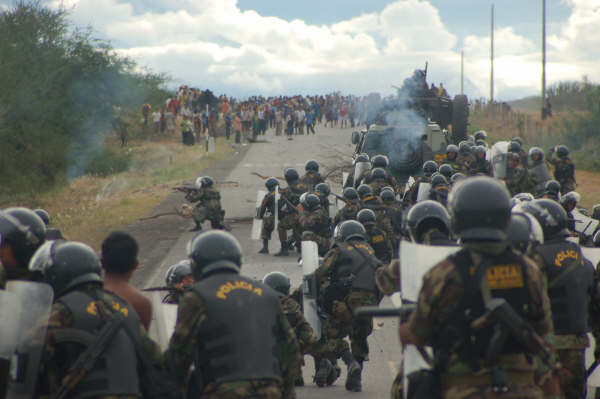
"Photos from Bagua" by Ben Powless 12th May 2014 A mas­sive tri­al involv­ing 53 Indige­nous lead­ers and activists is set to begin this week, reviv­ing the trag­ic events that took place four years ago in the Ama­zonas Region

"Photos from Bagua" by Ben Powless 12th May 2014 A mas­sive tri­al involv­ing 53 Indige­nous lead­ers and activists is set to begin this week, reviv­ing the trag­ic events that took place four years ago in the Ama­zonas Region of Peru.

In April 2009, a nation­al indige­nous mobi­liza­tion was orga­nized to stop a plan by the Peru­vian gov­ern­ment to roll-back indige­nous land rights and make it eas­i­er for indus­try to exploit the Ama­zon rain­for­est.

The first month of the mobi­liza­tion, led by more than 1200 com­mu­ni­ties, was large­ly peace­ful. How­ev­er, that began to change on May 9, 2009, when the Peru­vian gov­ern­ment declared a state of emer­gency in the regions of Lore­to, Ama­zonas, Cus­co, and Ucayali–where thou­sands of Indige­nous Peo­ples were con­cen­trat­ing their efforts.

Once the state of emer­gency was declared, the num­ber of con­fronta­tions with police and mil­i­tary began to climb. Nev­er­the­less, the mobi­liza­tion pressed on, with Indige­nous Peo­ples car­ry­ing out dai­ly protest actions across the coun­try.

With the Indige­nous Peo­ples show­ing no signs of back­ing down, on May 20, Peru’s Con­gress took a pos­i­tive step for­ward by repeal­ing one of four laws that sparked the mobi­liza­tion: Leg­isla­tive Decree 1090, a new forestry law that removed the pro­tect­ed sta­tus of some 45 mil­lion hectares of rain­for­est. Six days lat­er, a sec­ond leg­isla­tive decree, aimed at pro­mot­ing pri­vate invest­ment in irri­ga­tion projects, was declared uncon­sti­tu­tion­al.


While there was enor­mous relief over the removal of the two decrees, two oth­ers remained:

  • Leg­isla­tive Decree 1064 removed a require­ment that oblig­ed com­pa­nies to come to an agree­ment with indige­nous com­mu­ni­ties over land com­pen­sa­tion and land use before enter­ing their lands (effec­tive­ly giv­ing min­ing, oil & gas, log­ging, and hydro com­pa­nies free access to enter any Indige­nous ter­ri­to­ry).
  • Leg­isla­tive Decree 1089, mean­while, gave unre­strict­ed pow­ers for land titling to COFOPRI, the gov­ern­ment body that spe­cial­izes in grant­i­ng indi­vid­ual land titles.

With both decrees pos­ing a sig­nif­i­cant threat to the secu­ri­ty of Indige­nous land rights, in addi­tion to the fact that the gov­ern­ment failed to car­ry out a process of con­sult­ing or seek­ing the con­sent of effect­ed Indige­nous Peoples–in vio­la­tion of ILO Con­ven­tion 169 and the Unit­ed Nations Dec­la­ra­tion on the Rights of Indige­nous Peoples–the mobi­liza­tion pressed on.

After a few more weeks of protest, it looked as if a res­o­lu­tion was at hand. Sev­er­al thou­sand Awa­jun and Wamp­is Peo­ples had set up a series of strate­gic block­ades on Fer­nan­do Belaúnde Ter­ry road in Bagua, Ama­zonas Region. Hav­ing so effec­tive­ly seized the impor­tant road, the gov­ern­ment sought to strike a deal with the Awa­jun and Wamp­is, ulti­mate­ly con­vinc­ing the Indige­nous Peo­ples to begin tak­ing down their block­ades. Many of the Awa­jun and Wamp­is were long gone by the time June 5 rolled around.

In the ear­ly morn­ing hours of June 5, the Peru­vian mil­i­tary police made their move.

When the dust final­ly set­tled, 38 peo­ple were dead and more than 200 were injured.

Two weeks after the bru­tal con­fronta­tion, Peru’s Con­gress over­whelm­ing­ly vot­ed to strike down both Leg­isla­tive Decree 1064 and 1089.

Fol­low­ing Con­gress’ vote, Daysi Zap­a­ta, vice pres­i­dent of the Intereth­nic Asso­ci­a­tion for Devel­op­ment of the Peru­vian Jun­gle (AIDESEP), the orga­ni­za­tion that start­ed the mobi­liza­tion, offi­cial­ly called for an end to all protests, stat­ing, “Today is an his­toric day, we are grate­ful that the will of indige­nous peo­ples has been heard, and only hope that in future, gov­ern­ments meet and lis­ten to the peo­ple, and not leg­is­late the laws back in.”

Four years lat­er, the decrees have remained off the books; the gov­ern­ment tak­ing judi­cial aim at many of the Indige­nous Peo­ples who took part (or alleged­ly took part) in the mobi­liza­tion. Since 2009, more 100 sep­a­rate law­suits have been filed involv­ing at least 350 Indige­nous men and women.

The upcom­ing law­suit, known as the “Cur­va del Dia­blo”, will be the largest of them all. In fact, with 53 indige­nous lead­ers fac­ing any­where between 35 years to life in prison, it is going to be the largest tri­al in Peru’s his­to­ry.

AIDESEP Pres­i­dent Alber­to Pizan­go, who is among the 53 named defen­dants, recent­ly com­ment­ed in an inter­nal AIDESEP inter­view:

There’s a “Before Bagua” and an “After Bagua”. A before in which the Peru­vian State didn’t want to and didn’t know how to lis­ten to the pro­pos­als of indige­nous peo­ples. This exac­er­bat­ed the sit­u­a­tion until things came to what hap­pened, which unfor­tu­nate­ly took so many lives unnec­es­sar­i­ly. I’d say an “After Bagua” because thanks to the Ama­zon­ian mobi­liza­tions I can say that today the indige­nous agen­da is not only insert­ed in the nation­al lev­el and with­in the State, but on the inter­na­tion­al lev­el.

Pizan­go con­tin­ues:

I’d just say to the indige­nous peo­ples and my indige­nous broth­ers who are being tried for these regret­table events that they should stay firm in con­tin­u­ing to lift up the voice of indige­nous peo­ples. All we have done is com­ply with our role as being the offi­cial spokes­peo­ple and work to insert in the nation­al pub­lic agen­da the dif­fer­ent claims as man­dat­ed to us by our peo­ples. I’d reit­er­ate to my broth­ers that they should stay firm in the sig­nif­i­cance of indige­nous peo­ples rights. We’re going to over­come these accu­sa­tions, we should be con­scious of the fact that we haven’t com­mit­ted any crimes. Per­haps our only crime was to car­ry the voice of the peo­ple, which is what we’ll be judged for start­ing May 14th….

Colombian Poor Occupy Lands Slated for Military Base

wYdfu2J12th May 2014 FORTUL, COLOMBIA–Holding down an occu­pa­tion for five months isn’t easy. Doing so in Colom­bia, even less so.

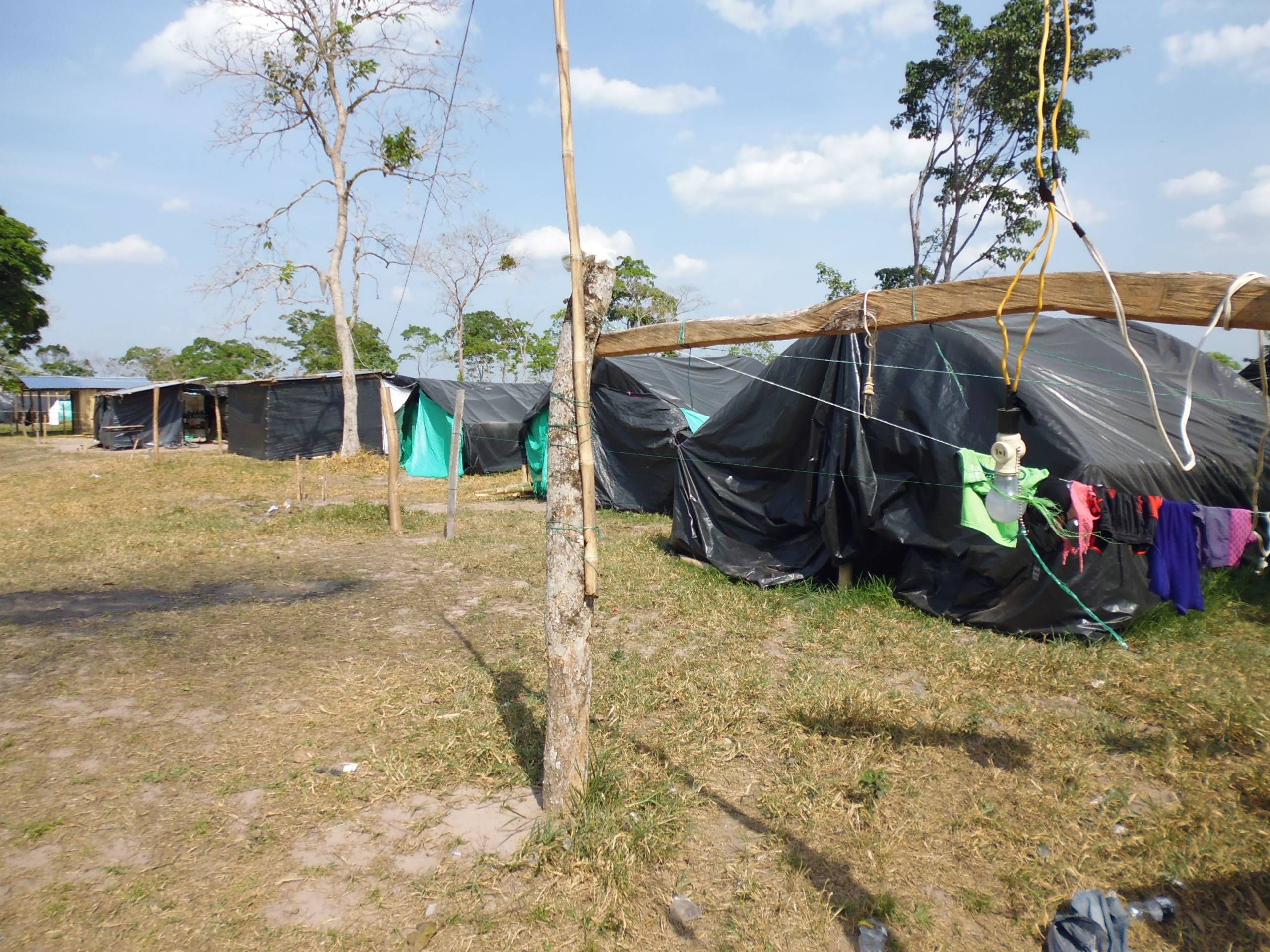
wYdfu2J12th May 2014 FORTUL, COLOMBIA–Holding down an occu­pa­tion for five months isn’t easy. Doing so in Colom­bia, even less so. But mem­bers of the com­mu­ni­ty of Héc­tor Alirio Martínez in the munic­i­pal­i­ty of For­tul, near the bor­der with Venezuela, have raised the stakes even high­er: they’re occu­py­ing land owned by the Min­istry of Defense. The 100 hectare ter­rain now spot­ted with wood and plas­tic homes was slat­ed to become a large mil­i­tary base.

Locals say the land orig­i­nal­ly was pur­chased by Occi­den­tal Petro­le­um in order to build a large new base to coor­di­nate pro­tec­tion of a new oil pipeline which pass­es less than a few hun­dred meters from the lot.

“This land belongs to the Min­istry of Defense, it was pur­chased and spon­sored by Oxy, so we as good peo­ple from Arau­ca said that the most viable thing is to take over this plan, and see if the Min­is­ter of Defense will give it to us over time, many peo­ple need­ed this land,” said Jhon Car­los Ariza Aguilar, the Vice-Pres­i­dent of the com­mu­ni­ty of over 2,000 fam­i­lies. They began the occu­pa­tion on Novem­ber 26, 2013.

I met with Jhon and oth­er mem­bers of the com­mu­ni­ty on a hot Feb­ru­ary after­noon, weeks after the com­mu­ni­ty was sup­posed to have been removed by force. On Jan­u­ary 20, the army entered the shack set­tle­ment with a tank, and an evic­tion was sched­uled for Feb­ru­ary 4, but that date came and went with com­mu­ni­ty mem­bers in an uneasy calm about what would take place next.

For­tul is a munic­i­pal­i­ty in the Colom­bian foothills, between the moun­tains and the wide open plains, and not far from the Arau­ca Riv­er, which marks the bor­der with Venezuela. This oil rich region is also deeply con­flict­ual, on the road over, sol­diers hung around a hand­ful of tanks, and army pres­ence is ubiq­ui­tous. ELN and FARC guer­ril­las also patrol the area and have car­ried out attacks on Caño Limon-Covenas pipeline which serves Occidental’s near­by Caño Limon field. Under the heavy after­noon sun, a group of men lounged under a hand­ful of trees, and women relaxed under a shel­ter beside them. Iden­ti­cal palm shacks pro­tect­ed by green cloth roofs dot­ted the area.

As we spoke, a taxi cab arrived, with a mat­tress strapped to the top and fur­ni­ture in the trunk, indi­cat­ing anoth­er fam­i­ly per­ma­nent­ly mov­ing into the area. Ariza Aguilar indi­cat­ed that about one in four mem­bers of the occu­pa­tion was an inter­nal­ly dis­placed per­son, forced out of their homes because of the ongo­ing con­flict.

“Oxy bought this land and they gave it to the Min­istry of Defense” in 2010, said Jhon­ny Alex­is Cas­tro, the For­tul rep­re­sen­ta­tive of the Joel Sier­ra Human Rights Foun­da­tion. Oxy did not respond to a request for com­ment.

The Oleo­duc­to Bicen­te­nario, a meter wide oil pipeline that will even­tu­al­ly trav­el 960km from Casanare depart­ment to the port of Cov­eñas, is three min­utes from the occu­pa­tion by road, on the back end of the com­mu­ni­ty the under­ground pipeline is but a few hun­dred meters away. “That’s why they want­ed a bat­tal­ion here, but there is a school very close, hav­ing a bat­tal­ion here would mean hav­ing a check­point right in front of the school,” said Cas­tro.

Today, chil­dren from the set­tle­ment are already attend­ing the school. “What mat­ters is that the chil­dren go and study, it doesn’t mat­ter if we have elec­tric­i­ty or not, that [they study] is the impor­tant thing,” said Ariza Aguilar. He invit­ed me to swim in a riv­er near­by, which pro­vides those liv­ing in the com­mu­ni­ty with a place to gath­er water, wash cloth­ing, and bathe.

The com­mu­ni­ty of Héc­tor Alirio Martínez is the first per­ma­nent occu­pa­tion of land owned by the Min­istry of Defense in Colom­bia. The com­mu­ni­ty takes its name from a local peas­ant activist who was pulled from a house at dawn and shot to death by sol­diers along with two oth­ers on August 4, 2004. “The prob­lem is that Arau­ca is con­sid­ered a red zone in Colom­bia, and any leader who ori­ents peo­ple, who even just teach­es them how to go to city hall (to man­age their paper­work), that’s enough to say they’re a guer­ril­la and hunt them until they kill them,” said Ariza Aguilar.

Com­mu­ni­ty mem­bers know that tak­ing part in the occu­pa­tion is an extreme­ly risky activ­i­ty, but for many the need for hous­ing and the abil­i­ty to send their chil­dren to school out­weighs the risk.

Protesters in East China Clash with Police Over Waste Incinerator Plan

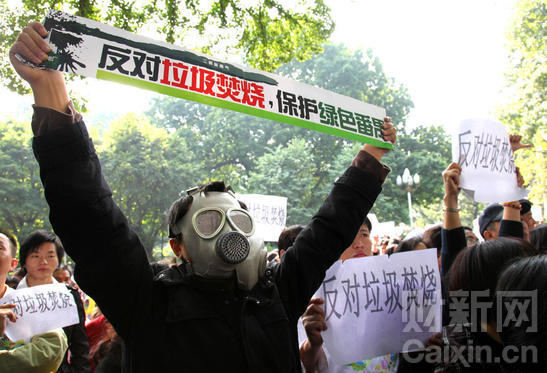
Photo: Caixin10th May 2014  Pro­test­ers in east­ern Chi­na clashed with police at a ral­ly against plans to build a huge waste incin­er­a­tor that res­i­dents fear will be harm­ful to their health and add to pol­lu­tion.

Photo: Caixin10th May 2014  Pro­test­ers in east­ern Chi­na clashed with police at a ral­ly against plans to build a huge waste incin­er­a­tor that res­i­dents fear will be harm­ful to their health and add to pol­lu­tion.

Chok­ing smog blan­kets many Chi­nese cities and the envi­ron­men­tal degra­da­tion result­ing from the country’s break­neck eco­nom­ic growth is anger­ing its increas­ing­ly well-edu­cat­ed and afflu­ent pop­u­la­tion.

Two of the pro­test­ers told Reuters that the demon­stra­tions, which have last­ed for more than two weeks, turned vio­lent with hun­dreds of police descend­ing onto the streets of Yuhang, close to the tourist city of Hangzhou.

“There have cer­tain­ly been injuries,” one of the pro­test­ers, Wu Yun­feng, said by tele­phone. “The police have closed down the roads into Yuhang and locked the site down.”


Anoth­er pro­test­er, who declined to give her name, said sev­er­al police cars had been over­turned.

A police offi­cer, reached by tele­phone, said the demon­stra­tion had already end­ed. He declined to pro­vide fur­ther details.

Reuters was unable to reach the local gov­ern­ment for com­ment.

On Fri­day, the offi­cial Hangzhou Dai­ly news­pa­per defend­ed the con­struc­tion of the incin­er­a­tor, say­ing the tech­nol­o­gy it would use was safe and up to stan­dard.

Hangzhou, cap­i­tal of pros­per­ous Zhe­jiang province and best known in Chi­na as the site of a famous lake, has seen its lus­tre dimmed in recent years by a recur­rent smog prob­lem.

Pic­tures on China’s Twit­ter-like Wei­bo site showed police fight­ing with pro­test­ers and at least two pro­test­ers with blood stream­ing down their faces.

Anoth­er pic­ture showed sev­er­al hun­dred peo­ple sur­round­ing a large group of police.

“We don’t want our chil­dren and grand­chil­dren to get can­cer. Give us back our beau­ti­ful home,” read one let­ter of protest car­ried on Wei­bo.

Reuters was not able to inde­pen­dent­ly ver­i­fy the pic­tures’ authen­tic­i­ty.

About 90,000 “mass inci­dents” – a euphemism for protests – occur each year in Chi­na, trig­gered by cor­rup­tion, pol­lu­tion, ille­gal land grabs and oth­er griev­ances.

Late in March, hun­dreds of res­i­dents of the south­ern town of Maom­ing staged protests against plans to build a petro­chem­i­cal plant there, for fear it would con­tribute to pol­lu­tion.

Tibetan Jumps to His Death to Protest Chinese Mine

9th May 2014 A young Tibetan stabbed him­self and jumped to his death from the roof of a build­ing in Tibet’s Cham­do pre­fec­ture on Wednes­day after author­i­ties tried to halt his protest against a Chi­nese mine being built in the area,

9th May 2014 A young Tibetan stabbed him­self and jumped to his death from the roof of a build­ing in Tibet’s Cham­do pre­fec­ture on Wednes­day after author­i­ties tried to halt his protest against a Chi­nese mine being built in the area, Tibetan sources in exile said.

Phak­pa Gyalt­sen, 32, died instant­ly after throw­ing him­self from a build­ing in Dzo­gang (in Chi­nese, Zuo­gang) prefecture’s Tong­bar town, a Tibetan liv­ing in India told RFA’s Tibetan Ser­vice on Wednes­day, cit­ing local sources.

After telling local Tibetans that he would “do some­thing” to oppose Chi­nese min­ing in Dzo­gang, Gyalt­sen “went to the town cen­ter, climbed onto a high build­ing, and called out for Tibetan free­dom,” the source said, speak­ing on con­di­tion of anonymi­ty.

“When attempts were made to stop him, he stabbed him­self twice and jumped off the build­ing, dying instant­ly,” he said.


Tibet—called Xizang, or West­ern Trea­sure, by China—has become an impor­tant source of min­er­als need­ed for China’s eco­nom­ic growth, and min­ing oper­a­tions in Tibetan regions have led to fre­quent stand­offs with Tibetans who accuse Chi­nese firms of dis­rupt­ing sites of spir­i­tu­al sig­nif­i­cance and pol­lut­ing the envi­ron­ment as they extract local wealth.

Chi­nese min­ing oper­a­tions at a site near Madok Tso called Ache Jema began almost two months ago, an exile source in Europe said, also cit­ing con­tacts in Dzo­gang.

“They claimed that they are work­ing to build a dam, but in real­i­ty they are plan­ning to mine in the area, the source said.

“So the local Tibetans decid­ed to stop the plan, and every day three Tibetans were sent to guard the area, work­ing in rota­tion.”

Detained

Some of those watch­ing the site were lat­er detained by police in Tong­bar but were released after a few days, he said.

“Local author­i­ties also tried to con­vince area res­i­dents not to oppose the min­ing by offer­ing each fam­i­ly 10,000 yuan [U.S. $1,603] in com­pen­sa­tion,” RFA’s India-based source said, adding, “But the Tibetans argued that min­ing would have neg­a­tive impacts [on the area].”

“Phak­pa Gyalt­sen then told the local Tibetans that he would do some­thing him­self so that they would not have to protest and cause prob­lems.”

Gyalt­sen, the elder son of the area’s Choeshoe fam­i­ly, is sur­vived by a wife and three small chil­dren, with anoth­er child on the way, he said.

“Phone con­nec­tions to the area are now blocked, and it is dif­fi­cult to learn any­thing more about what is hap­pen­ing,” he said.

Spo­radic demon­stra­tions chal­leng­ing Beijing’s rule have con­tin­ued in Tibetan-pop­u­lat­ed areas of Chi­na since wide­spread protests swept the region in 2008, with 131 Tibetans to date self-immo­lat­ing to protest Chi­nese rule and call for the return of exiled spir­i­tu­al leader the Dalai Lama.

Report­ed by RFA’s Tibetan Ser­vice. Trans­lat­ed by Kar­ma Dor­jee. Writ­ten in Eng­lish by Richard Finney.

In Russia, Home-Grown Environmental Activism on the Rise

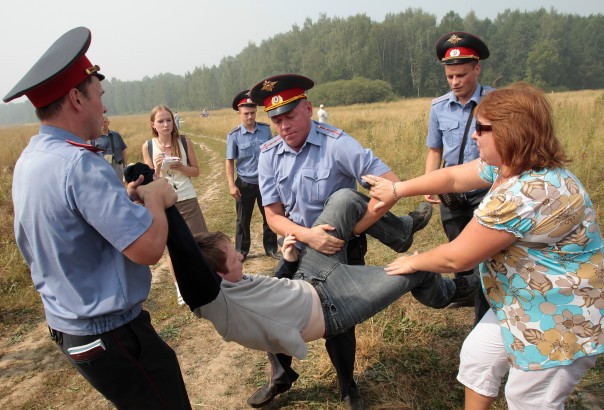
604-4 8th May 2014 Nina Popravko, one of the few pro­fes­sion­al envi­ron­men­tal lawyers in Rus­sia, is defend­ing in court a group of a dozen activists in the small town of Koz­modemi­an­sk, in the Mari El Repub­lic on the

604-4 8th May 2014 Nina Popravko, one of the few pro­fes­sion­al envi­ron­men­tal lawyers in Rus­sia, is defend­ing in court a group of a dozen activists in the small town of Koz­modemi­an­sk, in the Mari El Repub­lic on the Vol­ga Riv­er. They have been fight­ing for years against plans to build a domes­tic waste land­fill, which they say is too close to a res­i­den­tial block.

Straight after court hear­ings in the case, Popravko jumps on a train to Ufa, a city with more than a mil­lion inhab­i­tants in the south Urals, where sev­er­al hun­dred peo­ple are try­ing to organ­ise an inde­pen­dent pub­lic hear­ing about the con­struc­tion of a wood-pro­cess­ing fac­to­ry.

Back at home near St. Peters­burg, where Popravko lives and works for the envi­ron­men­tal non-gov­ern­men­tal orga­ni­za­tion Bel­lona, anoth­er fight is under way.

A group of activists are mobil­is­ing after the felling of almost 200 large pine trees to make way for a new lux­u­ry res­i­den­tial hous­ing devel­op­ment. The activists are fil­ing a law­suit against the devel­op­ment com­pa­ny, which they believe acquired the plot of land ille­gal­ly, as part of their dri­ve to stop fur­ther log­ging in a larg­er for­est area.

“I real­ly notice the grow­ing involve­ment of many ordi­nary peo­ple in the envi­ron­men­tal move­ment,” Popravko says.

City dwellers across Rus­sia are get­ting organ­ised and fight­ing for their envi­ron­men­tal rights at a more pro­fes­sion­al lev­el than before, the lawyer says. They are learn­ing to file law­suits, organ­ise pub­lic hear­ings, and work with jour­nal­ists and social net­works, as well as build­ing protest camps and obstruct­ing con­struc­tion sites.

Many such local ini­tia­tives get sup­port from larg­er and longer-estab­lished envi­ron­men­tal non-gov­ern­men­tal organ­i­sa­tions such as Green­peace and WWF Rus­sia, but many also are fight­ing on their own – some­times suc­cess­ful­ly, some­times not.

WHAT WORKS

There is no clear recipe for vic­to­ry, says Alexan­der Kar­pov, an expert with the ECOM cen­tre, who has spent more than 10 years sup­port­ing local envi­ron­men­tal and urban ini­tia­tives all over Rus­sia and help­ing them grow.

He recent­ly began work­ing as a con­sul­tant with the St. Peters­burg Leg­isla­tive Assem­bly, draft­ing laws and oth­er legal acts, and bring­ing need­ed  insight and exper­tise to the work of the region­al par­lia­men­tar­i­ans.

Kar­pov argues that the suc­cess of any envi­ron­men­tal cause depends on the amount of time and ener­gy activists are pre­pared to spend pro­tect­ing their rights. He also main­tains that exper­tise is cru­cial, and that the more ‘pro­fes­sion­al­ly’ activists inter­act with local admin­is­tra­tors, draft legal doc­u­ments and engage in high-qual­i­ty lob­by­ing for their cause, the bet­ter the chance of suc­cess.

Pub­lic inter­est in envi­ron­men­tal issues has been ris­ing in Rus­sia over the last few years. Some experts link this with the grow­ing finan­cial well­be­ing of the country’s pop­u­la­tion, which is giv­ing more cit­i­zens the oppor­tu­ni­ty to trav­el abroad, and to plan their future and that of their chil­dren.

CORRUPTION AND GOVERNANCE LINK

Oth­er experts say it is a reac­tion to mount­ing cor­rup­tion and “bad” gov­er­nance, often at a local lev­el, involv­ing local author­i­ties build­ing cor­rupt ties with a local or nation­al com­pa­ny while neglect­ing local res­i­dents.

The push toward greater envi­ron­men­tal activism has been met with a mixed response by Russia’s lead­ers.

Niko­lay Gud­kov, a spokesper­son for the Russ­ian Min­istry of Nat­ur­al Resources and Envi­ron­ment, said his min­istry was “active­ly work­ing with cit­i­zens, envi­ron­men­tal ini­tia­tives and activists – both through our com­mu­ni­ty liai­son office and through fur­ther online resources” such as the web­site Nasha Priro­da (“Our Nature”), which was launched in late 2013 and allows peo­ple from all regions of Rus­sia to report envi­ron­men­tal vio­la­tions in their neigh­bour­hoods, using geo-loca­tion tech­nol­o­gy.

He said min­istry rep­re­sen­ta­tives also have organ­ised a few meet­ings with envi­ron­men­tal activists work­ing on noto­ri­ous local con­flicts – such as the fight over the wood-pro­cess­ing facil­i­ty in Ufa, and a sit­u­a­tion in cen­tral Rus­sia where res­i­dents are fight­ing plans for nick­el and cop­per min­ing.

But the Russ­ian par­lia­ment, the State Duma, has also recent­ly ini­ti­at­ed a num­ber of legal acts poten­tial­ly hin­der­ing the rights of local activists and oppor­tu­ni­ties for wider pub­lic par­tic­i­pa­tion in city plan­ning and region­al devel­op­ment.

In late Decem­ber, mem­bers of par­lia­ment tried to pass a draft law can­celling pub­lic hear­ing pro­ce­dures for a num­ber of infra­struc­ture con­struc­tion projects. How­ev­er, after a civ­il cam­paign ini­ti­at­ed by activists and envi­ron­men­tal lawyers, the draft “got hung up,” Popravko said.In mid-March, how­ev­er, anoth­er bill sig­nif­i­cant­ly reduc­ing the num­ber of sit­u­a­tions in which pub­lic hear­ings must be held passed in its first read­ing. Envi­ron­men­tal lawyers argue the bill con­tra­dicts Russ­ian and inter­na­tion­al rules of law.

“The Russ­ian Par­lia­ment is mov­ing for­ward draft laws which seri­ous­ly lim­it pub­lic par­tic­i­pa­tion” a group of envi­ron­men­tal lawyers said in their pub­lic appeal. A cam­paign against the bill is ongo­ing.

URBAN FOCUS

One of the most pop­u­lar envi­ron­men­tal issues in Rus­sia at the moment is urban ecol­o­gy – the envi­ron­men­tal aspects of cities’ devel­op­ment. That includes clean trans­port, a focus on air and water qual­i­ty, the pro­tec­tion of green zones and parks, and sus­tain­able con­sump­tion and lifestyles.

Such inter­est is cen­tred main­ly in large cities with pop­u­la­tions of over half a mil­lion peo­ple, but it has begin spring­ing up in small towns as well.

Rough­ly speak­ing, most of these civ­il ini­tia­tives fall into two groups, experts say.

The first com­prise protest actions – against new build­ing of infra­struc­ture or hous­ing, or against the destruc­tion of a park, for instance. Such groups form quick­ly, and their suc­cess often depends on the sol­i­dar­i­ty and ener­gy of their par­tic­i­pants, as well as on the resources they can invest, experts say.

Groups of this kind ini­ti­ate legal cas­es or pub­lic hear­ings, work with media and social net­works, and organ­ise protests – and quite often the groups fall apart after the case is won or lost.

The most com­pli­cat­ed efforts are long-run­ning ones that last sev­er­al years, and can result in activists becom­ing worn out, los­ing ener­gy and los­ing inter­est in the case.

Activists face a vari­ety of threats, includ­ing phys­i­cal vio­lence or legal pros­e­cu­tion. Recent­ly, envi­ron­men­tal activist Evge­ny Vitishko, from Tuapse in south­ern Rus­sia, was jailed for three years for writ­ing protest slo­gans and attach­ing posters to a fence around the vil­la of the Krasnodar gov­er­nor.

Vitishko alleged the vil­la had been built ille­gal­ly in a for­est reserve and its own­er had fenced off a stretch of the coast­line.

Vitishko sup­port cam­paign has been launched, and “it is par­tic­u­lar­ly impor­tant that we also get inter­na­tion­al sup­port for the case – both for Evge­ny Vitishko him­self and for the grow­ing envi­ron­men­tal move­ment in Rus­sia”, says Dmit­ry Shevchenko, a Krasnodar-based activist with the NGO “Envi­ron­men­tal Watch of the North Cau­ca­sus.”

FILLING THE VACUUM

Anoth­er part of of Russia’s grow­ing envi­ron­men­tal move­ment con­sists of com­mu­ni­ty and civ­il soci­ety activists try­ing to put bot­tom-up ini­tia­tives in place to “sub­sti­tute” for fail­ing state reg­u­la­tion, giv­en the absence of an envi­ron­men­tal agen­da and pol­i­cy mech­a­nism at both fed­er­al and region­al lev­els, experts say.

These groups build up envi­ron­men­tal and vol­un­teer net­works in areas such as sep­a­rat­ing garbage col­lec­tion, recy­cling, plant­i­ng trees, tak­ing care of parks and shores, and pro­mot­ing  eco-friend­ly agri­cul­ture and a green lifestyle.

One of the best-known organ­i­sa­tions is the move­ment Muso­ra bol­she net (mean­ing “no more rub­bish”) cre­at­ed first as a vol­un­teer ini­tia­tive to  remove trash from forests and lake shores and devel­oped lat­er into a full-scale net­work organ­i­sa­tion, active in many projects from com­mu­ni­ty recy­cling to envi­ron­men­tal edu­ca­tion.

Many such groups gath­er annu­al­ly at a Delai Sam (Do it your­self) Sum­mit, first only held in Moscow but now in oth­er cities as well, to exchange prac­tices, tech­nolo­gies and skills.

It is not only the young and trendy who take part in such ini­tia­tives. In some cities, groups are led by female pen­sion­ers using their free time to build up com­mu­ni­ty do-it-your­self groups to improve the urban envi­ron­ment.

Still, quite often activists float from one envi­ron­men­tal focus area to anoth­er. Tatyana Kargina, orig­i­nal­ly from Irkut­stk and now liv­ing in Moscow, is one of Russia’s best-known envi­ron­men­tal activists.

She set up a first eco-hous­ing project in Moscow, one of the first Russ­ian net­works for envi­ron­men­tal-friend­ly liv­ing and con­sump­tion, as well as oth­er ini­tia­tives. Dur­ing the last cou­ple of years she’s also been active in a civ­il soci­ety protest action against plans to begin nick­el min­ing in Voronezh region, Cen­tral Rus­sia, an agri­cul­tur­al region rich with black soils, nature reserves and bio­di­ver­si­ty.

SUSTAINABLE CITIES

Grow­ing envi­ron­men­tal activism in Rus­sia also is focused on the need for more sus­tain­able and inclu­sive city and region devel­op­ment. An Open Urban Lab unit­ing around 30 young pro­fes­sion­als involved in urban plan­ning, archi­tec­ture, pub­lic par­tic­i­pa­tion and sus­tain­able devel­op­ment, has been try­ing to intro­duce par­tic­i­pa­tion prin­ci­ples into city and neigh­bour­hood plan­ning in Russ­ian cities recent­ly.

The organ­i­sa­tion, while work­ing with region­al admin­is­tra­tions and busi­ness, sees “par­tic­i­pa­tion as a tech­nol­o­gy to trans­form social groups ear­li­er not includ­ed in deci­sion mak­ing into includ­ed ones, in order to cre­ate and sus­tain pub­lic good,” said Oleg Pachenkov from the Open Urban Lab.

The process of civ­il soci­ety devel­op­ment is hard­ly smooth or quick – but the trend is there, experts say.

“Quite often ordi­nary cit­i­zens don’t real­ly want to become activists, don’t want to spend all their free time cam­paign­ing, protest­ing, talk­ing to media, pro­mot­ing the case in social net­works 24 hours a day,” said Popravko, the lawyer. “But after real­is­ing that they can’t real­ly appeal to any­one, not to city author­i­ties, not to con­trol bod­ies, they just have to become activists them­selves and try to influ­ence the sit­u­a­tion, which they reck­on affects their lives and liv­ing envi­ron­ments.”

Nantes, France: Call for a Demo and Decentralized Solidarity Actions Against Repression of the Anti-airport Movement

17-mai8th May 2014 On Feb­ru­ary 22nd, 2014, more than 50,000 peo­ple gath­ered in Nantes for the biggest anti-air­port demon­stra­tion ever.

17-mai8th May 2014 On Feb­ru­ary 22nd, 2014, more than 50,000 peo­ple gath­ered in Nantes for the biggest anti-air­port demon­stra­tion ever. As it was declared ille­gal by the pre­fec­ture, it quick­ly faced stun­ning repres­sion; hun­dreds of over-armed cops sur­round­ed the demo while a huge anti-riot wall blocked the cen­tral street of the city (le cours des 50 otages). It was the first time in Nantes’ social strug­gles his­to­ry that a demo couldn’t pass by there. Politi­cians and media talked about “loot­ings” and “dev­as­ta­tions”, deplor­ing the vio­lence after a group of demon­stra­tors attempt­ed to walk the orig­i­nal route.

How­ev­er, the Pow­er and its accom­plices failed to men­tion the extreme feroc­i­ty in the crack­down on this demon­stra­tion. On Feb­ru­ary 22nd, hun­dreds of peo­ple were hurt by police weapons. At least three of them lost an eye from rub­ber-bul­let shots. A lot of peo­ple breathed tear gas, were shak­en up from stun grenades, or wound­ed from dis­per­sion grenades, or repulsed by water can­nons.


A few weeks lat­er, on March 31st, media exul­tant­ly declared a first “drag­net” fol­low­ing a spe­cial police force’s inves­ti­ga­tion. Nine com­rades had their hous­es searched and were arrest­ed in the ear­ly morn­ing. Two of them were imme­di­ate­ly released, as one of them was not even in Nantes on the day of the demon­stra­tion. Four oth­ers couldn’t pre­pare their defense since they were sent to the court through the imme­di­ate arraign­ment pro­ce­dure. Sen­tences are as heavy as the records are emp­ty: indeed, the only real evi­dence the pros­e­cu­tion had were the con­fes­sions of the accused. Three of them have been con­demned to prison terms with­out remis­sion. Dur­ing this par­o­dy of a tri­al, judge Tchalian did not hes­i­tate to dou­ble the prosecutor’s req­ui­si­tions and put our com­rade Enguer­rand direct­ly in prison. One year in prison with­out remis­sion for some stones and smoke cans.

The pur­pose of the repres­sion from police and the jus­tice sys­tem that the anti-air­port move­ment is now fac­ing is only to ter­ror­ize those who revolt and start fight­ing against capitalism’s hold on our liv­ing spaces. It is to psy­cho­log­i­cal­ly and phys­i­cal­ly touch a social move­ment, to muti­late and incar­cer­ate some of us to reach all the oth­ers. The sen­tences and muti­la­tions of the 22nd of Feb­ru­ary are not only an appli­ca­tion of laws or peace­keep­ing techniques—they are deeply polit­i­cal. This real state ter­ror­ism express­es clear­ly what must be expect­ed for those who resist.

Today, Enguer­rand, Quentin, Damien, Emmanuel, Philippe, J. and G. are its vic­tims. It could have been any one of us. Accord­ing to the State and its so-called jus­tice, tak­ing part in a demon­stra­tion is suf­fi­cient to jus­ti­fy the loss of an eye or a prison term.

We shouldn’t step back as we are fac­ing such vio­lent repres­sion. By doing so, we would only prove their case. The best sup­port we can give to our wound­ed and incar­cer­at­ed com­rades is to keep on fight­ing. Our strug­gle has nev­er been so pow­er­ful, and we have nev­er been so close to real­iz­ing a future with­out con­crete. More than ever, we must keep on fight­ing and not give any­thing up in the strug­gle against the air­port and the world that pro­duces it.

Against the assas­sin Pow­er that muti­lat­ed and incar­cer­at­ed, we have a weapon that it can­not take back. In a let­ter, on April 8th, Enguer­rand stat­ed: “The strength of activist sol­i­dar­i­ty can­not be defeat­ed,” and indeed, we agree. Actions in sup­port of those wound­ed and accused in the strug­gle have already been diverse and numer­ous, mod­eled on the diver­si­ty with­in the move­ment. Infi­nite are the poten­tial actions. Orga­nize a con­cert or a fundrais­er to finan­cial­ly sup­port the accused and their fam­i­lies. Call for a demon­stra­tion (“peace­ful­ly hel­met­ed”? —a ref­er­ence to the “Flash­balles” song) to express revolt against police crimes. Cov­er the walls with paint­ed slo­gans or posters to make sure that no one ignores what is hap­pen­ing…

Every ini­tia­tive is wel­come to bring reas­sur­ance to our com­rades and remind the Pow­er of our rage and deter­mi­na­tion. Against the con­niv­ing silence of the media spec­ta­cle, we can only rely on our­selves to make “jus­tice” a mean­ing­ful word again. We strong­ly encour­age every sol­i­dar­i­ty action against repres­sion of the anti-air­port move­ment, no mat­ter whether it hap­pens in Nantes or any­where else, today or any­time.

No jus­tice, no peace!
Sol­i­dar­i­ty with the wound­ed and the accused!
No to the air­port and its world!

DEMONSTRATION Sat­ur­day, May 17th, 2014 at 3pm – Nantes pre­fec­ture

To write to the sup­port com­mit­tee for Enguer­rand or to sign this call: soutien.enguerrand(at)riseup.net

Former ELF Member Pleads Guilty to Arsons; Snitches on Friends for Reduced Sentence

liammulholland3 Tomor­row, May 5, 2014, Liam Mul­hol­land will be sen­tenced for his involve­ment in a 2003 ELF arson.

liammulholland3 Tomor­row, May 5, 2014, Liam Mul­hol­land will be sen­tenced for his involve­ment in a 2003 ELF arson.

Mul­hol­land plead­ed guilty to set­ting fire to a house at Mys­tic For­est hous­ing devel­op­ment in Ann Arbor, Michi­gan, on March 21, 2003. Spray paint­ed on the garage of a neigh­bor­ing house were the words “ELF – No Sprawl.”

In Michi­gan, the manda­to­ry min­i­mum for this kind of prop­er­ty destruc­tion is five years in prison. How­ev­er, the gov­ern­ment has request­ed a reduced sen­tence because of Mulholland’s “coop­er­a­tion” with the fed­er­al gov­ern­ment.

From his plea agree­ment and the Government’s Sen­tenc­ing Mem­o­ran­dum, it seems Mul­hol­land hand­ed the feds a lot of infor­ma­tion. He claimed involve­ment in sev­er­al more ELF and ALF actions, includ­ing arsons that destroyed two homes at anoth­er hous­ing devel­op­ment in Michi­gan in June of 2003; using incen­di­ary devices to destroy chick­en deliv­ery trucks in Bloom­ing­ton, Indi­ana in May of 2002; an arson at a hous­ing devel­op­ment in Bloom­ing­ton, Indi­ana in June of 2002; and a failed attempt to set fire to a pump­ing sta­tion in Stan­wood, Michi­gan, in Sep­tem­ber of 2003.

Mul­hol­land also pro­vid­ed feds with the names of the oth­er activists with whom he car­ried out these actions—as well as where and how they trav­eled, where and when they planned and dis­cussed their actions, what they pur­chased for the actions, how they dis­posed of the pur­chased items, and how they car­ried out each action.

The gov­ern­ment is request­ing a sen­tence of 18 months for Mulholland—a reduc­tion of 42 months from the state’s manda­to­ry minimum—because his coop­er­a­tion will aid the gov­ern­ment in crack­ing down on the oth­er ELF and ALF sus­pects: “The gov­ern­ment has deter­mined that the defendant’s coop­er­a­tion to date amounts to sub­stan­tial assis­tance in the inves­ti­ga­tion or pros­e­cu­tion of oth­ers.”

Photo captured from Local 4 Defenders.

Pho­to cap­tured from Local 4 Defend­ers.

The agree­ment also asserts that, because of his coop­er­a­tion, all his charges relat­ed to the oth­er admit­ted ELF and ALF arsons will be dis­missed.

And it seems that Mul­hol­land isn’t the only one snitch­ing. The Sen­tenc­ing Mem­o­ran­dum states that, though Mul­hol­land often assert­ed that he was sim­ply “along for the ride” dur­ing these actions, the feds have received con­tra­dic­to­ry infor­ma­tion: “Accord­ing to wit­ness­es, it was the defen­dant who had the exper­tise to con­struct incen­di­ary devices and did so for both the arson of the deliv­ery trucks at Sim’s Poul­try, as well as the attempt­ed arson of the Ice Moun­tain pump­ing sta­tion.”

Stay tuned for more infor­ma­tion after tomorrow’s sen­tenc­ing hear­ing. If any­one has pic­tures of Liam Mul­hol­land, or more infor­ma­tion, please send them to col­lec­tive [at] earth­firstjour­nal [dot] org, so that the word can be spread, and activists and activist groups can be on guard for the pres­ence of this snitch.

For more infor­ma­tion on snitch­es and infor­mants, be sure to check out our online Infor­mant Track­er.


Rab­bit is an edi­tor for the Earth First! Jour­nal and Newswire. He can be reached at rab­bit [at] earth­firstjour­nal [dot] org. If you appre­ci­at­ed read­ing this arti­cle, or want to sup­port the infor­mant track­ing and pris­on­er sup­port ser­vices, please con­sid­er sub­scrib­ing or donat­ing today.

Karadere beach Bulgaria

Karadere beach is one of the last stretch­es of the Bul­gar­i­an Black Sea coast not yet cov­ered in con­crete, and free camp­ing is still per­mit­ted there. A plan to devel­op the beach into a “hol­i­day vil­lage” has been on the cards for sev­er­al years and recent­ly, devel­op­ers began cut­ting trees, prompt­ing thou­sands to protest in the streets in Sofia and Var­na.

Karadere beach is one of the last stretch­es of the Bul­gar­i­an Black Sea coast not yet cov­ered in con­crete, and free camp­ing is still per­mit­ted there. A plan to devel­op the beach into a “hol­i­day vil­lage” has been on the cards for sev­er­al years and recent­ly, devel­op­ers began cut­ting trees, prompt­ing thou­sands to protest in the streets in Sofia and Var­na.

After a lot of secre­cy, some of the investors in the pro­posed devel­op­ment have been named. The com­pa­ny known as Madara hold­ings (for­mer­ly May­fair hold­ings) or Madara Europe which is owned by Rain­bow Mal­ta, head man Paul Riley seems to be the main play­er All these com­pa­nies are based in the chan­nel islands, and the investors seem to be British (although the whole affair is very murky with cor­rup­tion, and there are prob­a­bly oth­er Bul­gar­i­an and/or Russ­ian investors lurk­ing in the shad­ows). The British involve­ment seems to be sig­nif­i­cant, and if the British investors could be pur­suad­ed to with­draw, the project would be set back.The British investors are named on this excel­lent jour­nal­ism page, and the site has oth­er info about Karadere

http://tinyurl.com/lg8p86e

It also seems that some of the investors are in south wales, and are linked to a rug­by club in Cardiff

https://opencorporates.com/companies/gb/03389199

More info on these peo­ple could cer­tain­ly be uncov­ered by some­one on the ground in Britain. It would be great to get this issue raised in Britain, and see some of these investors pub­li­cal­ly shamed.

There is lots of stuff about Karadere on face­book and youtube

love and rage!


May Gathering in Plymouth to Prevent Wilful and Accidental Nuclear Holocaust


The Tamar­i­ans are invit­ing mem­bers of the pub­lic to a gath­er­ing in Ply­mouth from the 9th to the 12th of May 2014. The group is a local affin­i­ty group of Tri­dent Ploughshares, and is deter­mined to abol­ish Weapons of Mass Destruc­tion, start­ing with the one on their doorstep: the Tri­dent sub­ma­rine based sys­tem. 

Sat­ur­day is a day of work­shops: NVDA, facil­i­ta­tion and con­sen­sus, update on Devon­port subs, dance of nuclear fis­sion, sto­ries from vet­er­an peace activists, ban­ner mak­ing and insur­rec­tion­al art. 

Food and shel­ter will be pro­vid­ed for the whole week­end.

Address: 74 Mut­ley Plain, Ply­mouth 
Direc­tions: Mut­ley Plain, Ply­mouth 
Near­est Pub­lic Trans­port: Ply­mouth train sta­tion; Bre­ton­side Bus sta­tion 
Post­code: PL4 6LS 
Time: 9:30 
Price: Dona­tions are wel­come 
Phone: 01822 832 815 
Email: tp_tamarians@hotmail.co.uk 
Web: www.tridentploughshares.org