French climate resistance to #StopMCEDD deepwater oil conference

The Oil and Gas com­pa­nies are hold­ing a con­fer­ence on deep­wa­ter oil and gas and how to be more effi­cient to fur­ther exploit deep sea fos­sil fuels. About 500 cli­mate activists have block­ad­ed and dis­rupt­ed the first day of the con­fer­ence.

8th April 2016

The Oil and Gas com­pa­nies are hold­ing a con­fer­ence on deep­wa­ter oil and gas and how to be more effi­cient to fur­ther exploit deep sea fos­sil fuels.

About 500 cli­mate activists have block­ad­ed and dis­rupt­ed the first day of the con­fer­ence.

The largest oil and gas com­pa­nies around the world have decid­ed to meet in Pau from April 5 to 7, less than 4 months after the COP21. There goal is to increase the explo­ration and exploita­tion of hydro­car­bons in the sea. “For­ev­er fur­ther, ever deep­er and in con­di­tions more extreme is a crime against the Oceans”, denounced cli­mate pro­tec­tion orga­ni­za­tions. The coal­is­tion of com­mu­ni­ty, envi­ron­men­tal and cli­mate organ­i­sa­tions announced they would block the hold­ing of this strate­gic sum­mit, using non-vio­lent actions and mobi­liza­tions. The protests were pre­ced­ed by a cli­mate action camp, Camp Siren.

Activists say that choos­ing the cli­mate is block­ing the exploita­tion of new hydro­car­bon deposits and pro­tect­ing the ocean. They ask that the French gov­ern­ment: sus­pend any type of financ­ing of the fos­sil fuel sec­tor — nei­ther grants nor invest­ment for coal, gas and oil; and to can­cel ongo­ing hydro­car­bon deposit bore­holes and can­cel all explo­ration and exploita­tion rights by fos­sil fuel com­pa­nies. The mon­ey divert­ed from fos­sil fuels must go to the tran­si­tion to fair and sus­tain­able soci­eties. It must also fund the con­ver­sion indus­tries and tran­si­tion of those present­ly work­ing in fos­sil fuels.

Total’s exec­u­tive Arnaud Breuil­lac artic­u­lat­ed that due to the fall in oil prices since 2014 oil com­pa­ny prof­its have suf­fered and forc­ing com­pa­nies to cut costs and find sav­ings, but that oil and gas was still need­ed despite the growth in renew­ables.

“To ensure the right lev­el of prof­itabil­i­ty, oil com­pa­nies and ser­vices com­pa­nies must work togeth­er to find inno­v­a­tive ways to bring cost down,” Breuil­lac told oth­er oil indus­try exec­u­tives and experts accord­ing to Reuters at the con­fer­ence.
“We need to increase our col­lab­o­ra­tion, to find bet­ter ways to share risks and to col­lec­tive­ly find a new bal­ance,” Breuil­lac said. They are hop­ing to man­age and ride the down­turn, even though the cli­mate imper­a­tive is that oil and gas devel­op­ment needs to stop.

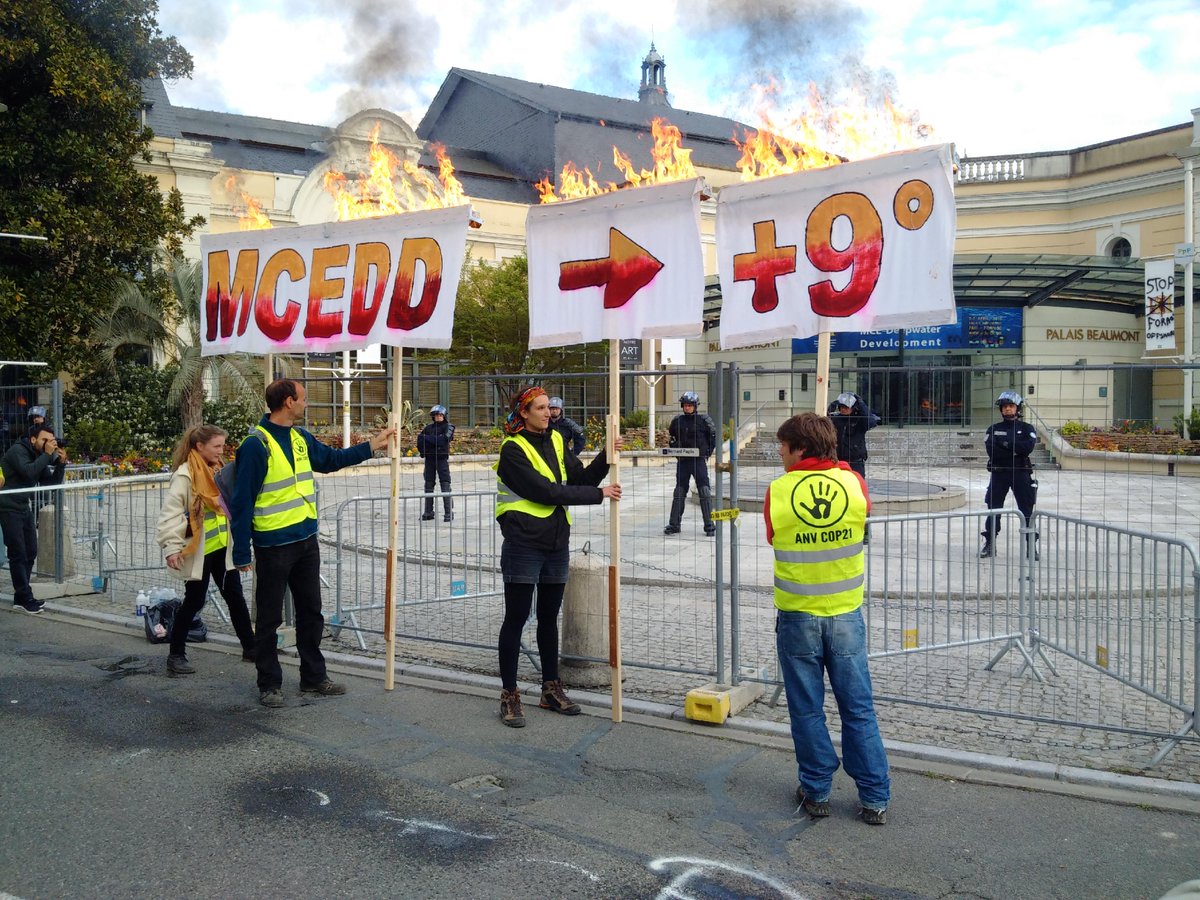
On the first day pro­test­ers suc­cess­ful­ly dis­rupt­ed and block­ad­ed the con­fer­ence venue, both from the inside and out­side. Jour­nal­ist Patrick Piro has put togeth­er this stori­fy.

Back­ground stori­fy.
Multi­na­tion­al oil and gas com­pa­nies are organ­is­ing to drill ever fur­ther, ever deep­er into the abyss of the ocean. A sum­mit is planned for the French city of Pau on 5–7 April 2016, organ­ised by the French oil multi­na­tion­al Total, less than 4 months after the Paris cli­mate talks and Paris Agree­ment.

After 9 hours peo­ple are still blockad­ing the entrance to the Palais Beau­mont where the con­fer­ence is being held. Pau is the head­quar­ters of Total’s research and devel­op­ment divi­sion.

Yes, tear­gas was used indis­crim­i­nate­ly against non-vio­lent pro­test­ers.

Two activists infil­trat­ed the con­fer­ence and locked them­selves to ple­nary chairs, before being cut free and excort­ed out by a large num­ber of riot police.

On Day 2 there were cli­mate emer­gency dis­tur­bances at the hotels of del­e­gates. In the morn­ing oil exec­u­tives they dis­cov­ered that activists had locked on to the hotel gates pre­vent­ing them from leav­ing until the gen­darmes had detached the activists.

In the late after­noon about 600 peo­ple formed a human chain around Palais Bea­mont, with music and street the­atre. This was fol­lowed by a con­cert in Beau­mont Park with light pro­jec­tions on the con­fer­ence venue.
Mean­while at Camp Sirene cli­mate activists dis­cuss strat­e­gy and pre­pare for the day to block­ade Palais Bea­month where the MCE Deep­wa­ter con­fer­ence is being held.
Cli­mate activists lock on to Hotel gates, pre­vent­ing police and oil exec­u­tives leav­ing for the MCE Deep­wa­ter con­fer­ence in Pau…

Police had to dis­man­tle the grill with the activists locked on..

…and at last the oil exec­u­tive del­e­gates can get out of their hotel. Patrick Piro writes that it is a Pro­vi­sion­al end of the dis­tur­bances. Over night there were 3 noisy inter­ven­tions in the hotels of the del­e­gates.
Wak­ing up the con­fer­ence atten­dees in the Hotel Navarre. It is a cli­mate emer­gency after all.…2 groups of @AnvCop21 activists entered in the Beau­mont hotel at 2 and 4 o’clock to wake up #STOPMCEDD del­e­gates. Anne Sophie Tru­jil­lo put it nice­ly: #STOPMCEDD is “I will go after your dreams” or I’m your night­mare.
Mean­while activists lock on round del­e­gate vehi­cles lie in the road, storm the venue site to block­ade entrances includ­ing lock­ing-down the car park, and hand­cuff them­selves to del­e­gates’ bags!

“Four months after the COP21, an inter­na­tion­al sum­mit, named MCE Deep­wa­ter Devel­op­ment (MCEDD) will meet at Pau of 5 to 7 April multi­na­tion­al oil com­pa­nies and off­shore oper­a­tors to “suc­ceed a sig­nif­i­cant decrease in costs to the indus­try oper­at­ing in deep sea to remain competitive.“France Nature Envi­ron­n­ment is strong­ly opposed to the hold­ing of the sum­mit of the ener­gies of pol­lut­ing and destruc­tive past that does not also pay their “true price” and denounces the indus­tri­al provo­ca­tion months after the Paris agree­ment on cli­mate.”

actions in Paris at #COP21 & around the world

For all the lat­ests updates on cli­mate direct actions tak­en around the world, includ­ing in Paris par­al­lel to the UN cli­mate nego­ti­a­tions, see our twit­ter feed

For all the lat­ests updates on cli­mate direct actions tak­en around the world, includ­ing in Paris par­al­lel to the UN cli­mate nego­ti­a­tions, see our twit­ter feed

Two Moments of Oil Railway Sabotage in Montreal

The infra­struc­tures of State and cap­i­tal con­tin­ue to spread their ten­ta­cles, seek­ing to accel­er­ate the extrac­tion and trans­porta­tion of resources to the mar­ket.

Sep­tem­ber 10th, 2015

from Anar­chist News

The infra­struc­tures of State and cap­i­tal con­tin­ue to spread their ten­ta­cles, seek­ing to accel­er­ate the extrac­tion and trans­porta­tion of resources to the mar­ket. The vast ter­ri­to­ry that is the Cana­di­an North, often sparse­ly pop­u­lat­ed due in large part to the dis­place­ment, iso­la­tion, and geno­cide of indige­nous peo­ples, is an immense source of prof­it; oil, gas, forestry, hydro-dams, ura­ni­um mines, etc. Var­i­ous mon­strous infra­struc­tur­al expan­sion projects are cur­rent­ly try­ing to con­nect the Alber­ta Tar Sands through pipelines along the St. Lawrence riv­er to the Atlantic. These projects entail expand­ing and con­struct­ing new infra­struc­ture such as ports, rail lines, and high­ways all along this route on col­o­nized ter­ri­to­ries.

We placed a cop­per wire con­nect­ing both sides of the tracks, thus send­ing a sig­nal indi­cat­ing a block­age on the tracks and dis­rupt­ing cir­cu­la­tion until the tracks were checked and cleared. This train line in par­tic­u­lar is being worked on in order to facil­i­tate the trans­port of oil east­ward to the port of Belle­dune in New Brunswick.

To block train lines, one can :
1. Obtain at least 8 feet of unin­su­lat­ed 3AWG cop­per ground wire (the kind that is used for wiring main ser­vice pan­els in a house).
2. Wrap the wire around each rail of the track, con­nect­ing both sides, and ensure good con­tact.
3. Cov­er the wire between the tracks so that it is more dif­fi­cult to detect.
4. Smile at the pos­si­bil­i­ty of caus­ing thou­sands of tonnes of train traf­fic to be dis­rupt­ed.

This sim­ple act is eas­i­ly repro­ducible, and demon­strates the vul­ner­a­bil­i­ty of their infra­struc­ture despite their sur­veil­lance tech­nolo­gies and legal appa­ra­tus intent on dulling our teeth. The recent strength­en­ing of the Cana­di­an State’s capac­i­ty for repres­sion through Bill C‑51, now law, includes leg­is­la­tion requir­ing a manda­to­ry min­i­mum sen­tenc­ing of five years for those con­vict­ed of tam­per­ing with cap­i­tal­ist infra­struc­ture. For us, this leg­is­la­tion fur­ther empha­sizes how inte­gral the func­tion­ing of ‘crit­i­cal’ infra­struc­ture is to projects of eco­log­i­cal dev­as­ta­tion (and the soci­ety that needs them), and how pow­er­ful­ly the sim­ple act of sab­o­tage can con­tribute to strug­gles against them.

We con­ceive of our strug­gle as against civ­i­liza­tion and the total­iz­ing domes­ti­ca­tion it entails; we seek noth­ing less than the destruc­tion of all forms of dom­i­na­tion. As a step in this direc­tion, we hope to con­tribute to the for­ma­tion of a spe­cif­ic strug­gle against these projects of indus­tri­al expan­sion. We want to orga­nize to com­bat these projects in ways that are decen­tral­ized and autonomous, includ­ing with con­sis­tent and wide­spread rail­road block­ades. Autonomous self-orga­niz­ing escapes a mass move­ment log­ic (to impose an agen­da through ‘mobi­liz­ing’ oth­ers while wait­ing for the ‘right’ con­di­tions to act) and the polit­i­cal recu­per­a­tion imposed by reformist envi­ron­men­tal activism. Con­ver­gences can play a cru­cial role in ini­tia­tives flour­ish­ing, but it is equal­ly cru­cial that the strug­gle against these projects does not start and end there. Let’s up the ten­sion against this world, let’s pro­lif­er­ate the attacks.

Peru: Achuar Indigenous People Seize 11 Oil Wells Demanding Spill Clean Up

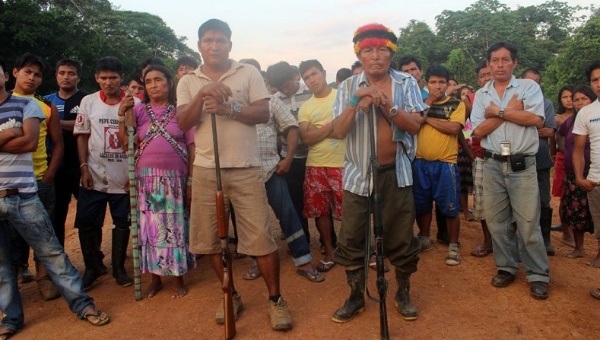
The Achuar com­mu­ni­ties say for­eign oil com­pa­nies pol­lute their lands and clean water and are demand­ing com­pen­sa­tion.

The Achuar Indige­nous peo­ple are fed up with the pol­lu­tion left behind by
for­eign oil com­pa­nies.

Sep­tem­ber 9th, 2015

The Achuar com­mu­ni­ties say for­eign oil com­pa­nies pol­lute their lands and clean water and are demand­ing com­pen­sa­tion.

Peru­vian Indige­nous pro­test­ers seized oil wells in an Ama­zon­ian oil block Tues­day to press the gov­ern­ment to respond to demands for com­pen­sa­tion due to the pol­lu­tion caused by the petro­le­um oper­a­tions. The pro­test­ers from the Achuar Indige­nous com­mu­ni­ties said they also plan to halt out­put in a near­by con­ces­sion.

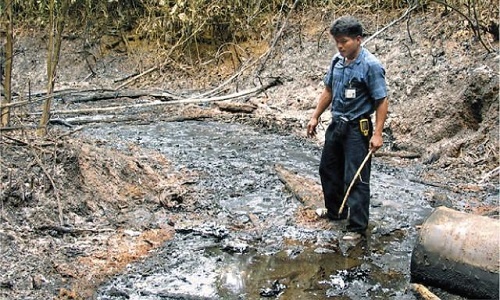
The Indige­nous demon­stra­tors shut down 11 wells and took con­trol of an air­drome in oil block 8 to demand clean water, repa­ra­tions for oil pol­lu­tion and more pay for the use of native land, said Car­los San­di, chief of the Indige­nous fed­er­a­tion Fecona­co. Achuar leader Car­los San­di observes the dam­age left behind by extrac­tion­ist oil com­pa­nies.

Pho­to: Rena­to Pita/ PUINAMUDT Argen­tine ener­gy com­pa­ny Plus­petrol oper­ates block 8 and said dai­ly out­put of about 8,500 bar­rels per day had stopped.

The firm called on pro­test­ers in block 8 to seek dia­logue. “So far, how­ev­er, they insist on hold­ing con­trol of instal­la­tions,” Plus­petrol said in a state­ment.

San­di said the Achuar in oil block 192 would also soon seize wells there fol­low­ing a dis­pute with the gov­ern­ment over pro­ceeds for com­mu­ni­ties in a new con­tract award­ed to the Cana­di­an com­pa­ny Pacif­ic Explo­ration and Pro­duc­tion Cor­po­ra­tion. Both oil blocks are in Peru’s north­ern region of Lore­to.

“The deci­sion (to seize wells) has been made, we just need to wrap up some coor­di­na­tion,” San­di said.

Peru signed a last-minute deal with Pacif­ic for the rights to tap oil block 192 for the next two years after an open auc­tion for a 30-year con­tract failed to draw any bids last month.

The gov­ern­ment includ­ed ben­e­fits for some Indige­nous com­mu­ni­ties in the new con­tract but a stale­mate with oth­ers over their share of oil prof­its left many out. Rep­re­sen­ta­tives of Pacif­ic could not be reached out­side of reg­u­lar busi­ness hours.

Block 192’s oper­a­tions have been halt­ed on var­i­ous occa­sions in recent years. The pro­test­ers have demand­ed the gov­ern­ment clean up oil spills and give them more com­pen­sa­tion.

Peru has declared sev­er­al envi­ron­men­tal emer­gen­cies there because of oil pol­lu­tion. The Latin Amer­i­can coun­try is rife with con­flicts over min­ing and ener­gy projects.

Ear­li­er on Tues­day, an assem­bly of social orga­ni­za­tions in the Ama­zon­ian region of Lore­to vot­ed to car­ry out anoth­er 48-hour strike start­ing Fri­day to protest the government’s pri­va­ti­za­tion move to allo­cate an oil lot to the Cana­di­an com­pa­ny for two years instead of the country’s state-owned com­pa­ny.

Lot 192 is the source of 17 per­cent of the nation­al crude pro­duc­tion. The region’s pres­i­dent of Patri­ot­ic Front Ameri­co Menen­dez said the Cana­di­an oil firm is a “mafia com­pa­ny,” say­ing that for exam­ple in Colom­bia they hire gun­men to deal with social lead­ers who oppose exploita­tion.

Nev­er­the­less, he added, the assem­bly also vot­ed in favor of main­tain­ing the talks with the gov­ern­ment, in order to nego­ti­ate var­i­ous demands, includ­ing the cre­ation of a com­pen­sa­tion fund of about US$112 mil­lion, in addi­tion to an inver­sion of around US$625 mil­lion in the area.

In Colom­bia, Pacif­ic Stra­tus Ener­gy alleged­ly hires killers against social lead­ers who oppose the exploita­tion, claimed Pres­i­dent of Fed­er­a­tion of Native Com­mu­ni­ties from the Riv­er Tigre Fer­nan­do Chu­je.

Min­is­ter of Min­ing and Ener­gy Rosa Maria Ortiz has indi­cat­ed that the state com­pa­ny PetroPe­ru will start a process of restruc­tur­ing and mod­ern­iza­tion in the next 270 days to pre­pare it to com­pete against the Cana­di­an com­pa­ny in two years, when the con­ces­sion ends.

Lot 192 is com­prised of areas inhab­it­ed by the com­mu­ni­ties of the riv­er basins of Pas­taza, Tigre, and Cor­ri­entes.

The lead­ers of the Apus Indige­nous peo­ple in the area have been protest­ing for years, demand­ing respect for their peo­ple and repa­ra­tions for envi­ron­men­tal destruc­tion caused by oil com­pa­nies.

Roundup of Actions Against Fossil Fuel Infrastructure in Vermont and NY (PHOTOS)

11540845_880395355368837_8597014069334356308_n

July 7th, 2015

from Ris­ing Tide Ver­mont

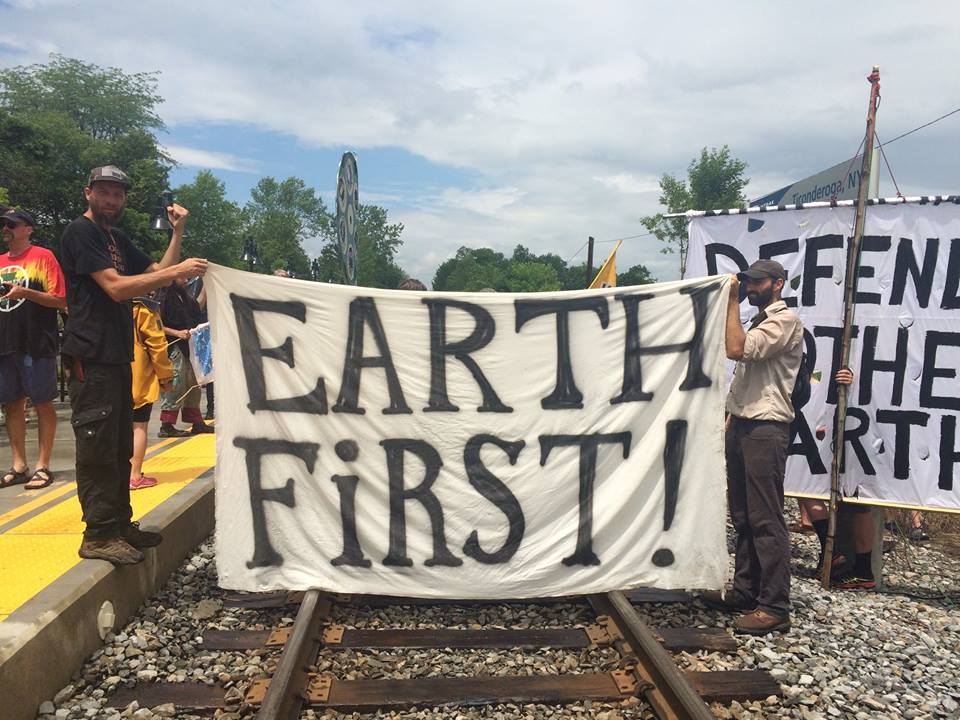
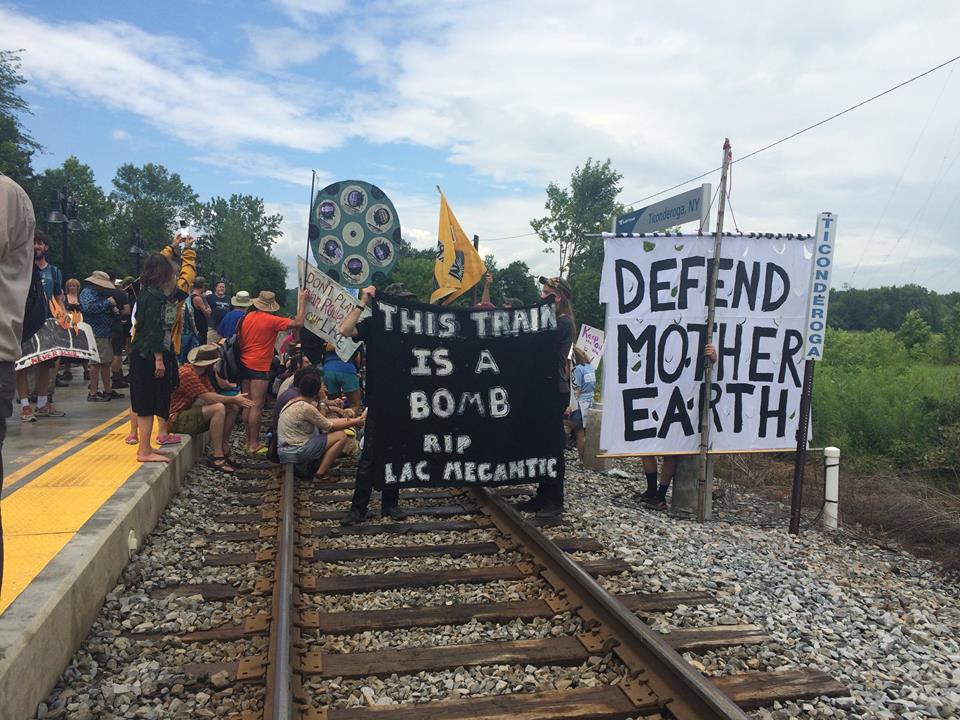
* 150+ w/dozens occu­py­ing the tracks in Ticon­dero­ga to ‪#‎StopOil­Trains‬.
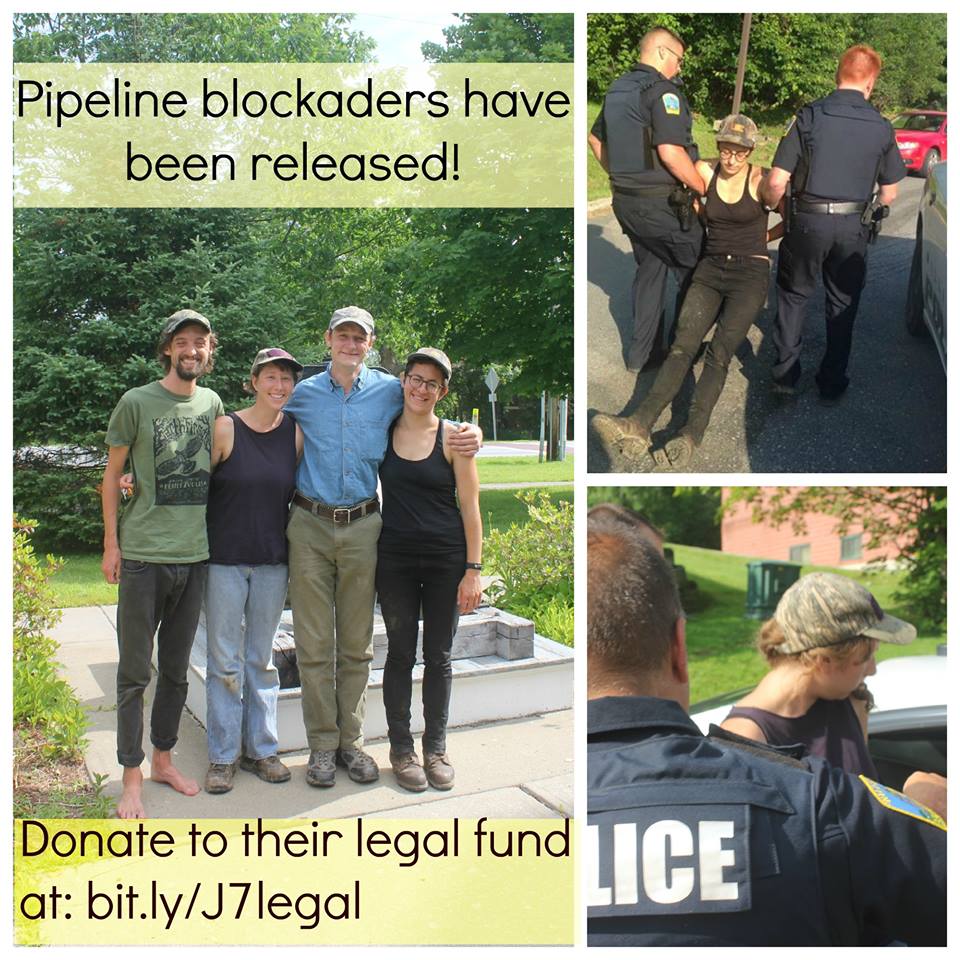
* Four arrest­ed blockad­ing VT fracked gas pipeline con­struc­tion.
* TWAC still locked down to CNG truck on way to IP mill.

Disrupting Vermont Gas Systems

from Burling­ton Free Press

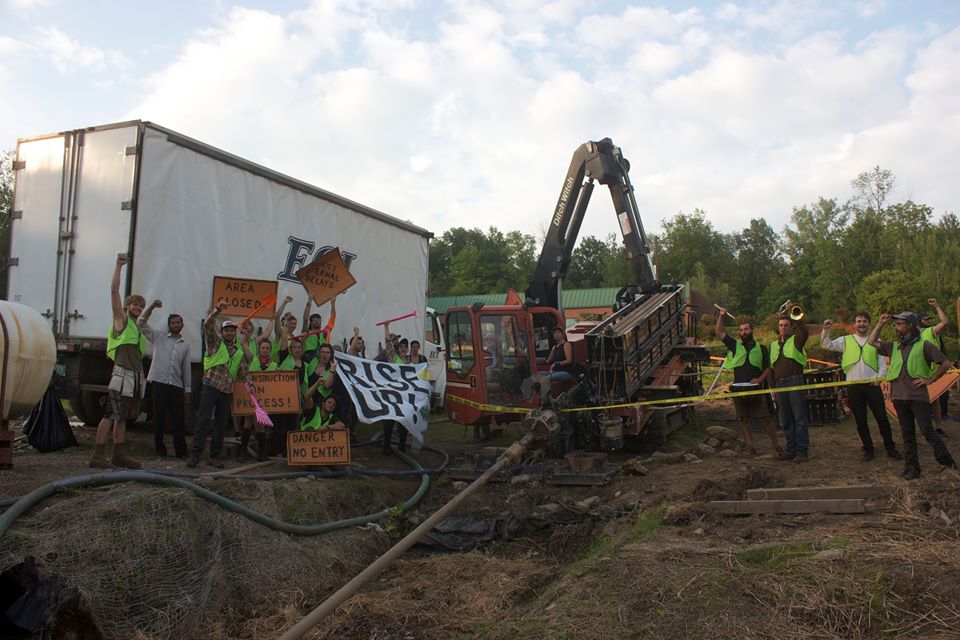
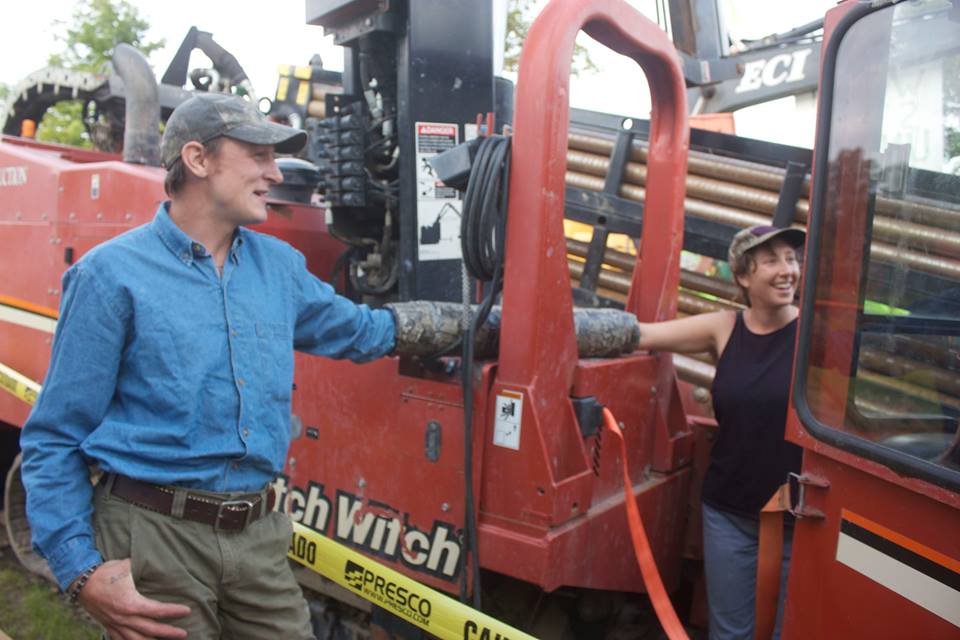
About 30 pro­test­ers dis­rupt­ed work at a Ver­mont Gas Sys­tems con­struc­tion site in Willis­ton on Tues­day morn­ing.

Four pro­test­ers were arrest­ed on sus­pi­cion that they unlaw­ful­ly tres­passed to stop work at the con­struc­tion site, said Willis­ton police Chief Todd Shep­ard. Willis­ton police had giv­en pro­test­ers until 7 a.m. to move.

Ver­mont State Police, Essex police and South Burling­ton police were also on scene. Shep­ard said about 14 law enforce­ment rep­re­sen­ta­tives had arrived by the end of the protest.

Thomas Buck­ley, 34, of West­ford and Martha Water­man, 25, of Char­lotte chained them­selves togeth­er across a ditch dig­ging machine. Avery Pittman, 25, of Burling­ton was lat­er also chained to Water­man.

Buck­ley, Water­man and Pittman were tak­en into cus­tody before 9 a.m. Grayson Flo­ry, 28, of Los Ange­les was also arrest­ed after refus­ing to leave the site at 310 Hur­ri­cane Lane.

All pro­test­ers arrest­ed were car­ried from the site by law enforce­ment, but they did not active­ly resist arrest oth­er­wise, Shep­ard said.

Each pro­test­er has been released from police cus­tody and issued a cita­tion to appear on Thurs­day in Ver­mont Supe­ri­or Court in Burling­ton, Shep­ard said.

Occupation of the Tracks


Flotilla

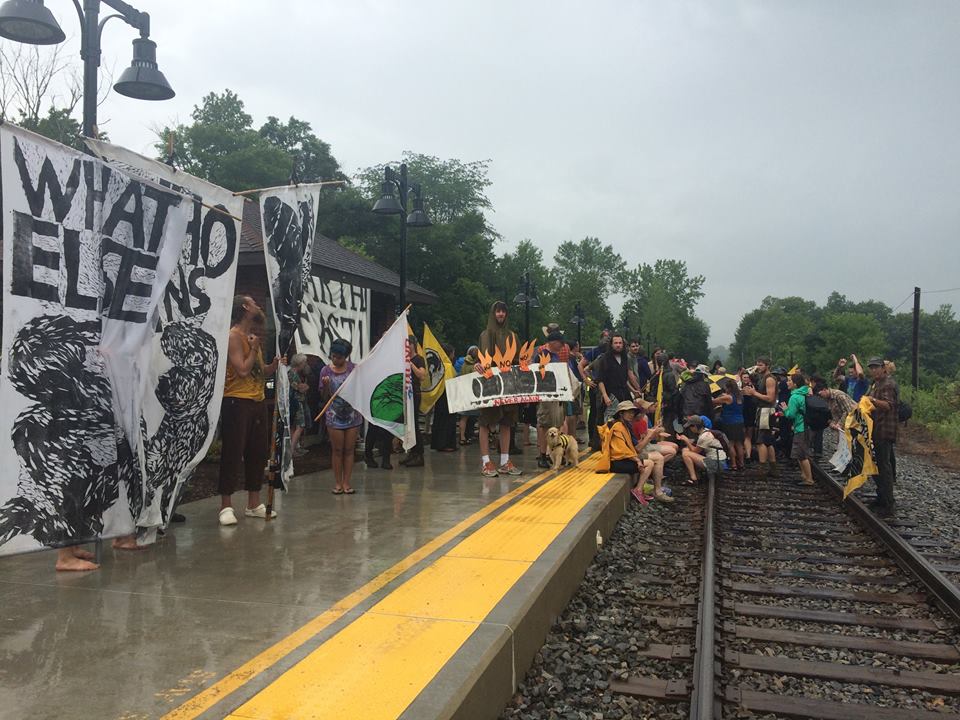
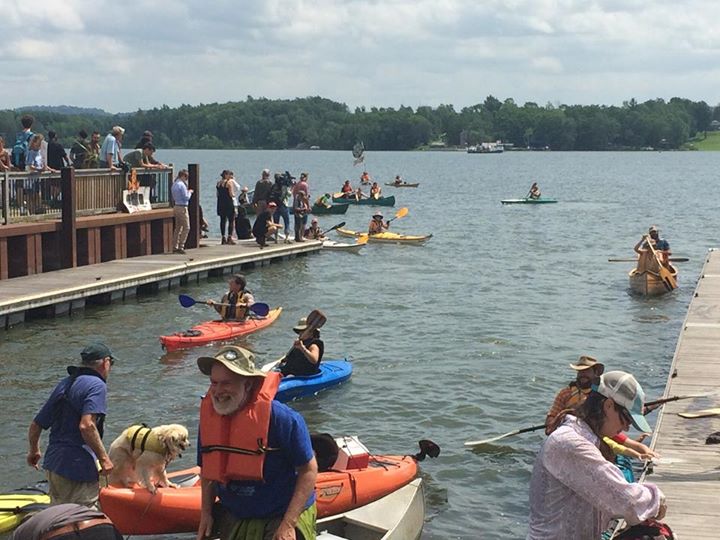
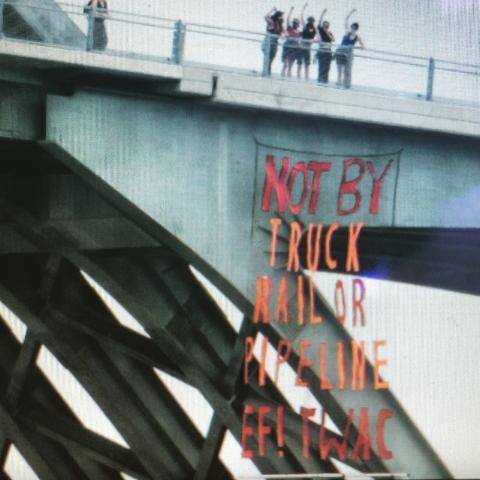
from Ris­ing Tide Ver­mont: More than a hun­dred peo­ple con­verged in Ticon­dero­ga, NY today for a flotil­la and sym­bol­ic block­ade to ‪#StopOil­Trains.

Yes­ter­day marked the sec­ond anniver­sary of the Lac-Megan­tic oil train dis­as­ter, in which a train car­ry­ing fracked oil explod­ed and lev­eled the small Que­bec town, killing 47 peo­ple.

In the so-called Cham­plain val­ley, tens of mil­lions of gal­lons of fracked oil are trans­port­ed annu­al­ly along the lake, and indus­try is mak­ing plans to start bring­ing tar sands through.

TWAC Throws Down

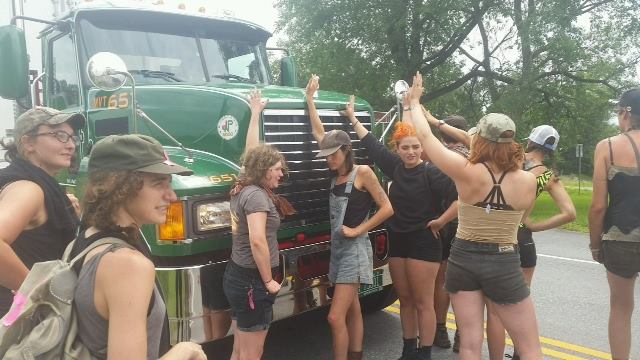
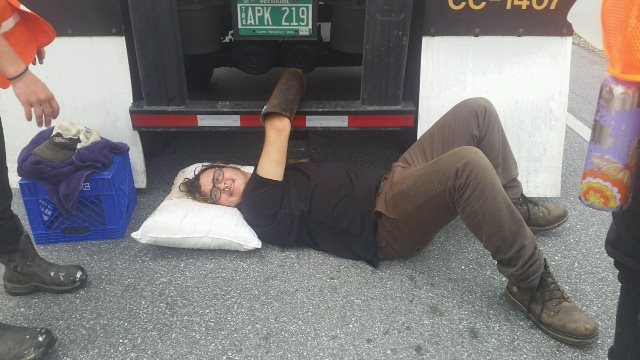
from Ris­ing Tide Ver­mont: “Our friends at the Trans and/or Women’s Action Camp (TWAC) also stopped a truck on its way to deliv­er com­pressed fracked nat­ur­al gas to Inter­na­tion­al Paper. One per­son has locked their body to the back of the truck pre­vent­ing it from mak­ing a deliv­ery. Fracked gas by truck is just as dirty and dan­ger­ous as fracked gas in a pipeline!”


(TWAC is a group of activists who iden­ti­fy as Trans*, Trans­gen­der, Gen­derqueer, and Gen­der non-con­form­ing as well as any­one who iden­ti­fies as a woman regard­less of whether they were assigned female at birth)

Released from Jail!!!

The four peo­ple who were arrest­ed this morn­ing block­ing the con­struc­tion of the fracked gas pipeline have all been released. Please share and donate to our legal fund to sup­port this fierce esca­la­tion of resis­tance against extreme ener­gy! Donate to our legal fund at: http://bit.ly/J7legal

Earth First! Summer Gathering, August 2015

Update: see earthfirstgathering.org for an inspir­ing and excit­ing pro­gramme and more.

Excit­ing plans are tak­ing shape.  Get involved by com­ing along to the EF! Win­ter Moot in Bris­tol.

Email: sum­mer­gath­er­ing AT earthfirst.org.uk

Update: see earthfirstgathering.org for an inspir­ing and excit­ing pro­gramme and more.

Excit­ing plans are tak­ing shape.  Get involved by com­ing along to the EF! Win­ter Moot in Bris­tol.

Email: sum­mer­gath­er­ing AT earthfirst.org.uk

Peru’s Indigenous People Blockade Oil Company on River Tigre

Hun­dreds of indige­nous peo­ple deep in the Peru­vian Ama­zon are block­ing a major Ama­zon trib­u­tary fol­low­ing what they say is the government’s fail­ure to address a social and envi­ron­men­tal cri­sis stem­ming from oil oper­a­tions.

Kich­wa men, women and chil­dren from numer­ous com­mu­ni­ties have been protest­ing along the Riv­er Tigre for almost a month, bar­ring the riv­er with cables and stop­ping oil com­pa­ny boats from pass­ing.

Oil com­pa­nies have oper­at­ed in the region for over 40 years, and have been linked by local peo­ple to pol­lu­tion that has led the gov­ern­ment to declare “envi­ron­men­tal emer­gen­cies” in the Tigre and oth­er riv­er basins.

“The Tigre is the most con­t­a­m­i­nat­ed, but the gov­ern­ment has done noth­ing seri­ous,” says Jose Fachin, a Kich­wa leader. “This is a protest by the whole Kich­wa peo­ple. They’re ready to die for it. The price of oil is low, but the pain caused is extreme­ly high.”

The oil con­ces­sion where the protest is tak­ing place, Lot 1‑AB, is Peru’s most pro­duc­tive, but the con­tract, held by Plus­petrol, expires in August. The gov­ern­ment has com­mit­ted to reli­cens­ing it and con­sult­ing the indige­nous com­mu­ni­ties involved, but lead­ers say the con­t­a­m­i­na­tion and oth­er issues must be addressed first.

“What we want is reme­di­a­tion, com­pen­sa­tion, and to be con­sult­ed, accord­ing to inter­na­tion­al norms, about the reli­cens­ing,” says Fachin. “We won’t per­mit anoth­er 30 years of work oth­er­wise.”

The Kich­was are protest­ing in a com­mu­ni­ty called Nue­vo Rema­nente. The community’s head, Ronal Chu­je San­di, told the Guardian two years of dia­logue with the gov­ern­ment “hasn’t achieved any­thing” and now they are demand­ing 100 mil­lion Peru­vian nue­vo soles, from Plus­petrol, for “com­pen­sa­tion after almost 45 years of con­t­a­m­i­na­tion.”

“The state declared an envi­ron­men­tal emer­gency, but hasn’t done any­thing,” says Guiller­mo San­di Tuituy, from indige­nous fed­er­a­tion Feconat. “It must find a solu­tion to this prob­lem if it wants to reli­cense the con­ces­sion.”

Hun­dreds of oth­er indige­nous peo­ple are also protest­ing in Lot 1‑AB along an adja­cent riv­er, the Cor­ri­entes. Accord­ing to Puina­mudt, a col­lec­tive of indige­nous fed­er­a­tions, 400 Achuar from a com­mu­ni­ty called Pam­pa Her­mosa have protest­ed for over a week, paralysing oper­a­tions at 19 wells and shut­ting down one field.

Achuar leader Car­los San­di, pres­i­dent of indige­nous fed­er­a­tion Fecona­co, says they will not allow Lot 1‑AB to be reli­censed if their demands are not met. Pluspetrol’s part­ner in Lot 1‑AB, which account­ed for almost 25% of Peru­vian oil pro­duc­tion in 2013, is the Chi­na Nation­al Petro­le­um Cor­po­ra­tion.

Raul Sosa Rodriguez, from Fecona­co, told the Guardian that Pam­pa Her­mosa is demand­ing com­pen­sa­tion for land use, ful­fil­ment of an agree­ment with Plus­petrol, and the oppor­tu­ni­ty to work for sub-con­trac­tors, in addi­tion to exist­ing demands such as clean-up.

“This is a lever to pro­pel the fight for all the indige­nous peo­ples in the region,” he says. “If these demands aren’t met, they’ll close the con­ces­sion.”

Anthro­pol­o­gist Alber­to Chirif says the gov­ern­ment is deter­mined to reli­cense Lot 1‑AB.

“What the indige­nous peo­ple are ask­ing for isn’t dif­fi­cult to sat­is­fy,” he says. “These are basic rights: ter­ri­to­ry, health, edu­ca­tion, the clean-up of impact­ed areas, and con­trol so there are no new envi­ron­men­tal dis­as­ters.”

Peru’s coun­cil of min­is­ters (PCM) issued a state­ment say­ing it has sent a com­mis­sion to the region and urg­ing the Kich­was and Achuars to sus­pend their protests.

Plus­petrol took over Lot 1‑AB from Occi­den­tal in 2000. It did not respond to requests for com­ment.


Earth First! Winter Moot (Bristol): 20th-22nd February 2015 /full programme

A week­end gath­er­ing for peo­ple involved or want­i­ng to know more about eco­log­i­cal direct action around the UK includ­ing fight­ing open­cast coal, frack­ing, GM, nuclear pow­er, new road build­ing and quar­ries with dis­cus­sions and cam­paign plan­ning — empha­sis on the tac­tics and strate­gies, com­mu­ni­ty sol­i­dar­i­ty and sus­tain­able activism.

Shar­ing sto­ries, skills, tac­tics, updates & analy­ses of the rad­i­cal eco­log­i­cal move­ment

Cost scale £20 to £30 . This includes full veg­an meals and accom­mo­da­tion. Arrive Fri­day evening (pro­gramme starts at 7pm), leave Sun­day (ends by 4pm). It will be an indoor floor sleep­ing space so bring a warm sleep­ing bag and mat to

Kebele Com­mu­ni­ty Cen­tre 14 Robert­son Road Eas­t­on Bris­tol BS5 6JY
TrainTo Sta­ple­ton rd , two stops from Bris­tol TM then 7min walk —

Earth First! is a net­work of peo­ple and cam­paigns who fight eco­log­i­cal destruc­tion and the forces dri­ving it. We believe in non-hier­ar­chi­cal organ­is­ing of Direct Action, to con­front, stop and even­tu­al­ly reverse the forces that are respon­si­ble for the destruc­tion of the Earth and its inhab­i­tants. EF! is not a cohe­sive group or cam­paign, but a con­ve­nient ban­ner for peo­ple who share sim­i­lar philoso­phies to work under and doing it our­selves rather than rely­ing on gov­ern­ments or indus­try.

For info or offers southwest.earthfirst@riseup.net www.earth­first.org.uk

Down­load the (ready-to-print) fly­er


Pro­gramme sub­ject to change:

Starts 7pm Fri­day with din­ner, fol­lowed by films & an intro to EF!

On Sat­ur­day, break­fast is before the 9:30am start with cam­paigns round-ups and legal & secu­ri­ty work­shops.  After lunch we’ll be look­ing at strate­gic think­ing (see below) and at 5 explor­ing the rela­tion­ship between Reclaim the Pow­er and EF!

On Sun­day we’ll con­tin­ue those explo­rations from 10am.  After lunch, there’ll be a work­shop on sus­tain­able activism, and a chance to get involved in organ­is­ing the EF! Sum­mer Gath­er­ing.  Please stay for that if you can and get involved. 


Work­shops include:

Intel­li­gent Resis­tance: strat­e­gy and its imple­men­ta­tion in the mod­ern world

Sum­ma­ry: Strong strat­e­gy has always been a key ele­ment of suc­cess­ful resis­tance move­ments. Whether it be the anar­chist move­ments of rev­o­lu­tion­ary Spain, or the con­tem­po­rary fight against frack­ing, a sol­id strat­e­gy is proven to be indis­pens­able.‘Intel­li­gent Resis­tance’ is a basic intro­duc­tion to strate­gic thought and action and looks to pro­vide those in atten­dance with a prac­ti­cal set of the­o­ret­i­cal tools to take away and apply to their own move­ments and prac­tice.

Sus­tain­ing Resis­tance: avoid­ing ‘Burn out”

This is a taster work­shop from a much longer ten day work­shop and offers a range of tools, col­lec­tive and per­son­al, which can make our activism more effec­tive and help us avoid burn out stay­ing in for the long haul.

Reclaim the Pow­er meets Earth First!”

How can Earth First! and Reclaim the pow­er coex­ist in the future strug­gles and is there a need for col­lab­o­ra­tion between oth­er camps or a con­sol­i­da­tion of resources?

Legal Defence Mon­i­tor­ing:

A taster ses­sion in how to be an effec­tive LDM on actions and demos.

Cam­paigns go-round:

Dates for your diary and what resis­tance is going on around the world and your back yard..

Oil Train Blockades in the Pacific Northwest and the Transformative Power of Direct Action

Decem­ber 1st, 2014

Decem­ber 1st, 2014

A pro­test­er sits atop the apex of a tri­pod block­ing the tracks at the Glob­al Part­ners oil ter­mi­nal in Ore­gon.

Direct action can deeply trans­form par­tic­i­pants in ways crit­i­cal to mobi­liza­tion and inno­va­tion in the cli­mate move­ment

“One, two, three, lift!”

With that com­mand, a group of about eight peo­ple from Port­land Ris­ing Tide and South Sound Ris­ing Tide shoul­dered three heavy, 30-foot steel poles. Bal­anc­ing the poles, they slow­ly walked down the rail­road tracks lead­ing to the Glob­al Part­ners oil ter­mi­nal about a mile away on the Colum­bia Riv­er, and 60 miles north­east of Port­land, OR. With­in min­utes the poles were con­vert­ed into a tri­pod and Sun­ny Glover was climb­ing up and assem­bling a plat­form some 25 feet from the ground. Indi­vid­u­als were dis­patched to inform the port author­i­ties, and those on the ground await­ed word from the teams up and down the tracks in the event of an approach­ing train. No trains car­ry­ing Bakken oil would come through that day. The block­ade last­ed some nine hours into the night until the police dan­ger­ous­ly cut the tri­pod legs one by one, a cou­ple feet at a time, while Glover’s neck was still locked to one of the poles.

While the dura­tion of the block­ade was itself impres­sive, this action also con­tained some­thing lit­tle acknowl­edged, but equal­ly pow­er­ful: the abil­i­ty of this kind of direct action to trans­form the par­tic­i­pants them­selves.

The mas­sive nature of the cli­mate cri­sis and the unwill­ing­ness of exist­ing polit­i­cal lead­ers and insti­tu­tions to act has cre­at­ed a cyn­i­cism and paral­y­sis that often qui­ets us in the very moment when it is most crit­i­cal that we act. It is not suf­fi­cient for direct action to tar­get only those indi­vid­u­als and com­pa­nies respon­si­ble for the cri­sis. These actions must also offer the pos­si­bil­i­ty of a trans­for­ma­tion that changes our sense of pow­er, inspires oth­ers, and over­comes the cyn­i­cism at the heart of dis­en­gage­ment. We must also be the tar­gets of our own actions.

The Glob­al Part­ners block­ade was part of a series of actions over the sum­mer of 2014. It fol­lowed on the heels of a sim­i­lar tri­pod block­ade at the Everett rail yard sev­er­al weeks ear­li­er. In that instance, Seat­tle Ris­ing Tide blocked an oil train in the rail yard for over eight hours. One per­son sat atop the apex of the tri­pod while four oth­ers were locked to the tripod’s legs. Ear­li­er this year, Ris­ing Tide, a net­work ori­ent­ing to con­fronting the root caus­es of the cli­mate cri­sis and pro­mot­ing com­mu­ni­ty-based solu­tions, also orga­nized block­ades at the Ana­cortes refin­ery in Wash­ing­ton, which receives oil trains, and at the Arc Logis­tics oil ter­mi­nal in Port­land, OR. In both actions  indi­vid­u­als were arrest­ed after block­ing the train tracks with con­crete-filled bar­rels that they had locked them­selves to. In anoth­er event at Arc Logis­tics, five pro­test­ers block­ad­ed the entrances to the ter­mi­nal while a hun­dred sup­port­ers ral­lied near­by. In that case, the ter­mi­nal oper­a­tors pre­emp­tive­ly shut the facil­i­ty down after learn­ing of the impend­ing block­ade. When all was said and done, a total of ten peo­ple were arrest­ed in these five actions tar­get­ing the Everett rail yard, the Ana­cortes Refin­ery, Glob­al Part­ners and the Arc Logis­tics oil ter­mi­nal, which rep­re­sent just a few of the 12 pro­posed or exist­ing oil-by-rail facil­i­ties in the Pacif­ic North­west.

The surge in action dur­ing the sum­mer of 2014 came in response to indus­try pro­pos­als  that would move some 850,000 bar­rels per day via oil-by-rail to ter­mi­nals and refiner­ies in the North­west. These projects have been devel­oped in response to the fos­sil fuel boom occur­ring in North Amer­i­ca, includ­ing in the Bakken shale field, and the broad­er increase in coal, oil, and gas export facil­i­ties. The enor­mous spike in oil rail traf­fic, increas­ing from 5,000 rail cars in 2006 to 400,000 rail cars by 2013, has lead to seri­ous cat­a­stro­phes through­out North Amer­i­ca, includ­ing most sig­nif­i­cant­ly the explo­sions that killed 47 peo­ple in Lac-Mégan­tic, Que­bec in July 2013. (Read the Journal’s Sum­mer cov­er sto­ry “High­ly Flam­ma­ble,” for details.) Despite these dis­as­ters, politi­cians and exist­ing reg­u­la­to­ry agen­cies have offered only rhetor­i­cal con­cern while still enabling dan­ger­ous rail projects. As a result, cit­i­zens through­out the North­west have begun to mobi­lize.

Despite the recent announce­ment of a US-Chi­na bilat­er­al cli­mate agree­ment, those of us con­cerned with the cli­mate cri­sis have to con­front a harsh real­i­ty: In the very moment where a rapid, just tran­si­tion away from fos­sil fuels is need­ed, the oppo­site is occur­ring. A project of mas­sive fos­sil fuel expan­sion, enabled by the same admin­is­tra­tion respon­si­ble for the recent cli­mate agree­ment, threat­ens the slight and insuf­fi­cient car­bon diox­idee­mis­sions reduc­tions made by the Unit­ed States. This real­i­ty is read­i­ly trans­par­ent to the pub­lic, who cor­rect­ly under­stand that exist­ing insti­tu­tions are not mov­ing fast enough to address the cli­mate cri­sis. It is often this dis­so­nance, and the lack of forms of action that address it, that pre­vents action and caus­es many to divert their gaze from the impend­ing dis­as­ter of cli­mate change.

Protesters at the Global Partners oil terminal in Oregon. (Photo Credit: Trip Jennings)

Pro­test­ers at the Glob­al Part­ners oil ter­mi­nal in Ore­gon.

That’s why actions that offer the pos­si­bil­i­ty of a trans­for­ma­tion are essen­tial in cli­mate orga­niz­ing. Direct action presents new under­stand­ings of who we are, what kinds of pow­er we have, and broad­ens our view of the avenues pos­si­ble for social change. In this sense we should con­sid­er our­selves the tar­gets of our own actions, along­side any oth­er tar­gets we might be aim­ing for.

On the tracks at the Glob­al Part­ners oil ter­mi­nal in Ore­gon, as in oth­er places, this per­son­al trans­for­ma­tion was most def­i­nite­ly appar­ent. Not only did the block­ade restrict access to the oil ter­mi­nal and gar­ner high pro­file media atten­tion, it also cre­at­ed a new sense of being in par­tic­i­pants, revers­ing the pow­er­less­ness we often feel when try­ing to access ver­ti­cal pow­er struc­tures dom­i­nat­ed by indus­try lob­by­ists and cam­paign con­tri­bu­tions. For Glover, this kind of action “felt stronger… it upend­ed that pyra­mid a lit­tle bit because we were doing some­thing was impos­si­ble to ignore or dis­miss entire­ly.” What is more, it “felt like it encour­aged a deep­er sense of con­nec­tion… and brought peo­ple togeth­er more strong­ly.”

Key par­tic­i­pants in these block­ades, many new to this kind of direct action, described the empow­er­ing, joy­ful, lib­er­at­ing expe­ri­ence of the action on them­selves. In tak­ing action in the Everett train yard, Abby Brock­way described how the expe­ri­ence was the “first time that I’ve ever real­ly felt like I was act­ing on mak­ing a dif­fer­ence rather than expe­ri­enc­ing the frus­tra­tion of attend­ing hear­ings, or writ­ing let­ters, or meet­ing politi­cians, or vot­ing.” Par­tic­i­pa­tion in the block­ades changed who these pro­test­ers were and how they act­ed, not only dur­ing the block­ade, but also, crit­i­cal­ly, after the action was over.

Over the last decade there has been an explo­sion of cli­mate relat­ed direct action, and the cli­mate cri­sis has become bet­ter accept­ed among the gen­er­al pub­lic. “This blocka­dia movement…it’s not just this under­ground cul­ture, it’s now peo­ple that are more main­stream,” Brock­way says.

As more and more peo­ple expe­ri­ence these actions as either pas­sive observers or active par­tic­i­pants, some­thing is start­ing to hap­pen. A line is crossed in these actions from protest­ing only with­in the lim­its of what is legal, to doing what is right. From doing what we are allowed to do, to what we have a respon­si­bil­i­ty to do. From appeal­ing to oth­ers to make changes for us, to dis­cov­er­ing our own agency to cre­ate those changes. Such shifts con­sti­tute new ways of being, and par­tic­i­pants are dis­cov­er­ing entire­ly new hori­zons of what is pos­si­ble and ways in which we can rearrange our rela­tions to one anoth­er.

Direct actions that facil­i­tate these per­son­al expe­ri­ences have the poten­tial to cre­ate a cli­mate move­ment that can strike at the root caus­es of the cli­mate cri­sis while also open­ing doors to excit­ing per­son­al trans­for­ma­tion. As Glover reflect­ed, “There had been this bar­ri­er cre­at­ed about how you’re expect­ed to behave and the rules you’re expect­ed to fol­low – while it was a lit­tle scary to trans­gress, hav­ing done so once opened up a whole new area of my life. It feels real­ly free­ing and excit­ing.”

Dene Trappers Block Oil Companies in Northwestern Saskatchewan, Canada

dene-trappers-saskatchewan-1

dene-trappers-saskatchewan-1

Novem­ber 21st, 2014

The Dene peo­ple of Ducharme, who have made a liv­ing from the land for cen­turies, have found access to their trap lines blocked by secu­ri­ty gates. Life-long trap­per, Don Mont­grand, report­ed, “When I drove up to my trap line, a heli­copter fol­lowed over­head of me, all the way. That’s 106 km.”

On Wednes­day, Novem­ber 19, 2014, a road block [was] estab­lished 8 km north of La Loche, Saskatchewan to pre­vent numer­ous oil com­pa­nies road access to explo­ration camps beyond that point.

Trap­pers are mak­ing a stand because for the past 6 ½ years, there has been a mad rush on min­er­al and oil explo­ration. This along with the province’s ‘let it burn’ for­est fire pol­i­cy in the region which has dec­i­mat­ed wildlife and destroyed cab­ins has had a seri­ous impact on their abil­i­ty to make a liv­ing and thrive in a cul­tur­al­ly sus­tain­able way in their own home ter­ri­to­ry. “It is tak­ing food off of our table,” says Bob­by Mont­grand.

We’ve had enough! The ani­mals are dis­ap­pear­ing. Even the min­nows are dying in the lakes. All of the chem­i­cals they are dump­ing and burn­ing in our local land­fills and what they are leav­ing in the bush and run­ning into the lakes. Even the peo­ple are dying of can­cer and some are pret­ty young. We buried six in the last few months when we used to see maybe one per­son die of can­cer in a year,” claims Don Mont­grand.

The trap­pers are con­cerned that they are being ignored and dri­ven off of their lands by oil and min­er­al com­pa­nies, like Cen­ovus from Cal­gary, Alber­ta. “When these com­pa­nies are done destroy­ing our north there will be noth­ing for our chil­dren to live on,” stat­ed Bob­by Mont­grand.

Con­tact: Don Mont­grand (306) 822‑3181 or Bob­by Mont­grand (306) 822‑2704
Email: susnaghe@sasktel.net