National and Global Calls for Tasmania’s Forests, World Heritage not Woodchips

MEDIA RELEASE 01.09.09
NATIONAL AND GLOBAL CALLS FOR TASMANIA’S FORESTS, WORLD HERITAGE NOT WOODCHIPS.

Con­ser­va­tion­ists around the nation and globe are protest­ing today against the con­tin­u­ing log­ging and the wood chip­ping of world her­itage val­ued old growth forests of Tas­ma­nia.

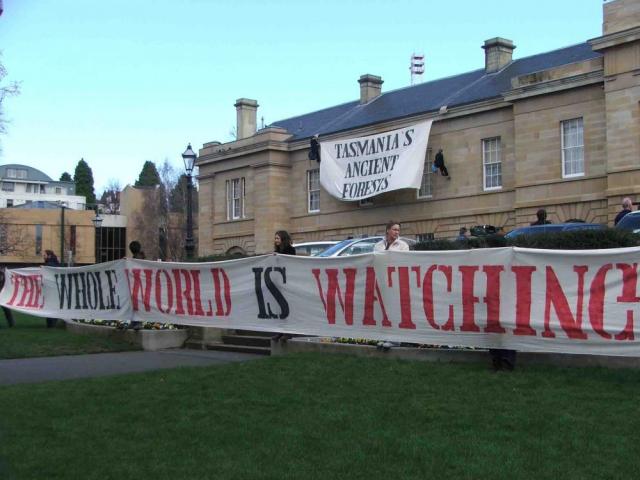
Not Woodchips Tasmania banner hangMEDIA RELEASE 01.09.09
NATIONAL AND GLOBAL CALLS FOR TASMANIA’S FORESTS, WORLD HERITAGE NOT WOODCHIPS.

Con­ser­va­tion­ists around the nation and globe are protest­ing today against the con­tin­u­ing log­ging and the wood chip­ping of world her­itage val­ued old growth forests of Tas­ma­nia.

Ban­ners read­ing “TASMANIA’S ANCIENT FORESTS, WORLD HERITAGE NOT WOODCHIPS” and “THE WHOLE WORLD IS WATCHING” are being dis­played across the coun­try.

In Hobart 4 activists are dis­play­ing this mes­sage hang­ing from ropes off the roof of Par­lia­ment house.

In Mel­bourne the mes­sage has been paint­ed onto silos on Lan­ridge St. in Colling­wood.

In Can­ber­ra, the mes­sage is being dis­played on ban­ners unfurled from the roof of Fed­er­al Par­lia­ment house.

In Ade­laide a ban­ner dis­play­ing the mes­sage is hang­ing from build­ings in the CBD.

In New­cas­tle con­ser­va­tion­ists have con­struct­ed an 84 metre tree. Only trees greater than 84 metres qual­i­fy for pro­tec­tion as “giants”. Ancient trees that do not reach the 84 metre marked are felled and wood chipped.

Actions across the nation today are sup­port­ed by inter­na­tion­al actions in Scot­land, Ire­land, Switzer­land, Italy and oth­er sol­i­dar­i­ty actions are expect­ed to roll on through­out the day.

“The Fed­er­al and Tas­man­ian State Gov­ern­ments are con­tin­u­ing well into the 21st cen­tu­ry to dec­i­mate the very last unpro­tect­ed areas of world her­itage bor­dered old growth for­est. These last stands of old growth have been delib­er­ate­ly left out of the World Her­itage Area to facil­i­tate their destruc­tion.” Said spokesper­son Ed Hill.

“Despite a unan­i­mous IUCN (Inter­na­tion­al Union for Con­ser­va­tion and Nature) deci­sion of 21 coun­tries to extend exist­ing world her­itage bor­ders to include ancient forests locat­ed in the Upper Flo­ren­tine, Styx, Low­er Weld Val­ley and Mid­dle Huon, These forests are cur­rent­ly sub­ject to indus­tri­al scale clear felling.” Said spokesper­son Ed Hill.

“The nation wants an end to the envi­ron­men­tal mad­ness that is tak­ing place in Tasmania’s forests. The out­right van­dal­ism of old growth forests is a cli­mate dis­as­ter that is hap­pen­ing right now.” Said Mr Hill.

“ A recent report* by Pro­fes­sor Bren­dan Mack­ey and Aus­tralian ANU sci­en­tists states Tasmania’s tem­per­ate old growth forests store far more car­bon then was pre­vi­ous­ly thought. The study found that tem­per­ate forests store more car­bon than trop­i­cal forests and that Tasmania’s ancient forests are some of the most car­bon rich forests in the world.”

“The pro­tec­tion of Tasmania’s ancient forests is a sim­ple and effec­tive strat­e­gy to help reduce the effects of cat­a­stroph­ic cli­mate change and needs to be seri­ous­ly con­sid­ered by State and Fed­er­al Gov­ern­ments. The sci­ence on forests and cli­mate change is loud and clear yet the Fed­er­al Gov­ern­ment con­tin­ues to twid­dle their thumbs in the face of dan­ger­ous cli­mate change as old growth forests are cleared dai­ly.” Said Mr Hill.

Algonquins set for peaceful, indefinite blockade

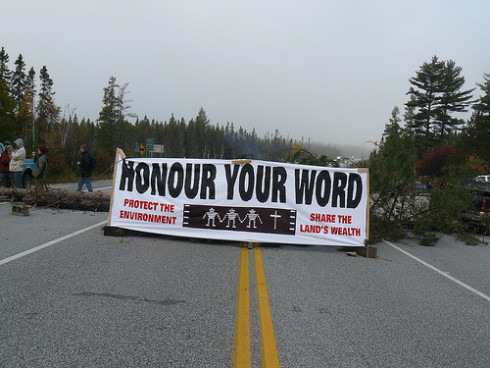
The Algo­nquins of Bar­riere lake have announced plans to set up an indef­i­nite road­block on their land—beginning today, Sep­tem­ber 1, 2009.

Algonquins - Honour Your WordThe Algo­nquins of Bar­riere lake have announced plans to set up an indef­i­nite road­block on their land—beginning today, Sep­tem­ber 1, 2009.

In a press state­ment (below), the north­ern Que­bec First Nation says the road­block, aimed at pre­vent­ing log­ging on their tra­di­tion­al lands, will con­tin­ue “until Que­bec imple­ments agree­ments cov­er­ing forestry on Bar­riere Lake’s lands, and the Que­bec and Cana­di­an government’s rec­og­nize the First Nation’s legit­i­mate lead­er­ship.”

For more infor­ma­tion, con­tact Chief Jean Mau­rice Matchewan at 819–435- 2136 – or, if the line is busy, 514–398-7432

Algo­nquins peace­ful­ly block log­ging until agree­ments and lead­er­ship respect­ed?

For Imme­di­ate Release
Sep­tem­ber 1, 2009

Algo­nquins place bod­ies in front of log­ging machines: pre­vent log­ging until Que­bec and Cana­da respect agree­ments and lead­er­ship

Kitiganik/Rapid Lake, Algo­nquin Ter­ri­to­ry /- This after­noon mem­bers of the Algo­nquins of Bar­riere Lake will peace­ful­ly block the machines of Abitibi-Bowa­ter forestry work­ers, pre­vent­ing log­ging in their ter­ri­to­ry until Que­bec imple­ments agree­ments cov­er­ing forestry on Bar­riere Lake’s lands, and the Que­bec and Cana­di­an government’s rec­og­nize the First Nation’s legit­i­mate lead­er­ship.

“Our com­mu­ni­ty has decid­ed there will be no forestry activ­i­ties or any new devel­op­ments in our Tri­lat­er­al Agree­ment Ter­ri­to­ry until the sta­tus of our lead­er­ship and the agree­ments we signed are resolved to our community’s sat­is­fac­tion,” says Jean Mau­rice Matchewan, Cus­tom­ary Chief of Bar­riere Lake. “The Que­bec gov­ern­ment has act­ed in bad faith, giv­ing com­pa­nies the go-ahead to log while they ignore their legal oblig­a­tions, leav­ing us with no choice but to stop forestry oper­a­tions until Que­bec com­plies with the agree­ment. We have wait­ed more than 3 years for Que­bec to imple­ment it.”

Matchewan received no response to a let­ter he sent to Man­ag­er Paul Grondin of Abitibi-Bowater’s Mani­wa­ki mill on August 25, request­ing that the com­pa­ny sus­pend log­ging oper­a­tions until the gov­ern­ments fol­low through on their oblig­a­tions.

“Our plan is to peace­ful­ly put our bod­ies in front of their machines until we get some results. We expect they may use the police, because we are used to such tac­tics. This is our ter­ri­to­ry and they can’t push us off our lands,” says Matchewan.

Cana­da and Que­bec have refused to acknowl­edge the results of a June 24, 2009 lead­er­ship selec­tion process that res­e­lect­ed Jean Mau­rice Matchewan as the legit­i­mate Cus­tom­ary Chief of Bar­riere Lake. Nation­al Chief Shawn Atleo of the Assem­bly of First Nations, how­ev­er, met with Chief Matchewan on August 19, to dis­cuss the Tri­lat­er­al agree­ment and oth­er com­mu­ni­ty con­cerns. The
Algo­nquin Nation Sec­re­tari­at, a Trib­al Coun­cil rep­re­sent­ing three Algo­nquin com­mu­ni­ties includ­ing Bar­riere Lake, also recent­ly reit­er­at­ed their sup­port for Chief Matchewan.

“Instead of act­ing hon­ourably and coop­er­at­ing with our Cus­tom­ary Coun­cil to imple­ment these signed agree­ments, the fed­er­al and provin­cial gov­ern­ments have been work­ing in uni­son to try and install a minor­i­ty fac­tion whom they can use to sign off on the cut­ting of our for­est,” says Matchewan.

Bar­riere Lake wants Cana­da and Que­bec to uphold signed agree­ments dat­ing back to the 1991 Tri­lat­er­al Agree­ment, a land­mark sus­tain­able devel­op­ment and resource co-man­age­ment agree­ment praised by the Unit­ed Nations and the Roy­al Com­mis­sion on Abo­rig­i­nal Peo­ples. Cana­da has been in breach of the agree­ment since 2001. Que­bec signed a com­ple­men­tary Bilat­er­al Agree­ment in
1998, but has stalled despite the 2006 rec­om­men­da­tions of two for­mer Que­bec Cab­i­net Min­is­ters, Que­bec spe­cial rep­re­sen­ta­tive John Ciac­cia and Bar­riere Lake spe­cial rep­re­sen­ta­tive Clif­ford Lin­coln, that the agree­ment be imple­ment­ed. The agree­ment is intend­ed to allow log­ging to con­tin­ue while pro­tect­ing the Algonquin’s’ tra­di­tion­al way of life and giv­ing them a $1.5 mil­lion share of the $100 mil­lion in resource rev­enue that comes out of their ter­ri­to­ry every year.

Eco-Anarchists Attack Luxury Car in Guadalajara, Mexico

In the ear­ly morn­ing hours of August 18 our cell once again decid­ed to attack the machines which destroy the plan­et and its inhab­i­tants; this time our protest was against the auto­mo­bile, and why do it if not to lux­u­ry cars.

In the ear­ly morn­ing hours of August 18 our cell once again decid­ed to attack the machines which destroy the plan­et and its inhab­i­tants; this time our protest was against the auto­mo­bile, and why do it if not to lux­u­ry cars.

Com­mu­nique:

“Arson attack on a lux­u­ry car by eco-anar­chists in Guadala­jara, Mex­i­co

In the ear­ly morn­ing hours of August 18 our cell once again decid­ed to attack the machines which destroy the plan­et and its inhab­i­tants; this time our protest was against the auto­mo­bile, and why do it if not to lux­u­ry cars. We entered a bour­geois area of our city and we set fire to the front tires of a lux­u­ry car; unfor­tu­nate­ly the fire did not spread because of the rain; it only melt­ed the tires, but it cre­at­ed a psy­cho­log­i­cal fear in all those who choose to invest their mon­ey and spend it in the destruc­tion of our planet.We will return to destroy their machines!

ECO ANARCHISTS GUADALAJARA MEXICO”

Source: ELF Press Office

Ride Planet Earth

Dear all,

I hope you are well.

My name is Richard i am the British coor­di­na­tor of the Ride Plan­et Earth project.

I hope you can take a moment to read this mes­sage.

Bike powerDear all,

I hope you are well.

My name is Richard i am the British coor­di­na­tor of the Ride Plan­et Earth project.

I hope you can take a moment to read this mes­sage.

Ride Plan­et Earth is encour­ag­ing action to pre­vent dan­ger­ous cli­mate change. The project cul­mi­nates on 6th Dec 09, the day before the Cli­mate Change nego­ti­a­tions begin in Copen­hagen, with a series of simul­ta­ne­ous cycling events in cities, towns, and dirt tracks around the globe. The mes­sage we are send­ing is that ordi­nary peo­ple can and will take action to stop cli­mate change so our gov­ern­ments must do the same. Start Cycle Change: Stop Cli­mate Change.

Ride Plan­et Earth began as a jour­ney from Bris­bane to Copen­hagen by bicy­cle, to high­light the cur­rent impacts of cli­mate change on the plan­et’s most vul­ner­a­ble com­mu­ni­ties. The Cycle Change Con­voy has now reached Geor­gia and over the next 4 months will cross europe to Den­mark.

To find out more vis­it

www.rideplanetearth.org

At present the 6th Dec will see events occur­ring in Aus­tralia, Asia, Africa, Europe and North Amer­i­ca. But to make a stronger state­ment we need more. The UK has a huge poten­tial to help.
That is why I am writ­ing to you.

Please con­tact me at richardkimberley8@hotmai.com, if you, your organ­i­sa­tion can or know of any indi­vid­u­als or organ­i­sa­tions who have the capac­i­ty to put on a ride, large or small. Your help will be great­ly, great­ly appre­ci­at­ed.

Lets spread the word

Yours sin­cere­ly,

Richard Kim­ber­ley

British Coor­di­na­tor
www.rideplanetearth.org
richardkimberley8@hotmail.com

Start Cycle Change Stop Cli­mate Change

China villagers storm lead plant

17 August 2009
At least 600 chil­dren have exces­sive amounts of lead in their blood

Hun­dreds of Chi­nese vil­lagers have bro­ken into a fac­to­ry that poi­soned more than 600 chil­dren, reports say.

Vil­lagers tore down fenc­ing and smashed coal trucks at the lead smelt­ing fac­to­ry in Shaanxi Province.

17 August 2009
At least 600 chil­dren have exces­sive amounts of lead in their blood

Hun­dreds of Chi­nese vil­lagers have bro­ken into a fac­to­ry that poi­soned more than 600 chil­dren, reports say.

Vil­lagers tore down fenc­ing and smashed coal trucks at the lead smelt­ing fac­to­ry in Shaanxi Province.

Local author­i­ties have admit­ted that the plant is respon­si­ble for poi­son­ing the chil­dren. More than 150 were in hos­pi­tal.

Air, soil and water pol­lu­tion is com­mon in Chi­na, which has seen rapid eco­nom­ic growth over the past few decades.

Tox­ic met­al

The vil­lagers broke into the Dongling Lead and Zinc Smelt­ing Com­pa­ny, near the city of Bao­ji in west­ern Shaanxi on Mon­day, accord­ing to the state-run Xin­hua news agency.

About 100 police offi­cers were sent to the plant to restore order.

The vil­lagers are angry because med­ical tests revealed that at least 600 chil­dren under 14 from two vil­lages near the plant have exces­sive amounts of lead in their blood.

About a quar­ter of them were tak­en to hos­pi­tal for treat­ment.

Envi­ron­men­tal offi­cials from Bao­ji city gov­ern­ment admit­ted on Sun­day that the plant was “main­ly to blame” for the chil­dren’s lead poi­son­ing, accord­ing to Xin­hua.

Checks found that water, soil and waste from the fac­to­ry — a major local employ­er — all met nation­al envi­ron­men­tal stan­dards.

But the lead con­tent in the air around the fac­to­ry was more than six times the lev­el found a few hun­dred metres away.

The smelt­ing plant has now been closed down.

Local offi­cials had promised to relo­cate all res­i­dents liv­ing with­in a 500m ( 550 yard ) radius of the fac­to­ry with­in three years of its open­ing, but that plan stalled.

Xin­hua said only 156 fam­i­lies had been moved; three times that num­ber are still wait­ing.

Vil­lages are also wor­ried that the new homes are still not far enough away from the plant to pre­vent their chil­dren from get­ting sick.

Lead is a tox­ic met­al that can get into the air and water sup­plies.

It can cause a range of health prob­lems, from learn­ing dis­abil­i­ties to seizures. Chil­dren under six are most at risk.

ELF Torches Development Water Truck in Mexico

16.8.2009
Earth Lib­er­a­tion Front Torch­es Devel­op­ment Water Truck in Mex­i­co

Com­mu­nique:
In the clan­des­tine dark­ness, on a tran­quil and hot night, we assem­bled our dream with gaso­line that would soon be fire.

We walk under the ghosts of the trees already destroyed, only our breath­ing and steps we could hear. Dur­ing this night, every­thing went well.

16.8.2009
Earth Lib­er­a­tion Front Torch­es Devel­op­ment Water Truck in Mex­i­co

Com­mu­nique:
In the clan­des­tine dark­ness, on a tran­quil and hot night, we assem­bled our dream with gaso­line that would soon be fire.

We walk under the ghosts of the trees already destroyed, only our breath­ing and steps we could hear. Dur­ing this night, every­thing went well.

We arrived at our objec­tive, a truck full of water, uti­lized to squan­der hun­dreds of liters of water for the earth that civ­i­liza­tion would lat­er lick, urban­iz­ing it and leav­ing it com­plete­ly infer­tile, all for the con­struc­tion of streets where zom­bies wan­der.

We placed our device in the front rim of the truck and we hid behind urban flo­ra. A small spark of hap­pi­ness suf­fices to illu­mi­nate a sad night of agony.

Our dark clothes cam­ou­flage with the shad­ows, and the lumi­nous and round moon lit the truck that in some min­utes would begin to burn. The incen­di­ary was lit and began to burn the the rim, the chest, and lat­er, slow­ly, the cab­in of the truck would be eat­en. A great cloud rose to the skies, as we felt a great emo­tion in our bod­ies. The flames were large, as large as our desire to see the dying civ­i­liza­tion burn.

In the com­pa­ny of the stars, we admired our com­plet­ed action, behind the trees, just as the pan­ther visu­al­izes its prey.

Sud­den­ly, the deaf­en­ing noise of chaos, of neigh­bors, and of sirens were heard. An ambu­lance arrived, fire­men arrived and the cars that were near the smoke began to flee. The deaf­en­ing sound was the sound of the motor of the truck explod­ing.

The social peace had been destroyed. Exploiters of the earth received their pun­ish­ment, the truck was ren­dered use­less and we once again struck with­out leav­ing any trail.

Revenge for the land, the trees, the moun­tains, the water and every­thing that sig­ni­fies wild nature turned into mer­chan­dise for the anthro­pocen­tric human!

We will con­tin­ue in the fight.

Earth Lib­er­a­tion Front/Mexico

info@elfpressoffice.org
http://www.elfpressoffice.org

Day of the Broken Promise

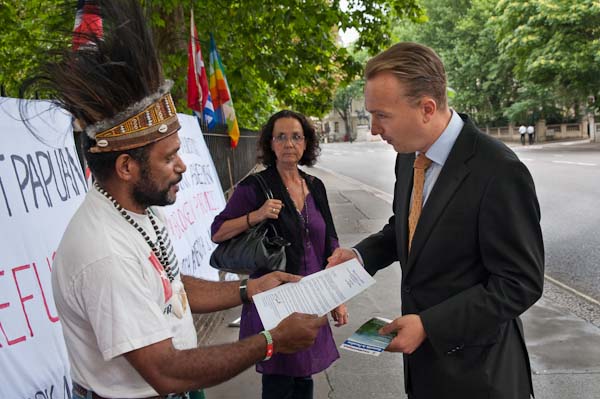
Ben­ny Wen­da, West Papuan inde­pen­dence leader and chair­man of the Kote­ka Trib­al Assem­bly, and most of the rest of the small hand­ful of West Papuans liv­ing in Britain demon­strat­ed oppo­site the Nether­lands Embassy in Lon­don on Fri 14 Aug, to mark the anniver­sary of the ‘Day of the Bro­ken Promise’, 15 August 1962.

West Papuan Broken Promise Day demoBen­ny Wen­da, West Papuan inde­pen­dence leader and chair­man of the Kote­ka Trib­al Assem­bly, and most of the rest of the small hand­ful of West Papuans liv­ing in Britain demon­strat­ed oppo­site the Nether­lands Embassy in Lon­don on Fri 14 Aug, to mark the anniver­sary of the ‘Day of the Bro­ken Promise’, 15 August 1962.

The west­ern half of New Guinea became a Dutch colony in the nine­teenth cen­tu­ry, but by the 1950s they were mov­ing towards giv­ing it inde­pen­dence. How­ev­er the Indone­sian gov­er­ment claimed the coun­try and threat­ened inva­sion after then Dutch set up an elect­ed gov­ern­ment of West Papua in 1961.

Indone­sia was backed by mil­i­tary aid from the Sovi­et Union, and the Kennedy admin­is­tra­tion in the USA want­ed to pre­vent fur­ther move­ment of the coun­try towards the Sovi­et bloc, so pres­sured the Nether­lands into sign­ing the ‘New York Agree­ment’ with Indone­sia in August 1962. This allowed Indone­sia to take over the admin­is­tra­tion of the coun­try but pro­vid­ed for all the adult pop­u­la­tion of West Papua to vote at a lat­er date on whether they wished to become inde­pen­dent.

The Indone­sian army moved in on 1 May 1963 and began a pro­gramme of repres­sion and human rights abuse against the peo­ple. In 1969 they round­ed up and detained just over a thou­sand West Papuans as rep­re­sen­ta­tives of the peo­ple and enusured that they vot­ed for rule by Indone­sia by threats, includ­ing at least in some cas­es that they and their fam­i­lies would be killed unless they did so.

The Indone­sian gov­ern­ment made it impos­si­ble for the UN rep­re­se­n­ata­tive who was sup­posed to over­see the elec­tion to oper­ate prop­er­ly, and banned most for­eign reporters. Although it was clear that the vote did not reflect the will of the West Papuan peo­ple — and had failed to meet the terms of the agree­ment — which had been rat­i­fied by the UN — it was approved by the UN Gen­er­al Assem­bly.

Since then there have been many reports of repres­sion by Indone­sia in the coun­try, includ­ing mur­der, polit­i­cal assas­si­na­tions, tor­ture, rapes, dis­s­a­pear­ances and bomb­ing. The gov­ern­ment also had a pro­gramme of reset­tling migrants from Indone­sia in the coun­try, appar­ent­ly aimed at pro­duc­ing an Indone­sian major­i­ty pop­u­la­tion.

West Papuans have engaged in both civ­il dis­obe­di­ence — par­tic­u­lar­ly around cer­mo­ni­al rais­ing of the West Papua flag (the Morn­ing Star) as well as armed resis­tance.

Wen­da was jailed for dis­play­ing the West Papuan flag (on his chest and at top right of pic­ture) but man­aged to escape and gain asy­lum in the UK. Esti­mates of the num­ber of West Papuans killed by Indone­sian repres­sion are in the hun­dreds of thou­sands (400,000 accord­ing to the Free West Papua Cam­paign), and in 2006, 43 refugees land­ed in a tra­di­tion­al canoe in Aus­tralia, claim­ing the Indone­sian mil­i­tary was car­ry­ing out a pro­gramme of geno­cide.

Despite a wide­spread recog­ni­tion of what has been hap­pen­ing, there is lit­tle inter­na­tion­al sup­port for West Papua. The coun­try has the world’s largest cop­per and gold mines, large­ly owned by US Comp­nay Freeport-McMoRan with UK based Rio Tin­to Group also involved.

Today’s demon­stra­tion was peace­ful and tune­ful, with Ben­ny and Maria Wen­da and oth­ers play­ing instru­ments and singing tra­di­tion­al West Papuan songs oppo­site the embassy.

A Dutch diplo­mat came across the road to talk to the demon­stra­tors and receive a let­ter demand­ing that the Nether­lands and oth­er gov­ern­ments insist on the prop­er imple­men­ta­tion of the 1962 agree­ment, with a free and fair inde­pen­dence ref­er­en­dum involv­ing all West Papuans over­seen by the UN. Papuans feel they were let down by every­one involved, but par­tic­u­lar­ly by the Dutch; “We trust­ed you and we believed in you. But you betrayed us.”

The diplo­mat spoke for a few min­utes with the demon­stra­tors and was inter­est­ed to see a fea­ture on the rebel army there which appeared in today’s Inde­pen­dent on dis­play.
http://www.independent.co.uk/news/world/australasia/bows-arrows-and-a-dream-of-liberation-1771884.html

After the demon­stra­tion at the Nether­lands Embassy the protest was mov­ing to the Indone­sian Embassy in Grosvenor Square, where the West Papuans hold reg­u­lar protests.

EF! summer gathering — exact location, travel info & updated workshop programme announced; coal-blighted communities visit

Earth First! Sum­mer Gath­er­ing, 18th-24th August 2009, Cum­bria

Nev­er has halt­ing the destruc­tion of our plan­et been so impor­tant… Learn how to make them stop!

The gath­er­ing this year will be held at Seath­waite in the beau­ti­ful Bor­row­dale. The site is right in the heart of the Lake Dis­trict and sur­round­ed by moun­tains, streams and tarns. The near­est train sta­tion is Pen­rith. More detailed direc­tions, pub­lic trans­port, walks & cycle rides to the site

Work­shop pro­gramme in a vari­ety of for­mats

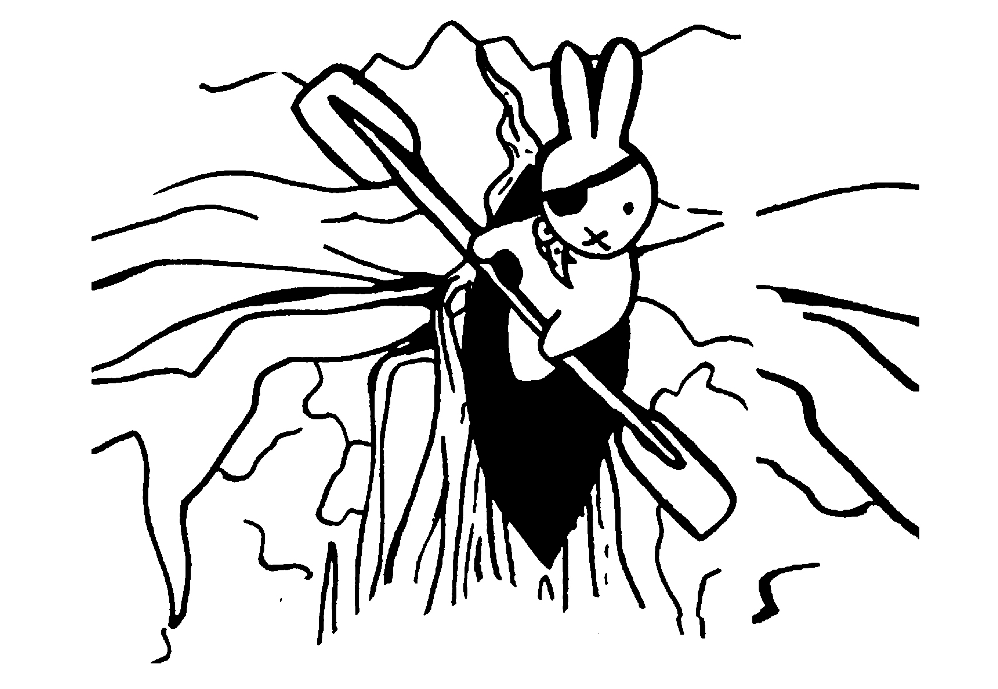
EF!-rabbit-in-canoeEarth First! Sum­mer Gath­er­ing, 18th-24th August 2009, Cum­bria

Nev­er has halt­ing the destruc­tion of our plan­et been so impor­tant… Learn how to make them stop!

The gath­er­ing this year will be held at Seath­waite in the beau­ti­ful Bor­row­dale. The site is right in the heart of the Lake Dis­trict and sur­round­ed by moun­tains, streams and tarns. The near­est train sta­tion is Pen­rith. More detailed direc­tions, pub­lic trans­port, walks & cycle rides to the site

Work­shop pro­gramme in a vari­ety of for­mats

WHO
Earth First! is a net­work of peo­ple and cam­paigns who fight eco­log­i­cal destruc­tion and the forces dri­ving it. We believe in doing it our­selves rather than rely­ing on gov­ern­ments or indus­try. Direct action is at the heart of what we do, whether we’re stand­ing in front of a bull­doz­er, shut­ting down an open­cast mine or rip­ping up a field of GM crops.

Join us for 5 days of work­shops, net­work­ing and plan­ning actions at a low impact eco-liv­ing camp organ­ised non-hier­ar­chi­cal­ly

WHAT
Plan­ning actions and cam­paigns, meet­ing and shar­ing skills with oth­ers who care. Over 80 train­ing work­shops plus games and evening fun:
Learn skills for direct action. Tree Climb­ing, Ori­en­teer­ing, Secu­ri­ty for activists, Legal brief­ing, Escap­ing pub­lic order sit­u­a­tions, street medics – first aid, self defence, Boat blockad­ing using kayaks, radio pro­ce­dures and rock abseil­ing.
Net­work your cam­paign against eco­log­i­cal destruc­tion. open­cast min­ing, genet­ic engi­neer­ing, agro­fu­els, dam-build­ing, hunt-sab­bing, cli­mate actions, oil pipeline resis­tance, road stop­ping, anti-whal­ing, squat­ting, rain­for­est pro­tec­tion.
Learn about ecol­o­gy, eco­cen­tric ethics and alter­na­tives to the cor­po­rate world of exploita­tion.
Prac­ti­cal skills for eco­log­i­cal restora­tion and sus­tain­able liv­ing, field trips and hands-on work.

YOU
We are all crew! This is your gath­er­ing come pre­pared to help run the camp and con­tribute to the pro­gramme. Con­tact us in advance with ideas for work­shops, help with organ­is­ing the gath­er­ing, come ear­ly to help set­up the site or stay on for a cou­ple of days for take­down.
If you can help get in touch!

BRING
Bring tent and sleep­ing bag. You can either cook food for your­self or for £4 per day chip in with col­lec­tive cook­ing of deli­cious veg­an organ­ic food. There’ll be qui­et sleep­ing areas, toi­lets and run­ning water, a children’s space and spaces for work­shops and info stalls.
Veg­gies will pro­vide veg­an cake and snacks. Chil­dren and young adults wel­come with sub­si­dized meals.

Arrive Tues pm. Work­shops from Wed am until Sun pm.

Loads of cam­paigns are tak­ing to the water in defence of the plan­et, like at Ross­port where Shell are try­ing to lay onshore pipelines and the Great Rebel Raft Regat­ta at last sum­mers cli­mate camp. This sum­mer’s EF! gath­er­ing will be build­ing on these tac­tics with train­ing in water based actions.

An excur­sion to vis­it com­mu­ni­ties in the North East threat­ened by an expan­sion of coal min­ing on Mon­day 24th August. Vis­it beau­ti­ful val­leys and strong spir­it­ed com­mu­ni­ties and make links for ongo­ing resis­tance.

We aim to make the site as acces­si­ble as we can please con­tact us in advance if you have spe­cial needs, ques­tions or con­cerns.

WHERE
The site is near in the Lake Dis­trict, Cum­bria. The near­est train sta­tion is Pen­rith and there is a bus ser­vice to the site, there are car and liv­ing vehi­cle spaces out­side the camp.

Dogs: We are for­tu­nate this year to be able to accom­mo­date well behaved own­ers with dogs on leads but think about whether your dog will feel com­fort­able in work­shops. Please call before­hand so we know num­bers.

Cost: £20 — £30 accord­ing to what you can afford. We are not for prof­it all extra cash goes to help fund next year. Under 14’s free.

For more info con­tact us at :
summergathering@earthfirst.org.uk
www.earthfirstgathering.org.uk

Tens of Thousands Protest for Democracy in the Forests, India

Rajasthan, Gujarat, Maha­rash­tra, Mad­hya Pradesh, Chhat­tis­garh, Jhark­hand, and Oris­sa wit­ness chak­ka jams, ras­ta rokos, dhar­nas, mor­chas and oth­er protests.

Today in State cap­i­tals and dis­trict head­quar­ters across the coun­try, many tens of thou­sands of peo­ple joined mor­chas, dhar­nas and ras­ta rokos with the fol­low­ing demands:

Rajasthan, Gujarat, Maha­rash­tra, Mad­hya Pradesh, Chhat­tis­garh, Jhark­hand, and Oris­sa wit­ness chak­ka jams, ras­ta rokos, dhar­nas, mor­chas and oth­er protests.

Today in State cap­i­tals and dis­trict head­quar­ters across the coun­try, many tens of thou­sands of peo­ple joined mor­chas, dhar­nas and ras­ta rokos with the fol­low­ing demands:

* Halt For­est Depart­ment inter­fer­ence, exclu­sion of rights hold­ers, and vio­la­tion of peo­ple’s rights under under the For­est Rights Act;
* Recog­nise our right and pow­er to pro­tect and con­trol our forests and resources;
* Stop ille­gal­ly destroy­ing forests and rob­bing us of our resources through diver­sion for pri­vate com­pa­nies and large projects.

In a tragedy, four pro­test­ers were killed and two seri­ous­ly injured in Devala, Udaipur Dis­trict, when a lor­ry hit the pro­test­ers as their ras­ta roko was end­ing. The organ­i­sa­tion is pur­su­ing the case to ensure that the dri­ver and oth­er con­cerned per­sons are arrest­ed and brought to jus­tice. Those who lost their lives in the strug­gle will be hon­oured as mar­tyrs.

Protests took place in the fol­low­ing States:

Rajasthan: Chak­ka jams took place in Ban­swa­da, Dun­garpur, Udaipur, Prat­ap­garh Dis­tricts, in total in 12 loca­tions. More than 6,000 peo­ple par­tic­i­pat­ed. The ras­ta rokos includ­ed a block­ade on the Nation­al High­way at Chind­wara More.

Oris­sa: More than 5,000 peo­ple par­tic­i­pat­ed in a chak­ka jam in Bhubanesh­war, shut­ting down the main cross­roads in the city for more than two hours. Peo­ple joined the demon­stra­tion from across the state. Protests also took place in major dis­trict head­quar­ters.

Maha­rash­tra: Ras­ta rokos took place through­out the State, in sev­er­al loca­tions in Thane Dis­trict (on the Ahmed­abad – Mum­bai nation­al high­way), in two places in Raigad dis­trict, in 4 places in Nan­dur­bar dis­trict (ras­ta rokos will con­tin­ue over the next three days in oth­er loca­tions in the dis­trict).

Mad­hya Pradesh: Approx­i­mate­ly 4,000 peo­ple from 20 dis­tricts joined a chak­ka jam in Bhopal for sev­er­al hours. More than 3,000 peo­ple court­ed arrest and were arrest­ed.

Gujarat: Mass ral­lies took place in Rajpi­pla (10,000 peo­ple), Dharam­pur (4,000 peo­ple), Sabarkan­tha Dis­trict (dhar­nas at three loca­tions). Protests will take place in Cho­ta Udaipur, Vyara and Bhilwa­da are expect­ed in the com­ing days, in which sev­er­al thou­sand peo­ple are expect­ed to par­tic­i­pate.

Chhat­tis­garh: A mass dhar­na took place in Raipur in which approx­i­mate­ly 1,000 peo­ple par­tic­i­pat­ed.

Jhark­hand: Peo­ple from Kun­ti, Haz­arib­agh and Ranchi dis­trict joined a mass demon­stra­tion in Ranchi. Ral­lies took place at the sub-divi­sion­al lev­el in East Singhb­hum and at the block lev­el in Late­har, Pala­mau, West Singhb­hum Dis­tricts.

The pas­sage of the For­est Rights Act in Decem­ber 2006 was a his­toric step for­ward for the strug­gle against the auto­crat­ic, bru­tal and repres­sive rule of colo­nial laws and the For­est Depart­ment in Indi­a’s forests. But the mere pas­sage of a law is not enough to over­turn a cen­tu­ry of oppres­sion. Today, the fight con­tin­ues for a new order in the forests – one built around democ­ra­cy instead of bureau­cra­cy, around the peo­ple rather than the offi­cials, and around the forests and their cit­i­zens rather than the cor­po­rates and cap­i­tal.

Mapuche communities mobilize to reclaim land

Sev­er­al Mapuche com­mu­ni­ties have begun to reclaim tra­di­tion­al lands in Arau­ca­nia, cen­tral Chile.

The recla­ma­tion began on July 23, about 2 weeks after the gov­ern­ment of Michelle Bachelet refused to sit down with a group of Mapuche activists and talk about their con­cerns as Indige­nous Peo­ple.

Mapuche mobilisationSev­er­al Mapuche com­mu­ni­ties have begun to reclaim tra­di­tion­al lands in Arau­ca­nia, cen­tral Chile.

The recla­ma­tion began on July 23, about 2 weeks after the gov­ern­ment of Michelle Bachelet refused to sit down with a group of Mapuche activists and talk about their con­cerns as Indige­nous Peo­ple.

The activists had trav­eled 680 km to meet with Bachelet, hav­ing already wait­ed for weeks to hear from from Araucania’s gov­er­nor about estab­lish­ing a dia­logue .

Before head­ing home, the group left Bachelet a let­ter, stat­ing they would take action unless the goven­r­ment addressed their con­cerns.

On July 23, the Mapuche began to occu­py prop­er­ties they iden­ti­fy as part of their tra­di­tion­al lands, includ­ing one held by a log­ging com­pa­ny. Road­blocks have also been set up in at least 5 dif­fer­ent areas in Arau­ca­nia.

The so-called left­ist gov­ern­ment final­ly decid­ed to respond—with vio­lence. The police were sent in to pro­tect the log­ging com­pa­ny and evict the Mapuche – a “vio­lent occu­py­ing force” as far as the gov­ern­ment is con­cerned. “Both Mapuche and police were injured in the clash­es” that fol­lowed, says IPS News.

Sev­er­al oth­er attacks against the Mapuche have also been report­ed.

Last week, the para­mil­i­tary group “Her­nan Trizano Com­man­do” also came for­ward and pub­licly threat­ened to blow up and “dis­ap­pear from the world” sev­er­al Mapuche lead­ers involved in the recla­ma­tion, start­ing August 3.

“In response, Sen­a­tor Ale­jan­dro Navar­ro, the pres­i­den­tial can­di­date of a new polit­i­cal par­ty, the Movimien­to Amplio Social (MAS – Broad Social Move­ment) announced… that he would file a law­suit invok­ing the anti-ter­ror­ism law against the para­mil­i­tary group,” IPS con­tin­ues.

The gov­ern­ment itself does not appear to be tak­ing any for­mal action against this imme­di­ate threat. Instead, they are embold­en­ing the vig­i­lante group by claim­ing the Mapuche effort is noth­ing more than “vio­lent actions” led by a small minor­i­ty: sev­en of Chile’s 2,800 indige­nous com­mu­ni­ties.

Juan Car­los Curi­nao, a Mapuche “Lon­co” or Chief, respond­ed to the claims in a recent inter­view with IPS.Curinao said that the mobi­liza­tion is in fact led by 40 Lon­cos, who togeth­er rep­re­sent every Mapuche sub­group.

He also said that the recla­ma­tion is non-vio­lent. “We don’t car­ry weapons to go around hurt­ing non-indige­nous set­tlers, we are fight­ing for our cul­ture. It is the state that has attacked us, shoot­ing at us.”

“If I occu­py prop­er­ty, it’s not vio­lence; I am reclaim­ing my ter­ri­to­ry,” he added.

While “there is no solu­tion in sight”—-in large part because the gov­ern­ment refus­es to abide by inter­na­tion­al law and sit down with the Mapuche—there’s a small chance that things will turn for the bet­ter this week. The Sen­ate has announced that it will hold a spe­cial ses­sion on Wednes­day, Aug. 5 to dis­cuss “the secu­ri­ty sit­u­a­tion that is affect­ing the region of Arau­canía.”

Updates in English:www.mapuche.nl. Updates in Span­ish: www.observatorio.cl