Activists drop 70′ banner off of NIAGARA FALLS to tell Canadian PM ‘NO TAR SANDS oil!’

A small team of cli­mate activists rap­pelled from the US obser­va­tion deck at Nia­gara Falls. Dan­gling hun­dreds of feet above the ground, they sent a spe­cial wel­come mes­sage to Cana­di­an Prime Min­is­ter Stephen Harp­er ahead of his first offi­cial vis­it to the White House to push dirty Tar Sands oil.
Tar Sands OilA small team of cli­mate activists rap­pelled from the US obser­va­tion deck at Nia­gara Falls. Dan­gling hun­dreds of feet above the ground, they sent a spe­cial wel­come mes­sage to Cana­di­an Prime Min­is­ter Stephen Harp­er ahead of his first offi­cial vis­it to the White House to push dirty Tar Sands oil.

Dur­ing Harper’s first offi­cial trip to meet Oba­ma in the U.S., the two lead­ers are expect­ed to dis­cuss cli­mate change and ener­gy pol­i­cy ahead of the upcom­ing G20 Sum­mit. Cana­da sup­plies 19% of U.S. oil imports, more than half of which now comes from the tar sands, mak­ing the region the largest sin­gle source of U.S. oil imports. The expan­sion of the tar sands will strip mine an area the size of Flori­da. Com­plete with sky­rock­et­ing rates of can­cer (by 400%!) for First Nations com­mu­ni­ties liv­ing down­stream, bro­ken treaties, tox­ic belch­ing lakes so large you can see them from out­er space, churn­ing up ancient bore­al for­est, destroyed air and water qual­i­ty, the tar sands have been called the most destruc­tive project on Earth.

For the full sto­ry and more infor­ma­tion vis­it http://understory.ran.org/2009/09/15/breaking-activists-drop-70-banner-off-of-niagra-falls-to-tell-canadian-pm-no-tar-sands-oil/

Penan tribe arrested outside government offices in Borneo

16 Sep­tem­ber 2009
The arrest­ed indige­nous peo­ple and activists have been released on bail and charged with ille­gal assem­bly. The group, who num­ber 15 peo­ple, are due to appear in court on 29 Sep­tem­ber. They main­tain that they have com­mit­ted no crime. Sur­vival has writ­ten to the Malaysian gov­ern­ment express­ing its con­cern over the arrests.

-—

16 Sep­tem­ber 2009
The arrest­ed indige­nous peo­ple and activists have been released on bail and charged with ille­gal assem­bly. The group, who num­ber 15 peo­ple, are due to appear in court on 29 Sep­tem­ber. They main­tain that they have com­mit­ted no crime. Sur­vival has writ­ten to the Malaysian gov­ern­ment express­ing its con­cern over the arrests.

-—

At least four­teen peo­ple, includ­ing six mem­bers of the Penan tribe, were arrest­ed in Malaysia today as they tried to voice their oppo­si­tion to hydro­elec­tric dams that will force them off their land.

The group of indige­nous peo­ple and activists were arrest­ed out­side the offices of the Chief Min­is­ter of the state of Sarawak, in the Malaysian part of Bor­neo. They were attempt­ing to hand in a state­ment call­ing on the gov­ern­ment to stop the con­struc­tion of dams that are to flood the land of many Penan and oth­er tribes­peo­ple, destroy­ing their for­est and bur­ial grounds. Over 600 Penan have added their sig­na­tures to the protest.

Ray­mond Abin of the Sarawak Con­ser­va­tion Action Net­work was one of those arrest­ed. Speak­ing from police cus­tody, he told Sur­vival that they had not been allowed to hand in the state­ment, so had wait­ed out­side. After four hours, the Chief Minister’s office called the police and they were arrest­ed. No charges had so far been made against them.

One Penan man told Sur­vival ear­li­er this year, ‘This land is my ances­tral land. It has been used by Penan for ten gen­er­a­tions. We don’t want to move, and we don’t want to give this land to any­one.’ The peo­ple of his vil­lage have been told they must move to make way for the Murum dam, which is already being built by the con­tro­ver­sial Chi­nese state-owned Chi­na Three Gorges Project Cor­po­ra­tion.

Survival’s direc­tor Stephen Cor­ry said today, ‘Sur­vival is extreme­ly con­cerned that the Penan and oth­ers have been arrest­ed for try­ing to voice their con­cerns about these dams which, if com­plet­ed, will dev­as­tate their lives. Instead of lock­ing them up, the Malaysian gov­ern­ment should lis­ten to them.’

In a sep­a­rate devel­op­ment, Malaysian police are report­ed to have dis­man­tled three road block­ades mount­ed in August by twelve Penan com­mu­ni­ties against the log­ging and plan­ta­tion com­pa­nies that are destroy­ing their for­est.

-—

Six mem­bers of the Penan tribe were arrest­ed along with nine oth­er indige­nous peo­ple and activists as they tried to hand in a let­ter voic­ing their con­cerns to the Chief Min­is­ter of Sarawak.

The Penan say in their state­ment:

‘We have not come to Kuch­ing city for plea­sure but full of con­cern, anx­i­ety and tears. We bring the deep pain in the hearts of all the peo­ple of the Penan vil­lages on the Peleiran riv­er because of the heavy con­cerns with how our lives have been since the start of the con­struc­tion of the Murum dam project.

‘If this Murum dam con­tin­ues, the water from the dam will flood our tra­di­tion­al lands includ­ing our vil­lages, prop­er­ties, gar­dens, pad­dy fields and farm­lands, fruit trees, graves etc. The for­est areas and resources that sup­port our lives will be destroyed. We will be forced to move to an area that we do not know and is not com­pat­i­ble with our life con­di­tions.’

Murum is the first in a series of twelve new hydro­elec­tric dams planned for Sarawak. It is being con­struct­ed by the Chi­nese state-owned Chi­na Three Gorges Project Cor­po­ra­tion.

State­ment in full

Sowing the Seeds of Resistance in Aotearoa

7.9.09
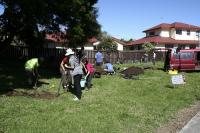
Local com­mu­ni­ty gar­den­ers fed up with our unsus­tain­able city took part in a ‘Per­mablitz’ in cen­tral Auck­land yes­ter­day. About 20 gar­den­ers appro­pri­at­ed neglect­ed pub­lic land for com­mu­ni­ty ben­e­fit; dig­ging up grass, plant­i­ng veg­eta­bles and var­i­ous fruit trees.

NZ permablitz7.9.09
Local com­mu­ni­ty gar­den­ers fed up with our unsus­tain­able city took part in a ‘Per­mablitz’ in cen­tral Auck­land yes­ter­day. About 20 gar­den­ers appro­pri­at­ed neglect­ed pub­lic land for com­mu­ni­ty ben­e­fit; dig­ging up grass, plant­i­ng veg­eta­bles and var­i­ous fruit trees.

Sup­port from locals was high, with many offer­ing to lend a hand and resources for the project. The increase of sup­port for com­mu­ni­ty food ini­tia­tives is indica­tive of the shift in pub­lic con­scious­ness around not only where our food comes from but on the impor­tance of inde­pen­dent and healthy com­mu­ni­ties.

This per­mablitz coin­cid­ed with the com­mence­ment of the Grey Lynn Farm­ers mar­ket that caters to those seek­ing local food in many cas­es grown with­in the lim­its of Auck­land city. To get involved in fur­ther per­mablitz actions or oth­er com­mu­ni­ty agri­cul­ture intia­tives, take a look at the infor­ma­tion below;

Per­mablitz Auck­land —  Grey Lynn Farm­ers Mar­ket  —  Grey Lynn Com­mu­ni­ty Gar­dens  –  Kings­land Com­mu­ni­ty Gar­densCCS Hori­zon gar­dens —  Per­ma­cul­ture NZ

For a UK exam­ple of amaz­ing gueril­la and with-per­mis­sion yum­my plant­i­ng, take a look at Incred­i­ble Edi­ble Tod­mor­den

Switch off Hazelwood (Australia)

9 Sep­tem­ber 2009
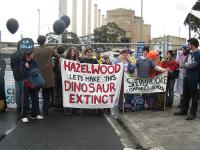
“Switch off Hazel­wood. Switch off Coal. Switch on Renew­ables” was a day of fun, cre­ative and inspir­ing direct com­mu­ni­ty action at Hazel­wood coal pow­er sta­tion.

Hazelwood bannersHazelwood crowd9 Sep­tem­ber 2009
“Switch off Hazel­wood. Switch off Coal. Switch on Renew­ables” was a day of fun, cre­ative and inspir­ing direct com­mu­ni­ty action at Hazel­wood coal pow­er sta­tion. The protest at the front gates of the Hazel­wood Pow­er Sta­tion was organ­ised by com­mu­ni­ty mem­bers who care about cli­mate change — and are will­ing to take peace­ful com­mu­ni­ty action. Mel­bourne Indy­media was there live cov­er­ing the demon­stra­tion as it hap­pened.

Twen­ty-two arrests occurred through-out the after­noon as peo­ple tried to get into the plant to switch off Hazel­wood.

http://www.switchoffhazelwood.org/
http://twitter.com/hazelwood2009

9:00 Last night approx­i­mate­ly 300 peo­ple ate, camped and planned togeth­er for the day of action. Most peo­ple were formed into affin­i­ty groups and took part in the spokes coun­cil meet­ing. Spir­its were high with live music, films by indy­media, and great food from Food Not Bombs.

9:30 Media van got stopped, one of two nego­ti­at­ed cars got through. 11:00

11:00 Media set up with heli­copters buzzing over our heads. Speech­es at start of demon­stra­tion: Rob­bie Thor­pe, Sven Teske and Scott Lud­lam. “Bikezil­la” the giant bike join the parade and many offi­cers have their badges obscured. Oth­er­wise liai­son is work­ing well.

12:19 The protest march has reached the front gates where there is a heavy police pres­ence and lots of new tem­po­rary fenc­ing to keep pro­test­ers at bay. Speech­es in front of gates: David Spratt, Mer­ryn Reben­bach, Dave Sweeney con­grat­u­lates locals: “Peo­ple from the val­ley can’t voice their options and still be anony­mous” “The place will become an indus­tri­al sac­ri­fice zone as well as an eco­log­i­cal one”

12:31 Demon­stra­tors wav­ing to the heli­copters and hold­ing bal­loons.

12:45 David Spratt speech “Min­is­ter Should Resign”

12:55 Two Bel­grave Wom­bats jumped the fence, two pushed away- two arrest­ed 1:03 Cheer­leader and Cli­mate Actions Dance Group start. Rain stopped.

1:00 “Sil­ly walks min­istry” moves towards fence.

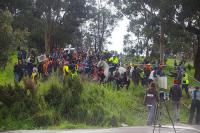
1:12 Police hors­es ride up to hill-fence to con­front pro­tes­tors.

1:13 Water and police on hors­es in place

1:15 Kids are play­ing with the “world”. Sec­ond wom­bat brought out of the gate.

1:20 Rad­i­cal Cheer­lead­ers in action chant­i­ng.

1:21 more police in front of the fence. Cheer­ing activists move for­ward towards police and fence.

1:26 Around six more jumped the fence

1:34 Garbage bin sound-sys­tem starts. Anoth­er pro­test­er jumps the fence

1:35 The first two arrest­ed wom­bats got charged and released.

1:36 Activists posi­tioned on grass hill try­ing to push down fence.

1:40 Cheer­lead­ers cre­ate diver­sion on fence line.

1:48 Chant and march down fence. Try­ing to shake fence down. Hors­es almost tram­ple pro­test­ers.

1:50 Pro­test­er jumps over fence. Groups of pro­test­ers shake and try to jump fence

2:01 loud chant­i­ng. Batons up. Activists on hill­side walk in an unbro­ken line towards the fence. Line is stopped by police hors­es.

2:02 Three activists get over the fence. Two get rough­ly pushed away and do not get over the fence.

2:03 Anoth­er activist dressed as a car­bon cop jumps the fence and gets arrest­ed.

2:05 Arrest Update: 13 so far

2:11 Crowd turns its back to Hazel­wood in dis­gust.

2:30 Three more get over the fence, one tack­led by police.

2:55 Arrests: 22, every­one ID processed on site. No one has been tak­en to Mor­well police Sta­tion as yet. Most activists have been released on sum­mons.

3:10 Activist form­ing a gigan­tic wind­mill, cheer­ing and even though it’s rain­ing a moti­vat­ed out­come of the days efforts.

3:30 Peo­ple head­ing home after a great day of civ­il dis­obe­di­ence against the one of the worst car­bon pol­lut­ing coal plants in Vic­to­ria and the world.

Tobique First Nation blockade enters third month

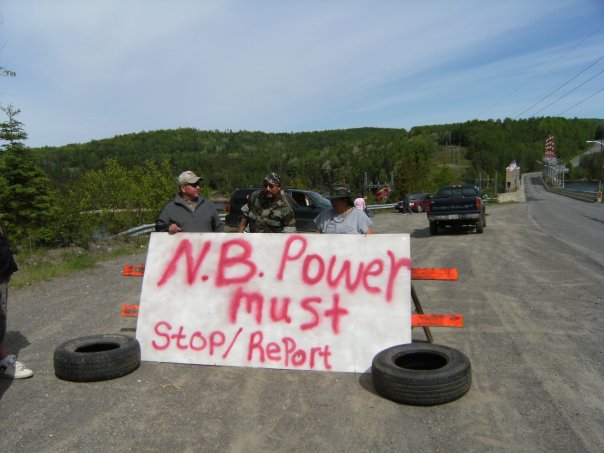
This past June, the Tobique First Nation set up a road­block on the high­way lead­ing to the Mac­taquac hydro dam in south cen­tral New Brunswick., reviv­ing a strug­gle for power–hydro pow­er– that goes back to the mid 1800s. The New­ly-found­ed N.B. Media Co-op reports.

NB Power BlockadeThis past June, the Tobique First Nation set up a road­block on the high­way lead­ing to the Mac­taquac hydro dam in south cen­tral New Brunswick., reviv­ing a strug­gle for power–hydro pow­er– that goes back to the mid 1800s. The New­ly-found­ed N.B. Media Co-op reports.

“Pack Up and Get Out”

Why the Tobique First Nation took con­trol of their territory’s hydro dam

TOBIQUE FIRST NATION – On the morn­ing of Mon­day, June 8, 2009, a group of Maliseet com­mu­ni­ty mem­bers walked peace­ful­ly into the hydro sta­tion. Stephen (Red Feath­er) Per­ley approached the New Brunswick Pow­er Cor­po­ra­tion (NB Pow­er) employ­ees and said, “You guys have fif­teen min­utes to pack up and get out.” The employ­ees left, the com­mu­ni­ty wrapped a chain around the gate and locked it. The dam was now the prop­er­ty of the Tobique First Nation.

Tobique, the largest Maliseet reserve in the province, first reject­ed a developer’s bid to build a hydro dam on their ter­ri­to­ry in 1844. They reject­ed anoth­er bid in 1895. At that time, the Tobique Riv­er was “part of what may well have been the great­est salmon riv­er sys­tem in the world,” (along with the St John Riv­er and its oth­er trib­u­taries) with hun­dreds of thou­sands of fish swim­ming upstream to spawn each year. The abun­dant salmon defined the community’s way of life, pro­vid­ing food and employ­ment – many worked as guides in the sum­mer months.

By 1945, indi­vid­ual devel­op­ers had giv­en way to provin­cial and fed­er­al agen­cies and in 1950 New Brunswick’s Pre­mier approved con­struc­tion of a dam at Tobique with­out con­sult­ing the land’s own­ers. By the end of the year, con­struc­tion had begun.

When Tobique’s chief learned of the plan, he wrote to Indi­an Affairs, demand­ing “suit­able action to pro­tect our rights. If the build­ing can­not be stopped,” he wrote, “we demand com­pen­sa­tion.” For this, he sug­gest­ed “free elec­tric­i­ty for all domes­tic uses busi­ness on the reser­va­tion.” This was nev­er hon­oured – as soon as the com­mu­ni­ty had pow­er lines, they received pow­er bills. The Band Coun­cil paid these bills for Elders and com­mu­ni­ty mem­bers on social assis­tance.

Today, bare­ly any wild salmon still make their way up the Tobique riv­er. Tobique res­i­dents blame the high rates of can­cer on the pow­er lines over their reserve and the tox­ic chem­i­cals dumped and sprayed on their land by NB Pow­er. The dam has erod­ed the reserve’s river­banks, lead­ing to “trees being washed away and homes in dan­ger of falling into the riv­er”. Many of the edi­ble and med­i­c­i­nal plants are gone – the islands they grew on are under­wa­ter. And iron­i­cal­ly, Tobique res­i­dents are charged among the high­est elec­tric­i­ty rates in the province.

In the spring of 2008, Canada’s Depart­ment of Indi­an and North­ern Affairs put Tobique’s finances under third par­ty man­age­ment; the Band Coun­cil was now around $20 mil­lion in debt. The new man­ag­er stopped pay­ing the pow­er bills of Elders and mem­bers on social assis­tance, and in April of 2008 these house­holds began receiv­ing bills for thou­sands of dol­lars.

Despite all of its trou­bles, Tobique remains a lush, pic­turesque locale, with many proud res­i­dents deeply devot­ed to their land and to each oth­er. When NB Pow­er threat­ened to cut off an Elder’s elec­tric­i­ty, the com­mu­ni­ty stepped in.

In May of 2008, a group of Tobique activists set up a block­ade by the road into the reserve and denied NB Pow­er access, first to the reserve and soon after that to the dam as well. Almost all band mem­bers stopped pay­ing their pow­er bills pend­ing a nego­ti­at­ed agree­ment.

In July of 2008, the com­mu­ni­ty began allow­ing NB Pow­er access to the dam to do repairs and main­te­nance on the con­di­tion that NB Pow­er employ­ees check in with them first and that a band mem­ber escorts the employ­ees into the dam or com­mu­ni­ty.

That month, NB Pow­er for­gave over $200,000 worth of hydro bills, but they were not will­ing to nego­ti­ate a long-term arrange­ment to the community’s sat­is­fac­tion. The women sat at the block­ade every day until Novem­ber, when New Brunswick’s no-dis­con­nect pol­i­cy comes into effect. The pol­i­cy pre­vents NB Pow­er from cut­ting off anyone’s elec­tric­i­ty, which is all the more poignant since the 2008 death of Paul Durelle, a man in Baie-Ste-Anne, NB whose pow­er was cut off by NB Pow­er when he couldn’t pay his bills over the win­ter.

This spring, the strug­gle began again. In May of 2009, an NB Pow­er employ­ee was found on to the reserve read­ing meters. The com­mu­ni­ty gath­ered and, on June 8th, took over the gen­er­at­ing sta­tion. The block­ade went back up, this time by the high­way in front of the dam.

Ten­sions esca­lat­ed on June 26, 2009, when a truck rolled by the block­ade and into the sta­tion. When the block­aders caught up with it, the dri­ver was talk­ing on his cell phone. Stephen Per­ley told him to hang up. “You’re tres­pass­ing,” Per­ley said, “On behalf of Tobique First Nation, I’m seiz­ing the truck.”

They escort­ed the flus­tered dri­ver up to the block­ade, where they gave him food and water. He phoned his employ­er to pick him up, but NB Pow­er refused. The RCMP drove him home.

At the time of writ­ing, nego­ti­a­tions con­tin­ue. Maliseet women sit at the block­ade every day play­ing cards and watch­ing for NB Pow­er trucks as the cars dri­ve by, many honk­ing in sup­port. The dam con­tin­ues to oper­ate, NB Pow­er con­tin­ues to prof­it off of Tobique’s land, and the block­aders con­tin­ue to allow work­ers in for main­te­nance and repairs.

The First Nation has made some gains: on June 30th, 2009, the provin­cial Min­is­ter of Abo­rig­i­nal Affairs com­mit­ted to fund­ing the restora­tion of erod­ed river­banks and the clean-up of tox­ic and oth­er wastes dumped at and around the dam.

Addi­tion­al­ly, Ottawa’s Depart­ment of Jus­tice recent­ly val­i­dat­ed Tobique’s spe­cif­ic land claim, which will like­ly be the largest in Atlantic Cana­da, and nego­ti­a­tions are under­way for com­pen­sa­tion.

How­ev­er, the dam and now a truck worth $170,000 are in the hands of the Tobique First Nation and they’re not giv­ing them back with­out an equi­table set­tle­ment. Key issues that must be addressed include com­pen­sa­tion for dam­ages and shar­ing ben­e­fits from the dam, includ­ing at least some amount of ongo­ing free elec­tric­i­ty. Such a solu­tion seems unlike­ly in the near future, and Tobique’s unpaid pow­er bills now total over $800,000.

In the weeks and months to come, any­one con­cerned with Indige­nous rights should keep a close eye on the province of New Brunswick.

Sleeping by the ashes of Vedic Village

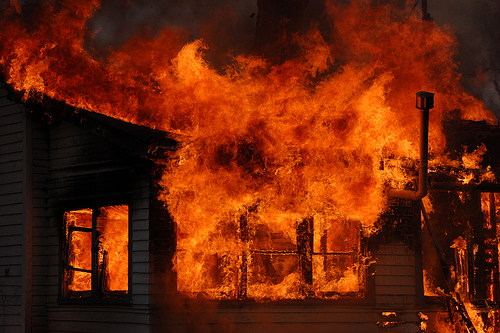
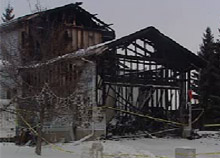
There is some­what of a mys­tery sur­round­ing “the ash­es of Vedic village”—what remains of the upscale five star tourist resort near Kolkata, West Ben­gal, after it was set ablaze on August 23.
Vedic Village burnsThere is some­what of a mys­tery sur­round­ing “the ash­es of Vedic village”—what remains of the upscale five star tourist resort near Kolkata, West Ben­gal, after it was set ablaze on August 23.

Most reports say an “irate mob” set the fire after a local soc­cer match between employ­ees of Vedic vil­lage and anoth­er resort. The two teams appar­ent­ly start­ed fight­ing each oth­er after the win­ner was declared.

The fight lit­er­al­ly turned into a war, with both teams shoot­ing guns and throw­ing “crude bombs” at each anoth­er.

Appar­ent­ly, the Vedic Vil­lage team sought refuge in the resort. Then, the mob set fire to it. “The entire 5,000 sqft club-house, includ­ing the recep­tion, the gam­ing room, library and two con­fer­ence halls… some farm­hous­es,” and dozens of sur­round­ing cot­tages were burned.

There is, how­ev­er, anoth­er side of this sto­ry that is get­ting almost no cov­er­age by the press.

It begins with a group of farm­ers being ter­ror­ized and forced into giv­ing up their land to a real­ty agency, Vedic Real­ty.

After they were dis­pos­sessed, some 30 years ago, the land was “tak­en back” by the gov­ern­ment. Appar­ent­ly, Vedic did not have legal “autho­riza­tion” to hold the land.

At this point, the gov­ern­ment should have redis­trib­uted to land to the farm­ers. How­ev­er, Vedic Real­ty took a bold step for­ward. They took the mat­ter to West Bengal’s high court. And then they won.

The gov­ern­ment quick­ly turned around and approached Vedic for an out-of-court set­tle­ment, offer­ing to sell them the land. They should have chal­lenged the rul­ing. Vedic was more than hap­py to accept the offer, after all, it meant they would have the land legal­ly from then on.

Over the years, Vedic Vil­lage made quite a name for itself. News agen­cies proud­ly inform us of its lux­u­ri­ous mar­vels, how it was “care­ful­ly designed for five-star ambi­ence, with­out com­pro­mis­ing the vil­lage ide­al;” how it pro­vides tourists and movie stars alike with all the won­ders of moder­ni­ty: “a bar, restau­rant, a lotus-shaped pool”. It even has games to enter­tain the kids while you play a nice round of golf. “It doesn’t get any bet­ter than this.”

How­ev­er, beneath the sur­face of Vedic Vil­lage, stood a seething mon­ster. It was “a den of crim­i­nal activ­i­ties rang­ing from pros­ti­tu­tion to bomb-mak­ing,” says Partho Sarathi Ray from the activist group, San­hati.

The last five years has been espe­cial­ly dif­fi­cult for the vil­lagers, because they were now forced to bear wit­ness to con­stant, dis­rup­tive forces. All the while through, hold­ing on to the mem­o­ry of how their land was ripped away from them, “sto­ries of what the rich and famous did in their leisure time fil­tered into the vil­lage, pro­vok­ing won­der and then, dis­gust,” adds the Times of India.

Acknowl­edg­ing this lega­cy of suffering—that ranged from vio­lence and dis­pos­ses­sion to seg­re­ga­tion, aur­al abuse and the con­stant dis­rup­tion of their every­day lives—it is cer­tain­ly pos­si­ble that Vedic vil­lage was burnt to the ground because the law­ful own­ers of the land were final­ly com­pelled to take mat­ters into their own hands. What oth­er choice did they have?

If it is not the case well, then at least this sto­ry is final­ly out in the open. And maybe the vil­lagers will final­ly be able to live and sleep like they would before there land was tak­en. Peace­ful­ly.

GM Round-Up: Ready? Global sabotage the answer

Despite the Euro­pean Food Safe­ty Author­i­ty and of course Mon­san­to declar­ing MON 810 maize to be safe, Ger­many and France in Spring of this year banned the cul­ti­va­tion of this genet­i­cal­ly mod­i­fied crop. It was the only GM crop per­mit­ted in Ger­many. There are very active oppo­si­tion move­ments in both coun­tries — rip­ping up GM crops both at night and by day, occu­py­ing fields were it was due to be plant­ed and oth­er wide-scale protests.

GM apple trees snappedDespite the Euro­pean Food Safe­ty Author­i­ty and of course Mon­san­to declar­ing MON 810 maize to be safe, Ger­many and France in Spring of this year banned the cul­ti­va­tion of this genet­i­cal­ly mod­i­fied crop. It was the only GM crop per­mit­ted in Ger­many. There are very active oppo­si­tion move­ments in both coun­tries — rip­ping up GM crops both at night and by day, occu­py­ing fields were it was due to be plant­ed and oth­er wide-scale protests.

In June in Ger­many, two hun­dred and sev­en­ty apple trees on a tri­al site owned by the Insti­tute for Breed­ing Research on Hor­ti­cul­tur­al and Fruit Crops of the Julius Kühn Insti­tute (JKI) in Dres­den-Pill­nitz were destroyed by unknown intrud­ers. Most of the trees were genet­i­cal­ly mod­i­fied plants being grown in tubs in a spe­cial safe­ty tent under field-like con­di­tions. It is the first time that pro­test­ers have destroyed plants that were not being grown in the field.

Accord­ing to a press release by the JKI, the tent fab­ric was cut open and all of the trees, which were about sev­en years old, were either snapped by hand or cut with prun­ing shears above the graft. The insti­tute esti­mates the cost of the dam­age to be around EUR 700 000. Around ten years of research work has been destroyed.

Mean­while, in Spain 80,000 hectares of GM maize are grown, most­ly in Zaragoza and Cat­alo­nia. Thou­sands of peo­ple took to the streets this Spring to protest against Spain being the GM dust­bin of Europe.

The UK gov­ern­ment con­tin­ues to spout recy­cled (from 10 years ago) indus­try non­sense claims about feed­ing the world, solv­ing cli­mate change and gen­er­al­ly sav­ing human­i­ty. Scot­tish and Welsh politi­cians remain opposed to GM how­ev­er.

In the UK BASF — who have been try­ing to grow GM pota­toes over the last cou­ple of years — did­n’t both­er this year. There have been crit­i­cal reports over their antibi­ot­ic-mark­er GM pota­toes, and the com­pa­ny is prepar­ing itself for a hos­tile takeover bid. More info: deci­sion not to plant this year | takeover threat

How­ev­er, there are claims that a tri­al was grown in secret, and a Welsh GM indus­try-fund­ed farmer con­tin­ues to try to pro­voke through claim­ing to grow GM.

In April in Poland, anti-GM cam­paign­ers from GMO-Free Poland went on hunger strike for 3 weeks, wring­ing a minor con­ces­sion out of the gov­ern­ment.

Protest in India against GM corn led to a large num­ber of arrests, with 35 arrest­ed in oth­er protests there against GM rice.

And on 19th August 2009 in Ice­land, genet­i­cal­ly-mod­i­fied bar­ley, which was being grown for exper­i­men­tal pur­pos­es in Gun­narsholt, south Ice­land, by start-up com­pa­ny ORF Lif­taekni, was dam­aged by a group of activists in the ear­ly hours of Wednes­day. There will be no har­vest this fall. The CEO said: “For a small com­pa­ny like ours, which is strug­gling in the dif­fi­cult inno­va­tion envi­ron­ment, this is a seri­ous mat­ter.” The group of activists, which calls itself Ill­gre­si (Weed), sent an anony­mous email to the media, claim­ing respon­si­bil­i­ty for the sab­o­tage.

ELF Topples Two Radio Station Towers in Washington

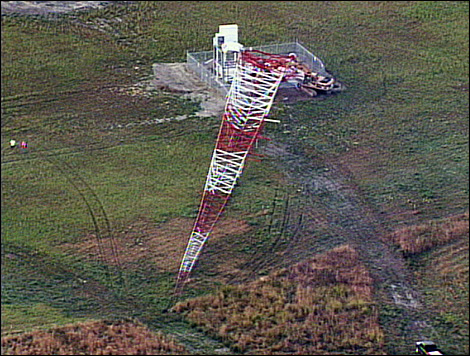
Everett, WA: Two radio sta­tion tow­ers were torn down ear­ly Fri­day by the Earth Lib­er­a­tion Front (ELF) in the Lord’s Hills val­ley in Sno­homish Coun­ty, WA. The tow­ers, owned by sta­tion KRKO, have been a source of con­tro­ver­sy for years. A sign left at the scene claime­drespon­si­bil­i­ty by the ELF.

Earth Liberation Front Topples Two Radio Station Towers in Snohomish County, WAEarth Liberation Front Topples Two Radio Station Towers in Snohomish County, WAEverett, WA: Two radio sta­tion tow­ers were torn down ear­ly Fri­day by the Earth Lib­er­a­tion Front (ELF) in the Lord’s Hills val­ley in Sno­homish Coun­ty, WA. The tow­ers, owned by sta­tion KRKO, have been a source of con­tro­ver­sy for years. A sign left at the scene claime­drespon­si­bil­i­ty by the ELF.

FOR IMMEDIATE RELEASE
Sep­tem­ber 4, 2009

Earth Lib­er­a­tion Front Top­ples Radio Sta­tion Tow­ers in Sno­homish Coun­ty, WA

Everett, WA: Two radio sta­tion tow­ers were torn down ear­ly Fri­day by the Earth Lib­er­a­tion Front (ELF) in the Lord’s Hills val­ley in Sno­homish Coun­ty, WA. The tow­ers, owned by sta­tion KRKO, have been a source of con­tro­ver­sy for years. A sign left at the scene claimed respon­si­bil­i­ty by the ELF.

” Due to the health and envi­ron­men­tal risks asso­ci­at­ed with radio waves emit­ted from the tow­ers, we applaud this act by the ELF,” stat­ed Jason Craw­ford, a spokesper­son for the North Amer­i­can Earth Lib­er­a­tion Front Press Office. “When all legal chan­nels of oppo­si­tion have been exhaust­ed, con­cerned cit­i­zens have to take action into their own hands to pro­tect life and the plan­et.”

For the past eight years, oppo­nents have waged a legal bat­tle against the tow­ers, argu­ing that AM radio waves cause adverse health affects includ­ing a high­er rate of can­cer, harm to wildlife, and that the sig­nals have been inter­fer­ing with home phone and inter­com lines.

Last year, the first four tow­ers were erect­ed by KRKO after numer­ous hear­ings and appeals. KRKO plans to build two more tow­ers to boost the sta­tion’s broad­cast­ing pow­er.

” We have to weigh our pri­or­i­ties and the local ecosys­tem in Everett, along with the local res­i­dents, do not need addi­tion­al sports news radio sta­tion tow­ers that come at the expense of reduced prop­er­ty val­ues and harm­ful radio waves,” Craw­ford con­tin­ued. “We sin­cere­ly hope that peo­ple con­tin­ue to take direct action to stop the threats to human health, wildlife and the plan­et.”

The E.L.F. is an inter­na­tion­al under­ground orga­ni­za­tion that uses direct action in the form of eco­nom­ic sab­o­tage to stop the sys­tem­at­ic exploita­tion and destruc­tion of the plan­et. Since its incep­tion in North Amer­i­ca in 1996, the ELF has inflict­ed well over $150 mil­lion in dam­ages to cor­po­ra­tions and gov­ern­men­tal agen­cies that are prof­it­ing from the destruc­tion of the Earth.

The North Amer­i­can Earth Lib­er­a­tion Front Press Office is a legal news agency rep­re­sent­ing the earth lib­er­a­tion move­ment. The NAELFPO reports on the covert direct actions tak­en by the Earth Lib­er­a­tion Front in defense of the plan­et. Tar­get­ing defor­esta­tion, genet­i­cal­ly mod­i­fied organ­isms (GMOs), urban sprawl, auto­mo­bile and indus­try pol­lu­tion, and oth­er threats to the nat­ur­al envi­ron­ment, the Earth Lib­er­a­tion Front uses non­vi­o­lent eco­nom­ic sab­o­tage to com­pel indus­tries and gov­ern­ments to reshape their envi­ron­men­tal­ly destruc­tive poli­cies.

The NAELFPO can be found on the web at http://www.elfpressoffice.org

Con­tact:
North Amer­i­can Earth Lib­er­a­tion Front Press Office
Tel: (202) 521‑1482
info@elfpressoffice.org

Interview with Eco-Anarchist Prisoner Daniel McGowan

Daniel McGowan was one of many round­ed up in late 2005 and charged with eco-ter­ror­ism charges in what has become known as the Green Scare in the US; a co-ordi­nat­ed FBI attack on sev­er­al groups of peo­ple for­mer­ly or cur­rent­ly involved in eco­log­i­cal and ani­mal rights direct action. Sev­er­al defen­dants co-oper­at­ed or agreed to tes­ti­fy against each oth­er, how­ev­er Daniel and a hand­ful of oth­ers refused to impli­cate oth­ers. He was sen­tenced to 7 years in 2007. Read more about his case or how to sup­port him at http://www.supportdaniel.org.

Daniel McGowan was one of many round­ed up in late 2005 and charged with eco-ter­ror­ism charges in what has become known as the Green Scare in the US; a co-ordi­nat­ed FBI attack on sev­er­al groups of peo­ple for­mer­ly or cur­rent­ly involved in eco­log­i­cal and ani­mal rights direct action. Sev­er­al defen­dants co-oper­at­ed or agreed to tes­ti­fy against each oth­er, how­ev­er Daniel and a hand­ful of oth­ers refused to impli­cate oth­ers. He was sen­tenced to 7 years in 2007. Read more about his case or how to sup­port him at http://www.supportdaniel.org.


Orig­i­nal­ly post­ed on http://www.lasthours.org.uk

Last Hours: Hi, can you tell us a bit about who you are?

Daniel: Well, I’m an Amer­i­can polit­i­cal pris­on­er cur­rent­ly resid­ing in USP Mar­i­on’s “Com­mu­ni­ca­tion man­age­ment unit” (CMU) in South­ern Illi­nois. I am serv­ing an 84 month sen­tence for my par­tic­i­pa­tion in arsons claimed by the Earth Lib­er­a­tion Front (ELF) in 2001. My home is Brook­lyn, New York, I’m 35 years old, and I grew up in Rock­away Beach, Queens, NY (yep-the same one in the Ramones song!).
[Not long now…]

After liv­ing in Ore­gon for two years, I moved back to New York and worked on many dif­fer­ent projects before I was arrest­ed at my work­place in Decem­ber 2005. I was employed as a web­mas­ter for http://WomensLaw.org at the time of my arrest – an organ­i­sa­tion that helps women nav­i­gate their way out of domes­tic vio­lence sit­u­a­tions. Pri­or to that, I worked at var­i­ous non-prof­its usu­al­ly focused on rain­for­est pro­tec­tion and indige­nous rights most­ly in an administrative/ tech­ni­cal capac­i­ty. Projects and cam­paigns that I worked on include: sup­port for eco-pris­on­er and friend Jeff ‘Free’ Luers; work­ing with a com­mu­ni­ty of polit­i­cal pris­on­er sup­port­ers in link­ing the old­er and younger gen­er­a­tions of pris­on­er sup­port­ers (many of these peo­ple became the base of my support/ defence com­mit­tee Fam­i­ly and Friends of Daniel McGowan) and lat­er, the NYC ABCF chap­ter (Anar­chist Black Cross pris­on­er sup­port); organ­is­ing Real­ly Real­ly Free Mar­kets; organ­is­ing against the Repub­li­can Par­ty’s con­ven­tion being held in NYC in 2004 (through the cre­ation of http://rncnotwelcome.org), and anti-war resis­tance – most­ly try­ing to cre­ate ways for anar­chists to par­tic­i­pate out­side the realm of the two Com­mie front groups – Answer and NION (Not in Our Name).

Last Hours: Tell us some­thing about what a typ­i­cal day looks like for you inside, what’s your dai­ly rou­tine?

Daniel: Apolo­gies if I send you to sleep with this one. Pris­on­ers will tell you their rou­tine is what saves them and helps the day pass. In that way, prison is like a ‘bizarro world’ – in here, I val­ue rigid unchang­ing rou­tines and hate week­ends – go fig­ure! I wake up at 6am, eat break­fast while catch­ing the ear­ly news on cable TV. From 7am till lunch (absurd­ly served at 10.30am), I either go back to sleep or most days, read the news­pa­per, write some let­ters and check email (almost all fed­er­al pris­on­ers in the US now have access to email! We pay for it of course but it’s a plus). After lunch, I go out­side, shoot bas­ket­ball or play a lit­tle hand­ball and then study for my para­le­gal course or go to Span­ish class. After that it’s mail call which is just the best time of day for me – even after 2 years I always get mail and I’m incred­i­bly thank­ful for that. I work out around 2pm most days, catch a snack after­wards and when we’re locked in our cell to be count­ed, I read. Then it’s din­ner, more time out­side, more let­ters and read­ing and before I know it, it’s time to lock in our cells. Most nights I read for one or two hours but like tonight, I catch up on let­ters. Sprin­kled through­out the day is the impor­tant task of mak­ing cof­fee, my prison job of sweeping/ mop­ping a hall­way and writ­ing arti­cles, doing legal research and plain old hang­ing out. It cer­tain­ly isn’t excit­ing and there is much less to do here than at a ‘normal’/ gen­er­al population/ non-iso­la­tion prison.

Last Hours: How do you keep your spir­its up and your mind still crit­i­cal in this envi­ron­ment?

Daniel: This is a dai­ly focus of mine: how to not slip into depres­sion and inac­tiv­i­ty. Most­ly, I keep as busy as I can and heed the wis­dom of for­mer and cur­rent pris­on­ers who advise me that a busy rou­tine is the best way of doing your time. I live with some men who have been locked in their cells, 23 hours a day, and have sur­vived through the relent­less main­te­nance of a busy sched­ule. By keep­ing busy, I don’t have a lot of time to feel shit­ty. Of course, one must deal with those feel­ings and I do, but I try to remind myself of a few key points: 1) I got 7 years, which is not only below the aver­age sen­tence for fed­er­al pris­on­ers but pales in rela­tion to what I faced at indict­ment (life plus), 2) A lot of peo­ple care about me and my well being; that is some­thing I am remind­ed of dai­ly with thought­ful let­ters, cards and notes (I espe­cial­ly appre­ci­ate the beau­ti­ful cards I get peri­od­i­cal­ly from Euro­pean activist gath­er­ings!), 3) That mil­lions of peo­ple have done time, got released and are okay – includ­ing a grow­ing num­ber of eco-activists and long serv­ing polit­i­cal pris­on­ers (who have been faced with much worse con­di­tions than I have). Friends have been kind enough to send me many pho­tos – of them­selves, of places they’ve been, and events I would have liked to attend and my pho­to album acts as a shot in the arm for me. When I’m sad, I allow myself to be sad but I try not to wal­low. If all goes well, I have three and a third years left before release, which com­pared to my fel­low CMU res­i­dents is a tiny amount.

Main­tain­ing a crit­i­cal view is tough. I am inun­dat­ed with main­stream news cov­er­age and it tends to dis­tort one’s view of the world, watch­ing cov­er­age of Israel’s bomb­ing of Gaza or the nar­row debate on Michael Vick (an Amer­i­can foot­ball play­er recent­ly released from prison after serv­ing a 23 month sen­tence for fund­ing dog-fight­ing) has remind­ed me how dis­tort­ing and absurd the cor­po­rate news is – whether it’s CNN, Fox, MSNBC or I sup­pose BBC. It’s a point raised by for­mer polit­i­cal pris­on­er Rob los Ricos in a let­ter to (Amer­i­can rad­i­cal pub­li­ca­tion) Rolling Thun­der. When most of your news of the out­side world comes from the idiot box, it can real­ly warp your ideas. The prob­lem is, we are see­ing the death of print pub­li­ca­tions in the US (and I guess all over – if I’m cor­rect, Last Hours was a print pub­li­ca­tion?). So many rad­i­cal pub­li­ca­tions have bit­ten the dust since 2004 that I tend to over-rely on main­stream sources. It’s not rare for me to ask friends, “What are anar­chists and rad­i­cals say­ing about the econ­o­my, Oba­ma, coal, NATO, protests etc.?” Luck­i­ly I’m spoiled with a load of peo­ple will­ing to print me ana­lyt­i­cal arti­cles off web­sites such as counterpunch.org, http://infoshop.org and the Port­land, Ore­gon and NYC Indy­medias. Still, one must main­tain crit­i­cal thought while watch­ing TV or else you’ll start think­ing coal can be clean or the hand­wring­ing “both sides are at fault” type lib­er­al think­ing.

Last Hours: Have you been able to main­tain con­tacts to move­ments on the out­side? What do you think has changed since you were jailed?

Daniel: Main­tain­ing con­nec­tions to move­ments on the out­side (such as the envi­ron­men­tal and polit­i­cal pris­on­er sup­port com­mu­ni­ty) has been a chal­lenge dur­ing the two years I have been inside – and much hard­er since I’ve been here in the CMU. I think it’s hard for peo­ple to under­stand just how depen­dent we are in here on peo­ple on the out­side, keep­ing up with what’s going on in our move­ments is very dif­fi­cult as it requires peo­ple on the out­side cor­re­spond­ing with us and copi­ous amounts of copies, arti­cles and inter­net post­ings being sent in. Even with that, which I am lucky enough to have, I am still woe­ful­ly behind on what’s going on, the dis­cus­sions peo­ple are hav­ing, cam­paigns that are being devel­oped. It’s cer­tain­ly under­stand­able as peo­ple on the out­side have so much on their plates and it’s hard to trans­mit the nuance of these dis­cus­sions. Also, there are dis­cus­sions I can’t be part of for obvi­ous rea­sons – I am in prison where my every con­tact with out­side is heav­i­ly scru­ti­nised so there’s a lot of dia­logue that can’t occur. I do my best to engage in dia­logue with the move­ment via let­ters to activists and organ­i­sa­tions. Much of my focus for the last eight years has been on polit­i­cal pris­on­ers, prison reform etc. The New York City ABCF is a group I dia­logue with often about ideas and projects they work on. My own sup­port group is heav­i­ly involved with organ­is­ing around the CMU and pas­sage of a bill that will increase the ‘good time cred­it’ for fed­er­al pris­on­ers (http://www.goodtimebill.info). My con­tact with the rad­i­cal envi­ron­men­tal move­ment has been spot­ty, at best. After I report­ed to prison, I sub­mit­ted quite a few pieces to the (Amer­i­can) Earth First! Jour­nal but after an aggres­sive per­son­al attack (to which I was not offered a con­cur­rent response) by a co-defen­dant, I opt­ed to not sub­mit more to that pub­li­ca­tion. I am in con­tact with pre­cise­ly one Earth First! Group in the US, which I find dis­ap­point­ing but I have good dia­logue with a few move­ment pub­li­ca­tions, polit­i­cal pris­on­er sup­port­ers and inter­na­tion­al eco, polit­i­cal pris­on­er and ani­mal activists. Main­tain­ing com­mu­ni­ca­tion with the move­ment is a two way street – if I had a nick­el for every let­ter I’ve writ­ten that has­n’t been respond­ed to…

Unlike some polit­i­cal pris­on­ers, I have opt­ed not to write big ana­lyt­i­cal pieces on hap­pen­ings in soci­ety due to my rel­a­tive iso­la­tion and thus igno­rance. To be able to write such pieces would require me to have some­thing more than what I do, name­ly, the afore­men­tioned over­whelm­ing access to mainstream/ cor­po­rate sources of news, a smat­ter­ing of inde­pen­dent pub­li­ca­tions and the opin­ions of my cor­re­spon­dents. I ask friends con­stant­ly what is new out there – in NYC, Amer­i­ca, beyond, but it’s hard to real­ly get a grasp on it.

How­ev­er, there are some things that have changed in the US that even I can see. The first would be the Oba­ma cam­paign and pres­i­den­cy. While I won’t deny the his­toric event that the elec­tion of a black man to pres­i­dent­cy is, I am dis­mayed by the trance that has seem­ing­ly fall­en over many facets of the left regard­ing Oba­ma. Peo­ple who know bet­ter (many of us who had gone through this in 1992 with Clin­ton) have become entranced by the man’s charis­ma, intel­lec­tu­al capac­i­ty and rhetoric about ‘hope and change’. After 8 years of Bush, it’s under­stand­able. The top­i­cal dif­fer­ence between the two is immense but we need to remem­ber the nature of the Pres­i­den­cy (and of cap­i­tal­ism, for that mat­ter). It mat­ters lit­tle who is at the top and while cer­tain poli­cies may sound great – the attempt­ed clo­sure of Guan­tanomo, troop with­draw­al of Iraq – oth­er poli­cies are even worse than Bush, e.g. 17,000+ new troops into Afghanistan, or the sup­pres­sion of tor­ture pho­tos. Oba­ma will not dis­man­tle cap­i­tal­ism and he is obvi­ous­ly not a social­ist. He is behold­en to Wall Street and 90% of his staff is inher­it­ed from the Clin­ton era. He does­n’t chal­lenge US excep­tion­al­ism and impe­ri­al­ism and on many fronts, is the same of Bush, or worse.

Now that said, like Clin­ton, US social move­ments have more wig­gle room to push hard for what we want, or min­i­mal­ly, to grow our move­ments with­in a slight­ly less repres­sive regime (that point is debat­able con­sid­er­ing the res­o­lu­tion of at least three high-pro­file ter­ror­ism cas­es thus far in the Oba­ma era plus a typ­i­cal, infor­mant-induced, ‘bomb­ing plot’ in NYC where four black Mus­lim men were recent­ly indict­ed). Ide­al­ly, we would use these next three and a half or eight years to expand our move­ments and win con­ces­sions with­out devolv­ing into absurd cam­paigns against vot­ing (which to me, are a colos­sal waste of time).

Anoth­er change I’ve noticed is how ‘green’ is now remark­ably trendy. Every­where I look there are arti­cles about ‘how to be green’, or what green, eco prod­ucts, there are etc. In some ways, this is great – it shows how the work of envi­ron­men­tal­ists over the last 40 years has paid off. Envi­ron­men­tal con­scious­ness is, with­out a doubt, high­er. The prob­lem is, that there often isn’t, if at all, mon­ey to be made by liv­ing sim­pler lives, con­sum­ing less and pre­serv­ing or pro­tect­ing wilder­ness. Thus, the creep­ing act of recu­per­a­tion takes place which is almost an act of, ‘If you can’t beat em, join em’ on the part of busi­ness. While many of the prod­ucts made have a place in an eco­log­i­cal­ly aware soci­ety, much of what is made is crap or wid­gets and is more to do with mar­ket­ing or green­wash than any­thing. It’s remark­able to see the accep­tance of cli­mate change as fact by vast sec­tors of soci­ety but we need to help peo­ple get past the paral­y­sis that occurs from the accep­tance of cli­mate change as occur­ring. Also, now that this very small bat­tle has been won, we need to ‘leap-frog’ the argu­ment. The next bat­tle is the one against false alter­na­tives to com­bat­ing cli­mate change. That is: bio­fu­els, ‘clean’ coal, the resur­gence of nukes as well as the very real dis­as­ters we will see more of in the next 20 years (the sub­mer­gence of islands, big­ger and more fre­quent hur­ri­canes and tor­na­does, species like the polar bear slip­ping towards extinc­tion, the destruc­tion of indige­nous peo­ple’s home­lands etc). From my van­tage point, the world has cer­tain­ly changed but being in an envi­ron­ment seem­ing­ly frozen in time, it’s hard for me to pro­vide great analy­sis. One fun­ny thing I tell my friends is that my main goal is to leave prison not in 2007 but in 2012!

Last Hours: What do you know about more recent devel­op­ments in the Green Scare repres­sion in the US?

Daniel: I try to keep up with recent cas­es – of activists like me indict­ed by the fed­er­al gov­ern­ment, fac­ing stiff sen­tences or sim­i­lar charges as mine. I would sug­gest that peo­ple inter­est­ed in these cas­es check out the fol­low­ing sites – http://www.cdlc.org (the Civ­il Lib­er­ties Defence Cen­ter in Eugene, Ore­gon – a stal­wart, tiny group of lawyers who defend eco-pris­on­ers amongst oth­ers); my site www.supportdaniel.org, and the list­serve dis­trib­uted by www.spiritoffreedom.org.uk. Most recent­ly, I have read about a 22 year sen­tence hand­ed down to a female envi­ron­men­tal activist, a 19 year sen­tence giv­en to a male envi­ron­men­tal activist entrapped by an FBI infor­mant, and the recent indict­ment of four activists in San­ta Cruz, Cal­i­for­nia on ‘Ani­mal Ter­ror­ism’ charges. This case is par­tic­u­lar­ly trou­bling as it’s the first use of the law, one that specif­i­cal­ly out­laws pre­vi­ous­ly pro­tect­ed free speech activ­i­ty – if direct­ed towards an ‘ani­mal enter­prise’ (e.g. a med­ical test­ing com­pa­ny). As usu­al, the gov­ern­ment lib­er­al­ly uses the grand jury to inves­ti­gate and com­pel tes­ti­mo­ny from activists against each oth­er and posts rewards for arrests. In that, there has been a “chill­ing effect” on aspects of the move­ment.

I can’t help to think the Green Scare is not about the arrest of peo­ple who have bro­ken the law, but real­ly about demon­s­ing envi­ron­men­tal and ani­mal activists who have the poten­tial for cur­tail­ing prof­its. On a pos­i­tive note, I have read that many of these cas­es are in appeal and this is a chance for some jus­tice. Also, some activists have been released or are close to release and are com­ing back to their com­mu­ni­ties. Final­ly, I am very excit­ed that my friend, Jeff ‘Free’ Luers, will be released in Decem­ber of this year – his sen­tence was thrown out and he plead­ed to a 10 year sen­tence (down from 22 years and nine months) last year. He will need help for a release fund upon his release and his sup­port group is work­ing towards that goal now. (see http://www.freefreenow.org)

Last Hours: How do you get on with oth­er pris­on­ers at Mar­i­on?

Daniel: Gen­er­al­ly I get on with peo­ple quite well. I find I have a lot more in com­mon with many of the men here at the CMU. Most of us have had sim­i­lar pros­e­cu­tions, been vil­i­fied in the media and receive a lot of com­mu­ni­ty sup­port. Unlike a lot of pris­ons, this one is rel­a­tive­ly qui­et and the pris­on­ers are stu­dious mak­ing for an eas­i­er envi­ron­ment to get to know peo­ple. The cul­tur­al dif­fer­ences in the CMU are huge and that requires a lot of under­stand­ing, dia­logue and tol­er­ance for peo­ple’s opin­ion. There are top­ics that are best not dis­cussed for the sake of peace. Gen­er­al­ly speak­ing, I try to relate to my fel­low pris­on­ers, on issues we share in com­mon – cri­tiques of the prison sys­tem, region­al affin­i­ty, even sports! Where this gets sticky is on points of con­tention, usu­al­ly the ram­pant sex­ism, racism and homo­pho­bia (and anti­semitism) in pris­ons. My stance is that I won’t ever par­take in con­ver­sa­tions on these top­ics unless I see a mean­ing­ful way to chal­lenge it. Often, whites in the sys­tem will, upon see­ing my skin­tone, launch into racist remarks, assum­ing I agree. It cre­ates awk­ward sit­u­a­tions and when I feel like they can hear me, I chal­lenge it. Late­ly, the issue that comes up often is same-sex mar­riage as more and more states in the US are mak­ing it legal. News cov­er­age is heavy and thus, there’s a lot of hate being thrown around. When you are the only per­son sup­port­ive of queer peo­ple, its hard to know where to begin! Do you start by chal­leng­ing the “homo­sex­u­al­i­ty as immoral act” the­o­ry or pro­mote equal pro­tec­tion for gay folks? At first, I chalked these beliefs up to the fact that this was a prison thing, but my cur­rent the­o­ry is these beliefs are more com­mon than I thought in US soci­ety. The rea­son I don’t see it is because I organ­ise in a rad­i­cal sub­cul­ture (which is prob­lem­at­ic, in many ways). Still, I look for­ward to being in an envi­ron­ment where I don’t feel hor­ri­bly pissed off hear­ing an absurd rhetoric about “Jews con­trol­ling the econ­o­my” or “the Holo­caust did­n’t hap­pen” and incred­i­bly con­ser­v­a­tive voic­es on social issues.

The unit I live in now is mixed in terms of secu­ri­ty lev­els – from low (me) to a few men who have been at the lone fed­er­al super­max. The pre­vi­ous prison I was at was a low secu­ri­ty prison and the envi­ron­ment was pet­ty. Peo­ple mind­ed their own busi­ness, it was crowd­ed and extreme­ly apo­lit­i­cal. Here, the con­ver­sa­tions are, at least, very inter­est­ing and all my books and pub­li­ca­tions are shared with about half the unit. No mat­ter how well you get on with peo­ple, even­tu­al­ly, peo­ple piss you off – it’s only nat­ur­al when liv­ing in a con­fined space with only 20+ peo­ple!

Last Hours: Tell us about some every­day stuff you enjoy/makes you hap­py!

Daniel: That’s a tough one, as my life is so ori­ent­ed towards prison life! Well, in here I enjoy read­ing a mix of ultra-seri­ous, polit­i­cal, non-fic­tion and fluffy fic­tion (I like the Twi­light series, Har­ry Pot­ter and spy nov­els!). I like bas­ket­ball, hand­ball, and lis­ten­ing to bad 90s ‘alter­na­tive’ on the satel­lite radio as well as shit­ty 80s films. I love mail call, get­ting mail and writ­ing as well as mak­ing a fan­cy prison cof­fee drink – instant cof­fee (Foldgers), ½ tea­spoon peanut but­ter, hot cocoa – then iced. More impor­tant­ly, on the out­side, I like hang­ing with my friends, hav­ing potlucks and drink­ing cold micro­brews, send­ing pris­on­ers huge let­ters and big pack­ets of arti­cles, cook­ing and bak­ing, rough­hous­ing and spoil­ing my nieces, chill­ing with my sweety and see­ing arte­facts of old, pre-gen­tri­fied NYC. I like read­ing about his­to­ry – espe­cial­ly of past social move­ments, both in the US, and around the world, and of resis­tance to the nazis dur­ing WW2. Late­ly, I’ve read all the books I can find writ­ten by rad­i­cals from the 60s/ 70s like Bill Ayers, Berna­dine Dohrn, Mark Rudd and Cathy Wilk­er­son (from the Weath­er Under­ground). Zines are some of my favourite – polit­i­cal ones most­ly, but I do love one per­son­al zine – like Mor­gen­muf­fel! Prob­a­bly the thing I like the most, and this may sound corny, is help­ing peo­ple and try­ing my hard­est to make a dif­fer­ence in their strug­gle against oppres­sion (of the nat­ur­al world, oth­er species and fel­low humans). On anoth­er lev­el, I enjoy teas­ing my friends, giv­ing goofy and unwant­ed nick­names and laugh­ing in the face of adver­si­ty.

Last Hours: What can peo­ple do to sup­port polit­i­cal pris­on­ers?

Daniel: I would say the best way to sup­port pris­on­ers in our move­ment is to engage them in a prin­ci­pled way about what they need. Dif­fer­ent peo­ple have strik­ing­ly dif­fer­ent needs and ways of doing their time. Some, like myself, aren’t in appeal and thus have much less of a need for fundrais­ing than oth­ers (although this was quite the oppo­site dur­ing my case). Oth­ers may choose to con­cen­trate on their men­tal well being and deal­ing with sur­vival, leav­ing less ener­gy or desire to write arti­cles, for instance. Treat peo­ple like indi­vid­u­als – ask them what they need and don’t treat them like stereo­types of what you think a polit­i­cal pris­on­er should believe etc. There are some gen­er­al com­mon­al­i­ties we share – a need for con­tact with our friends, fam­i­ly and com­mu­ni­ty, a desire not to be for­got­ten etc. but beyond that, I am hes­i­tant to be too spe­cif­ic.

Per­son­al­ly speak­ing, it was and is impor­tant for me to feel con­nect­ed to move­ments I was a part of on the out­side (such as polit­i­cal pris­on­er sup­port). Being in prison has felt like being “benched” (sor­ry for the sports ref­er­ence but it real­ly fits!). So, keep­ing up with what our move­ments are up to (cam­paigns, events, DNC and RNC mobil­i­sa­tions last sum­mer etc.) has been a huge pri­or­i­ty. Also, before I went in I had an idea of what I thought sol­id pris­on­er sup­port was. Of course, liv­ing it has changed my view some­what and I have a good dia­logue with those on the out­side engag­ing in pris­on­er sup­port. I try to advise peo­ple on those issues from my new­found per­spec­tive to the extent that I can. Extrap­o­lat­ing from my sit­u­a­tion to the broad­er group of polit­i­cal pris­on­ers I’d say, peo­ple can write to polit­i­cal pris­on­ers (or their sup­port com­mit­tees), see what needs aren’t being met and fill them. Be con­sis­tent and hon­est in your com­mu­ni­ca­tion with us and be open to what our needs may be.

As for my sit­u­a­tion, I am lucky enough to have real­ly sol­id sup­port from the move­ment, my fam­i­ly and NYC com­mu­ni­ty. There is nev­er a time I lack com­mis­sary funds, read­ing mate­r­i­al or a con­sis­tent stream of updates and love from the out­side. This is not the case though for many pris­on­ers. Specif­i­cal­ly we have a sit­u­a­tion in the States where there are 100 or so polit­i­cal pris­on­ers (recog­nised by the ABCF and the Jeri­cho Move­ment), many of whom have been in for over 20 years. While many have rein­vig­o­rat­ed free­dom cam­paigns – due to web­sites, young vol­un­teers etc. – they still face huge obsta­cles in their path for free­dom.

It’s been my goal going on eight years now to build bridges between the envi­ron­men­tal and ani­mal rights polit­i­cal pris­on­er move­ment and the broad­er polit­i­cal pris­on­er com­mu­ni­ty. I feel both sides have a lot to offer each oth­er and when there’s been mutu­al rela­tion­ships, such as joint protests against grand juries in San Fran­cis­co, CA by for­mer pan­thers and ani­mal rights activists, it’s been pow­er­ful. If you iden­ti­fy strong­ly as an eco or ani­mal rights per­son, branch out, check out the leftist/ anti-impe­ri­al­ist/ black nation­al­ist polit­i­cal pris­on­ers – you can find bios, move­ment his­to­ry and con­tacts at http://www.abcf.net or www.thejerichomovement.com. If social jus­tice is more your thing and you don’t hang with the tree hug­ger set, check out www.spiritoffreedom.org.uk, the links page on my site, www.suppportdaniel.org, http://www.ecoprisoners.org and www.cldc.org. (In fact, many eco/animal PPs have sites with the style www.support_.org so just google or plug in first names).

Thanks for giv­ing me the oppor­tu­ni­ty to share my thoughts on some real­ly good ques­tions. I am most appre­cia­tive of the sup­port shown to me by so many peo­ple – espe­cial­ly those in oth­er coun­tries, many of whom I’ll nev­er meet. I can be reached at

Daniel McGowan #63794–053

USP Mar­i­on

Post Office Box 1000

Mar­i­on, Illi­nois 62959

USA

http://www.myspace.com/danielmcgowan

http://www.supportdaniel.org

(for US read­ers) http://www.goodtimebill.info

Logging protests spread in Borneo as nomads block roads

24 August 2009
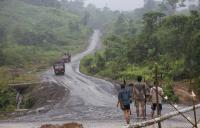
Protests by the Penan tribe in Bor­neo have esca­lat­ed, with twelve vil­lages com­ing togeth­er to mount new road block­ades against the log­ging and plan­ta­tion com­pa­nies that are destroy­ing their rain­for­est.

Penan blockade24 August 2009
Protests by the Penan tribe in Bor­neo have esca­lat­ed, with twelve vil­lages com­ing togeth­er to mount new road block­ades against the log­ging and plan­ta­tion com­pa­nies that are destroy­ing their rain­for­est.

Jour­nal­ists cov­er­ing at the block­ades were inter­cept­ed by police with machine­guns and tak­en away for ques­tion­ing.

Hun­dreds of Penan have blocked roads at three new loca­tions in the inte­ri­or of Sarawak, in the Malaysian part of the island of Bor­neo. The pro­tes­tors are demand­ing an end to log­ging and plan­ta­tions on their land with­out their con­sent, and recog­ni­tion of their land own­er­ship rights.

BBC TV pre­sen­ter Bruce Par­ry vis­it­ed the Penan for his hit series, ‘Tribe’. One Penan told him, ‘It’s not true that we Penan do not want progress. Not the ‘progress’ where log­ging com­pa­nies move on to the land. What we want is real progress. What we need is land rights first of all.’

The new protests come only weeks after block­ades by two near­by Penan vil­lages. The destruc­tion of their for­est robs the hunter-gath­er­er Penan of the ani­mals and plants they eat and pol­lutes the rivers they fish in. With­out the for­est, many Penan have dif­fi­cul­ty feed­ing their fam­i­lies.

The Penan have been strug­gling for more than twen­ty years against the log­ging com­pa­nies that oper­ate on their land with full gov­ern­ment back­ing. In areas where the valu­able trees have been cut down, the com­pa­nies are clear­ing the for­est com­plete­ly to make way for oil palm plan­ta­tions.

The block­ades are aimed at forc­ing the Malaysian tim­ber com­pa­nies Sam­ling, Inter­hill, Rim­bunan Hijau and KTS to end their activ­i­ties on the Penan’s land with­out the tribe’s con­sent. One of the ear­li­er block­ades, mount­ed in June at the set­tle­ment of Ba Marong, result­ed in the with­draw­al of a KTS sub­sidiary from the area – but the Penan fear that the log­gers may return.

In anoth­er Penan area, the noto­ri­ous com­pa­ny Sam­ling is advanc­ing on an area of the tribe’s for­est that has nev­er been logged before. Observers say that the road built by the com­pa­ny is like­ly to reach the remote Ba Jawi area with­in weeks.

Survival’s direc­tor Stephen Cor­ry said today, ‘The log­ging and plan­ta­tion com­pa­nies are pre­vent­ing the Penan from being able to feed their chil­dren. It’s no won­der they’re tak­ing to the bar­ri­cades. Penan in some areas are cur­rent­ly receiv­ing food aid – before the log­gers arrived, they would nev­er have need­ed such hand-outs. The Malaysian gov­ern­ment must rec­og­nize that this land is theirs and stops sanc­tion­ing its destruc­tion.’