Nembe Communities Occupy Shell Oil Facilities in Nigeria

Shell's environmental destruction of southern Nigeria is internationally condemned 12th May 2014

Shell's environmental destruction of southern Nigeria is internationally condemned 12th May 2014

Stake­hold­ers and indi­genes of Nem­be-Bas­sam­biri in Bayel­sa State last week­end besieged oil facil­i­ties oper­at­ed by the Shell Petro­le­um Devel­op­ment Com­pa­ny (SPDC) over it’s divest­ment plans and pro­posed sale of its Oil Min­ing Licens­es (OMLs).

The host to some of the SPDC’s instal­la­tions in Nem­be Local Gov­ern­ment Area of the state, were angry at the plan by Shell to sell OML 29 locat­ed in their domain with­out con­sult­ing them.

Shell has report­ed­ly placed its 45 per­cent stake in four oil wells includ­ing OML 29 for sale as part of the company’s divest­ment.

OML 29 is believed to have increased to 62,000 bpd of oil and 40 mil­lion stan­dard cubic feet of gas per day (mmscf/d). It also holds reserves of 2.2 bil­lion bar­rels of oil equiv­a­lent (boe).

The aggriev­ed pro­test­ers who stormed the company’s facil­i­ties on Sat­ur­day with diffrent  plac­ards asked Shell to stop pro­duc­tion for three days to address their demands.

Num­ber­ing over 100, the demon­stra­tors con­sist­ing of women, youths, chiefs, lead­ers and elders from the com­mu­ni­ty came on 15 speed­boats.

The pro­test­ers led by a mem­ber of the community’s Oil and Gas Com­mit­tee, Chief Brigi­di, took over the Nem­be-Brass water­ways, chant­i­ng sol­i­dar­i­ty songs as they sailed to SPDC’s major oil plat­forms in the area to reg­is­ter their griev­ances.

Some of the plac­ards dis­played by the pro­test­ers read: “the land is ours, the oil is ours, Shell can­not divest with­out us”;  “No, to Shell OML 29 sale”; “After pol­lut­ing our land and water, Shell wants to sell our land”.

Oth­ers are “No to fraud­u­lent sell of invest­ment”. “No to Shell fraud­u­lent divest­ment”;  “OML 29, OPU Nem­be demand jus­tice”; “Do not sell our oil wells to strangers” and “Include our com­pa­nies in OML divest­ment plans”.

A mem­ber of the Nem­be-Bas­sam­biri Coun­cil of Chiefs, Chief Bukunor Alfred, said mem­bers of the com­mu­ni­ty were angry at the plan of SPDC to sell oil blocks in the area with­out con­sult­ing them.

He said del­e­gates sent by the coun­cil of chiefs to dia­logue with SPDC on the devel­op­ment returned dis­ap­point­ed, say­ing, “Our plac­ards have shown that we are not hap­py with Shell. We are by this protest giv­ing Shell three days to shut down oper­a­tion and dia­logue with us or we will ensure that these facil­i­ties are per­ma­nent­ly closed.”

He said though SPDC had con­tributed in the devel­op­ment of the com­mu­ni­ty, the com­pa­ny was wrong to take a major deci­sion of divest­ing with­out con­sult­ing its land­lords.

“We are not against what they are doing. But we want to say that we are the land­lords and we are sup­posed to be noti­fied on what our ten­ants are doing,” he said.

Also, the Chair­man of Opu-Nem­be Improve­ment Union (ONIU), Mr. Ebinyo Robert, said the com­mu­ni­ty would not let the com­pa­ny to leave uncer­e­mo­ni­ous­ly after destroy­ing its envi­ron­ment through pol­lu­tion.

He insist­ed that the com­pa­ny must involve the com­mu­ni­ty in all the process­es involved in sell­ing OML 29.

He warned that indi­vid­u­als and com­pa­nies indi­cat­ing inter­est to buy the oil wells should desist or have the com­mu­ni­ty to con­tend with.

He said the com­mu­ni­ties have nom­i­nat­ed three com­pa­nies, Amot Oil E&P Lim­it­ed, A‑Abas Resources and Isea BMG, to par­tic­i­pate in the bid­ding process.

He said: “The place has been pol­lut­ed and our envi­ro­ment, our water our land, has been degrad­ed for a long time. We have not been reha­bil­i­tat­ed the way we real­ly want­ed it.

“By this demon­stra­tion, we are telling the par­ties to the sale includ­ing the bid­ders to desist from going ahead because if they do, of course, the land is ours, the water is ours and the oil is ours, they will have us to con­tend with and they may not like us in the man­ner in which they will meet us when they come to oper­ate.

“So, we are ask­ing the SPDC to stop the flow and all oper­a­tions for now and ensure that the com­mu­ni­ty is car­ried along because that is the only way we can have peace here.

“We are also say­ing that the com­mu­ni­ty has nom­i­nat­ed three com­pa­nies, Amot Oil E&P Lim­it­ed, A‑Abas Resources and Isea BMG, to par­tic­i­pate in the bid­ding process. So, SPDC should involve these com­pa­nies in the process.”

But the Oper­a­tions Team Lead San­ta Bar­bara Flow Sta­tion, Mr. Akpe Emmanuel, wel­comed the pro­test­ers on behalf of Shell.

He thanked them for the peace­ful man­ner in which they con­duct­ed the demon­stra­tion and promised to pass their griev­ances across the SPDC.

He said: “Once again, you are wel­come. I want to thank you for the man­ner in which you pre­sent­ed your case. I real­ly appre­ci­ate it on behalf of Shell.

“Like the com­mu­ni­ty has assigned you to rep­re­sent them, I am also here on behalf of Shell. I have heard all you have said. It is my duty to pass this mes­sage to my prin­ci­pal.”

Mass Trial of Indigenous Leaders Set to Begin this Week in Peru

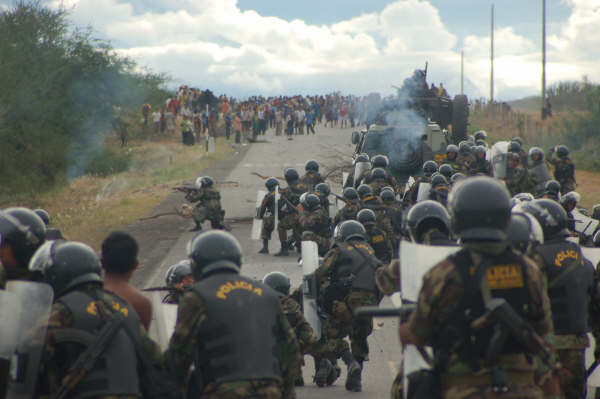
"Photos from Bagua" by Ben Powless 12th May 2014 A mas­sive tri­al involv­ing 53 Indige­nous lead­ers and activists is set to begin this week, reviv­ing the trag­ic events that took place four years ago in the Ama­zonas Region

"Photos from Bagua" by Ben Powless 12th May 2014 A mas­sive tri­al involv­ing 53 Indige­nous lead­ers and activists is set to begin this week, reviv­ing the trag­ic events that took place four years ago in the Ama­zonas Region of Peru.

In April 2009, a nation­al indige­nous mobi­liza­tion was orga­nized to stop a plan by the Peru­vian gov­ern­ment to roll-back indige­nous land rights and make it eas­i­er for indus­try to exploit the Ama­zon rain­for­est.

The first month of the mobi­liza­tion, led by more than 1200 com­mu­ni­ties, was large­ly peace­ful. How­ev­er, that began to change on May 9, 2009, when the Peru­vian gov­ern­ment declared a state of emer­gency in the regions of Lore­to, Ama­zonas, Cus­co, and Ucayali–where thou­sands of Indige­nous Peo­ples were con­cen­trat­ing their efforts.

Once the state of emer­gency was declared, the num­ber of con­fronta­tions with police and mil­i­tary began to climb. Nev­er­the­less, the mobi­liza­tion pressed on, with Indige­nous Peo­ples car­ry­ing out dai­ly protest actions across the coun­try.

With the Indige­nous Peo­ples show­ing no signs of back­ing down, on May 20, Peru’s Con­gress took a pos­i­tive step for­ward by repeal­ing one of four laws that sparked the mobi­liza­tion: Leg­isla­tive Decree 1090, a new forestry law that removed the pro­tect­ed sta­tus of some 45 mil­lion hectares of rain­for­est. Six days lat­er, a sec­ond leg­isla­tive decree, aimed at pro­mot­ing pri­vate invest­ment in irri­ga­tion projects, was declared uncon­sti­tu­tion­al.


While there was enor­mous relief over the removal of the two decrees, two oth­ers remained:

  • Leg­isla­tive Decree 1064 removed a require­ment that oblig­ed com­pa­nies to come to an agree­ment with indige­nous com­mu­ni­ties over land com­pen­sa­tion and land use before enter­ing their lands (effec­tive­ly giv­ing min­ing, oil & gas, log­ging, and hydro com­pa­nies free access to enter any Indige­nous ter­ri­to­ry).
  • Leg­isla­tive Decree 1089, mean­while, gave unre­strict­ed pow­ers for land titling to COFOPRI, the gov­ern­ment body that spe­cial­izes in grant­i­ng indi­vid­ual land titles.

With both decrees pos­ing a sig­nif­i­cant threat to the secu­ri­ty of Indige­nous land rights, in addi­tion to the fact that the gov­ern­ment failed to car­ry out a process of con­sult­ing or seek­ing the con­sent of effect­ed Indige­nous Peoples–in vio­la­tion of ILO Con­ven­tion 169 and the Unit­ed Nations Dec­la­ra­tion on the Rights of Indige­nous Peoples–the mobi­liza­tion pressed on.

After a few more weeks of protest, it looked as if a res­o­lu­tion was at hand. Sev­er­al thou­sand Awa­jun and Wamp­is Peo­ples had set up a series of strate­gic block­ades on Fer­nan­do Belaúnde Ter­ry road in Bagua, Ama­zonas Region. Hav­ing so effec­tive­ly seized the impor­tant road, the gov­ern­ment sought to strike a deal with the Awa­jun and Wamp­is, ulti­mate­ly con­vinc­ing the Indige­nous Peo­ples to begin tak­ing down their block­ades. Many of the Awa­jun and Wamp­is were long gone by the time June 5 rolled around.

In the ear­ly morn­ing hours of June 5, the Peru­vian mil­i­tary police made their move.

When the dust final­ly set­tled, 38 peo­ple were dead and more than 200 were injured.

Two weeks after the bru­tal con­fronta­tion, Peru’s Con­gress over­whelm­ing­ly vot­ed to strike down both Leg­isla­tive Decree 1064 and 1089.

Fol­low­ing Con­gress’ vote, Daysi Zap­a­ta, vice pres­i­dent of the Intereth­nic Asso­ci­a­tion for Devel­op­ment of the Peru­vian Jun­gle (AIDESEP), the orga­ni­za­tion that start­ed the mobi­liza­tion, offi­cial­ly called for an end to all protests, stat­ing, “Today is an his­toric day, we are grate­ful that the will of indige­nous peo­ples has been heard, and only hope that in future, gov­ern­ments meet and lis­ten to the peo­ple, and not leg­is­late the laws back in.”

Four years lat­er, the decrees have remained off the books; the gov­ern­ment tak­ing judi­cial aim at many of the Indige­nous Peo­ples who took part (or alleged­ly took part) in the mobi­liza­tion. Since 2009, more 100 sep­a­rate law­suits have been filed involv­ing at least 350 Indige­nous men and women.

The upcom­ing law­suit, known as the “Cur­va del Dia­blo”, will be the largest of them all. In fact, with 53 indige­nous lead­ers fac­ing any­where between 35 years to life in prison, it is going to be the largest tri­al in Peru’s his­to­ry.

AIDESEP Pres­i­dent Alber­to Pizan­go, who is among the 53 named defen­dants, recent­ly com­ment­ed in an inter­nal AIDESEP inter­view:

There’s a “Before Bagua” and an “After Bagua”. A before in which the Peru­vian State didn’t want to and didn’t know how to lis­ten to the pro­pos­als of indige­nous peo­ples. This exac­er­bat­ed the sit­u­a­tion until things came to what hap­pened, which unfor­tu­nate­ly took so many lives unnec­es­sar­i­ly. I’d say an “After Bagua” because thanks to the Ama­zon­ian mobi­liza­tions I can say that today the indige­nous agen­da is not only insert­ed in the nation­al lev­el and with­in the State, but on the inter­na­tion­al lev­el.

Pizan­go con­tin­ues:

I’d just say to the indige­nous peo­ples and my indige­nous broth­ers who are being tried for these regret­table events that they should stay firm in con­tin­u­ing to lift up the voice of indige­nous peo­ples. All we have done is com­ply with our role as being the offi­cial spokes­peo­ple and work to insert in the nation­al pub­lic agen­da the dif­fer­ent claims as man­dat­ed to us by our peo­ples. I’d reit­er­ate to my broth­ers that they should stay firm in the sig­nif­i­cance of indige­nous peo­ples rights. We’re going to over­come these accu­sa­tions, we should be con­scious of the fact that we haven’t com­mit­ted any crimes. Per­haps our only crime was to car­ry the voice of the peo­ple, which is what we’ll be judged for start­ing May 14th….

Tibetan Jumps to His Death to Protest Chinese Mine

9th May 2014 A young Tibetan stabbed him­self and jumped to his death from the roof of a build­ing in Tibet’s Cham­do pre­fec­ture on Wednes­day after author­i­ties tried to halt his protest against a Chi­nese mine being built in the area,

9th May 2014 A young Tibetan stabbed him­self and jumped to his death from the roof of a build­ing in Tibet’s Cham­do pre­fec­ture on Wednes­day after author­i­ties tried to halt his protest against a Chi­nese mine being built in the area, Tibetan sources in exile said.

Phak­pa Gyalt­sen, 32, died instant­ly after throw­ing him­self from a build­ing in Dzo­gang (in Chi­nese, Zuo­gang) prefecture’s Tong­bar town, a Tibetan liv­ing in India told RFA’s Tibetan Ser­vice on Wednes­day, cit­ing local sources.

After telling local Tibetans that he would “do some­thing” to oppose Chi­nese min­ing in Dzo­gang, Gyalt­sen “went to the town cen­ter, climbed onto a high build­ing, and called out for Tibetan free­dom,” the source said, speak­ing on con­di­tion of anonymi­ty.

“When attempts were made to stop him, he stabbed him­self twice and jumped off the build­ing, dying instant­ly,” he said.


Tibet—called Xizang, or West­ern Trea­sure, by China—has become an impor­tant source of min­er­als need­ed for China’s eco­nom­ic growth, and min­ing oper­a­tions in Tibetan regions have led to fre­quent stand­offs with Tibetans who accuse Chi­nese firms of dis­rupt­ing sites of spir­i­tu­al sig­nif­i­cance and pol­lut­ing the envi­ron­ment as they extract local wealth.

Chi­nese min­ing oper­a­tions at a site near Madok Tso called Ache Jema began almost two months ago, an exile source in Europe said, also cit­ing con­tacts in Dzo­gang.

“They claimed that they are work­ing to build a dam, but in real­i­ty they are plan­ning to mine in the area, the source said.

“So the local Tibetans decid­ed to stop the plan, and every day three Tibetans were sent to guard the area, work­ing in rota­tion.”

Detained

Some of those watch­ing the site were lat­er detained by police in Tong­bar but were released after a few days, he said.

“Local author­i­ties also tried to con­vince area res­i­dents not to oppose the min­ing by offer­ing each fam­i­ly 10,000 yuan [U.S. $1,603] in com­pen­sa­tion,” RFA’s India-based source said, adding, “But the Tibetans argued that min­ing would have neg­a­tive impacts [on the area].”

“Phak­pa Gyalt­sen then told the local Tibetans that he would do some­thing him­self so that they would not have to protest and cause prob­lems.”

Gyalt­sen, the elder son of the area’s Choeshoe fam­i­ly, is sur­vived by a wife and three small chil­dren, with anoth­er child on the way, he said.

“Phone con­nec­tions to the area are now blocked, and it is dif­fi­cult to learn any­thing more about what is hap­pen­ing,” he said.

Spo­radic demon­stra­tions chal­leng­ing Beijing’s rule have con­tin­ued in Tibetan-pop­u­lat­ed areas of Chi­na since wide­spread protests swept the region in 2008, with 131 Tibetans to date self-immo­lat­ing to protest Chi­nese rule and call for the return of exiled spir­i­tu­al leader the Dalai Lama.

Report­ed by RFA’s Tibetan Ser­vice. Trans­lat­ed by Kar­ma Dor­jee. Writ­ten in Eng­lish by Richard Finney.

Nearly a thousand environmental activists murdered since 2002

April 15, 2014  At least 908 peo­ple were mur­dered for tak­ing a stand to defend the envi­ron­ment betwe

April 15, 2014  At least 908 peo­ple were mur­dered for tak­ing a stand to defend the envi­ron­ment between 2002 and 2013, accord­ing to a new report today from Glob­al Wit­ness, which shows a dra­mat­ic uptick in the mur­der rate dur­ing the past four years. Notably, the report appears on the same day that anoth­er NGO, Sur­vival Inter­na­tion­al, released a video of a gun­man ter­ror­iz­ing a Guarani indige­nous com­mu­ni­ty in Brazil, which has recent­ly reset­tled on land tak­en from them by ranch­ers decades ago. Accord­ing to the report, near­ly half of the mur­ders over the last decade occurred in Brazil—448 in all—and over two-thirds—661—involved land con­flict.

“There can be few stark­er or more obvi­ous symp­toms of the glob­al envi­ron­men­tal cri­sis than a dra­mat­ic upturn in killings of ordi­nary peo­ple defend­ing rights to their land or envi­ron­ment,” said Oliv­er Court­ney of Glob­al Wit­ness. “Yet this rapid­ly wors­en­ing prob­lem is going large­ly unno­ticed, and those respon­si­ble almost always get away with it. We hope our find­ings will act as the wake-up call that nation­al gov­ern­ments and the inter­na­tion­al com­mu­ni­ty clear­ly need.”

But as gris­ly as the report is, it’s like­ly a major under­es­ti­ma­tion of the issue. The report cov­ers just 35 coun­tries where vio­lence against envi­ron­men­tal activists remains an issue, but leaves out a num­ber of major coun­tries where envi­ron­men­tal-relat­ed mur­ders are like­ly occur­ring but with scant report­ing.

“Because of the live, under-rec­og­nized nature of this prob­lem, an exhaus­tive glob­al analy­sis of the sit­u­a­tion is not pos­si­ble,” reads the report. “For exam­ple, African coun­tries such as Nige­ria, Demo­c­ra­t­ic Repub­lic of Con­go, Cen­tral African Repub­lic and Zim­bab­we that are endur­ing resource-fueled unrest are high­ly like­ly to be affect­ed, but infor­ma­tion is almost impos­si­ble to gain with­out detailed field inves­ti­ga­tions.”

In fact, reports of hun­dreds of addi­tion­al killings in coun­tries like Ethiopia, Myan­mar, Venezuela, and Zim­bab­we were left out due to lack of rig­or­ous infor­ma­tion.

Even with­out these coun­tries includ­ed, the num­ber of envi­ron­men­tal activists killed near­ly approach­es the num­ber of jour­nal­ists mur­dered dur­ing the same period—913—an issue that gets much more press. Envi­ron­men­tal activists most at risk are peo­ple fight­ing spe­cif­ic indus­tries.

“Many of those fac­ing threats are ordi­nary peo­ple oppos­ing land grabs, min­ing oper­a­tions and the indus­tri­al tim­ber trade, often forced from their homes and severe­ly threat­ened by envi­ron­men­tal dev­as­ta­tion,” reads the report. “Indige­nous com­mu­ni­ties are par­tic­u­lar­ly hard hit. In many cas­es, their land rights are not rec­og­nized by law or in prac­tice, leav­ing them open to exploita­tion by pow­er­ful eco­nom­ic inter­ests who brand them as ‘anti-devel­op­ment’.”

As if to high­light these points, Sur­vival Inter­na­tion­al released a video today that the groups says shows a gun­man fir­ing at the Pyeli­to Kuê com­mu­ni­ty of Guarani indige­nous peo­ple. The inci­dent injured one woman, accord­ing to the group. The Guarani have been cam­paign­ing for decades to have land returned to them that has been tak­en by ranch­ers.

“This video gives a brief glimpse of what the Guarani endure month after month—harassment, intim­i­da­tion, and some­times mur­der, just for try­ing to live in peace on tiny frac­tions of the ances­tral land that was once stolen from them,” the direc­tor of Sur­vival Inter­na­tion­al, Stephen Cor­ry, said. “Is it too much to expect the Brazil­ian author­i­ties, giv­en the bil­lions they’re spend­ing on the World Cup, to sort this prob­lem out once and for all, rather than let the Indi­ans’ mis­ery con­tin­ue?”

Accord­ing to the report, two major dri­vers of repeat­ed vio­lence against envi­ron­men­tal activists are a lack of atten­tion to the issue and wide­spread impuni­ty for per­pe­tra­tors. In fact, Glob­al Wit­ness found that only ten peo­ple have been con­vict­ed for the 908 mur­ders doc­u­ment­ed in the report, mean­ing a con­vic­tion rate of just 1.1 per­cent to date.

“Envi­ron­men­tal human rights defend­ers work to ensure that we live in an envi­ron­ment that enables us to enjoy our basic rights, includ­ing rights to life and health,” John Knox, UN Inde­pen­dent Expert on Human Rights and the Envi­ron­ment said. “The inter­na­tion­al com­mu­ni­ty must do more to pro­tect them from the vio­lence and harass­ment they face as a result.”

Rebels raid mining firm in Southern Philippines and torch heavy equipment

April 5 2014 New People’s Army rebels on Sat­ur­day raid­ed a min­ing firm in the south­ern Philip­pine province of Agu­san del Norte, reports said.

April 5 2014 New People’s Army rebels on Sat­ur­day raid­ed a min­ing firm in the south­ern Philip­pine province of Agu­san del Norte, reports said.

Reports said the rebels swooped down on Philip­pine Alstron Min­ing Com­pa­ny on the vil­lage of Tama­markay in Tubay town and over­pow­ered the secu­ri­ty guards with­out fir­ing a sin­gle shot before they torched sev­er­al trucks and oth­er heavy equip­ment.

The rebels also seized at least 6 shot guns and short firearms from the company’s secu­ri­ty arse­nal. There were no reports of casu­al­ties.

The raid came fol­low­ing threats made by the NPA on min­ing firms oper­at­ing in the south­ern Philip­pines.

Just last month, rebel forces attacked a police base and gov­ern­ment troops in Davao del Sur’s Matanao as pun­ish­ment for their “reign of ter­ror” against indige­nous tribes and oth­er com­mu­ni­ties oppos­ing min­ing oper­a­tions in the province.

Den­cio Madri­gal, a spokesman for the NPA-Valen­tine Palamine Com­mand, said the dead­ly attacks were a pun­ish­ment for police and mil­i­tary units pro­tect­ing Glen­core Xstra­ta. He accused the min­ing firm of exploit­ing near­ly 100,000 hectares of ances­tral lands of indige­nous Lumad Blaans tribes, and peas­ants in the region.

Jorge Mad­los, a region­al rebel spokesman, also warned min­ing firms and fruit plan­ta­tions in the region, say­ing mil­i­tary oper­a­tions in Min­danao have esca­lat­ed and have become more exten­sive with the aim to thwart the ever grow­ing and wide­spread people’s protest against destruc­tive min­ing oper­a­tions and plan­ta­tions.

Mad­los said among their tar­gets are Rus­sell Mines and Min­er­als, Apex Min­ing Corp. and Philco in south­ern Min­danao; Dole­fil, Del Monte and Sum­ifru plan­ta­tions in north­ern Min­danao; TVI Resource Devel­op­ment Philip­pines in west­ern Min­danao whose oper­a­tions inside the ances­tral domain of indige­nous Sub­a­nen and Moro tribes are being opposed by vil­lagers.

NPA and Moro rebels had pre­vi­ous­ly attacked TVI Resources in Zam­boan­ga province.

“If one recalls, more than 400 fam­i­lies were forced to evac­u­ate their ances­tral lands because of TVI and the ruth­less mil­i­tary oper­a­tions that ensued to pro­tect it in Buug, Zam­boan­ga del Sur. In order to defend the people’s human rights and gen­er­al well­be­ing, the NPA launched tac­ti­cal offen­sives against TVI as well as against units of the AFP-PNP-CAFGU pro­tect­ing it, such as the ambush on Feb­ru­ary 2012 that hit ele­ments of the army intel­li­gence group oper­at­ing on the behest of TVI and the impo­si­tion of the local gov­ern­ment to allow TVI min­ing oper­a­tions on Sub­a­nen ances­tral lands is one of the bases the NPA raid­ed on April 9, 2012 the PNP sta­tion in Tig­bao, Zam­boan­ga del Sur,” Mad­los said.

NPA rebels also inter­cept­ed a group of army sol­diers who were using a bor­rowed truck from TVI and dis­armed them in Dipla­han town in Zam­boan­ga Sibugay province two years ago. The rebels also burned the truck before releas­ing the sol­diers.

“In view of these events, the NDFP in Min­danao calls upon the Lumad and Moro peo­ples, peas­ants and work­ers, reli­gious and oth­er sec­tors to fur­ther strength­en their uni­ty and their courage to oppose the inter­ests of impe­ri­al­ist mines and plan­ta­tions, which are exceed­ing­ly dam­ag­ing to Min­danao, to its peo­ple and to the envi­ron­ment. We call upon the units of the NPA in Min­danao to be ever more dar­ing in their defense of people’s inter­ests against the greed and rapac­i­ty of the local rul­ing class­es and their impe­ri­al­ist mas­ter,” Mad­los said.

TVI Resource Devel­op­ment Philip­pines has repeat­ed­ly denied all accu­sa­tions against them. It recent­ly end­ed its gold min­ing oper­a­tion in Mount Canat­u­an in Zam­boan­ga del Norte’s Sio­con town after sev­er­al years of oper­a­tions and now has a gold-sil­ver project in the town of Bayog in Zam­boan­ga del Sur province and a nick­el plant in Agu­san del Norte province. (Min­danao Exam­in­er)

Earth First! Direct Action Manual Is Ready for Print

Cover for Direct Action Manual

Cover for Direct Action Manual

Earth First! Direct Action Man­u­al. To sup­port this pub­li­ca­tion, pre­order your copy or donate today.

After sev­er­al years in devel­op­ment, the Earth First! Direct Action Man­u­al is ready to go to press. A group of front­line activists has assem­bled over 300 pages of dia­grams, descrip­tions of tech­niques and a com­pre­hen­sive overview of the role direct action plays in our cam­paigns in defense of the Earth.

We are now in a three-week fundrais­ing cam­paign to ensure that this crit­i­cal book gets out to peo­ple who can use it. You can pre­order your copy and get some extra thank you gifts for your ear­ly endorse­ment by donat­ing today. More impor­tant­ly, though, we have offered a chance for you to help us spread this knowl­edge. Every dona­tion over $50 gives you the chance to send a free copy of the man­u­al to a cam­paign of your choice. The more you give, the more man­u­als we can put in the mail.

The man­u­al will be print­ed in the com­ing month with long­time Earth First! part­ner, The Gloo Fac­to­ry. This com­mu­ni­ty-mind­ed, union print shop has sup­plied Earth First! and its affil­i­ates with stick­ers and mer­chan­dise for decades and remains com­mit­ted to using a high stan­dard for recy­cled and reclaimed mate­r­i­al, as well as sup­port­ive work­er con­di­tions.

The man­u­al was first print­ed near­ly two decades ago and has been out of print since its ini­tial dis­sem­i­na­tion. Though many of the con­sid­er­a­tions for civ­il dis­obe­di­ence and inter­ven­tion have remained tried and true, new ele­ments have altered the ways we put these tac­tics into action. The Earth First! Direct Action Man­u­al will con­tin­ue the role of safe and effec­tive actions in stop­ping the destruc­tion of the plan­et.

Sup­port this effort today!

Brazil: Munduruku People Kick Miners Off Indigenous Territory, Seize Equipment

Trans­lat­ed from Por­tuguese by Thomas Walk­er / Earth First! Newswire

Trans­lat­ed from Por­tuguese by Thomas Walk­er / Earth First! Newswire

Threatened by Death, Muduruku Expel Miners from their territories, West of Para.

Under threat of death, Mudu­ruku expel min­ers from their ter­ri­to­ries, west of Para.

Night had hard­ly arrived when indige­nous Munduruku peo­ple land­ed on the bank of a mine on Tropas Riv­er, a trib­u­tary of Tapa­jós riv­er, in a region west of Pará.  From the five speed­boats, all of them full, came war­riors and chil­dren, all with one objec­tive: to dri­ve out ille­gal min­ers from Munduruku land.

Right at the entrance of the shed, the indige­nous encoun­tered two of the twelve min­ers present.  Paint­ed for war, the Munduruku held strong.

“You have ten min­utes to get out.  Get your things, go away, and don’t come back.  This is the land of the Munduruku,” ordered Paigo­muy­at­pu, chief of the war­riors, while the min­ers were pack­ing their bags and prepar­ing to aban­don the area.

Accord­ing to the work­ers in the mine, the four pairs of dredges, used for the extrac­tion of gold, belonged to Alexan­dre Mar­tins.

Known as Tubaí­na, Mar­tins is also own­er of at least two more mines in the region, and left the site three days before the oper­a­tion, exact­ly when the Munduruku start­ed the sur­vey in the Tapa­jós basin.

“He (Tubaí­na) said that he was going there to anoth­er of his posts. He isn’t there, and he isn’t here.  No one knows,” con­firmed Mara Almei­da, who cooked in the posts for the min­ers in Tubaí­na.  The action came after numer­ous com­plaints filed with gov­ern­ment agen­cies.  Ozi­mar Dace, Munduruku mem­ber of the move­ment and reporter of the oper­a­tion, said that the indige­nous have already tried to kick out the pari­wat (who are not indige­nous) by way of the Brazil­ian Envi­ron­men­tal Insti­tute (Iba­ma), Insti­tute Chico Mendes of Bio­di­ver­si­ty Con­ser­va­tion (ICM­Bio), and Nation­al Foun­da­tion of the Indige­nous (Funai).

“The peo­ple decid­ed that these author­i­ties would nev­er give results to us.  They are nev­er going to do this so that we can live in peace.  They gave the dead­line for when they would give results, but this nev­er hap­pened.  So, for these rea­sons, we decid­ed to resolve the issue by our own account.”

The ille­gal explo­ration of the mine inside the indige­nous land of the Munduruku is not new.  Accounts trace the start of these activ­i­ties to the 1980s.  One sto­ry of threats, agree­ments with a small group of lead­ers, and exploita­tion of indige­nous labor weave a web that does not ben­e­fit the major­i­ty of peo­ple.

Accord­ing to local com­mu­ni­ties, the min­ers have caused var­i­ous prob­lems in the indige­nous lands due to uncon­trolled exploita­tion.  Pol­lu­tion of the riv­er, lack of fish, mis­un­der­stand­ings, and threats are the main rea­sons cit­ed for the indige­nous actions.  For these rea­sons, the indige­nous were “expelling min­ers and tak­ing their machines,” explains Paigo­muy­at­pu, chief of the Munduruku war­riors.

“The min­ers already made too many dam­ages in our ter­ri­to­ry.  We are evict­ing prob­lems, sick­ness, and many oth­er things that are hap­pen­ing.  We are evict­ing this for our future gen­er­a­tion,” he added.

The sur­veil­lance start­ed on Jan­u­ary 15, last­ed almost twen­ty days, and passed through var­i­ous trib­u­taries of the Tapa­jós riv­er basin, such as Tropas riv­er, Kabu­ruá riv­er, Kadiriri riv­er, and Kabitu­tu riv­er.  In all, the Munduruku con­fis­cat­ed twelve dredges.  They will remain in the vil­lages for a month while the indige­nous decide what they will do.

“In rela­tion to the mines, they will stay put.  After a month pass­es and we decide what we are going to do with machines: if we are going to do projects to ben­e­fit the com­mu­ni­ties in the area where there are already machines.  But we need alter­na­tive projects to gen­er­ate funds for the com­mu­ni­ty, like fish farm­ing, flour pro­duc­tion, nut extrac­tion, copal and hon­ey.  We need the sup­port of FUNAI,” Paigo­muy­at­pu said.

Pressed by the Munduruku, the FUNAI sup­port­ed the autonomous action of the indige­nous, financ­ing fuel for the boats.

“It was one of their demands, it came from pres­sure.  They want­ed this to hap­pen in any form they could.  We think that tak­ing their own ini­tia­tive is even bet­ter, so that they can under­stand them­selves with their rel­a­tives and decide that they are not going to per­mit the entry of the min­ers any­more,” com­ment­ed Julian Arau­jo, from the coor­di­na­tion of the FUNAI of Itaitu­ba.

Accord­ing to Juliana, since she arrived in the region in 2010, FUNAI has received com­plaints from the Munduruku on ille­gal min­ing on indige­nous land.  In Octo­ber of last year, the com­plaints were reit­er­at­ed and for­ward­ed to ICM­Bio and the Fed­er­al Police.  In 2012, an oper­a­tion against the min­ers had only a pro­vi­sion­al effect because the min­ers returned.  Because of this, it was sug­gest­ed that FUNAI work towards aware­ness with­in the man­age plant.

“It’s not enough to just do the oper­a­tion and after­wards oth­er indige­nous peo­ple autho­rize the entrance of min­ers.  We resolved to take a lit­tle more care with this.  As much as ICM­Bio, we have per­son­al dif­fi­cul­ties.  There is one per­son that is respon­si­ble for a num­ber of units when we are mon­i­tor­ing [the area], so we will try call­ing vol­un­teers from oth­er places because the local vol­un­teers end up being tar­get­ed by the min­ers.”

The cli­mate is tense in the region.  Com­mu­ni­cat­ing by radio, the lead­ers dis­cov­ered that they are being fol­lowed.  There is a list with at least five names of indige­nous lead­ers marked for death.  The author of the threats could be Tubaí­na.  Accord­ing to a Munduruku, he com­mands a group of gun­men with auto­mat­ic weapons.

“Tubaí­na is feared in the region and walks with a rifle in his right hand through the vil­lage.  No one says any­thing.  I said, ‘Hey, inside indige­nous ter­ri­to­ry, only the Fed­er­al Police and FUNAI are autho­rized to be armed,’” Val­mar Kaba relat­ed.  Beyond the lead­ers, Tubaí­na has alleged­ly threat­ened the chief of the vil­lage sur­veil­lance sta­tion, Oswal­do Waro, and his son, Joao Waro.  In the last nine­teen days, the two closed the vil­lage airstrip with sticks and stones in order to make sure that the min­ers leave with the seized machines.

“Tubaí­na passed the radio to the chief and said that when Oswal­do went to work, in the Bananal, Tubaí­na would catch him and his kid,” said Leuza Kaba, an indige­nous woman.  One of the work­ers expelled by the Mundruku, known as Shorty, informed that the min­ers of Humai­ta and from 180 kilo­me­ters across the Trana­ma­zon­i­ca (Trans Ama­zon High­way) would be plan­ning to go to Tapa­jós and to “work things out” with the indige­nous peo­ple.  Shorty did not reveal his true name.  He is frank and soft-spo­ken.  At a bar table, Shorty said that he became a min­er 14 years ago, when his part­ner left him.

“I’ve only been here in the region for six years.  The peo­ple tell a lot of lies about the min­ers.  They talk a lot about Tubaí­na, but he is a good per­son and helps every­body,” he said.

He left say­ing that he is still going to return to get the gold from the indige­nous area.  Some acquain­tances said that Shorty got out of prison two months ago.  He was impris­oned for killing a man with a knife in a min­ing vil­lage near Caton, with­in the indige­nous area.

“And he killed anoth­er with a .20 bul­let, right here, on this road,” said one of his acquain­tances.  The reporter was not able to con­tact Tubaí­na.  On Fri­day, (Jan­u­ary 31, 2014), indige­nous lead­ers in the Jacarea­can­ga del­e­ga­tion reg­is­tered a police report denounc­ing the threats of the mine own­er and report­ed the sit­u­a­tion to fed­er­al pros­e­cu­tors.

Let­ter

In a let­ter, the indige­nous say they do not have fear of death and that they will con­tin­ue fight­ing for their rights.

Car­ta VI—Letter of the Munduruku Ipereg Ayu Move­ment

We, chiefs, lead­ers, and war­riors, came across to greet you, ladies and gentlemen—those who sup­port our move­ment Munduruku Ipereg Ayu.

We, war­riors, did our sur­veil­lance of our ter­ri­to­ry.  We took out and expelled the invad­ing min­ers from our ter­ri­to­ry and we seized their machines.  Now they are threat­en­ing us with death, but we are not intim­i­dat­ed.

This is the first step.  We are going to defend our ter­ri­to­ry, our riv­er, our for­est, our rich­es, and our peo­ple until the end.  This is our word. 

We fin­ish this let­ter with much peace and friend­ship.  Sawe! Sawe! Sawe! 

            Sin­cere­ly,

            Munduruku Apereg Ayu Move­ment

            Caro­cal Vil­lage, Tropas Riv­er,

            In the Munic­i­pal­i­ty of Jacarea­can­ga, West of Para.

Earth First! Winter Moot 7–9 March 2014: programme up

A week­end gath­er­ing for peo­ple involved or want to know more about eco­log­i­cal direct action around the UK includ­ing fight­ing open­cast coal, frack­ing, GM, nuclear pow­er, new road build­ing and quar­ries with dis­cus­sions and cam­paign plan­ning — empha­sis on the tac­tics and strate­gies, com­mu­ni­ty sol­i­dar­i­ty and sus­tain­able activism.

A week­end gath­er­ing for peo­ple involved or want to know more about eco­log­i­cal direct action around the UK includ­ing fight­ing open­cast coal, frack­ing, GM, nuclear pow­er, new road build­ing and quar­ries with dis­cus­sions and cam­paign plan­ning — empha­sis on the tac­tics and strate­gies, com­mu­ni­ty sol­i­dar­i­ty and sus­tain­able activism.

Evening Fri­day 7th — after­noon Sun­day 9th March 2014, Not­ting­ham

Cost scale £20 to £30. This includes full veg­an meals and accom­mo­da­tion.

It will be an indoor floor sleep­ing space so bring a warm sleep­ing bag and mat. Train to Not­ting­ham then tram to Bea­cons­field street– walk to the end turn right on to Glad­stone St — 245 Glad­stone St, Not­ting­ham NG7 6HX — www.earthfirst.org.uk

Full map/travel details

For offers of help or ques­tions email themiddle@earthfirst.org.uk


Programme

Friday

16.30–17.30 Secu­ri­ty Work­shop
17.30–18.30 Film

18.30 Din­ner

20.00 Ben­e­fit Gig

Saturday

8.30–9.30 Break­fast
9.30–10.45 Intro go round of cam­paigns

10.45–11.00 Break

11.00–12.00 Future of Earth First Part 1
12.00–13.00 Secu­ri­ty Work­shop

13.00–14.00 Lunch

14.00–14.30 Lush/fundraising work­shop
14.30–18.15 Cam­paign Work­shops (tim­ings to be finalised to include Frack­ing, Nuclear, Roads and Coal)
18.15–18.30 Sum­mer Gath­er­ing han­dover

18.30 Din­ner
20.00 DJ??

Sunday

9.00–10.00 Break­fast fry up
10.00–10.30 Tidy up of venue
10.30–11.30 Feed­back go round
11.30–12.30 Future of Earth First Part 2
12.30–14.00 Sum­mer Gath­er­ing Plan­ning (and time of oth­er work­shops to run in par­al­lel)

14.00–15.00 Lunch
15.00 End

Blockade of Mine Site Enters Third Day

mb_wide_maules-20140115000958462076-620x349 14th Jan­u­ary 2014 Activists have block­ad­ed the Maules Creek mine site at Bog­gabri in New South Wales, Aus­tralia, for three days now.

mb_wide_maules-20140115000958462076-620x349 14th Jan­u­ary 2014 Activists have block­ad­ed the Maules Creek mine site at Bog­gabri in New South Wales, Aus­tralia, for three days now.

On Mon­day, 30 pro­tes­tors, includ­ing mem­bers of Abo­rig­i­nal groups and the orga­ni­za­tion Leard For­est Alliance, descend­ed on the site, with some lock­ing them­selves to heavy machines.

Yes­ter­day, 10 more pro­tes­tors joined the group, re-enforc­ing an ad-hoc encamp­ment and lock­ing down to bull­doz­ers.

The Leard For­est is set to be destroyed by the open pit coal mine, and the heavy machines are sup­posed to start clear­ing for­est for Wite­haven Coal’s oper­a­tion. The for­est is impor­tant habi­tat, as well as a cul­tur­al and bur­ial site for Abo­rig­i­nal peo­ple in the area.

Activist group the Leard For­est Alliance said the heavy vehi­cles were at the site to begin clear­ing for­est for a road and rail­way line to ser­vice White­haven Coal’s $767 mil­lion open-cut coalmine. The alliance says the mine will destroy Abo­rig­i­nal cul­tur­al and bur­ial sites and valu­able for­est and ani­mals.

Peru: Achuar Indigenous Leader on Prison Hunger Strike

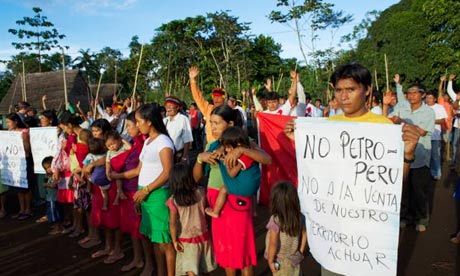
Mon­day, Jan­u­ary 13th, 2014  Achuar indige­nous leader Segun­do Gar­cía San­di began a hunger strike Jan. 7 to demand his free­dom at Huayabam­ba prison in Iqui­tos, Peru. Gar­cía San­di was arrest­ed Dec.

Mon­day, Jan­u­ary 13th, 2014  Achuar indige­nous leader Segun­do Gar­cía San­di began a hunger strike Jan. 7 to demand his free­dom at Huayabam­ba prison in Iqui­tos, Peru. Gar­cía San­di was arrest­ed Dec. 5, on charges of tam­per­ing with an oil pipeline run by Argen­tine com­pa­ny Plus­petrol through his people’s ter­ri­to­ry in the remote north of Lore­to depart­ment. He claims he is being held ille­gal­ly with­out evi­dence, but a habeas cor­pus action filed by his sup­port­ers has met with no response by Peru’s judi­cial author­i­ties.

Gar­cía Sandi’s orga­ni­za­tion, the Río Cor­ri­entes Fed­er­a­tion of Native Com­mu­ni­ties (FECONACO), asserts the arrest is retal­i­a­tion for his demands for envi­ron­men­tal jus­tice. FECONACO reports that five Achuar chil­dren died in Decem­ber as a result of con­t­a­m­i­na­tion relat­ed to oil oper­a­tions in the area, and that a state of emer­gency announced by Envi­ron­ment Min­is­ter Manuel Pul­gar-Vidal in Octo­ber for the Cor­ri­entes Val­ley, call­ing for spe­cial mon­i­tor­ing, is going unen­forced. The Envi­ron­ment Min­istry in Novem­ber took the rare step of fin­ing Plus­petrol $7 mil­lion for con­t­a­m­i­na­tion to the Lore­to rain­for­est. (Servin­di, Jan. 11; La Región, Lore­to, Jan. 8; Mar­iátegui blog, Jan. 7; La Región, Dec. 20; AP, Nov. 27)