Protests in Nigeria After Mobil Spills 600,000 Barrels of Oil

oil_theft_7-300x1991st July Youths in Eket and Esit Eket in Akwa Ibom on Mon­day staged peace­ful protests against fresh oil spills in Nkpana com­mu­ni­ty from a Mobil facil­i­ty i

oil_theft_7-300x1991st July Youths in Eket and Esit Eket in Akwa Ibom on Mon­day staged peace­ful protests against fresh oil spills in Nkpana com­mu­ni­ty from a Mobil facil­i­ty in Ibeno.

The youths num­ber­ing more than 500 protest­ed on major streets in Eket, includ­ing the Mari­na and Ter­mi­nal roads.

The pro­test­ers, under the ages of Core Youth Forum, car­ried plac­ards with inscrip­tions: “Oil spill is killing our aquat­ic life’’, “No com­pen­sa­tion for oil spill” and “Enough of this oil spillage,’’ among oth­ers.

Mr God­win Peter, the spokesman of the pro­test­ers, said the spill occurred on Sat­ur­day and occu­pied com­mu­ni­ties along the spill line on Sun­day.

He said the spill had dev­as­tat­ed aquat­ic life and destroyed fish­ing equip­ment, among oth­ers.
Peter appealed to Mobil to urgent­ly clean up the envi­ron­ment.

The youths threat­ened to dis­rupt Mobil activ­i­ties if their demands, which includ­ed imme­di­ate clean up and com­pen­sa­tion, were not met.

Also react­ing, Mr Inyang Ekong, the Sec­re­tary of the Arti­sanal Fish­er­men Asso­ci­a­tion of Nige­ria, Akwa Ibom Branch, not­ed that fish­ing had been sus­pend­ed in the area as a result of the spill.

He said that fish would be scarce in the state and appealed to Mobil to replace its old pipes to fore­stall fur­ther occur­rence.

Ekong said the spill would cause untold hard­ships to the peo­ple of Ibeno.

When con­tact­ed, Mr Akaninyene Esiere, the Man­ag­er of Pub­lic and Gov­ern­ment Affairs at the Qua Iboe Ter­mi­nal of Mobil, con­firmed the inci­dent.

“We have con­firmed a liq­uid release from our Qua Iboe ter­mi­nal on Sun­day, June 29, fol­low­ing seri­ous weath­er con­di­tions and light­ning strikes over the area at the week­end. We have acti­vat­ed our emer­gency response sys­tems to con­tain the release. All rel­e­vant reg­u­la­to­ry author­i­ties and com­mu­ni­ty lead­ers have been notified.We will con­tin­ue to work with the com­mu­ni­ty to allow progress in the effort by Mobil to con­tain the spill,’’ he said.

Esiere said that Mobil was com­mit­ted to safe envi­ron­ment dur­ing its oper­a­tions.

Earth First! Summer Gathering 2014 — exact location & other practicalities added

Updates: Exact loca­tion has been releas­es — see here

Trav­el - book your trav­el to Cas­tle Cary or Bru­ton train sta­tion, then it’s a bus jour­ney and 20 minute walk.

Updates: Exact loca­tion has been releas­es — see here

Trav­el - book your trav­el to Cas­tle Cary or Bru­ton train sta­tion, then it’s a bus jour­ney and 20 minute walk.

Bus times are : 8.14am — 9.44am — 11.44am — 12.33pm — 2.14pm — 4.33pm (last bus).  There’s no Sun­day ser­vice so we will timetable a shut­tle bus to return.

Cycling: Bru­ton is bet­ter if you are cycling as it is a mile short­er, and there is also a bus from there too. The last bus from here leaves lat­er.  (Bus times from Bru­ton are: 9:09am — 10:39am — 12:12pm — 1:39pm — 3:54pm — 5:39pm)

We will post the exact address three weeks before the gath­er­ing.

Refresh­ments — ‘This year there is no bar on site. Peo­ple are wel­come to bring their own but we ask that there’s no drink­ing before dinner/7pm. Any­one caus­ing a nui­sance or break­ing our Safer Spaces pol­i­cy will be asked to stop and/or leave. There will be a cafe & snack bar on site.’

Dogs — ‘This year dogs are wel­come, but please get in touch in advance, and keep them on a lead at all times on the site.’  Fur­ther info

—————-

28th-31st August 2014, in the South West.…

A place for peo­ple involved in rad­i­cal green direct action to come togeth­er.…
to talk.…share skills.…learn.…listen.…play.…rant.… find out whats going on.…
scheme.…live outdoors.…hang out.…laugh.…
expe­ri­ence non hier­ar­chi­cal, low impact, fam­i­ly friend­ly liv­ing.

An activist camp that spans 5 days and con­sists of a pro­gramme of work­shops through­out each day facil­i­tat­ed by peo­ple like you and me who think they have a skill or a lev­el of knowl­edge in a sub­ject that is valu­able to share with oth­ers to improve their activism.

Is this camp for you?  Whether you’re just start­ing out in the world of direct action or you’re an old (glued and paint-stained) hand at it, you’re wel­come here.

More info here

Action dates & gatherings now working again!

The action dates and protest gath­er­ings page is once again work­ing!  Apolo­gies, we acci­den­tal­ly delet­ed it!

If there’s any eco­log­i­cal actions that are open­ly adver­tised, protest camps or cam­paign gath­er­ings, that you want to add to it, do it through the sub­mit report link and in the sub­ject, make it clear it’s to add to the cal­en­dar.  Thanks.

The action dates and protest gath­er­ings page is once again work­ing!  Apolo­gies, we acci­den­tal­ly delet­ed it!

If there’s any eco­log­i­cal actions that are open­ly adver­tised, protest camps or cam­paign gath­er­ings, that you want to add to it, do it through the sub­mit report link and in the sub­ject, make it clear it’s to add to the cal­en­dar.  Thanks.

Indigenous boy protests on pitch during World Cup opening ceremony

An indigenous Guarani boy held up a banner reading 'Demarcation Now!' at the World Cup's opening ceremony. 16th June One of the three Brazil­ian chil­dren who released

An indigenous Guarani boy held up a banner reading 'Demarcation Now!' at the World Cup's opening ceremony. 16th June One of the three Brazil­ian chil­dren who released white doves dur­ing the World Cup open­ing cer­e­mo­ny used the occa­sion to demand recog­ni­tion of Indi­an land rights – but his protest was cen­sored by FIFA.

Imme­di­ate­ly after releas­ing a white dove, Jeguaká Mir­im, an indige­nous Guarani boy, held up a red ban­ner read­ing ‘Demar­ca­tion Now!’ But his coura­geous protest was not broad­cast, as the TV cam­eras swift­ly cut away.

Jeguaká’s father, Guarani author Olívio Jekupe, said that the act “showed the world that we are not stand­ing still… My son showed the world what we need the most: the demar­ca­tion of our lands.”

The Guarani are Brazil’s most numer­ous tribe and they live in five states. Much of their land has been stolen from them and is being used for cat­tle ranch­ing and sug­ar cane pro­duc­tion, whilst many Guarani are forced to live in over­crowd­ed reserves or in road­side camps where mal­nu­tri­tion and dis­ease are rife. Some, like Jeguaká’s com­mu­ni­ty known as Kruku­tu, live near urban areas like São Paulo on almost no land.

As a result of the loss of their land, the Guarani-Kaiowá of Mato Grosso do Sul state suf­fer the high­est sui­cide rate in the world, and their lead­ers are tar­get­ed and killed when they attempt to reoc­cu­py patch­es of their ances­tral land.

The Guarani, Sur­vival Inter­na­tion­al and oth­er orga­ni­za­tions are call­ing on the Brazil­ian gov­ern­ment to uphold its own con­sti­tu­tion and inter­na­tion­al law, and map out the Guarani’s land for their exclu­sive use.

Coca-Cola, one of the World Cup’s main spon­sors, has recent­ly become embroiled in the Guarani land scan­dal by buy­ing sug­ar from US food giant Bunge, which sources sug­ar cane from their ances­tral land. The Guarani are urg­ing Coca-Cola to respect their rights and stop this pur­chase imme­di­ate­ly.

Coca-Cola and FIFA's image has been contrasted with an angry Indian man demanding, 'Let the Guarani live!'

To high­light the deep irony of Coca-Cola and FIFA pro­mot­ing the World Cup with an image of a hap­py Indi­an man with the words ‘Wel­come to the World Cup for Every­one’, Sur­vival has cre­at­ed a spoof ad fea­tur­ing Nixi­wa­ka, a Yawanawa Indi­an wel­com­ing the view­er to ‘The Dark Side of Brazil’ and demand­ing ‘Let the Guarani live!’.

See Survival’s web­site on the ‘Dark Side of Brazil’ for more exam­ples of Brazil’s assault on indige­nous rights.

Patagonia Dam CANCELED!

chao hidroaysen13th June After an eight-year strug­gle, Chile’s grass­roots and envi­ron­men­tal move­ments have suc­cess­ful­ly won the rejec­tion of five planned megadams on two Patag­on­ian rivers!

chao hidroaysen13th June After an eight-year strug­gle, Chile’s grass­roots and envi­ron­men­tal move­ments have suc­cess­ful­ly won the rejec­tion of five planned megadams on two Patag­on­ian rivers!

It’s not every day we cel­e­brate a vic­to­ry as sig­nif­i­cant and hard-won as today’s tri­umph in the eight-year cam­paign to pro­tect Chilean Patag­o­nia from the destruc­tive HidroAysén dam project!

This morn­ing, Chile’s high­est admin­is­tra­tive author­i­ty – the Com­mit­tee of Min­is­ters – made a unan­i­mous deci­sion to over­turn the envi­ron­men­tal per­mits for the con­tro­ver­sial five dam mega-project, which was planned on the Bak­er and Pas­cua rivers. This high­ly antic­i­pat­ed res­o­lu­tion effec­tive­ly can­cels the project, rul­ing that assess­ment of the project’s impacts was insuf­fi­cient to grant project approval back in 2011.

The Com­mit­tee, which con­sists of the Min­is­ter of Envi­ron­ment, Health, Econ­o­my, Ener­gy and Min­ing, Agri­cul­ture, and Tourism, eval­u­at­ed 35 appeals which were filed by the Patag­o­nia Defense Coun­cil and local cit­i­zens in response to the project’s Envi­ron­men­tal Impact Assess­ment after it was approved in May 2011. Though it has tak­en more than three years, with meet­ings and deci­sions being repeat­ed­ly delayed and even­tu­al­ly passed on to the new admin­is­tra­tion, today’s deci­sion is a recog­ni­tion of the tech­ni­cal and pro­ce­dur­al flaws sur­round­ing HidroAysén as well as the sig­nif­i­cant impacts the project would have had on one of Chile’s most icon­ic regions.

What began as a grass­roots effort to pro­tect the pris­tine Bak­er and Pas­cua rivers, and the com­mu­ni­ties and cul­ture of Patag­o­nia, has devel­oped into a ful­ly-fledged inter­na­tion­al cam­paign and gal­va­nized a nation­al envi­ron­men­tal move­ment. Over the past four years Chileans have tak­en to the streets to demand a halt to HidroAysén and around the world an inter­na­tion­al com­mu­ni­ty has ral­lied around this call. Today it is these voic­es that have won out, and togeth­er have set in motion a new path towards a bright future for Patag­o­nia and the hope of a tru­ly sus­tain­able ener­gy future for Chile.

Pascua River, Patagonia: Undammed!

Pas­cua Riv­er, Patag­o­nia: Undammed!

To bor­row some words from Patri­cio Rodri­go, Exec­u­tive Sec­re­tary of the Patag­o­nia Defense Coun­cil, “The government’s defin­i­tive rejec­tion of the HidroAysén project is not only the great­est tri­umph of the envi­ron­men­tal move­ment in Chile, but marks a turn­ing point, where an empow­ered pub­lic demands to be heard and to par­tic­i­pate in the deci­sions that affect their envi­ron­ment and lives.”

We are thrilled that the gov­ern­ment is sid­ing with the major­i­ty of Chileans and tens of thou­sands of peo­ple around the world to say no to HidroAysén! We com­mend Pres­i­dent Bachelet for remain­ing loy­al to her cam­paign promise that HidroAysén would not have her sup­port. And we are look­ing to the future, with the hope that mea­sures will be put in place to pro­tect this unique region from future threats. (In fact, Pres­i­dent Bachelet and the Min­is­ter of Envi­ron­ment recent­ly for­mal­ized a bill that would cre­ate the Depart­ment of Bio­di­ver­si­ty and Pro­tect­ed Areas (SBAP) with the aim to pre­serve crit­i­cal ecosys­tems through­out Chile.)

4 Arsons against Bristol’s cellular transmission infrastructure over 24 Hours

Around Bris­tol between June 9th-10th, we left 7 mobile phone anten­nae in flames. Dai­ly con­tin­u­a­tion of cap­i­tal­ist soci­ety is depen­dent on unin­ter­rupt­ed flows (of goods, peo­ple, data, and ener­gy) and the com­mu­ni­ca­tions grid is no excep­tion.

Around Bris­tol between June 9th-10th, we left 7 mobile phone anten­nae in flames. Dai­ly con­tin­u­a­tion of cap­i­tal­ist soci­ety is depen­dent on unin­ter­rupt­ed flows (of goods, peo­ple, data, and ener­gy) and the com­mu­ni­ca­tions grid is no excep­tion. The lim­it­ed uses most of us can make from these flows only mask the way they are main­ly used to over­see and impose the dom­i­nant order, and increase its’ reach and con­trol. You need only look to how the val­ues of con­nec­tiv­i­ty, speed, and mobil­i­ty that are embod­ied in a mobile phone (for exam­ple) facil­i­tate a relent­less con­sumer cul­ture and the require­ment to be avail­able and flex­i­ble at all times: as much for the ben­e­fit of the boss and the adver­tis­er as for your fam­i­ly or friends. This is ful­ly con­sis­tent with the mod­ern restruc­tur­ing and decen­tral­i­sa­tion of the gigan­tic pro­duc­tive sys­tem which this soci­ety sub­jects us to. Hin­der­ing all this was our objec­tive.

2 anten­nae went up simul­ta­ne­ous­ly, in Ham­brook and out­side Ram Hill busi­ness park in Coal­pit Heath, both owned by O2. This is also not the first time O2 have been sin­gled out for dam­age acts because of the con­tracts they hold in the migrant deten­tion indus­try, with cops, and tag­ging for the pro­ba­tion ser­vice. Some hours lat­er a 3rd O2 anten­na went up in Coombe Din­gle, at the same time as a 4th fire was lit after gain­ing access to trans­mis­sion units con­nect­ed to the huge BT telecom­mu­ni­ca­tion tow­er in Lock­leaze. Sig­nals that will have been affect­ed are those of O2, T‑Mobile, Orange and Voda­phone. These cor­po­ra­tions var­i­ous­ly are con­nect­ed to the field of mil­i­tary equip­ment and arma­ment, use prison labour, and are famous for read­i­ly col­lab­o­rat­ing with elec­tron­ic polic­ing by the secret ser­vices (now that wide­spread data-sur­veil­lance is well known) while not even stop­ping at financ­ing Oxford uni­ver­si­ty with its’ exten­sive ani­mal exper­i­men­ta­tion labs. This has already led to their inter­ests being attacked in Berlin (T‑Mobile’s par­ent com­pa­ny*), Paris (Orange*), and Ban­bury (Voda­phone*).

For all above rea­sons it is always good to harm these cor­po­ra­tions, struc­tural­ly and eco­nom­i­cal­ly, and then there is the issue of the anten­nae them­selves radi­at­ing who knows how much harm­ful­ness to near­by species. There were the pub­li­cised cas­es in Bris­tol even some years ago of a woman in Shire­hamp­ton who com­plained of the affects of an anten­na put up on her high rise flat­block and lat­er died from a brain tumor, while an anten­na nick­named The Tow­er of Doom was with­drawn from Sta­ple Hill after can­cer rates soared. Evi­dence has mount­ed up that pro­longed use of mobile phones dam­ages the immune sys­tem, decreas­es fer­til­i­ty, and caus­es brain tumors and can­cers: espe­cial­ly in the young. We should men­tion that the anten­na we burned in Coombe Din­gle is one of three on the grounds of a uni­ver­si­ty sports pitch also mar­ket­ed for schools, as are many oth­ers. Addi­tion­al­ly, twist­ed lab tech­ni­cians claim to have deduced from exper­i­men­ta­tion on oth­er mam­mals (built on tor­ture like so much sci­en­tif­ic research) that expo­sure while still in the womb “sig­nif­i­cant­ly dam­ages brain func­tion, struc­ture and behav­iour and sug­gest­ed that these expo­sures could con­tribute to chil­dren’s behav­iour­al dis­or­ders”.

These prod­ucts were and still are pushed on us as harm­less, although near­ly every study that claims this was fund­ed by the indus­try itself, when we had no idea of the long term affects, sim­i­lar­ly to the mar­ket­ing of asbestos or smok­ing before they began to show their dead­ly toll (to use only 2 bet­ter known exam­ples among thou­sands). These days even researchers at Bris­tol uni­ver­si­ty con­cede the dan­gers of cel­lu­lar use. What a surprise.…the per­ma­nent­ly wired envi­ron­ment turns out to be tox­ic, while com­pa­nies make a killing in prof­its and the gov­ern­ment receives bil­lions in tax­es and licens­ing. For most peo­ple pro­longed con­tact with mobile phones or wire­less net­works in gen­er­al seems unavoid­able, for work or to avoid social mar­gin­al­i­sa­tion, in the street, on pub­lic trans­port, or at home: we are soak­ing in one more accu­mu­la­tive bar­rage in a poi­so­nous, anti-human and anti-life civil­i­sa­tion that grows by the day.

A recur­ring fea­ture of the estrange­ment that tech­nolo­gies such as mobile phones actu­al­ly cul­ti­vate between indi­vid­u­als, is how many addict­ed to their con­stant use now pre­fer to text mes­sage or to “tweet” to avoid the prospect of real life con­tact, and how many only feel safe com­mu­ni­cat­ing from behind a device. It is now com­plete­ly stan­dard for peo­ple to spend the major­i­ty of their wak­ing hours inter­fac­ing with one screen or anoth­er. Up and com­ing inven­tions such as Google Glass attempt to make this enclo­sure near total (although also depen­dent in part on unin­ter­rupt­ed trans­mis­sion infra­struc­ture). As a soci­ety that lives through high­ly com­plex tech­nolo­gies, we no longer ful­ly inhab­it our bod­ies and envi­ron­ment but instead some part of the tech­no-hive: and it is no longer only nerds and the young who prac­ti­cal­ly call this vir­tu­al real­i­ty their home. As the sphere dom­i­nat­ed by infor­ma­tion tech­nol­o­gy expands, what is con­sid­ered social­ly of impor­tance in our actu­al lives shrinks to what can be con­veyed and received by the device, and so nar­row­ing human emo­tion and expe­ri­ence. Or think about the obses­sive urge to treat mod­ern life as some­thing less to be lived than to be doc­u­ment­ed in each detail for pas­sive con­sump­tion on the “social” net­works, as anoth­er exam­ple of coloni­sa­tion by cap­i­tal­ism and its’ tech­nol­o­gy.

Plan­ning and car­ry­ing out your exis­tence dig­i­tal­ly also allows the pos­si­bil­i­ties of unprece­dent­ed sur­veil­lance, and it hin­ders active rebel­lion or even ques­tion­ing of the dom­i­nant order by flag­ging up “abnor­mal­i­ties” in what you often vol­un­tar­i­ly share with your friends or “Friends.” At the same time, con­cert­ed exploita­tion of the base pop­u­la­tions around the world and eco­log­i­cal pil­lage to the point of col­lapse con­tin­ues to fat­ten the same rich par­a­sites’ pock­ets, and tech­no­log­i­cal immer­sion helps peo­ple nei­ther relate nor care. On the con­trary mil­lions now hunger for their part in the way of life that is killing every­thing.

With an anar­chist per­spec­tive in search of free and ful­fill­ing exis­tence, we fight to do away with all tech­nolo­gies born from the tox­i­fi­ca­tion and slav­ery of mines, fac­to­ries, and indus­tri­al infra­struc­tures, and for our dai­ly com­mu­ni­ca­tion to be as unmedi­at­ed as pos­si­ble. Tak­ing down these few nodes was not enough for us, it is not a case of sim­ply aban­don­ing the uses of a par­tic­u­lar device alone, but it is eras­ing the whole social sys­tem which first trapped us in its’ “neces­si­ty” which is the chal­lenge. We found anten­nae an easy way to start: it is sim­ply a mat­ter of burn­ing tires between the exposed cables and away you go. In North Lanark­shire, Scot­tish vil­lagers even felled one. By reflect­ing on rad­i­cal and anti-indus­tri­al his­to­ry in Britain (such as the Swing and Lud­dite insur­rec­tions), as well as con­tem­po­rary anar­chist guer­ril­la prax­is, we can see the advan­tage of low-tech, cheap, and eas­i­ly repro­ducible tac­tics to wreck machin­ery that enclos­es and impov­er­ish­es us, on an even more inti­mate lev­el present­ly than ever before. These ubiq­ui­tous (and high­ly expen­sive) struc­tures are spread around every town or city and fur­ther indus­tri­al­is­ing the coun­try­side, where they are some­times paint­ed green in the attempt to cam­ou­flage them: and dis­gust­ing­ly even have bird and bat nest­ing box­es mount­ed on some. Their guardians can­not always be watch­ing them all so it is up to our inge­nu­ity to remain a step ahead and stretch their forces thin. This and every net­work has its’ weak points, in these cracks in the archi­tec­ture of con­trol that afford us lever­age: a destruc­tive capac­i­ty we are appro­pri­at­ing. As the promis­es of hyper-tech­ni­fied mod­ern cul­ture con­tin­ue to show their shal­low­ness, rebels will car­ry on act­ing against the nox­ious instal­la­tions and the way of life they feed.

“.…Resis­tance against the Tech­no­log­i­cal-Indus­tri­al Machine lives only through the path of lib­er­a­tion from every pow­er and order, runs towards an event hori­zon where noth­ing has been writ­ten yet.” ‑let­ter from Gian­lu­ca Iaco­v­ac­ci, from C.R. San Michele prison

Our attack is not sep­a­rate from over­all anar­chist sub­ver­sion by all means, which nat­u­ral­ly includes sol­i­dar­i­ty with our pris­on­ers in ene­my hands. A wild greet­ing from Bris­tol to Adri­ano Antonac­ci, no less than to his friend and com­rade Gian­lu­ca (FAI/IRF Sub­ver­sive Anti-Civil­i­sa­tion indi­vid­u­al­i­ty) whose brave lone acts in Rome he is also accused of. Hel­lo to the new anar­chist and anti-colo­nial groups in Hong Kong and Aus­tralia, and sol­i­dar­i­ty to the Paris ten accused of sab­o­tag­ing prison prof­i­teers.

Our attack came at a time when the net­works are already set to be over­loaded by the World Cup hys­te­ria, to show our com­plic­i­ty with the insur­gent fight­ers in Brazil as they answer mas­sive dis­pos­ses­sion and mil­i­tarised slum clear­ances for the opu­lence of the games with street bat­tles and arson. Because it should be remem­bered that the enthralling spec­ta­cle, that is staged to make the rich yet more mon­ey and to dis­tract us from our dai­ly humil­i­a­tions, is based on the State and Cap­i­tal’s vio­lence against resisters, the indige­nous, and the poor­est in Brazil­ian soci­ety.

Let’s not for­get Marie Mason and Eric McDavid: both are still behind bars after State repres­sion and entrap­ment which fol­lowed an ear­ly string of Earth Lib­er­a­tion Front strikes in the USA. Years lat­er the earth lib­er­a­tion strug­gle is not defeat­ed either in spir­it or in prac­tice. The fight goes on with fur farms raid­ed and emp­tied across North Amer­i­ca, and our incen­di­ary-mind­ed sis­ters or broth­ers prowl­ing the besieged Turk­ish forests, the streets of the Cos­ta Rican metrop­o­lis, or the tech­no-indus­tri­al devel­op­ments in Switzer­land (on the last note: a quick reminder that the con­tin­u­ing legal threats against the released anar­chists Sil­via, Costas and Bil­ly, and also the lat­est vin­dic­tive treat­ment of Mar­co Camenisch around his prison trans­fer, have not gone unno­ticed by the inter­na­tion­al fire-starters).

Down with the soci­ety based on dom­i­nat­ing earth and all its’ crea­tures. Live Wires, FAI/ELF
(14th con­tri­bu­tion to the inter­na­tion­al Phoenix Project, one more part of a war that will nev­er be con­tained by a legal code)

* http://en.contrainfo.espiv.net/2013/01/08/berlin-incendiary-attack-on-deutsche-telekom-vehicle-in-friedrichshain/
* http://nantes.indymedia.org/articles/28902
* http://www.directaction.info/news_mar12b_06.htm

A Bloody War for Water in Mexico

Screen Shot 2014-05-29 at 9.04.52 PM30th May Fill­ing a glass from his gar­den faucet, Juan Ramírez held the swirling water up to the intense Mex­i­can sun.

Screen Shot 2014-05-29 at 9.04.52 PM30th May Fill­ing a glass from his gar­den faucet, Juan Ramírez held the swirling water up to the intense Mex­i­can sun. Sat­is­fied with its puri­ty, he touched his glass gen­tly against my own. “Your health,” he toast­ed, before drink­ing it down in one gulp.

Mex­i­co City’s reser­voirs con­sis­tent­ly rank amongst the most con­t­a­m­i­nat­ed sup­plies to any world cap­i­tal. Drink­ing from the tap here is sim­ply not rec­om­mend­ed. Ramírez’s water, how­ev­er, comes direct­ly from a vol­canic spring in San Bar­to­lo Ameyal­co, an oth­er­wise impov­er­ished town on the hilly south­west­ern out­skirts of Mex­i­co City, in the bor­ough called Alvaro Obre­gon.

“My grand­fa­ther drank from our town’s spring, and his grand­fa­ther before him,” Ramírez told me when I vis­it­ed the town this week­end. “Now the gov­ern­ment wants to pipe our town’s water direct­ly into rich house­holds and leave us with its con­t­a­m­i­nat­ed filth. We are not going to let that hap­pen.”

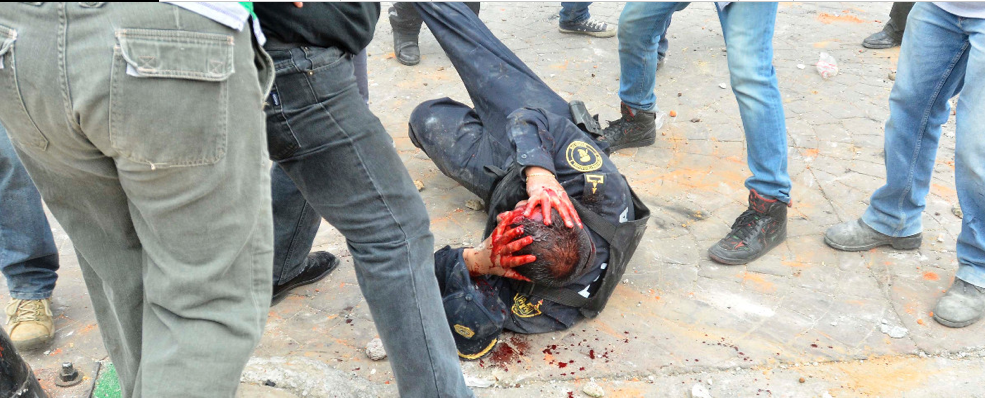
Ramírez is leader of a group in San Bar­to­lo Ameyal­co intent on keep­ing their water sup­ply local. Last Wednes­day, Ramírez along with approx­i­mate­ly two thou­sand oth­er res­i­dents of Ameyal­co attacked a police force of fif­teen hun­dred riot offi­cers who were guard­ing the final con­struc­tion stage of a pipeline that will con­nect the town’s vol­canic spring to San­ta Fe, one of the most afflu­ent dis­tricts of the Mex­i­can cap­i­tal.

In videos post­ed online, San Bar­to­lo res­i­dents are seen vio­lent­ly pum­mel­ing an offi­cer in riot gear who had fall­en to the ground.

The res­i­dents beat back both police and pipeline engi­neers, leav­ing at least 100 police offi­cers injured, 20 seri­ous­ly. Res­i­dents said dozens were injured on their side, and author­i­ties arrest­ed five peo­ple. Mex­i­co City’s gov­ern­ment warned that more arrests would come.

While the bat­tle of the morn­ing of May 21 was won by the res­i­dents of San Bar­to­lo Ameyal­co, what the locals now pop­u­lar­ly call the ‘Water War’ is sure to be long and tense.

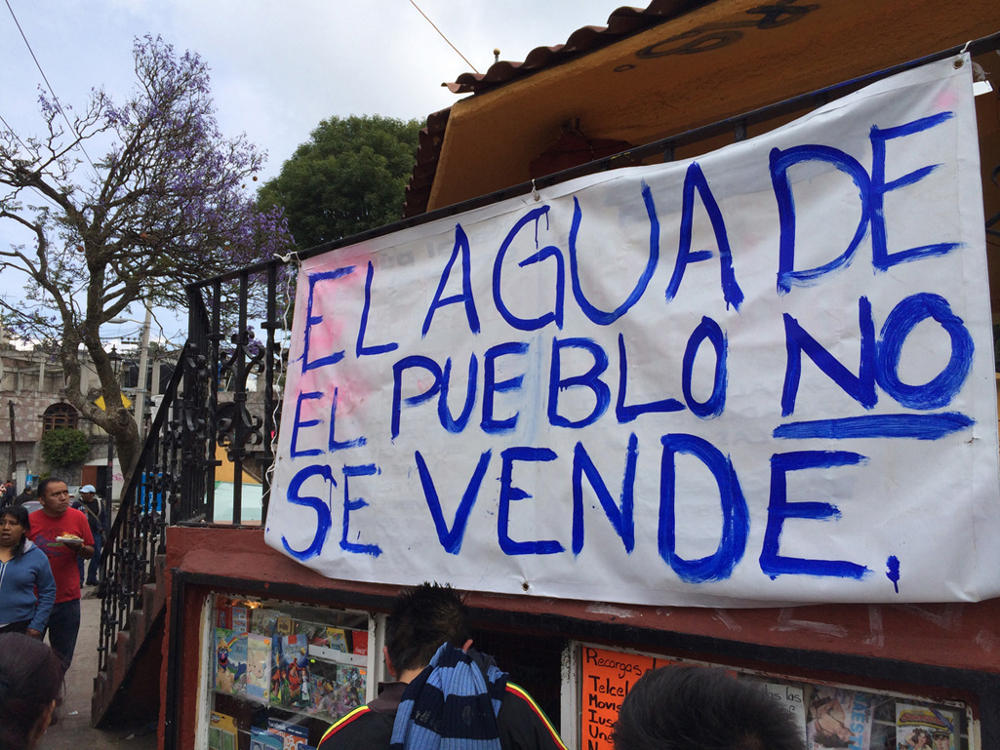
“The peo­ple are unit­ed,” said María Chávez, one of the lead­ers of the town’s resis­tance, which has based itself in the pub­lic library. The munic­i­pal build­ing is papered with mes­sages of sup­port from oth­er towns in the region. A ban­ner pro­claimed: “Our water is not for sale.”

rioting-for-water-rights-in-mexico-article-body-image-1401136919

“When the local government’s plans to extend our pipelines fur­ther afield were drawn up last year, the author­i­ties refused to nego­ti­ate with us. Leonel Luna [the bor­ough del­e­gate] told us the water would be going to help oth­er com­mu­ni­ties in the region. It’s only now that we have put up a fight that they want to talk things over.”

Mex­i­co City’s gov­ern­ment sees the inter­na­tion­al busi­ness-aimed satel­lite city of San­ta Fe, a high-end urban­iza­tion zone rapid­ly built upon a dump­ing ground with no pri­or water infra­struc­ture, as a pil­lar of the local and even nation­al econ­o­my. Although the details of the plan remain murky, San Bar­to­lo Ameyal­co res­i­dents are right­ly sus­pi­cious of any scheme to divert their pure water to the inter­na­tion­al cor­po­rate offices near­by.

Ameyal­co, mean­ing “place where the water spouts” in Nahu­atl, was engulfed by Mex­i­co City’s urban sprawl in the 1950s. Its spring pro­duces 60 liters of pure water every sec­ond, an amount which runs thin for the 35,000 peo­ple who depend on it.

The nar­row streets still chan­nel the smells of pine sap and cook­ing tor­tillas on the cold moun­tain air. Neigh­bors chat in the mar­ket­place about past vic­to­ries and future strate­gies and chil­dren kick soc­cer balls against the main square’s murals of the village’s prized spring.

“When I was a child the water was end­less,” said Ale­jan­dra Espinosa, anoth­er town res­i­dent. Espinosa has lived her entire 54 years in San Bar­to­lo. “Now, due to the larg­er pop­u­la­tion, parts of the town can go a week at a time with­out run­ning water.”

Mex­i­co City has seri­ous prob­lems with water short­ages. One in three homes has no access to run­ning water, forc­ing them to depend heav­i­ly upon water trucks called pipas, which refill homes’ water tanks at exor­bi­tant prices. Sev­en­ty-four per cent of the capital’s water is pumped from under­ground, caus­ing the city itself to sink.

Leonel Luna, del­e­gate of the Alvaro Obre­gon bor­ough, has stat­ed the spring is to be redi­rect­ed to serve oth­er towns in the area. Luna claims oppo­si­tion to the project has been fund­ed by the same busi­ness­men who sell water from pipas, and who don’t want to lose their cus­tomer base if more run­ning water is made avail­able to oth­er towns.

Since the government’s announce­ment in April 2013 that the spring would be con­nect­ed to a wider net­work cov­er­ing the bor­ough, res­i­dents of San Bar­to­lo set up camp beside their main sup­ply tank to defend their pre­cious resource. The project to tap the San Bar­to­lo spring for wider use has been in the works for almost two decades, though, author­i­ties note.

On May 21, the town’s church bells sound­ed out across the hill­side to announce the author­i­ties’ arrival. The res­i­dents respond­ed to the sig­nal by hurl­ing rocks in the nar­row streets, launch­ing fire­works at the police line from win­dows and destroy­ing plumb­ing equip­ment.

“This water belongs to us,” says Manuel Rue­da, anoth­er activist I met at the pub­lic library the move­ment is using as a base of oper­a­tions. “We can’t end up pay­ing for the city’s poor plan­ning.”

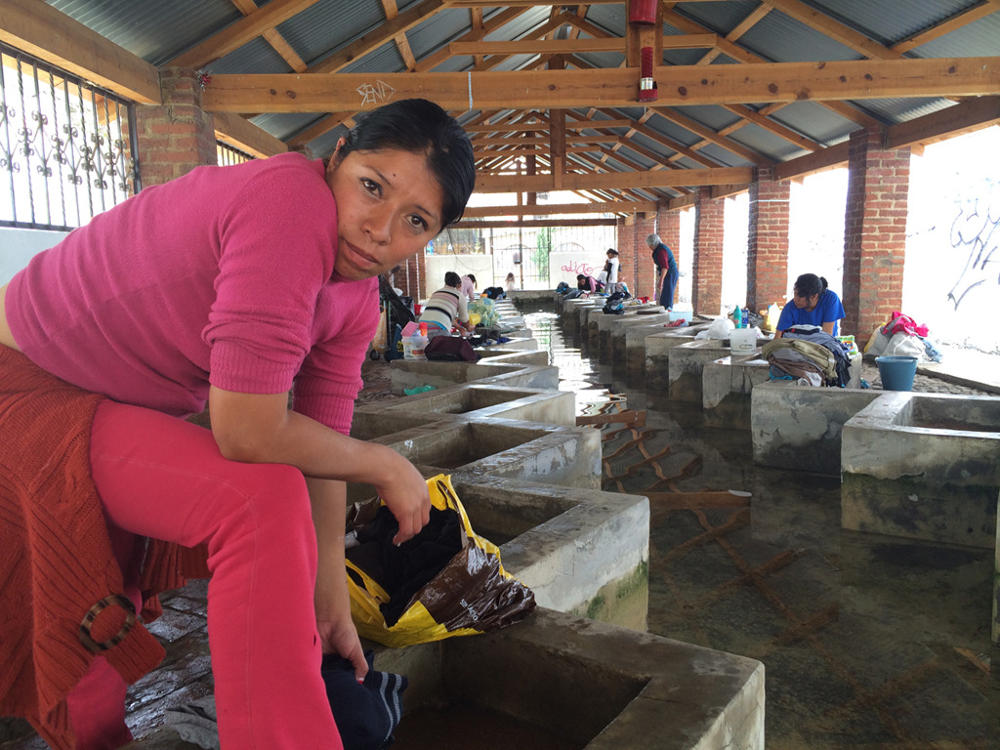
In the town’s last func­tion­ing pub­lic laun­dry, where a com­mu­nal pool is flanked by wash­basins, Lau­ra Hernán­dez wrung the last of the soap from her son’s soc­cer jer­sey. She had man­aged to wash her entire family’s clothes using the sin­gle buck­et of water she had rationed her­self.

“Only half of the hous­es on my street have run­ning water these days, and I live at the top of town,” she said. “Peo­ple at the bot­tom of the hill can go weeks with­out water. How can we sell our water else­where when we have so lit­tle?”

rioting-for-water-rights-in-mexico-article-body-image-1401136958

Oth­ers say San Bar­to­lo is being self­ish with its resource.

“These peo­ple don’t under­stand that oth­er peo­ple in the region need their help,” said Rodri­go Pérez Gar­cía, an event pho­tog­ra­ph­er and reg­u­lar vis­i­tor to the town. “They have a free source of water yet they refuse to share it.”

“It’s pure self­ish­ness,” Pérez con­tin­ued. “At the very least there’s an oppor­tu­ni­ty to sell it by under­cut­ting the water trucks.”

Lead­ers of the move­ment, how­ev­er, said they are not budg­ing. A series of march­es are planned for the com­ing weeks. In recent days, mem­bers of var­i­ous relat­ed or com­plete­ly unre­lat­ed social move­ments in the Mex­i­co City met­ro­pol­i­tan region have sent mes­sages of sup­port to San Bar­to­lo, sig­nal­ing a wider fight in the pub­lic polit­i­cal sphere in Mex­i­co relat­ed to the spring.

“We’re will­ing to nego­ti­ate,” said Juan Ramírez, the man who served me a glass of fresh spring water from his gar­den faucet. “We just don’t want to be treat­ed like brutes. We know our rights like every­body else.”

The Dark Side of Brazil: Police teargas Indians at anti-World Cup protest

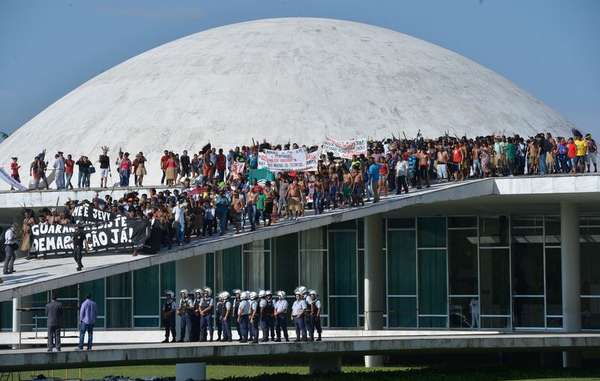
Hundreds of Brazilian Indians are protesting against the World Cup 30th May.

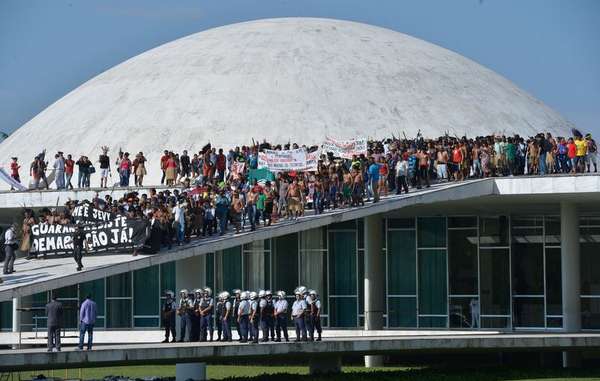
Hundreds of Brazilian Indians are protesting against the World Cup 30th May. Hun­dreds of Brazil­ian Indi­ans are protest­ing against the World Cup this week, march­ing in the streets of Brasília and around the capital’s Mané Gar­rin­cha foot­ball sta­di­um, call­ing for their lands and lives to be pro­tect­ed.

Yes­ter­day Indi­ans bran­dish­ing bows and arrows and car­ry­ing signs read­ing ‘FIFA NO. DEMARCATION YES!’ were tear­gassed by police. Watch a video clip here.

There is mount­ing anger at the government’s fail­ure to rec­og­nize and pro­tect their lands, vital for their sur­vival, while spend­ing mil­lions of dol­lars on host­ing the World Cup.

The pro­tes­tors who are from sev­er­al tribes have forced FIFA to close the sta­di­um, and to can­cel its tro­phy dis­play.

A del­e­ga­tion of 18 indige­nous pro­tes­tors met the Min­is­ter of Jus­tice yes­ter­day. Indige­nous leader Sonia Gua­ja­jara, nation­al coor­di­na­tor of the Asso­ci­a­tion of Indige­nous Peo­ples (APIB), said, ‘We are here to show that with­out our land, we are chained up. We are impris­oned. We are here to demand our rights.’

The Guarani tribe, Brazil’s largest, suf­fers extreme­ly high mal­nu­tri­tion and sui­cide rates as their land has been stolen to make way for vast sug­ar cane plan­ta­tions. Their lead­ers are fre­quent­ly tar­get­ed and killed by gun­men act­ing for the landown­ers.

They are call­ing for their land to be demar­cat­ed as a mat­ter of urgency before more lives are lost, and for the can­cel­la­tion of a series of draft bills which, if passed into law, would dras­ti­cal­ly weak­en their, and oth­er tribes’, con­trol over their lands. Those in the Ama­zon are call­ing for a halt to the many hydro-elec­tric dams being built on their land.

Ear­li­er this year, Nixi­wa­ka Yawanawá, an Ama­zon Indi­an from west­ern Brazil, greet­ed the World Cup tro­phy on its arrival in Lon­don with a T‑shirt read­ing ‘BRAZIL: STOP DESTROYING INDIANS’.

Brazil is home to more uncon­tact­ed tribes than any­where else in the world. They are the country’s most vul­ner­a­ble peo­ple and face extinc­tion if their lands are not pro­tect­ed. Sur­vival is call­ing on Brazil to pro­tect their land and remove all invaders, as has recent­ly been achieved with the Awá, Earth’s most threat­ened tribe.

In the run up to the FIFA World Cup, Sur­vival is high­light­ing ‘The dark side of Brazil’. Click here to find out more about the sit­u­a­tion of Brazil­ian Indi­ans and the government’s attacks on their rights to their land.

Paramilitaries Shoot at Tribe Over “Forest Reserves” in Philippines

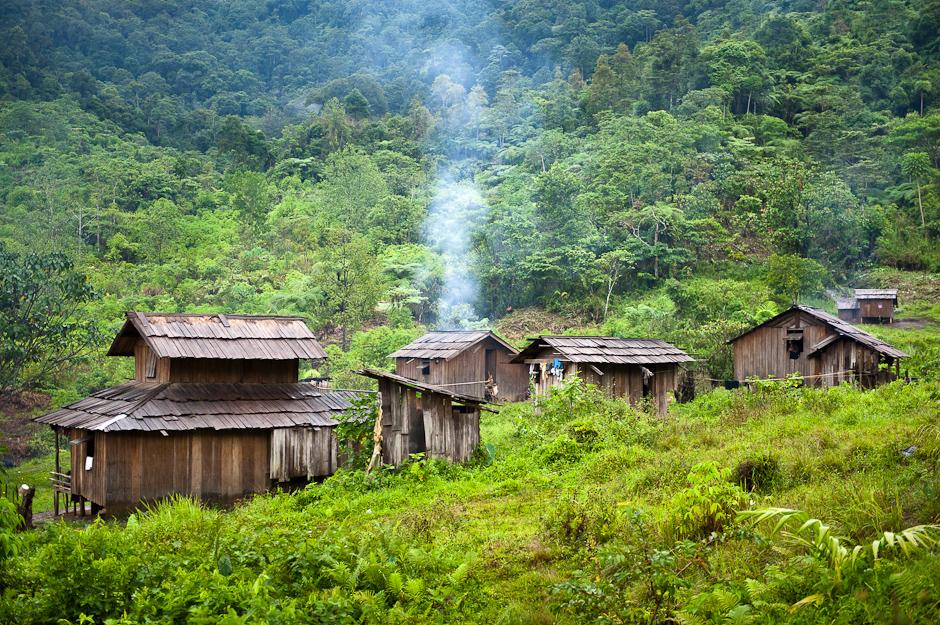
Tigwahanon Village in San Fernando, Bukidnon, Mindanao17th May 2014. The Asian Human Rights Com­mis­sion (AHRC) is deeply con­cerned, and demands an inves­ti­ga­tion into the actions of the secur

Tigwahanon Village in San Fernando, Bukidnon, Mindanao17th May 2014. The Asian Human Rights Com­mis­sion (AHRC) is deeply con­cerned, and demands an inves­ti­ga­tion into the actions of the secu­ri­ty guards and their employ­er land­lord for shoot­ing at, and hold­ing at gun­point, indige­nous peo­ple who were to occu­py their ances­tral land in Que­zon, Bukid­non.

In their mis­sion report, titled: “‘Pakighiusa’: Sol­i­dar­i­ty Mis­sion to Mem­bers of TINDOGA in Sup­port of Their Strug­gle for Land and Life,” pre­pared by Rur­al Mis­sion­ar­ies of the Philip­pines, North­ern Min­danao Sub-Region, it not­ed that the armed secu­ri­ty guards indis­crim­i­nate­ly shot at Manobo-Pulangi­hons tribes on April 23 pur­pose­ly to dri­ve them away from their land.

The indige­nous tribe, com­posed of 530 fam­i­lies are from four clans, are led by Datu San­tiano “Andong” Agda­han. They had already been rec­og­nized as the right­ful own­ers of the 623 hectares of land as part of their ances­tral domain. Datu Agda­han also heads the TINDOGA (Trib­al Indige­nous Oppressed Group Asso­ci­a­tion).

On April 23, in sup­port of their claim, the tribes were accom­pa­nied by offi­cials from the nation­al and local gov­ern­ment agen­cies, notably the Nation­al Com­mis­sion for the Indige­nous Peo­ple (NCIP), the munic­i­pal gov­ern­ment, and the police.

But at around 1pm, armed secu­ri­ty guards, report­ed­ly work­ing for Mr. Pablo “Pol­ing” Loren­zo III, who claims to be the own­er of Ran­cho Mon­tal­van, were deployed, and alleged­ly indis­crim­i­nate­ly shot at the group. They also held “12 indi­vid­u­als at gun point,” five of whom were women, and three were minors.

The armed men delib­er­ate­ly con­cealed their iden­ti­ties by not wear­ing their uni­forms. Most of them wore black long sleeves; their faces are either cov­ered with bal­a­clavas or shirts.

The AHRC is of the opin­ion that the use of force and intim­i­da­tion, by shoot­ing at the indige­nous peo­ple and hold­ing them at gun­point; was done pur­pose­ly to fright­en and intim­i­date this group of indige­nous peo­ple claim­ing their right to occu­py their ances­tral land.

It is report­ed that even though the NCIP has already declared the 623 hectares are the ances­tral domain of the Manobo-Pulangi­hons, “only 70 hectares were allot­ted for use of the claimants. The rest were clas­si­fied as for­est reserves. Inter­est­ing­ly, what is sup­posed to be for­est reserves are most­ly plant­ed with “sug­ar­cane and pineap­ple.”

The AHRC urges the gov­ern­ment to hold account­able Ma. Shir­lene D. Sario the provin­cial offi­cer of the NCIP, for alleged­ly fail­ing to ful­fil the oblig­a­tions required from her to ensure the indige­nous peo­ple are prop­er­ly install in their land.

The AHRC also express­es its dis­ap­point­ment at the lack of con­cern, notably by the local gov­ern­ment offi­cials in Que­zon, Bukid­non, to fail­ing to address the urgent needs of their own con­stituents.

The mis­sion report indi­cat­ed that “no gov­ern­ment offi­cial from Que­zon town to the Provin­cial gov­ern­ment even vis­it­ed the Manobo-Pulangi­hons.”

Local Protesters Are Killing Big Oil and Mining Projects Worldwide

we wont stop14th May 2014.

we wont stop14th May 2014. Multi­na­tion­al cor­po­ra­tions are infa­mous for push­ing native peo­ple off their land in order to open a new gold mine, extract oil, or oth­er­wise extract local resources. For decades, back­lash has been thought to be both lim­it­ed and inef­fec­tu­al, but new evi­dence sug­gests that protests from local peo­ple are effec­tive, extreme­ly cost­ly for the com­pa­nies, and often lead to sub­stan­tive changes to or total aban­don­ment of a project.

Researchers at the Cen­tre for Social Respon­si­bil­i­ty in Min­ing inter­viewed employ­ees at sev­er­al dozen major inter­na­tion­al cor­po­ra­tions who are involved with extrac­tive activ­i­ties, and found that com­pa­nies are increas­ing­ly hav­ing to deal with the social and envi­ron­men­tal impacts of their work, and that it’s hurt­ing them where it hurts most: their bot­tom lines.

The researchers, led by Daniel Franks, took a look at 50 planned major extrac­tive projects (oil drilling, new mine con­struc­tion, that sort of thing) and found that in ful­ly half of them, local peo­ple launched some sort of “project block­ade.” In 40 per­cent of the projects, some­one died as a result of a phys­i­cal protest, and 15 of the projects were sus­pend­ed or aban­doned alto­geth­er, accord­ing to Franks’ study, pub­lished in Pro­ceed­ings of the Nation­al Acad­e­my of Sci­ences.

“There is a pop­u­lar mis­con­cep­tion that local com­mu­ni­ties are pow­er­less in the face of large cor­po­ra­tions and gov­ern­ments,” Franks said in a state­ment. “Our find­ings show that com­mu­ni­ty mobi­liza­tion can be very effec­tive at rais­ing the costs to com­pa­nies.”

The number of projects in the study sample affected by local action. Image: PNAS

The num­ber of projects in the study sam­ple affect­ed by local action. Image: PNAS

The rea­son these projects, such as the Minas Con­ga gold mine in north­ern Peruand Lan­ji­garh baux­ite min­ing project in Oris­sa, India, were aban­doned wasn’t borne out of some sense of social respon­si­bil­i­ty to not pol­lute the envi­ron­ment or to not push peo­ple off their land. It was because the protests and result­ing gov­ern­ment back­lash was so great that it became finan­cial­ly unvi­able to move for­ward.

Delays, even ear­ly in a project, can be extreme­ly costly—at a major min­ing project, $20 mil­lion per week in lost rev­enues and lost invest­ment isn’t uncom­mon. Accord­ing to the study’s respon­dents, a nine-month delay at a Latin Amer­i­can mine cost a com­pa­ny $750 mil­lion; protests that shut down pow­er lines at anoth­er oper­a­tion cost $750,000 a day. Even before drilling or extrac­tion has start­ed, lost wages and start­up delays can cost $50,000 a day when pro­grams are forced to a stand­still after they’ve start­ed.

Per­haps not sur­pris­ing­ly, protests were most suc­cess­ful when they took place ear­ly on, dur­ing fea­si­bil­i­ty and con­struc­tion phas­es of a project.

This [is] in part because the project is small­er in scale and there­fore eas­i­er to con­test, but also because at lat­er stages of the project cycle, cap­i­tal has been sunk into an area, changes become cost­ly to retro­fit, rev­enues begin to be gen­er­at­ed, and there are increased incen­tives for com­pa­nies and gov­ern­ments to ‘defend’ their projects,” Franks wrote.

Social media and inter­net access are allow­ing indige­nous and local groups to orga­nize more quick­ly, to learn from oth­ers who have had suc­cess­ful protests, and to con­nect with non­prof­its and human­i­tar­i­an groups that can help push their sto­ries out to the entire world.

“There’s been a big change in the men­tal­i­ty of indige­nous people—things like Face­book are allow­ing them to not be as naive,” Kel­ly Swing, a Boston Uni­ver­si­ty researcher who works in an area of the Ecuado­ri­an Ama­zon that is cur­rent­ly fight­ing back against pro­posed oil projects, told me. “They look at what has hap­pened in, say, Peru, and see that their cul­ture has gone to hell in a hand­bas­ket. All of a sud­den, gifts the com­pa­nies offer, like boats and edu­ca­tion and mod­ern med­i­cine aren’t the panacea they used to seem.”

Com­pa­nies, for their part, are learn­ing how to antic­i­pate these sorts of hangups, and some of those inter­viewed (all iden­ti­ties and spe­cif­ic respons­es were kept con­fi­den­tial) said that local back­lash can be pre­dict­ed and quan­ti­fied before it hap­pens.

“Sev­er­al inter­vie­wees were strong­ly of the view that the trig­gers for and under­ly­ing caus­es of com­pa­ny-com­mu­ni­ty con­flict, and its costs, are pre­dictable, and that approach­es, pro­ce­dures, and stan­dards are avail­able to com­pa­nies to avoid con­flict and devel­op con­struc­tive rela­tion­ships with com­mu­ni­ty actors,” Franks wrote.

At many com­pa­nies, Franks wrote, the high­er ups who approve major projects are com­plete­ly obliv­i­ous that their work might have some sort of social or envi­ron­men­tal impact. To com­bat this, com­pa­nies hire “trans­la­tors” who are able to iden­ti­fy poten­tial social prob­lems and put them in a lan­guage exec­u­tives can under­stand: mon­ey.

“Trans­la­tion requires indi­vid­u­als with­in orga­ni­za­tions who can work across func­tion­al, orga­ni­za­tion­al, and con­cep­tu­al bound­aries, and who can work in more than one ‘lan­guage’ and inter­pret how social and envi­ron­men­tal risk is trans­lat­ing into costs for busi­ness. The need for inter­nal ‘trans­la­tors’ sug­gests that cor­po­rate deci­sion-mak­ers do not cur­rent­ly have the nec­es­sary mod­els to inter­nal­ize exter­nal­i­ties and trans­late social risk inward,” Franks wrote.

Franks wrote that there’s some evi­dence that com­pa­nies real­ly do want to make sure local peo­ple are treat­ed correctly—that, as he found, con­cerns such as drink­ing water con­t­a­m­i­na­tion, envi­ron­men­tal destruc­tion, and pub­lic health risks, are not brushed aside. Then again, he not­ed that “some see stake­hold­er-relat­ed con­cerns as option­al ‘add-ons’ to broad­er reg­u­la­to­ry process­es for oper­at­ing projects.”

The chal­lenge for those “stake­hold­ers,” then, is mak­ing sure that, no mat­ter what, they make a project so dif­fi­cult to com­plete that those “add-ons” become so cost­ly that the project dies. It seems like, in an increas­ing num­ber of cas­es, that’s actu­al­ly hap­pen­ing.