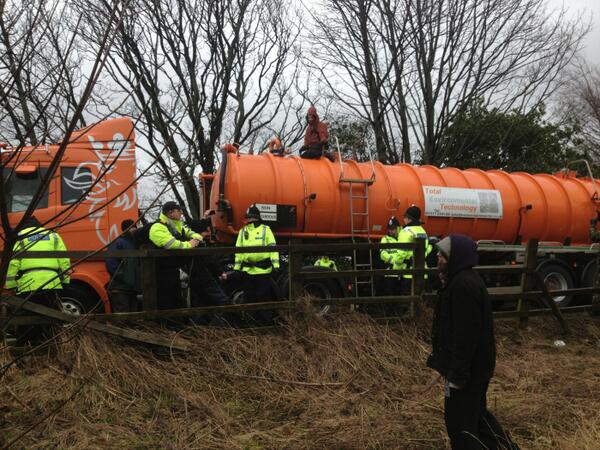
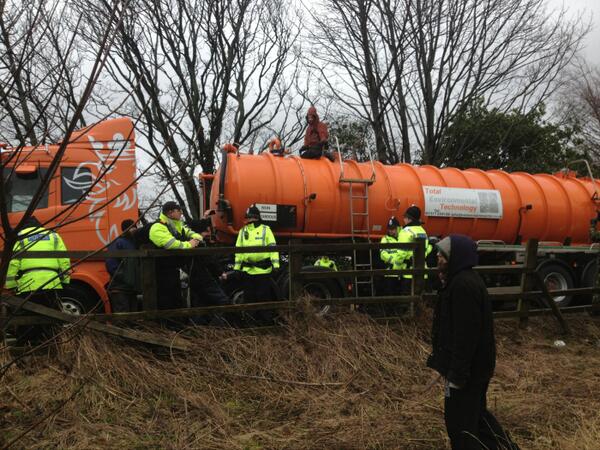
DART ENERGY has started work for CBM exploration in Sutton Cum Lound

DART ENERGY have begun work prepar­ing the site at Sut­ton Cum Lound, the road is dug up and fences are to be erect­ed any day now. The local com­mu­ni­ty is work­ing real­ly hard to oppose the plans and need all the help they can get. There is a cam­paign info point near­by for any­one that wants to vis­it or help out there.

DART ENERGY have begun work prepar­ing the site at Sut­ton Cum Lound, the road is dug up and fences are to be erect­ed any day now. The local com­mu­ni­ty is work­ing real­ly hard to oppose the plans and need all the help they can get. There is a cam­paign info point near­by for any­one that wants to vis­it or help out there. Vol­un­teers are need­ed for research­ing, con­tact­ing coun­cils and local groups, farm­ers and busi­ness­es and for fly­er­ing in Ret­ford this Sat 29th Feb. There is a pub­lic meet­ing in Ret­ford on March 19th at the Well 7pm. DART is also look­ing to exploit South York­shire and has already caused alot of dam­age in Scot­land and many oth­er parts of the earth. http://www.worksopguardian.co.uk/news/local/sutton-cum-lound-protestors-unite-against-energy-firm-s-drilling-plans‑1–6460799

Police Attack 20,000 French Citizens Protesting Against Airport Notre-Dame-Des-Landes

4371803_3_a8d2_selon-la-prefecture-la-manifestation-a_fb63a9c22897e38e5bfc3f4b4776d41b

4371803_3_a8d2_selon-la-prefecture-la-manifestation-a_fb63a9c22897e38e5bfc3f4b4776d41b

The event attend­ed by ten’s of thou­sands of French cit­i­zens against the air­port Notre-Dame-des-Lan­des esca­lat­ed Sat­ur­day after­noon in the city cen­ter of Nantes when Police Block­ad­ed the pro­gres­sion of the march and attacked with charges to the peo­ple protest­ing. Many cit­i­zens were wound­ed by tear gas and rub­ber bul­lets. Par­tic­i­pants respond­ed with fired pro­jec­tiles – bot­tles, cans, steel balls, flares – towards the police who charged repeat­ed­ly.

About 20,000 people demonstrated in the city center of Nantes to protest against the construction of the new airport of Our Lady of Landes.Des violent clashes took place at the end of the event between violent groups and CRS | Franck Dubray

About 20,000 peo­ple demon­strat­ed in the city cen­ter of Nantes to protest against the con­struc­tion of the new air­port of Our Lady of Landes.Des vio­lent clash­es took place at the end of the event between vio­lent groups and CRS | Franck Dubray

4371804_3_ea2b_dans-le-defile-a-nantes-samedi-22-fevrier_273e5de25cb5fac4de98ec550578eec2

“This is tens of thou­sands,” assured Julien Durand, spokesman for the ACIPA, the main oppo­si­tion group to the air­port project, while refus­ing to give a pre­cise fig­ure.

Accord­ing to him, the par­tic­i­pa­tion is equiv­a­lent to the pre­vi­ous ral­lies, such as in Novem­ber 2012 which accord­ing to the orga­niz­ers had expect­ed 40,000 peo­ple (13,000 accord­ing to police).

In the late after­noon, the city cen­ter of Nantes showed scenes of dev­as­ta­tion. Peo­ple took out frus­tra­tion from being ignored for years and beat­en down when they speak out by ran­sack­ing a police sta­tion, an agency of Vin­ci (deal­er air­port project) group, but also broke sev­er­al store­fronts, any agency of Nantes trans­port or agency Nou­velles Fron­tières. At least two con­struc­tion equip­ment vehi­cles and a bar­ri­cade were also burned.

Objects were thrown at the SNCF cate­nary to block the move­ment of trains one source said. As for police, they made use of a large amount of tear gas, stun grenades and water can­nons.

Pro­test­ers moved away blind­ed by tear gas while sev­er­al hun­dred oth­ers con­tin­ued to face the police, refer­ring new pro­jec­tiles bot­tles, or even own grenades forces.

“No mat­ter what tell the pre­fec­ture, for all of you it is a great suc­cess,” pro­vid­ed at the end of the event Julien Durand.

via @Le Télégramme

via @Le Télé­gramme

le-centre-ville-de-nantes-devaste_1
“An unnec­es­sary and expen­sive project”
The demon­stra­tion had start­ed in a friend­ly atmos­phere. “No thank you Ayrault­port”, “No to Ayrault pork”, “Ayrault also emerges Vin­ci”, “Ni or air­port metrop­o­lis, the city is ours” we heard in the pro­ces­sion.

le-centre-ville-de-nantes-devaste_2“The mobi­liza­tion is great here. We are here to show our deter­mi­na­tion to aban­don this use­less and expen­sive at this time of short­age project,” said AFP Eva Joly MEP EELV.

Giv­en the anti-cap­i­tal­ist com­po­nent of the event and clash­es that have marked pre­vi­ous events, the pre­fec­ture on Fri­day adopt­ed a mod­i­fi­ca­tion of the route so that it avoids the down­town core.

The event is orga­nized two months after the pub­li­ca­tion of pre­fec­tur­al ordi­nances autho­riz­ing the start of pre-con­struc­tion of the air­port. Appeals were filed against these orders but do not have sus­pen­sive effect. How­ev­er, work has still not start­ed.

via @youranonnews

via @youranonnews

The inau­gu­ra­tion of the future Grand Ouest Air­port, orig­i­nal­ly sched­uled for 2017, is now con­sid­ered only “2019 or 2020″ by sup­port­ers of the trans­fer. Accord­ing to an Ifop poll pub­lished Sat­ur­day, a major­i­ty of French (56%) are opposed to the future air­port, 24% being pos­i­tive and 20% were unde­cid­ed.

This sur­vey was con­duct­ed on behalf of Act­ing for the envi­ron­ment, Attac and ACIPA, the lead­ing asso­ci­a­tion of oppo­nents to the project. The project of pub­lic util­i­ty in 2008, is jus­ti­fied by its sup­port­ers, PS as the UMP, includ­ing the risk of sat­u­ra­tion of the cur­rent air­port Nantes Atlan­tique.

One of several damaged buildings. via Franck Dubray

One of sev­er­al dam­aged build­ings. via Franck Dubray

4371784_3_30e7_des-participants-ont-de-leur-cote-tire-des_50fcca11781d5d65cec75cfac3d520184371782_3_64a4_la-police-et-les-gendarmes-mobiles-ont-fait_837cd27ae257218eb7fd601d0ed442d4


STEPHANE MAHE / REUTERS

STEPHANE MAHE / REUTERS

3449511

STEPHANE MAHE / REUTERS

STEPHANE MAHE / REUTERS

STEPHANE MAHE / REUTERS

STEPHANE MAHE / REUTERS


STEPHANE MAHE / REUTERS

STEPHANE MAHE / REUTERS

34497153449847Sources
http://t.co/RS8wSS9yRB” target=“_blank”>FranceTVinfo
Lemonde
7sur7

Cycling guerrillas in Olomouc

Writ­ten for Edin­burgh Crit­i­cal Mass.

Writ­ten for Edin­burgh Crit­i­cal Mass.

My home­town Olo­mouc is a stu­dents´ city in Moravia, in the east of the Czech Repub­lic. The city has about hun­dred thou­sand res­i­dents and is locat­ed in the flood­plain of the Mora­va Riv­er. The flat ground makes the city ide­al ter­rain for cycling, but a major obsta­cle for cyclists is insuf­fi­cient sup­port­ing cycle infra­struc­ture. Often a seg­re­gat­ed cycle path will sud­den­ly ter­mi­nate at a bus stop or a pave­ment. With dis­con­tin­u­ous cycle lanes and absent inter­con­nec­tions rid­ing through the city cen­ter is a frus­trat­ing expe­ri­ence. Some town „squares“ are actu­al­ly road junc­tions or park­ing spaces in prac­tice so they need renam­ing. Uhel­ná Street is renamed to Uhel­né car park in the pic­ture below.

A local senior cycling advo­ca­cy group called Olo­moučtí kolaři demand­ed improve­ments to the cycling infra­struc­ture from the city coun­cil. Their voic­es had not been heard for many years. In ear­ly 2011 an open group of young cyclists inspired by Crit­i­cal Mass decid­ed to make demands for the infra­struc­ture loud­er and they ini­ti­at­ed grass­roots bike rides. I dare to say that it was the first case of reg­u­lar bike rides orga­nized non-hier­ar­chi­cal­ly in the Czech Repub­lic. Bike rides in oth­er Czech cities (Prague, Brno, Ostra­va, Pilsen) and gen­er­al­ly in the East­ern Europe are com­mon­ly called “Crit­i­cal Mass“, but they are orga­nized in a dif­fer­ent way than in most Eng­lish-speak­ing coun­tries. Czech bike rides are for the most part orga­nized by envi­ron­men­tal or cycling NGOs; routes of bike rides are well planned in col­lab­o­ra­tion with police and often politi­cians and even cor­po­ra­tions par­tic­i­pate on events. Hence these actions can attract much more peo­ple. For exam­ple „Prague Crit­i­cal Mass“ orga­nized by group called Auto*mat attracts about 5 000 cyclists two-time per year (April and Sep­tem­ber) and dozens of par­tic­i­pants in oth­ers months. In Olo­mouc we decid­ed to devel­op more anar­chist and spon­ta­neous style rides with­out for­mal orga­niz­ers.


The first Crit­i­cal Mass bike ride hit the streets of the city on the last Thurs­day of March 2011. Have a look at this video show­ing more than twen­ty cyclists cel­e­brat­ing non-motor­ized traf­fic.

This one was the first of many. Since then Olo­mouc Crit­i­cal Mass bike rides took place on the last Thurs­day of each month. The meet­ing point was in front of the dor­mi­to­ry on the play­ground in Šmer­alo­va Street, and cyclists used to assem­ble at 6:00 pm and start at 6:15 pm. Usu­al­ly 15 – 50 cyclists par­tic­i­pat­ed in a bike ride, but some­times espe­cial­ly dur­ing sum­mer hol­i­days there were only about three cyclists at the meet­ing point. In this case they often aban­doned the ride and decid­ed on an alter­na­tive plan. Sim­i­lar­ly from Decem­ber to Feb­ru­ary Crit­i­cal Mass­es did not hap­pened because of unfriend­ly weath­er dur­ing win­ter months.

In May 2012 a local group of Amnesty Inter­na­tion­al joined in with the Crit­i­cal Mass bike ride in a sym­bol­ic protest against oil extrac­tion in Nige­ria by Shell. One of three Shell petrol sta­tions in the city was closed for a short time (pho­to below).

In April 2013 about 50 cyclists who were in a good mood were stopped by police offi­cers at one of high streets in the city (pho­to below). They asked for orga­niz­ers, but after a while con­fused offi­cers left the scene and Crit­i­cal Mass went ahead.

After one year of Crit­i­cal Mass­es, a dif­fer­ent style of cycling action appeared. Unknown push­ers mod­i­fied five bill­boards adver­tis­ing cars into pro-cycling and anti-car mes­sages. Adbusters spread a wit­ty on-line man­i­festo stat­ing that the action was done in protest over occu­pa­tion of streets and squares by four-wheeled vehi­cles. Thanks to social media the man­i­festo was read by many thou­sands. One of the bill­boards (pho­to below) stat­ed: Death is cool — 2 549 dead on roads dur­ing two years.

Over the course of time it became obvi­ous that Olo­mouc Crit­i­cal Mass bike rides were attract­ing just a dozen or so cyclists and it was most­ly an enjoy­able event for a bunch of friends. It can be seen as a suc­cess for just that, but it most like­ly didn´t make enough pres­sure on the city coun­cil. Also the few altered bill­boards might not change a lot on the streets. This may explain why more pow­er­ful and empow­er­ing actions have devel­oped. Why should we wait for build­ing new facil­i­ties by author­i­ties if we can do it by your­self? This ques­tion could have been asked by those who made con­crete ramps up to high kerbs for cyclist at dif­fer­ent places across the city in sum­mer 2012. Besides spread­ing a procla­ma­tion of full of crit­i­cism about city coun­cil inac­tiv­i­ty, anony­mous activists had start­ed to do some­thing more tan­gi­ble for cycling.

In the sum­mer of 2013 oth­er cycling facil­i­ties appeared in the city. The first was dec­o­rat­ed home made cycle racks at a guer­ril­la gar­den in the city cen­ter in June. This instal­la­tion inspired oth­er activists who bought and posed cycle racks on pub­lic space in front of a new­ly opened shop­ping cen­ter in Sep­tem­ber. See the pho­tos of cycle racks at the guer­ril­la gar­den and in front of the shop­ping cen­ter.

A love­ly instance of direct action was car­ried out by cycling guer­ril­las who paint­ed 30 meters of miss­ing cycle lane in a park. They inter­con­nect­ed a cur­rent cycle path and a street road. The anony­mous painters used an orig­i­nal paint spe­cif­ic for hor­i­zon­tal road signs and as far as I know the cycle lane has still not been over­laid by com­mu­ni­ty ser­vices, hence it is still in oper­a­tion for more than half a year. Before the cycle lane was paint­ed police offi­cers had penal­ized cyclists at that stretch, but now that does not hap­pen any­more. Now cyclists pass through with­out fear of get­ting fines in July 2013 (pho­to below). Again the cre­ators spread an on-line com­mu­nique which crit­i­cized author­i­ties about cycling infra­struc­ture devel­op­ment in the city.

Unfor­tu­nate­ly Olo­mouc Crit­i­cal Mass­es stopped in sum­mer 2013 and since this time bike rides have not been hap­pen­ing because the per­son that was the most active burned out. But that is the risk of infor­mal hier­ar­chy. In any case whether there are rides or not there is still a com­mu­ni­ty of peo­ple around Olo­mouc Crit­i­cal Mass who still meet with each oth­er for open com­mu­ni­ty veg­an din­ers, dump­ster div­ing, guer­ril­la gar­den­ing, food not bombs events, and oth­er activ­i­ties. Seeds are sowed and there are many who can hold the baton. Hope­ful­ly Olo­mouc Crit­i­cal Mass will be res­ur­rect­ed in a spring.

 Yours fel­low mass­er from Czech

Two-year long Moroccan Occupation of Silver Mine

An activist with the Berber flag.
</p>
</body></html>

An activist with the Berber flag. Protesters have occupied a hilltop above a silver mine for more than two years.

An activist with the Berber flag. Pro­test­ers have occu­pied a hill­top above a sil­ver mine for more than two years.

A Jan. 23 pro­file in the New York Times put a rare spot­light on the ongo­ing occu­pa­tion camp estab­lished by Berber vil­lagers at Mount Aleb­ban, 5,000 feet high in the Atlas Moun­tains of Moroc­co, to protest the oper­a­tions of the Imiter Met­talur­gic Min­ing Company—whose prin­ci­pal own­er is the North African nation’s King Mohammed VI.

The occu­pa­tion was first launched in 1996, but bro­ken up by the author­i­ties. It was revived in the sum­mer of 2011, after stu­dents from the local vil­lage of Imider, who were used to get­ting sea­son­al jobs at the mine, were turned down. That led the villagers—even those with jobs at the complex—to again estab­lish a per­ma­nent encamp­ment block­ing access to the site of Africa’s most pro­duc­tive sil­ver mine.

A key griev­ance is the mine’s use of local water sources, which is mak­ing agri­cul­ture in the arid region increas­ing­ly unten­able. Pro­test­ers closed a pipe valve, cut­ting off the water sup­ply to the mine. Since then, the mine’s out­put has plummeted—40% in 2012 and a fur­ther 30% in 2013. But Imider farm­ers say their long-dry­ing wells are start­ing to replen­ish, and their shriv­eled orchards are again start­ing to bear fruit.


In addi­tion to pro­tec­tion of local waters, vil­lagers are demand­ing that 75% of the jobs at the mine be allo­cat­ed to their munic­i­pal­i­ty. But more gen­er­al demands for Berber cul­tur­al rights and dig­ni­ty also ani­mate the protest, with the Berber flag fly­ing above the encamp­ment.

A 2011 con­sti­tu­tion­al reform, the fruit of a protest move­ment inspired by those across the Arab world, grant­ed greater cul­tur­al rights to the Berbers who (by lan­guage) con­sti­tute near­ly half Morocco’s pop­u­la­tion. But the Berbers remain dis­pro­por­tion­ate­ly affect­ed by pover­ty and mar­gin­al­iza­tion. The area around Mount Aleb­ban is among the poor­est zones of Moroc­co.

The Imider pro­test­ers say they are will­ing to talk, but nei­ther the gov­ern­ment nor the min­ing com­pa­ny have come to the table, appar­ent­ly opt­ing for a strat­e­gy of wait­ing the move­ment out. (Eth­i­cal Con­sumer, Jan. 28; Yabi­la­di, Jan. 27; Reuters, Feb. 20, 2012)

All for one, and one for all

http://earthfirstjournal.org/newswire/wp-content/uploads/sites/3/2014/02/blackmail3.gif


http://earthfirstjournal.org/newswire/wp-content/uploads/sites/3/2014/02/blackmail3.gif


The state-spon­sored crack­down on ani­mal rights activists con­tin­ues next month, with the open­ing of the third ‘con­spir­a­cy to black­mail’ tri­al relat­ing to vivi­sec­tion giants Hunt­ing­don Life Sci­ences in Win­ches­ter…

Earth First! Direct Action Manual Is Ready for Print

Cover for Direct Action Manual

Cover for Direct Action Manual

Earth First! Direct Action Man­u­al. To sup­port this pub­li­ca­tion, pre­order your copy or donate today.

After sev­er­al years in devel­op­ment, the Earth First! Direct Action Man­u­al is ready to go to press. A group of front­line activists has assem­bled over 300 pages of dia­grams, descrip­tions of tech­niques and a com­pre­hen­sive overview of the role direct action plays in our cam­paigns in defense of the Earth.

We are now in a three-week fundrais­ing cam­paign to ensure that this crit­i­cal book gets out to peo­ple who can use it. You can pre­order your copy and get some extra thank you gifts for your ear­ly endorse­ment by donat­ing today. More impor­tant­ly, though, we have offered a chance for you to help us spread this knowl­edge. Every dona­tion over $50 gives you the chance to send a free copy of the man­u­al to a cam­paign of your choice. The more you give, the more man­u­als we can put in the mail.

The man­u­al will be print­ed in the com­ing month with long­time Earth First! part­ner, The Gloo Fac­to­ry. This com­mu­ni­ty-mind­ed, union print shop has sup­plied Earth First! and its affil­i­ates with stick­ers and mer­chan­dise for decades and remains com­mit­ted to using a high stan­dard for recy­cled and reclaimed mate­r­i­al, as well as sup­port­ive work­er con­di­tions.

The man­u­al was first print­ed near­ly two decades ago and has been out of print since its ini­tial dis­sem­i­na­tion. Though many of the con­sid­er­a­tions for civ­il dis­obe­di­ence and inter­ven­tion have remained tried and true, new ele­ments have altered the ways we put these tac­tics into action. The Earth First! Direct Action Man­u­al will con­tin­ue the role of safe and effec­tive actions in stop­ping the destruc­tion of the plan­et.

Sup­port this effort today!

Barton Moss anti-fracking update


Embedded image permalink

15th Feb 2014

Lor­ries being brought in on a Sat­ur­day, tankers so like­ly full of chem­i­cals, fol­lowed by trucks with pipes. 


Embedded image permalink

15th Feb 2014

Lor­ries being brought in on a Sat­ur­day, tankers so like­ly full of chem­i­cals, fol­lowed by trucks with pipes. 

Campers try­ing to stop, one locked on top of a tanker. 

Three days ago a court ruled that the road was not a pub­lic high­way, but a foot­path, open­ing up the threat of being arrest­ed for aggra­vat­ed tres­pass by block­ing the trucks on the foot­path (it is legal­ly pos­si­ble under Sec­tion 68 Crim­i­nal Jus­tice and Pub­lic Order Act 1994). 

Live feed 1 and Live feed 2

Romanian Villagers and Priests Occupy Chevron Fracking Site in Protest

9/2/14

Roman­ian police clashed with vil­lagers on Wednes­day as they tried in vain to force them off a field they have occu­pied for a third day to pre­vent U.S. ener­gy giant Chevron from drilling for shale gas.

9/2/14

Roman­ian police clashed with vil­lagers on Wednes­day as they tried in vain to force them off a field they have occu­pied for a third day to pre­vent U.S. ener­gy giant Chevron from drilling for shale gas.

Hun­dreds of pro­test­ers blocked access to the site at Silis­tea in east­ern Roma­nia where Chevron plans to drill an explo­ration well, lying down in the mud and hold­ing hands to form a human chain.

Some 250 anti-riot police engaged in an hours-long stand-off with the pro­test­ers, with skir­mish­es as they phys­i­cal­ly tried to force them off, but the demon­stra­tors pushed their way back onto the field.

The group of pro­test­ers, some of whom have been sleep­ing at the site since Mon­day, had grown to about 500 on Wednes­day, pre­vent­ing Chevron bull­doz­ers and exca­va­tors from access­ing the site.

Ortho­dox priests also joined the protest.

Many of the vil­lagers in the rur­al region arrived on horse carts, some brought their chil­dren who held up signs read­ing: “Stop Chevron!”, while an elder­ly woman leaned on her cane beside them.

They are afraid of the envi­ron­men­tal and health impact of the high­ly con­tro­ver­sial method used for shale gas drilling, called hydraulic frac­tur­ing or ‘frack­ing’.

The tech­nique con­sists of pump­ing water and chem­i­cals at high pres­sure into deep rock for­ma­tions to free oil and gas.

Envi­ron­men­tal­ists say frack­ing may con­t­a­m­i­nate ground water and even cause small earth­quakes.

Chevron has per­mits to explore for shale gas in three vil­lages in this part of east­ern Roma­nia as well as on Romania’s Black Sea coast.

“Chevron is com­mit­ted to build­ing con­struc­tive and pos­i­tive rela­tion­ships with the com­mu­ni­ties where we oper­ate and will con­tin­ue our dia­logue with the pub­lic, local com­mu­ni­ties and author­i­ties on its projects,” the com­pa­ny said in a state­ment to AFP.

“Our pri­or­i­ty is to con­duct … activ­i­ties in a safe and envi­ron­men­tal­ly respon­si­ble man­ner con­sis­tent with the per­mits under which we oper­ate,” it added.

Also Wednes­day, more than 2,000 peo­ple staged a protest in the cap­i­tal Bucharest, shout­ing “no to shale gas”.

Romania’s rul­ing cen­tre-left coali­tion has been defend­ing shale gas explo­ration after fight­ing it when it was in the oppo­si­tion.

Day 72 – 6th February — Barton Moss — anti-fracking camp & blockade

day 71 lock on 2

day 71 lock on 2

Today there was a lock-on pre­vent­ing the con­voy leav­ing the iGas site from mov­ing for over 6 hours. The leader of the Green Par­ty, Natal­ie Ben­nett also vis­it­ed the camp with her sup­port­ers and met up with pro­tec­tors on the march.

Live feed from lock-on

Occupation of Minvest Deva Headquarters in Romania

3/2/14

Nine activists from Roma­nia and Ger­many climbed the fire escape of Min­vest Deva’s head­quar­ters today and unfurled two thir­ty-foot-long ban­ners call­ing for a ban on cyanide min­ing. They were fined 500 lei each, but declared they would not pay.

3/2/14

Nine activists from Roma­nia and Ger­many climbed the fire escape of Min­vest Deva’s head­quar­ters today and unfurled two thir­ty-foot-long ban­ners call­ing for a ban on cyanide min­ing. They were fined 500 lei each, but declared they would not pay.

The ban­ners read, “Respect Exis­tance or Expect Resis­tance,” “Min­ing with Cyanide Caus­es Death!” and oth­er slo­gans

The activists chose Min­vest Deva due to con­flict of inter­est. Accord­ing to one activist named Mih­nea Bli­dar­iu who was involved in the ban­ner drops, ”The cur­rent Direc­tor of Deva Gold , Mr Nico­lae Stan­ca, is the same per­son who in 1987 signed the Asso­ci­a­tion Agree­ment between Gabriel Resources and the Roman­ian state.”

The full state­ment from the group is below (from Rev­o­lu­tion Sociale)

“Today, the 3rd of Feb­ru­ary 2014, we, cit­i­zens of Roma­nia and Ger­many have occu­pied Min­vest Deva head­quar­ters in order to draw atten­tion at the ille­gal and ille­git­i­mate favor­ing of min­ing com­pa­nies by the Roman­ian state author­i­ties.

We denounce the cyanide based min­ing projects from Certej, Deva-Mun­cel, Băiţa Cră­ci­unești, Brad, Rov­ina și Roșia Mon­tană, projects that have destruc­tive effects towards nature and humans and can only start with no regard of legal pro­ce­dures.

Only at Certej, in 16 years of oper­a­tion 26.448 tons of sodi­um cyanide and 15.280 tons of cop­per sul­phate would be used. Large-scale cyanide use does not bring pros­per­i­ty to a com­mu­ni­ty, only death and the impos­si­bil­i­ty to devel­op oth­er eco­nom­ic activ­i­ties. We denounce deeds that reek of cor­rup­tion, con­flict of inter­ests and abus­es of Nico­lae Stan­ca, cur­rent direc­tor at Deva Gold. He has signed, in the name of the Roman­ian state, the asso­ci­at­ing doc­u­ments between Min­vest Deva and Gabriel Resources in 1997, then being employed by the con­tro­vert­ed busi­ness­man Frank Timis.

We con­demn the government’s inten­tion to bring for­ward to the par­lia­ment a new min­ing law, we con­demn the irre­spon­si­ble and undig­ni­fied atti­tude of the Min­is­ter of Envi­ron­ment, Rovana Plumb, and ask for her res­ig­na­tion. We warn prime-min­is­ter Vic­tor Pon­ta that a new attempt to pass the min­ing law with absurd stip­u­la­tions that only serve the inter­ests of the min­ing indus­try will not remain with­out con­se­quences. In his urgency and pres­sure on the par­lia­men­tar­i­ans to make forced expro­pri­a­tion of cit­i­zens by pri­vate com­pa­nies legal he is doing exact­ly the oppo­site of what the pub­lic opin­ion wants. As the events of last year have demon­strat­ed, ille­git­i­mate sup­port of min­ing com­pa­nies is not backed up by par­lia­ment (two leg­isla­tive attempts have failed last year), nor by the tens of thou­sands of peo­ple that have gone to the streets in 2013.

Last but not least, we wish to draw atten­tion to the total aban­don of moral­i­ty by polit­i­cal peo­ple such as Dan Șova or Rovana Plumb. Dan Șova, from the gov­ern­ment table pro­pos­es legal solu­tions for min­ing projects of his mother’s law clients. Cyanide-based projects are then passed to be eval­u­at­ed to his col­league min­is­ter, Rovana Plumb, who will do any­thing to see them approved, includ­ing drop­ping charges in court.

We ask the cit­i­zens of Roma­nia to inform them­selves cor­rect­ly about the many draw­backs of min­ing projects and remem­ber the hor­ri­ble eco­log­i­cal acci­dents at Certej in 1971 and Baia Mare in 2000. We do not want such tragedies to be repeat­ed! We show our sol­i­dar­i­ty with move­ments around the world that strug­gle against such destruc­tive min­ing projects: Krem­ni­ca (Slo­va­kia), Halkidi­ki (Greece), Cor­coesto (Spain), Salave Asturias (Spain), Berga­ma (Turkey), Kum­tor (Kyr­gyzs­tan), Tal­vi­vaara (Fin­land).

Respect exis­tence or expect resis­tance!
Roma­nia with­out cyanide!

Live update pe mobil: http://goo.gl/RnJUsl
Live update pe Vice: @MinvestDevaLIVE (this account has now been sus­pend­ed by Twit­ter)

Via https://www.facebook.com/rosia.montana.in.unesco