Nearly a thousand environmental activists murdered since 2002

April 15, 2014  At least 908 peo­ple were mur­dered for tak­ing a stand to defend the envi­ron­ment betwe

April 15, 2014  At least 908 peo­ple were mur­dered for tak­ing a stand to defend the envi­ron­ment between 2002 and 2013, accord­ing to a new report today from Glob­al Wit­ness, which shows a dra­mat­ic uptick in the mur­der rate dur­ing the past four years. Notably, the report appears on the same day that anoth­er NGO, Sur­vival Inter­na­tion­al, released a video of a gun­man ter­ror­iz­ing a Guarani indige­nous com­mu­ni­ty in Brazil, which has recent­ly reset­tled on land tak­en from them by ranch­ers decades ago. Accord­ing to the report, near­ly half of the mur­ders over the last decade occurred in Brazil—448 in all—and over two-thirds—661—involved land con­flict.

“There can be few stark­er or more obvi­ous symp­toms of the glob­al envi­ron­men­tal cri­sis than a dra­mat­ic upturn in killings of ordi­nary peo­ple defend­ing rights to their land or envi­ron­ment,” said Oliv­er Court­ney of Glob­al Wit­ness. “Yet this rapid­ly wors­en­ing prob­lem is going large­ly unno­ticed, and those respon­si­ble almost always get away with it. We hope our find­ings will act as the wake-up call that nation­al gov­ern­ments and the inter­na­tion­al com­mu­ni­ty clear­ly need.”

But as gris­ly as the report is, it’s like­ly a major under­es­ti­ma­tion of the issue. The report cov­ers just 35 coun­tries where vio­lence against envi­ron­men­tal activists remains an issue, but leaves out a num­ber of major coun­tries where envi­ron­men­tal-relat­ed mur­ders are like­ly occur­ring but with scant report­ing.

“Because of the live, under-rec­og­nized nature of this prob­lem, an exhaus­tive glob­al analy­sis of the sit­u­a­tion is not pos­si­ble,” reads the report. “For exam­ple, African coun­tries such as Nige­ria, Demo­c­ra­t­ic Repub­lic of Con­go, Cen­tral African Repub­lic and Zim­bab­we that are endur­ing resource-fueled unrest are high­ly like­ly to be affect­ed, but infor­ma­tion is almost impos­si­ble to gain with­out detailed field inves­ti­ga­tions.”

In fact, reports of hun­dreds of addi­tion­al killings in coun­tries like Ethiopia, Myan­mar, Venezuela, and Zim­bab­we were left out due to lack of rig­or­ous infor­ma­tion.

Even with­out these coun­tries includ­ed, the num­ber of envi­ron­men­tal activists killed near­ly approach­es the num­ber of jour­nal­ists mur­dered dur­ing the same period—913—an issue that gets much more press. Envi­ron­men­tal activists most at risk are peo­ple fight­ing spe­cif­ic indus­tries.

“Many of those fac­ing threats are ordi­nary peo­ple oppos­ing land grabs, min­ing oper­a­tions and the indus­tri­al tim­ber trade, often forced from their homes and severe­ly threat­ened by envi­ron­men­tal dev­as­ta­tion,” reads the report. “Indige­nous com­mu­ni­ties are par­tic­u­lar­ly hard hit. In many cas­es, their land rights are not rec­og­nized by law or in prac­tice, leav­ing them open to exploita­tion by pow­er­ful eco­nom­ic inter­ests who brand them as ‘anti-devel­op­ment’.”

As if to high­light these points, Sur­vival Inter­na­tion­al released a video today that the groups says shows a gun­man fir­ing at the Pyeli­to Kuê com­mu­ni­ty of Guarani indige­nous peo­ple. The inci­dent injured one woman, accord­ing to the group. The Guarani have been cam­paign­ing for decades to have land returned to them that has been tak­en by ranch­ers.

“This video gives a brief glimpse of what the Guarani endure month after month—harassment, intim­i­da­tion, and some­times mur­der, just for try­ing to live in peace on tiny frac­tions of the ances­tral land that was once stolen from them,” the direc­tor of Sur­vival Inter­na­tion­al, Stephen Cor­ry, said. “Is it too much to expect the Brazil­ian author­i­ties, giv­en the bil­lions they’re spend­ing on the World Cup, to sort this prob­lem out once and for all, rather than let the Indi­ans’ mis­ery con­tin­ue?”

Accord­ing to the report, two major dri­vers of repeat­ed vio­lence against envi­ron­men­tal activists are a lack of atten­tion to the issue and wide­spread impuni­ty for per­pe­tra­tors. In fact, Glob­al Wit­ness found that only ten peo­ple have been con­vict­ed for the 908 mur­ders doc­u­ment­ed in the report, mean­ing a con­vic­tion rate of just 1.1 per­cent to date.

“Envi­ron­men­tal human rights defend­ers work to ensure that we live in an envi­ron­ment that enables us to enjoy our basic rights, includ­ing rights to life and health,” John Knox, UN Inde­pen­dent Expert on Human Rights and the Envi­ron­ment said. “The inter­na­tion­al com­mu­ni­ty must do more to pro­tect them from the vio­lence and harass­ment they face as a result.”

Rebels raid mining firm in Southern Philippines and torch heavy equipment

April 5 2014 New People’s Army rebels on Sat­ur­day raid­ed a min­ing firm in the south­ern Philip­pine province of Agu­san del Norte, reports said.

April 5 2014 New People’s Army rebels on Sat­ur­day raid­ed a min­ing firm in the south­ern Philip­pine province of Agu­san del Norte, reports said.

Reports said the rebels swooped down on Philip­pine Alstron Min­ing Com­pa­ny on the vil­lage of Tama­markay in Tubay town and over­pow­ered the secu­ri­ty guards with­out fir­ing a sin­gle shot before they torched sev­er­al trucks and oth­er heavy equip­ment.

The rebels also seized at least 6 shot guns and short firearms from the company’s secu­ri­ty arse­nal. There were no reports of casu­al­ties.

The raid came fol­low­ing threats made by the NPA on min­ing firms oper­at­ing in the south­ern Philip­pines.

Just last month, rebel forces attacked a police base and gov­ern­ment troops in Davao del Sur’s Matanao as pun­ish­ment for their “reign of ter­ror” against indige­nous tribes and oth­er com­mu­ni­ties oppos­ing min­ing oper­a­tions in the province.

Den­cio Madri­gal, a spokesman for the NPA-Valen­tine Palamine Com­mand, said the dead­ly attacks were a pun­ish­ment for police and mil­i­tary units pro­tect­ing Glen­core Xstra­ta. He accused the min­ing firm of exploit­ing near­ly 100,000 hectares of ances­tral lands of indige­nous Lumad Blaans tribes, and peas­ants in the region.

Jorge Mad­los, a region­al rebel spokesman, also warned min­ing firms and fruit plan­ta­tions in the region, say­ing mil­i­tary oper­a­tions in Min­danao have esca­lat­ed and have become more exten­sive with the aim to thwart the ever grow­ing and wide­spread people’s protest against destruc­tive min­ing oper­a­tions and plan­ta­tions.

Mad­los said among their tar­gets are Rus­sell Mines and Min­er­als, Apex Min­ing Corp. and Philco in south­ern Min­danao; Dole­fil, Del Monte and Sum­ifru plan­ta­tions in north­ern Min­danao; TVI Resource Devel­op­ment Philip­pines in west­ern Min­danao whose oper­a­tions inside the ances­tral domain of indige­nous Sub­a­nen and Moro tribes are being opposed by vil­lagers.

NPA and Moro rebels had pre­vi­ous­ly attacked TVI Resources in Zam­boan­ga province.

“If one recalls, more than 400 fam­i­lies were forced to evac­u­ate their ances­tral lands because of TVI and the ruth­less mil­i­tary oper­a­tions that ensued to pro­tect it in Buug, Zam­boan­ga del Sur. In order to defend the people’s human rights and gen­er­al well­be­ing, the NPA launched tac­ti­cal offen­sives against TVI as well as against units of the AFP-PNP-CAFGU pro­tect­ing it, such as the ambush on Feb­ru­ary 2012 that hit ele­ments of the army intel­li­gence group oper­at­ing on the behest of TVI and the impo­si­tion of the local gov­ern­ment to allow TVI min­ing oper­a­tions on Sub­a­nen ances­tral lands is one of the bases the NPA raid­ed on April 9, 2012 the PNP sta­tion in Tig­bao, Zam­boan­ga del Sur,” Mad­los said.

NPA rebels also inter­cept­ed a group of army sol­diers who were using a bor­rowed truck from TVI and dis­armed them in Dipla­han town in Zam­boan­ga Sibugay province two years ago. The rebels also burned the truck before releas­ing the sol­diers.

“In view of these events, the NDFP in Min­danao calls upon the Lumad and Moro peo­ples, peas­ants and work­ers, reli­gious and oth­er sec­tors to fur­ther strength­en their uni­ty and their courage to oppose the inter­ests of impe­ri­al­ist mines and plan­ta­tions, which are exceed­ing­ly dam­ag­ing to Min­danao, to its peo­ple and to the envi­ron­ment. We call upon the units of the NPA in Min­danao to be ever more dar­ing in their defense of people’s inter­ests against the greed and rapac­i­ty of the local rul­ing class­es and their impe­ri­al­ist mas­ter,” Mad­los said.

TVI Resource Devel­op­ment Philip­pines has repeat­ed­ly denied all accu­sa­tions against them. It recent­ly end­ed its gold min­ing oper­a­tion in Mount Canat­u­an in Zam­boan­ga del Norte’s Sio­con town after sev­er­al years of oper­a­tions and now has a gold-sil­ver project in the town of Bayog in Zam­boan­ga del Sur province and a nick­el plant in Agu­san del Norte province. (Min­danao Exam­in­er)

DART ENERGY has started work for CBM exploration in Sutton Cum Lound

DART ENERGY have begun work prepar­ing the site at Sut­ton Cum Lound, the road is dug up and fences are to be erect­ed any day now. The local com­mu­ni­ty is work­ing real­ly hard to oppose the plans and need all the help they can get. There is a cam­paign info point near­by for any­one that wants to vis­it or help out there.

DART ENERGY have begun work prepar­ing the site at Sut­ton Cum Lound, the road is dug up and fences are to be erect­ed any day now. The local com­mu­ni­ty is work­ing real­ly hard to oppose the plans and need all the help they can get. There is a cam­paign info point near­by for any­one that wants to vis­it or help out there. Vol­un­teers are need­ed for research­ing, con­tact­ing coun­cils and local groups, farm­ers and busi­ness­es and for fly­er­ing in Ret­ford this Sat 29th Feb. There is a pub­lic meet­ing in Ret­ford on March 19th at the Well 7pm. DART is also look­ing to exploit South York­shire and has already caused alot of dam­age in Scot­land and many oth­er parts of the earth. http://www.worksopguardian.co.uk/news/local/sutton-cum-lound-protestors-unite-against-energy-firm-s-drilling-plans‑1–6460799

Two-year long Moroccan Occupation of Silver Mine

An activist with the Berber flag.
</p>
</body></html>

An activist with the Berber flag. Protesters have occupied a hilltop above a silver mine for more than two years.

An activist with the Berber flag. Pro­test­ers have occu­pied a hill­top above a sil­ver mine for more than two years.

A Jan. 23 pro­file in the New York Times put a rare spot­light on the ongo­ing occu­pa­tion camp estab­lished by Berber vil­lagers at Mount Aleb­ban, 5,000 feet high in the Atlas Moun­tains of Moroc­co, to protest the oper­a­tions of the Imiter Met­talur­gic Min­ing Company—whose prin­ci­pal own­er is the North African nation’s King Mohammed VI.

The occu­pa­tion was first launched in 1996, but bro­ken up by the author­i­ties. It was revived in the sum­mer of 2011, after stu­dents from the local vil­lage of Imider, who were used to get­ting sea­son­al jobs at the mine, were turned down. That led the villagers—even those with jobs at the complex—to again estab­lish a per­ma­nent encamp­ment block­ing access to the site of Africa’s most pro­duc­tive sil­ver mine.

A key griev­ance is the mine’s use of local water sources, which is mak­ing agri­cul­ture in the arid region increas­ing­ly unten­able. Pro­test­ers closed a pipe valve, cut­ting off the water sup­ply to the mine. Since then, the mine’s out­put has plummeted—40% in 2012 and a fur­ther 30% in 2013. But Imider farm­ers say their long-dry­ing wells are start­ing to replen­ish, and their shriv­eled orchards are again start­ing to bear fruit.


In addi­tion to pro­tec­tion of local waters, vil­lagers are demand­ing that 75% of the jobs at the mine be allo­cat­ed to their munic­i­pal­i­ty. But more gen­er­al demands for Berber cul­tur­al rights and dig­ni­ty also ani­mate the protest, with the Berber flag fly­ing above the encamp­ment.

A 2011 con­sti­tu­tion­al reform, the fruit of a protest move­ment inspired by those across the Arab world, grant­ed greater cul­tur­al rights to the Berbers who (by lan­guage) con­sti­tute near­ly half Morocco’s pop­u­la­tion. But the Berbers remain dis­pro­por­tion­ate­ly affect­ed by pover­ty and mar­gin­al­iza­tion. The area around Mount Aleb­ban is among the poor­est zones of Moroc­co.

The Imider pro­test­ers say they are will­ing to talk, but nei­ther the gov­ern­ment nor the min­ing com­pa­ny have come to the table, appar­ent­ly opt­ing for a strat­e­gy of wait­ing the move­ment out. (Eth­i­cal Con­sumer, Jan. 28; Yabi­la­di, Jan. 27; Reuters, Feb. 20, 2012)

Earth First! Direct Action Manual Is Ready for Print

Cover for Direct Action Manual

Cover for Direct Action Manual

Earth First! Direct Action Man­u­al. To sup­port this pub­li­ca­tion, pre­order your copy or donate today.

After sev­er­al years in devel­op­ment, the Earth First! Direct Action Man­u­al is ready to go to press. A group of front­line activists has assem­bled over 300 pages of dia­grams, descrip­tions of tech­niques and a com­pre­hen­sive overview of the role direct action plays in our cam­paigns in defense of the Earth.

We are now in a three-week fundrais­ing cam­paign to ensure that this crit­i­cal book gets out to peo­ple who can use it. You can pre­order your copy and get some extra thank you gifts for your ear­ly endorse­ment by donat­ing today. More impor­tant­ly, though, we have offered a chance for you to help us spread this knowl­edge. Every dona­tion over $50 gives you the chance to send a free copy of the man­u­al to a cam­paign of your choice. The more you give, the more man­u­als we can put in the mail.

The man­u­al will be print­ed in the com­ing month with long­time Earth First! part­ner, The Gloo Fac­to­ry. This com­mu­ni­ty-mind­ed, union print shop has sup­plied Earth First! and its affil­i­ates with stick­ers and mer­chan­dise for decades and remains com­mit­ted to using a high stan­dard for recy­cled and reclaimed mate­r­i­al, as well as sup­port­ive work­er con­di­tions.

The man­u­al was first print­ed near­ly two decades ago and has been out of print since its ini­tial dis­sem­i­na­tion. Though many of the con­sid­er­a­tions for civ­il dis­obe­di­ence and inter­ven­tion have remained tried and true, new ele­ments have altered the ways we put these tac­tics into action. The Earth First! Direct Action Man­u­al will con­tin­ue the role of safe and effec­tive actions in stop­ping the destruc­tion of the plan­et.

Sup­port this effort today!

Brazil: Munduruku People Kick Miners Off Indigenous Territory, Seize Equipment

Trans­lat­ed from Por­tuguese by Thomas Walk­er / Earth First! Newswire

Trans­lat­ed from Por­tuguese by Thomas Walk­er / Earth First! Newswire

Threatened by Death, Muduruku Expel Miners from their territories, West of Para.

Under threat of death, Mudu­ruku expel min­ers from their ter­ri­to­ries, west of Para.

Night had hard­ly arrived when indige­nous Munduruku peo­ple land­ed on the bank of a mine on Tropas Riv­er, a trib­u­tary of Tapa­jós riv­er, in a region west of Pará.  From the five speed­boats, all of them full, came war­riors and chil­dren, all with one objec­tive: to dri­ve out ille­gal min­ers from Munduruku land.

Right at the entrance of the shed, the indige­nous encoun­tered two of the twelve min­ers present.  Paint­ed for war, the Munduruku held strong.

“You have ten min­utes to get out.  Get your things, go away, and don’t come back.  This is the land of the Munduruku,” ordered Paigo­muy­at­pu, chief of the war­riors, while the min­ers were pack­ing their bags and prepar­ing to aban­don the area.

Accord­ing to the work­ers in the mine, the four pairs of dredges, used for the extrac­tion of gold, belonged to Alexan­dre Mar­tins.

Known as Tubaí­na, Mar­tins is also own­er of at least two more mines in the region, and left the site three days before the oper­a­tion, exact­ly when the Munduruku start­ed the sur­vey in the Tapa­jós basin.

“He (Tubaí­na) said that he was going there to anoth­er of his posts. He isn’t there, and he isn’t here.  No one knows,” con­firmed Mara Almei­da, who cooked in the posts for the min­ers in Tubaí­na.  The action came after numer­ous com­plaints filed with gov­ern­ment agen­cies.  Ozi­mar Dace, Munduruku mem­ber of the move­ment and reporter of the oper­a­tion, said that the indige­nous have already tried to kick out the pari­wat (who are not indige­nous) by way of the Brazil­ian Envi­ron­men­tal Insti­tute (Iba­ma), Insti­tute Chico Mendes of Bio­di­ver­si­ty Con­ser­va­tion (ICM­Bio), and Nation­al Foun­da­tion of the Indige­nous (Funai).

“The peo­ple decid­ed that these author­i­ties would nev­er give results to us.  They are nev­er going to do this so that we can live in peace.  They gave the dead­line for when they would give results, but this nev­er hap­pened.  So, for these rea­sons, we decid­ed to resolve the issue by our own account.”

The ille­gal explo­ration of the mine inside the indige­nous land of the Munduruku is not new.  Accounts trace the start of these activ­i­ties to the 1980s.  One sto­ry of threats, agree­ments with a small group of lead­ers, and exploita­tion of indige­nous labor weave a web that does not ben­e­fit the major­i­ty of peo­ple.

Accord­ing to local com­mu­ni­ties, the min­ers have caused var­i­ous prob­lems in the indige­nous lands due to uncon­trolled exploita­tion.  Pol­lu­tion of the riv­er, lack of fish, mis­un­der­stand­ings, and threats are the main rea­sons cit­ed for the indige­nous actions.  For these rea­sons, the indige­nous were “expelling min­ers and tak­ing their machines,” explains Paigo­muy­at­pu, chief of the Munduruku war­riors.

“The min­ers already made too many dam­ages in our ter­ri­to­ry.  We are evict­ing prob­lems, sick­ness, and many oth­er things that are hap­pen­ing.  We are evict­ing this for our future gen­er­a­tion,” he added.

The sur­veil­lance start­ed on Jan­u­ary 15, last­ed almost twen­ty days, and passed through var­i­ous trib­u­taries of the Tapa­jós riv­er basin, such as Tropas riv­er, Kabu­ruá riv­er, Kadiriri riv­er, and Kabitu­tu riv­er.  In all, the Munduruku con­fis­cat­ed twelve dredges.  They will remain in the vil­lages for a month while the indige­nous decide what they will do.

“In rela­tion to the mines, they will stay put.  After a month pass­es and we decide what we are going to do with machines: if we are going to do projects to ben­e­fit the com­mu­ni­ties in the area where there are already machines.  But we need alter­na­tive projects to gen­er­ate funds for the com­mu­ni­ty, like fish farm­ing, flour pro­duc­tion, nut extrac­tion, copal and hon­ey.  We need the sup­port of FUNAI,” Paigo­muy­at­pu said.

Pressed by the Munduruku, the FUNAI sup­port­ed the autonomous action of the indige­nous, financ­ing fuel for the boats.

“It was one of their demands, it came from pres­sure.  They want­ed this to hap­pen in any form they could.  We think that tak­ing their own ini­tia­tive is even bet­ter, so that they can under­stand them­selves with their rel­a­tives and decide that they are not going to per­mit the entry of the min­ers any­more,” com­ment­ed Julian Arau­jo, from the coor­di­na­tion of the FUNAI of Itaitu­ba.

Accord­ing to Juliana, since she arrived in the region in 2010, FUNAI has received com­plaints from the Munduruku on ille­gal min­ing on indige­nous land.  In Octo­ber of last year, the com­plaints were reit­er­at­ed and for­ward­ed to ICM­Bio and the Fed­er­al Police.  In 2012, an oper­a­tion against the min­ers had only a pro­vi­sion­al effect because the min­ers returned.  Because of this, it was sug­gest­ed that FUNAI work towards aware­ness with­in the man­age plant.

“It’s not enough to just do the oper­a­tion and after­wards oth­er indige­nous peo­ple autho­rize the entrance of min­ers.  We resolved to take a lit­tle more care with this.  As much as ICM­Bio, we have per­son­al dif­fi­cul­ties.  There is one per­son that is respon­si­ble for a num­ber of units when we are mon­i­tor­ing [the area], so we will try call­ing vol­un­teers from oth­er places because the local vol­un­teers end up being tar­get­ed by the min­ers.”

The cli­mate is tense in the region.  Com­mu­ni­cat­ing by radio, the lead­ers dis­cov­ered that they are being fol­lowed.  There is a list with at least five names of indige­nous lead­ers marked for death.  The author of the threats could be Tubaí­na.  Accord­ing to a Munduruku, he com­mands a group of gun­men with auto­mat­ic weapons.

“Tubaí­na is feared in the region and walks with a rifle in his right hand through the vil­lage.  No one says any­thing.  I said, ‘Hey, inside indige­nous ter­ri­to­ry, only the Fed­er­al Police and FUNAI are autho­rized to be armed,’” Val­mar Kaba relat­ed.  Beyond the lead­ers, Tubaí­na has alleged­ly threat­ened the chief of the vil­lage sur­veil­lance sta­tion, Oswal­do Waro, and his son, Joao Waro.  In the last nine­teen days, the two closed the vil­lage airstrip with sticks and stones in order to make sure that the min­ers leave with the seized machines.

“Tubaí­na passed the radio to the chief and said that when Oswal­do went to work, in the Bananal, Tubaí­na would catch him and his kid,” said Leuza Kaba, an indige­nous woman.  One of the work­ers expelled by the Mundruku, known as Shorty, informed that the min­ers of Humai­ta and from 180 kilo­me­ters across the Trana­ma­zon­i­ca (Trans Ama­zon High­way) would be plan­ning to go to Tapa­jós and to “work things out” with the indige­nous peo­ple.  Shorty did not reveal his true name.  He is frank and soft-spo­ken.  At a bar table, Shorty said that he became a min­er 14 years ago, when his part­ner left him.

“I’ve only been here in the region for six years.  The peo­ple tell a lot of lies about the min­ers.  They talk a lot about Tubaí­na, but he is a good per­son and helps every­body,” he said.

He left say­ing that he is still going to return to get the gold from the indige­nous area.  Some acquain­tances said that Shorty got out of prison two months ago.  He was impris­oned for killing a man with a knife in a min­ing vil­lage near Caton, with­in the indige­nous area.

“And he killed anoth­er with a .20 bul­let, right here, on this road,” said one of his acquain­tances.  The reporter was not able to con­tact Tubaí­na.  On Fri­day, (Jan­u­ary 31, 2014), indige­nous lead­ers in the Jacarea­can­ga del­e­ga­tion reg­is­tered a police report denounc­ing the threats of the mine own­er and report­ed the sit­u­a­tion to fed­er­al pros­e­cu­tors.

Let­ter

In a let­ter, the indige­nous say they do not have fear of death and that they will con­tin­ue fight­ing for their rights.

Car­ta VI—Letter of the Munduruku Ipereg Ayu Move­ment

We, chiefs, lead­ers, and war­riors, came across to greet you, ladies and gentlemen—those who sup­port our move­ment Munduruku Ipereg Ayu.

We, war­riors, did our sur­veil­lance of our ter­ri­to­ry.  We took out and expelled the invad­ing min­ers from our ter­ri­to­ry and we seized their machines.  Now they are threat­en­ing us with death, but we are not intim­i­dat­ed.

This is the first step.  We are going to defend our ter­ri­to­ry, our riv­er, our for­est, our rich­es, and our peo­ple until the end.  This is our word. 

We fin­ish this let­ter with much peace and friend­ship.  Sawe! Sawe! Sawe! 

            Sin­cere­ly,

            Munduruku Apereg Ayu Move­ment

            Caro­cal Vil­lage, Tropas Riv­er,

            In the Munic­i­pal­i­ty of Jacarea­can­ga, West of Para.

Eleven Arrested Protesting Monsanto Shareholder Meeting

photo credit: Eco Watch

30/1/14

photo credit: Eco Watch

30/1/14

Dozens of pro­tes­tors from around the globe ral­lied against Mon­san­to, the world’s largest seed com­pa­ny, on Tues­day urg­ing its share­hold­ers to con­sid­er the risks of grow­ing and con­sum­ing genet­i­cal­ly mod­i­fied crops.

Pro­tes­tors, with signs in hand, con­verged at the Mon­san­to head­quar­ters in sub­ur­ban St. Louis, MO dur­ing the company’s annu­al investors meet­ing in sup­port of two share­hold­er res­o­lu­tions that ques­tioned the lev­el of con­t­a­m­i­na­tion passed onto non-GMO (genet­i­cal­ly mod­i­fied organ­isms) crops and request­ed the seed giant end its fight against manda­to­ry labels on foods con­tain­ing GMO ingre­di­ents, reports Reuters.

The res­o­lu­tions failed by con­sid­er­able mar­gins and 11 pro­tes­tors were arrest­ed after attempt­ing to dis­rupt traf­fic near the Mon­san­to gates.

“Right now there’s a grow­ing move­ment to label genet­i­cal­ly mod­i­fied food,” said Dave Mur­phy, exec­u­tive direc­tor of Food Democ­ra­cy Now!, who pre­sent­ed the label­ing pro­pos­al at Tuesday’s share­hold­er meet­ing “Mon­san­to has cho­sen unfor­tu­nate­ly to resist the rights of Amer­i­can peo­ple.”

Over the last two years, Mon­san­to has spent more than $13.4 mil­lion to defeat GMO label­ing efforts in Cal­i­for­nia and Wash­ing­ton state, said Mur­phy.

Share­hold­er Adam Eidinger intro­duced the label­ing res­o­lu­tion, hop­ing to get at least 7 per­cent of investors to sup­port it, but wound up with just 4 per­cent, accord­ing to the St. Louis Post-Dis­patch.

The sec­ond res­o­lu­tion, intro­duced by share­hold­er John Har­ring­ton, focused on Monsanto’s poten­tial lia­bil­i­ty to organ­ic farm­ers. It received just 6.5 per­cent sup­port from investors.

Live audio of the share­hold­er meet­ing, which was broad­cast for the first time on the inter­net, also attract­ed Mon­san­to sup­port­ers, reports the Wall Street Jour­nal.

Justin Dan­hof, gen­er­al coun­sel for the Nation­al Cen­ter for Pub­lic Pol­i­cy Research, told WSJ.com the protest was a “cam­paign of junk sci­ence” against biotech foods. Dan­hof insist­ed Mon­san­to com­bat the envi­ron­men­tal­ist out­cry by enlist­ing its sci­en­tists as spokes­peo­ple on talk radio and oth­er media to cre­ate an open con­ver­sa­tion with the pub­lic.

Accord­ing to Reuters, the protest res­o­lu­tions were backed by envi­ron­men­tal, food safe­ty and con­sumer activist groups. Pro­tes­tors said that 2.6 mil­lion mem­bers of those groups sup­port the anti-GMO ini­tia­tive.

“It’s time that Mon­san­to join the 21st cen­tu­ry and allow Amer­i­cans the basic right to know what’s in their food, some­thing that’s already done in 64 oth­er coun­tries around the world. Why not Amer­i­ca?” said Mur­phy.

Australia: Anti-mining Blockade at Maules Creek Steps It Up a Notch

Maules Creek mining site protest.
</p>
</body></html>

Maules Creek mining site protest.  Photo credit: Leard Forest Alliance

28.01.14 — More than 100 pro­test­ers have blocked access for work crews in the Leard State For­est as the cam­paign to block con­struc­tion of the Maules Creek open-cut coal mine expands.

Work­ers from White­haven Coal, the devel­op­er of the planned mine in north­ern NSW, were turned away ear­ly on Tues­day, said Georgina Woods, spokes­woman for the Leard For­est Alliance. Machin­ery is tied up at three sites and four access roads are blocked, she said.

“We’re basi­cal­ly dig­ging in to stop them from using the machines to clear the for­est,” said Ms Woods. “It’s not going to end until this for­est gets a reprieve.”


Police have arrest­ed at least 10 pro­test­ers since the main block­ade began about two weeks ago. One pro­test­er has been arrest­ed on Tues­day as police move in on cam­paign­ers attached to sev­er­al struc­tures on the work site.

The cam­paign­ers want fed­er­al Envi­ron­ment Min­is­ter Greg Hunt to revoke approval to clear the for­est for coal min­ing.

Police and the Rur­al Fire Ser­vice this month suc­ceed­ed in hav­ing the Leard for­est declared closed to the pub­lic until March 31 by the Forestry Cor­po­ra­tion of NSW because of fire risks. The move sparked com­plaints by envi­ron­men­tal groups and a fire­fight­ers’ union.

Coun­cil evic­tion vote

A sep­a­rate move by the Narrabri Coun­cil to evict the pro­test­ers from crown land under their con­trol will now pro­ceed after after sev­er­al coun­cil­lors had lodged an objec­tion to the move. The coun­cil brought for­ward a vote on the evic­tion from Feb­ru­ary 4 and passed the evic­tion order on Tues­day after­noon.

“There’s a pre­dic­tion that there’s very hot weath­er on the way,” said Bevan O’Regan, one of the coun­cil­lors who halt­ed the orig­i­nal coun­cil move, detail­ing the rea­son giv­en for the ear­ly vote.

Mr O’Regan said the council’s gen­er­al man­ag­er may not pro­ceed to issue fines for those who refuse to move on from crown land.

“The ques­tion is now whether they will start evict­ing, or is it a bluff?,” said Mr O’Regan. “We’ll soon find out,” he said, adding that the pro­tes­tors may not move their camps back into the for­est.

The Bureau of Mete­o­rol­o­gy is fore­cast­ing a max­i­mum of 35 degrees on Tues­day and then six days rang­ing from 37 to 40 degrees.

Among peo­ple risk­ing arrest on Tues­day is Bill Ryan, a legal­ly blind 91-year old Koko­da vet­er­an, who is tak­ing part with his 65-year old son, cam­paign­ers said.

“This block­ade has giv­en our com­mu­ni­ty hope that we are not just the col­lat­er­al dam­age of the coal indus­try,” said Maules Creek res­i­dent Roslyn Druce in a state­ment “(It) is doing the job the gov­ern­ment should have done, pro­tect­ing an irre­place­able for­est.”

Anti-Highway Protester Faces Eight Year Sentence

Will Parrish in the wick drain stitcher. Jan­u­ary 22nd From June 20th to July 1st, local­ly well-known jour­nal­ist and activist Will Par­rish lived 50 feet above ground in a wick drain &l

Will Parrish in the wick drain stitcher. Jan­u­ary 22nd From June 20th to July 1st, local­ly well-known jour­nal­ist and activist Will Par­rish lived 50 feet above ground in a wick drain “stitch­er” in the north­ern Lit­tle Lake Val­ley (ie, Willits Val­ley) wet­lands, where the Cal­i­for­nia Depart­ment of Trans­porta­tion (Cal­Trans) is build­ing an unnec­es­sary and envi­ron­men­tal­ly destruc­tive free­way bypass.

By putting his body inside the frame­work of this destruc­tive equip­ment, which is in the process of installing rough­ly 55,000 80-foot drainage tubes into the Lit­tle Lake wet­lands, Will blocked it from oper­at­ing and brought nation­wide atten­tion to the harm Cal­Trans is caus­ing the Lit­tle Lake Val­ley water­shed.  This harm includes destroy­ing the largest North­ern Cal­i­for­nia wet­lands area of any project in over 50 years.

As pun­ish­ment for Will’s more than 11 day stand on behalf of the Valley’s land and peo­ple, Men­do­ci­no Coun­ty Dis­trict Attor­ney David Eyster is charg­ing him with 16 mis­de­meanors (14 counts of “unlaw­ful entry” and two of “resist­ing arrest”), with a max­i­mum eight-year jail sen­tence.  He also wants Will to pay Cal­trans a mind-bog­gling $490,002 in resti­tu­tion. This is an unheard of move by a dis­trict attor­ney in Men­do­ci­no and Hum­boldt Coun­ties, which each have a rich tra­di­tion of strug­gle for social jus­tice and the nat­ur­al envi­ron­ment.  If the DA and Cal­trans have their way, Will would spend the rest of his life pay­ing off these absurd penal­ties.

About The Case

When Men­do­ci­no Coun­ty DA David Eyster first filed a com­plaint against Will on July 2nd, the charges con­sist­ed of three infrac­tions cor­re­spond­ing to each of Will’s three non-vio­lent arrests protest­ing the Bypass.  This com­plaint includ­ed a require­ment to pay undis­closed resti­tu­tion fees.

Under an infrac­tion, the defendant’s case is presided over by a judge rather than a jury.  Will was unwill­ing to accept the uncapped resti­tu­tion stip­u­la­tion and was also adamant about his right to receive a jury tri­al, so his attor­ney (Omar Figueroa of Sebastopol) asked that Eyster re-file the charges as mis­de­meanors.  Will under­stood and accept­ed that the infrac­tions would become mis­de­meanors, and would include the pos­si­bil­i­ty of jail time, but was not pre­pared for Eyster’s arbi­trary deci­sion to add thir­teen addi­tion­al counts for mis­de­meanor vio­la­tions.

Notably, Will already endured a form of house arrest in the wick drain stitch­er and was deprived of food, water and med­ical atten­tion by the CHP (at the behest of Cal­Trans). The CHP even arrest­ed six peo­ple who attempt­ed to bring him sup­plies.  Will went for almost six days with no food, sur­vived par­tial­ly on rain water, and was bit­ter­ly cold after being drenched by more than two days of unsea­son­al rain.

Why Will Is Pur­su­ing a Jury Tri­al

This part of the case bears repeat­ing. There is a com­mon mis­con­cep­tion that Will is seek­ing a jury tri­al because he wants to lever­age his case for max­i­mum pub­lic­i­ty.  This claim has been repeat­ed in numer­ous media accounts of the case.  But it is large­ly untrue.  While Will is indeed inter­est­ed in max­i­mum pub­lic­i­ty for his case, he is exer­cis­ing his Con­sti­tu­tion­al right to a jury tri­al pri­mar­i­ly because of DA Eyster’s dra­con­ian insis­tence that he pay crim­i­nal resti­tu­tion to Cal­trans.

Will believes a jury tri­al pro­vides the best oppor­tu­ni­ty for him to oppose the crim­i­nal resti­tu­tion stip­u­la­tion.

Will adamant­ly oppos­es this harsh crim­i­nal­iza­tion of envi­ron­men­tal activism on prin­ci­pal, par­tic­u­lar­ly when the real crim­i­nals in this case are those who pre­side over Cal­trans’ Willits Bypass con­struc­tion.  Crim­i­nal resti­tu­tion has not been pur­sued against direct action pro­test­ers in North­ern Cal­i­for­nia in recent mem­o­ry.  Thus, the impo­si­tion of resti­tu­tion would also have a chill­ing effect against future activism.  Besides not want­i­ng to be in a posi­tion of pay­ing off Cal­trans for the rest of his life, Will is dead set against see­ing peo­ple who stand on their rights to defend the earth from ille­gal plun­der be per­se­cut­ed for it. He is will­ing to risk a jail sen­tence to oppose this dan­ger­ous prece­dent.

HUNTING TOWERS TOPPLED, BURNED AND BLOWN UP

Jan­u­ary 20, 2014 — Ger­many  The fol­low­ing is a sum­ma­ry of recent inci­dents in Ger­many report­ed on the Anti-Hunt­ing Blog (ani­mal rights activists may not be respon­si­ble for all of these inci­dents):

Jan­u­ary 20, 2014 — Ger­many  The fol­low­ing is a sum­ma­ry of recent inci­dents in Ger­many report­ed on the Anti-Hunt­ing Blog (ani­mal rights activists may not be respon­si­ble for all of these inci­dents):

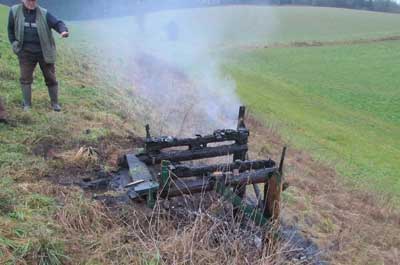
- A hunt­ing seat/tower was destroyed by fire in Het­ten­shausen (Bavaria) on Jan­u­ary 18.

- Accord­ing to news reports, between Jan­u­ary 6–7 a hunt­ing tow­er at the edge of a nature reserve near Salem (Schleswig-Hol­stein) was knocked over. Two oth­er hunt­ing tow­ers in the same area were dam­aged in Novem­ber and Decem­ber. Police blamed “Mil­i­tant hunt­ing oppo­nents.”

- In ear­ly Jan­u­ary, two hunt­ing tow­ers were demol­ished near Hagen (North Rhine-West­phalia). Local police spec­u­lat­ed that ani­mal rights activists were respon­si­ble.

- On Decem­ber 24, a hunt­ing tow­er was set on fire near the city of Hildesheim (Low­er Sax­ony).

- Police are inves­ti­gat­ing an explo­sion that com­plete­ly destroyed a hunt­ing tow­er in Poll­ha­gen (Low­er Sax­ony) in mid-Decem­ber. The exact cause of the blast has not been deter­mined.

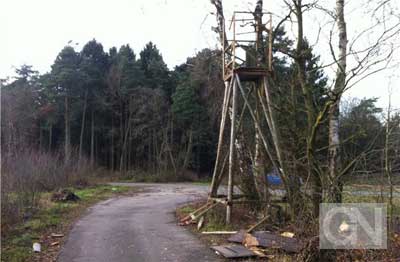
- Late on Decem­ber 14 a hunt­ing tow­er was dam­aged by an explo­sion in Samern (Low­er Sax­ony). pho­to: gn-online.de

- On Novem­ber 14, the inside of a hunt­ing tow­er in Dud­er­stadt (Low­er Sax­ony) was soaked with butyric acid, mak­ing it unus­able.