
From 7am on Thursday (25th) Cuadrilla Resource’s site has been closed by a community blockade. We will be converging again in Balcombe in Sussex for The Great Gas Gala!
The Great Gas Gala!
From 7am on Thursday (25th) Cuadrilla Resource’s site has been closed by a community blockade. We will be converging again in Balcombe in Sussex for The Great Gas Gala! DAY TWO tomorrow (Fri 26th). Come along and shield the Weald at a community-led carnival of anti-fracking revelry!
All are warmly invited to join Balcombe Village in a clear demonstration of front-line protection against those that threaten us and our environment.
You’ll be wanting to pack a party-bag in advance so you’ll be ready when the time comes. Imagine being the only one at the party without a costume. Only joking, you won’t be allowed in if you’re not in fancy dress. No that’s not true either. This is a community-led event and is open to all!
Balcombe is only a 25 minutes train-ride north of Brighton, and 39 minutes south from London. Some but not all trains on the Brighton – London line stop at Balcombe. Trains run every hour from Brighton and London Bridge and it is also possible to catch trains from London Victoria, usually changing at East Croydon. See the map page for directions to the site, which is a 5 minute walk from Balcombe Station.
Free Bus from Brighton to Balcombe – 7am (Fri 26th) Old Steine bus stop (near RBS). Space for 50+
If you’re driving and have space, please contact info@greatgasgala.org.uk to offer a lift!
Things to bring:
Essential – water, food and warm/waterproof clothes, sun protection.
Recommended –
Picnics, cakes, water, tea-making facilities, warm/waterproof clothes, friends, banners, games, music, instruments, Knitting (yellow and black – gasfield free community colours!), blankets, chairs, tables, Gazebos, small tents, plastic cutlery/plates. You get the picture.
Things not to bring:
Alcohol, drugs, anything which could be construed as a weapon, glass etc.
Take Note!:
The Great Gas Gala! will be a clear demonstration of community protection against the threat of harm to our health and environment posed by the fracking industry. The industry is supported by the state and therefore there will almost certainly be a police-presence. Know your rights and don’t be intimidated. The Gala will be an inclusive, friendly space. We won’t be bullied.
See you at the Gala, it’ll be a gas!
Ongoing Blockade Of Fracking Site In Sussex
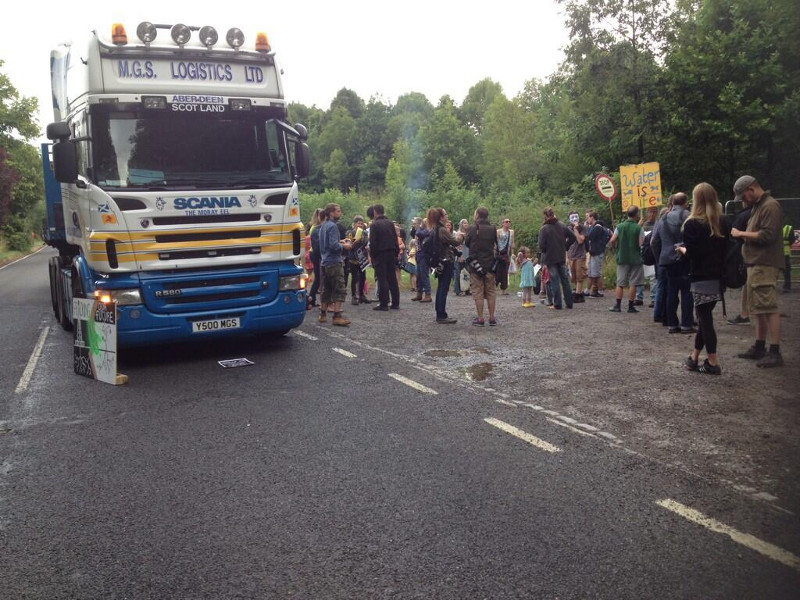
Fracking company Cuadrilla Resources are trying to start drilling in Balcombe, West Sussex and the community is trying to stop them.
Fracking company Cuadrilla Resources are trying to start drilling in Balcombe, West Sussex and the community is trying to stop them.
Update (2:45pm): Beginning to look like Balcombe 1 – Cuadrilla 0. Thoughts are turning to Day 2 of blockade!
Update (12:45pm): Now over 250 people at site. Come down and join the party!
Update (10:45am): Large crowd. Truck isn’t going anywhere. Come on down!
Update (9:45am): Gazebos are up. Gala settling in for long haul. Come on down!
Update (9:00am): Great Gas Gala going strong. Trucks now backed up all through the village.
Update (8:30am): Great Gas Gala is well underway. A truck tring to deliver equipment is being blocked from entering the fracking site. Numbers are growing.
Photos of evolving blockade at Cuadrilla Resources fracking site in Balcombe, Sussex. Around 250 people, truck immobilised outside site, seems to have mysteriously developed fault with brakes. Gazebos up, legal briefing for locals, another truck stopped in village. Another 15 more trucks were due today. Now seems unlikely any will get on. Cuadrilla had wanted to be up and drilling by weekend.

Large Number Of People Blockng Entrance

Atmosphere Relaxed At Present
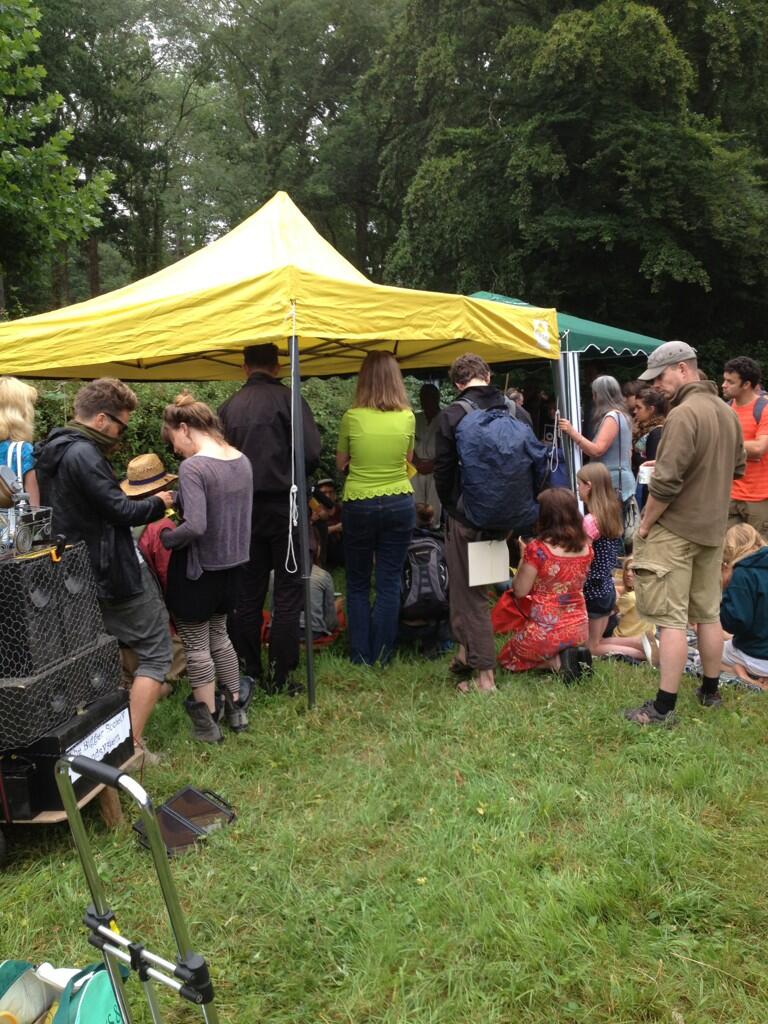
Camp Being Set Up

Faulty Brakes On Truck

Police Hanging Back For Now
Cuadrilla have temporary planning permission to drill at site in Balcombe. Permission expires in September and drilling will take at least 6 weeks so any significant delays could scupper their plans. They are exploring for tight (shale) oil, and the Kimmerage Clay shale layer they are targeting is similar to the Bakken Shale in North Dakota. Full scale production would involve thousands of wells, pipelines and compressor stations coating the Sussex countryside. This is before you get to water contamination, air pollution and accelerating climate change. See  http://frack-off.org.uk/latest-news-from-the-great-gas-gala/ for updates
Fracking In Balcombe: A Community Says No
 Update (24/07/13): Cuadrilla Resources are bringing equipment onto the site at Balcombe now and want to start drilling by the weekend.
 Update (24/07/13): Cuadrilla Resources are bringing equipment onto the site at Balcombe now and want to start drilling by the weekend. The community is mobilisating to stop them tomorrow (Thurs) from 7am and needs help. See http://greatgasgala.org.uk/ for details.
The sleepy village of Balcombe in West Sussex, in the middle of the Weald valley, has until recently not been a place you would associate with industrial development. The surrounding countryside is among the most picturesque you will see out of the train window on the line between London and Brighton. However, in 2008 Cuadrilla Resources acquired a petroleum exploration and development licence (PEDL 244) for an area of Sussex, including Balcombe, and acquired an adjoining licence a few years later, bringing the total area of Sussex countryside they can exploit to over 270 square miles.
Summary
- Fracking threatening Sussex countryside
- Cuadrilla have licences for 270 square miles
- Planning permission to drill in Balcombe
- Targeting layer within Kimmeridge Clay
- Analogous to Bakken Shale in North Dakota
- Would need thousands of wells to extract oil
- Same severe impacts as in US and Australia
- Villagers getting organised to resist invasion
- Cuadrilla is trying to push ahead regardless
- Need permits to start, but could be soon
.
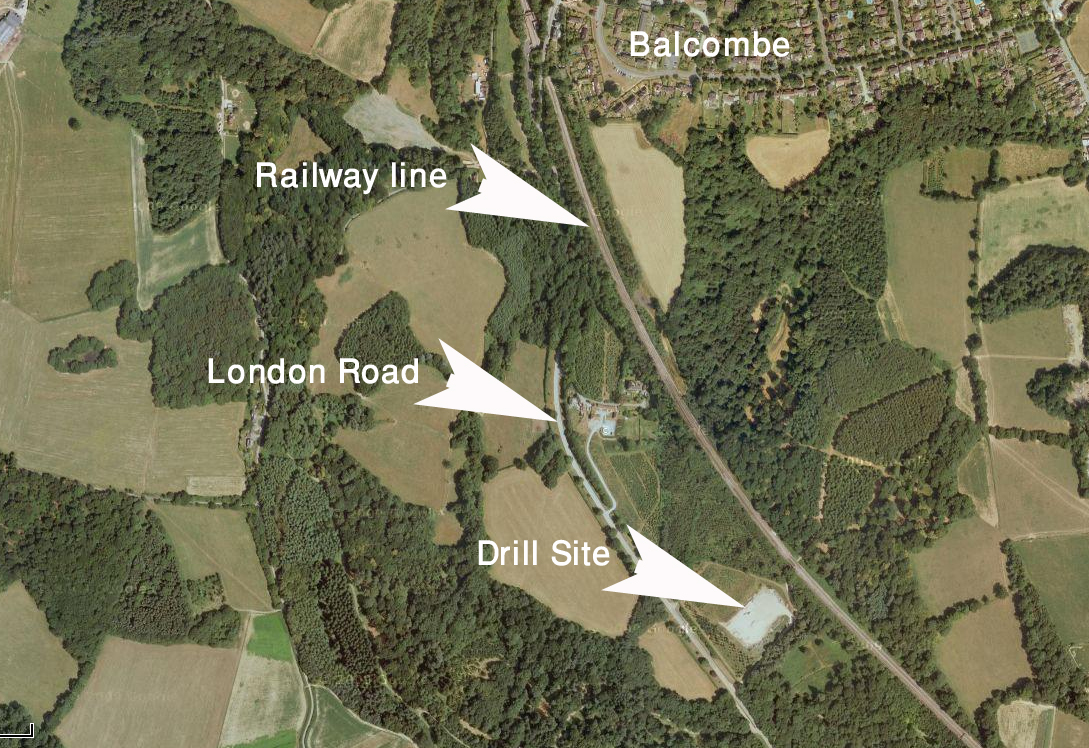
In January 2010 Cuadrilla applied to West Sussex County Council for planning permission to drill a exploration well, on a site where Conoco previously drilled a well in 1986, without success. Very few people were aware of this application and those that were assumed that it would be a similar story to Conoco, decades earlier. No one had heard of Cuadrilla or fracking and a mention of “stimulation” in the planning application did not mean anything to anyone. There were no objections and three months later permission was granted without any fuss.
The world has changed since the mid-1980s though and whereas Conoco were looking for conventional oil, in a reservoir of permeable rock, Cuadrilla – spurred by sky high energy prices – are prepared to go to much greater lengths to get hydrocarbons out of the ground. Unconventional oil and gas targets much less permeable rocks, with densely packed (usually) horizontal wells and various extreme stimulation techniques, such as hydraulic fracturing. While in Lancashire Cuadrilla are focused on getting gas out of the Bowland Shale, in Sussex they are after so called tight (shale) oil, similar to the Bakken Shale in North Dakota.
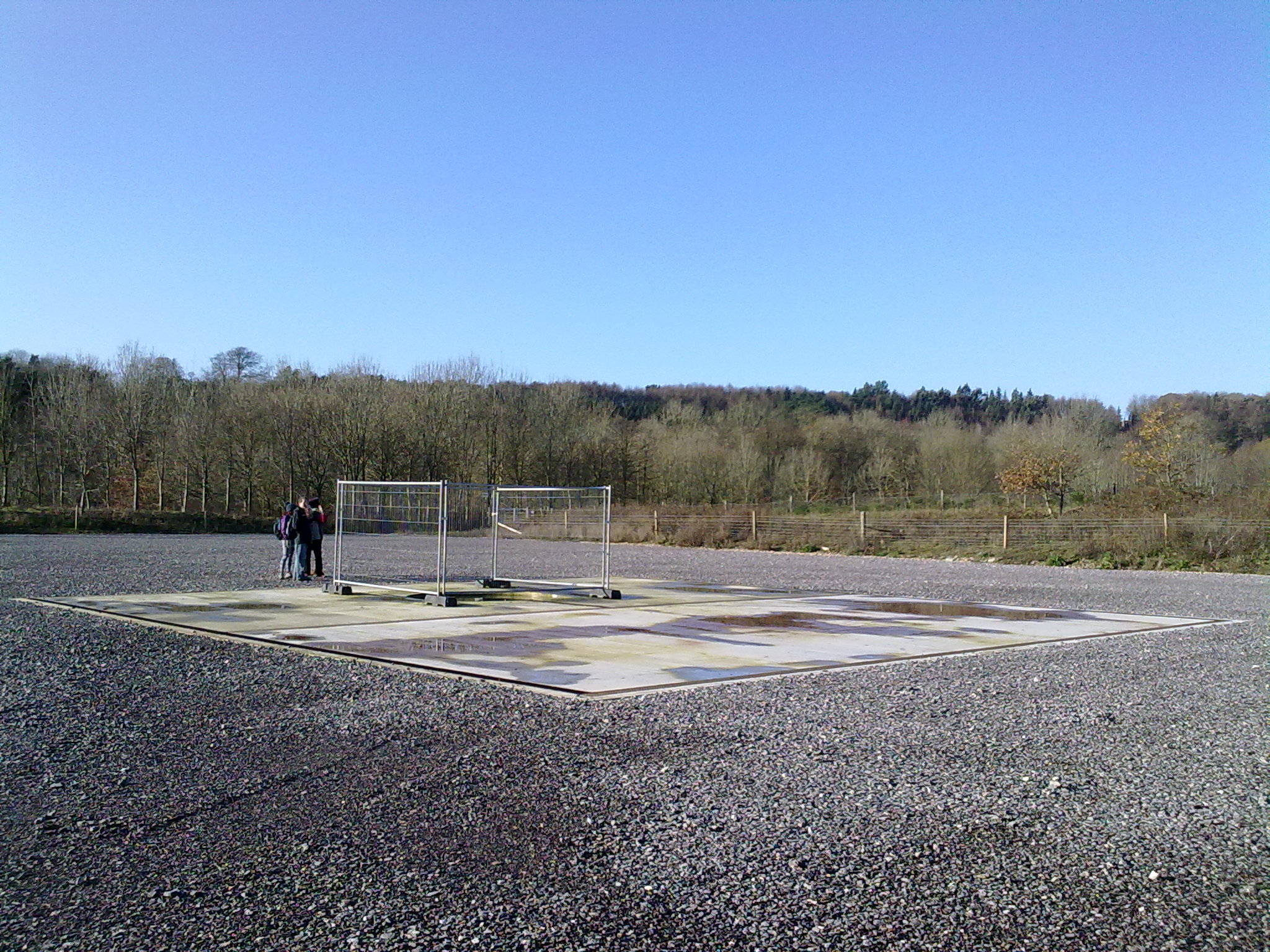
If this exploration leads to full scale development at the well-spacing now common in the Bakken, 4 wells per square mile, it could mean 32 wells within the parish of Balcombe and over 300 within 5 miles of the village. Up to 1,200 wells might be drilled in the the whole of Cuadrilla’s licence area. Further west, in the centre of the Weald valley where the formations are deeper, it is possible that gas rather than oil may predominate. Celtique Energie, who have licences across much of West Sussex, are bragging about quantities of gas that would require thousands of wells to extract.
These developments threaten to industrialise the Sussex countryside with well pads, and associated pipelines, compressor stations and processing plants. One only has to look to the US, Canada or Australia what living in the middle of such an oil/gasfield is like. Over 100,000 unconventional wells have been drilled in the US in the last decade, and thousands in Canada and Australia. In parts of the US, drilling is starting to push into the outskirts of cities, as they run out of countryside to frack. See this article Fracking Sussex: The Threat Of Shale Oil & Gas for more details.


It was only following the publicity around Cuadrilla’s misfortunes in Lancashire (breaking their first test well with an earthquake they caused) that Balcombe residents became aware of what was planned, and a public meeting was called in the village hall in January 2012. Cuadrilla managed to invite themselves to the meeting and came in will their PR team to smooth things over. After they had been grilled for several hours by hundreds of angry locals, they retreated to lick their wounds. However with their temporary planning permission due to expire in September this year, they are now keen to proceed as soon as possible.
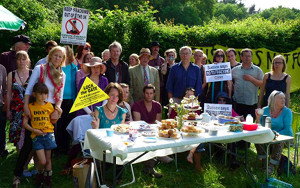
 Recently Cuadrilla returned to Balcombe and held a “consultation”, to explain their plans. Wary of their previously reception they booked a small hall for the afternoon that could only hold a few people at a time, and packed it with executives. The village responded, coating the area in anti-fracking signs, organising a kids anti-fracking picnic and mounting a continuous protest outside the venue. As usual Cuadrilla were less than convincing, with a Cuadrilla executive even caught on tape admitting that everything they said sounded like “utter fucking bullshit”.
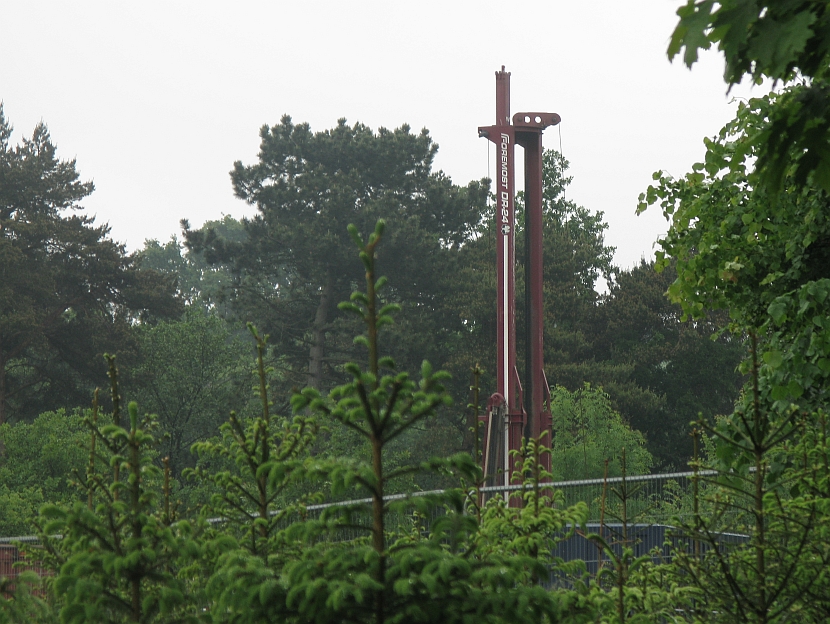
Meanwhile security guards, from the third worst company in the world G4S, have been present at the site 24 hours a day for several weeks. Last week a small drilling rig arrived on site to drill a water monitoring well, in preparation for the main event. In response the locals begain organising a Rigwatch outside the site entrance, to keep track of what Cuadrilla are up to. On Monday a tea party was held outside to site, to protest Cuadrilla’s presence.

Picnic at Lower Stumble. July 2013
Cuadrilla have still not cleared all the hurdles they need to in order to commence drilling, however. They require mining waste and radioactive substances permits in order to dispose of the toxic and radioactive waste the drilling will generate. In Lancashire the Environment Agency waved the requirement for a permit allowing Cuadrilla to dump radioactive sludge from their Preece Hall site into the Manchester Ship Canal, but there is no information about any plans for where this waste would go. The Environment Agency have launched a month long consultation on the permits, potentially delaying drilling into July.
Regardless of these legal issues, Cuadrilla are faced with having to try to push through the drilling despite the near unanimous opposition of the local community. Across Sussex people are equally unkeen on the threatened industrialisation of the county. In Australia, where three gas companies have already been forced out of New South Wales, community opposition has been highly effective. The industry is suggesting blackmailing communities with the threat of withholding public services, or bribing them with cash payments, to acquiesce to the destruction of their environments. They are clearly worried by the mounting opposition.
You can object to Cuadrilla’s “Mining Waste” application here…
You can object to Cuadrilla’s “Radioactive Wastes” application here…
Sabotage of Nuclear Train in France

A fishplate similar to the one reportedly removed by an anti-nuclear group to derail a train earlier in July.
23 July 2013 An unknown anti-nuclear group has taken credit for a July 12 act of sabotage that derailed a train transporting nuclear waste in the French city of Limoges. French police are currently conducting an investigation.
According to the regional newspaper Le Populaire du Centre, they received an email claiming responsibility. The paper also explained that a steel plate, known as a fishplate, was unbolted from the tracks, the track was lifted and the rail crossings were dislodged.
The derailment took place in the morning on a stretch of track used exclusively by nuclear giant Areva to transport nuclear waste.
The Areva train shot off the rails more than 200 ft. Neither of the two rail-workers aboard were injured.
Indian tribe blocks Pan-American Highway to protest land invasion
23 July 2013 Cross posted from Survival
23 July 2013 Cross posted from Survival
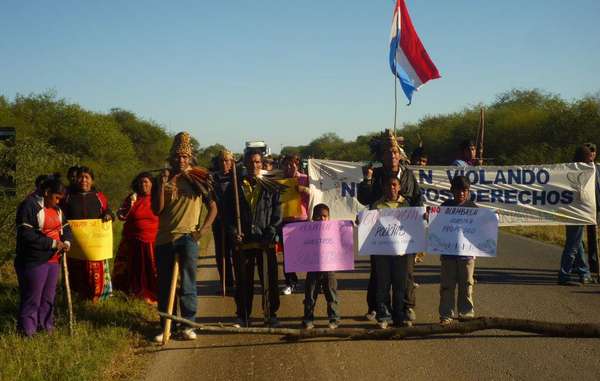
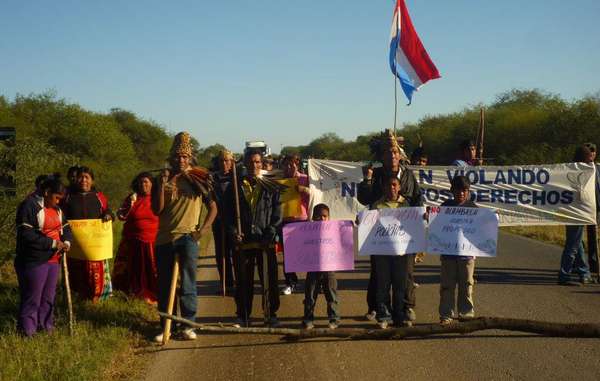
A key South American highway connecting Paraguay and Bolivia is being blocked by an Indian tribe angry at the destruction of their rapidly-shrinking island of forest.
Ayoreo Indians today blocked the Trans-Chaco Highway, which forms part of the Pan-American Highway, and have vowed to maintain their protest until outsiders who have occupied their land are removed.
The Indians are angry about the illegal invasion of their land by two Paraguayan farmers, in an area to which the Ayoreo secured official land title 16 years ago.
The farmers and their workers have erected cattle fences and bulldozed wide tracks, and claim that the land belongs to them. They were guarded by police, to prevent any attempt on the Ayoreos’ part to stop the work.
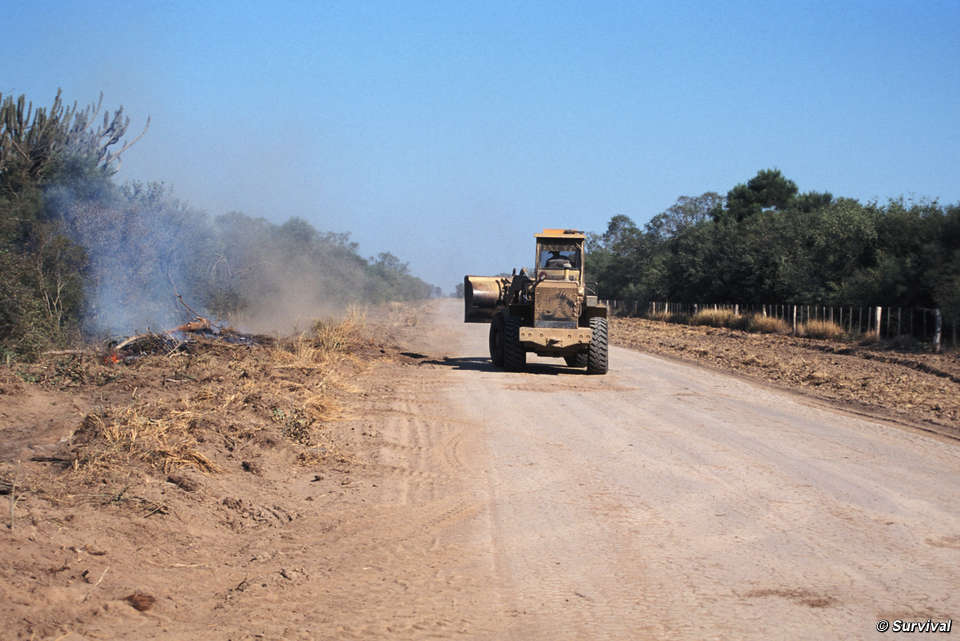
The land is titled to the Ayoreo, but the farmers have erected cattle fences and bulldozed wide tracks.
© Survival
Although most members of the Ayoreo tribe are contacted, some groups are known to remain uncontacted in the forest in the area now under threat.
The Ayoreo have said to Survival International, ‘We don’t want any outsiders in our territory – it’s dangerous for us, and dangerous for our relatives in the forest. We’ll stay here [on the road] until all the outsiders leave our land.’
Survival’s Director Stephen Corry said today, ‘The Ayoreo are extremely angry that one of the few parts of their territory that they had managed to secure is now being invaded by outsiders, with the connivance of the local police. It seems like the authorities in Paraguay favor the rich and powerful over people like the Ayoreo, who simply try to live in peace on their own land.’
ALF Liberates Dolphins
23 July 2013 2 dolphins were set free from Yevpatoria dolphinarium as a result of special operation with diving equipment.
During the night of the full moon on 20/07/2013 we covered 2 km under water and breached security perimeter: we cut the nets and entered dolphin containment pools.
23 July 2013 2 dolphins were set free from Yevpatoria dolphinarium as a result of special operation with diving equipment.
During the night of the full moon on 20/07/2013 we covered 2 km under water and breached security perimeter: we cut the nets and entered dolphin containment pools.
In the next hour we cut large part of perimeter barrier. Dolphins encouraged our efforts with clicks and whistling. Their support filled us with joy and excitement.
This has been an unforgettable meeting and encouraging experience for us. Our job done, we left the area of operation.
By the way, the prison was equipped with night-vision cameras, but their red eyes were turned on the catwalks and audience seats.
Nobody expected our approach from below. As soon as dolphins got wind of freedom and open water, they escaped into the night sea.
– ALF/FAI SEALS on tour
New Wick Drain Protest Delays CalTrans Again, USA
23.7.13
23.7.13
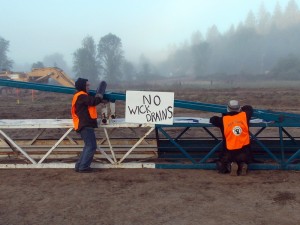
Caltrans’ attempt to drain and fill wetlands was shut down today when two activists locked themselves to both of the giant “stitcher” towers that are punching thousands of wick drains into the water table near this small rural town. The wick drains are being used to compact the soil so that it can no longer hold water, in preparation for building a freeway. The Willits Bypass freeway project entails the biggest loss of wetlands in Northern California in 50 years. Opponents of the project say it is a giant loss for taxpayers as well.
Two protesters were able to slip past CHP guards in the predawn darkness to get to the steel towers, which had been lowered to the ground for the night. The towers are now lowered each evening ever since activist Will Parrish climbed 60 feet into an upright tower, occupying it and shutting down work for eleven days from June 20 to July 1.
Travis Jochimsen and a woman calling herself Blue Heron used welded steel lock boxes to attach themselves to the equipment, placing their arms deep into the metal tubes they had inserted between the tower’s open grid work. “We can’t afford to lose precious water for the sake of an unnecessary freeway, said Jochimsen. “Every day the wick drains aren’t being installed is a victory for farmers, taxpayers and the planet”.
Bypass opponents continue to say the project is unjustified by Caltrans’ own traffic data, pointing to a virtually empty two-lane highway north of town. The empty highway can be seen on Caltrans’ webcam that records traffic every hour. http://www.dot.ca.gov/dist1/d1tmc/1_cam.php?cam=27
Over 70% of traffic is local and would not be served by the bypass. “This project is a bonanza for the contractors and a massive loss for everyone else—especially the taxpayers,” said Willits city councilwoman Madge Strong. The controversial project has a “sticker price” of $210 million, but with interest on the prop 1B bonds and the usual cost overruns, the final cost could be as high as $500 million dollars.
A delegation from Willits, including Strong, met with Caltrans Chief Officer Malcolm Dougherty in Sacramento on July 9 to show how Caltrans employees inflated the traffic figures and other data in order to justify a four lane freeway, ignoring less costly and destructive alternatives. Dougherty dismissed the traffic data as irrelevant, although he could not explain why the taxpayers should finance an I-5 style freeway for a rural area that has been losing population for a decade. Caltrans only has sufficient funding for a two-lane bypass at present, yet it is building a massive four lane footprint. Dougherty expressed confidence that plenty of funding will be available in the future.
Breaking news: Reporter/photographer Steve Eberhart of The Willits News was arrested at 7:35 a.m. this morning on the construction site while waiting for his Caltrans escort to arrive
Michigan Activists Locking Down to Halt Tar Sands Pipeline Construction

From MI-CATS Press Release:
Monday, July 22nd, 2013
From MI-CATS Press Release:
Monday, July 22nd, 2013
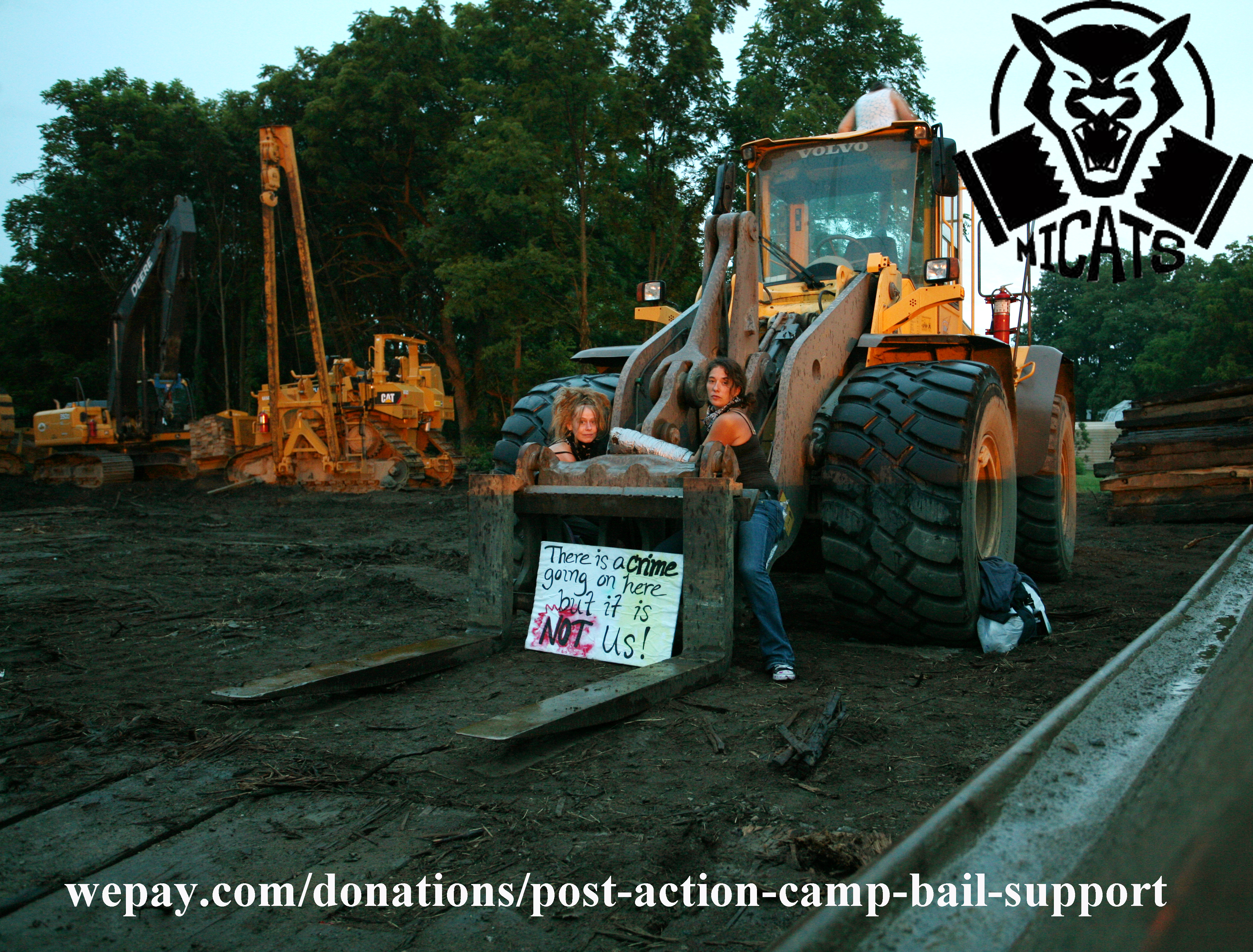
This morning Michigan Coalition Against Tar Sands (MI-CATS) is taking direct action near Stockbridge `to halt construction of the Tar Sands pipeline 6B expansion project of Canadian corporation Enbridge. Over 40 Michiganders have come to oppose the infamous corporation’s flagrant expansion of the very same pipeline that spilled out into the Kalamazoo River only three years ago. Enbridge claims they have restored the river after a spill is no excuse to expand the pipeline, expanding the pipeline increases the risk for everyone.
Residents are currently halting Enbridge’s construction plans by putting their bodies on the line in an act of non violent civil disobedience against Enbridge’s plans. At least 6 people have been arrested so far as police attempt to shut down the protest. 4 people are currently locked down to construction equipment and refusing to move. Police have arrested their medical support team and threaten to arrest anyone who tries to approach them.
These measures come after the exhaustion of every method within the law, as it has has become apparent from our experiences all throughout the state. Our state government is ready to set aside its own laws and legal processes to accommodate this foreign corporation.
Enbridge itself has consistently demonstrated that their sole priority is their own bottom line, not the health and safety of the people of Michigan, our ecosystem, and even their own workers.
Michigan Coalition Against Tar Sands seeks to unite the people of Michigan toward the common goal of stopping all transportation of tar sands oil in the state and advocating against the production and transportation of tar sands everywhere. We work in solidarity with the global movement against harsh fossil fuel extractive practices.
According to one person who is participating in this action “This pipeline is a disaster for Michigan’s water and the global climate. I’m blockading this pipeline to prevent the next spill because I care about Michigan’s air and water. People all over the world are taking action in their own community this Fearless Summer. We need to leave all fossil fuels in the ground.” – William Lawrence of East Lansing
We will not allow Canadian tar sands to pass through our backyards. We will no longer allow the same Canadian corporation responsible for the tar sands which still lie at the bottom of our Kalamazoo River to place all of us at risk. We are taking this action to protect from another spill and to ensure a livable planet for generations to come.
Location of the action is the Enbridge 6B easement off of Grimes west of M-52 near Stockbridge, MI. Look for the orange construction signs and the police presence. #micatsact. Updates on the action will continue, as events unfold.
This is MI-CATS’ second action at the Enbridge 6B pipeline this summer; in the first an activist climbed inside the Enbridge 6B pipe. Follow @MichiganCats and @efjournal on twitter for updates
Flotilla Protests Development in Manatee County
Residents opposed to the proposed Long Bar Pointe development project gathered in boats on Sarasota Bay to protest losing the last piece of undeveloped shoreline in Manatee County.
Residents opposed to the proposed Long Bar Pointe development project gathered in boats on Sarasota Bay to protest losing the last piece of undeveloped shoreline in Manatee County.
Dozens of protestors gathered on a flotilla of boats, kayaks, paddle boards and jet skis in Sarasota Bay Saturday afternoon.
“This is tipping point for Manatee County, we got to make a decision which way we go,” protestor Jaime Canfield said. “Do we want to follow the rest of Florida and develop the coast or do we preserve it.”
Canfield is opposed to an ambitious project that threatens to remove mangroves and sea grass in Sarasota Bay to make way for a marina and five-star resort-style development. The project is proposed for an area that parallels El Conquistador Parkway where 75th Street West intersects with 53rd Avenue West that has long been agricultural.
Currently a project including condos and single family homes with docks is already approved but developers want to expand.
Developers behind the project — Carlos Beruff of Medallion Home and Larry Lieberman from the Barrington Group — however believe the project will be a welcome and much needed addition to Manatee County.
The new plans call for a mixed-use development — single- and multi-family units, hotel, marina, office and commercial space, and a conference center — on the 463.2 acres.
However nearly 295 acres is within the Coastal High Hazard zone, an area prone to flooding during storms. Because the land is vulnerable in a storm, developers must get the county to amend the comprehensive plan to allow for the more intense development.
Terri Wonder, one of the organizers of the protest thinks an amendment to the comprehensive plan is a terrible idea.
“We hope Carlos changes his mind now or before Aug. 6,” Wonder said. “If not, that the Manatee County Commission will not ratify his project.”
Wonder, a Bayshore, resident said she grew up on Siesta Key and saw how development changed the island. She moved to Bayshore Gardens to get back some of what she had lost and because Siesta Key became to pricey.
Many of the protestors including Wonder are concerned about the effects the proposed development will have on the bay, a breeding and feeding ground for dolphins and manatees.
The boaters gathered in a flotilla and shared banners and signs reading “Protect the bay” and “Save our Shore.” They even targeted the project’s financing, which is from Bain Capital.
“We want to preserve what is precious,” Wonder said. “Homeowners want to retire here and their children and grandchildren want to come here.”
Wonder fears that if the project is approved, development will reach a point of no return and that Manatee County will no longer represent the best of Florida.
“Well it’s interesting because last night we held a meeting at the El Conquistador Country Club and we received a tremendously positive reaction from people that would be thrilled that there would be some place to go, eat and enjoy the water,” Lieberman said. “They were thrilled that there would be a revitalization of Manatee County.”
Liberman says one of the project’s environmental experts was at meeting to explain how the project intends to have zero negative impact to the environment.
“I know there are a lot of people that are protesting, but these people have not seen the plan. They have not talked to the expert environmentalist who have guaranteed us that this would have a positive environmental impact on the environment and Sarasota Bay,” Lieberman said. “They are out there protesting and they don’t know the facts and that is dangerous.”
Longtime Bayshore resident Richard Nelson looked to the Sarasota side of the bay Saturday afternoon and then around him, fearful of the changes that could come.
“Look at this, they all want it to look like that,” Nelson said. “That actually looks more like the Bronx.”
Nelson moved to Florida from New York City nearly 23 years ago, and he says he hasn’t regretted it for a day.
“We have to try and preserve everything we got,” Nelson said. “You have to fight for it or else they are just going to try and do whatever they want.”
UK Coal win the battle but not the war… campaigners fight on
Today (Friday 19th July 2013) it has been announced that UK Coal will be allowed to have a re-run of the Inspector’s inquiry into the bitterly disputed application to mine at Bradley, Co. Durham. Last time round the Inspector's Inquiry took three weeks. Local residents still don't know the fate of the valley they love. Campaigners await new inquiry dates.
Today (Friday 19th July 2013) it has been announced that UK Coal will be allowed to have a re-run of the Inspector’s inquiry into the bitterly disputed application to mine at Bradley, Co. Durham. Last time round the Inspector's Inquiry took three weeks. Local residents still don't know the fate of the valley they love. Campaigners await new inquiry dates.
Six years ago the local community began to fight the coal companies plans to extract 556,000 tonnes of coal. Today the Judge is allowing that battle to re-run. For more information about the campaign and the history of the application see here.
Local resident Carol Rocke said “I am dismayed and saddened by the decision, it’s such a waste of public money to re-run the arguments. The interested and active parties in the community are up for the fight, we wont let this valley go.” The Pont Valley Network has gone from strength to strength increasing the amount of activities in the valley, there are now more reasons why this application shouldn't be given the go-ahead.
The Pont Valley Network have been fighting this application for 6 years. Now the whole appeal to the original planning application will have to go back to an Inspector’s inquiry, which will cost the council large amounts in legal bills. This is particularly selfish of UK Coal at a time of council cut backs and the arguments have already been made.
Eleanor Baylis, from The Coal Action Network says, “Today's decision about the Bradley opencast application in Co. Durham is a disappointing one. It means that the community which first won the planning hearing in February 2011 still has no knowledge of whether a place they know and love will be destroyed. Desperate UK Coal clearly have no respect for how this affects local people. However, it does not mean that the area will be mined. It means that there will be another Inspector's inquiry with a different Inspector. The new Inspector will decide for themselves whether the community are correct and that the mine will not overall benefit the area.
UK Coal cannot honour its obligations to it's miners and so the Pension Protection Fund has had to bail it out. Beyond the situation around Daw Mill Colliery, where miners lost 10% of their pensions, nothing seems to have changed. UK Coal are clearly not a company to be trusted to in anyway restore sites, other sites remain barren years after so called restoration. Surely no-one wants to be a neighbour to a company which fails to pay its workers pensions and creditors. Lets hope that the next Inspector agrees with the first, as it is clear to everyone else that UK Coal's plans are bad for the area.”