Earth First! Winter Moot 7–9 March 2014: programme up

A week­end gath­er­ing for peo­ple involved or want to know more about eco­log­i­cal direct action around the UK includ­ing fight­ing open­cast coal, frack­ing, GM, nuclear pow­er, new road build­ing and quar­ries with dis­cus­sions and cam­paign plan­ning — empha­sis on the tac­tics and strate­gies, com­mu­ni­ty sol­i­dar­i­ty and sus­tain­able activism.

A week­end gath­er­ing for peo­ple involved or want to know more about eco­log­i­cal direct action around the UK includ­ing fight­ing open­cast coal, frack­ing, GM, nuclear pow­er, new road build­ing and quar­ries with dis­cus­sions and cam­paign plan­ning — empha­sis on the tac­tics and strate­gies, com­mu­ni­ty sol­i­dar­i­ty and sus­tain­able activism.

Evening Fri­day 7th — after­noon Sun­day 9th March 2014, Not­ting­ham

Cost scale £20 to £30. This includes full veg­an meals and accom­mo­da­tion.

It will be an indoor floor sleep­ing space so bring a warm sleep­ing bag and mat. Train to Not­ting­ham then tram to Bea­cons­field street– walk to the end turn right on to Glad­stone St — 245 Glad­stone St, Not­ting­ham NG7 6HX — www.earthfirst.org.uk

Full map/travel details

For offers of help or ques­tions email themiddle@earthfirst.org.uk


Programme

Friday

16.30–17.30 Secu­ri­ty Work­shop
17.30–18.30 Film

18.30 Din­ner

20.00 Ben­e­fit Gig

Saturday

8.30–9.30 Break­fast
9.30–10.45 Intro go round of cam­paigns

10.45–11.00 Break

11.00–12.00 Future of Earth First Part 1
12.00–13.00 Secu­ri­ty Work­shop

13.00–14.00 Lunch

14.00–14.30 Lush/fundraising work­shop
14.30–18.15 Cam­paign Work­shops (tim­ings to be finalised to include Frack­ing, Nuclear, Roads and Coal)
18.15–18.30 Sum­mer Gath­er­ing han­dover

18.30 Din­ner
20.00 DJ??

Sunday

9.00–10.00 Break­fast fry up
10.00–10.30 Tidy up of venue
10.30–11.30 Feed­back go round
11.30–12.30 Future of Earth First Part 2
12.30–14.00 Sum­mer Gath­er­ing Plan­ning (and time of oth­er work­shops to run in par­al­lel)

14.00–15.00 Lunch
15.00 End

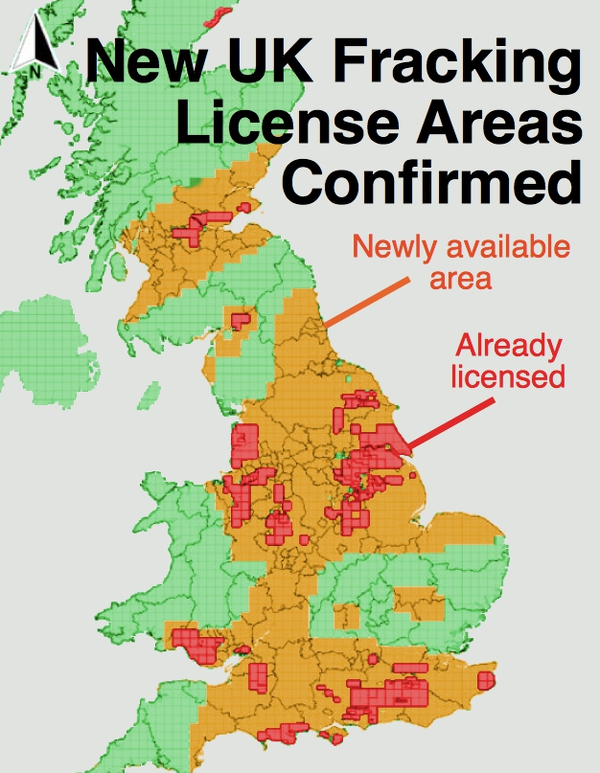
New UK Fracking License Areas Confirmed

Decem­ber 17th The UK gov­ern­ment has announced that rough­ly 60% of the UK is now avail­able to be licensed to frack­ing com­pa­nies.

Decem­ber 17th The UK gov­ern­ment has announced that rough­ly 60% of the UK is now avail­able to be licensed to frack­ing com­pa­nies. After a brief “con­sul­ta­tion” peri­od it is like­ly that the licens­es will be hand­ed out to frak­ing com­pa­nies in the first half of 2014. The licens­es would cov­er the exploita­tion of both shale oil and gas and coal bed methane (CBM).

The area is based on that cov­ered by a new­ly finalised Strate­gic Envi­ron­men­tal Assess­ment (PDF). Despite the name the doc­u­ment does not seem to be par­tic­u­lar­ly focused on the envi­ron­ment and does not address the long term impacts of issu­ing these poten­tial­ly 30 year long licens­es.

To extract the amounts of gas that com­pa­nies are brag­ging are in exist­ing license blocks would require tens of thou­sands of wells. If large addi­tion­al areas are licensed next year, the scale of threat will be much larg­er still. These devel­op­ments would dev­as­tate our remain­ing coun­try­side, indus­tri­al­is­ing huge areas with well pads, pipelines, com­pres­sor sta­tions and pro­cess­ing plants.

The real­i­ty of uncon­ven­tion­al gas is that it is very hard to extract. It is lit­er­al­ly scrap­ping the bot­tom of the fos­sil fuel bar­rel. Dense­ly packed wells must be drilled (up to 8 wells per square mile) over large areas, since each well indi­vid­ual wells does not pro­duce much gas and then only for a short time. Worse, frack­ing is not an iso­lat­ed tech­nol­o­gy but is part of a wider trend towards more extreme forms of ener­gy extrac­tion, which if not resist­ed could see even larg­er threats such as Under­ground Coal Gasi­fi­ca­tion (UCG) become wide­spread.

Right now the com­mu­ni­ty around Bar­ton Moss near Man­ches­ter is fight­ing the threat to their region posed by IGas Energy’s attempts to drill a Shale/CBM explo­ration well there. Across the coun­try com­mu­ni­ties are get­ting organ­ised to resist these threats, with around 70 anti-frack­ing groups already formed in the last two years, and that num­ber grow­ing fast.

Support Spied Upon, a vital expose film telling the story of activists targeted by secret police

Dear Earth First!ers,


Dear Earth First!ers,


Due to its effec­tive use of cre­ative direct action tac­tics in recent decades, Earth First! has con­sis­tent­ly been a tar­get of state repres­sion and exces­sive police tac­tics. Now we are mak­ing a film with oth­er envi­ron­men­tal activists who have been tar­get­ed by under­cov­er police, with the goal of expos­ing these abu­sive repres­sion tac­tics.


“Spied Upon” is an inter­na­tion­al­ly made full-length doc­u­men­tary that uses the out­ing of for­mer UK under­cov­er cop Mark Kennedy as it’s start­ing point. Kennedy had begun his inter­na­tion­al oper­a­tion by tar­get­ing Earth First! in the UK in 2003, and had worked across Europe as well as for the FBI for sev­en-years before being out­ed by his unknow­ing activist girl­friend and her cir­cle of Not­ting­ham friends in 2010. Now this woman and a num­ber of oth­er women are suing police boss­es in the UK for what has been exposed as a reg­u­lar under­cov­er police tac­tic of dup­ing activist women into long-term rela­tion­ships. Spied Upon is work­ing with some of these women to sup­port them and help them have their sto­ry told.


Mark Kennedy turned pri­vate in 2010 and start­ed his own secu­ri­ty firm as well as say­ing that he was work­ing for Glob­al Open, a pri­vate secu­ri­ty firm known to tar­get ani­mal rights activists on behalf of phar­ma­ceu­ti­cal com­pa­ny clients. It appears as though that is exact­ly what Kennedy was doing when he went to Italy to spy on an ani­mal lib­er­a­tion gath­er­ing in the sum­mer of 2010. He even tried to strength­en his cred­i­bil­i­ty by say­ing he was an impor­tant Earth First! activist, see the video clip here we shot with Ital­ian activists who tell about when they were unknow­ing tar­gets of Kennedy: http://www.youtube.com/watch?v=bBx38iZ14nc


State repres­sion has long fea­tured the use of under­cov­er police, but a less­er known use of under­cov­er tac­tics has been those used by pri­vate secu­ri­ty firms on behalf of pri­vate cor­po­ra­tions. These prac­tices con­strue an intense inva­sion of pri­va­cy that is not even allowed for state under­cov­er police, and this scan­dal needs to be exposed! We have also uncov­ered ille­gal col­lu­sion between pri­vate and state secu­ri­ty forces. This col­lu­sion is a key focus of the film Spied Upon, which we are also mak­ing as a tool that activists can use to high­light the cur­rent prob­lems envi­ron­men­tal groups face today.


We plan to release Spied Upon inter­na­tion­al­ly in 2014. How­ev­er, to do this, we need your sup­port to make this film hap­pen. Our film crew comes from grass­roots activism, and we are turn­ing to the grass­roots, mean­ing you, to seek fund­ing. Please take a look at our crowd­fund­ing web-site and teas­er video at Indiegogo, and take action to help us please by mak­ing a dona­tion if you sup­port our work: http://www.indiegogo.com/projects/spied-upon


In sol­i­dar­i­ty,
The crew at Spied Upon


PS. Lots more info at: www.spiedupon.com

28 Days Later: Please spread far and wide

Cuadzilla Balcome Rolling Blockade Red Version

Cuadzilla Balcome Rolling Blockade Red Version

A Rolling Block­ade of the Bal­combe frack­ing site, 1st Sep­tem­ber – 28th Sep­tem­ber

Frack­ing com­pa­ny Cuadrilla’s gov­ern­men­tal licence to drill in Bal­combe ends on Sep­tem­ber 28th. The gov­ern­ment may be allow­ing them to drill but they have no social licence from the peo­ple of Bal­combe to frack their land and threat­en their water sup­ply.  Nei­ther do they have any man­date to begin an entire wave of frack­ing across the coun­try. The vast major­i­ty of peo­ple in the UK want clean­er, green­er ener­gy.
After the upsurge of cli­mate activism at Reclaim the Pow­er in August, let’s make these last 28 days count. Let’s halt their work at Bal­combe, and also send a strong mes­sage to those want­i­ng to frack else­where.

A block­ade has been on-going at the drilling site, but trucks have still been get­ting through. Now it’s time to up the ante.

We invite groups from around the coun­try to come and play a part in a 28 day rolling block­ade.

Think cre­ative­ly and act respon­si­bly. Pick a week­day before Sep­tem­ber 28, gath­er friends and use­ful kit get your­selves to Bal­combe.

Frack­ing is stop­pable, anoth­er world is pos­si­ble.

* Peo­ple are remind­ed that this is a peace­ful block­ade and that the Bal­combe camp is alco­hol-free.

* For fur­ther infor­ma­tion please con­tact 28dayslater.balcombe@gmail.com

* Fol­low us on Twit­ter (@28_dayslater) and like us on Face­book (https://www.facebook.com/28dayslaterrollingblockade)

Militant Mining Resistance

bloqueo2

Min­ing is one of the most vis­cer­al­ly destruc­tive and hor­rif­ic ways in which the dom­i­nant culture—industr

bloqueo2

Min­ing is one of the most vis­cer­al­ly destruc­tive and hor­rif­ic ways in which the dom­i­nant culture—industrial civilization—enacts its vio­lence on the liv­ing world. As entire­ly and unequiv­o­cal­ly destruc­tive as this soci­ety is, few oth­er indus­tri­al activ­i­ties are as hor­rif­i­cal­ly con­fronting as min­ing. Whole land­scapes are cleared of life as communities—most often indige­nous or poor—are forced from their homes. Moun­tains lev­el to piles of bar­ren rub­ble which leach count­less poi­sons, scour­ing life from whole water­sheds. Pits of unimag­in­able size are carved from the bones of the earth, leav­ing moon­scapes in their wake.

Besides the imme­di­ate dam­age to the land at the site of oper­a­tions, the destruc­tion extends through the uses its prod­ucts are put to. In this way, min­ing is cru­cial to the con­tin­ued func­tion of indus­tri­al civ­i­liza­tion, sup­ply­ing many of the raw mate­ri­als that form the mate­r­i­al fab­ric of indus­tri­al soci­ety. Steel, alu­minum, cop­per, coal, tar sands bitu­men, cement; the mate­ri­als extract­ed through min­ing are cen­tral com­po­nents of indus­tri­al civ­i­liza­tion in an imme­di­ate and phys­i­cal way. They are the build­ing blocks of this soci­ety.

For­tu­nate­ly, as is the way of things, where there is atroc­i­ty and bru­tal­iza­tion, there is resis­tance. There has been a lot of mil­i­tant anti-min­ing action hap­pen­ing recent­ly; in the last few months alone there have been sev­er­al inspir­ing inci­dents of peo­ple tak­ing direct mil­i­tant action against min­ing projects and infra­struc­ture.

In Feb­ru­ary, sev­er­al dozen masked mil­i­tants raid­ed the Hel­las gold mine in Halkidi­ki, Greece. They fire­bombed machin­ery, vehi­cles, and offices at the site. The attack fol­lowed sev­er­al years of legal chal­lenges and pub­lic demonstrations—none of which suc­ceed­ed in stop­ping the mine, which will destroy forests, poi­son ground­wa­ter, and release air pol­lu­tants includ­ing lead, mer­cury and arsenic.

When local res­i­dents tried to stop the mine through the courts the gov­ern­ment ruled against them, claim­ing that the mine would cre­ate jobs. As the Deputy Min­is­ter of Ener­gy and Envi­ron­ment Asi­makis Papa­geor­giou said, “We can no longer accept this [area] being left unex­ploit­ed or bare­ly exploit­ed.”

State­ments like these on the part of those in pow­er, while not nec­es­sar­i­ly sur­pris­ing, help to make clear the real­i­ty we face; the dom­i­nant cul­ture requires the rend­ing of the liv­ing world into dead com­modi­ties. It can’t be per­suad­ed to change, no mat­ter how com­pas­sion­ate and com­pelling the appeals we make. It can only be forced to change.

More recent­ly, the Powhar­nal coal mine in Scot­land was attacked at the begin­ning of April. An anony­mous com­mu­nique was released via Indy­media Scot­land:

At some point over the past week­end mul­ti­ple items of plant machin­ery at an exten­sion to the Powhar­nal open cast coal site in East Ayr­shire were put beyond work­ing use. High val­ue tar­gets includ­ing a prime mover and bull­doz­er were also tar­get­ed to cause max­i­mum dis­rup­tion to work­ings at the mine.

This action presents yet anoth­er hope­ful exam­ple of mil­i­tant action tar­get­ing extrac­tive projects. This was not a sym­bol­ic act of prop­er­ty destruc­tion, but rather one aimed at mate­ri­al­ly dis­rupt­ing and stop­ping destruc­tive activ­i­ty. More so, the actionist(s) specif­i­cal­ly tar­get­ed key equip­ment and infra­struc­ture at the site to max­i­mize the impact of their actions, mak­ing good use of effec­tive sys­tems dis­rup­tion.

A third exam­ple comes from Peru, where in mid-April sev­er­al hun­dred pro­tes­tors stormed the Minas Con­ga gold & cop­per mine, occu­py­ing the site for a short while and burn­ing equip­ment. Besides the imme­di­ate dam­age done by the arson, the action forced the oper­at­ing com­pa­ny, Min­era Yana­cocha, to evac­u­ate per­son­nel and equip­ment, fur­ther dis­rupt­ing their oper­a­tions.

This lat­est protest in April is the lat­est in a con­tin­u­ous and diverse tapes­try of resis­tance to the Minas Con­ga mine. Such direct and mil­i­tant protests and actions last year forced Yana­cocha to put most of the min­ing project on hold, and the strong unyield­ing oppo­si­tion has New­mont Min­ing Cor­po­ra­tion (which owns Yana­cocha) con­sid­er­ing pulling out of the project alto­geth­er. This is yet anoth­er exam­ple of how effec­tive mil­i­tant action can be in stop­ping min­ing and oth­er extrac­tive projects.

Of course there are plen­ty of above­ground and non­vi­o­lent efforts being made to oppose min­ing projects hap­pen­ing as well, and this isn’t meant to detract from or dis­miss their efforts. But the dom­i­nant cul­ture needs access to the raw mate­ri­als that feed the glob­al econ­o­my, and in the end it will secure those resources by force, refus­ing to hear “no!”

Again, this isn’t to say that non­vi­o­lent efforts are by any means doomed to fail­ure each and every time we employ them. It is to acknowl­edge that the entire exis­tence and oper­a­tion of indus­tri­al civ­i­liza­tion requires con­tin­ued access to “raw mate­ri­als” (oth­er­wise known as nat­ur­al liv­ing com­mu­ni­ties), and that the courts, reg­u­la­to­ry sys­tems, and laws have all been designed to pre­serve that arrange­ment. We may win occa­sion­al vic­to­ries here and there, but like a casi­no, they—the House, the cap­i­tal­ists, the min­ers, the extrac­tors, etc.— will always come out ahead in the end.

When above­ground & legal efforts to stop min­ing and oth­er extrac­tion projects fail, as they so often and reli­ably do, those deter­mined to pro­tect the lands and com­mu­ni­ties that are their homes turn to oth­er means.  

Attack­ing and destroy­ing the min­ing infra­struc­tures themselves—the phys­i­cal machines that are the imme­di­ate and direct weapons used to tear up biomes—forces a halt to extrac­tion with an unmatched direct­ness and imme­di­a­cy. Beyond min­ing itself, the strate­gic effi­ca­cy of tar­get­ing infrastructure—as the foun­da­tion­al sup­ports of any system—has been proven time and again by mil­i­taries and resis­tance move­ments around the world.

Of course, attacks tar­get­ing mines alone will like­ly nev­er be enough to stop such harm­ful and destruc­tive process­es alto­geth­er. That can only hap­pen by dis­man­tling indus­tri­al civ­i­liza­tion itself. And like anti-min­ing resis­tance, bring­ing down civ­i­liza­tion will require under­ground action— the tar­get­ing of key nodes of crit­i­cal indus­tri­al sys­tems through coor­di­nat­ed sab­o­tage.

As civ­i­liza­tion con­tin­ues its inces­sant death march around the world— tear­ing apart and destroy­ing ever more of the liv­ing world, ever more human and extra-human com­mu­ni­ties— resis­tance against it must of neces­si­ty become more mil­i­tant. With so much at stake, those resisters in Greece, Scot­land, Peru and else­where using mil­i­tant attacks on indus­tri­al infra­struc­ture to defend their lands and com­mu­ni­ties deserve our undy­ing sup­port. Those of us who val­ue life and jus­tice should not con­demn them, but cel­e­brate them— for theirs is pre­cise­ly the type of action that will be required to stop the mur­der of the liv­ing world.


The Fuel Nightmare Continues

It’s as if the uni­verse is try­ing to tell us some­thing, isn’t it?

It’s as if the uni­verse is try­ing to tell us some­thing, isn’t it?

First, a dis­as­trous month that saw at least 15 sep­a­rate oil spills world­wide, near­ly all of them in North Amer­i­ca. That month also saw an oil barge catch fire after a col­li­sion, and the pub­li­ca­tion of a study impli­cat­ing frack­ing as a cause of earth­quakes.

Now at least 600 gal­lons have spilled from an Enbridge oil pump­ing sta­tion near Viking, Minnesota.Two fuel barges car­ry­ing a nat­ur­al gas deriv­a­tive have explod­ed and are still burn­ing on the Alaba­ma Riv­er. And new reports strong­ly sug­gest that tar sands from Exxon’s Pega­sus Pipeline in Mayflower, Arkansas have seeped into Lake Con­way and are head­ing toward the Arkansas Riv­er.

Dis­as­ters like these bring the real costs of fos­sil fuels into sharp focus, because we can imag­ine our­selves affect­ed by them. But the truth is, dis­as­ters like these are part of every­day life for the peo­ple and oth­er beings liv­ing in areas where fos­sil fuels are extracted—or any oth­er indus­tri­al mate­ri­als, from cop­per for solar pan­els to coltan for cell phones.

If you wouldn’t want oil spilling into your back yard, if you wouldn’t want a strip mine rip­ping open a hole behind your house and poi­son­ing your water, then it’s time to admit that the eco­nom­ic sys­tem found­ed on con­sum­ing these mate­ri­als has got to go. We’ll nev­er have jus­tice or sus­tain­abil­i­ty if we base one group’s “high stan­dard of liv­ing” on the dis­lo­ca­tion and destruc­tion of oth­ers.


The Efficiency of Green Energy

cap_1

We ought not at least to delay dis­pers­ing a set of plau­si­ble fal­lac­i­es about the econ­o­my of fuel, and the dis­cov­ery of sub­sti­tutes [for coal], which at present obscure the cri

cap_1

We ought not at least to delay dis­pers­ing a set of plau­si­ble fal­lac­i­es about the econ­o­my of fuel, and the dis­cov­ery of sub­sti­tutes [for coal], which at present obscure the crit­i­cal nature of the ques­tion, and are eager­ly passed about among those who like to believe that we have an indef­i­nite peri­od of pros­per­i­ty before us. –William Stan­ley Jevons, The Coal Ques­tion (1865)

There are, at present, many myths about green ener­gy and its effi­cien­cy to address the demands and needs of our bur­geon­ing indus­tri­al soci­ety, the least of which is that a switch to “renew­able” ener­gy will sig­nif­i­cant­ly reduce our depen­den­cy on, and con­sump­tion of, fos­sil fuels.

The oppo­site is true. If we study the actu­al pro­duc­tive process­es required for cur­rent “renew­able” ener­gies (solar, wind, bio­fu­el, etc.) we see that fos­sil fuels and their infra­struc­ture are not only cru­cial but are also whol­ly fun­da­men­tal to their devel­op­ment. To con­tin­ue to use the words “renew­able” and “clean” to describe such ener­gy process­es does a great dis­ser­vice for gen­er­at­ing the type of informed and ratio­nal deci­sion-mak­ing required at our cur­rent junc­tion.

To take one exam­ple – the pro­duc­tion of tur­bines and the allo­ca­tion of land nec­es­sary for the devel­op­ment, pro­cess­ing, dis­tri­b­u­tion and stor­age of “renew­able” wind ener­gy. From the min­ing of rare met­als, to the pro­duc­tion of the tur­bines, to the trans­porta­tion of var­i­ous parts (weigh­ing thou­sands of tons) to a cen­tral loca­tion, all the way up to the con­tin­ued main­te­nance of the struc­ture after its com­ple­tion – wind ener­gy requires indus­tri­al infra­struc­ture (i.e. fos­sil fuels) in every step of the process.

If the con­cep­tion of wind ener­gy only involves the pris­tine image of wind tur­bines spin­ning, ever so won­der­ful­ly, along a beau­ti­ful coast or grass­land, it’s not too hard to under­stand why so many of us hold green ener­gy so high­ly as an alter­na­tive to fos­sil fuels. Notice­ably absent in this con­cep­tion, though, are the images of every­thing it took to get to that end­point (which aren’t beau­ti­ful images to see at all and is large­ly the rea­son why wind ener­gy isn’t mar­ket­ed that way).

Because of the rapid growth and expan­sion of indus­tri­ali­a­tion in the last two cen­turies, we are long past the days of easy acces­si­ble resources. If you take a look at the type of min­ing oper­a­tions and drilling oper­a­tions cur­rent­ly sus­tain­ing our way of life you will read­i­ly see degra­da­tion and dev­as­ta­tion on uncon­scionable scales. This is our real­i­ty and these process­es will not change no mat­ter what our ends are – these process­es are the degree with which “basic” extrac­tion of all of the fun­da­men­tal met­als, min­er­als, and resources we are famil­iar with cur­rent­ly take place.

In much the same way that the absur­di­ties of tar sands extrac­tion, moun­tain­top removal, and hydraulic frac­tur­ing are plain­ly obvi­ous, so too are the con­tin­ued min­ing oper­a­tions and refin­ing process­es of cop­per, sil­ver, alu­minum, zinc, etc. (all essen­tial to the devel­op­ment of solar pan­els and wind tur­bines).

It is not enough – giv­en our cur­rent sit­u­a­tion and its dire impli­ca­tions – to just look at the pret­ty pic­tures and ignore every­thing else. All this does, as won­der­ful­ly reaf­firm­ing and uplift­ing as it may be, is keep us bound in delu­sions and false hopes. As Jevons affirms, the ques­tions we have before us are of such over­whelm­ing impor­tance that it does no good to con­tin­ue to delay dis­pers­ing plau­si­ble fal­lac­i­es. If we wish to go any­where from here, we absolute­ly need uncom­pro­mis­ing (and often bru­tal) truth.

A com­mon argu­ment among pro­po­nents of sup­posed “green” ener­gy – often preva­lent among those who do under­stand the inher­ent destruc­tive process­es of fuels, min­ing and indus­try – is that by sim­ply putting an end to cap­i­tal­ism and its prof­it motive, we will have the capac­i­ty to plan for the effi­cient and prop­er man­age­ment of remain­ing fos­sil fuels.

How­ev­er, the effi­cient use of a resource does not actu­al­ly result in its decreased con­sump­tion, and we owe evi­dence of that to William Stan­ley Jevons’ work The Coal Ques­tion. Writ­ten in 1865 (dur­ing a time of such great progress that crit­i­cisms were unfath­omable to most), Jevons devot­ed his study to ques­tion­ing Britain’s heavy reliance on coal and how the impli­ca­tion of reach­ing its lim­its could threat­en the empire. Many cov­ered top­ics in this text have influ­enced the way in which many of us today dis­cuss the issues of peak oil and sus­tain­abil­i­ty – he wrote on the lim­its to growth, over­shoot, ener­gy return on ener­gy input, tax­a­tion of resources and resource alter­na­tives.

In the chap­ter, “Of the econ­o­my of fuel,” Jevons address­es the idea of effi­cien­cy direct­ly. Preva­lent at the time was the thought that the fail­ing sup­ply of coal would be met with new modes of using it, there­fore lead­ing to a sta­tion­ary or dimin­ished con­sump­tion. Mak­ing sure to dis­tin­guish between pri­vate con­sump­tion of coal (which account­ed for less than one-third of total coal con­sump­tion) and the econ­o­my of coal in man­u­fac­tures (the remain­ing two-thirds), he explained that we can see how new modes of econ­o­my lead to an increase of con­sump­tion accord­ing to par­al­lel instances. He writes:

The econ­o­my of labor effect­ed by the intro­duc­tion of new machin­ery throws labor­ers out of employ­ment for the moment. But such is the increased demand for the cheap­ened prod­ucts, that even­tu­al­ly the sphere of employ­ment is great­ly widened. Often the very labor­ers whose labor is saved find their more effi­cient labor more demand­ed than before.

The same prin­ci­ple applies to the use of coal (and in our case, the use of fos­sil fuels more gen­er­al­ly) – it is the very econ­o­my of their use that leads to their exten­sive con­sump­tion. This is known as the Jevons Para­dox, and as it can be applied to coal and fos­sil fuels, it so right­ful­ly can be (and should be) applied in our dis­cus­sions of “green” and “renew­able” ener­gies – not­ing again that fos­sil fuels are nev­er com­plete­ly absent in the pro­duc­tive process­es of these ener­gy sources.

We can try to assert, giv­en the gen­er­al care we all wish to take in mov­ing for­ward to avert cat­a­stroph­ic cli­mate change, that much dili­gence will be tak­en for the effi­cient use of remain­ing resources but with­out the direct ques­tion­ing of con­sump­tion our attempts are mean­ing­less. His­tor­i­cal­ly, in many vary­ing indus­tries and cir­cum­stances, effi­cien­cy does not solve the prob­lem of con­sump­tion – it exas­per­ates it. There is no guar­an­tee that “green” ener­gies will keep con­sump­tion lev­els sta­tion­ary let alone result in a reduc­tion of con­sump­tion (an obvi­ous neces­si­ty if we are plan­ning for a sus­tain­able future).

Jevons con­tin­ues, “Sup­pose our progress to be checked with­in half a cen­tu­ry, yet by that time our con­sump­tion will prob­a­bly be three or four times what it now is; there is noth­ing impos­si­ble or improb­a­ble in this; it is a mod­er­ate sup­po­si­tion, con­sid­er­ing that our con­sump­tion has increased eight-fold in the last six­ty years. But how short­ened and dark­ened will the prospects of the coun­try appear, with mines already deep, fuel dear, and yet a high rate of con­sump­tion to keep up if we are not to ret­ro­grade.”

Writ­ing in 1865, Jevons could not have fath­omed the lev­el of growth that we have attained today but that doesn’t mean his ear­ly warn­ings of Britain’s use of coal should be whol­ly dis­card­ed. If any­thing, the con­tin­ued rise and dom­i­nance of indus­tri­al­i­sa­tion over near­ly all of the earth’s land and peo­ple makes his argu­ments ever more per­ti­nent to our present sit­u­a­tion.

Based on cur­rent emis­sions of car­bon alone (not fac­tor­ing in the reach­ing of tip­ping points and var­i­ous feed­back loops) and the best sci­ence read­i­ly avail­able, our time frame for action to avert cat­a­stroph­ic cli­mate change is any­where between 15–28 years. How­ev­er, as has been true with every sci­en­tif­ic esti­mate up to this point, it is impos­si­ble to pre­dict that rate at which these var­i­ous process­es will occur and large­ly our esti­mates fall extreme­ly short. It is quite prob­a­ble that we are like­ly to reach the point of irre­versible run­away warm­ing soon­er rather than lat­er.

Sup­pose our progress and indus­tri­al cap­i­tal­ism could be checked with­in the next ten years, yet by that time our con­sump­tion could dou­ble and the state of the cli­mate could be expo­nen­tial­ly more unfa­vor­able than it is now – what would be the capac­i­ty for which we could mean­ing­ful­ly engage in any amount of indus­tri­al pro­duc­tion? Would it even be in the realm of pos­si­bil­i­ty to imple­ment large-scale over­hauls towards “green” ener­gy? With­out a mean­ing­ful and dras­tic decrease in con­sump­tion habits (remem­ber­ing most of this occurs in indus­try and not per­son­al lifestyles) and a sub­se­quent decrease in depen­den­cy on indus­tri­al infra­struc­ture, the prospects of our future are severe­ly short­ened and dark­ened.


Dodgy deals and corporate collusion: SNP still selling communities out to Scottish Coal

inc002Whilst a lot has hap­pened in the past few days –

inc002Whilst a lot has hap­pened in the past few days – secret meet­ings for MSPs, the liq­ui­da­tion of the UK’s largest open­cast oper­a­tor – a pic­ture of the deal that Fer­gus Ewing and Rus­sel Grig­gs are try­ing to strike to save the open­cast indus­try is increas­ing­ly com­ing to light. Announce­ments of a new trust for restora­tion make clear our sus­pi­cions that there isn’t any­where near enough mon­ey for restora­tion, or even the will to use any of it. Rum­blings from the Scot­tish Gov­ern­ment and min­ing com­pa­nies such as Har­greves indi­cate that poten­tial­ly prof­itable mines will be sold, whilst spent ones lie unre­stored and for­got­ten. The ques­tion is: what deal will be struck that will allow oth­er min­ing com­pa­nies to oper­ate these mines prof­itably? And more impor­tant­ly in the grand scheme of things, what lengths will this SNP gov­ern­ment go to save one of the most despised com­pa­nies in the cen­tral belt?


We don’t need anoth­er trust – restora­tion bonds and more bro­ken promis­es

Some­thing fun­ny has hap­pened since Scot­tish Coal announced they’d gone bel­ly up – a new Trust to restore open­cast sites mate­ri­alised seem­ing­ly out of nowhere. Ewing and Grig­gs must have been think­ing on their feet, because there was no men­tion what­so­ev­er of a new trust at the “pri­vate” brief­ing to MSPs on the future of the coal indus­try last Wednes­day, 17th April. Sure­ly that was the oppor­tune moment to announce the new plans? Obvi­ous­ly, the brief­ing was a cha­rade. But what else were they keep­ing from MSPs and there­fore the rest of us?

Ques­tions need answer­ing about this new trust: Where will the mon­ey come from? Which sites will be restored and when will restora­tion start? Will com­mu­ni­ties have any con­trol over it? But the biggest of all: what about the bonds that were in place for each site? Open­casts gain plan­ning per­mis­sion on the con­di­tion that (and this is bound by a legal agree­ment) sites will be ful­ly restored after­wards. Sure­ly there­fore there’s insur­ance mon­ey wait­ing to be accessed. Bonds can be called in either by the local author­i­ty, or by the devel­op­er in the instance that they go bust. Sure­ly now is exact­ly the time that they should be called in, and if they’re not, then was it all a hoax in the first place?

The announce­ment of a new trust reveals oth­er truths too. The insur­ance com­pa­nies respon­si­ble for the bonds appar­ent­ly con­sid­er them high-risk now that the min­ing com­pa­nies have gone under, and won’t issue any more bonds. There­fore, for min­ing oper­a­tions to resume in the future, a new sys­tem for restora­tion needs to be cre­at­ed. This new trust isn’t some benev­o­lent act to help the envi­ron­ment or give com­mu­ni­ties what they want, it’s about cov­er­ing the backs of the min­ing com­pa­nies in the future, and just anoth­er dirty trick.

Fer­gus Ewing had this to say: “We have been work­ing close­ly with the key stake­hold­ers over the past six months to address the issues fac­ing the coal indus­try in Scot­land and we share the con­cerns raised by local com­mu­ni­ties around the respon­si­ble restora­tion of open cast coal sites.” We’d like to know who these key stake­hold­ers are, and why com­mu­ni­ties liv­ing next to sites and ulti­mate­ly bear­ing all the neg­a­tive impacts of them aren’t con­sid­ered “key stake­hold­ers”.

He also said: “I am, there­fore, pleased to announce that we are set­ting up a new trust to help facil­i­tate the restora­tion of old open cast coal mines across Scot­land.” Yes, but what about the bonds, and the fact that they were a con­di­tion of approval for every sin­gle mine appli­ca­tion?

He then said: “…the restora­tion process itself is expect­ed, over time, to cre­ate hun­dreds of jobs across the coun­try – as well as restor­ing the local envi­ron­ment.” Well we won­der where he got that idea from.

Last minute exten­sions

Scot­tish Coal boss­es were up to their usu­al tricks right up until the last minute. At two sites in par­tic­u­lar, Main­shill in South Lanark­shire and St Nin­ni­ans in Fife, Scot­tish Coal applied for wee exten­sions by extend­ing exca­va­tion areas slight­ly and into bits not men­tioned in orig­i­nal appli­ca­tions. The ton­nage in both cas­es was 70,000. Main­shill was all but exhaust­ed of its reserve, and St Nin­ni­ans was fin­ished apart from the con­sent­ed exten­sion. These tiny exten­sions aren’t worth anoth­er min­ing com­pa­ny buy­ing the site, but are worth at least a year in terms of restora­tion com­mit­ments. With these exten­sions the sites aren’t fin­ished any more, so there’s no require­ment to begin restora­tion until the exten­sions are worked. Smooth. Look­ing at the state that Main­shill and St Nin­ni­ans are cur­rent­ly in one won­ders whether they’ll ever get restored.

Worse still, the local author­i­ties must have known that Scot­tish Coal wouldn’t sur­vive, as they’d sup­pos­ed­ly been involved in the nego­ti­a­tions for months now. What local author­i­ty would accept an appli­ca­tion that they knew would delib­er­ate­ly delay restora­tion oblig­a­tions? Ah wait – local author­i­ties that have been col­lud­ing with Scot­tish Coal since day one would do that.

The future for open­cast sites

And then there’s the real­ly mas­sive holes in the ground, such as at Bro­ken Cross, in South Lanark­shire. Whilst it might be worth­while for anoth­er com­pa­ny to buy the site – there’s at least 2 mil­lion tonnes of coal left and most of the earth mov­ing has been done – there’s no way that the pits at Bro­ken Cross will get filled in with trust mon­ey or bond mon­ey, if it even exists that is. What do we think will hap­pen to Bro­ken Cross? Land­fill site – the tax­es will gen­er­ate income to even­tu­al­ly restore once the hole has been filled in with rub­bish, and South Lanark­shire has a solu­tion to its waste prob­lems. This could very well be the fate of most open­cast sites, and a final injus­tice imposed on near-by com­mu­ni­ties.

Who is this Grig­gs char­ac­ter any­way?

Chair of the “Reg­u­la­to­ry Review Group”, and chair of the new Restora­tion Trust appar­ent­ly. He’s the go-to guy for dereg­u­lat­ing indus­try. He’s also refused to meet with com­mu­ni­ty mem­bers (so much for “rep­re­sent­ing each com­mu­ni­ty”). Grig­gs said: “I am grate­ful for the sup­port and con­struc­tive engage­ment I have had from local coun­cils, landown­ers and the coal oper­a­tors over the last few months in devel­op­ing the new Trust. I look for­ward to work­ing with them to launch the Trust and be ready to help with a fresh approach to restor­ing old mines.” Here he admits that they’ve been cook­ing up these new plans for months, but still not engaged with com­mu­ni­ties, and didn’t think it appro­pri­ate to men­tion this at his brief­ing to MSPs.

The scan­dal here is that a “fresh approach” and “new trust” is need­ed to restore old mines. How long have they known that exist­ing mea­sures wouldn’t be suf­fi­cient? Did they not think it impor­tant to men­tion to com­mu­ni­ties that, “by the way, you know the promis­es of restora­tion? Well, they’re not going to hap­pen”. This means that either the bonds were nev­er real or suf­fi­cient in the first place, or that local author­i­ties have been fail­ing in their oblig­a­tions to mon­i­tor restora­tion progress. More like­ly though, it means both, and that we’ve been duped by the min­ing com­pa­nies, local author­i­ties and gov­ern­ment for some time.

Put your mon­ey where your mouth is: call in the bonds

Maybe this is just flog­ging a dead horse now, but sure­ly, sure­ly some effort should be made to call in these restora­tion bonds. No one has even men­tioned it! There must be at least a few of them that could make some mon­ey avail­able? In the­o­ry there’s mil­lions in them. Sure­ly then, the equi­table thing to do is to keep as many of the open­cast work­ers on as pos­si­ble to see the restora­tion of the sites, or at least as much as the finance will allow. The fact that no moves are being made to see to it that this is what hap­pens just shows that there’s a big­ger and worse announce­ment still to come, about a deal being struck between the Scot­tish Gov­ern­ment, local author­i­ties and whichev­er min­ing com­pa­nies have their eyes on Scotland’s open­cast sites.


For whom the bell tolls: Scottish Coal go into Liquidation

“In light of Scot­tish Coal’s poor trad­ing and finan­cial posi­tion, we have had to cease trad­ing with imme­di­ate effect,”
-Blair Nim­mo, joint pro­vi­sion­al liq­uida­tor and head of restruc­tur­ing at KPMG in Scot­land.

“In light of Scot­tish Coal’s poor trad­ing and finan­cial posi­tion, we have had to cease trad­ing with imme­di­ate effect,”
-Blair Nim­mo, joint pro­vi­sion­al liq­uida­tor and head of restruc­tur­ing at KPMG in Scot­land.

Scot­tish Coal, the UK’s biggest coal pro­duc­er, has announced today that they are enter­ing admin­is­tra­tion. Due to recent “sig­nif­i­cant cash flow pres­sures” they have laid-off 600 work­ers and stopped all pro­duc­tion at their six open cast sites.

New open cast sites are unlike­ly to hap­pen, and this is some­thing to be hap­py about. How­ev­er, 600 peo­ple have lost their jobs, and they won’t be the mon­ey­men at the top, but the work­ers with lit­tle safe­ty net. They have also had their last week of wages stolen, as this won’t be paid. For those liv­ing next to exist­ing or unre­stored sites this means scars on the land­scape that are unlike­ly to be fixed any time soon. It’s time to get angry, and take back the land and wages that Scot­tish Coal boss­es have stolen.

EF! Winter Moot 2013: 22–24th February, near Preston

A week­end get-togeth­er for peo­ple involved in eco­log­i­cal direct action, from fight­ing open­cast coal, frack­ing, GM, nuclear pow­er to road build­ing. There’ll be dis­cus­sions and cam­paign plan­ning – with the empha­sis on the tac­tics and strate­gies we use, com­mu­ni­ty sol­i­dar­i­ty and sus­tain­able activism.

A week­end get-togeth­er for peo­ple involved in eco­log­i­cal direct action, from fight­ing open­cast coal, frack­ing, GM, nuclear pow­er to road build­ing. There’ll be dis­cus­sions and cam­paign plan­ning – with the empha­sis on the tac­tics and strate­gies we use, com­mu­ni­ty sol­i­dar­i­ty and sus­tain­able activism. This year we’ll be in Lan­cashire…


Update: full trans­port details and pro­gramme at link below.

Read more