Tar Sands Protestor Disrupts Transcanada Presentation

Feb­ru­ary 28th, 2013, 1:45pm — a pro­tes­tor with Tar Sands Block­ade this after­noon locked his neck to a pro­jec­tor screen in the mid­dle of a Tran­sCana­da pre­sen­ta­tion at the North Amer­i­can Crude Mar­ket­ing Con­fer­ence in Hous­ton.

Feb­ru­ary 28th, 2013, 1:45pm — a pro­tes­tor with Tar Sands Block­ade this after­noon locked his neck to a pro­jec­tor screen in the mid­dle of a Tran­sCana­da pre­sen­ta­tion at the North Amer­i­can Crude Mar­ket­ing Con­fer­ence in Hous­ton. In tak­ing direct action, Ethan Nuss con­front­ed in-per­son Paul Miller, TransCanada’s Exec­u­tive Vice Pres­i­dent of Oil Pipelines, and a ball­room of tar sands indus­try investors, demand­ing a halt to the tox­ic Key­stone XL tar sands pipeline.

Nuss suc­cess­ful­ly dis­rupt­ed the sec­ond annu­al con­fer­ence host­ed by Platts. Among oth­er things, the gath­er­ing is intend­ed for fos­sil fuel indus­try exec­u­tives and their finan­cial back­ers to col­lab­o­rate on schemes to trans­port dirty and dan­ger­ous tar sands from Cana­da to the Gulf Coast so it can be refined and sold on the inter­na­tion­al mar­ket, there­by expand­ing the indus­try.

“TransCanada’s ‘busi­ness as usu­al’ spells death and destruc­tion for our com­mu­ni­ties,” said Ethan Nuss. “My con­science won’t allow me to watch this multi­na­tion­al cor­po­ra­tion and their prof­i­teers poi­son impact­ed com­mu­ni­ties from here in Houston’s pol­lut­ed East End to indige­nous peo­ple at the point of tar sands extrac­tion in Alber­ta, Cana­da. This must stop.” Ethan fur­ther shares his rea­sons for tak­ing direct action below:

At last year’s mar­ket­ing con­fer­ence, Paul Miller explained the neces­si­ty of the south­ern leg of Key­stone XL through Okla­homa and Texas to the expan­sion of the exploita­tive tar sands indus­try. TransCanada’s own fourth quar­ter report, released last week, revealed that the con­tro­ver­sial pipeline is less than half com­plet­ed, despite the Cana­di­an pipeline corporation’s pre­vi­ous pro­jec­tions for com­ple­tion of the south­ern seg­ment this April.

This rev­e­la­tion high­lights that Tar Sands Blockade’s sus­tained civ­il dis­obe­di­ence cam­paign since last August has been suc­cess­ful in delay­ing Key­stone XL con­struc­tion. Today’s action is part of grow­ing momen­tum for an upcom­ing nation­al week of action called for by Tar Sands Block­ade and allies from March 16–23, with over 60 actions cur­rent­ly report­ed nation­wide.

“This is just a morsel of what Tran­sCana­da and oth­er tar sands prof­i­teers can expect in the com­ing weeks and months,” said Kim Huynh, a spokesper­son with Tar Sands Block­ade. “All over the coun­try, com­mu­ni­ties are gear­ing up to take to the streets, offices, extrac­tion sites and pub­lic events to show that our move­ment won’t relent until we’ve made this invest­ment as tox­ic for Tran­sCana­da and its finan­cial back­ers as the very tar sands being piped through Key­stone XL. Our tar sands-free future begins now.”

Ear­li­er this week, 20,000 gal­lons of crude oil leaked into Otter Creek in Tyler Coun­ty, TX from a pipeline owned by Suno­co Logis­tics. Otter Creek flows into Rus­sell Creek, which feeds the Nech­es Riv­er. The leak did not trig­ger Sunoco’s detec­tion sys­tems but was dis­cov­ered by local res­i­dents report­ing oil in their water.

Update 1:53pm — All press have been kicked out of the con­fer­ence.

Update 2:05pm — More pro­tes­tors are out­side the con­fer­ence lob­by chant­i­ng “All night, all day, Tar Sands Block­ade!”

Update — In sol­i­dar­i­ty with Ethan and oth­er oil con­fer­ence dis­rup­tors, Tar Sands Block­aders dropped ban­ners in sight of two major Hous­ton high­ways.

Update 2:15pm — Pro­tes­tors con­tin­ue to yell and chant out­side of the hotel where the con­fer­ence is being dis­rupt­ed.

Update 2:30pm — All pro­tes­tors are out­side of the hotel now except for Ethan, who is still locked to the pro­jec­tion screen in the con­fer­ence room.

Update 3pm — Ethan has just been extract­ed, tak­en into police cus­tody, and removed from the build­ing.

Believe it or not, today is actu­al­ly Ethan’s 29th birth­day! Show your

Update 5:15pm — We’ve just heard from Ethan that he’s been charged with crim­i­nal tres­pass.

Update 8pm — Ethan still hasn’t been offi­cial­ly charged yet.

He’s in high spir­its and sends along his deep­est grat­i­tude for all the love and birth­day well-wish­es:

“I turned 29 today, and there is nowhere that I’d rather spend my birth­day than locked to that pro­jec­tor screen, speak­ing truth to pow­er.”

Update Fri­day, March 1st, 1:15am — Ethan is expect­ed to be in jail through the night.

Update 8:30am — Ethan’s just been bailed out!


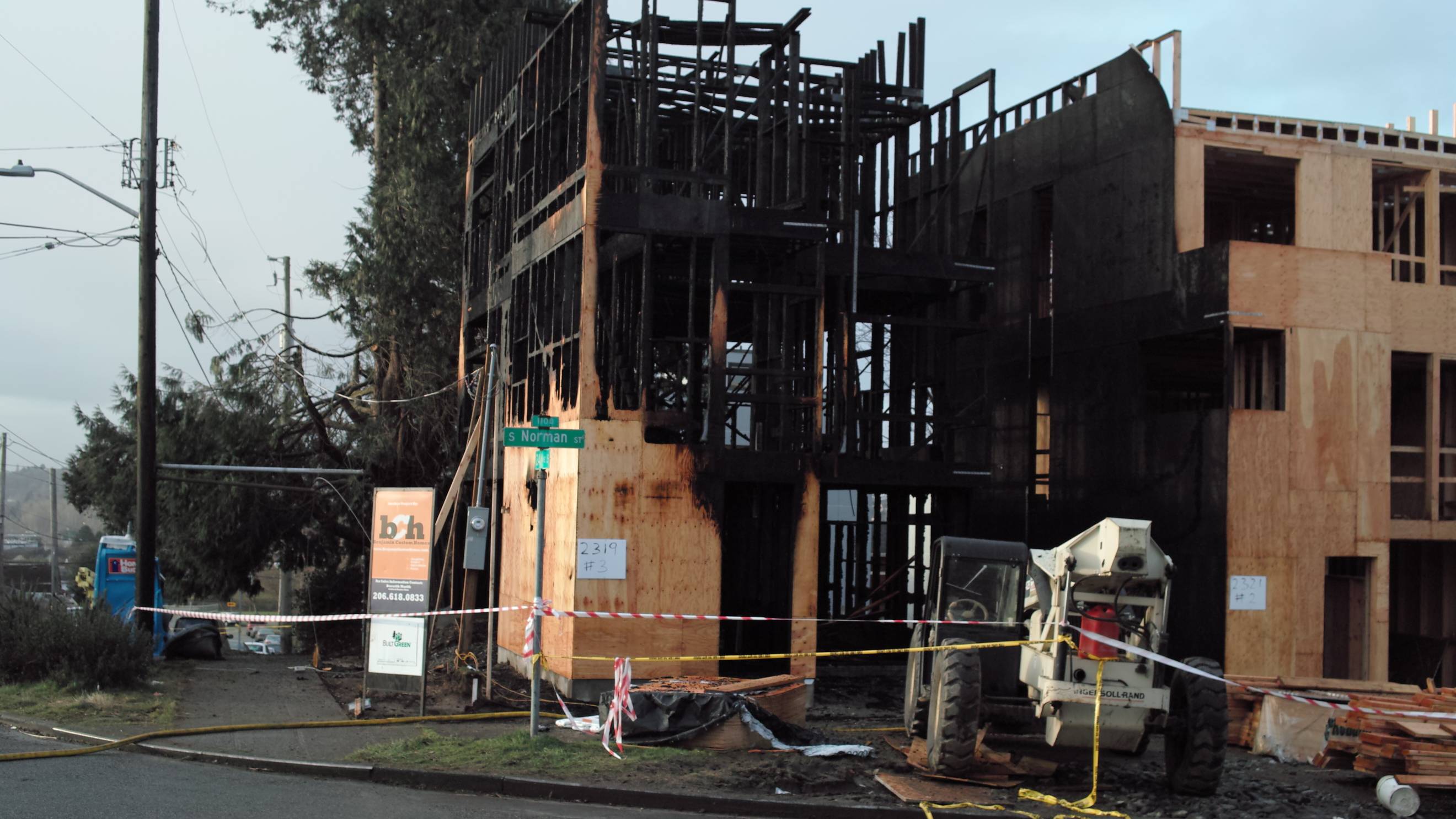
Arson Attack on Seattle “Green” Development

5 March 2013

5 March 2013

The arson of some town­hous­es under con­struc­tion was recent­ly claimed by anony­mous Seat­tle Anar­chists.  This is the com­mu­nique they left, cit­ing their rea­sons and express­ing their joy:

“Just before mid­night, Mon­day Feb 25, we strolled over to the town­hous­es under con­struc­tion on 24th and Nor­man in the Cen­tral Dis­trict. After slip­ping inside, we set one ablaze. Oh what ease! Oh what fun!

Sus­tain­able devel­op­ment is a myth that makes us sick. By fur­ther­ing gen­tri­fi­ca­tion and eco­log­i­cal destruc­tion, these build­ings dress dis­as­ter up as progress, promis­ing a “green” future that will nev­er be.

Our attack was just one more oppor­tu­ni­ty to joy­ous­ly reject the sta­tus quo. It was anoth­er attempt to shed the sub­ju­gat­ed sub­jec­tiv­i­ty forced upon us by Cap­i­tal and the State. We act against civ­il soci­ety and its attempts at domes­ti­ca­tion. Fuck that shit.

Sol­i­dar­i­ty with Mad­dy, Ker­ry, and all the silent ones still fac­ing repres­sion by the Fed­er­al Grand Jury. We will not cow­er in fear. We will not remain docile in the face of State ter­ror.

Now is the time to attack! Ene­mies abound. Weapons are every­where.

Join us?

Some Anar­chists.”

Cor­po­rate news cov­er­age reports:
The fire that caused exten­sive dam­age to an under-con­struc­tion town­house project at 24th and Nor­man last week was inten­tion­al­ly set, fire depart­ment inves­ti­ga­tors say.

Now a post signed only by “Some Anar­chists” on the Puget Sound Anar­chists web­site claims respon­si­bil­i­ty for the arson.

The town­house project devel­op­er Ben­jamin Cus­tom Homes describes the homes as “effi­cient green homes with approx­i­mate­ly 2500sf of mod­ern liv­ing, attached park­ing and pri­vate roof-top deck with views of the Seat­tle sky­line.”

The case is under inves­ti­ga­tion by SPD’s arson team. We have attempt­ed to con­tact SPD to ask them about the PSA post and will update when we hear back. (UPDATE: Seat­tle Police said inves­ti­ga­tors are aware of the post, but have no addi­tion­al infor­ma­tion on the inves­ti­ga­tion at this time.)

Details from SFD:

Seat­tle Fire Inves­ti­ga­tors deter­mined a fire at an under con­struc­tion house in Jud­kins Park was inten­tion­al­ly set.

The ini­tial 911 call came in at 12:28 a.m. report­ing flames com­ing from a sin­gle fam­i­ly home locat­ed at the cor­ner of South Nor­man Street and 24th Avenue South. While respond­ing to the scene, fire offi­cers could see the flames shoot­ing into the night sky from sev­er­al blocks away.

Engine 6 arrived first to find a full involved 3‑story home that was under con­struc­tion. Flames from the home were expos­ing to a sec­ond under con­struc­tion house. Using mul­ti­ple hose lines, fire­fight­ers were able to con­trol the flames in 7 min­utes. Embers from the fire land­ed on a near­by hous­es roof caus­ing a tem­po­rary evac­u­a­tion of the res­i­dents. The res­i­dents were even­tu­al­ly allowed back in.

The fire also dam­aged a piece of con­struc­tion equip­ment, a port-a-pot­ty and burned through a pow­er line to a home. There were no report­ed injuries.

Fire­fight­ers con­duct­ed an overnight fire watch to make sure the embers don’t reignite in the home.
Fire inves­ti­ga­tors esti­mate the dam­age at $30,000 to the struc­ture and con­tents. The case has been turned over to the Seat­tle Police Department’s Arson Bomb Squad who will be inves­ti­gat­ing.

The Bolt Weevils and the Simplicity of Sabotage

Resis­tance against exploita­tion is noth­ing new. His­to­ry is full of exam­ples of people—perfectly ordi­nary people—fighting back against injus­tice, exploita­tion, and the destruc­tion of their lands and com­mu­ni­ties.

Resis­tance against exploita­tion is noth­ing new. His­to­ry is full of exam­ples of people—perfectly ordi­nary people—fighting back against injus­tice, exploita­tion, and the destruc­tion of their lands and com­mu­ni­ties. They move through what­ev­er chan­nels for action are open to them, but often, left with no legal or polit­i­cal pow­er, they turn to mil­i­tant means to defend them­selves.

It is hard­ly a sim­ple deci­sion, and rarely the first or pre­ferred option, but when all oth­er paths have been explored and found to lead nowhere, mil­i­tant action becomes the only real­is­tic route left. Move­ments and com­mu­ni­ties come to that truth in many dif­fer­ent ways, but almost with­out fail, they come to it borne by a col­lec­tive cul­ture of resis­tance. One inspir­ing exam­ple is the Bolt Wee­vils.

The Bolt Wee­vils were a group of farm­ers in Min­neso­ta who spent sev­er­al years in the late 1970s per­fect­ing the fine art of sab­o­tag­ing inter­state elec­tri­cal trans­mis­sion lines. Their efforts have been memo­ri­al­ized in numer­ous books and songs, and their sto­ry is a hope­ful one we would do well to remem­ber and re-tell.

The sto­ry of the Bolt Wee­vils begins in the mid-1970s, when the Coop­er­a­tive Pow­er Asso­ci­a­tion (CPA) and Unit­ed Pow­er Asso­ci­a­tion (UPA) pro­posed con­struc­tion of a new inter­state high-volt­age trans­mis­sion line. Tak­ing its name from the two coop­er­a­tives, the CU Pow­er­line would car­ry cur­rent from a gen­er­at­ing sta­tion in North Dako­ta across west-cen­tral Min­neso­ta to feed the urban cen­ters of the Twin Cities.
In deter­min­ing a route for the pow­er­line, small farm­ers land was rat­ed less impor­tant than large indus­tri­al farms, and as a result, the pro­posed route crossed the prop­er­ty of near­ly 500 landown­ers. Out­raged at being trod­den over to for the ben­e­fit of indus­try and urban­ism, resis­tance against the project began imme­di­ate­ly in earnest.

Once res­i­dents found out about the project, they refused to sign land ease­ments. Local towns passed res­o­lu­tions oppos­ing the project and reject con­struc­tion per­mits. The pow­er­line went to review before the State’s Envi­ron­men­tal Qual­i­ty Coun­cil, which went ahead and grant­ed the nec­es­sary per­mits in the face of over­whelm­ing pub­lic oppo­si­tion.

When sur­vey­ors showed up out of the blue in one farmer’s fields, he smashed their equip­ment with his trac­tor and rammed their vehi­cle. The action of that one farmer helped cat­alyze pop­u­lar sen­ti­ments into action. Farm­ers began using CB radios to noti­fy one anoth­er about sur­vey­ing activ­i­ties, and would turn out in groups to stop the work. As resis­tance began to build, local radio sta­tions would broad­cast times and loca­tions of pro­tes­tor gath­er­ings. Farm­ers and oth­ers who opposed the project began meet­ing every morn­ing in the Lowry town hall, host­ing oth­ers who’d come from neigh­bor­ing coun­ties, to make plans for each day.

As sur­vey­ing and con­struc­tion con­tin­ued, the locals esca­lat­ed their efforts. They would erect signs in their fields to block the sight­lines of the sur­vey­ors, and stand next to sur­vey crews run­ning their chain­saws to dis­rupt their work. Sur­vey stakes dis­ap­peared overnight. Farm­ers used their trucks to make road­blocks and their trac­tors to pile boul­ders in the con­struc­tion sites. One group even gained per­mis­sion from the coun­ty to improve a rur­al road—they dug a ditch across it to stop all traf­fic.

They filed more law­suits, and the issue was even­tu­al­ly tak­en up by the Min­neso­ta Supreme Court, which in the spir­it of every­thing it rep­re­sents, decid­ed against the farm­ers and in favor of the pow­er­line. Many of the cit­i­zens oppos­ing the pipeline had earnest­ly believed in insti­tu­tions like the Supreme Court and the struc­tures of pow­er. After their bat­tles through the courts, many of them were dis­il­lu­sioned and had been rad­i­cal­ized.

Law enforce­ment began escort­ing con­struc­tion and sur­vey work­ers, and the sit­u­a­tion came to a head on Jan­u­ary 4th 1978, when 100 farm­ers chased pow­er­line crews from three dif­fer­ent sites, fought with police, and even tore down part of a tow­er. The next week, the Min­neso­ta Gov­er­nor ordered the largest mobi­liza­tion of the State Troop­ers in Minnesota’s his­to­ry, with 200 Troopers—fully half of the force—descended on the rur­al area to ensure con­struc­tion con­tin­ued.

Protests con­tin­ued and grew, as the issue began to draw nation­al and inter­na­tion­al media atten­tion; hun­dreds turned out for ral­lies at sur­vey sites, and some schools even let out so stu­dents and teach­ers could attend. In St. Paul, thou­sands of farm­ers ral­lied and demon­strat­ed, and in March of 1978 more than 8,000 peo­ple marched almost ten miles through freez­ing tem­per­a­tures from Lowry to Glen­wood to protest the CU pow­er­line.

It was in the heat of August that the ket­tle boiled over. Bolts on one of the trans­mis­sion tow­ers were loos­ened, and soon after­wards, it fell over, as the Bolt Wee­vils entered the scene. Then three more fell over. Guard poles and bolts were cut and loos­ened, insu­la­tors were shot out. Over the next few years, 14 tow­ers were felled and near­ly 10,000 insu­la­tors were shot out. Soon, heli­copters patrolled the pow­er­line, and it was made a fed­er­al offense to take down inter­state trans­mis­sion lines.

There were numer­ous arrests, some 120 in all, but only two indi­vid­u­als were ever con­vict­ed on felony charges, and even then they were only sen­tenced to com­mu­ni­ty ser­vice. Oppo­si­tion to the pow­er­line was so com­mon that in some instances, wit­ness­es refused to tes­ti­fy against farm­ers.

In the End, unfor­tu­nate­ly, the pow­er­line was built and went into oper­a­tion, despite the protests and the dis­rup­tions by the Bolt Wee­vils. While they were unsuc­cess­ful in ulti­mate­ly stop­ping the project, there’s much from their efforts that we can learn and apply to our work today against exploita­tion and civ­i­liza­tion.

As in most social strug­gles that turn to prop­er­ty destruc­tion and mil­i­tan­cy, that wasn’t the first choice of tac­tics for those on the ground. They fought for years through accept­ed legal and polit­i­cal avenues, turn­ing to mate­r­i­al attacks after all oth­er cours­es of action had proven inef­fec­tive. But more than that, the pop­u­lar agi­ta­tion and orga­niz­ing in the years lead­ing up to the emer­gence of the Bolt Wee­vils didn’t mere­ly pre­cede mil­i­tant direct action: it laid the ground­work for it.

The work of the local farmers—their protests, demon­stra­tions, civ­il dis­obe­di­ence, and com­mu­ni­ty organizing—paved the way (for­give the phrase) and set the con­di­tions for the sab­o­tage that would lat­er occur. By mobi­liz­ing res­i­dents and com­mu­ni­ty mem­bers against the project, build­ing social net­works, and agi­tat­ing and rais­ing oppo­si­tion against CU pow­er­line, a col­lec­tive cul­ture of resis­tance was cre­at­ed, plant­i­ng and water­ing the seeds from which the Bolt Wee­vils were born.

With civ­i­liza­tion churn­ing onwards towards biot­ic col­lapse and under­ground resis­tance the only real hope left, car­ing for those seeds is our pri­ma­ry duty today. The sto­ry of the Bolt Weevils—like count­less oth­er sto­ries of resistance—shows that mil­i­tant resis­tance emerges from strong and sup­port­ive cul­tures of resis­tance. The time to start build­ing such a cul­ture was yes­ter­day. For those of us who choose to orga­nize and work in an above­ground and legal way, build­ing such a cul­ture that embraces and cel­e­brates sab­o­tage and the use of any means nec­es­sary to stop the omni­cide of indus­tri­al­ism is our fore­most task.

The sto­ry of the Bolt Wee­vils isn’t empow­er­ing and inspir­ing because they “fought off the bad guys and won.” They didn’t win. The pow­er lines were built, forced down their throats in the face of their resis­tance. No, their sto­ry is inspir­ing because it so clear­ly and unde­ni­ably demon­strates how sim­ply fea­si­ble sab­o­tage and mate­r­i­al attacks tru­ly are. Often, we talk about mil­i­tant resis­tance and direct action as mys­te­ri­ous and abstract things, things that wouldn’t ever hap­pen in our lives or com­mu­ni­ties, things that no one as ordi­nary as any of us would ever do.

Whether we roman­ti­cize under­ground action or are intim­i­dat­ed by it, we gen­er­al­ly talk about it as though it is some­thing out of a movie or a nov­el. The truth is that such actions are sim­ply tactics—just like peti­tion-dri­ves or street marches—that can be used to dis­man­tle sys­tems of pow­er. The Bolt Weevils—a group of farm­ers with hunt­ing rifles and hacksaws*—serve as a stark reminder that one doesn’t require mil­i­tary train­ing and high-tech gad­gets to act in direct and mate­r­i­al ways against the infra­struc­ture of destruc­tion. We’re all capa­ble of fight­ing back, and while sab­o­tage against indus­tri­al infra­struc­ture can be daunt­ing for many valid rea­sons, tech­ni­cal­i­ty isn’t one of them.

We may have to fail work­ing through oth­er chan­nels (as if we haven’t already) before col­lec­tive­ly turn­ing to sab­o­tage and attacks on indus­tri­al infra­struc­ture as a strat­e­gy, and we will cer­tain­ly need to build a sup­port­ive and strong cul­ture of resis­tance. But if we’re seri­ous about stop­ping the destruc­tion and exploita­tion of civ­i­liza­tion, we will be left with no oth­er choice.

*This is spec­u­la­tive. I don’t actu­al­ly know how they shot out insu­la­tors or cut through guard poles, although there are plen­ty of accounts of hunt­ing rifles and hack­saws being used in this fash­ion, and it’s from those sto­ries that I haz­ard this guess.

Huila Community of Colombia Continues to Defend the Earth from Mega-Development. 28th Feb

The New Year in Huila start­ed as 2012 fin­ished, with the Nation­al Author­i­ty of Envi­ron­men­tal Licens­es’ (ANLA) refusal  to hold the ener­gy com­pa­ny Enel-Ende­sa-Emge­sa account­able for fail­ing to com­ply with the envi­ron­men­tal license for the Quim­bo Hydro­elec­tric Project.

The New Year in Huila start­ed as 2012 fin­ished, with the Nation­al Author­i­ty of Envi­ron­men­tal Licens­es’ (ANLA) refusal  to hold the ener­gy com­pa­ny Enel-Ende­sa-Emge­sa account­able for fail­ing to com­ply with the envi­ron­men­tal license for the Quim­bo Hydro­elec­tric Project.

The Comptroller’s Office has con­tin­u­al­ly stud­ied the infor­ma­tion put forth by Asso­ci­a­tion of Affect­ed Peo­ples of the Quim­bo Hydro­elec­tric Project (Aso­quim­bo), and has backed the local com­mu­ni­ties’ demands that the envi­ron­men­tal license be respect­ed in regards to reset­tle­ment, com­pen­sa­tions and envi­ron­men­tal mit­i­ga­tion.  Mean­while in Huila, local media have false­ly report­ed that noth­ing is wrong in the region and have irre­spon­si­bly reduced their report­ing to noth­ing more than pub­lic rela­tions on behalf of the company’s image.

Nonethe­less, through­out Huila, the resis­tance has not only man­i­fest­ed from the com­mu­ni­ties affect­ed by the Quim­bo Dam, but also from the com­mu­ni­ties in Gigante and Garzón affect­ed by petro­le­um com­pa­ny Emer­ald Ener­gy, as well as com­mu­ni­ties in south­ern and cen­tral Huila resist­ing the Mas­ter Advan­tage Plan of the Mag­dale­na Riv­er which would hand over the country´s largest and most impor­tant riv­er in con­ces­sion to the state-owned com­pa­ny HydroChi­na. In addi­tion to the inva­sion of extrac­tive indus­tries to Huila, the regions large amount of cof­fee grow­ers have been impact­ed by the falling price in cof­fee which has pro­gres­sive­ly got­ten worse since the sign­ing of the US free trade agree­ment. As a result, Huila and all of Colombia’s cof­fee grow­ers have also start­ed pres­sur­ing the Colom­bian State that has result­ed injuries in recent days as cof­fee grow­ers have had clash­es with the riot police (ESMAD).

In the cof­fee lands, fruit orchards, and veg­etable fields main­tained by the campesinos around the Miraflo­res Peak, mem­bers of the Inter-sec­toral Asso­ci­a­tion Garzón & Gigante (ASIEG), con­tin­ue to fight to have the envi­ron­men­tal license that would per­mit Emer­ald Ener­gy, a sub­sidiary of the Chi­nese chem­i­cal com­pa­ny, Sinochem to drill for oil in the Paramo of Miraflo­res ecosys­tem. Cur­rent­ly AISEG along with the Region­al Autonomous Cor­po­ra­tion of the Upper Mag­dale­na (CAM) along with CORPOAMAZONIA from the Depart­ment of Caque­ta, are push­ing the Office of Nation­al Nat­ur­al Parks to declare the 122,000 HA of the Paramo de Miraflo­res Peak a Nation­al Nat­ur­al park to help cre­ate a stronger legal mech­a­nisms for pro­tect­ing this area and effec­tive­ly exclud­ing it from any form of oil extrac­tion.

The Mag­dale­na Riv­er, born in south Huila, flows north some 1,528 kilo­me­ters to its delta in the Caribbean Sea. Its drainage basin is near­ly a quar­ter of the country´s nation­al ter­ri­to­ry and two-thirds of the near­ly 46 mil­lion Colom­bians live in this region which pro­duces about 86% of the country´s GDP.  This year, the Mag­dale­na Riv­er will be hand­ed over in con­ces­sion to the com­pa­ny HydroChi­na whose plans for the riv­er are to turn a liv­ing ecosys­tem that sup­ports human and non­hu­man com­mu­ni­ties into the country´s most impor­tant trans­porta­tion cor­ri­dor for cheap goods.

The plan will include dredg­ing the riv­er from Hon­da, Toli­ma all the way to its delta to allow large barges to enter that far up-riv­er from the caribbean delta with­in Colom­bia. Hon­da will be con­nect­ed via high-speed rail­ways to the Pacif­ic-coast port city of Bue­naven­tu­ra as a con­nec­tion between east­ern and west­ern mar­kets.  For the upper area of the Mag­dale­na Riv­er Val­ley the con­ces­sion involves a total of 11 medi­um to large hydro­elec­tric dams to gen­er­ate elec­tric­i­ty for use else­where. Com­mu­ni­ties in south­ern Huila such as Opo­ra­pa, San Agustín, and San Jose de Isnos have all become active in the local resis­tance since the plans for the riv­er were announced last year.

The Impacts are being felt

With sad­ness, mem­bers and allies of the Aso­quim­bo paid farewell to Sain Pedra­zo, a farmer and day labor­er from Ver­acruz, Gigante. Don Sain, known by all who knew him as a sweet, lov­ing and noble man, was an elder and stead­fast war­rior of Aso­quim­bo. He joins at least sev­en oth­er old­er adults from the affect­ed pop­u­la­tion that have passed due to the phys­i­o­log­i­cal trau­ma that the place where they were born, grew up, raised their fam­i­lies and have lived in always, might pos­si­bly be erased. In his own words he said that he would pass before the Dam could be com­plet­ed. “If every­one thinks like me, I am leav­ing before it is my time. I´d rather that no one men­tion that Quim­bo to me, because God does not want it. Though based on what I feel, I am leav­ing here ear­ly. I will not wait for this dis­as­ter to hap­pen. Me with my 72 years of birth and life here, I do feel it and it hurts me hard.”  Don Sain is great­ly missed though his lega­cy of his fight and strug­gle for the love of our ter­ri­to­ry till the very end accom­pa­ny those that con­tin­ue to strug­gle for the lib­er­a­tion of Moth­er Earth in Huila.

On Jan­u­ary 16, Moi­ses Sanchez, a share­crop­per on the Cha­gres Farm in Gigante, along with his fam­i­ly and cat­tle, was forcibly removed from his home by the ESMAD by order of the Gigante’s may­or Ivan Luna.  Bru­tal­ized dur­ing the process, this is anoth­er exam­ple of how laws are applied when they favor Emge­sa-Ende­sa-Enel, though when it comes to the sanc­tions placed against the com­pa­ny and mak­ing sure they are adhered to, the nec­es­sary State insti­tu­tions are nowhere to be found. To date there is still an open inves­ti­ga­tion by the Comptroller´s Office of the ANLA for the vio­la­tions of social and envi­ron­men­tal rights caused by the Quim­bo Hydro­elec­tric Project and dam­ages total­ing an amount over $175 bil­lion (USD) that the com­pa­ny has yet to respond to and the Min­istry of Envi­ron­ment has also been silent on.

In mid-Feb­ru­ary a mas­sive die-off of Tilapia and Bass occurred in the float­ing aqua­cul­ture cages in the Beta­nia Reser­voir that belong to local elites. Over 300 tons of fish des­tined to export to for­eign coun­tries died due to anaer­o­bic con­di­tions in the reser­voir found down riv­er from the Quim­bo con­struc­tion site. A local aqua­cul­ture busi­ness own­er who asked to remain anony­mous accused the Nation­al Fish­ing and Aqua­cul­ture Author­i­ty (Aunap) of doing noth­ing. “The uncon­trolled growth of aqua­cul­ture in Beta­nia threat­ens the eco­log­i­cal bal­ance as well as indus­tri­al aqua­cul­ture,” said the busi­ness own­er.
In 2005, accord­ing to the Plan of Fish and Aqua­cul­ture Order, there were 1,686 cages, eight years lat­er there are 7,000 cages. This over­pro­duc­tion along with pol­lu­tion and high­er sed­i­ment con­tent in the water low­ered the water qual­i­ty and caused the water to lose Oxy­gen pro­vok­ing the mas­sive die off.

Region­al Polit­i­cal Cor­rup­tion and a Chal­lenge

On Jan­u­ary 9th, 2013 Cielo Gon­za­lez was final­ly removed from her posi­tion as gov­er­nor of Huila and her for­mer Sec­re­tary Julio César Tri­ana, was appoint­ed by Pres­i­dent San­tos as the new inter­im gov­er­nor in ear­ly Feb­ru­ary. Pri­or to Tri­ana, Luis Guiller­mo Vélez Cabr­era was serv­ing as inter­im gov­er­nor when he vis­it­ed the con­struc­tion site of the Quim­bo telling local media the “Quim­bo must hap­pen, but the right way.”  He also not­ed that while there had been progress, the company´s delay in the cre­ation of the irri­ga­tion dis­trict Paicol-Tesalia was espe­cial­ly wor­ry­ing. Since Tri­ana has come into office as inter­im-gov­er­nor, he has only men­tioned that Vélez Cabr­era would be the “point per­son” to con­tin­ue work­ing on the project.

On April 14 there will atyp­i­cal elec­tions held in Huila to pick the new gov­er­nor. Aso­quim­bo is call­ing on the peo­ple of Huila to vote in blank and for the Defense of the Ter­ri­to­ry.  Cur­rent­ly all the can­di­dates from the dif­fer­ent par­ties sup­port and helped cre­ate the Depart­men­tal Plan of Devel­op­ment 2012–2015 “Mak­ing Change,” which seeks to use extrac­tive indus­tries as part of Pres­i­dent San­tos “Min­ing-Ener­gy Loco­mo­tive” as a major force in region­al and nation­al devel­op­ment. On the bal­lot, list­ed as a viable option is the “Pro­gram of Uni­ty for Ter­ri­to­r­i­al Defense” that is reg­is­tered with the Nation­al Civic Reg­istry. The out­lined plat­forms the make up the “Pro­gram of Uni­ty for Ter­ri­to­r­i­al Defense” were cre­at­ed through open assem­blies in the com­mu­ni­ties of Agra­do, Garzón, Gigante, Hobo, La Pla­ta, San josé de Isnos, Tar­qui and San Agustín, Huila from Feb­ru­ary 9–17th that focus on pro­tect­ing the local com­mu­ni­ties, economies and the envi­ron­ment.

The Con­stant Hypocrisy of the Nation­al Author­i­ty of Envi­ron­men­tal Licens­es

The lack of con­sis­ten­cy of the Direc­tor of the ANLA, Luz Hele­na Sarmien­to, has only made evi­dent that her role is that of a pup­pet for transna­tion­al com­pa­nies more than a true author­i­ty who absurd­ly has been del­e­gat­ed the respon­si­bil­i­ty of pro­tect­ing the needs of the human and non­hu­man com­mu­ni­ties in Colom­bia.  In late Decem­ber yet anoth­er res­o­lu­tion was passed mod­i­fy­ing the Quimbo´s Envi­ron­men­tal License through Res­o­lu­tion 1142 attempt­ing to help Enel-Ende­sa-Emge­sa remain unac­count­able to the demands placed on it by the comptroller´s Office. As a result, Comp­trol­ler San­dra Morel­li has declared that the ANLA was deep­en­ing the country’s envi­ron­men­tal cri­sis that it had already brought on by its faulty poli­cies. This cri­tique helped elim­i­nate an eco-tourism hotel known as “Los Ciru­e­los” that was planned for the Tay­rona Nation­al Park on the Caribbean Coast by the ANLA through Res­o­lu­tion 0024.

The cri­tiques of Sarmiento´s hypocrisy is that the envi­ron­men­tal impact of the Quim­bo is much greater than that of Los Ciru­e­los tak­ing into account the over 800 Ha of dry-trop­i­cal for­est will be destroyed (the same ecosys­tem that Los Ciru­e­los would affect) and large por­tions of the Ama­zon­ian Pro­tec­tion For­est Reserve.  Since ear­ly Feb­ru­ary the ANLA has denied licens­es for numer­ous com­pa­nies includ­ing Drum­mond, CCX, Prode­co and Gold­man Sachs, who all had plans for coal min­ing in the Depart­ment of Cesar. ANLA denied these solic­i­ta­tions cit­ing these com­pa­nies did not fol­low reg­u­la­tions. This inco­her­ence that direct­ly impacts com­mu­ni­ties is what is push­ing so many to take more direct actions after more than four years of inter­na­tion­al­ly rec­og­nized evi­dence of count­less vio­la­tions of the Quimbo´s envi­ron­men­tal licens­es even after the licens­ing has been changed no less than four times always in ben­e­fit of the com­pa­ny.

Huila, won’t take it no more

On Feb­ru­ary 25, a nation­al strike was orga­nized by cof­fee grow­ers in Antio­quia, Huila, Quindío, Ris­ar­al­da and oth­er cof­fee grow­ing regions. Tens of thou­sands of campesinos through­out Huila blocked roads to pres­sure the gov­ern­ment to take action in help­ing cof­fee grow­ers as a result of the falling prices. In Garzón, clash­es led to over 25 peo­ple being injured and cur­fews being called; mean­while in Nei­va and the roads con­nect­ing Huila with Caque­ta and Putu­mayo, all trans­porta­tion is par­a­lyzed in the region as a result of the strikes. Aso­quim­bo and AISEG are in sol­i­dar­i­ty with the cof­fee grow­ers strike and par­tic­i­pate, as well as pre­pare for more upcom­ing mobi­liza­tions. Mer­cedes Nin­co, a res­i­dent of La Jagua, explained “we are sup­port­ing the cof­fee grow­ers and strik­ing as well. The State´s poli­cies that hurt them are also hurt­ing us.”

What con­tin­ues to be appar­ent is that the Quim­bo and oth­er extrac­tion projects in Huila are only the tip of the ice­berg.  Region­al­ly and glob­al­ly, the meth­ods that gov­ern­ments are using to dis­guise cor­po­rate land grabs, resource extrac­tion, envi­ron­men­tal destruc­tion and forced dis­place­ment as a minor part of “progress” and “devel­op­ment” has nev­er been akin to the world­views of most com­mu­ni­ties affect­ed by these projects. In fact, the strug­gle of move­ments like Idle No More in Cana­da against the Tar Sands and oth­er extrac­tion projects on indige­nous lands, the efforts in the US against the Key­stone Pipeline, or the incal­cu­la­ble amount of com­mu­ni­ties stand­ing up against mines, dams, pipelines, agro-indus­try through­out the world are the same fight.

Since the upris­ings led by the Gai­tana in the 1530s against Pedro de Añas­co and the invad­ing Span­ish forces, the peo­ple of Huila have nev­er been Idle.  While the Cof­fee Grow­ers Strike is build­ing strength and shows no sign of sub­sid­ing any­time soon, through­out Huila com­mu­ni­ties are gath­er­ing forces and prepar­ing for the region­al strike to be ini­ti­at­ed on March 14, the Inter­na­tion­al Day against Dams and For Rivers, Water and Life. The Com­mu­ni­ties affect­ed by the Quim­bo Dam and oth­er extrac­tive indus­tries in Huila call for inter­na­tion­al direct actions in sol­i­dar­i­ty with the peo­ple of Huila with a sim­ple mes­sage, “extrac­tive indus­tries out of the ter­ri­to­ry, repeal the free trade agree­ments and land reform now”. Just like last year when there were numer­ous inter­na­tion­al sol­i­dar­i­ty actions, the peo­ples of Huila are ask­ing for all oth­ers in strug­gle for the Lib­er­a­tion of Moth­er Earth to “flood” Colom­bian Embassies, Con­sulates and the facil­i­ties of the com­pa­nies Enel, Ende­sa, Emge­sa, Emer­ald Ener­gy and HydroChi­na.

Red Lake Pipeline Blockade. 28th feb

Enbridge Ener­gy LP has been tres­pass­ing on Red Lake Nations Ced­ed lands in Min­neso­ta by oper­at­ing mul­ti­ple pipelines with­out an ease­ment. Nizhawen­daamin Indaakim­i­naan, a group of grass­roots Red Lake trib­al mem­bers and allies, demand that the flow of oil through these pipelines be stopped.

Enbridge Ener­gy LP has been tres­pass­ing on Red Lake Nations Ced­ed lands in Min­neso­ta by oper­at­ing mul­ti­ple pipelines with­out an ease­ment. Nizhawen­daamin Indaakim­i­naan, a group of grass­roots Red Lake trib­al mem­bers and allies, demand that the flow of oil through these pipelines be stopped. Enbridge Ener­gy LP pur­chased these oil pipelines from Lake­head Pipeline, who orig­i­nal­ly built these pipelines in 1949 on Red Lake land with­out obtain­ing the per­mis­sion of the Red Lake sov­er­eign nation. Accord­ing to Mar­ty Cobe­nais, pipeline orga­niz­er for Indige­nous Envi­ron­men­tal Net­work and a trib­al mem­ber of Red Lake, “Enbridge Ener­gy LP still does not have per­mis­sion to have these pipelines” on an eight acre piece of Red Lake land just south­east of Leonard, Min­neso­ta.

Today Nizhawen­daamin Indaakim­i­naan have occu­pied the land direct­ly over these pipelines on Red Lake land. They demand that these pipelines be shut down imme­di­ate­ly. “The goal is to stand in sol­i­dar­i­ty not only with our first Nation broth­ers and sis­ters in Cana­da but also to pro­tect our Moth­er Earth and all of our chil­dren and future gen­er­a­tions on this earth,” says Tito Ybar­ra, a mem­ber of Nizhawen­daamin Indaakim­i­naan and an enrolled mem­ber of the Red Lake band of Ojib­we.

It is expect­ed if the occu­pa­tion pro­ceeds for three days, the flow of oil — which may include con­tro­ver­sial tar sands bitu­men extract­ed from Alber­ta, Cana­da — will have to be shut down. The 72-hour count­down has start­ed around rough­ly 3PM Thurs­day.

Sup­port­ers have been invit­ed onto the site by trib­al mem­bers to sup­port the block­ade, and cur­rent­ly vol­un­teer media from the new Unedit­ed­Me­dia col­lec­tive, TC Indy­media & [infor­mal­ly] Occu­pyMN are on site. Inter­net access appears sta­ble enough for @unedit­ed­cam­era to peri­od­i­cal­ly livestream as the camp takes shape for the long haul, also aid­ed by mild weath­er. Also @samRichards10 and Robert Des­Jar­lait (@r_desjarlait) are pro­vid­ing updates. Des­jar­lait tweet­ed “This isn’t a block­ade, as some have report­ed. There is noth­ing to block. It is a non-con­fronta­tion­al protest.” How­ev­er, it does have poten­tial con­se­quences akin to that cre­at­ed by a block­ade.

Addi­tion­al­ly it appears that Enbridge recent­ly scrubbed some con­tent per­tain­ing to con­tro­ver­sial “Line 67” from their web­site. With the dan­ger­ous Tran­scana­da Key­stone XL pipeline intend for tar sands bitu­men mired in polit­i­cal con­tro­ver­sy, the prospects for  extend­ing the capac­i­ty of Line 67, are rel­e­vant to the sit­u­a­tion. (There are sev­er­al pub­lic hear­ings in the region sched­uled on Line 67 in com­ing weeks.)

// UPDATE 3/1/13 11:30AM : Mar­ty Cobe­nais of the Indige­nous Envi­ron­men­tal Net­work issues state­ment on behalf of block­ade pro­test­ers http://www.ustream.tv/uneditedcamera

Red Lake Pipeline Blockade Initiated in Northern Minnesota

28 Feb­ru­ary 2013

28 Feb­ru­ary 2013
Post­ed from Twin Cities Indy­media

#RLBlock­ade begins!

On the Red Lake sov­er­eign nation land locat­ed in what is today known as north­ern Min­neso­ta, an occu­pa­tion has start­ed at a loca­tion above the Enbridge-owned pipeline built with­out per­mis­sion of the Red Lake Nation in 1949 (hash­tag #RLblock­ade). Already a heli­copter from Enbridge briefly land­ed next to the site (video), near the town of Leonard.

It is expect­ed if the occu­pa­tion pro­ceeds for three days, the flow of oil – which may include con­tro­ver­sial tar sands bitu­men extract­ed from Alber­ta, Cana­da – will have to be shut down. The 72-hour count­down has start­ed around rough­ly 3PM Thurs­day.

Sup­port­ers have been invit­ed onto the site by trib­al mem­bers to sup­port the block­ade, and cur­rent­ly vol­un­teer media from the new Unedit­ed­Me­dia col­lec­tive, TC Indy­media & [infor­mal­ly] Occu­pyMN are on site. Inter­net access appears sta­ble enough for @unedit­ed­cam­era to peri­od­i­cal­ly livestream as the camp takes shape for the long haul, also aid­ed by mild weath­er. Also @samRichards10 and Robert Des­Jar­lait (@r_desjarlait) are pro­vid­ing updates. Des­jar­lait tweet­ed “This isn’t a block­ade, as some have report­ed. There is noth­ing to block. It is a non-con­fronta­tion­al protest.” How­ev­er, it does have poten­tial con­se­quences akin to that cre­at­ed by a block­ade.

Addi­tion­al­ly it appears that Enbridge recent­ly scrubbed some con­tent per­tain­ing to con­tro­ver­sial “Line 67″ from their web­site. With the dan­ger­ous Tran­scana­da Key­stone XL pipeline intend for tar sands bitu­men mired in polit­i­cal con­tro­ver­sy, the prospects for  extend­ing the capac­i­ty of Line 67, are rel­e­vant to the sit­u­a­tion. (There are sev­er­al pub­lic hear­ings in the region sched­uled on Line 67 in com­ing weeks.)

Offi­cial press release:

FOR IMMEDIATE RELEASE

Con­tact: Dean­na Lasley (218)-766‑4500

Tito Ybar­ra (218)-209‑6918

Mar­ty Cobe­nais (218)-760‑0284

Date: Feb­ru­ary 28th, 2013

RED LAKE PIPELINE BLOCKADE

Enbridge Ener­gy LP has been tres­pass­ing on Red Lake Nations Ced­ed lands in Min­neso­ta by oper­at­ing mul­ti­ple pipelines with­out an ease­ment. Nizhawen­daamin Indaakim­i­naan, a group of grass­roots Red Lake trib­al mem­bers and allies, demand that the flow of oil through these pipelines be stopped. Enbridge Ener­gy LP pur­chased these oil pipelines from Lake­head Pipeline, who orig­i­nal­ly built these pipelines in 1949 on Red Lake land with­out obtain­ing the per­mis­sion of the Red Lake sov­er­eign nation. Accord­ing to Mar­ty Cobe­nais, pipeline orga­niz­er for Indige­nous Envi­ron­men­tal Net­work and a trib­al mem­ber of Red Lake, “Enbridge Ener­gy LP still does not have per­mis­sion to have these pipelines” on an eight acre piece of Red Lake land just south­east of Leonard, Min­neso­ta.

Today Nizhawen­daamin Indaakim­i­naan have occu­pied the land direct­ly over these pipelines on Red Lake land. They demand that these pipelines be shut down imme­di­ate­ly. “The goal is to stand in sol­i­dar­i­ty not only with our first Nation broth­ers and sis­ters in Cana­da but also to pro­tect our Moth­er Earth and all of our chil­dren and future gen­er­a­tions on this earth,” says Tito Ybar­ra, a mem­ber of Nizhawen­daamin Indaakim­i­naan and an enrolled mem­ber of the Red Lake band of Ojib­we.

#RLBlock­ade

TC Indy­media and Unedit­ed Media mem­bers will con­tin­ue to pro­vide updates as they can. This post should also be updat­ed as mat­ters devel­op. Stay tuned!

Stop the Tennessee Pipeline. 26th Feb

Gif­ford Pin­chot, the Penn­syl­va­nia tree-sit­ter that is blockad­ing the route of the Ten­nessee Pipeline from log­ging, stays strong and gives us this update from the trees:

Gif­ford Pin­chot, the Penn­syl­va­nia tree-sit­ter that is blockad­ing the route of the Ten­nessee Pipeline from log­ging, stays strong and gives us this update from the trees:

“Right now there is a march going on across the Delaware Riv­er to stop the pipeline. I wish I could join but I’m afraid that those trees around me wouldn’t still be stand­ing when I returned. It’s wet and rainy and there are no chain saws that I can hear, but I know they are run­ning some­where and so the fight must con­tin­ue. Ten­nessee Gas may not care about these hills and this  com­mu­ni­ty, the state and nation­al gov­ern­ment may not care, but we care and peo­ple who are being poi­soned by the gas indus­try, forced to sell their homes and relo­cate or live next to the destruc­tion wrought in the name of prof­its only the exec­u­tives will see…”

Pin­chot is still in the tree stand as tree crews cut toward him.  No tree crews have showed up on the Pike Coun­ty side of the clear­ing project yet this morn­ing, and activists are pre­pared to call OSHA (Occu­pa­tion­al Safe­ty and Health Admin­is­tra­tion) if log­gers attempt to com­plete the steep slope above Cum­mins Hill Road.  …

These actions are part of a cam­paign oppos­ing the Ten­nessee Pipeline in the Delaware Riv­er Basin. The direct action cam­paign is tak­ing place after near­ly two years of local polit­i­cal lead­ers and grass­roots oppo­si­tion in the courts, pub­lic com­ment, and protest. …

Riot Police Attack Communities Protesting Oil Exploitation in Colombia

After two weeks of peace­ful protest­ing against oil exploita­tion in Arau­ca, on Feb­ru­ary 12 that department’s social orga­ni­za­tions began a strike announced a few days ear­li­er as a response to the repeat­ed bro­ken promis­es by the nation­al gov­ern­ment and transna­tion­al com­pa­nies.

After two weeks of peace­ful protest­ing against oil exploita­tion in Arau­ca, on Feb­ru­ary 12 that department’s social orga­ni­za­tions began a strike announced a few days ear­li­er as a response to the repeat­ed bro­ken promis­es by the nation­al gov­ern­ment and transna­tion­al com­pa­nies.

The last attempt at dia­logue took place on Mon­day, Feb­ru­ary 11, between the Commission’s spokes­peo­ple (com­posed of a del­e­ga­tion of indige­nous peo­ple, peas­ants, youth, women, work­ers and com­mu­ni­ty mem­bers) and rep­re­sen­ta­tives of the Min­is­ter of the Inte­ri­or, as well as oil com­pa­nies that oper­ate in the region, with the goal of estab­lish­ing the con­di­tions that would allow the ful­fill­ment of those promis­es that they’ve been mak­ing since May 2012.

The repeat­ed lack of fol­low-through by the gov­ern­ment and busi­ness­es, and the delay in the nego­ti­a­tion process caused the frac­ture in the space for dia­logue, fol­lowed by the use of state force: approx­i­mate­ly 1,200 mem­bers of the Mobile Anti-Dis­tur­bance Squadron (the ESMAD in Span­ish) arrived to vio­lent­ly evict the com­mu­ni­ties at the protest sites.

The first act occurred on the walk­way San Isidro, over the de Tame road toward the Arau­ca cap­i­tal, at the gate to the petro­le­um com­plex Cari­care, which is used by the transna­tion­al com­pa­ny OXY, where ESMAD, the Police, and the Army assault­ed the mobi­lized com­mu­ni­ties by set­ting fires to the sur­round­ing pas­tures, dis­charg­ing their weapons, destroy­ing com­mon build­ings (a school), tak­ing away the food sup­plies to the pro­tes­tors,  and beat­ing and retain­ing four peo­ple.

As a result of the vio­lence, a preg­nant indige­nous woman who was pass­ing through lost her baby because of the effects of the tear gas, and had to receive emer­gency atten­tion at a med­ical cen­ter.

The police had kept local and nation­al reporters from con­tact­ing CM&, RCN, and oth­er local media that moved to Cari­care; the nation­al army set up a check­point in the sec­tor of Lipa that pro­hib­it­ed the pas­sage of reporters “for secu­ri­ty rea­sons.”  It should be not­ed that in the Quim­bo (Huila) events the police also restrict­ed the pres­ence of the media and act­ed out a series of vio­la­tions of basic human rights and Inter­na­tion­al Human­i­tar­i­an Rights (DIH).

In the face of the this sit­u­a­tion, the Human Rights Foun­da­tion Joel Sier­ra post­ed an Urgent Action which stat­ed its con­cern for the deten­tion of peo­ple, aggres­sion and bru­tal vio­lence exer­cised against the peas­ants and indige­nous peo­ples, the infrac­tions of the Inter­na­tion­al Human­i­tar­i­an Rights com­mit­ted by the police to vio­late and destroy civ­il instal­la­tions, and the removal of sup­plies for feed­ing those protest­ing. The Foun­da­tion also insist­ed that the Colom­bian State respect human rights and the Inter­na­tion­al Human­i­tar­i­an Rights norms.

In sim­i­lar form, Urgent Action denounced a series of vio­la­tions to the pro­tes­tors’ rights by the police, whose mem­bers have ded­i­cat­ed them­selves to con­stant­ly pho­to­graph those that par­tic­i­pate in the protests, have retained, inter­ro­gat­ed, and report­ed some of them, and have appeared in civil­ian cloth­ing and armed in the mid­dle of the night at the edges of the protest sites, among oth­er cas­es.

In the rest of the protest sites, like the gate to the petro­le­um com­plex of Caño Limón in the munic­i­pal­i­ty of Arau­ca, the town of Cari­care in Arauqui­ta, the bicen­ten­ni­al pipeline in Tamacay and el Tigre (Tame) and in Vil­la­m­a­ga (Sar­ave­na) and the fire sub­sta­tion of Banadías (Sar­ave­na), the author­i­ties have sent con­tin­gents from the army, the nation­al police, and the ESMAD, because they fear the same will hap­pen in those places that hap­pened in Cari­care.

It’s impor­tant to note that at this time peo­ple and vehi­cles can­not trav­el by land to get out­side of the depart­ment of Arau­ca by the only two major roads (Casanare and Norte de San­tander), and all com­merce and activ­i­ty is com­plete­ly par­a­lyzed in that region of the coun­try.

Assassinations of environmental activists have doubled over last decade

Where is Som­bath Som­phone? With every day that pass­es, the fate of one of south-east Asia’s most high-pro­file envi­ron­men­tal activists, who was snatched from the streets of Laos in Decem­ber, becomes more wor­ri­some.

Where is Som­bath Som­phone? With every day that pass­es, the fate of one of south-east Asia’s most high-pro­file envi­ron­men­tal activists, who was snatched from the streets of Laos in Decem­ber, becomes more wor­ri­some.

His case has been raised by the State Depart­ment and count­less NGOs around the world. But the author­i­ties in Laos have offered no clue as to what hap­pened after Som­bath was stopped at a police check­point on a Sat­ur­day after­noon in the Lao cap­i­tal of Vien­tiane as he returned home from his office. It looks increas­ing­ly like state kid­nap — or worse, if recent evi­dence of the state-spon­sored killings of envi­ron­men­tal cam­paign­ers in oth­er coun­tries is any­thing to go by.

Per­son­al dan­ger is not what most envi­ron­men­tal­ists have in mind when they take up the cause of pro­tect­ing nature and the peo­ple who rely on it in their dai­ly lives. But from Laos to the Philip­pines to Brazil, the list of envi­ron­men­tal­ists who have paid for their activism with their lives is grow­ing. It is a grim toll, espe­cial­ly in the last year.

One of the most gris­ly cas­es occurred last year in Rio de Janeiro on the final day of the Rio+20 Earth Sum­mit. On the after­noon of June 22, del­e­gates from through­out the world — me includ­ed — were prepar­ing to leave for the air­port as Almir Nogueira de Amor­im and his friend João Luiz Telles Pen­e­tra were set­ting sail for a fish­ing trip in the city’s Gua­n­abara Bay.

The two men, besides being fish­er­men, were lead­ers of AHOMAR, the local orga­ni­za­tion of sea­men, which they had helped set up three years ear­li­er to fight the con­struc­tion of gas pipelines across the bay to a new refin­ery run by the Brazil­ian nation­al oil com­pa­ny Petro­bras. The pipelines, they said, would cause pol­lu­tion, and the engi­neer­ing works would destroy fish­eries.

The issue they were rais­ing — pro­tect­ing the liveli­hoods of peo­ple who used nat­ur­al resources — was at the heart of the Rio conference’s agen­da for sus­tain­able devel­op­ment. But some­one in Rio saw it as a threat. Two days lat­er, the bod­ies of the two men had been found. One was washed up on the shore, hands and feet bound by ropes. The oth­er was found at sea, stran­gled and tied to the boat, which had sev­er­al holes in the hull.

This was no iso­lat­ed assas­si­na­tion. In the three years since AHOMAR was set up, two oth­er cam­paign­ers had been mur­dered. To date nobody has been con­vict­ed of any of the offens­es. The refin­ery is expect­ed to open ear­ly next year.

The month before the two Brazil­ian fish­er­men were mur­dered, a civ­il ser­vant on the oth­er side of the world who was cam­paign­ing against a planned hydro­elec­tric dam on the south­ern Fil­ipino island of Min­danao was shot death. Mar­gar­i­to Cabal was return­ing home from vis­it­ing Kibawe, one of 21 vil­lages sched­uled to be flood­ed by the 300-megawatt Pulan­gi V hydro­elec­tric project.

Cabal’s assailant escaped and remains unknown. No pros­e­cu­tion has fol­lowed, but atten­tion has focused on gov­ern­ment secu­ri­ty forces. Accord­ing to the World Orga­ni­za­tion Against Tor­ture, an inter­na­tion­al net­work based in Switzer­land that has tak­en up the case, Fil­ipino sol­diers had for sev­er­al weeks been con­duct­ing mil­i­tary oper­a­tions in and around Kibawe and had attacked peas­ant groups oppos­ing the dam. If the sol­diers did not do the deed, they cer­tain­ly helped cre­ate an atmos­phere in which envi­ron­men­tal­ists were seen as a tar­get for vio­lence.

Cabal is the thir­teenth envi­ron­men­tal­ist killed in the Philip­pines in the past two years. Sev­en months ear­li­er, a Catholic mis­sion­ary was mur­dered after oppos­ing local min­ing and hydro projects. “The sit­u­a­tion is get­ting worse,” says Edwin Gariguez, the local head of Car­i­tas, the Catholic aid char­i­ty.

And it’s get­ting worse in oth­er nations as well. NGOs such as Human Rights Watch agree that 2012 was also a new low for human rights in Cam­bo­dia, with cam­paign­ers against ille­gal log­ging and land grabs tar­get­ed by state secu­ri­ty per­son­nel and by gang­sters work­ing for com­pa­nies har­vest­ing the nation’s nat­ur­al resources.

One of those cam­paign­ers was Chut Wut­ty, a for­mer sol­dier and one-time Cam­bo­di­an activist with Glob­al Wit­ness, a UK-based NGO that high­lights links between envi­ron­men­tal exploita­tion and human rights abus­es. When Glob­al Wit­ness was expelled from the coun­try a few years ago, Wut­ty formed the Nat­ur­al Resource Pro­tec­tion Group to help Cam­bo­di­an vil­lagers con­front ille­gal log­gers.

But last April, Wut­ty was shot dead, appar­ent­ly by a group of mil­i­tary police that he encoun­tered while tak­ing local jour­nal­ists to see ille­gal log­gers in the west of the coun­try. Accord­ing to a gov­ern­ment report, Wutty’s assailant was killed at the scene, alleged­ly by a for­est ranger. A provin­cial court recent­ly aban­doned an inves­ti­ga­tion into Wutty’s mur­der and released the ranger. One of the jour­nal­ists, who fled into the for­est when the shoot­ing start­ed, says she does not believe the offi­cial ver­sion of what hap­pened, and human rights groups have also said they find it implau­si­ble.

Crim­i­nal­i­ty is at the heart of much of the destruc­tion of the world’s forests. A recent report from the UN Envi­ron­ment Pro­gramme con­clud­ed that up to 90 per­cent of the world’s log­ging indus­try was in one way or anoth­er out­side the law. In such cir­cum­stances, vio­lence against those who try to pro­tect the forests can become endem­ic.

Misdirection & Target Selection, Part 2

Part 1 pre­sent­ed an overview of the need for strate­gic tar­get selec­tion. With the indus­tri­al econ­o­my bar­rel­ing ever onwards, drag­ging the world towards biot­ic col­lapse, the impor­tance of tar­get­ing our efforts can­not be over­stat­ed. Iden­ti­fy­ing and strik­ing at key tar­gets is nec­es­sary for any social change move­ment to be suc­cess­ful, and this is all the more true for rad­i­cal move­ments that seek to fun­da­men­tal­ly change sys­tems of oppres­sive pow­er.

Yet for all our earnest­ness and urgency, our move­ments have (for the most part) failed to tar­get the key nodes of cap­i­tal­ist and indus­tri­al sys­tems.
With so many ter­ri­ble things hap­pen­ing, we slide into a mode of reflex­ive defen­sive­ness, shift­ing hap­haz­ard­ly from one man­i­fes­ta­tion of civilization’s destruc­tive­ness to anoth­er, with­out any coher­ent plan to stop the machine respon­si­ble for all the car­nage.
Devoid of a way to make tan­gi­ble progress towards that goal, we are doomed to inef­fec­tive­ness: we become fix­at­ed by sym­bol­ism and direct our efforts towards sym­bols of that which we oppose, rather than mate­r­i­al struc­tures of pow­er.

Take for instance, this com­mu­nique from Indone­sia, pub­lished at 325.nostate.net:

Cov­ered by the night, we burned a pri­vate car in Tomo­hon (small city in North Sulawe­si), owned by an unknown per­son. It was a car locat­ed near the local TV sta­tion in that town. A car as a sym­bol of slav­ery, eco-dis­as­ter and the mean­ing­less­ness of life.

Yes, cars are ter­ri­ble. Count­less peo­ple and ani­mals are killed every day by vehi­cles. And car cul­ture has become emblem­at­ic of indus­tri­al soci­ety and the lack of mean­ing and con­nec­tion avail­able in mod­ern cap­i­tal­ist soci­ety.

But how does this advance the cause of rev­o­lu­tion? How does this change the struc­tures (indus­tri­al soci­ety and cap­i­tal­ism) that are to blame for “slav­ery, eco-dis­as­ter and the mean­ing­less­ness of life”?

Or this com­mu­nique from Greece, pub­lished on the same site:

We claim the respon­si­bil­i­ty for the incen­di­ary attack at the house of ex-min­is­ter of Econ­o­my and Nation­al Defence, Gian­nos Papan­do­niou. We arrived out­side the door of his man­sion on Olympias street in Kifis­sia and torched the two cars used by him and his “wife” Roula Kourak­ou for their mean­ing­less movements….Far from a pop­ulist rhetoric we iden­ti­fy in the face of Gian­nos Papan­do­niou an offi­cer of author­i­ty. We are not inter­est­ed in list­ing the dodgy things he has done, although he sure­ly has done many. Either way, cor­rupt­ed or not cor­rupt­ed, state offi­cers, irrel­e­vant­ly if they hold their posi­tions in the state mech­a­nism, are a per­ma­nent tar­get for the insur­rec­tion­ist dig­ni­ties.

None of us like politi­cians, nor the rich­es and rewards they receive for pre­sid­ing over oppres­sive and destruc­tive sys­tems of pow­er. In exchange for their proac­tive alle­giance to and pro­lif­er­a­tion of the sta­tus quo, they’re afford­ed pow­er and priv­i­lege, which lasts long after their terms in office end.

But again, how does burn­ing the car of an ex-politi­cian move us tan­gi­bly clos­er to achiev­ing our goals, towards dis­man­tling the sys­tem of which politi­cians are a sin­gle com­po­nent? How does such an attack effect change on the sys­tems which pre­serve and enable injus­tice and oppres­sion?
This isn’t meant to be a hos­tile attack on the courage or con­vic­tion of those who take action like this; nei­ther their com­mit­ment nor their readi­ness to take action is at ques­tion. This is sim­ply to pose the ques­tion “is this real­ly the most effec­tive way to accom­plish our goals?”

And need­less to say, this cuts both ways. Most of the more main­stream groups and ini­tia­tives fall just as flat. Cur­rent­ly, one of the most promi­nent pro­gres­sive cam­paigns is 350.org’s ‘Fos­sil Free’ cam­paign, which seeks to tar­get uni­ver­si­ties and reli­gious insti­tu­tions to divest their endow­ments from fos­sil fuel com­pa­nies. This strat­e­gy is def­i­nite­ly an improve­ment on past efforts, which con­sist­ed of plead­ing to politi­cians; this new ini­tia­tive iden­ti­fies a struc­tur­al prob­lem and aims to address it. Yet there are some obvi­ous and imme­di­ate prob­lems with the strate­gic via­bil­i­ty of this plan, and whether uni­ver­si­ty invest­ments in fos­sil fuels present a worth­while tar­get.

The fore­most issue is that indus­tri­al soci­ety is entire­ly depen­dent upon fos­sil fuels in order to func­tion and with­out an abun­dant & avail­able sup­ply would quick­ly col­lapse (which would be a very good thing!). Fos­sil fuel com­pa­nies already receive tens of bil­lions of dol­lars in fed­er­al sub­si­dies; if their via­bil­i­ty was in seri­ous jeop­ardy, we can safe­ly assume that gov­ern­ments the world over would rush to their aid. Indeed it would be dan­ger­ous to assume oth­er­wise. The extrac­tion and use of fos­sil fuels can’t be effec­tive­ly chal­lenged or stopped work­ing through the indus­tri­al cap­i­tal­ist sys­tem, because fos­sil fuels are an inte­gral struc­tur­al sup­port of indus­tri­al cap­i­tal­ism and it could not exist with­out them.
And beyond this, it’s entire­ly un-estab­lished whether divest­ments by uni­ver­si­ties would even have a mean­ing­ful impact of the eco­nom­ic via­bil­i­ty of fos­sil fuel com­pa­nies. How much such invest­ments con­sti­tute is unknown.

This isn’t to say that such a cam­paign is a waste of efforts or that it’s a bad thing. Any­thing that brings peo­ple togeth­er around struc­tur­al prob­lems inher­ent to this way of life is a good thing. And eco­nom­ic pres­sure, as we saw in South Africa, can con­tribute to a larg­er cam­paign that includes oth­er tac­tics, such as force­ful non­vi­o­lence, inter­na­tion­al polit­i­cal pres­sure, and strate­gic sab­o­tage. This is just to say that if the goal is to shut down fos­sil fuel pro­duc­tion or cor­po­ra­tions, uni­ver­si­ties invest­ments in the indus­try don’t present a very impor­tant tar­get.

A quick eval­u­a­tion of these actions through the lens­es of the CARVER Matrix gives us a more crit­i­cal analy­sis of the val­ue of these tar­gets.
In the last bul­letin on tar­get selec­tion, we pre­sent­ed an overview of the CARVER Matrix, a tool used ass­es the strate­gic val­ue of attack­ing a tar­get. Obvi­ous­ly, this is not an end-all-be-all; how a tar­get appears through CARVER is not the final and absolute deter­mi­na­tion as to whether it presents a worth­while tar­get. But it is unde­ni­ably a strong ana­lyt­i­cal tool from whose use we can ben­e­fit and learn much.

Crit­i­cal­i­ty: will the destruc­tion, dam­age or dis­rup­tion of the tar­get have sig­nif­i­cant impact on the oper­a­tion of an enti­ty?

The per­son­al cars of one or two indi­vid­u­als are irrel­e­vant to the func­tion­ing of indus­tri­al­ism or capitalism—consider all the thou­sands of cars wrecked every year in col­li­sions. This goes for the cars of polit­i­cal fig­ures, such as Gian­nos Papan­do­niou, as well.

As for uni­ver­si­ty invest­ment port­fo­lios, they aren’t crit­i­cal to the func­tion of indus­tri­al­ism or the fos­sil fuel indus­try either. Such cor­po­ra­tions don’t have much trou­ble find­ing cap­i­tal (as the vital­i­ty of the entire econ­o­my rests upon an avail­able sup­ply of fos­sil fuels), and they already receive mas­sive sub­si­dies from gov­ern­ments.

Acces­si­bil­i­ty: how fea­si­ble it is to reach the tar­get with suf­fi­cient peo­ple and resources to accom­plish the goal?

Cars are very acces­si­ble; peo­ple park them all over the place and they are almost nev­er guard­ed or pro­tect­ed, as was the case in both of the actions men­tioned above.

Invest­ments are not very acces­si­ble at all as tar­gets, with deci­sion mak­ing pow­er rest­ing with­in the com­plex struc­tures of uni­ver­si­ty admin­is­tra­tions. Addi­tion­al­ly, peo­ple with access to these sys­tems (e.g. stu­dents or fac­ul­ty) are nec­es­sary for each dis­tinct uni­ver­si­ty, requir­ing engage­ment on a mas­sive scale. Fur­ther­more, it is entire­ly unknown how much such invest­ments even amount to.

Recu­per­abil­i­ty: how quick­ly will the dam­age done to a tar­get be repaired, replaced or bypassed?

Per­son­al cars are wide­ly avail­able and can eas­i­ly be replaced, pro­vid­ed one can afford them. For pow­er­ful insti­tu­tions and indi­vid­u­als, vehi­cles are eas­i­ly replaced, but for the aver­age per­son ran­dom­ly tar­get­ed by insur­rec­tionary arson, not so much. And a polit­i­cal fig­ure who can afford two lux­u­ry cars and body­guards is unlike­ly to declare bank­rupt­cy for the loss of one (or two, or a dozen) of their per­son­al cars.

Again, fos­sil fuel cor­po­ra­tions are not starved for funds, and con­tin­ue to post record prof­its. And being that the ‘goods’ they pro­duce are fun­da­men­tal to indus­tri­al soci­ety, they can pass on any loss­es they sus­tain to con­sumers at the pump, who have lit­tle choice but to pay the price. Fos­sil fuel com­pa­nies are incred­i­bly prof­itable (because our way of life is depen­dent upon the prod­ucts they sup­ply), and that makes them desir­able investments—that will con­tin­ue to be true whether or not uni­ver­si­ties and church­es hold stock in them. Thus these invest­ments can be con­sid­ered very recu­per­a­ble.

Vul­ner­a­bil­i­ty: Are there suf­fi­cient means to suc­cess­ful­ly dam­age, dis­able, or destroy the tar­get?

Destroy­ing a car doesn’t require many peo­ple, many resources, or hard­ly any tech­ni­cal knowl­edge, so they are def­i­nite­ly vul­ner­a­ble tar­gets.

To change the invest­ment behav­iors of edu­ca­tion­al insti­tu­tions requires a mas­sive num­ber of peo­ple work­ing from with­in their uni­ver­si­ties to lob­by their admin­is­tra­tions to change. Because many uni­ver­si­ties are pri­vate insti­tu­tions, there are few ways to agi­tate and force change (pri­vate insti­tu­tions can kick out stu­dents and aren’t oblig­at­ed to lis­ten to them), and the only option left is to lob­by the admin­is­tra­tion to enact pol­i­cy change. Due to these fac­tors, it’s doubt­ful whether such uni­ver­si­ty invest­ments can be con­sid­ered vul­ner­a­ble.

Effect: What are the sec­ondary and ter­tiary impacts of suc­cess­ful­ly attack­ing the tar­get?

The destruc­tion of a sin­gle ran­dom car (or even the car of a for­mer gov­ern­ment offi­cial) is unlike­ly to have sig­nif­i­cant polit­i­cal or social effects—except for the per­son the car belonged to. If cars were repeat­ed­ly attacked, it’s pos­si­ble there would be a response by local police. But it won’t have much of any impact on any major effects oth­er than cre­at­ing one more pedes­tri­an.

Sim­i­lar­ly, there are unlike­ly to be any seri­ous sec­ond-hand ram­i­fi­ca­tions of uni­ver­si­ty divest­ment cam­paigns, sim­ply because it is a rel­a­tive­ly minor facet of the fos­sil fuel indus­try. How­ev­er, the suc­cess of this cam­paign would cer­tain­ly be a way to broad­en the con­ver­sa­tion about cli­mate change and fos­sil fuels, as well as broach­ing on a con­ver­sa­tion about the struc­tur­al deter­mi­nants of cap­i­tal­ism itself.

Rec­og­niz­abil­i­ty: will the attack be rec­og­nized as such, or might it be attrib­uted to oth­er fac­tors?

I can’t imag­ine any­one attribut­ing the burn­ing of a ran­dom car to rev­o­lu­tion­ary groups, and if so, I doubt they would do so in a pos­i­tive light. The attack of a spe­cif­ic polit­i­cal figure’s car may be dif­fer­ent, but again, it’s unclear with­out fur­ther expla­na­tion that such an attack was car­ried out with rev­o­lu­tion­ary intent, as opposed to pyrotech­nic hedo­nism.

In regards to 350.org’s cam­paign, if activists were to suc­cess­ful­ly move scholas­tic endow­ment funds out of fos­sil fuel stocks and invest­ments, they would undoubt­ed­ly be rec­og­nized for doing so, pri­mar­i­ly because there’s sim­ply no way it would hap­pen oth­er­wise.

Clear­ly, none of these present espe­cial­ly desir­able targets—neither indi­vid­ual cars nor uni­ver­si­ty endow­ment invest­ments in fos­sil fuels are par­tic­u­lar­ly crit­i­cal to the func­tion of the sys­tems of pow­er we seek to dis­man­tle, and that must be our fore­most cri­te­ria.

One could argue that these tar­gets are pri­mar­i­ly sym­bol­ic, that they were cho­sen in hopes of rais­ing aware­ness about the prob­lems of cap­i­tal­ism and indus­tri­al soci­ety. This how­ev­er, is pre­cise­ly the prob­lem. For decades we’ve been cru­sad­ing against sym­bol­ic tar­gets, attack­ing micro­cosm-man­i­fes­ta­tions of the larg­er struc­tures which are actu­al­ly dis­mem­ber­ing the plan­et, instead of focus­ing our efforts on those struc­tures them­selves. Earth is not being strip-mined, clear-cut and plowed to death by sym­bols or metaphors; phys­i­cal infra­struc­ture is required to do that. Our work needs to reflect that mate­ri­al­ism; like the machines doing the dam­age to the bios­phere, our tar­gets need to be mate­r­i­al, crit­i­cal com­po­nents of indus­tri­al infra­struc­ture.

This is a strate­gic rut of dis­as­trous pro­por­tions into which we’ve col­lec­tive­ly got­ten our­selves stuck, and we’re in des­per­ate need of a strong push if we’re to get out of it, and move onto suc­cess­ful­ly dis­man­tling the destruc­tion per­pe­trat­ed by indus­tri­al soci­ety.

As so many have so right­ly said, polit­i­cal change requires the appli­ca­tion of force. But that force needs to be pre­cise, aimed at the cor­rect targets—vital nodes with­in the dom­i­nant struc­tures of pow­er. Unless we select and strike at the right targets—the ones that are crit­i­cal to sys­tem func­tion, acces­si­ble, min­i­mal­ly recu­per­a­ble, and are vul­ner­a­ble giv­en our resources—we’ll be inef­fec­tu­al­ly burn­ing ran­dom objects and plead­ing hope­less­ly with the pow­er­ful until the cows come home, or until they too pass from Earth.