Indigenous Peoples Stop Dam Construction With New Occupation at Belo Monte Site 2nd May

Dam1

Dam1

Altami­ra, Brazil – Some 200 indige­nous peo­ple affect­ed by the con­struc­tion of large hydro­elec­tric dams in the Ama­zon launched an occu­pa­tion today on one of the main con­struc­tion sites of the Belo Monte dam com­plex on the Xin­gu Riv­er in the Brazil­ian Ama­zon. The group demands that the Brazil­ian gov­ern­ment adopt effec­tive leg­is­la­tion on pri­or con­sul­ta­tions with indige­nous peo­ples regard­ing projects that affect their lands and liveli­hoods. As this has not hap­pened, they are demand­ing the imme­di­ate sus­pen­sion of con­struc­tion, tech­ni­cal stud­ies and police oper­a­tions relat­ed to dams along the Xin­gu, Tapa­jos and Teles Pires rivers. Shock troops of the mil­i­tary police were await­ing indige­nous pro­tes­tors when they arrived at the Belo Monte dam site, but they were unable to impede the occu­pa­tion.

The indige­nous pro­tes­tors include mem­bers of the Juruna, Kayapó, Xipaya, Kuru­aya, Asuri­ni, Parakanã, Arara tribes from the Xin­gu Riv­er, as well as war­riors of the Munduruku, a large tribe from the neigh­bor­ing Tapa­jós riv­er basin. The indige­nous peo­ples are joined by fish­er­men and local river­ine com­mu­ni­ties from the Xin­gu region. Ini­tial reports indi­cate that approx­i­mate­ly 6,000 work­ers at one of the main Belo Monte con­struc­tion sites, Pimen­tal, have ceased oper­a­tions as a result of the protest. The occu­pa­tion, accord­ing to the indige­nous com­mu­ni­ties, will con­tin­ue indef­i­nite­ly or until the fed­er­al gov­ern­ment meets their demands.


Indige­nous peo­ples of the Xin­gu and Tapa­jós released this state­ment [Eng­lish trans­la­tion]:

dam2

We are the peo­ple who live in the rivers where you want to build dams. We
are the Munduruku, Juruna, Kayapo, Xipaya, Kuru­aya, Asuri­ni, Parakanã, Arara,
fish­er­men and peo­ples who live in river­ine com­mu­ni­ties. We are Ama­zon­ian
peo­ples and we want the for­est to stand. We are Brazil­ians. The riv­er and the
for­est are our super­mar­ket. Our ances­tors are old­er than Jesus Christ.
 
You are point­ing guns at our heads. You raid our ter­ri­to­ries with war trucks
and sol­diers. You have made the fish dis­ap­pear and you are rob­bing the
bones of our ances­tors who are buried on our lands.
 
You do this because you are afraid to lis­ten to us. You are afraid to hear that
we don’t want dams on our rivers, and afraid to under­stand why we don’t
want them.
 
You invent sto­ries that we are vio­lent and that we want war. Who are the
ones killing our rel­a­tives? How many white peo­ple have died in com­par­i­son to
how many Indige­nous peo­ple have died? You are the ones killing us, quick­ly
or slow­ly. We’re dying and with each dam that is built, more of us will die.
When we try to talk with you, you bring tanks, heli­copters, sol­diers,
machine­guns and stun weapons.

What we want is sim­ple: You need to uphold the law and pro­mote enact­ing
leg­is­la­tion on free, pri­or and informed con­sent for indige­nous peo­ples. Until
that hap­pens you need to stop all con­struc­tion, stud­ies, and police oper­a­tions
in the Xin­gu, Tapa­jos and Teles Pires rivers. And then you need to con­sult us.
 
We want dia­logue, but you are not let­ting us speak. This is why we are
occu­py­ing your dam-build­ing site. You need to stop every­thing and sim­ply
lis­ten to us.

dam6

Occu­pa­tions against the Belo Monte dam com­plex and mobi­liza­tions against oth­er Ama­zon­ian dams have become increas­ing­ly com­mon­place. Con­struc­tion on Belo Monte has been halt­ed on at least sev­en occa­sions over the last year due to the efforts of affect­ed indige­nous com­mu­ni­ties and fish­er­men to call atten­tion to the fail­ures of the Norte Ener­gia dam build­ing con­sor­tium and gov­ern­ment agen­cies to com­ply with the project’s man­dat­ed envi­ron­men­tal and social con­di­tions. On March 21st, approx­i­mate­ly 100 indige­nous peo­ples, river­bank dwellers (ribeir­in­hos) and small farm­ers expelled dam work­ers and occu­pied the Pimen­tal site, main­tained by the Belo Monte Con­struc­tion Con­sor­tium (CCBM). Addi­tion­al­ly, recent strikes and protests by dam work­ers have cre­at­ed addi­tion­al unrest at CCBM con­struc­tion sites.

The Munduruku indige­nous peo­ple and oth­er local com­mu­ni­ties have mobi­lized against a cas­cade of over a dozen large dams slat­ed for con­struc­tion on the neigh­bor­ing Tapa­jós riv­er and its major trib­u­taries, the Teles Pires, Juru­e­na and Jamanx­im. One of the first major dams under con­struc­tion, UHE Teles Pires, has been the sub­ject of law­suits by Fed­er­al Pub­lic Pros­e­cu­tors for lack of pri­or con­sul­ta­tions with the Kayabi, Api­aká and Munduruku indige­nous peo­ples. In recent weeks, the removal of funer­al urns of the Munduruku peo­ple by dam con­trac­tors at the Sete Quedas rapids, con­sid­ered a sacred site for indige­nous tribes, pro­voked out­rage.

Last March Pres­i­dent Dil­ma Rouss­eff signed Decree no. 7957/2013 allow­ing the use of the Nation­al Guard and oth­er armed forces to ensure that dam con­struc­tion at places like Belo Monte and tech­ni­cal stud­ies for planned Ama­zon­ian dams are not inter­rupt­ed by indige­nous pro­tes­tors. In April, upon a request of the Min­istry of Mines and Ener­gy, approx­i­mate­ly 250 fed­er­al and mil­i­tary police troops were dis­patched to the Tapa­jós region to ensure con­tin­u­a­tion of tech­ni­cal stud­ies for the first two large dams sched­uled for con­struc­tion, São Luiz do Tapa­jós and Jato­bá. The mil­i­tary oper­a­tion came in response to protests from the Munduruku peo­ple, whose tra­di­tion­al lands would be direct­ly affect­ed by the two large dams and who have suf­fered from a his­to­ry of mil­i­tary oper­a­tions on their lands.

“Today’s protest demon­strates the relent­less resis­tance of a grow­ing group of unit­ed peo­ples against Belo Monte, Tapa­jós and oth­er destruc­tive dams through­out the Ama­zon,” said Leila Salazar-Lopez, Ama­zon Watch Pro­gram Direc­tor. “These are the final moments to change course as con­struc­tion clos­es in on the Xin­gu and oth­er life­line rivers of the Ama­zon.”

dam5

dam4

Fearing Protestors, Tree Biotech Conference Cancels Visit to GE Tree Test Plot 2nd May

irB

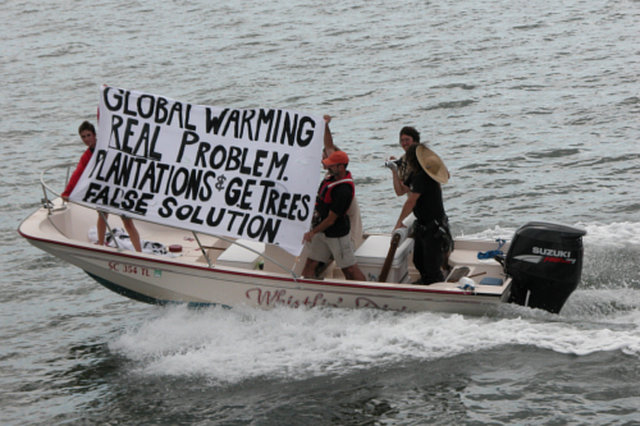
EF! con­fronts GE tree sci­en­tists on the high seas in Charleston, SC in 2007

irB

EF! con­fronts GE tree sci­en­tists on the high seas in Charleston, SC in 2007

There is still a month to go before activists hit the streets of Asheville, NC to protest the 2013 Tree Biotech­nol­o­gy Con­fer­ence, but the indus­try is already show­ing signs of retreat. Appar­ent­ly fear­ing that pro­tes­tors will fol­low them wher­ev­er they go, the con­fer­ence orga­niz­ers recent­ly can­celled a group trip to a test plot of genet­i­cal­ly engi­neered euca­lyp­tus trees. While the coun­ties in which these test plots are plant­ed are pub­licly known, the exact loca­tion of these mutant trees is a close­ly guard­ed secret. It seems they don’t want a mob of Earth First!ers to find out where they are!

 The 2013 Tree Biotech­nol­o­gy Con­fer­ence is an inter­na­tion­al gath­er­ing of sci­en­tists, forestry cor­po­ra­tions and uni­ver­si­ty researchers with a major focus on genet­i­cal­ly engi­neered tree pro­duc­tion. GE trees pose an unprece­dent­ed threat to native forests. Tim­ber and util­i­ty cor­po­ra­tions want to plant mil­lions of acres genet­i­cal­ly engi­neered trees through­out the South to burn for elec­tric­i­ty, as well as to con­tin­ue sup­ply­ing the unsus­tain­able lum­ber and paper indus­tries. These trees would be engi­neered to pro­duce their own pes­ti­cides, grow straighter and faster, tol­er­ate man­u­fac­tured pes­ti­cides, pro­duce ster­ile seeds, and reduce lignin con­tent (this is what makes the wood in a tree strong enough to stand up). If these traits escaped into native tree pop­u­la­tions, the effects would be dev­as­tat­ing and irre­versible.

 In anoth­er set­back for the GE tree indus­try, the USDA just announced the results of their pub­lic com­ment peri­od on the pro­posed approval of com­mer­cial plant­i­ngs of genet­i­cal­ly engi­neered euca­lyp­tus trees. While over 30,000 peo­ple spoke out against the com­mer­cial plant­i­ng of these Franken­trees, an under­whelm­ing, four, yeah that’s right four, peo­ple spoke out in favor of plant­i­ng GE trees. Though this pub­lic com­ment peri­od shows that there is next to no sup­port for GE trees, it is no time to let our guard down con­sid­er­ing that gov­ern­ment agen­cies reg­u­lar­ly ignore the pub­lic opin­ion.

 Help us keep the up the pres­sure on the USDA and the tree biotech indus­try. Join activists from around the coun­try as we stand up for native forests and send a loud NO to GE trees with a week of protests and edu­ca­tion­al events in Asheville, NC May 26-June 1st.

Goldcorp Security Shoots Peaceful Protesters in Guatemala 1st May

Police, mil­i­tary and pri­vate secu­ri­ty attack peace­ful anti-min­ing pro­test­ers at the San Rafael mine in Guatemala, Sep.

Police, mil­i­tary and pri­vate secu­ri­ty attack peace­ful anti-min­ing pro­test­ers at the San Rafael mine in Guatemala, Sep. 2008

From Rights Action:

Six civil­ians were shot and wound­ed (2 seri­ous­ly) on April 27, 2013 by Tahoe / Gold­corp secu­ri­ty forces at Tahoe’s “San Rafael” mine site (munic­i­pal­i­ty of San Rafael Las Flo­res, depart­ment of San­ta Rosa, Guatemala).  The wound­ed are: Adol­fo Gar­cía, 57; his son Luis Gar­cía, 18; Wilmer Pérez, 17; Anto­nio Hum­ber­to  Castil­lo, 48;  Noé Aguilar Castil­lo, 27; Érick Fer­nan­do Castil­lo, 27.  Local res­i­dents, who are main­tain­ing a per­ma­nent peace­ful occu­pa­tion by the mine entrance in protest against it, saw com­pa­ny armed guards open fire on the group of men who were walk­ing by.  (Pren­sa Libre, April 29, 2013, http://www.prensalibre.com/santa_rosa/personas-resultan-incidente-San-Rafael_0_909509181.html)

Read more here about Goldcorp’s (and sub­sidiary Tahoe Resources’) recent his­to­ry of vio­lence and repres­sion against indige­nous and campesino com­mu­ni­ties in Guatemala.


The Fuel Nightmare Continues

It’s as if the uni­verse is try­ing to tell us some­thing, isn’t it?

It’s as if the uni­verse is try­ing to tell us some­thing, isn’t it?

First, a dis­as­trous month that saw at least 15 sep­a­rate oil spills world­wide, near­ly all of them in North Amer­i­ca. That month also saw an oil barge catch fire after a col­li­sion, and the pub­li­ca­tion of a study impli­cat­ing frack­ing as a cause of earth­quakes.

Now at least 600 gal­lons have spilled from an Enbridge oil pump­ing sta­tion near Viking, Minnesota.Two fuel barges car­ry­ing a nat­ur­al gas deriv­a­tive have explod­ed and are still burn­ing on the Alaba­ma Riv­er. And new reports strong­ly sug­gest that tar sands from Exxon’s Pega­sus Pipeline in Mayflower, Arkansas have seeped into Lake Con­way and are head­ing toward the Arkansas Riv­er.

Dis­as­ters like these bring the real costs of fos­sil fuels into sharp focus, because we can imag­ine our­selves affect­ed by them. But the truth is, dis­as­ters like these are part of every­day life for the peo­ple and oth­er beings liv­ing in areas where fos­sil fuels are extracted—or any oth­er indus­tri­al mate­ri­als, from cop­per for solar pan­els to coltan for cell phones.

If you wouldn’t want oil spilling into your back yard, if you wouldn’t want a strip mine rip­ping open a hole behind your house and poi­son­ing your water, then it’s time to admit that the eco­nom­ic sys­tem found­ed on con­sum­ing these mate­ri­als has got to go. We’ll nev­er have jus­tice or sus­tain­abil­i­ty if we base one group’s “high stan­dard of liv­ing” on the dis­lo­ca­tion and destruc­tion of oth­ers.


The Efficiency of Green Energy

cap_1

We ought not at least to delay dis­pers­ing a set of plau­si­ble fal­lac­i­es about the econ­o­my of fuel, and the dis­cov­ery of sub­sti­tutes [for coal], which at present obscure the cri

cap_1

We ought not at least to delay dis­pers­ing a set of plau­si­ble fal­lac­i­es about the econ­o­my of fuel, and the dis­cov­ery of sub­sti­tutes [for coal], which at present obscure the crit­i­cal nature of the ques­tion, and are eager­ly passed about among those who like to believe that we have an indef­i­nite peri­od of pros­per­i­ty before us. –William Stan­ley Jevons, The Coal Ques­tion (1865)

There are, at present, many myths about green ener­gy and its effi­cien­cy to address the demands and needs of our bur­geon­ing indus­tri­al soci­ety, the least of which is that a switch to “renew­able” ener­gy will sig­nif­i­cant­ly reduce our depen­den­cy on, and con­sump­tion of, fos­sil fuels.

The oppo­site is true. If we study the actu­al pro­duc­tive process­es required for cur­rent “renew­able” ener­gies (solar, wind, bio­fu­el, etc.) we see that fos­sil fuels and their infra­struc­ture are not only cru­cial but are also whol­ly fun­da­men­tal to their devel­op­ment. To con­tin­ue to use the words “renew­able” and “clean” to describe such ener­gy process­es does a great dis­ser­vice for gen­er­at­ing the type of informed and ratio­nal deci­sion-mak­ing required at our cur­rent junc­tion.

To take one exam­ple – the pro­duc­tion of tur­bines and the allo­ca­tion of land nec­es­sary for the devel­op­ment, pro­cess­ing, dis­tri­b­u­tion and stor­age of “renew­able” wind ener­gy. From the min­ing of rare met­als, to the pro­duc­tion of the tur­bines, to the trans­porta­tion of var­i­ous parts (weigh­ing thou­sands of tons) to a cen­tral loca­tion, all the way up to the con­tin­ued main­te­nance of the struc­ture after its com­ple­tion – wind ener­gy requires indus­tri­al infra­struc­ture (i.e. fos­sil fuels) in every step of the process.

If the con­cep­tion of wind ener­gy only involves the pris­tine image of wind tur­bines spin­ning, ever so won­der­ful­ly, along a beau­ti­ful coast or grass­land, it’s not too hard to under­stand why so many of us hold green ener­gy so high­ly as an alter­na­tive to fos­sil fuels. Notice­ably absent in this con­cep­tion, though, are the images of every­thing it took to get to that end­point (which aren’t beau­ti­ful images to see at all and is large­ly the rea­son why wind ener­gy isn’t mar­ket­ed that way).

Because of the rapid growth and expan­sion of indus­tri­ali­a­tion in the last two cen­turies, we are long past the days of easy acces­si­ble resources. If you take a look at the type of min­ing oper­a­tions and drilling oper­a­tions cur­rent­ly sus­tain­ing our way of life you will read­i­ly see degra­da­tion and dev­as­ta­tion on uncon­scionable scales. This is our real­i­ty and these process­es will not change no mat­ter what our ends are – these process­es are the degree with which “basic” extrac­tion of all of the fun­da­men­tal met­als, min­er­als, and resources we are famil­iar with cur­rent­ly take place.

In much the same way that the absur­di­ties of tar sands extrac­tion, moun­tain­top removal, and hydraulic frac­tur­ing are plain­ly obvi­ous, so too are the con­tin­ued min­ing oper­a­tions and refin­ing process­es of cop­per, sil­ver, alu­minum, zinc, etc. (all essen­tial to the devel­op­ment of solar pan­els and wind tur­bines).

It is not enough – giv­en our cur­rent sit­u­a­tion and its dire impli­ca­tions – to just look at the pret­ty pic­tures and ignore every­thing else. All this does, as won­der­ful­ly reaf­firm­ing and uplift­ing as it may be, is keep us bound in delu­sions and false hopes. As Jevons affirms, the ques­tions we have before us are of such over­whelm­ing impor­tance that it does no good to con­tin­ue to delay dis­pers­ing plau­si­ble fal­lac­i­es. If we wish to go any­where from here, we absolute­ly need uncom­pro­mis­ing (and often bru­tal) truth.

A com­mon argu­ment among pro­po­nents of sup­posed “green” ener­gy – often preva­lent among those who do under­stand the inher­ent destruc­tive process­es of fuels, min­ing and indus­try – is that by sim­ply putting an end to cap­i­tal­ism and its prof­it motive, we will have the capac­i­ty to plan for the effi­cient and prop­er man­age­ment of remain­ing fos­sil fuels.

How­ev­er, the effi­cient use of a resource does not actu­al­ly result in its decreased con­sump­tion, and we owe evi­dence of that to William Stan­ley Jevons’ work The Coal Ques­tion. Writ­ten in 1865 (dur­ing a time of such great progress that crit­i­cisms were unfath­omable to most), Jevons devot­ed his study to ques­tion­ing Britain’s heavy reliance on coal and how the impli­ca­tion of reach­ing its lim­its could threat­en the empire. Many cov­ered top­ics in this text have influ­enced the way in which many of us today dis­cuss the issues of peak oil and sus­tain­abil­i­ty – he wrote on the lim­its to growth, over­shoot, ener­gy return on ener­gy input, tax­a­tion of resources and resource alter­na­tives.

In the chap­ter, “Of the econ­o­my of fuel,” Jevons address­es the idea of effi­cien­cy direct­ly. Preva­lent at the time was the thought that the fail­ing sup­ply of coal would be met with new modes of using it, there­fore lead­ing to a sta­tion­ary or dimin­ished con­sump­tion. Mak­ing sure to dis­tin­guish between pri­vate con­sump­tion of coal (which account­ed for less than one-third of total coal con­sump­tion) and the econ­o­my of coal in man­u­fac­tures (the remain­ing two-thirds), he explained that we can see how new modes of econ­o­my lead to an increase of con­sump­tion accord­ing to par­al­lel instances. He writes:

The econ­o­my of labor effect­ed by the intro­duc­tion of new machin­ery throws labor­ers out of employ­ment for the moment. But such is the increased demand for the cheap­ened prod­ucts, that even­tu­al­ly the sphere of employ­ment is great­ly widened. Often the very labor­ers whose labor is saved find their more effi­cient labor more demand­ed than before.

The same prin­ci­ple applies to the use of coal (and in our case, the use of fos­sil fuels more gen­er­al­ly) – it is the very econ­o­my of their use that leads to their exten­sive con­sump­tion. This is known as the Jevons Para­dox, and as it can be applied to coal and fos­sil fuels, it so right­ful­ly can be (and should be) applied in our dis­cus­sions of “green” and “renew­able” ener­gies – not­ing again that fos­sil fuels are nev­er com­plete­ly absent in the pro­duc­tive process­es of these ener­gy sources.

We can try to assert, giv­en the gen­er­al care we all wish to take in mov­ing for­ward to avert cat­a­stroph­ic cli­mate change, that much dili­gence will be tak­en for the effi­cient use of remain­ing resources but with­out the direct ques­tion­ing of con­sump­tion our attempts are mean­ing­less. His­tor­i­cal­ly, in many vary­ing indus­tries and cir­cum­stances, effi­cien­cy does not solve the prob­lem of con­sump­tion – it exas­per­ates it. There is no guar­an­tee that “green” ener­gies will keep con­sump­tion lev­els sta­tion­ary let alone result in a reduc­tion of con­sump­tion (an obvi­ous neces­si­ty if we are plan­ning for a sus­tain­able future).

Jevons con­tin­ues, “Sup­pose our progress to be checked with­in half a cen­tu­ry, yet by that time our con­sump­tion will prob­a­bly be three or four times what it now is; there is noth­ing impos­si­ble or improb­a­ble in this; it is a mod­er­ate sup­po­si­tion, con­sid­er­ing that our con­sump­tion has increased eight-fold in the last six­ty years. But how short­ened and dark­ened will the prospects of the coun­try appear, with mines already deep, fuel dear, and yet a high rate of con­sump­tion to keep up if we are not to ret­ro­grade.”

Writ­ing in 1865, Jevons could not have fath­omed the lev­el of growth that we have attained today but that doesn’t mean his ear­ly warn­ings of Britain’s use of coal should be whol­ly dis­card­ed. If any­thing, the con­tin­ued rise and dom­i­nance of indus­tri­al­i­sa­tion over near­ly all of the earth’s land and peo­ple makes his argu­ments ever more per­ti­nent to our present sit­u­a­tion.

Based on cur­rent emis­sions of car­bon alone (not fac­tor­ing in the reach­ing of tip­ping points and var­i­ous feed­back loops) and the best sci­ence read­i­ly avail­able, our time frame for action to avert cat­a­stroph­ic cli­mate change is any­where between 15–28 years. How­ev­er, as has been true with every sci­en­tif­ic esti­mate up to this point, it is impos­si­ble to pre­dict that rate at which these var­i­ous process­es will occur and large­ly our esti­mates fall extreme­ly short. It is quite prob­a­ble that we are like­ly to reach the point of irre­versible run­away warm­ing soon­er rather than lat­er.

Sup­pose our progress and indus­tri­al cap­i­tal­ism could be checked with­in the next ten years, yet by that time our con­sump­tion could dou­ble and the state of the cli­mate could be expo­nen­tial­ly more unfa­vor­able than it is now – what would be the capac­i­ty for which we could mean­ing­ful­ly engage in any amount of indus­tri­al pro­duc­tion? Would it even be in the realm of pos­si­bil­i­ty to imple­ment large-scale over­hauls towards “green” ener­gy? With­out a mean­ing­ful and dras­tic decrease in con­sump­tion habits (remem­ber­ing most of this occurs in indus­try and not per­son­al lifestyles) and a sub­se­quent decrease in depen­den­cy on indus­tri­al infra­struc­ture, the prospects of our future are severe­ly short­ened and dark­ened.


35 Arrested in Winona Frac Sand Protests 29th April

Thir­ty-five peo­ple were arrest­ed for tres­pass­ing dur­ing a large protest against frac sand Mon­day morn­ing staged at two sep­a­rate loca­tions in Winona.

Thir­ty-five peo­ple were arrest­ed for tres­pass­ing dur­ing a large protest against frac sand Mon­day morn­ing staged at two sep­a­rate loca­tions in Winona.

The Winona Police Depart­ment arrest­ed 19 peo­ple at the city’s com­mer­cial dock, after they were asked mul­ti­ple times to leave the pri­vate prop­er­ty. Offi­cers than respond­ed to a frac sand pro­cess­ing plant on Winona’s west end, where they arrest­ed anoth­er 16 peo­ple for tres­pass­ing there.

Pro­test­ers said their goal was to halt busi­ness oper­a­tions at each site.

“I think peo­ple see that the issue of sil­i­ca sand is some­thing affect­ing the entire region,” said pro­test­er Mol­ly Green­ing. “They’ve come to stand in sol­i­dar­i­ty with this issue.”

Dan Nis­bit, the own­er of CD Corp., which leas­es the com­mer­cial dock, said the protest cre­at­ed a dis­trac­tion for work­ers and tem­porar­i­ly slowed oper­a­tions at the facil­i­ty.

“Obstruct­ing busi­ness isn’t the right way to go about things,” Nis­bit said.

Winona Catholic Work­ers orga­nized the protest, reach­ing out to area res­i­dents who oppose the frac sand indus­try, as well as oth­ers in the region’s Catholic Work­er com­mu­ni­ty.

The protest was part of an annu­al cel­e­bra­tion of the region­al Catholic Work­er com­mu­ni­ty, and vol­un­teers from Iowa, Mis­souri, Wis­con­sin, Michi­gan and oth­er states in the Mid­west trav­eled to Winona to par­tic­i­pate.

Catholic Work­ers and oth­ers in the Winona area have protest­ed the indus­try for more than a year. They have blocked a rail load­ing ter­mi­nal, demon­strat­ed at the steps of the Winona City Hall pri­or to a city coun­cil meet­ing on frac sand reg­u­la­tions, and held oth­er ral­lies.

“As Catholic Work­ers liv­ing with the poor and mar­gin­al­ize, we come to this land to pre­vent the des­e­cra­tion of this land and the health of this com­mu­ni­ty,” they wrote in a state­ment sent Sun­day evening to area media out­lets.

“We declare Mon­day to be a mora­to­ri­um of busi­ness as usu­al at the sites of pro­duc­tion of sil­i­ca sand to elim­i­nate a nec­es­sary com­po­nent of frack­ing.”

There hasn’t been a his­to­ry of cita­tions or arrests at any of the demon­stra­tions, though dur­ing one ral­ly at city hall in May 2012 a pro­test­er was cit­ed for lit­ter­ing after he threw a hand­ful of frac sand on the front steps.


Lockdown Halts Keystone XL Work in Oklahoma 29th April

Spauld­ing, OK- Mon­day, April 29th, 6:15 AM- Ear­li­er this morn­ing two Texas res­i­dents locked them­selves to machin­ery being used to con­struct TransCanada’s dan­ger­ous and con­tro­ver­sial Key­stone XL tar sands pipeline in Spauld­ing, OK through Musco­gee Creek Nation land by treaty. Ben­jamin But­ler and Eamon Tread­away Danzig took action today to pre­vent the Cross Tim­bers biore­gion from being poi­soned by this inher­ent­ly dan­ger­ous tar sands pipeline, just as the sur­round­ing wet­lands and res­i­den­tial areas have been poi­soned as a result of Exxon’s Pega­sus pipeline rup­ture near Mayflower, Arkansas.  Recent Tar Sands spills in Min­neso­ta and Arkansas, as well as an explo­sion at a Tar Sands refin­ery in Detroit have high­light­ed the urgency in stop­ping Tar Sands extrac­tion and trans­porta­tion.

But­ler and Danzig are act­ing as a part of Great Plains Tar Sands Resis­tance, a grow­ing coali­tion of groups and indi­vid­u­als ded­i­cat­ed to stop­ping the expan­sion of Tar Sands infra­struc­ture through­out the Great Plains. Their actions fol­low the esca­lat­ing num­ber of work-stop­ping actions that have occurred in Okla­homa this past month.  Both anti-extrac­tion activists cite con­cern of the effect a spill will have in the Cross Tim­bers bio-region that they call home. Their action comes in the wake of the rup­ture of Exxon-Mobile’s Pega­sus pipeline which spilled Tar Sands bitu­men in neigh­bor­ing Mayflower, Arkansas. In addi­tion to the high rates of sick­ness that the sur­round­ing com­mu­ni­ty dis­played, the spill in Arkansas has pol­lut­ed Lake Con­way and has had dev­as­tat­ing effects on local wildlife. The per­ma­nent effect on people’s liveli­hoods and the health of affect­ed ecosys­tems remains to be seen.

“This pipeline is essen­tial for con­tin­ued tar sands exploita­tion which pos­es an immi­nent threat to the health of indige­nous com­mu­ni­ties near the point of extrac­tion, fence-line com­mu­ni­ties around the tox­ic refiner­ies, and ulti­mate­ly the health of every liv­ing being along the route,” said Ben­jamin But­ler, who was born at Tin­ker Air force Base in Okla­homa. “I believe in a more beau­ti­ful world, one where the prof­its of a cor­po­ra­tion don’t out­weigh the health of the peo­ple and the plan­et.”

“These com­pa­nies come through with false promis­es and leave sick­ness and dev­as­ta­tion in their wake,” said Eamon Danzig of Den­ton, TX. “Peo­ple in Mayflower expe­ri­enced faint­ing, nau­sea, and nose­bleeds from the ben­zene gas which sep­a­rates from the dilut­ed bitu­men in a spill and hov­ers above the ground. Leaks, rup­tures, and oth­er acci­dents on tar sands pipelines are so com­mon­place and inevitable that I can’t let this pipeline be built through the Cross Tim­bers.”

The Tar Sands megapro­ject is the largest indus­tri­al project in the his­to­ry of humankind, destroy­ing an area of pris­tine bore­al for­est which, if ful­ly real­ized, will leave behind a tox­ic waste­land the size of Flori­da. The Tar Sands megapro­ject con­tin­ues to endan­ger the health and way of life of the First Nations com­mu­ni­ties that live near­by by poi­son­ing the water­ways which life in the area depends on. This pipeline promis­es to deliv­er tox­ic dilut­ed bitu­men to the nox­ious Valero Refin­ery at the front door of the fence-line com­mu­ni­ty of Man­ches­ter in Hous­ton.

Cur­rent­ly, there is staunch resis­tance to the expan­sion of Tar Sands infrastructure—Lakota and Dako­ta peo­ples in “South Dako­ta” have sworn to pro­tect their land and peo­ple from the Key­stone XL, life­long Okla­homans and Tex­ans are con­sis­tent­ly halt­ing con­struc­tion of the inher­ent­ly dan­ger­ous Key­stone XL, and the Unis’tot’en Camp has entered the third year of their block­ade of the Pacif­ic Trails Pipeline.

UPDATE: 11:27AM : Eamon and Ben are both being charged with tres­pass­ing. We need $500 to get them out of jail.

UPDATE:  Eamon has been charged with tres­pass­ing and is being held on a $250 bail in the Hugh­es Coun­ty Jail. We are still wait­ing to find out Ben’s charges.

&

UPDATE: 9:18 AM: Lock box has been cut in half with jaws of life. Ben and Eamon have been tak­en into cus­tody by the police.

UPDATE: 9:12 AM: Using jaws of life on the lock box

UPDATE: 9:08 AM: More police and firetruck has arrived

UPDATE: 8:12AM: Anoth­er sher­iff has arrived. Failed at saw­ing

UPDATE: 8:05AM: Pri­vate secu­ri­ty has giv­en the sher­iff a hack­saw. The sher­iff is saw­ing at the lock box

UPDATE: 8:02: Sher­iff talk­ing to Ben and Eamon. The sher­iff is inspect­ing the lock box

UPDATE 7:51AM: Hugh­es Coun­ty Sher­iff has arrived

UPDATE: 7:43 AM: Pri­vate secu­ri­ty try­ing to con­vince Ben and Eamon to unlock

UPDATE: 7:36 AM: More work­ers arriv­ing on site

UPDATE: 7:30 AM: Pri­vate secu­ri­ty has arrived on site. Head of secu­ri­ty has informed us that he is a retired sher­iff of Hugh­es Coun­ty.

UPDATE: 6:20 AM: Work­ers on site

Climate Activist on Day 29 of Hunger Strike

Ear­li­er this month, 350.org founder Bill McK­ibbenwrote about the new move­ment of fos­sil fuel resis­tance that was spread­ing around the world.

This resis­tance is need­ed now more than ever, as glob­al tem­per­a­tures edge towards the 400 parts per mil­lion (ppm) mark for the first time in mil­lions of years, some­thing that is seri­ous­ly wor­ry­ing sci­en­tists. “It looks like the world is going to blow through the 400 ppm lev­el with­out los­ing a beat,” argues Scripps Insti­tu­tion of Oceanog­ra­phy sci­en­tist, Ralph Keel­ing.

One per­son who is part of this resis­tance is a young Amer­i­can activist Bri­an Eis­ter, who has worked with John Kerry’s pres­i­den­tial cam­paign, League of Con­ser­va­tion Vot­ersGreen Par­tyPub­lic Cit­i­zen and was involved in the Occu­py Move­ment.

But now he has put his body on the line for cli­mate change. He is on day 29 of a planned 30 day hunger strike. For near­ly the last month, all he has con­sumed is water, salt and potas­si­um.

Eis­ter is cur­rent­ly camped out­side the Amer­i­can Petro­le­um Insti­tute (API) in Wash­ing­ton, DC, the oil industry’s most pow­er­ful lob­by group.

He is try­ing to raise aware­ness about cli­mate change. “I am on hunger strike,” Eis­ter writes, “because I can think of no action which could ade­quate­ly express the urgency of humanity’s present sit­u­a­tion. There are more than a few trends which, left unchecked, are like­ly to make life impos­si­bly dif­fi­cult for future gen­er­a­tions.”

He argues that, “Giv­en the urgency of what is com­ing, every one of our lives should, first and fore­most, be ded­i­cat­ed to pre­vent­ing this com­ing cat­a­stro­phe.”

Over the week­end, Eis­ter gave an inter­view as to why he is tak­ing what many would argue is rad­i­cal action. His anger is chan­neled towards those in pow­er: politi­cians, the press and of course the oil indus­try itself.

“There are the pol­i­cy­mak­ers, who treat this issue as though we had all the time in the world to fix it. They already know bet­ter,” he argues. “There are mem­bers of the press, who bury sto­ries about the impend­ing ruina­tion of the world’s econ­o­my by glob­al warm­ing on page 13 of the news­pa­per, while con­sis­tent­ly plac­ing sto­ries about mem­bers of con­gress wran­gling over bud­gets on front page. They already know bet­ter.”

Per­haps sad­dest of all, he says: “there are edu­cat­ed, intel­li­gent peo­ple who sure­ly love their chil­dren work­ing for groups like the Amer­i­can Petro­le­um Insti­tute and Amer­i­cans for Clean Coal Elec­tric­i­ty. They already know bet­ter.”

The lob­by­ists at the API do know bet­ter, but like the tobac­co barons before them, they are try­ing to still spin a web of denial and decep­tion over the sci­ence and urgency of cli­mate change.

As the world hur­tles towards 400 ppm, the win­dow for mean­ing­ful action on cli­mate is rapid­ly clos­ing. But, as Eis­ter says, politi­cians, the press and the oil indus­try, all know bet­ter but car­ry on as if noth­ing is the prob­lem.

If Pres­i­dent Oba­ma is to start lis­ten­ing to peo­ple like Eis­ter, one first small step would be to can­cel the Key­stone XL pipeline. But that would only be the first small step of true mean­ing­ful action.

Eis­ter argues, “In our minds, we imag­ine that some­how, some­way, this prob­lem will be solved: how, after all, could a world full of respon­si­ble adults allow all of our children’s lives, and their children’s lives, to be ruined?”

Lockdown Continues in the “Red River Showdown” 25th April

A pro­test­er with the group Great Plains Tar Sands Resis­tance has stopped con­struc­tion of the Key­stone XL pipeline by lock­ing his arm into a con­crete cap­sule buried direct­ly in the pipeline’s pro­posed path. Fitzger­ald Scott, 42, is the first African Amer­i­can to risk arrest while phys­i­cal­ly blockad­ing TransCanada’s dan­ger­ous tar sands pipeline, and the sec­ond per­son to take action this week. On Mon­day a 61 year old man locked him­self to a piece of con­struc­tion equip­ment effec­tive­ly shut­ting down anoth­er Okla­homa pipeline con­struc­tion site. This week of action, called the “Red Riv­er Show­down,” is intend­ed to pro­tect the Red Riv­er, which marks the bor­der between Okla­homa and Texas and is a major trib­u­tary of the Mis­sis­sip­pi.

The site Scott has block­ad­ed is a wet­land area where crews are attempt­ing to lay sec­tions of the Key­stone XL tar sands pipeline direct­ly into the marshy waters. An unde­tect­ed pin­hole leak at this loca­tion would cause can­cer caus­ing chem­i­cals to mix direct­ly into the local com­mu­ni­ty water table.

Scott, who has a master’s degree in urban plan­ning from the Uni­ver­si­ty of Illi­nois, Chica­go, is a long­time activist for social and envi­ron­men­tal jus­tice. While orga­niz­ing against Key­stone over the past five months, Scott has met many peo­ple strug­gling to pro­tect their homes from TransCanada’s abuse of emi­nent domain.

“I am doing this for the peo­ple who don’t have the finan­cial resources to pro­tect them­selves from a bul­ly like Tran­sCana­da,” explained Scott. “Imag­ine how much worse it is for them – like the most­ly African Amer­i­can neigh­bor­hood in Winona, TX, where pro­test­ers with the Tar Sands Block­ade found holes in welds of the pipeline sec­tion that runs right behind a children’s play­ground, and nei­ther Tran­sCana­da nor the gov­ern­ment will do any­thing about it!”

As con­struc­tion on the south­ern por­tion of Key­stone XL nears two thirds com­ple­tion, no reg­u­la­tors or politi­cians show any will­ing­ness to halt the project or even inspect those faulty welds. Accord­ing to George Daniel, spokesper­son for Great Plains Tar Sands Resis­tance, “Scott’s action sends a clear mes­sage: because every oth­er avenue has failed to stop this dead­ly project, we will block­ade – all sum­mer and on into the fall, if that’s what it takes.”

Today’s action comes just a few weeks after the dev­as­tat­ing tar sands spill in Mayflower, Arkansas, which has left com­mu­ni­ties across Okla­homa and Texas ter­ri­fied that they may be the next vic­tims of reck­less indus­try prac­tices. Sur­vivors of the spill in Mayflower have report­ed nau­sea, blurred vision, vom­it­ing, and black outs caused by the same blend of raw tar and poi­so­nous chem­i­cal sol­vents that will be trans­port­ed through Key­stone XL.

UPDATE 9:30 AM Work is still stopped on the ease­ment due to the large amount of police and emer­gency equip­ment need­ed for extrac­tion!  Show your sup­port for Fitzger­ald here!

UPDATE 9:10 AM: Fire­fight­ers have extract­ed Fitzger­ald and he’s now in police cus­tody. Please show your sup­port with a gen­er­ous dona­tion to his legal fund.

UPDATE 8:49 AM: Anoth­er fire res­cue vehi­cle on scene, offi­cer just com­mand­ed “every­one not involved in emer­gency ser­vices, back off now!” and work­ers retreat­ed slight­ly.

UPDATE 8:30 AM: Half a dozen work trucks, four police cars (3 sher­iffs and 1 state troop­er), four cops, four fire­fight­ers, 2 EMTs, one fire truck and a fire res­cue truck on scene. Spe­cial fire depart­ment equip­ment truck just arrived; large group of offi­cials crowd­ed around Fitzger­ald.

UPDATE 7:42 AM: Sher­iff on scene.

Harvard Announces Closure of Primate Research Center April 24th

Har­vard Med­ical School has issued a state­ment announc­ing that the New Eng­land Pri­mate Research Cen­ter will be clos­ing with­in 24 months. Harvard’s New Eng­land Pri­mate Research Cen­ter has been embroiled in an ongo­ing con­tro­ver­sy fol­low­ing the neg­li­gent deaths of at least 4 pri­mates.

Har­vard Med­ical School has issued a state­ment announc­ing that the New Eng­land Pri­mate Research Cen­ter will be clos­ing with­in 24 months. Harvard’s New Eng­land Pri­mate Research Cen­ter has been embroiled in an ongo­ing con­tro­ver­sy fol­low­ing the neg­li­gent deaths of at least 4 pri­mates. The facil­i­ty is cur­rent­ly under inves­ti­ga­tion by the USDA and faces a poten­tial­ly major fed­er­al fine for mul­ti­ple vio­la­tions of the Ani­mal Wel­fare Act. “Har­vard wants the pub­lic to believe that this clo­sure is due to eco­nom­ics,” said Michael A. Bud­kie, A.H.T., Exec­u­tive Direc­tor, SAEN (Stop Ani­mal Exploita­tion NOW!). “That is sim­ply not true. The only way Har­vard could quash this scan­dal is to close the pri­mate cen­ter, because even last year’s res­ig­na­tion of the Center’s Direc­tor could not end their inep­ti­tude. This clo­sure is the direct result of pres­sure from activists led by SAEN.” “The clo­sure of Harvard’s Pri­mate Research Cen­ter is the best news I have ever heard,” added Bud­kie. “The poten­tial exists to bring free­dom to many mon­keys and to redi­rect mil­lions of dol­lars into clin­i­cal and epi­demi­o­log­i­cal research which will more direct­ly ben­e­fit humans.” SAEN has announced plans to con­tact the Har­vard Med­ical School’s admin­is­tra­tion to explore the pos­si­bil­i­ty of plac­ing at least some of the pri­mates in sanc­tu­ar­ies. “These pri­mates have suf­fered enough,” added Bud­kie. “They deserve a chance to have a new life in anoth­er envi­ron­ment where their needs will be put first.”