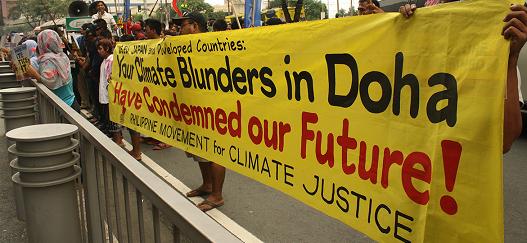
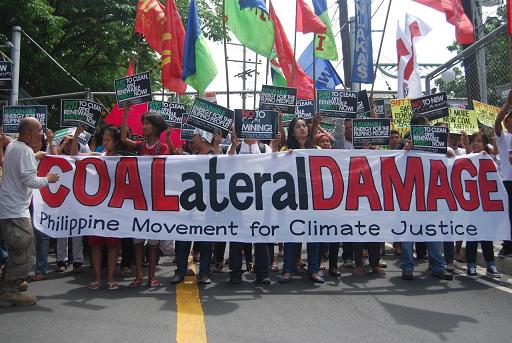
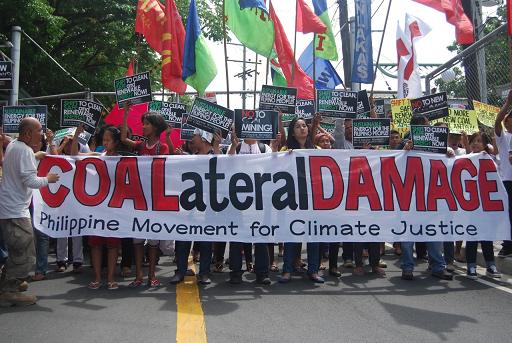
Philippine climate activists expose risks of dirty coal. 24th April

300-strong cli­mate activists and anti-coal advo­cates stormed the Depart­ment of Ener­gy to voice out their oppo­si­tion to coal mines and coal-fired pow­er plants pro­mot­ed by the gov­ern­ment and to launch the group’s Cam­paign Against Dirty Ener­gy and for People’s Access to Safe, Renew­able and Demo­c­ra­t­ic Ener­gy Alter­na­tives.

This is in cel­e­bra­tion of Earth Day and the group’s Nation­al Day of Action against Coal.

Led by the Philip­pine Move­ment for Cli­mate Jus­tice (PMCJ), the groups brought body bags, gas masks and paper-made Philip­pine Cock­a­toos wear­ing masks to avoid the pol­lu­tion from coal and high­light­ed how coal dam­ages not only the envi­ron­ment and bio­di­ver­si­ty but our lives, lit­er­al­ly tak­ing lives -, thus, the state­ment: COAL KILLS.

COAL KILLS—Why is coal dirty, tox­ic

Ger­ry Arances, nation­al coor­di­na­tor of PMCJ explained: “The pro­mo­tion of coal as a major source of ener­gy of Fil­ipino com­mu­ni­ties is not the right solu­tion to the alleged pow­er cri­sis in sev­er­al parts of the coun­try. First of all, coal emits a large amount of heavy met­als such as mer­cury and arsenic – con­t­a­m­i­nat­ing our waters; gen­er­ates 500 tons of small air­borne par­ti­cles which cause asth­ma, bron­chi­tis, and aggra­vate heart dis­ease; coal ash dis­pos­al pos­es a very high risk of caus­ing can­cer to those exposed.

Sec­ond, coal plant emis­sions in sur­round­ing areas kill the liveli­hoods of host com­mu­ni­ties as the stud­ies in coal plants in Masin­loc, Zam­bales, and Naga, Cebu, among oth­ers, have clear­ly shown.

Third, coal burn­ing is the major cause of glob­al warm­ing and fur­ther pro­mot­ing it will aggra­vate the cli­mate cri­sis that we are fac­ing now. This I believe is a greater dam­age to the present and future gen­er­a­tions who will have to suf­fer the inten­si­fied impacts of cli­mate change.“

RESIST COAL—Increasing local oppo­si­tion to coal

Two of the major pro­posed projects now include the coal plants in Cebu and Palawan.

In Cebu, ash sam­ples test­ed from a coal plants in Naga, Cebu, revealed pres­ence of heavy met­als such as mer­cury and arsenic (carcinogen),both haz­ardous sub­stances. Despite this, more projects are still under­way. Naga is home to two coal plants.

“Health records in Naga for 2009–2012 reveal can­cer as one if not the lead­ing cause of mor­tal­i­ty inci­dence in the area. Though could not be direct­ly linked to the coal plant oper­a­tions, that its inci­dence in Naga is high­er than nation­al aver­ages should be suf­fi­cient basis for alarm. While we debate as to whether or not coal is the cul­prit for the deaths, can­cer-relat­ed deaths in the area con­tin­ue to rise,” said Atty. Aaron Pedrosa of San­lakas.

“The same could be said of com­mu­ni­ties in Tole­do City, Cebu where anoth­er coal plant oper­ates. But instead of address­ing the health con­cerns and con­duct­ing a probe into the sit­u­a­tion, the gov­ern­ment intends to put up anoth­er plant in the province”, Pedrosa added.

Can­cer is among the many dis­eases that could be attrib­uted to con­tin­ued expo­sure to coal com­bus­tion wastes

Also threat­ened by coal projects is our Last Fron­tier, Palawan—where a 15MW coal-fired pow­er plant project is being pro­posed to respond to a pro­ject­ed loom­ing pow­er short­age in the province. Envi­ron­men­tal­ists and con­ser­va­tion­ists in the province are strong­ly oppos­ing as the plant is to be set up 1.5‑kilometers away from Rasa Island, home to the crit­i­cal­ly endan­gered Philip­pine Cock­a­too.

Kather­ine Leuch of Palawan Alliance for Clean Ener­gy asserts that “The super­fi­cial cheap­ness of coal should not be the only con­sid­er­a­tion for allow­ing a coal-fired pow­er plant in Palawan because the risks of such far out­weighs the ben­e­fits giv­en that Palawan is an eco­log­i­cal­ly rich and sen­si­tive province. The neg­a­tive effect of coal is as dark as it is.

What is sad­den­ing is that based on our study the pro­ject­ed pow­er short­age is unfound­ed. It is main­ly due to dis­tri­b­u­tion prob­lems and not because of the exist­ing sup­ply. Palawan can also pro­vide clean­er and safer alter­na­tives like mini hydro, and oth­er renew­able ener­gy sources.”

RE-ENERGIZE ALL—Shift to REnew­able, sus­tain­able ener­gy for all Fil­ipino com­mu­ni­ties

The Philip­pine Ener­gy Plan (PEP) 2008–2030 reveals that coal pro­duc­tion will con­tin­ue to esca­late. From 39 coal oper­at­ing con­tracts (COCs) in 2007, there are now 76 COCs—16 of which were award­ed -– last Feb­ru­ary by the gov­ern­ment.

Arances con­clud­ed: “The PEPs mas­sive pro­mo­tion of coal-based pow­er is alarm­ing and is a major cause of con­cern for our frag­ile ecosys­tem and the Philip­pine pop­u­la­tion. — Coal is far from the best or even good solu­tion to our pow­er cri­sis.

Stud­ies show that the country’s poten­tial renew­able ener­gy can pro­vide as high as more than 200,000 MW even with­out tap­ping solar pow­er. It is about time that we look at this and do away with large-scale, dirty and envi­ron­men­tal­ly-destruc­tive projects.

If the gov­ern­ment is as seri­ous about using renew­able ener­gy as it claims, it had best do away with con­tra­dic­to­ry poli­cies. Gov­ern­ment needs to revise its Philip­pine Ener­gy Plan to ensure that vul­ner­a­ble com­mu­ni­ties stop suf­fer­ing from the harm­ful effects of coal; start invest­ing in RE sources to make clean pow­er acces­si­ble and afford­able to our peo­ple.”

Local actions against coal

Anti-coal groups in host com­mu­ni­ties also led dif­fer­ent infor­ma­tion-aware­ness cam­paign activ­i­ties local­ly, includ­ing Cebu City, Davao City, Gen­er­al San­tos City, Palawan, Bataan, Leyte, and Que­zon.

In Cebu, around 100 activists dumped coal on a life-size map of the Philip­pines sym­bol­iz­ing the gov­ern­men­t’s rabid pro­mo­tion of car­bon-inten­sive tech­nol­o­gy and activ­i­ties treat­ing its adverse effects on the com­mu­ni­ty’s health, ecosys­tem and liveli­hoods as col­lat­er­al dam­age.

Last Sun­day, April 21, Supor­ta­do Move­ment and PMCJ also orga­nized a Bike Tour para sa Abot Kayang REnew­able Ener­gy in Marik­i­na, also in cel­e­bra­tion of Earth Day.

In Palawan, advo­cates from Palawan Alliance for Clean Ener­gy (PACE) installed stream­ers and COAL KILLS posters around Puer­to Prince­sa, while in Panacan, Nar­ra, Palawan sev­er­al dirty coal edu­ca­tion­al activ­i­ties were held Mem­bers of PACE also cam­paigned via local radio and a local forum the call against coal and oppo­si­tion to the pro­posed coal plant in Nar­ra, Palawan.

Anti-Mining Activist Daniel Pedro Mateo Kidnapped and Murdered in Guatemala 23rd April

Anti-mining community leader Daniel Pedro Mateo

Anti-min­ing com­mu­ni­ty leader Daniel Pedro Mateo

Anti-mining community leader Daniel Pedro Mateo

Anti-min­ing com­mu­ni­ty leader Daniel Pedro Mateo

In the midst of an ongo­ing geno­cide tri­al against a for­mer pres­i­dent of Guatemala, which is now being sus­pend­ed by the cur­rent pres­i­dent who is also impli­cat­ed in the war crimes, vio­lence against indige­nous envi­ron­men­tal activists con­tin­ues, with anoth­er per­son found dead last week in Hue­hue­te­nan­go.  

On April 16, 2013, the body of Qanjob’al com­mu­ni­ty activist Daniel Pedro Mateo was found mur­dered in San­ta Eulalia, Hue­hue­te­nan­go, Guatemala.   He had been kid­napped for 12 days and his body showed signs of tor­ture. Haz clic aquí para la ver­sión en español.

Daniel, a founder of the com­mu­ni­ty radio sta­tion Snuq Jolom Konob, dis­ap­peared on Sun­day, April 7th  in the vil­lage of El Quet­zal, Hue­hue­te­nan­go on his way to host a work­shop on Indige­nous rights in the com­mu­ni­ty of San­ta Cruz Bar­il­las. His fam­i­ly was con­tact­ed by kid­nap­pers and demand­ed a ran­som of Q150,000 in return for his safe­ty. Despite the efforts of his fam­i­ly and com­mu­ni­ty to gath­er mon­ey to pay the ran­som, Daniel’s body was found last night in his vil­lage of San­ta Eulalia.

Daniel Pedro Mateo was a painter, teacher, a founder of Radio Snuq Jolom Konob, and a leader in the com­mu­ni­ty resis­tance to min­ing and hydro­elec­tric activ­i­ties in Hue­hue­te­nan­go. Child­hood expe­ri­ences that exposed him to the grave inequal­i­ties and injus­tices con­fronting poor and indige­nous com­mu­ni­ties in Guatemala moti­vat­ed his life­long com­mit­ment to work for a more just and humane soci­ety.  After the armed con­flict end­ed, he joined with oth­er Qanjob’al Maya lead­ers in San­ta Eulalia to start a radio sta­tion that would give voice to their com­mu­ni­ty that formed the major­i­ty of the local pop­u­la­tion, but were nonethe­less mar­gin­al­ized and silenced. Daniel was no longer involved in the day-to-day work of the sta­tion, but main­tained close ties with many of the cur­rent vol­un­teer staff and lead­er­ship.

Many in the com­mu­ni­ty believe this vio­lent act to be a reper­cus­sion of Daniel’s envi­ron­men­tal activism. Loren­zo Fran­sis­co Mateo, Daniel’s cousin and fel­low mem­ber of Radio Snuq Jolom Konob stat­ed, “The only crime he was ever guilty of was fight­ing in defense of the envi­ron­ment.” Daniel was an out­spo­ken orga­niz­er against the Hydro San­ta Cruz dam in San­ta Cruz Bar­il­las, a dam in his town of San­ta Eulalia, and a log­ging com­pa­ny Maderas San Luis that had forced evic­tions of local Indige­nous peo­ples. He was a mem­ber Cul­tur­al Survival’s part­ner orga­ni­za­tion Asem­blea de Pueb­los de Hue­hue­te­nan­go, and a mem­ber of the polit­i­cal par­ty WINAQ, found­ed by Nobel prize win­ner Rigob­er­ta Menchu.

Daniel’s death comes in a series of recent mur­ders in Guatemala of Indige­nous activists. Just last year, anti-dam activist and com­mu­ni­ty leader, Andres Fran­sis­co Miguel, was shot and killed by secu­ri­ty guards of Hydro San­ta Cruz in Bar­il­las, where Daniel was head­ed to host a work­shop. In March, Exaltación Mar­cos Uce­lo, an Indige­nous Xin­ca leader active against Cana­di­an Tahoe Resources’ sil­ver mine in Jala­pa was found beat­en to death, after being abduct­ed along­side three oth­er Xin­ca lead­ers. Six months ago, sev­en Indige­nous pro­tes­tors were shot and killed by Guatemalan mil­i­tary in Totonicapan.These events reflect the dan­ger­ous state that Indige­nous lead­ers and envi­ron­men­tal activists find them­selves in Guatemala.

Com­mu­ni­ty orga­ni­za­tions in San­ta Eulalia are call­ing for con­tri­bu­tions to cov­er funer­al expens­es and to sup­port Daniel’s fam­i­ly in this dif­fi­cult time. He leaves behind an ail­ing wife and eight chil­dren.

Earth Day Action — Part Two 23rd April

San Mateo Coun­ty Res­i­dents Protest Tox­ic Jail 

In com­mem­o­ra­tion of Earth Day, com­mu­ni­ty mem­bers from around San Mateo Coun­ty gath­ered out­side of the new jail site and the Coun­ty Cen­ter wear­ing haz­ardous mate­ri­als suits and gas masks to illus­trate the tox­ic nature of the new jail. Car­ry­ing a giant ban­ner that read “Jails are Social­ly and Envi­ron­men­tal­ly Tox­ic,” they spoke about the ways a new jail will harm com­mu­ni­ties and the envi­ron­ment as well as drain­ing the county’s bud­get of des­per­ate­ly need­ed resources. The new jail project will cost $160 mil­lion to build and $30 mil­lion each year to oper­ate, and the coun­ty has not yet secured the need­ed con­struc­tion funds.

Click here for more

Quak­ers Protest Against MTR

A Quak­er group and oth­er pro­test­ers on Tues­day asked PNC Bank to stop fund­ing projects that use moun­tain­top removal to pro­duce coal and, if it doesn’t, asked investors to divest from the sixth-largest bank in Amer­i­ca.

Click here for more

Bar­ri­cades for Earth Day in the Philip­pines

After the num­ber of police swelled and a truck barred the gate at the Provin­cial Capi­tol, about 1,000 activists held a bar­ri­cade for a few hours in the main road of Mati Tues­day morn­ing. They were ear­li­er blocked sev­er­al times by the police and mil­i­tary in two sep­a­rate inci­dents.

“We were forced to set up the bar­ri­cade because they didn’t allow us to hold the ral­ly yes­ter­day.  We could just not leave with our quest for jus­tice com­pro­mised,” said Kar­los Tran­gia, spokesper­son for Barug Katawhan, a move­ment of Pablo vic­tims.

Earth Day Protests — Part One 23rd April

Meadville group protests against oil and nat­ur­al gas well frack­ing

Meadville group protests against oil and nat­ur­al gas well frack­ing

While chant­i­ng “DEP, can’t you see you’re the case of all this mis­ery?” and “No frack­ing way,” a crowd marched peace­ful­ly from Dia­mond Park down Chest­nut Street on Mon­day while car­ry­ing a cof­fin to the Penn­syl­va­nia Depart­ment of Envi­ron­men­tal Protection’s north­west region­al office in Meadville.

Check out more here


Pitts­burg envi­ron­men­tal­ists protest DEP in hon­or of Earth Day

Pro­tes­tors came by land and by sea to the Penn­syl­va­nia Depart­ment of Envi­ron­men­tal Pro­tec­tion South­west Region­al Office on Mon­day.

About 15 pro­tes­tors kayaked down the Alleghe­ny Riv­er to the DEP office, join­ing with near­ly 100 oth­er pro­tes­tors in a march to the DEP office, part of a statewide protest of the agency’s reg­u­la­to­ry actions regard­ing hydraulic frac­tur­ing — or frack­ing — activ­i­ty in the state.

Check out more here

Protest against bat­tery plant in Chi­na

SONGJIANG Dis­trict offi­cials said they are still eval­u­at­ing the envi­ron­men­tal impact of a bat­tery fac­to­ry planned for the dis­trict this year after res­i­dents con­cerned over safe­ty protest­ed its con­struc­tion.

Res­i­dents in more than 40 cars tra­versed the dis­trict on Sun­day in a protest that last­ed over two hours over the bat­tery fac­to­ry. Plans for the fac­to­ry call for it to be one of China’s biggest.

More than 10,000 res­i­dents liv­ing in the dis­trict have signed a peti­tion against the con­struc­tion, which will be sent to the local gov­ern­ment, one of the cam­paign orga­niz­ers said.

Click here for more

Utah protests get down at the governor’s man­sion

Activists fet­ed Earth Day with a part-cel­e­bra­tion, part-protest out­side the Utah Governor’s Mansion.”People want clean air, clean ener­gy, a clean future,” said the Sier­ra Club’s Tim Wag­n­er, stand­ing before a ban­ner fes­tooned with blue rib­bons bear­ing mes­sages for Gov. Gary Her­bert and oth­er state leaders.”That’s what peo­ple want. That’s what peo­ple are demand­ing.”

Click here for more

Activist Locks Himself to Keystone XL Heavy Machinery Launching a “Red River Showdown” Over KXL South 23rd April

On Earth Day 2013, to mark the close of the State Department’s pub­lic com­ment peri­od for TransCanada’s pro­posed Key­stone XL North­ern Seg­ment (KXL North) pipeline’s Envi­ron­men­tal Impact State­ment (EIS), an activist with the Great Plains Tar Sands Resis­tance has locked him­self to a piece of Key­stone XL heavy machin­ery in Okla­homa, tem­porar­i­ly halt­ing work site con­struc­tion. Alec John­son, a 61-year old cli­mate jus­tice orga­niz­er from Ames, Iowa took direct action to defend the Red Riv­er in sol­i­dar­i­ty with the Mayflower, Arkansas com­mu­ni­ty, which is cur­rent­ly reel­ing from last month’s mas­sive tar sands spill. The dis­as­ter, due to a 22-foot long gash in ExxonMobil’s rup­tured Pega­sus tar sands pipeline, has result­ed in chron­ic health prob­lems for near­by res­i­dents and has left Lake Con­way dan­ger­ous pol­lut­ed.

“This is our envi­ron­men­tal impact state­ment,” stat­ed artist/activist and Great Plains Tar Sands Resis­tance spokesper­son Richard Ray Whit­man. “Tran­sCana­da claims its tech­nol­o­gy will pre­vent spills, but that same tech­nol­o­gy was used on the Pega­sus line, too. That didn’t work, now, did it? We are tak­ing a stand to pro­tect our access to clean water. KXL South is already being con­struct­ed with or with­out the North, and the destruc­tion of our water­ways in its path is not a ques­tion of if, but when. No tox­ic pipeline is worth the gam­ble and no com­mu­ni­ties in Texas or Okla­homa deserve the fate of Mayflower, Arkansas.”

While the cur­rent fate of KXL North rests upon U.S. Pres­i­den­tial approval, KXL South’s now lies in the broad-spec­trum oppo­si­tion it has gar­nered in the form of legal cas­es as well as the grass­roots civ­il dis­obe­di­ence cam­paigns by groups like Great Plain Tar Sands Resis­tance and Tar Sands Block­ade. Should KXL North be per­mit­ted to start con­struc­tion, these groups along with grass­roots indige­nous orga­ni­za­tions, sev­er­al Lako­ta Nation trib­al coun­cils, and over 60,000 oth­ers have pledged resis­tance in the form of non-vio­lent direct action to halt pipeline con­struc­tion.

Inter­na­tion­al treaties like the Treaty to Pro­tect the Sacred and strong­ly-word­ed trib­al coun­cil res­o­lu­tions like those recent­ly passed by the Oglala and Ihank­ton­wan Oyate/Yankton Sioux Gen­er­al Coun­cils pledg­ing resis­tance to KXL North “by all means nec­es­sary” indi­cate a tremen­dous uni­ty amongst Great Plains indige­nous nations. The strong reac­tions come after years of inad­e­quate con­sul­ta­tion on the part of Tran­sCana­da with regards to impacts on the Lako­ta Nation com­mu­ni­ties by its tox­ic tar sands pipeline. In rec­og­niz­ing the dire threat to their first med­i­cine, sacred water, the com­mu­ni­ties are also embrac­ing the spir­it of inter­na­tion­al sol­i­dar­i­ty with First Nation com­mu­ni­ties down­stream from tar sands min­ing sites. After years decry­ing the chem­i­cal pol­lu­tion and result­ing destruc­tion of tra­di­tion­al life ways from tar sands exploita­tion in what some affect­ed indige­nous peo­ples refer to as a “slow indus­tri­al geno­cide,” Cree and Dene Nations are expe­ri­enc­ing an upsurge in sym­pa­thy and sol­i­dar­i­ty with their plight.

“I am per­son­al­ly amazed at how resis­tance to the Key­stone XL tar sands pipeline and edu­ca­tion as to what tar sands exploita­tion looks like con­tin­ues to grow every day,” John­son wrote in a state­ment pri­or to his action. “Because it would be irre­spon­si­ble, we’re not stop­ping until the indus­try stops poi­son­ing our futures with lies, unnec­es­sary risks, and death for their prof­it. As long as the tar sands indus­try promis­es it will kill, we will block­ade.”


UPDATE 7:30PM – Cor­rec­tion – Friends are being held on a com­bined $9,000 bail and will be spend­ing the night in jail.

Sor­ry for the con­fu­sion, as charges and asso­ci­at­ed bail change.  Our friends are in high spir­its and would like to be bailed out togeth­er.  Hope­ful­ly tomor­row!

Dona­tions have been pour­ing in and we real­ly appre­ci­ate the sup­port!  How­ev­er, we still need some help to get our friends out of jail togeth­er…

Help GPTSR get our friends out of jail here!


UPDATE 5:30PM – Four activists are cur­rent­ly being held on a com­bined $14,000 bail

Alec has been charged with crim­i­nal tres­pass for shut­ting down the KXL con­struc­tion site today and is being held on a $3,000 bail.  The charges for the 3 oth­er activists also include crim­i­nal tres­pass.

UPDATE 1:00PM – Ral­ly at the Ato­ka Coun­ty Cour­t­house – Cel­e­brate Earth Day and sup­port our brave activists

Dozens are gath­er­ing after the KXL con­struc­tion site shut­down. Come join a ral­ly hap­pen­ing right now with local indige­nous lead­ers and KXL pipeline activists @200 E Court St. Ato­ka on this beau­ti­ful Earth Day.

See more pho­tos from today’s action here.

UPDATE 11:30AM – Alec has been extract­ed and arrest­ed for shut­ting down a KXL con­struc­tion site – 4 arrests on Earth Day so far

UPDATE 11:00AM – Fire Depart­ment try­ing to remove Alec from KXL machin­ery – Con­struc­tion shut down on both sides of road

UPDATE 10:30AM – Two arrests so far at site of Key­stone XL con­struc­tion shut down – Alec still locked to heavy machin­ery 

Activists with Idle No More South­ern Okla­homa ral­ly in sol­i­dar­i­ty with Alec and Mayflower res­i­dents liv­ing with the health affects of tox­ic tar sands.

UPDATE 10:00AM – LIVE VIDEO: Alec locks him­self to Key­stone XL heavy machin­ery

Watch this live footage shot by live stream­er @jak_nlauren of Alec lock­ing him­self to Key­stone XL heavy machin­ery.  10 min­utes into the video local police show up and arrest Jak for his cov­er­age of the sto­ry.


Video stream­ing by Ustream

Tsleil-Waututh First Nation Sign International Treaty to Oppose Tar Sands Development 21st April

In the lat­est step toward oppos­ing oil pipelines at every port in Cana­da, the Tsleil-Wau­tuth Nation of Bur­rard Inlet signed on to the Inter­na­tion­al Treaty to Pro­tect the Sacred yes­ter­day. The nation held a press con­fer­ence at the Sher­a­ton Wall Cen­tre where new­ly elect­ed Chief Mau­reen Thomas signed the doc­u­ment, wit­nessed by the pres­i­dent of the BC Union of Indi­an Chiefs Stew­art Phillip and nation­al chief of the Assem­bly of First Nations Shawn Atleo.

The West Coast Oil Pipeline Sum­mit fol­lowed the sign­ing.  The theme of the event was urgency, with sev­er­al lead­ers touch­ing on the need to oppose devel­op­ment at a grass­roots lev­el.

Stew­art Phillip told reporters and com­mu­ni­ty mem­bers assem­bled that the First Nations of BC are com­mit­ted to using the legal sys­tem to defend their con­sti­tu­tion­al rights, but that’s not the only strat­e­gy they’re using.

“More impor­tant­ly, we have com­mit­ted to stand­ing shoul­der to shoul­der on the land itself.”

Atleo echoed Phillip’s fatigue with the jus­tice sys­tem and spoke to the urgent nature of the strug­gle not just for Abo­rig­i­nal land rights, but also for envi­ron­men­tal pro­tec­tion for every­one.

“This is not just a North Amer­i­can moment you’re wit­ness­ing,” he said. “The tip­ping point we have reached is glob­al.” He also spoke to the inad­e­qua­cy of the legal avenues avail­able to First Nations to set­tle land claims and hold the gov­ern­ment account­able. He said he doesn’t want to see the courts clogged with cas­es.

“We don’t need to be pulled down into the weeds of whether con­sul­ta­tion has hap­pened.”

Tsleil-Wau­tuth is the first nation whose ter­ri­to­ries are direct­ly in the path of one of the pro­posed pipeline projects to sign the treaty. Phil Lane Jr., hered­i­tary chief of the Yank­ton Sioux nation from South Dako­ta, said one of the key goals of the treaty is get sig­na­tures from all of the nations whose ter­ri­to­ries are direct­ly affect­ed.

The West Coast Oil Pipeline Sum­mit brought togeth­er First Nations lead­ers from across the province as well as activists and busi­ness peo­ple from a hand­ful of dif­fer­ent alter­na­tive ener­gy sec­tors.

The event was host­ed by 2G Group of Com­pa­nies, a con­sult­ing firm whose man­date is to help devel­op equi­table rela­tion­ships between Abo­rig­i­nal and non-Abo­rig­i­nal busi­ness ven­tures.

Econ­o­mist Robyn Allan gave a keynote speech high­light­ing the Harp­er government’s extreme shifts in ener­gy pol­i­cy from the Kyoto Pro­to­col and plans to lim­it bitu­men exports to the cur­rent push to expand tar sands devel­op­ment. She crit­i­cized the mes­sage that the econ­o­my and the envi­ron­ment are on oppo­site sides of the debate.

“This is a fab­ri­cat­ed trade-off designed to put ordi­nary Cana­di­ans against ordi­nary Cana­di­ans,” she said.  

A pan­elist of five speak­ers dis­cussed dif­fer­ent facets of the tar sands debate from the eco­nom­ics of renew­able ener­gy devel­op­ment to the effects of cli­mate change around the world.

Ben West, direc­tor of the tar sands cam­paign for For­est Ethics Advo­ca­cy, dis­cussed the via­bil­i­ty of alter­na­tive ener­gy sources and the ways in which con­ven­tion­al meth­ods of development—such as the con­struc­tion of the Port Mann Bridge to relieve congestion—are often counter intu­itive.

“If we could build our way out of con­ges­tions, LA would be the best city in the world to dri­ve in,” he quipped. For the cost of the $3 bil­lion bridge, he said, Van­cou­ver could build street­car infra­struc­ture to serve the bet­ter part of the city.

“We’re talk­ing about very real tech­nol­o­gy, very real solu­tions.”

Also in atten­dance was Green Par­ty leader Eliz­a­beth May, who stood up to talk about Monday’s vote in the House of Com­mons that will deter­mine whether the Cana­da-Chi­na For­eign Invest­ment Pro­mo­tion and Pro­tec­tion Act (FIPA) will go through.

She said she was impressed by the breadth of infor­ma­tion pre­sent­ed through­out the evening par­tic­u­lar­ly fact about how Cana­da imports the con­den­sate required to trans­port bitu­men.

“I don’t think we’re hear­ing about it near­ly enough that we’re cre­at­ing depen­den­cy on Mid­dle East­ern fos­sil fuels rather than upgrade it in Alber­ta and refine it in Alber­ta,” she said, adding that she’s not see­ing the response she’d like from BC politi­cians.

“Where is Adri­an Dix on this project? It does not seem that provin­cial NDP is opposed to this project and that’s a big prob­lem.”

Sri Lankans Protest Planned Deforestation 20th April

Direc­tor of Envi­ron­ment Con­ser­va­tion Trust (ECT) Sajee­wa Chamikara says that the mass destruc­tion of envi­ron­ment may take place if a for­est reserve in Sri Lanka’s north­east Padaviya area is vest­ed to Sri Lan­ka Mahaweli Author­i­ty.

Direc­tor of Envi­ron­ment Con­ser­va­tion Trust (ECT) Sajee­wa Chamikara says that the mass destruc­tion of envi­ron­ment may take place if a for­est reserve in Sri Lanka’s north­east Padaviya area is vest­ed to Sri Lan­ka Mahaweli Author­i­ty.

He said that 12,900 hectares (50 sq miles) of the 48,451 hectare Padaviya for­est reserve are to be hand­ed over to Sri Lan­ka Mahaweli Author­i­ty to estab­lish set­tle­ments.

The gazette noti­fi­ca­tion in this regard has already been com­piled and it is to be pub­lished soon, said the envi­ron­men­tal­ist.

Accord­ing to him, this area sit­u­at­ed to the west of the Padaviya reser­voir is a catch­ment area of the reser­voir with unique envi­ron­men­tal fea­tures. The envi­ron­men­tal destruc­tion in this sen­si­tive area may have severe back­lash, he said.

Fur­ther, the area pro­vides habi­tat to the ele­phants and many oth­er vul­ner­a­ble species, he said.

Sri Lan­ka Pres­i­dent is expect­ed to vis­it the Mahaweli set­tle­ment near this area today to hand over deeds to 3,000 farmer fam­i­lies in the Mahaweli L Zone in the north­east part of the island.

2000 March Against Taitung Miramar Resort 20th April

More than 2,000 peo­ple, includ­ing many dressed in tra­di­tion­al Abo­rig­i­nal garb, marched through the streets of Taipei yes­ter­day after­noon protest­ing the con­tro­ver­sial Mira­mar Resort Vil­lage con­struc­tion project on Taitung County’s Shanyuan Beach (杉原沙灘).

More than 2,000 peo­ple, includ­ing many dressed in tra­di­tion­al Abo­rig­i­nal garb, marched through the streets of Taipei yes­ter­day after­noon protest­ing the con­tro­ver­sial Mira­mar Resort Vil­lage con­struc­tion project on Taitung County’s Shanyuan Beach (杉原沙灘).

The parade, ini­ti­at­ed by an alliance of more than 40 civic groups and Abo­rig­i­nal tribes from across the nation, was held to protest the devel­op­ment project, which has been ruled invalid more than once by the Supreme Admin­is­tra­tive Court, but still gained approval at a local envi­ron­men­tal impact assess­ment meet­ing last year and is sched­uled to go into oper­a­tion this year.

The march was titled “Don’t say good­bye to the east­ern coast­line,” and the pro­test­ers expressed con­cern that the Mira­mar case would set an exam­ple for oth­er devel­op­ment projects along the east­ern coast­line and cause irre­versible dam­age to the envi­ron­ment.

The crowd in Taipei was joined by a group of peo­ple that had marched for 17 days from Taitung to Taipei.

At the head of the parade was an Amis bam­boo raft with a ban­ner that read “Return our domain to us,” car­ried by 20 men, to express their hope to live in har­mo­ny with nature.

The pro­test­ers said the hand-made raft rep­re­sents the idea of tak­ing “just enough” from nature instead of abus­ing and exhaust­ing nat­ur­al resources.

“Abo­rig­ines do not have a spe­cif­ic life phi­los­o­phy, but they do feel strong­ly con­nect­ed to the land,” Abo­rig­i­nal folk singer Panai said. “Please feel our affec­tion for the land. This is what res­i­dents in Taipei have lost.”

The parade marched through the streets of Taipei, singing an Abo­rig­i­nal verse sig­ni­fy­ing waves and the ocean in response to the chant­i­ng of Abo­rig­i­nal folk singer Nabu.

They shout­ed demands such as “tear down the Mira­mar, pro­tect the east­ern coast­line,” “pro­tect our home­land” and “we don’t want cement dumped on the beach.”

The pro­test­ers arrived at the Mira­mar Gar­den Taipei (美麗信花園酒店), a hotel owned by the same cor­po­ra­tion as the Mira­mar Resort Vil­lage in Taitung, and the crowd waved sil­ver grass, mim­ic­k­ing a rit­u­al aimed at expelling evil spir­its and puri­fy­ing the heart.

Reach­ing Keta­galan Boule­vard in front of the Pres­i­den­tial Office, the pro­test­ers held hands and per­formed an Amis har­vest fes­ti­val dance.

The leader of the walk­ing group, Lai Ching-lung (賴進龍), born in the Malan Tribe of Taitung, walked the whole jour­ney to Taipei bare­foot.

He said the jour­ney had been exhaust­ing, but while walk­ing through the many tribes along the way, he felt the sig­nif­i­cance of bring­ing their mes­sage of pro­tect­ing tra­di­tions and the envi­ron­ment to the Pres­i­den­tial Office.

“I hate that the gov­ern­ment is treat­ing us like this. It is using inap­pro­pri­ate mea­sures to take our land and ocean from us.” Lai said, adding: “The coast is where the Amis used to col­lect food and live. Now we are con­cerned that the ocean will be pol­lut­ed and destroyed by devel­op­ment projects.”

Burma: Police Crack Down On ‘Unlawful’ Gas Pipeline Protestors 19th April

Hun­dreds of locals gath­ered in Arakan state’s Kyaukpyu town­ship to protest against the Chi­nese-backed Shwe Gas Pipeline on 19 April 2013 (Htun Kyi)

Hun­dreds of locals gath­ered in Arakan state’s Kyaukpyu town­ship to protest against the Chi­nese-backed Shwe Gas Pipeline on 19 April 2013 (Htun Kyi)

At least three peo­ple were detained and ques­tioned by local author­i­ties in Arakan state on Fri­day, for their role in stag­ing an unau­tho­rised protest against the Chi­nese-backed Shwe Gas Pipeline in west­ern Bur­ma ear­li­er this week.

On Thurs­day, over 400 locals in Arakan state’s Kyaukpyu town­ship ral­lied against the Chi­na Nation­al Petro­le­um Cor­po­ra­tion (CNPC) – a major share­hold­er in the Shwe Gas Pipeline – demand­ing that the com­pa­ny take respon­si­bil­i­ty for the dam­ages caused to their liveli­hoods and local envi­ron­ment.

Accord­ing to one of the organ­is­ers, they had sought per­mis­sion to protest three times before, but after being repeat­ed­ly refused they decid­ed to go ahead with the ral­ly any­way.

“The arrests have begun – the [police] are look­ing for [organ­is­ers] in Kyauk­tan, Ywar­ma and Pan­deinse vil­lages,” said Htun Kyi, adding that three peo­ple had already been inter­ro­gat­ed and asked to seek bail guar­an­tors.

The police report­ed­ly took their per­son­al details and pressed them on who helped them organ­ise the protest and how they got the mon­ey to print out t‑shirts and oth­er cam­paign mate­r­i­al.

“My fam­i­ly just informed me that police offi­cials also showed up at my house and asked them to tell me to go to the police sta­tion when I get back and also to bring guar­an­tors along,” said Htun Kyi, who was in Kyaukpyu as of this morn­ing. “We are pre­pared – we are ready to accept any pun­ish­ment.”

Hun­dreds of locals, wear­ing white t‑shirts with red cross­es over CNPC logos, gath­ered near the Chi­nese company’s office on Madaykyun island on Thurs­day and shout­ed out slo­gans against the con­tro­ver­sial pipeline.

Accord­ing to Htun Kyi, who is also a spokesper­son of the Rakhine Social Net­work, said that local author­i­ties had pre­vi­ous­ly promised to help them nego­ti­ate with the com­pa­ny over their demands, but lat­er done noth­ing.

Pro­tes­tors are call­ing for com­pen­sa­tion for con­fis­cat­ed land, new job oppor­tu­ni­ties, local infra­struc­ture, includ­ing bet­ter roads, as well as a fair share of the elec­tric­i­ty that will be gen­er­at­ed from the project.

The protest was joined by hun­dreds of local res­i­dents, includ­ing fish­er­men who have lost their jobs because of the pipeline, as well as a num­ber of civ­il soci­ety organ­i­sa­tions.

The con­tro­ver­sial Shwe Gas Pipeline, which is sched­uled for com­ple­tion in May, is a joint ven­ture between the state-owned Chi­nese com­pa­ny and the mil­i­tary-owned Myan­ma Oil and Gas Enter­prise (MOGE), as well as three oth­er for­eign firms.

The pipeline will con­nect west­ern Burma’s Arakan state and China’s Yun­nan province, slic­ing through many eth­nic minor­i­ty ter­ri­to­ries, includ­ing the con­flict-torn Shan and Kachin states. Human rights groups have com­plained that the project has led to mass con­fis­ca­tions of local farm­lands, forced labour, human rights abus­es and increased mil­i­tari­sa­tion across the coun­try.

Ear­li­er this month, a group of activists warned that the 800-kilo­me­tre pipeline is like­ly to fuel con­flict in north­ern Shan state, where clash­es between eth­nic rebels and the Burmese army are ongo­ing.

“Run­ning an over-ground gas pipeline in a loca­tion where an armed con­flict tak­ing place is absolute­ly unad­vis­able,” said Michael Oxlade, a con­sul­tant with West­min­ster Inter­na­tion­al, a UK based firm that spe­cialis­es in pro­vid­ing secu­ri­ty ser­vices for glob­al oil oper­a­tions.

The Burmese gov­ern­ment is esti­mat­ed to earn USD$29 bil­lion over the next 30 years from the dual pipeline, which will pump gas from the Bay of Ben­gal and oil from the Mid­dle East to main­land Chi­na.

Brazilian Indians Occupy Congress in Land Protest 19th April

As Brazil marks its annu­al ‘Day of the Indi­an’ today, hun­dreds of Brazil­ian Indi­ans of var­i­ous tribes invad­ed and occu­pied part of the country’s Con­gress this week, to

As Brazil marks its annu­al ‘Day of the Indi­an’ today, hun­dreds of Brazil­ian Indi­ans of var­i­ous tribes invad­ed and occu­pied part of the country’s Con­gress this week, to protest at attempts to change the law regard­ing their land rights.

The Indi­ans are out­raged about a pro­posed con­sti­tu­tion­al amend­ment that would weak­en their hold on their ter­ri­to­ries. They fear that ‘PEC 215’, by giv­ing Con­gress pow­er in the demar­ca­tion process, will cause fur­ther delays and obsta­cles to the recog­ni­tion and pro­tec­tion of their ances­tral land.

The Indi­ans say they will not stop protest­ing until the planned amend­ment is scrapped.

Along­side Direc­tive 303, amend­ment 215 is a result of pres­sure by Brazil’s pow­er­ful rur­al lob­by group which includes many politi­cians who own ranch­es on indige­nous land.

It could spell dis­as­ter for thou­sands of indige­nous peo­ples who are wait­ing for the gov­ern­ment to ful­fil its legal duty to map out their lands.

Whilst Brazil’s sug­ar-cane indus­try booms, ben­e­fit­ting from plan­ta­tions on indige­nous land, the Guarani Indi­ans of Mato Grosso do Sul suf­fer from mal­nu­tri­tion, vio­lence, mur­der and one of the high­est sui­cide rates in the world. Guarani spokesman Ton­i­co Ben­ites explains, ‘Guarani sui­cide is hap­pen­ing and increas­ing as a result of the delay in iden­ti­fy­ing and demar­cat­ing our ances­tral land’.

Else­where in the coun­try, indige­nous peo­ples are fight­ing for their land to be pro­tect­ed from waves of inva­sions at the hands of log­gers, ranch­ers, min­ers and set­tlers. The Awá Indi­ansin the north-east­ern Ama­zon are now Earth’s most threat­ened tribe. The uncon­tact­ed Awá will not sur­vive unless action is tak­en now to pro­tect their for­est.

Yes­ter­day, the Yanoma­mi asso­ci­a­tion Hutukara orga­nized a demon­stra­tion of about 400Yanoma­mi in Ajarani, in the east­ern part of their ter­ri­to­ry. This area has been occu­pied by cat­tle ranch­ers for decades. Despite a court order to leave, they have refused to do so.

Hutukara’s vice-pres­i­dent Mau­rí­cio Ye’kuana said, ‘The pres­ence of the ranch­ers in the region has caused huge harm to the indige­nous peo­ple and to the envi­ron­ment, such as defor­esta­tion and burn­ing of the for­est. We want an end to this.’

Mean­while Munduruku Indi­ans have been protest­ing for months against the pro­pos­al to build a series of hydro-elec­tric dams along the Tapa­jós, a large trib­u­tary of the Ama­zon.

Last month the mil­i­tary and police launched ‘Oper­a­tion Tapa­jós’ in an attempt to stamp out the Indi­ans’ protests against the arrival of tech­ni­cal teams sur­vey­ing the area for the first dam, São Luis do Tapa­jós.

On 16 April a fed­er­al judge ordered that this oper­a­tion be sus­pend­ed, and that the Indi­ans and oth­er affect­ed com­mu­ni­ties be con­sult­ed before tech­ni­cal stud­ies are car­ried out. The judge also ruled that an envi­ron­men­tal impact assess­ment should be car­ried out on the cumu­la­tive impact of all the dams planned for the Tapa­jós.