Earth First! Direct Action Manual Is Ready for Print

Cover for Direct Action Manual

Cover for Direct Action Manual

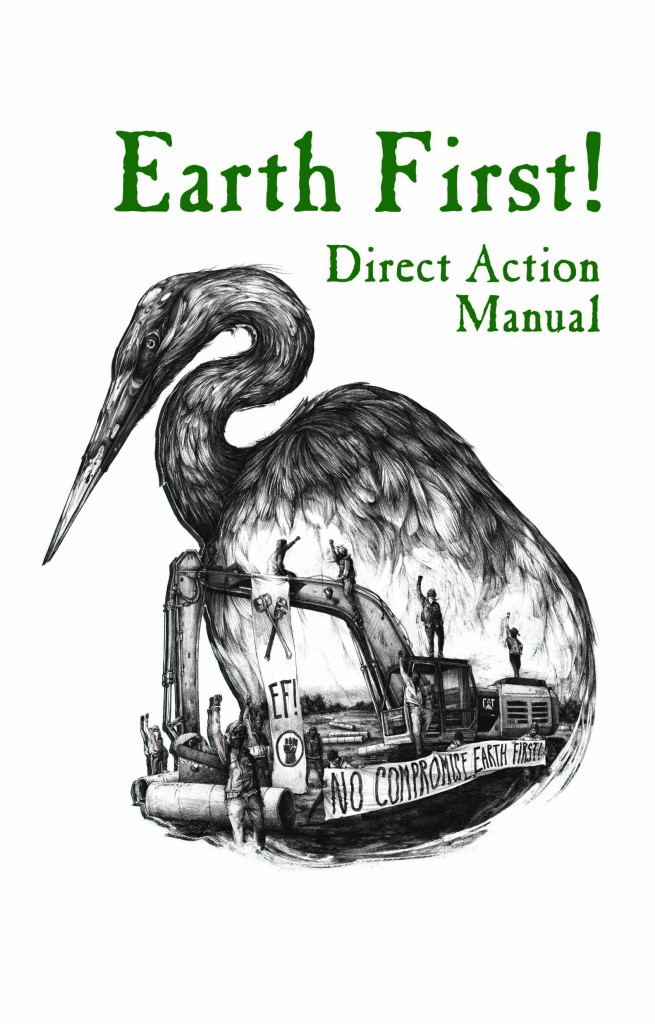
Earth First! Direct Action Man­u­al. To sup­port this pub­li­ca­tion, pre­order your copy or donate today.

After sev­er­al years in devel­op­ment, the Earth First! Direct Action Man­u­al is ready to go to press. A group of front­line activists has assem­bled over 300 pages of dia­grams, descrip­tions of tech­niques and a com­pre­hen­sive overview of the role direct action plays in our cam­paigns in defense of the Earth.

We are now in a three-week fundrais­ing cam­paign to ensure that this crit­i­cal book gets out to peo­ple who can use it. You can pre­order your copy and get some extra thank you gifts for your ear­ly endorse­ment by donat­ing today. More impor­tant­ly, though, we have offered a chance for you to help us spread this knowl­edge. Every dona­tion over $50 gives you the chance to send a free copy of the man­u­al to a cam­paign of your choice. The more you give, the more man­u­als we can put in the mail.

The man­u­al will be print­ed in the com­ing month with long­time Earth First! part­ner, The Gloo Fac­to­ry. This com­mu­ni­ty-mind­ed, union print shop has sup­plied Earth First! and its affil­i­ates with stick­ers and mer­chan­dise for decades and remains com­mit­ted to using a high stan­dard for recy­cled and reclaimed mate­r­i­al, as well as sup­port­ive work­er con­di­tions.

The man­u­al was first print­ed near­ly two decades ago and has been out of print since its ini­tial dis­sem­i­na­tion. Though many of the con­sid­er­a­tions for civ­il dis­obe­di­ence and inter­ven­tion have remained tried and true, new ele­ments have altered the ways we put these tac­tics into action. The Earth First! Direct Action Man­u­al will con­tin­ue the role of safe and effec­tive actions in stop­ping the destruc­tion of the plan­et.

Sup­port this effort today!

Reclaim the Power gathering 8–9 February

After an incred­i­ble day of idea gen­er­a­tion and vision­ing at the last gath­er­ing, it’s time for con­crete pro­pos­als and deci­sions about our next steps.


Loca­tion: Oxford
Time: Sat­ur­day 8th Feb­ru­ary 11am ­­– Sun­day 9th 4pm

Address: TBC
Crash Space/Social: Pro­vid­ed. Fur­ther details TBC.
Meals: Pro­vid­ed, dona­tion cost TBC
Trav­el Pool: Avail­able. Please book trav­el tick­ets in advance so that this can sup­port the most peo­ple.
Notes from Man­ches­ter Vision­ing Day are here: http://bit.ly/1lQ0Yd3

In ear­ly Decem­ber a large num­ber of peo­ple came togeth­er to dis­cuss the rad­i­cal visions they had for the future – visions that Reclaim the Pow­er, as a net­work, could help bring about.

It was a very open day of dis­cus­sion with a clear struc­ture, but with no pre-planned agen­da. Every­thing we talked about was gen­er­at­ed by par­tic­i­pants, and a huge num­ber of dif­fer­ent ideas were placed on the table.

So what next? Well, the idea is that all of that dis­cus­sion feeds into a month of cre­ative pro­pos­al mak­ing before the next gath­er­ing. This will be a space for short and medi­um-term deci­sion mak­ing where we work out what we’re doing in the next few months – and how this fits in with long term visions.

Rough pro­pos­al area groups formed at the Decem­ber gath­er­ing, includ­ing:

1. How to chal­lenge cor­po­rate pow­er
2. Move­ment and diver­si­ty
3. Ener­gy and fos­sil fuels
4. Pos­i­tive solu­tions

If you would like to link up with these groups and input into pro­pos­als for next steps, just con­tact info@nodashforgas.org.uk and you will be put in touch with a group con­tact.

This said, all pro­pos­als are wel­come! If you’re work­ing on your own, out­side these groups, then great. The more ideas the bet­ter.

The pro­pos­al dead­line is the 31st Jan­u­ary 2014. Please try and fol­low this rough four point list when writ­ing them, as it is essen­tial that all the pro­pos­als be con­sid­ered on an equal foot­ing.

1. What is it?
2. How does it link to long-term strate­gic aims?
3. Time­line?
4. Resources need­ed? (inc, peo­ple, costs, skills)

Spe­cif­ic venue and agen­da details to fol­low soon. In the mean­while, please check http://bit.ly/1lQ0Yd3 to see the dis­cus­sions and out­comes of the last agen­da.

See you soon,

RTP Gath­er­ings Team

info@nodashforgas.org.uk


Earth First! Winter Moot 7–9 March 2014: programme up

A week­end gath­er­ing for peo­ple involved or want to know more about eco­log­i­cal direct action around the UK includ­ing fight­ing open­cast coal, frack­ing, GM, nuclear pow­er, new road build­ing and quar­ries with dis­cus­sions and cam­paign plan­ning — empha­sis on the tac­tics and strate­gies, com­mu­ni­ty sol­i­dar­i­ty and sus­tain­able activism.

A week­end gath­er­ing for peo­ple involved or want to know more about eco­log­i­cal direct action around the UK includ­ing fight­ing open­cast coal, frack­ing, GM, nuclear pow­er, new road build­ing and quar­ries with dis­cus­sions and cam­paign plan­ning — empha­sis on the tac­tics and strate­gies, com­mu­ni­ty sol­i­dar­i­ty and sus­tain­able activism.

Evening Fri­day 7th — after­noon Sun­day 9th March 2014, Not­ting­ham

Cost scale £20 to £30. This includes full veg­an meals and accom­mo­da­tion.

It will be an indoor floor sleep­ing space so bring a warm sleep­ing bag and mat. Train to Not­ting­ham then tram to Bea­cons­field street– walk to the end turn right on to Glad­stone St — 245 Glad­stone St, Not­ting­ham NG7 6HX — www.earthfirst.org.uk

Full map/travel details

For offers of help or ques­tions email themiddle@earthfirst.org.uk


Programme

Friday

16.30–17.30 Secu­ri­ty Work­shop
17.30–18.30 Film

18.30 Din­ner

20.00 Ben­e­fit Gig

Saturday

8.30–9.30 Break­fast
9.30–10.45 Intro go round of cam­paigns

10.45–11.00 Break

11.00–12.00 Future of Earth First Part 1
12.00–13.00 Secu­ri­ty Work­shop

13.00–14.00 Lunch

14.00–14.30 Lush/fundraising work­shop
14.30–18.15 Cam­paign Work­shops (tim­ings to be finalised to include Frack­ing, Nuclear, Roads and Coal)
18.15–18.30 Sum­mer Gath­er­ing han­dover

18.30 Din­ner
20.00 DJ??

Sunday

9.00–10.00 Break­fast fry up
10.00–10.30 Tidy up of venue
10.30–11.30 Feed­back go round
11.30–12.30 Future of Earth First Part 2
12.30–14.00 Sum­mer Gath­er­ing Plan­ning (and time of oth­er work­shops to run in par­al­lel)

14.00–15.00 Lunch
15.00 End

New UK Fracking License Areas Confirmed

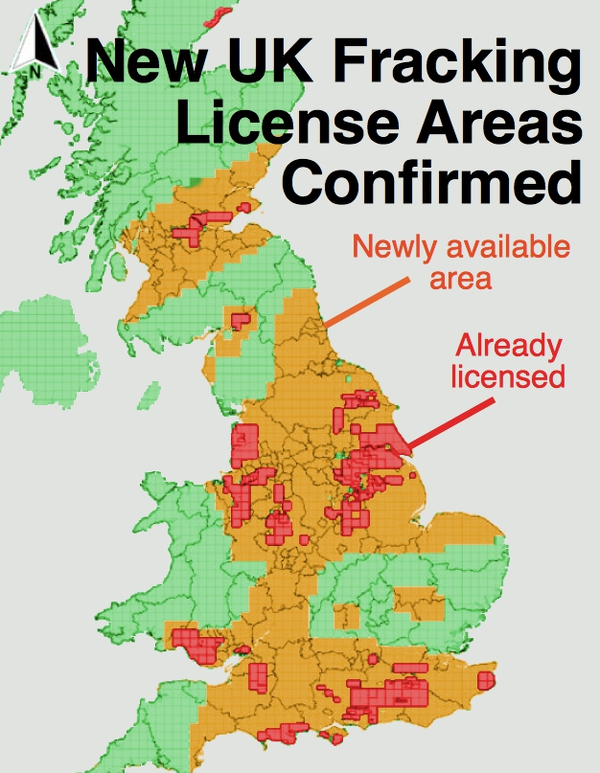
Decem­ber 17th The UK gov­ern­ment has announced that rough­ly 60% of the UK is now avail­able to be licensed to frack­ing com­pa­nies.

Decem­ber 17th The UK gov­ern­ment has announced that rough­ly 60% of the UK is now avail­able to be licensed to frack­ing com­pa­nies. After a brief “con­sul­ta­tion” peri­od it is like­ly that the licens­es will be hand­ed out to frak­ing com­pa­nies in the first half of 2014. The licens­es would cov­er the exploita­tion of both shale oil and gas and coal bed methane (CBM).

The area is based on that cov­ered by a new­ly finalised Strate­gic Envi­ron­men­tal Assess­ment (PDF). Despite the name the doc­u­ment does not seem to be par­tic­u­lar­ly focused on the envi­ron­ment and does not address the long term impacts of issu­ing these poten­tial­ly 30 year long licens­es.

To extract the amounts of gas that com­pa­nies are brag­ging are in exist­ing license blocks would require tens of thou­sands of wells. If large addi­tion­al areas are licensed next year, the scale of threat will be much larg­er still. These devel­op­ments would dev­as­tate our remain­ing coun­try­side, indus­tri­al­is­ing huge areas with well pads, pipelines, com­pres­sor sta­tions and pro­cess­ing plants.

The real­i­ty of uncon­ven­tion­al gas is that it is very hard to extract. It is lit­er­al­ly scrap­ping the bot­tom of the fos­sil fuel bar­rel. Dense­ly packed wells must be drilled (up to 8 wells per square mile) over large areas, since each well indi­vid­ual wells does not pro­duce much gas and then only for a short time. Worse, frack­ing is not an iso­lat­ed tech­nol­o­gy but is part of a wider trend towards more extreme forms of ener­gy extrac­tion, which if not resist­ed could see even larg­er threats such as Under­ground Coal Gasi­fi­ca­tion (UCG) become wide­spread.

Right now the com­mu­ni­ty around Bar­ton Moss near Man­ches­ter is fight­ing the threat to their region posed by IGas Energy’s attempts to drill a Shale/CBM explo­ration well there. Across the coun­try com­mu­ni­ties are get­ting organ­ised to resist these threats, with around 70 anti-frack­ing groups already formed in the last two years, and that num­ber grow­ing fast.

Support Spied Upon, a vital expose film telling the story of activists targeted by secret police

Dear Earth First!ers,


Dear Earth First!ers,


Due to its effec­tive use of cre­ative direct action tac­tics in recent decades, Earth First! has con­sis­tent­ly been a tar­get of state repres­sion and exces­sive police tac­tics. Now we are mak­ing a film with oth­er envi­ron­men­tal activists who have been tar­get­ed by under­cov­er police, with the goal of expos­ing these abu­sive repres­sion tac­tics.


“Spied Upon” is an inter­na­tion­al­ly made full-length doc­u­men­tary that uses the out­ing of for­mer UK under­cov­er cop Mark Kennedy as it’s start­ing point. Kennedy had begun his inter­na­tion­al oper­a­tion by tar­get­ing Earth First! in the UK in 2003, and had worked across Europe as well as for the FBI for sev­en-years before being out­ed by his unknow­ing activist girl­friend and her cir­cle of Not­ting­ham friends in 2010. Now this woman and a num­ber of oth­er women are suing police boss­es in the UK for what has been exposed as a reg­u­lar under­cov­er police tac­tic of dup­ing activist women into long-term rela­tion­ships. Spied Upon is work­ing with some of these women to sup­port them and help them have their sto­ry told.


Mark Kennedy turned pri­vate in 2010 and start­ed his own secu­ri­ty firm as well as say­ing that he was work­ing for Glob­al Open, a pri­vate secu­ri­ty firm known to tar­get ani­mal rights activists on behalf of phar­ma­ceu­ti­cal com­pa­ny clients. It appears as though that is exact­ly what Kennedy was doing when he went to Italy to spy on an ani­mal lib­er­a­tion gath­er­ing in the sum­mer of 2010. He even tried to strength­en his cred­i­bil­i­ty by say­ing he was an impor­tant Earth First! activist, see the video clip here we shot with Ital­ian activists who tell about when they were unknow­ing tar­gets of Kennedy: http://www.youtube.com/watch?v=bBx38iZ14nc


State repres­sion has long fea­tured the use of under­cov­er police, but a less­er known use of under­cov­er tac­tics has been those used by pri­vate secu­ri­ty firms on behalf of pri­vate cor­po­ra­tions. These prac­tices con­strue an intense inva­sion of pri­va­cy that is not even allowed for state under­cov­er police, and this scan­dal needs to be exposed! We have also uncov­ered ille­gal col­lu­sion between pri­vate and state secu­ri­ty forces. This col­lu­sion is a key focus of the film Spied Upon, which we are also mak­ing as a tool that activists can use to high­light the cur­rent prob­lems envi­ron­men­tal groups face today.


We plan to release Spied Upon inter­na­tion­al­ly in 2014. How­ev­er, to do this, we need your sup­port to make this film hap­pen. Our film crew comes from grass­roots activism, and we are turn­ing to the grass­roots, mean­ing you, to seek fund­ing. Please take a look at our crowd­fund­ing web-site and teas­er video at Indiegogo, and take action to help us please by mak­ing a dona­tion if you sup­port our work: http://www.indiegogo.com/projects/spied-upon


In sol­i­dar­i­ty,
The crew at Spied Upon


PS. Lots more info at: www.spiedupon.com

28 Days Later: Please spread far and wide

Cuadzilla Balcome Rolling Blockade Red Version

Cuadzilla Balcome Rolling Blockade Red Version

A Rolling Block­ade of the Bal­combe frack­ing site, 1st Sep­tem­ber – 28th Sep­tem­ber

Frack­ing com­pa­ny Cuadrilla’s gov­ern­men­tal licence to drill in Bal­combe ends on Sep­tem­ber 28th. The gov­ern­ment may be allow­ing them to drill but they have no social licence from the peo­ple of Bal­combe to frack their land and threat­en their water sup­ply.  Nei­ther do they have any man­date to begin an entire wave of frack­ing across the coun­try. The vast major­i­ty of peo­ple in the UK want clean­er, green­er ener­gy.
After the upsurge of cli­mate activism at Reclaim the Pow­er in August, let’s make these last 28 days count. Let’s halt their work at Bal­combe, and also send a strong mes­sage to those want­i­ng to frack else­where.

A block­ade has been on-going at the drilling site, but trucks have still been get­ting through. Now it’s time to up the ante.

We invite groups from around the coun­try to come and play a part in a 28 day rolling block­ade.

Think cre­ative­ly and act respon­si­bly. Pick a week­day before Sep­tem­ber 28, gath­er friends and use­ful kit get your­selves to Bal­combe.

Frack­ing is stop­pable, anoth­er world is pos­si­ble.

* Peo­ple are remind­ed that this is a peace­ful block­ade and that the Bal­combe camp is alco­hol-free.

* For fur­ther infor­ma­tion please con­tact 28dayslater.balcombe@gmail.com

* Fol­low us on Twit­ter (@28_dayslater) and like us on Face­book (https://www.facebook.com/28dayslaterrollingblockade)

Friends of Badgers Hack into NFU Mutual

www.savethebadger.com
11/06/12: received anony­mous­ly:

www.savethebadger.com
11/06/12: received anony­mous­ly:

“NFU Mutu­al is the com­mer­cial arm of the Nation­al Farm­ers Union (NFU). They pro­vide a huge part of the income for the NFU and enable it to be a lob­by­ing pow­er­house in UK pol­i­tics. The fund­ing they pro­vide to the NFU is used to ensure that ani­mal wel­fare reg­u­la­tions on farm­ers remain lax; that farm­ers con­tin­ue to receive huge sub­si­dies; that the hor­rif­ic live export trade can con­tin­ue and also ensure that they are able to get the gov­ern­ment to allow them to per­se­cute wildlife such as bad­gers in com­plete dis­re­gard to the law which has them as a pro­tect­ed species. The NFU and NFU Mutu­al are so close­ly linked that NFU reps are also sales agents for NFU Mutu­al. NFU Mutu­al makes the prof­it that greas­es the wheels of polit­i­cal lob­by­ing to allow the slaugh­ter of our inno­cent wildlife. Last Sep­tem­ber we decid­ed to come out of our sett and get hack­ing NFU Mutu­al, our biggest tar­get.

Since the begin­ning of May we have exploit­ed vul­ner­a­bil­i­ties on NFU Mutu­al sys­tems to allow us to down­load almost all of their cus­tomer files includ­ing full finan­cial details, claims and account his­to­ry. Our access is so com­plete that we were able to make sub­tle mod­i­fi­ca­tions to the accounts of sev­er­al peo­ple we know are involved in the bad­ger cull.

As more peo­ple are iden­ti­fied as being part of the bad­ger cull we will exploit the details we have on them. We will show the same mer­cy to their finances that they show to the lives of bad­gers. We already have plans to use the details we have on some of the more high pro­file sup­port­ers of the cull.

This is Bodger and Bad­ger. NFU Mutu­al bodged their secu­ri­ty and so we are now bad­ger­ing them.

Bad­gers have friends, and those friends are hack­ers.

Brock­Cy­ber­Clan — sav­ing wildlife one bit at a time.”

The Fuel Nightmare Continues

It’s as if the uni­verse is try­ing to tell us some­thing, isn’t it?

It’s as if the uni­verse is try­ing to tell us some­thing, isn’t it?

First, a dis­as­trous month that saw at least 15 sep­a­rate oil spills world­wide, near­ly all of them in North Amer­i­ca. That month also saw an oil barge catch fire after a col­li­sion, and the pub­li­ca­tion of a study impli­cat­ing frack­ing as a cause of earth­quakes.

Now at least 600 gal­lons have spilled from an Enbridge oil pump­ing sta­tion near Viking, Minnesota.Two fuel barges car­ry­ing a nat­ur­al gas deriv­a­tive have explod­ed and are still burn­ing on the Alaba­ma Riv­er. And new reports strong­ly sug­gest that tar sands from Exxon’s Pega­sus Pipeline in Mayflower, Arkansas have seeped into Lake Con­way and are head­ing toward the Arkansas Riv­er.

Dis­as­ters like these bring the real costs of fos­sil fuels into sharp focus, because we can imag­ine our­selves affect­ed by them. But the truth is, dis­as­ters like these are part of every­day life for the peo­ple and oth­er beings liv­ing in areas where fos­sil fuels are extracted—or any oth­er indus­tri­al mate­ri­als, from cop­per for solar pan­els to coltan for cell phones.

If you wouldn’t want oil spilling into your back yard, if you wouldn’t want a strip mine rip­ping open a hole behind your house and poi­son­ing your water, then it’s time to admit that the eco­nom­ic sys­tem found­ed on con­sum­ing these mate­ri­als has got to go. We’ll nev­er have jus­tice or sus­tain­abil­i­ty if we base one group’s “high stan­dard of liv­ing” on the dis­lo­ca­tion and destruc­tion of oth­ers.


The Efficiency of Green Energy

cap_1

We ought not at least to delay dis­pers­ing a set of plau­si­ble fal­lac­i­es about the econ­o­my of fuel, and the dis­cov­ery of sub­sti­tutes [for coal], which at present obscure the cri

cap_1

We ought not at least to delay dis­pers­ing a set of plau­si­ble fal­lac­i­es about the econ­o­my of fuel, and the dis­cov­ery of sub­sti­tutes [for coal], which at present obscure the crit­i­cal nature of the ques­tion, and are eager­ly passed about among those who like to believe that we have an indef­i­nite peri­od of pros­per­i­ty before us. –William Stan­ley Jevons, The Coal Ques­tion (1865)

There are, at present, many myths about green ener­gy and its effi­cien­cy to address the demands and needs of our bur­geon­ing indus­tri­al soci­ety, the least of which is that a switch to “renew­able” ener­gy will sig­nif­i­cant­ly reduce our depen­den­cy on, and con­sump­tion of, fos­sil fuels.

The oppo­site is true. If we study the actu­al pro­duc­tive process­es required for cur­rent “renew­able” ener­gies (solar, wind, bio­fu­el, etc.) we see that fos­sil fuels and their infra­struc­ture are not only cru­cial but are also whol­ly fun­da­men­tal to their devel­op­ment. To con­tin­ue to use the words “renew­able” and “clean” to describe such ener­gy process­es does a great dis­ser­vice for gen­er­at­ing the type of informed and ratio­nal deci­sion-mak­ing required at our cur­rent junc­tion.

To take one exam­ple – the pro­duc­tion of tur­bines and the allo­ca­tion of land nec­es­sary for the devel­op­ment, pro­cess­ing, dis­tri­b­u­tion and stor­age of “renew­able” wind ener­gy. From the min­ing of rare met­als, to the pro­duc­tion of the tur­bines, to the trans­porta­tion of var­i­ous parts (weigh­ing thou­sands of tons) to a cen­tral loca­tion, all the way up to the con­tin­ued main­te­nance of the struc­ture after its com­ple­tion – wind ener­gy requires indus­tri­al infra­struc­ture (i.e. fos­sil fuels) in every step of the process.

If the con­cep­tion of wind ener­gy only involves the pris­tine image of wind tur­bines spin­ning, ever so won­der­ful­ly, along a beau­ti­ful coast or grass­land, it’s not too hard to under­stand why so many of us hold green ener­gy so high­ly as an alter­na­tive to fos­sil fuels. Notice­ably absent in this con­cep­tion, though, are the images of every­thing it took to get to that end­point (which aren’t beau­ti­ful images to see at all and is large­ly the rea­son why wind ener­gy isn’t mar­ket­ed that way).

Because of the rapid growth and expan­sion of indus­tri­ali­a­tion in the last two cen­turies, we are long past the days of easy acces­si­ble resources. If you take a look at the type of min­ing oper­a­tions and drilling oper­a­tions cur­rent­ly sus­tain­ing our way of life you will read­i­ly see degra­da­tion and dev­as­ta­tion on uncon­scionable scales. This is our real­i­ty and these process­es will not change no mat­ter what our ends are – these process­es are the degree with which “basic” extrac­tion of all of the fun­da­men­tal met­als, min­er­als, and resources we are famil­iar with cur­rent­ly take place.

In much the same way that the absur­di­ties of tar sands extrac­tion, moun­tain­top removal, and hydraulic frac­tur­ing are plain­ly obvi­ous, so too are the con­tin­ued min­ing oper­a­tions and refin­ing process­es of cop­per, sil­ver, alu­minum, zinc, etc. (all essen­tial to the devel­op­ment of solar pan­els and wind tur­bines).

It is not enough – giv­en our cur­rent sit­u­a­tion and its dire impli­ca­tions – to just look at the pret­ty pic­tures and ignore every­thing else. All this does, as won­der­ful­ly reaf­firm­ing and uplift­ing as it may be, is keep us bound in delu­sions and false hopes. As Jevons affirms, the ques­tions we have before us are of such over­whelm­ing impor­tance that it does no good to con­tin­ue to delay dis­pers­ing plau­si­ble fal­lac­i­es. If we wish to go any­where from here, we absolute­ly need uncom­pro­mis­ing (and often bru­tal) truth.

A com­mon argu­ment among pro­po­nents of sup­posed “green” ener­gy – often preva­lent among those who do under­stand the inher­ent destruc­tive process­es of fuels, min­ing and indus­try – is that by sim­ply putting an end to cap­i­tal­ism and its prof­it motive, we will have the capac­i­ty to plan for the effi­cient and prop­er man­age­ment of remain­ing fos­sil fuels.

How­ev­er, the effi­cient use of a resource does not actu­al­ly result in its decreased con­sump­tion, and we owe evi­dence of that to William Stan­ley Jevons’ work The Coal Ques­tion. Writ­ten in 1865 (dur­ing a time of such great progress that crit­i­cisms were unfath­omable to most), Jevons devot­ed his study to ques­tion­ing Britain’s heavy reliance on coal and how the impli­ca­tion of reach­ing its lim­its could threat­en the empire. Many cov­ered top­ics in this text have influ­enced the way in which many of us today dis­cuss the issues of peak oil and sus­tain­abil­i­ty – he wrote on the lim­its to growth, over­shoot, ener­gy return on ener­gy input, tax­a­tion of resources and resource alter­na­tives.

In the chap­ter, “Of the econ­o­my of fuel,” Jevons address­es the idea of effi­cien­cy direct­ly. Preva­lent at the time was the thought that the fail­ing sup­ply of coal would be met with new modes of using it, there­fore lead­ing to a sta­tion­ary or dimin­ished con­sump­tion. Mak­ing sure to dis­tin­guish between pri­vate con­sump­tion of coal (which account­ed for less than one-third of total coal con­sump­tion) and the econ­o­my of coal in man­u­fac­tures (the remain­ing two-thirds), he explained that we can see how new modes of econ­o­my lead to an increase of con­sump­tion accord­ing to par­al­lel instances. He writes:

The econ­o­my of labor effect­ed by the intro­duc­tion of new machin­ery throws labor­ers out of employ­ment for the moment. But such is the increased demand for the cheap­ened prod­ucts, that even­tu­al­ly the sphere of employ­ment is great­ly widened. Often the very labor­ers whose labor is saved find their more effi­cient labor more demand­ed than before.

The same prin­ci­ple applies to the use of coal (and in our case, the use of fos­sil fuels more gen­er­al­ly) – it is the very econ­o­my of their use that leads to their exten­sive con­sump­tion. This is known as the Jevons Para­dox, and as it can be applied to coal and fos­sil fuels, it so right­ful­ly can be (and should be) applied in our dis­cus­sions of “green” and “renew­able” ener­gies – not­ing again that fos­sil fuels are nev­er com­plete­ly absent in the pro­duc­tive process­es of these ener­gy sources.

We can try to assert, giv­en the gen­er­al care we all wish to take in mov­ing for­ward to avert cat­a­stroph­ic cli­mate change, that much dili­gence will be tak­en for the effi­cient use of remain­ing resources but with­out the direct ques­tion­ing of con­sump­tion our attempts are mean­ing­less. His­tor­i­cal­ly, in many vary­ing indus­tries and cir­cum­stances, effi­cien­cy does not solve the prob­lem of con­sump­tion – it exas­per­ates it. There is no guar­an­tee that “green” ener­gies will keep con­sump­tion lev­els sta­tion­ary let alone result in a reduc­tion of con­sump­tion (an obvi­ous neces­si­ty if we are plan­ning for a sus­tain­able future).

Jevons con­tin­ues, “Sup­pose our progress to be checked with­in half a cen­tu­ry, yet by that time our con­sump­tion will prob­a­bly be three or four times what it now is; there is noth­ing impos­si­ble or improb­a­ble in this; it is a mod­er­ate sup­po­si­tion, con­sid­er­ing that our con­sump­tion has increased eight-fold in the last six­ty years. But how short­ened and dark­ened will the prospects of the coun­try appear, with mines already deep, fuel dear, and yet a high rate of con­sump­tion to keep up if we are not to ret­ro­grade.”

Writ­ing in 1865, Jevons could not have fath­omed the lev­el of growth that we have attained today but that doesn’t mean his ear­ly warn­ings of Britain’s use of coal should be whol­ly dis­card­ed. If any­thing, the con­tin­ued rise and dom­i­nance of indus­tri­al­i­sa­tion over near­ly all of the earth’s land and peo­ple makes his argu­ments ever more per­ti­nent to our present sit­u­a­tion.

Based on cur­rent emis­sions of car­bon alone (not fac­tor­ing in the reach­ing of tip­ping points and var­i­ous feed­back loops) and the best sci­ence read­i­ly avail­able, our time frame for action to avert cat­a­stroph­ic cli­mate change is any­where between 15–28 years. How­ev­er, as has been true with every sci­en­tif­ic esti­mate up to this point, it is impos­si­ble to pre­dict that rate at which these var­i­ous process­es will occur and large­ly our esti­mates fall extreme­ly short. It is quite prob­a­ble that we are like­ly to reach the point of irre­versible run­away warm­ing soon­er rather than lat­er.

Sup­pose our progress and indus­tri­al cap­i­tal­ism could be checked with­in the next ten years, yet by that time our con­sump­tion could dou­ble and the state of the cli­mate could be expo­nen­tial­ly more unfa­vor­able than it is now – what would be the capac­i­ty for which we could mean­ing­ful­ly engage in any amount of indus­tri­al pro­duc­tion? Would it even be in the realm of pos­si­bil­i­ty to imple­ment large-scale over­hauls towards “green” ener­gy? With­out a mean­ing­ful and dras­tic decrease in con­sump­tion habits (remem­ber­ing most of this occurs in indus­try and not per­son­al lifestyles) and a sub­se­quent decrease in depen­den­cy on indus­tri­al infra­struc­ture, the prospects of our future are severe­ly short­ened and dark­ened.


RECLAIM THE POWER

Join No Dash for Gas for a 4 day camp and

Join No Dash for Gas for a 4 day camp and
protest at West Burton power station

17th — 20th August 2013

Big deci­sions are being made now about how we’re going to pow­er the UK. The gov­ern­men­t’s pol­i­cy of increas­ing our reliance on gas is push­ing mil­lions into fuel pover­ty. This — cou­pled with ruth­less cuts to essen­tial ser­vices — leaves many with an impos­si­ble choice between heat­ing and eat­ing. And the same pol­i­cy guar­an­tees that we’ll miss even our mod­est car­bon reduc­tion tar­gets. Both the finan­cial and the cli­mate crises are relat­ed to the pur­suit of prof­it above all else, in the inter­ests of the few and at the expense of the many.

We need a win. And one win we need is a secure future for gen­er­a­tions to come, where prof­its don’t trump the pub­lic inter­est and where we have safe, clean ener­gy to meet our needs.

Be part of cre­at­ing some­thing BIG this sum­mer, get involved now and Reclaim The Pow­er.

We can fight back, as the stu­dent, trade union, wom­en’s, dis­abled rights and anti-cuts move­ments have shown us. There has nev­er been a more crit­i­cal time to take action. The solu­tions are there to be grasped.

21 peo­ple went up two chim­neys but 64,000 came down

Last Octo­ber, 21 envi­ron­men­tal activists shut down EDF’s West Bur­ton pow­er sta­tion for a week in protest at the gov­ern­men­t’s Dash for Gas. West Bur­ton is the first of up to 40 new gas fired pow­er sta­tions being planned. With your help, includ­ing a sol­i­dar­i­ty peti­tion signed by 64,000 peo­ple — they fought off EDF’s attempt to sue them for £5 mil­lion.

This sum­mer, inspired by their action, we are build­ing a wide coali­tion of groups and indi­vid­u­als who will be com­ing togeth­er to Reclaim the Pow­er. We’ll plan togeth­er. We’ll put for­ward solu­tions. We’ll cross the bor­der from anger to action. It was peo­ple pow­er that stopped new coal and stalled plans for a third run­way at Heathrow, that made bankers’ greed and tax avoid­ance tox­ic and that is now fight­ing aus­ter­i­ty attacks on work­ers, women, pen­sion­ers and the dis­abled. Togeth­er, we will stop the dash for gas.

Want to be part of cre­at­ing Reclaim The Pow­er? Won­der­ing where we’ll be, how you can get there or what you need to bring? More info to come soon, keep up to date at:

www.nodashforgas.org.uk
info@nodashforgas.org.uk
@nodashforgas