The Ka’apor of Brazil Use Bows, Arrows, Sabotage and GPS to Defend the Amazon from Logging

With bows, arrows, GPS track­ers and cam­era traps, an indige­nous com­mu­ni­ty in north­ern Brazil is fight­ing to achieve what the gov­ern­ment has long failed to do: halt ille­gal log­ging in their cor­ner of the Ama­zon.

Sep­tem­ber 10th, 2015

With bows, arrows, GPS track­ers and cam­era traps, an indige­nous com­mu­ni­ty in north­ern Brazil is fight­ing to achieve what the gov­ern­ment has long failed to do: halt ille­gal log­ging in their cor­ner of the Ama­zon.

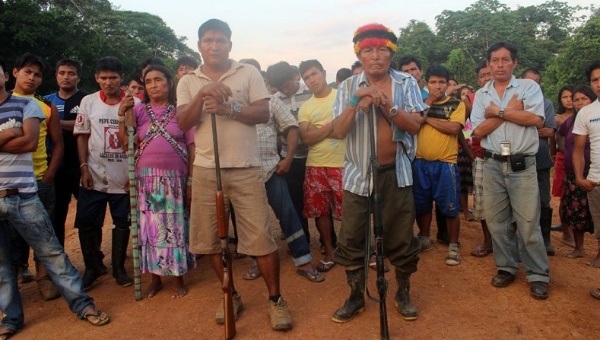
The Ka’apor – a tribe of about 2,200 peo­ple in Maran­hão state – have organ­ised a mili­tia of “for­est guardians” who fol­low a strat­e­gy of nature con­ser­va­tion through aggres­sive con­fronta­tion.

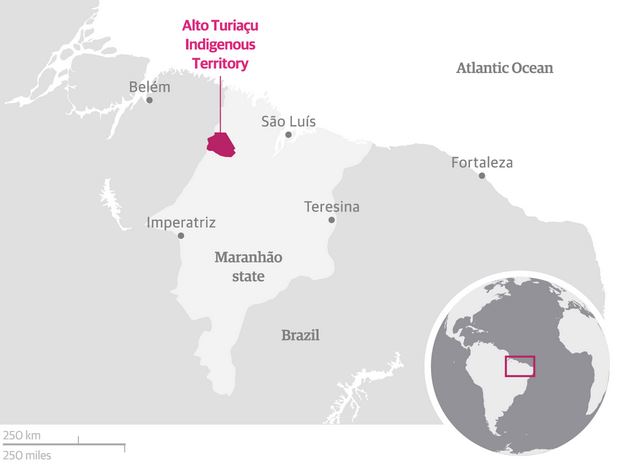
Log­ging trucks and trac­tors that encroach upon their ter­ri­to­ry – the 530,000-hectare Alto Turi­açu Indige­nous Land – are inter­cept­ed and burned. Dri­vers and chain­saw oper­a­tors are warned nev­er to return. Those that fail to heed the advice are stripped and beat­en.

It is dan­ger­ous work. Since the tribe decid­ed to man­age their own pro­tec­tion in 2011, they say the theft of tim­ber has been reduced, but four Ka’apor have been mur­dered and more than a dozen oth­ers have received death threats.

Now the Ka’apor are seek­ing sup­port through NGOs and the media. Ear­li­er this month, the Guardian was among a first group of for­eign jour­nal­ists and Green­peace activists who were invit­ed to see how they live and oper­ate.

kapoor map

Reach­ing their land was a long haul. After fly­ing to São Luis, the cap­i­tal of Maran­hão state, it took more than eight hours to dri­ve along a pot­holed high­way flanked by cat­tle farms and palm plan­ta­tions before turn­ing off on to a bumpy dirt track through tracts of defor­est­ed land, until a dense thick­et of jun­gle marked the lim­it of Ka’apor ter­ri­to­ry.

The path was so close to the foliage here that branch­es con­stant­ly scratched and scraped the sides of our 4×4 until final­ly, just a few min­utes before mid­night, we emerged into a clear­ing bathed in moon­light.

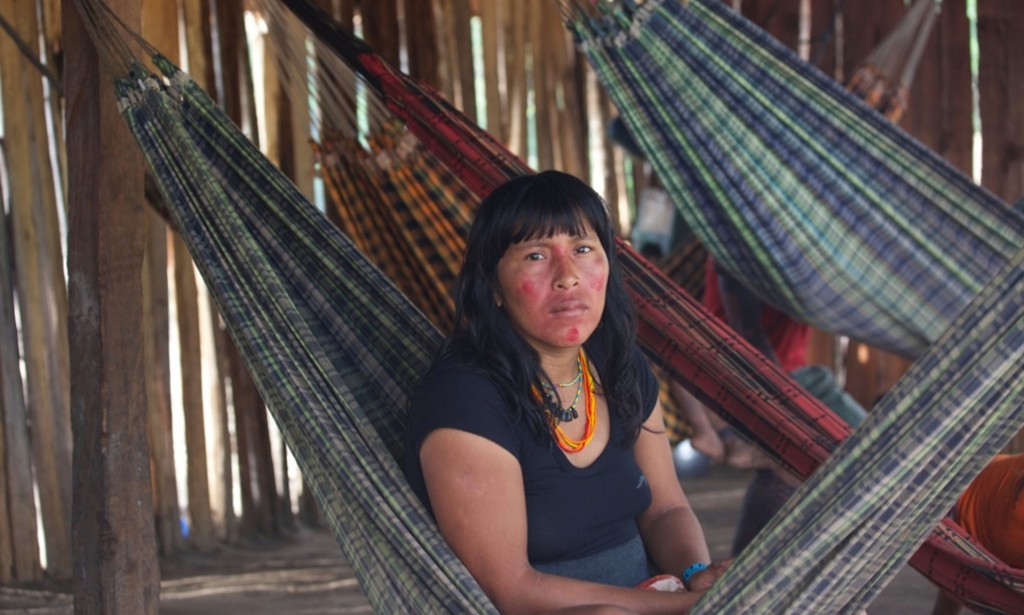
This was Jax­ipuxiren­da, one of eight for­mer log­ging camps that have been tak­en over by the Ka’apor and set­tled by a hand­ful of fam­i­lies so the tim­ber thieves can­not return. It was very sim­ple; six thatched roofs under which fam­i­lies slept in ham­mocks.

Liv­ing in such out­posts is a sac­ri­fice. Longer-estab­lished vil­lages have elec­tric­i­ty, health cen­tres, foot­ball pitch­es and satel­lite dish­es. Jax­ipuxiren­da is bereft of such crea­ture com­forts.

But it is a key part of a dri­ve to regain ter­ri­to­ry, inde­pen­dence and respect – all of which have been steadi­ly erod­ed by log­gers for more than two decades. Alto Turi­açu, which cov­ers an area equal to Delaware or three times that of Greater Lon­don, is a vul­ner­a­ble and lucra­tive tar­get. Although 8% has already been cleared, the indige­nous land con­tains about half of the Ama­zon for­est left in Maran­hão state. This includes much sought-after trees, like ipê (Brazil­ian wal­nut), which can fetch almost £1,000 ($1,500) per cubic metre after pro­cess­ing and export.

Kaapor indians
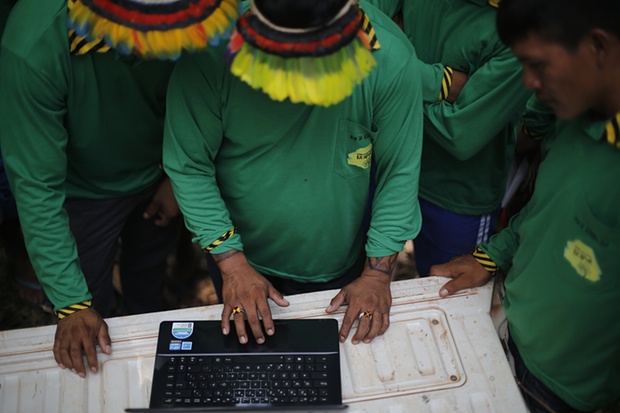
Ka’apor Indi­ans set­ting up trap cam­eras in areas used by ille­gal log­gers to invade the indige­nous ter­ri­to­ry. Pho­to­graph: Lunae Parracho/Greenpeace


The Ka’apor asked the gov­ern­ment to pro­tect their bor­ders, which were recog­nised in 1982. Last year, a fed­er­al court ordered the author­i­ties to set up secu­ri­ty posts. But noth­ing has been done, prompt­ing the com­mu­ni­ty to organ­ise self-defence mis­sions.

In the morn­ing, one of the for­est guardians, Tid­i­un Ka’apor (who, like all of the lead­ers of the group, asked to have his name changed to avoid being tar­get­ed by log­gers) explains what hap­pens when they encounter log­gers.

“Some­times, it’s like a film. They fight us with machetes, but we always dri­ve them off,” he says. “We tell them, ‘We’re not like you. We don’t steal your cows so don’t steal our trees.”

The main weapons used by the Ka’apor are bows and arrows and bor­duna – a heavy sword-shaped baton. One of the group also owns a rusty old rifle. Most­ly though, they depend on greater num­bers.

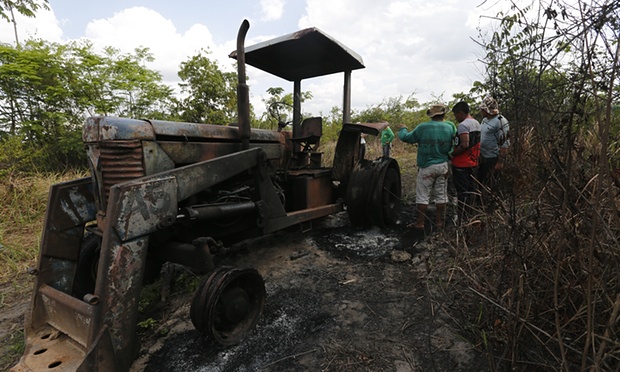
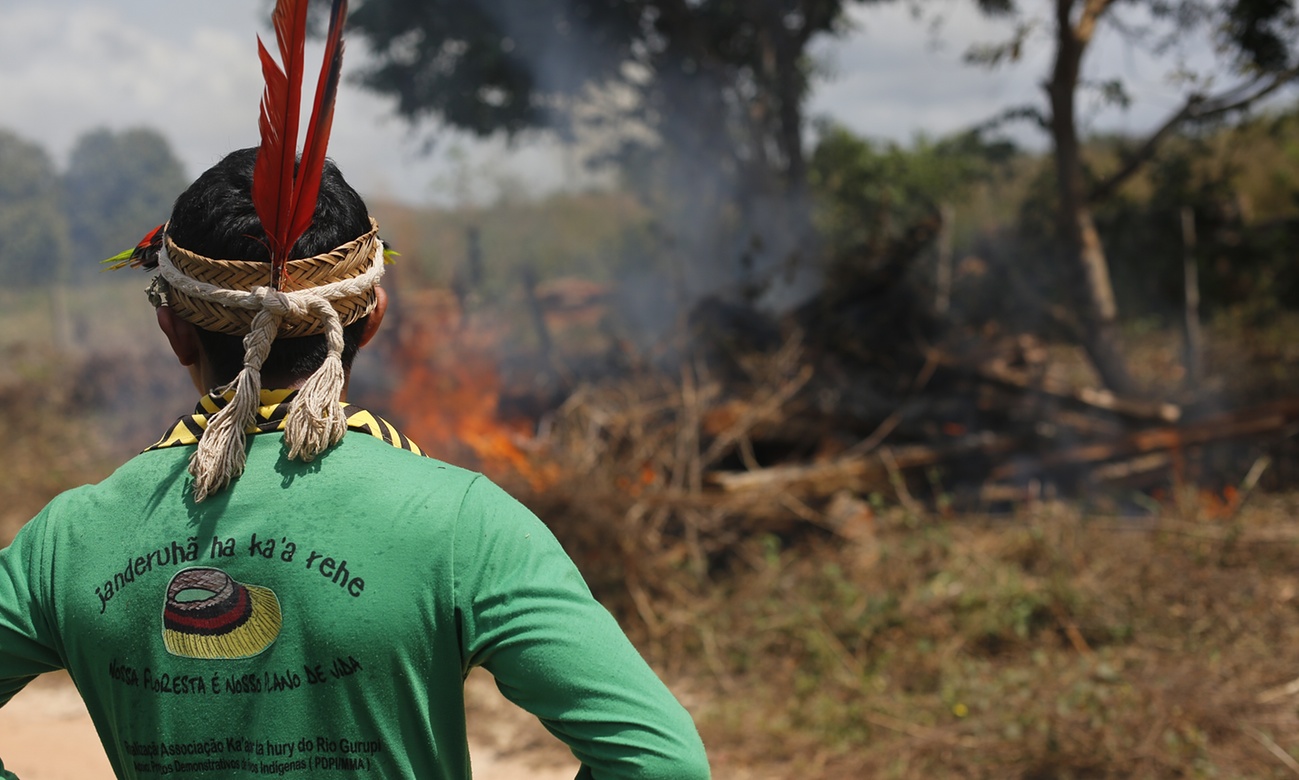
Tid­i­un Ka’apor takes us to a charred truck and trac­tor that the group burned in a con­fronta­tion a lit­tle over a week ear­li­er and uses the ash­es to paint his face. “This gives us strength,” one of his asso­ciates says. The Ka’apor are thought to have set fire to about a dozen log­gers’ vehi­cles. Fur­ther along the road, they build a pyre of planks seized inside their land, douse it with gaso­line and then watch it burn.

Anoth­er of the group’s lead­ers Miraté Ka’apor says the use of vio­lence – which has result­ed in some bro­ken bones but no deaths among the log­gers – is jus­ti­fied. “The log­gers come here to steal from us. So, they deserve what they get. We have to make them feel our loss – the loss of our tim­ber, the destruc­tion of our for­est.”

Com­pared with the past, he said the mis­sions were effec­tive. “Our strug­gle is hav­ing results because the log­gers respect us now.”

But the log­gers also appear to be respond­ing with lethal force. On 26 April, a for­mer chief­tain, Eusébio Ka’apor was mur­dered by gun­men on his way back from a vis­it to his broth­er. Like most killings of indige­nous peo­ple and envi­ron­men­tal activists in Brazil, the crime has not been solved, but the dead man’s son has lit­tle doubt who is respon­si­ble and what they were try­ing to achieve.

Ka'apor 3
Ka’apor Indi­ans stand next to a log­ging trac­tor that they dis­cov­ered and set on fire inside the indige­nous ter­ri­to­ry one month before. Pho­to­graph: Lunae Parracho/Greenpeace

“He was a tar­get because [the log­gers] thought he was the main leader of the group,” said Iraun Ka’apor. “They thought the Ka’apor would stop if they killed him. But we will con­tin­ue with our work of pro­tec­tion. I’m not afraid. This is my home, my land, my for­est.”

Ten days before we arrived, Iraun received a death threat and was told that the bul­let that killed his father had been meant for him.

The author­i­ties in Maran­hão – the poor­est state in Brazil – warn the Ka’apor that although they are with­in their rights to pro­tect their land, it is ulti­mate­ly up to the state to resolve dis­putes over ter­ri­to­ry.

“The involve­ment of the Ka’apor in the defence of their ter­ri­to­ry against the log­gers should be under­stood as legit­i­mate defence, since the action of the log­gers puts their sur­vival at risk,” said Alexan­dre Sil­va Sarai­va, region­al super­in­ten­dent of the fed­er­al police. “But the pres­ence of the state is the only way to dimin­ish the agrar­i­an con­flicts and reduce homi­cides.”

Inside Alto Turi­açu, peo­ple are scep­ti­cal that the police and gov­ern­ment are will­ing to look after indige­nous inter­ests. Last year 70 Indi­ans were mur­dered in Brazil, a 32% increase on 2013, accord­ing to the Mis­sion­ary Indige­nous Coun­cil. In many cas­es the killings were relat­ed to land dis­putes with log­gers or ranch­ers. In their com­mu­ni­ty gath­er­ing, many Ka’apor expressed the belief that the author­i­ties were col­lud­ing in the sell-off of the for­est.

“We are very con­cerned,” Miraté says. “Even the local author­i­ties are involved. They grant licences to the sawmills and that encour­ages the log­gers. The way the bran­cos [white or non-indige­nous peo­ple] are organ­ised also pro­motes death. They make a prof­it from this.”

Gov­ern­ment offi­cials pre­fer to focus on the pos­i­tives: the slow­down in Ama­zon­ian defor­esta­tion rates over the past 10 years (though in Maranhão’s case this is large­ly because there is so lit­tle for­est left) and the progress made in bring­ing cul­prits to jus­tice. This year, pros­e­cu­tors in neigh­bour­ing Pará state have bro­ken up an ille­gal land-clear­ance ring and arrest­ed cor­rupt offi­cials in tim­ber-laun­der­ing syn­di­cates that sup­ply fake cer­ti­fi­ca­tion to log­gers. Else­where, satel­lite mon­i­tor­ing has helped to iden­ti­fy which landown­ers are tear­ing down or burn­ing the most trees, though this approach is of less use when it comes to the steady degrad­ing of the forests by inva­sive log­gers.

Pedro Leão, super­in­ten­dent for Iba­ma (Brazil­ian Insti­tute of the Envi­ron­ment and Renew­able Nat­ur­al Resources) insists his agency is already com­bat­ing the crim­i­nal organ­i­sa­tions behind ille­gal log­ging and cau­tions that it is “extreme­ly risky” for the Ka’apor to do the same. He said he hoped Iba­ma could make greater strides in the future by focus­ing on sawmills and pos­si­bly using GPS track­ers.

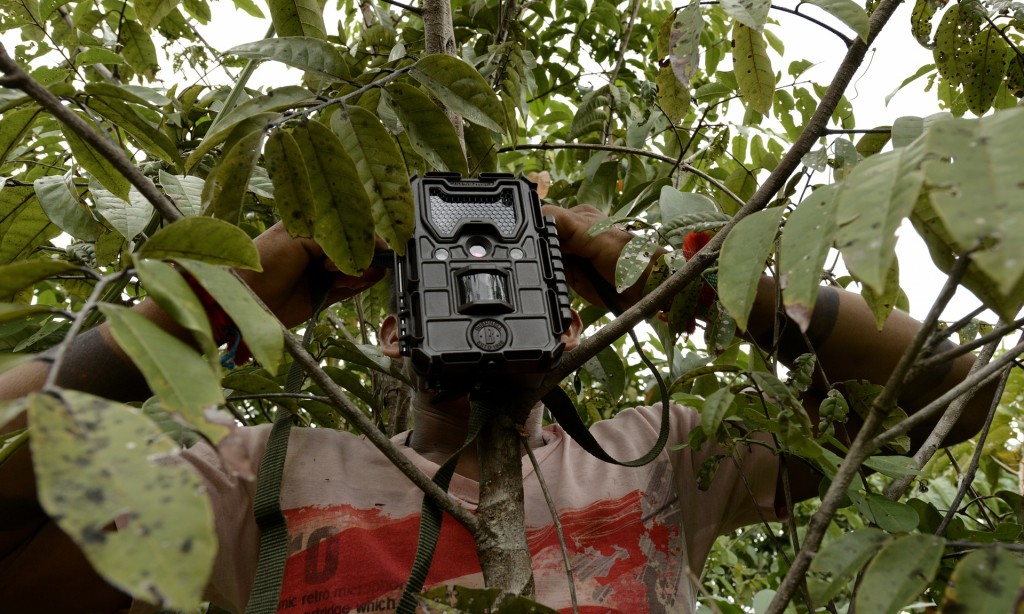
These are already areas where the Ka’apor are active. Dur­ing this month’s vis­it, Green­peace – which also helped the Guardian to reach the area – pro­vid­ed the com­mu­ni­ty with 11 cam­era traps, 11 GPS track­ers and two com­put­ers, worth a total of 20,000 reais (£3,480/$5,260).
Ka'apor image 5
A Ka’apor Indi­an sets up a trap cam­era in an area used by ille­gal log­gers. Pho­to­graph: Lunae Parracho/Greenpeace

Mari­na Lacorte, a for­est cam­paign­er with Green­peace Brazil, said the devices – which are usu­al­ly used to cap­ture wild ani­mals on film – were intend­ed to enhance the Ka’apor’s suc­cess in dimin­ish­ing ille­gal log­ging. “With the cam­eras, we hope to prove that at a cer­tain time and date in a cer­tain place, the trucks arrived emp­ty and left with tim­ber. We hope the devices can pro­duce more evi­dence to per­suade the author­i­ties to do some­thing to stop the log­ging and the con­flict and the mur­der.”

For many con­ser­va­tion­ists, the sig­nif­i­cance of the Ka’apor’s actions goes beyond their par­tic­u­lar case and puts them on the front­line of the bat­tle against cli­mate change. Brazil, like oth­er Ama­zon­ian coun­tries, has strug­gled to tack­le defor­esta­tion part­ly because envi­ron­men­tal author­i­ties are con­stant­ly out­num­bered and out­gunned by log­gers, ranch­ers and farm­ers.

Iba­ma – the main agency ded­i­cat­ed to pro­tect­ing the for­est – has about 1,500 rangers to mon­i­tor the Brazil­ian Ama­zon, an area that is more than half the size of the US. Many of them have mixed feel­ings about land clear­ance. Some are even in the pay of log­gers, as recent scan­dals have revealed.

By con­trast, indige­nous groups like the Ka’apor have the incen­tive and the man­pow­er on the ground to resist the dec­i­ma­tion of their forests. For them, this is not just a job, but a mat­ter of iden­ti­ty and sur­vival. The ben­e­fits can be glob­al. In a recent report, the World Resources Insti­tute not­ed that when indige­nous peo­ple have weak legal rights, their forests tend to become the source of car­bon diox­ide emis­sions, while those in a strong posi­tion are more like­ly to main­tain or even improve their forests’ car­bon stor­age. Under­lin­ing this, a research paper pub­lished last month in Sci­ence, notes that for­est dwellers are the best defence against log­ging and land clear­ance.

The dan­ger is that such groups might become involved in a proxy war against emis­sions with­out the tech­nol­o­gy, the fire­pow­er or the legal author­i­ty to over­come more pow­er­ful oppo­nents. But Miraté said the com­mu­ni­ty would pick and choose how and when to get involved.

“It’s not that we don’t under­stand tech­nol­o­gy. We can dri­ve cars and motor­bikes and we can use com­put­ers. But we want to do things our way, the Ka’apor way,” he said.
Ka'apor image 6
Ka’apor Indi­ans have occu­pied a site for­mer­ly used by ille­gal log­gers. Pho­to­graph: Jonathan Watts for the Guardian

The log­gers are not the only threat to the tribe’s sur­vival. Pre­vi­ous bat­tles with the author­i­ties and the spread of dis­eases brought in by out­siders reduced the pop­u­la­tion – which once stood at sev­er­al thou­sand – to lit­tle more than 500 at the low point in 1982. The com­mu­ni­ty has since rebound­ed – large­ly thanks to the recog­ni­tion of its ter­ri­to­ry – and it con­tin­ues to assert its cul­tur­al iden­ti­ty on a vari­ety of fronts.

While many oth­er indige­nous groups are plagued by alco­holism, the Ka’apor recent­ly intro­duced a ban on con­sump­tion of beer and spir­its (as well as vis­its by Chris­t­ian evan­ge­lists and polit­i­cal cam­paign­ers). If a mem­ber vio­lates the rule once, he gets a warn­ing; twice, he must face a full meet­ing of the tribe; three times and he is sen­tenced to work in the near­by town. In their rela­tions with the gov­ern­ment, the tribe insist­ed last year on being rep­re­sent­ed by a mem­ber of their own com­mu­ni­ty rather than a bureau­crat from Funai (the Nation­al Indi­an Foun­da­tion). They have also moved away from what they say is a Funai-led sys­tem of hav­ing a sin­gle vil­lage chief and instead revert­ed towards col­lec­tive lead­er­ship.

In edu­ca­tion, they have ensured that their chil­dren are taught entire­ly in Ka’apor rather than Por­tuguese until the age of 10. Most cre­ative­ly, they also recent­ly cod­i­fied their own cal­en­dar, which pri­ori­tis­es plant­i­ng, har­vest­ing and mat­ing sea­sons, as an alter­na­tive to the solar-based Gre­go­ri­an sys­tem. While they occa­sion­al­ly shop for rice, the Ka’apor says they are large­ly self-suf­fi­cient with crops of man­ioc, bananas, pump­kin and water­mel­on. They also raise chick­ens, and hunt wild boar, deer, capy­bara and par­rots – though only in cer­tain sea­sons to ensure wild pop­u­la­tions remain strong.

But Miraté fears the author­i­ties in Brasília are more con­cerned about the country’s non-indige­nous pop­u­la­tion and the pres­sure of a glob­al econ­o­my.

“We believe that what the Brazil­ian gov­ern­ment is doing now is wrong. They are fol­low­ing a pol­i­cy to fin­ish off the indige­nous peo­ple,” he warns. But “we want to do things our own way, to respect our own cul­ture. That’s the only way to sur­vive.”

by Jonathan Watts / The Guardian
Peru: Achuar Indigenous People Seize 11 Oil Wells Demanding Spill Clean Up

The Achuar com­mu­ni­ties say for­eign oil com­pa­nies pol­lute their lands and clean water and are demand­ing com­pen­sa­tion.

The Achuar Indige­nous peo­ple are fed up with the pol­lu­tion left behind by
for­eign oil com­pa­nies.

Sep­tem­ber 9th, 2015

The Achuar com­mu­ni­ties say for­eign oil com­pa­nies pol­lute their lands and clean water and are demand­ing com­pen­sa­tion.

Peru­vian Indige­nous pro­test­ers seized oil wells in an Ama­zon­ian oil block Tues­day to press the gov­ern­ment to respond to demands for com­pen­sa­tion due to the pol­lu­tion caused by the petro­le­um oper­a­tions. The pro­test­ers from the Achuar Indige­nous com­mu­ni­ties said they also plan to halt out­put in a near­by con­ces­sion.

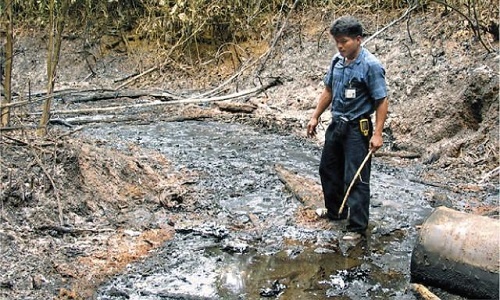
The Indige­nous demon­stra­tors shut down 11 wells and took con­trol of an air­drome in oil block 8 to demand clean water, repa­ra­tions for oil pol­lu­tion and more pay for the use of native land, said Car­los San­di, chief of the Indige­nous fed­er­a­tion Fecona­co. Achuar leader Car­los San­di observes the dam­age left behind by extrac­tion­ist oil com­pa­nies.

Pho­to: Rena­to Pita/ PUINAMUDT Argen­tine ener­gy com­pa­ny Plus­petrol oper­ates block 8 and said dai­ly out­put of about 8,500 bar­rels per day had stopped.

The firm called on pro­test­ers in block 8 to seek dia­logue. “So far, how­ev­er, they insist on hold­ing con­trol of instal­la­tions,” Plus­petrol said in a state­ment.

San­di said the Achuar in oil block 192 would also soon seize wells there fol­low­ing a dis­pute with the gov­ern­ment over pro­ceeds for com­mu­ni­ties in a new con­tract award­ed to the Cana­di­an com­pa­ny Pacif­ic Explo­ration and Pro­duc­tion Cor­po­ra­tion. Both oil blocks are in Peru’s north­ern region of Lore­to.

“The deci­sion (to seize wells) has been made, we just need to wrap up some coor­di­na­tion,” San­di said.

Peru signed a last-minute deal with Pacif­ic for the rights to tap oil block 192 for the next two years after an open auc­tion for a 30-year con­tract failed to draw any bids last month.

The gov­ern­ment includ­ed ben­e­fits for some Indige­nous com­mu­ni­ties in the new con­tract but a stale­mate with oth­ers over their share of oil prof­its left many out. Rep­re­sen­ta­tives of Pacif­ic could not be reached out­side of reg­u­lar busi­ness hours.

Block 192’s oper­a­tions have been halt­ed on var­i­ous occa­sions in recent years. The pro­test­ers have demand­ed the gov­ern­ment clean up oil spills and give them more com­pen­sa­tion.

Peru has declared sev­er­al envi­ron­men­tal emer­gen­cies there because of oil pol­lu­tion. The Latin Amer­i­can coun­try is rife with con­flicts over min­ing and ener­gy projects.

Ear­li­er on Tues­day, an assem­bly of social orga­ni­za­tions in the Ama­zon­ian region of Lore­to vot­ed to car­ry out anoth­er 48-hour strike start­ing Fri­day to protest the government’s pri­va­ti­za­tion move to allo­cate an oil lot to the Cana­di­an com­pa­ny for two years instead of the country’s state-owned com­pa­ny.

Lot 192 is the source of 17 per­cent of the nation­al crude pro­duc­tion. The region’s pres­i­dent of Patri­ot­ic Front Ameri­co Menen­dez said the Cana­di­an oil firm is a “mafia com­pa­ny,” say­ing that for exam­ple in Colom­bia they hire gun­men to deal with social lead­ers who oppose exploita­tion.

Nev­er­the­less, he added, the assem­bly also vot­ed in favor of main­tain­ing the talks with the gov­ern­ment, in order to nego­ti­ate var­i­ous demands, includ­ing the cre­ation of a com­pen­sa­tion fund of about US$112 mil­lion, in addi­tion to an inver­sion of around US$625 mil­lion in the area.

In Colom­bia, Pacif­ic Stra­tus Ener­gy alleged­ly hires killers against social lead­ers who oppose the exploita­tion, claimed Pres­i­dent of Fed­er­a­tion of Native Com­mu­ni­ties from the Riv­er Tigre Fer­nan­do Chu­je.

Min­is­ter of Min­ing and Ener­gy Rosa Maria Ortiz has indi­cat­ed that the state com­pa­ny PetroPe­ru will start a process of restruc­tur­ing and mod­ern­iza­tion in the next 270 days to pre­pare it to com­pete against the Cana­di­an com­pa­ny in two years, when the con­ces­sion ends.

Lot 192 is com­prised of areas inhab­it­ed by the com­mu­ni­ties of the riv­er basins of Pas­taza, Tigre, and Cor­ri­entes.

The lead­ers of the Apus Indige­nous peo­ple in the area have been protest­ing for years, demand­ing respect for their peo­ple and repa­ra­tions for envi­ron­men­tal destruc­tion caused by oil com­pa­nies.

Build gardens not prisons

The Reclaim the Fields Inter­na­tion­al Action Camp, attend­ed by 100–150 peo­ple

8.9.15

The cam­paign against a new mega-prison being built near Wrex­ham got a boost recent­ly when the Reclaim the Fields net­work held an action camp near­by.

The Reclaim the Fields Inter­na­tion­al Action Camp, attend­ed by 100–150 peo­ple, ran from 28th August to the 2nd Sep­tem­ber 2015 and was host­ed by a local anti-frack­ing site. Work­shops explored the links between land strug­gles, prison abo­li­tion and oth­er issues includ­ing gen­der, ani­mal lib­er­a­tion and free­dom of move­ment.

Peo­ple held evening noise demos at three pris­ons in the region in sol­i­dar­i­ty with those inside, leaflet­ted the local town, and pick­et­ed sev­er­al com­pa­nies involved in the mega-prison. Final­ly a block­ade of the con­struc­tion site held up lor­ries for over 4 hours with­out any arrests.

As any­one with expe­ri­ence of them knows, pris­ons are abu­sive places used to con­trol and threat­en peo­ple, par­tic­u­lar­ly those of us who are work­ing class, peo­ple of colour, or dis­obe­di­ent. We need jus­tice process­es based on strong, vibrant com­mu­ni­ties, not more pris­ons and cops harm­ing our com­mu­ni­ties.

The new prison would be the biggest in the UK, and the sec­ond biggest in Europe. It aims to open in 2017 and would give the State enough cages to lock up an extra 2100 peo­ple.

Mean­while, Robert King of the Ango­la 3 will give a talk on strug­gle and rev­o­lu­tion in the US prison sys­tem, on Wed 16 Sep in Dundee.

Com­mu­ni­ty Action on Prison Expan­sion | Reclaim the Fields UK | Gar­dens not Cages | Frack Free Wrex­ham | Bor­ras Com­mu­ni­ty Pro­tec­tion Camp

Award giving for greedy estate agent CJA in Bristol

Award giv­ing in recog­ni­tion of ser­vices to land­lords and their rights. We proud­ly pre­sent­ed bricks through win­dows of CJA estate agents in Southville on the night of 31st August. All win­dows smashed and the inter­na­tion­al squat­ter sym­bol paint­ed on their wall. Because despite the ban on squat­ting hous­es every­one should have a decent home.

Award giv­ing in recog­ni­tion of ser­vices to land­lords and their rights. We proud­ly pre­sent­ed bricks through win­dows of CJA estate agents in Southville on the night of 31st August. All win­dows smashed and the inter­na­tion­al squat­ter sym­bol paint­ed on their wall. Because despite the ban on squat­ting hous­es every­one should have a decent home.
CJA have showed real resilience and sin­gle mind­ed­ness to make a stand for max­i­mum prof­it regard­less of the tough con­di­tions faced by ten­ants every­where. In a let­ter to Bris­tol land­lords in March this year they encour­aged land­lords to hike their rents and cyn­i­cal­ly take advan­tage of the hous­ing cri­sis. Because the cri­sis is for land­lords and prop­er­ty devel­op­ers anoth­er busi­ness oppor­tu­ni­ty. They then arro­gant­ly ignored a cam­paign by a local com­mu­ni­ty union to hold them to account. So we found anoth­er way to encour­age them to see the costs of their actions. Thou­sands of us are trapped in over­crowd­ed, over priced and chron­i­cal­ly under­main­tained and decay­ing rent­ed hous­es. We con­stant­ly strug­gle to pay the rent under the ever present threat of evic­tion and home­less­ness. Gen­tri­fi­ca­tion and coloni­sa­tion of our areas push­es rents ever high­er and forces us fur­ther out. This is social cleans­ing and it is a very prof­itable busi­ness. For greedy land­lords and estate agents like CJA, decent, afford­able homes don’t come into their sums. It’s all about invest­ment oppor­tu­ni­ties and ruth­less prof­i­teer­ing. Mean­while, there is a huge increase in home­less­ness and the hos­tels are full to burst­ing. We don’t have to take this. Let’s fight for a world with­out land­lords, where peo­ple’s homes are not for the prof­it of the rich.

Main coal conveyor belt blocked at Hambach

1st Sept 2015

Ear­ly this morn­ing two peo­ple occu­pied the main con­vey­or belt, close to the coal bunk at Ham­bach. This con­vey­or belt trans­ports coal from all over the mine to the coal bunker, and from there, to the coal trains.

This action is against this sys­tem in which big com­pa­nies are allowed to destroy our earth.
Also in sol­i­dar­i­ty with our com­rade Jus, who is in prison for 6 weeks now. We encour­age every­one to show sup­port for Jus in any­way that they see fit. Free­dom for Jus!

The peo­ple in the block­ade decid­ed to focus on their action and not so much on media, if media has ques­tions they can call the mead­ow phone: 0157 – 54 136 100

For one hour the work­ers sprin­kled them with cold water. After 6,5 hours the peo­ple were removed by police and have been released at 1 pm.

3/9/15: Update on Jus

No Gold, No Masters: Press release of the 1st “Beyond Europe” Camp in Halkidiki #skouries

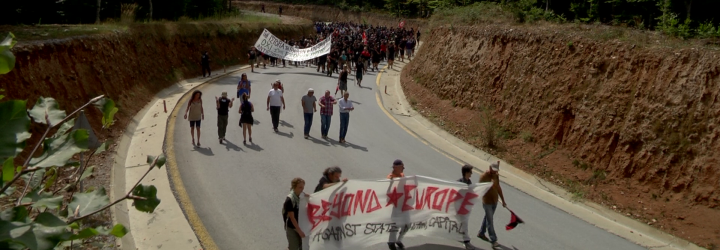
On Sun­day, the August 2015, about 2000 peo­ple attend­ed on a demon­stra­tion in the moun­tains of Skouries.

August 27th, 2015

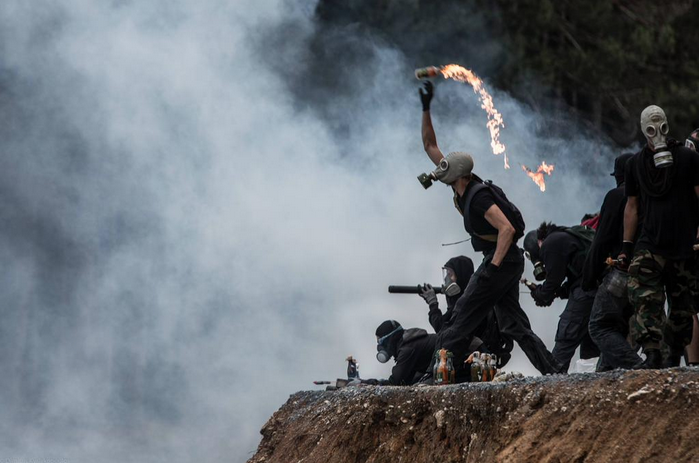
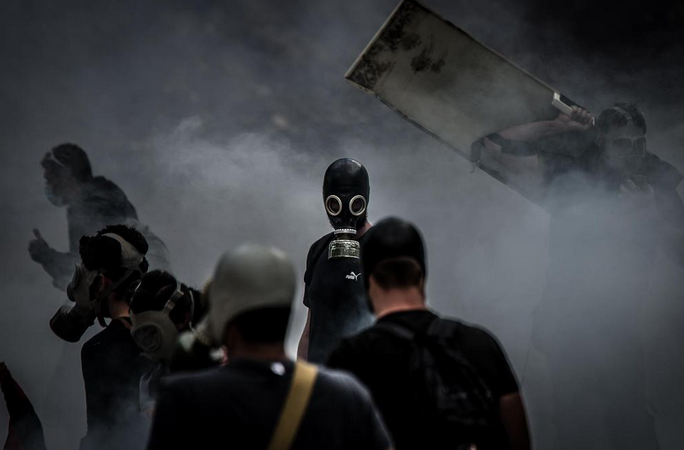
On Sun­day, the 23rd August 2015, about 2000 peo­ple attend­ed on a demon­stra­tion in the moun­tains of Skouries. Dur­ing this heavy clash­es between demon­stra­tors and the police took place, with police mak­ing mas­sive use of tear­gas and shock grenades. 78 per­sons were detained, of which four are still being held in cus­tody.

The demon­stra­tion was organ­ised by the anti-author­i­tar­i­an plat­form against cap­i­tal­ism, Beyond Europe, togeth­er with activist com­mit­tees of the local vil­lages in the area of Skouries. This protest march was the prac­ti­cal cul­mi­na­tion of the inter­na­tion­al Beyond Europe camp, which has been tak­ing place at the beach of Ieris­sos close to the area of Skouries. At this camp, 400–500 anti-author­i­tar­i­ans from all over Europe came togeth­er in order to exchange ideas with each oth­er and dis­cuss polit­i­cal analy­ses and prac­tices. The loca­tion was cho­sen very con­scious­ly in order to sup­port the ongo­ing eco­log­i­cal-social strug­gles against the extrac­tion of gold and oth­er heavy met­als in Skouries. and of course we are not only active on behalf of but along­side the local activists. For a long time now, Beyond Europe activists have been engaged in prac­ti­cal sol­i­dar­i­ty and sup­port for this strug­gle. It has a strong impact for social move­ments in Greece and the whole of Europe as an impor­tant front­line in the strug­gle against the recon­fig­u­ra­tion of Euro­pean cap­i­tal­ism through the Troi­ka on the back of the many.

Photo from Stratosphere (Twitter)

For us, the camp and espe­cial­ly the demon­stra­tion is a polit­i­cal suc­cess, by being set in the right place at the right time. In Jan­u­ary 2015 the left par­ty Syriza took over pow­er and evoked hope in many Left­ists. Con­cern­ing the issue of Skouries, Syriza played the role of the par­ty of the move­ment dur­ing oppo­si­tion, but has act­ed very dif­fer­ent since it has been in pow­er. Short­ly before the march the Alex­is Tsipras’ gov­ern­ment resigned, only two days after the start of the Beyond Europe camp and since Syriza had learned about our demon­stra­tion. Mean­while the ener­gy min­is­ter Panos Skourletis ordered to sus­pend the min­ing oper­a­tions in Chalkidi­ki on 19th August, claim­ing the com­pa­ny vio­lat­ed envi­ron­men­tal con­tract terms. We attribute the announce­ment to close the mine as a result of us choos­ing to organ­ise a camp here, but we did not rely on the government’s announce­ment as being the end of the strug­gle– which we have seen to be jus­ti­fied. One day after the announce­ment, dur­ing our walk from the camp to the moun­tain by the vil­lage Mega­li Pana­gia we could see that the works at the mines were con­tin­u­ing. This was just one more expres­sion of the most basic but impor­tant les­son in the ques­tions of rela­tion between par­ties and the move­ments: although they may improve tiny things with­in their lim­it­ed capac­i­ty, the pos­si­bil­i­ty to cre­ate real progress and eman­ci­pa­tion lies in our hands. Del­e­gat­ing desires for change towards par­ties will always be a dead end, since par­ties in pow­er will always need to work to enact nation­al inter­est. We agree with Syriza that the mines in Skouries need to be closed, but it is up to us to ful­fill this task. Our action sent this mes­sage to any par­ty which will take pow­er in the Greek re-elec­tions in Sep­tem­ber.

Sunday’s demon­stra­tion put the impor­tant and vital strug­gle of Skouries back on the table. Its impact was felt deeply all over Greece and beyond. We see this as a polit­i­cal suc­cess as now, since the first time after the huge gen­er­al strike of 2012, a new polit­i­cal dynam­ic from below is being cre­at­ed in Greece. After a drought of social move­ments since that year, Syriza’s seizure of pow­er seemed to have par­a­lyzed large parts of it due to a posi­tion of grant­i­ng the Tsipras’ gov­ern­ment time. Our camp and demon­stra­tion was an effort to put an end to this drought and rely on our strongest weapon – self-organ­i­sa­tion and social strug­gles.

As always when social strug­gles are effec­tive, the state’s repres­sion also con­tin­ued yes­ter­day. In the sev­er­al years in the ongo­ing issue of Skouries, police and secret ser­vices have been heav­i­ly try­ing to oppress the local move­ment by harass­ment, arrests and juridi­cal pros­e­cu­tion. Yes­ter­day again, the police vio­lent­ly dis­persed the demon­stra­tion, arrest­ed 78 peo­ple and injured sev­er­al. One per­son suf­fered a bro­ken leg while being arrest­ed by the cops. Our wish­es for a quick recov­ery are with her and with every­one else suf­fer­ing beat­ing or gas injuries. And of course we are in sol­i­dar­i­ty with the four still detained, as well as all the oth­er activists being pros­e­cut­ed in the last years. This might only have been a small step towards an anti-author­i­tar­i­an organ­i­sa­tion beyond bor­ders and against the sad­ness of real exist­ing cap­i­tal­ism, but it was a step nonethe­less. And there is more to come.

from beyondeurope.net

Into the Heart of the Beast: Occupying Germany’s Open Cast Coal Nightmare

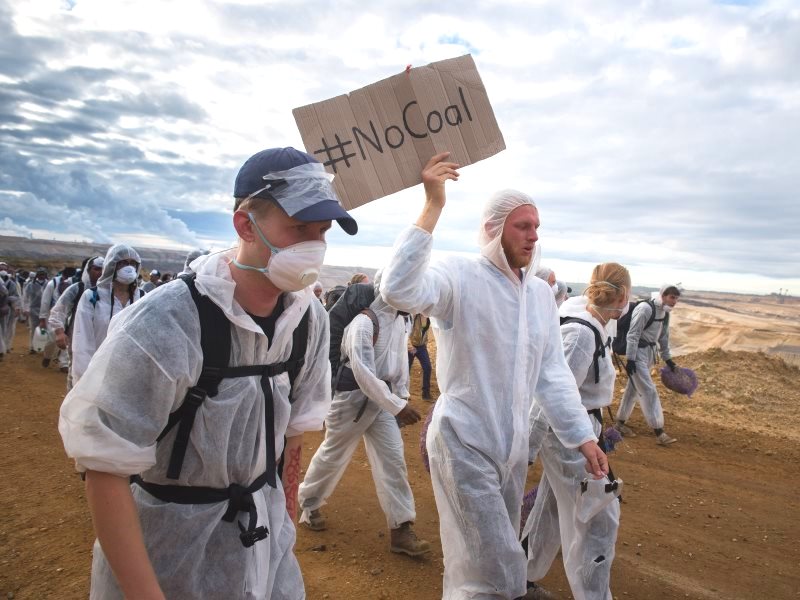
Last week­end I along with around one thou­sand oth­er peo­ple took part in mass direct action against one of the largest open cast lig­nite mines in Europe, owned by RWE, which along with sur­round­ing mines and coal pow­ers sta­tions is the largest source of green­house gas­es in Europe.

I took part because fos­sil fuel cap­i­tal­ism is destroy­ing our Earth. Wait­ing for com­pa­nies and gov­ern­ments to do the right things is not work­ing and is not going to work so peo­ple must stand up and force them to.

Ear­li­er this year, the Ger­man gov­ern­ment caved in to the lob­by­ing might of RWE, back­track­ing on plans to put a levy on the most pol­lut­ing pow­er plants, which would have led to a phase out of lig­nite. Last week­end, peo­ple stood up in protest to say ‘Ende Gelände’, here and no fur­ther.


This is my expe­ri­ence of the day. It was a long, exhaust­ing and con­fused day, and what I expe­ri­enced will not be the same thing that oth­ers in dif­fer­ent parts of the action expe­ri­enced. But I hope this can help any­one read­ing under­stand what hap­pened.

The assault

“Guten Mor­gen, Ende Gelände!” Those were the words I woke up to at 5:45 am in my tent. An ear­ly start for a momen­tous day, I rushed to scram­ble my stuff togeth­er, go to the loo and then hasti­ly join up with my affin­i­ty group.

We were in the ‘Green Fin­ger’ one of the four groups with approx­i­mate­ly 250 peo­ple in them, that would be lay­ing siege to the mine.

When the whole fin­ger was formed up with every­one in their agreed place, my affin­i­ty group was in the mid­dle. The first kilo­me­tre or so passed calm­ly enough. I could even hear some­one play ‘The Dig­gers Song’ on a pipe, as we searched for a way across the motor­way between us and the mine.

In the end, we came upon a tun­nel with only about four lines of cops block­ing it. It was at this point that many peo­ple there had their first expe­ri­ence of police vio­lence, in some ways I was lucky I knew what to expect from pre­vi­ous actions.

So they resort­ed to fill­ing the air with a mist of pep­per spray and beat­ing every­one they could reach with their clubs, in the hope of sep­a­rat­ing them from the group. Every­one around me bunched up like rug­by play­ers in a scrum so the police couldn’t drag any of us away.

After this came a mad dash across the fields going through two more police lines. Even when they weren’t in front of us, the police fol­lowed behind us on foot and in vans try­ing to beat and pick off any strag­glers. One per­son in my affin­i­ty group got pep­per spray in their face, so we had to guide him by hand as we ran through a break in the police line.

I’m hum­bled by the trust he showed in us to make sure he wasn’t beat­en to a pulp. The way every­one ral­lied to help those around them who had been beat­en or pep­per sprayed was one the most beau­ti­ful dis­plays of prac­ti­cal sol­i­dar­i­ty I had ever seen.

Into the mine

After we suc­cess­ful­ly got across the fields, we walked along a dirt track by the edge of the mine that was in line with some water sprin­klers used to stop dust escap­ing. Before this point I hadn’t real­ly grasped the scale of the place. It looked large enough to fit at least two good sized towns in. It went from sand coloured at the top down to pitch black at the bot­tom.

We descend­ed down the mine on a sandy ramp wide enough to dri­ve a van down. At a bend near the bot­tom there was an attempt to block the path, but we evad­ed the police by trav­el­ling out the bank and bypass­ing them instead.

We then moved as fast as we could along the top tier of the mine, shad­owed by a group of riot cops on the cliff top. When we reached one of the cor­ners of the top tier, where con­vey­or belts over a kilo­me­tre long end­ed, we met a small group of secu­ri­ty, which most of us were able to get past with­out much trou­ble. As we moved along the side of the con­vey­or belt towards one of the mas­sive Bag­gers the police raced after us in bor­rowed 4x4s.

The police tried to form a line to block us off, but there were too few of them to do any­thing, so we were able to bust through the line with ease. My legs were burn­ing from run­ning in the sand with a heavy bag full of water. My right arm felt like it was on fire from the pep­per spray.

After this we formed a line in order to stop any more police being able to join those in front of us. They tried again to block our path, but we held our line togeth­er by link­ing arms. We suc­cess­ful­ly stood our ground and they were forced to retreat. See­ing the police retreat was a won­der­ful sight.

Even­tu­al­ly we came to a point that was too wide for us to ful­ly block and even more police man­aged to get past us. They had a much stronger line in front of us, which was thick­est next to the con­vey­or belt where I was walk­ing. On the very far side from me peo­ple man­aged to break through their line next to some small­er dig­gers.

The mem­bers of the affin­i­ty group I was with tried to run over to flow through the police, but by the time we got there they had closed it. I saw one police offi­cer grab some­one by their front and beat them across their back, while oth­ers lashed wild­ly in every direc­tion, and oth­ers pep­per-sprayed around them hop­ing to burn some­one.

Deten­tion

After two hours, rough­ly sev­en kilo­me­tres, and numer­ous police lines, we were ket­tled at 9 am. Even then we were still win­ning, as just by being there we stopped the mine from run­ning and the police guard­ing us couldn’t work to keep oth­ers out.

We could see the Bag­gers lying still while in the dis­tance wind tur­bines moved. A cou­ple of hours in, they start­ed to pull us out one by one, tak­ing our pho­tos and try­ing to get our names. Almost no one told them.

After this, they tied our hands with zip ties behind our backs. Through all this we sup­port­ed each oth­er, and worked to keep our spir­its up by play­ing games and chat­ting (small talk when you can’t say your name, or say too much about your­self is strange).

After five to sev­en hours we were moved onto bus­es and tak­en to a police sta­tion. We sat for sev­er­al more hours chat­ting, singing and shar­ing food (our hands had been freed by then). Even­tu­al­ly, they gave up on try­ing to process sev­er­al hun­dred peo­ple that refused to give their names and resist­ed hav­ing their fin­ger­prints tak­en.

Around 11 pm we were dumped out­side a rail­way sta­tion and made our way back to camp, tired but tri­umphant. For the train ride back, some of us brought a cou­ple of crates of beer, we cel­e­brat­ed the day and talked about what we’d been through on the train back. By around 1 am I was back in my tent exhaust­ed, sore, emo­tion­al­ly drained, but also felt great about what we’d done togeth­er and achieved.

We had stopped the dig­gers for a day but it was also about more than just that. In eco­nom­ic terms it will have also dam­aged RWE’s posi­tion on the mar­ket (their share price just hit a new low) and made them seem less trust­wor­thy to investors.

In addi­tion to this many there had nev­er tak­en part in direct action before but now know that by work­ing togeth­er and tak­ing mat­ters into our own hands we can achieve more than wait­ing for sal­va­tion from those above us in soci­ety could ever do.

Many peo­ple both there and watch­ing the events from afar will also have seen the role of the police, not as keep­ing of the peace but as guard dogs of social and eco­nom­ic order which is killing us and our plan­et. Last week­end, we fought and we won.

by Toni Bel­ly / The Ecol­o­gist

Activist’s 75th Birthday Party Disrupts Spectra Pipeline Construction in CT

August 20th, 2015

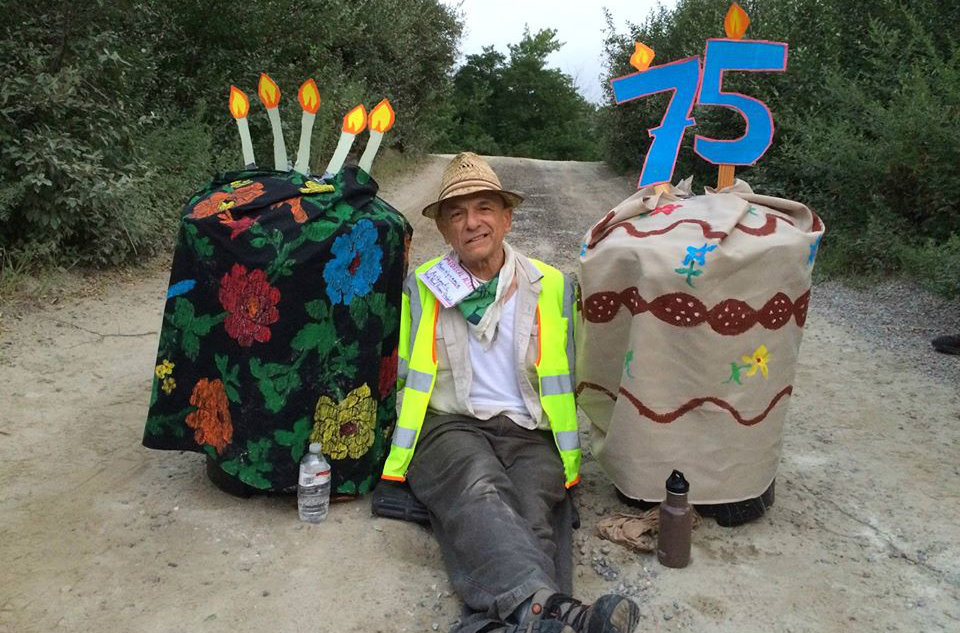
NORTH WINDHAM, CT: In cel­e­bra­tion of his 75th birth­day today, Mid­dle­town res­i­dent Vic Lan­cia locked him­self to two giant “birth­day cakes”—actually con­crete-filled bar­rels dec­o­rat­ed with can­dles and frost­ing— on the sole road lead­ing up to a site where Spec­tra Ener­gy stores con­struc­tion equip­ment and mate­ri­als for use across Con­necti­cut. Fed­er­al Ener­gy Reg­u­la­to­ry Com­mis­sion reports post­ed at capitalismvsclimate.org con­firm what local res­i­dents have seen: Spec­tra trucks reg­u­lar­ly using the facil­i­ty to expand frack­ing infra­struc­ture.

By block­ing Spec­tra work­ers from access­ing the site, Vic aimed to dis­rupt Spectra’s ongo­ing con­struc­tion of it’s “AIM Project”, a bil­lion dol­lar fracked-gas pipeline expan­sion affect­ing com­mu­ni­ties across the State.

“It’s sim­ple,” Vic explained. “Cap­i­tal­ism and the burn­ing of fos­sil fuels are destroy­ing our beloved and beau­ti­ful plan­et, the habi­tat for all human­i­ty and life, all for prof­it and con­ve­nience. Isn’t it time to resist? Do we not care for our chil­dren, the gen­er­a­tions beyond our lives, and for life itself?”

After block­ing the entrance to the site for over two hours – Vic nego­ti­at­ed with the police and unlocked. Vic wasn’t arrest­ed and we got to keep the con­crete “birth­day cakes”.

Vic is a mem­ber of Cap­i­tal­ism vs. the Cli­mate, a hor­i­zon­tal­ly-orga­nized, Con­necti­cut-based group that takes direct action against the root caus­es of the cli­mate cri­sis. About ten oth­er mem­bers and sup­port­ers joined Vic, shar­ing choco­late cake and wav­ing bal­loons. Beneath the fes­tiv­i­ties, how­ev­er, they expressed out­rage at Spectra’s pipeline expan­sion.

“Spectra’s pipeline expan­sion is cat­a­stroph­ic in many ways. It cre­ates incen­tives for frack­ing in the shale fields. It trans­ports high­ly flam­ma­ble gas just one-hun­dred feet from a nuclear pow­er plant in New York, poten­tial­ly endan­ger­ing tens of mil­lions of peo­ple. It accel­er­ates glob­al warm­ing, since fracked gas has an even high­er impact on the cli­mate than coal does,” said Willi­man­tic res­i­dent Roger Ben­ham.

Click here to make dona­tions to sup­port the action.

Please share the Face­book “meme” at: http://on.fb.me/1WGLJFV


Turkish Army Burns Down Forests in Kurdistan – Call for an International Delegation!

With the restart of the war in North-Kur­dis­tan by Turk­ish state in end of July 2015 the Turk­ish Army has start­ed to burn down forests.

With the restart of the war in North-Kur­dis­tan by Turk­ish state in end of July 2015 the Turk­ish Army has start­ed to burn down forests. After 2,5 years of nego­ti­a­tions about the start of a peace process between the Turk­ish gov­ern­ment and the Kur­dish Free­dom Move­ment, the Turk­ish side decid­ed to attack the PKK Guer­ril­la HPG (Peo­ples Defense Forces) and legal polit­i­cal activists.

In a planned and sys­tem­at­ic man­ner the Turk­ish Army shoots with muni­tion and bombs which result in for­est fires. Par­tic­u­lar­ly in the provinces of Der­sim (Tunceli), Sirnex (Şır­nak) and Amed (Diyarbakır) the Army has burned down sev­er­al eco­log­i­cal­ly high­ly sen­si­tive forests in its oper­a­tions against the HPG. There­by the Turk­ish Army hopes to lim­it the mobil­i­ty of HPG. This method in fight­ing the long-last­ing Kur­dish rebel­lion has been used wide­ly already in the 90’s in North-Kur­dis­tan. Almost every greater for­est in the con­test­ed regions has been burned down in that years.

The most for­est fires have been ini­ti­at­ed in areas which have been declared by the Turk­ish gov­ern­ment as “secu­ri­ty areas” just after the restart of the war. That is why local peo­ple and activists – like from our move­ment – have been hin­dered by the Turk­ish Army to go to the affect­ed areas and try to extin­guish the fires. These ini­tia­tives have been cre­at­ed while the respon­si­ble gov­ern­men­tal bod­ies did not act. We assume that they have been instruct­ed by the gov­ern­ment not to inter­vene. To date sev­er­al hun­dred hectares of forests have been burnt down in North-Kur­dis­tan where the main tree type is the oak.

We call on the inter­na­tion­al polit­i­cal activists, social move­ments and NGO’s work­ing on eco­log­i­cal issues to join an inter­na­tion­al del­e­ga­tion. This del­e­ga­tion could inves­ti­gate the dimen­sion and impacts of the for­est fires of the last weeks, the sub­se­quent behav­ior of Turk­ish offi­cials, the efforts of locals to extin­guish the fires and if exist­ing the ongo­ing fires and inform the inter­na­tion­al pub­lic based on their obser­va­tions. We think that the extreme­ly destruc­tive behav­ior of the Turk­ish State in this dirty war must be treat­ed also on inter­na­tion­al lev­el. The peri­od for the inter­na­tion­al del­e­ga­tion is planned from the 8th to the 12th Sep­tem­ber 2015. Write us in case of inter­est.

Ercan Aybo­ga
for the Mesopotami­an Ecol­o­gy Move­ment

Con­tact:
email: e.ayboga@gmx.net
fb: www.facebook.com/mezopotamyaekolojihareketi

Sources about the fires:
Al-Mon­i­tor, 21.07.2015: http://www.al-monitor.com/pulse/originals/2015/07/turkey-kurds-pkk-forest-fires-cause-political-mayhem.html
Firat News Agency, 05.08.2015: http://en.firatajans.com/kurdistan/forest-fires-caused-by-turkish-army-expand
Kur­dish Dai­ly News, 09.08.2015: http://kurdishdailynews.org/2015/08/09/forest-fires-caused-by-turkish-airstrikes-in-zap-and-xakurke/

Call out to get involved in a research project on sexual violence in activist communities

Was your sex­u­al abuser a high-pro­file activist? Have you felt unable to speak out about it?

Was your sex­u­al abuser a high-pro­file activist? Have you felt unable to speak out about it? Or have you spo­ken out about it only to be accused of mak­ing it up and/or divid­ing the move­ment? Did your anti-state activism and/or expe­ri­ence of police bru­tal­i­ty rule out going to the police? Were you able to kick out your abuser using oth­er meth­ods? Did the account­abil­i­ty process back­fire? Did your abuser just move on to a dif­fer­ent group and do the same thing to some­one else? Was the trans com­mu­ni­ty so small that you didn’t want your part­ner to lose it? Do you want to be involved in tak­ing action and chal­leng­ing sex­u­al vio­lence in activist com­mu­ni­ties?

We want to hear from sur­vivors who iden­ti­fy as women, gen­der-queer or trans who are ready to talk about their expe­ri­ences of sex­u­al vio­lence with­in cur­rent or past organ­is­ing in rad­i­cal social jus­tice move­ments in the UK. This may have hap­pened once or mul­ti­ple times, we are inter­est­ed in hear­ing from folks with a vari­ety of expe­ri­ences of sex­u­al vio­lence includ­ing unwant­ed touch­ing, flash­ing, harass­ment, stalk­ing, sex­u­al assault and rape.

Sal­vage is a col­lec­tive of aca­d­e­m­ic-activists, sur­vivors and activists. We got togeth­er through a work­shop on sur­vivor-led approach­es to gen­dered vio­lence and abuse at AFem 2014. This is our first research project. We aim to devel­op resources, infor­ma­tion and prac­ti­cal rec­om­men­da­tions to work towards cre­at­ing effec­tive chal­lenges to gen­dered vio­lence, abuse and harms with­in social jus­tice move­ments and com­mu­ni­ties.

If you are inter­est­ed in get­ting involved and/or want more infor­ma­tion about this research project:

Web: https://projectsalvage.wordpress.com/research

Twit­ter: @Project_Salvage