France Halts Dam Construction after Protester’s Death & solidarity protest news


2 Novem­ber 2014

French local author­i­ties have decid­ed to sus­pend work on a con­tro­ver­sial dam after the death last week of an activist protest­ing against the project.

The exec­u­tive coun­cil in charge of the project in the south-west­ern Tarn region decid­ed to freeze work on the dam but did not defin­i­tive­ly scrap it.

It was impos­si­ble in the light of the tragedy to con­tin­ue any work at the site of the Sivens dam project, said Thier­ry Carcenac, head of the region’s exec­u­tive coun­cil. “What hap­pened was ter­ri­ble and should nev­er hap­pen again,” he added.

Remi Fraisse, 21, died in the ear­ly hours of Sun­day dur­ing vio­lent clash­es between secu­ri­ty forces and pro­test­ers against the project. It was the first death dur­ing a protest in main­land France since 1986.

Ini­tial inves­ti­ga­tions showed traces of TNT on his clothes and skin, sug­gest­ing he may have been killed by a police stun grenade.

France’s inte­ri­or min­is­ter, Bernard Cazeneuve, who has come under fire over the inci­dent, has since banned the use of the grenades, which are designed to stun rather than kill.

The already unpop­u­lar gov­ern­ment of Pres­i­dent François Hol­lande has come under more pres­sure over a per­ceived slow response to the death, as well as alle­ga­tions that police mis­han­dled the riots.

The death has been fol­lowed by renewed clash­es. Overnight on Thurs­day, 200 pro­test­ers ram­paged through the west­ern city of Rennes, with some over­turn­ing cars and break­ing shop win­dows. Fur­ther protests are planned through­out the week­end and author­i­ties are brac­ing for fur­ther unrest.

Ecol­o­gy min­is­ter Ségolène Roy­al will next week gath­er togeth­er all war­ring par­ties to dis­cuss the future of the Sivens dam.

Those opposed to the project say the dam will destroy a reser­voir of bio­di­ver­si­ty and will only ben­e­fit a small num­ber of farm­ers. Those pro­mot­ing the project, mean­while, retort that the dam is in the pub­lic inter­est as it will ensure irri­ga­tion and the devel­op­ment of high-val­ue crops.

from The Guardian

Hard-left and anar­chist demon­stra­tors clashed with French riot police for a sec­ond day on Sun­day in protest at the death of a young green activist who was struck by a police stun grenade last week­end.

In run­ning bat­tles dur­ing an unau­tho­rised demon­stra­tion in east­ern Paris, 66 young pro­test­ers were arrest­ed for attack­ing police and pos­ses­sion of offen­sive weapons. In Nantes and Toulouse more than 30 activists were arrest­ed and six police­men injured on Sat­ur­day. Oth­er demon­stra­tions on Sun­day – includ­ing a sit-in beside the Eif­fel Tow­er and a silent march at the scene of last week’s death – passed off peace­ful­ly.

Rémi Fraisse, 21, a young botanist and paci­fist, was protest­ing against the build­ing of a dam in an unspoiled val­ley in south-west­ern France eight days ago when police stun grenade explod­ed behind his back. His death – the first in a polit­i­cal demon­stra­tion in France for many years – has caused wide­spread con­ster­na­tion and has become a cause célèbre for French hard-left and green activists.

Rad­i­cal pro­test­ers and some main­stream green politi­cians have blamed the young man’s death on the alleged­ly “author­i­tar­i­an” and right-lean­ing poli­cies of the reformist, Social­ist Prime Min­is­ter Manuel Valls. When pro­test­ers attacked build­ings and hurled molo­tov cock­tails and acid at riot police in Nantes on Sat­ur­day, Mr Valls attempt­ed to turn the tables. He accused the pro­test­ers of “dirty­ing”  the mem­o­ry of the young vic­tim who was not just a “mil­i­tant ecol­o­gist” but also a “con­vinced paci­fist”.

Work on the dam at Sivens in the Tarn departe­ment was sus­pend­ed last Tues­day, three days after the death of Mr Fraisse. The envi­ron­ment min­is­ter, Ségolène Roy­al, broke with gov­ern­ment pol­i­cy in an inter­view yes­ter­day by sug­gest­ing that the dam was too large and should nev­er have received plan­ning per­mis­sion.


from The Inde­pen­dent


Australia: Batman Blocks Coal Mine with Tripod

Trick-or-Treat-06-300x200

Octo­ber 30th, 2014

Trick-or-Treat-06-300x200

Octo­ber 30th, 2014

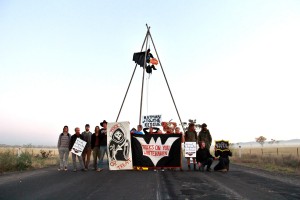
Kick­ing off a week­end of action against Whitehaven’s con­tro­ver­sial Maules Creek coal mine, a con­cerned cit­i­zen has scaled a tri­pod, block­ing access to Whitehaven’s Tar­ra­won­ga haul road, block­ing access for trucks try­ing to leave Tar­ra­won­ga coal mine. This comes as peo­ple from around the coun­try con­verge at the Leard Block­ade to defend water, cli­mate and our democ­ra­cy from White­haven coal.

Phil Evans, 33, a cli­mate cam­paign­er with 350.org has today put him­self on the line to draw atten­tion to White­haven dodgy deal­ings and destruc­tion of our water and cli­mate.

Leard For­est Alliance Spokesper­son, and tri­pod activist, Phil Evans says,” I’m here to call ‘trick or treat’ on White­haven coal. White­haven need to be held respon­si­ble for the destruc­tion of the com­mu­ni­ty, water and the cli­mate.”

Due to Whitehaven’s Maules Creek mine, the aquifers are pre­dict­ed to drop by up to 2m. Pre­vi­ous­ly dur­ing drought the agri­cul­tur­al com­mu­ni­ty has not had water for their live­stock and their farms. The Maules Creek mine, as the largest new coal mine under-con­struc­tion in Aus­tralia, will con­tribute sig­nif­i­cant­ly to cli­mate change caus­ing fur­ther droughts for the local com­mu­ni­ty and insta­bil­i­ty of glob­al pro­por­tions.

“We hope the NSW par­lia­men­tary inquiry into the plan­ning process will send the Maules Creek project back to square one, if any of the alleged­ly cor­rupt rela­tion­ships between Aston exec­u­tives and senior politi­cians from both sides have found to influ­ence the approvals process in any­way.” said Mr. Evans.

Whitehaven’s plan­ning, approval and con­struc­tion process­es have been plagued by ques­tion­able deal­ings and clouds of cor­rup­tion. The mul­ti­ple prob­lems of the plan­ning process have been brought to the atten­tion of the NSW par­lia­men­tary inquiry into plan­ning by com­mu­ni­ty groups.

“The state ICAC has raised very seri­ous con­cerns about the undue influ­ence of coal on our democ­ra­cy, but it has not gone far enough. The Leard For­est Alliance is call­ing for work to stop on the Maules Creek project, and an audit of the plan­ning and approval process that allows White­haven to con­tin­ue with this atroc­i­ty. We need a fed­er­al lev­el ICAC and we need to take our democ­ra­cy back.” said Mr. Drech­sler.

“The time of coal get­ting spe­cial treat­ment is over. The cor­rup­tion has got to end. It is up to all of us to reclaim our voice, and democ­ra­cy” said Mr. Evans.

There have been over 265 arrests this year as part of the ongo­ing com­mu­ni­ty lead cam­paign of peace­ful civ­il dis­obe­di­ence against White­haven Coal.

Trick-or-Treat-04-300x200

from Front Line Action on Coal

Two Blockades Evicted at Hambach Forest Occupation

Noname

Octo­ber 30th, 2014

Noname

Octo­ber 30th, 2014

RWE Wach­schutz injures activists. One per­son los­ing con­scious­ness due to beat­ing by the secu­ri­ty. Activists choked and arrest­ed with cable ties.

Today was anoth­er block­ade of cut­ting and log­ging in the Ham­bach­er For­est, with­in the cam­paign “No Tree is Falling”.
At this block­ade the RWE Secu­ri­ty attacked the activists with batons and pep­per spray. At this point some activists got injured.

In response a sec­ond block­ade hap­pened to make the secu­ri­ty and the log­gers aware that they injured activists. At this point secu­ri­ty attacked the activists harsh­ly with batons and pep­per spray. In addi­tion the log­ging machine was head­ing direct­ly towards the activists. Dur­ing this attack three activists were injured, one of them los­ing con­scious­ness for a moment. Also the RWE pri­vate secu­ri­ty arrest­ed three peo­ple, they choked them and bond them with cable tie. Activists defend­ed them­selves. After one hour police showed up and arrest­ed 3 more per­sons. The police came from Düren and also the Arrest­ed peo­ple will be brought there.
Come around and sup­port the Block­ades. Show Sol­i­dar­i­ty every­where, thats what the peo­ple need here.
Press Con­tact: 015754136100

The Ham­bach­er for­est is the site of an ongo­ing land defense cam­paign in Ger­many. The for­est sits at the edge of a lig­nite (brown coal) mine and is under immi­nent threat from mine expan­sion.

News Tick­er:

– sev­er­al ambu­lance cars dri­ving in the for­est.
– police is evict­ing the block­ades togeth­er with RWE Secu­ri­ty
– The „Pile“ (Fort on the way to the Squat­ted Trees) is sur­round and activists are on Tripods and Trees.

12:00: Police­news: Activists got arrest­ed because of break­ing Civ­il Laws. Prob­a­bly to MünchenGlad­bach, Bergheim, and Düren. (Not Con­firmed)
– around 100 Cops are in the For­est.
– Police and RWE Secu­ri­ty tried to evict the „Pile“ with heavy Machines, although activists where in the block­ade and there life was put at risk.
13:00 Work was stopped. Police said they want to fin­ish the evic­tion until 15:00. 4 Per­sons are in the „Pile“
13:05 Until Now 6 Per­sons got arrest­ed. But they‘re still in the For­est.
Black flag fly­ing Song
13:50 Police is dri­ving with heavy evic­tion machines in the For­est. Also more Cops are on the way in the for­est.
14:00 Log­ging Work is start­ed again. Trees on the way to Tree­block­ade are cut­ed to make way for the evic­tion.
14:10 Activists are trans­port­ed out of the For­est. Cher­ry Pick­ers are dri­ving in the For­est.
15:30 Sev­en more Police Cars drove to the for­est. Now there are 3 Riot Units in the For­est.
– In the „Pile“ Block­ade are actu­al­ly 4 activists. One in the Trees, One in the Tun­nel, Two on Tripods. The „Pile“ is com­plete­ly sur­round­ed by police
– At the Tree­block­ade until now there is no Secu­ri­ty and Police. Only the way for heavy machines is ready.
15:45 Evic­tion of the Pile start­ed. Cher­ryp­ick­er is build up.
16:07 Police in Plain Clothes is watch­ing the Mead­ow occu­pa­tion.
16:30 Activists locked them­selves to the bar­ri­cade (Pile)
16:50 One Per­son got evict­ed from Tri­pod at the „Pile“
– Anoth­er Unit of Riot Police drove to the For­est.
– Tree Block­ade „Gruben­blick“ is sur­round­ed.
– Cher­ry-Pick­er and Flood­light is at the Block­ade.
– One Per­son is in the Trees above the „Pile“
17:30 I seems like the Police is stop­ping the evic­tions.
– The „Pile“ is evict­ed. One Per­son is still in the Trees. 3 more Per­sons got arrest­ed.
18:00 The Bar­ri­cade is pushed togeth­er by the police with heavy machines. The police is touch­ing the tree on which the last per­son is sit­ting. Due to that the police risk the life of the activist. That has been point­ed out to the police sev­er­al time but the dont stop the work.
– Climb­ing Police arrived at the Tree Ocu­pa­tion „Gruben­blick“.
18:20 Nine Police­cars are on the way to the part of the for­est near the mead­ow.
20:30 The Search­ing on the Mead­ow by the Police is fin­ished. More Infor­ma­tion soon.
21:45 In the last 3 hours the fol­low­ing things hap­pened:
– The Treeocu­pa­tion „Gruben­blick“ is evict­ed. The activists got arrest­ed.
– The activist on the tree at the „pile“ block­ade is still up there. Climb­ing Police is on the spot. At the Moment the Cher­ry-Pick­er is raised up.
– The first Per­son got released at the police sta­tion in Düren.

mod­i­fied slight­ly from Ham­bach For­est Blog

USA: Burnaby Blockade, Encampment Stops Kinder Morgan Suveyors for a Second Day

Octo­ber 30th, 2014

Angry pro­test­ers stopped crews from con­duct­ing pipeline sur­vey work on Burn­a­by Moun­tain Wednes­day, forc­ing the com­pa­ny to reassess how it will fin­ish work need­ed for a Nation­al Ener­gy Board deci­sion.

Octo­ber 30th, 2014

Angry pro­test­ers stopped crews from con­duct­ing pipeline sur­vey work on Burn­a­by Moun­tain Wednes­day, forc­ing the com­pa­ny to reassess how it will fin­ish work need­ed for a Nation­al Ener­gy Board deci­sion.

RCMP offi­cers watched as some pro­test­ers con­front­ed a Trans Moun­tain sur­vey crew, yelling “go back to Texas,” while anoth­er pro­test­er crawled under a sur­vey crew’s SUV, wrapped him­self around the front tire and refused to leave.

Stephen Col­lis, a spokesman for the pro­test­ers who call them­selves the Care­tak­ers, said they plan to hun­ker down.

“We’re cur­rent­ly occu­py­ing the space that they have iden­ti­fied that they need to work in. Since we’re on pub­lic land, we have every right to be here,” he said. “They can’t real­ly work in a space that’s filled with dozens of peo­ple. That’s the inten­tion.”

The plan worked, at least for the day.

Work­ers left in anoth­er vehi­cle, and one man car­ried sev­er­al signs under his arm that read No Entry Until Fur­ther Notice and Field Test­ing Area Under Order of the Nation­al Ener­gy Board.

Greg Toth, senior direc­tor for Kinder Morgan’s Trans Moun­tain expan­sion project, said all sur­vey work on the moun­tain was stopped, although oth­er crews were still work­ing around Burn­a­by.

He wasn’t yet sure if the com­pa­ny would ask for an injunc­tion pre­vent­ing protests.

“We have to reassess, based on today’s activ­i­ties,” said Toth. “It’s quite a vocal protest. Our pri­or­i­ty is the safe­ty of our crews and the gen­er­al pub­lic. So we’ll retrench and look at what options are avail­able.”

The demon­stra­tion comes in the midst of a bit­ter bat­tle over the company’s plans to expand the pipeline through Burn­a­by.

The Nation­al Ener­gy Board grant­ed Trans Moun­tain access to the sites so it can com­plete work through Burn­a­by Moun­tain, it’s pre­ferred route for the pipeline. The NEB ruled the City of Burn­a­by can’t pre­vent the activ­i­ty because the work is need­ed for the board to make a deci­sion on the expan­sion appli­ca­tion.

The City of Burn­a­by announced it will appeal the NEB rul­ing.

May­or Derek Cor­ri­g­an said he didn’t believe the reg­u­la­tor has the author­i­ty to con­sid­er con­sti­tu­tion­al ques­tions con­cern­ing city bylaws.

Toth said the Nation­al Ener­gy Board and the Fed­er­al Court have giv­en the com­pa­ny every right to do work need­ed to sup­port the deci­sion-mak­ing process.

He said it’s iron­ic that crews haven’t been allowed on Burn­a­by Moun­tain, con­sid­er­ing the com­pa­ny and city res­i­dents have deter­mined the route is the least dis­rup­tive option.

“It’s real­ly in response to strong feed­back from the local res­i­dents and the gen­er­al pub­lic in the area for the alter­na­tive rout­ing, which would have been through the streets,” he said.

In July 2007, a geyser of oil cov­ered more 100 homes, after a crew acci­den­tal­ly pulled up the pipeline, spilling 250,000 litres.

The cleanup cost about $15 mil­lion.

The 5.4‑billion dol­lar expan­sion plan would come close to tripling the capac­i­ty of the exist­ing pipeline between Alber­ta and B.C. to about 900,000 bar­rels of crude a day.

Raging Grannies Blockading Entrances and Exits of WA Department of Ecology

Octo­ber 30th, 2014

UPDATE: Grannies Unlock After 6‑Hour Block­ade

Cur­rent­ly, sev­en mem­bers of the Seat­tle Rag­ing Grannies are block­ing the entrance to the Depart­ment of Ecol­o­gy head­quar­ters, stalling traf­fic and pre­vent­ing employ­ees from enter­ing work. The groups are sit­ting in rock­ing chairs chained togeth­er across the Department’s vehi­cle entrance.

They are telling work­ers that the Depart­ment is closed today for a “Work­shop on How to Say No to Big Oil.” Today’s action coin­cides with hear­ings on a con­tro­ver­sial study on the safe­ty of oil trains con­duct­ed by the Depart­ment of Ecol­o­gy. Hun­dreds are expect­ed in Olympia to express con­cern at the study’s nar­row scope and omis­sion of risks to the envi­ron­ment or treaty rights.

Police and FBI are on the scene try­ing to direct traf­fic, and ecol­o­gy man­age­ment is mak­ing sup­port­ive employ­ees move inside so they can’t talk to the media about their sup­port of the elders.

Dale R Jense, pro­gram man­ag­er for the department’s oil spills safe­ty pro­gram, is cur­rent­ly walk­ing the line and talk­ing to the grannies, who remain in high spir­its and are singing songs. There is a group of sup­port­ers mak­ing sure that the DoE knows that fos­sil fuel ship­ments are unpop­u­lar, dan­ger­ous, and bad for the plan­et.

“We’re here to help the Depart­ment of Ecol­o­gy learn how to say no to the oil indus­try,” said Beth DeRooy. “After grant­i­ng per­mits to four ille­gal oil train ter­mi­nals and let­ting for­mer BNSF exec­u­tives write their oil study, I was wor­ried the folks over at the Depart­ment nev­er learned how to say no and need­ed a lit­tle help from their grannies.”

Since 2012 the Depart­ment of Ecol­o­gy has grant­ed per­mits for oil-by-rail ter­mi­nals at four of Washington’s five refiner­ies. Ter­mi­nals in Taco­ma, Ana­cortes and at Cher­ry Point out­side of Belling­ham, have begun tak­ing trains while a fourth is under con­struc­tion at the Phillips 66 refin­ery in Fer­n­dale. Envi­ron­men­tal groups have argued that the these ter­mi­nals are ille­gal under the Mag­nu­son Act, which pro­hibits expan­sions at Wash­ing­ton refiner­ies that may increase the amount of oil they han­dle.

Per­mits for a fifth oil-by-rail ter­mi­nal at Shell’s Puget Sound refin­ery are cur­rent­ly under con­sid­er­a­tion. “Hot on the heels of record wild­fires, Gov­er­nor Inslee’s so-called Depart­ment of Ecol­o­gy is going to ignore the envi­ron­ment in this study? They’re act­ing more like the Depart­ment of Oil Trains,” stat­ed Cyn­thia Linet.

Last year Gov­er­nor Inslee direct­ed the Depart­ment of Ecol­o­gy to con­duct a safe­ty study on the extreme­ly con­tro­ver­sial ship­ment of oil by rail. The governor’s study has been crit­i­cized for ignor­ing impacts on the envi­ron­ment, treaty rights and glob­al warm­ing, as well as fail­ing to ques­tion whether they should build oil-train ter­mi­nals in the first place.

The Depart­ment of Ecol­o­gy has declared that impacts on the envi­ron­ment, trib­al treaty rights or local economies are “ancil­lary” and not being con­sid­ered. The Depart­ment has also come under fire after rev­e­la­tions that a num­ber of the study’s authors are for­mer BNSF exec­u­tives.

“You’d think bring­ing explod­ing trains to help oil com­pa­nies dev­as­tate Native Amer­i­can com­mu­ni­ties in North Dako­ta would be easy to say no to, but it looks like the Depart­ment of Ecol­o­gy needs a stern les­son from their grannies,” said Car­ol McRoberts.

Many of North Dakota’s oil wells are on trib­al lands of the Man­dan, Hidat­sa and Arikara nations. In addi­tion to spills and oth­er local pol­lu­tion, the oil boom has brought tremen­dous social costs to the com­mu­ni­ties. Deaths from auto acci­dents, drug abuse and vio­lent crime have explod­ed; hous­ing short­ages force many to live in sub­stan­dard con­di­tions; and sex­u­al vio­lence such as rape and sex traf­fick­ing have become preva­lent in a once small com­mu­ni­ty.

“My daugh­ter is 15 months old and my heart aches that I do not even want her to be at home for fear of what she’d be exposed to,” said Kan­di Mos­sett, a mem­ber of the Man­dan, Hidat­sa and Arikara nations who sub­mit­ted writ­ten tes­ti­mo­ny to today’s oil train hear­ings. “This oil boom using frack­ing has been dev­as­tat­ing for us and no amount of mon­ey can ever give us back what’s being lost.”

IMAG0692image4

Pro­tes­tors hand­ed out dough­nuts and cof­fee as they turned away employ­ees’ cars. They also hand­ed out a fli­er explain­ing “How to Say No To Fos­sil Fuels.” The fli­er calls on the Depart­ment of Ecol­o­gy to reject all new fos­sil fuel projects pro­posed for Wash­ing­ton and to explic­it­ly link their rejec­tion to con­cerns about glob­al warm­ing.

Cli­mate jus­tice activists point out that if all pro­posed fos­sil fuel ter­mi­nals are built, the North­west will be trans­port­ing five times more car­bon than the Key­stone XL Pipeline.

“It’s grandma’s com­mon sense – we need to keep car­bon in the ground to stop cat­a­stroph­ic glob­al warm­ing, and if they can’t ship it, they have to leave it in the ground,” said Rosy Betz-Zall. But while he has been wide­ly hailed as one of the green­est gov­er­nors in Amer­i­ca, Inslee has yet to out­right reject a major fos­sil fuel project, or even declare a mora­to­ri­um on projects that would increase dan­ger­ous ship­ments of explo­sive oil.

“Gov­er­nor Inslee talks about being a cli­mate cham­pi­on, but he keeps say­ing ‘maybe’ to new fos­sil fuel projects, when what we need is a sol­id ‘NO’,” said Dee­jah Sher­man-Peter­son.

“Take it from your granny: if you want to say yes to some­thing good – a just, clean ener­gy future – you have start by say­ing NO to some­thing bad – build­ing more fos­sil fuel infra­struc­ture.”

Today’s protest fol­lows an intense wave of oppo­si­tion to oil-by-rail across the North­west this sum­mer with pro­tes­tors lock­ing them­selves to bar­rels of con­crete and sit­ting atop tripods to block­ade rail­road tracks across Wash­ing­ton and Ore­gon.

80 Arrested At Spontaneous Protests Over #ZAD Remi Fraisse’s Assassination By French Police

B1JivzYCEAAtq87

Octo­ber 30th, 2014

B1JivzYCEAAtq87

Octo­ber 30th, 2014

80 peo­ple have been arrest­ed sim­ply for speak­ing up against state ter­ror and cap­i­tal­ism, by a total pan­icked riot police force in Paris des­per­ate to repress spon­ta­neous demon­stra­tions over the exe­cu­tion of 21 year old Remi Fraisse at Testet.

The streets of Paris, Lyon and oth­er cities have been cov­ered in anti-cap­i­tal­ist, anti-police and anti-state mes­sages; the signs of rage over the assas­si­na­tion by the police of a 21 year old paci­fist, and defend­er of the Testet for­est.

2

Cops encir­cled peo­ple, trapped them, cap­tured them and dragged them to police vans sim­ply for being on the streets and speak­ing up, such police bru­tal­i­ty and abus­es sim­ply remind of well known total­i­tar­i­an regimes, deplored by Europe all over the world, except in Europe.

Remi Fraisse died on the spot when he was hit by a tear gas grenade fired by riot police Sat­ur­day night dur­ing the repres­sion of a protest in the Testet for­est to stop a dam which will prof­it some indus­tri­al farm­ers at the cost of destroy­ing 40 ha of for­est.

3

Wit­ness­es’ tes­ti­monies forced cops to admit they killed Remi. A state offi­cial called him “stu­pid” for “dying for an idea”. While state offi­cials are try­ing to con­trol the pub­lic rage over the police killing by claim­ing that patience is need­ed for “prop­er inves­ti­ga­tion”, the boss of riot police said that Remi’s mur­der was a fatal­i­ty and that no cop will be sus­pend­ed. He hint­ed no cop will be held account­able either. Images filmed just pri­or to Remi’s assas­si­na­tion expose the bar­barism of the police and their bru­tal­i­ty in repress­ing the protests.

Images above have been aired by France 2 aired and they prove the bar­barism of the police repres­sion against ZAD. Cops fired with intent to kill, unlike what their boss says, they fired tear gas grenades at peo­ple who were sev­er­al meters from them.

4

Hun­dreds gath­ered in spon­ta­neous demon­stra­tions, called “ille­gal” by the French media, in Paris, trig­ger­ing a mas­sive deploy­ment of cops. 200 peo­ple were inter­ro­gat­ed by police for sim­ply being on the streets. Cops tried to stir vio­lence, they encir­cled over 100 pro­tes­tors around the town hall and tried to ket­tle them. Protests are announced in Italy tomor­row, too.The chief of riot police claims that cops have the right to kill because “they did not have the inten­tion” to mur­der Remi, he says it’s not “con­ceiv­able” to sus­pend cops over the assas­si­na­tion of Remi. This cop posi­tioned him­self above any state law, since pros­e­cu­tors claim that the “inves­ti­ga­tions” of Remi’s assas­si­na­tion con­tin­ue. Appar­ent­ly, anyone’s life is can­celled just at the sight of cops in Europe, since they are not respon­si­ble when they fire their lethal pro­jec­tiles. Remi’s death is also anoth­er proof that police riot weapon­ry cause death, but it seems that since they are called non-“lethal” by the apol­o­gists of state bar­barism, cops who use them are absolved of any respon­si­bil­i­ty. Death is what awaits any­one who stands in the way of prof­its which in Europe are placed above all, life, human needs and envi­ron­ment.

Footage from protest in the evening of Octo­ber 26th in the town of Gail­lac in the Tarn depart­ment:

http://youtu.be/jUQjY1tRVAw

http://youtu.be/rbeBMBHxixM

Argentina: Quechua Community Members Occupy Airport During Second Day of Protest Against Plupetrol

Octo­ber 29th, 2014

Inhab­i­tants inform the author­i­ties that, if their requests are not respect­ed, they will be tak­ing more direct mea­sures, such as man­u­al­ly clos­ing pipeline valves.  They ask that DINOES (Spe­cial Oper­a­tion Divi­sion) does not inter­vene. 

Octo­ber 29th, 2014

Inhab­i­tants inform the author­i­ties that, if their requests are not respect­ed, they will be tak­ing more direct mea­sures, such as man­u­al­ly clos­ing pipeline valves.  They ask that DINOES (Spe­cial Oper­a­tion Divi­sion) does not inter­vene. 

On the sec­ond day of protest­ing against the neg­li­gent deci­sions of Plus­petrol, a dom­i­nat­ing E&P pri­vate com­pa­ny orig­i­nat­ing from Argenti­na, Quechua inhab­i­tants took their retal­i­a­tion to the air­port.

Dur­ing a press con­fer­ence, Aure­lio Chi­no Dahua, pres­i­dent of Fediquep (Indige­nous Quechua Fed­er­a­tion of the Pas­taza), explained that the peo­ple feel deceived by both the cor­po­ra­tion and the state.  He relates such uneasi­ness to the the state’s dis­en­gage­ment from alle­vi­at­ing Pluspetrol’s social-envi­ron­men­tal impacts on the com­mu­ni­ty, even in the face of raw evi­dence.

The indige­nous leader also projects his indig­na­tion towards the government’s lack of com­mit­ment, stat­ing that, although the Quechua peo­ple have fos­tered active dia­logue with the author­i­ties since 2011, not one pro­gram has been imple­ment­ed with the sole pur­pose of meet­ing their demands.

Dahua reit­er­at­ed that, dur­ing the last months, Plus­petrol Norte has been erod­ing and divid­ing the com­mu­ni­ties, and that Fediquep has been bla­tant­ly ignor­ing the inhab­i­tants’ rights.  For such rea­sons, he pro­pos­es that the com­pa­ny retreats from the area and, if they wish to resume the oper­a­tion, heeds to the community’s direct par­tic­i­pa­tion.  It is also being demand­ed that fam­i­lies are con­nect­ed to the elec­tric­i­ty that is pro­vid­ed by Lore­to Region­al Gov­ern­ment and Plust­petrol.

Mean­while in Nue­vo Andeos, the peo­ple hold their grounds in hopes that atten­tion will final­ly be brought to their demands.

Not too long ego, it was them who request­ed a reme­di­a­tion process of Shan­shococha Lagoon, as well as ade­quate com­pen­sa­tion for Pluspetrol’s exper­i­men­ta­tion through­out the past 15 years.

As the con­ver­sta­tion moves, it is evi­dent that yesterday’s demon­stra­tion in Nue­vo Andoas is being vig­or­ous­ly sup­port­ed by sur­round­ing areas with­in the Pas­taza and that will sure­ly res­onate beyond.

[EF!  Newswire Note:  The fol­low­ing post is a loose trans­la­tion of an arti­cle first pub­lished by Servin­di.]

21 Year Old ZAD Activist Killed in Clashes with Police at Testet Dam Resistance

testet5

Octo­ber 26th, 2014

testet5

Octo­ber 26th, 2014

17 hours after police attacked again the ZAD resis­tance in Testet, south of France, a 21 year old ZADist was found dead. Dur­ing the clash­es, wit­ness­es say they saw a man col­lapse and noticed the police tak­ing him away.

On Sat­ur­day, Octo­ber 25th, thou­sands of peo­ple from all over France gath­ered at Testet in oppo­si­tion to the dam project and the vio­lent repres­sion of the ZAD resis­tance, which is ongo­ing for years, and has increased in the past months.

Police attacked the pro­tes­tors to remove them, and some mil­i­tants bat­tled the cops until late in the night. Police fired rub­ber bul­lets, tear gas grenades; sev­er­al pro­tes­tors were bad­ly injured.

Lat­er in the night, fire­fight­ers and police claimed they have found the body of a man in the woods, while eye wit­ness­es who were there say the body was found at police road­blocks.

“A wit­ness said he saw some­one col­lapse in clash­es and being removed by the police , says Ben has Lefetey, spokesman for the Col­lec­tive for safe­guard­ing wet­land Testet, dur­ing a press con­fer­ence Sun­day morn­ing.

testet4

Police blame the clashed on the resis­tance, to jus­ti­fy the bru­tal repres­sion they enforced on the pro­tes­tors. The com­man­der of the gen­darmerie Tarn, quot­ed by the AFP, claimed that “100–150 anar­chists masked and dressed in black threw incen­di­ary devices” and oth­er pro­jec­tiles at police sur­round­ing a mobi­liza­tion “2000″ oppo­nents.

In a state­ment, the asso­ci­a­tion Action for the Envi­ron­ment says: “Act­ing for the Envi­ron­ment can see that after sev­er­al weeks of police vio­lence indis­crim­i­nate­ly and some­times out­side any legal frame­work (iden­ti­ty papers and per­son­al effects burned, dis­re­spect pri­vate areas …), the police have once again made ​​use of rub­ber bul­lets, stun grenades and tear gas and even though the event took place in a good atmos­phere [sic] -child. The pres­ence of the police at the end of the day will appear again for what it is: a provo­ca­tion lead­ing to a tragedy.”

“Accord­ing to pre­lim­i­nary infor­ma­tion we have col­lect­ed, the death took place in the con­text of clash­es with the police at 2:00 am. We are not say­ing that the secu­ri­ty forces have killed an oppo­nent, but a wit­ness we said the deaths hap­pened dur­ing clash­es, “he told AFP by phone Ben Lefetey, spokesper­son of the group Save the wet­land Testet, which includes most of the oppo­nents of the dam project . “We do not know more about the cause of death.”

Con­tact­ed, the pre­fec­ture did not want to com­ment. The pros­e­cu­tor in Albi, Claude Derens, refused to make any com­ment “before the results of the autop­sy will take place tomor­row (Mon­day) in the after­noon.” Accord­ing to a source close to the inves­ti­ga­tion, the young man who died was 21 years old and “was among those who were in the midst of clash­es last night” (Sat­ur­day).


“The pro­posed reser­voir dam 1.5 mil­lion m3 of water stored is grow­ing fig­ure “Notre-Dame-des-Lan­des South­west”, in ref­er­ence to this com­mon Loire-Atlan­tique, where sig­nif­i­cant mobi­liza­tion caused the freeze in 2012 the cre­ation of a new air­port. Since the begin­ning of clear­ing Sep­tem­ber 1, skir­mish­es and ral­lies have mul­ti­plied around the site. The pro­posed water reten­tion is sup­port­ed by the Gen­er­al Coun­cil of the Tarn. Oppo­nents denounce an expen­sive project for, accord­ing to them, only a small num­ber of farm­ers prac­tic­ing inten­sive agri­cul­ture.”

“Mem­ber of the Paris col­lec­tive sup­port Notre-Dame-des-Lan­des and sym­pa­thiz­ers es-es of the oppo­nent Testet. Accord­ing to the infor­ma­tion avail­able, one of us died that night dur­ing clash­es with riot police in the ZAD Testet. Nei­ther obliv­ion or par­don.”

Mas­sive protests are announced lat­er on Sun­day.

testet7

testet2

Pacific Island Warriors Blockade World’s Largest Coal Port

Octo­ber 25th, 2014

Cli­mate Change War­riors from 12 Pacif­ic Island nations pad­dled canoes into the world’s largest coal port in New­cas­tle, Aus­tralia, Fri­day (Octo­ber 17th) to bring atten­tion to their grave fears about the con­se­quences of cli­mate change on their home coun­tries.

The 30 war­riors joined a flotil­la of hun­dreds of Aus­tralians in kayaks and on surf­boards to delay eight of the 12 ships sched­uled to pass through the port dur­ing the nine-hour block­ade, which was organ­ised with sup­port from the U.S.-based envi­ron­men­tal group 350.org.

The war­riors came from 12 Pacif­ic Island coun­tries, includ­ing Fiji, Tuvalu, Toke­lau, Microne­sia, Van­u­atu, The Solomon Islands, Ton­ga, Samoa, Papua New Guinea and Niue.

Mikaele Maia­va spoke with IPS about why he and his fel­low cli­mate change war­riors had trav­elled to Aus­tralia: “We want Aus­tralia to remem­ber that they are a part of the Pacif­ic. And as a part of the Pacif­ic, we are a fam­i­ly, and hav­ing this fam­i­ly means we stay togeth­er. We can­not afford, one of the biggest sis­ters, real­ly destroy­ing every­thing for the fam­i­ly.

“So, we want the Aus­tralian com­mu­ni­ty, espe­cial­ly the Aus­tralian lead­ers, to think about more than their pock­ets, to real­ly think about human­i­ty not just for the Aus­tralian peo­ple, but for every­one,” Mikaele said.

REUTERS / David Gray

Speak­ing at the open­ing of a new coal mine on Oct. 13, Aus­tralian Prime Min­is­ter Tony Abbott said that “coal is good for human­i­ty.”

Mikaele ques­tioned Abbott’s posi­tion, ask­ing, “If you are talk­ing about human­i­ty: Is human­i­ty real­ly for peo­ple to lose land? Is human­i­ty real­ly for peo­ple to lose their cul­ture and iden­ti­ty? Is human­i­ty to live in fear for our future gen­er­a­tions to live in a beau­ti­ful island and have homes to go to? Is that real­ly human­i­ty? Is that real­ly the answer for us to live in peace and har­mo­ny? Is that real­ly the answer for the future?”

Mikaele said that he and his fel­low cli­mate war­riors were aware that their fight was not just for the Pacif­ic, and that oth­er devel­op­ing coun­tries were affect­ed by cli­mate change too.

“We’re aware that this fight is not just for the Pacif­ic. We are very well aware that the whole world is stand­ing up in sol­i­dar­i­ty for this. The mes­sage that we want to give, espe­cial­ly to the lead­ers, is that we are humans, this fight is not just about our land, this fight is for sur­vival.”


Mikaele described how his home of Toke­lau was already see­ing the effects of cli­mate change,

“We see these changes of weath­er pat­terns and we also see that our food secu­ri­ty is threat­ened. It’s hard for us to build a sus­tain­able future if your soil is not that fer­tile and it does not grow your crops because of salt intru­sion.”

Tokelau’s coast­line is also begin­ning to erode. “We see our coastal lines chang­ing. Fif­teen years ago when I was going to school, you could walk in a straight line. Now you have to walk in a crooked line because the beach has erod­ed away.”

Mikaele said that he and his fel­low cli­mate change war­riors would not be con­tent unless they stood up for future gen­er­a­tions, and did every­thing pos­si­ble to change world lead­ers’ men­tal­i­ty about cli­mate change.

“We are edu­cat­ed peo­ple, we are smart peo­ple, we know what’s going on, the days of the indige­nous peo­ple and local peo­ple not hav­ing the infor­ma­tion and the knowl­edge about what’s going on is over,” he said.

“We are the gen­er­a­tion of today, the lead­ers of tomor­row and we are not blind­ed by the prob­lem. We can see it with our own eyes, we feel it in our own hearts, and we want the Aus­tralian gov­ern­ment to realise that. We are not blind­ed by mon­ey we just want to live as peace­ful­ly and fight for what mat­ters the most, which is our homes.”

Toke­lau became the first coun­try in the world to use 100 per­cent renew­able ener­gy when they switched to solar ener­gy in 2012.

Speak­ing about the canoes that he and his fel­low cli­mate war­riors had carved in their home coun­tries and bought to Aus­tralia for the protest, he talked about how his fam­i­ly had used canoes for gen­er­a­tions,

“Each extend­ed fam­i­ly would have a canoe, and this canoe is the main tool that we used to be able to live, to go fish­ing, to get coconuts, to take fam­i­ly to the oth­er islands.”

Anoth­er cli­mate war­rior, Kathy Jet­nil-Kijin­er, from the Mar­shall Islands, brought mem­bers of the Unit­ed Nations Gen­er­al Assem­bly to tears last month with her impas­sioned poem writ­ten to her baby daugh­ter Matafele Peinam,

“No one’s mov­ing, no one’s los­ing their home­land, no one’s gonna become a cli­mate change refugee. Or should I say, no one else. To the Carteret islanders of Papua New Guinea and to the Taro islanders of Fiji, I take this moment to apol­o­gise to you,” she said.

The Pacif­ic Islands Forum describes cli­mate change as the “sin­gle great­est threat to the liveli­hoods, secu­ri­ty and well-being of the peo­ples of the Pacif­ic.”

“Cli­mate change is an imme­di­ate and seri­ous threat to sus­tain­able devel­op­ment and pover­ty erad­i­ca­tion in many Pacif­ic Island Coun­tries, and for some their very sur­vival. Yet these coun­tries are amongst the least able to adapt and to respond; and the con­se­quences they face, and already now bear, are sig­nif­i­cant­ly dis­pro­por­tion­ate to their col­lec­tive minis­cule con­tri­bu­tions to glob­al emis­sions,” it says.

Pacif­ic Island lead­ers have recent­ly stepped up their lan­guage, chal­leng­ing the Aus­tralian gov­ern­ment to stop delay­ing action on cli­mate change.

Oxfam Australia’s cli­mate change advo­ca­cy coor­di­na­tor, Dr Simon Brad­shaw, told IPS, “Aus­tralia is a Pacif­ic coun­try. In opt­ing to dis­man­tle its cli­mate poli­cies, dis­en­gage from inter­na­tion­al nego­ti­a­tions and forge ahead with the expan­sion of its fos­sil fuel indus­try, it is utter­ly at odds with the rest of the region.”

Dr. Brad­shaw added, “Australia’s clos­est neigh­bours have con­sis­tent­ly iden­ti­fied cli­mate change as their great­est chal­lenge and top pri­or­i­ty. So it is inevitable that Australia’s recent actions will impact on its rela­tion­ship with Pacif­ic Islands.

“A recent poll com­mis­sioned by Oxfam showed that 60 per­cent of Aus­tralians thought cli­mate change was hav­ing a neg­a­tive impact on the abil­i­ty of peo­ple in poor­er coun­tries to grow and access food, ris­ing to 68 per­cent among 18 to 34-year-olds,” he said.

Vis­it IPS news for fresh per­spec­tives on devel­op­ment and glob­al­iza­tion

Construction of Areng Dam Continues Despite Natives Protests

Regardless of the dam's progression, Chong inhabitants continue to express their discontent.

Regardless of the dam's progression, Chong inhabitants continue to express their discontent.

Octo­ber 21st, 2014

Regard­less of the dam’s pro­gres­sion, Chong inhab­i­tants con­tin­ue to express their dis­con­tent.

The deten­tion and release of 11 envi­ron­men­tal activists in Cambodia’s Areng Val­ley in mid-Sep­tem­ber end­ed the last major protests of the con­tro­ver­sial Stung Cheay Areng hydro dam project.

Activists had been detain­ing and block­ing con­voys of vehi­cles into the val­ley since March of this year, but their makeshift road­block has since been com­man­deered by the country’s Roy­al Cam­bo­di­an Armed Forces.

The valley’s native Chong inhab­i­tants have watched the dam project grow with a mix­ture of fear and bit­ter­ness. The Chong have dwelt along the Areng for over 600 years but soon, if the dam is com­plet­ed, it will flood at least 26,000 acres of land. Moth­er Jones writes that the esti­mates range between 40 and 77 square miles.

This will dis­place more than 1,500 peo­ple, and is already invit­ing the rape of the Cen­tral Car­damom Pro­tect­ed For­est. To begin the dam project, new roads had to be built to trans­port equip­ment back and forth, pro­vid­ing free access to unscrupu­lous tim­ber com­pa­nies. At least 20,000 cubic yards of rose­wood (worth an esti­mat­ed $220 mil­lion in tim­ber) have been ille­gal­ly logged since the dam project began.

The dam itself is being con­struct­ed by Sino­hy­dro Resources, China’s largest dam-build­ing con­trac­tor and its third firm to take on the task. Ini­tial­ly, Chi­na South­ern Pow­er Grid was to build the dam, but relin­quished its con­tract with the Cam­bo­di­an gov­ern­ment in 2010 on pur­port­ed­ly “moral” grounds.

A report from the Japan­ese Inter­na­tion­al Coop­er­a­tion Agency on the project lat­er point­ed out that the dam would only gen­er­ate an out­put of 108 megawatts – too lit­tle for so high a mon­e­tary and envi­ron­men­tal cost.

Chi­na Guo­di­an Cor­po­ra­tion was the next firm to take up the project, but pulled out in 2013. They, too, found the dam to be eco­nom­i­cal­ly unvi­able.

Though the dam would be hypo­thet­i­cal­ly capa­ble of gen­er­at­ing enough pow­er for 87,000 homes, Inter­na­tion­al Rivers argues that “the dam will only oper­ate at 46 per­cent capac­i­ty dur­ing the dry sea­son, pre­cise­ly when Cam­bo­dia most needs the elec­tric­i­ty.”

In addi­tion to this low ener­gy out­put, the dam is pro­ject­ed to be more of a bur­den to Cam­bo­dia than a bless­ing – even with­out tak­ing the valley’s 31 endan­gered ani­mals into account. Areng is just one of 17 dams the coun­try wants to build over the next two decades, but most of their pow­er will be export­ed to neigh­bor­ing coun­tries. What’s worse, Sino­hy­dro will own the dam for the next 40 years before turn­ing it over to the Cam­bo­di­an gov­ern­ment, at which time the dam’s main­te­nance costs and envi­ron­men­tal impacts will poten­tial­ly make it worth­less to the coun­try.

Despite all this, Cambodia’s Min­is­ter of Mines and Ener­gy and Min­is­ter of Envi­ron­ment have both stat­ed that the Areng dam is on sched­ule for com­ple­tion by 2020.

But that hasn’t stopped natives from protest­ing.

“Even if they piled mon­ey one meter above my head, I don’t want their Chi­nese mon­ey,” one vil­lager told Moth­er Jones’ Kalya­nee Mam. “I want to stay in my vil­lage. Even with all this mon­ey, I could only spend it in this life. I wouldn’t be able to pass it on to my grand­chil­dren. I just want my vil­lage and my land for the future of my grand­chil­dren.”

by Plan­et Experts