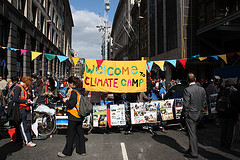
‘A Wake for BP’, (ExCel 16.4.09; British Museum 6.5.09)

ART NOT OIL REQUESTS THE PLEASURE OF YOUR COMPANY AT ‘A WAKE FOR BP’ AT ITS CENTENARY PARTY, (BRITISH MUSEUM, 6–7PM, 6.5.09)

** dress rehearsal to take place at BP’s 100th AGM, Cus­tom House DLR, 10.30am, 16.4.09 **

BP the party is overART NOT OIL REQUESTS THE PLEASURE OF YOUR COMPANY AT ‘A WAKE FOR BP’ AT ITS CENTENARY PARTY, (BRITISH MUSEUM, 6–7PM, 6.5.09)

** dress rehearsal to take place at BP’s 100th AGM, Cus­tom House DLR, 10.30am, 16.4.09 **

Oil goliath BP, already forced to post­pone its cen­te­nary par­ty at the British Muse­um on April 1st, (also known as Fos­sil Fools Day[1]), has resched­uled the event for May 6th. Art Not Oil[2], the group behind the orig­i­nal demon­stra­tion against its ‘tar­nished cen­te­nary’, will be throw­ing ‘A Wake for BP’ as guests arrive at the British Muse­um between 6pm and 7pm on the new date.

As before, peo­ple want­i­ng to come and say ‘BP – your party’s over!’ and wish the behe­moth a hap­py last birth­day are more than wel­come. The British Museum’s main gate on Great Rus­sell Street will find a con­tin­gent of the new­ly-formed Brazen Pranksters play­ing tunes to ush­er in a new era of cli­mate jus­tice and eco­log­i­cal san­i­ty.

They will also be warm­ing up between 10.30 and 11.30am out­side BP’s 100th AGM at the ExCel Cen­tre on April 16th. There, Art Not Oil hopes to present BP Chair­man Peter Suther­land a spe­cial ‘I sur­vived BP, but the plan­et might not’ T‑shirt, to com­mem­o­rate his last AGM with the com­pa­ny, to place along­side his £600,000 2007–8 pay pack­et. They also plan to wish him a hap­py low-car­bon retire­ment.

‘This real­ly is a case of “BP100 = World Plun­dered”, said Art Not Oil’s Jo Castell. ‘Through­out its his­to­ry, BP has spread the curse of oil wher­ev­er it has oper­at­ed, injur­ing (and some­times killing) work­ers, tear­ing com­mu­ni­ties asun­der and dec­i­mat­ing wildlife. And that’s long before the CO2 from burn­ing the stuff hits the upper atmos­phere and wreaks hav­oc with the cli­mate. Per­haps the most valu­able les­son we could learn from the 20th cen­tu­ry is that the 21st cen­tu­ry will need to see us kick the fos­sil fuel habit, and pret­ty damn soon. Art Not Oil would pre­fer to be in this for the short haul, but either way we’re deter­mined to see BP decom­mis­sioned as a cen­tral part of that oily cold turkey.’

Sam Chase added that ‘Any com­pa­ny that can boast that it’s replac­ing “2008 oil pro­duc­tion by 121% and aims to grow annu­al out­put through to 2020”(4) needs to be decom­mis­sioned forth­with, if we’re to have a chance of avoid­ing cli­mate cat­a­stro­phe in the not-so-dis­tant future. For­tu­nate­ly, Art Not Oil is not alone in work­ing for this to hap­pen, as move­ments of resis­tance are gath­er­ing strength all over the world.’

Notes to edi­tors:

(1) Fos­sil Fools Day was big and inter­na­tion­al in 2008 and 2009:
http://www.newint.org/columns/currents/2008/06/01/climate-campaigning;
www.fossilfoolsdayofaction.org

(2) Art Not Oil stands for ‘cre­ativ­i­ty, cli­mate jus­tice and an end to oil indus­try spon­sor­ship of the arts’, and is part of Ris­ing Tide UK. Look out for its nigh-on irre­sistible 2010 desk diary in Sep­tem­ber!
info@artnotoil.org.uk
07709 545116
www.artnotoil.org.uk
www.risingtide.org.uk

(3) The Car­bon Town Cry­er has now post­ed his BP paean ‘Cel­e­brate This!’ here: www.myspace.com/carbontowncryer

(4) What’s Right With BP?
(An edit­ed ver­sion of this text is now avail­able on a free Art Not Oil post­card):
* Beyond Petro­le­um? ‘BP replaces 2008 pro­duc­tion by 121% & aims to grow annu­al out­put through to 2020’; (BP press release)

* Fos­sil fuel-induced cli­mate chaos hit Europe in August 2003, killing tens of thou­sands of most­ly old­er peo­ple in record-break­ing tem­per­a­tures. 150,000 may have died world­wide.

* In 2007, BP bought 50% of the Sun­rise oil tar sands field in Cana­da. Tar sands are most pol­lut­ing of all the fos­sil fuels. ‘Fund man­agers attack BP over tar sands plan’, Times, 18.4.08; www.tarsandswatch.org

* ‘Exposed: BP, its pipeline, and an envi­ron­men­tal time-bomb’, Inde­pen­dent (26.6.04) on BP’s Baku-Cey­han oil & gas pipelines, which will pro­duce over 150m tonnes of CO2 each year for 40 years, caus­ing untold dam­age to the world’s cli­mate; baku.org.uk

* ‘BP dou­bles cor­po­rate ad bud­get in $150m bid for green­er image’, Times, 28.12.05; BP invests 2.6% of its annu­al bud­get in solar & oth­er renew­able ener­gy sources, much less than it ploughs into adver­tis­ing and PR like its spon­sor­ship of the Olympics, Tate, NPG, NHM etc.

* ‘BP and Shell have dis­cussed with the gov­ern­ment the prospect of claim­ing a stake in Iraq’s oil reserves in the after­math of war.’ Finan­cial Times, 11.3.03.

* ‘BP slat­ed for ‘sys­temic laps­es’, FT, 18.8.05; 15 work­ers were killed and 500 injured in an explo­sion at BP’s Texas City refin­ery on March 23rd 2005.

* ‘Oil gush­es into Arc­tic Ocean from BP pipeline’, (265,000 gal­lons, to be more exact.) Inde­pen­dent, 21.3.06.

* ‘BP prof­its soar 148%’, Guardian, 28.10.08. ‘Oil giant BP today beat ana­lysts’ fore­casts as its report­ed a 148% surge in third-quar­ter prof­its to top $10bn (£6.5bn), boost­ed by record oil prices.’

* Com­mu­ni­ty-con­trolled, post-cap­i­tal­ist renew­able ener­gy is already a real­i­ty; see for exam­ple www.escanda.org

…and by the way, Shel­l’s no bet­ter. In fact, they’re all up to no good!

Shell to Sea Good Friday Walk ends with net removal after battle with Shell security.

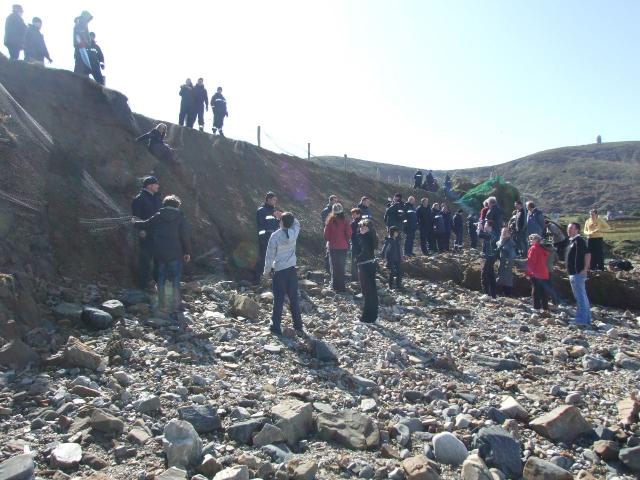
Shell to Sea sup­port­ers on the annu­al Good Fri­day Walk, walked to Glen­gad beach this morn­ing to take action in defence of their com­mu­ni­ty and envi­ron­ment by remov­ing nets over the cliff face in the Spe­cial Area of Con­ser­va­tion, despite a bat­tle with Shell Secu­ri­ty.

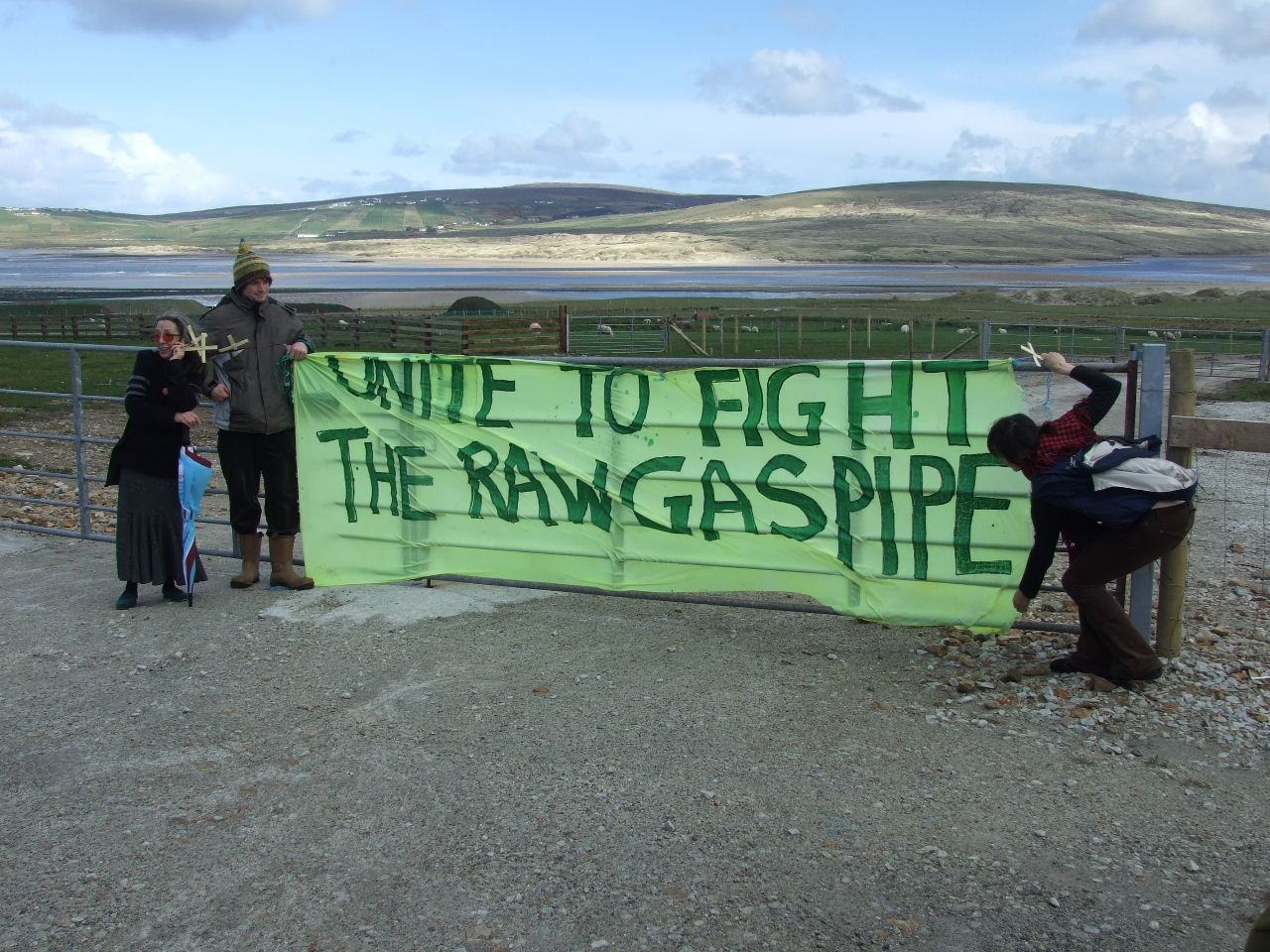
Glengad bannerShell to Sea sup­port­ers on the annu­al Good Fri­day Walk, walked to Glen­gad beach this morn­ing to take action in defence of their com­mu­ni­ty and envi­ron­ment by remov­ing nets over the cliff face in the Spe­cial Area of Con­ser­va­tion, despite a bat­tle with Shell Secu­ri­ty.

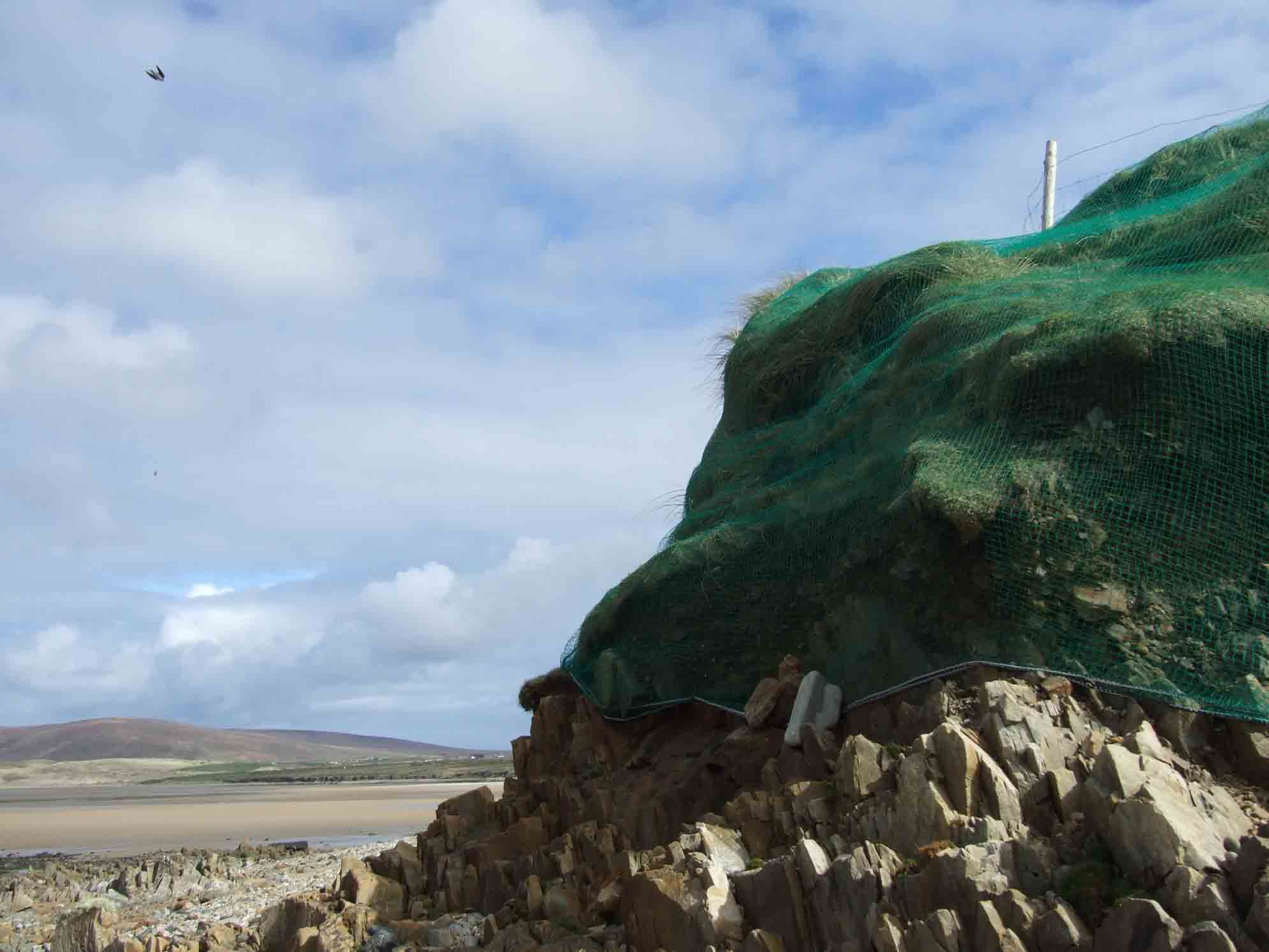
Today, the tra­di­tion­al Good Fri­day walk took place in both Glen­gad and Ross­port. Over 150 peo­ple attend­ed in total. The first walk end­ed at the site of the Shell com­pound in Glen­gad. The group walked togeth­er to the Glen­gad cliff-face and removed net­ting, recent­ly erect­ed by Shell, intend­ed to stop Sand Mar­tins nest­ing in the area. This is the eighth time the net­ting has been removed in the last two weeks by local res­i­dents.
Crossing Glengad gate
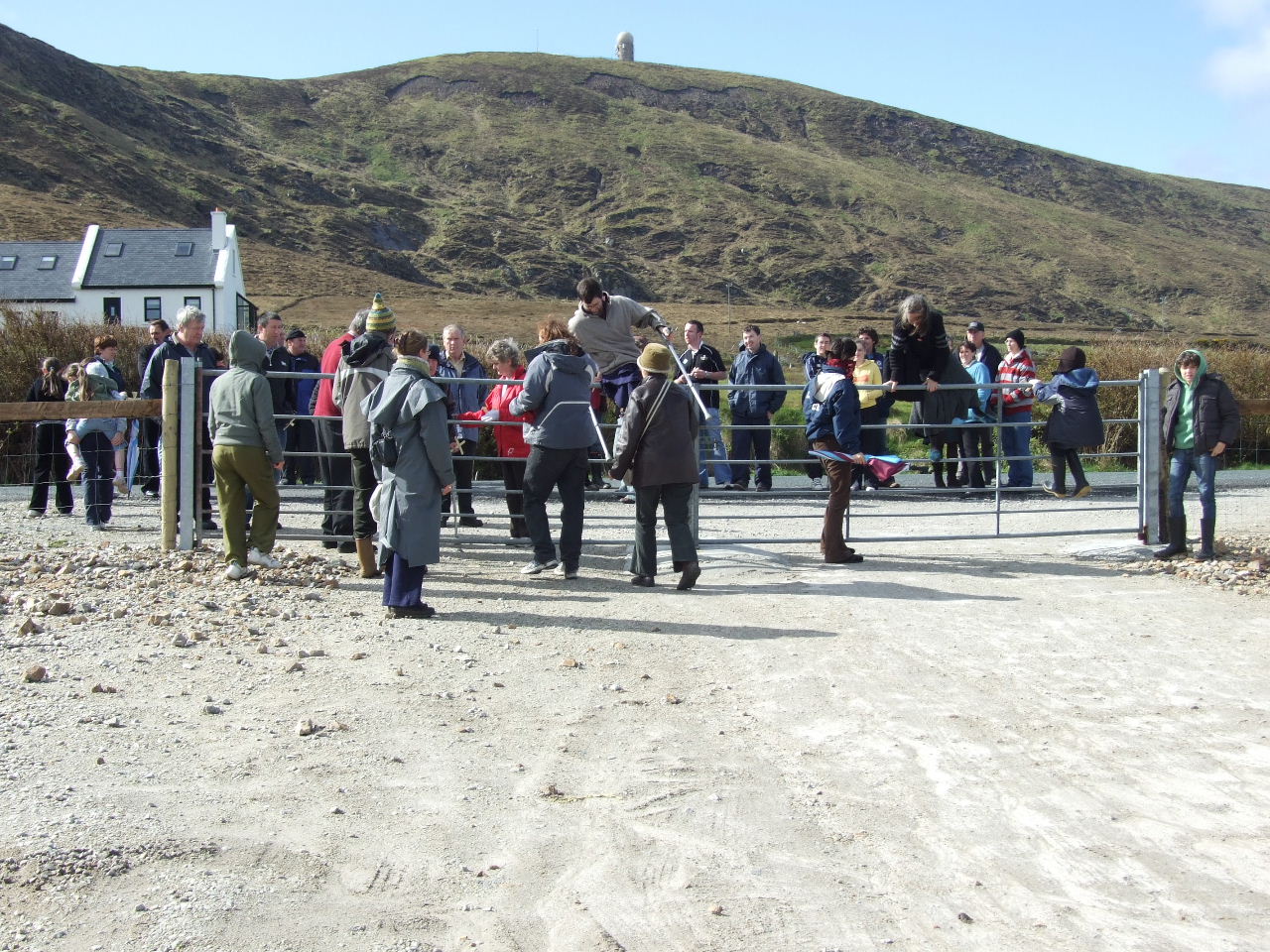
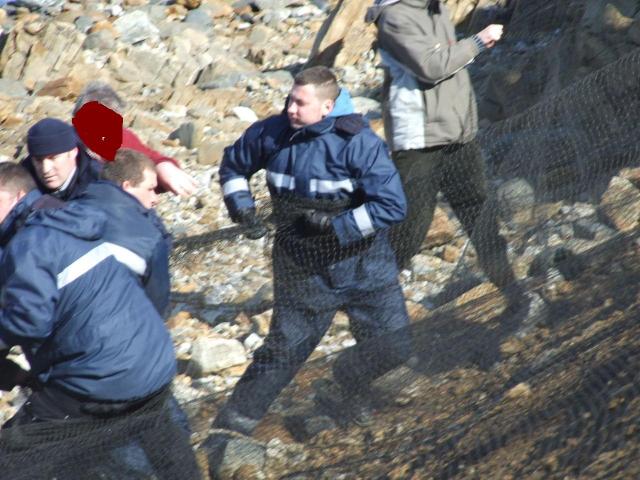
Although Eamon Ryan only signed the final con­sents for work at Glen­gad yes­ter­day, there were already over 40 secu­ri­ty per­son­nel present on the site. They were wear­ing dark, mil­i­tary-style cloth­ing with no vis­i­ble iden­ti­fi­ca­tion badges. In scenes rem­i­nis­cent of last year at Glen­gad, they used exces­sive force in deal­ing with the group, which includ­ed elder­ly peo­ple and chil­dren.
Glengad standoff
For around 45 min­utes the group attempt­ed to remove the net and the secu­ri­ty attempt­ed to stop them … Even­tu­al­ly, a pair of scis­sors was pro­duced and the net was cut in two. After, every­one left togeth­er; there were no arrests.

Glengad tug-o-war
The action tak­en today is a demon­stra­tion of resis­tance to come if Shell attempt to recom­mence work in Glen­gad.

http://www.youtube.com/watch?v=I7ZHynY0sKw

Why climate camping & other protest? Ecological debt day for your city…coming soon!

Eco­log­i­cal debt: no way back from bank­rupt

3 planetsEco­log­i­cal debt: no way back from bank­rupt

While most gov­ern­ments’ eyes are on the bank­ing cri­sis, a much big­ger issue — the envi­ron­men­tal cri­sis — is pass­ing them by, says Andrew Simms. In the Green Room this week, he argues that fail­ure to organ­ise a bailout for eco­log­i­cal debt will have dire con­se­quences for human­i­ty.

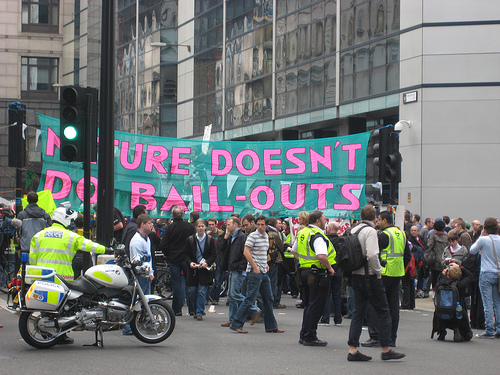
“Nature Does­n’t Do Bailouts!” said the ban­ner strung across Bish­ops­gate in the City of Lon­don.

Civil­i­sa­tion’s biggest prob­lem was out­lined in five words over the entrance to the small, par­al­lel real­i­ty of the peace­ful cli­mate camp. Their tents bloomed on the morn­ing of 1 April faster than daisies in spring, and faster than the police could stop them.

Across the city, where the world’s most pow­er­ful peo­ple met simul­ta­ne­ous­ly at the G20 sum­mit, the same prob­lem was almost com­plete­ly ignored, mer­it­ing only a sin­gle, after­thought men­tion in a long com­mu­nique.

World lead­ers dropped every­thing to tack­le the finan­cial debt cri­sis that spilled from col­laps­ing banks.

Gripped by a pan­ic so com­plete, there was no pol­i­cy dog­ma too deeply engrained to be dug out and instant­ly dis­card­ed. We went from tri­umphant, finance-dri­ven free mar­ket cap­i­tal­ism, to bank nation­al­i­sa­tion and mov­ing the dec­i­mal point on indus­try bailouts quick­er than you can say sub-prime mort­gage.

But the eco­log­i­cal debt cri­sis, which threat­ens much more than pen­sion funds and car man­u­fac­tur­ers, is left to lan­guish.

It is like hav­ing a Com­mis­sion on House­hold Ren­o­va­tion ago­nise over which expen­sive design­er wall­pa­per to use for paper­ing over plas­ter cracks whilst ignor­ing the fact that the walls them­selves are col­laps­ing on sub­sid­ing foun­da­tions.

Beyond our means

Each year, human­i­ty’s eco­log­i­cal over­draft gets larg­er, and the day that the world as a whole goes into eco­log­i­cal debt — con­sum­ing more resources and pro­duc­ing more waste than the bios­phere can pro­vide and absorb — moves ever ear­li­er in the year.

The same pic­ture emerges for indi­vid­ual coun­tries like the UK — which now starts liv­ing beyond its own envi­ron­men­tal means in mid-April.

Because the glob­al econ­o­my is still over­whelm­ing­ly fos­sil-fuel depen­dent, the accu­mu­la­tion of green­house gas­es and the prog­no­sis for glob­al warm­ing remain our best indi­ca­tors of “over­shoot”.

World famous French free-climber Alain Robert, known as Spi­der­man, climbed the Lloyds of Lon­don build­ing for the OneHundredMonths.org cam­paign as the G20 met, to demon­strate how time is slip­ping away.

Using thresh­olds for risk iden­ti­fied by the Inter­gov­ern­men­tal Pan­el on Cli­mate Change (IPCC), on cur­rent trends, in only 92 months — less than eight years — we will move into a new, more per­ilous phase of warm­ing.

It will then no longer be “like­ly” that we can pre­vent some aspects of run­away cli­mate change. We will begin to lose the cli­mat­ic con­di­tions which, as Nasa sci­en­tist James Hansen points out, were those under which civil­i­sa­tion devel­oped.

Small div­i­dend

As “nature does­n’t do bailouts”, how have our politi­cians fared who ripped open the nation’s wal­let to save the banks?

Not good.

Accord­ing to the Inter­na­tion­al Mon­e­tary Fund (IMF), the UK spent a stag­ger­ing 20% of its GDP in sup­port of the finan­cial sec­tor.

Yet the amount of mon­ey that was new and addi­tion­al, announced in the “green stim­u­lus” pack­age of the Trea­sury’s Pre-Bud­get Report, added-up to a van­ish­ing­ly small 0.0083% of GDP.

Glob­al­ly, the green shade of eco­nom­ic stim­u­lus mea­sures has var­ied enor­mous­ly. For exam­ple, the shares of spend­ing con­sid­ered in research by the bank HSBC to be envi­ron­men­tal were:

* the US — 12%
* Ger­many — 13%
* South Korea — 80%

The inter­na­tion­al aver­age was around 15%. HSBC found the UK planned to invest less than 7% of its stim­u­lus pack­age (dif­fer­ent from the bank bailout) in green mea­sures.

Com­par­ing the IMF and HSBC fig­ures actu­al­ly reveals an inverse rela­tion­ship — pro­por­tion­ate­ly, those who spent more on sup­port for finance had weak­er green spend­ing.

So here we are, faced with the loss of an envi­ron­ment con­ducive to human civil­i­sa­tion, and we find gov­ern­ments pros­trate before bare­ly repen­tant banks, with their backs to a far worse eco­log­i­cal cri­sis.

Extreme mar­kets

On top of low and incon­sis­tent fund­ing for renew­able ener­gy, the shift to a low car­bon econ­o­my is being fur­ther frus­trat­ed by anoth­er mar­ket fail­ure in the trade for car­bon seen, for exam­ple, in the EU’s Emis­sions Trad­ing Scheme.

Bad mar­ket design, fee­ble car­bon reduc­tion tar­gets and the reces­sion have all con­spired to dri­ve down the cost of car­bon emis­sion per­mits, wreck­ing eco­nom­ic incen­tives to grow renew­able ener­gy.

Worse still, the dif­fi­cul­ty of account­ing to ensure that per­mits rep­re­sent real emis­sions has led both ener­gy com­pa­nies and envi­ron­men­tal­ists to warn of an emerg­ing “sub-prime car­bon mar­ket”.

Rely­ing on mar­ket mech­a­nisms is attrac­tive to gov­ern­ments because it means they have less to do them­selves. But they will fail if car­bon mar­kets are just hot air.

There seems to be a hard-wired link between mem­o­ry fail­ure and mar­ket fail­ure.

As the his­to­ri­an E J Hob­s­bawm observed in The Age of Extremes: “Those of us who lived through the years of the Great Slump still find it almost impos­si­ble to under­stand how the ortho­dox­ies of the pure free mar­ket, then so obvi­ous­ly dis­cred­it­ed, once again came to pre­side over a glob­al peri­od of depres­sion in the late 1980s and 1990s”.

Per­haps the great­est fail­ure is one of imag­i­na­tion.

Some peo­ple alive today lived through those past reces­sions and depres­sions. They know they can be nasty and need avert­ing.

But the last time the Earth­’s cli­mate real­ly flipped was at the end of the last Ice Age, more than 10,000 years ago. No one can remem­ber what that felt like.

Lessons of his­to­ry

Look­ing for­ward, the IPC­C’s worst case sce­nario warns of a max­i­mum 6C rise over the next cen­tu­ry.

Look­ing back, how­ev­er, indi­cates that an unsta­ble cli­mate sys­tem holds worse hor­rors.

Work by the sci­en­tist Richard Alley on abrupt cli­mate change indi­cates the plan­et has pre­vi­ous­ly expe­ri­enced a 10C tem­per­a­ture shift in only a decade, and pos­si­bly “as quick­ly as in a sin­gle year”.

And, around the turn of the last Ice Age, there were “local warm­ings as large as 16C”.

Imag­ine that every day of your life you have tak­en a walk in the woods and the worse thing to hap­pen was an acorn or twig falling on your head.

Then, one day, you stroll out, look up and there is a threat approach­ing so large, unex­pect­ed and out­side your expe­ri­ence that can’t quite believe it, like a mas­sive goth­ic cathe­dral falling from the sky.

In tack­ling cli­mate change we need urgent­ly to recal­i­brate our respons­es, just as gov­ern­ments had to when they res­cued the reck­less finance sec­tor.

Then offi­cials had to ask them­selves “is what we are doing right, and is it enough?”

They must ask them­selves the same ques­tions on the eco­log­i­cal debt cri­sis and cli­mate change.

The dif­fer­ence is, that if they fail this time, not even a long-term busi­ness cycle will come to our res­cue. If the cli­mate shifts to a hot­ter state not con­vivial to human soci­ety, it could be tens of thou­sands of years, or nev­er, before it shifts back.

Remem­ber; nature does­n’t do bailouts.

Andrew Simms is pol­i­cy direc­tor of the New Eco­nom­ics Foun­da­tion (nef), and author of Eco­log­i­cal Debt: Glob­al Warm­ing and the Wealth of Nations

——

One Plan­et Liv­ing http://www.oneplanetliving.org

Your city’s Eco­log­i­cal Debt Day:

Using the lat­est data avail­able WWF has cal­cu­lat­ed when res­i­dents of British cities will have con­sumed their fair share of nat­ur­al resources for 2008 – or when their eco­log­i­cal debt day is.

City Eco­log­i­cal debt day

Win­ches­ter 10 April
St Albans 13 April
Chich­ester 14 April
Brighton & Hove 14 April
Can­ter­bury 17 April
Oxford 17 April
Southamp­ton 21 April
Durham 22 April
Cam­bridge 23 April
Portsmouth 23 April
Edin­burgh 23 April
Chester 24 April
Aberdeen 24 April
Ely (East Cambs) 26 April
Here­ford (Coun­ty of Here­ford­shire) 28 April
Stir­ling 28 April
Lon­don 29 April
Lich­field 29 April
Lan­cast­er 30 April
New­cas­tle upon Tyne 30 April
Wells (Bath and NE Som­er­set) 1 May
Bath (Bath and North East Som­er­set) 1 May
Ripon (Har­ro­gate) 2 May
Man­ches­ter 2 May
Inver­ness (High­land) 2 May
Pre­ston 2 May
Nor­wich 2 May
Peter­bor­ough 2 May
Dundee City 3 May
Leeds 3 May
York 3 May
Sheffield 3 May
Der­by 4 May
Carlisle 4 May
Leices­ter 4 May
Worces­ter 4 May
Ban­gor (Gwynedd) 4 May
St Davids (Pembrokeshire)4 May
Not­ting­ham 4 May
Liv­er­pool 4 May
Bris­tol 5 May
Birm­ing­ham 5 May
Lin­coln 5 May
Brad­ford 5 May
Glas­gow 6 May
Cardiff 6 May
Exeter 6 May
Coven­try 7 May
Swansea 8 May
Sal­ford 8 May
Wolver­hamp­ton 8 May
Truro (Car­rick) 8 May
Sun­der­land 8 May
Wake­field 9 May
Glouces­ter 9 May
Stoke on Trent 10 May
Kingston upon Hull 10 May
Sal­is­bury 10 May
Ply­mouth 11 May
New­port 11 May

G20 update — police violence; what happened b4 Ian Tomlinson’s death witnesses; vigil on 11th; legal support; protest tactics

Chan­nel 4 com­men­tary on what hap­pened to Ian Tom­lin­son just before his death — the lat­est ITN footage com­bined with the first footage pub­lished on the Guardian web­site. On the ground, pro­tes­tors try to help before being cleared out of the area — counter the media-bot­tle-throw­ing hype, watch two eye wit­ness­es.

New inci­dent of sys­temic police vio­lence — when an offi­cer slaps the face then batons the legs of a woman — cap­tured on film.

Even new­er video evi­dence of yet more police vio­lence — shields and fists used to punch with­out provo­ca­tion — more details.

Newest footage which shows Ian Tom­lin­son’s head hit the ground from the push by police.

Police charge press pho­tog­ra­phers.

Col­lec­tions of videos of police vio­lence: 1 | 2
—————-

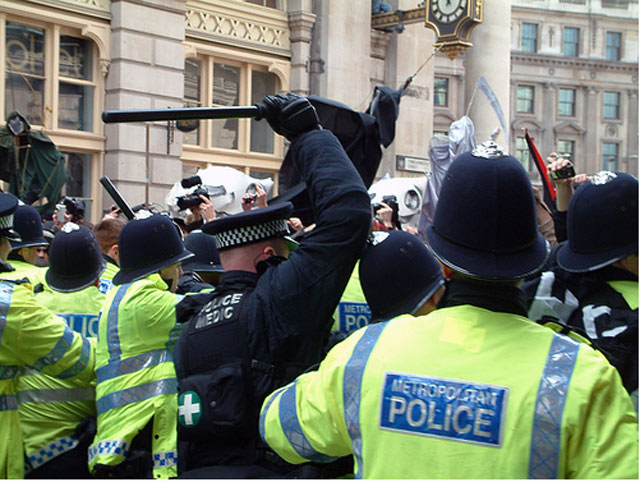
G20 police medic -cracking heads with baton

Chan­nel 4 com­men­tary on what hap­pened to Ian Tom­lin­son just before his death — the lat­est ITN footage com­bined with the first footage pub­lished on the Guardian web­site. On the ground, pro­tes­tors try to help before being cleared out of the area — counter the media-bot­tle-throw­ing hype, watch two eye wit­ness­es.

New inci­dent of sys­temic police vio­lence — when an offi­cer slaps the face then batons the legs of a woman — cap­tured on film.

Even new­er video evi­dence of yet more police vio­lence — shields and fists used to punch with­out provo­ca­tion — more details.

Newest footage which shows Ian Tom­lin­son’s head hit the ground from the push by police.

Police charge press pho­tog­ra­phers.

Col­lec­tions of videos of police vio­lence: 1 | 2
—————-

Lon­don assem­bly and pro­ces­sion:

East­er ris­ing!
Reclaim the City, Sat­ur­day April 11

* 12.00 noon Sat­ur­day — 12.00 noon Sun­day
* Wear Black
* Assem­ble 11:30am, Beth­nal Green
* Lay your flow­ers where Ian Tom­lin­son died
* Bring pop-up tents to stay with Ian through the night

—————-

Edin­burgh protest:

Four months ago it was a 15-year-old school­boy in Greece – today it’s a 47-year-old news­pa­per sell­er in the UK.

Enough with the state mur­ders!

Whether civil­ians’ deaths are caused because of “heart attacks” (most like­ly due to police ter­ror) or head injuries (due to police bru­tal­i­ty) or “mis­fires” (due to police stu­pid­i­ty), we say we had Enough!

Enough! Of your lies in attempt­ing to cov­er up your mis­takes
Enough! Of your “Robo­cop” atti­tude
Enough! Of your “to serve and pro­tect” fake masks
Enough! Of you being the guardian dogs of the priv­i­leged elite

We say Enough! and we are going to say it out loud so every­one can hear us.

Sat­ur­day 11th of April at 1:30pm in Bris­to Square (Edin­burgh)

Bring friends, ban­ners, can­dles and some­thing to make noise with (drums, whis­tles etc.)

—————-

Red­ditch protest:

The polic­ing at the G20 protests was extreme­ly vio­lent and aggres­sive. Peace­ful pro­test­ers were attacked and beat­en, many of them suf­fer­ing injuries. We’ve all seen the videos of police lay­ing into the cli­mate campers who stood there with their hands in the air calm­ly stat­ing “this is not a riot”. And now we see film evi­dence that Ian Tom­lin­son, who was not even a pro­test­er, was bru­tal­ly attacked from behind with a baton, before being shoved hard to the ground by a vicious cop. Ian Tom­lin­son died min­utes lat­er — I call this MURDER and it hap­pened on Jacqui Smith‘s watch!!

This is a call out for a Nation­al Demon­stra­tion in Red­ditch, the con­stituen­cy of Jacqui Smith, the Home Sec­re­tary.

Demon­strate against the increas­ing­ly vio­lent and aggres­sive polic­ing at peace­ful protests. Demon­strate against the ero­sion of civ­il lib­er­ties in our so called democ­ra­cy. Demand that Jacqui Smith ensures that the offi­cers who mur­dered Ian Tom­lin­son are brought to jus­tice.

Let‘s see how Jacqui Smith likes it when 1,000s of pro­test­ers turn up in her home town demand­ing JUSTICE!!!

Sat­ur­day 18th April — 12 noon out­side Red­ditch Town Hall.

The town hall is about 10 min­utes walk from the train sta­tion.
http://www.multimap.com/s/QKjPxY9S

—————-

A protest against the death of Ian Tom­lin­son and the grow­ing use of vio­lent tac­tics by police against pro­test­ers will take place 1 pm Sat­ur­day 11 April, Grey’s Mon­u­ment, New­cas­tle

—————-

Legal call-out

G20 LEGAL UPDATE
First, thank you for all the emails. We are read­ing them but not acknowl­edg­ing them at the moment due to the quan­ti­ty. Our apolo­gies. For the time being, if you would like us to respond — please send us anoth­er email request­ing a response.

HOW THE POST-PROTEST LEGAL PROCESS WORKS:
Lots of peo­ple are writ­ing to us with evi­dence of police mis­be­hav­iour and there cer­tain­ly seems to be grounds for com­plaint in many of them.
How­ev­er, cru­cial­ly com­plaints and legal claims need to be brought by indi­vid­u­als: we can’t do it on your behalf. Also, do NOT make a com­plaint if there’s a pos­si­bil­i­ty that you will make a legal claim, or could sup­port some­one else doing so — com­plain­ing to the IPCC before suing the police will com­pro­mise the case.

What we are doing is:

1. We are mak­ing sure we have the evi­dence avail­able to us sort­ed so we can locate sup­port­ing evi­dence for those arrest­ed or those who bring com­plaints of assault and so forth against the police.

2. We are explor­ing whether there is a legal chal­lenge strate­gi­cal­ly worth bring­ing this time. If so, we will be look­ing for poten­tial lit­i­gants.

3. We are prepar­ing report and film on the Camp and may be in con­tact with some of you to use your state­ments. We have made no deci­sion as to what we will do with the report at this point.

4. We have a par­tic­u­lar inter­est in how those with injuries or ill­ness­es were treat­ed by the police — so if you have rel­e­vant evi­dence there please let us know. Depend­ing on the evi­dence, we may focus on this as an area of con­cern.

What you could do:

If you were wrong­ful­ly arrest­ed, or assault­ed and injured by a police offi­cer, you may be able to bring a case against the police. Please con­tact Bind­mans Solic­i­tors in the first instance: 020 7833 4433. If they do not have the capac­i­ty then we can rec­om­mend oth­er firms of solic­i­tors who have worked with activists in the past. We may have sup­port­ing evi­dence so let us know if we can help. Please keep us informed of the out­comes — legal@climatecamp.org.uk.

If you were arrest­ed and charged, let us know as we may have sup­port­ing evi­dence that may help with your defence. You will need to give your solic­i­tor your con­sent to them talk­ing to us or they will not be able to tell us about your case. Please keep us informed of the out­come — legal@climatecamp.org.uk.

N.B. If you have pre­vi­ous­ly left any impor­tant legal infor­ma­tion on an answer­ing machine or sent to a dif­fer­ent email address and nobody got back to you, please try again using the email address above

Mean­while write up any­thing rel­e­vant now and email us, let us know if you have footage and we will send you some infor­ma­tion on how to share it with us, keep copies of any orig­i­nal notes, pho­tos and film (and keep them for 12 months).

Final­ly, if your wit­ness state­ment relates to the G20 Melt­down protests at Bank, there is a sep­a­rate legal sup­port process. Please con­tact the Legal Defence and Mon­i­tor­ing Group — email ldmgmail@yahoo.co.uk or post to Legal Defence and Mon­i­tor­ing Group, BM Box HAVEN, Lon­don, WC1N 3XX .

—————-
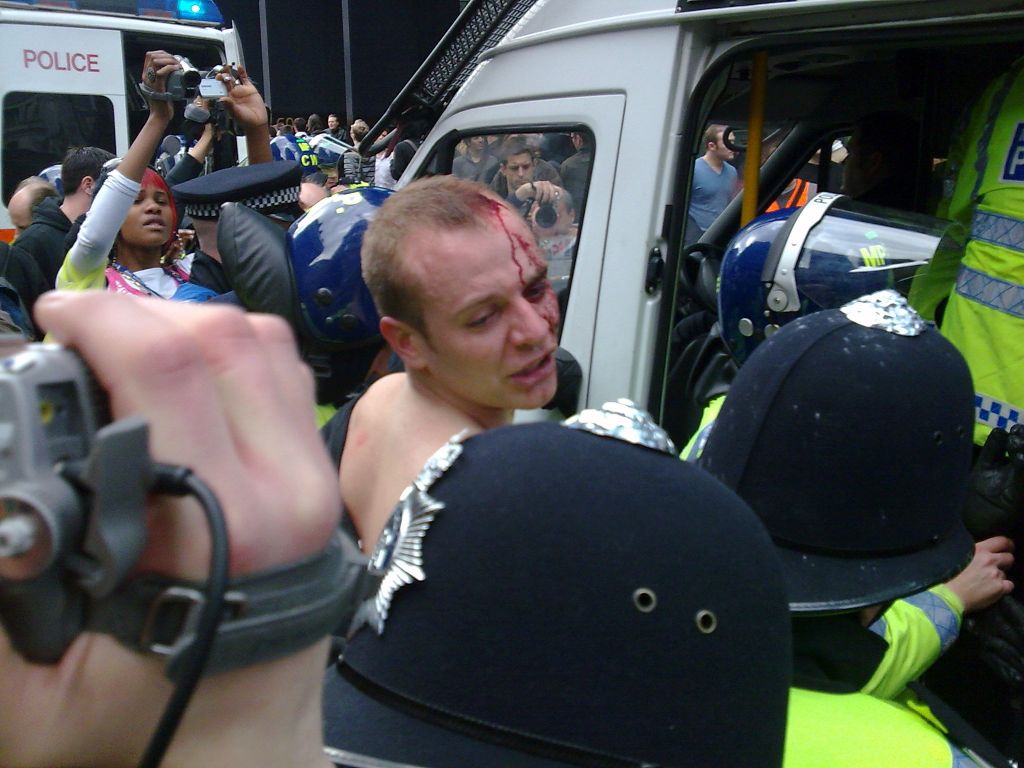
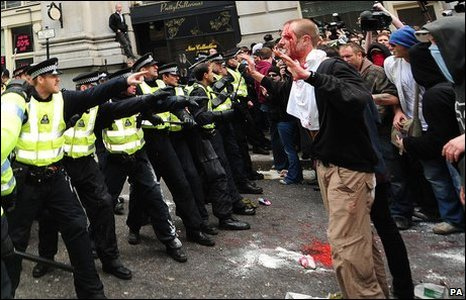
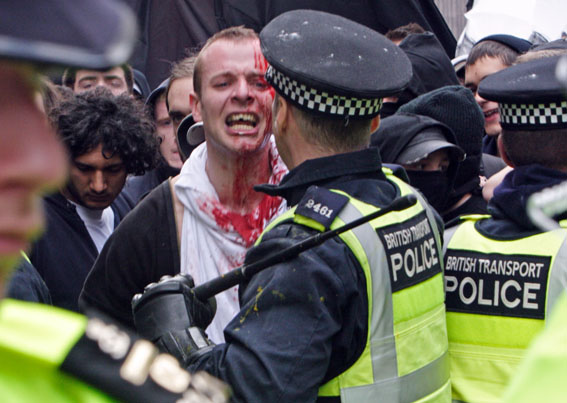
Bloody protestor & baton-wielding cop
Pub­lic Order strate­gies to not get ket­tled and beat­en by the police

For how to sur­vive police tac­tics in big pub­lic order sit­u­a­tions such as the G20 protests, and still do what you want to do, read the Guide to Pub­lic Order Sit­u­a­tions — any com­ments or ideas please send them in to manchester@earthfirst.org.uk

—-

Video of police rush on cli­mate camp — why you should read the above, rather than lis­ten to some­one on a mega­phone sug­gest­ing peo­ple put their hands up AND link arms! The same charge but clear­er and more bru­tal can be seen here. Oth­er clips and reports from the day are all here.

—————-

Jour­nal­ists removed from cov­er­ing G20 protests with ille­gal use of laws and through injury — see the com­men­taryhere.

—————-

Beau­ti­ful & incite­ful G20 pho­to essaychap­ter 1: the anar­chists are com­ing! | chap­ter 2 part 1: storm the banks? | chap­ter 2 part 2: a tale of ket­tles, and death | chap­ter 3: police work

—————-

Cor­rect­ing the media nar­ra­tive of the G20 protests on April 1, 2009

The media cov­er­age of the G20 protests has been sys­tem­at­i­cal­ly biased, writes Musab You­nis — ignor­ing the vio­lent polic­ing, the tac­tic of open-air impris­on­ment of demon­stra­tors, and the real chronol­o­gy of events. “It has tak­en remark­able obe­di­ence by the press,” writes Musab, “to refuse to ask some sim­ple and obvi­ous ques­tions.”

#1 – The rever­sal of events

“Anti-cap­i­tal­ist pro­test­ers embarked upon a wreck­ing spree with­in a City branch of the Roy­al Bank of Scot­land today,” shrieked The Times on April 1, “and engaged in run­ning bat­tles with police as G20 demon­stra­tions turned vio­lent. Police were forced to use dogs, hors­es and trun­cheons to con­trol a crowd of up to 5,000 peo­ple who marched on the Bank of Eng­land, in Thread­nee­dle Street, on the eve of the Lon­don sum­mit.”

This nar­ra­tive of events is entire­ly typ­i­cal. Under the head­line “Police clash with G20 pro­tes­tors”, the BBC report­ed that “pro­test­ers stormed a Lon­don office of the Roy­al Bank of Scot­land”, lat­er adding tha: “offi­cers lat­er used ‘con­tain­ment’ then ‘con­trolled dis­per­sal’” (BBC, April 1). The Guardian report­ed: “The G20 protests in cen­tral Lon­don turned vio­lent today ahead of tomor­row’s sum­mit, with a band of demon­stra­tors close to the Bank of Eng­land storm­ing a Roy­al Bank of Scot­land branch … [S]ome bloody skir­mish­es broke out as police tried to keep thou­sands of peo­ple in con­tain­ment pens” (The Guardian, April 1).

What is inter­est­ing about this nar­ra­tive is that it pre­cise­ly revers­es the events of the day.

Eye­wit­ness accounts of the day agree that the police began the now-infa­mous tac­tic of ‘ket­tling’ pro­tes­tors – refus­ing to allow any­one in or out of a con­fined space held by police lines – as soon as the four march­es had con­verged on the Bank of Eng­land, at around mid­day. An arti­cle in The Times a day ear­li­er by a for­mer Assis­tant Com­mis­sion­er of the Met­ro­pol­i­tan Police, Andy Hay­man, sug­gest­ed that the police had planned to use this tac­tic well in advance: “Tac­tics to herd the crowd into a pen, known as ‘the ket­tle’, have been crit­i­cised heav­i­ly before, yet the police will not want groups splin­ter­ing away from the main crowd. This would stretch their resources” (The Times, March 31).

Note that the “vio­lent out­burst” (Tele­graph) of win­dow-break­ing took place hours after the police had decid­ed to “herd the crowd” of at least 5,000 peo­ple “into a pen” with­out access to food, water or toi­let facil­i­ties – and with­out allow­ing them to leave.

The press was sure­ly aware of this. The Guardian’s live blog from the day not­ed at 11.57 a.m. that “the bar­ri­ers designed to fence in the pro­test­ers are not big enough”, an hour lat­er it con­firms that there is “a ‘ket­tle’ at the Bank of Eng­land”: half an hour lat­er they report “clash­es” and final­ly, at 1.30 p.m., “a win­dow has been smashed.” An objec­tive observ­er of the sequence of events here might ask whether the police ‘ket­tle’ had in fact been respon­si­ble for the “clash­es”, “vio­lence” and smashed win­dow.

But this idea – that the ket­tle might have pro­voked the “clash­es”, and that the police might there­fore be respon­si­ble for the “vio­lence” – is remark­ably absent from vir­tu­al­ly all of the reams of press cov­er­age of the protests. We do, of course, have a spec­trum of opin­ion: where­as the right-wing Dai­ly Mail sees the pro­tes­tors as “a fear­some group of thugs”, a “bizarre group of mis­fits” fuelled by “Dutch courage” and a “will­ing­ness to use vio­lence” (April 1), for the left-wing Guardian only “a minor­i­ty of demon­stra­tors seemed deter­mined to cause dam­age” whilst “much of the protest­ing” was “peace­ful” (April 1).

Again, the notion that there was not a “vio­lent” core of demon­stra­tors at all, but that peo­ple were pro­voked into “clash­es” with the police due to police tac­tics, is absent. Even the arti­cle which is by far most crit­i­cal of the police actions – a piece by Dun­can Camp­bell in The Guardian titled ‘Did police con­tain­ment cause more trou­ble than it pre­vent­ed?’ – only goes as far as to say: “As for the vio­lent clash­es that led to cracked heads and limbs, how much was inevitable and how much avoid­able?”. Camp­bell con­cedes that “some demon­stra­tors were bent on aggro” but adds: “so were some of the offi­cers.” He also crit­i­cis­es the con­di­tions inside the ket­tle and sug­gests that it will make peo­ple think twice before embark­ing on a demon­stra­tion in future. Thus Camp­bell sug­gests the “clash­es” were avoid­able, but does not indi­cate that the ket­tles actu­al­ly led to the “clash­es” – though, to give cred­it where it is due, his is the only piece in the press which dares to sug­gest that the police were them­selves vio­lent.

#2 – Jus­ti­fi­ca­tions

Well before the protests, the press had been report­ing with glee the “vio­lence” pre­dict­ed as “Lon­don went into lock­down” and “pro­tes­tors issued a call to arms” with “police fears” of pro­tes­tors “intent on vio­lence” (The Lon­don Paper, 31 March).

The BBC post­ed a sym­pa­thet­ic arti­cle titled ‘The chal­lenge of polic­ing the G20’ (30 March) which point­ed out that: “police offi­cers spend their pro­fes­sion­al lives try­ing to play down the pub­lic order impli­ca­tions of demon­stra­tions — it’s in their inter­ests to keep things calm.”

“The secu­ri­ty strat­e­gy of the day,” they report­ed breath­less­ly, “resem­bles a three-dimen­sion­al ever-chang­ing puz­zle” where “the unknow­able fac­tor is the demon­stra­tor bent on vio­lence”. The arti­cle end­ed with a quote from Com­man­der O’Brien: “If any­one wants to come to Lon­don to engage in crime or dis­or­der, they will be met with a swift and effi­cient polic­ing response.”

This flur­ry of media cov­er­age pre­dict­ing “vio­lence” from “anar­chists” was clear­ly ini­ti­at­ed by the police, who released a bar­rage of press state­ments before the protests which served to pre-emp­tive­ly quell crit­i­cism of their actions on the day – actions which had, of course, been planned well in advance. The G20 polic­ing was to be “one of the largest, one of the most chal­leng­ing, and one of the most com­pli­cat­ed oper­a­tions” ever “deliv­ered” by the Met­ro­pol­i­tan Police, accord­ing to Com­man­der Simon O’Brien, who hit the press cir­cuit with gus­to in the days pre­ced­ing the G20.

The press obe­di­ent­ly played their part by report­ing police “fears” word for word, with com­plete sym­pa­thy, and with no ques­tion on ask­ing those who planned to protest whether they thought the police reac­tion might be over­ly vio­lent. After all, “the police have had to pre­pare for every pos­si­bil­i­ty” on April 1, not­ed the Times: “from ter­ror­ism to riots” (The Times, March 31).

With ample oppor­tu­ni­ty to ques­tion an unusu­al­ly talk­a­tive police force, bare­ly a sin­gle sen­tence in the press asked whether the police prepa­ra­tion for the protests might be heavy-hand­ed or that a vio­lent reac­tion by the police to the protests might lead to seri­ous injury or death. The pro­tes­tors, of course, were to be “vio­lent” “mobs” (based on police “intel­li­gence” gleaned from “social net­work­ing sites”), but the police were to be calm, mea­sured and under­take only nec­es­sary mea­sures.

The effect of this press cov­er­age was to jus­ti­fy in advance all police actions whilst de-legit­imis­ing any actions by pro­tes­tors. End­less pre­dic­tions of “vio­lent pro­tes­tors” meant that all the day’s “clash­es” were sure to be blamed on the “minor­i­ty” of “intent on vio­lence” – even if evi­dence sug­gest­ed that “clash­es” were actu­al­ly insti­gat­ed by police, and that vio­lence was in the main inflict­ed by the police on pro­tes­tors. With­in the press nar­ra­tive, the police are mere­ly reac­tive; forced to respond to a “vio­lent” sit­u­a­tion and “keep things calm”; the notion that they could have active­ly encour­aged and pro­voked “clash­es” seems patent­ly absurd.

#3 – So what’s miss­ing?

There are a num­ber of impor­tant ques­tions which sim­ply didn’t appear in the press.

a) Did the police intend to ‘ket­tle’ demon­stra­tors in a con­fined space regard­less of whether there was any vio­lence or not?

All the evi­dence, includ­ing past cas­es of the police using this tac­tic, sug­gests this was the case. (At the Cli­mate Camp protest at Bish­ops­gate on the same day, the police beat pro­tes­tors back into a ket­tle despite them hold­ing up their hands and chant­i­ng ‘this is not a riot’, as can clear­ly be seen on the Indy­media video ‘Riot police attack peace­ful pro­tes­tors at G20 cli­mate camp’).
Is there a pos­si­bil­i­ty that the police were not in fact “forced to use dogs, hoses and trun­cheons” due to “vio­lent” pro­tes­tors, but that they inflict­ed vio­lence on peace­ful pro­tes­tors?

b) Was there real­ly “vio­lence” from the pro­tes­tors?

The Met­ro­pol­i­tan Police state that “small groups of pro­tes­tors intent on vio­lence, mixed with the crowds of law­ful demon­stra­tors” (Met Police, 2 April) and The Guardian quotes Com­man­der Simon O’Brien as claim­ing there were “small pock­ets of crim­i­nals” with­in the crowd who attend­ed a memo­r­i­al for Ian Tom­lin­son on April 2. Again, eye­wit­ness accounts of both days state that vir­tu­al­ly all of the vio­lence came from police. Despite hours of ket­tling and media reports of “mis­siles” being thrown at police (trans­la­tion: plas­tic bot­tles), the only tan­gi­ble evi­dence of pro­tes­tor vio­lence at either of the two main protest sites seems to have been some smashed win­dows, which of course is dam­age to prop­er­ty and not “vio­lence”.

The Guardian reports that a small group of demon­stra­tors were “seek­ing con­fronta­tion as they surged towards police lines.” Of course you’re expect­ed to sit qui­et­ly when you are being held against your will behind police lines and peri­od­i­cal­ly beat­en with batons. But is it con­ceiv­able that those who “charged” police lines sim­ply want­ed to leave? And why is it con­fronta­tion­al to “charge police lines” with­out using any weapons, but not con­fronta­tion­al to hold thou­sands of peo­ple in an area, keep­ing them there with kicks and batons? That the pro­tes­tors could have actu­al­ly showed remark­able restraint when being pro­voked in an unbear­able sit­u­a­tion is laugh­able accord­ing to all the press. Yet this is what eye­wit­ness accounts point to. Only the Let­ters page in the Guardian gives any cre­dence to this: one per­son writes that “the few scuf­fles we did wit­ness were caused pre­cise­ly at the frus­tra­tion of peo­ple not being allowed to come and go as they pleased”; anoth­er states that: “an ugly mood devel­oped after those who had come to exer­cise their demo­c­ra­t­ic right to protest were detained against their will” (Guardian, April 3).

c) Were the police tac­tics respon­si­ble for the “vio­lence” of the day?

Because the press has been admirably obe­di­ent in revers­ing the course of events, this is an impos­si­ble ques­tion – accord­ing to the media first there was “vio­lence” from “anar­chist” pro­tes­tors, then the ket­tle began. Yet once we estab­lish a more accu­rate chronol­o­gy, and take into account police pri­or plan­ning, it seems that it had always been intend­ed to shut thou­sands of peo­ple into an enclosed space with­out being able to leave.

d) Was the ‘ket­tling’ tac­tic intend­ed to make peo­ple think twice about demon­strat­ing in future?

The most crit­i­cal piece in the press, by Dun­can Camp­bell in the Guardian, states that those “peo­ple think­ing about embark­ing on demon­stra­tions in the future may have to decide whether they want to be effec­tive­ly locked up for eight hours with­out food or water and, when leav­ing, to be pho­tographed and iden­ti­fied.” Yet it does not sug­gest that this may have been the ini­tial inten­tion of the police in adopt­ing this tac­tic, even though it is absurd to sug­gest the police might have planned to use this tac­tic with­out imag­in­ing it would lead to anger and frus­tra­tion on the part of those trapped in the ket­tle. In con­junc­tion with the exten­sive restric­tions to free­dom of protest under the New Labour gov­ern­ment, amply doc­u­ment­ed else­where, it might be rea­son­able to sug­gest that the police tac­tics were in part, at least, designed to deter pro­tes­tors.

e) Were the police vio­lent and should any offi­cers face charges?

Remark­ably, this ques­tion is absent from vir­tu­al­ly all the press cov­er­age – despite hun­dreds of injuries to pro­tes­tors, the death of some­one appar­ent­ly trapped in a ket­tle, and video footage show­ing baton charges direct­ed towards crowds of peo­ple with their hands in the air, the use of riot shields as an offen­sive weapon, and the beat­ing with batons of pro­tes­tors sat on the ground (see, for exam­ple, ‘Riot police attack peace­ful pro­tes­tors at G20 cli­mate camp’ on Indy­media). The ample ground­work laid by the police sug­gest­ing there would be pro­tes­tors “intent on vio­lence” hap­pi­ly accounts for all the vio­lence of the day and makes easy to ignore eye­wit­ness accounts that state that peace­ful pro­tes­tors being ket­tled, charged, beat­en and pro­voked by the police. Giv­en the num­ber of wit­ness­es and video evi­dence, it has tak­en remark­able obe­di­ence by the press to refuse to ask this ques­tion – and for a media so obsessed with vio­lence, it seems strange that the over­whelm­ing vio­lence of the day, that inflict­ed by the police on pro­tes­tors, bare­ly mer­its a men­tion.

Shell to Sea Update from Erris – Shell Nets and Boats at Glengad

Shell has returned to Glen­gad beach to install nets over the cliff face. This cliff is a sand mar­tin nest­ing area, and the sand mar­tin nest­ing sea­son is begin­ning this month.

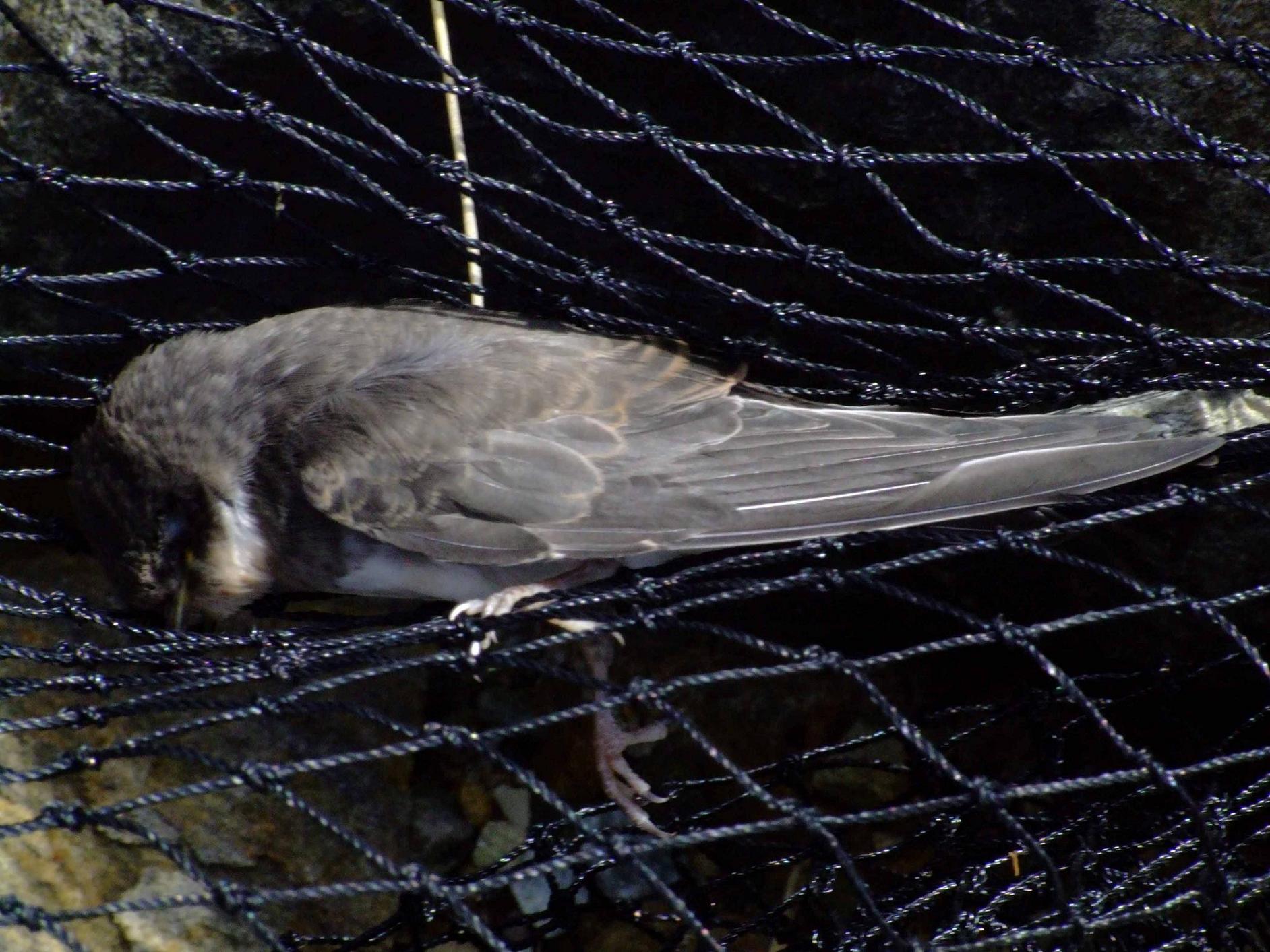
Glengad cliff nettedDead sandmartin in Shell's netShell has returned to Glen­gad beach to install nets over the cliff face. This cliff is a sand mar­tin nest­ing area, and the sand mar­tin nest­ing sea­son is begin­ning this month. Birds have been spot­ted in the area, and although there are some sec­tions of cliff not cov­ered by the nets, the nest­ing area is severe­ly restrict­ed. The sur­face of the cliff face is marked­ly dif­fer­ent from years past, after being destroyed last fall dur­ing Shel­l’s failed attempt to bring their raw gas pipeline onshore. For a report on the destruc­tion done to the beach last fall, you can read the Sol­i­dar­i­ty Cam­p’s Novem­ber update here on Earth First! Action Reports.

Two boats were present in Broad­haven Bay today from at least 10am until 4pm. The larg­er boat moved all around the bay, while the small­er boat most­ly stayed close to the green buoy. It is pos­si­ble that they are car­ry­ing out sur­vey works to pre­pare for the off­shore pipe lay­ing. Accord­ing to Shel­l’s Envi­ron­men­tal Man­age­ment Plan, Shell may be plan­ning to begin off­shore pipe lay­ing in May of this year, using an alter­na­tive “wet start” option. From the Envi­ron­men­tal Man­age­ment Plan:

“Alter­na­tive “wet start” option
If the dredg­ing of the trench for the nearshore sec­tion of the pipeline has not been com­plet­ed and the pipelay ves­sel is avail­able to start work an alter­na­tive sequence of instal­la­tion maybe under­tak­en.
The pipelay ves­sel will install a marine anchor on the pipeline route in approx­i­mate­ly 20 to 25m of water. A wire between this anchor and the lead­ing end of the pipeline will main­tain ten­sion in the pipeline and the ves­sel will start to lay pipe towards the Cor­rib Field as out­lined pre­vi­ous­ly.
Depend­ing upon the progress of the dredg­ing oper­a­tion, the pipelay ves­sel may con­tin­ue and lay all of the line to Cor­rib. Alter­na­tive­ly, it may sus­pend its oper­a­tions part way and return to Broad­haven Bay to com­plete the pull-in of the land­fall sec­tion and then pick up the pre­vi­ous­ly laid sec­tion before con­tin­u­ing to the field.
If a “wet start” is under­tak­en, it will be nec­es­sary to join the two sec­tions of pipeline togeth­er with­in Broad­haven Bay by lift­ing the pipe ends above water and weld­ing them togeth­er, or com­plet­ing the weld on the seabed using divers.”

As expect­ed, Shell seems to be gear­ing up for anoth­er attempt at forc­ing their project ahead with­out com­mu­ni­ty con­sent again in 2009. The strug­gle against Shell con­tin­ues, fol­low­ing a spir­it­ed week­end in Dublin out­side Moun­tjoy Prison in sol­i­dar­i­ty with Mau­ra Har­ring­ton. Mau­ra has been impris­oned for 20 days and has anoth­er 8 days yet to serve in her sen­tence. Anoth­er Peo­ple’s Forum will take place this week­end, with talks on the upcom­ing US case against Shel­l’s actions Nige­ria, Cli­mate Change, and Cor­rib Gas Per­mis­sions.

The Forum will take place in the Inver Com­mu­ni­ty Cen­ter on Sat­ur­day, April 4th from 10.30am – 3.30pm. As always, the Sol­i­dar­i­ty Camp is open to any­one who wants to vis­it Erris to sup­port the cam­paign. Con­tact the Ross­port Sol­i­dar­i­ty Camp: 085 1141170 ross­port­sol­i­dar­i­ty­camp at gmail dot com

—-

April 2nd, 2009

The net­ting over the cliff face at Glen­gad was tak­en down yes­ter­day by two mem­bers of Pobal Chill Chomain, in the pres­ence of a NPWS man­ag­er.

Attempts are being made by Bel­cross con­trac­tors this morn­ing (Thurs­day, 11am) to put the nets back up. They are cur­rent­ly being pre­vent­ed from fin­ish­ing this work.

Sand mar­tins and Brent geese are present on the beach.

Two boats, pos­si­bly sur­vey boats, are in Broad­haven Bay.

Beau­ti­ful day on the beach!

Climate Camp in the City, Critical Mass & the G20 Meltdown Bank of England plus other protests from this week — updated

The urban Cli­mate Camp at Bish­ops­gate by the Euro­pean Cli­mate Exchange has been report­ed to have over 2000 peo­ple and 150 tents, and has been described as a huge­ly impres­sive infra­struc­ture.

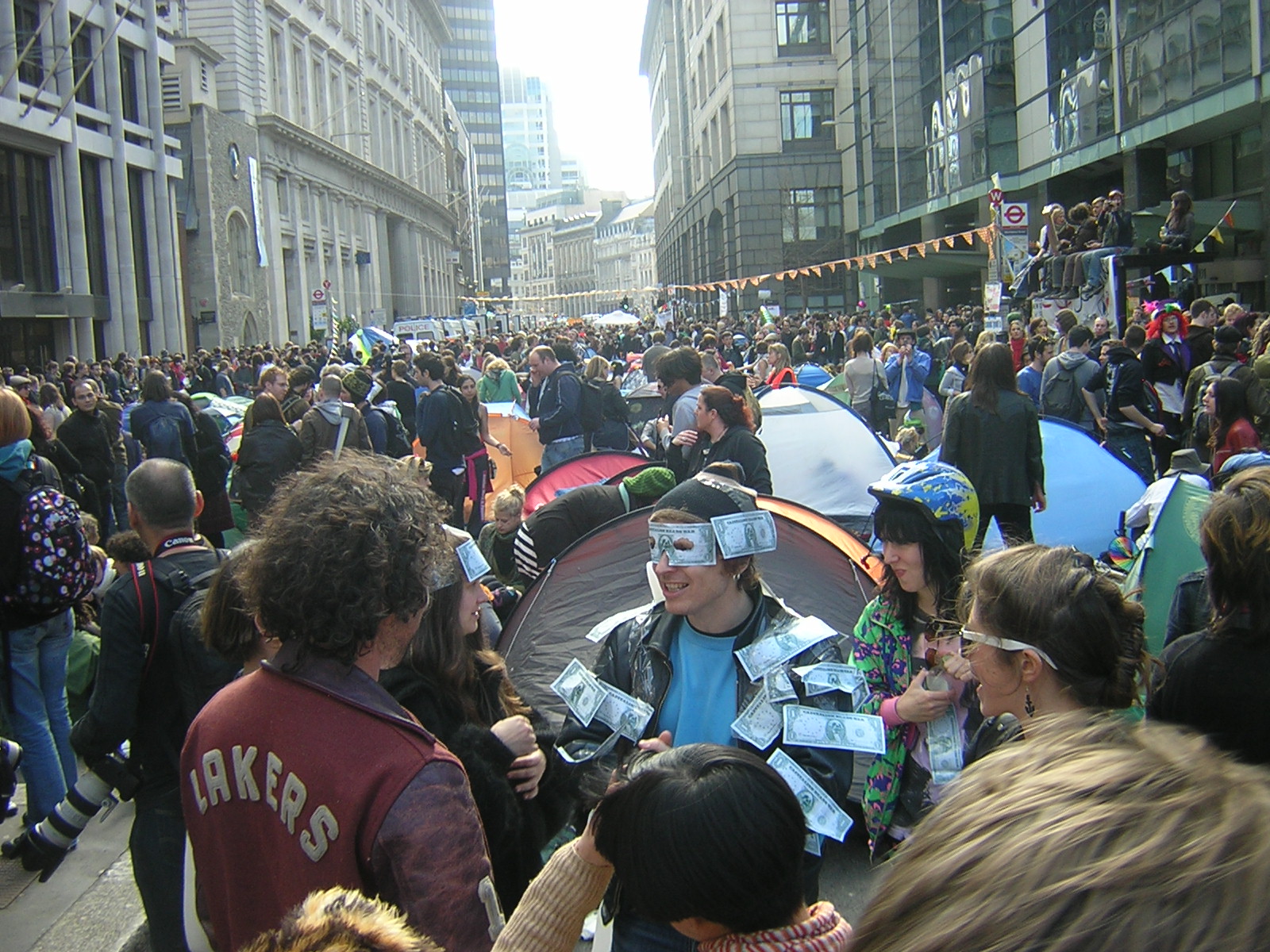
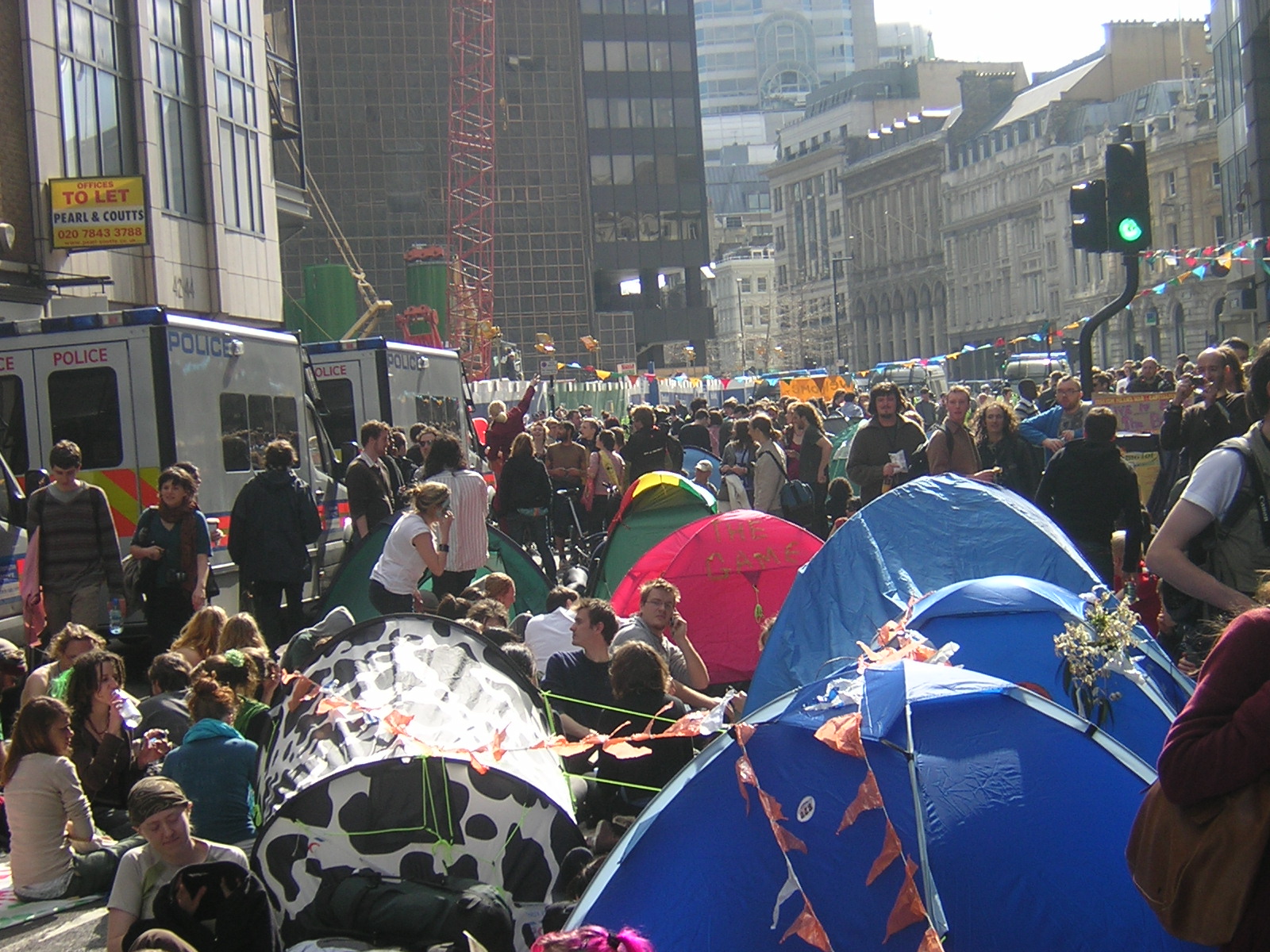
Welcome to the Climate Camp in the CityThe urban Cli­mate Camp at Bish­ops­gate by the Euro­pean Cli­mate Exchange has been report­ed to have over 2000 peo­ple and 150 tents, and has been described as a huge­ly impres­sive infra­struc­ture. There has been numer­ous the­atri­cal per­for­mances, and sound-sys­tems along­side com­post toi­lets, a med­ical tent, a chil­dren’s area, a cou­ple of work­ing kitchens, speak­ers, ban­ners across the street and numer­ous work­shops. Many peo­ple have been pic­nick­ing there and the camp has been attract­ing passers by and city work­ers. There have been police lines on either side of the camp but peo­ple are allowed in and out. There has been danc­ing near the police lines and the atmos­phere has gen­er­al­ly been described as very good, with office work­ers waiv­ing out of win­dows at the campers.

'Nature doesn't do Bailouts'CC London money-eyes
“Street emp­ty. They beat us out and squashed our tents. But oh what a world we cre­at­ed! Shame on the pow­ers that be.”
— Cli­mate Camp Lon­don

Cli­mate Camp in the City has come to a end as police aggres­sive­ly cleared pro­test­ers from Bish­ops­gate. Sev­er­al hours ear­li­er campers agreed to move to the North to shore up their defences, but after heav­i­ly provoca­tive polic­ing, peo­ple began to try and leave.

Bloodied & put in vanMany campers head home with light injuries after a long evening of intim­i­da­tion and vio­lence from the police. At sev­er­al points they moved in to snatch indi­vid­u­als from the crowd and sent lines of offi­cers into sit­ting campers, unpro­voked. One pro­test­er said “the police act­ed aggres­sive­ly, goad­ing pro­test­ers, but we remained peace­ful and the aim remains strong.” By 2am their aggres­sive tac­tics suc­ceed­ed with most of the campers doing their best to escape the cor­don. Soon after the camp was bro­ken.

Climate Camp in the City tentsCampers claim a vic­to­ry hav­ing held their ground peace­ful­ly for so long, serv­ing food, drink, a vari­ety of work­shops to the campers, and above all, cre­at­ing a pos­i­tive space for change. We also pay homage to the inven­tor of the pop-up tent, for mak­ing today pos­si­ble.

Updates:

01:20 Reports that Cli­mate Camp has been evict­ed by police — peo­ple pushed back and beat­en, won­der­ing how to retrieve their belong­ings.

01:10 — Police pulling peo­ple out of Cli­mate Camp from south­ern perime­ter.

00:30 — Cli­mate Camp par­tic­i­pants have been mak­ing speech­es to the police about why they have been tak­ing action today.

00:20 — Reports from Cli­mate Camp of police using bolt-cut­ters to dis­man­tle the bike bar­ri­cade whilst there is now noth­ing to stop them com­ing in from the North.

23:55 — Police are now mov­ing from south to north push­ing peo­ple out of the space occu­pied by the cli­mate camp, and it’s clear­ing out fast. About 500 peo­ple are left at this point.

23:28 — Push past Liv­er­pool Street as a group are chased at speed pur­sued by police dogs and vans. At least one arrest.

23:18 — Let­ting peo­ple out from South side oppo­site Liv­er­pool St. Lots of police charg­ing, Bot­tles being thrown from out­side camp towards charg­ing cops

22:48 — About 2000 peo­ple in Cli­mate Camp Ket­tle, police want to impose a sec­tion 14 and ID every­one. They’re look­ing to force peo­ple out through the North two at a time. There are police mass­ing at the South End, Due to the amount of campers that does cur­rent­ly not seem fea­si­ble.

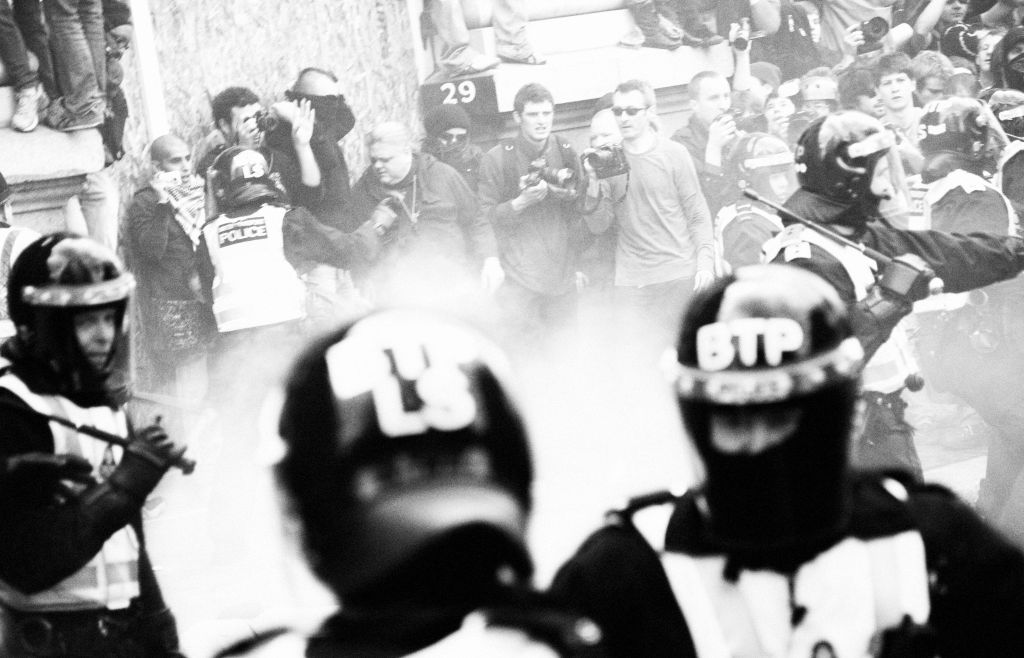
22:15 — riot police have moved into the cli­mate camp crowd at bish­ops­gate and are vio­lent­ly drag­ging peace­ful sit­ting pro­test­ers to dis­perse the area

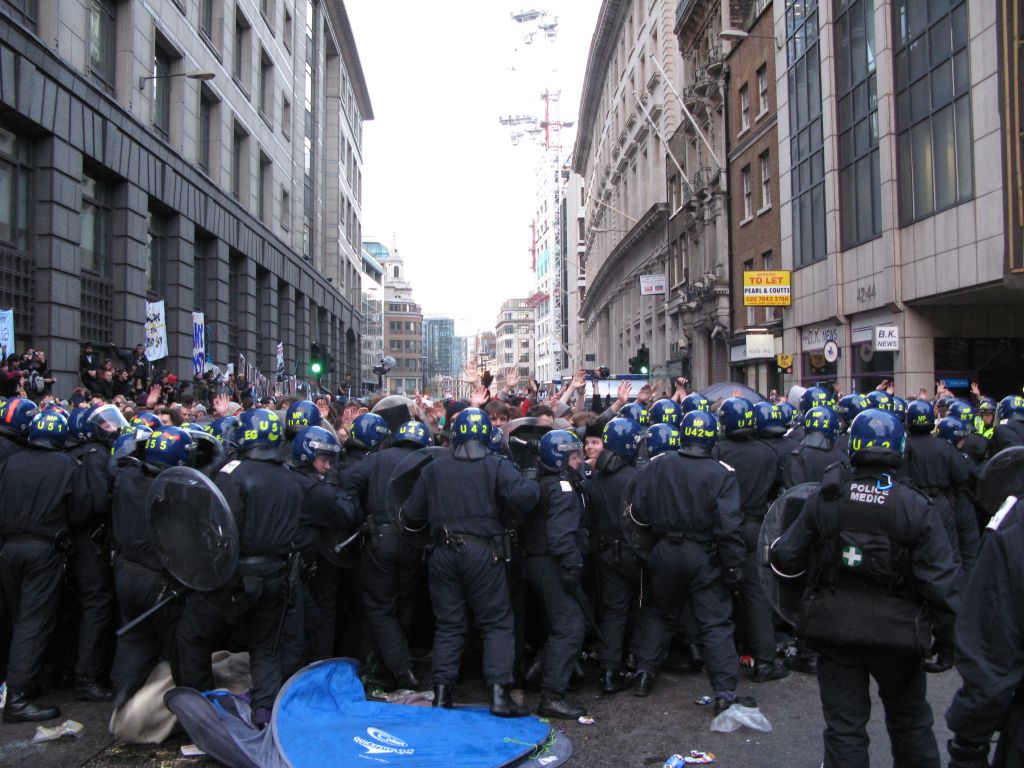
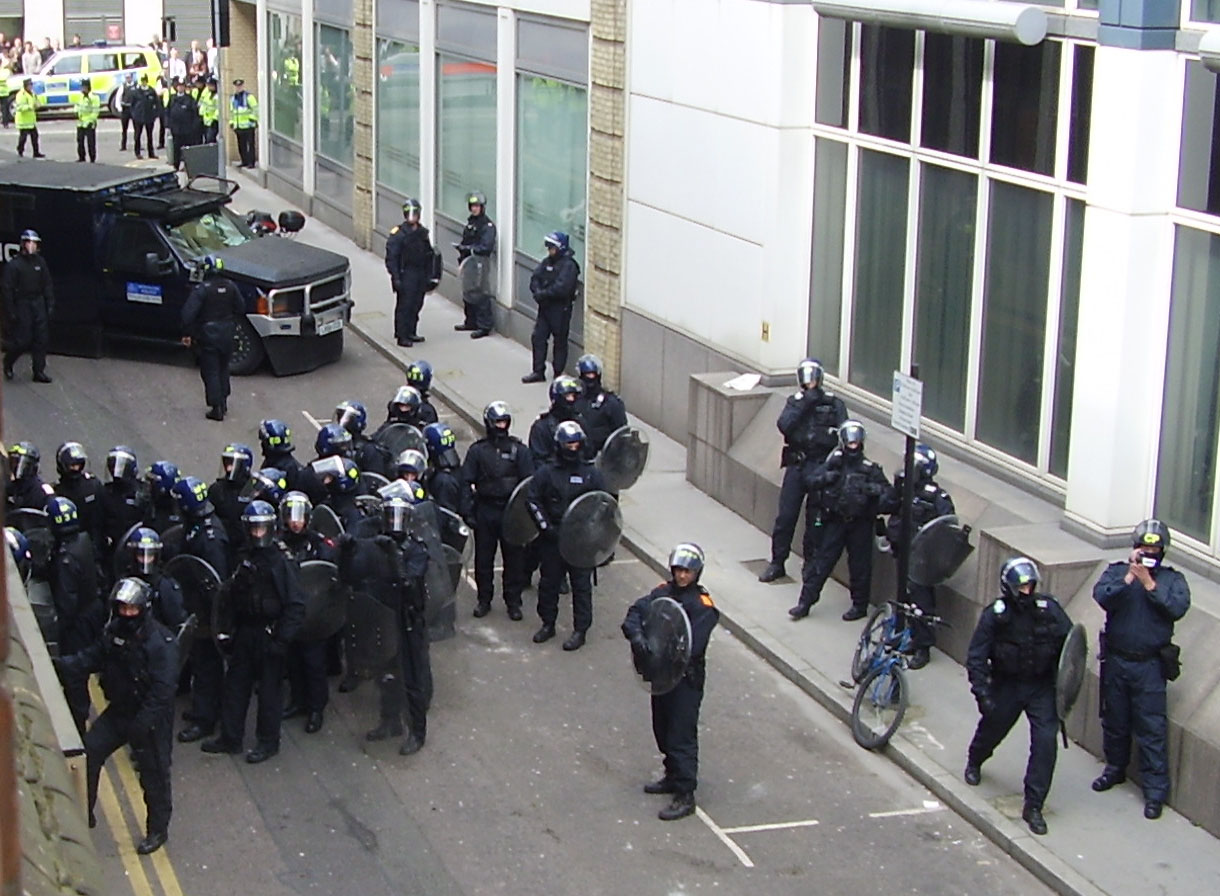
ear­li­er this evening riot police forced their way into the peace­ful cli­mate camp. pro­test­ers held their hands up and shout­ed ‘this is not a riot’ over and over, while ful­ly-kit­ted riot police used shields and batons to push and vio­lent­ly surge for­ward into the camp along the east­ern pave­ment of bish­ops­gate. it seems like­ly this clear­ance oper­a­tion had been planned all day — a line of police vans parked along the east­side had cre­at­ed a ‘walk­way’ along that pave­ment which was effec­tive­ly sep­a­rat­ed from the camp itself. all the riot police had to do was push their way onto that side, and it is clear that was their strat­e­gy. once done, there was a fur­ther stand-off for a while before the next stage to start mov­ing pro­test­ers out one-by-one.

21:35 — we are cur­rent receiv­ing reports from the Cli­mate Camp in the city, that all peo­ple are going to be searched to be allowed out, as well as peo­ple are told to delete pho­tos of offi­cers from their cam­eras, under the threat of seizure. Inter­est­ing­ly the joint com­mit­tee on human rights of the UK par­lia­ment has just made a cou­ple of rec­om­men­da­tion about polic­ing direct­ly con­demn­ing the use of these anti-ter­ror pow­er to police protest. Here are the direct quotes and links.
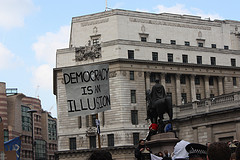
Democracy is an illusionRec­om­men­da­tions of the UK Par­lia­ment Joint Com­mit­tee on Human Rights con­cern­ing the use of anti-ter­ror pow­ers for stop-and-search:

“93. Whilst we accept that there may be cir­cum­stances where the police rea­son­ably believe, on the basis of intel­li­gence, that a demon­stra­tion could be used to mask a ter­ror­ist attack or be a tar­get of ter­ror­ism, we have heard of no exam­ples of this issue aris­ing in prac­tice. We are con­cerned by the reports we have received of police using counter-ter­ror­ism pow­ers on peace­ful pro­test­ers. It is not clear to us whether this stems from a delib­er­ate deci­sion by the police to use a legal tool which they now have or if indi­vid­ual offi­cers are exer­cis­ing their dis­cre­tion inap­pro­pri­ate­ly. What­ev­er the rea­son, this is a mat­ter of con­cern. We wel­come the Min­is­ter’s com­ments that counter-ter­ror­ism leg­is­la­tion should not be used to deal with pub­lic order or protests. We also wel­come the rec­om­men­da­tion in the new guid­ance to human rights being includ­ed in com­mu­ni­ty impact assess­ments. We rec­om­mend that the new guid­ance on the use of the sec­tion 44 stop and search pow­er be amend­ed to make clear that counter-ter­ror­ism pow­ers should not be used against peace­ful pro­test­ers. In addi­tion, the guid­ance should make spe­cif­ic ref­er­ence to the duty of police to act com­pat­i­bly with human rights, includ­ing, for exam­ple, by spec­i­fy­ing the human rights engaged by protest.”
http://www.publications.parliament.uk/pa/jt200809/jtselect/jtrights/47/4707.htm

Con­cern­ing the impact of the recent leg­is­la­tion about tak­ing pho­tographs of offi­cers in pub­lic the joint com­mit­tee said:

“94. Con­cerns have recent­ly been expressed in the media that a new pro­vi­sion in the Counter Ter­ror­ism Act 2008 makes it a crim­i­nal offence to take and pub­lish a pho­to­graph of a police offi­cer. Sec­tion 76 of the 2008 Act makes it an offence to elic­it or attempt to elic­it infor­ma­tion about an indi­vid­ual who is or has been a con­sta­ble “which is of a kind like­ly to be use­ful to a per­son com­mit­ting or prepar­ing an act of terrorism.”[174] As the Explana­to­ry Notes to the Counter Ter­ror­ism Bill cor­rect­ly stat­ed, the new offence will only be com­mit­ted where the infor­ma­tion in ques­tion is “such as to raise a rea­son­able sus­pi­cion that it was intend­ed to be used to assist in the prepa­ra­tion or com­mis­sion of an act of ter­ror­ism, and must be of a kind that was like­ly to pro­vide prac­ti­cal assis­tant to a per­son com­mit­ting or prepar­ing an act of terrorism.”[175] That is the effect of a deci­sion of the Court of Appeal in a case in 2008[176] inter­pret­ing the same statu­to­ry lan­guage in the sep­a­rate ter­ror­ism offence of pos­sess­ing a doc­u­ment or record con­tain­ing infor­ma­tion of a kind like­ly to be use­ful to a per­son com­mit­ting or prepar­ing an act of terrorism.[177]”

“95. We there­fore do not share the con­cerns expressed in the media that the new offence crim­i­nalis­es tak­ing pho­tographs of the police. How­ev­er, we do regard as sig­nif­i­cant the fact that this is being wide­ly report­ed as a mat­ter of con­cern to jour­nal­ists. Legal uncer­tain­ty about the reach of crim­i­nal offences can have a chill­ing effect on the activ­i­ties of jour­nal­ists and pro­test­ers. We there­fore rec­om­mend that, to elim­i­nate any scope for doubt about the scope of the new offence in section76 of the Counter Ter­ror­ism Act 2008, guid­ance be issued to the police about the scope of the offence in light of the deci­sion of the Court of Appeal, and specif­i­cal­ly address­ing con­cerns about its improp­er use to pre­vent pho­tograph­ing or film­ing police. ”
http://www.publications.parliament.uk/pa/jt200809/jtselect/jtrights/47/4707.htm

20:45 — cur­rent­ly ket­tled in but they are hav­ing a ceilidh/ barn dance so not bro­ken yet! Fuck the po-lice.

18:35 — Riot police baton charge cli­mate camp
Police clearing climate camp in city
Numer­ous reports come in stat­ing the riot police are in the process of attack­ing the peace­ful cli­mate camp. Even in the face of severe and unpro­voked police bru­tal­i­ty the pro­test­ers are main­tain­ing their peace­ful protest.

Despite events through­out the day at the urban cli­mate camp being entire­ly peace­ful, riot police are mobil­is­ing at the camp with 14 riot vans pulling up in addi­tion to the six already present there. While cli­mate campers appealed to the police high­light­ing the peace­ful nature of the protest and the pres­ence of many fam­i­lies with chil­dren, the police stormed into into the camp through a gap in the bicy­cle perime­ter of the camp indis­crim­i­nate­ly attack­ing campers with batons, push­ing fam­i­lies and chil­dren out of tents and destroy­ing sec­tions of the camp. Camomile, Bish­ops­gate and Wom­wood st are closed off hem­ming in the campers. Five police motor bikes pulled up with what looked like sur­veil­lance gear. Anoth­er report comes in from cli­mate camp stat­ing that the police have formed lines at the Liv­er­pool st end of the camp. a third report comes in from an Indy­media vol­un­teer report­ing that he has ‘nev­er seen any­thing like this’ three lines of hel­met­ed riot police are indis­crim­i­nate­ly beat­ing pro­test­ers with batons. Pro­test­ers are not fight­ing back and are main­tain­ing the non-vio­lent nature of their action in spite of this there are report­ed to be at least four arrests. The crowd chants shame on you as the police con­tin­ue to attack campers.

Full 1st April time­line

Video show­ing police tac­tics clear­ing space.

Camp set­ting-up video.

Panora­ma — click through to orig­i­nal for big­ger image: Climate Camp in the City panorama

Anoth­er per­son­al report: I arrived at about 5pm, at the north end of it. Police were already form­ing a line along­side the bar­ri­er that had been erect­ed made up of rail­ings and bikes attached to them, but they were not blockad­ing and every one was free to vis­it, come in and out.

There was a fes­tive atmos­phere, colour­ful tents, ban­ners, street dec­o­ra­tion…

A man with the slo­gan “God is too big for reli­gion” on his t‑shirt then start­ed to try and make every sin­gle riot police­man and woman on the line to smile. “This is an order”, he shout­ed, “and if they don’t com­ply, things will only get worse”. He man­aged to get or steal a smile of every sin­gle police offi­cer includ­ing a police woman who tried just too hard to keep a stony face.

He then pro­ceed­ed to try and hug every one “of these very won­der­ful peo­ple” as a sign of his love. To try to get to their hearts, he asked them if they had chil­dren: “please raise your hands if you do not have chil­dren, or keep your hands down if you do have chil­dren”. None of the police moved their arms but he did not suc­ceed to hug every one of the offi­cers. One of them claimed that he was embar­rass­ing them.

I then pro­ceed­ed to pho­to­graph the rest of the camp. A few police vans had some­how made their way into the mid­dle of the cli­mate camp.

At about 6.15pm the south end of the camp start­ed to get “nasty”. Police charged into the peace­ful peo­ple, bring­ing tents vio­lent­ly down to the ground, but peo­ple man­aged to peace­ful­ly stop the police vio­lence, and a par­ty was estab­lished in front of the police lines.

A few police also moved to the mid­dle of the camp, next to the vans, and it looked like they were try­ing to divide the crowd. But peo­ple kept the area occu­pied and this did­n’t hap­pen.

As it got dark­er, more and more riot police and vans gath­ered at the south end of the camp, and I heard that a demon­stra­tion had formed at the north end of the camp, but that the police were afraid of the grow­ing num­bers and were pre­vent­ing peo­ple from get­ting in or out of the camp. We had been cor­doned off with­out warn­ing.

Three meet­ings were held in the camp. One at the south end, anoth­er at the north end, and anoth­er one in the mid­dle, right in front of police. We were informed that the police had decid­ed to keep us penned for two hours, and that after that, they would allow us out in groups of 20, after tak­ing every one’s pho­to­graph and details.

Some peo­ple con­sid­ered sleep­ing the night in the camp, but it was clear from the begin­ning of the night that police were going to dis­rupt peo­ple’s sleep all through the night, just like it had hap­pened dur­ing the cli­mate camp in the sum­mer, last year, with a heli­copter fly­ing over our heads fir­ing an intense light over the street and with the vans’ strongest lights also focus­ing on the campers.

At about 10.00 I tried my luck to get out of the pen by ask­ing per­mis­sion to leave to one of the police offi­cer. He said, “I can not tell you if you can go out. Ask one of your senior mem­bers (eh?) Your legal observers should know more”. A legal observ­er told me that the police had decid­ed to only allow peo­ple out in groups of two after push­ing the crowd in a way that I did­n’t man­age to under­stand.

It was get­ting cold­er and most peo­ple present in the camp by then had not brought a camp­ing tent or sleep­ing bag. Luck­i­ly peo­ple had brought plen­ty of food, which was wide­ly shared. Music was heard around the camp most of the time, and at about 10.30 mem­bers of Radio Rev­olu­cion gave a taste of their music towards the mid­dle of the street. Police offi­cers looked at the scene in aston­ish­ment and a secu­ri­ty guard inside the build­ing began to video them using his phone, as if he had nev­er in his life seen spon­ta­neous acts of arts hap­pen­ing. After a few songs, ran­dom peo­ple in the crowd took on the micro­phone and the instru­ments and shared their art with a small crowd danc­ing around them.

At about 22.45 we again heard des­per­ate cries from the south end of the street and there we went, to learn that the police had charged again on the peace­ful crowd, using batons and pep­per spray, and to see that the peo­ple had decid­ed to sit down and hold the site as much as pos­si­ble.

I joined some peo­ple that had shared their food with me before and start­ed to help them putting their tent down. It was pret­ty clear that the police were going to charge again so we thought bet­ter to have the tent and oth­er things on our backs than destroyed. As we were in the process of undo­ing the tent, the whole of the police line that was at the north end of the camp moved in and we fran­ti­cal­ly con­tin­ued to undo the tent as the police approached, with peo­ple run­ning ahead of them, cry­ing for help. We decid­ed to stay and con­tin­ue to gath­er and pack every­thing until the police stopped us with their batons.

Strange­ly, they just passed by. It seemed all they want­ed to do was reach the north end of the street and join the cops there.

By then it seemed that there were few­er peo­ple than before and we were informed that, although the police had intend­ed to search every one before leav­ing, they were only doing so ran­dom­ly. We gath­ered tent, sleep­ing bags and food, and head­ed for the con­ver­gence cen­tre unmo­lest­ed.

At 11.30 the street was still cor­doned off and peo­ple were not allowed in, but from the out­side, it looked like the peo­ple who were remained inside the cor­don actu­al­ly want­ed to be there; exit seemed to be allowed.


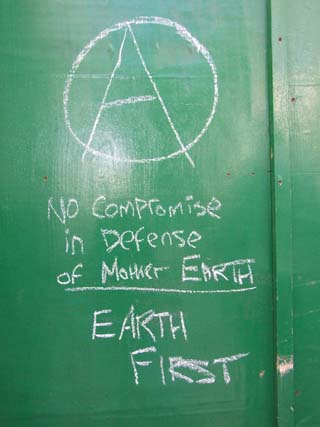
G20 EF! graffiti
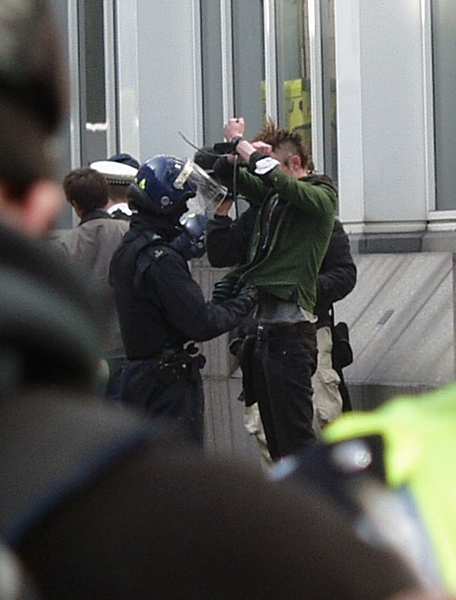
Although for the first half hour or so the police seemed con­tent to watch the protest, scuf­fles start­ed to devel­op around the edges. Most seemed to be caused by groups of police grab­bing masked demon­stra­tors and attempt­ing to unmask them.

——–

Crit­i­cal Mass

At 9.30 we were still wait­ing for more peo­ple to join in Bank Junc­tion. We start­ed off at about 10am, with a big sound sys­tem and lots of peo­ple in cos­tumes.

Our first stop was the Roy­al Bank of Scot­land, RBS, next to Bish­ops­gate. There we were informed that RBS heav­i­ly invest in fos­sil fuels. RBS has recent­ly giv­en a mas­sive loan to EON, the com­pa­ny behind the coal pow­er sta­tion in King­worth, where the last cli­mate camp took place.

Back on Bish­ops­gate, we went then to the Deutche Bank, where again the sound sys­tem per­son informed us that this bank has been active­ly involved in “car­bon trad­ing”, which means plant­i­ng trees to “off­set” the exces­sive car­bon emis­sions that com­pa­nies in the rich part of the world should not be pro­duc­ing if they were com­ply­ing with their com­pa­nies’ signed treaties. This tree-plant­i­ng has been done in lands of indige­nous peo­ples in the poor part of the world that have been how the land that they need for their own food is used for this busi­ness with­out their being able to do any­thing about it. We were told that car­bon trad­ing is now big busi­ness, and that it basi­cal­ly con­sists of sell­ing the air we breath.

From where we were, across the road, was the Car­bon Exchange, which, we’re informed, gives us in the Rich West the abil­i­ty to use more car­bon than we have agreed to use in order to try and stop cli­mate chaos. Big com­pa­nies in devel­op­ing coun­tries are said to be mak­ing mon­ey by sell­ing their car­bon cred­its to big com­pa­nies in rich coun­tries so that they can use more car­bon.

We’re told about a com­pa­ny in South Korea that dis­cov­ered a prod­uct in the 70s that is use­ful to “decar­bon­ate” the air, but for some mys­te­ri­ous rea­son it has not made this dis­cov­ery pub­lic, nor used the prod­uct, until now, so it has been allow­ing the South Kore­an pop­u­la­tion to be unnec­es­sar­i­ly pol­lut­ed for about 40 years. Now that it is sell­ing this prod­uct, this com­pa­ny still makes (10 times?) more mon­ey sell­ing car­bon trade cred­its than pro­duc­ing and sell­ing this de-con­t­a­m­i­nat­ing prod­uct.

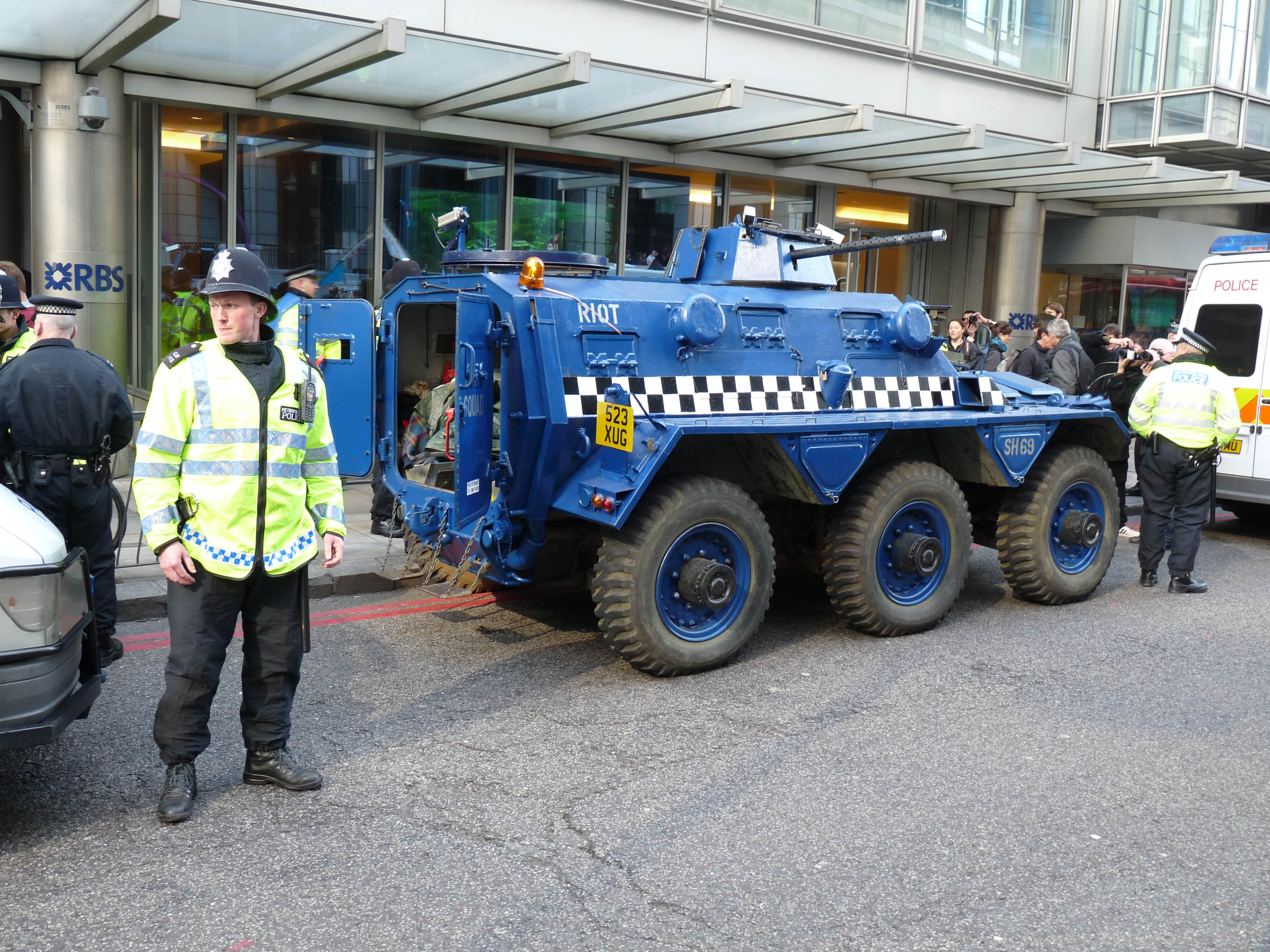
Space Hijackers APC outside & guarding RBSAt this point the Space Hijack­ers took on the micro­phone to ask us for sup­port because their tank had been “stopped”, sur­round­ed by police. We went there to show our sup­port but the cops did­n’t seem very pre­pared to allow the tank move peace­ful­ly.

At about 10.30 we moved south towards Lon­don Bridge. Last stop before cross­ing the bridge was a spot next to premis­es of Cater­pil­lar, the com­pa­ny pro­vid­ing home-destroy­ing bull­doz­ers to the Israeli gov­ern­ment, and right next to an “Abbey” branch, now prop­er­ty of Grupo San­tander, cur­rent­ly in the process of buy­ing most of the His­pan­ic world and part of the rest, and object of protests and con­tempt in Spain and Latin Amer­i­ca.

From there crossed Lon­don Bridge and then Tow­er Bridge back to the north bank of the riv­er. Next to the tow­er, we were served with free veg­an food reclaimed from the sys­tem’s dai­ly waste. There we were joined by the Dancers and then moved on to join the Cli­mate Camp.

In the mean­time police had moved on to close all streets that lead to Bank junc­tion to the traf­fic, and at noon they were prepar­ing to com­plete­ly cor­don off the area, allow­ing peo­ple in but not out, except city work­ers.

Police separate crowdAt 12.15 peo­ple were in Bank Junc­tion already penned in and allowed in but not out. In Princess Street there were to lines of cops, sep­a­rat­ed by about 100 metres. The “out­side” line, away from the crowd penned in, was rein­forced with three vans crossed.

At 12.30, Queen Vic­to­ria Street, on the west side of Bank Junc­tion, it did­n’t look like the police had formed a line, but quick­ly formed at the shout of one of their offices, then moved away from the pen, still form­ing a line, and push­ing peo­ple away from the junc­tion, so the police line came to block the access of peo­ple com­ing both from Poul­try Street and Queen Vic­to­ria Street. The police were wear­ing bul­let proof vests.

In Man­sion House Place, a small alley way approach­ing the Junc­tion from St. Stephen’s Row in the South, police were also form­ing two lines sep­a­rat­ed by a few metres, cor­don­ing off the junc­tion and only allow­ing fam­i­lies and city work­ers out.

A sin­gle line of vans com­bined with cops blocked the point where King William Street and Lom­bard Street meet.

A few min­utes lat­er horse mount­ed police were form­ing the lines instead of police­men on foot.

——–

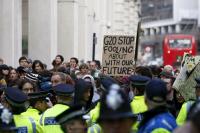
Pho­tos from the G20 Melt­down, and oth­er protests from todayG20 Stop Fooling placard
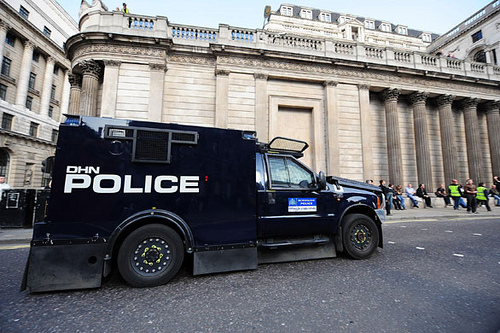
Police armoured vehicle at G20 | Oth­er pic­tures of police APCs: 2 | 3

FIT spotting from on high
Injured woman at G20
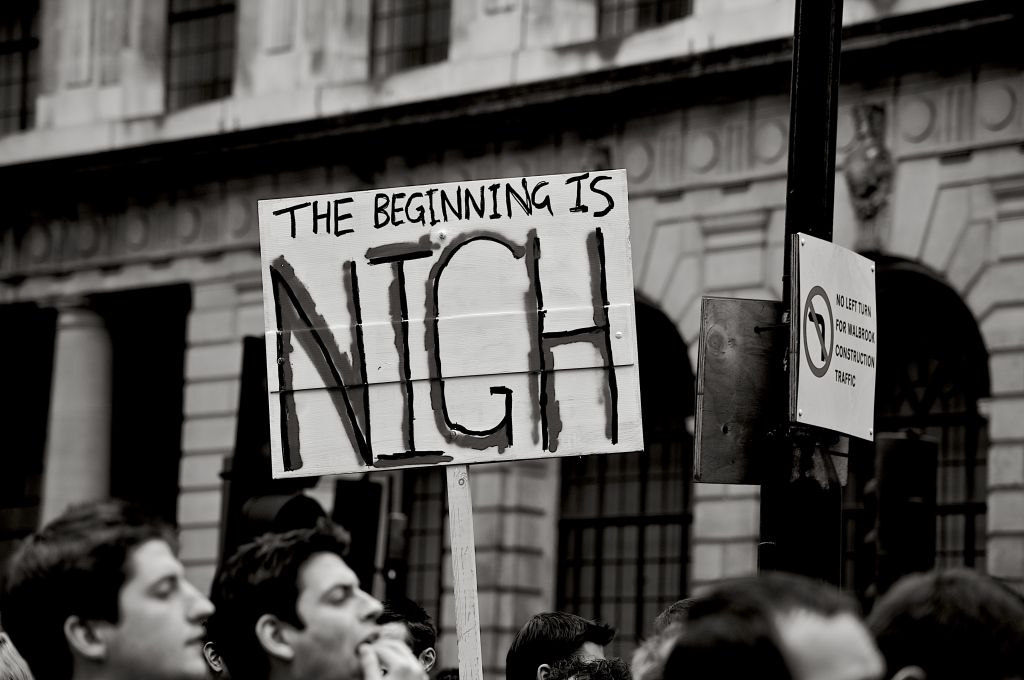
'The Beginning is Nigh' placard
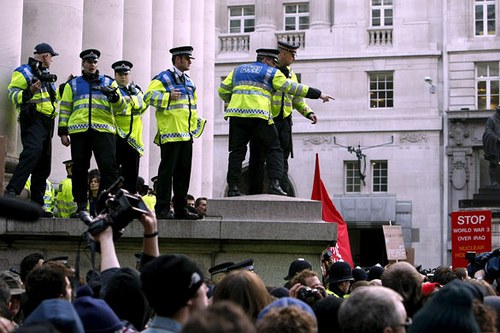
Riot cops at G20
Video of police forced into retreat at G20 Melt­down.

How not to use crowd con­trol bar­ri­ers when deal­ing with the police video — also watch police advances & retreats! Tips for how — see the Guide to Pub­lic Order Sit­u­a­tions.

Violent cops at G20
Link to many oth­er video clips.

——–

Activist tank at Roy­al Bank of Scot­land

The activist group Space Hijack­ers joined with police to take care of any “bad” demon­stra­tors who might have shown up to anti-G20 protests in the City of Lon­don today. At 10:30 this morn­ing they showed up with a CCTV-equipped armoured vehi­cle in front of the Roy­al Bank of Scot­land and pre­pared to defend the build­ing.

Police spoil­sports refused their help, con­duct­ed thor­ough search of the vehi­cle, and moved them along. They were lat­er arrest­ed out­side News Inter­na­tion­al.

——–

Window-kicking at the G20Despite the media’s apoc­a­lyp­tic pre­dic­tions, the four horse­men (See SchNEWS 667) did at least make it to the Bank of Eng­land. Whether this was a good idea or not is open to ques­tion. It cer­tain­ly brought a mea­sure of may­hem to the finan­cial heart of Lon­don, which seemed large­ly closed down for the dura­tion. Our num­bers were impres­sive – giv­en the short notice and the media hype of extreme vio­lence. But tac­tics adopt­ed gave the Met free rein to place a huge cor­don around the entire demo – the so-called ket­tle.

As soon as the final Black Horse (iron­i­cal­ly the one sym­bol­is­ing land enclo­sure) arrived, police lines rapid­ly snapped into place across the streets sur­round­ing the plaza that the bank sits on. Unfor­tu­nate­ly — although many did suc­cess­ful­ly make a break for it — the major­i­ty of the crowd, with lit­tle idea of what to do (unless they’d read last week’s SchNEWS pub­lic order guide obvi­ous­ly) stood around as this manoeu­vre was exe­cut­ed. Whilst we know that the protests were organ­ised on very short notice, there seemed to be lit­tle aim oth­er than sim­ply get­ting into the area – there were no bust-cards, and no attempts at crowd co-ordi­na­tion.

At first most seemed hap­py to be inside the huge ket­tle – a few sound-sys­tems were blast­ing out and there was even a bizarre out­burst of con­tem­po­rary dance in front of the The Roy­al Exchange. As the hours wore on and the few city types caught in the cir­cle had shown ID and got them­selves extract­ed, it became obvi­ous that if the police had their way no-one was get­ting out ‘til long after dark. No water, no food, not even a toi­let. The rea­son giv­en? — ‘to pre­vent a breach of the peace’.

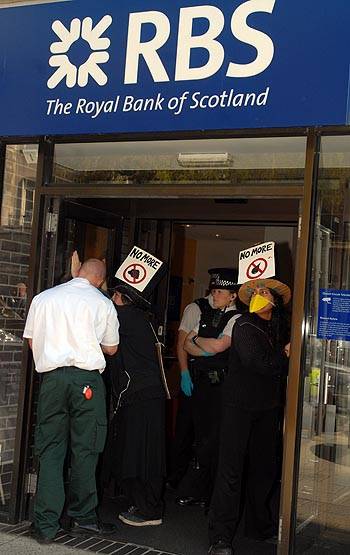
By around half-one the ket­tle had been tru­ly brought the boil and fight­ing had bro­ken out along Thread­nee­dle St. A line of police were pushed back by a crowd shout­ing, “Let us out”. A few bot­tles were lobbed but even with­out these the cops were forced to give way to the sheer phys­i­cal pres­sure. Alert­ed by the noise, sup­port streamed over from the oth­er exits to rein­force Thread­nee­dle and push the cops back to the junc­tion with Bartholomew Lane. This left the win­dows of Roy­al Bank of Scot­land exposed. They were duly smashed, although riot­ers were out­num­bered by pho­tog­ra­phers by around fif­teen to one. How­ev­er police lines here were too strong to breach.

At around 2.30, the crowd fac­ing a thin­ner police line across Vic­to­ria St sud­den­ly surged for­ward and by sheer weight of num­bers pushed their way through. One of the shovers told SchNEWS, “It was amaz­ing – we were resigned to being in the ket­tle until mid­night but the lines broke right in front of me and con­fused police were shout­ing ask­ing each oth­er, ‘What’s the plan?’”. Despite the rapid deploy­ment of riot cops, pos­si­bly up to a thou­sand peo­ple escaped at this point. Soon the win­dows of HSBC on Cheap­side had gone in.

SchNEWS has heard reports that oth­ers man­aged to sneak or blag their way out over the next few hours but dur­ing the after­noon the noose was grad­u­al­ly tight­ened with baton charges. Eye­wit­ness­es report­ed a sense of pan­ic devel­op­ing inside the pen. Peo­ple were not allowed out until after 8pm and only then after being pho­tographed.

One man, Ian Tom­lin­son is known to have died inside the cor­don. SchNEWS has heard con­flict­ing reports as to whether he was struck by police. Per­haps a coro­ners inquiry into his death will expose police tac­tics to pub­lic glare (unless they invoke their handy new pow­ers to keep it all secret of course).

This report and oth­ers at http://www.schnews.org.uk/archive/news671.htm

——–
——–

2nd April

Time­line
——–

Bank of Eng­land vig­il under­way for the man who died at yes­ter­day’s G20 Melt­down protest.
G20 vigil
Around 200 pro­test­ers have gath­ered in the City, on the steps of the Old Exchange by the Bank of Eng­land. Their pres­ence rep­re­sents a spon­ta­neous protest in sol­i­dar­i­ty for the man who died while ket­tled at G20 Melt­down yes­ter­day.

No details of the man’s death have been released. All that’s known is he was around 30-years-old and died while ket­tled with thou­sands of oth­ers out­side the Bank of Eng­land.

Demon­stra­tors are demand­ing answers and an inde­pen­dent inquiry into the man’s death. A wall of con­do­lences for the man who died as sprung up. A minute silence was held also.

Police are oper­at­ing an on off ket­tle pol­i­cy. This appears to be a method of encour­ag­ing peo­ple to leave while they can.

The mood over all is calm. There have been waves of chant­i­ng: SHAME SHAME SHAME ON YOU and WHO’S STREETS? OUR STREETS! to the 200-odd police draft­ed in to “keep the peace.”

While some pro­test­ers have left, many oth­ers con­tin­ue to arrive. Some line the pave­ments out­side the Bank of Eng­land. Police are now attempt­ing to move these peo­ple on.

Inter­view with two eye­wit­ness­es of the events pre­ced­ing the death of Ian Tom­lin­son, the man who died dur­ing anti G20 protests in the City of Lon­don on the 1st of April.

Wit­ness­es State­ment: Death at G20

PRESS RELEASE
FOR IMMEDIATE RELEASE

Var­i­ous par­tic­i­pants in the City of Lon­don demon­stra­tions on April 1st have come for­ward as wit­ness­es to the col­lapse of a man lat­er iden­ti­fied by author­i­ties as Ian Tom­lin­son. Four dif­fer­ent uni­ver­si­ty stu­dents wit­nessed the col­lapse of Mr. Tom­lin­son. “He stum­bled towards us from the direc­tion of police and pro­test­ers and col­lapsed,” said Peter Apps. “I saw a demon­stra­tor who was a first aider attend to the per­son who had col­lapsed. The man was late 40s, had tat­toos on his hands, and was wear­ing a Mill­wall shirt.”

While the first aider was help­ing the man, anoth­er demon­stra­tor with a mega­phone was call­ing the police over so that they could help.

Natal­ie Lang­ford, a stu­dent at Queen Mary, said “there was a police charge. A lot of peo­ple ran in our direc­tion. The woman giv­ing first aid stood in the path of the crowd.” The run­ning peo­ple, see­ing a guy on the ground, went around them.

Anoth­er demon­stra­tor had already called 999 and was get­ting med­ical advice from the ambu­lance dis­patch­er. “Four police with two police medics came. They told her [the first aider] to ‘move along’.”, said Peter Apps. “Then they pushed her forcibly away from him. They refused to lis­ten to her [the first aider] when she tried to explain his con­di­tion.”

The first aider, who did not wish to be named, said “The police sur­round­ed the col­lapsed man. I was stand­ing with the per­son who’d called 999. The ambu­lance dis­patch­er want­ed to talk to the police, the phone was being held out to them, but the police refused.”

Anoth­er wit­ness, Elias Stoakes, added “we did­n’t see them [the police] per­form CPR.”

Oth­er peo­ple who had tried to stay with the col­lapsed man were also pushed away.

All of the wit­ness­es deny the alle­ga­tion that many mis­siles were thrown.

Accord­ing to Peter Apps, “one bot­tle was thrown, but it did­n’t come close to the police. Noth­ing was thrown after­wards as oth­er demon­stra­tors told the per­son to stop. The per­son who threw the bot­tle prob­a­bly did­n’t real­ize that some­one was behind the ring of police.” All the wit­ness­es said that the demon­stra­tors were con­cerned for the well-being of the col­lapsed man once they real­ized that there was an injured per­son.

Natal­ie Lang­ford said “when the ambu­lance arrived the pro­test­ers got straight out of the way.”

These wit­ness­es are hap­py to give media state­ments.

They can be con­tact­ed through this press liai­son email: g20witnesses@gmail.com

——–

Police Raid at Earl Street G20 Con­ver­gence Cen­tre

As peo­ple were organ­is­ing to leave the con­ver­gence space at mid-day today police raid­ed. 30–40 peo­ple attempt­ed to pro­tect the space by blockad­ing the main doors. We then con­gre­gat­ed on the top floor and sat in a cir­cle with our arms in the air to show the police that we were not vio­lent. How­ev­er, the police met us with a taser gun, full riot gear and pro­ceed­ed to make us lie face down with our hands on the floor.

We believe two peo­ple were arrest­ed, although we are unsure what they have been charged with. One has been tak­en to hos­pi­tal fol­low­ing an injury. The rest were searched, hand­cuffed and had names, DOB, address­es and pho­tos tak­en.

If any­one has more infor­ma­tion please con­tact legal sup­port urgent­ly: legal@climatecamp.org.uk

Searches/details ille­gal­ly demand­ed before raid begins here.

Police massed outside convergence centreCon­ver­gence cen­tre evic­tion full time­line here.
Convgence centre raid search

——

Police attack Ram­part Social Cen­tre

At around 12:30 this after­noon, 30–50 police arrived at the Ram­part, an activist social cen­tre in Whitechapel, East Lon­don. A for­mer­ly derelict build­ing which had been emp­ty for years, Ram­part was occu­pied by activists and turned into a social and cul­tur­al venue more than four years ago.

When the police arrived, some­one went out­side to speak to them, ask­ing them if they were going to search the place and telling them that if they had a war­rant they could just knock on the door. The police told him not to wor­ry.

A few min­utes lat­er riot police in black uni­forms, wear­ing bal­a­clavas came through a down­stairs win­dow, the door to the roof and a door to an adjoin­ing build­ing. The police broke down the doors and stormed in with drawn tasers, scream­ing at every­one to get down on the ground, jump­ing on them and hand­cuff­ing them. They had a TV crew with them when break­ing in through the door. They were insult­ing peo­ple and say­ing things like “one of you croaked last night”, try­ing to pro­voke a bad reac­tion from peo­ple.

They then demand­ed iden­ti­fi­ca­tion from every­one and checked IDs against what appeared to be a list of spe­cif­ic peo­ple. There were 2 or 3 arrests. The remain­ing peo­ple were then let go.

Right now it’s calm, how­ev­er peo­ple are a bit shak­en after the expe­ri­ence. The cops have left the neigh­bour­hood.

——

Spi­der­man on bail after G20 Lloyds Cli­mate Demo

Alain Robert, oth­er­wise known as ‘Spi­der­man’ for his dar­ing free climbs of urban build­ings was arrest­ed ear­li­er today for climb­ing the Lloyds build­ing in Lon­don in a G20 cli­mate change protest.

Unfurl­ing a ban­ner that adver­tised the cam­paign onehundredmonths.org (which says we have lit­tle under 92 months left to pre­vent cat­a­stroph­ic cli­mate change), he climbed down from the 9th floor and was arrest­ed by police for aggra­vat­ed tres­pass.

——–
——–

Oth­er inter­est­ing arti­cles from oth­er days:

——

There have been 122 arrests relat­ed to the G20, includ­ing 86 on Wednes­day and 32 on Thurs­day, police said.

——

Police ask train staff to spy on G20 pro­test­ers

——

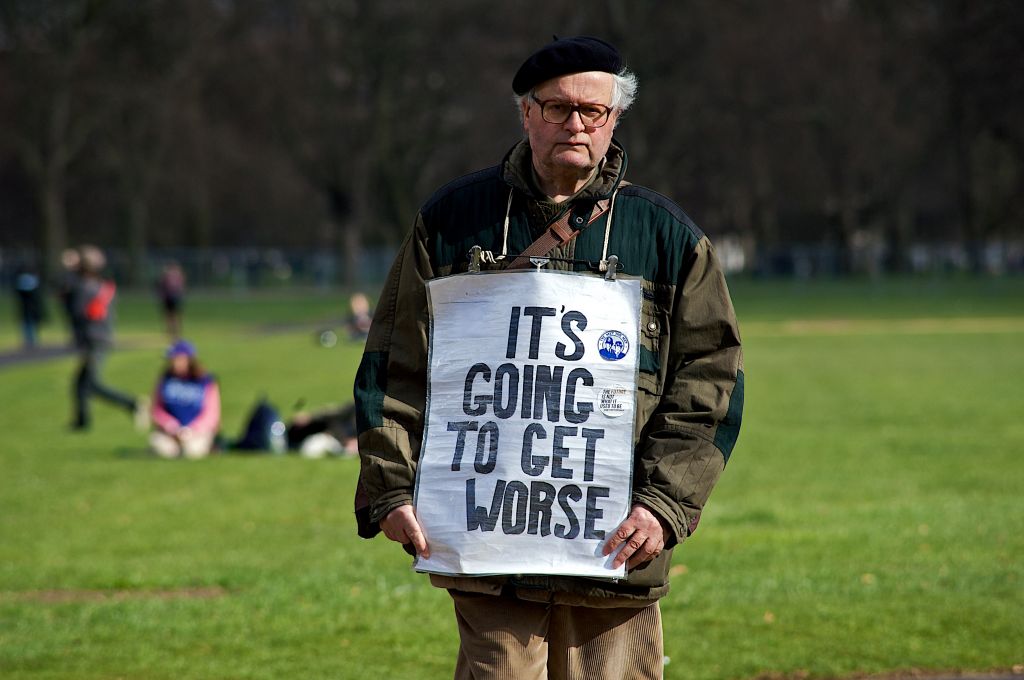
One-man G20 protest on 28th March 2009

——

Spoof Finan­cial Times hits Lon­don streets

10000 copies of a spoof Finan­cial Times were dis­trib­uted in Lon­don today.

“Set in 2020, the 12-page paper revealed how action in 2009 reined in cli­mate change, sav­ing bil­lions from extinc­tion. Car­bon rationing didn’t kill us, it explained, despite the incon­ve­nience to multi­na­tion­al com­pa­nies. But we couldn’t have end­less growth with finite resources. Edi­tors even apol­o­gised for sug­gest­ing oth­er­wise.”

The paper is a full-colour repli­ca of the icon­ic pink broad­sheet includ­ing nation­al and inter­na­tion­al pages and edi­to­ri­als and com­ment, pok­ing fun at FT colum­nists. It was fund­ed by dona­tions on the Inter­net, and giv­en away for free by vol­un­teers. Tens of thou­sands of copies were print­ed – almost as many as the FT sells here dai­ly.

http://ft2020.com

Down­load as a PDF file

——

Inter­na­tion­al Sol­i­dar­i­tyAotearoa/New Zealand | Fin­land

April 1st 2009 — Fossil Fools’ Day goes global

Today saw not only mass protests in Lon­don ahead of the G20 sum­mit, but local demon­stra­tions in cities around the UK and across the globe. Under the ban­ner of Fos­sil Fools Day, activists held protests at banks, ener­gy com­pa­nies and pow­er sta­tions across the UK, the USA, Cana­da and South Africa to high­light the twin eco­nom­ic and cli­mate crises.

'It's Going to Get Worse' placardToday saw not only mass protests in Lon­don ahead of the G20 sum­mit, but local demon­stra­tions in cities around the UK and across the globe. Under the ban­ner of Fos­sil Fools Day, activists held protests at banks, ener­gy com­pa­nies and pow­er sta­tions across the UK, the USA, Cana­da and South Africa to high­light the twin eco­nom­ic and cli­mate crises.

For more pho­tos vis­it here and if your action isn’t in the list below email us and we’ll add it to the site.

In the UK …

On the eve of the G20, activists descend­ed on Lon­don to high­light the links between the finan­cial and the cli­mate cri­sis. While the ‘Finan­cial Fools Day’ Street Par­ty got under­way out­side the Bank of Eng­land, the Camp for Cli­mate Action set up camp out­side the Euro­pean Cli­mate Exchange. Their mes­sage: “Stop­ping car­bon mar­kets — because nature doesn’t do bailouts”. It was­n’t until the evening that the police cleared the space — full sto­ry here. Mean­while over at the Excel Cen­tre, the Cam­paign Against Cli­mate Change is hold­ing an Ice-berg “Cli­mate Emer­gency” demo.

Ear­li­er in the week, the Oil Goliath BP was felled by Fos­sil Fools Day’s David as BP post­poned its cen­te­nary par­ty at the British Muse­um to be held on April 1st, due to a demon­stra­tion orga­nized by Art Not Oil and Ris­ing Tide.

Plymouth RBS glued for FFDIn Ply­mouth, Ris­ing Tide pen­guins super-glued them­selves to the entrance of RBS to high­light RBS’s fund­ing of fos­sil fuels projects. RBS are one of the biggest investors in the fos­sil fuel indus­try and pro­vid­ed $16 bil­lion to coal-relat­ed com­pa­nies in 2007 alone. Ann Smith of Ris­ing Tide Ply­mouth today said: “RBS is now 57% owned by the UK tax­pay­er. Cli­mate change requires a move to renew­able ener­gy, not con­tin­ued sup­port for the expan­sion of the fos­sil fuel indus­try”. For more pho­tos vis­it This is Ply­mouth

In Oxford­shire, the ear­ly hours of April 1st saw local activists hang­ing ban­ners from bridges over the A34 between Oxford and Did­cot. Ban­ners read “Cau­tion: Cli­mate Change Ahead”, “Give Way to Wind” and “Fos­sil Fool: 3rd exit” com­plete with pic­tures of Did­cot Pow­er Sta­tion. With Did­cot (run by RWE NPow­er) due for de-com­mis­sion­ing in a few years, it is time to pur­sue renew­able options local­ly. One of the activists said: “We want not only Did­cot, but also the gov­ern­ment and the G20 to see the fol­ly of their actions in pur­su­ing unsus­tain­able tech­nol­o­gy. We have an oppor­tu­ni­ty to pur­sue safe, cheap alter­na­tives and ensure a clean­er future. The wise choice would be to grasp this oppor­tu­ni­ty”.

In Portsmouth, mem­bers of Portsmouth Cli­mate Action Net­work and the University’s Peo­ple & Plan­et group took up posi­tion out­side the Nat West Bank in Com­mer­cial Road to encour­ag­ing shop­pers to tell Roy­al Bank of Scot­land — NatWest to stop fund­ing cli­mate chaos. Activists said: “It is our mon­ey that RBS-NatWest is using to extract tar sands, burn coal and fuel cli­mate chaos. We believe that the only way to pre­vent dan­ger­ous cli­mate change is by invest­ment in renew­ables, not in dirty coal. We are call­ing on the pub­lic to con­tact RBS-NatWest and the UK gov­ern­ment and tell them what they think about them bankrolling cli­mate chaos.”

In Bournemouth, mem­bers of direct action group Plane Stu­pid turned up at Bournemouth Air­port to give them a Fos­sil Fool Award for ‘Out­stand­ing con­tri­bu­tion to local, nation­al and glob­al pol­lu­tion’. Tara Bosworth said, “Bournemouth Air­port may well be the biggest sin­gle source of green­house gas emis­sions in Dorset and they are expand­ing their oper­a­tions, more than dou­bling the num­ber of flights, now that’s plane stu­pid and why they are get­ting our Fos­sil Fool award.” A mem­ber of the air­port staff accept­ed the award but declined hav­ing his pic­ture tak­en.

Fos­sil fool themed street the­atre took place in both Frome in Som­er­set and Totnes in Devon. In Totnes, the Inter­na­tion­al Cli­mate Crim­i­nal known as ‘Old King Coal’ was put on tri­al. The pris­on­er, who is not in good health, was led from The Plains up to the Civic Square where he was tried before a jury of local cit­i­zens and school­child­ren. Unfor­tu­nate­ly oth­er mem­bers of the Fos­sil Fools Gang, includ­ing Oil and Gas, remain at large and are a con­tin­ued dan­ger to the plan­et.

In South Africa …

FFD in South Africa - SasolIn Johan­nes­burg, Earth­life Africa award­ed Sasol (the South African Coal, Oil and Gas Cor­po­ra­tion) the pres­ti­gious 2009 Fos­sil Fool of the Year Award for pro­duc­ing 72 mil­lion tonnes of CO2 per year (over 15% of South Africa’s total emis­sions) and for try­ing to build a new coal-to-liq­uid pow­er plant. Although Sasol ini­tial­ly resist­ed accept­ing the award (one can only imag­ine why), the efforts of a deter­mined group of pro­test­ers final­ly forced the taint­ed tro­phy to be accept­ed.
For more infor­ma­tion vis­it: here or here.

In the USA …

Boston Mannequins on FFD 09In Boston, Mass­a­chu­setts, the “Man­nequins For Cli­mate Jus­tice” shut down the Ken­more Square branch of Bank of Amer­i­ca. A man­nequin was chained to the doors of the bank short­ly before open­ing this morn­ing. The lone man­nequin pro­test­er, Guy Fox, said, “Even a dum­my like me can see that Bank of America’s mas­sive loans to coal com­pa­nies and sup­port for the epi­dem­ic of fore­clo­sures and evic­tions has to stop now.” Fox fur­ther said, “Bank of Amer­i­ca seems deter­mined to be so evil it’s almost com­i­cal, but peo­ple resist­ing the bank’s prac­tices will have the last laugh. Hap­py April Fools to all the cap­i­tal­ist fos­sil fools!”

In Berke­ley, Cal­i­for­nia, a bike ride/march high­light­ed BP’s $500 mil­lion deal with Uni­ver­si­ty of Cal­i­for­nia. Under this deal, the oil giant BP is invest­ing $500 mil­lion for the uni­ver­si­ty to research bio­fu­els, rais­ing issues of green­wash­ing, false solu­tions, and the inter­ac­tion between a pub­lic uni­ver­si­ty and a pri­vate cor­po­ra­tion.

Asheville FFD 09In Asheville, North Car­oli­na, pro­test­ers declared Gov­er­nor Pur­due to be in bed with Duke Ener­gy, and demand­ed the can­cel­la­tion of the Cliff­side coal plant. In response to the North Car­oli­na Divi­sion of Air Qual­i­ty (DAQ) rul­ing that Duke Energy’s Cliff­side coal plant is a “minor source of emis­sions”, pro­test­ers gath­ered at noon out­side Gov­er­nor Purdue’s West­ern North Car­oli­na office in down­town Asheville to demand that she revoke the plant’s per­mit. In a demon­stra­tion orga­nized by Asheville Ris­ing Tide, pro­test­ers set up a bed in front of Gov­er­nor Purdue’s office with peo­ple in busi­ness suits rep­re­sent­ing Duke CEO Jim Rogers, DAQ head Kei­th Over­cash, and Gov­er­nor Pur­due under sheets and cov­ered in mon­ey. A ban­ner read­ing, “Gov­er­nor Pur­due in bed with Duke Ener­gy” pro­vid­ed a back­drop to the under-the-sheets liai­son.

In Den­ver, Col­orado, a Fos­sil Fools Day ral­ly of con­cerned cit­i­zens, health experts, and envi­ron­men­tal and neigh­bor­hood lead­ers demand­ed a tran­si­tion to clean ener­gy. The ral­ly, led by WildEarth Guardians, and joined by Sier­ra Club, Green­peace, Clean Ener­gy Action, Safe­Minds, stu­dents, church mem­bers, and affect­ed near­by com­mu­ni­ties, was held in the shad­ow of the Chero­kee coal burn­ing pow­er plant at Denver’s Heron Pond Nat­ur­al Area, and called upon Gov­er­nor Rit­ter to help Col­orado seize clean ener­gy solu­tions and keep Col­oradoans safe from coal. Car­ry­ing hand­made signs and hold­ing pin­wheels to sym­bol­ize a tran­si­tion to clean ener­gy, dozens of cit­i­zens demon­strat­ed their frus­tra­tions with the sta­tus quo and their hope for pro­tect­ing their future.

In New Orleans, con­ser­va­tion groups, stu­dents, and con­cerned cit­i­zens joined forces at Entergy’s head­quar­ters to protest about the company’s plans to expand their use of coal pow­er in Louisiana. “Louisiana’s coast is ground zero for cli­mate change impacts,” said ral­ly orga­niz­er Jonathan Hen­der­son. “Enter­gy should be a respon­si­ble neigh­bor and work to lim­it coast-destroy­ing pol­lu­tion and pro­tect rate-pay­ers from future car­bon price increas­es”.

In the spir­it of the “Coal Cir­cus,” stu­dents from Bowl­ing Green, Ken­tucky organ­ised a ‘Mon­ster Mash’ and a crit­i­cal mass bike ride.

Stu­dents in Tempe, Ari­zona, also hopped on their bikes and declared them­selves “too cool for fos­sil fools.”

In Cana­da …

Five actions in one day in down­town Toron­to? No foolin!
Today Rain­for­est Action Net­work activists kicked Fos­sil Fools Day off with a bang, drop­ping ban­ners off of a high­way, greet­ing over 4,000 cars (we count­ed) stuck in dead­lock traf­fic over a peri­od of two hours. From bridges, we broad­cast mes­sages about Roy­al Bank of Cana­da (RBC)’s financ­ing of the Cana­di­an Tar Sands from our makeshift Pirate Radio sta­tion. Our ban­ners read “Pirate Radio 89.9 FM Tune in now” and “Roy­al Bank cre­ates cli­mate chaos. Renew­ables not tar sands.” The pour­ing rain didn’t block our view of car after car reach­ing for the radio dial as they drove under us.

We began by dress­ing up and imper­son­at­ed bank employ­ees. About 16 of us rode ele­va­tors for up to two more hours, chat­ting up oth­er RBC per­son­nel — “Hey, on my way to work today I heard about how RBC is financ­ing the destruc­tion of Native ter­ri­to­ries in Alber­ta, caus­ing peo­ple can­cer and pol­lut­ing the water! Tar Sands are the world’s dirt­i­est oil. Did you know that? I had no idea! I’m telling my man­ag­er right away!”

Mean­while, out­side the HQ, sev­er­al more of us leaflet­ed and held ban­ners read­ing “RBC Cre­ates poi­soned water in our com­mu­ni­ty,” “Renew­ables not tar sands” and “RBC: financ­ing can­cer and tox­ic sludge.”

Back inside, a lone Torontan walked inside the main office with a beau­ti­ful bou­quet of bal­loons. I don’t know where he got the idea to release them in the atri­um, or how a ban­ner read­ing “ROYAL BANK CREATES CLIMATE CHAOS” got attached….I also don’t know how they’re gonna get it down. Watch him do it.

Lat­er that evening, dozens of activists recon­vened out­side RBC head­quar­ters along­side “Tar­bie,” an oil-soaked ver­sion of RBC’s prized mas­cot “Arbie” who explained to passers­by that he and RBC are help­ing finance one of the fastest grow­ing sources of water pol­lu­tion and green­house gas emis­sions on the plan­et, and how they con­flict with the finan­cial giant’s PR promis­es to pro­mote clean water.

To read more on RBC and the Cana­di­an Tar Sands, vis­it It’s Get­ting Hot in Here.

www.fossilfoolsday.org

Fossil Fool’s Day, Financial Fools & G20 reports

For the lat­est up-to-the-minute reports from Lon­don & else­where for the protests for Fos­sil Fools’ Day, Finan­cial Fools’ Day and the G20 sum­mit, see https://www.indymedia.org.uk/en/actions/2009/g20/ and the IMC newswire.

For links to what’s planned, meet­ing points & resources, see http://earthfirst.org.uk/actionreports/node/22201

We’ll fea­ture com­piled reports here lat­er in the day. See you in the streets!

Smash Capitalism banner on the ThamesFor the lat­est up-to-the-minute reports from Lon­don & else­where for the protests for Fos­sil Fools’ Day, Finan­cial Fools’ Day and the G20 sum­mit, see https://www.indymedia.org.uk/en/actions/2009/g20/ and the IMC newswire.

For links to what’s planned, meet­ing points & resources, see http://earthfirst.org.uk/actionreports/node/22201

We’ll fea­ture com­piled reports here lat­er in the day. See you in the streets!

Activists occupy Hazelwood power station in Earth Hour direct action

“Switch off Coal and Switch on Renew­ables” was the very clear mes­sage being sent to State and Fed­er­al Gov­ern­ments this Earth Hour by com­mu­ni­ty cli­mate activists who occu­pied Hazel­wood Pow­er Sta­tion in Vic­to­ri­a’s Latrobe Val­ley on Sat­ur­day March 28.

Switch off Coal at Hazlewood protest

“Switch off Coal and Switch on Renew­ables” was the very clear mes­sage being sent to State and Fed­er­al Gov­ern­ments this Earth Hour by com­mu­ni­ty cli­mate activists who occu­pied Hazel­wood Pow­er Sta­tion in Vic­to­ri­a’s Latrobe Val­ley on Sat­ur­day March 28.

View the video — http://www.engagemedia.org/Members/bento/videos/Hazelwood.m4v/view
Switch Off Hazel­wood Blog — http://switchoffcoal.wordpress.com/

Louise Mor­ris, one of the Hazel­wood pro­test­ers from Friends of the Earth, said every hour should be Earth Hour, accord­ing to an ABC Report. 3 activists locked on to equip­ment ear­ly Sat­ur­day morn­ing with 30 more present protest­ing for the shut­down of one of the most pol­lut­ing coal pow­er sta­tions in the world and call­ing for a rapid tran­si­tion to renew­able ener­gy tech­nolo­gies.

“If we’re seri­ous about cli­mate change, we actu­al­ly need to be switch­ing off coal and switch­ing on renew­ables rather than just switch­ing off our lights for one hour once a year,” she said.

On the Switch Off Hazel­wood Blog Louise Mor­ris said:

“Hazelwood’s car­bon pol­lu­tion emis­sions, at 17 mil­lion tonnes annu­al­ly, are equiv­a­lent to about 5% of Australia’s annu­al green­house gas emis­sions – the same amount as Kevin Rudd’s emis­sion reduc­tion tar­get for 2020. “

“By shut­ting down Hazel­wood this year, we could achieve this 5% tar­get imme­di­ate­ly, and then adopt prop­er emis­sion reduc­tion tar­gets as the cli­mate sci­ence demands. It’s time to get down to the real busi­ness of tran­si­tion­ing Aus­tralia away from pol­lut­ing fos­sil fuels and switch­ing onto renew­able ener­gy,” said Ms Mor­ris.

“Gov­ern­ments are hap­py to pro­vide token sup­port for cli­mate change by switch­ing off their lights for an hour, once a year, but if they are seri­ous on cli­mate change it’s clear Hazel­wood needs to be decom­mis­sioned this year.”

“This Earth Hour we need to acknowl­edge it is time to do so much more than just switch off our lights for an hour. We need to switch off our reliance on dirty coal and switch onto job rich renew­able ener­gy sources.”

5 Arrested as Work stopped on Muir Dean open cast coal site in Fife

26. March 2009
Yes­ter­day at 2pm five pro­test­ers stopped work at the Muir Dean open-cast coal mine near Cross­gates in Fife, oper­at­ed by ATH Resources. They climbed onto a huge exca­va­tor in the cen­tre of the pit, dis­play­ing a ban­ner demand­ing “No New Coal”.

No New Coal!No CoalNo Coal26. March 2009
Yes­ter­day at 2pm five pro­test­ers stopped work at the Muir Dean open-cast coal mine near Cross­gates in Fife, oper­at­ed by ATH Resources. They climbed onto a huge exca­va­tor in the cen­tre of the pit, dis­play­ing a ban­ner demand­ing “No New Coal”.

Unex­pect­ed­ly, Fife police arrest­ed all five pro­test­ers after detain­ing them ear­li­er, despite them agree­ing to come down off the exca­va­tor, and even though work­ers at the site were hap­py for them to just leave. They were held at Dun­fermline police sta­tion and have now been released on bail.

One activist said “We’re here to send a mes­sage to ATH Resources that min­ing the dirt­i­est fos­sil fuel and fuelling cli­mate change is not accept­able. As min­ing com­pa­nies such as ATH don’t appear to be lis­ten­ing, we’ve come to stop them min­ing, too.”

Con­tro­ver­sy sur­round­ed the Muir Dean site as the orig­i­nal plan­ning appli­ca­tion was refused by Fife coun­cil and unan­i­mous­ly vot­ed against by the coun­cil plan­ning com­mit­tee fol­low­ing hun­dreds of objec­tions from local res­i­dents [1]. The deci­sion by the local coun­cil to refuse the appli­ca­tion was over­turned by the Scot­tish Gov­ern­ment spark­ing anger in Cross­gates. Work at Muir Dean start­ed in April 2008, being one of the “new coal” sites open­ing across Scot­land and the UK.

The pro­test­ers are act­ing to oppose the thir­teen new open cast coal mines due to open in Scot­land as well as exist­ing mines that sig­nif­i­cant­ly impact upon the qual­i­ty of life of local com­mu­ni­ties. Scotland’s CO2 emis­sions are increas­ing sig­nif­i­cant­ly because of the burn­ing of coal, and with the cur­rent push for new coal it will be impos­si­ble for Scot­land to meet its 80% reduc­tion in CO2 emis­sions by 2050.

Anoth­er activist stat­ed “The time to take action to pre­vent run­away cli­mate change is now. Peo­ple need to take respon­si­bil­i­ty for their sur­round­ings as well as the wider world. The com­pa­nies caus­ing cli­mate destruc­tion must be stopped”.

The ATH Resources oper­at­ed site pro­duces around 450,000 tonnes of coal per year and will pro­duce 4 mil­lion tonnes in total – equiv­a­lent to around 7.32 mil­lion tonnes [2] of CO2 being released into the atmos­phere.

The pro­test­ers apol­o­gize to any work­ers affect­ed by today’s demon­stra­tion, but in rec­og­niz­ing the des­per­ate need to stop burn­ing coal see no oth­er choice but to tar­get the com­pa­nies respon­si­ble for min­ing it.

[1] http://www.theherald.co.uk/business/news/display.var.1813977.0.ath_given_permission_to_begin_muir_dean_operations.php

[2] http://en.wikipedia.org/wiki/Coal – Rel­a­tive car­bon cost: every kilo­gram of coal once trapped in CO2 weighs approx­i­mate­ly 1.83Kg.

—-

The 5 detained pro­test­ers were arrest­ed for a “Breach of the Peace” and held over-night.

All accused are out with tri­al dates in August.