
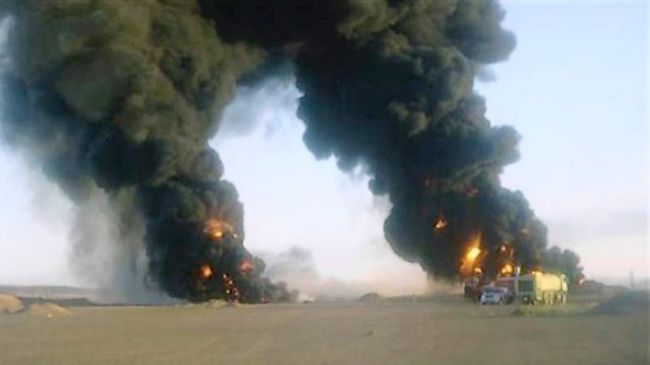
49 Acts of Powerline Sabotage, 19 Acts of Oil Pipeline Sabotage in Last Six Months

Smoke ris­es over a recent pipeline attack in Marib gov­er­norate, a trib­al region in Yemen.

Smoke ris­es over a recent pipeline attack in Marib gov­er­norate, a trib­al region in Yemen.

28 June 2013

Accord­ing to com­piled reports from the Yemen Times  over 60 acts of indus­tri­al sab­o­tage have tak­en place since Jan­u­ary with­in the trib­al area of the Marib gov­er­norate in Yemen, cut­ting pow­er to Sana’a, the nation’s cap­i­tal 170 miles to the east, and crip­pling the government’s oil and gas infra­struc­ture. Oil and gas rev­enue pro­vides 70 per­cent of the state’s bud­get.    

Media sources have not been able to explain the rea­son behind the attacks, but Yemeni sources all point to armed tribes­peo­ple in Marib. Attacks on Yemen’s oil and gas pipelines and elec­tric grid great­ly esca­lat­ed fol­low­ing the erup­tion of protests against for­mer pres­i­dent Ali Abdul­lah Saleh in 2011. Offi­cials in Yemen have argued that the tribes are loy­al­ists of the for­mer pres­i­dent while oth­er, unnamed sources, have pro­claimed the tribes to be sep­a­ratists from the con­cept of cen­tral gov­ern­ment all togeth­er, func­tion­ing in a pow­er vac­u­um.

get_img_powerlines

This info­graph­ic offers some detail on the attacks on Yemen’s elec­tri­cal grid.

Accord­ing to the Yemen Post, “Res­i­dents in the cap­i­tal Sana’a have had to endure long spells of dark­ness over the past cou­ple of weeks as pow­er lines were attacked with­in hours of their repair, leav­ing peo­ple no respite what so ever. While Yeme­nis are accus­tomed to black­outs, nev­er before did the cap­i­tal face so many and lengthy pow­er out­ages.”

In mid June, the Pub­lic Elec­tric­i­ty Cor­po­ra­tion in Yemen issued a state­ment request­ing more gov­ern­ment and mil­i­tary sup­port to sup­press the attacks, warn­ing that the pow­er sta­tion could col­lapse com­plete­ly if attacks con­tin­ued.

get_img

An info­graph­ic on pipeline attacks in Yemen since Jan­u­ary 2013.

Between Jan­u­ary 1 and June 24, there have been 18 attacks on Yemen’s main pipeline, which runs through Marib to the coast for export. Anoth­er attack struck the pipeline on June 27th.  Accord­ing to Yemeni offi­cials, armed mem­bers of tribes blocked the road lead­ing to the area of the pipeline that had been attacked, pre­vent­ing tech­ni­cal crews from mak­ing repairs. Yemeni troops were sent to reopen the road. Clash­es between gov­ern­ment forces and the tribes are expect­ed.

Back in Decem­ber of 2012, the Yemeni army launched an offen­sive against sus­pect­ed groups of sabo­teurs. Twen­ty peo­ple were killed but infra­struc­ture attacks only increased.

It remains unclear which tribes, or which groups with­in the region’s tribes, are car­ry­ing out the attacks. Ear­li­er in June, the largest tribes in Marib, the Al Hutaik and Al Jar­dan tribes signed, accord­ing to the Yemen Times, “a trib­al order declar­ing the legal­i­ty of exe­cut­ing those behind oil and gas pipeline attacks.” Sim­i­lar decrees were signed last year as well with­out results.

Yemen’s oil pro­duc­tion has declined from more than 400,000 bar­rels per day at the begin­ning of 2000 to the cur­rent 270,000 bar­rels per day when the pipeline actu­al­ly flows.

Willits Bypass “Crane-Sitter” Resupplied in Stealth Climb

A pro­test­er perched atop a wick drain stitch­er being used to build the US 101 high­y­way bypass in Willits, CA, 28 June 2013

A pro­test­er perched atop a wick drain stitch­er being used to build the US 101 high­y­way bypass in Willits, CA, 28 June 2013

A mys­te­ri­ous climber ascend­ed Cal­trans equip­ment on the Willits Bypass Project Wednes­day evening in order to resup­ply a pro­test­er who has been perched 50 feet up in the air on a con­struc­tion tow­er for a week.

Last week, 31-year-old Uki­ah res­i­dent Will Par­rish climbed one of the two pieces of Cal­trans equip­ment used to install wick drains at the site in order to stall work in the Men­do­ci­no Coun­ty high­way con­struc­tion zone.

Fel­low activists argue that Par­rish has been denied food and water, while author­i­ties state that Par­rish is free to leave the tow­er for food and water and that pro­test­ers attempt­ing to bring him sup­plies are tres­pass­ing on Cal­trans prop­er­ty.

On Sat­ur­day evening, 45 pro­test­ers attempt­ed to send sup­plies up to Par­rish in a buck­et. Accord­ing to Earth First!, CHP offi­cers cut the rope and arrest­ed six indi­vid­u­als. Accord­ing to CHP, four indi­vid­u­als were arrest­ed.

On Wednes­day, a sec­ond per­son climbed the sec­ond wick drain tow­er. Jamie Cheva­lier, a spokes­woman with Red­wood Nation Earth First!, said the mys­tery climber was “like a nin­ja.”

”He climbed the tow­er in full day­light with CHP every­where,” she said. “Then after around six hours he man­aged to tra­verse a line over to the oth­er tow­er 60 feet away for sup­plies and van­ished into the night.”

Cheve­li­er esti­mat­ed that the entire event took place between 5 p.m. and mid­night. She said the sup­ply line is still in place and has a 5,000 pound break­ing

strength.

Dis­trict 1 Cal­trans Pub­lic Infor­ma­tion Offi­cer Phil Fris­bie Jr. con­firmed that Par­rish had been resup­plied and said Cal­trans per­son­nel are not at the site that late at night.

”He was gone by the morn­ing,” Fris­bie said of the resup­pli­er.

Fris­bie said the machin­ery can­not oper­ate with the pro­test­ers on it and that protests over four months have direct­ly cost tax­pay­ers $1.2 mil­lion by caus­ing delays.

No Shale by Rail: Maine Activists Block Fracked-Oil Train

(Maine Media Today pho­to by Michael G. Sea­mans)

28 June 2013 A great two-for-one action against frack­ing and oil-by-rail trans­port!

From Com­mon Dreams:

Six Maine res­i­dents were arrest­ed late Thurs­day night after a larg­er group of cli­mate activists block­ad­ed a set of tracks pass­ing through the small town of Fair­field in order to pre­vent a train car­ry­ing 70,000 bar­rels of “fracked” oil head­ed to a refin­ery in neigh­bor­ing New Brunswick, Cana­da.

Asso­ci­at­ing them­selves with a grow­ing nation­al cam­paign of direct action against the fos­sil fuel indus­try called “Fear­less Sum­mer,” the pro­test­ers at the scene erect­ed a large scaf­fold over the tracks and held signs read­ing “Trains for peo­ple, not for oil” and “This train’s bound for Gory” (pun intend­ed).

Police arrived, and after sev­er­al warn­ings for the pro­test­ers to dis­perse, the six who refused were arrest­ed as the scaf­fold­ing was destroyed with a chain saw.

Local media report­ed a sur­pris­ing­ly large law enforce­ment response with police from numer­ous towns show­ing up at the scene, includ­ing troop­ers from the State Police.

350 Maine*, the statewide group asso­ci­at­ed but inde­pen­dent from inter­na­tion­al orga­ni­za­tion 350.org that led the action, said the goal was to draw atten­tion to the “fracked oil” that is qui­et­ly pass­ing through the state on a reg­u­lar basis. Local mem­bers of Earth First also par­tic­i­pat­ed in the action.

The groups say that the trains run­ning through Maine car­ry crude from the Bakken oil fields of North Dako­ta and are espe­cial­ly tox­ic because “fracked oil” is extract­ed by blast­ing a high pres­sure tox­ic cock­tail deep into the ground to release the oil from shale rock, pol­lut­ing air and water in sur­round­ing com­mu­ni­ties.


“Peo­ple say that this new oil boom in the US will make us ener­gy secure,” said Meaghan LaSala, stu­dent at Uni­ver­si­ty of South­ern Maine and an organzi­er with 350 Maine. “But there is noth­ing secure about run­away cli­mate change. This is our moment to change our tra­jec­to­ry before it’s too late.”

One of those arrest­ed, 63-year old Read Brug­ger from the town of Free­dom, was clear about his moti­va­tions.

“We feel there has not been enough aware­ness about the mil­lions of gal­lons of crude shell oil that shipped across Maine each month,” Brug­ger told the local Ban­gor Dai­ly News. “We feel need to move beyond fos­sil fuels and get away from the poi­so­nous ways oil is being extract­ed.”

The BDN, which report­ed that many at the scene “said they did not know that fracked oil was being trans­port­ed through Maine,” made it seem like the action, at least on local lev­el, may have had the desired result.

But the cam­paign­ers acknowl­edged their con­cerns go beyond even the dire threats faced by Maine com­mu­ni­ties if one of these trains rerails or a spill occurs.

“We believe the moment we’re in, in terms of cli­mate change, is a dra­mat­ic one and it calls for dra­mat­ic action,” said LaSala in an inter­view with the Morn­ing Sen­tinel.

“We oppose the con­tin­ued extrac­tion of fos­sil fuels, but we also oppose its trans­porta­tion over thou­sands of miles of envi­ron­men­tal­ly sen­si­tive areas,” added Sarah Lin­nekin, a stu­dent at Maine’s Uni­ty Col­lege. “Since my num­ber one job is to pro­tect my chil­dren, I feel an oblig­a­tion to take action.”

[*Full dis­clo­sure: This writer is a some­times vol­un­teer for 350 Maine, though had no involve­ment with this action.]


Garda violence retaliation against week of action

28th June Gar­da vio­lence breaks out again in mayo direct­ed by sgt. But­ler Gill and Mur­phy. 5 arrests today, 2 are being held till court in Castle­bar tomor­row at 10.30 one has been sent to mountjoy.This was an attempt of retal­i­a­tion by the gar­da to break the high spir­its at camp.These attempts to wreck the cam­paign’s col­lec­tive buzz have res­olute­ly failed and spir­its on the camp remain high. Actions and protest against the project will con­tin­ue, unre­strained and unbro­ken by the vio­lence and scare tac­tics of the Gar­daí.


Navajos Launch Direct Action Against Big Coal

Photo by Black Mesa Water Coalition

Photo by Black Mesa Water Coalition

Pho­to by Black Mesa Water Coali­tion

27 June 2013 Nava­jo Nation mem­bers launched a cre­ative direct action Tues­day to protest the mas­sive coal-fueled pow­er plant that cuts through their Scotts­dale, Ari­zona land.

After a wind­ing march, approx­i­mate­ly 60 demon­stra­tors used a mas­sive solar-pow­ered truck to pump water from the crit­i­cal Cen­tral Ari­zona Project (CAP) canal into bar­rels for deliv­ery to the reser­va­tion.

Flanked by sup­port­ers from across the Unit­ed States, tribe mem­bers cre­at­ed a liv­ing exam­ple of what a Nava­jo-led tran­si­tion away from coal toward solar pow­er in the region could look like.  

Par­tic­i­pants waved col­or­ful ban­ners and signs declar­ing ‘Pow­er With­out Pol­lu­tion, Ener­gy With­out Injus­tice’.

“We were a small group mov­ing a small amount of water with solar today,” declared Wahleah Johns with Black Mesa Water Coali­tion. “How­ev­er if the polit­i­cal will pow­er of the Oba­ma Admin­is­tra­tion and SRP were to fol­low and tran­si­tion NGS to solar all Ari­zo­nans could have reli­able water and pow­er with­out pol­lu­tion and with­out injus­tice.”

The demon­stra­tion was not only sym­bol­ic: the reser­va­tion needs the water they were col­lect­ing.

While this Nava­jo com­mu­ni­ty lives in the shad­ow of the Nava­jo Gen­er­at­ing Station—the largest coal-pow­ered plant in the West­ern Unit­ed States—many on the reser­va­tion do not have run­ning water and elec­tric­i­ty them­selves and are forced to make the dri­ve to the canal to gath­er water for cook­ing and clean­ing.

This is despite the fact that the plant—owned by Salt Riv­er Project and the U.S. Depart­ment of Interior—pumps elec­tric­i­ty through­out Ari­zona, Neva­da, and Cal­i­for­nia.

Yet, the reser­va­tion does get one thing from the plant: pol­lu­tion.

The plant is “one of the largest sources of harm­ful nitro­gen oxide (NOx) emis­sions in the coun­try,” accord­ing to the Envi­ron­men­tal Pro­tec­tion Agency.

While plant prof­i­teers argue it brings jobs to the area, plant work­ers describe har­row­ing work con­di­tions. “We are the sweat­shop work­ers for the state of AZ, declared Nava­jo tribe mem­ber Mar­shall John­son. “We are the mine work­ers, and we are the ones that must work even hard­er so the rest don’t have to.”

These prob­lems are not lim­it­ed to this Nava­jo com­mu­ni­ty. Krys­tal Two Bulls from Lame Deer, Missouri—who came to Ari­zona to par­tic­i­pate in the action—explained, “We’re also fight­ing coal extrac­tion that is right next to our reser­va­tion, which is direct­ly deplet­ing our water source.”

The action marked the kick­off to the nation­al Our Pow­er Cam­paign, under the ban­ner of Cli­mate Jus­tice Alliance, that unites almost 40 U.S.-based orga­ni­za­tions root­ed in Indige­nous, African Amer­i­can, Lati­no, Asian Pacif­ic Islander, and work­ing-class white com­mu­ni­ties to fight for a tran­si­tion to just, cli­mate friend­ly economies.

Colombian Military Massacres Peasants in Oil-and-Coal Related Protests

Police violently disperse unarmed peasant protesters in Catatumbo, Colombia, Jun 2013 (photo by Telesur)Police vio­lent­ly dis­perse unar
Police violently disperse unarmed peasant protesters in Catatumbo, Colombia, Jun 2013 (photo by Telesur)Police vio­lent­ly dis­perse unarmed peas­ant pro­test­ers in Cata­tum­bo, Colom­bia, Jun 2013 (pho­to by Telesur)

27 June The Colom­bian mil­i­tary has killed at least four peas­ant pro­test­ers in the region of Cata­tum­bo, wound­ed dozens more (includ­ing 21 gun­shot wounds) and arrest­ed hun­dreds.

From Alliance for Glob­al Jus­tice:

In Cata­tum­ba, peas­ants have been hold­ing protests, block­ing roads and occu­py­ing facil­i­ties to protest to the government’s chem­i­cal spray­ing of Monsanto’s RoundUp Ultra her­bi­cide as part of coca erad­i­ca­tion efforts; and the refusal of the gov­ern­ment to estab­lish a Peas­ant Reserve Zone, as autho­rized by leg­is­la­tion in 1994 and 1996. That leg­is­la­tion would pro­vide pro­tect­ed land for col­lec­tive farm­ing. Pro­test­ers say that they are being denied this in favor of con­ces­sions made to for­eign coal [and oil] com­pa­nies.

Learn more about the back­ground of the protests here, then send a let­ter to Colom­bian offi­cials demand­ing an end to the  vio­lence.


Fracking Equipment Set Ablaze in Elsipogtog!

img_821026 June 2013

img_821026 June 2013

Hal­i­fax Media Co-op reports that a piece of drilling equip­ment was set ablaze on the 24th, by per­son or per­sons unknown.  This comes amidst esca­lat­ing resis­tance to hydraulic frac­tur­ing by indige­nous peo­ples in Elsi­pog­tog, “New Brunswick”.

This comes after numer­ous direct actions, the mid­night seizure of drilling equip­ment, and a local man being struck by a contractor’s vehi­cle.


Farmers Unite With Hydro-Fracking Activists

By Adam McGib­bon, www.newint.org

By Adam McGib­bon, www.newint.org

As the G8 Sum­mit began in Fer­managh, North­ern Ire­land, a group of farm­ers drove 60 trac­tors in a ‘go-slow’, bring­ing a 24-kilo­me­tre stretch of road to a halt. The 16 June action opposed hydraulic frac­tur­ing – frack­ing – which could take place on both sides of the Irish bor­der. It was fol­lowed by state­ments against frack­ing from the major farm­ers’ unions in the Repub­lic of Ire­land and in North­ern Ire­land.

This is a sig­nif­i­cant devel­op­ment in the fight against frack­ing in Ire­land and North­ern Ire­land, where at least four ener­gy com­pa­nies are seek­ing to rend the land­scape apart drilling for gas in the very area that the G8 took place. Although there is a tem­po­rary freeze on drilling in the Repub­lic, Cana­di­an com­pa­ny Tamb­o­ran Resources already have a license to start explor­ing for shale gas in North­ern Ire­land due to com­mence this year.

For over two years, the bat­tle against frack­ing in Ire­land has most­ly been the pre­serve of the sea­soned activist. But impres­sive orga­niz­ing efforts in Fer­managh over the past few years have mobi­lized com­mu­ni­ties as cam­paign groups harangue elect­ed rep­re­sen­ta­tives.

Assem­bly mem­bers speak­ing against frack­ing are treat­ed like cranks by min­is­ters. Despite the sci­en­tif­i­cal­ly proven envi­ron­men­tal dev­as­ta­tion, the rub­bished claims of hun­dreds of ‘frack­ing jobs’, and the fact that frack­ing will make the cli­mate cri­sis worse, the slip­pery slope towards frack­ing in Ire­land has con­tin­ued.

But now, the endorse­ment of the offi­cial orga­ni­za­tions of the farm­ers lob­by could turn this oppo­si­tion into a mass move­ment. Giv­en their ambiva­lence on the issue not so long ago, this is refresh­ing news. After the ‘go-slow’ action, Pat Gilhoo­ley from the Irish Farm­ers Asso­ci­a­tion said frack­ing will be an elec­tion issue in the Republic’s local author­i­ty elec­tions in 2014. John Sheri­dan from the Ulster Farm­ers’ Union stat­ed that the risk to the farm­ing indus­try from frack­ing was too great. ‘We Deserve Bet­ter,’ runs the mon­ick­er of a new, cross-bor­der cam­paign, launched this month.

With the addi­tion of the farm­ing lob­by, it’s hard to imag­ine how the con­ser­v­a­tive Union­ist par­ties in the North­ern Ire­land Assem­bly, both heav­i­ly depen­dent on rur­al votes, can main­tain their sup­port or ambiva­lence for frack­ing for­ev­er. The North’s Min­is­ter for Enter­prise, Arlene Fos­ter, is aggres­sive­ly pro-frack­ing. Two years ago, alle­ga­tions of impro­pri­ety emerged when it turned out Foster’s hus­band owns 62 hectares of land with­in the gas explo­ration zone. With Fos­ter hold­ing a rur­al seat, the addi­tion of the orga­nized farm lob­by that could break the back of the cor­po­ra­tions and politi­cians that want frack­ing to take place in Ire­land.

There are def­i­nite­ly lessons to be learnt here for oth­er activists bat­tling frack­ing across the world. Frack­ing isn’t just an envi­ron­men­tal issue – it’s a live­stock issue. It’s a food issue. It’s a liveli­hood issue for those who toil to pro­vide us with food. The Left needs to make com­mon cause with rur­al com­mu­ni­ties on frack­ing; the myth that they are more con­ser­v­a­tive than urban areas needs to be shat­tered.

To win on frack­ing, links have to be made beyond the ‘usu­al sus­pects’ of activist groups. Inter­na­tion­al­ly, there are great exam­ples: In Aus­tralia, a group called Lock The Gate are suc­ceed­ing in unit­ing envi­ron­men­tal­ists, activists and farm­ers. In Ger­many, the unlike­ly allies have been found in the beer indus­try, which fears for the future of their prod­ucts. In France, where frack­ing is cur­rent­ly banned, farm­ers stand with activists gath­er­ing on their fields and hang protest ban­ners from hay bales to cam­paign to keep the ban in place.

Across the world, build­ing the broad­est coali­tion pos­si­ble to defeat frack­ing means get­ting out of the activist com­fort zone and work­ing with peo­ple we wouldn’t usu­al­ly work with – and peo­ple we might not agree with on many issues. Farm­ers, envi­ron­men­tal­ists, activists, con­ser­va­tion­ists must unite and fight.


Hamilton Police direct Mass Arrest at Enbridge Blockade

JUNE 26, 2013
 
BREAKING NEWS: 20 PROTESTERS ARRESTED AT TAR SANDS BLOCKADE, INCLUDING THOSE OUTSIDE INJUNCTION ZONE

JUNE 26, 2013
 
BREAKING NEWS: 20 PROTESTERS ARRESTED AT TAR SANDS BLOCKADE, INCLUDING THOSE OUTSIDE INJUNCTION ZONE

(Hamil­ton, ON) — Hamil­ton Police moved on to the #SwampLine9 protest action in Ontario this morn­ing mass arrest­ing almost every­one on site includ­ing activists fur­ther up the street and the police liai­son.

Activists have been occu­py­ing an Enbridge pump­ing sta­tion north of Hamil­ton, Ontario ear­ly Thurs­day morn­ing. This action, dubbed Swamp Line 9, aims to pre­vent con­struc­tion on Line 9 and block the trans­port of Tar Sands through Ontario and Que­bec. This action is also part of the Idle No More cam­paign Sov­er­eign­ty Sum­mer.

News is devel­op­ing. Much of the pho­to­graph­ic evi­dence was seized but some video footage will be com­ing soon.

QUOTES:

“This pipeline puts the health of drink­ing water of mil­lions of peo­ple at risk of an oil spill yet Enbridge used the courts and police to arrest 20 peo­ple who want­ed to pro­tect their lives and our future.

This was a polit­i­cal action. We demand the imme­di­ate release of those arrest­ed and insist that their charges be dropped.

The police went above and beyond the lim­its of the court order by arrest­ing peo­ple off the prop­er­ty — peo­ple who were on the side walk, and even the police liai­son who was on the street. This heavy-hand­ed tac­tic comes at the heels of Hamil­ton police receiv­ing over $44,000 from Enbridge recent­ly.

Destruc­tive Enbridge projects across Ontario, and Tar Sands projects across the coun­try will con­tin­ue to be resist­ed.”

BACKGROUND
Press State­ment on Injunc­tion, June 25: http://swampline9.tumblr.com/post/53851715699/swamp-line-9-press-conference-statement
Media Advi­so­ry on Injunc­tion: http://swampline9.tumblr.com/post/53838872671/swamp-line-9-locks-down-and-rallies-after-receiving
Sol­i­dar­i­ty Action in Sup­port of Line 9: https://www.facebook.com/notes/swamp-line‑9/update-swampline9-continues-support-actions-in-13-cities-sovsummer/191416174354528

 
UPDATES

Swamp Line 9 Update

26 June 2013 Twen­ty peo­ple were arrest­ed this morn­ing Hamil­ton cops tried to arrest every­one on the site except a few who were able to leave.

26 June 2013 Twen­ty peo­ple were arrest­ed this morn­ing Hamil­ton cops tried to arrest every­one on the site except a few who were able to leave.

SwampLine9 is still hold­ing strong. Four peo­ple are on lock down while most of the camp is still on site despite the injunc­tion dead­line expir­ing at 10am this morn­ing. Enbridge was unable to even get the address right of the rever­sal site on the injunc­tion and is now scram­bling to cor­rect its mis­take.

You can see more pho­tos of the action here: http://on.fb.me/17AZ4bQ

Sol­i­dar­i­ty actions took place across Cana­da includ­ing one of Toronto’s busiest streets shut down for near­ly an hour as over 50 SwampLine sup­port­ers orches­trat­ed a mock oil spill and fly­ered vehi­cles.

Pho­tos from Cross-Cana­da Day of Action: http://on.fb.me/121U7AT


Swamp Line 9 State­ment 25th June 3:30pm

7 Hours ago we were served an injunc­tion that gave us 2 hours to leave the prop­er­ty. We kept our shit togeth­er, and are work­ing togeth­er to keep this thing going. While some peo­ple packed up the camp and shut­tled stuff to the top of the dri­ve­way, oth­ers built an elab­o­rate bar­ri­cade at the back and put them­selves in an encase­ment. 3 peo­ple are inside of the encase­ment and are locked to the fence which leads into the con­struc­tion site. 1 oth­er per­son is sit­ting on top of the bar­ri­cade and hold­ing tight. About 20 of us are camped out in the mid­dle of the dri­ve­way where it meets Con­ces­sion 6, and are going to keep nego­ti­a­tions up to hold this space as best as we can. 

Despite ear­li­er reports, police are not block­ing access to this site. We are ask­ing for as many peo­ple as pos­si­ble to come and join our action as it con­tin­ues to shift and respond to this sit­u­a­tion. If a sit­u­a­tion arris­es where we can no longer safe­ly hold down this dri­ve­way, we will move our action to the oth­er side of the street and con­tin­ue to show sup­port with the peo­ple locked down. 

Our camp­ing days may be over, but for now this strug­gle lives on. Those 4 bad-ass­es at the back of the site have built an impres­sive and sol­id bar­ri­cade, and we don’t expect the police or Enbridge will be able to remove them from the site any­time soon. 

Now that things have set­tled down a lit­tle bit we will be post­ing reg­u­lar updates, so stay tuned to our tum­blr site and fol­low us on twit­ter @Swampline9. 

Swamp on, 

-SL9


Back­ground on Line 9

Line 9: The Tar Sands Come to Ontario from Rachel Deutsch on Vimeo.

Line 9 was built in 1975 to trans­port import­ed oil from Mon­tre­al to refiner­ies in Sar­nia. Enbridge has now applied to Canada’s Nation­al Ener­gy Board to reverse its direc­tion of flow so that it can trans­port oil from Sar­nia to Mon­tre­al.

Enbridge admits that among the pos­si­ble uses of Line 9 is trans­port­ing “heavy oil” a cat­e­go­ry that includes bitu­men, the haz­ardous raw mate­r­i­al extract­ed from tar sands.

The pipeline pass­es through cities, water­sheds, rivers, and farm­land. 9.1 mil­lion peo­ple live with­in 50 km of line 9, includ­ing 18 first nations com­mu­ni­ties and 115 com­mu­ni­ties in total. (Sar­nia, Hamil­ton, North York, Kingston, etc.)

Enbridge has a very poor record of envi­ron­men­tal impact. Between 1999 and 2008, Enbridge lists 610 spills that released approx­i­mate­ly 21 mil­lion litres of hydro­car­bons into the sur­round­ing area. But Enbridge is most well-known for their 3.8 mil­lion litre spill in Kala­ma­zoo Michi­gan in 2010, amount­ing to the largest inland oil spill in US his­to­ry. Because the spill involved the very hard to clean tar sands bitu­men rather than con­ven­tion­al crude oil, the clean-up is still on-going. Mean­while to this day, res­i­dents are still sick from the after­math of the spill, and trag­i­cal­ly many have died since. Most trou­bling for Ontario res­i­dents is that the pipeline that rup­tured in Kala­ma­zoo is almost iden­ti­cal to Line 9: it is part of the same pipeline net­work, uses the same inte­ri­or lin­ing, and is almost the same age.

With so much at risk, we need to work togeth­er to stop Enbridge Line 9. The big pic­ture is spills, con­t­a­m­i­na­tion, and expand­ing the tar sands. The even big­ger pic­ture is cli­mate change. If it is not halt­ed, cli­mate change will and is result­ing in increased fre­quen­cy and sever­i­ty of storms, floods, drought, and water short­age, as well as the spread of dis­ease, increased hunger, dis­place­ment and mass migra­tions of peo­ple and ensu­ing social con­flict and war.