Campaigners mobilising to fight ‘hundreds of new roads’

Cam­paign­ers are hop­ing to kick-start oppo­si­tion to ‘hun­dreds of new roads’ with actions in Twyford Down and Hast­ings this week­end.

Cam­paign­ers are hop­ing to kick-start oppo­si­tion to ‘hun­dreds of new roads’ with actions in Twyford Down and Hast­ings this week­end.

Gov­ern­ment and local coun­cils are plan­ning to spend bil­lions of pounds on dozens of new roads over the next few years, and new ‘growth’ funds and devolved spend­ing pow­ers for local coun­cils threat­en to add hun­dreds more dis­as­trous projects to this list.

In the 1990s, what was in effect a pop­u­lar upris­ing [ 1 | 2 | 3 ] brought Tory plans for ‘the great­est road-build­ing pro­gramme since the Romans’ to a screech­ing halt.

Could this week­end’s actions be the begin­ning of a new upsurge of anti-roads protests?


Twen­ty years ago, in 1992, protests at Twyford Down helped light the fuse of the mod­ern envi­ron­men­tal direct action protest move­ment, and hun­dreds of cam­paign­ers — old and new — will be gath­er­ing there this Sat­ur­day (29 Sep­tem­ber) to protest against the new schemes.

At the same time, activists in East Sus­sex will also be stag­ing a two-day Camp and Ral­ly this week­end in the Combe Haven Val­ley out­side Hast­ings, threat­ened by a £100m road, work on which is planned to start in the new year. The Camp will include direct action train­ing and renowned trans­port cam­paign­er John Stew­art will lead a work­shop on ‘How to stop a road’.

Of the 45 trans­port schemes approved in the bud­get by the Depart­ment of Trans­port, the Bex­hill-Hast­ings Link Road (BHLR) is the worst in terms of car­bon emis­sions.

Abby Nicol, a spokesper­son for the Combe Haven Defend­ers, who are organ­is­ing the Camp near Hast­ings, said:

Run-away cli­mate change is one of the great­est threats we face. Yet the gov­ern­ment are spon­sor­ing a new wave of road-build­ing across the coun­try, using mon­ey that would be much bet­ter spent on improv­ing pub­lic trans­port. We urge peo­ple to join us this week­end to see the amaz­ing area that will be destroyed unless we take action to stop it, and to learn about prac­ti­cal ways in which we can all peace­ful­ly and effec­tive­ly resist the con­struc­tion of this road.

A major con­fer­ence of local anti-road groups is due to take place in Birm­ing­ham in Novem­ber.

(Mexico) Community defeats giant cement company in Mexico

CEMEX oppo­nents from Hidal­go

CEMEX oppo­nents from Hidal­go

CEMEX can­not burn more waste in the state of Hidal­go

In a state­ment released yes­ter­day by GAIA, the Huicha­pan com­mu­ni­ty, in the cen­tral México’s state of Hidal­go, has achieved a his­toric vic­to­ry, after 6 months of protests and legal actions that drove to the clo­sure of the plant of Proam­bi­ente com­pa­ny, a sub­sidiary of Cemen­tos Mex­i­canos, CEMEX, by the Sec­re­tary of Envi­ron­ment and Nat­ur­al Resources.

This plant was respon­si­ble for receiv­ing and pro­cess­ing a large part of the 12,000 tons of sol­id waste gen­er­at­ed dai­ly in Mex­i­co City, to be burned as an alter­na­tive fuel in the kilns of CEMEX plant in Huicha­pan.

Ship­ping to cement kilns was a major “solu­tion” dri­ven by the Mex­i­co City gov­ern­ment (GDF), through an agree­ment with CEMEX, for the treat­ment of Mex­i­can capital’s waste, after the clo­sure of  Bor­do Poniente land­fill (the largest in Latin Amer­i­ca), in Decem­ber 2011, and has been strong­ly crit­i­cized for its neg­a­tive impacts on human health and the envi­ron­ment derived from its poten­tial emis­sions of heavy met­als, diox­ins and furans, and oth­er con­t­a­m­i­nants.

The inhab­i­tants of the town of Huicha­pan, main­ly in the com­mu­ni­ties of Maney, Don­goteay and Zothe, locat­ed around the CEMEX plant, start­ed to feel the neg­a­tive effects on health and ecosys­tems when it began to receive and indis­crim­i­nate­ly burn waste from DF and orga­nized their­self in the Cit­i­zens Unit­ed for the Envi­ron­ment (CUMA) move­ment, to resist this false solu­tion to a prob­lem gen­er­at­ed else­where in the coun­try and raise their own alter­na­tives for waste man­age­ment.

The local com­mu­ni­ty has been con­stant­ly sup­port­ed by biol­o­gist Jorge Tadeo Var­gas, from the Glob­al Alliance for Incin­er­a­tor Alter­na­tives (GAIA), and State Rep. San­dra Ordaz Oliv­er, Pres­i­dent of the Health Com­mis­sion of the State Con­gress, who are com­mit­ted to enforce statewide in Hidal­go the ban of com­bus­tion of munic­i­pal sol­id waste and haz­ardous waste, and pro­mote a Zero Waste law for the state and its munic­i­pal­i­ties, includ­ing more sus­tain­able options such as waste reduc­tion and sep­a­ra­tion at source, reuse, recy­cling and com­post­ing.


(USA) People Lock Themselves to Keystone XL Machinery to Defend Tree Village

Defend­ing the block­ades from “the machine”

Defend­ing the block­ades from “the machine”

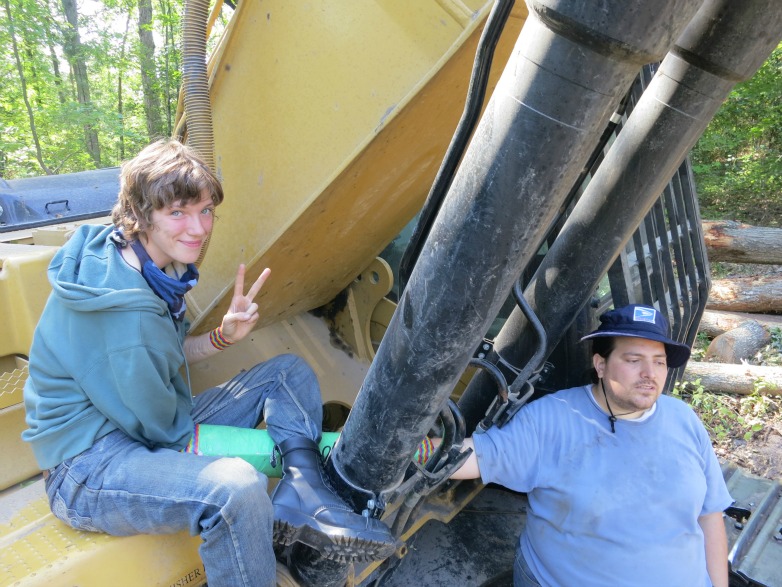
DATELINE WINNSBORO, TX — This morn­ing two Texas-born Tar Sands Block­aders have locked them­selves to a crit­i­cal piece of equip­ment for TransCanada’s Key­stone XL con­struc­tion in order to pro­tect a mas­sive tree vil­lage in the direct path of the tox­ic tar sands pipeline.

The vil­lage, where eight tree sit­ters remain in vig­il, is on prop­er­ty that Tran­sCana­da now claims own­er­ship of through court action. Key­stone XL con­struc­tion crews have advanced just over 300 yards away from the north­ern bound­ary of Tar Sands Blockade’s tree vig­il.

Stay updat­ed at the Tar Sands Block­ade web­site


OVER 50 PARTRIDGES FREED

“Over 50 par­tridges were boxed up from a breed­ing facil­i­ty and tak­en to a pub­lic wildlife reserve where shoot­ing is banned. Their release was quick and they all flew off into the night.

Until all are free! — Ani­mal-Lib­er­a­tion-Front”

“Over 50 par­tridges were boxed up from a breed­ing facil­i­ty and tak­en to a pub­lic wildlife reserve where shoot­ing is banned. Their release was quick and they all flew off into the night.

Until all are free! — Ani­mal-Lib­er­a­tion-Front”

Local residents camp & rally against Bexhill-Hastings link road

Local res­i­dents have released fur­ther details of the two-day pro­gramme of events- includ­ing a camp and ral­ly — in Combe Haven Val­ley this week­end, 29/30 Sep­tem­ber, to protest against con­tro­ver­sial plans to build a £100m link road between Hast­ings and Bex­hill. The group Combe Haven Defend­ers have gath­ered experts and enter­tain­ers from across Sus­sex and beyond to join their ‘Stop the Road’ event.


Fol­low­ing a lunch and ral­ly around 1pm, renowned trans­port cam­paign­er John Stew­art will lead a work­shop on ‘How to stop a road’, draw­ing lessons from the suc­cess­ful ’90s anti-roads move­ment [1]. Local peo­ple will also be able to attend an’In­tro­duc­tion to Direct Action with nation­al group Seeds for Change, as they plan the next steps of the cam­paign.

Fam­i­lies will also be catered for with a work­shop and play from envi­ron­men­tal youth group The Ote­sha Project UK, shad­ow pup­petry and sto­ry-telling. Local botany expert Judy Clark will be on hand and in the evening par­tic­i­pants will be able to stargaze with a pro­fes­sion­al astronomer.

Local musi­cians have also ral­lied to sup­port the cam­paign, with evening per­for­mances promised from Tim Hoyte, Eleanor Lynn, Ani­ta Jar­dine, Las Pasion­aras, Will Davis and Krysia Mans­field. The group have stat­ed that there will be no ampli­fied music and the event will be alco­hol-free.

Guid­ed walks to the Camp site will depart on Sat­ur­day 29 Sep­tem­ber from Bex­hill Sta­tion and Bul­ver­hythe (Sheep Wash bridge) at 11am, and from Crowhurst Sta­tion at 12 noon. Details of the Cam­p’s loca­tion will also be avail­able on the Combe Haven Defend­ers’ web-site on Sat­ur­day morn­ing: www.combehavendefenders.org.uk.

Spokesper­son Abby Nicol said: ‘We urge peo­ple to join us this week­end to see the amaz­ing area that will be destroyed unless we take action to stop it, and to learn about prac­ti­cal ways in which we can all peace­ful­ly and effec­tive­ly resist the con­struc­tion of this road. The appalling traf­fic prob­lems along the Bex­hill Road need to be alle­vi­at­ed, but the build­ing of a new road — which accord­ing to the Coun­ty Council’s own fig­ures will increase over­all traf­fic by 14 per cent — is not a sus­tain­able or finan­cial­ly viable solu­tion. We have to look to more cre­ative and sus­tain­able solu­tions to traf­fic prob­lems: the link road is not the answer. ’

NOTES
[1] John Stew­art was named “Britain’s most effec­tive rad­i­cal green activist” in the first com­pre­hen­sive list of the country’s most effec­tive greens, com­piled by The Inde­pen­dent on Sun­day – in part for his role in “co-ordinat[ing] protests that brought Tory plans for ‘the great­est road-build­ing pro­gramme since the Romans’ to a screech­ing halt in the 1990s.” For more info see www.airportwatch.org.uk/?p=2244 Combe Haven Defend­ers

(USA) Sunrise Intervention at Gas Industry Convention

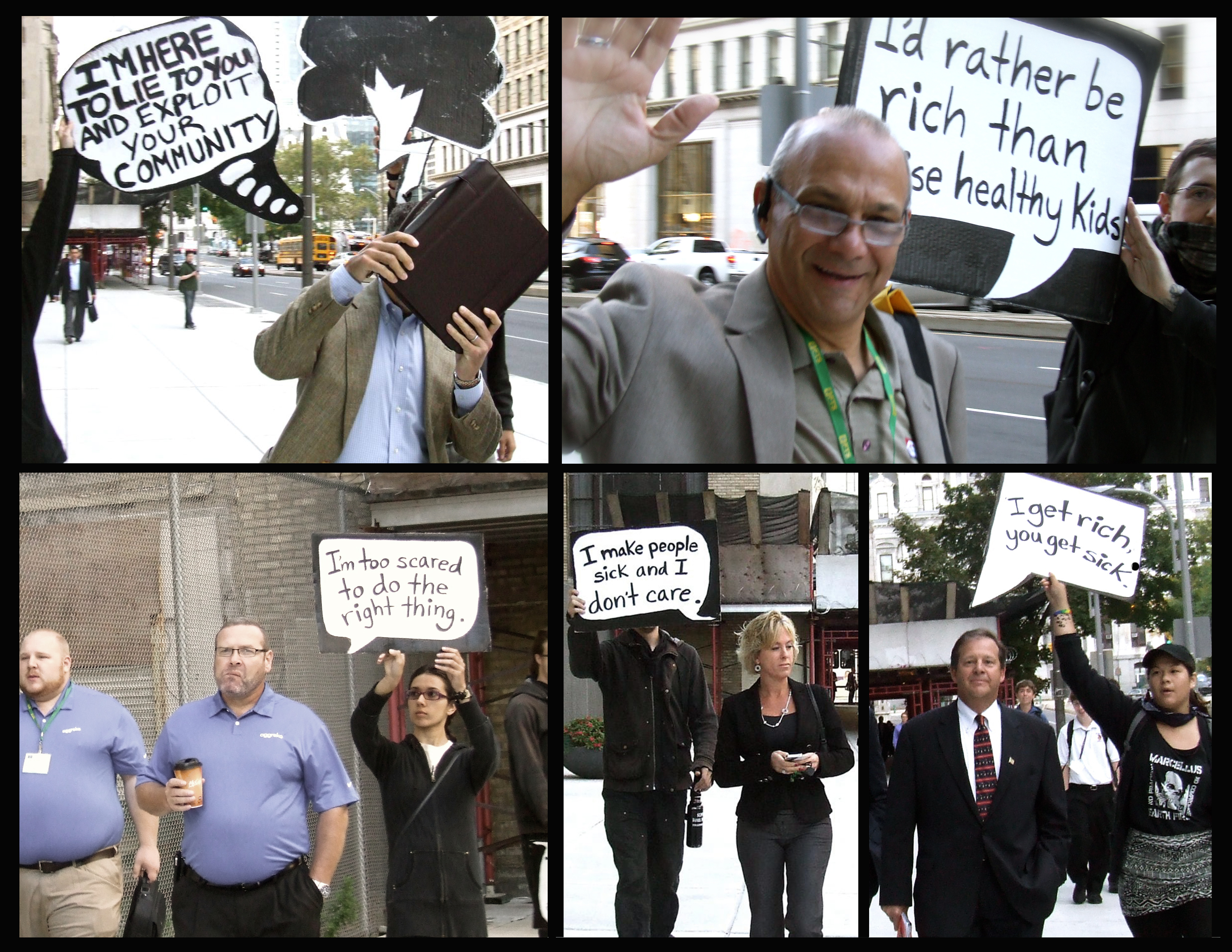
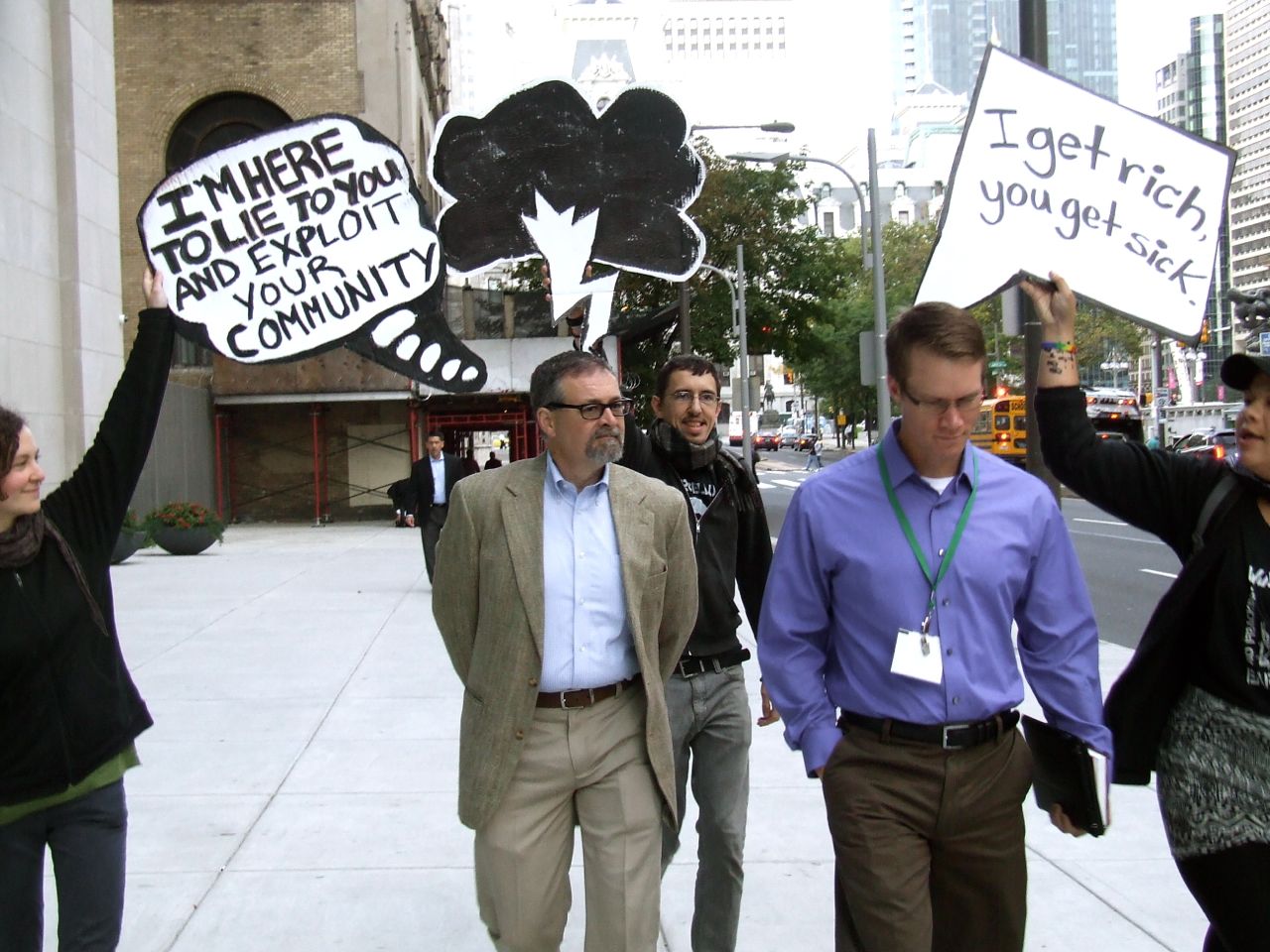
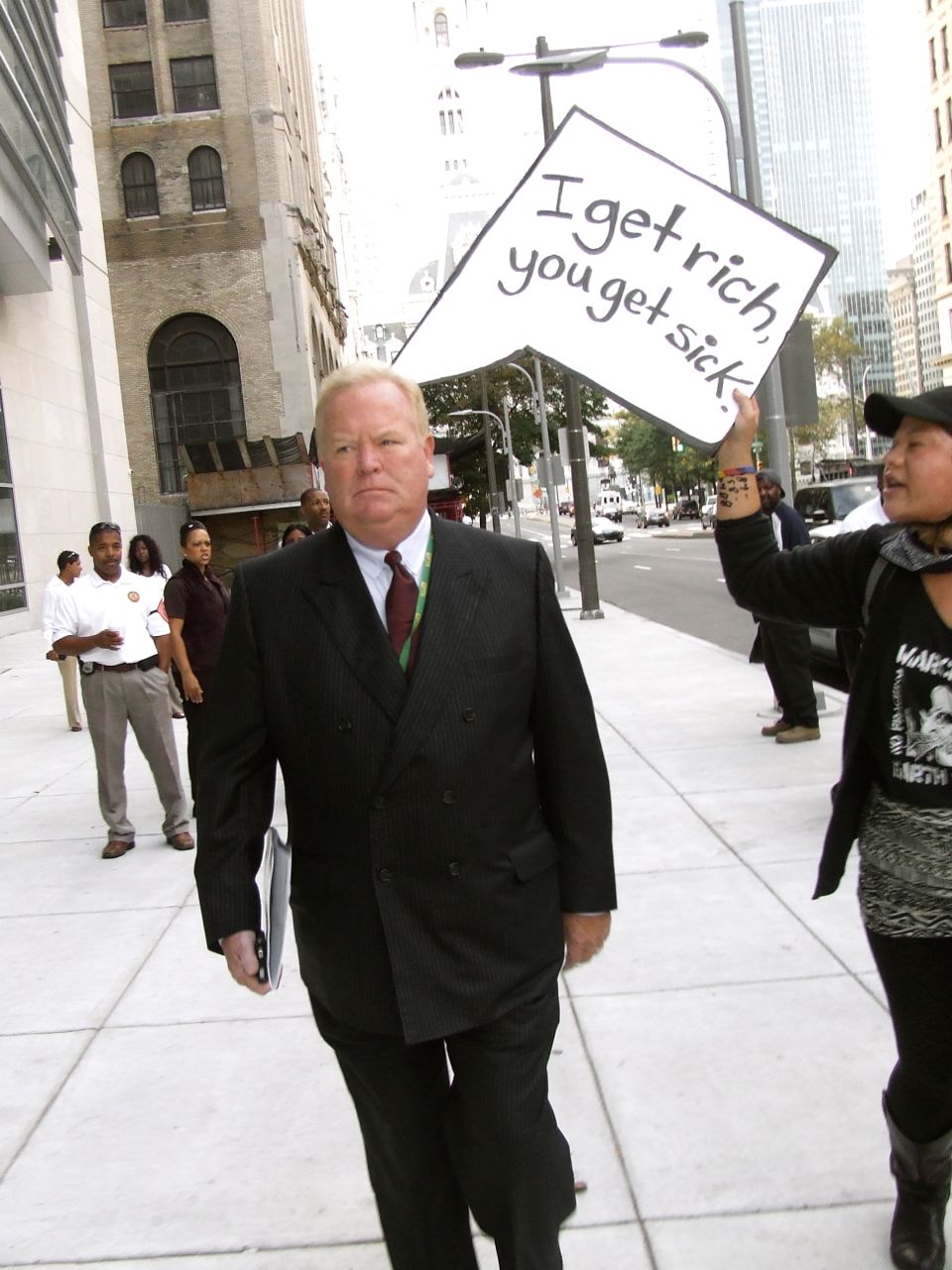
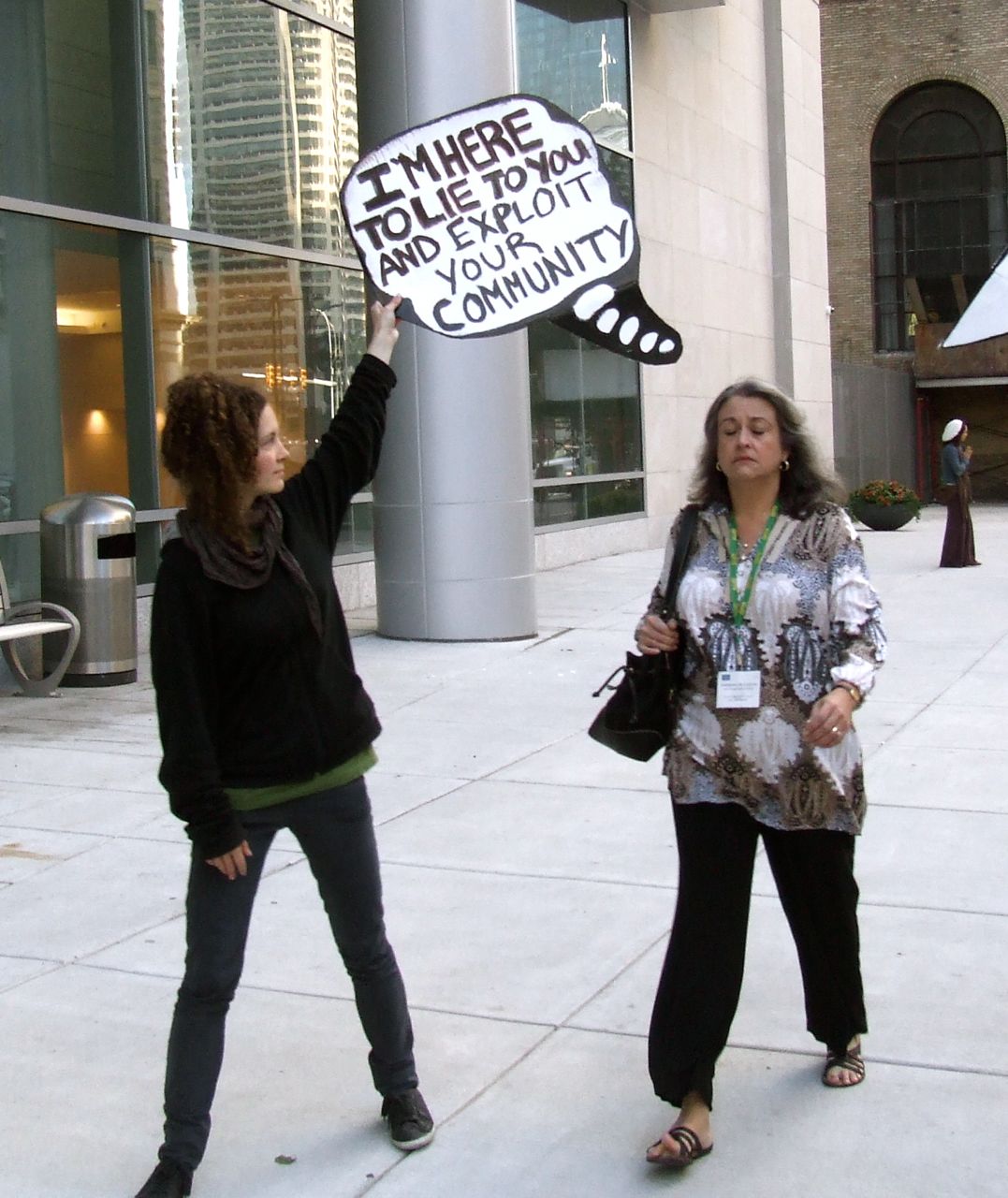
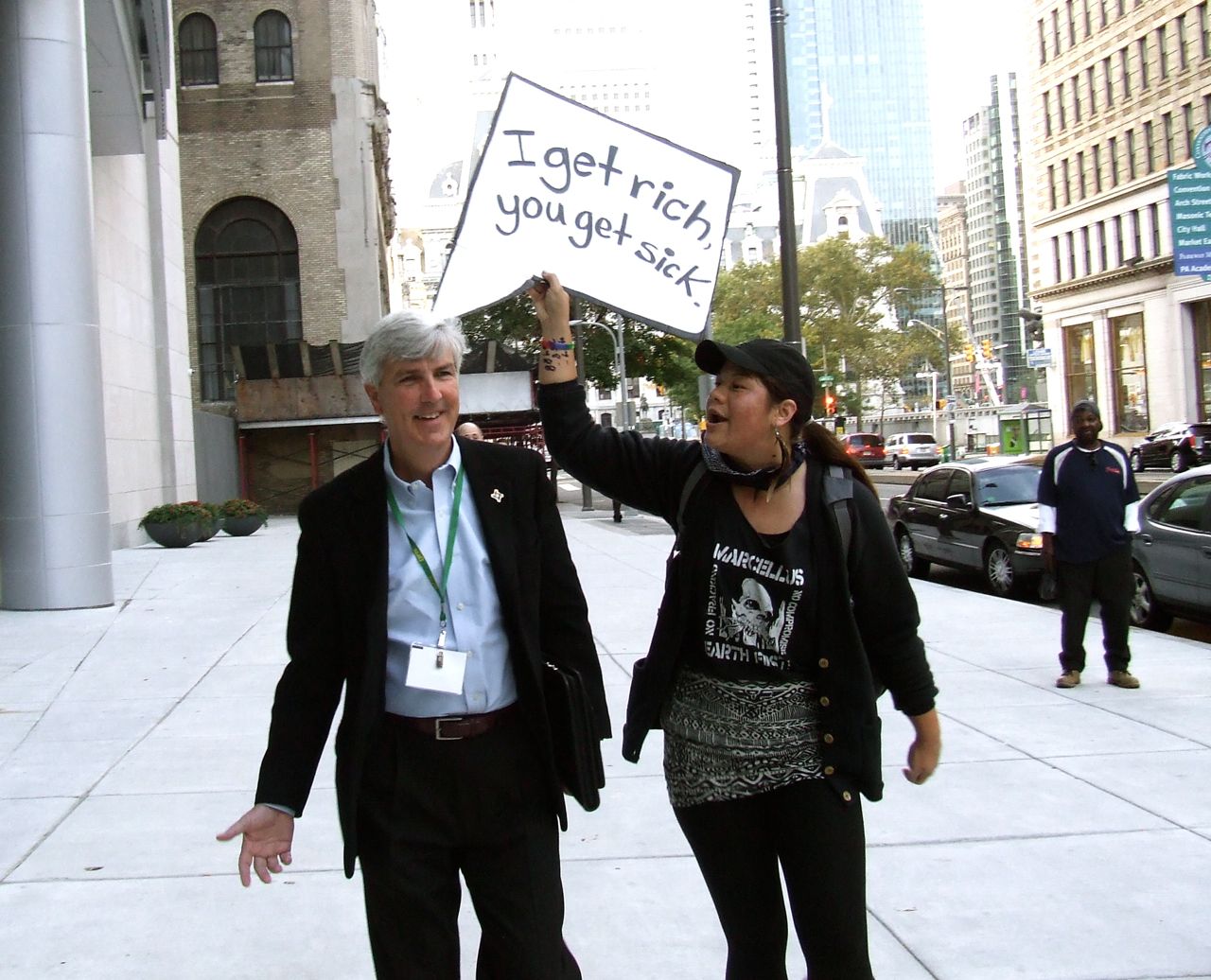
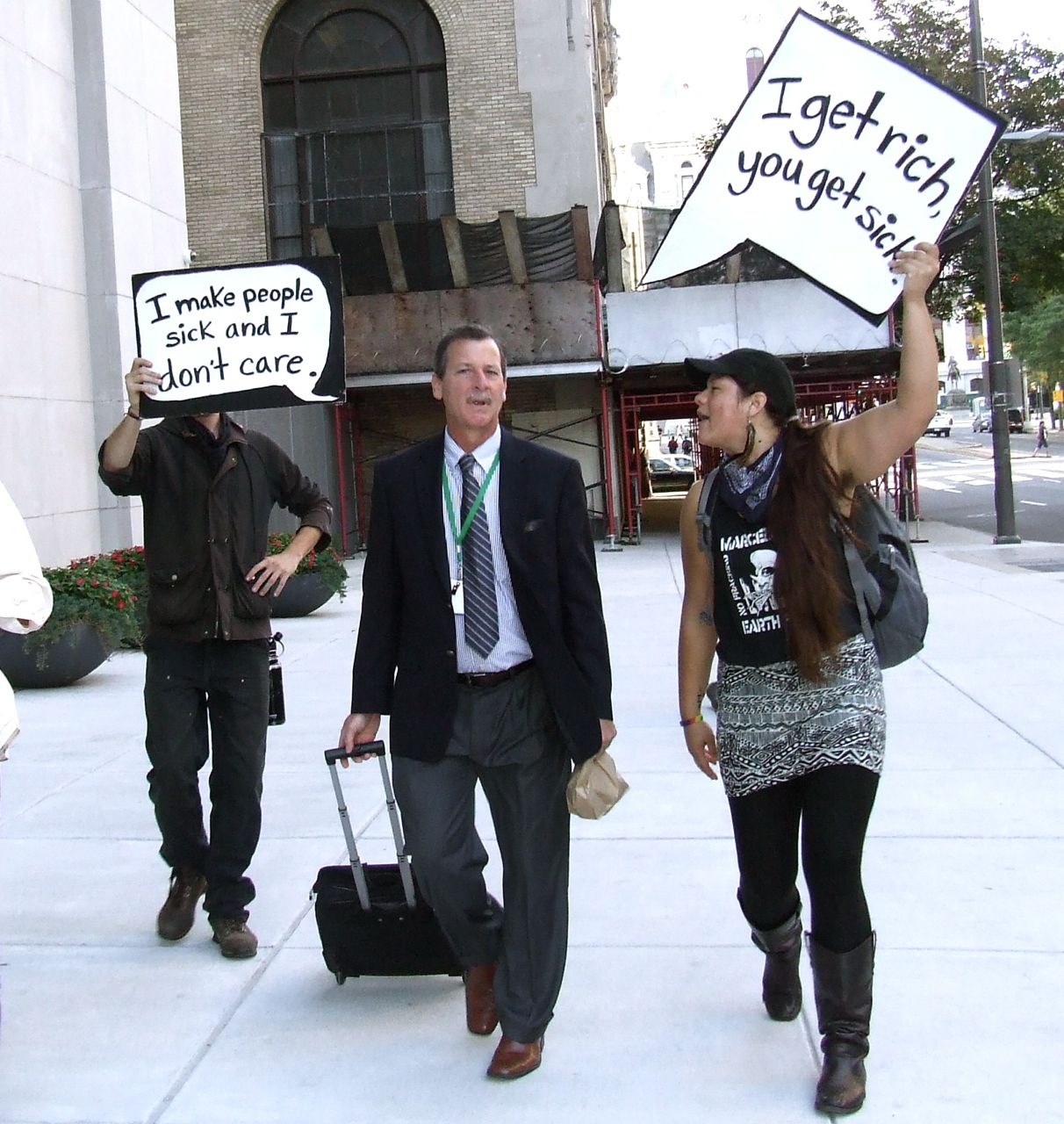
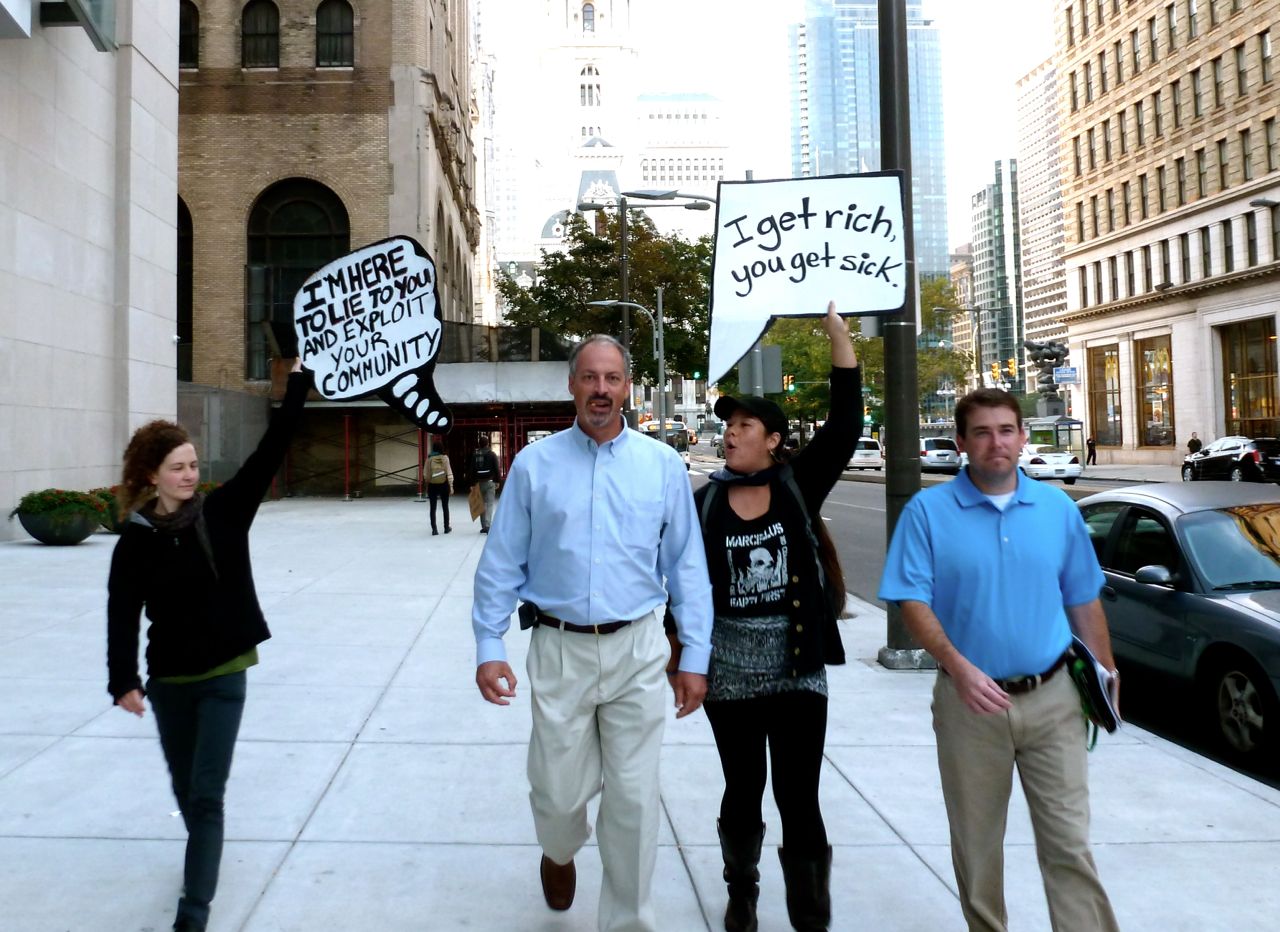
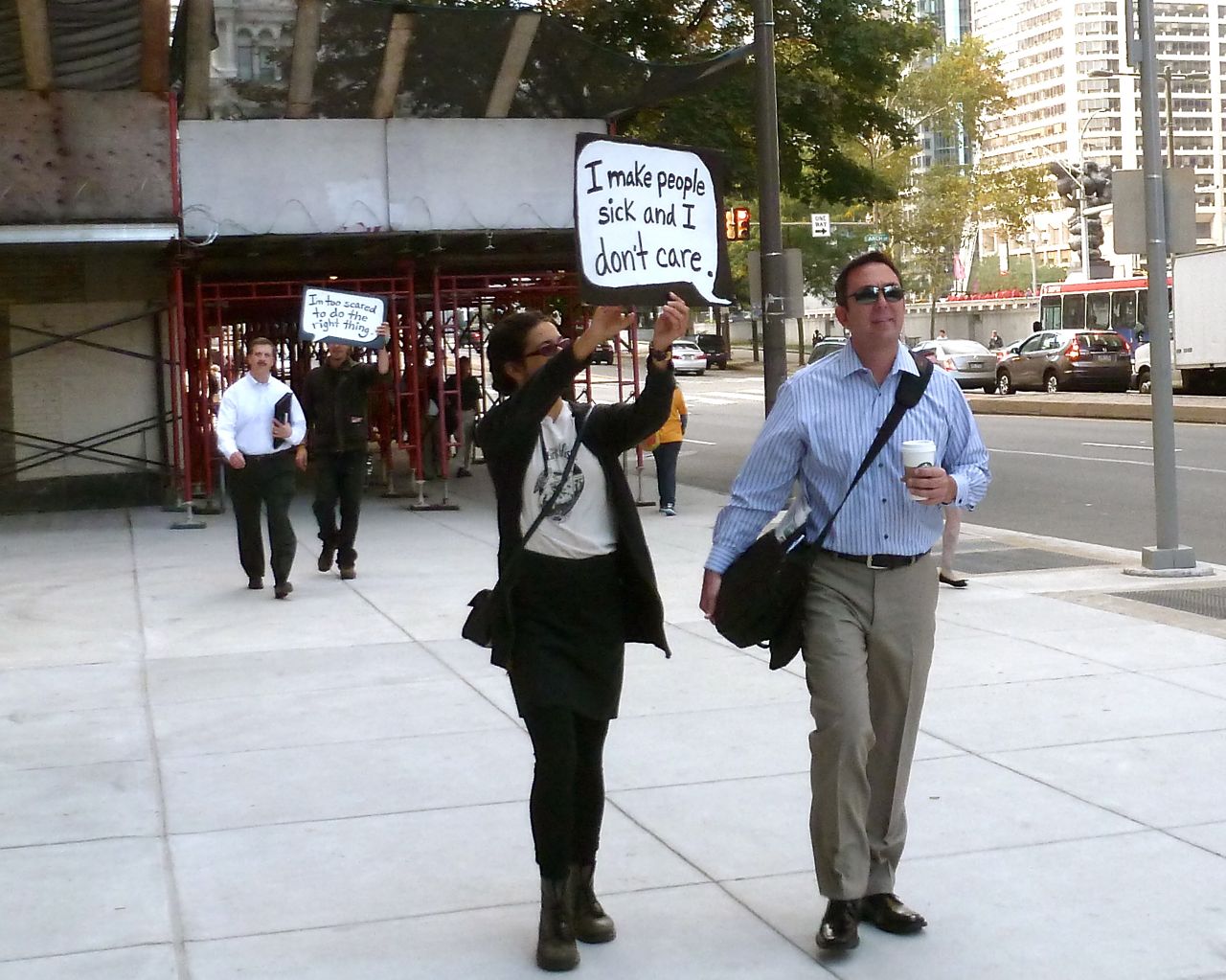
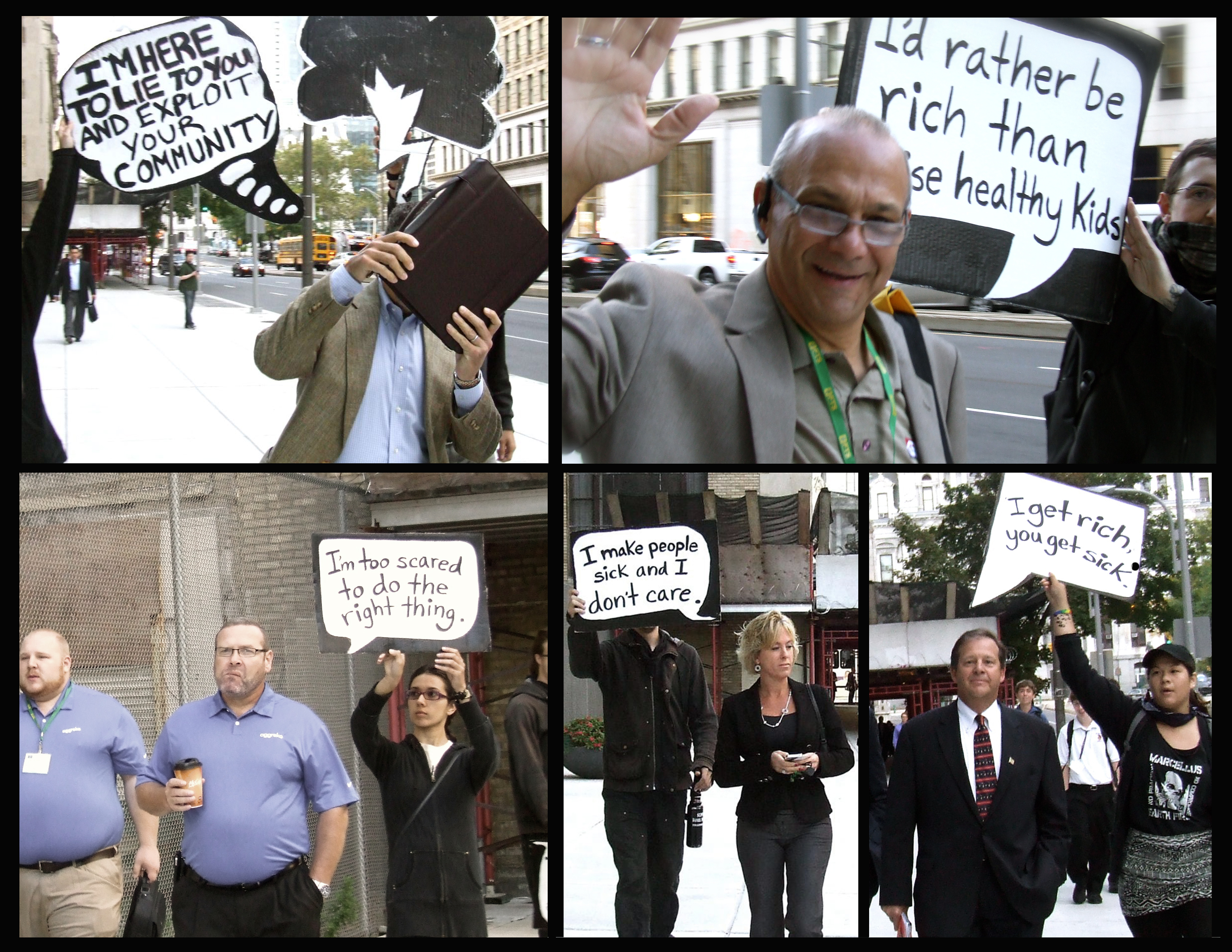
It was 7:00 am, the last day of the Mar­cel­lus Shale Coalition’s annu­al con­ven­tion in Philadel­phia, when a group of 40 or so peo­ple gath­ered to meet the gas indus­try face to face. “We just want­ed to see what they had to say for them­selves” said one of the pro­test­ers.

It was 7:00 am, the last day of the Mar­cel­lus Shale Coalition’s annu­al con­ven­tion in Philadel­phia, when a group of 40 or so peo­ple gath­ered to meet the gas indus­try face to face. “We just want­ed to see what they had to say for them­selves” said one of the pro­test­ers. It turned out the indus­try del­e­gates weren’t so shy for talk­ing after-all.

(scroll down for full gallery)

The con­ven­tion was called “Shale Gas Insight” and took place in the for­ti­fied Philadel­phia Con­ven­tion Cen­ter in down­town Philly. The con­ven­tion  host­ed hun­dreds of ven­dors and rep­re­sen­ta­tives from just about every com­pa­ny involved in hydraulic frac­tur­ing, or “Frack­ing” as some call it. You can read about the work­shop titles here; http://shalegasinsight.com/conference-schedule/

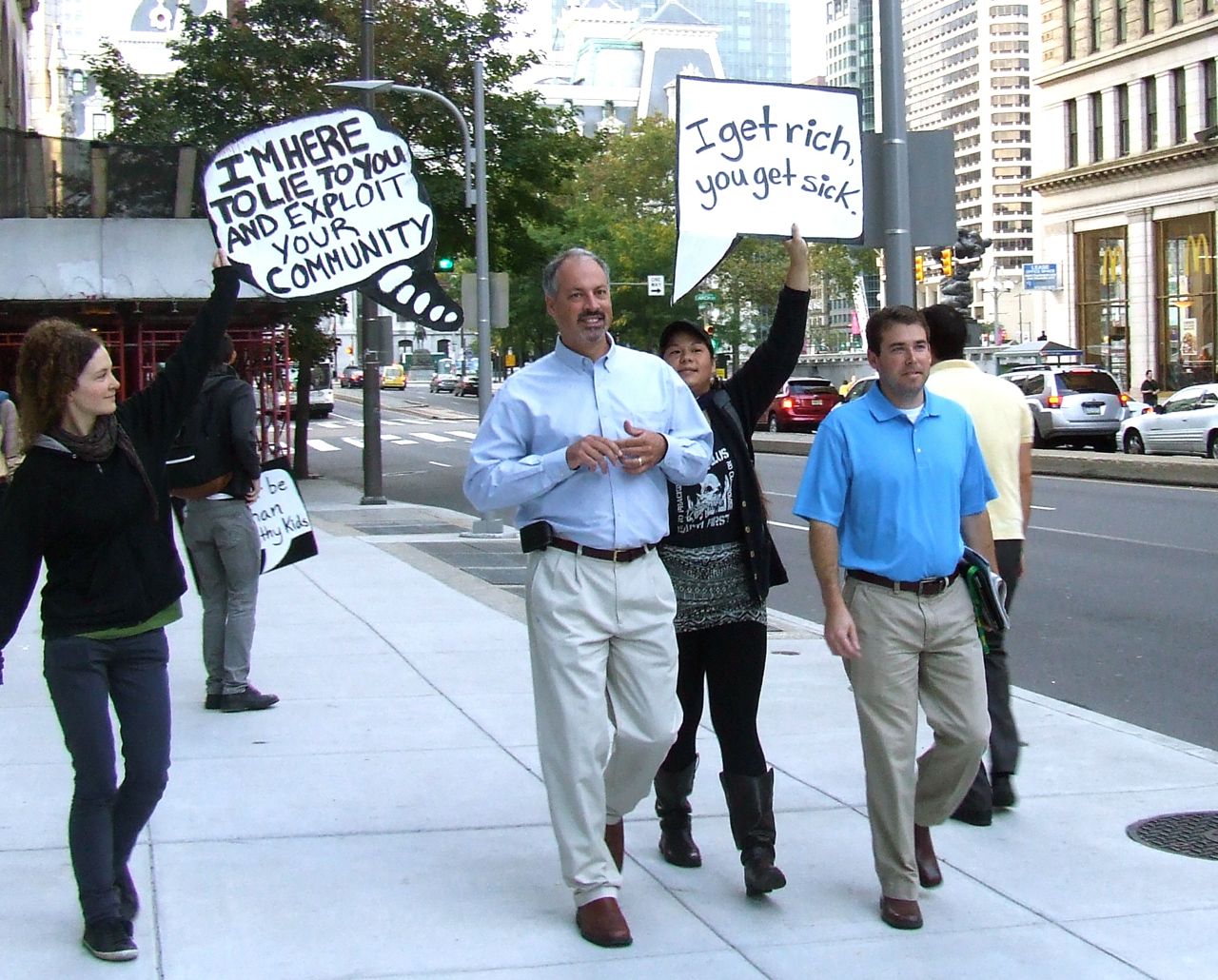
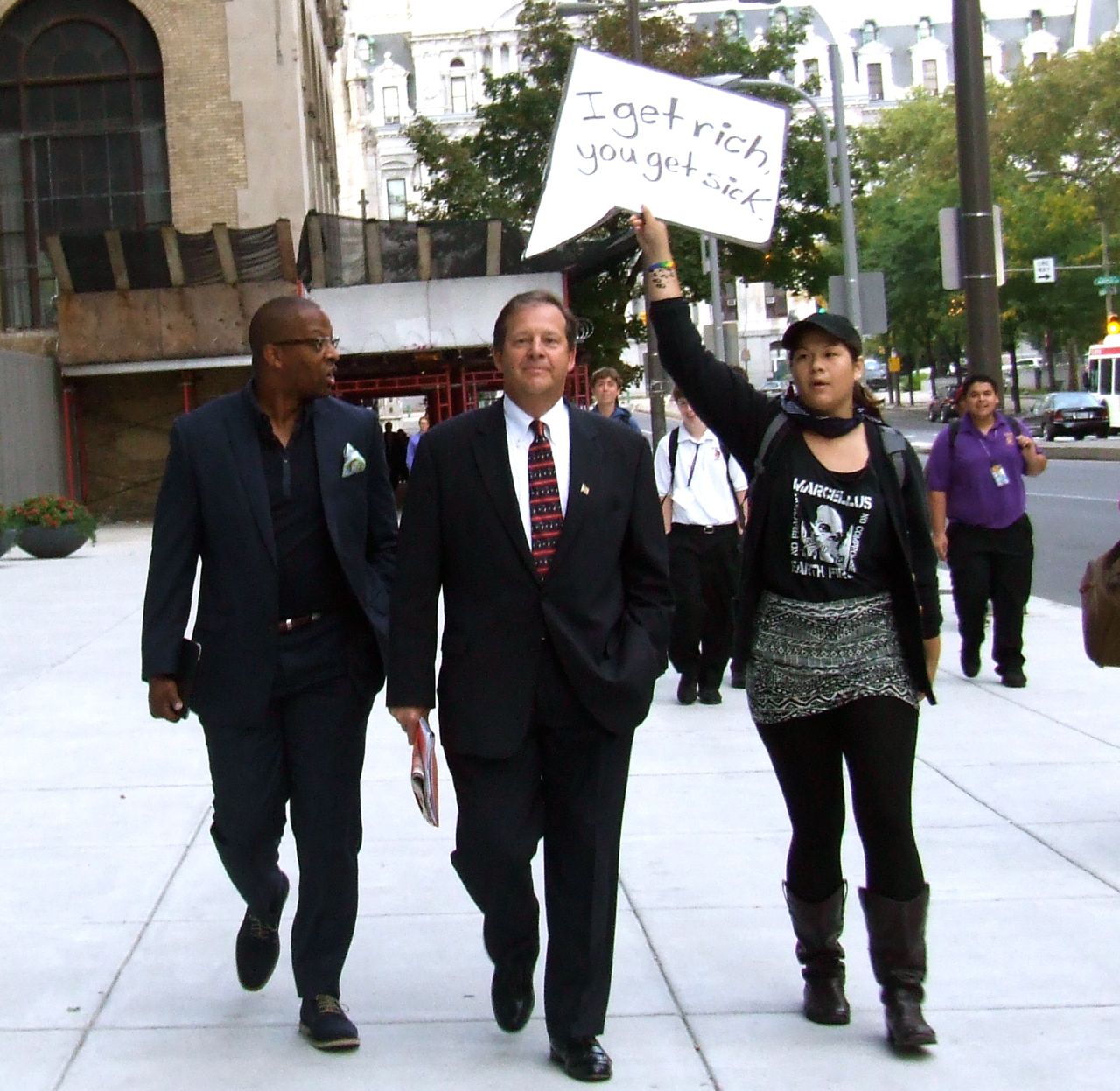
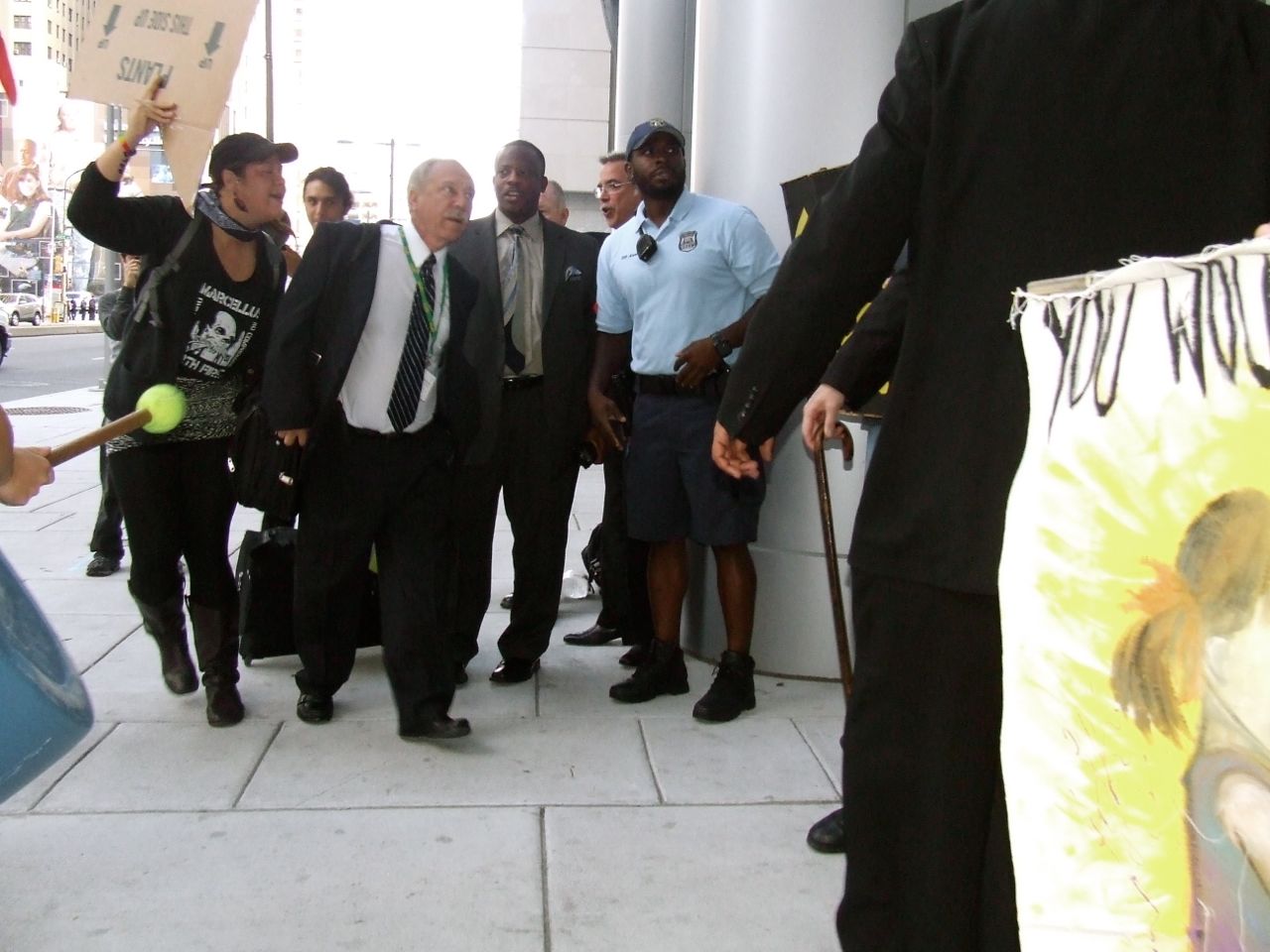
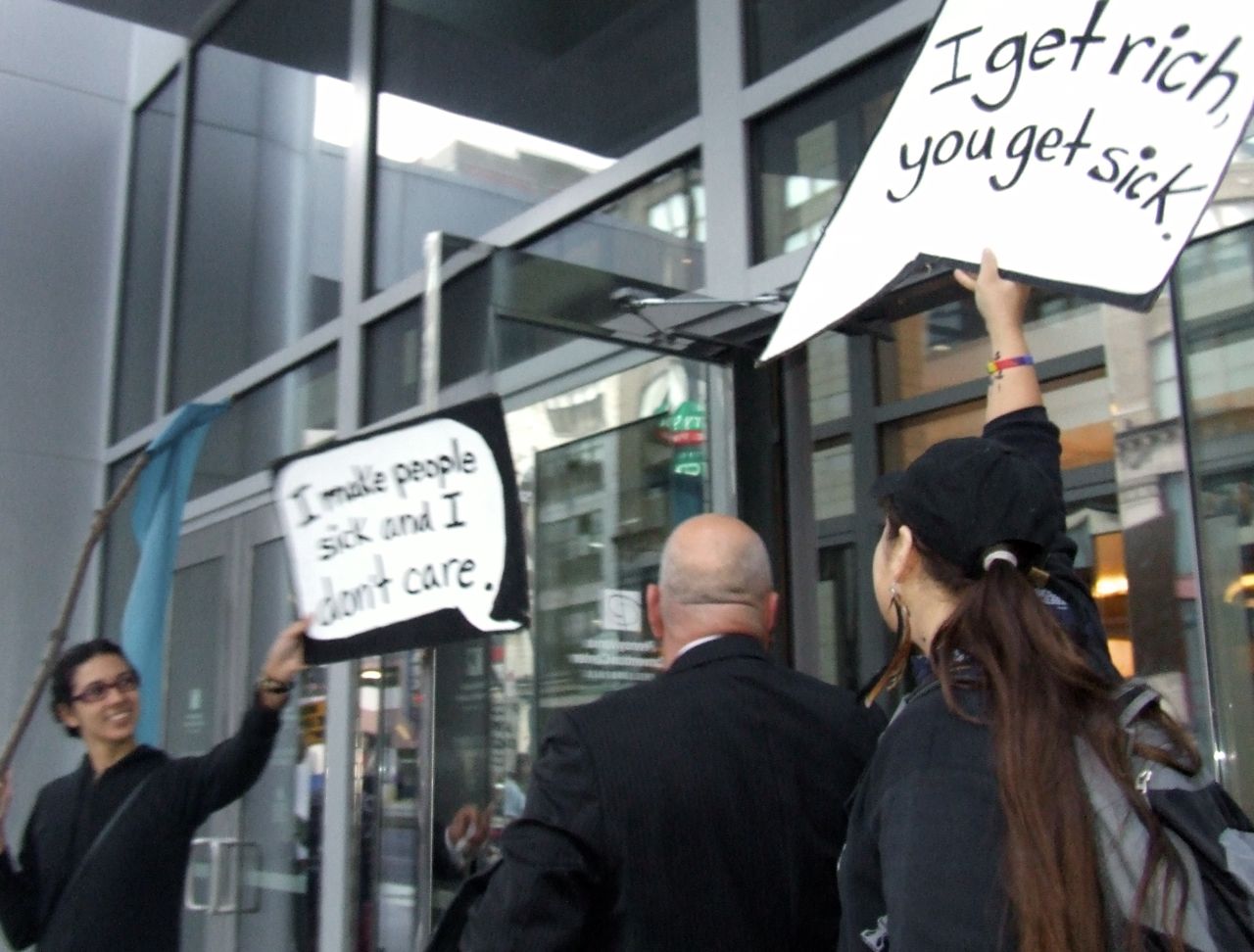
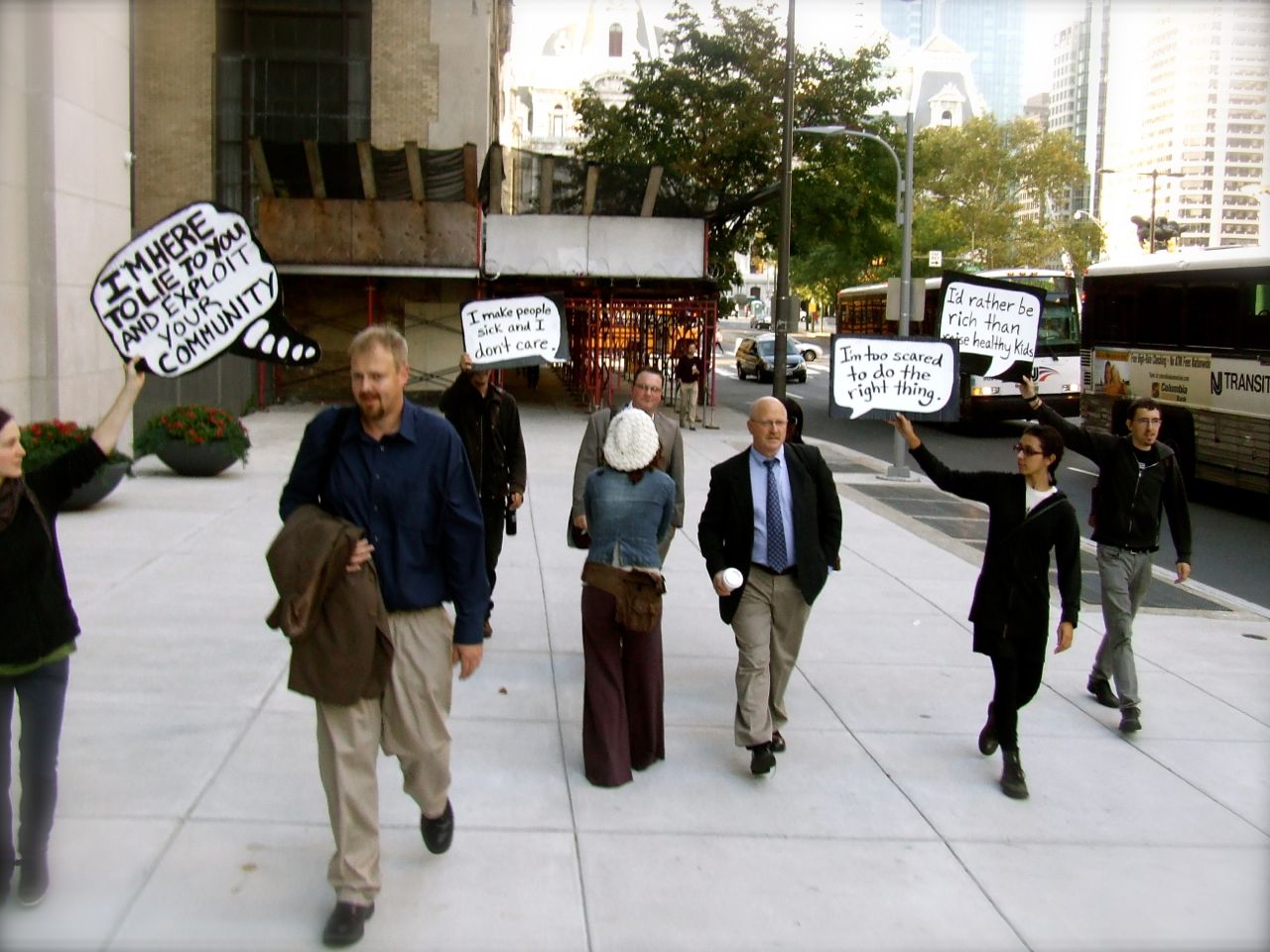
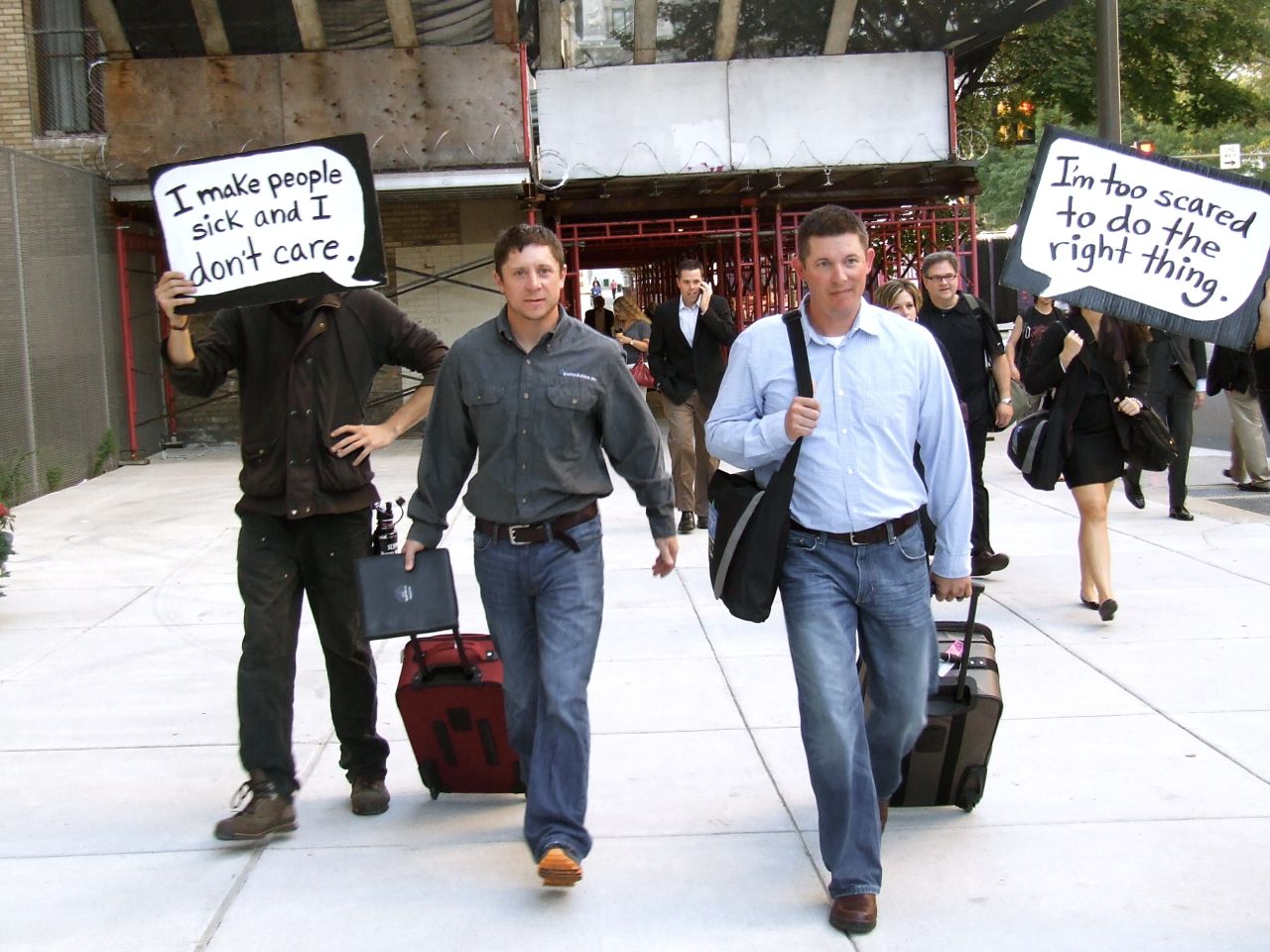
The action, called “Sun­rise Inter­ven­tion” by local orga­niz­ers, suc­ceed­ed in bring­ing peo­ple togeth­er to face the indus­try on their own terms. For hours, indus­try rep­re­sen­ta­tives were forced to pass through an aggres­sive pick­et at the front entrance with ban­ners, flags, drums, and chants. This was pre­ced­ed by a “walk of shame” in which the del­e­gates were ver­bal­ly con­front­ed for an entire city block in pub­lic view. As they approached the con­ven­tion cen­ter, peo­ple phys­i­cal­ly blocked them from enter­ing. To say the least, it became a venue for inter­est­ing con­ver­sa­tion.

“I real­ly val­ued the hon­esty on behalf of the del­e­gates” said a bystander. At one point a group of uni­formed char­ter school kids joined in the fun, tak­ing pictures–laughing and point­ing.

“We were hop­ing the del­e­gates would get arrest­ed for col­lab­o­rat­ing in envi­ron­men­tal crimes” said one of the pick­eters when the police arrived. But they didn’t.

“I’m too scared to do the right thing” whis­pered an offi­cer from his car. The police then sep­a­rat­ing the pick­et onto either side of the main entrance, ush­er­ing del­e­gates off the side­walk into the road.

Although the police estab­lished a rit­u­al­is­tic pres­ence, they didn’t do much to pro­tect the del­e­gates from the angry crowd. Per­haps they weren’t too impressed with the gas industry’s pol­i­cy on pub­lic health.

The protest last­ed a cou­ple more hours, police & all, mak­ing it dif­fi­cult for del­e­gates to reach the door. Once most of the del­e­gates were inside, the protest end­ed in an un-per­mit­ted march through down­town Philadel­phia to meet up with an ACT UP ral­ly and street the­ater per­for­mance.


(USA) Tar Sands Blockade Launces 8‑Person Treesit

Gan­dalf hates tar sands.

The ongo­ing Tar Sands Block­ade cam­paign has launched an 8‑person treesit in the planned path of the under-con­struc­tion Key­stone XL tar sands pipeline. “Con­struc­tion can­not pro­ceed until tree-sit­ters descend and Tran­sCana­da clear-cuts through hun­dreds of trees to make way for the tox­ic tar sands pipeline,” Tar Sands Block­ade announced.

The treesit­ters have announced their inten­tion to remain in the trees until the Key­stone XL pipeline is stopped for good.

Tar Sands Block­ade is an ongo­ing cam­paign to stop the con­struc­tion of TransCanada’s Key­stone pipeline through Texas and Okla­homa. The pipeline is meant to car­ry oil from Alberta’s tar sands to the US.

There are still plen­ty of ways to get involved in this cam­paign. Fol­low news of the treesit here. For some ways to get involved, read this call to action or vis­it Tar Sands Block­ade.


(Brazil) Fishermen Paralyze Construction of the Belo Monte Dam

Fish­er­men form a line to block

Fish­er­men form a line to block access to the con­struc­tion site of a cof­fer dam on the Xin­gu Riv­er, Sep. 2012

From Inter­na­tion­al Rivers:

On Wednes­day [Sep. 19], a group of about 50 fish­er­men pre­vent­ed a fer­ry from trans­port­ing machines and work­ers to a cof­fer dam being built for the Belo Monte Dam Com­plex, set­ting up a protest camp on one of the main islands of the Xin­gu Riv­er near the con­struc­tion site.

After assem­bling, the pro­test­ers decid­ed to remain indef­i­nite­ly in place, and called on Norte Ener­gia and IBAMA to imme­di­ate­ly nego­ti­ate com­pen­sa­tion for the loss of eco­log­i­cal­ly sen­si­tive fish species that the fish­er­men have suf­fered as a result of the cof­fer dam’s con­struc­tion.

“The fish­er­men have seen a 50% reduc­tion in fish­eries pro­duc­tion. The riv­er is dry­ing up. Sev­er­al species failed to spawn over the last year due to Norte Ener­gia’s inter­ven­tion in the riv­er.  A lot of fish are dying, and in some loca­tions the com­pa­ny wants to impede the fish­er­men from access­ing the riv­er,” explained Ana Bar­bosa Laide of the Movi­men­to Xin­gu Vivo, who has accom­pa­nied the mobi­liza­tion.

On Wednes­day night, a group of fish­er­men who depend on orna­men­tal fish from the riv­er joined the group, demand­ing that envi­ron­men­tal agency IBAMA guar­an­tee the sur­vival of species that are endem­ic to the area where the dam is being built, say­ing that oth­er­wise, the species will go extinct. “They argue that if these species die off, IBAMA should release its pop­u­la­tion of col­lect­ed orna­men­tal fish in order to save the eco­nom­ic liveli­hoods of the fish­er­men,” explained Laide.

Accord­ing to the move­ment lead­ers, the occu­pa­tion protests the deci­sion of IBAMA to allow Norte Ener­gia to per­ma­nent­ly close the riv­er. Dur­ing this process, the fish­er­men were not con­sult­ed nor informed about how they could con­tin­ue their eco­nom­ic activ­i­ties, or how they could con­tin­ue to trans­port their boats on the riv­er past the dam. “The riv­er is ours and we came to fish. You can’t just pro­hib­it fish­ing, we have to work, “says Lucio Vale, Pres­i­dent of the Fish­er­men’s Colony of Altami­ra.

On the evening of the 19th, civ­il police offi­cers, accom­pa­nied by mem­bers of Norte Ener­gia, were at the demon­stra­tion site. Accord­ing to agents, they were assured that the protest was non-vio­lent.

(Peru) Despite Promised Reforms, Another Mine Resister Killed in Peru

Peru­vian pol

Peru­vian police are becom­ing noto­ri­ous for using lethal force against pro­test­ers. In this pic­ture, police respond with force to protests which rocked the Ama­zon region in 2009.

Despite gov­ern­ment promis­es of reforms in the way nat­ur­al resource con­ces­sions are han­dled, anoth­er anti-mines pro­test­er has been killed in Peru. This marks the 19th per­son killed in a nat­ur­al resource-relat­ed con­flict since Pres­i­dent Ollan­ta Humala took office in July 2011.

Clash­es between police and pro­test­ers broke out in the Ancash region on Wednes­day Sep. 19, when police tried to break up a block­ade of a road lead­ing to Bar­rick Gold’s Pier­na mine.  Locals blame the mine for con­t­a­m­i­nat­ing their drink­ing water and using up their water sup­ply.

The com­pa­ny tem­porar­i­ly shut down the mine fol­low­ing the killing.

The vio­lence came even as Peru’s Con­gress debates reforms to the way min­ing con­ces­sions are han­dled, includ­ing the cre­ation of a new over­sight body to eval­u­ate min­ing con­ces­sions, sep­a­rate from the agency respon­si­ble for pro­mot­ing them.

The gov­ern­ment has also been tout­ing its new pol­i­cy of con­sult­ing with affect­ed com­mu­ni­ties regard­ing oil and gas con­ces­sions in the Ama­zon, but com­mu­ni­ties in resis­tance to such projects have expressed skep­ti­cism about what such con­sul­ta­tion will actu­al­ly mean.

“Which com­mu­ni­ties will be con­sult­ed? What are the terms and con­di­tions? Indige­nous peo­ples need answers to these ques­tions, because there is a great deal of mis­trust,” said con­gress­mem­ber Veróni­ka Men­doz.

“We think it is good that they will hold a con­sul­ta­tion. But how can they rem­e­dy all of the dam­age they have done to us in the last 40 years in just a short time? They need to explain that to us first,” said Achuar indige­nous leader Andrés San­ti, pres­i­dent of the Fed­er­a­tion of Native Com­mu­ni­ties of Cor­ri­entes.

Mining Company and Government Thugs Attack Guatemalan Mine Resisters

On Sep­tem­ber 17 and 18, com­mu­ni­ty mem­bers from Mataque­s­cuint­la, Jala­pa and San Rafael Las Flo­res, San­ta Rosa, Guatemala protest­ed against the ongo­ing devel­op­ment of a min­ing project in their com­mu­ni­ties. In response to the first of these protests, provo­ca­teurs attacked both police and com­mu­ni­ty mem­bers with stones. In response to a peace­ful block­ade out­side the min­ing site, pro­test­ers were “attacked with­out warn­ing by mem­bers of the mine’s pri­vate secu­ri­ty agency, the Nation­al Civ­il Police and the army, using tear gas can­nons, firearms and rub­ber bul­let guns. Secu­ri­ty agents attacked from inside the mine, with trained attack dogs. The Police cor­nered the unarmed pro­tes­tors, and the army sur­round­ed them, crouched and at the ready. The dis­play of repres­sive force had all the char­ac­ter­is­tics of mil­i­tary counter-insur­gency tac­tics that we had thought belonged to the past, includ­ing the bad inten­tions, bru­tal­i­ty and cow­ardice that so char­ac­ter­ize the tac­tics of the Nation­al Army.”

Fol­low­ing the attack, mil­i­tary heli­copters began fly­ing over the resist­ing com­mu­ni­ties, “like in the old days of the armed con­flict.”