
Following the attack, military helicopters began flying over the resisting communities, “like in the old days of the armed conflict.” 
 On September 17 and 18, community members from Mataquescuintla, Jalapa and San Rafael Las Flores, Santa Rosa, Guatemala protested against the ongoing development of a mining project in their communities. In response to the first of these protests, provocateurs attacked both police and community members with stones. In response to a peaceful blockade outside the mining site, protesters were “attacked without warning by members of the mine’s private security agency, the National Civil Police and the army, using tear gas cannons, firearms and rubber bullet guns. Security agents attacked from inside the mine, with trained attack dogs. The Police cornered the unarmed protestors, and the army surrounded them, crouched and at the ready. The display of repressive force had all the characteristics of military counter-insurgency tactics that we had thought belonged to the past, including the bad intentions, brutality and cowardice that so characterize the tactics of the National Army.”
Mining Company and Government Thugs Attack Guatemalan Mine Resisters
Energy Industry Crackdown, Global Protest Frackdown

Yesterday, while Shell announced suing Greenpeace International in an attempt to have the organization banned from protest within 500 meters of any Shell property in the Netherlands, New York activist Susan Walker was sentenced to 15 days in jail after she refused to pay a fine for blocking the entrance to Inergy gas facility in New York earlier this month.
But judges and jails aren’t enough to stop a world-wide movement against the energy empire, and today marks the “Global Frackdown” with more than 100 protests against gas fracking scheduled to take place around the world. So get out there in the streets and raise some hell…
Shell sues Greenpeace to block environmental protests in the Arctic
The suit against Greenpeace Int’l argued at Amsterdam’s District Court Friday showed Shell aggressively taking the offensive to protect its $4.5 billion investment in drilling for oil in the icy Arctic waters off the coast of Alaska. A verdict is not expected for two weeks.
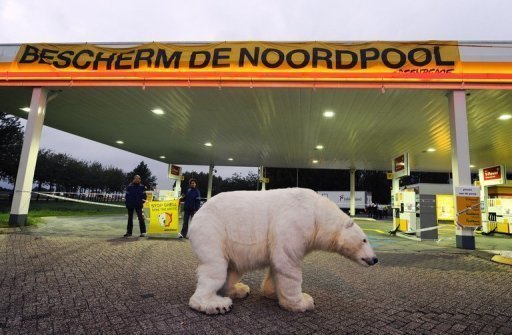
A protest at a Shell gas station in the Netherlands — with stuffed polar bear. (AFP/ANP, Marcel Antonisse)
Greenpeace has protested Arctic drilling with other stunts around the world, but the trigger for Friday’s lawsuit was a Dutch demonstration on Sept. 14, in which Greenpeace protesters blocked more than 70 Shell gas stations in the Netherlands for several hours, draping banners and clamping gas pump handles together with bike locks.
Fifteen people were arrested. Shell has not put forward any estimate of how much damage it suffered.
“Because Greenpeace International doesn’t operate alone, but is the spider in the web of national and local organizations, our request includes that Greenpeace inform its satellite organizations that it no longer supports protests that are solely directed at causing Shell economic damage or that bring human lives and the environment in danger,” Shell’s complaint said.
Protest backs jailed environmental activist in Inergy Blockade
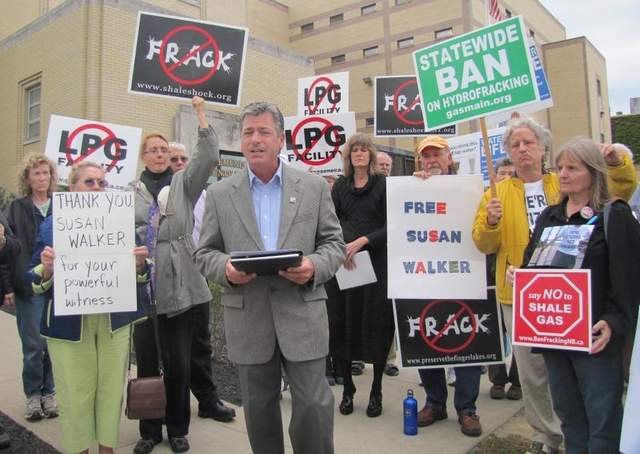
Joseph Campbell, president of Gas Free Seneca, speaks Friday outside the Chemung County Jail. He said local residents turned to civil disobedience because their petitions, letters and attending hearings failed to get their voices heard on Inergy Midstream’s proposed storage facility.
Nearly 30 people slammed the energy industry outside the Chemung County Jail on Friday but praised the Dundee woman held inside for refusing to pay a fine for trespassing at a proposed gas storage facility.
They demonstrated in support of Susan Walker, 53, who pleaded guilty to trespassing Wednesday night before Reading Town Justice Raymond H. Berry and got 15 days in jail after she refused to pay the $275 fine.
“We’re in agreement with Susan’s words when she spoke in the courthouse, ‘If I were a corporation, I would not be going to jail,’” said one of four speakers, Sandra Steingraber, an Ithaca College scholar in residence who co-founded the coalition New Yorkers Against Fracking.
Fracking Protests Planned Around The World By GlobalFrackdown Campaign
More than 100 protests against the natural gas drilling process known as fracking are scheduled to take place around the world on Saturday, building on public concerns but also using an overly simplified message to spur outrage.
The GlobalFrackdown website and campaign was developed by Food & Water Watch, a Washington, D.C. nonprofit that was once part of Ralph Nader’s Public Citizen group. The campaign claims that fracking “has already damaged communities and ruined lives. It pollutes water and makes people sick.”
(USA) Another Lockdown Against the Keystone Tar Sands Pipeline!

Protesters locked to equipment clearcutting forests to make way for the Keystone tar sands pipeline. Winnsboro, TX, Sep. 19 2012
Tar Sands Blockade protesters have locked themselves to a wood chipper and skidder being used to clear-cut trees near Winnsboro, TX to make way for the Keystone XL tar sands pipeline. This is the fourth action to date in the Tar Sands Blockade campaign.
The Tar Sands Blockade campaign is active and ongoing. Calls to join the action have been put out both by the main group and by “a small crew of Earth First!ers and eco-anarchists engaged in tactical elements of the larger Tar Sands Blockade campaign.”
To find out more, watch this Tar Sands Blockade action video, and visit tarsandsblockade.org and stoptarsands.org.
BBC Investigates Opencast Mining
THE LOOSE ANTI OPEN-CAST NETWORK
BBC’s COUNRTYFILE PROGRAMME INVESTIGATES WHY A REMOTE HAMLET IS ON THE FRONT LINE OF A PLANNING BATTLE OF NATIONAL IMPORTANCE.
THE LOOSE ANTI OPEN-CAST NETWORK
BBC’s COUNRTYFILE PROGRAMME INVESTIGATES WHY A REMOTE HAMLET IS ON THE FRONT LINE OF A PLANNING BATTLE OF NATIONAL IMPORTANCE.
A small village, of just 75 households, is all that may stand between preserving large sections of the English countryside and the expressed desire of the UK Mineral Extraction Industry to see more permissions given to exploiting England’s mineral resources in areas that are more environmentally sensitive and / or are closer to where people live.
The unfortunate village is Halton Lea Gate, located on the Cumbria / Northumberland border and near an Area of Outstanding Natural Beauty. A team from the BBC’s Counrtyfile programme was filming there recently to investigate why this spot now finds itself on the front line of a national planning controversy.
In early August, after a Public Inquiry into an Appeal to grant permission for an Opencast Mine, the Inspector found in favour of the Applicant. The sting in the tale, for all other communities in England, is the reasoning given by the Inspector to allow the Appeal. His reasoning set a new case law precedent, it is argued, which affects all future mineral planning applications in England.
What the Applicant has to replicate in the future, is the argument used here: that there is a national need for the mineral in question, in this case coal. If they can persuade the Planning Authority (or the Inspector, if the Application has gone to an Appeal) that this is the case, then ‘great weight’ has to be attached to this claim. So much weight it seems, that this factor alone may override all other considerations. (1)
This situation has arisen as a consequence of the Government implementing the new National Planning Policy Framework. In the time leading up to the 2010 election, lobbying organisations such as Coalpro and the CBI lobbied long and hard for a relaxation of the planning rules for mineral extraction. (2) It seems, from this example, the first Public Inquiry for mineral extraction to be held under the new rules, that their efforts have been rewarded. The advice of the Inspector has now gone to the Department of Communities and Local Government to be confirmed or rejected by a Minister.
The BBC came to investigate the issue and explore why local people have taken on the task of raising £40,000 so that they can mount a Judicial Review over the decision. If local people are successful in raising the money and mounting a successful action, they may have prevented the floodgates from opening and saved England from experiencing a rash of mineral planning applications for developing swathes of the countryside. This is now a Public Appeal, and donations can be made payable to The North Pennines Protection Group, who have been one of the local groups who have opposed this Application
An e petition to the Government has been started about this planning decision and its implication for similar planning decisions elsewhere which can be signed by following this link:
http://epetitions.direct.gov.uk/petitions/36985
Steve Leary for the Loose Anti Opencast Network commented
“ LAON was contacted by the BBC in the lead up to filming for the Countryside programme. We are delighted to be able to cooperate in the making of the programme and show why we argue that this is an issue of national importance which will affect other communities up and down the Country if the decision is not changed.
We know of five other opencast mine applications, near Smally in Derbyshire (George Farm) , Kirklees, Sth. Yorkshire (Dearne Lea), Trowel in Nottinghamshire (Shortwood Farm) , Whittonstall in Northumberland ( Hoodsclose) and Gateshead (Birklands) that will be affected by this decision if it stands.
In addition, we are aware of three other sites where a potential applicant is making the final decision to proceed with a full application in Gateshead, Marley Hill Reclamation) , Derbyshire ( Hill Top Project near Clay Cross) and Northumberland (Ferneybeds near Widdrington Station, Northumberland) which might also be affected.
The issue here though, we believe, goes way beyond opencast mining. It’s about relaxing the rules around all forms of mineral extraction from pits for sand, gravel and clay to quarries for granite and limestone to opencast mines for coal. This is what the industry lobbied for and now, it seems, the Government has delivered, if it upholds the Inspector’s recommendation to approve the Application and the Judicial Review fails. We therefore urge people everywhere, who cherish and love our countryside, to support both the petition and the public appeal for money to take this case to a Judicial Review.”
The Counrtyfile edition of the programme is to be broadcast on Sunday 30th September 2012. It will include a 12 minute section on the Halton Lea Gate issue.
———————————————————————————-
References
1) For more information on the significance of this decision as far as opencast mine applications are concerned see LAON PR7 here
http://nottingham.indymedia.org/articles/2754
2) Evidence about the lobbying to relax these planning rules can be found here.
Briefing Note E2 “Energy Policy and the Proposed National Planning Policy Framework,” MOPG 2011 @
http://www.leicestershirevillages.com/measham/mopg-briefing-notes-series.html
——————————————————————-
ABOUT LAON
The Loose Anti-Opencast Network (LAON) has been in existence since 2009. It functions as a medium through to oppose open cast mine applications through which any person / group can communicate ideas, information, requests for information and possibly concerted actions if we find a target. In addition feel free to invite any other person / group who oppose opencast mining applications, to join the network so that it grows. At present LAON links individuals and groups in N Ireland, Scotland, Wales, Northumberland, Co Durham, Leeds, Kirklees Nottinghamshire, Derbyshire, Leicestershire and Walsall.
You can now follow LAON on Twitter @ https://twitter.com/Seftonchase
Anti Opencast Coal March in Clay Cross
A march is taking place on Saturday 22nd September to show the strength of opposition to any proposal to seek to opencast mine on the Hilltop Project site. For more info see
A march is taking place on Saturday 22nd September to show the strength of opposition to any proposal to seek to opencast mine on the Hilltop Project site. For more info see
(India) Police Kill Anti-Nuke Protester in India, Resistance Continues to Grow
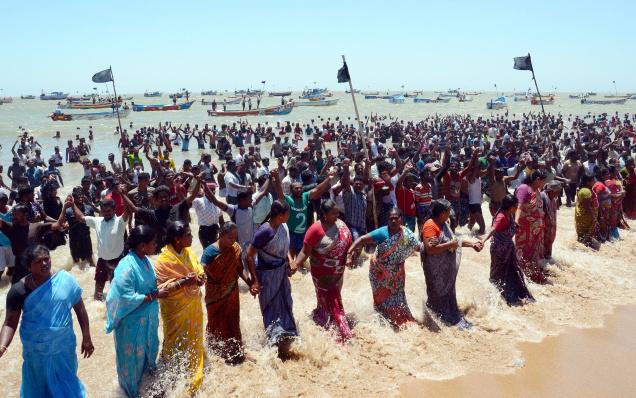
A group of fisherfolk staging “jal satyagraha” in the sea, against the Kudankulam nuclear power project at Veerapandianpattinam coast in Tuticorin district on Friday. (Photo: N.Rajesh)
Despite the killing of an anti-nuclear protester by police on Monday, hundreds of protesters forming a human chain stood in sea waters today, for the second day in a row, demanding a halt to preparations for fuel loading into the reactor of Kudankulam Nuclear Power Project (KKNPP) in Tuticorin district.
The Hindu.com reported that women and men would stand in the sea waters for two hours in turns. Pushparayan, leader of the People’s Movement Against Nuclear Energy (PMANE) has been spearheading the year-long agitation.
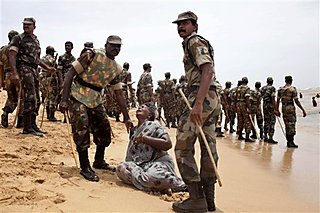
Indian police officers detain a protestor after they baton charged residents protesting against the Russian built Kudamkulam nuclear plant on the Bay of Bengal coast at Kudamkulam, Tamil Nadu state, India, Monday, Sept. 10, 2012. (AP Photo)
The Coast Guard aircraft and ships maintained surveillance at sea off nearby Idinthakarai as the villagers stood in waist and neck deep water.
Taking cue from a similar protest demanding land as compensation and reduction of Omkareshwar Dam recently by villagers of Khandwa district in Madhya Pradesh, PMANE launched their jal satyagraha (water civil disobedience) on Thursday, marking a new turn in their agitation, which was intensified after preparations for fuel loading into the plant was announced.
More than 4,000 police personnel, bolstered by the paramilitary Rapid Action Force, continued to maintain a strict vigil, having almost sealed the entire Kudankulam town.
Meanwhile, police have been seeking to arrest S.P. Udayakumar, the convener of PMANE, in attempt to quell the protests. They have already arrested a close associate of Udayakumar in Chennai last week for trying to “instigate” the fishermen to join the stir against Nuclear Power Project.
Mr. Udayakumar had allegedly announced that he would surrender on Tuesday night, but seems to have changed his mind. Police said they would continue their search.
Earlier this week, state officials say Indian police fired at protesters near this nuclear power plant being constructed in southern India, killing one person.
The Tamil Nadu state government says police fired Monday to disperse about 2,000 people who were demonstrating against the loading of nuclear fuel in the Russian-built reactor. It says the protesters threw stones and sticks at police near the Kudankulam Project, and five officers were injured.
Construction of the plant has been delayed by protests in the past year by residents and anti-nuclear groups concerned about safety following the Fukushima nuclear power plant disaster in Japan last year.
The government says the plant, about 700 kilometers (440 miles) south of Chennai, the state capital, will meet safety standards.
The following video shows recent coverage of the jal satyagraha actions against hydroelectric dams which have become an inspiration to movements throughout the region:
Activists ‘brick up’ Shell HQ as Arctic melt
Activists 'brick up' Shell HQ as Arctic melts from Small Axe Films on Vimeo.
Early morning on the 11th September 12 a group of 20 climate change activists calling themselves ‘Ice Bloc’ unloaded nearly two tonnes of ice into the main entrance of Shell HQ. The protest was timed to coincide with this week's impending announcement of the lowest sea-ice coverage ever recorded, a loss of about 50% more ice coverage than the summer ice minimum 30 years ago.
The activists are angry that Shell are set to profit from this environmental catastrophe.The company has this week begun to drill for oil in newly exposed areas once covered by ice. The protest happens as news reports that Shell are already having to delay operations due to floating sea ice near their drill-site [1].
The group are seeking to bring the collapse of the Arctic ice sheet to the door of Shell because they hold the company partly responsible for the carbon emissions that caused climate change, leading to the melt.
The activists piled the 27kg blocks of ice high in the entrance way, which looks on to the South Bank, creating a huge wall of ice to greet Shell executives as they arrived at work.
Rachel Griffin, involved in today’s action, said:
“Right now the Arctic sea ice, a part of the planet essential for our survival, is vanishing because companies like Shell have filled the atmosphere with climate-changing gases.
“Yet rather than being stopped from trading and held to account, the company have begun drilling in Alaska, an area of the Arctic once covered with ice. That they are already having problems there just shows how ludicrous the plan is.
“The political response has been pitiful. People need to take action now to minimise this unprecedented disaster.”
The activists are part of a bigger network, Climate Justice Collective, which grew from the Climate Camp
USA: Protesters Blockade Monsanto Seed Facility in California
The protesters, who want to remove all so-called genetically modified organisms (GMOs) from the food supply, say their action is a preview of about five dozen other events planned for countries around the world next week. Monsanto and other developers of these biotech crops say they are safe. But U.S. regulators do not require any independent safety tests that would put a lid on doubts raised by consumers and some scientific and health groups. More than 40 countries around the world have some requirements for labeling foods containing ingredients from genetically modified crops. But U.S. regulators have rejected requests by many groups for similar labeling rules, and as a result many Americans do not know that they have been eating GMOs for years. At the protest on Wednesday, about a dozen people organized by a network of anti-GMO activists called Occupy Monsanto stopped trucks from entering or leaving Monsanto’s Oxnard, California-based Seminis for nearly six hours. The activists, some dressed in biohazard suits, blocked truck entrances with cars and chained themselves to the vehicles. Police arrested nine of the protesters and charged them with trespassing, organizers said. Seminis’ biotech sweet corn is one of the newest GMO crop products to make it to market. The corn was altered genetically to withstand dousings of a common weedkiller and to ward off certain pests. “We deserve to know what we are eating and we should put GMO crops back in the lab and off the kitchen table,” protester Rica Madrid said. Occupy Monsanto is not affiliated with the backers of a California proposal to label foods that are made with crops or from animals that have had their genetic makeup altered in the laboratory. Monsanto did not directly address Wednesday’s events but said the company’s work helped improve farm productivity and food quality. “We respect each individual’s right to express their point of view on these topics,” Thomas Helscher, a Monsanto spokesman, said of the Seminis protest. DIFFERENT VIEW IN EUROPE GMOs are deeply unpopular in Europe and many other countries, but they eventually came to dominate key crops in the United States after Monsanto in 1996 introduced a soybean genetically altered to tolerate Monsanto’s Roundup weed killer. Using genes from other species, Monsanto and rivals including DuPont and Dow Chemical have since introduced an array of genetically altered crop varieties. The most popular genetically engineered crops in the United States include corn, soybeans, sugar beets and canola – staple ingredients in a wide array of popular packaged foods. Proponents of GM crops say they make farming more efficient by making plants resistant to pesticides, pests and harsh growing conditions, such as drought. They say genetically modified crops are no different from conventional types and that increasing demand for food, biofuels and livestock feed can only be met with help from the biotech industry that Monsanto dominates. Critics say GM crops have not always lived up to their promise and that the benefits to farmers do not outweigh myriad risks to human and animal health and to the environment. Assessing such risks is difficult in the United States. The government does not require GMO crops to undergo independent safety testing before they are approved, and it does not require labeling for GMO content which makes it next to impossible to track any links to human health problems. The World Health Organization says “individual GM foods and their safety should be assessed on a case-by-case basis.” Recently, some U.S. scientists have raised alarm bells over what they see as potentially dangerous implications from overuse of GMO crops. Among the concerns is the fact that the rapid adoption by U.S. farmers of genetically engineered corn, soybeans and cotton has promoted increased use of herbicides, which critics say has triggered an epidemic of herbicide-resistant weeds and more chemical residues in foods. This week, the Center for Food Safety vowed to sue the U.S. government if it approves a new type of genetically altered corn developed by Dow. Community members in Canaan de Cachiaco Community members in Canaan de Cachiaco By: Ronald Suarez, President of the Network of Peruvian Indigenous Communicators, Ucayali *Correction: Maple Energy is a company listed in London and Lima, Peru. It is not a Canadian company. Over 400 villagers in the Native Community of Canan de Cachiaco in the Ucayali region of the Peruvian Amazon have taken control of nine oil wells, belonging to oil company, Maple Gas, in oil lot 31B. Community members took over the oil wells on September 2nd, and continue to hold them as a result of 37 years of oil contamination in their territory by the company. The community leader, Basilio Rodriguez Venancio, said the action was made necessary because the company did not consider the environmental impact assessment carried out by an independent consultant. One of the oil wells occupied by members of the Canaan de Cachiaco community in the Peruvian Amazon, September 2012 The community is demanding that the company pay them compensation for the use of their lands and for the environmental damage they have suffered for 37 years. Such damage includes the contamination of their rivers, their only source of drinking water, and the contamination of their soils due to the company´s use of chemicals and heavy minerals, which the population says has significantly affected the productivity of their land. Several community members testified that they have become sick due to the company’s negligence and contamination of their drinking water. There have been several instances in the past years of cancer and ¨unknown deaths¨ that the community attributes to company abuses. The community awaits the arrival of state representatives from the Ministry of Energy and Mines and Ministry of Environment, scheduled for Thursday, September 13th, to resolve this conflict. Meanwhile the villagers are still stationed in the camp until authorities settle their claims. For more information on the case of Canaan de Cachiaco, and the neighboring community, Nuevo Sucre, watch this video. "ALF break into factory farm and liberate 7 Aylesbury ducks who had no access to water. All have gone to good homes. Until every cage is empty, The Animal Liberation Front" "ALF break into factory farm and liberate 7 Aylesbury ducks who had no access to water. All have gone to good homes. Until every cage is empty, The Animal Liberation Front"
Opponents of genetically engineered foods blocked shipments and deliveries yesterday at Monsanto Co’s vegetable seed company that developed a new genetically modified sweet corn that will hit stores this fall.
 They also hope to drum up support for a California ballot measure that would require food sellers to label a broad range of products, including soup, soy milk, breakfast cereals and chips, that contain GMOs.
Indigenous Peruvians Occupy 9 Oil Wells


SEVEN MORE DUCKS SAVED