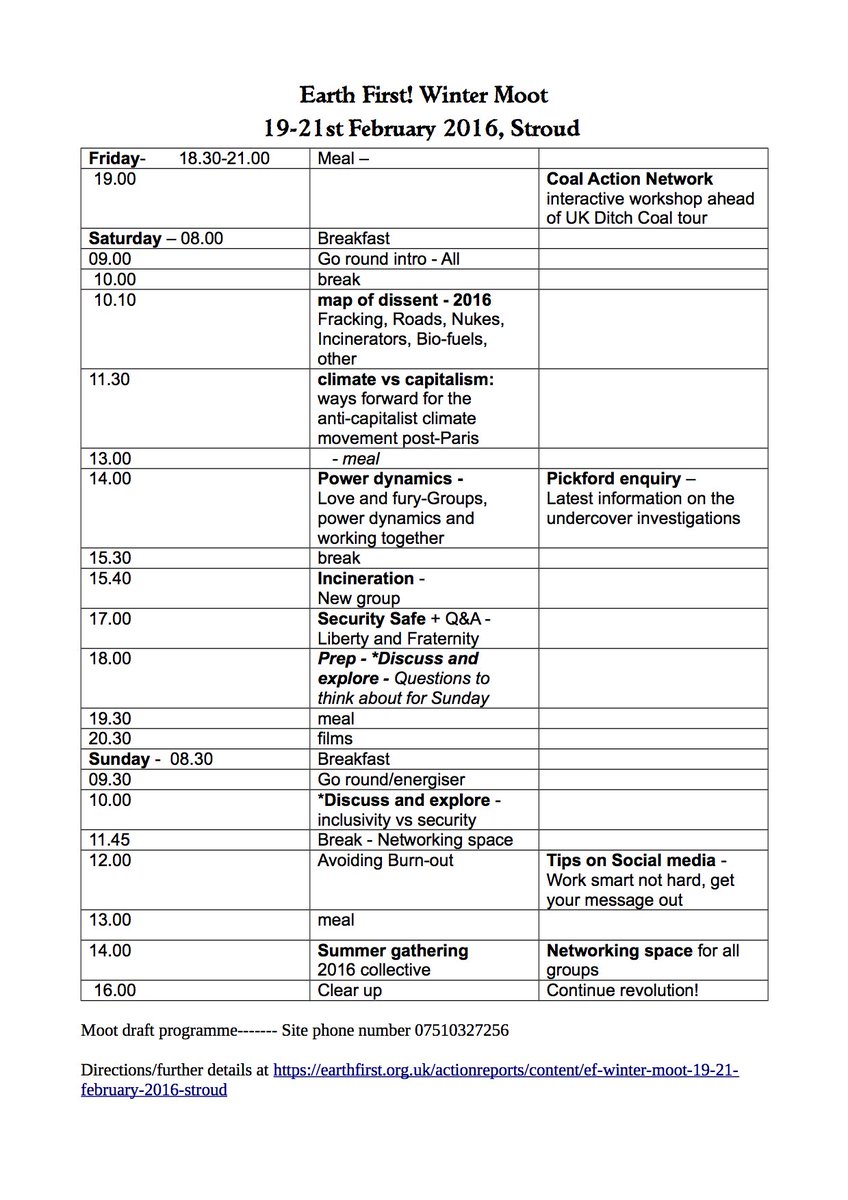
EF! Winter Moot 19–21 February 2016, Stroud

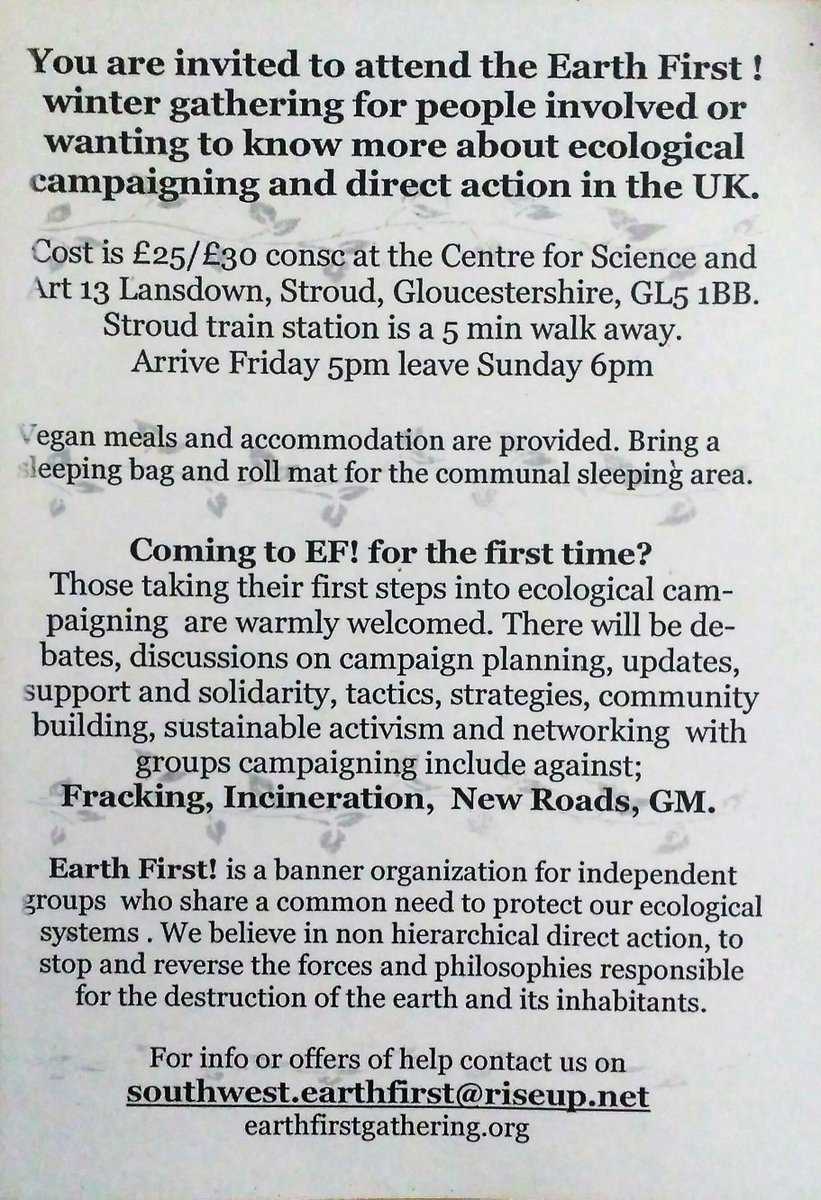
You are invit­ed to attend the Earth First! Win­ter Moot, a gath­er­ing for peo­ple involved or want­i­ng to know more about eco­log­i­cal cam­paign­ing & direct action in the UK.

You are invit­ed to attend the Earth First! Win­ter Moot, a gath­er­ing for peo­ple involved or want­i­ng to know more about eco­log­i­cal cam­paign­ing & direct action in the UK. Draft programme/details below.


Cost is £25/30 at the Cen­tre for Sci­ence and Art, 13 Lans­down, Stroud, Glouces­ter­shire GL5 1BB.  Stroud sta­tion is a 5 minute walk away.

Arrive Fri­day 5pm, leave Sun­day 6pm.

Veg­an meals and accom­mo­da­tion are pro­vid­ed.  Bring a sleep­ing bag and roll mat for the com­mu­nal sleep­ing area.

Com­ing to an EF! gath­er­ing for the first time?

Those tak­ing their first steps innto eco­log­i­cal cam­paign­ing are warm­ly wel­comed.  There will be debates, dis­cus­sions on cam­paign plan­ning, updates, sup­port and sol­dar­i­ty, tac­tics, strate­gies, com­mu­ni­ty build­ing, sus­tain­able activism and net­work­ing includ­ing groups cam­paign­ing against:

frack­ing, incin­er­a­tion, new roads, GM (genet­ic engi­neer­ing).

Earth First! is a ban­ner for inde­pen­dent groups who share a com­mon need to pro­tect our eco­log­i­cal sys­tems.  We believe in non-hier­ar­chi­cal direct action, to stop and reverse the forces respons­bile for the destruc­tion of the earth and its inhab­i­tants.

For info or offers of help, con­tact us on:
southwest.earthfirst@riseup.net
earthfirstgathering.org

Save Sheffield Trees & Smithy Woods — campaign update

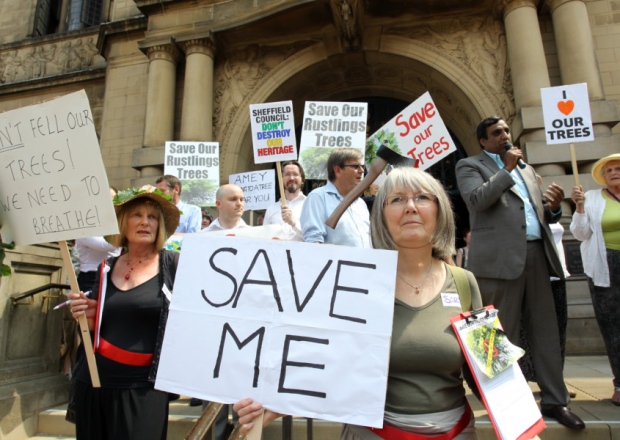
Protesters

5.11.15 Latest:

An inde­pen­dent pan­el aim­ing to resolve dis­agree­ments involv­ing the felling of trees in Sheffield has been set up.

It fol­lows thou­sands of peo­ple sup­port­ing a cam­paign to stop 12 trees being chopped down on Rustlings Road.

Com­mu­ni­ty group Save Sheffield Trees said it would wait to see the “terms of ref­er­ence” of the new pan­el.

A coun­cil spokesman said a sur­vey will be sent to res­i­dents when upgrad­ing works which affect trees.

If over half of respon­dents object, it will then be referred to the Inde­pen­dent Tree Pan­el.

After con­sid­er­ing the evi­dence, the pan­el will then pro­vide advice to the coun­cil about the pro­pos­als.

15 Sep­tem­ber 2015: Cam­paign­ers took their fight against con­tro­ver­sial tree felling to the door of Sheffield Coun­cil con­trac­tor Amey, which is car­ry­ing out the work.


A demon­stra­tion was held at the firm’s Olive Grove Road depot in Hee­ley yes­ter­day morn­ing.

Cam­paign­ers across the city con­tin­ue to call for a pause on felling while a for­mal tree strat­e­gy is devel­oped.

David Dil­ner, from Sheffield Tree Action Group, said: “Since the last tree forum our mem­ber­ship has grown from 200 to 800 – that demon­strates the lev­el of frus­tra­tion and it is grow­ing apace.

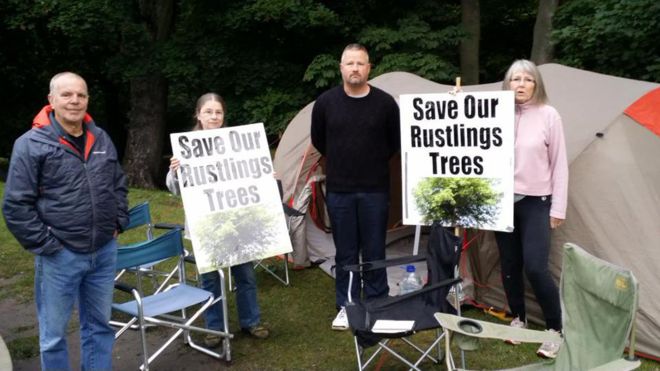
16 Sep­tem­ber 2015: Cam­paign­ers fight­ing felling in Sheffield have set up a camp near to 11 trees which have become the ‘sym­bol’ of the city-wide con­tro­ver­sy.

Mem­bers of the Sheffield Tree Action Group (STAG) pitched their tents in End­cliffe Park on Rustlings Road to pro­tect trees which are due to be felled as part of Sheffield City Coun­cil’s £2bn road improve­ment scheme.

The orig­i­nal dri­ve to save those 11 trees led to a 13,000-strong peti­tion, which trig­gered a debate in Sheffield Town Hall and was the spark behind calls for a for­mal city-wide tree strat­e­gy to be devel­oped by Sheffield Coun­cil.

Save Our Road­side Trees (SORT) cam­paign­er Calvin Payne, who was sleep­ing over in the tent last night, said all sup­plies had been donat­ed and passers-by were sup­port­ive.

He added: “This road is sym­bol­ic, although the cam­paign is city wide, and we do want a win here to inspire peo­ple across the city.”

Aims of the camp were to enable cam­paign­ers to take peace­ful action quick­ly if felling did begin and also to raise more aware­ness as protests spread across the city.

Protests have been held over the last few months in oth­er parts of the city to try and pre­vent trees being felled.

In June/July, STAG gath­ered more that 10,000 sig­na­tures on a peti­tion call­ing for the coun­cil to stall the plans until inde­pen­dent experts assessed the trees.
Protestors gathered outside Sheffield Town Hall to protest about the cutting down of Sheffield's trees.
Back­ground: With an esti­mat­ed two mil­lion trees – four for every per­son – Sheffield holds a strong claim to be Europe’s green­est city. But the South York­shire city’s tree-lined streets have become a bat­tle­ground in an angry row that has pit­ted res­i­dents against coun­cil high­ways offi­cials.

Con­trac­tors are assess­ing 36,000 road­side trees on behalf of Sheffield City Coun­cil to decide which need to be felled as part of a £2bn road improve­ment scheme.

About 2,000 have already been cut down since the Streets Ahead scheme was launched in 2012, although the coun­cil says it has replaced them all with younger trees and has plant­ed 50,000 extra trees in 17 new wood­lands.

But res­i­dents have launched their own grass­roots cam­paigns to defend the road­side trees, some of which are 100 years old, and the dis­pute is becom­ing increas­ing­ly heat­ed. A protest camp has been set up in a city park and oth­er res­i­dents have been rush­ing out of their homes to dis­rupt work­men arriv­ing in their streets.

“Res­i­dents across the city want to save these trees,” said ecol­o­gist and envi­ron­men­tal cam­paign­er David Garlovsky, a spokesman for the Sheffield Trees Action Group. “Eight or nine groups have sprung up in dif­fer­ent areas. These trees are there for our well­be­ing and cut­ting them down will increase pol­lu­tion. The coun­cil haven’t looked after these trees in the past and they now have a prob­lem on their hands, but there seems to be a blitz on now to cut down as many as pos­si­ble, as quick­ly as pos­si­ble.”

Only last week it was report­ed that the coun­cil was refus­ing to answer Free­dom of Infor­ma­tion requests from res­i­dents about the trees because the requests were con­sid­ered “vex­a­tious”.

Sheffield City Coun­cil apol­o­gised last week after Steve Robin­son, the head of high­ways, was secret­ly record­ed alleged­ly say­ing “we’re not inter­est­ed” in res­i­dents’ “non­sense” rea­sons for sav­ing indi­vid­ual trees.

Res­i­dents have spent a month under can­vas at a protest camp in the city’s End­cliffe Park to pro­tect 11 lime trees on neigh­bour­ing Rustlings Road, which they say are under threat. A peti­tion has attract­ed 10,000 sig­na­tures.

Louise Wilcock­son, who lives close to the park, said: “I walk past those trees around five or six times a day. We have to save them – not just for the peo­ple on this street but for the entire city.”

Res­i­dents in West­ern Road, Crookes, have also ral­lied around a Lon­don plane tree – one of sev­er­al plant­ed in mem­o­ry of war heroes. They say an inde­pen­dent sur­vey has found that the tree is in “rea­son­able health”, in con­trast with a contractor’s report say­ing it is a “safe­ty risk”.

Sheffield City Coun­cil says the aim of the Streets Ahead project is to upgrade the city’s roads, pave­ments and street light­ing as part of a Pri­vate Finance Ini­tia­tive project. Offi­cials say Sheffield is the green­est city in the UK and is in a “unique posi­tion” to car­ry out this “vital work”.

It also says an inde­pen­dent sur­vey iden­ti­fied that three-quar­ters of Sheffield’s street trees were dead, dan­ger­ous or dying, and need­ed replac­ing. The con­trac­tor, Amey, is work­ing to replace trees that fit cri­te­ria known as the “six Ds”, which also include those found to be dis­eased, dam­ag­ing or dis­crim­i­nat­ing – obstruct­ing safe pas­sage for prams and wheel­chairs.

The main rea­son that is being giv­en for felling these trees on the indi­vid­ual sur­vey reports is that they are dam­ag­ing the pave­ment, not that they are dis­eased or dying and that it is eas­i­er to remove the tree than find any oth­er way of mak­ing the pave­ment flat. Most of these trees are around 100 years old and are species such as Limes and Lon­don Panes, and so have a life expectan­cy of 300–400 years. These trees are teenagers, and will last for many more gen­er­a­tions if Sheffield City Coun­cil lets them.

I think some­one has con­fused a 2006–2007 sur­vey that said 75% of the trees are over-mature (which does not real­ly mean any­thing — 100 year old trees, with a 400 year life expectan­cy fall in to this cat­e­go­ry — it is a forestry term relat­ing to the val­ue of the tim­ber), and the lat­er sur­vey in 2012 cat­e­go­rized trees accord­ing to oth­er cri­te­ria (the 6 Ds), includ­ing that trees were dam­ag­ing pave­ments. I sus­pect this mis­un­der­stand­ing is the coun­cil’s of the sur­vey the com­mis­sioned, rather than the jour­nal­ist, as we have seen it else­where. They appear to be felling most of the city’s street trees based on mis­un­der­stand­ing a report…

Sheffield Tree Action Group


Anoth­er sim­i­lar fight in Sheffield ‑Take Action for Smithy Woods

If you are con­cerned about the loss of ancient wood­land, local green spaces, local wildlife and wildlife sites or wor­ried about inap­pro­pri­ate devel­op­ment in the green belt and ero­sion of eco­log­i­cal net­works then please object to this appli­ca­tion. Help us to Save Smithy Wood!

For background information about Smithy Wood and this case click here.

An out­line plan­ning appli­ca­tion has been sub­mit­ted by ‘Extra MSA’ group that pro­pos­es to build a new motor­way ser­vice area on Smithy Wood Ancient Wood­land and Local Wildlife Site close to Junc­tion 35 of the M1 in the Ecclesfield/Chapeltown area of Sheffield. The devel­op­ment includes a large fast food court, 80-bed hotel, petrol sta­tion and car park.

There is now a FINAL oppor­tu­ni­ty to com­ment on this appli­ca­tion fol­low­ing the sub­mis­sion of fur­ther mate­r­i­al by the devel­op­er. The more objec­tions that are received by the City Coun­cil, the more like­ly the appli­ca­tion is to be refused. It does not mat­ter if you have object­ed pre­vi­ous­ly – you can always refer to your pre­vi­ous sub­mis­sion or re-iter­ate your points.

You have until the Fri­day 13th Novem­ber to sub­mit your objec­tion to Sheffield City Coun­cil Plan­ning Dept. This is how to respond to the plan­ning appli­ca­tion.

Peruvian Land Defender Killed After 48-Hour Anti-Mining Strike

Sev­en rur­al com­mu­ni­ties orga­nized a gen­er­al strike that immo­bi­lized com­plete­ly the activ­i­ties in Puquio, cap­i­tal of Lucana province, and result­ed in the unfor­tu­nate death of a young mem­ber of the Cccol­lana com­mu­ni­ty: Erick Men­don­za Tumaylle, age 22.

Octo­ber 29th, 2015

Sev­en rur­al com­mu­ni­ties orga­nized a gen­er­al strike that immo­bi­lized com­plete­ly the activ­i­ties in Puquio, cap­i­tal of Lucana province, and result­ed in the unfor­tu­nate death of a young mem­ber of the Cccol­lana com­mu­ni­ty: Erick Men­don­za Tumaylle, age 22. The con­flict occurred at the site of one infor­mal min­ing project where tox­ic run-offs lead direct­ly into fields used by the com­mu­ni­ty for agri­cul­ture.

Lead­ers of the com­mu­ni­ty have report­ed Juan Par­i­ona of Ccol­lao injured as a result of being held hostage by the infor­mal min­ing com­pa­ny in the San Andrés zone.

This theme of con­flict is a recur­ring one through­out the entire south­ern ter­ri­to­ries of Ayacu­cho, Ica, and parts of Are­quipa. Some com­mu­ni­ty mem­bers are suing Lay­tau­ma Cor­po­ra­tion for being the main stor­age facil­i­ty for explo­sives, for being the main source of income for infor­mal tran­sient work­ers, and for being the sole pur­chas­er of feed pro­duced in San­cos dis­trict.

Peo­ple are wor­ried about how thou­sands of infor­mal work­ers are affect­ing the Yuar­iviri lagoon, the many springs and water sources. It has been made appar­ent that the cen­ter storm of this con­flict has moved to this zone of the coun­try.

by Obser­va­to­rio de Con­flic­tos Mineros en el Perú /  Con­flic­tos Mineros

trans­lat­ed by Earth First! Newswire

Sabotage at Hambach open-cast mine

On Mon­day night, we sab­o­taged some con­struc­tion machin­ery at the open-cast mine Ham­bach, Ger­many.

29.10.15

On Mon­day night, we sab­o­taged some con­struc­tion machin­ery at the open-cast mine Ham­bach, Ger­many. Five dig­gers, two bull­doz­ers, one road roller and one oth­er, expen­sive look­ing machine ahd their hydraulics and elec­tron­ic cables cut. the fuel and oil tanks were filled with sand, some mechan­ic parts dam­aged and all the win­dows were smashed. Despite the mas­sive secu­ri­ty-mea­sures RWE and the police put up against us, it was still real­ly easy to do seri­ous dam­age to these tools of destruc­tion.

This action is tar­get­ed against the mine’s oper­a­tor RWE and its accom­plices, which are destroy­ing the basis of life on this plan­et.

While the big mass of peo­ple in ger­many is sit­ting silent­ly in front of their tele­vi­sion screens, dis­tract­ed from the dai­ly destruc­tion of our lives by smart enter­tain­ers and prophets of con­stant growth, hun­drets of thou­sands of peo­ple are dying on the oth­er side of the world through the effects of cli­mate change.

While most peo­ple should be aware that we can’t go on like this, it is unfor­tu­nate­ly only a small minor­i­ty that is act­ing against this destruc­tion, risk­ing their health and free­dom in the process.

Three of these eco-defend­ers are cur­rent­ly impris­oned in Aachen and Cologne, for their attempts to stop the clearcut­ting of the Ham­bach for­est throughthe ener­gy-giant RWE.

All three were heav­i­ly abused dur­ing their arrests, either by police or RWE’s pri­vate secu­ri­ties, with one per­son even get­ting their nose bro­ken and sev­er­al teeth smashed in. There­fore we want to ded­i­cate our action to the impris­oned peo­ple of Ham­bach and send our sol­i­dar­i­ty to them.

Also we want to make it clear that we will not be scared into sub­mis­sion and hope that more peo­ple will be moti­vat­ed by our action, to com­mit sim­i­lar acts of resis­tance against the brown-coal-death-machine.


The Chaos Engi­neer­ing Crew

French Monsanto Research Site Damaged in Suspected Arson Attack

A Mon­san­to research cen­ter in west­ern France suf­fered heavy fire dam­age in a sus­pect­ed arson attack ear­ly Wednes­day morn­ing, the offi­cial in charge of the site said.

Octo­ber 28th, 2015

A Mon­san­to research cen­ter in west­ern France suf­fered heavy fire dam­age in a sus­pect­ed arson attack ear­ly Wednes­day morn­ing, the offi­cial in charge of the site said.

The offi­cial, Jakob Wit­ten, said police inves­ti­ga­tors “strong­ly sus­pect it was a crime as no elec­tri­cal or oth­er sources were found.”

 The fire was ignit­ed from two dif­fer­ent places at the site, where about 10 peo­ple work and which is spe­cial­ized in corn research. The smell of gaso­line lin­gered near the build­ing, which had heavy dam­age in its recep­tion hall and offices.

“No Mon­san­to sites in Europe have so far been the vic­tim of fires of crim­i­nal ori­gin, this is unprece­dent­ed vio­lence,” Wit­ten said.

How­ev­er, forty tons of GM sug­ar beets were torched in Ore­gon, spark­ing an FBI inves­ti­ga­tion, so the sen­ti­ment behind this lat­est arson, if it indeed was an act of vio­lence, is not unprece­dent­ed.

The Creve Coeur-based com­pa­ny is the fre­quent tar­get of crit­i­cism in France over con­cerns about genet­i­cal­ly mod­i­fied crops it has devel­oped.

The gov­ern­ment said last month it would use a new Euro­pean opt-out scheme to ensure a ban on the cul­ti­va­tion of GM crops in France remains in place.


Anti-Dam Activists Celebrate Two Years of Blockades in Malaysia

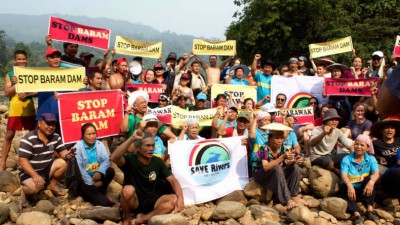
On Octo­ber 23rd 2015, indige­nous com­mu­ni­ties from around the world gath­ered on the banks of the Baram Riv­er in Sarawak, Malaysia in the con­text of the sec­ond year anniver­sary of the indige­nous-led block­ades against the pro­posed Baram Dam.

On Octo­ber 23rd 2015, indige­nous com­mu­ni­ties from around the world gath­ered on the banks of the Baram Riv­er in Sarawak, Malaysia in the con­text of the sec­ond year anniver­sary of the indige­nous-led block­ades against the pro­posed Baram Dam. Two years ago indige­nous com­mu­ni­ties set up two block­ades and chased work­ers and researchers from the site. The works on the dam have come to a stand­still and last month the gov­ern­ment of Sarawak announced a mora­to­ri­um.

Indige­nous anti-dam activists from Indone­sia, the Philip­pines, Cam­bo­dia, Brazil, the US, Hon­duras, and from around Malaysia unit­ed at the block­ades to stand in sol­i­dar­i­ty with the resis­tance against the Baram Dam and to strength­en ties between their com­mu­ni­ties. The week-long event is called the World Indige­nous Sum­mit on Envi­ron­ment and Rivers, WISER Baram 2015, and was host­ed by the grass­roots net­work SAVE Rivers.

Dur­ing cel­e­bra­tions at the two block­ades, the pro­posed dam site, as well as at a con­fer­ence in the town of Miri, the par­tic­i­pants were unit­ed by the sim­i­lar­i­ties between their strug­gles. “I have gained a lot of expe­ri­ence from all of the del­e­gates. And with such infor­ma­tion, I am con­fi­dent enough such expe­ri­ences will be fun­da­men­tal to us – the Baram Peo­ple – and our strate­gies to con­tin­ue to fight and stop the pro­posed Baram Dam,” said James Nyu­rang, who host­ed the del­e­gates at his vil­lage.

Accord­ing to Berta Cáceres, 2015 Gold­man Prize win­ner from Hon­duras, “this sum­mit on indige­nous peo­ples and rivers has a spe­cial val­ue in that its actions give strength to the his­toric resis­tance of our peo­ples and makes vis­i­ble the grave aggres­sion and con­flict gen­er­at­ed by the pri­va­ti­za­tion of rivers and the con­struc­tion of dams with­in Indige­nous com­mu­ni­ties and regions.”

The dec­la­ra­tion also calls on gov­ern­ments and insti­tu­tions to stop pre­sent­ing dams as cli­mate neu­tral, and rec­og­nize that dams emit large amounts of green­house gas­es, includ­ing methane.

Par­tic­i­pants in the sum­mit col­lec­tive­ly pro­duced a dec­la­ra­tion that acknowl­edges the wide­spread suf­fer­ing and destruc­tion caused by dams, and stress­es the impor­tance of obtain­ing Free, Pri­or, and Informed Con­sent from com­mu­ni­ties impact­ed by dam build­ing. It urges all stake­hold­ers to act in full account­abil­i­ty, trans­paren­cy, and com­pli­ance of all human rights prin­ci­pals and val­ues.

The indige­nous defense of the Baram riv­er stands unit­ed with oth­er com­mu­ni­ties’ strug­gles for land, liveli­hood, spir­i­tu­al­i­ty, iden­ti­ty, and com­mu­ni­ty cohe­sion.

Hambach Forest, Germany: Ecodefenders blockade several targets in Europe’s largest open-cast mine

The last week­end saw a series of block­ades, that halt­ed work in sev­er­al parts of the Ham­bach open-cast-coal-mine.

8.10.15

The last week­end saw a series of block­ades, that halt­ed work in sev­er­al parts of the Ham­bach open-cast-coal-mine.

On Sat­ur­day morn­ing, at around 2:30, sev­er­al peo­ple occu­pied on of the huge exca­va­tors and stopped it for sev­er­al hours.

One day lat­er, around the same time, four peo­ple stopped the two main con­vey­or-belts that are used to load the coal onto the trains, with one group climb­ing around on top of one, while the oth­er two peo­ple locked-on to the struc­ture of the oth­er. After being hosed with water for sev­er­al hours by angry mine work­ers, all peo­ple were evict­ed at around 11:00 and tak­en to the police sta­tion in Düren, where they were released about one hour lat­er, with­out giv­ing their iden­ti­ties.

On Mon­day morn­ing, again at around half past two, anoth­er group of peo­ple occu­pied on of the giant exca­va­tors, again being evict­ed a cou­ple hours lat­er and realeased with­out ID-check.

This was fol­lowed by jet anoth­er con­vey­or-belt block­ade, which was evict­ed more bru­tal­ly this time. One of the per­sons is still in police cus­tody.

It seems the police and the ener­gy com­pa­ny RWE are get­ting more and more annoyed by activists con­stant­ly slip­ping through the holes in their secu­ri­ty net.

For more infor­ma­tion check out: hambachforest.blogsport.de

Phantom solar panels haunt streets of Westminster

The phan­tom image of a solar farm has appeared overnight on the pave­ment out­side the main Depart­ment of Ener­gy and Cli­mate Change offices on White­hall.

This morn­ing we used clean graf­fi­ti to turn paving-stones into solar pan­els, kick­ing off our Keep Fits cam­paign to help ordi­nary peo­ple chal­lenge planned cuts to renew­able ener­gy.

The whole gov­ern­ment con­sul­ta­tion process is pret­ty off-putting to any­one oth­er than a pro­fes­sion­al lob­by­ist, so we’ve devel­oped a ded­i­cat­ed web­site to make sure every­one who loves renew­able ener­gy can have their say on the pro­posed cuts.

Pres­sure has been mount­ing ever since the gov­ern­ment released their pro­pos­al (sneak­i­ly, while we were all away on sum­mer hol­i­days). Last week a coali­tion of ener­gy firms, investors, trade bod­ies and NGOs pub­lished a state­ment call­ing on the gov­ern­ment to urgent­ly recon­sid­er the pro­posed changes. And the May­or of Lon­don Boris John­son is one of sev­er­al MPs to have pub­licly voiced con­cerns over the jobs these cuts threat­en, as well as the envi­ron­men­tal impacts.

“The government’s own fig­ures show there will be near­ly a mil­lion few­er solar rooftops over the next 5 years if they go through with these cuts. The gov­ern­ment wants to pull the plug on Britain’s solar rev­o­lu­tion just as it is get­ting going.

Amy Cameron

Renew­able ener­gy is con­sis­tent­ly pop­u­lar amongst the UK pub­lic. Accord­ing to the lat­est DECC polling, only 1% of the UK pub­lic strong­ly oppose renew­ables. In con­trast a whop­ping 71% agree that renew­able ener­gy indus­tries and devel­op­ments pro­vide eco­nom­ic ben­e­fits to the UK.

Using high-pow­er wash­ers and a sten­cil, clean graf­fi­ti removes dirt from dirty pave­ments rather than adding paint. How quick­ly these ghost­ly images fade depends on local envi­ron­men­tal con­di­tions, but we’re hop­ing they will last right up until the con­sul­ta­tion clos­es on the 23rd Octo­ber.

If you’re walk­ing past today, why not share a pho­to of your­self stand­ing on the pan­els. #Stand­With­So­lar.

Update The pan­els sur­vived until lunchtime, when they were washed off!

protest against British Columbia Hydro Dawson Creek dam — unconnected person wearing anonymous mask gets shot dead

Sept 23, 2015

Sept 23, 2015

Ter­ry Had­land, a Peace Riv­er farmer, says he should have got the police bul­let that killed a man wear­ing a Guy Fawkes mask out­side a Site C open house this sum­mer.

“He cre­at­ed a diver­sion so I could get away,” Mr. Had­land told The Globe and Mail in an inter­view. “He stepped up and took that shot for me, that’s for sure.”

RCMP were called to the open house in Daw­son Creek on July 16 after get­ting calls about a man caus­ing a dis­tur­bance at the British Colum­bia Hydro pub­lic infor­ma­tion ses­sion.

One day after the hack­er group Anony­mous vowed to “avenge one of our own” fol­low­ing the shoot­ing, the group is claim­ing to have crashed parts of the RCMP web­site on Sun­day morn­ing.

A Twit­ter account asso­ci­at­ed with the glob­al activist group has post­ed pho­tos show­ing the Daw­son Creek RCMP web­site serv­er sta­tus list­ed as “down.”

- See more at: http://www.alaskahighwaynews.ca/dawson-creek/police-mum-on-link-between-police-shooting-anonymous-group‑1.2005056#sthash.SbEOrEJA.dpuf

Mr. Had­land said he was the man caus­ing trou­ble, but he left before police arrived, and offi­cers con­front­ed anoth­er man, who was report­ed­ly car­ry­ing a knife and wear­ing the trade­mark mask of the hack­tivist group Anony­mous. Moments lat­er, shots were fired, and James McIn­tyre, a dish­wash­er at Le’s Fam­i­ly Restau­rant, was dead out­side the Stone­bridge Hotel’s Fixx Urban Grill.

In response to the shoot­ing, Anony­mous promised ret­ri­bu­tion, sub­se­quent­ly post­ing a 2014 Trea­sury Board memo about Cana­di­an Secu­ri­ty Intel­li­gence Ser­vice fund­ing, and threat­en­ing to leak more mate­r­i­al.

One day after the hack­er group Anony­mous vowed to “avenge one of our own” fol­low­ing the shoot­ing, the group is claim­ing to have crashed parts of the RCMP web­site on Sun­day morn­ing.

A Twit­ter account asso­ci­at­ed with the glob­al activist group has post­ed pho­tos show­ing the Daw­son Creek RCMP web­site serv­er sta­tus list­ed as “down.”

- See more at: http://www.alaskahighwaynews.ca/dawson-creek/police-mum-on-link-between-police-shooting-anonymous-group‑1.2005056#sthash.SbEOrEJA.dpuf

One day after the hack­er group Anony­mous vowed to “avenge one of our own” fol­low­ing the shoot­ing, the group is claim­ing to have crashed parts of the RCMP web­site on Sun­day morn­ing.

A Twit­ter account asso­ci­at­ed with the glob­al activist group has post­ed pho­tos show­ing the Daw­son Creek RCMP web­site serv­er sta­tus list­ed as “down.”

- See more at: http://www.alaskahighwaynews.ca/dawson-creek/police-mum-on-link-between-police-shooting-anonymous-group‑1.2005056#sthash.hTyGNWmh.dpuf

Anony­mous has already begun its retal­i­a­tion cam­paign, knock­ing the main RCMP web­sites offline for sev­er­al hours on Sun­day (19 July).

This is part of the group’s cam­paign to “remove the RCMP cyber infra­struc­ture from the Inter­net” as it calls on mem­bers to “march, cre­ate and sign peti­tions, hack, dox [until] all demand and jus­tice is met”.

The hack­i­tivst col­lec­tive has also offered to raise funds for the vic­tim’s bur­ial.

Doxxing

The group lead­ing the cam­paign — Oper­a­tion Anon Down — also tweet­ed on Mon­day (20 July) that it had accessed doc­u­ments marked “secret” inside the Cana­di­an gov­ern­ment, warn­ing: “It’s not just a DDoS op any­more kid­dos.”

#Anon­Down has accessed docs marked “secret” inside Cana­di­an gov­ern­ment. It’s not just a DDoS op any­more kid­dos. More tomor­row. Night all.
— Oper­a­tion Anon Down (@OpAnonDown) July 20, 2015

In an emailed state­ment released over the week­end, Anony­mous vowed to “iden­ti­fy the RCMP offi­cer involved, thor­ough­ly dox him — and release that dox on the Inter­net. Because the world has a right to know every detail about killer cops.”

Anony­mous has a patchy his­to­ry with “doxxing” police offi­cers accused of shoot­ing mem­bers of the pub­lic how­ev­er, with one mem­ber of Anony­mous hav­ing incor­rect­ly iden­ti­fied the offi­cer accused of shoot­ing Michael Brown in Fer­gu­son last year.

Mr. Had­land, 66, said he did not know Mr. McIn­tyre, 48, and regrets that his actions inad­ver­tent­ly brought police into con­flict with him. “It’s trag­ic, that’s for damn sure,” he said. “They were try­ing to get me.”

Mr. Had­land said if police had found him instead of Mr. McIn­tyre, the inci­dent would have end­ed peace­ful­ly. “I would have obeyed them,” he said.

Mr. Had­land, who lives off the grid on a farm in the Peace Riv­er dis­trict, said he went to the open house to protest against the con­tro­ver­sial Site C dam.

“I’d been plan­ning it for a cou­ple of weeks,” he said. “I walked into the room … I thought, ‘I’m just going to push them a bit.’”

Anonymous

Mr. Had­land said BC Hydro offi­cials were talk­ing to mem­bers of the pub­lic at infor­ma­tion tables cov­ered with pam­phlets, maps and posters.

“I flipped a cou­ple [of tables],” he said. “I ripped up the rest of the maps …. They had plac­ards. … I start­ed break­ing up those.”

Mr. Had­land said he was quick­ly sur­round­ed by BC Hydro staff, but the con­fronta­tion did not become vio­lent.

“They didn’t try to push me,” he said. “I made my state­ment and I walked out.”

Mr. Had­land said he assumes 911 calls were made dur­ing his protest, but added that if any­one report­ed a vio­lent inci­dent, then the police were mis­in­formed and may have arrived expect­ing seri­ous trou­ble.

“It was all very peace­ful,” he said. “The police could have showed up and been ami­ca­ble.”

When it was sug­gest­ed that tip­ping over tables and tear­ing up posters might seem threat­en­ing to some, Mr. Had­land agreed.

“Oh, it could have been,” he acknowl­edged.

Mr. Had­land said he passed with­in metres of Mr. McIn­tyre in the park­ing lot but did not see a knife or a mask.

“I thought he was a BC Hydro per­son [because] he kept turn­ing away and try­ing to hide his face,” he said.

Mr. Had­land was wor­ried police were com­ing, so he jumped in his vehi­cle and drove away with­out look­ing back. He said he went to the RCMP the next day, iden­ti­fied him­self as the man who dis­rupt­ed the meet­ing, and told police he was con­cerned some­one had made a 911 call “that wasn’t valid” because his protest was not vio­lent.

Arthur Had­land, a for­mer direc­tor of Peace Riv­er Region­al Dis­trict, con­firmed his cousin was the man who dis­rupt­ed the Site C open house.

The Inde­pen­dent Inves­ti­ga­tions Office (IIO) of B.C. is inves­ti­gat­ing the police shoot­ing of Mr. McIn­tyre.

“It is not our prac­tice to pro­vide spe­cif­ic details about an inves­ti­ga­tion while it is still active – what I can say is that while we obtain all acces­si­ble and avail­able infor­ma­tion we believe is rel­e­vant to the IIO inves­ti­ga­tion, our focus is on the actions of the police offi­cers,” Kel­lie Kil­patrick, an IIO spokesper­son said in an e‑mail.

“Since our inves­ti­ga­tion of the ini­tial dis­tur­bance is a par­al­lel inves­ti­ga­tion to that of the IIO’s inves­ti­ga­tion which is still ongo­ing, it would be inap­pro­pri­ate for me to com­ment at this time,” Cor­po­ral Dave Tyre­man of the RCMP’s North Dis­trict said in a sep­a­rate e‑mail.

BC Hydro spokesman Dave Con­way declined to com­ment on Mr. Hadland’s ver­sion of events.

July 2015:

B.C. Hydro Site C protest in Van­cou­ver can­celled due to con­cerns about vio­lence

Ral­ly orga­niz­ers say they’re con­cerned about reac­tion to the recent death of a man in Daw­son Creek

Fur­ther info

Indigenous activists celebrate bitter victory over rainforest dam moratorium

22nd Octo­ber 2015

22nd October 2015

As indige­nous activists oppos­ing hydropow­er dams on their ter­ri­to­ries gath­er this week­end in the rain­forests of Sarawak, Malaysia, they have good news to cel­e­brate: a giant dam on the Baram riv­er has been put on hold. But the forests are still being logged, local peo­ple have been stripped of land rights, and a pro­gramme of 12 giant dams is still offi­cial pol­i­cy.

Indige­nous anti-dam cam­paign­ers from Brazil, India, Hon­duras, and across South­east Asia are gath­er­ing on the island of Bor­neo to coor­di­nate cam­paigns on the impact of large hydro­elec­tric dams.

The World Indige­nous Sum­mit on Envi­ron­ment and Rivers is now under way in the town of Miri on Baram Riv­er in the Malaysian state of Sarawak — where rain­for­est dams have already drowned thou­sands of square kilo­me­tres of for­est.

Local indige­nous peo­ple belong­ing to Penan, Kenyah, Kayan and oth­er groups have led a two-year block­ade against the pro­posed Baram hydropow­er dam sit­ed on the upper reach­es of the Baram Riv­er, stag­ing encamp­ments at the dam site itself and at a site along its access road.

“We are main­tain­ing the block­ade and we are going to cel­e­brate the anniver­sary on the 23–24 Octo­ber”, said Peter Kallang, con­fer­ence orga­niz­er and coor­di­na­tor of SAVE Rivers Sarawak, a net­work of groups oppos­ing dams.

Baram dam on hold — but the logging rages on

Activists have rea­son to cel­e­brate. In a tele­vi­sion address in July Sarawak’s Chief Min­is­ter Tan Sri Ade­nan Satem declared a mora­to­ri­um on the Baram Dam project. The 400-square-kilo­me­ter (154-square-mile) reser­voir of the 1,200-megawatt Baram Dam would dis­place up to 20,000 peo­ple and sub­merge their lands.

So good news, cer­tain­ly. But despite the mora­to­ri­um, clear­ance of the vast Baram Dam site is pro­ceed­ing quick­ly. The gov­ern­ment has already extin­guished local land rights and issued log­ging per­mits to large Malaysian log­ging com­pa­nies, and log­ging has begun, as Kallang explains:

“The log­gers are going all out to take this oppor­tu­ni­ty to cut every­thing in the way. This license for log­ging is a legal license giv­en by the gov­ern­ment under what they call the sal­vage log­ging … under sal­vage log­ging they cut any­thing and every­thing, even the small trees about six inch­es in diam­e­ter.”

Mean­while it appears that the mora­to­ri­um deci­sion may have been forced by sim­ple eco­nom­ics: an inabil­i­ty to raise the bil­lions of dol­lars need­ed for its con­struc­tion.

In the case of the 2,400-megawatt Bakun Dam, which became oper­a­tional in 2011 pri­vate financ­ing fell short and British-Aus­tralian min­ing giant Rio Tin­to backed out of a pro­posed alu­mini­um smelter. The state resort­ed to loan­ing most of the $2.3 bil­lion con­struc­tion cost from state pen­sion funds.

The con­tro­ver­sial dam, Asi­a’s sec­ond largest out­side Chi­na, dis­placed 10,000 peo­ple and sub­merged 700 square kilo­me­tres (270 square miles) of rain­for­est and farm­land. But now it is run­ning at well under half of its capac­i­ty three years after it came online: it is actu­al­ly gen­er­at­ing just 900MW due to lack of domes­tic ener­gy demand.

A plan to export Bakun’s ener­gy to the Malaysian main­land via under­sea trans­mis­sion lines has been shelved. Activists are also keen to high­light the poor record of elec­tric­i­ty gen­er­a­tion by Sarawak’s Batang Ai dam.

But there’s plenty more dams planned for Sarawak’s rivers

The Baram Dam is only the fourth pro­posed devel­op­ment of twelve large dams slat­ed to be con­struct­ed by 2030 as part of a broad­er hydropow­er-devel­op­ment plan called the Sarawak Cor­ri­dor of Renew­able Ener­gy (SCORE). And there’s no sign that the project is to be aban­doned.

Next in line for con­struc­tion is the 1,295 megawatt, 204-meter (669-foot) high Baleh Dam, which so far has attract­ed less oppo­si­tion because it is not sched­uled to dis­place com­mu­ni­ties. Over the long term, 50 dams will be required to real­ize the Malaysian gov­ern­men­t’s tar­get of 20 gigawatts of hydropow­er capac­i­ty in Sarawak.

“The essence of SCORE is to indus­tri­alise the state by lever­ag­ing on Sarawak’s com­pet­i­tive advan­tage in bulk hydropow­er”, Sarawak’s Pub­lic Util­i­ties Min­is­ter Datuk Amar Haji Awang Ten­gah Ali Hasan said in a speech at the Inter­na­tion­al Hydropow­er Asso­ci­a­tion’s (IHA) con­fer­ence in Chi­na last July.

Hasan argued that the plan would bring jobs and eco­nom­ic devel­op­ment to Sarawak, par­tic­u­lar­ly it’s remote areas, accord­ing to the Bor­neo Post. Mongabay con­tact­ed the IHA for its views on SCORE and the Baram mora­to­ri­um but it declined to com­ment.

SCORE, born in 2006 out of the Ninth Malaysia Plan, a gov­ern­ment roadmap for devel­op­ment by 2020, rep­re­sents a for­mi­da­ble scheme to replace indige­nous lands and trop­i­cal rain­forests with heavy indus­try like steel, glass, alu­mini­um, and agri-busi­ness plan­ta­tions.

How­ev­er, the aim to indus­tri­al­ize might not be going accord­ing to plan. “It is all talk­ing non­sense”, said Kallang, explain­ing that Sarawak Ener­gy, the nation­al­ized state ener­gy sup­pli­er that man­ages all of Sarawak’s elec­tric­i­ty, has repeat­ed­ly failed to dis­close a list of com­pa­nies that have signed on to pur­chase elec­tric­i­ty from the 12 planned dams. Kallang sus­pects this is because no such list exists.

Mean­while Sarawak’s 944-megawatt Murum Dam is com­plete but has yet to become oper­a­tional. Kallang explained that con­tro­ver­sy still sur­rounds the project, with dis­placed Penan hunter-gath­er­er indige­nous com­mu­ni­ties claim­ing they have not been paid the com­pen­sa­tion that the Sarawak gov­ern­ment promised them. But anoth­er prob­lem, sure­ly, is that there is no demand for its pow­er.

Still no final decision on Baram dam

Activists remain cau­tious about the Baram mora­to­ri­um and have decid­ed to main­tain their block­ade pend­ing fur­ther con­fir­ma­tion. Kallang thinks the state elec­tions next year might have influ­enced the deci­sion to put the dam on hold. “When politi­cians talk we have to know whether they are real­ly gen­uine or they are fish­ing for votes”, he said.

Sarawak Ener­gy spokesper­son Aha­di­ah Zamhari told Mongabay that a final deci­sion on the dam’s con­struc­tion has yet to be made. “The Chief Min­is­ter of Sarawak has imposed a mora­to­ri­um to all par­ties on mat­ters relat­ed to Baram hydropow­er project pend­ing the gov­ern­men­t’s final deci­sion on the project”, he stat­ed in an email, while declin­ing to be inter­viewed.

But Rebekah Shirley, a researcher with the Ener­gy and Resources Group at Uni­ver­si­ty of Cal­i­for­nia, Berke­ley, is cau­tious­ly opti­mistic: “I see this recent mora­to­ri­um on works in Baram as pro­gres­sive. It is hope­ful­ly a sig­nal of new lead­er­ship that is keen on lis­ten­ing to the con­cerns of stake­hold­ers — albeit stake­hold­ers that should already be a legit­i­mate part of the deci­sion mak­ing process.”

Shirley’s work with her Berke­ley col­league Daniel Kam­men show­ing the poten­tial of small-scale ener­gy options such as solar and micro-hydro to meet Sarawak’s ener­gy needs with­out build­ing dams has influ­enced the gov­ern­ment.

Their research appears to pro­vide a cost-effec­tive alter­na­tive to big dams with the added advan­tage of reduced envi­ron­men­tal and social con­flicts. After meet­ing with Kam­men, Kallang, and oth­ers in June, Sarawak Chief Min­is­ter Ade­nan said in a tele­vi­sion inter­view last month that he would look into these alter­na­tives.

But in recent years a num­ber of rev­e­la­tions have exposed cor­rup­tion at the high­est lev­els of Sarawak’s Gov­ern­ment. The busi­ness affairs of the for­mer Chief Min­is­ter and cur­rent state Gov­er­nor, Taib Mah­mud, have par­tic­u­lar­ly been in the spot­light. Kallang explained Taib’s links to dam con­struc­tion, which have been well doc­u­ment­ed by the news media:

“If the dams, espe­cial­ly Baram and Baleh are can­celled, it will affect Taib’s com­pa­ny very much because the sole sup­pli­er of cement in the whole of Sarawak is a com­pa­ny called CMS [Cahya Mata Sarawak] which is owned 90% by the Taib fam­i­ly… Also Sarawak Cable is owned by his son, so they are going to sup­ply all the cable required for the trans­mis­sion lines.”

The struggle is global

Dam-build­ing remains wide­spread world­wide. The Inter­na­tion­al Hydropow­er Asso­ci­a­tion in its 2015 report said: “We pub­lish this report at a time of sig­nif­i­cant hydropow­er devel­op­ment, with 37.4 GW of new installed capac­i­ty in 2014 bring­ing the glob­al total to 1,036 GW.”

As part of the con­ver­gence this week, the inter­na­tion­al del­e­ga­tion of activists is due to join vil­lagers on the block­ades in sol­i­dar­i­ty, and over a hun­dred peo­ple are expect­ed to stay in the camp, extend­ed for the occa­sion, at kilo­me­ter 15 of the dam’s access road. “They are going to vis­it the dam site and from there they will vis­it the vil­lages which could be flood­ed if the dam is built. We will stay overnight on the block­ade”, Kallang said.

Anni­na Aeber­li, who is help­ing to orga­nize the events as a cam­paign­er with the Swiss NGO Bruno Manser Fonds, explained the idea behind the ini­tia­tive: “We were real­ly think­ing about what we can do to strength­en [the vil­lagers’] spir­its to fight. So then we came back to this idea to bring inter­na­tion­al dam activists to the Baram area, so that they can show sol­i­dar­i­ty and moti­vate the peo­ple.”

Though the Baram Dam protests appear to have been effec­tive, on Octo­ber 26 Kallang is due in court, where he faces fines and even jail-time in a suit brought by Sarawak Ener­gy against him and 22 oth­ers for alleged­ly chas­ing the com­pa­ny away from the Baram work­site.

What­ev­er the court out­come, Kallang is com­mit­ted to the strug­gle long-term and rec­og­nizes the glob­al dimen­sions of the issue as indige­nous activists bat­tling dams abroad make the long jour­ney to Sarawak:

“We would like to invite them to share their expe­ri­ence in fight­ing against dams. And with this we hope to build bet­ter sol­i­dar­i­ty with them.”

Videos and sources here