aSALT COURSE for NUTURUNG ACTIVISTS

In September a once a month activists nurture course starts, lasting a year. The purpose is to become more effective in our change work, sustaining it through inner joy and self-awareness

In September a once a month activists nurture course starts, lasting a year. The purpose is to become more effective in our change work, sustaining it through inner joy and self-awareness

the aSALT course (Spiritual Activist Leadership Training) values underlying loving connectedness and meaning beyond individual human life (spiritual), activism in all its forms as effort to bring greater justice into  the world, the leadership of all for all, training as learners and teachers together.

Our base will  be the Palestine museum in Bristol. We'll have varied activities including shared allotment work, shared food, body-work as we look  for a self-care/spiritual practice to sustain us, critical thinking, learning about nonviolent theory and the growing of social  change movements.

The course requires commitment and is designed to work alongside an exisiting engagement. There are things that won't appeal to all: the philosophy is definitely nonviolent (though not necessarily 'legal'). The group will be diverse and include activists you dissagree with. There is a fee though there is also a bursary.

The course leader has not been a direct action activist often. He's an active supporter of Abolish Empty Office Blocks, house people. He fell ill in Palestine as a human rights monitor (which partly inspired this course).He's a mentor and experienced trainer

More details including contact details are on www.schumacherinstitute.org.uk/aSALT

Villager Wins Court Battle Against Hydroelectric Plant Construction

Screen Shot 2014-06-26 at 12.29.06 PM 26th June An administrative court in the Black Sea province of Rize has ruled to halt the construction of a hydroelectric power plant (
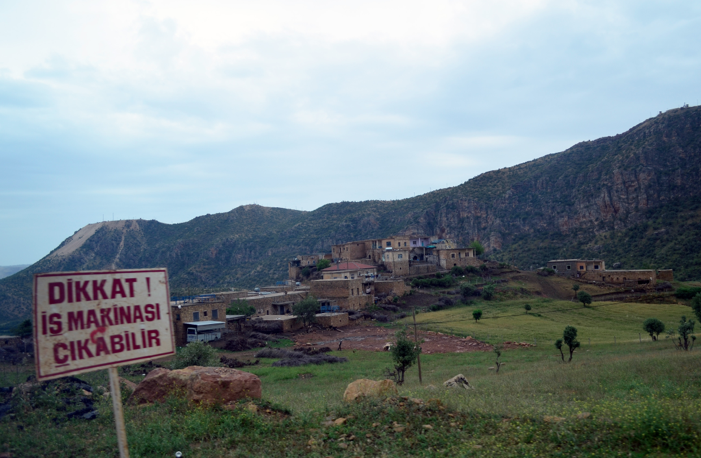
Screen Shot 2014-06-26 at 12.29.06 PM 26th June An administrative court in the Black Sea province of Rize has ruled to halt the construction of a hydroelectric power plant (HES) that was being built on the Andon River, which provides fresh water to at least 3,000 people in the village of Küçükçayır.

Küçükçayır village was declared an environmentally protected site in 2011. The village’s residents held a protest in February against a HES being constructed near the river, closing the main road of the village for hours as part of their protest and not allowing construction equipment to operate at the site.

According to a Cihan news agency report on Wednesday, Kezım Delal, one of the villagers, sold a cow and took a loan from a bank in order to file a lawsuit against the construction company. Emphasizing that he has been struggling in court against the construction plan, which is likely to harm the environment, Delal said the injunction to halt construction stands as an important step towards protecting the environment from other upcoming power plant construction projects that might destroy the country’s natural beauty.

“I have been living in this village for 70 years. I was born here. This is my home. I am so happy that court ruled in favor of our future. Now, I just want to see the construction company leave us alone right away,” he told the press.

Emphasizing that they have been keeping watch for almost eight months in order to prevent the construction company from doing any damage, Delal thanked all his friends who did not leave his side during the protest. “This victory belongs to all of us. Now we can move on with our lives,” he added.

Stating that they were taken into custody by gendarmes many times due to the their protests, Yusuf Esir, another villager, said that he was happy to take a stand against the construction plans. “In order to intimidate us, gendarmes took us into custody many times. But nobody can deter us. If anybody should leave this village, it’s the construction company, not us. Because this is our village,” Esir stated.

MOBILE SLAUGHTER UNIT SABOTAGED

24th June received anonymously:

24th June received anonymously:

"Over the weekend, a mobile slaughter unit operated by Shoe's Mobile
Slaughter and Processing (14515 Coon Hollow Rd, Sublimity, OR) was
decommissioned by having a gallon of bleach poured into its fuel tank.
When the liquid bleach comes into contact with the diesel in the tank it
will create a chemical reaction that will cause rapid corrosion to the
unit's fuel system–forcing it to seize up. For the time being this
slaughter unit will be unable to be used to spill the blood of another
animal.

This method of sabotage was chosen because it is silent, effective, and
easily reproducible. Symbolic protest and consumer boycotts in and of
themselves are not sufficient in addressing the immediate violence that is
being carried out against non-human animals every second of everyday.
Direct intervention is necessary to free imprisoned non-humans and to
destroy the machines that facilitate their exploitation.

This action is dedicated to the memory of Clément Méric, a vegan and
anti-fascist who was beaten to death by neo-nazis in Paris a little over a
year ago. Just as we struggle against those who abuse and exploit
non-human animals; we also take an uncompromising stance against the
far-right's attempts to not only infiltrate the animal liberation and
environmental movements, but also against their attempts to assert
themselves in society in general. Let Clément's tragic death be a
reminder of the necessity for the movement to maintain a strong anti-fascist ethic and to oppose the fascist scum at every turn.

'Mourn the dead, fight like hell for the living.'"

Support needed at Yorkley Court NOW

Update 24/6: The situation here is still urgent as of this morning; large numbers of security are currently trying to get on site.

——

Update 24/6: The situation here is still urgent as of this morning; large numbers of security are currently trying to get on site.

——

**Support needed now – Please get the the site**

Bailiffs attempted an illegal eviction at Yorkley Court Community Farm this morning & are still there and its likely they will try something on the bottom strip tonight.

More people are urgently needed to defend the land.

Even if you can just get there for a few hours, it helps to have as many people as possible on site.

Background:
In the early hours of this morning, police and private security thugs decended, without prior Notice (a legal requirement), upon the peaceful peasants living on the land, and growing food at Yorkley Court. This outragous, competely unlawful act of aggression came without warning, whilst Yorkley Court Farm are fully engaged with the District Council in their planning process, and were looking likely to be granted the initial stages of planning permission during the coming weeks. We're not sure what exactly the Council, no doubt in colusion with certain private business interests think they're doing, more information as we get it. Please come and help us stop this illegal eviction attempt

http://yorkleycourt.wordpress.com/

How to get there: Head to Yorkley, near Lydney in Gloucestershire. See a map below.

Site mobile: 07784887895

Indigenous boy protests on pitch during World Cup opening ceremony

An indigenous Guarani boy held up a banner reading 'Demarcation Now!' at the World Cup's opening ceremony. 16th June One of the three Brazilian children who released

An indigenous Guarani boy held up a banner reading 'Demarcation Now!' at the World Cup's opening ceremony. 16th June One of the three Brazilian children who released white doves during the World Cup opening ceremony used the occasion to demand recognition of Indian land rights – but his protest was censored by FIFA.

Immediately after releasing a white dove, Jeguaká Mirim, an indigenous Guarani boy, held up a red banner reading ‘Demarcation Now!’ But his courageous protest was not broadcast, as the TV cameras swiftly cut away.

Jeguaká’s father, Guarani author Olívio Jekupe, said that the act “showed the world that we are not standing still… My son showed the world what we need the most: the demarcation of our lands.”

The Guarani are Brazil’s most numerous tribe and they live in five states. Much of their land has been stolen from them and is being used for cattle ranching and sugar cane production, whilst many Guarani are forced to live in overcrowded reserves or in roadside camps where malnutrition and disease are rife. Some, like Jeguaká’s community known as Krukutu, live near urban areas like São Paulo on almost no land.

As a result of the loss of their land, the Guarani-Kaiowá of Mato Grosso do Sul state suffer the highest suicide rate in the world, and their leaders are targeted and killed when they attempt to reoccupy patches of their ancestral land.

The Guarani, Survival International and other organizations are calling on the Brazilian government to uphold its own constitution and international law, and map out the Guarani’s land for their exclusive use.

Coca-Cola, one of the World Cup’s main sponsors, has recently become embroiled in the Guarani land scandal by buying sugar from US food giant Bunge, which sources sugar cane from their ancestral land. The Guarani are urging Coca-Cola to respect their rights and stop this purchase immediately.

Coca-Cola and FIFA's image has been contrasted with an angry Indian man demanding, 'Let the Guarani live!'

To highlight the deep irony of Coca-Cola and FIFA promoting the World Cup with an image of a happy Indian man with the words ‘Welcome to the World Cup for Everyone’, Survival has created a spoof ad featuring Nixiwaka, a Yawanawa Indian welcoming the viewer to ‘The Dark Side of Brazil’ and demanding ‘Let the Guarani live!’.

See Survival’s website on the ‘Dark Side of Brazil’ for more examples of Brazil’s assault on indigenous rights.

Bristol: Arrest over 4 arson attacks

handfire 15th June from http://inthebellyofthebeast.noblogs.org The local, now national media scum since 12th June last Thursday have been having a field day about the arrest of an individual regarding the 4 arson attacks on c

handfire 15th June from http://inthebellyofthebeast.noblogs.org The local, now national media scum since 12th June last Thursday have been having a field day about the arrest of an individual regarding the 4 arson attacks on cellular phone towers in the Bristol area. It does not surprise us here at inthebellyofthebeast how the cops repression goes hand in hand with that of the media judicial puppets of the authority.

We stand in solidarity to the arrested individual regardless of the laws enslaving concepts of guilt or innocence, we do not play the state’s game of justice and law, we are in conflict with the repressive witch hunt inflicted by the state upon the incendiary minority of Bristol.

Solidarity to all individuals who dare to take the conflict of praxis to the beast!

NOT ONE STEP BACK IN THE FACE OF THE STATE, MEDIA, JUDICIAL REPRESSION!

WE WILL POST MORE INFO WHEN WE HEAR IT!

Argentina: Activists Arrested & Brutal Police Repression After Monsanto Law is Approved

14th June The legislature of Cordoba approved a controversial Monsanto Law yesterday. Protesters from Malvinas Lucha por la Vida, Madres de Itzuzaingó, and other social organizations held a peaceful protest to contest the law.

14th June The legislature of Cordoba approved a controversial Monsanto Law yesterday. Protesters from Malvinas Lucha por la Vida, Madres de Itzuzaingó, and other social organizations held a peaceful protest to contest the law.

The police intervened violently repressing the protesters and arbitrarily detaining anyone who looked like a protester. 26 people total were arrested including Sofia Gatica and many were injured. Sofia Gatica told Argentina Independent the law was created so Monsanto can legally move into the province.

The new law has been passed after a 9 month blockade on construction of a new GMO seed processing plant. You can read archives of coverage from Revolution News of this epic battle against the multinational corporation here.

argentina monsanto 1

argentina monsanto 2

argentina monsanto 3

argentina monsanto 3

argentina monsanto 4

argentina monsanto 5

Climate Change Induced Heat Wave Causes Riots in India

450367372-an-indian-visitor-to-the-landmark-india-gate-monument.jpg.CROP.promo-mediumlarge 14th June

450367372-an-indian-visitor-to-the-landmark-india-gate-monument.jpg.CROP.promo-mediumlarge 14th June

Under relentless heat, India is reaching the breaking point.

As the country tries to keep cool, the power grid is failing. Rioting protesters in the north of the country set fire to electricity substations last weekend and held power workers hostage, accusing the government of distributing scarce power resources based on political preference.

From Al Jazeera:

Residents had been particularly angry about the power cuts after receiving reliable supplies through the Indian elections, which ended May 16. Since then, only some regions have been guaranteed unbroken power supplies, while others have received little to none.


The High Court in the city of Allahabad is now hearing a petition alleging discrimination in power distribution, and has asked the government to explain why some regions appeared to be receiving preferential treatment.

Those regions include the city of Varanasi, the parliamentary constituency of new Prime Minister Narendra Modi, as well as constituencies held by Yadav and other top officials in Uttar Pradesh’s ruling party.

As Slate’s Joshua Keating reported recently, a study this year by Lakshmi Iyer of the Harvard Business School and Petia Topalova of the International Monetary Fund found a connection between extreme weather (particularly lack of rainfall) and increased crime in India.

Meanwhile, the heat continues. On Wednesday, New Delhi enters day 10 of a blistering heat wave that’s broken at least one long-standing record, with part of the city peaking at 118 degrees Fahrenheit (47.8 degrees Celsius) on Sunday. During that stretch, the average high temperature at the airport in New Delhi has been 109.9  Fahrenheit (43.2 Celsius), with the average low an astonishing 84  Fahrenheit (28.9 Celsius). Days upon days with nighttime low temperatures above 80  Fahrenheit can be deadly, especially for those without a way to keep cool.

If there’s any consolation, at least that’s a dry heat. The dewpoint—the amount of moisture in the air—has been low all week across northern India, with dry air helping to boost the effectiveness of built-in human air conditioning (evaporation of sweat) and making the temperature feel somewhat cooler in the shade.

Areas farther south, near where the monsoon was advancing, were even more unbearable. Just after midnight Wednesday local time, the heat index was still 110 Fahrenheit (43.3 Celsius) in Mumbai. Yep, 110 degrees. At nearly 1 in the morning. I simply can’t fathom existence in those kinds of conditions. Hindu priests thereperformed special prayers for rain to relieve the sweltering country of its misery.

The good news: The end of this scorcher is in sight as the monsoon continues to advance northward. The bad news: In some of the hardest-hit places, like Delhi, that end is still a week away. High temperatures there are expected to stay above normal until next Tuesday.

developing tropical cyclone is helping to surge monsoon moisture northward along India’s West Coast this week, though it’s still going to be quite some time before the cooling monsoon breezes break this heat wave for good. India’s monsoon was five days late and is expected to bring below normal rainfall this season, in part because of a building El Niño.

Since the forecast of a weak monsoon, India’s government has initiated a contingency plan designed to relieve pressure on its overtaxed power grid, reported the Times of India on Tuesday. Two years ago, India suffered the worst blackout in world history, putting some 600 million residents in the dark. Much of India’s electricity generation comes via hydroelectric power. The monsoon season in 2012 was also below average, and demand for electricity is soaring as a burgeoning middle class buys more and more air conditioners.

As the New York Times’ Elisabeth Rosenthal wrote at that time, “We can’t live with air-conditioning, but we can’t live without it.” In a more temperate climate, Americans use more electricity on air conditioning than the rest of the world combined. Rapidly expanding use of air conditioning in tropical countries will further boost global warming through the release of heat trapping gases. It’s a Catch-22.

India, for one, is warming to air conditioning. In 2007, only 2 percent of India had air conditioning, but that number is rapidly increasing. The hot weather of the past few weeks has boosted sales of air conditioners by 15 to 20 percent compared with last year.

This month’s oppressive heat wave already bears the fingerprint of global warming. Over the last 100 years, India’s average temperature has warmed by about half a degree Celsius (PDF), and monsoons are getting more extreme. The warmest time of the year is typically just before the monsoon hits, when temperatures routinely top the triple digit mark in the otherwise semi-arid north.

This year, though, has been anything but routine.


Three More Vehicles Sabotaged in Italy’s No TAV Struggle

14th June We receive from anonymous mail and transmit:

“Genoa—In the night of 3rd June 2 excavators and 1 concrete mixer were sabotaged at the Terzo Valico Erzelli yard.

To stop it is up to us

To stop it is possible

Let’s sabotage everything

No TAV Terzo Valico”


14th June We receive from anonymous mail and transmit:

“Genoa—In the night of 3rd June 2 excavators and 1 concrete mixer were sabotaged at the Terzo Valico Erzelli yard.

To stop it is up to us

To stop it is possible

Let’s sabotage everything

No TAV Terzo Valico”


[See this article for more info on the No TAV movement]

Sea Shepherd to Deploy Drones to Stop Massive Whale Slaughter

(Photo: Andrija Ilic/Reuters) 13th June In recent years, the annual dolphin hunts in Taiji, Japan, have garnered headlines worldwide and sparked outrage among activists, scientists, celebrities,

(Photo: Andrija Ilic/Reuters) 13th June In recent years, the annual dolphin hunts in Taiji, Japan, have garnered headlines worldwide and sparked outrage among activists, scientists, celebrities, and diplomats. But half a world away, in the North Atlantic nation of the Faeroe Islands, a similar slaughter has received far less scrutiny.

That’s about to change. On Friday, Sea Shepherd Conservation Society USA will unveil details of a new hi-tech initiative aimed at disrupting and halting the whale hunts, which begin this month and continue through September.

The annual hunts are known as “grinds.” As part of “Operation GrindStop 2014,” a land-based campaign, Sea Shepherd USA will deploy drones and livestream video to hinder the slaughter. Other Sea Shepherd organizations will launch simultaneous water-based campaigns.

Why the drones? They are “primarily for surveillance and documentation,” Sea Shepherd founder Paul Watson said in an email. “They are inexpensive and easy to operate, and they can get us into places we could not otherwise get to.”

Combined with livestreaming video, drone technology  “will allow us to cover the more than two dozen beaches in the Faeroes where whales may be killed,” Watson added. “The Faeroes present some logistical challenges, and we need to be able to deploy in such a way that all possible kill sites are monitored at all times.”

Drones might also detect approaching whales, he said, which would “allow us to take our boats to deflect the pods away from the islands.” (The Faeroe Islands campaign is funded in part by the Skoll Foundation, part of the Jeff Skoll Group, which includes Participant Media, TakePart’s parent company.)

Sea Shepherd USA will place four teams of at least 15 activists each on the ground.
Residents of the windswept Faeroes, a self-governing archipelago of Denmark between Norway and Iceland, have been killing fin whales, pilot whales, Atlantic white-sided dolphins, and other small marine mammals for centuries. Though the slaughter has received a smattering of attention in the global media, the Faeroes hunt has been largely overshadowed by the dolphin drives in Taiji, which were chronicled in the Oscar-winning documentary The Cove.

As many as 1,000 endangered long-finned pilot whales, along with members of other species, are killed each year in the Faeroes during the “traditional” hunt, called grindadráp (“grind”) by islanders.

The hunt is even promoted as a tourist attraction. According to the Visit Faroe Islands website, one of the country’s main attractions is whaling.

“The pilot whale hunt in the Faroes is, by its very nature, a dramatic sight,” it states. “Entire schools of whales are killed on the shore and in the shallows of bays with knives which are used to sever the major blood supply to the brain.”

The method is “the most efficient and humane” means of killing “under the circumstances,” the website reassures potentially queasy tourists, “but it naturally results in a lot of blood in the water.”

This is not the first time that Sea Shepherd, which has been fighting against the Faeroes slaughter for more than 30 years, has used drones in a campaign, according to Jake Weber, Sea Shepherd drone specialist. But it is the first drone deployment in the Faeroes, he said in an email. “A great advantage they will provide is the ability to get [high-definition] footage and still photos very close to the grind without endangering our volunteers or their equipment.”