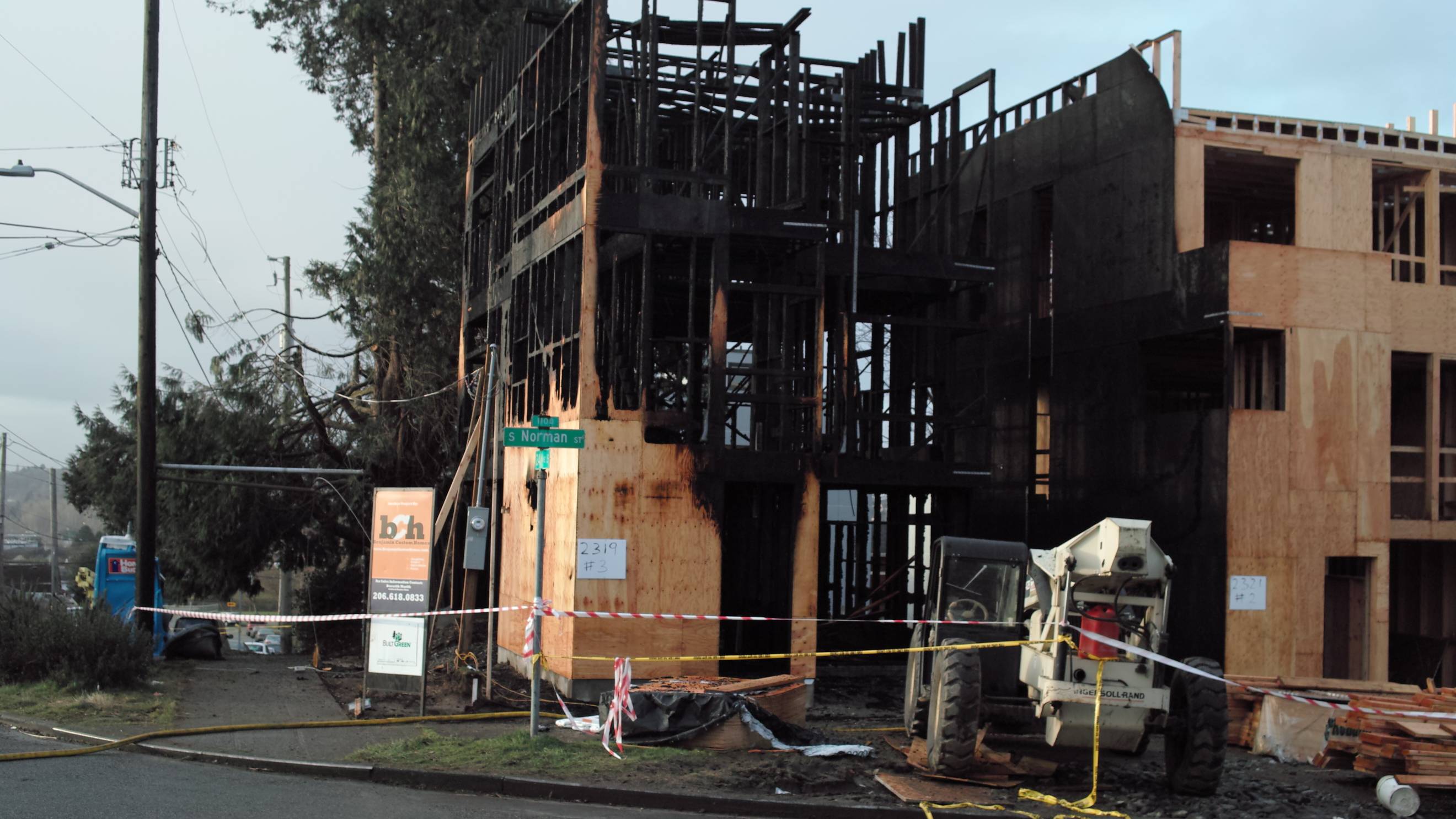
A Gang of Greek Activists Torch the Skouries Gold Mine — 24th Feb

Last Sun­day, 50 masked peo­ple armed with Molo­tov cock­tails stormed a gold mine in north­ern Greece. After torch­ing bull­doz­ers, trucks, and por­ta­cab­ins belong­ing to Cana­di­an min­ing com­pa­ny El Dora­do and its Greek sub­sidiary Hel­lenic Gold, the group used tree trunks to block police and fire­fight­ers from reach­ing the site. If all that destruc­tion of machin­ery and reliance on the boun­ti­ful gifts of Moth­er Nature for pro­tec­tion sounds like the work of an incensed rat­tan bas­ket of eco­cam­paign­ers, that’s because it was. In fact, it was just one of many recent moments of dra­ma unfold­ing around the open­ing of a gold-min­ing site in Skouries, one of the old­est forests in Greece.

In 2003 Hel­lenic Gold, fol­lowed by El Dora­do, obtained the rights to mine the $12 bil­lions’ (£7.8 bil­lions’) worth of gold and cop­per snooz­ing beneath the moun­tain area. The deal saw the Greek state receive just €11 mil­lions’ (£9.5 mil­lions’) worth of com­pen­sa­tion for the mines, and, in addi­tion to los­ing the gov­ern­ment some mon­ey they could have prob­a­bly done with, pissed off all the local res­i­dents. Besides a part of the ancient for­est being uproot­ed, res­i­dents are also wor­ried about the mine’s effect on tourism, agri­cul­ture, and fish­ing. They’re all pil­lars of the local econ­o­my, and they’re all at risk of being dev­as­tat­ed by the pol­lu­tion a mine tends to churn out.

Last Octo­ber, in the largest protest yet against the pro­posed mine, riot police attacked demon­stra­tors, broke the win­dows of parked cars, dragged old women to the ground, attacked a left-wing politi­cian who was protest­ing out­side the police depart­ment, and threw tear gas at the crowds, the can­is­ters of which end­ed up burn­ing down part of the for­est. Unsur­pris­ing­ly, these tac­tics did lit­tle to appease the demon­stra­tors.

Since then, areas of the for­est have been cor­doned off with barbed wire, check­points are every­where, and pri­vate secu­ri­ty guards wear­ing full-face masks patrol the area harass­ing locals, demand­ing to see their iden­ti­fi­ca­tion. That last bit is ille­gal under Greek law, but minor issues like what’s legal and what’s not don’t seem to faze El Dora­do. The com­pa­ny claims that the mines will cre­ate more than 1,000 new jobs, their invest­ment bil­low­ing much need­ed oxy­gen into the gasp­ing lungs of an ail­ing local and nation­al econ­o­my.

The mine’s crit­ics, how­ev­er, claim that more jobs will be lost than gained due to the pol­lu­tion and envi­ron­men­tal destruc­tion that comes from dig­ging into a moun­tain and build­ing a mine. And they may be right. Unfor­tu­nate­ly for the Gre­co-Cana­di­an gold pan­ners, the num­bers just don’t add up. From the poten­tial $12 bil­lion to be made, Greece only gets the $11 mil­lion it secured in 2003 and a mere ten per­cent of rev­enue tax. So, once the mil­lions of tons of waste start to pile up and the local econ­o­my is dev­as­tat­ed, Greece stands to lose far more than it will make.

See­ing as the Greek sub­sidiary com­pa­ny is owned by Gior­gos Bobo­las, Greece’s mini-Murdoch—a man who owns lit­tle chunks of pret­ty much every main­stream media com­pa­ny in the country—reporting on the sto­ry has been spot­ty at best. Bobolas’s polit­i­cal con­nec­tions are what secured the involve­ment of police in such large num­bers, and oper­a­tions in the area over the last few months are on a scale that only tends to be bankrolled if the ben­e­fi­cia­ry holds the kind of polit­i­cal sway that Bobo­las does.

What did get report­ed was that Greek Min­is­ter of Cit­i­zen Pro­tec­tion Nikos Dendias’s going to Skouries and demand­ing arrests after Sunday’s attack. This result­ed in the deten­tion of 33 local activists with lit­tle jus­ti­fi­ca­tion oth­er than their pol­i­tics. Among them was Lazaros Tsokas—a mem­ber of SYRIZA, a Greek left-wing party—who was labelled an “abet­tor” and arrest­ed. Those detained accuse the police of tak­ing DNA sam­ples from them even though they were only charged with mis­de­meanours, which—again—is ille­gal under Greek law.

The police also attempt­ed to detain the two peo­ple who run antigold­greece, a blog that aims to expose Hel­lenic Gold’s cor­rupt deal­ings with local offi­cials. The author­i­ties have so far been unable to detect them, but one of the blog­gers, Maria Kadoglou, told me:

“The accu­sa­tions are unfound­ed. The atmos­phere here is already polar­ized between those who believe that the mine will be good for the area and those of us who oppose it. We’re try­ing to use legal meth­ods to stop the min­ing oper­a­tions, but the local author­i­ties take months to answer our peti­tions. When they do, the answers are irrel­e­vant and laugh­able. In the mean­time, the com­pa­ny has already set up camp and intim­i­dates the locals with the dra­con­ian secu­ri­ty meth­ods it uses.”

Many for­eign com­pa­nies are leav­ing Greece, look­ing abroad for access to cap­i­tal and more sta­ble tax codes. But if you have the right insid­er con­nec­tions, then tax exemp­tions and access to Euro­pean fund­ing schemes present an oppor­tu­ni­ty to get into Greece, exploit its shit­ty finan­cial sit­u­a­tion, and get out again sig­nif­i­cant­ly rich­er. While the news media feeds Greek fam­i­lies a jol­ly TV din­ner of xeno­pho­bia, immi­nent finan­cial melt­down, and dog-eat-dog par­ty pol­i­tics, the real crimes—the ones rip­ping every­one off—take place in the back­ground, in places like Skouries.

Riot Police Attack Communities Protesting Oil Exploitation in Colombia

After two weeks of peace­ful protest­ing against oil exploita­tion in Arau­ca, on Feb­ru­ary 12 that department’s social orga­ni­za­tions began a strike announced a few days ear­li­er as a response to the repeat­ed bro­ken promis­es by the nation­al gov­ern­ment and transna­tion­al com­pa­nies.

After two weeks of peace­ful protest­ing against oil exploita­tion in Arau­ca, on Feb­ru­ary 12 that department’s social orga­ni­za­tions began a strike announced a few days ear­li­er as a response to the repeat­ed bro­ken promis­es by the nation­al gov­ern­ment and transna­tion­al com­pa­nies.

The last attempt at dia­logue took place on Mon­day, Feb­ru­ary 11, between the Commission’s spokes­peo­ple (com­posed of a del­e­ga­tion of indige­nous peo­ple, peas­ants, youth, women, work­ers and com­mu­ni­ty mem­bers) and rep­re­sen­ta­tives of the Min­is­ter of the Inte­ri­or, as well as oil com­pa­nies that oper­ate in the region, with the goal of estab­lish­ing the con­di­tions that would allow the ful­fill­ment of those promis­es that they’ve been mak­ing since May 2012.

The repeat­ed lack of fol­low-through by the gov­ern­ment and busi­ness­es, and the delay in the nego­ti­a­tion process caused the frac­ture in the space for dia­logue, fol­lowed by the use of state force: approx­i­mate­ly 1,200 mem­bers of the Mobile Anti-Dis­tur­bance Squadron (the ESMAD in Span­ish) arrived to vio­lent­ly evict the com­mu­ni­ties at the protest sites.

The first act occurred on the walk­way San Isidro, over the de Tame road toward the Arau­ca cap­i­tal, at the gate to the petro­le­um com­plex Cari­care, which is used by the transna­tion­al com­pa­ny OXY, where ESMAD, the Police, and the Army assault­ed the mobi­lized com­mu­ni­ties by set­ting fires to the sur­round­ing pas­tures, dis­charg­ing their weapons, destroy­ing com­mon build­ings (a school), tak­ing away the food sup­plies to the pro­tes­tors,  and beat­ing and retain­ing four peo­ple.

As a result of the vio­lence, a preg­nant indige­nous woman who was pass­ing through lost her baby because of the effects of the tear gas, and had to receive emer­gency atten­tion at a med­ical cen­ter.

The police had kept local and nation­al reporters from con­tact­ing CM&, RCN, and oth­er local media that moved to Cari­care; the nation­al army set up a check­point in the sec­tor of Lipa that pro­hib­it­ed the pas­sage of reporters “for secu­ri­ty rea­sons.”  It should be not­ed that in the Quim­bo (Huila) events the police also restrict­ed the pres­ence of the media and act­ed out a series of vio­la­tions of basic human rights and Inter­na­tion­al Human­i­tar­i­an Rights (DIH).

In the face of the this sit­u­a­tion, the Human Rights Foun­da­tion Joel Sier­ra post­ed an Urgent Action which stat­ed its con­cern for the deten­tion of peo­ple, aggres­sion and bru­tal vio­lence exer­cised against the peas­ants and indige­nous peo­ples, the infrac­tions of the Inter­na­tion­al Human­i­tar­i­an Rights com­mit­ted by the police to vio­late and destroy civ­il instal­la­tions, and the removal of sup­plies for feed­ing those protest­ing. The Foun­da­tion also insist­ed that the Colom­bian State respect human rights and the Inter­na­tion­al Human­i­tar­i­an Rights norms.

In sim­i­lar form, Urgent Action denounced a series of vio­la­tions to the pro­tes­tors’ rights by the police, whose mem­bers have ded­i­cat­ed them­selves to con­stant­ly pho­to­graph those that par­tic­i­pate in the protests, have retained, inter­ro­gat­ed, and report­ed some of them, and have appeared in civil­ian cloth­ing and armed in the mid­dle of the night at the edges of the protest sites, among oth­er cas­es.

In the rest of the protest sites, like the gate to the petro­le­um com­plex of Caño Limón in the munic­i­pal­i­ty of Arau­ca, the town of Cari­care in Arauqui­ta, the bicen­ten­ni­al pipeline in Tamacay and el Tigre (Tame) and in Vil­la­m­a­ga (Sar­ave­na) and the fire sub­sta­tion of Banadías (Sar­ave­na), the author­i­ties have sent con­tin­gents from the army, the nation­al police, and the ESMAD, because they fear the same will hap­pen in those places that hap­pened in Cari­care.

It’s impor­tant to note that at this time peo­ple and vehi­cles can­not trav­el by land to get out­side of the depart­ment of Arau­ca by the only two major roads (Casanare and Norte de San­tander), and all com­merce and activ­i­ty is com­plete­ly par­a­lyzed in that region of the coun­try.

Camp Ivy pops up!

20.2.13

ivyCombe Haven Defend­ers has just got word of a new inde­pen­dent camp that has appeared just off the pub­lic foot­path between Glover’s Farm and Acton’s Farm.

20.2.13

ivyCombe Haven Defend­ers has just got word of a new inde­pen­dent camp that has appeared just off the pub­lic foot­path between Glover’s Farm and Acton’s Farm.

Camp Ivy is not on the route of the road and this means it should be rel­a­tive­ly secure from short-term evic­tion. It does, how­ev­er, pro­vide a good base for pro­tes­tors very close to the action! At the moment con­trac­tors are try­ing to com­plete exten­sive hedgerow cut­ting along the route of the pro­posed road to beat the 1st March nest­ing sea­son dead­line. This com­ing week­end 22/23 Feb will be a focus for protest against the hedgerow destruc­tion.

Folk com­ing to the camp are request­ed to be as self-suf­fi­cient as pos­si­ble, bring­ing food and water, and, if stay­ing overnight, tent and sleep­ing bag too. The Camp Ivy mobile is 07706 065623.

Camp Ivy takes shape in the trees!

To access the camp, take the pub­lic foot­path from Glover’s farm, Sid­ley, and fol­low it along the track which goes under the dis­used rail­way and then bears right towards Acton’s Farm. The camp is locat­ed dis­creet­ly in wood­land on your right, between the foot­path and the dis­man­tled rail­way. The OS map ref is TQ750097. There’s a map in the fly­er below. For the more adven­tur­ous, access is also pos­si­ble from the North on foot across the val­ley from Crowhurst.

Sid­ley is a 30 minute walk from Bex­hill train sta­tion, or reach­able by Stage­coach bus 98 (every 30 mins approx) from Hast­ings, St Leonards and Bex­hill.ivyflyer1sm


Assassinations of environmental activists have doubled over last decade

Where is Som­bath Som­phone? With every day that pass­es, the fate of one of south-east Asia’s most high-pro­file envi­ron­men­tal activists, who was snatched from the streets of Laos in Decem­ber, becomes more wor­ri­some.

Where is Som­bath Som­phone? With every day that pass­es, the fate of one of south-east Asia’s most high-pro­file envi­ron­men­tal activists, who was snatched from the streets of Laos in Decem­ber, becomes more wor­ri­some.

His case has been raised by the State Depart­ment and count­less NGOs around the world. But the author­i­ties in Laos have offered no clue as to what hap­pened after Som­bath was stopped at a police check­point on a Sat­ur­day after­noon in the Lao cap­i­tal of Vien­tiane as he returned home from his office. It looks increas­ing­ly like state kid­nap — or worse, if recent evi­dence of the state-spon­sored killings of envi­ron­men­tal cam­paign­ers in oth­er coun­tries is any­thing to go by.

Per­son­al dan­ger is not what most envi­ron­men­tal­ists have in mind when they take up the cause of pro­tect­ing nature and the peo­ple who rely on it in their dai­ly lives. But from Laos to the Philip­pines to Brazil, the list of envi­ron­men­tal­ists who have paid for their activism with their lives is grow­ing. It is a grim toll, espe­cial­ly in the last year.

One of the most gris­ly cas­es occurred last year in Rio de Janeiro on the final day of the Rio+20 Earth Sum­mit. On the after­noon of June 22, del­e­gates from through­out the world — me includ­ed — were prepar­ing to leave for the air­port as Almir Nogueira de Amor­im and his friend João Luiz Telles Pen­e­tra were set­ting sail for a fish­ing trip in the city’s Gua­n­abara Bay.

The two men, besides being fish­er­men, were lead­ers of AHOMAR, the local orga­ni­za­tion of sea­men, which they had helped set up three years ear­li­er to fight the con­struc­tion of gas pipelines across the bay to a new refin­ery run by the Brazil­ian nation­al oil com­pa­ny Petro­bras. The pipelines, they said, would cause pol­lu­tion, and the engi­neer­ing works would destroy fish­eries.

The issue they were rais­ing — pro­tect­ing the liveli­hoods of peo­ple who used nat­ur­al resources — was at the heart of the Rio conference’s agen­da for sus­tain­able devel­op­ment. But some­one in Rio saw it as a threat. Two days lat­er, the bod­ies of the two men had been found. One was washed up on the shore, hands and feet bound by ropes. The oth­er was found at sea, stran­gled and tied to the boat, which had sev­er­al holes in the hull.

This was no iso­lat­ed assas­si­na­tion. In the three years since AHOMAR was set up, two oth­er cam­paign­ers had been mur­dered. To date nobody has been con­vict­ed of any of the offens­es. The refin­ery is expect­ed to open ear­ly next year.

The month before the two Brazil­ian fish­er­men were mur­dered, a civ­il ser­vant on the oth­er side of the world who was cam­paign­ing against a planned hydro­elec­tric dam on the south­ern Fil­ipino island of Min­danao was shot death. Mar­gar­i­to Cabal was return­ing home from vis­it­ing Kibawe, one of 21 vil­lages sched­uled to be flood­ed by the 300-megawatt Pulan­gi V hydro­elec­tric project.

Cabal’s assailant escaped and remains unknown. No pros­e­cu­tion has fol­lowed, but atten­tion has focused on gov­ern­ment secu­ri­ty forces. Accord­ing to the World Orga­ni­za­tion Against Tor­ture, an inter­na­tion­al net­work based in Switzer­land that has tak­en up the case, Fil­ipino sol­diers had for sev­er­al weeks been con­duct­ing mil­i­tary oper­a­tions in and around Kibawe and had attacked peas­ant groups oppos­ing the dam. If the sol­diers did not do the deed, they cer­tain­ly helped cre­ate an atmos­phere in which envi­ron­men­tal­ists were seen as a tar­get for vio­lence.

Cabal is the thir­teenth envi­ron­men­tal­ist killed in the Philip­pines in the past two years. Sev­en months ear­li­er, a Catholic mis­sion­ary was mur­dered after oppos­ing local min­ing and hydro projects. “The sit­u­a­tion is get­ting worse,” says Edwin Gariguez, the local head of Car­i­tas, the Catholic aid char­i­ty.

And it’s get­ting worse in oth­er nations as well. NGOs such as Human Rights Watch agree that 2012 was also a new low for human rights in Cam­bo­dia, with cam­paign­ers against ille­gal log­ging and land grabs tar­get­ed by state secu­ri­ty per­son­nel and by gang­sters work­ing for com­pa­nies har­vest­ing the nation’s nat­ur­al resources.

One of those cam­paign­ers was Chut Wut­ty, a for­mer sol­dier and one-time Cam­bo­di­an activist with Glob­al Wit­ness, a UK-based NGO that high­lights links between envi­ron­men­tal exploita­tion and human rights abus­es. When Glob­al Wit­ness was expelled from the coun­try a few years ago, Wut­ty formed the Nat­ur­al Resource Pro­tec­tion Group to help Cam­bo­di­an vil­lagers con­front ille­gal log­gers.

But last April, Wut­ty was shot dead, appar­ent­ly by a group of mil­i­tary police that he encoun­tered while tak­ing local jour­nal­ists to see ille­gal log­gers in the west of the coun­try. Accord­ing to a gov­ern­ment report, Wutty’s assailant was killed at the scene, alleged­ly by a for­est ranger. A provin­cial court recent­ly aban­doned an inves­ti­ga­tion into Wutty’s mur­der and released the ranger. One of the jour­nal­ists, who fled into the for­est when the shoot­ing start­ed, says she does not believe the offi­cial ver­sion of what hap­pened, and human rights groups have also said they find it implau­si­ble.

Crim­i­nal­i­ty is at the heart of much of the destruc­tion of the world’s forests. A recent report from the UN Envi­ron­ment Pro­gramme con­clud­ed that up to 90 per­cent of the world’s log­ging indus­try was in one way or anoth­er out­side the law. In such cir­cum­stances, vio­lence against those who try to pro­tect the forests can become endem­ic.

Misdirection & Target Selection, Part 2

Part 1 pre­sent­ed an overview of the need for strate­gic tar­get selec­tion. With the indus­tri­al econ­o­my bar­rel­ing ever onwards, drag­ging the world towards biot­ic col­lapse, the impor­tance of tar­get­ing our efforts can­not be over­stat­ed. Iden­ti­fy­ing and strik­ing at key tar­gets is nec­es­sary for any social change move­ment to be suc­cess­ful, and this is all the more true for rad­i­cal move­ments that seek to fun­da­men­tal­ly change sys­tems of oppres­sive pow­er.

Yet for all our earnest­ness and urgency, our move­ments have (for the most part) failed to tar­get the key nodes of cap­i­tal­ist and indus­tri­al sys­tems.
With so many ter­ri­ble things hap­pen­ing, we slide into a mode of reflex­ive defen­sive­ness, shift­ing hap­haz­ard­ly from one man­i­fes­ta­tion of civilization’s destruc­tive­ness to anoth­er, with­out any coher­ent plan to stop the machine respon­si­ble for all the car­nage.
Devoid of a way to make tan­gi­ble progress towards that goal, we are doomed to inef­fec­tive­ness: we become fix­at­ed by sym­bol­ism and direct our efforts towards sym­bols of that which we oppose, rather than mate­r­i­al struc­tures of pow­er.

Take for instance, this com­mu­nique from Indone­sia, pub­lished at 325.nostate.net:

Cov­ered by the night, we burned a pri­vate car in Tomo­hon (small city in North Sulawe­si), owned by an unknown per­son. It was a car locat­ed near the local TV sta­tion in that town. A car as a sym­bol of slav­ery, eco-dis­as­ter and the mean­ing­less­ness of life.

Yes, cars are ter­ri­ble. Count­less peo­ple and ani­mals are killed every day by vehi­cles. And car cul­ture has become emblem­at­ic of indus­tri­al soci­ety and the lack of mean­ing and con­nec­tion avail­able in mod­ern cap­i­tal­ist soci­ety.

But how does this advance the cause of rev­o­lu­tion? How does this change the struc­tures (indus­tri­al soci­ety and cap­i­tal­ism) that are to blame for “slav­ery, eco-dis­as­ter and the mean­ing­less­ness of life”?

Or this com­mu­nique from Greece, pub­lished on the same site:

We claim the respon­si­bil­i­ty for the incen­di­ary attack at the house of ex-min­is­ter of Econ­o­my and Nation­al Defence, Gian­nos Papan­do­niou. We arrived out­side the door of his man­sion on Olympias street in Kifis­sia and torched the two cars used by him and his “wife” Roula Kourak­ou for their mean­ing­less movements….Far from a pop­ulist rhetoric we iden­ti­fy in the face of Gian­nos Papan­do­niou an offi­cer of author­i­ty. We are not inter­est­ed in list­ing the dodgy things he has done, although he sure­ly has done many. Either way, cor­rupt­ed or not cor­rupt­ed, state offi­cers, irrel­e­vant­ly if they hold their posi­tions in the state mech­a­nism, are a per­ma­nent tar­get for the insur­rec­tion­ist dig­ni­ties.

None of us like politi­cians, nor the rich­es and rewards they receive for pre­sid­ing over oppres­sive and destruc­tive sys­tems of pow­er. In exchange for their proac­tive alle­giance to and pro­lif­er­a­tion of the sta­tus quo, they’re afford­ed pow­er and priv­i­lege, which lasts long after their terms in office end.

But again, how does burn­ing the car of an ex-politi­cian move us tan­gi­bly clos­er to achiev­ing our goals, towards dis­man­tling the sys­tem of which politi­cians are a sin­gle com­po­nent? How does such an attack effect change on the sys­tems which pre­serve and enable injus­tice and oppres­sion?
This isn’t meant to be a hos­tile attack on the courage or con­vic­tion of those who take action like this; nei­ther their com­mit­ment nor their readi­ness to take action is at ques­tion. This is sim­ply to pose the ques­tion “is this real­ly the most effec­tive way to accom­plish our goals?”

And need­less to say, this cuts both ways. Most of the more main­stream groups and ini­tia­tives fall just as flat. Cur­rent­ly, one of the most promi­nent pro­gres­sive cam­paigns is 350.org’s ‘Fos­sil Free’ cam­paign, which seeks to tar­get uni­ver­si­ties and reli­gious insti­tu­tions to divest their endow­ments from fos­sil fuel com­pa­nies. This strat­e­gy is def­i­nite­ly an improve­ment on past efforts, which con­sist­ed of plead­ing to politi­cians; this new ini­tia­tive iden­ti­fies a struc­tur­al prob­lem and aims to address it. Yet there are some obvi­ous and imme­di­ate prob­lems with the strate­gic via­bil­i­ty of this plan, and whether uni­ver­si­ty invest­ments in fos­sil fuels present a worth­while tar­get.

The fore­most issue is that indus­tri­al soci­ety is entire­ly depen­dent upon fos­sil fuels in order to func­tion and with­out an abun­dant & avail­able sup­ply would quick­ly col­lapse (which would be a very good thing!). Fos­sil fuel com­pa­nies already receive tens of bil­lions of dol­lars in fed­er­al sub­si­dies; if their via­bil­i­ty was in seri­ous jeop­ardy, we can safe­ly assume that gov­ern­ments the world over would rush to their aid. Indeed it would be dan­ger­ous to assume oth­er­wise. The extrac­tion and use of fos­sil fuels can’t be effec­tive­ly chal­lenged or stopped work­ing through the indus­tri­al cap­i­tal­ist sys­tem, because fos­sil fuels are an inte­gral struc­tur­al sup­port of indus­tri­al cap­i­tal­ism and it could not exist with­out them.
And beyond this, it’s entire­ly un-estab­lished whether divest­ments by uni­ver­si­ties would even have a mean­ing­ful impact of the eco­nom­ic via­bil­i­ty of fos­sil fuel com­pa­nies. How much such invest­ments con­sti­tute is unknown.

This isn’t to say that such a cam­paign is a waste of efforts or that it’s a bad thing. Any­thing that brings peo­ple togeth­er around struc­tur­al prob­lems inher­ent to this way of life is a good thing. And eco­nom­ic pres­sure, as we saw in South Africa, can con­tribute to a larg­er cam­paign that includes oth­er tac­tics, such as force­ful non­vi­o­lence, inter­na­tion­al polit­i­cal pres­sure, and strate­gic sab­o­tage. This is just to say that if the goal is to shut down fos­sil fuel pro­duc­tion or cor­po­ra­tions, uni­ver­si­ties invest­ments in the indus­try don’t present a very impor­tant tar­get.

A quick eval­u­a­tion of these actions through the lens­es of the CARVER Matrix gives us a more crit­i­cal analy­sis of the val­ue of these tar­gets.
In the last bul­letin on tar­get selec­tion, we pre­sent­ed an overview of the CARVER Matrix, a tool used ass­es the strate­gic val­ue of attack­ing a tar­get. Obvi­ous­ly, this is not an end-all-be-all; how a tar­get appears through CARVER is not the final and absolute deter­mi­na­tion as to whether it presents a worth­while tar­get. But it is unde­ni­ably a strong ana­lyt­i­cal tool from whose use we can ben­e­fit and learn much.

Crit­i­cal­i­ty: will the destruc­tion, dam­age or dis­rup­tion of the tar­get have sig­nif­i­cant impact on the oper­a­tion of an enti­ty?

The per­son­al cars of one or two indi­vid­u­als are irrel­e­vant to the func­tion­ing of indus­tri­al­ism or capitalism—consider all the thou­sands of cars wrecked every year in col­li­sions. This goes for the cars of polit­i­cal fig­ures, such as Gian­nos Papan­do­niou, as well.

As for uni­ver­si­ty invest­ment port­fo­lios, they aren’t crit­i­cal to the func­tion of indus­tri­al­ism or the fos­sil fuel indus­try either. Such cor­po­ra­tions don’t have much trou­ble find­ing cap­i­tal (as the vital­i­ty of the entire econ­o­my rests upon an avail­able sup­ply of fos­sil fuels), and they already receive mas­sive sub­si­dies from gov­ern­ments.

Acces­si­bil­i­ty: how fea­si­ble it is to reach the tar­get with suf­fi­cient peo­ple and resources to accom­plish the goal?

Cars are very acces­si­ble; peo­ple park them all over the place and they are almost nev­er guard­ed or pro­tect­ed, as was the case in both of the actions men­tioned above.

Invest­ments are not very acces­si­ble at all as tar­gets, with deci­sion mak­ing pow­er rest­ing with­in the com­plex struc­tures of uni­ver­si­ty admin­is­tra­tions. Addi­tion­al­ly, peo­ple with access to these sys­tems (e.g. stu­dents or fac­ul­ty) are nec­es­sary for each dis­tinct uni­ver­si­ty, requir­ing engage­ment on a mas­sive scale. Fur­ther­more, it is entire­ly unknown how much such invest­ments even amount to.

Recu­per­abil­i­ty: how quick­ly will the dam­age done to a tar­get be repaired, replaced or bypassed?

Per­son­al cars are wide­ly avail­able and can eas­i­ly be replaced, pro­vid­ed one can afford them. For pow­er­ful insti­tu­tions and indi­vid­u­als, vehi­cles are eas­i­ly replaced, but for the aver­age per­son ran­dom­ly tar­get­ed by insur­rec­tionary arson, not so much. And a polit­i­cal fig­ure who can afford two lux­u­ry cars and body­guards is unlike­ly to declare bank­rupt­cy for the loss of one (or two, or a dozen) of their per­son­al cars.

Again, fos­sil fuel cor­po­ra­tions are not starved for funds, and con­tin­ue to post record prof­its. And being that the ‘goods’ they pro­duce are fun­da­men­tal to indus­tri­al soci­ety, they can pass on any loss­es they sus­tain to con­sumers at the pump, who have lit­tle choice but to pay the price. Fos­sil fuel com­pa­nies are incred­i­bly prof­itable (because our way of life is depen­dent upon the prod­ucts they sup­ply), and that makes them desir­able investments—that will con­tin­ue to be true whether or not uni­ver­si­ties and church­es hold stock in them. Thus these invest­ments can be con­sid­ered very recu­per­a­ble.

Vul­ner­a­bil­i­ty: Are there suf­fi­cient means to suc­cess­ful­ly dam­age, dis­able, or destroy the tar­get?

Destroy­ing a car doesn’t require many peo­ple, many resources, or hard­ly any tech­ni­cal knowl­edge, so they are def­i­nite­ly vul­ner­a­ble tar­gets.

To change the invest­ment behav­iors of edu­ca­tion­al insti­tu­tions requires a mas­sive num­ber of peo­ple work­ing from with­in their uni­ver­si­ties to lob­by their admin­is­tra­tions to change. Because many uni­ver­si­ties are pri­vate insti­tu­tions, there are few ways to agi­tate and force change (pri­vate insti­tu­tions can kick out stu­dents and aren’t oblig­at­ed to lis­ten to them), and the only option left is to lob­by the admin­is­tra­tion to enact pol­i­cy change. Due to these fac­tors, it’s doubt­ful whether such uni­ver­si­ty invest­ments can be con­sid­ered vul­ner­a­ble.

Effect: What are the sec­ondary and ter­tiary impacts of suc­cess­ful­ly attack­ing the tar­get?

The destruc­tion of a sin­gle ran­dom car (or even the car of a for­mer gov­ern­ment offi­cial) is unlike­ly to have sig­nif­i­cant polit­i­cal or social effects—except for the per­son the car belonged to. If cars were repeat­ed­ly attacked, it’s pos­si­ble there would be a response by local police. But it won’t have much of any impact on any major effects oth­er than cre­at­ing one more pedes­tri­an.

Sim­i­lar­ly, there are unlike­ly to be any seri­ous sec­ond-hand ram­i­fi­ca­tions of uni­ver­si­ty divest­ment cam­paigns, sim­ply because it is a rel­a­tive­ly minor facet of the fos­sil fuel indus­try. How­ev­er, the suc­cess of this cam­paign would cer­tain­ly be a way to broad­en the con­ver­sa­tion about cli­mate change and fos­sil fuels, as well as broach­ing on a con­ver­sa­tion about the struc­tur­al deter­mi­nants of cap­i­tal­ism itself.

Rec­og­niz­abil­i­ty: will the attack be rec­og­nized as such, or might it be attrib­uted to oth­er fac­tors?

I can’t imag­ine any­one attribut­ing the burn­ing of a ran­dom car to rev­o­lu­tion­ary groups, and if so, I doubt they would do so in a pos­i­tive light. The attack of a spe­cif­ic polit­i­cal figure’s car may be dif­fer­ent, but again, it’s unclear with­out fur­ther expla­na­tion that such an attack was car­ried out with rev­o­lu­tion­ary intent, as opposed to pyrotech­nic hedo­nism.

In regards to 350.org’s cam­paign, if activists were to suc­cess­ful­ly move scholas­tic endow­ment funds out of fos­sil fuel stocks and invest­ments, they would undoubt­ed­ly be rec­og­nized for doing so, pri­mar­i­ly because there’s sim­ply no way it would hap­pen oth­er­wise.

Clear­ly, none of these present espe­cial­ly desir­able targets—neither indi­vid­ual cars nor uni­ver­si­ty endow­ment invest­ments in fos­sil fuels are par­tic­u­lar­ly crit­i­cal to the func­tion of the sys­tems of pow­er we seek to dis­man­tle, and that must be our fore­most cri­te­ria.

One could argue that these tar­gets are pri­mar­i­ly sym­bol­ic, that they were cho­sen in hopes of rais­ing aware­ness about the prob­lems of cap­i­tal­ism and indus­tri­al soci­ety. This how­ev­er, is pre­cise­ly the prob­lem. For decades we’ve been cru­sad­ing against sym­bol­ic tar­gets, attack­ing micro­cosm-man­i­fes­ta­tions of the larg­er struc­tures which are actu­al­ly dis­mem­ber­ing the plan­et, instead of focus­ing our efforts on those struc­tures them­selves. Earth is not being strip-mined, clear-cut and plowed to death by sym­bols or metaphors; phys­i­cal infra­struc­ture is required to do that. Our work needs to reflect that mate­ri­al­ism; like the machines doing the dam­age to the bios­phere, our tar­gets need to be mate­r­i­al, crit­i­cal com­po­nents of indus­tri­al infra­struc­ture.

This is a strate­gic rut of dis­as­trous pro­por­tions into which we’ve col­lec­tive­ly got­ten our­selves stuck, and we’re in des­per­ate need of a strong push if we’re to get out of it, and move onto suc­cess­ful­ly dis­man­tling the destruc­tion per­pe­trat­ed by indus­tri­al soci­ety.

As so many have so right­ly said, polit­i­cal change requires the appli­ca­tion of force. But that force needs to be pre­cise, aimed at the cor­rect targets—vital nodes with­in the dom­i­nant struc­tures of pow­er. Unless we select and strike at the right targets—the ones that are crit­i­cal to sys­tem func­tion, acces­si­ble, min­i­mal­ly recu­per­a­ble, and are vul­ner­a­ble giv­en our resources—we’ll be inef­fec­tu­al­ly burn­ing ran­dom objects and plead­ing hope­less­ly with the pow­er­ful until the cows come home, or until they too pass from Earth.

EDF suing climate activists for £5 million — protesters face losing homes Wed 20th

EDF suing cli­mate activists for £5million

Evi­dence of police/corporate col­lu­sion as police serve legal papers on activists on behalf of EDF, and hand over per­son­al data

EDF suing cli­mate activists for £5million

Evi­dence of police/corporate col­lu­sion as police serve legal papers on activists on behalf of EDF, and hand over per­son­al data

Key CCTV footage at police sta­tion may have been delet­ed

Counter-Ter­ror­ism Com­mand vis­it­ed activist at home

Home Sec­re­tary There­sa May ques­tioned in Par­lia­ment

For more infor­ma­tion, pho­tos, film footage and inter­views email
press@nodashforgas.org.uk or phone 07447027112. A new short film of two of
the activists speak­ing about the civ­il claim can be seen here:
http://www.youtube.com/watch?v=9kTZgMIn4Go

Fol­low­ing the week-long shut-down and occu­pa­tion of EDF’s West Bur­ton gas-fired pow­er sta­tion last Octo­ber by cam­paign group ‘No Dash for Gas’, EDF has launched a civ­il claim for dam­ages against the group and asso­ci­at­ed activists for costs the com­pa­ny claims to have incurred – a fig­ure it puts at £5 mil­lion [1].

Should the claim suc­ceed, sev­er­al of the cam­paign­ers face los­ing their homes, and all could face  bank­rupt­cy or be forced to pay a per­cent­age of their salaries to EDF for decades to come. The amount of the claim rep­re­sents just 0.3% of EDF’s annu­al UK prof­its, which rose by 7.5% this year to £1.7 bil­lion [2].

This is the first time an ener­gy com­pa­ny has attempt­ed such a claim, and cam­paign­ers say it rep­re­sents the open­ing of a new front against peace­ful direct action pro­test­ers. If suc­cess­ful, it could have a chill­ing effect on oth­er groups – such as UK Uncut and Green­peace – who use civ­il dis­obe­di­ence to chal­lenge social and envi­ron­men­tal prob­lems.

Anea­ka Kel­ly, one of the No Dash for Gas defen­dants said: ‘This un-civ­il action by EDF is not about mon­ey – they know we don’t have this kind of cash. EDF just want to make sure that any­one who tries to stand up and chal­lenge their prof­i­teer­ing price hikes, shady gov­ern­ment lob­by­ing and cli­mate-trash­ing pow­er plants is quick­ly silenced by the threat of legal action.”

Six­teen cam­paign­ers occu­pied two chim­neys at West Bur­ton for a week in Octo­ber 2012, stop­ping near­ly 20,000 tonnes of CO2 emis­sions [3]. The activists – 21 in total — were con­vict­ed of aggra­vat­ed tres­pass at
Mans­field Mag­is­trates Court today. Sev­en­teen are due to be sen­tenced on March 20th, and the remain­ing four on April 2nd.

There is evi­dence that Not­ting­hamshire Police col­lud­ed with EDF against ‘No Dash for Gas’ by for­mal­ly serv­ing civ­il papers on the activists after their arrest, and by shar­ing their per­son­al data with the pow­er com­pa­ny. In one case offi­cers served the papers on the activists’ lawyer, in anoth­er they chased an activist down the street out­side the sta­tion and served the papers on him direct­ly, com­ment­ing, “I’m doing this as a
cour­tesy to EDF” [4]. Last week, the Home Sec­re­tary was ques­tioned in Par­lia­ment about whether this kind of prac­tice is rou­tine [5].

The cam­paign­ers believe that Not­ting­hamshire Police’s sup­port for the civ­il claim is part of a larg­er strat­e­gy to crack down on envi­ron­men­tal protest, as evi­denced by the use of extreme­ly oner­ous bail con­di­tions on
the activists after their arrest. They were not allowed to asso­ciate with each oth­er and most were sub­ject to home cur­fews from 9pm to 7am. Those con­di­tions were only lift­ed once the com­pa­ny had ordered its own civ­il legal strat­e­gy against the activists. FOI doc­u­ments obtained by No Dash for Gas show that a Spe­cial Advi­sor in the Depart­ment for Ener­gy was liais­ing with the police about those bail con­di­tions before most of the activists were even arrest­ed. [6]

In anoth­er inci­dent, Counter Ter­ror­ism Com­mand offi­cers vis­it­ed an activist at her home to ‘remind’ her of her bail con­di­tions and cau­tion her against going with­in 50 metres of E.ON’s Grain Island Pow­er Sta­tion.

Deeply con­cerned by police involve­ment in the unprece­dent­ed civ­il claim, the activists’ lawyer Mike Schwarz of Bind­mans wrote to the police ask­ing to view CCTV footage from inside the sta­tion, only to be told it had
prob­a­bly been delet­ed as footage was only kept for three months – despite the fact that this three-month dead­line had not yet passed.

Anea­ka Kel­ly from No Dash For Gas said: “The police are meant to be work­ing in the pub­lic inter­est, not act­ing as EDF’s pri­vate police force. If I want­ed to sue EDF over their pol­lu­tion or their price hikes, would
you expect the police to deliv­er the legal papers to EDF on my behalf, or hand over the names and address­es of their top exec­u­tives? Some­how, I don’t think so.”

The protest itself aimed to chal­lenge the Gov­ern­men­t’s plan to build up to 40 new gas-fired pow­er sta­tions, which would see gas account­ing for over 50% of the UK’s pow­er gen­er­a­tion over the next three decades. The Gov­ern­men­t’s own Com­mit­tee on Cli­mate Change have said that a new “dash for gas” would make it impos­si­ble for the Gov­ern­ment to meet its legal­ly-bind­ing car­bon reduc­tion tar­gets, and thus would push us ever clos­er to the brink of unstop­pable cli­mate change [7].

The Com­mit­tee also point out that a greater reliance on gas would increase house­hold bills by up to six times more than a shift to renew­able ener­gy [8]. These com­ments were echoed this week by the Chief Exec­u­tive of Ofgem Alis­tair Buchanan, who warned that an increased reliance on gas will lead
to high­er prices in the near future [9]. Cam­paign­ers blame the lob­by­ing pow­er of big ener­gy com­pa­nies like EDF for the Gov­ern­men­t’s cur­rent pro-gas posi­tion [10].

The case is rem­i­nis­cent of the record-break­ing “McLi­bel” case, when the fast food chain McDon­alds sued two activists from North Lon­don from 1990–1997. Ewa Jasiewicz, anoth­er No Dash for Gas defen­dant said: ‘This is start­ing to look just like McLi­bel. It’s a David and Goliath bat­tle between pro­test­ers with noth­ing but their bod­ies to put in the way, and out-of-con­trol Big Ener­gy which has a busi­ness plan that will dri­ve up
bills, push mil­lions into fuel pover­ty and crash our cli­mate tar­gets. We will be resist­ing EDF’s claim every step of the way’.

ENDS

Notes for edi­tors

[1] Copies of the legal papers from EDF are avail­able — please email us on
press@nodashforgas.org.uk or phone 07447027112 to see them. The £5 mil­lion
fig­ure was pre­sent­ed in court today, in evi­dence from Graeme Belling­ham,
Project Direc­tor at West Bur­ton’s, who stat­ed that: ‘Delays to the final
com­ple­tion of the project has caused total loss­es to EDF in excess of £5
mil­lion’. See also
http://www.channel4.com/news/edf-sues-activists-for-5m-an-attack-on-peaceful-protest

[2]
http://www.guardian.co.uk/business/2013/feb/14/edf-profits-rise-following-price-hike

[3] See
http://www.nodashforgas.org.uk/blog/press-release-campaigners-prevent-carbon-emissions-in-longest-ever-power-station-occupation.
The cam­paign­ers cal­cu­lat­ed that they were stop­ping 2,371 tonnes per day, and the action last­ed for sev­en days, so that’s 2371 x 7 = 19117 tonnes of CO2 saved.

[4] See
http://www.guardian.co.uk/business/2013/feb/20/activists-police-edf-law-suit

[5] On Fri­day 8th Feb­ru­ary, Car­o­line Lucas (MP for Brighton Pavil­ion) put for­ward the fol­low­ing ques­tion in Par­lia­ment:

“To ask the Sec­re­tary of State for the Home Depart­ment, what her pol­i­cy is on (a) the pro­vi­sion of
infor­ma­tion by the police to pri­vate com­pa­nies that are plan­ning or tak­ing civ­il legal action against pro­test­ers, where those pro­test­ers may be sub­ject to crim­i­nal pro­ceed­ings, (b) the tim­ing of the pro­vi­sion of such infor­ma­tion and © pro­vi­sion of oth­er prac­ti­cal assis­tance by the police to com­pa­nies tak­ing civ­il pro­ceed­ings, includ­ing ser­vice or qua­si-ser­vice of court papers; whether her Depart­ment has estab­lished any for­mal pro­ce­dures or organ­i­sa­tions to (i) facil­i­tate the flow of any such infor­ma­tion and (ii) estab­lish com­pli­ance with or breach of any such pro­ce­dures and poli­cies; and if she will make a state­ment.”

http://www.publications.parliament.uk/pa/cm201213/cmordbk2/130212o01.htm#13_

The Home Sec­re­tary has not yet respond­ed.

[6] FOI doc­u­ments avail­able on request — please email us on
press@nodashforgas.org.uk or phone 07447027112 to see them.

[7]
http://www.independent.co.uk/environment/climate-change/tories-dash-for-gas-risks-climate-target-8120153.html

[8]
http://www.guardian.co.uk/environment/2012/dec/13/gas-energy-bills-renewables

[9]
http://www.telegraph.co.uk/finance/newsbysector/energy/9878281/Ofgem-boss-warns-of-higher-energy-prices-in-supply-roller-coaster.html

[10] See for exam­ple
http://www.foe.co.uk/resource/reports/dirty_half_dozen.pdf

Statement from No Dash for Gas on today’s court appearance 20th Feb

Today, 21 No Dash for Gas activists appeared in court, to face charges of aggra­vat­ed tres­pass fol­low­ing the week-long occu­pa­tion of EDF’s West Bur­ton pow­er sta­tion last October/November. All 21 chose to plead guilty, because they felt their time will be bet­ter spent cam­paign­ing against the gov­ern­men­t’s insane dash for gas, rather than being tied up in a pro­tract­ed court case.

Today, 21 No Dash for Gas activists appeared in court, to face charges of aggra­vat­ed tres­pass fol­low­ing the week-long occu­pa­tion of EDF’s West Bur­ton pow­er sta­tion last October/November. All 21 chose to plead guilty, because they felt their time will be bet­ter spent cam­paign­ing against the gov­ern­men­t’s insane dash for gas, rather than being tied up in a pro­tract­ed court case. They are due to be sen­tenced on 20th March and 2 April.

The activists have issued the fol­low­ing state­ment:

“We under­took our care­ful­ly con­sid­ered protest action last Octo­ber out of a sin­cere belief that com­pa­nies such as EDF, in col­lu­sion with gov­ern­ment, are unac­count­able, unrep­re­sen­ta­tive and wrong in pur­su­ing gas as a dom­i­nant fuel in our coun­try’s ener­gy sys­tem.

We have no influ­ence over where and how our ener­gy is sourced, priced and deliv­ered in this coun­try. We believe that these deci­sions should be made demo­c­ra­t­i­cal­ly and in the pub­lic inter­est.

Six large multi­na­tion­al cor­po­ra­tions have a monop­oly over our domes­tic ener­gy sup­ply and some of their per­son­nel write pol­i­cy at the Depart­ment for Ener­gy and Cli­mate Change. These com­pa­nies set the ener­gy agen­da in this coun­try, to the detri­ment of the pub­lic inter­est and legal­ly bind­ing car­bon reduc­tion tar­gets. We do not have the pow­er, access or cap­i­tal that these com­pa­nies have. Civ­il dis­obe­di­ence is one of the only means we have to inter­vene in this agen­da.

The major­i­ty of peo­ple in this coun­try want clean, renew­able, cheap­er ener­gy. We act­ed out of neces­si­ty and, we sin­cere­ly believe, in the pub­lic inter­est — to pre­vent an esca­la­tion in the cri­sis of cli­mate change that threat­ens the safe­ty and secu­ri­ty of mil­lions of peo­ple and ecosys­tems in the UK and around the world.”

Blockade at Fracking Waste Storage Facility

This morn­ing 19th Feb, pro­test­ers block­ad­ed a Frack­ing Waste Stor­age Facil­i­ty in New Mata­moras, OH. Truck traf­fic to the facil­i­ty was dis­rupt­ed for 2.5 hours. As of this post­ing, a mono­pod is still in place on the site.

This morn­ing 19th Feb, pro­test­ers block­ad­ed a Frack­ing Waste Stor­age Facil­i­ty in New Mata­moras, OH. Truck traf­fic to the facil­i­ty was dis­rupt­ed for 2.5 hours. As of this post­ing, a mono­pod is still in place on the site.

In an unprece­dent­ed show of uni­ty against the extrac­tion indus­try mem­bers of  Appalachia Resist!Tar Sands Block­ade, Rad­i­cal Action for Moun­tain Peo­ples’ Sur­vival (RAMPS), a coali­tion of indige­nous lead­ers includ­ing rep­re­sen­ta­tives from No Line 9 and the Unis’tot’en Camp, Great Plains Tar Sands Resis­tance, and Earth First! chap­ters from across the coun­try have gath­ered in South­ern Ohio to par­tic­i­pate in and sup­port this action.  This is the lat­est in an ongo­ing and esca­lat­ing cam­paign of resis­tance to the dan­ger­ous and exploita­tive resource extrac­tion indus­try that is threat­en­ing the exis­tence and sur­vival of the earth and all of it’s inhab­i­tants world-wide.


“Cancel Keystone Pipeline:” Largest Climate Protest in U.S. History

Between 35,000 and 50,000 peo­ple ral­lied in Wash­ing­ton, DC on Sun­day, Feb 17th in the largest glob­al warm­ing protest in U.S. his­to­ry. The pri­ma­ry demand: ditch the Key­stone XL tar sands pipeline.

Between 35,000 and 50,000 peo­ple ral­lied in Wash­ing­ton, DC on Sun­day, Feb 17th in the largest glob­al warm­ing protest in U.S. his­to­ry. The pri­ma­ry demand: ditch the Key­stone XL tar sands pipeline.

Read some tes­ti­mo­ni­als here from women who trav­eled to DC to protest the pipeline.

Mean­while, in spite of vague promis­es to take action to avert cat­a­stroph­ic glob­al warm­ing, Obama’s admin­is­tra­tion is gear­ing up for a big frack­ing push to accel­er­ate nat­ur­al gas min­ing.

Just another manic monday.

Glen­gad com­pound invad­ed and work stopped for over 3 hours. Traf­fic con­trol out of con­trol.

Glen­gad com­pound invad­ed and work stopped for over 3 hours. Traf­fic con­trol out of con­trol.

On a sun­ny dawn after a suc­cess­ful nation­al cam­paign meet­ing at the week­end, cam­paign­ers decid­ed to take to the bog and stop work on the Glen­gad com­pound where Shell are cur­rent­ly exca­vat­ing the recep­tion pit for the tun­nel bor­ing machine.

All the pro­test­ers man­aged to breach the rag­tag fences and two decid­ed to rest them­selves upon a Shell dig­ger.
Work was stopped for over 3 hours on the com­pound.

Protest con­tin­ued with a road block­ade but when dig­gers recom­menced there work, pro­test­ers ran back to the com­pound and tried once more to breach the fences and stop work.

After a short scuf­fle with Shell secu­ri­ty IRMS pro­test­ers moved back to block­ade trucks for the rest of the day.
 

Relat­ed Link: http://www.shelltosea.com