Biased policing of the badger cull

West Mid­lands Hunt Sabs encounter with police 26/9/13

West Mid­lands Hunt Sabs encounter with police 26/9/13

Polic­ing of the bad­ger cull has been overblown and com­plete­ly biased. If you’re out dri­ving in the cull zone past a cer­tain time and are know to be against the cull your guar­an­teed to get pulled by police at least once that night, pos­si­bly your car searched and if your lucky you’ll end up with police fol­low­ing you around every­where you go. West Mid­lands Hunt Sabo­teurs have  filmed some of this behav­iour, the first video shows police telling peo­ple in the car that they will be fol­lowed every­where they go in the cull zone because of “intel­li­gence” they have.

The sec­ond video, the sec­ond day the group are being fol­lowed by police com­plete­ly rips apart the police’s rea­sons for fol­low­ing peo­ple around

Day 2 of police harass­ment 27/9/13

While the third video is a con­ver­sa­tion with police about what their opin­ions are of peo­ple out in the coun­try­side with firearms.

Day 2 of police harass­ment: Peo­ple & Firearms

The fourth video shows the police say­ing they will hand per­son­al details over to the Nation­al Farm­ers Union, com­plete­ly dis­re­gard­ing civ­il lib­er­ties and the Data Pro­tec­tion Act and fur­ther show­ing the biased nature of the polic­ing of the cull.

Police hand details over to NFU


Massive Indigenous Rights Movement Launches Across Brazil

Tues­day 1st Octo­ber, Brasil­ia, Brazil – Today hun­dreds of indige­nous peo­ples rep­re­sent­ing Brazil’s native com­mu­ni­ties con­verged on gov­ern­ment build­ings in the nation’s cap­i­tal to decry unprece­dent­ed and growin

Tues­day 1st Octo­ber, Brasil­ia, Brazil – Today hun­dreds of indige­nous peo­ples rep­re­sent­ing Brazil’s native com­mu­ni­ties con­verged on gov­ern­ment build­ings in the nation’s cap­i­tal to decry unprece­dent­ed and grow­ing attacks on their con­sti­tu­tion­al rights and ter­ri­to­ries. The his­toric mobi­liza­tion coin­cides with the 25th anniver­sary of the found­ing of Brazil’s con­sti­tu­tion with its ground­break­ing affir­ma­tion of indige­nous rights and aims to pre­serve these rights in the face of pow­er­ful eco­nom­ic inter­ests behind a spate of pend­ing laws seek­ing access to resources on native ter­ri­to­ries.

Brazil’s Artic­u­la­tion of Indige­nous People’s (APIB) called the mobi­liza­tions – staged simul­ta­ne­ous­ly in var­i­ous cities across the coun­try such as São Paulo, Belém, Rio Bran­co – to protest the attack against ter­ri­to­r­i­al rights of native peo­ples. Ema­nat­ing from the Brazil­ian gov­ern­ment and backed by a pow­er­ful con­gres­sion­al bloc rep­re­sent­ing agribusi­ness known as the ban­ca­da rural­ista as well as large min­ing and ener­gy inter­ests, a series of new pro­posed laws seek to under­mine Arti­cle 231 of the Brazil­ian Con­sti­tu­tion, which assures the indige­nous right to an exclu­sive and per­ma­nent usufruct to resources on their ances­tral ter­ri­to­ries.

“We are here because Con­gress wants to take our rights and extin­guish our peo­ple,” said Chief Raoni Metuk­tire, a leg­endary Kayapó leader from the Ama­zon. “This assem­bly is impor­tant because it aims to unite our peo­ples against this threat.”


Hun­dreds of planned laws and con­sti­tu­tion­al amend­ments tar­get­ing the rights of indige­nous and tra­di­tion­al com­mu­ni­ties are under debate in Brazil’s Con­gress and risk being passed this month before law­mak­ers go into recess, mak­ing this week’s mobi­liza­tions both urgent and time­ly.

Among the pro­posed changes are Pro­posed Com­ple­men­tary Law (PLP) 227 which would mod­i­fy Arti­cle 231, elim­i­nat­ing the indige­nous right to resources in cas­es of “rel­e­vant pub­lic inter­est,” clear­ing the way for indus­tri­al farm­ing, dam-build­ing, min­ing, road build­ing and set­tle­ment con­struc­tion on indige­nous lands. Pro­posed Con­sti­tu­tion­al Amend­ment (PEC) 215 would roll back the demar­ca­tion of new indige­nous ter­ri­to­ries by pass­ing the author­i­ty to demar­cate lands from the Exec­u­tive to a Leg­isla­tive branch that is increas­ing­ly hos­tile to indige­nous rights.

Indigenous protesters gather at the encampment outside the National Congress in Brasilia

Indige­nous pro­test­ers gath­er at the encamp­ment out­side the Nation­al Con­gress in Brasil­ia

“These amend­ments and new laws that the gov­ern­ment wants to pass will destroy indige­nous rights enshrined in the Brazil­ian Con­sti­tu­tion and the inter­na­tion­al treaties of which Brazil is a sig­na­to­ry,” said Maíra Iri­garay Cas­tro of Ama­zon Watch. “If Brazil denies the rights of these tra­di­tion­al pop­u­la­tions they risk extinc­tion, some­thing the world can­not afford. These are the guardians of the rain­forests for the ben­e­fit of all human­i­ty.”

“We’re not going to stand by and watch our ter­ri­to­ries being stolen, our hous­es being invad­ed and our rivers being destroyed,” said Sonia Gua­ja­jara, coor­di­na­tor of APIB. “Rather than call­ing Con­gress the house of the peo­ple it should be called the house of agribusi­ness.”

In addi­tion to pre­sid­ing over this unprece­dent­ed assault on indige­nous rights, the Rouss­eff gov­ern­ment has demon­strat­ed the worst record of indige­nous ter­ri­to­r­i­al demar­ca­tion since the nation’s dic­ta­tor­ship era. Fur­ther under­min­ing the integri­ty of these ter­ri­to­ries, the office of her Attor­ney Gen­er­al pro­pos­es Ordi­nance 303 in order to veto any expan­sion of demar­cat­ed lands while autho­riz­ing the con­struc­tion of roads, ener­gy trans­mis­sion lines, and mil­i­tary instal­la­tions with­in their bor­ders when such projects are deemed rel­e­vant to “nation­al secu­ri­ty.”

These moves coin­cide with increas­ing gov­ern­ment back­ing and finance for projects and indus­tries, exem­pli­fied by Brazil’s dam-build­ing boom in the Ama­zon, that are entire­ly at odds with indige­nous rights.

Chants of ‘No Nukes’ Echo in Streets of Tokyo’s Shibuya and Harajuku Districts

Screen Shot 2013-10-01 at 4.42.55 PMWith an eye to get­ting their mes­sage out to young peo­ple, demon­stra­tors call­ing for a depar­ture from nuclear pow­er on Sept.

Screen Shot 2013-10-01 at 4.42.55 PMWith an eye to get­ting their mes­sage out to young peo­ple, demon­stra­tors call­ing for a depar­ture from nuclear pow­er on Sept. 29 changed course from their usu­al venue and took to the streets in Tokyo’s trendy Shibuya and Hara­juku dis­tricts.

Pro­test­ers shout­ed slo­gans such as “We’ve got enough elec­tric pow­er” and “No nuke reac­tors on earth­quake-prone islands” as they marched past Marui City Shibuya and oth­er fash­ion­able com­mer­cial estab­lish­ments packed with trend-con­scious youths.

The “No Nukes Demo” was the brain­child of the Met­ro­pol­i­tan Coali­tion against Nukes, a civ­il advo­ca­cy group that orga­nizes week­ly anti-nuclear protest ral­lies out­side the prime minister’s office on Fri­day evenings in Tokyo’s Nagat­a­cho dis­trict. Orga­niz­ers said they thought that the nation’s youths are not even aware that all 50 exist­ing nuclear pow­er reac­tors in Japan are cur­rent­ly offline, for main­te­nance and safe­ty checks.

The march fol­lowed a ral­ly in Nagat­a­cho on Sept. 27 oppos­ing Tokyo Elec­tric Pow­er Co.’s appli­ca­tion to the Nuclear Reg­u­la­tion Author­i­ty for safe­ty screen­ing of two reac­tors at its Kashi­waza­ki-Kari­wa nuclear plant in Niiga­ta Pre­fec­ture, as a pre­lude to their pos­si­ble restart.

Escalating Anti-Fracking Standoff in New Brunswick

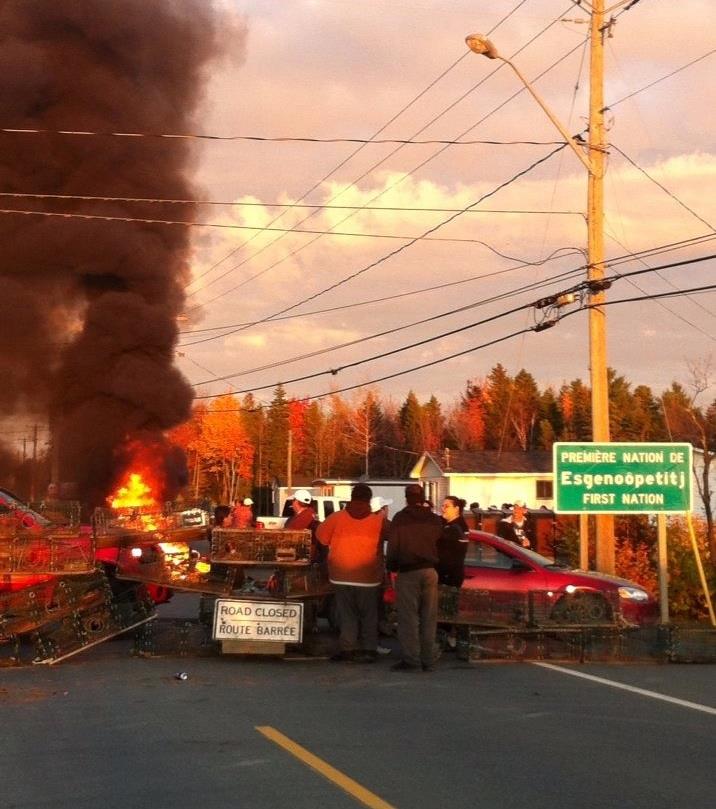
Members of the Mi'gmaw Warriors Society light fires at a road blockade designed to prevent exit of "thumpers" used in pre-fracking seismic testing30th Sep­tem­ber, An ongo­ing stand­off con­tin­ues to esca­late between

Members of the Mi'gmaw Warriors Society light fires at a road blockade designed to prevent exit of "thumpers" used in pre-fracking seismic testing30th Sep­tem­ber, An ongo­ing stand­off con­tin­ues to esca­late between anti-frack­ing activists and police in Kent Coun­ty, New Brunswick, Cana­da.

From Hal­i­fax Media Coop:

CMP have cur­rent­ly closed off auto­mo­bile access to the Irv­ing-owned com­pound that hous­es five of SWN Resource Canada’s seis­mic test­ing trucks, or ‘thumpers’. The police have closed off both north and south exits to high­way 134 off the high­way 11, as well as the 134 itself in both direc­tions. Walk-in access to the com­pound is cur­rent­ly the only way in and out.

Seis­mic test­ing is the pre­cur­sor to hydraulic frac­tur­ing [frack­ing].

Police aggres­sion has already result­ed in friv­o­lous arrests and even injuries to the pro­test­ers who have con­verged on the site. The pro­test­ers have respond­ed by set­ting up their own block­ade:

Mem­bers of the Mi’gmaw War­riors Soci­ety, an inde­pen­dent­ly-run group that self-describe them­selves as a ‘Home­land Secu­ri­ty’ force, have felled sev­er­al pine trees and are in the process of light­ing fires along the high­way. One van and numer­ous pine trees now also block access to the Irv­ing-owned, gat­ed com­pound that cur­rent­ly hous­es five of SWN Resources Canada’s seis­mic test­ing trucks, or ‘thumpers’. The thumpers are per­ceived by the activists to be a key piece of SWN’s equip­ment, with­out which the Texas-based gas giant will be unable to con­tin­ue seis­mic test­ing in New Brunswick.

Read the full articles here:

Break­ing: More Arrests at Ongo­ing New Brunswick Anti-Frack­ing Stand-Off

Cop Block Turns to Road Block

GMO Papaya Trees Cut Down on Big Island

Hawaiian-Papaya29 Sep­tem­ber, About 100 papaya trees were cut down with machetes overnight on Thurs­day in the Big Island’s Puna Dis­trict, accord­ing to the Hawaii Police Depart­ment.

Hawaiian-Papaya29 Sep­tem­ber, About 100 papaya trees were cut down with machetes overnight on Thurs­day in the Big Island’s Puna Dis­trict, accord­ing to the Hawaii Police Depart­ment.

The papaya trees, which were three to four feet tall and val­ued at $3,000, were on the J and L Papaya Farm off of High­way 132, accord­ing to Capt. Samuel Jels­ma.

The inci­dent comes as the Big Island com­mu­ni­ty is con­sid­er­ing the future of biotech on the island. Two bills are cur­rent­ly up for debate by the coun­ty coun­cil that would impose restric­tions on biotech. One bill, intro­duced by Coun­cil­woman Bren­da Ford, would require that the island’s GMO papaya fields be cut down. Farm­ers or landown­ers grow­ing GMO papaya would face jail and fines.

Almost all of the papaya grown on the Big Island is from seeds that were genet­i­cal­ly altered in the 1990s to pro­tect the crop from a dev­as­tat­ing ringspot virus.

Jels­ma has heard the­o­ries that anti-GMO pro­tes­tors cut down the papaya trees, but said he wasn’t going to spec­u­late. “At this point, we have noth­ing to show the motives,” he said.

This isn’t the first time that the Puna district’s lush papaya fields have been attacked with machetes.

In 2011, about 10 acres of trees were cut down on three adjoin­ing papaya farms. The year before, some 8,500 papaya trees were cut down.

Some believed the inci­dents were the work of GMO pro­tes­tors.

The police depart­ment nev­er solved the cas­es, said Jels­ma.


Bandung, Indonesia: ELF Torch Police and Military Bulletproof Vest Manufacturing Plant

Screen Shot 2013-09-26 at 11.19.02 PM26th Sep­tem­ber, The police are the ene­my. This is our final state­ment that is not nego­tiable.

Screen Shot 2013-09-26 at 11.19.02 PM26th Sep­tem­ber, The police are the ene­my. This is our final state­ment that is not nego­tiable. Police are not born to be friends, as indi­vid­u­als and as an insti­tu­tion, and can not be exclud­ed from the list of ene­mies that must be addressed by for our attacks. As an insti­tu­tion and as indi­vid­u­als, the police goal is to pro­tect civ­i­liza­tion and the exploita­tion it is doing to the earth.

The objec­tive of the police ‑as well as the oth­er repres­sive instru­ments- is to secure the mon­ey and invest­ment inter­ests for the sake of the anthro­pocen­tric way of life as it is today. The police are not for rep­re­sent­ing our inter­ests. Instead, the police are one of the thou­sands of faces of out­rage alive today. Police must be attacked, as hard as pos­si­ble.

For their loy­al ser­vices as guard dogs for the domes­ti­ca­tion of life, they are equipped with com­bat equip­ment that is used against free will and the aspi­ra­tions of wildlife where the judi­cia­ry and the rule of law are total­ly absent. They are equipped with weapons, armor and bul­let­proof vests. The devices are man­u­fac­tured so that the pigs can act with con­fi­dence in the face of the war that is addressed to their mas­ters.

But they were wrong. The pigs have a total­ly wrong idea if they think that we are not brave enough to send our attack right to their essen­tial sec­tors. As of this moment, when we put two jer­ry cans con­tain­ing 5 liters of petrol and 5 liters of diesel equipped with an auto­mat­ic trig­ger. Trig­gers that we have pre­pared so that we can move away from the scene of the attack and make them not be able to catch any of us. Which is more than enough time for us to let nature pro­tects us by remov­ing all traces of our feets.

We tried a new step to rad­i­cal­ize our attacks and extend the effects of the dam­age from any blows that we direct to the ene­my. Incen­di­ary devices placed at a fac­to­ry dur­ing the ear­ly hours on Mon­day, Sep­tem­ber 23, locat­ed on Canal Street Suryani, Babakan Vil­lage, Dis­trict Babakan Ciparay, Ban­dung, West Java.

The rea­son? This fac­to­ry man­u­fac­tures bul­let­proof vests for cops and army. This plant is one of the sources for the pro­duc­tion of war equip­ment for these pigs. Bul­let-proof vests to pro­tect police and sol­diers when they open fire on the ene­my, open fire on us and on our broth­ers. That’s why, this place is burn­ing, charred, and this is the pur­pose of this action.

Togeth­er with these actions, we send our respect­ful salute to the com­bat­ants in oth­er parts of the world and oth­er places who with­out hes­i­ta­tion attack as much as pos­si­ble. Salute to the joint actions under­tak­en by CCF Rus­sia and the Russ­ian ELF. Also the relent­less attack from com­bat­ants Ami­go de la Tier­ra – FAI in Argenti­na. Also the mul­ti­ple attacks by the brave ones of CCF and ICR in Project Phoenix.

This action also is our warm greet­ings and hugs to the brave indi­vid­u­als who were abduct­ed by the state but con­tin­ue to wage war whilst their phys­i­cal move­ments are lim­it­ed. To Gabriel Pom­bo da Sil­va, Mar­co Camenisch, Hans Niemey­er, Wal­ter Bond, the com­bat­ants of CCF Impris­oned Mem­bers Cell and the pris­on­ers in Greece, Italy and Chile that we can not men­tion one by one, but they are always in our hearts.

Bring down the civ­i­liza­tion
Wild Life, now!

ELF Indone­sian Frac­tion

====

Link of the video of the action from local news:

http://tv.detik.com/readvideo/2013/09/24/182502/130924044/061009681/pabrik-rompi-anti-peluru-terbakar?nd771104fvt

Badger Cull Update: We’re Winning

24th Sep­tem­ber, Due to high num­bers of pro­tes­tors, patrol­ers and sabs the bad­ger cull is basi­cal­ly f**ked.

24th Sep­tem­ber, Due to high num­bers of pro­tes­tors, patrol­ers and sabs the bad­ger cull is basi­cal­ly f**ked.

To begin with the shoot­ers start­ed by lur­ing bad­gers out to sets buy bury­ing peanuts in ‘good shoot­ing spots’. this result­ed in all the peanuts being replaced with repel­lant thus hav­ing the oppo­site effect they want­ed.

Now they have moved to cage trap­ping, a much slow­er and more expen­sive form of killing bad­gers. Lets just say there are many things that can be done with theese expen­sive cages (https://www.youtube.com/watch?v=rXmcc-skcdY)

Now we’ve learn’t that the shoot­ers are pulling out and stay­ing at home. This is because all the big sets are con­stant­ly pro­tect­ed and all they have left is the ‘slim pick­ing’ (and get­ting paid per bad­ger killed is’n’t pay­ing them enough to jus­ti­fy get­ting out of bed)

Some very good news from one of our spies in the farm­ing com­mu­ni­ty:
Dur­ing an NFU din­ner in Chel­tenham a cou­ple of nights ago, many farm­ers from with­in the cull zone were in atten­dance, moan­ing:
“the anti’s are bloody every­where and it makes the cull impos­si­ble”
“We wish we had nev­er heard of the bad­ger cull”
“it just does­n’t work, we haven’t killed any“
Best news of all was that one farmer was over­heard to say:
“Our con­trac­tor was sup­posed to come in this week, but he’s can­celled, he said “there’s no point in com­ing”

Now we have just learn’t that that out of all the hun­dreds of pro­test­ers out there the police have only arrest­ed 7 and all 7 of theese cas­es have been dropped!

We are half way through the cull, get down to the cull zones and lets end this nonsence once and for all

If your going to the Glous zone con­tact Three Coun­ties hunt Sabo­teurs

if your going to the som­er­set zone con­tact Som­er­set Against The Bad­ger Cull

If you cant make it to the zones please con­sid­er donat­ing some equip­ment to make us more effec­tive by click­ing this link http://www.amazon.co.uk/registry/wishlist/1A1V6TQIH6BBB

Anti-Oil Activists in Ecuador Stand Up To Protect Yasuni National Park

YasuniProtest

YasuniProtest

23rd Sep­tem­ber, The world’s most bio­di­verse area risks being exploit­ed for its oil by the “rev­o­lu­tion­ary” gov­ern­ment of Rafael Cor­rea. But he faces strong resis­tance.

The script of this sto­ry is almost too obvi­ous. The most bio­di­verse spot on the plan­et, the Yasuní Nation­al Park in Ecuador — and in par­tic­u­lar an area called ITT — lays on top of pre­cious oil. A poor country’s greedy gov­ern­ment threat­ens to exploit it. Vol­un­tar­i­ly iso­lat­ed indige­nous peo­ple who have nev­er been con­tact­ed also live in this region. Those indige­nous peo­ple are war­riors and would fight for their ter­ri­to­ry to death. As I am writ­ing this I am think­ing that all the ele­ments in this sto­ry might remind us of the film Avatar. But in that sto­ry it was much eas­i­er to iden­ti­fy the bad guys rid­ing super­son­ic space­ships and fight­ing against those blue gigan­tic indige­nous who would use drag­ons to fly. This sto­ry is a bit more com­pli­cat­ed.

Rafael Cor­rea has been Ecuador’s Pres­i­dent since 2007, with at least 4 more years ahead of him. Pri­or to Cor­rea, Ecuador expe­ri­enced over 10 years of intense polit­i­cal insta­bil­i­ty, which includ­ed more than 6 pres­i­dents oust­ed over that peri­od. But what start­ed as a “rev­o­lu­tion­ary” left­ist gov­ern­ment which has per­ma­nent­ly claimed rights and respect in the name of sov­er­eign­ty, has recent­ly start­ed to sig­nal author­i­tar­i­an­ism, cor­rup­tion, nepo­tism as well as oth­er typ­i­cal signs of a pow­er-hun­gry gov­ern­ment. Late­ly, the Ecuado­ri­an gov­ern­ment, with Rafael Cor­rea as its main fig­ure, keep say­ing that “every­body who is not with me, is against me and the rev­o­lu­tion.”

yasuni2

Com­ing back to the stage where this sto­ry takes place, it is impor­tant to men­tion that ecol­o­gy and respect for the indige­nous com­mu­ni­ties do not go togeth­er with oil drilling. This is par­tic­u­lar­ly clear in Ecuador. Ecuador’s rela­tion with oil drilling start­ed over 40 years ago. Just one exam­ple of the what has hap­pened in the Ama­zon­ian region in the East of the coun­try since then is Chevron’s sys­tem­at­ic dump­ing of more than 18 bil­lion gal­lons of oil into the rain­for­est, in what has been called the worst eco­log­i­cal dis­as­ter in his­to­ry, with thou­sands of peo­ple left dead and thou­sands more sick due to pol­lut­ed water. The destruc­tion of the for­est has left very lit­tle rev­enue to Ecuador and even less to its peo­ple. Petroa­ma­zonas, the Ecuado­ri­an pub­lic enter­prise in charge of oil explo­ration and drilling, admit­ted that one spill occurs every week. After 40 years of oil exploita­tion, Ecuador is still a poor coun­try.

What makes the char­ac­ters in this sto­ry par­tic­u­lar­ly dif­fi­cult to define as the “bad guys”, is that not all of them were always will­ing to inter­vene in this high­ly sen­si­tive area in exchange for mon­ey. Pres­i­dent Cor­rea him­self devot­ed his first inter­ven­tion to the UN Gen­er­al Assem­bly in 2007 to this top­ic. Using the same charm as years ago in New York or Rio de Janeiro dur­ing the Rio+20 glob­al con­fer­ence, Pres­i­dent Cor­rea announced on August 15 this year that he has been forced to start drilling oil in the most sen­si­tive zone of the Yasuní Nation­al Park, claim­ing that “the world has failed us.” As a mat­ter of fact the ini­tia­tive was pret­ty much boy­cotted by the gov­ern­ment itself.

"The Tagaeri and Taronenane, the last peoples in voluntary isolation in Ecuador" [google translate]

“The Tagaeri and Taro­ne­nane, the last peo­ples in vol­un­tary iso­la­tion in Ecuador” [google trans­late]

Through­out the years, con­tra­dic­to­ry sig­nals were sent, a low-skilled team was appoint­ed, min­ing projects all over the coun­try were giv­en to Chi­nese and Cana­di­an com­pa­nies, Ecuador par­tic­i­pat­ed in oil-pro­mot­ing inter­na­tion­al nego­ti­a­tion rounds. This, among oth­er things, weak­ened the verac­i­ty of the ini­tia­tive. Fol­low­ing the announce­ment, Cor­rea and some of his gov­ern­ment min­is­ters have stat­ed that those indige­nous vol­un­tar­i­ly iso­lat­ed have actu­al­ly dis­ap­peared, tak­ing off the table the fact that an eth­no­cide is immi­nent once the oil drilling starts. All of the argu­ments pre­sent­ed to pro­mote the ini­tia­tive ini­tial­ly were tak­en back, includ­ing mod­i­fy­ing offi­cial maps.

As expect­ed, a mas­sive pro­pa­gan­da cam­paign fol­lowed Correa’s announce­ment. Claim­ing that oil drilling will only affect 0.1% of the Yasuní area, TV spots and radio com­mer­cials are broad­cast every day on prime-time, fol­lowed by a strong social media cam­paign. One of the sev­er­al spots shows a baby hand­ed by its moth­er to be vac­ci­nat­ed. The Ecuado­ri­an gov­ern­ment actu­al­ly com­pares a tod­dler being vac­ci­nat­ed to oil drilling. In the Ama­zon­ian provinces, where entire com­mu­ni­ties have paid the price of oil drilling with their health and life — includ­ing those impact­ed by Chevron’s oil dam­ages — have been put up with the slo­gan “oil builds a bet­ter future.” The gov­ern­ment is actu­al­ly try­ing to con­vince us that those (sup­pos­ed­ly) 18 bil­lion dol­lars will con­tribute enor­mous­ly to erad­i­cate pover­ty. How is it that since Cor­rea came to pow­er the nation­al bud­get has been over US$150 bil­lion and peo­ple in Ecuador are still poor?

yasuni4In Quito and many oth­er cities across the coun­try, young­sters, artists, civ­il soci­ety orga­ni­za­tions and indige­nous groups have orga­nized demon­stra­tions against the inter­ven­tion in Yasuní. This social move­ment has been fight­ing for the rights of nature and against trans­genic food, neolib­er­al­ism, impe­ri­al­ism and oth­ers, and is now stand­ing up to defend the park. The gov­ern­ment has react­ed furi­ous­ly against the pro­test­ers, even resort­ing to vio­lent police repres­sion. All sorts of threats have been announced includ­ing con­trol­ling social media and leav­ing stu­dents out of school if they dare to par­tic­i­pate in demon­stra­tions. Pres­i­dent Cor­rea even react­ed through his Twit­ter account against inter­na­tion­al com­men­ta­tors who showed their dis­ap­proval. Every­body who is not with the gov­ern­ment is auto­mat­i­cal­ly con­sid­ered its ene­my.

And so, with­out blue indige­nous peo­ple rid­ing drag­ons to stop the destruc­tion of the most bio-diverse spot of plan­et Earth, we stand up. We stand up to say that we won’t allow an eth­no­cide to hap­pen in front of our eyes. We stand up to tell Pres­i­dent Cor­rea that even if the world failed Yasuní, he is respon­si­ble for the impact that oil drilling will have on this area and the plan­et. We stand up to those who have his­tor­i­cal­ly betrayed our con­sti­tu­tion. We stand up for a ref­er­en­dum where the peo­ple of Ecuador will say “no!” to the destruc­tion of nature and the habi­tat and liveli­hoods of indige­nous peo­ples. Because we believe that a dif­fer­ent Ecuador and a dif­fer­ent world are pos­si­ble; a plan­et where nature doesn’t need to be destroyed and peo­ple don’t have to die so oth­ers can dri­ve. We believe in a post-oil plan­et.

Badger Cull: Three Protesters Released without Charge

badgercull

23rd Sep­tem­ber, Three peo­ple believed to be bad­ger cull pro­test­ers who were arrest­ed in Glouces­ter­shire have been released with­out charge.

badgercull

23rd Sep­tem­ber, Three peo­ple believed to be bad­ger cull pro­test­ers who were arrest­ed in Glouces­ter­shire have been released with­out charge.

A woman, aged 52, from the Unit­ed States, was detained by offi­cers along with a 20-year-old man from Wal­sall and anoth­er woman, 26, from Croy­don.

They were arrest­ed on 19 Sep­tem­ber on sus­pi­cion of aggra­vat­ed tres­pass.

Four oth­er peo­ple were arrest­ed and bailed on sus­pi­cion of theft and aggra­vat­ed tres­pass ear­li­er this month.

About 5,000 bad­gers are to be shot in a six-week pilot in Glouces­ter­shire and Som­er­set in a bid to curb bovine TB.

Defra will not con­firm how many bad­gers have been shot so far dur­ing the pilot.

Those against the cull argue shoot­ing bad­gers is “inhu­mane” and will be inef­fec­tive.

Brazil: Another Belo Monte Occupation; Teles Pires Dam Suspended

Indigenous warriors occupying the construction site of the Belo Monte dam in Brazil, May 2013

20th Sep­tem­ber, Two bits of good news from anti-dam strug­gles in Brazil:

Indigenous warriors occupying the construction site of the Belo Monte dam in Brazil, May 2013

20th Sep­tem­ber, Two bits of good news from anti-dam strug­gles in Brazil:

• On Sep­tem­ber 16, 150 indige­nous peo­ple affect­ed by the con­struc­tion of the Belo Monte Dam com­plex in the Brazil­ian Ama­zon occu­pied one of the project’s prin­ci­ple work camps, halt­ing con­struc­tion activ­i­ties on a sec­tion of the world’s third largest dam. Mem­bers of the local Parakanã and Juruna indige­nous com­mu­ni­ties blocked a main access road to demand that the dam-build­ing con­sor­tium Norte Ener­gia respect its oblig­a­tion to remove land invaders from local indige­nous ter­ri­to­ries. The mobi­liza­tion marks the eighth time Belo Monte has been occu­pied since 2012. Read more.

• The same day, a fed­er­al judge ordered the imme­di­ate sus­pen­sion of con­struc­tion on the Teles Pires hydro­elec­tric project – one of five large dams planned for the Teles Pires Riv­er, a major trib­u­tary of the Tapa­jós Riv­er in the heart of the Brazil­ian Ama­zon. In response to a civ­il law­suit filed by Brazil’s Fed­er­al Pub­lic Pros­e­cu­tors’ Office (MPF), the deci­sion cites “unfor­giv­able fail­ures” in the envi­ron­men­tal licens­ing of the dam, espe­cial­ly in terms of pri­or analy­sis of impacts on the Kayabi, Munduruku and Api­a­ka indige­nous peo­ple and their ter­ri­to­ries. Accord­ing to the deci­sion of Judge Souza Pru­dente, con­struc­tion of the Teles Pires Dam con­sor­tium must be halt­ed until the indige­nous com­po­nent of the EIA is com­plet­ed and for­mal­ly approved by FUNAI. Ana­lysts expect the Brazil­ian President’s admin­is­tra­tion to appeal the rul­ing. Read more.