The launch of Beat the Boreholes in Mayo!

July 16, 2010
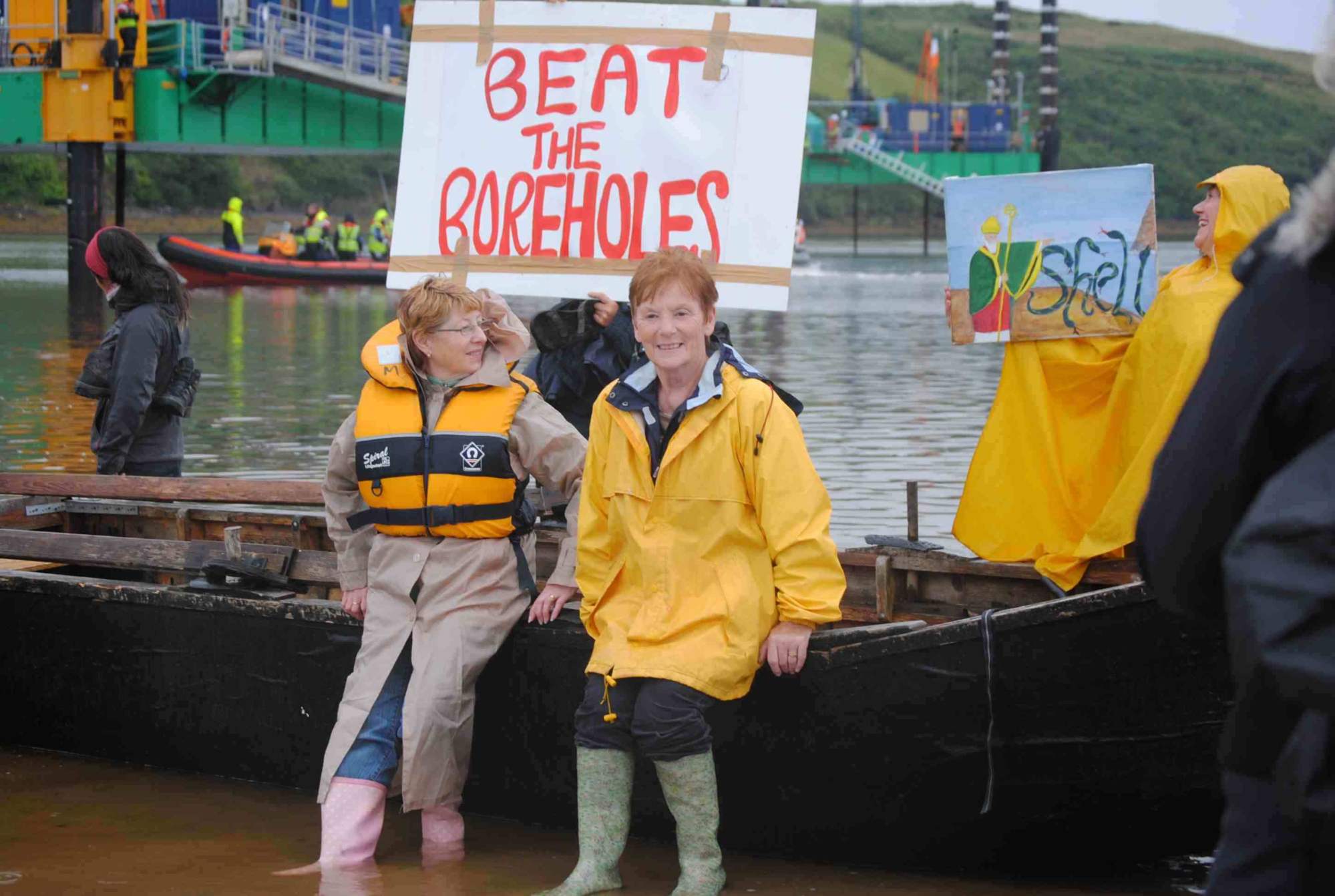
Yes­ter­day saw the launch of “Beat the Bore­holes”; a cam­paign of mass civ­il dis­obe­di­ence to stop Shell works in Mayo this Sum­mer. At 7am in the morn­ing cam­paign­ers entered the water in Broad­haven Bay in kayaks and a safe­ty rib in a peace­ful attempt to pre­vent Shell from bring­ing in a sec­ond bore­hole drilling plat­form. They were met with 5 Gar­da water unit boats, with approx­i­mate­ly 16 Gar­daí on board and 10 secu­ri­ty boats. Cam­paign­ers attempt­ed to approach the plat­form but were pre­vent­ed from doing so by Gar­daí who over­turned their kayaks. Gar­daí arrest­ed 2 cam­paign­ers for minor Pub­lic Order offences and seized three kayaks, the safe­ty rib & sev­er­al pad­dles.

Beat the Boreholes - Shell to SeaJuly 16, 2010
Yes­ter­day saw the launch of “Beat the Bore­holes”; a cam­paign of mass civ­il dis­obe­di­ence to stop Shell works in Mayo this Sum­mer. At 7am in the morn­ing cam­paign­ers entered the water in Broad­haven Bay in kayaks and a safe­ty rib in a peace­ful attempt to pre­vent Shell from bring­ing in a sec­ond bore­hole drilling plat­form. They were met with 5 Gar­da water unit boats, with approx­i­mate­ly 16 Gar­daí on board and 10 secu­ri­ty boats. Cam­paign­ers attempt­ed to approach the plat­form but were pre­vent­ed from doing so by Gar­daí who over­turned their kayaks. Gar­daí arrest­ed 2 cam­paign­ers for minor Pub­lic Order offences and seized three kayaks, the safe­ty rib & sev­er­al pad­dles.

This action fol­lows on from pre­vi­ous night when at 7pm peo­ple tried to stop the first drilling plat­form enter­ing the estu­ary by block­ing the way with rafts & kayaks. One kayak­er came close to the plat­form & was seized by Gar­dai. He says “a gar­da then pinched my throat with his two fin­gers and cut off my air sup­ply. He held me like that for about 90 sec­onds, allow­ing me to take one or two gasps. He kept say­ing into my ear that he had my last breath in his hands.”

Up to 80 bore­holes are planned in the Sruth Fha­da Chonn estu­ary in the next 3 months. They are to pro­vide a sur­vey for the tun­nel which Shell are propos­ing to build under the estu­ary to house the raw gas pipeline. Beat the Bore­holes are ask­ing peo­ple to pledge to “adopt” a bore­hole & take action to stop it being made. Groups are sign­ing up fast with var­i­ous actions planned such as mass walk outs on the sand, pic­nics on the beach & board­ing the drilling rigs.

The new pipeline route is still with­in 250m of sev­er­al hous­es and the local com­mu­ni­ty remains opposed to the plans. The estu­ary is a Spe­cial­ly Pro­tect­ed Area & part of the Broad­haven Bay Spe­cial Area of Con­ser­va­tion; pro­tect­ed under EU leg­is­la­tion. The oper­a­tion will dam­age parts of the estu­ary & dis­turb the wildlife there, par­tic­u­lar­ly Atlantic salmon, otters & birds found on the inter­tidal areas. This work was giv­en the go ahead by min­is­ter Gorm­ley, for­mer Ross­port 5 and Shell to Sea sup­port­er.

Join Beat the Bore­holes this Sum­mer in Mayo! See www.rossportsolidaritycamp.com. www.shelltosea.com. Con­tact rossportsolidaritycamp@gmail.com.

Shell to Sea campaigner attacked at sea last night

July 15th 2010
At approx­i­mate­ly 7pm last night a num­ber of Shell to Sea cam­paign­ers entered the water in Broad­haven Bay in kayaks and rafts in a peace­ful attempt to pre­vent Shell from bring­ing in a bore­hole drilling plat­form. They were met with 5 Gar­da water unit boats, with approx­i­mate­ly 16 Gar­daí on board.

Beat the Boreholes 1Beat the Boreholes 2July 15th 2010
At approx­i­mate­ly 7pm last night a num­ber of Shell to Sea cam­paign­ers entered the water in Broad­haven Bay in kayaks and rafts in a peace­ful attempt to pre­vent Shell from bring­ing in a bore­hole drilling plat­form. They were met with 5 Gar­da water unit boats, with approx­i­mate­ly 16 Gar­daí on board.

Cam­paign­ers attempt­ed to approach the plat­form but were pre­vent­ed from doing so by Gar­daí who over­turned their kayaks.

One of the cam­paign­ers, Eoin Law­less man­aged to get close to the plat­form. When Gar­daí over­turned his kayak, he swam under the plat­form. A Gar­da then jumped into the water after him, and with­out giv­ing any instruc­tion pro­ceed­ed to drag him from the water into the near by Gar­da boat.

Mr. Law­less said, “I had told Gar­daí that I would leave the area but I was dragged from the water and they pro­ceed­ed to kneel on my back. I was not informed whether I was under arrest or why I was being man­han­dled. One Gar­da then pinched my throat with his two fin­gers and cut off my air sup­ply. He was obvi­ous­ly trained in how to do it. He held me like that for about 90 sec­onds, allow­ing me to take one or two gasps. He kept say­ing into my ear that he had my last breath in his hands.”

“It was ter­ri­fy­ing. I tru­ly believed he might kill me. We need human rights observers to come back down to Mayo as a mat­ter of urgency**” said Mr. Law­less.

Mr. Law­less received med­ical atten­tion at Bel­mul­let Gar­da sta­tion last night.

Shell plan to drill up to 80 bore­holes to sur­vey the Sruth Fha­da Chonn estu­ary for it’s pro­posed raw gas pipeline. The bore­holes are to pro­vide a sur­vey of the estu­ary to deter­mine the final plans for the tun­nel Shell plans to build under the estu­ary link­ing up the off­shore pipeline with the pro­posed inland refin­ery. The new route is still with­in 250m of sev­er­al hous­es and the local com­mu­ni­ty remains opposed to the plans. The estu­ary is a Spe­cial­ly Pro­tect­ed Area & part of the Broad­haven Bay Spe­cial Area of Con­ser­va­tion. The oper­a­tion will dam­age parts of the estu­ary & dis­turb the wildlife there, par­tic­u­lar­ly Atlantic salmon, otters & birds found on the inter­tidal areas.

Shell to Sea plan to try to stop Shell from drilling the bore­holes over the next few months through a cam­paign of peace­ful protest.

ENDS

For fur­ther infor­ma­tion or ver­i­fi­ca­tion please con­tact: Shell to Sea

NOTES TO EDITORS

Shell to Sea is a nation­al cam­paign with active groups based across Ire­land. The Shell to Sea cam­paign has three main aims. 1) To have the Cor­rib gas field exploit­ed in a safe way that will not expose the local com­mu­ni­ty in Erris to unnec­es­sary health, safe­ty and envi­ron­men­tal risks. 2) To rene­go­ti­ate the terms of the Great Oil and Gas Give­away, which sees Ireland’s 10 bil­lion bar­rels of oil equiv­a­lent* off the West Coast go direct­ly to the oil com­pa­nies, with the Irish State retain­ing a 0% share, no ener­gy secu­ri­ty of sup­ply and only 25% tax on prof­its against which all costs can be deduct­ed. 3) To seek jus­tice for the human rights abus­es suf­fered by Shell to Sea cam­paign­ers due to their oppo­si­tion to Shell’s pro­posed inland refin­ery.

* This fig­ure, issued by the Depart­ment of Com­mu­ni­ca­tions, Ener­gy & Nat­ur­al Resources (DCENR) in 2006, esti­mates the amount of gas and oil in the Rock­all and Por­cu­pine basins, off Ire­land ’s west coast, to be 10 BBOE (bil­lion bar­rels of oil equiv­a­lent). Based on the aver­age price of a bar­rel of oil for June 2010 at $75.34 or €59.61, this works out at a val­ue of €596 bil­lion. This does not take account of fur­ther oil and gas reserves off Ire­land ’s south coast or inland. The total vol­ume of oil and gas which right­ful­ly belongs to Ire­land could be sig­nif­i­cant­ly high­er. Also, as the glob­al price of oil ris­es in the com­ing years, the val­ue of these Irish nat­ur­al resources will rise fur­ther.

** Front­line report: ‘Break­down in Trust’: http://www.frontlinedefenders.org/node/ 2474 (see p.51)

Russian Activists set up Barricade, then Camp Out As Battle For Khimki Forest Heats Up

July 17, 2010
Envi­ron­men­tal­ists opposed to plans to raze a Khim­ki for­est to make way for an $8 bil­lion high­way raised a bar­ri­cade to keep out log­gers Mon­day, Inter­fax report­ed.

Khimki forestKhimki protest campJuly 17, 2010
Envi­ron­men­tal­ists opposed to plans to raze a Khim­ki for­est to make way for an $8 bil­lion high­way raised a bar­ri­cade to keep out log­gers Mon­day, Inter­fax report­ed.

On the side of the road to Moscow’s Shereme­tye­vo Air­port, which runs along a pris­tine expanse of old-growth trees, a ban­ner urges dri­vers to help “Stop the felling of the for­est.”

Behind the sign, the for­est is marred by a gap­ing hole the size of three foot­ball fields.

This is where activists from the Ecode­fense envi­ron­men­tal group have camped out in a des­per­ate bid to save the Khim­ki for­est from destruc­tion.

Russ­ian author­i­ties want to clear large swathes of for­est to make way for an $8 bil­lion high­way con­nect­ing Moscow and St. Peters­burg. They say the pro­posed route through Khim­ki, a small town on Moscow’s north­ern out­skirts, will help ease traf­fic con­ges­tion by offer­ing an alter­na­tive road to the air­port.

But envi­ron­men­tal­ists say build­ing the high­way in Khim­ki would deprive Moscow of yet anoth­er chunk of its fast-dwin­dling green belt, designed in the 1930s to con­tain pol­lu­tion and pre­serve wildlife.

Ecode­fense suc­ceed­ed in halt­ing the first felling works on July 15, because the work­ers showed up with­out defor­esta­tion per­mits, accord­ing to activist Sergei Ageyev.

“There were about six work­ers cut­ting down trees and two secu­ri­ty guards. There were more at the oth­er loca­tion, which had the bulk of the equip­ment, includ­ing an exca­va­tor. We demand­ed that they stop work,” Ageyev says. “We asked to see doc­u­ments. They did­n’t know any­thing; there were no doc­u­ments at the site. It is a bla­tant vio­la­tion; there must be doc­u­ments.”

Ecode­fense leader Yevgenya Chiriko­va says a small fight erupt­ed between activists and secu­ri­ty guards of the French com­pa­ny in charge of the felling, Vin­ci Con­ces­sions.

“We won,” she adds with a smile.

The com­pa­ny could not imme­di­ate­ly be reached for com­ment.

Short­ly after speak­ing to RFE/RL, Chiriko­va was attacked by an uniden­ti­fied man, who struck her before ram­ming his car into her. She escaped unhurt.

She said the police were slow to respond when she report­ed the inci­dent. “I don’t under­stand why it took them so long to find me,” she told RFE/RL’s Russ­ian Ser­vice. “The day before a detach­ment of police was ordered to our camp and they had found us quite eas­i­ly.”

Chiriko­va said the the attack was a form of “psy­cho­log­i­cal pres­sure” and just one in a series of inci­dents meant to intim­i­date her.

Pol­lu­tion And Ill­ness

At the activists’ makeshift camp, fresh­ly cut birch trees are piled up close to an aban­doned bull­doz­er. Oth­er piles of felled trees near­by sug­gest clear­ing has been going on for some time.

Despite the swel­ter­ing heat, the activists are deter­mined to stay here round-the-clock until all felling equip­ment has left the for­est.

Ecol­o­gists and Khim­ki res­i­dents have been fight­ing plans to build the high­way for years, say­ing it will have a dev­as­tat­ing effect on the local envi­ron­ment.

Andrei Mar­gulev, the coor­di­na­tor of the union of eco­log­i­cal orga­ni­za­tions, was the one who raised the alarm about this week’s felling at Khim­ki for­est.

“The eco­log­i­cal sit­u­a­tion here in the north of Moscow is very dire due to the huge num­ber of vehi­cles and enter­pris­es, includ­ing garbage incin­er­a­tion plants and a famous garbage dump that con­stant­ly sends out smoke on that side of the canal,” Mar­gulev says. “The for­est fil­ters the air and the dust that can car­ry pol­lu­tion all the way to our lungs. All this dust remains here. If there were no for­est, hun­dreds more peo­ple would die of can­cer­ous dis­eases.”

Chiriko­va, a busi­ness­woman, moved to Khim­ki with her fam­i­ly to live clos­er to the for­est. She began cam­paign­ing to save the for­est after she noticed red paint on trees near her home in Khim­ki mark­ing the high­way’s pro­posed route.

“The for­est is impor­tant to us not only as a source of oxy­gen, but also for its bio­di­ver­si­ty, which is unique for the Moscow region,” she says. “There are few­er and few­er such places, and we under­stand that if we don’t pre­serve this for­est, we won’t sur­vive next sum­mer when tem­per­a­tures reach 36 degrees Cel­sius.”

Charges Of Cor­rup­tion

Crit­ics of the high­way accuse the gov­ern­ment of ignor­ing protests, manip­u­lat­ing laws, and mod­i­fy­ing the forest’s sta­tus to allow its defor­esta­tion.

The group filed a com­plaint to the Euro­pean Court of Human Rights after Rus­si­a’s Supreme Court reject­ed its appeal in April.

Ecode­fense also accus­es author­i­ties of delib­er­ate­ly engi­neer­ing a recent four-day traf­fic jam on the road lead­ing to the air­port to gain sup­port for the high­way.

Activists say the project is mired in cor­rup­tion, stress­ing that one of the dri­ving forces behind the pro­posed route is Trans­port Min­is­ter Igor Lev­itin, who also sits on the air­port’s board of direc­tors.

Trans­paren­cy Inter­na­tion­al has report­ed there was a “poten­tial cor­rup­tion risk” in the project.

Ecode­fense activists say they recent­ly met with rep­re­sen­ta­tives of the Euro­pean Bank for Recon­struc­tion and Devel­op­ment to per­suade them not to invest in the road.

Experts say the planned route through the for­est will actu­al­ly slow down a road that is sup­posed to be about speed­ing up traf­fic.

The cam­paign has become a cause célèbre in Rus­sia, par­tic­u­lar­ly after Mikhail Beke­tov, the edi­tor of the local news­pa­per “Khimkin­skaya Prav­da,” was vicious­ly beat­en two years ago in what many see as retal­i­a­tion for his bat­tle to save the Khim­ki for­est.

One of Beke­tov’s legs had to be ampu­tat­ed fol­low­ing the attack, and he suf­fered severe brain dam­age.

Ecode­fense has col­lect­ed 20,000 sig­na­tures against the destruc­tion of the for­est. In anoth­er sign of the group’s mount­ing clout, Chiriko­va won 16 per­cent of the vote in last year’s elec­tion for may­or of Khim­ki — a high result for a first-time, inde­pen­dent can­di­date.

Despite the start of tree felling this week, Chiriko­va is not los­ing hope. But she says more peo­ple need to join the cause.

“We see a real chance to stop the felling,” she says. “The only thing we lack is help from active peo­ple who could come here…to bring water, food, and tents to our won­der­ful camp. That’s the only way we can stop any­thing.”

“We have no hope in the police, who sim­ply sit in the bush­es shrug­ging their shoul­ders and say­ing they don’t know what to do,” she says.

Defor­esta­tion Starts, and Stops, in Khim­ki

16.7.10
A French com­pa­ny start­ed clear­ing a Khim­ki for­est for an $8 bil­lion high­way con­nect­ing Moscow and St. Peters­burg, but its work was halt­ed Thurs­day by envi­ron­men­tal­ists.

France’s Vin­ci Con­ces­sions cut down trees in an area equal to two foot­ball fields near the Novo­tel Shereme­tye­vo Moscow hotel on Wednes­day before the envi­ron­men­tal­ists showed up Thurs­day morn­ing and demand­ed to see defor­esta­tion per­mits, which the work­ers were unable to pro­vide, the pub­lic group In Defense of the Khim­ki For­est said.

The activists put up tents near the defor­esta­tion site in Khim­ki, a town on Moscow’s north­ern out­skirts, for 10 peo­ple to mon­i­tor the area around the clock to make sure work did not resume with­out the per­mits.

The work­ers promised to show the per­mits Mon­day, said Yev­ge­nia Chiriko­va, head of In Defense of the Khim­ki For­est. “They promised to pro­vide every­thing, but on Mon­day at 2 p.m.,” she said, Inter­fax report­ed.

Green­peace Rus­sia asked the Pros­e­cu­tor Gen­er­al’s Office to check “with­out delay” whether the work­ers had per­mits for the defor­esta­tion, the envi­ron­men­tal watch­dog said in a state­ment.

Offi­cials with Vin­ci Con­ces­sions, which leads the North-West Con­ces­sion Com­pa­ny, a con­sor­tium build­ing the road, could not imme­di­ate­ly be reached for com­ment.

Ecode­fense, an envi­ron­men­tal group, linked a four-day traf­fic jam on Leningrad­skoye Shosse in late June and ear­ly July to the defor­esta­tion in Khim­ki, say­ing it was “engi­neered delib­er­ate­ly to get a green light for the con­struc­tion” of the Khim­ki road.

In Defense of the Khim­ki For­est togeth­er with the Fed­er­a­tion of Car Own­ers of Rus­sia appealed to the Pros­e­cu­tor Gen­er­al’s Office this week to inves­ti­gate the rea­sons for the snarled traf­fic, which city author­i­ties have blamed on con­struc­tion work on a small bridge in Khim­ki.

In late April, the Supreme Court brushed aside envi­ron­men­tal con­cerns over the defor­esta­tion of the old oak for­est, allow­ing work on the high­way to pro­ceed.

The for­est has become a sym­bol of grass­roots activism in Rus­sia over the past two years. In Novem­ber 2008, Mikhail Beke­tov, one of the forest’s staunchest defend­ers and the edi­tor of the local news­pa­per Khimkin­skaya Prav­da, was bad­ly beat­en after he crit­i­cized the Khim­ki admin­is­tra­tion for sup­port­ing the defor­esta­tion. The attack, which remains unsolved, left Beke­tov brain dam­aged, and one of his legs had to be ampu­tat­ed.
Back­ground and here

Oil Spill at the British Museum

13.07.2010
This morn­ing three mem­bers of the art activist group Cul­ture Beyond Oil poured non-tox­ic black oil around the British Museum’s world famous East­er Island sculp­ture, in protest at BP’s spon­sor­ship of the muse­um. Emi­ly James, Direc­tor of Just Do It, hap­pened to be there and cap­tured the action.

BP British Museum 1BP British Museum 2BP British Museum 313.07.2010
This morn­ing three mem­bers of the art activist group Cul­ture Beyond Oil poured non-tox­ic black oil around the British Museum’s world famous East­er Island sculp­ture, in protest at BP’s spon­sor­ship of the muse­um. Emi­ly James, Direc­tor of Just Do It, hap­pened to be there and cap­tured the action.

Fol­low­ing sim­i­lar actions at the Tate Mod­ern, Tate Britain and Nation­al Por­trait Gallery in recent weeks, the activists tar­get­ed the British Muse­um because of the annu­al spon­sor­ship it receives from the infa­mous oil com­pa­ny.

A recent report called ‘Licence to Spill’ from the cam­paign group Plat­form has point­ed to the ben­e­fits of cul­tur­al spon­sor­ship for oil com­pa­nies, stat­ing that “the finan­cial sup­port that the com­pa­nies [like Shell and BP] pro­vide [to cul­tur­al insti­tu­tions] strength­ens their posi­tion as a part of Britain’s cul­tur­al and social elite, and cre­ates a per­cep­tion of mak­ing a pos­i­tive con­tri­bu­tion to our soci­ety”, thus giv­ing them a “social license to oper­ate”.

The stat­ue around which the oil was poured* is known as Hoa Hakananai’a, a 2000 year old rel­ic tak­en from East­er Island by Euro­pean explor­ers. The sto­ry of the East­er Island stat­ues is often cit­ed as an exam­ple of the speed with which once strong civ­i­liza­tions have sud­den­ly col­lapsed.

Ben Coop­er, who is also part of Lib­er­ate Tate, said: “Oil spon­sor­ship of pub­lic insti­tu­tions is a prob­lem that stretch­es way beyond BP and the cat­a­stro­phe in the Gulf of Mex­i­co. The oil indus­try has a long his­to­ry of envi­ron­men­tal and human rights abus­es, and is cur­rent­ly pulling us clos­er and clos­er to a poten­tial cat­a­stro­phe on a glob­al scale.

“Just like the forests on East­er Island, oil rep­re­sents a resource being over-exploit­ed despite mas­sive­ly increas­ing risks. With our relent­less search for oil we are risk­ing the col­lapse of the ecosys­tems on which we depend — just as the inhab­i­tants of East­er Island did 2000 years ago”.

VIDEO AND PICTURES HERE: http://just-do-it.org.uk/oil-spill-at-the-british-museum

just.do.it.film@googlemail.com
http://just-do-it.org.uk/

summer camps in the UK & Merthyr coal train action sentencing — solidarity demo

The next month and a half are busy times if you like camp­ing and pol­i­tics! Peace News, EF! gath­er­ing, Welsh & UK cli­mate camps.…

Climate Camp Cymru 2010 logoThe next month and a half are busy times if you like camp­ing and pol­i­tics! Peace News, EF! gath­er­ing, Welsh & UK cli­mate camps.…

The Peace News Sum­mer Camp is almost upon us in sun­ny Oxford­shire, “an inclu­sive, demo­c­ra­t­i­cal­ly-run five-day expe­ri­ence-in-minia­ture of the kind of world we are try­ing to bring about”. This year, fem­i­nism joins our stand­ing themes of peace and jus­tice.
http://peacenewscamp.info/

The EF! Sum­mer Gath­er­ing is of course in ear­ly August in the beau­ti­ful Peak Dis­trict. “5 days of work­shops, skill shar­ing and plan­ning action, plus low- impact liv­ing with­out lead­ers. Meet and share skills with oth­ers who care. Plan actions and cam­paigns. Have fun. We’ve got over 80 work­shops, plan­ning, strat­e­gy and ‘Where Next’ ses­sions planned, get in touch if you want to offer a work­shop! ”
A tonne of var­ied and amaz­ing work­shops and train­ing ses­sions, full details at http://www.earthfirstgathering.org.uk/2010/front.html

And the Welsh Cli­mate Camp is in mid-August (see call­out below), “a basic ‘lite’ action-focused camp in South Wales; with its atten­tion fixed firm­ly on coal. This will be linked to a sis­ter-site /in­fo-shop in Cardiff which will act as a point of con­tact before and dur­ing the camp. Work­shops will be most­ly lim­it­ed to action-based train­ing and infor­ma­tion although there will be space to hear from com­mu­ni­ty cam­paigns and open dis­cus­sion forums through­out the camp.”
http://climatecampcymru.org/?page_id=1000

The UK Camp for Cli­mate Action is head­ing north to Edin­burgh at the end of August, “Our sus­tain­able and col­lec­tive­ly organ­ised base­camp will give you the chance to learn, train up, and meet like mind­ed indi­vid­u­als. Excit­ing action plans are cur­rent­ly in the plot­ting stages, so watch this space.”
http://www.climatecamp.org.uk/actions/edinburgh-2010

—-

Open cast is trash­ing the south Wales land­scape
It’s time to take action
Cli­mate Camp Cym­ru
13 – 17 August

A momen­tum is build­ing. Last year we camped next to Ffos y Fran — one of the largest open­cast mines in Europe — for a week of work­shops and sus­tain­able liv­ing. This sum­mer we’re going back to basics with a light action-based camp, tar­get­ing coal some­where in south Wales.

Our cur­rent eco­nom­ic sys­tem is based on an addic­tion to fos­sil fuels and on max­imis­ing prof­it at the expense of peo­ple and the envi­ron­ment. Fos­sil fuel cor­po­ra­tions can­not be allowed to progress unchecked. We need green jobs for Wales, not dirty destruc­tion.

On the 13th we’ll meet in Cardiff and make our way from there to the site.
Things to bring:

> Tent
> Sleep­ing bag
> Warm clothes and water­proofs
> Plate, bowl, mug and cut­lery
> and a bike could be use­ful too

Burn­ing coal is destroy­ing our cli­mate, while open­cast min­ing dam­ages the earth and the health of local peo­ple. We must leave it in the ground.

Join a grow­ing num­ber of ordi­nary peo­ple tak­ing direct action, and explor­ing alter­na­tives, to stop the mad­ness that is destroy­ing the earth. This August 13th ‑17th come to Cli­mate Camp Cym­ru.

www.climatecampcymru.org
info@climatecampcymru.org
07040 909 147

—-

Head­ing to Cli­mate Camp Cym­ru on August 13th? 13 peo­ple who block­ad­ed the rail­way at Ffos y Fran open­cast mine in April are being sen­tenced at Merthyr Crown Court that day at 2pm. Why not drop by around 1pm for a sol­i­dar­i­ty demo.

Saving Iceland Mobilisation Call-Out 2010!

Join our resis­tance against the indus­tri­al­iza­tion of Europe’s last remain­ing great wilder­ness and take direct action against heavy indus­try!

The Strug­gle So Far

HengillJoin our resis­tance against the indus­tri­al­iza­tion of Europe’s last remain­ing great wilder­ness and take direct action against heavy indus­try!

The Strug­gle So Far

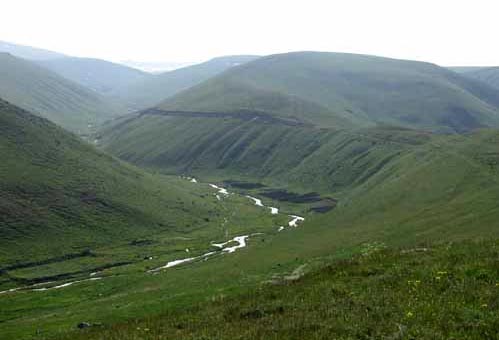
The cam­paign to defend Europe’s great­est remain­ing wilder­ness con­tin­ues. For the past five years sum­mer direct action camps in Ice­land have tar­get­ed alu­mini­um smelters, mega-dams and geot­her­mal pow­er plants.

After the ter­ri­ble destruc­tion as a result of build­ing Europe’s largest dam at Kárah­n­júkar and mas­sive geot­her­mal plants at Hengill, there is still time to crush the ‘mas­ter plan’ that would have each major glacial riv­er dammed, every sub­stan­tial geot­her­mal field exploit­ed and the con­struc­tion of alu­mini­um smelters, an oil refin­ery, data farms and sil­i­con fac­to­ries. This would not only destroy unique land­scapes and ecosys­tems but also lead to a mas­sive increase in Iceland’s green­house gas emis­sions.

Polit­i­cal Land­scape

Sav­ing Ice­land has rein­tro­duced civ­il dis­obe­di­ence and anar­chist ideas into Ice­landic grass­roots and demon­strat­ed numer­ous meth­ods of direct action, many of which were uti­lized in a high­ly suc­cess­ful man­ner in the ‘Kitchen Uten­sils Upris­ing´ of last year, where expe­ri­enced Sav­ing Ice­land activists con­stant­ly stood in the fore­front push­ing bound­aries. Sav­ing Ice­land and our work through­out the years was a major cat­a­lyst in top­pling the cor­rupt pro-heavy indus­try ‘Alcoa gov­ern­ment’.

How­ev­er, last year´s gen­er­al elec­tions were a major blow for the envi­ron­men­tal move­ment in Ice­land, with the ‘Left Greens’ boot­ing their own min­is­ter of the envi­ron­ment out for being gen­uine­ly con­cerned about envi­ron­men­tal val­ues. The leader of the par­ty denounced their own envi­ron­men­tal poli­cies for being too ‘puri­tan­i­cal’ to be applic­a­ble in such times of finan­cial cri­sis. With this and the con­tin­u­ing of the People’s Alliance in gov­ern­ment we are still look­ing at a heav­i­ly for­ti­fied pro-heavy indus­try gov­ern­ment, doing away with any pre­tence of the being green or even remote­ly pro­gres­sive. On top of this, cor­rupt labour unions are firm­ly in the grip of the alu­mini­um lob­by call­ing for job growth regard­less of the envi­ron­men­tal costs.

The Sit­u­a­tion Now

The deep finan­cial and eth­i­cal cri­sis that hit Ice­land in the autumn of 2008 caused the ener­gy com­pa­nies tem­po­rary dif­fi­cul­ties in obtain­ing for­eign loans for their projects, but the alu­mini­um lob­by­ists are more bloody mind­ed than ever. Now their argu­ment is that with the eco­nom­ic col­lapse, Ice­land can sim­ply not afford to take note of envi­ron­men­tal con­cerns. This actu­al­ly expos­es the under­ly­ing truth that the alu­mini­um lob­by have always been aware of the valid­i­ty of the envi­ron­men­tal­ists point of view. The alu­mini­um lob­by want to fur­ther their hor­rors, on grounds of a cri­sis which they are large­ly respon­si­ble for hav­ing cre­at­ed.

The bank­ing side of the crash tends to be overem­pha­sized while oth­er major dri­vers of the crash are often ignored. The report of the Spe­cial Inves­ti­ga­tion Com­mis­sion (SIC), which looked into the events lead­ing up to and caus­ing the finan­cial crash, has how­ev­er focused on the effects of heavy indus­try in a key chap­ter of their report. The expan­sion of Iceland’s finan­cial sys­tem beyond the country’s sus­tain­able lim­its, is unequiv­o­cal­ly traced back to the enor­mous projects of the heavy indus­try build-up. This chap­ter has been ignored by the media, and so has anoth­er chap­ter that stat­ed the media’s own cul­pa­bil­i­ty as unques­tion­ing ser­vants of the bank and indus­tri­al estab­lish­ments.

A fun­da­men­tal prob­lem with the SIC report and the gen­er­al atmos­phere of denial that greet­ed it is that the report comes from with­in the very heart of the rot­ten State of Ice­land. As such its real func­tion is to keep all the options for deal­ing with the huge amount of cor­rup­tion and democ­ra­cy deficit safe­ly with­in the sphere of the courts and par­lia­men­tary pol­i­tics: Firm­ly under the con­trol of the very estab­lish­ment that cre­at­ed all this pow­er abuse in the first place.

In case of the finan­cial frauds this will mean years of long, drawn-out court cas­es which will grad­u­al­ly loose all mean­ing to the pub­lic, which have been left to pay the mas­sive debts gen­er­at­ed by the frauds.

In case of the deep root­ed cul­ture of cor­rup­tion and the cli­mate of fear which the alu­mini­um cor­po­ra­tions and pow­er com­pa­nies so thrive in, the promis­es of trans­paren­cy and democ­ra­cy are noth­ing but a smoke­screen for an even greater cor­po­rate plun­der of the coun­tries’ ener­gy resources. This plun­der, sup­port­ed by restruc­tur­ing oblig­a­tions in loan agree­ments with the IMF, is a con­tin­u­a­tion of a deeply cor­rupt pol­i­cy of pri­vati­sa­tion and ruth­less indus­tri­al­i­sa­tion, the very same poli­cies that cre­at­ed the cri­sis.

Cur­rent action tar­gets
The Cen­tu­ry alu­mini­um smelter in Hel­gu­vík, tar­get­ed by Sav­ing Ice­land last two sum­mers, is still slow­ly being built. Where the elec­tric­i­ty for the plant is to come from is still uncer­tain, but it will require up to eight new pow­er plants, at least sev­en of which will be geot­her­mal on the Reyk­janes Penin­su­la (HS/MAGMA) and Hell­isheiði (OR – Reyk­javik Ener­gy). One of the geot­her­mal plants pow­er­ing Century’s smelter could be in Bitra, close to Hengill, and the eighth pow­er plant will prob­a­bly be a large dam on the beau­ti­ful Þjórsá Riv­er that Landsvirkjun (Nation­al Pow­er Com­pa­ny) is eager to build as soon as they can. Norðurþing is in nego­ti­a­tions with Alcoa about an alu­mini­um smelter in Bakki/Húsavík with ener­gy com­ing from frag­ile wilder­ness areas in the north. Plati­na Resources want to do gold and oth­er min­ing research in the East­fjords.

Take action!

This year, instead of orga­niz­ing a sum­mer protest camp, we call for resis­tance through­out the sea­sons. We espe­cial­ly call for Ice­landers to take action all year round but also envi­ron­men­tal­ists world­wide to come to Ice­land, where we will warm­ly wel­come any kind of indi­vid­ual actions against the alu­mini­um cor­po­ra­tions and the ener­gy com­pa­nies active in destroy­ing the envi­ron­ment.

Sym­bol­ic actions have turned out not to be enough to stop the forces of destruc­tion. The aim of actions should be to pre­vent any fur­ther rape of the land. Sav­ing Ice­land gives its whole­heart­ed sol­i­dar­i­ty to any actions that hit the alu­mini­um indus­try and the pow­er com­pa­nies where its most effec­tive.

Even if you can not come to Ice­land to do direct actions your help to our strug­gle with sol­i­dar­i­ty actions, dona­tions, trans­la­tions and by spread­ing the word will be invalu­able.

2 GM Maize trials trashed in Catalonia, Spain & 1 in Zaragoza — updated

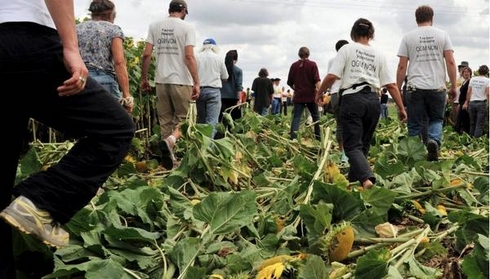
Today, 12th July 2010, dozens of peo­ple came togeth­er to sab­o­tage two exper­i­men­tal GM Maize tri­als belong­ing to Syn­gen­ta, locat­ed in the munic­i­pal­i­ty of Tor­roel­la de Mont­grí (Baix Empordà, Girona, Catalun­ya).

Catalan GM action 1Catalan GM action 2Catalan GM action 3
Today, 12th July 2010, dozens of peo­ple came togeth­er to sab­o­tage two exper­i­men­tal GM Maize tri­als belong­ing to Syn­gen­ta, locat­ed in the munic­i­pal­i­ty of Tor­roel­la de Mont­grí (Baix Empordà, Girona, Catalun­ya).

We destroyed Syn­gen­ta’s open-air genet­ic exper­i­ment because we under­stand that this kind of direct action is the best way to respond to the fait accom­pli pol­i­cy through which the Gen­er­al­i­tat, the State and the bio-tech multi­na­tion­als have been uni­lat­er­al­ly impos­ing genet­i­cal­ly mod­i­fied organ­isms (GMOs) in our agri­cul­ture and our food.

The Span­ish State, with more than 75,000 hectares sown in 2009, rep­re­sents a con­cen­tra­tion of approx­i­mate­ly 80% of the sur­face area of GMOs har­vest­ed in Europe. After Aragon, Cat­alo­nia is the area of Europe that har­vests the largest area of GMOs, around 27,000 hectares. In recent years, 42% of the exper­i­men­tal GMO field tri­als in the EU have been plant­ed in the Span­ish State.

Syn­gen­ta are the third largest seed cor­po­ra­tion in the world (after Mon­san­to and Dupont). Their objec­tive is to gain a monop­oly dom­i­na­tion of the glob­al seed mar­ket so that all farm­ers and all agri­cul­tur­al pro­duc­tion on the plan­et depends on their seed sales. Syn­gen­ta, and oth­er transna­tion­al cor­po­ra­tions (TNCs) that con­trol a) the glob­al mar­ket in agri­cul­tur­al goods (seeds, fer­til­iz­ers, agro-chem­i­cals…) , b) the cir­cuits for the dis­tri­b­u­tion and com­mer­cial­iza­tion of food and agri­cul­tur­al raw mate­ri­als, and c) the glob­al mar­ket in final prod­ucts, is one of the prin­ci­pal pro­mot­ers and ben­e­fi­cia­ries of the cor­po­rate indus­tri­al mod­el that cur­rent­ly dom­i­nates. After hav­ing been imposed for decades on a plan­e­tary scale, more and more voic­es indi­cate that 1) this dev­as­tat­ing social and pro­duc­tive mod­el is one of the prin­ci­pal caus­es of the food, eco­log­i­cal and cli­mate crises that human­i­ty cur­rent­ly faces, and 2) genet­i­cal­ly mod­i­fied crops rep­re­sent a new turn of the screw of the agro-indus­tri­al mod­el, which does noth­ing more than deep­en the dev­as­tat­ing social, cul­tur­al and envi­ron­men­tal impacts asso­ci­at­ed with transna­tion­al agro-busi­ness.

Accord­ing to Euro­pean leg­is­la­tion, exper­i­men­tal GMO field tri­als rep­re­sent an indis­pens­able inter­me­di­ate step in gain­ing EEC approval to grow and har­vest as yet unau­tho­rized vari­eties of genet­i­cal­ly mod­i­fied crops in the EU. Many groups in Europe have for years con­demned the pro­to­col that the bio-tech transna­tion­als must fol­low to gain approval for their genet­i­cal­ly mod­i­fied seeds, as being full of irreg­u­lar­i­ties and pit falls. Among these, the most notable are the var­i­ous scan­dals that have hit the Euro­pean food secu­ri­ty Agency, (EFSA) which have made it quite clear that this sup­pos­ed­ly sci­en­tif­ic body is in the pay of the genet­ics indus­try. On the oth­er hand, it is impor­tant to uncov­er the role of the EEC itself in the under­hand pro­mo­tion of GM crops by the EEC itself.

Twelve years since GM maize crops were first plant­ed in Cat­alo­nia, the appear­ance of dozens of cas­es of genet­ic con­t­a­m­i­na­tion of organ­ic and con­ven­tion­al agri­cul­tur­al prod­ucts (con­t­a­m­i­na­tion of seed batch­es, fields, ani­mal feeds and prod­ucts des­tined for human con­sump­tion) has repeat­ed­ly demon­strat­ed that the sup­posed coex­is­tence between GM and non-GM crops is total­ly impos­si­ble and unde­sir­able. The pro­lif­er­a­tion of genet­i­cal­ly mod­i­fied agri­cul­ture in our ter­ri­to­ry has led to the extinc­tion of a num­ber of vari­eties of tra­di­tion­al wheat (“morat” and “del queix­al”) and a reduc­tion of 95% in the cul­ti­va­tion of organ­ic maize between 2002 and 2008.

All this leads unequiv­o­cal­ly to the con­clu­sion that GM agri­cul­ture makes it impos­si­ble to devel­op and con­sol­i­date social mod­els and mod­els of pro­duc­tion, dis­tri­b­u­tion and con­sump­tion that dif­fer from the dom­i­nant mod­el, based on agro-ecol­o­gy and the strug­gle for peo­ples’ food sov­er­eign­ty. Because of this, we fun­da­men­tal­ly reject both GM crops and the tech­no-indus­tri­al cap­i­tal­ist soci­ety that makes them pos­si­ble and nec­es­sary (… nec­es­sary to ensure that the pow­er­ful few con­sol­i­date their dom­i­na­tion of the glob­al pop­u­la­tion, and per­fect the busi­ness strate­gies). We there­fore call for peo­ple to take the step to action to destroy their genet­i­cal­ly mod­i­fied crops and the social order per­pet­u­at­ed by those that pro­mote them.

—–

In a storm of media con­tra­dic­to­ry counter-infor­ma­tion, plus the news that a few weeks ear­li­er a GM crop was decon­t­a­m­i­nat­ed in Zaragoza, that it was about a hun­dred peo­ple involved (on the French Faucheurs Vol­un­taires web­site, monde-solidaire.org, who claim they were there) the fol­low­ing state­ment was released:

18.7.10
THE REAL MISTAKE IS PLANTING GM

The field of maize locat­ed at Tor­roel­la de Mont­grí, destroyed on the 12th July, was GM. The own­er of the land has him­self recog­nised the fact in his state­ments to the press. Regard­less of whether it was an exper­i­men­tal tri­al, a demon­stra­tion or a com­mer­cial field, the very fact that it was a Genet­i­cal­ly Mod­i­fied (GM) crop, jus­ti­fies and legit­imis­es its destruc­tion — par­tic­u­lar­ly as it was locat­ed next to a nature reserve and oth­er non-GM crops.

Genet­i­cal­ly mod­i­fied agri­cul­ture, even using approved vari­eties, has been asso­ci­at­ed with seri­ous social and envi­ron­men­tal impacts and dam­age to human health. The dozens of cas­es of genet­ic cross-con­t­a­m­i­na­tion of organ­ic and con­ven­tion­al agri­cul­ture that have come to light in Cat­alo­nia and the Span­ish State since GM crops were first plant­ed and import­ed here, demon­strate that coex­is­tence between GM and non-GM crops is not viable, ren­der­ing impos­si­ble the devel­op­ment of dif­fer­ent modes of pro­duc­tion, con­sump­tion and social mod­els that offer alter­na­tives to the dom­i­nant, cor­po­rate and indus­tri­al mod­el, which is gen­er­at­ing such seri­ous eco­log­i­cal, cli­mat­ic and social crises.

The media cov­er­age of the action on 12th July demon­strates once again that the press silences crit­i­cism and ignores the real and impor­tant debates that exist around the impacts of genet­i­cal­ly mod­i­fied agri­cul­ture.

The media must take respon­si­bil­i­ty for their lack of rig­or­ous report­ing and their fail­ure to cor­rob­o­rate the infor­ma­tion they receive before pub­lish­ing it as news. On 15th July (three days after the action) there began an avalanche of reports stat­ing that the « rad­i­cal ecol­o­gists » had made a mis­take and destroyed a non-exper­i­men­tal field. There are many indi­ca­tions to sug­gest that this may be a cov­er-up ploy by the Fun­dació Anta­ma, the Span­ish bio-tech lob­by, Syn­gen­ta and the landown­er him­self. In fact, the tac­tic of lying and deny­ing that fields are exper­i­men­tal has been used on a num­ber of occa­sions in oth­er coun­tries such as the Unit­ed King­dom and France. It aims to con­fuse pub­lic opin­ion, dis­cred­it the action and those who pro­mote it, and divert the debate.

There is con­sid­er­able evi­dence that the field destroyed on the 12th was not a com­mer­cial field: in May, it was con­firmed that the dif­fer­ent rows of maize sown were iden­ti­fied and dis­tin­guished with white, num­bered signs, a prac­tice sys­tem­at­i­cal­ly applied to exper­i­men­tal and demon­stra­tion fields, but nev­er used in com­mer­cial fields. Lat­er, just after the Diari de Girona pub­lished the exact loca­tion of the Tor­roel­la exper­i­men­tal tri­al, the white num­bered signs had been removed. Were they try­ing to get rid of the evi­dence that they were exper­i­ment­ing or cul­ti­vat­ing GMOs for demon­stra­tion pur­pos­es?

It is worth not­ing the numer­ous con­tra­dic­tions that have appeared in the media on the ques­tion of who, when and why the exper­i­ment was not autho­rised. Some news­pa­pers assure us that Syn­gen­ta aban­doned the exper­i­ment; oth­ers say that it was the farmer him­self who backed off; final­ly, pub­li­ca­tions such as El País claim, with­out cit­ing sources, that it was the Gen­er­al­i­tat (Cata­lan Local Gov­ern­ment) which with­drew autho­ri­sa­tion for the exper­i­ment, because the field was sit­ed very near to a pro­tect­ed area.

What this demon­strates is the lam­en­ta­ble lack of reli­able pub­lic infor­ma­tion about the loca­tions of exper­i­men­tal fields and the lack of con­trol and mon­i­tor­ing of GM agri­cul­ture and its impacts, by the com­pe­tent author­i­ties. In accor­dance with an explic­it EC man­date — after hav­ing refused to do it for years — this year for the first time, the Min­istry for Agri­cul­ture (MARM) pro­vid­ed Friends of the Earth with infor­ma­tion about exist­ing exper­i­men­tal tri­als, in response to a for­mal peti­tion made by the orga­ni­za­tion request­ing envi­ron­men­tal infor­ma­tion. Nev­er­the­less, we con­demn the fact that the infor­ma­tion pro­vid­ed relates only to the exper­i­men­tal tri­als autho­rised, and not to requests for autho­ri­sa­tion. This means that even now the Span­ish State is fail­ing to com­ply with Euro­pean leg­is­la­tion which states that access to infor­ma­tion about the loca­tion and char­ac­ter­is­tics of exper­i­men­tal GM fields is a pub­lic right. Sim­i­lar­ly, nei­ther the Span­ish State nor the Gen­er­al­i­tat meet the legal require­ments for the labelling of foods con­tain­ing GMOs, or inform­ing farm­ers about GM crops sown in their area. They also fail to apply the plans for mon­i­tor­ing and con­trol of the impacts asso­ci­at­ed with genet­i­cal­ly mod­i­fied agri­cul­ture.

To the calls for jus­tice made by some of the noto­ri­ous­ly reac­tionary farm­ers’ unions such as the JARC, we answer that the admin­is­tra­tions have sys­tem­at­i­cal­ly failed to apply the many arti­cles of the Law reg­u­lat­ing the release of GMOs into the envi­ron­ment. These include the fail­ure to devel­op the nec­es­sary mea­sures pri­or to the sow­ing of open-air GM tri­als, and to car­ry out suf­fi­cient mon­i­tor­ing once the crop has been sown. It is quite clear that the com­mer­cial fields, exper­i­men­tal tri­als and demon­stra­tions of genet­i­cal­ly mod­i­fied crops cur­rent­ly being cul­ti­vat­ed in Cat­alo­nia and the Span­ish State, are break­ing the law. Fur­ther­more, the above-men­tioned leg­is­la­tion was devel­oped by « pub­lic » insti­tu­tions that have been work­ing for 12 years hand in hand with the bio-tech multi­na­tion­als to impose GMOs on our agri­cul­ture and food. We there­fore defend the legit­i­ma­cy and the neces­si­ty of destroy­ing all fields of GM crops, even in the hypo­thet­i­cal case that they did com­ply with the leg­is­la­tion in force.

We repeat, that the coex­is­tence of GM and non-GM agri­cul­ture is total­ly impos­si­ble. The expan­sion of GM crops in Cat­alo­nia has, between 2002 and 2008, caused a reduc­tion of 95% in the sow­ing of organ­ic maize, and led to the per­ma­nent extinc­tion of at least two tra­di­tion­al Cata­lan vari­eties of maize that were unique in the world, as well as dozens of known cas­es of genet­ic con­t­a­m­i­na­tion. Many stud­ies show that for years GM crops and GM foods have been linked to sig­nif­i­cant social and eco­log­i­cal impacts and dam­age to health; stud­ies that have led 11 Euro­pean coun­tries to ban their cul­ti­va­tion.

Earth First! Locks Down to Forest Service Office in NC

On Mon­day July 12th, Earth First!

Globe lockdownOn Mon­day July 12th, Earth First! held a large protest out­side of the For­est Ser­vice office on Zil­li­coa St. in Asheville to protest the com­mer­cial log­ging of nation­al forests and their con­tin­ued plan to cut the Globe For­est in Blow­ing Rock, NC. One mem­ber u‑locked his neck to the office front door. As nego­ti­a­tions con­tin­ue on this tim­ber sale to remove an old-growth stand from the project, Earth First! wish­es to call atten­tion to the con­tin­ued exploita­tion of our dis­ap­pear­ing forests by tim­ber com­pa­nies. Recent stud­ies show the Unit­ed States now leads all devel­oped coun­tries in defor­est­ing its land the fastest, and this trend is most preva­lent in the South­east.
The Globe For­est pro­vides impor­tant habi­tat and nest­ing sites for wood­peck­ers and migra­to­ry song­birds whose num­bers are declin­ing due to for­est frag­men­ta­tion. The For­est Ser­vice con­tin­ues to cut stands of trees that are direct­ly con­nect­ed to old-growth for­est com­mu­ni­ties, caus­ing destruc­tive edge effects, and they have refused to pro­vide a buffer because it is not required in their “For­est Plan.” Treat­ing and cut­ting these stands will cause ero­sion, soil destruc­tion, and will pol­lute the near­by streams with her­bi­cides. Until all of Thun­der­hole Creek is pro­tect­ed, Earth First! will cam­paign to stop the cut.

Earth First! Demands That the For­est Ser­vice in North Car­oli­na:

-stop attempt­ing to cut old-growth habi­tats includ­ing any stands con­nect­ed

to these rare areas.
‑put an end to all com­mer­cial log­ging in our nation­al forests
‑imme­di­ate­ly revise the For­est Plan to include reha­bil­i­tat­ing pre­vi­ous
clear-cuts into ear­ly suc­ces­sion­al habi­tat instead cut­ting healthy, mature
for­est expans­es.
‑an end to road build­ing in our nation­al forests

“Any cuts with­in the Globe will affect vital old-growth ecosys­tems and our stance is to end all com­mer­cial log­ging of our nation­al forests,” says Joseph Fer­gu­son, a Croatan Earth First! activist. “His­tor­i­cal­ly the For­est Ser­vice has catered to tim­ber com­pa­nies, but we believe the pub­lic does not sup­port log­ging in our Nation­al Forests.”

New UK Eco-Zine Distro Launched

Scale Trees Dis­tro a new UK based zine dis­trib­u­tors have just launched their web­site.

We spe­cialise in zines about eco­log­i­cal direct action, land defence, for­est occu­pa­tions and com­mu­ni­ties strug­gling against envi­ron­men­tal­ly destruc­tive projects.

Check out the web­site!

http://scaletreesdistro.subrella.net

Scale Trees Dis­tro a new UK based zine dis­trib­u­tors have just launched their web­site.

We spe­cialise in zines about eco­log­i­cal direct action, land defence, for­est occu­pa­tions and com­mu­ni­ties strug­gling against envi­ron­men­tal­ly destruc­tive projects.

Check out the web­site!

http://scaletreesdistro.subrella.net

Russian ELF protect forest

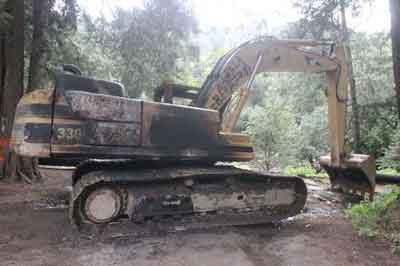
On thurs­day, July the 8th a bull­doz­er was torched in the north­ern Moscow at the con­struc­tion site. City author­i­ties decid­ed they can go about order­ing destruc­tion of plant life and what’s left of forests in Moscow area. We thought they should pay.

On thurs­day, July the 8th a bull­doz­er was torched in the north­ern Moscow at the con­struc­tion site. City author­i­ties decid­ed they can go about order­ing destruc­tion of plant life and what’s left of forests in Moscow area. We thought they should pay. Doz­er was cov­ered with tree branch­es and foliage (con­struc­tion site is sit­u­at­ed in the fresh­ly-cut grove), an assort­ment of rags and con­struc­tion garbage. Then set aflame.

ELF-rus­sia