Live Streamers Make Great Informants

from We Cop Watch

There are many ways to effec­tive­ly doc­u­ment the move­ment while pro­tect­ing the space, its move­ments and people’s pri­va­cy. Live Stream­ing is gen­er­al­ly NOT one of them.

from We Cop Watch

There are many ways to effec­tive­ly doc­u­ment the move­ment while pro­tect­ing the space, its move­ments and people’s pri­va­cy. Live Stream­ing is gen­er­al­ly NOT one of them.

A com­mon issue with Stream­ers is their dis­play of enti­tle­ment, often cit­ing the val­ue of bring­ing the move­ment to the peo­ple. But Stream­ers have a hard time admit­ting that the police find their work more valu­able then demon­stra­tors.

In a world of voyeurism and exhi­bi­tion­ists, Stream­ers often get car­ried away, inter­pret­ing their role as being a nar­ra­tor for the move­ment. They often film peo­ple with­out their con­sent, plac­ing more val­ue in pre­sent­ing to their view­er­ship, then pro­tect­ing the group that is already tak­ing risks by just get­ting out into the street to protest.


live-streamers-make-great-informants_1-800x428

One of the biggest prob­lems with stream­ing is that it gives real time infor­ma­tion to the police as far as what peo­ple are present, the group’s inten­tions, as well as its loca­tion and routes. Embed­ded Stream­ers give police a tac­ti­cal advan­tage when try­ing to con­duct mass arrests.

An even more trag­ic con­tract Stream­ers impose on demon­stra­tors is the raw, unedit­ed, archived video that is often made pub­lic and avail­able online for law enforce­ment to use lat­er to help iden­ti­fy and tar­get peo­ple.

Before we move to “Stream­er Solu­tions” lets review some “Stream­er tac­tics” that are favor­able to law enforce­ment, and almost always at the expense of the peo­ple.

Very Poor Stream­er Eti­quette:
Call­ing Peo­ple out by Name on Streams.

Peo­ple don’t go to protests for oth­er peo­ple to call them out on streams that are put up per­ma­nent­ly online for law enforce­ment to review.

Film­ing Peo­ples’ Iden­ti­ties on Streams

Law enforce­ment use streams to tar­get and iden­ti­fy peo­ple for repres­sion and arrest

Nar­rat­ing your Inter­pre­ta­tion of what Kind of Action is Tak­ing Place

Stream­ers often divulge per­son­al opin­ions rather than facts when nar­rat­ing about actions. Are you pre­pared to be a wit­ness for law enforce­ment in the future?

Film­ing Direct Actions

Every­thing you film, can and will be used against pro­test­ers if law enforce­ment has any­thing to do with it.

Nar­rat­ing Logis­tics and Tac­tics

At the height of Occu­py Oak­land, Under­cov­ers were being called into cer­tain FTP protests because of the “no Live Stream­ing” / “no Twit­ter­ing” tac­tic.

live-streamers-make-great-informants_2
FTP march­es are ongo­ing Fuck the Police march­es that take place in Oak­land and across the Bay.

Nar­rat­ing Group Routes

Police have a much eas­i­er time arrest­ing peo­ple in the streets when they have Stream­ers nar­rat­ing the group’s routes. You don’t need Under­cov­ers and heli­copters when you have a front-row seat.

If you want to be help­ful to the move­ment, be hon­est about your inten­tions. Is your view­er­ship more impor­tant than the peo­ple you are stand­ing with? Do you want to be doing some­thing that ben­e­fits the police over the peo­ple? Every action, every mass mobi­liza­tion, has a sto­ry that can be told. But folks need to either start hold­ing “non stream­ing” actions again, or stream­ers should stop oper­at­ing as infor­mants for the police.

If any of these issues are con­cern­ing to you, maybe con­sid­er NOT “Live Stream­ing” your next protest. Pick up a still cam­era, con­duct some audio inter­views, heck shoot some video. There’s no rea­son why you can’t go home after a protest and pro­duce some con­tent that is use­ful and not harm­ful. But in case it’s not in your blood to con­sid­er oth­er peo­ple on that lev­el, here are some good Live Stream tac­tics.

“Good” Livestream Tac­tics

  • Stand hun­dreds of feet away from the group so the low qual­i­ty record­ing doesn’t pick up con­ver­sa­tions or peo­ples’ iden­ti­ty.
  • Don’t film peo­ples’ iden­ti­ty with­out their con­sent.
  • Don’t nar­rate inten­tions, tac­tics, loca­tions, or des­ti­na­tions.
  • Wear a bright shirt that says “Live Stream­er” or “Infor­mant.”

More “Real Good” Livestream Tac­tics

  • Live Stream an event, pan­el, or dis­cus­sion where all par­ties con­sent.
  • Live Stream a demo or action where all par­ties involved con­sent.
  • Live Stream your inter­ac­tions when being stopped, ques­tioned, or harassed by law enforce­ment. (maybe put your chan­nel on pri­vate!)

Be safe out there, and make it safer for the mass­es by con­sid­er­ing them when you point a cam­era at them!

Hunting Badger: Police Offer £10,000 Reward After Bristol Anarchist Attacks

Decem­ber 6th, 2014

Decem­ber 6th, 2014

by Steven Mor­ris / The Guardian

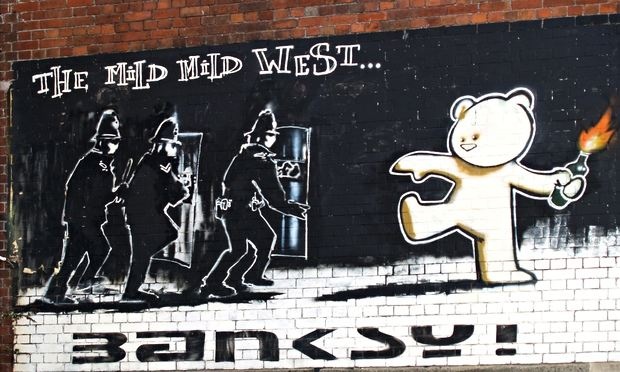
It is the city of the sub­ver­sive street artist Banksy, a cen­tre for alter­na­tive lifestyles and under­ground pol­i­tics. Even the direct­ly elect­ed inde­pen­dent may­or, George Fer­gu­son, prais­es the anar­chic spir­it of Bris­tol.

But over the last four years the city and its envi­rons have been tar­get­ed by rad­i­cals who have not been sat­is­fied with non-vio­lent expres­sion and protest.

The police have revealed for the first time that they are link­ing more than 100 acts of van­dal­ism against police sta­tions, politi­cians, mil­i­tary bases, banks, multi­na­tion­al com­pa­nies, car deal­er­ships, rail­way lines, mag­is­trates courts and church­es believed to have been car­ried out by anar­chists. They have put a £10,000 reward on the head of one sus­pect­ed offend­er, a 27-year-old activist called Huw “Bad­ger” Nor­folk.

A per­ma­nent team of 10 detec­tives, work­ing under the code­name Oper­a­tion Rhone, has been set up to try to trace the per­pe­tra­tors and police have warned that it can only be a mat­ter of time before some­body is seri­ous­ly hurt or killed in one of the attacks. “I’m real­ly sur­prised that nobody has been injured so far,” said DCI Andy Bevan, who is lead­ing the search.

But Bristol’s long-estab­lished anar­chist com­mu­ni­ty is not tak­ing the police oper­a­tion lying down. The minor­i­tyre­spon­si­ble for the vio­lence has vowed to con­tin­ue the attacks. Many of the vast major­i­ty not involved have hit back at what they see as attempts by the police to prop up the estab­lish­ment, sup­press rad­i­cal­ism and split the com­mu­ni­ty. They are organ­is­ing demon­stra­tions against the police.


“The feel­ing is that they are using these attacks as an excuse for tar­get­ing any­one with alter­na­tive ideas. It’s not going to work,” said one anar­chist, who asked not to be named. “It is a strong, sol­id com­mu­ni­ty. That’s why the police can’t find the peo­ple they are after.”

Avon and Som­er­set police took the unusu­al step this week of nam­ing Nor­folk in con­nec­tion with two inci­dents. One was a van­dal­ism attack on the offices of the Bris­tol Post in August 2011 at the time of protests around Britain fol­low­ing the shoot­ing of Mark Dug­gan in north Lon­don. Win­dows were smashed and paint splashed over the front of the build­ing. The oth­er was an arson attack on a phone mast in Jan­u­ary 2013 that cut off tele­vi­sion, radio and mobile phone sig­nals to thou­sands of homes and busi­ness­es.

Nor­folk is a well-known and large­ly pop­u­lar fig­ure with­in the UK anar­chy scene. He was born in the leafy Bris­tol sub­urb of West­bury-on-Trym to David Nor­folk and Gill Gar­rett.

The Cam­bridge-edu­cat­ed David Nor­folk, 65, runs a con­sul­tan­cy advis­ing the nuclear indus­try. Gar­rett, 64, is a retired lec­tur­er and author of med­ical text­books and a well-known local poet. Ear­li­er this year she wrote a poem about wait­ing for her son’s birth and wor­ry­ing that an ear­ly spring would pre­cip­i­tate his arrival: “Delay your debut until spring has tru­ly come.”

Their daugh­ter, who is two years old­er than Bad­ger, fol­lowed a con­ven­tion­al career route, attend­ing uni­ver­si­ty and found find­ing work in health and social care.

In con­trast, after leav­ing school Huw Nor­folk moved from squat to squat, main­ly in Bris­tol, but at one point was liv­ing in the near­by For­est of Dean. For a while he helped run anar­chist book fairs in Bris­tol and helped out at a com­mu­ni­ty kitchen. “He’s a gen­tle, love­ly guy but com­mit­ted to the cause,” said one friend.

At the time of the attack on the Bris­tol Post he was believed to be liv­ing in a squat on Park Row in the cen­tre of Bris­tol but when police raid­ed the premis­es look­ing for him he had gone. While on the run, he post­ed a defi­ant open let­ter on the anar­chist web­site 325.nostate spelling out his world view and extolling the virtues of “proud lives of rebel­lion and com­pas­sion, recla­ma­tion and antag­o­nism, poet­ry and fire”.

He said: “I am one of those who sim­ply can­not and will not stom­ach the social, eco­nom­ic, moral, psy­cho­log­i­cal, phys­i­cal con­di­tions not of our mak­ing that we are born into at this point of his­to­ry. I have nev­er sought to dec­o­rate the walls of my cell with exam cer­tifi­cates, job pro­mo­tions, sports prizes, sta­tus sym­bols bor­rowed from the wealthy by our labour.

“I curse those who sell them­selves so cheap­ly to buy such unimag­i­na­tive dreams at the expense of a pos­si­bil­i­ty of a free­dom tru­ly of their own mak­ing. Since an ear­ly age this unwill­ing­ness and refusal has put me in con­flict, like count­less oth­ers, with that real­i­ty. And our under­stand­ing is grow­ing along with our fury.”

He signed off the 800-word let­ter: “Action replaces tears. For sol­i­dar­i­ty and self-organ­i­sa­tion, Huw ‘Bad­ger’ Nor­folk – just anoth­er fugi­tive.”

Since then police have found no trace of Nor­folk. They have linked him to the attack on the com­mu­ni­ca­tions mast in Jan­u­ary last year but now believe he may be lying low some­where else in Britain – or could be abroad.

They have pub­lished details of his appear­ance, includ­ing dis­tinc­tive tat­toos, but said he was known to change his appear­ance and use oth­er names.

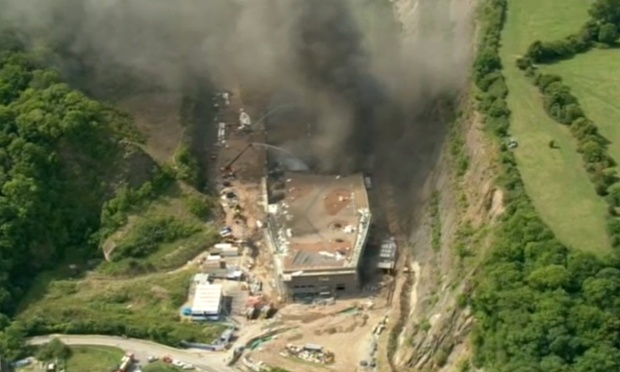
Although the police have only iden­ti­fied the two inci­dents they want to speak to Nor­folk about, there are many more that the police have not linked to him. By far the most spec­tac­u­lar was an arson attack on a new police firearms cen­tre close to the Avon and Somerset’s force head­quar­ters in August 2013, which caused £16m of dam­age.

The spec­tac­u­lar arson attack on a new police firearms cen­tre in 2013
caused £16m of dam­age. Pho­to­graph: BBC

A group call­ing itself Angry Fox­es Cell claimed on 325.nostate that it had car­ried out the attack. “We left it with flames lick­ing high … It put smiles on our faces to realise how easy it was to enter their gun club and leave a fuck you sig­na­ture right in the bel­ly of the beast, with a curi­ous fox as our only wit­ness.”

The post claimed the attack was “also our way of mark­ing two years that Bris­tol anar­chist Bad­ger has evad­ed cap­ture” and added: “Stay free, keep fight­ing!”

There is no sign of the attacks stop­ping. Just before the Nato sum­mit took place in New­port, south Wales, in Sep­tem­ber this year a group call­ing itself “Ran­dom Anar­chists” set fire to an Air Cadet minibus in Bris­tol to high­light “the ways in which mil­i­tari­sa­tion works its way into the fab­ric of dai­ly life”.

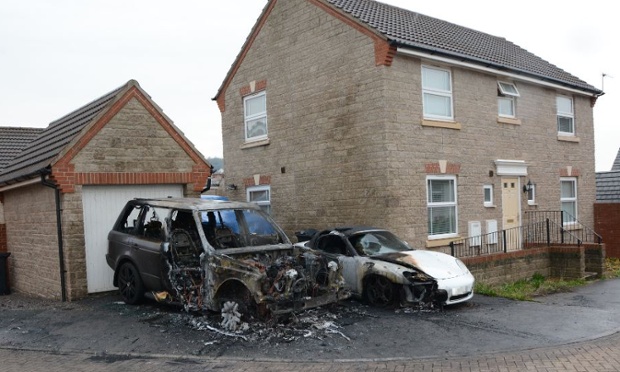
The lat­est took place at the end of last month when five cars were torched in Long Ash­ton on the edge of the city. Four of the cars were parked on dri­ve­ways and police said they could eas­i­ly have put sleep­ing house­hold­ers at risk.

On the 325.nostate site the attack was claimed by “FAI Torch­es in the Night/Earth Lib­er­a­tion Front”. It said two of the cars had been linked to a multi­na­tion­al pow­er com­pa­ny and a provider of secu­ri­ty equip­ment; the oth­er three were high-end cars tar­get­ed to high­light the “green wash­ing” cha­rade of Bristol’s sta­tus as Euro­pean green cap­i­tal next year.

The police have stepped up their search for the attack­ers in recent months, anger­ing many with­in Bristol’s non-vio­lent alter­na­tive com­mu­ni­ty. One activist, Al, an office work­er in his 20s, who said his house was raid­ed by an “army” of Oper­a­tion Rhone offi­cers, dis­missed the police jus­ti­fi­ca­tion that they were try­ing to pre­vent any­one dying.

Arson attacks in Long Ash­ton last month destroyed five cars.
Pho­to from The Guardian

He argued that nobody had been hurt in the attacks – while peo­ple were dying in police cus­tody all the time. “If the police want to pre­vent deaths, they should leave us alone and start arrest­ing each oth­er,” he told the Guardian.

Al said: “I think that the police’s actions are an attempt to make it look like they’re doing some­thing. They care more about their image in the press than about the wel­fare of ordi­nary peo­ple. Their choice of who to tar­get is also polit­i­cal and feels like harass­ment polic­ing – mak­ing it clear that they know where we live and work, and that they can come into our homes and take what they want, when­ev­er they like.

“This hasn’t worked – I knew already that police are here to keep the rich in pow­er and keep us down. Since the raid, I also know that peo­ple in my com­mu­ni­ty will stand by me and sup­port me, what­ev­er the police try to do. I hope that they stop harass­ing peo­ple, but if they do not then they should know that it will only make us more unit­ed, and more angry.”

Last month a group of about 20 anar­chists turned up at the head­quar­ters of Avon and Som­er­set police’s CID and spe­cial oper­a­tions unit and made a nui­sance of them­selves as offi­cers arrived for work.

A let­ter was pub­lished on web­sites includ­ing that of the Bris­tol Anar­chist Fed­er­a­tion and Bris­tol Defen­dant Sol­i­dar­i­ty, signed by more than a dozen groups accus­ing the police of resort­ing to “des­per­ate” tac­tics to try to hunt down those behind the attacks.

It claimed the police had launched a “con­cert­ed effort to intim­i­date and divide us all,” adding: “A big part of their plan is to scare peo­ple into inac­tion and to cre­ate divi­sions between us. They hope to get us blam­ing each oth­er for increased sur­veil­lance to the point where some­one falls for their lies and starts talk­ing to the bad guys.”

Bevan said he believed only a small group of anar­chists was behind the attacks, argu­ing that if the group was a big one, some­one would have bro­ken ranks. He said the attacks were well planned and skil­ful­ly exe­cut­ed, sug­gest­ing the per­pe­tra­tors were organ­ised and intel­li­gent.

He was keen to empha­sise that the finan­cial impact was just one ele­ment, claim­ing that as well as putting human lives at risk, some of the inci­dents had caused envi­ron­men­tal dam­age.

Bevan insist­ed that the force was not try­ing to clamp down on Bristol’s counter-cul­ture or harass­ing peo­ple with alter­na­tive lifestyles. “That’s a fan­tas­tic part of the city. Avon and Som­er­set police sup­ports peace­ful protest. These attacks are some­thing quite dif­fer­ent.”

Australia: Anti-Coal Lockdowns Continue

GUNNEDAH, 4 Decem­ber 2014: Sus­tained protest against White­haven Coal’s con­tro­ver­sial Maules Creek mine in the Leard State For­est con­tin­ues this morn­ing, as two men chained them­selves to a con­crete bar­rel at White­haven Coal’s Gunnedah coal han­dling and prepa­ra­tion plant. 31 year old Maules Creek farm-hand Adam Ryan and 37 year old, Syd­ney based father and cor­po­rate lawyer, Matthew Drake-Brock­man have tak­en action to protest against what Drake-Brock­man describes as the ‘lax approval process­es’ that allowed the scan­dal-plagued mine to go ahead.

Mr Ryan, born in near­by Wee Waa, cit­ed con­cerns about min­ing impacts on water and the sub­se­quent effect on the local agri­cul­tur­al indus­try, say­ing “this mine is destroy­ing the com­mu­ni­ty that I have known my whole life. The time for stand­ing by has passed, we have to stand up for our com­mu­ni­ty.”

Mr Drake-Brock­man was involved in a 2007 law­suit against the then Plan­ning Min­is­ter regard­ing plan­ning approval process­es, with the case focussing on the fact that the approval did not take into account the impacts of cli­mate change.

Mr Drake-Brock­man said, “The whole process between what goes on in par­lia­ment and what goes on in indus­try is not trans­par­ent – there is no way the pub­lic can know what’s going on. There is not a great deal of room for input from the pub­lic in this sys­tem – if there was we would already be mov­ing away from coal and into renew­able ener­gy.”

Drake-Brock­man con­tin­ued, “It has become nec­es­sary that we all stand up and become cit­i­zen activists against the cor­rupt state gov­ern­ment and White­haven Coal and to stand in sol­i­dar­i­ty with farmer’s, whose liveli­hood and health are under threat, and will only get worse with cli­mate change.”

In the last week there have been 10 arrests includ­ing high pro­file for­mer Wal­la­bies cap­tain, David Pocock, promi­nent local farmer, Rick Laird and IPCC con­tribut­ing author, Prof. Col­in But­ler. The long run­ning protest camp has seen thou­sands flock to protest the mine and over 290 arrests take place.

Leard For­est Alliance spokesper­son, Phil Evans said, “Hun­dreds of Aus­tralians includ­ing doc­tors, pro­fes­sors, World War II vet­er­ans, sports play­ers and young peo­ple have stood along­side local farm­ers and risked arrest to say that the Maules Creek project is wrong and should not go ahead. Sure­ly, this sends a sig­nal that some­thing is bro­ken with the way we decide on whether coal mines go ahead.”

“We need an imme­di­ate stop to work whilst there is a long, hard look at the plan­ning approval process – so that ordi­nary Aus­tralians can have faith in their government’s inde­pen­dence from big coal and the big end of town.”

White­haven Coal’s share-price fell to new lows this week dip­ping to $1.07 on Tues­day.

UPDATE 12:30pm: Police have arrived on site.

UPDATE 4:30pm: Both men have been arrest­ed and tak­en to Gunnedah police sta­tion to be charged.

Fur­ther Infor­ma­tion:

Phil Evans

Leard For­est Alliance Spokesper­son

0490 064 139

Pic­tures and footage for media use: https://www.mediafire.com/#ir1c4tq4oncu2

Twit­ter updates @FLACCoal and #Leard­Block­ade

from Front Line Action on Coal

Lockdown on Coal Super Digger at Maules Creek, Australia

81PbYw9

81PbYw9

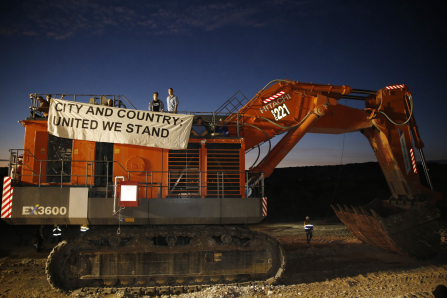
MAULES CREEK, 30 Novem­ber 2014, In an extra­or­di­nary show of sol­i­dar­i­ty 8 Can­ber­rans have respond­ed to a call for help from the Maules Creek com­mu­ni­ty impact­ed by White­haven Coal’s Maules Creek mine in the Leard State For­est. The group have swarmed a ‘super dig­ger’ oper­at­ing in the Maules Creek project site and are joined by 5th gen­er­a­tion Maules Creek farmer, Rick Laird and high pro­file for­mer Wal­la­bies Cap­tain and Brumbies play­er, David Pocock.

The group of Can­ber­rans are call­ing on the ACT Gov­ern­ment to divest its shares in White­haven Coal giv­en the ACT Gov­ern­ment has tak­en tak­en a strong stance on tack­ling cli­mate change.

Maules Creek farm­ers are strug­gling with the effects of drought exac­er­bat­ed by cli­mate change. Local farm­ers are fac­ing a dou­ble blow on water, hold­ing deep con­cerns about the impact of the new mine on under­ground aquifers and their access to irri­ga­tion water.

David Pocock said “I believe it’s time for direct action on cli­mate change, stand­ing togeth­er as ordi­nary Aus­tralians to take con­trol of our shared future. It’s inspir­ing to join oth­er Can­ber­rans and Rick Laird in their call for the ACT Gov­ern­ment to quit their invest­ments in White­haven.”

Local farmer and long time vocal oppo­nent of the mine Rick Laird said “I’m out here for the sake of my 5 chil­dren. The mine is about 4kms from the school they go to and I wor­ry about their future and their health grow­ing up next a coal mine that is always blast­ing and kick­ing up dust.”

The Leard For­est Alliance, com­pris­ing of local farmer groups and promi­nent envi­ron­men­tal groups, are call­ing for imme­di­ate halt to con­struc­tion work on the Maules Creek Mine whilst there is a full inquiry into how this scan­dal-plagued project was approved by NSW and fed­er­al gov­ern­ments.

Leard For­est Alliance spokesper­son Phil Evans said, “This mine has been a rort from word go – and this is why promi­nent Aus­tralians, farm­ers and city folk are flock­ing to the area to oppose this sym­bol of cor­rup­tion and cli­mate dis­as­ter.”

There have been over 280 arrests since the estab­lish­ment of the Leard Block­ade camp in August 2012.

UPDATE 07:45AM: Local Police have arrived on site.

UPDATE 3:30PM: David Pocock and Rick Laird have been arrest­ed after com­ing down from the machine and oth­er activists are still occu­py­ing the machine.

UPDATE 6PM: The remain­ing activists have all been arrest­ed and take to Narrabri police sta­tion

UPDATE:

  • Emma Pocock (David’s part­ner) and ANU Phi­los­o­phy lec­tur­er Bru­in Chris­tensen were arrest­ed ear­ly in the day.
  • David Pocock and Rick Laird have been arrest­ed by Narrabri Police and tak­en into cus­tody after 10 hours occu­py­ing the ‘super dig­ger’ in the Maules Creek mine.
  • Oth­er Activists from Can­ber­ra Josh Creas­er, Greg Oakes, Clau­dia Caton, Mishael J and Tim Boston were arrest­ed after 12 hours occu­py­ing the ‘super dig­ger’.
  • All 9 par­tic­i­pants were charged with Enter Inclosed Lands, Remain on Enclosed Lands.
  • David Pocock, Rick Laird, Josh Creas­er, Greg Oakes, Clau­dia Caton, Mishael J and Tim Boston were all also charged with Hin­der to mine equip­ment

Q5pSATh


Fur­ther infor­ma­tion:
Phil Evans
Leard For­est Alliance Spokesper­son
Ph: 0490 064 139
David Pocock and Rick Laird avail­able for com­ment on request.

Pho­tos avail­able from: mediafire.com/folder/pm6uzeefeetbp/External

Twit­ter updates@FLACCoal and #Leard­Block­ade

from Front Line Action on Coal

Dene Trappers Block Oil Companies in Northwestern Saskatchewan, Canada

dene-trappers-saskatchewan-1

dene-trappers-saskatchewan-1

Novem­ber 21st, 2014

The Dene peo­ple of Ducharme, who have made a liv­ing from the land for cen­turies, have found access to their trap lines blocked by secu­ri­ty gates. Life-long trap­per, Don Mont­grand, report­ed, “When I drove up to my trap line, a heli­copter fol­lowed over­head of me, all the way. That’s 106 km.”

On Wednes­day, Novem­ber 19, 2014, a road block [was] estab­lished 8 km north of La Loche, Saskatchewan to pre­vent numer­ous oil com­pa­nies road access to explo­ration camps beyond that point.

Trap­pers are mak­ing a stand because for the past 6 ½ years, there has been a mad rush on min­er­al and oil explo­ration. This along with the province’s ‘let it burn’ for­est fire pol­i­cy in the region which has dec­i­mat­ed wildlife and destroyed cab­ins has had a seri­ous impact on their abil­i­ty to make a liv­ing and thrive in a cul­tur­al­ly sus­tain­able way in their own home ter­ri­to­ry. “It is tak­ing food off of our table,” says Bob­by Mont­grand.

We’ve had enough! The ani­mals are dis­ap­pear­ing. Even the min­nows are dying in the lakes. All of the chem­i­cals they are dump­ing and burn­ing in our local land­fills and what they are leav­ing in the bush and run­ning into the lakes. Even the peo­ple are dying of can­cer and some are pret­ty young. We buried six in the last few months when we used to see maybe one per­son die of can­cer in a year,” claims Don Mont­grand.

The trap­pers are con­cerned that they are being ignored and dri­ven off of their lands by oil and min­er­al com­pa­nies, like Cen­ovus from Cal­gary, Alber­ta. “When these com­pa­nies are done destroy­ing our north there will be noth­ing for our chil­dren to live on,” stat­ed Bob­by Mont­grand.

Con­tact: Don Mont­grand (306) 822‑3181 or Bob­by Mont­grand (306) 822‑2704
Email: susnaghe@sasktel.net


Protesters Block Runway in Philippines to Stop Aerial Spraying

photo courtesy Interface Development Interventions

photo courtesy Interface Development Interventions

Novem­ber 17th, 2014

Hun­dreds of res­i­dents bar­ri­cad­ed the run­way of the com­mu­ni­ty air­port in Sural­lah town in South Cota­ba­to on Mon­day in protest of the aer­i­al spray­ing activ­i­ties of a banana plan­ta­tion com­pa­ny oper­at­ing in the area.

Around 300 pro­test­ers gath­ered at the Allah Val­ley Air­port in Sural­lah at around 4 a.m. and occu­pied a por­tion of the run­way in a bid to stop the aer­i­al spray­ing activ­i­ties of for­eign-backed Sum­ifru Philip­pines Cor­po­ra­tion.

The com­pa­ny, which oper­ates banana plan­ta­tions in Sural­lah and T’boli towns, had been using the air­port as base of its aer­i­al spray­ing oper­a­tions.

Omar Azarcon, coor­di­na­tor of the protest action, said they launched the mobi­liza­tion to pres­sure local gov­ern­ment lead­ers to deci­sive­ly put a stop to the aer­i­al spray­ing activ­i­ties of Sum­ifru.

He said the pro­test­ers are com­posed of parish­ioners from Sural­lah and oth­er areas with­in the Dio­cese of Mar­bel, which cov­ers the provinces of South Cota­ba­to, Sarangani and this city.

“We’re call­ing on the provin­cial gov­ern­ment of South Cota­ba­to and the munic­i­pal gov­ern­ments of areas affect­ed by the aer­i­al spray­ing activ­i­ties to pass ordi­nances that will total­ly ban them,” he said in a radio inter­view.

Cit­ing results of their recent fact-find­ing mis­sion in the affect­ed areas, Azarcon claimed that they have doc­u­ment­ed three deaths and numer­ous cas­es of var­i­ous ill­ness­es that were direct­ly caused by the aer­i­al spray­ing activ­i­ties.

He said the three fatal­i­ties came from com­mu­ni­ties sit­u­at­ed near the banana plan­ta­tions of Sum­ifru in T’boli town.

He said they found a sig­nif­i­cant num­ber of res­i­dents who have been suf­fer­ing from var­i­ous ill­ness­es like asth­ma and con­tact der­mati­tis in the affect­ed com­mu­ni­ties.

“These were caused by her­bi­cides and fungi­cides sprayed by air­planes com­mis­sioned by Sum­ifru these past sev­er­al years,” Azarcon said.

Fr. Joy Peli­no, coor­di­na­tor of the Dio­cese of Marbel’s Social Action Cen­ter, said that aside from health haz­ards, the aer­i­al spray­ing activ­i­ties also pose seri­ous threats to the area’s envi­ron­ment.

He said the chem­i­cals sprayed by Sumifru’s air­planes could con­t­a­m­i­nate the Allah riv­er sys­tem, which tra­vers­es the provinces of South Cota­ba­to and Sul­tan Kudarat.

Peli­no said Allah River’s head­wa­ters are locat­ed in the munic­i­pal­i­ties of Lake Sebu and T’boli, where the banana plan­ta­tions are locat­ed.

Azarcon said they will sus­tain their protest actions until local offi­cials would act on the mat­ter.

The munic­i­pal gov­ern­ment of Sural­lah issued a five-day per­mit or until Novem­ber 23 for the protest actions.

“But we might extend our mobi­liza­tion if we will not get deci­sive actions from our offi­cials,” he said.

Sum­ifru offi­cials were not imme­di­ate­ly avail­able for com­ment.

Sources said the com­pa­ny already pulled out from the air­port on Sun­day the air­craft and chem­i­cals that it uses for the aer­i­al spray­ing activ­i­ties. (Min­daNews)

ZAD Calls Out for International Day Against Police on November 22nd

ZADremiNovem­ber 22nd: an inter­na­tion­al day against police vio­lence and repres­sion

ZADremiNovem­ber 22nd: an inter­na­tion­al day against police vio­lence and repres­sion

The repres­sion that falls on those who oppose the mafia-like projects of politi­cians is ever more vio­lent.

The Social­ist par­ty com­ing to pow­er hasn’t changed any­thing.

The police, the gen­darmes and the army injure and muti­late as much as ever, maybe even more, surf­ing on the wave of fas­cism that is ris­ing up under the guise of a world eco­nom­ic cri­sis, and thanks to their weapons, becom­ing always more effi­cient with the empha­sis on mil­i­tary tech­nol­o­gy.

Even more wor­ri­some than con­stant­ly increas­ing war bud­gets is the unwill­ing­ness of cops, gen­darmes, sol­diers and their politi­cian boss­es to take respon­si­bil­i­ty for their vio­lence. The omnipres­ence and unre­strained usage of flash­balls, defen­sive ball launch­ers, and explo­sive grenades are some con­crete exam­ples.

The dis­course is also sim­pli­fied, glossed over, and the vio­lence made to seem mun­dane. When we ask the cops in front of us if they are proud to have killed, they smile or threat­en us. One of the police author­i­ties in the Tarn recent­ly affirmed that those who oppose the “forces of order” should expect vio­lence and even­tu­al injury.

And, some days ago, the police killed. Again.

We, who were gath­ered togeth­er in Testet to fight against this death­ly project of the Sivens dam, we lost a friend. In the ear­ly hours of Sun­day, Octo­ber 26th, a few meters from sol­diers of the State, armed and pro­tect­ed by their weapons and shields, Rémi Fraisse was mur­dered by the armed branch of the State.

By the lev­el shot of a mercenary’s grenade, most like­ly aimed at his head, the explo­sive hit between the base of his neck and his shoul­der. This despite that even the inter­nal laws of the armed branch­es of the State for­bid lev­el shots at a cer­tain dis­tance and also for­bid aim­ing at the head, or with some weapons, aim­ing at all.

This was not an acci­dent. It’s even sur­pris­ing that such a dra­ma hasn’t hap­pened ear­li­er. The attack­ing police, gen­darmes, and sol­diers brake their own laws every day (of the evic­tions). We’ve lost track of the knees, hands, stom­achs and heads that have been tar­get­ed. Their extra­or­di­nary and ille­gal vio­lence leaves its trace on all of us, whether phys­i­cal or emo­tion­al. This time it took some­one with it: Rémi Fraisse.

But even if Rémi’s mur­der is head­lin­ing the night­ly news and embar­rass­ing the gov­ern­ment, don’t believe that it’s an excep­tion.

At the end of August, an “ille­gal” migrant died in a car with the BAC (a noto­ri­ous­ly vio­lent under­cov­er police force) while being brought to the air­port. It was almost ten years ago that the teenagers Zyed Ben­na and Bouna Tra­oré died hid­ing in an elec­tric trans­former after being chased there by the police. We’re not even men­tion­ing deaths in war for eco­nom­ic inter­ests, in Mali or else­where…

We’ve stopped count­ing on the charges pressed by those close to the ones mur­dered by an armed branch of the State. None of these tri­als have result­ed in prison sen­tences.

We want rapid and implaca­ble jus­tice for the mur­der­ers in the armed branch­es of the State.

We demand that start­ing now, there is a legal amnesty for all those arrest­ed for their oppo­si­tion to the Sivens dam, who we con­sid­er to be almost polit­i­cal pris­on­ers.

We also demand the total dis­ar­ma­ment of the mul­ti­ple armed branch­es of the State, to end the mur­ders, the “mis­takes” and the vio­lence of police, gen­darmes, and mil­i­tary.

Thus we join the call of the ZAD of Notre Dame des Lan­des to demon­strate every­where against police repres­sion on Sat­ur­day, Novem­ber 22nd, 2014.

We call upon every per­son and every group that feels con­cerned by the dan­ger rep­re­sent­ed by the State’s police forces to make actions and protest from wher­ev­er they are.

Let’s make Novem­ber 22nd a nation­al and inter­na­tion­al day against the vio­lence of armed branch­es of the State, but let’s not for­get that every day, before and after the 22nd, is a good day to make an insur­gency against the exis­tence of an insti­tu­tion which muti­lates and mur­ders for a “law-based” state and their prof­itable, mafia-like, and dev­as­tat­ing projects.

Indignons-nous !

pro­pos­al–

Where did it come from, the grenade that killed Rémi? Strate­gic pro­pos­al for what comes next.
Rémi was killed by a police con­cus­sion grenade, Sun­day Octo­ber 26th. What hap­pened to him could have hap­pened to any one of us, any­where. Some days lat­er, Thurs­day the 30th, in a north­ern neigh­bor­hood in Blois, a young man lost an eye to a state rub­ber bul­let. Sat­ur­day in Nantes, a demon­sta­tor took a rub­ber bul­let to the face and lost his nose. How many times must his­to­ry repeat itself?

We are not mak­ing demands to State pow­er, for the con­vic­tion of the cop who shot him, or the res­ig­na­tion of a high­er police offi­cial, or even the Min­is­ter of the Inte­ri­or. For the death of Rémi to res­onate every­where and pro­voke a real move­ment, we pro­pose to orga­nize our­selves local­ly and nation­al­ly against the infra­struc­tures that main­tain order.

These are the infra­struc­tures which make pos­si­ble the ter­ror­ism of the State, which we are con­front­ed with in the “ghet­tos” as well as in our social move­ments. These are the infra­struc­tures which orga­nize the police occu­pa­tion of our ter­ri­to­ries and our exis­tences. It is also them who are deployed as soon as a move­ment of oppo­si­tion or con­tes­ta­tion adven­tures out­side of tra­di­tion­al paths cor­doned off by pow­er­less­ness.

France is an expert in main­tain­ing order, by neu­tral­iz­ing all efforts of peo­ple to rise up/bring them­selves up. It exports glob­al­ly it’s knowl­edge, weapons, and forms to many for­eign police forces. It has also par­tic­i­pat­ed in crush­ing move­ments across the world, as in the insur­rec­tions of the Arab Spring in 2011. Didn’t Michèle Alliot-Marie brag to have pro­vid­ed French exper­tise in counter-insur­rec­tion to the Ben Ali regime? Par­a­lyz­ing the infra­struc­ture of the police is an act which, out­side of the nation­al con­text, sup­ports all those who orga­nize to strug­gle in oth­er places and have to dodge French bul­lets.

The fac­to­ries that make grenades, uni­forms, and equip­ment for the police, their vehi­cles and their tele­vised pro­pa­gan­da, the logis­ti­cal plat­forms that orga­nize food sup­plies for the troops; for us they are all tar­gets. Out­side of occa­sion­al con­fronta­tions or deploy­ments, the con­tin­ued exis­tence of the armed group known as the nation­al police depends on these resources.
The announce­ment that a cer­tain type of offen­sive grenade has been sus­pend­ed will not bring about a “return to calm”. What’s at stake in this move­ment, born on Octo­ber 25th, is dis­arm­ing the police. Flash­balls, tasers, con­cus­sion grenades, have suf­fi­cient­ly muti­lat­ed, injured, or killed in these past cou­ple of years.

We are no longer in the era of Malik Oussekine or Vit­tal Michalon*. Not a sin­gle union, not a sin­gle left­ist orga­ni­za­tion called out for peo­ple to take the streets after Rémi’s death. They are in fact so afraid of the streets, they are reduced to orga­niz­ing vir­tu­al protests like those pro­posed by the Green Par­ty (#occu­py­sivens).

What can we expect from the “Occu­piers” who “con­demn the vio­lence of both sides” by care­ful­ly omit­ting which camp is equipped for war and which has a few cob­ble­stones? That one side kills peo­ple and the oth­er express­es their rage by break­ing win­dows? At a time when the left is decom­pos­ing, when the far right are on the upswing, why is there not a sin­gle reac­tion from left­ist polit­i­cal par­ties, NGO’s, or unions, after this police mur­der?

This week, 90 protests were orga­nized in around 60 cities. We address our call-out to this autonomous pow­er in the mak­ing. The col­lec­tive emo­tion expressed in rage and con­tem­pla­tion is legit­i­mate, but won’t be enough to change the sit­u­a­tion.

We call for a long term strat­e­gy, con­sist­ing of harass­ing and col­lect­ing infor­ma­tion on all those who sup­port repres­sion, to dis­rupt all the tech­ni­cal ways which per­mit it to be armed, to move, to feed itself, and more. These objec­tives encom­pass a diver­si­ty of tac­tics that cor­re­spond to the resources and lim­i­ta­tions of groups and indi­vid­u­als. Noise demos out­side police sta­tions and bar­racks, ver­bal harass­ment of patrols, suing the police for injuries, sab­o­tage, street demos; it’s the simul­ta­ne­ous usage of all these tac­tics that will help us to estab­lish a favor­able “rap­port de force” against the police, in our neigh­bor­hoods and in our strug­gles.

A call-out is com­ing soon to orga­nize demos in front of police weapons man­u­fac­tur­ers. A list of strate­gic places will also appear soon. This is a strate­gic propo­si­tion that we are address­ing to all those that are assem­bling, agi­tat­ing, and orga­niz­ing so that the back­lash against this lat­est police mur­der spreads and grows.

*Malik Oussekine was killed by police in the stu­dent strikes of 1986, and Vit­tal Michalon in an anti-nuclear demon­stra­tion in 1977

from Anar­chist News

Athens: Action in Solidarity with the Fight in Testet

On Novem­ber 11th, 2014, anar­chists sym­bol­i­cal­ly occu­pied the offices of the AFP (Agence France-Presse) in the afflu­ent neigh­bour­hood of Kolon­a­ki, cen­tral Athens, to protest the police mur­der of Rémi Raisse in the ZAD of Testet, France.

On Novem­ber 11th, 2014, anar­chists sym­bol­i­cal­ly occu­pied the offices of the AFP (Agence France-Presse) in the afflu­ent neigh­bour­hood of Kolon­a­ki, cen­tral Athens, to protest the police mur­der of Rémi Raisse in the ZAD of Testet, France. Com­rades hand­ed out leaflets in Greek and French, read­ing: “From France to Greece, let us trans­form the foci of resis­tance into a sig­nal of rebel­lion towards the oppressed of the whole earth. Sol­i­dar­i­ty is our weapon.”

21 Year Old ZAD Activist Killed in Clashes with Police at Testet Dam Resistance

testet5

Octo­ber 26th, 2014

testet5

Octo­ber 26th, 2014

17 hours after police attacked again the ZAD resis­tance in Testet, south of France, a 21 year old ZADist was found dead. Dur­ing the clash­es, wit­ness­es say they saw a man col­lapse and noticed the police tak­ing him away.

On Sat­ur­day, Octo­ber 25th, thou­sands of peo­ple from all over France gath­ered at Testet in oppo­si­tion to the dam project and the vio­lent repres­sion of the ZAD resis­tance, which is ongo­ing for years, and has increased in the past months.

Police attacked the pro­tes­tors to remove them, and some mil­i­tants bat­tled the cops until late in the night. Police fired rub­ber bul­lets, tear gas grenades; sev­er­al pro­tes­tors were bad­ly injured.

Lat­er in the night, fire­fight­ers and police claimed they have found the body of a man in the woods, while eye wit­ness­es who were there say the body was found at police road­blocks.

“A wit­ness said he saw some­one col­lapse in clash­es and being removed by the police , says Ben has Lefetey, spokesman for the Col­lec­tive for safe­guard­ing wet­land Testet, dur­ing a press con­fer­ence Sun­day morn­ing.

testet4

Police blame the clashed on the resis­tance, to jus­ti­fy the bru­tal repres­sion they enforced on the pro­tes­tors. The com­man­der of the gen­darmerie Tarn, quot­ed by the AFP, claimed that “100–150 anar­chists masked and dressed in black threw incen­di­ary devices” and oth­er pro­jec­tiles at police sur­round­ing a mobi­liza­tion “2000″ oppo­nents.

In a state­ment, the asso­ci­a­tion Action for the Envi­ron­ment says: “Act­ing for the Envi­ron­ment can see that after sev­er­al weeks of police vio­lence indis­crim­i­nate­ly and some­times out­side any legal frame­work (iden­ti­ty papers and per­son­al effects burned, dis­re­spect pri­vate areas …), the police have once again made ​​use of rub­ber bul­lets, stun grenades and tear gas and even though the event took place in a good atmos­phere [sic] -child. The pres­ence of the police at the end of the day will appear again for what it is: a provo­ca­tion lead­ing to a tragedy.”

“Accord­ing to pre­lim­i­nary infor­ma­tion we have col­lect­ed, the death took place in the con­text of clash­es with the police at 2:00 am. We are not say­ing that the secu­ri­ty forces have killed an oppo­nent, but a wit­ness we said the deaths hap­pened dur­ing clash­es, “he told AFP by phone Ben Lefetey, spokesper­son of the group Save the wet­land Testet, which includes most of the oppo­nents of the dam project . “We do not know more about the cause of death.”

Con­tact­ed, the pre­fec­ture did not want to com­ment. The pros­e­cu­tor in Albi, Claude Derens, refused to make any com­ment “before the results of the autop­sy will take place tomor­row (Mon­day) in the after­noon.” Accord­ing to a source close to the inves­ti­ga­tion, the young man who died was 21 years old and “was among those who were in the midst of clash­es last night” (Sat­ur­day).


“The pro­posed reser­voir dam 1.5 mil­lion m3 of water stored is grow­ing fig­ure “Notre-Dame-des-Lan­des South­west”, in ref­er­ence to this com­mon Loire-Atlan­tique, where sig­nif­i­cant mobi­liza­tion caused the freeze in 2012 the cre­ation of a new air­port. Since the begin­ning of clear­ing Sep­tem­ber 1, skir­mish­es and ral­lies have mul­ti­plied around the site. The pro­posed water reten­tion is sup­port­ed by the Gen­er­al Coun­cil of the Tarn. Oppo­nents denounce an expen­sive project for, accord­ing to them, only a small num­ber of farm­ers prac­tic­ing inten­sive agri­cul­ture.”

“Mem­ber of the Paris col­lec­tive sup­port Notre-Dame-des-Lan­des and sym­pa­thiz­ers es-es of the oppo­nent Testet. Accord­ing to the infor­ma­tion avail­able, one of us died that night dur­ing clash­es with riot police in the ZAD Testet. Nei­ther obliv­ion or par­don.”

Mas­sive protests are announced lat­er on Sun­day.

testet7

testet2

Construction of Areng Dam Continues Despite Natives Protests

Regardless of the dam's progression, Chong inhabitants continue to express their discontent.

Regardless of the dam's progression, Chong inhabitants continue to express their discontent.

Octo­ber 21st, 2014

Regard­less of the dam’s pro­gres­sion, Chong inhab­i­tants con­tin­ue to express their dis­con­tent.

The deten­tion and release of 11 envi­ron­men­tal activists in Cambodia’s Areng Val­ley in mid-Sep­tem­ber end­ed the last major protests of the con­tro­ver­sial Stung Cheay Areng hydro dam project.

Activists had been detain­ing and block­ing con­voys of vehi­cles into the val­ley since March of this year, but their makeshift road­block has since been com­man­deered by the country’s Roy­al Cam­bo­di­an Armed Forces.

The valley’s native Chong inhab­i­tants have watched the dam project grow with a mix­ture of fear and bit­ter­ness. The Chong have dwelt along the Areng for over 600 years but soon, if the dam is com­plet­ed, it will flood at least 26,000 acres of land. Moth­er Jones writes that the esti­mates range between 40 and 77 square miles.

This will dis­place more than 1,500 peo­ple, and is already invit­ing the rape of the Cen­tral Car­damom Pro­tect­ed For­est. To begin the dam project, new roads had to be built to trans­port equip­ment back and forth, pro­vid­ing free access to unscrupu­lous tim­ber com­pa­nies. At least 20,000 cubic yards of rose­wood (worth an esti­mat­ed $220 mil­lion in tim­ber) have been ille­gal­ly logged since the dam project began.

The dam itself is being con­struct­ed by Sino­hy­dro Resources, China’s largest dam-build­ing con­trac­tor and its third firm to take on the task. Ini­tial­ly, Chi­na South­ern Pow­er Grid was to build the dam, but relin­quished its con­tract with the Cam­bo­di­an gov­ern­ment in 2010 on pur­port­ed­ly “moral” grounds.

A report from the Japan­ese Inter­na­tion­al Coop­er­a­tion Agency on the project lat­er point­ed out that the dam would only gen­er­ate an out­put of 108 megawatts – too lit­tle for so high a mon­e­tary and envi­ron­men­tal cost.

Chi­na Guo­di­an Cor­po­ra­tion was the next firm to take up the project, but pulled out in 2013. They, too, found the dam to be eco­nom­i­cal­ly unvi­able.

Though the dam would be hypo­thet­i­cal­ly capa­ble of gen­er­at­ing enough pow­er for 87,000 homes, Inter­na­tion­al Rivers argues that “the dam will only oper­ate at 46 per­cent capac­i­ty dur­ing the dry sea­son, pre­cise­ly when Cam­bo­dia most needs the elec­tric­i­ty.”

In addi­tion to this low ener­gy out­put, the dam is pro­ject­ed to be more of a bur­den to Cam­bo­dia than a bless­ing – even with­out tak­ing the valley’s 31 endan­gered ani­mals into account. Areng is just one of 17 dams the coun­try wants to build over the next two decades, but most of their pow­er will be export­ed to neigh­bor­ing coun­tries. What’s worse, Sino­hy­dro will own the dam for the next 40 years before turn­ing it over to the Cam­bo­di­an gov­ern­ment, at which time the dam’s main­te­nance costs and envi­ron­men­tal impacts will poten­tial­ly make it worth­less to the coun­try.

Despite all this, Cambodia’s Min­is­ter of Mines and Ener­gy and Min­is­ter of Envi­ron­ment have both stat­ed that the Areng dam is on sched­ule for com­ple­tion by 2020.

But that hasn’t stopped natives from protest­ing.

“Even if they piled mon­ey one meter above my head, I don’t want their Chi­nese mon­ey,” one vil­lager told Moth­er Jones’ Kalya­nee Mam. “I want to stay in my vil­lage. Even with all this mon­ey, I could only spend it in this life. I wouldn’t be able to pass it on to my grand­chil­dren. I just want my vil­lage and my land for the future of my grand­chil­dren.”

by Plan­et Experts