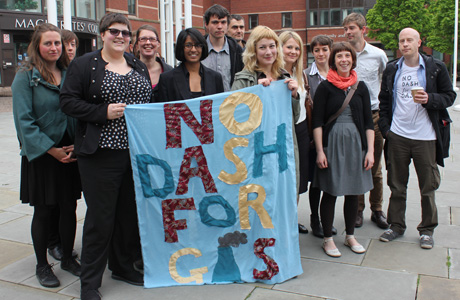
Climate activists escape jail sentences for power station shut down

no-dashPost­ed Thu 6th Jun 2013  ‘No Dash for Gas’ cam­paign­ers giv­en con­di­tion­al dis­charges and com­mu­ni­ty ser­vice orders for pow­er sta­tion occu­pa­tion

no-dashPost­ed Thu 6th Jun 2013  ‘No Dash for Gas’ cam­paign­ers giv­en con­di­tion­al dis­charges and com­mu­ni­ty ser­vice orders for pow­er sta­tion occu­pa­tion

Twen­ty-one cli­mate cam­paign­ers were sen­tenced today at Not­ting­ham Mag­is­trates court for tak­ing part in a week-long occu­pa­tion of EDF’s West Bur­ton Gas Fired Pow­er Sta­tion last Autumn [1].

Despite fears that some of the pro­test­ers might be fac­ing jail terms, they were giv­en less­er – but still puni­tive — sen­tences rang­ing from 18 months con­di­tion­al dis­charges for five of the pro­test­ers, to vary­ing num­bers of hours of com­mu­ni­ty ser­vice. On sen­tenc­ing, the judge remarked, “All of you are high­ly edu­cat­ed men and women, indus­tri­ous com­mit­ted indi­vid­u­als who wok and vol­un­teer in your com­mu­ni­ties. Your motives were gen­uine… what you planned you exe­cut­ed to per­fec­tion.”

Speak­ing after the sen­tenc­ing, Rachel Thomp­son said: “Although – thank good­ness — none of us are going to jail, we are still fac­ing penal­ties for sim­ply stand­ing up for clean, safe and afford­able ener­gy. Mean­while, every­one in the coun­try will be fac­ing a dis­as­trous­ly desta­bilised cli­mate and rock­et­ing fuel bills if we don’t stop the Gov­ern­men­t’s reck­less dash for gas. The Gov­ern­ment is putting the prof­its of the Big Six ener­gy com­pa­nies before the fun­da­men­tal need for a safe and live­able cli­mate for gen­er­a­tions to come.”

More than 64,000 peo­ple signed a peti­tion [2] in sup­port of the No Dash For Gas pro­test­ers after EDF launched a £5 mil­lion dam­ages claim against them. The law­suit was quick­ly dropped in the face of this pub­lic out­cry, and sup­port for the cam­paign­ers seems to have remained strong. Over a thou­sand peo­ple have pledged to con­gre­gate out­side EDF’s Lon­don offices this evening in a sol­i­dar­i­ty vig­il in sup­port of the defen­dants [3].

Sup­port­ers of No Dash For Gas have also vowed to return to EDF’s West Bur­ton pow­er sta­tion for a four day “Reclaim The Pow­er” action camp in August [4]. The “Cli­mate Camp-style” gath­er­ing is expect­ed to attract a mix­ture of cli­mate cam­paign­ers, pen­sion­ers fac­ing fuel pover­ty and anti-aus­ter­i­ty activists, and promis­es a “sur­pris­ing and inspir­ing mass action”.

Ewa Jasiewicz, one of the 21 defen­dants said after the sen­tenc­ing: “Reclaim the Pow­er is about just that – reclaim­ing the pow­er to decide where our ener­gy comes from, what we use it for and how we organ­ise our soci­ety in the pub­lic inter­est, accord­ing to peo­ple’s needs and not for cor­po­rate greed. A decen­tralised, renew­able, pub­licly-owned ener­gy sys­tem is both pos­si­ble and nec­es­sary if we are to avoid cat­a­stroph­ic cli­mate change and ever-wors­en­ing fuel pover­ty”.

Eight minute doc­u­men­tary of the action and pro­test­ers is avail­able at: http://youtu.be/HovQqw9jEJY

*** ENDS ***

[1] See http://www.nodashforgas.org.uk/
[2] www.change.org/edf21
[3] See https://www.facebook.com/events/549817328384415/ EDF Offices: Car­di­nal Place, 80 Vic­to­ria street, Lon­don. Mem­bers of Fuel Pover­ty Action, UKUn­cut, Dis­abled Peo­ples Against the Cuts and the Greater Lon­don Pen­sion­ers Asso­ci­a­tion will be attend­ing and avail­able for inter­view
[4] See http://www.nodashforgas.org.uk/

Letter No. 9: Tragedies and Dams (the struggle does not end there nor here)

In an unprece­dent­ed step, the Brazil­ian gov­ern­ment has met pro­tes­tors’ demands by fly­ing the entire indige­nous occu­pa­tion – as well as their legal coun­cil and accom­pa­ny­ing jour­nal­ists – from Altami­ra to Brasil­ia to dia­logue with Pres­i­dent Rousseff’s Chief of Staff Gilber­to Car­val­ho and oth­er high offi­cials and min­is­ters. 

Led by the Mundurukú peo­ple of the Tapa­jós Riv­er basin, occu­pa­tions of Belo Monte’s main work camp spanned 17 days from May to June demand­ing the sus­pen­sion of dam con­struc­tion and envi­ron­men­tal fea­si­bil­i­ty stud­ies for future dams on indige­nous lands, and the guar­an­tee of the con­sti­tu­tion­al right to pri­or con­sul­ta­tion.

The 150 indige­nous pro­tes­tors who have staged a coura­geous nine-day occu­pa­tion of the Belo Monte dam’s main work camp have trav­eled to Brasil­ia today to meet in the Pres­i­den­tial Palace with high offi­cials from the Brazil­ian gov­ern­ment. Today the indige­nous groups issued a 9th let­ter to the gov­ern­ment (see below)

Let­ter No. 9:
Tragedies and Dams (the strug­gle does not end there nor here)

We have left our occu­pa­tion of the Belo Monte dam and have come to dia­logue with the gov­ern­ment.

We have not come to an agree­ment with you. We accept this meet­ing in Brasil­ia because the more we said we would not leave, the more you sent police to the work camp. And on the same day that we were to be removed by force by the police, you killed a one of our rel­a­tives, a Ter­e­na in Mato Grosso do Sul. There­fore we decid­ed that we did not want anoth­er death. We avoid­ed a tragedy, not you. You do not pre­vent tragedies, you com­mit them.

We came here to speak to you of anoth­er tragedy that we will fight to pre­vent: the loss of our ter­ri­to­ry and our life. We did not come to nego­ti­ate with you, because one can­not nego­ti­ate with ter­ri­to­ry nor life. We are against the con­struc­tion of dams that kill indige­nous land, because they kill cul­ture when they kill fish and drown the land. This kills us with­out need­ing a weapon. You con­tin­ue killing a lot, sim­ply a lot. You have killed too much, for 513 years.

We did not come to talk only about dams on the Tapa­jós, as you are telling the press. We came to Brasil­ia to demand the sus­pen­sion of fea­si­bil­i­ty stud­ies and the con­struc­tion of dams on the Xin­gu, Tapa­jós, and Teles Pires Rivers. You are not only talk­ing with the Mundurukú peo­ple. You are talk­ing with Xipaya, Kayapó, Arara, Tupinam­bás, and with all the peo­ple who are togeth­er in this strug­gle, because this is a major strug­gle of us all.

We did not bring wish lists. We are against dams. We demand the fed­er­al government’s com­mit­ment to con­sult us and ensure our right to veto projects that destroy us.

But no. You tram­ple every­thing and do what they [the dam build­ing com­pa­nies] want. And to achieve that you do every­thing to divide indige­nous peo­ples. We came here to tell you to stop, because we will resist togeth­er and stand unit­ed. We have been gath­ered for 35 days in Altami­ra, and for 17 days we occu­pied the main hydro­elec­tric dam that you are build­ing. Along with this let­ter we are send­ing all the let­ters from the two occu­pa­tions that we car­ried out. Read every­thing care­ful­ly to under­stand our move­ment. And in so doing respect us, as you have not done up until today.

Dis­re­spect does not come only from words. It is demon­strat­ed by your actions.

In the region of the Xin­gu River’s Big Bend, every­thing is being destroyed and has been turned upside down since you approved the con­struc­tion of the Belo Monte dam. Every­one very sad and only the rich are doing well. Our indige­nous rel­a­tives have fought a lot. Even the con­struc­tion work­ers suf­fer.

On the Teles Pires and Tapa­jós Rivers, you are begin­ning this process now, but have already grave­ly dis­re­spect­ed us.

In August 2012, your researchers began to invade our lands, cap­ture our ani­mals and plants, count hectares, mea­sure the water, and drill our land.

In Octo­ber, [the indige­nous agency] FUNAI and Eletro­bras said in the meet­ing that the dams would be built in any cir­cum­stance, whether or not we want them. And that they would send the police force to our land if nec­es­sary.

In Novem­ber, the fed­er­al police attacked and destroyed the Teles Pires vil­lage, where we are all against dams. Ade­nil­son Mundurukú was killed, shot three times, and anoth­er 19 indige­nous peo­ple were wound­ed. At the end of the month we went to Brasil­ia denounce the police oper­a­tion to the Min­istry of Jus­tice, FUNAI and the Gen­er­al Sec­re­tari­at of the Pres­i­den­cy. We also went to pros­e­cu­tors from the Fed­er­al Pubic Min­istry.

In Jan­u­ary 2013, we held a large assem­bly in the Mundurukú vil­lage of Sai Cin­za, where a doc­u­ment with 33 demands was deliv­ered to a rep­re­sen­ta­tive of the Gen­er­al Sec­re­tari­at of the Pres­i­den­cy.

The fol­low­ing month, we returned to Brasil­ia demand a response from the Gen­er­al Sec­re­tari­at on these 33 points. We man­aged to find the min­is­ter, but he ignored our demands and tried to get us to sign a doc­u­ment accept­ing dams on the Tapa­jós Riv­er.

To ensure that envi­ron­men­tal impact stud­ies of these dams were car­ried out, the gov­ern­ment issued a decree in March 2013 autho­riz­ing the entry of police troops on our land. On the fol­low­ing day our vil­lages were raid­ed by police squads.

On the Teles Pires Riv­er, the ancient bones of our rel­a­tives were unearthed. You are destroy­ing a sacred place.

We could not accept this sit­u­a­tion any­more. For this rea­son we occu­pied your work camp, bring­ing our claims, demand­ing the government’s com­mit­ment to respect the orig­i­nal peo­ples of this coun­try, to respect our right to land and to life. Or, at least for the gov­ern­ment to respect its own law: the Con­sti­tu­tion and the inter­na­tion­al treaties you sign. Yet you want to destroy the laws that pro­tect us, indige­nous peo­ples, with oth­er laws and new decrees. You want to legal­ize destruc­tion.

And now we come here to you. Hop­ing that you final­ly lis­ten to us, rather than lis­ten­ing to those who pay for your polit­i­cal cam­paigns. Even if you are not will­ing to learn to lis­ten, we are will­ing to teach.
– Con­struc­tion site of the Belo Monte dam, Vitória do Xin­gu, June 4, 2013

URGENT: “We will die. We will not leave without being heard.” 4th June

Only two days after the reoc­cu­pa­tion of the Belo Monte Dam began, the fate of 170 indige­nous peo­ple is at stake. Yes­ter­day, the Fed­er­al Court in Altami­ra ordered them to leave by 4 pm today or they would be removed by Fed­er­al Police. They respond­ed by tear­ing up the order and refused to leave by the dead­line. Instead, they are stand­ing strong and are demand­ing that Pres­i­dent Dilma’s Chief of Staff, Gilber­to Car­val­ho, come meet with them. Their let­ter to the Brazil­ian gov­ern­ment is below. Read, share and take urgent action right now!

You can also show your sup­port by donat­ing to the indige­nous occu­pa­tion on CAUSES.

Let­ter No. 8:
The mas­sacre has been announced and only the gov­ern­ment can avoid this fate

(Orig­i­nal ver­sion in Por­tuguese here)

We have occu­pied the con­struc­tion site of the Belo Monte Dam. We are defend­ing our lands. These ancient lands have always been ours and you have already tak­en a part of them. And now you are try­ing to take more. We will not leave.

You will come to kill us and we will die. We will not leave with­out being heard.

The fed­er­al gov­ern­ment announced a mas­sacre of indige­nous peo­ples, the 170 war­riors, women, chil­dren, lead­ers and shamans who are here. This mas­sacre is going to hap­pen at the hands of police, Funai, and the judi­cial sys­tem.

You have killed at Teles Pires and will kill again when you need to. You killed us because we are against the dams. We know what you are capa­ble of doing.

This time the gov­ern­ment and cor­po­ra­tions have asked Norte Ener­gia to kill us. Norte Ener­gia pled their case to a fed­er­al judge, who sub­se­quent­ly autho­rized the police to beat and kill us if need­ed. Gov­ern­ment of Brazil and cor­po­ra­tions build­ing Belo Monte, it will be your fault if any of us die.

Enough with the vio­lence! Stop threat­en­ing us! We want our peace and you want your war. Stop lying to the press that we are kid­nap­ping work­ers and bus­es and caus­ing an incon­ve­nience. The occu­pa­tion is qui­et The unrest is caused by the police sent by the judge, Norte Ener­gia, and the gov­ern­ment. You are the ones who are humil­i­at­ing us, threat­ing us, intim­i­dat­ing us, and assas­si­nat­ing us when you don’t know what else to do.

We demand the sus­pen­sion of the order to repos­sess the con­struc­tion site, until Thurs­day morn­ing, May 30th, 2013. The gov­ern­ment needs to come here and hear us. You already know our agen­da. We demand the sus­pen­sion of all works and stud­ies of dams on our lands. We demand the removal of the Nation­al Force from our lands. The lands are ours. You have wast­ed enough of our lands.

You want us to be tame and qui­et, obey­ing your civ­i­liza­tion with­out ques­tion. But in this case, we know you would rather see us dead because we are mak­ing noise.

Despite Government Repression, Hundreds Protest China Chemical Plant 4th May

chinachemplant

chinachemplant

Hun­dreds of peo­ple have protest­ed against a pro­posed chem­i­cal plant in south­west Chi­na, state media said, while res­i­dents in anoth­er city accused author­i­ties of pre­vent­ing a sim­i­lar protest.

More than 200 demon­stra­tors gath­ered in the city of Kun­ming on Sat­ur­day to protest plans for a fac­to­ry which will pro­duce paraxy­lene (PX), a tox­ic petro­chem­i­cal used to make fab­rics, China’s offi­cial Xin­hua news agency report­ed.

About 1,000 peo­ple described as “onlook­ers” sur­round­ed the pro­test­ers, some of whom wore face-masks and held ban­ners, the report said, adding that police “dis­suad­ed” a pro­test­er from dis­play­ing a ban­ner.

Police also lined the streets of Cheng­du, the cap­i­tal of south­west China’s Sichuan province, after locals planned to demon­strate over a near­by chem­i­cal plant, res­i­dents said.

“There were a lot of police out­side gov­ern­ment offices, pub­lic spaces and impor­tant cross­roads in the city,” one res­i­dent sur­named Liu said, adding that fliers post­ed around the city in recent days had called for a protest.

“The fliers said the chem­i­cal plant has a big impact on people’s health,” he said, not want­i­ng to give a full name for fear of offi­cial reprisals. The gov­ern­ment respond­ed with notices call­ing on peo­ple not to demon­strate, Liu said.


Pho­tos post­ed online showed ranks of police lin­ing the city’s streets. Local police on Sat­ur­day morn­ing announced that they would be car­ry­ing out an earth­quake pro­tec­tion drill, a claim dis­missed by thou­sands of inter­net users.

“It’s about pre­vent­ing the protest,” one user of the pop­u­lar social net­work­ing web­site Sina Wei­bo wrote in response to the police notice. “This is the most bla­tant lie in the his­to­ry of Cheng­du,” added anoth­er.

Locals online said that the protest did not take place. Cheng­du was shak­en last month by a 6.6 mag­ni­tude earth­quake which struck Lushan coun­ty, about 160km away, killing about 200 peo­ple.

Schools and uni­ver­si­ties in the city were request­ed to hold extra class­es on Sat­ur­day, in an appar­ent attempt to keep peo­ple from protest­ing, sev­er­al online reports said.

Ris­ing trend

ChinaChemProtest2

Chi­na has seen a num­ber of urban demon­stra­tions against pro­posed chem­i­cal plants in recent years, in what ana­lysts have iden­ti­fied as a ris­ing trend of envi­ron­men­tal­ly-moti­vat­ed “not in my back­yard” protests in Chi­na.

Local author­i­ties in the coastal city of Xia­men can­celled plans for a PX plant after thou­sands took part in a protest in 2007.

A huge protest in the north­east­ern city of Dalian in 2011 prompt­ed author­i­ties to announce a sim­i­lar climb­down.

The east­ern city of Ning­bo last year announced the with­draw­al of plans for a PX plant after a demon­stra­tion involv­ing about 200 peo­ple, while a vio­lent protest in the south­west­ern city of Shi­fang prompt­ed offi­cials to shelve pro­pos­als for a met­als fac­to­ry.

Search­es for “Cheng­du PX” were blocked on Sina Wei­bo on Sat­ur­day, while posts about the Kun­ming protest were delet­ed by online cen­sors.

Militant Mining Resistance

bloqueo2

Min­ing is one of the most vis­cer­al­ly destruc­tive and hor­rif­ic ways in which the dom­i­nant culture—industr

bloqueo2

Min­ing is one of the most vis­cer­al­ly destruc­tive and hor­rif­ic ways in which the dom­i­nant culture—industrial civilization—enacts its vio­lence on the liv­ing world. As entire­ly and unequiv­o­cal­ly destruc­tive as this soci­ety is, few oth­er indus­tri­al activ­i­ties are as hor­rif­i­cal­ly con­fronting as min­ing. Whole land­scapes are cleared of life as communities—most often indige­nous or poor—are forced from their homes. Moun­tains lev­el to piles of bar­ren rub­ble which leach count­less poi­sons, scour­ing life from whole water­sheds. Pits of unimag­in­able size are carved from the bones of the earth, leav­ing moon­scapes in their wake.

Besides the imme­di­ate dam­age to the land at the site of oper­a­tions, the destruc­tion extends through the uses its prod­ucts are put to. In this way, min­ing is cru­cial to the con­tin­ued func­tion of indus­tri­al civ­i­liza­tion, sup­ply­ing many of the raw mate­ri­als that form the mate­r­i­al fab­ric of indus­tri­al soci­ety. Steel, alu­minum, cop­per, coal, tar sands bitu­men, cement; the mate­ri­als extract­ed through min­ing are cen­tral com­po­nents of indus­tri­al civ­i­liza­tion in an imme­di­ate and phys­i­cal way. They are the build­ing blocks of this soci­ety.

For­tu­nate­ly, as is the way of things, where there is atroc­i­ty and bru­tal­iza­tion, there is resis­tance. There has been a lot of mil­i­tant anti-min­ing action hap­pen­ing recent­ly; in the last few months alone there have been sev­er­al inspir­ing inci­dents of peo­ple tak­ing direct mil­i­tant action against min­ing projects and infra­struc­ture.

In Feb­ru­ary, sev­er­al dozen masked mil­i­tants raid­ed the Hel­las gold mine in Halkidi­ki, Greece. They fire­bombed machin­ery, vehi­cles, and offices at the site. The attack fol­lowed sev­er­al years of legal chal­lenges and pub­lic demonstrations—none of which suc­ceed­ed in stop­ping the mine, which will destroy forests, poi­son ground­wa­ter, and release air pol­lu­tants includ­ing lead, mer­cury and arsenic.

When local res­i­dents tried to stop the mine through the courts the gov­ern­ment ruled against them, claim­ing that the mine would cre­ate jobs. As the Deputy Min­is­ter of Ener­gy and Envi­ron­ment Asi­makis Papa­geor­giou said, “We can no longer accept this [area] being left unex­ploit­ed or bare­ly exploit­ed.”

State­ments like these on the part of those in pow­er, while not nec­es­sar­i­ly sur­pris­ing, help to make clear the real­i­ty we face; the dom­i­nant cul­ture requires the rend­ing of the liv­ing world into dead com­modi­ties. It can’t be per­suad­ed to change, no mat­ter how com­pas­sion­ate and com­pelling the appeals we make. It can only be forced to change.

More recent­ly, the Powhar­nal coal mine in Scot­land was attacked at the begin­ning of April. An anony­mous com­mu­nique was released via Indy­media Scot­land:

At some point over the past week­end mul­ti­ple items of plant machin­ery at an exten­sion to the Powhar­nal open cast coal site in East Ayr­shire were put beyond work­ing use. High val­ue tar­gets includ­ing a prime mover and bull­doz­er were also tar­get­ed to cause max­i­mum dis­rup­tion to work­ings at the mine.

This action presents yet anoth­er hope­ful exam­ple of mil­i­tant action tar­get­ing extrac­tive projects. This was not a sym­bol­ic act of prop­er­ty destruc­tion, but rather one aimed at mate­ri­al­ly dis­rupt­ing and stop­ping destruc­tive activ­i­ty. More so, the actionist(s) specif­i­cal­ly tar­get­ed key equip­ment and infra­struc­ture at the site to max­i­mize the impact of their actions, mak­ing good use of effec­tive sys­tems dis­rup­tion.

A third exam­ple comes from Peru, where in mid-April sev­er­al hun­dred pro­tes­tors stormed the Minas Con­ga gold & cop­per mine, occu­py­ing the site for a short while and burn­ing equip­ment. Besides the imme­di­ate dam­age done by the arson, the action forced the oper­at­ing com­pa­ny, Min­era Yana­cocha, to evac­u­ate per­son­nel and equip­ment, fur­ther dis­rupt­ing their oper­a­tions.

This lat­est protest in April is the lat­est in a con­tin­u­ous and diverse tapes­try of resis­tance to the Minas Con­ga mine. Such direct and mil­i­tant protests and actions last year forced Yana­cocha to put most of the min­ing project on hold, and the strong unyield­ing oppo­si­tion has New­mont Min­ing Cor­po­ra­tion (which owns Yana­cocha) con­sid­er­ing pulling out of the project alto­geth­er. This is yet anoth­er exam­ple of how effec­tive mil­i­tant action can be in stop­ping min­ing and oth­er extrac­tive projects.

Of course there are plen­ty of above­ground and non­vi­o­lent efforts being made to oppose min­ing projects hap­pen­ing as well, and this isn’t meant to detract from or dis­miss their efforts. But the dom­i­nant cul­ture needs access to the raw mate­ri­als that feed the glob­al econ­o­my, and in the end it will secure those resources by force, refus­ing to hear “no!”

Again, this isn’t to say that non­vi­o­lent efforts are by any means doomed to fail­ure each and every time we employ them. It is to acknowl­edge that the entire exis­tence and oper­a­tion of indus­tri­al civ­i­liza­tion requires con­tin­ued access to “raw mate­ri­als” (oth­er­wise known as nat­ur­al liv­ing com­mu­ni­ties), and that the courts, reg­u­la­to­ry sys­tems, and laws have all been designed to pre­serve that arrange­ment. We may win occa­sion­al vic­to­ries here and there, but like a casi­no, they—the House, the cap­i­tal­ists, the min­ers, the extrac­tors, etc.— will always come out ahead in the end.

When above­ground & legal efforts to stop min­ing and oth­er extrac­tion projects fail, as they so often and reli­ably do, those deter­mined to pro­tect the lands and com­mu­ni­ties that are their homes turn to oth­er means.  

Attack­ing and destroy­ing the min­ing infra­struc­tures themselves—the phys­i­cal machines that are the imme­di­ate and direct weapons used to tear up biomes—forces a halt to extrac­tion with an unmatched direct­ness and imme­di­a­cy. Beyond min­ing itself, the strate­gic effi­ca­cy of tar­get­ing infrastructure—as the foun­da­tion­al sup­ports of any system—has been proven time and again by mil­i­taries and resis­tance move­ments around the world.

Of course, attacks tar­get­ing mines alone will like­ly nev­er be enough to stop such harm­ful and destruc­tive process­es alto­geth­er. That can only hap­pen by dis­man­tling indus­tri­al civ­i­liza­tion itself. And like anti-min­ing resis­tance, bring­ing down civ­i­liza­tion will require under­ground action— the tar­get­ing of key nodes of crit­i­cal indus­tri­al sys­tems through coor­di­nat­ed sab­o­tage.

As civ­i­liza­tion con­tin­ues its inces­sant death march around the world— tear­ing apart and destroy­ing ever more of the liv­ing world, ever more human and extra-human com­mu­ni­ties— resis­tance against it must of neces­si­ty become more mil­i­tant. With so much at stake, those resisters in Greece, Scot­land, Peru and else­where using mil­i­tant attacks on indus­tri­al infra­struc­ture to defend their lands and com­mu­ni­ties deserve our undy­ing sup­port. Those of us who val­ue life and jus­tice should not con­demn them, but cel­e­brate them— for theirs is pre­cise­ly the type of action that will be required to stop the mur­der of the liv­ing world.


Clean and Green? Rare Earth Elements and Technology

toxicree

Tox­ic waste being pumped into a tail­ings pond at a Rare Earth Ele­ment Mine.

toxicree

Tox­ic waste being pumped into a tail­ings pond at a Rare Earth Ele­ment Mine.

Maybe things aren’t as clean as they seem….  The Moth­er Nature Net­work describes the scene pret­ty well, “Lots of green tech­nolo­gies rely on rare earths [ele­ments], but iron­i­cal­ly, rare earth pro­duc­ers have a long his­to­ry of harm­ing the envi­ron­ment to get the met­als. Like many indus­tries that process min­er­al ores, they end up with tox­ic byprod­ucts known as ‘tail­ings,’ which can be con­t­a­m­i­nat­ed with radioac­tive ura­ni­um and tho­ri­um.”

With the re-open­ing of MolyCorp’s Moun­tain Pass mine in Cal­i­for­nia, Rare Earth Ele­ment (REE) min­ing came back on the scene in the U.S.  Ever since 2002 when that same mine had a 60 record­ed spills, result­ing in 600,000 gal­lons of radioac­tive water leak­ing into the Mojave desert, REEs have been com­ing only from Chi­na.  But with Chi­na restrict­ing some exports, and cut­ting back on the mines due to envi­ron­men­tal con­cerns, min­ing com­pa­nies in the U.S. are out look­ing for more.

A report by Bloomberg, details some of the tox­ic rea­sons to leave REEs alone.

  • China’s rare-earth indus­try each year pro­duces more than five times the waste gas, includ­ing dead­ly flu­o­rine and sul­fur diox­ide, than the total flared by all min­ers and oil refin­ers in the U.S.
  • Rare earth min­ing in Chi­na pro­duced 25 mil­lion tons of waste­water laced with can­cer-caus­ing heavy met­als such as cad­mi­um.
  • It takes more chem­i­cals to sep­a­rate rare earth ele­ments from ore than it does for base met­als such as cop­per, zinc and lead.
  • Low lev­els of radioac­tive tho­ri­um and ura­ni­um also occur in min­er­als con­tain­ing many rare-earth ele­ments.
  • In a Decem­ber 2012 report, the Envi­ron­men­tal Pro­tec­tion Agency said that as yet, the agency has no for­mal strat­e­gy for man­ag­ing and min­i­miz­ing rare-earth mining’s risks.

The Bloomberg arti­cle also points out why they are still being mined, “Rare earth met­als are key to glob­al efforts to switch to clean­er (sic) ener­gy — from bat­ter­ies in hybrid cars to mag­nets in wind tur­bines”.

There are plans quick­ly spread­ing across the coun­try for REE mine explo­rations.  While some point out the grow­ing con­cerns; oth­er orga­ni­za­tions (like the Depart­ment of Defense) are going gang busters to get new REE mines oper­at­ing.

Guatemala Declares Emergency In 4 Towns Following Kidnappings, Shootouts. 3rd May

GUATEMALA CITY, May 2  – Guatemala declared an emer­gency in four south­east­ern towns on Thurs­day, sus­pend­ing cit­i­zens’ con­sti­tu­tion­al rights in an area where dead­ly protests over a pro­posed sil­ver mine have erupt­ed in recent weeks.

Guatemalan Pres­i­dent Otto Perez announced the move in an effort to quell protests tar­get­ing the mine belong­ing to Cana­di­an min­er Tahoe Resources Inc. Two peo­ple have been killed in the demon­stra­tions.

The company’s secu­ri­ty guards shot and wound­ed six demon­stra­tors on Sat­ur­day, said Mauri­cio Lopez, Guatemala’s secu­ri­ty min­is­ter.

The next day, pro­test­ers, who say the Escobal sil­ver mine near the town of San Rafael Las Flo­res will con­t­a­m­i­nate local water sup­plies, kid­napped 23 police offi­cers, Lopez said.

One police offi­cer and a demon­stra­tor were killed in a shootout on Mon­day when police went to free the hostages, said Lopez.

“I am not going to allow this to con­tin­ue,” Perez told reporters. “We have con­duct­ed a six-month inves­ti­ga­tion in this area with the attor­ney general’s office for var­i­ous crim­i­nal activ­i­ties.”


Police and mil­i­tary raid­ed the four towns on Thurs­day, arrest­ing 15 peo­ple sus­pect­ed of kid­nap­ping, weapons theft and destruc­tion of pri­vate prop­er­ty.

Tahoe said in a state­ment it regret­ted the injuries to pro­test­ers caused by rub­ber bul­lets, but denied any respon­si­bil­i­ty for the deaths.

“Our inves­ti­ga­tion has shown that only non-lethal mea­sures were tak­en by our secu­ri­ty,” the com­pa­ny said.

The 30-day “state of emer­gency” will sus­pend cit­i­zens’ rights to bear arms and assem­ble peace­ful­ly. It also gives author­i­ties the pow­er, with­out a war­rant, to search res­i­dents sus­pect­ed of crimes.

Min­ing in Guatemala accounts for about 2 per­cent of gross domes­tic prod­uct. The country’s largest gold mine, the Mar­lin mine owned by Canada’s Gold­corp Inc, is expect­ed to pro­duce up to 200,000 ounces this year.


Indigenous Peoples Stop Dam Construction With New Occupation at Belo Monte Site 2nd May

Dam1

Dam1

Altami­ra, Brazil – Some 200 indige­nous peo­ple affect­ed by the con­struc­tion of large hydro­elec­tric dams in the Ama­zon launched an occu­pa­tion today on one of the main con­struc­tion sites of the Belo Monte dam com­plex on the Xin­gu Riv­er in the Brazil­ian Ama­zon. The group demands that the Brazil­ian gov­ern­ment adopt effec­tive leg­is­la­tion on pri­or con­sul­ta­tions with indige­nous peo­ples regard­ing projects that affect their lands and liveli­hoods. As this has not hap­pened, they are demand­ing the imme­di­ate sus­pen­sion of con­struc­tion, tech­ni­cal stud­ies and police oper­a­tions relat­ed to dams along the Xin­gu, Tapa­jos and Teles Pires rivers. Shock troops of the mil­i­tary police were await­ing indige­nous pro­tes­tors when they arrived at the Belo Monte dam site, but they were unable to impede the occu­pa­tion.

The indige­nous pro­tes­tors include mem­bers of the Juruna, Kayapó, Xipaya, Kuru­aya, Asuri­ni, Parakanã, Arara tribes from the Xin­gu Riv­er, as well as war­riors of the Munduruku, a large tribe from the neigh­bor­ing Tapa­jós riv­er basin. The indige­nous peo­ples are joined by fish­er­men and local river­ine com­mu­ni­ties from the Xin­gu region. Ini­tial reports indi­cate that approx­i­mate­ly 6,000 work­ers at one of the main Belo Monte con­struc­tion sites, Pimen­tal, have ceased oper­a­tions as a result of the protest. The occu­pa­tion, accord­ing to the indige­nous com­mu­ni­ties, will con­tin­ue indef­i­nite­ly or until the fed­er­al gov­ern­ment meets their demands.


Indige­nous peo­ples of the Xin­gu and Tapa­jós released this state­ment [Eng­lish trans­la­tion]:

dam2

We are the peo­ple who live in the rivers where you want to build dams. We
are the Munduruku, Juruna, Kayapo, Xipaya, Kuru­aya, Asuri­ni, Parakanã, Arara,
fish­er­men and peo­ples who live in river­ine com­mu­ni­ties. We are Ama­zon­ian
peo­ples and we want the for­est to stand. We are Brazil­ians. The riv­er and the
for­est are our super­mar­ket. Our ances­tors are old­er than Jesus Christ.
 
You are point­ing guns at our heads. You raid our ter­ri­to­ries with war trucks
and sol­diers. You have made the fish dis­ap­pear and you are rob­bing the
bones of our ances­tors who are buried on our lands.
 
You do this because you are afraid to lis­ten to us. You are afraid to hear that
we don’t want dams on our rivers, and afraid to under­stand why we don’t
want them.
 
You invent sto­ries that we are vio­lent and that we want war. Who are the
ones killing our rel­a­tives? How many white peo­ple have died in com­par­i­son to
how many Indige­nous peo­ple have died? You are the ones killing us, quick­ly
or slow­ly. We’re dying and with each dam that is built, more of us will die.
When we try to talk with you, you bring tanks, heli­copters, sol­diers,
machine­guns and stun weapons.

What we want is sim­ple: You need to uphold the law and pro­mote enact­ing
leg­is­la­tion on free, pri­or and informed con­sent for indige­nous peo­ples. Until
that hap­pens you need to stop all con­struc­tion, stud­ies, and police oper­a­tions
in the Xin­gu, Tapa­jos and Teles Pires rivers. And then you need to con­sult us.
 
We want dia­logue, but you are not let­ting us speak. This is why we are
occu­py­ing your dam-build­ing site. You need to stop every­thing and sim­ply
lis­ten to us.

dam6

Occu­pa­tions against the Belo Monte dam com­plex and mobi­liza­tions against oth­er Ama­zon­ian dams have become increas­ing­ly com­mon­place. Con­struc­tion on Belo Monte has been halt­ed on at least sev­en occa­sions over the last year due to the efforts of affect­ed indige­nous com­mu­ni­ties and fish­er­men to call atten­tion to the fail­ures of the Norte Ener­gia dam build­ing con­sor­tium and gov­ern­ment agen­cies to com­ply with the project’s man­dat­ed envi­ron­men­tal and social con­di­tions. On March 21st, approx­i­mate­ly 100 indige­nous peo­ples, river­bank dwellers (ribeir­in­hos) and small farm­ers expelled dam work­ers and occu­pied the Pimen­tal site, main­tained by the Belo Monte Con­struc­tion Con­sor­tium (CCBM). Addi­tion­al­ly, recent strikes and protests by dam work­ers have cre­at­ed addi­tion­al unrest at CCBM con­struc­tion sites.

The Munduruku indige­nous peo­ple and oth­er local com­mu­ni­ties have mobi­lized against a cas­cade of over a dozen large dams slat­ed for con­struc­tion on the neigh­bor­ing Tapa­jós riv­er and its major trib­u­taries, the Teles Pires, Juru­e­na and Jamanx­im. One of the first major dams under con­struc­tion, UHE Teles Pires, has been the sub­ject of law­suits by Fed­er­al Pub­lic Pros­e­cu­tors for lack of pri­or con­sul­ta­tions with the Kayabi, Api­aká and Munduruku indige­nous peo­ples. In recent weeks, the removal of funer­al urns of the Munduruku peo­ple by dam con­trac­tors at the Sete Quedas rapids, con­sid­ered a sacred site for indige­nous tribes, pro­voked out­rage.

Last March Pres­i­dent Dil­ma Rouss­eff signed Decree no. 7957/2013 allow­ing the use of the Nation­al Guard and oth­er armed forces to ensure that dam con­struc­tion at places like Belo Monte and tech­ni­cal stud­ies for planned Ama­zon­ian dams are not inter­rupt­ed by indige­nous pro­tes­tors. In April, upon a request of the Min­istry of Mines and Ener­gy, approx­i­mate­ly 250 fed­er­al and mil­i­tary police troops were dis­patched to the Tapa­jós region to ensure con­tin­u­a­tion of tech­ni­cal stud­ies for the first two large dams sched­uled for con­struc­tion, São Luiz do Tapa­jós and Jato­bá. The mil­i­tary oper­a­tion came in response to protests from the Munduruku peo­ple, whose tra­di­tion­al lands would be direct­ly affect­ed by the two large dams and who have suf­fered from a his­to­ry of mil­i­tary oper­a­tions on their lands.

“Today’s protest demon­strates the relent­less resis­tance of a grow­ing group of unit­ed peo­ples against Belo Monte, Tapa­jós and oth­er destruc­tive dams through­out the Ama­zon,” said Leila Salazar-Lopez, Ama­zon Watch Pro­gram Direc­tor. “These are the final moments to change course as con­struc­tion clos­es in on the Xin­gu and oth­er life­line rivers of the Ama­zon.”

dam5

dam4

Goldcorp Security Shoots Peaceful Protesters in Guatemala 1st May

Police, mil­i­tary and pri­vate secu­ri­ty attack peace­ful anti-min­ing pro­test­ers at the San Rafael mine in Guatemala, Sep.

Police, mil­i­tary and pri­vate secu­ri­ty attack peace­ful anti-min­ing pro­test­ers at the San Rafael mine in Guatemala, Sep. 2008

From Rights Action:

Six civil­ians were shot and wound­ed (2 seri­ous­ly) on April 27, 2013 by Tahoe / Gold­corp secu­ri­ty forces at Tahoe’s “San Rafael” mine site (munic­i­pal­i­ty of San Rafael Las Flo­res, depart­ment of San­ta Rosa, Guatemala).  The wound­ed are: Adol­fo Gar­cía, 57; his son Luis Gar­cía, 18; Wilmer Pérez, 17; Anto­nio Hum­ber­to  Castil­lo, 48;  Noé Aguilar Castil­lo, 27; Érick Fer­nan­do Castil­lo, 27.  Local res­i­dents, who are main­tain­ing a per­ma­nent peace­ful occu­pa­tion by the mine entrance in protest against it, saw com­pa­ny armed guards open fire on the group of men who were walk­ing by.  (Pren­sa Libre, April 29, 2013, http://www.prensalibre.com/santa_rosa/personas-resultan-incidente-San-Rafael_0_909509181.html)

Read more here about Goldcorp’s (and sub­sidiary Tahoe Resources’) recent his­to­ry of vio­lence and repres­sion against indige­nous and campesino com­mu­ni­ties in Guatemala.


The Fuel Nightmare Continues

It’s as if the uni­verse is try­ing to tell us some­thing, isn’t it?

It’s as if the uni­verse is try­ing to tell us some­thing, isn’t it?

First, a dis­as­trous month that saw at least 15 sep­a­rate oil spills world­wide, near­ly all of them in North Amer­i­ca. That month also saw an oil barge catch fire after a col­li­sion, and the pub­li­ca­tion of a study impli­cat­ing frack­ing as a cause of earth­quakes.

Now at least 600 gal­lons have spilled from an Enbridge oil pump­ing sta­tion near Viking, Minnesota.Two fuel barges car­ry­ing a nat­ur­al gas deriv­a­tive have explod­ed and are still burn­ing on the Alaba­ma Riv­er. And new reports strong­ly sug­gest that tar sands from Exxon’s Pega­sus Pipeline in Mayflower, Arkansas have seeped into Lake Con­way and are head­ing toward the Arkansas Riv­er.

Dis­as­ters like these bring the real costs of fos­sil fuels into sharp focus, because we can imag­ine our­selves affect­ed by them. But the truth is, dis­as­ters like these are part of every­day life for the peo­ple and oth­er beings liv­ing in areas where fos­sil fuels are extracted—or any oth­er indus­tri­al mate­ri­als, from cop­per for solar pan­els to coltan for cell phones.

If you wouldn’t want oil spilling into your back yard, if you wouldn’t want a strip mine rip­ping open a hole behind your house and poi­son­ing your water, then it’s time to admit that the eco­nom­ic sys­tem found­ed on con­sum­ing these mate­ri­als has got to go. We’ll nev­er have jus­tice or sus­tain­abil­i­ty if we base one group’s “high stan­dard of liv­ing” on the dis­lo­ca­tion and destruc­tion of oth­ers.