Tasmanian Lockdown Halts Work at Mill

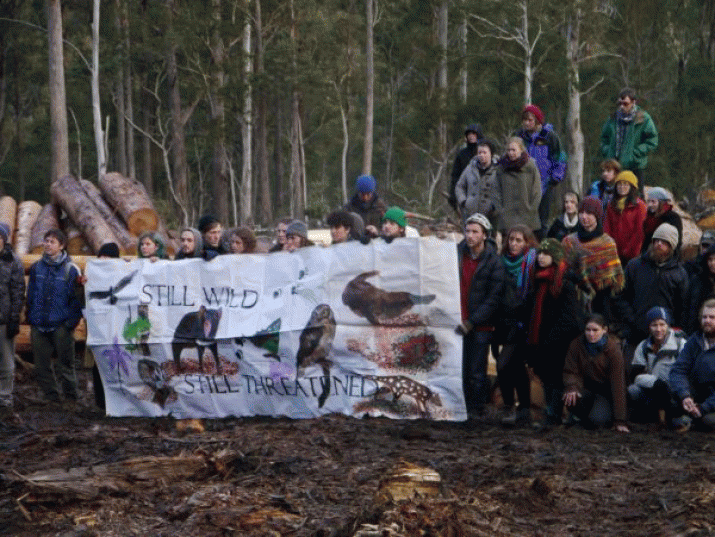
13 July 2013 Activists have vowed to con­tin­ue to tar­get tim­ber proces­sor Ta Ann Tas­ma­nia, after two peo­ple were arrest­ed for chain­ing them­selves to equip­ment at its Smith­ton mill yes­ter­day.

13 July 2013 Activists have vowed to con­tin­ue to tar­get tim­ber proces­sor Ta Ann Tas­ma­nia, after two peo­ple were arrest­ed for chain­ing them­selves to equip­ment at its Smith­ton mill yes­ter­day.

The protest was con­demned by the state gov­ern­ment and frus­trat­ed peak envi­ron­ment groups involved in the forestry peace process.

About 40 peo­ple, includ­ing mem­bers of the Aus­tralia Stu­dent Envi­ron­ment Net­work from across Aus­tralia, forced the mill to grind to a halt yes­ter­day.

Still Wild Still Threat­ened spokes­woman Miran­da Gib­son said the forestry leg­is­la­tion had failed to pro­tect Tasmania’s forests.

Although the leg­is­la­tion passed Par­lia­ment in April, the Leg­isla­tive Coun­cil must still approve a pro­tec­tion order for more than 500,000 hectares of forests.

A dura­bil­i­ty report, assess­ing whether the forestry leg­is­la­tion is work­ing since it was passed in April this year, will form the basis of its delib­er­a­tions.

Ms Gib­son said it would be bet­ter off to “start again and find some­thing bet­ter”.

“This agree­ment isn’t going to work: what we still see is forests falling every day,” she said.

A joint state­ment from the three envi­ron­men­tal sig­na­to­ries to the forestry agree­ment described the protest as “uncalled for, unnec­es­sary and  counter to the cre­ation of new reserves in Tas­ma­nia”.

“It is dif­fi­cult to see the envi­ron­men­tal ben­e­fit of this action giv­en that Ta Ann Tas­ma­nia sup­ports the pro­tec­tion of half a mil­lion hectares of new for­est reserves and the recent World Her­itage exten­sion,” the state­ment said.

The com­pa­ny said: “The protest is based on false claims about the Tas­man­ian For­est Agree­ment by rad­i­cal groups that have been out­side the process. Ta Ann Tas­ma­nia has com­mit­ted to only pur­chase tim­ber sourced from pro­duc­tion zones autho­rised by the for­est peace leg­is­la­tion.”

With­in hours of  envi­ron­men­tal activists storm­ing  Ta Ann at Smith­ton, pro-devel­op­ment group Unlock Tas­ma­nia had organ­ised a protest of its own – against the protest.

More than 100 peo­ple joined the march down Smithton’s main street to show their sup­port for the work­ers   at Ta Ann.

Spokesman and Lib­er­al can­di­date for Brad­don Joan Rylah said   fly-in activists had no place in Tas­ma­nia.

“Tas­ma­ni­ans have a stark choice between polit­i­cal groups using law-break­ing attacks or  sup­port­ing law-abid­ing groups who sup­port law-abid­ing com­pa­nies employ­ing Tas­man­ian peo­ple,” Mrs Rylah said.

Protest halts Newmont Gold work in NZ

7 July 2013 Pro­test­ers have occu­pied a min­ing explo­ration site on con­ser­va­tion land in the Coro­man­del Penin­su­la.

7 July 2013 Pro­test­ers have occu­pied a min­ing explo­ration site on con­ser­va­tion land in the Coro­man­del Penin­su­la.

The protest, in the Paraki­wai Val­ley near Whanga­ma­ta, stopped work at the site dur­ing the week­end.

Coro­man­del Watch­dog spokes­woman Renee Annan said about 10 pro­test­ers asked work­ers to turn the drilling rig off on Sat­ur­day morn­ing and the two groups had remained in a calm stand off since.

New­mont Gold exec­u­tives flew in by heli­copter and told the pro­test­ers they were tres­pass­ing, Ms Annan told NZ Newswire.

How­ev­er, there was no sign of police get­ting involved yet, she said.

The area should have been includ­ed in Sched­ule Four Con­ser­va­tion land when the park was cre­at­ed, she said.

It was home to the crit­i­cal­ly endan­gered Archey’s frog species, and oth­er rare species such as Helms but­ter­fly and Coro­man­del brown kiwi.

Ms Annan said that while the drilling was only explorato­ry, it should still be banned from con­ser­va­tion land.

The group would give New­mont the infor­ma­tion it need­ed to decide whether or not to mine.

“Any kind of min­ing is total­ly inap­pro­pri­ate in this area.”

New­mont could not be con­tact­ed for com­ment.

Activists Withdraw from Rig after 30-hour Occupation

7 July 2013 Anti-min­ing activists have with­drawn from a camp out on a Coro­man­del Penin­su­la gold drilling rig after occu­py­ing the site over 30 hours.

7 July 2013 Anti-min­ing activists have with­drawn from a camp out on a Coro­man­del Penin­su­la gold drilling rig after occu­py­ing the site over 30 hours.

Coro­man­del Watch­dog activists had camped out on the New­mont drilling rig in Paraki­wai Val­ley, near Whanga­ma­ta, pre­vent­ing it from oper­at­ing.

Watch­dog spokes­woman Renee Annan said the group had with­drawn after achiev­ing its goal of shut­ting down oper­a­tions for more than 30 hours.

“We have achieved our pur­pose, which was to high­light that this area should nev­er be mined.

“We camped for two days on the drilling rig in the remote for­est because we want to pro­tect the envi­ron­ment and the endan­gered species in this for­est,” Miss Annan said.

The area is not pro­tect­ed by Sched­ule Four in the Crown Min­er­als Act, some­thing Ms Annan called “an acci­dent of his­to­ry”.

Sched­ule Four lists high­est val­ue con­ser­va­tion lands that are not allowed to be mined.

“We will con­tin­ue to take peace­ful action against Newmont’s attempts to drill for gold in the For­est Park, a For­est Park which is the habi­tat of the rarest frog in the world.

“New­mont have flown in more secu­ri­ty guards this after­noon to pro­tect New­mont when real­ly they should be help­ing us pro­tect the envi­ron­ment,” Ms Annan said.

The group was joined by 30 local res­i­dents today who were sup­port­ive of the protest.

New­mont also oper­ates Martha Mine in Wai­hi.

Honduras: Anti-Mining Activists Report Death Threats

5 July 2013 Mem­bers of com­mu­ni­ties oppos­ing open-pit min­ing in the north­ern Hon­duran depart­ment of Atlán­ti­da have received death threats because of their activitism, accord­ing to a June 7 com­mu­niqué issued by the

5 July 2013 Mem­bers of com­mu­ni­ties oppos­ing open-pit min­ing in the north­ern Hon­duran depart­ment of Atlán­ti­da have received death threats because of their activitism, accord­ing to a June 7 com­mu­niqué issued by the Broad Move­ment for Dig­ni­ty and Jus­tice (MADJ) and the Atlán­ti­da Envi­ron­men­tal­ist Move­ment (MAA). The groups said police agents in the ser­vice of Lenir Pérez, own­er of the Alutech met­al com­pa­ny, assault­ed mem­bers of the Nue­va Esper­an­za com­mu­ni­ty on June 3, intim­i­dat­ing them and mak­ing death threats. On June 6 the res­i­dents received addi­tion­al death threats from a group of “heav­i­ly armed men” oper­at­ing in the area with the sup­port of the nation­al police, the com­mu­niqué charged. The groups blamed Tela munic­i­pal­i­ty may­or David Zac­caro, who “instead of sup­port­ing the com­mu­ni­ties has made com­mon cause with the mine own­ers, espe­cial­ly Lenir Pérez…who is car­ry­ing out vio­lence and pro­vok­ing the com­mu­ni­ties.”

In a sep­a­rate state­ment, a Catholic group, the Caret­ian Mis­sion­ar­ies, charged on June 10 that “alleged minework­ers” had made threats by text mes­sage on Jan. 28 to Father César Espinoza, a priest who oppos­es the min­ing, and to nuns in the group. The MADJ and the MAA asked for nation­al and inter­na­tion­al orga­ni­za­tions to write to Human Rights Min­is­ter Ana Pine­da (apineda@sjdh.gob.hn), Direc­tor of Pro­tec­tion for Human Rights Defend­ers Rodil Vazquez (rvasquez@sjdh.gob.hn), May­or Zac­caro (alcaldiadetela@yahoo.com) and oth­er offi­cials to ask the gov­ern­ment to end the repres­sion and the threats. (Religión Dig­i­tal (Madrid) 6/15/13; Adi­tal (Brazil) 6/25/13)

Mean­while, vio­lence con­tin­ues against campesinos demand­ing land in north­ern Hon­duras’ Low­er Aguán Val­ley. On the morn­ing of May 30 gun­men on a motor­cy­cle shot campesino leader Mar­vin Arturo Trochez Zúñi­ga and his son Dar­win Alexan­der Trochez dead while they were drink­ing cof­fee in their res­i­dence in La Cei­ba, Atlántida’s depart­men­tal cap­i­tal. Mar­vin Trochez’s wife was seri­ous­ly injured. The dou­ble mur­der brings the num­ber of campesinos killed in the dis­pute since Jan­u­ary 2010 to 104, accord­ing to the North Amer­i­can group Rights Watch.

Mar­vin Trochez was active in the Campesino Move­ment of Nation­al Recla­ma­tion (MCRN). He was a lead­ing fig­ure in the June 2011 occu­pa­tion of the Paso Aguán estate, which is man­aged by cook­ing oil mag­nate Miguel Facussé Barjum’s Grupo Dinant com­pa­ny; at least five peo­ple, includ­ing four secu­ri­ty guards, were killed in a vio­lent con­fronta­tion there on Aug. 14, 2011 [see Update #1093]. A year lat­er, on Aug. 9, 2012, Mar­vin Trochez’s old­est son, also named Mar­vin, was killed on the estate along with anoth­er campesino iden­ti­fied only as “Car­los.” Three more MCRN mem­bers, Orlan­do Cam­pos, Rey­nal­do Rivera Paz and José Omar Rivera Paz, were shot dead on Nov. 3 [see Update #1151]. Fear­ing for his own life, Mar­vin Trochez began car­ry­ing a hand­gun, but this led to his arrest for ille­gal weapons pos­ses­sion. He even­tu­al­ly went into hid­ing with his fam­i­ly in La Cei­ba, where he had rel­a­tives. (La Haine (Spain) 6/5/13 from Movimien­to Unifi­ca­do Campesino del Aguán (MUCA); Rights Action press release 6/6/13 via Scoop (New Zealand))

Gardaí frustrated as protests in Mayo continue

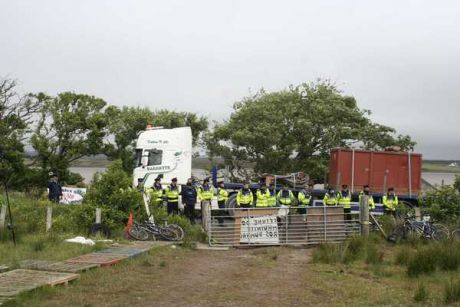
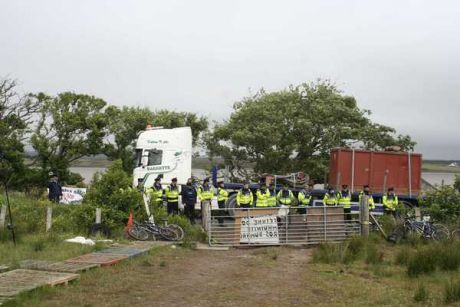
30 June 2013 This week has seen large num­bers of peo­ple con­tin­u­al­ly walk­ing down to Shel­l’s tun­nel­ing com­pound, dis­rupt­ing work and block­ing Shell traf­fic, and man

30 June 2013 This week has seen large num­bers of peo­ple con­tin­u­al­ly walk­ing down to Shel­l’s tun­nel­ing com­pound, dis­rupt­ing work and block­ing Shell traf­fic, and many peo­ple from the camp have tak­en advan­tage of the sun­ny weath­er to spend the days help­ing locals with turf col­lect­ing- many hands make light work! Mean­while the guards have spent their time patrolling around harass­ing peo­ple on the roads.


A Brief blow by blow

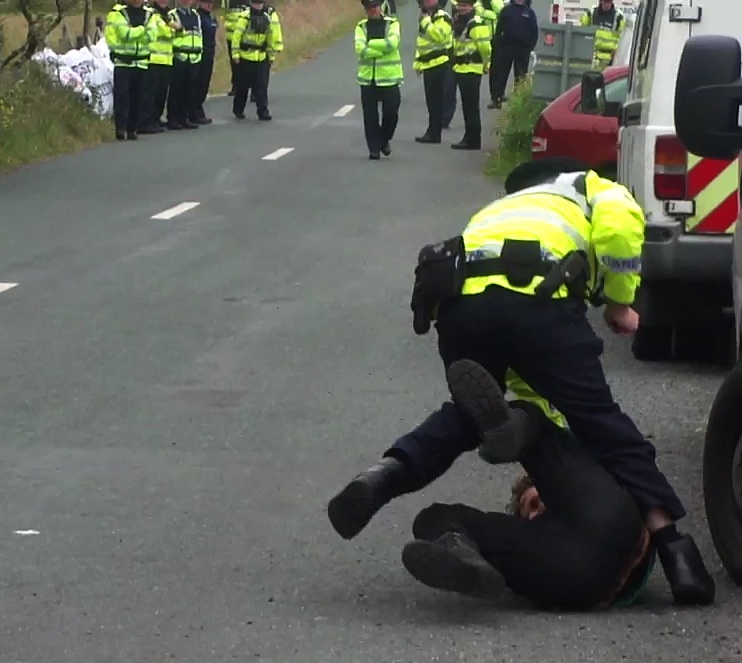
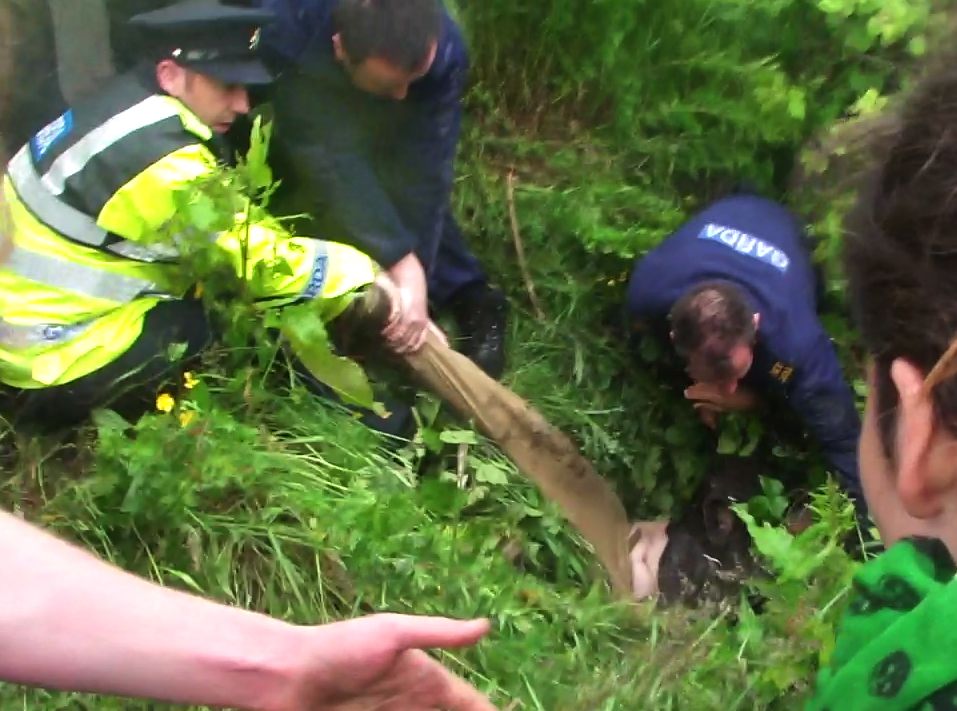
Thurs­day morn­ing as a con­voy passed the camp, 20 Gar­daí tried to block the gate to the camp and threw peo­ple into ditch­es, push­ing one per­son­’s head into the water in the ditch and gen­er­al­ly being a bit vio­lent. Two peo­ple were arrest­ed. One was let out with a cau­tion and the oth­er was held in cus­tody, brought to court in Castle­bar Fri­day morn­ing and denied bail, so he is now in Castlerea Prison await­ing a court appear­ance 5th July.

Lat­er on Thurs­day morn­ing a small group went to Bel­mul­let Gar­da sta­tion to col­lect their friends and one per­son was dragged out­side the cop­shop, pushed to the ground and arrest­ed for alleged crim­i­nal dam­age on Sun­day 23rd June. He was held overnight and brought to court in Castle­bar on Fri­day morn­ing. He has been grant­ed bail and released on the con­di­tion he not enter or inter­fere with Shell prop­er­ty or traf­fic, and signs on once a week at Bel­mul­let Gar­da Sta­tion. He will be up in court on 10th July.

Thurs­day after­noon a large group of 30 or so peo­ple walked down to the Shell com­pound in Augh­oose, stop­ping work inside the com­pound and stop­ping any Shell traf­fic from enter­ing or exit­ing the com­pound for over 3 hours. Once again IRMS (Shell pri­vate secu­ri­ty) was polic­ing the pub­lic road, push­ing peo­ple and hold­ing peo­ple until the guards arrived. Two peo­ple were arrest­ed on the road. One per­son was released and will appear in Bel­mul­let Court on 10th July, the oth­er was arrest­ed for out­stand­ing fines and brought to Moun­tjoy wom­en’s prison in Dublin. She was held overnight and released Fri­day morn­ing.

Thurs­day fin­ished off at 6pm when the guards final­ly attempt­ed to clear the road, every­one left and no one else was arrest­ed. A long queue of 20 vehi­cles and lor­ries which had been stuck inside final­ly were able to leave the com­pound.

Fri­day 28th June at 7am one per­son climbed a tri­pod erect­ed in the road between Bel­lan­aboy refin­ery and the Augh­oose tun­nel­ing com­pound, stop­ping all traf­fic going into the com­pound until 11.30am when the road was cleared and the per­son was arrest­ed. That per­son is being charged with Sec­tions 8 and 9 of the pub­lic order act and will be up in Bel­mul­let court on 10th July.

Three peo­ple walk­ing back to camp from the tri­pod on Fri­day were fol­lowed by guards, and an attempt was made to arrest one of them but they jumped into a field and got away. This isn’t the first time that peo­ple have been harassed on the roads this week by Gar­daí. Tues­day night as peo­ple were walk­ing back from the pub the guards were stop­ping peo­ple who were walk­ing in twos or alone, ask­ing for names address­es and even emails. One per­son refused to give his details, say­ing he had­n’t done any­thing out of the ordi­nary and was only walk­ing home, and he was arrest­ed and brought to Bel­mul­let gar­da sta­tion. He was released in the ear­ly hours of the morn­ing with no charges.

Oth­er things that have hap­pened this week: Win­dows of a Shell house were bro­ken, graf­fi­ti appeared on the main gates of the tun­nel­ing com­pound, and a Shell truck ran into prob­lems with spuds up the exhaust and some­one doing in its tyres. Who knows what else the pix­ies have got­ten up to.…

Cops assaulting people on the road
Cops assault­ing peo­ple on the road

Pushing people into ditches then arresting them
Push­ing peo­ple into ditch­es then arrest­ing them

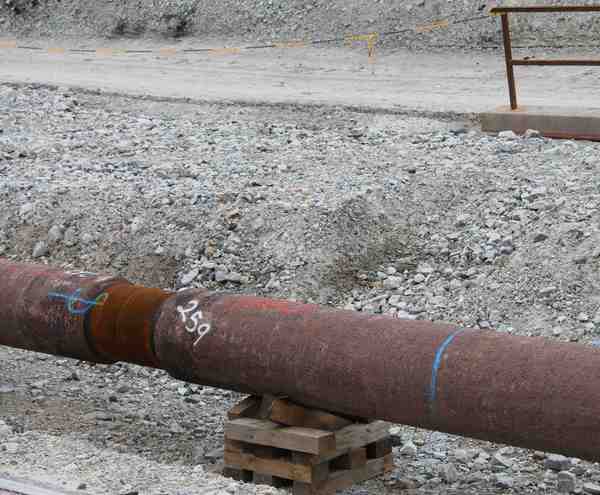
This is the pipe being laid between the refinery and the tunneling compound
This is the pipe being laid between the refin­ery and the tun­nel­ing com­pound

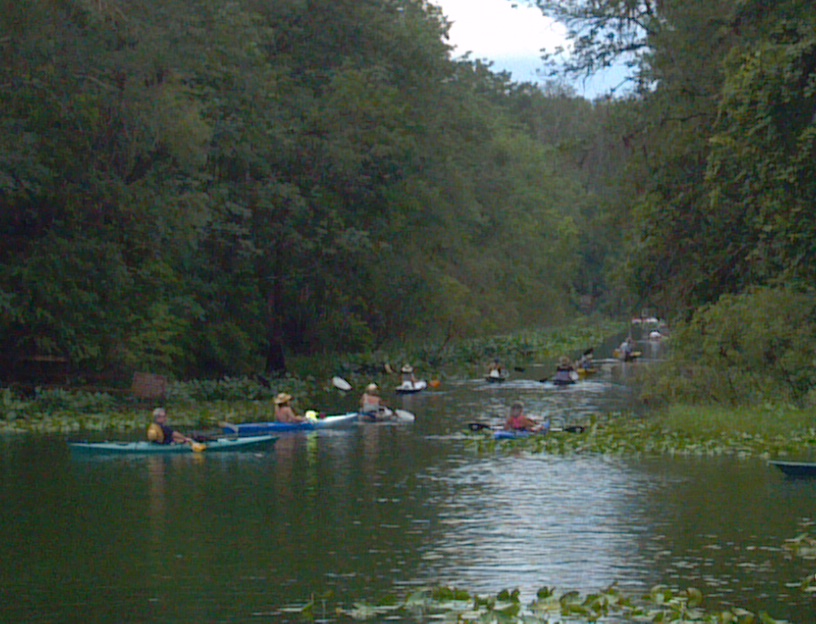
Paddlers Charge Silver River, Protesting Expected Cattle Ranch

Paddlers charge the iconic Silver River, protesting Adena Springs Ranch

30 June 2013 Grass­fed beef ain’t all it’s cracked up to be.

Paddlers charge the iconic Silver River, protesting Adena Springs Ranch

30 June 2013 Grass­fed beef ain’t all it’s cracked up to be.

Take Ade­na Springs Ranch, a pro­posed cat­tle ranch being devel­oped by bil­lion­aire Frank Stronach in Flori­da. The beef project is expect­ed to span 10,000 acres and, accord­ing to their web­site, hold up to 15,000 cat­tle. Ade­na Springs Ranch plans to raise the cat­tle on a grass­fed diet, call­ing their indus­tri­al farm­ing prac­tices “health­i­er” and “bet­ter for the envi­ron­ment.”

This past Sat­ur­day, indi­vid­u­als con­cerned with the pro­posed ranch gath­ered along­side the icon­ic Sil­ver Riv­er, a riv­er formed from the dis­charge of Sil­ver Springs, one of the largest nat­ur­al arte­sian wells in the world. Sil­ver Springs his­tor­i­cal­ly dis­charged over 550 mil­lion gal­lons of water per day. In recent years, though, its flow has decreased sig­nif­i­cant­ly. Accord­ing to the New York Times, the “flow rate has dropped by a third over 10 years.” If Ade­na Springs Ranch gets the go ahead from state offi­cials, its farm­ing prac­tices will have a direct impact on the flow and water qual­i­ty of Sil­ver Springs.

A flyover by the Putnam County Environmental Council showing the Adena Springs Ranch property

A fly­over by the Put­nam Coun­ty Envi­ron­men­tal Coun­cil show­ing the Ade­na Springs Ranch prop­er­ty. Pho­to: PCEC

Ade­na Springs Ranch is cur­rent­ly apply­ing for a con­sump­tive use per­mit that will allow them to draw 5.3 mil­lion gal­lons of water per day from the Flori­dan Aquifer, the under­ground reser­voir of water that pro­vides drink­ing water to Flori­da res­i­dents, draws tourism mon­ey to the state and encour­ages res­i­dents and vis­i­tors to get out into the wilds of Flori­da and expe­ri­ence its nat­ur­al beau­ty.

The per­mit, if approved, will allow the ranch to draw water from the area sur­round­ing Sil­ver Springs, impact­ing the entire spring­shed, all for the pur­pose of water­ing the grass that will feed the cat­tle. When asked about the impact their water with­drawals would have, Ade­na engi­neer – and Frank Stronach pup­pet – William Dunn said that “they do not con­sid­er cur­rent hydro­log­i­cal con­di­tions when they do their cal­cu­la­tions.”

About the only thing nat­ur­al in this inten­sive cat­tle oper­a­tion will be the release of cow shit and urine into the 130-acre graz­ing lots. Ade­na Springs Ranch says they will com­plete reg­u­lar soil tests to ensure that they’re “not send­ing runoff down­stream to neigh­bors or near­by water­bod­ies.”

The Flori­dan Aquifer, how­ev­er, can be thought of as a giant lime­stone sponge form­ing the foun­da­tion of the state. Rain­wa­ter and runoff seeps through top­soil and per­me­able lime­stone and slow­ly flows through the Aquifer until it rush­es out through nat­ur­al springs or is drawn up for drink­ing or irri­ga­tion pur­pos­es. If cow manure – a nitro­gen-rich fer­til­iz­er sold in gar­den shops every­where – com­ing from Stronach’s cows some­how man­ages to have a neu­tral effect on the envi­ron­ment, and on the nutri­ent lev­els of the sur­round­ing area, than the make­up of that cow­shit would defy veg­etable gar­den­ers every­where.

A paddler on the spring-fed Silver River.

A pad­dler on the spring-fed Sil­ver Riv­er. Pho­to: Matt Keene

Find out more infor­ma­tion about the protest and the issues sur­round­ing Ade­na Springs by check­ing out the Water Action Team web­site.

Garda violence retaliation against week of action

28th June Gar­da vio­lence breaks out again in mayo direct­ed by sgt. But­ler Gill and Mur­phy. 5 arrests today, 2 are being held till court in Castle­bar tomor­row at 10.30 one has been sent to mountjoy.This was an attempt of retal­i­a­tion by the gar­da to break the high spir­its at camp.These attempts to wreck the cam­paign’s col­lec­tive buzz have res­olute­ly failed and spir­its on the camp remain high. Actions and protest against the project will con­tin­ue, unre­strained and unbro­ken by the vio­lence and scare tac­tics of the Gar­daí.


8 years of intense struggle against Shell continues this week in Erris

25 June 2013 The first direct actions of the Erris strug­gle against Shell took place 8 years ago when 6 locals were injunct­ed and then 5 of them jailed for refus­ing to allow Shell onto their lands.  In the 8 years that have passed there have been count­less direct actions, dozens of arrests, about two dozen jail­ings and hun­dreds of peo­ple attacked by Gar­da or Shel­l’s secu­ri­ty com­pa­ny IR

25 June 2013 The first direct actions of the Erris strug­gle against Shell took place 8 years ago when 6 locals were injunct­ed and then 5 of them jailed for refus­ing to allow Shell onto their lands.  In the 8 years that have passed there have been count­less direct actions, dozens of arrests, about two dozen jail­ings and hun­dreds of peo­ple attacked by Gar­da or Shel­l’s secu­ri­ty com­pa­ny IRMS.  But as the first two days of the week of action demon­strat­ed that intense lev­el of repres­sion over so many years has yet to end effec­tive resis­tance.

The cost to the local com­mu­ni­ty has how­ev­er been enor­mous.  Some peo­ple who would oth­er­wise nev­er have had an encounter with the law have spent at least time in jail.  Oth­ers have been beat­en up by the Gar­da, some left with per­ma­nent injuries.  And every­one has to endure the con­stant sur­veil­lance of every­one who pass­es Shel­l’s com­pounds which are now scat­ted across the area.  At key moments they have also had to live in com­mu­ni­ties that were under occu­pa­tion as hun­dreds of Gar­da have been deployed along with the gun boats of the Irish navy.  Along­side this are the even dark­er expe­ri­ences of cam­paign­ers being attacked in the night, in one case hav­ing a fish­ing boat sunk under them and the all too com­mon sto­ries of peo­ple who realised their homes and fam­i­ly were being spied on by uniden­ti­fied men.

Despite this there were a con­stant stream of peo­ple from the local com­mu­ni­ty vis­it­ing the camp and the social activ­i­ties arranged over the week­end along with a few who, 8 years on, are still deter­mined to take part in and indeed lead direct actions against, around and with­in the com­pound.  At this stage in the long strug­gle its true that a much larg­er bur­den of organ­is­ing and risk­ing beat­ings and arrest in such actions has fall­en on the shoul­ders of those trav­el­ling to Erris to stand along­side the local com­mu­ni­ties.  Very few ordi­nary peo­ple could sus­tain the lev­el of resis­tance of 2005 — 2007 over the years that fol­lowed, indeed the Ross­port Sol­i­dar­i­ty Camp itself has seen a com­plete change in per­son­nel at least twice now.

These changes have meant that the focus and meth­ods of the cam­paign have shift­ed in empha­sis over time.  Ini­tial­ly the dan­gers of Shel­l’s plan to run an exper­i­men­tal high pres­sure gas pipeline through the gar­dens of peo­ples house, lit­er­al­ly under their dri­ve­ways, was the key focus for many with mas­sive mobil­i­sa­tions of vir­tu­al­ly the entire local com­mu­ni­ty.  As the media ran a high­ly suc­cess­ful smear cam­paign against the com­mu­ni­ty the issue of the huge give­away of Irish Oil and Gas became cen­tral.  A huge cam­paign to inform the pub­lic of the rob­bery that was going on under their noses was con­duct­ed, over 120,000 copies of a 4 page book­let on the give­away were dis­trib­uted and an intense media cam­paign con­duct­ed.  The led to many peo­ple across the island real­is­ing that the strug­gles of a small com­mu­ni­ty far away in Mayo was also their strug­gle because every cent of prof­it Shell would take would be a cent less fund­ing for edu­ca­tion and heath­care.

The cam­paign built links with sim­i­lar strug­gles else­where and this meant that over time peo­ple also start­ed to come to Erris from out­side Ire­land to stand in sol­i­dar­i­ty with the com­mu­ni­ty.  This pushed the glob­al ques­tion of fos­sil fuel usage with­in the cam­paign and led to quite a few dis­cus­sions as a bal­ance was sought between fight­ing for real tax­a­tion on what was extract­ed and say­ing that our use of fos­sil fuels was a col­lec­tive insan­i­ty that was lead­ing the plan­et to envi­ron­men­tal cat­a­stro­phe.  In terms of tac­tics we also saw a shift from the mass block­ades involv­ing hun­dreds of local peo­ple and their sup­port­ers to more spe­cialised small group actions around lock ins and using tripods allow­ing small groups of peo­ple block roads for a long peri­od of time.  That shift was in part deter­mined by the use of vio­lence by the Gar­da to clear roads under their ‘no arrest’ pol­i­cy, a vio­lence that was near­ly always report­ed by a com­pli­ant media as if it had orig­i­nat­ed with the cam­paign.  You can just about get away with this when video footage shows lines of Gar­da baton­ing peo­ple stand­ing on the road but it does­n’t real­ly look very con­vinc­ing when peo­ple are sit­ting on the road with their arms trapped in steel pipes or dan­gling in mid air high above the roads sur­face.

All these strate­gies have forced the Irish state to back down on sim­ply forc­ing Shel­l’s orig­i­nal pipeline plan through and instead insist on sig­nif­i­cant changes in the safe­ty of the project.  Between such changes and the huge delays caused by the count­less direct actions Shel­l’s costs have soared from the ini­tial esti­mate of 600 mil­lion to well over 3 bil­lion.  Top Shell per­son­nel in Ire­land have reg­u­lar­ly been replaced as each in turn has failed to push through the project on time, the cur­rent esti­mat­ed com­ple­tion date is about a decade after the one intend­ed.  The gov­ern­ment has been forced to intro­duce changes in the amount future ener­gy finds will be taxed. 

None of these changes fix the prob­lems with the project,

  • the exper­i­men­tal pipeline is still too close to peo­ple’s hous­es and run­ning through an area that suf­fers huge land­slides,
  • the tax take on the project is still low and because of the way Shell is allowed write off expense it is prob­a­ble that not a cent in tax will ever be col­lect­ed,
  • the loca­tion of the refin­ery threat­ens both the water sup­ply of the area and the pris­tine envi­ron­men­tal con­di­tions that make it attrac­tive to tourists and a sought after source for fish and shell fish,
  • the count­less abus­es of human rights that have forced the project this far will nev­er be erased from the lives and minds of those who were jailed, beat­en or spied upon. 

But none of this should stop us acknowl­edg­ing the huge defeats that resis­tance has inflict­ed on Shell and the sig­nif­i­cant if incom­plete gains that have been won.

This is the con­text of the cur­rent week of action which is hap­pen­ing in what Shell must hope is the final phase of their con­struc­tion project.  The refin­ery is com­plete and most of the pipeline laid.  They got the Tun­nel Bor­ing Machine into the com­pound and it’s now at work under the estu­ary. Although their are con­stant rumours of prob­lems being encoun­tered and the sud­den appear­ance of deep and life threat­en­ing sink­holes on the sur­face must indi­cate unin­tend­ed sub­si­dence into and around the tun­nel beneath.

Shell and the Irish state though their inten­sive repres­sion of the local com­mu­ni­ty over 8 years must have hoped that active resis­tance was almost over.  That the pro­longed peri­od of jail­ing and bru­tal­i­sa­tion they had sub­ject­ed peo­ple to had sapped their will to con­tin­ue to resist as they need­ed to get on with the nor­mal rou­tines of work­ing and bring­ing up fam­i­lies that peo­ple else­where in Ire­land can take for grant­ed. So the fury of the assaults on the com­pound over the last cou­ple of days must have been a major dis­ap­point­ment for them, the quan­ti­ty of dam­age the direct actions result­ed in is prob­a­bly com­pa­ra­ble to that inflict­ed at the height of any ear­li­er point in the cam­paign.  Not only was sev­er­al days work destroyed but many of the com­pounds spy cam­eras were wrecked and equip­ment essen­tial to doing that work again put out of action.  It must also have become clear that the for­ti­fi­ca­tions erect­ed for this stage of the project are inad­e­quate when faced with a few dozen deter­mined peo­ple and that they can­not that those num­bers can­not be mobilised.

In a bet­ter world this strug­gle would have been won in 2005 when the deter­mined mobil­i­sa­tions of the com­mu­ni­ty should have result­ed in the nation­al out­cry that would have dri­ven Shell to Sea (the off shore refin­ery option which now would have saved Shell both time and mon­ey).  Or it should have been won in 2007 when thou­sands of peo­ple from all over the coun­try mobilised to block the roads and face the baton charges of the Gar­da.  But, with no small thanks to a media that was in one part cow­ard­ly to two parts being in the pock­ets of ener­gy cor­po­ra­tions, that out­cry nev­er emerged.  The state risked and got away with bru­tal­is­ing pro­test­ers and engag­ing a long term strat­e­gy of try­ing to sow divi­sions in the com­mu­ni­ty on the one hand and intim­i­dat­ing, beat­ing and jail­ing those who con­tin­ued to resist on the oth­er.

What main­tained the strug­gle at an intense lev­el was sol­i­dar­i­ty.  The sol­i­dar­i­ty of those who trav­elled from all over Ire­land to stand with the com­mu­ni­ty.  And the sol­i­dar­i­ty of those who came from fur­ther afield, in par­tic­u­lar the UK.  This is not a triv­ial thing, peo­ple from far away have spent for­ma­tive years of their lives in this small cor­ner of north west Mayo fight­ing for peo­ple and a place with whom there only ini­tial con­nec­tion was a shared sense of resis­tance and a strug­gle for envi­ron­men­tal jus­tice.  There have been dif­fer­ent phas­es in the strug­gle, some of these phas­es have prob­a­bly end­ed but the strug­gle against Shell in Erris and what the ener­gy cor­po­ra­tions are doing to this plan­et goes on.

Ross­port has become a byword for deter­mined resis­tance across Europe and beyond.  Books have been writ­ten, films made, babies born and we have had the sad­ness of friends and com­rades in the strug­gle dying.  Thou­sands, per­haps tens of thou­sands have vis­it­ed the area and stood along­side the com­mu­ni­ty.  Many brought lessons from else­where to this resis­tance and many have returned with lessons from this resis­tance to oth­er strug­gles.  In that sense the strug­gle has become much more than the indi­vid­ual issues it is com­posed of, it has become a sig­nif­i­cant part of the new world the peo­ple across the globe are build­ing in their hearts. In that sense it is a strug­gle that will nev­er end but will be remem­bered and car­ried for­ward long after the refin­ery is dis­man­tled and the pipes have rust­ed in the ground.

Charges Dropped Against Honduras Dam Opponent

Mem­bers of COPINH, an indige­nous campesino move­ment defend­ing lands and rivers in Hon­duras against dams and oth­er threats

Mem­bers of COPINH, an indige­nous campesino move­ment defend­ing lands and rivers in Hon­duras against dams and oth­er threats

June 25 2013

After an eight-hour hear­ing on June 13, a court in San­ta Bár­bara, the cap­i­tal of the west­ern Hon­duran depart­ment of the same name, sus­pend­ed a legal action against indige­nous leader Berta Isabel Cáceres Flo­res for the alleged ille­gal pos­ses­sion of a weapon. Accord­ing to Cáceres’ lawyer, Marceli­no Martínez, the court found that there was not enough evi­dence to pro­ceed with the case. Cáceres, who coor­di­nates the Civic Coun­cil of Grass­roots and Indige­nous Orga­ni­za­tions of Hon­duras (COPINH), is now free to trav­el out of the coun­try, although the case could still be reopened. Rep­re­sen­ta­tives from some 40 orga­ni­za­tions came to the city on June 13 in an expres­sion of sol­i­dar­i­ty with the activist.

Cáceres was arrest­ed along with COPINH radio com­mu­ni­ca­tor Tómas Gómez Mem­breño on May 24 when a group of about 20 sol­diers stopped their vehi­cle and claimed to find a pis­tol under a car seat [see Update #1178, where we gave the date incor­rect­ly as May 25]. Cáceres and Gómez Mem­breño had been vis­it­ing Lenca com­mu­ni­ties that were protest­ing the Agua Zarca hydro­elec­tric project. The leader of the mil­i­tary patrol, First Bat­tal­ion of Engi­neers com­man­der Col. Mil­ton Amaya, explic­it­ly linked the arrests to the activists’ polit­i­cal work: the Hon­duran online pub­li­ca­tion Pro­ce­so Dig­i­tal report­ed that Amaya “accused Cáceres of going around harangu­ing indige­nous res­i­dents of a bor­der region between San­ta Bár­bara and Intibucá known as Río Blan­co so that they would oppose the build­ing of the Agua Zarca hydro­elec­tric dam.”

Accord­ing to SOA Watch—a US-based group that mon­i­tors the West­ern Hemi­sphere Insti­tute for Secu­ri­ty Coop­er­a­tion (WHINSEC), for­mer­ly the US Army School of the Amer­i­c­as (SOA)—Amaya has stud­ied at the school on two occa­sions. (Pro­ce­so Dig­i­tal 5/26/13; Adi­tal (Brazil) 6/14/13; Kaos en la Red 6/14/13 from COPINH, Radio Mun­do Real, Hon­duras Libre, Dere­chos Humanos; SOA Watch 6/21/13)

FOOD LIBERATION FRONT — WHOSE FOOD? OUR FOOD! — Fri 14 Jun

THIS EVENT IS PART OF THE STOP G8 LONDON WEEK OF ACTION:
https://network23.org/stopg8/week-of-action/key-events/

Hashtag: #FLF

Magical mystery tour!
Fun non-violent direct action!

THIS EVENT IS PART OF THE STOP G8 LONDON WEEK OF ACTION:
https://network23.org/stopg8/week-of-action/key-events/

Hashtag: #FLF

Magical mystery tour! Fun non-violent direct action! Jenny Jones on food poverty in London, Graciela Romero of War on Want on food sovereignty, Bianca Jagger (tbc) on GMOs & Ben De Vries on Permaculture. Free food!

We will be holding our first annual feast, with invited speakers, to discuss how to we can collectively liberate our food supply from corporations like Monsanto, and reclaim our food. You are invited to bring your ideas and healthy food to share.

The elites of the G8 nations will soon be meeting in 5 star luxury while the poorest sections of society, particularly children, women and older people, are increasingly going hungry in both the global south and the richest cities of the developed world.

Our governments are using the crisis that neo-liberal economic policies created to impose austerity in Europe , increasing food poverty. Western governments are supporting agricultural policies that are leading to international land grabs and a growing concentration of land ownership. This is leading to escalating food prices in some of the poorest countries in the globe.

However peoples movements are fighting back and developing real solutions: La Via Campesina is a global solidarity movement which represents 200 million agricultural producers globally and calls for "Food Sovereignty". Food Sovereignty prioritises local food production and consumption . It ensures that the rights to use and manage lands, territories, water, seeds , livestock and biodiversity are in the hands of those that produce food not the corporate sector.

People's movements in Bolivia are kicking out GM and supporting agroecology , just as the people of Europe continue to resist GM entering our food chain.

This year will see the launch of the IF campaign, during the G8 summit. This proposes more aid, transparency and an end to land grabbing, but fails to address the issue of corporate control of our food supply, the need for food sovereignty, and the increasing concentration of wealth and land in the hands of the 1%.

Join us in our campaign to highlight the real solutions to food poverty and enjoy a feast of free healthy food, together. We have invited after dinner speakers from War on Want, FareShare, Farmers' Unions and other assorted food campaigners.

Whose Food ? Our Food!

Friday 14 June, 5.30pm Crossharbour DLR station, Eastferry Rd, Isle of Dogs, E14 9QD

https://www.facebook.com/events/572992462744134/