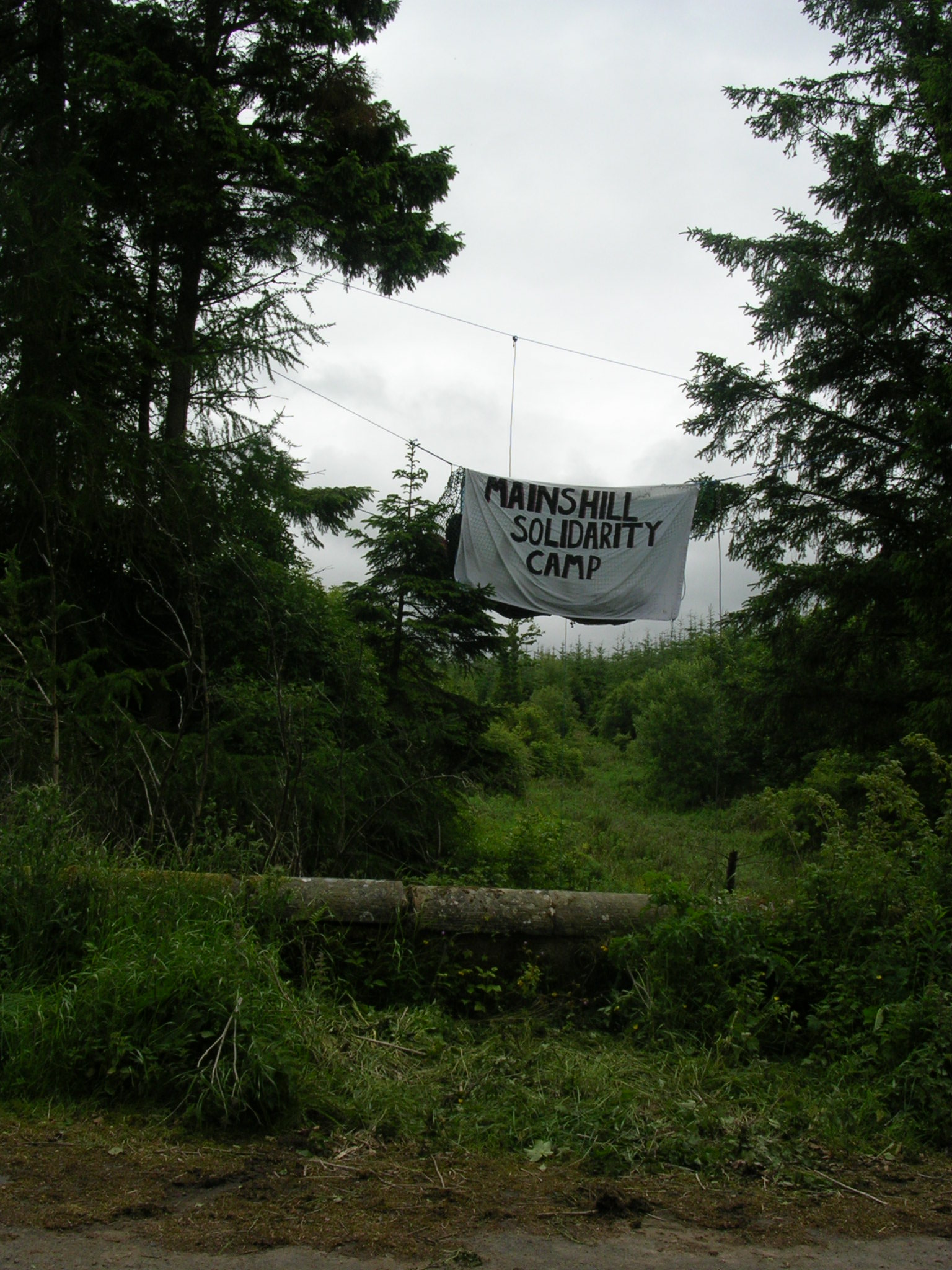
Call-out for support: Mainshill Solidarity Camp eviction granted!

Come resist Scot­tish Coal and Lord Home, and defend com­mu­ni­ties and the cli­mate!

Come resist Scot­tish Coal and Lord Home, and defend com­mu­ni­ties and the cli­mate!Net
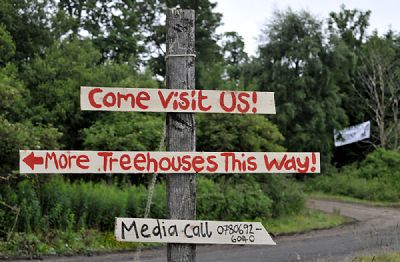
Come visit!

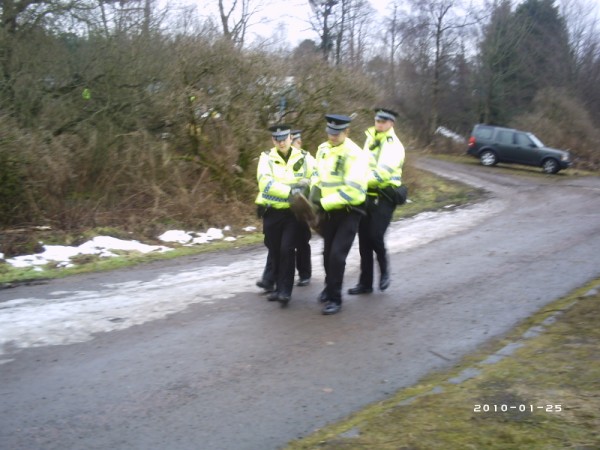
In a far­ci­cal court hear­ing this morn­ing in Lanark Sher­iff Court the evic­tion order brought by Lord Home, the landown­er (and chief exec of RBS pri­vate bank­ing firm) and Scot­tish Coal, the UK’s largest open cast pro­duc­er against the occu­piers at Main­shill Wood was grant­ed. Despite hav­ing just two work­ing days to seek legal advice and work on a defence the Sher­iff refused to allow the occu­piers more time.

The evic­tion order comes into effect imme­di­ate­ly owing to the “vast costs being incurred” by the con­tract drilling work being pre­vent­ed at the site by campers, accord­ing to Lord Home­’s solic­i­tors.

The Chair­per­son of Dou­glas and Gle­spin Com­mu­ni­ty Coun­cil had pre­pared a state­ment to present to the court in sup­port of the occu­piers and rais­ing seri­ous con­cerns about the timescale of the evic­tion order. The Sher­iff, how­ev­er, would not even allow the state­ment to be heard, say­ing only: “Giv­en that you’re a lay per­son, I’ll cast my eyes over it”.

Tracey Mitchell from Dou­glas said of the pro­ceed­ings: “It was damned ridicu­lous and mon­ey talks”. John Brozy, a for­mer min­er and for­mer jus­tice of the peace also from Dou­glas said: “the occu­piers have giv­en us new heart and made locals under­stand that they’re not alone”.

The Main­shill Sol­i­dar­i­ty Camp is deter­mined to stop this coal mine from going ahead. We knew all along that this would be Lord Home­’s response – not engag­ing with us or the com­mu­ni­ty, but using his mon­ey and court bailiffs to remove us with­out get­ting his hands dirty. We will not go until we are force­ful­ly removed or until we have won.

Scot­tish Coal and Lord Home are on the back foot – the Sol­i­dar­i­ty Camp has brought a huge amount of atten­tion to what they’re doing in South Lanark­shire, and what they’ve been get­ting way with for years. The com­mu­ni­ty is fired up and even more deter­mined to stop this project. We can win this! The last thing Scot­tish Coal and Lord Home need is an expen­sive and drawn-out evic­tion – what we need is for as many peo­ple as pos­si­ble to join us and come to the camp.

The site is beau­ti­ful, full of wildlife and well defend­ed, with unprece­dent­ed lev­els of com­mu­ni­ty sup­port. This is the front line in the strug­gle against new coal and for com­mu­ni­ty self-deter­mi­na­tion over the inter­ests of big busi­ness and wealthy land own­ers.

Join us! See http://mainshill.noflag.org.uk for infor­ma­tion about the camp and how to get here, and http://coalactionedinburgh.noflag.org.uk/ for reg­u­lar updates.
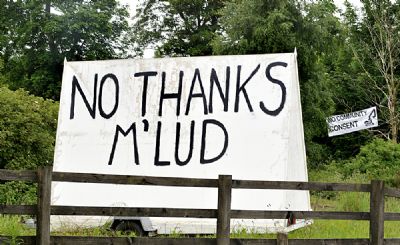
no thanks!
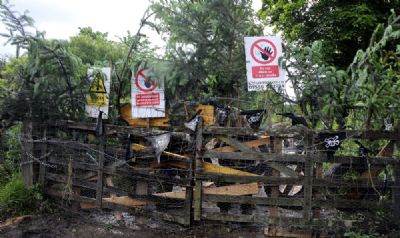
barricade

Mainshill Solidarity Camp presented with eviction papers

At 17:00 in the after­noon on Wednes­day 24th of June occu­piers of the Main­shill Sol­i­dar­i­ty Camp in south Lanark­shire were hand­ed evic­tion papers by a sher­iff offi­cer. The Sol­i­dar­i­ty camp has been sum­moned to appear at Lanark sher­iff court on Mon­day the 29th at 9:45 am.

At 17:00 in the after­noon on Wednes­day 24th of June occu­piers of the Main­shill Sol­i­dar­i­ty Camp in south Lanark­shire were hand­ed evic­tion papers by a sher­iff offi­cer. The Sol­i­dar­i­ty camp has been sum­moned to appear at Lanark sher­iff court on Mon­day the 29th at 9:45 am.

The Main­shill Sol­i­dar­i­ty Camp was estab­lished on Fri­day 26th in the Dou­glas Val­ley in South Lanark­shire to show sup­port to the local com­mu­ni­ty who are oppos­ing a new open­cast site from being built in the area. Tree-hous­es and oth­er struc­tures in the wood­land have been put in place to show Scot­tish Coal that they are seri­ous about pre­vent­ing the open­cast site from going ahead.

”Scot­tish Coal and Lord Home have no right to evict us from this wood’ Said Anna Key a care work­er and one of the campers cur­rent­ly liv­ing on the Site. ”Plan­ning per­mis­sion states that they have to car­ry out an envi­ron­men­tal sur­vey from Spring until Autumn before they can start work. Because they have com­menced drilling oper­a­tions and tree felling we have been forced to occu­py the site to stop this ille­gal work from hap­pen­ing.”

On Sun­day the 28th the Sol­i­dar­i­ty Camp are hold­ing a com­mu­ni­ty pic­nic at 3pm to which every­one is invit­ed. Many peo­ple from the local com­mu­ni­ty will come down to drink tea and eat cake with the campers, learn how to climb trees and paint ban­ners to make the site look wel­com­ing.

The sol­i­dar­i­ty camp intends to do all it can to stop the new open­cast mine from going ahead and has the full sup­port of the local com­mu­ni­ty. Come along to the pic­nic on Sun­day to get involved!

Mainshill Solidarity Camp Update: No eviction this morning, but drilling workers

22.06.2009
After a whole night of dig­ging in and strength­en­ing defences, the rumoured evic­tion this morn­ing has­n’t hap­pened. How­ev­er, the sol­i­dar­i­ty shown by the num­ber of peo­ple who joined us over the week­end has been fan­tas­tic and allowed huge amounts of build­ing work to hap­pen, mak­ing the site well defend­able.

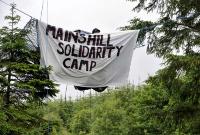
Mainshill protest camp banner22.06.2009
After a whole night of dig­ging in and strength­en­ing defences, the rumoured evic­tion this morn­ing has­n’t hap­pened. How­ev­er, the sol­i­dar­i­ty shown by the num­ber of peo­ple who joined us over the week­end has been fan­tas­tic and allowed huge amounts of build­ing work to hap­pen, mak­ing the site well defend­able.

Instead of police or court bail­ifs, a van-load of Apex work­ers tried to gain access to the site to con­tin­ue bore-hole work on the site, vital to the coal min­ing oper­a­tion. Bore-hol­ing and clear-felling had been hap­pen­ing before the site was occu­pied, and since the occu­pa­tion no work has been car­ried out. It is thought that this work is ille­gal as Scot­tish Coal have to car­ry out an exten­sive wildlife sur­vey before felling any trees or start­ing work as a con­di­tion imposed by the coun­cil.

Access to the site and Apex machin­ery was blocked with a vehi­cle, and Apex work­ers respond­ed by threat­en­ing to smash the wind­screen if it was not removed from in front of the gate. Very quick­ly, the peo­ple inside the vehi­cle were joined by campers and car loads of locals who came out in sup­port and to avert an evic­tion. The Apex work­ers backed down after this show of strength!

In a plea of sol­i­dar­i­ty to con­tract work­ers car­ry­ing out the bore-hole drilling and clear-felling, they have been asked to side with the com­mu­ni­ty and camp against their boss­es and refuse to car­ry out work on the site.

The Chief Inspec­tor for the area has stat­ed that the police have no inten­tion of remov­ing the camp at present, but will let us know if that changes. It is thought that a court order is being sought to evict the camp.

Lord Home, the land own­er, Scot­tish Coal, the min­ing com­pa­ny, and Scot­tish Min­is­ters can stop this project – if they were to come down and see the lev­el of sup­port and involve­ment in the camp from the local com­mu­ni­ty they would see how strong the oppo­si­tion is to this mine. If they don’t decide to over­turn the deci­sion, they will have a very expen­sive evic­tion on their hands.

Your sol­i­dar­i­ty is still need­ed! We can stop this coal mine from going ahead, both by defend­ing the site and work­ing with the local com­mu­ni­ties to take back deci­sion-mak­ing pow­er and get per­mis­sion over­turned. Please join us as soon as you can – see the web­site for details.

Main­shill Sol­i­dar­i­ty Camp web­site: http://coalactionedinburgh.noflag.org.uk/?page_id=415

Mainshill Solidarity Camp solidifies as local support grows

20.06.2009
In its first full day of resis­tance Main­shill Sol­i­dar­i­ty Camp, in the Dou­glas Val­ley in South Lanark­shire, has grown as the site is set up. Tree-hous­es and oth­er struc­tures in the wood­land have been put in place to show Scot­tish Coal that they are seri­ous about pre­vent­ing the open­cast site from going ahead. The site will be con­tin­u­ous­ly occu­pied.

20.06.2009
In its first full day of resis­tance Main­shill Sol­i­dar­i­ty Camp, in the Dou­glas Val­ley in South Lanark­shire, has grown as the site is set up. Tree-hous­es and oth­er struc­tures in the wood­land have been put in place to show Scot­tish Coal that they are seri­ous about pre­vent­ing the open­cast site from going ahead. The site will be con­tin­u­ous­ly occu­pied.

Scot­tish Coal have been giv­en per­mis­sion to mine 1.7 mil­lion tonnes of coal from Main­shill Wood in South Lanark­shire, a deci­sion by South Lanark­shire Coun­cil that enraged local res­i­dents who have cam­paigned against this mine for many months. Min­is­ters of the Scot­tish Gov­ern­ment gave final approval to the site in April, deem­ing the pro­posed site at Main­shill in the Dou­glas Val­ley to be “envi­ron­men­tal­ly accept­able.” This is despite the fact that there are 18 res­i­den­tial dwellings locat­ed with­in 500m of the pro­posed site bound­ary, con­tra­ven­ing Scot­tish plan­ning pol­i­cy on open cast sites.

Local peo­ple have shown enthu­si­as­tic sup­port from the start.‭ Many‬ culi­nary delights have already been donat­ed and grate­ful­ly received.

Peo­ple turned up through­out the day to show their sup­port.‭ ‬One local res­i­dent exclaimed,‭ “‬We’re so glad you’re here‭!”

There will be a Tea Par­ty and open day on Sun­day‭ ‬28th June,‭ ‬from‭ ‬3pm.‭ ‬Fam­i­lies and oth­ers from the sur­round­ing areas will be invit­ed to par­take in fun and games whilst learn­ing about how a protest site is run and about what can be done to pro­tect the local envi­ron­ment and pre­vent run­away cli­mate change.

Ban­ners vis­i­ble from the road have been erect­ed at the site,‭ ‬high­light­ing the fun­da­men­tal­ly anti-demo­c­ra­t­ic way in which the plan­ning process has rid­den roughshod over the wish­es of the local com­mu­ni­ties.

Activist Mar­cus Ander­son com­ments,‭ “‬Main­shill Sol­i­dar­i­ty Camp high­lights how com­mu­ni­ty resis­tance and direct action go hand in hand in secur­ing a future for gen­er­a­tions to come‭”‬.

The site will con­tin­ue to grow as aware­ness increas­es of what is being done to the peo­ple and envi­ron­ment‭ ‬of Scot­land, and what can be done by peo­ple them­selves to stop cat­a­stroph­ic cli­mate change.

coalactionedinburgh@riseup.net
http://coalactionedinburgh.noflag.org.uk

Mainshill Wood Occupied

19.6.09
URGENT: No Open Cast Here! Join the fight against open cast coal min­ing, cli­mate chaos and com­mu­ni­ty destruc­tion! Come to the Sol­i­dar­i­ty Camp

Last night activists occu­pied the site of Main­shill Wood in sol­i­dar­i­ty with com­mu­ni­ties in the UK suf­fer­ing from the impacts of open cast­ing and resist­ing new mines.

Mainshill open cast19.6.09
URGENT: No Open Cast Here! Join the fight against open cast coal min­ing, cli­mate chaos and com­mu­ni­ty destruc­tion! Come to the Sol­i­dar­i­ty Camp

Last night activists occu­pied the site of Main­shill Wood in sol­i­dar­i­ty with com­mu­ni­ties in the UK suf­fer­ing from the impacts of open cast­ing and resist­ing new mines.

Scot­tish Coal have been giv­en per­mis­sion to mine 1.7 mil­lion tonnes of coal from Main­shill in South Lanark­shire, a deci­sion by South Lanark­shire Coun­cil and lat­er Scot­tish Min­is­ters that enraged local res­i­dents who for years have cam­paigned against this mine. There are four oth­er mines in the area, mak­ing it one of the most heav­i­ly mined areas in Europe.

This new coal mine is only one of 20 such oth­ers to have recent­ly been giv­en plan­ning per­mis­sion in Scot­land. If we are to have any chance of lim­it­ing dan­ger­ous cli­mate change and pro­tect­ing com­mu­ni­ties from car­bon-inten­sive indus­tries we must take mat­ters into our own hands.

We have tak­en this autonomous and free space for those who wish to cre­ate pos­i­tive, cre­ative and
egal­i­tar­i­an solu­tions to eco­log­i­cal col­lapse, cli­mate change and envi­ron­men­tal injus­tice. Prof­i­teer­ing com­pa­nies, land own­ers and gov­ern­ments will not mine for new coal here!

Sup­port Us

We need:
Peo­ple – to hold this site we need peo­ple to join us. The site has a safe spaces pol­i­cy and wel­comes all who share our desire to live in a space free from hier­ar­chy, oppres­sion, dis­crim­i­na­tion and coal mines!
Climb­ing equip­ment – any you can donate will be put to good use
Build­ing mate­ri­als — suit­able bits of wood, rope, polyprop, pal­lets
Food — lots of it!
Mon­ey — run­ning a camp can be expen­sive, if you can donate to us please do
Oth­er equip­ment — head torch­es, tools, con­tain­ers, tarps, water­proofs, sleep­ing bags

How to get to the camp:
Bus­es run to Dou­glas from Lanark and Hamil­ton. Both Lanark and Hamil­ton have train and bus sta­tions and are easy to get to from either Glas­gow Cen­tral Train Sta­tion or Buchan­non Street Bus Sta­tion. From South of the bor­der, going to Glas­gow is the eas­i­est way to get to Dou­glas. Bus­es from Lanark to Dou­glas are much more fre­quent!

Bus from Lanark:

The Ser­vice Num­ber 9 (William Stokes & Sons) runs from Lanark — Gle­spin, stop­ping in Dou­glas (ser­vice every 49mins past each hour). Get off at the Egger­ton Bridge stop just before Dou­glas — you’ll see the camp on your left just after the M74 under­pass!

Bus from Hamil­ton:

The X50 (Hen­der­son Trav­el — http://www.henderson-travel.co.uk/) Hamil­ton-Gle­spin runs Hamil­ton, Inter­change — Les­ma­hagow, Church Hall — Rig­side — Dou­glas, leav­ing Hamil­ton at 17:05 (one ser­vice per day)

From Dou­glas:

The bus will stop before Dou­glas at Egger­ton Bridge and you will see the camp on your left after the M74 under­pass. If you miss this stop get off in Dou­glas and walk North East back up the A70 for 1km and the camp will be on yout right just before the M74.

Hitch­ing:

If you hitch, the camp is right next to the M74 which runs from Glas­gow to Carlisle. Get dropped of at junc­tion 12 and walk South West down the A70 towards Dou­glas and the camp is a few hun­dred metres on your left. Hap­pen­don ser­vices are close to junc­tion 12 — if you end up there­walk South down the B7078, turn right onto the A70 towards Dou­glas, which takes you under the M74 and as above.

If you need a ride…

…from some­where close by call the site phone and we’ll try to sort you out.

Con­tact Us

Call the site phone on: 07806 926 040

All the ducks are swimming in the water tral la la (Faslane action report)

On Sun­day the 17th of May three activists from faslane peace camp blocked the route of a nuclear sub­ma­rine using kayaks on the mouth of the Gar­loch. The three delayed the subs entry into the Clyde sub­ma­rine base for over 4 hours despite hor­ri­ble weath­er con­di­tions (rain­ing heav­i­ly) and leaky kayaks.

Faslane Peace Camp logoOn Sun­day the 17th of May three activists from faslane peace camp blocked the route of a nuclear sub­ma­rine using kayaks on the mouth of the Gar­loch. The three delayed the subs entry into the Clyde sub­ma­rine base for over 4 hours despite hor­ri­ble weath­er con­di­tions (rain­ing heav­i­ly) and leaky kayaks. There was a con­stant police pres­ence on land and sea with some of the police boats being quite aggres­sive the campers stayed close to the shore to avoid con­fronta­tion and arrest when nec­es­sary, there was also a group of intel­li­gence gath­er­ing mod on land. Luck­i­ly there was no arrests made and the sub­ma­rine was unable to leave Coul­port for the rest of the night.

Why climate camping & other protest? Ecological debt day for your city…coming soon!

Eco­log­i­cal debt: no way back from bank­rupt

3 planetsEco­log­i­cal debt: no way back from bank­rupt

While most gov­ern­ments’ eyes are on the bank­ing cri­sis, a much big­ger issue — the envi­ron­men­tal cri­sis — is pass­ing them by, says Andrew Simms. In the Green Room this week, he argues that fail­ure to organ­ise a bailout for eco­log­i­cal debt will have dire con­se­quences for human­i­ty.

“Nature Does­n’t Do Bailouts!” said the ban­ner strung across Bish­ops­gate in the City of Lon­don.

Civil­i­sa­tion’s biggest prob­lem was out­lined in five words over the entrance to the small, par­al­lel real­i­ty of the peace­ful cli­mate camp. Their tents bloomed on the morn­ing of 1 April faster than daisies in spring, and faster than the police could stop them.

Across the city, where the world’s most pow­er­ful peo­ple met simul­ta­ne­ous­ly at the G20 sum­mit, the same prob­lem was almost com­plete­ly ignored, mer­it­ing only a sin­gle, after­thought men­tion in a long com­mu­nique.

World lead­ers dropped every­thing to tack­le the finan­cial debt cri­sis that spilled from col­laps­ing banks.

Gripped by a pan­ic so com­plete, there was no pol­i­cy dog­ma too deeply engrained to be dug out and instant­ly dis­card­ed. We went from tri­umphant, finance-dri­ven free mar­ket cap­i­tal­ism, to bank nation­al­i­sa­tion and mov­ing the dec­i­mal point on indus­try bailouts quick­er than you can say sub-prime mort­gage.

But the eco­log­i­cal debt cri­sis, which threat­ens much more than pen­sion funds and car man­u­fac­tur­ers, is left to lan­guish.

It is like hav­ing a Com­mis­sion on House­hold Ren­o­va­tion ago­nise over which expen­sive design­er wall­pa­per to use for paper­ing over plas­ter cracks whilst ignor­ing the fact that the walls them­selves are col­laps­ing on sub­sid­ing foun­da­tions.

Beyond our means

Each year, human­i­ty’s eco­log­i­cal over­draft gets larg­er, and the day that the world as a whole goes into eco­log­i­cal debt — con­sum­ing more resources and pro­duc­ing more waste than the bios­phere can pro­vide and absorb — moves ever ear­li­er in the year.

The same pic­ture emerges for indi­vid­ual coun­tries like the UK — which now starts liv­ing beyond its own envi­ron­men­tal means in mid-April.

Because the glob­al econ­o­my is still over­whelm­ing­ly fos­sil-fuel depen­dent, the accu­mu­la­tion of green­house gas­es and the prog­no­sis for glob­al warm­ing remain our best indi­ca­tors of “over­shoot”.

World famous French free-climber Alain Robert, known as Spi­der­man, climbed the Lloyds of Lon­don build­ing for the OneHundredMonths.org cam­paign as the G20 met, to demon­strate how time is slip­ping away.

Using thresh­olds for risk iden­ti­fied by the Inter­gov­ern­men­tal Pan­el on Cli­mate Change (IPCC), on cur­rent trends, in only 92 months — less than eight years — we will move into a new, more per­ilous phase of warm­ing.

It will then no longer be “like­ly” that we can pre­vent some aspects of run­away cli­mate change. We will begin to lose the cli­mat­ic con­di­tions which, as Nasa sci­en­tist James Hansen points out, were those under which civil­i­sa­tion devel­oped.

Small div­i­dend

As “nature does­n’t do bailouts”, how have our politi­cians fared who ripped open the nation’s wal­let to save the banks?

Not good.

Accord­ing to the Inter­na­tion­al Mon­e­tary Fund (IMF), the UK spent a stag­ger­ing 20% of its GDP in sup­port of the finan­cial sec­tor.

Yet the amount of mon­ey that was new and addi­tion­al, announced in the “green stim­u­lus” pack­age of the Trea­sury’s Pre-Bud­get Report, added-up to a van­ish­ing­ly small 0.0083% of GDP.

Glob­al­ly, the green shade of eco­nom­ic stim­u­lus mea­sures has var­ied enor­mous­ly. For exam­ple, the shares of spend­ing con­sid­ered in research by the bank HSBC to be envi­ron­men­tal were:

* the US — 12%
* Ger­many — 13%
* South Korea — 80%

The inter­na­tion­al aver­age was around 15%. HSBC found the UK planned to invest less than 7% of its stim­u­lus pack­age (dif­fer­ent from the bank bailout) in green mea­sures.

Com­par­ing the IMF and HSBC fig­ures actu­al­ly reveals an inverse rela­tion­ship — pro­por­tion­ate­ly, those who spent more on sup­port for finance had weak­er green spend­ing.

So here we are, faced with the loss of an envi­ron­ment con­ducive to human civil­i­sa­tion, and we find gov­ern­ments pros­trate before bare­ly repen­tant banks, with their backs to a far worse eco­log­i­cal cri­sis.

Extreme mar­kets

On top of low and incon­sis­tent fund­ing for renew­able ener­gy, the shift to a low car­bon econ­o­my is being fur­ther frus­trat­ed by anoth­er mar­ket fail­ure in the trade for car­bon seen, for exam­ple, in the EU’s Emis­sions Trad­ing Scheme.

Bad mar­ket design, fee­ble car­bon reduc­tion tar­gets and the reces­sion have all con­spired to dri­ve down the cost of car­bon emis­sion per­mits, wreck­ing eco­nom­ic incen­tives to grow renew­able ener­gy.

Worse still, the dif­fi­cul­ty of account­ing to ensure that per­mits rep­re­sent real emis­sions has led both ener­gy com­pa­nies and envi­ron­men­tal­ists to warn of an emerg­ing “sub-prime car­bon mar­ket”.

Rely­ing on mar­ket mech­a­nisms is attrac­tive to gov­ern­ments because it means they have less to do them­selves. But they will fail if car­bon mar­kets are just hot air.

There seems to be a hard-wired link between mem­o­ry fail­ure and mar­ket fail­ure.

As the his­to­ri­an E J Hob­s­bawm observed in The Age of Extremes: “Those of us who lived through the years of the Great Slump still find it almost impos­si­ble to under­stand how the ortho­dox­ies of the pure free mar­ket, then so obvi­ous­ly dis­cred­it­ed, once again came to pre­side over a glob­al peri­od of depres­sion in the late 1980s and 1990s”.

Per­haps the great­est fail­ure is one of imag­i­na­tion.

Some peo­ple alive today lived through those past reces­sions and depres­sions. They know they can be nasty and need avert­ing.

But the last time the Earth­’s cli­mate real­ly flipped was at the end of the last Ice Age, more than 10,000 years ago. No one can remem­ber what that felt like.

Lessons of his­to­ry

Look­ing for­ward, the IPC­C’s worst case sce­nario warns of a max­i­mum 6C rise over the next cen­tu­ry.

Look­ing back, how­ev­er, indi­cates that an unsta­ble cli­mate sys­tem holds worse hor­rors.

Work by the sci­en­tist Richard Alley on abrupt cli­mate change indi­cates the plan­et has pre­vi­ous­ly expe­ri­enced a 10C tem­per­a­ture shift in only a decade, and pos­si­bly “as quick­ly as in a sin­gle year”.

And, around the turn of the last Ice Age, there were “local warm­ings as large as 16C”.

Imag­ine that every day of your life you have tak­en a walk in the woods and the worse thing to hap­pen was an acorn or twig falling on your head.

Then, one day, you stroll out, look up and there is a threat approach­ing so large, unex­pect­ed and out­side your expe­ri­ence that can’t quite believe it, like a mas­sive goth­ic cathe­dral falling from the sky.

In tack­ling cli­mate change we need urgent­ly to recal­i­brate our respons­es, just as gov­ern­ments had to when they res­cued the reck­less finance sec­tor.

Then offi­cials had to ask them­selves “is what we are doing right, and is it enough?”

They must ask them­selves the same ques­tions on the eco­log­i­cal debt cri­sis and cli­mate change.

The dif­fer­ence is, that if they fail this time, not even a long-term busi­ness cycle will come to our res­cue. If the cli­mate shifts to a hot­ter state not con­vivial to human soci­ety, it could be tens of thou­sands of years, or nev­er, before it shifts back.

Remem­ber; nature does­n’t do bailouts.

Andrew Simms is pol­i­cy direc­tor of the New Eco­nom­ics Foun­da­tion (nef), and author of Eco­log­i­cal Debt: Glob­al Warm­ing and the Wealth of Nations

——

One Plan­et Liv­ing http://www.oneplanetliving.org

Your city’s Eco­log­i­cal Debt Day:

Using the lat­est data avail­able WWF has cal­cu­lat­ed when res­i­dents of British cities will have con­sumed their fair share of nat­ur­al resources for 2008 – or when their eco­log­i­cal debt day is.

City Eco­log­i­cal debt day

Win­ches­ter 10 April
St Albans 13 April
Chich­ester 14 April
Brighton & Hove 14 April
Can­ter­bury 17 April
Oxford 17 April
Southamp­ton 21 April
Durham 22 April
Cam­bridge 23 April
Portsmouth 23 April
Edin­burgh 23 April
Chester 24 April
Aberdeen 24 April
Ely (East Cambs) 26 April
Here­ford (Coun­ty of Here­ford­shire) 28 April
Stir­ling 28 April
Lon­don 29 April
Lich­field 29 April
Lan­cast­er 30 April
New­cas­tle upon Tyne 30 April
Wells (Bath and NE Som­er­set) 1 May
Bath (Bath and North East Som­er­set) 1 May
Ripon (Har­ro­gate) 2 May
Man­ches­ter 2 May
Inver­ness (High­land) 2 May
Pre­ston 2 May
Nor­wich 2 May
Peter­bor­ough 2 May
Dundee City 3 May
Leeds 3 May
York 3 May
Sheffield 3 May
Der­by 4 May
Carlisle 4 May
Leices­ter 4 May
Worces­ter 4 May
Ban­gor (Gwynedd) 4 May
St Davids (Pembrokeshire)4 May
Not­ting­ham 4 May
Liv­er­pool 4 May
Bris­tol 5 May
Birm­ing­ham 5 May
Lin­coln 5 May
Brad­ford 5 May
Glas­gow 6 May
Cardiff 6 May
Exeter 6 May
Coven­try 7 May
Swansea 8 May
Sal­ford 8 May
Wolver­hamp­ton 8 May
Truro (Car­rick) 8 May
Sun­der­land 8 May
Wake­field 9 May
Glouces­ter 9 May
Stoke on Trent 10 May
Kingston upon Hull 10 May
Sal­is­bury 10 May
Ply­mouth 11 May
New­port 11 May

G20 update — police violence; what happened b4 Ian Tomlinson’s death witnesses; vigil on 11th; legal support; protest tactics

Chan­nel 4 com­men­tary on what hap­pened to Ian Tom­lin­son just before his death — the lat­est ITN footage com­bined with the first footage pub­lished on the Guardian web­site. On the ground, pro­tes­tors try to help before being cleared out of the area — counter the media-bot­tle-throw­ing hype, watch two eye wit­ness­es.

New inci­dent of sys­temic police vio­lence — when an offi­cer slaps the face then batons the legs of a woman — cap­tured on film.

Even new­er video evi­dence of yet more police vio­lence — shields and fists used to punch with­out provo­ca­tion — more details.

Newest footage which shows Ian Tom­lin­son’s head hit the ground from the push by police.

Police charge press pho­tog­ra­phers.

Col­lec­tions of videos of police vio­lence: 1 | 2
—————-

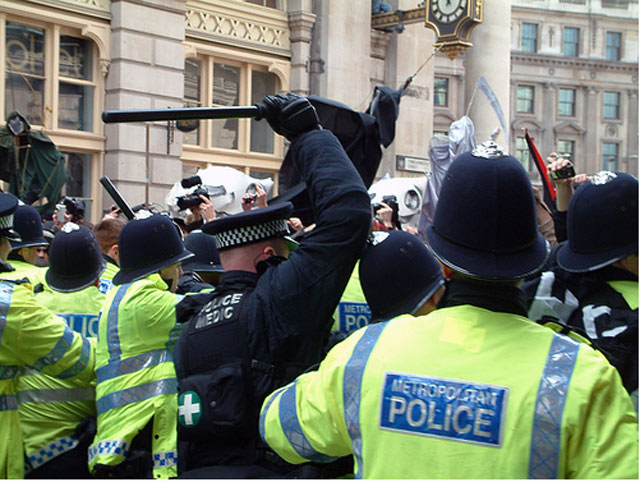
G20 police medic -cracking heads with baton

Chan­nel 4 com­men­tary on what hap­pened to Ian Tom­lin­son just before his death — the lat­est ITN footage com­bined with the first footage pub­lished on the Guardian web­site. On the ground, pro­tes­tors try to help before being cleared out of the area — counter the media-bot­tle-throw­ing hype, watch two eye wit­ness­es.

New inci­dent of sys­temic police vio­lence — when an offi­cer slaps the face then batons the legs of a woman — cap­tured on film.

Even new­er video evi­dence of yet more police vio­lence — shields and fists used to punch with­out provo­ca­tion — more details.

Newest footage which shows Ian Tom­lin­son’s head hit the ground from the push by police.

Police charge press pho­tog­ra­phers.

Col­lec­tions of videos of police vio­lence: 1 | 2
—————-

Lon­don assem­bly and pro­ces­sion:

East­er ris­ing!
Reclaim the City, Sat­ur­day April 11

* 12.00 noon Sat­ur­day — 12.00 noon Sun­day
* Wear Black
* Assem­ble 11:30am, Beth­nal Green
* Lay your flow­ers where Ian Tom­lin­son died
* Bring pop-up tents to stay with Ian through the night

—————-

Edin­burgh protest:

Four months ago it was a 15-year-old school­boy in Greece – today it’s a 47-year-old news­pa­per sell­er in the UK.

Enough with the state mur­ders!

Whether civil­ians’ deaths are caused because of “heart attacks” (most like­ly due to police ter­ror) or head injuries (due to police bru­tal­i­ty) or “mis­fires” (due to police stu­pid­i­ty), we say we had Enough!

Enough! Of your lies in attempt­ing to cov­er up your mis­takes
Enough! Of your “Robo­cop” atti­tude
Enough! Of your “to serve and pro­tect” fake masks
Enough! Of you being the guardian dogs of the priv­i­leged elite

We say Enough! and we are going to say it out loud so every­one can hear us.

Sat­ur­day 11th of April at 1:30pm in Bris­to Square (Edin­burgh)

Bring friends, ban­ners, can­dles and some­thing to make noise with (drums, whis­tles etc.)

—————-

Red­ditch protest:

The polic­ing at the G20 protests was extreme­ly vio­lent and aggres­sive. Peace­ful pro­test­ers were attacked and beat­en, many of them suf­fer­ing injuries. We’ve all seen the videos of police lay­ing into the cli­mate campers who stood there with their hands in the air calm­ly stat­ing “this is not a riot”. And now we see film evi­dence that Ian Tom­lin­son, who was not even a pro­test­er, was bru­tal­ly attacked from behind with a baton, before being shoved hard to the ground by a vicious cop. Ian Tom­lin­son died min­utes lat­er — I call this MURDER and it hap­pened on Jacqui Smith‘s watch!!

This is a call out for a Nation­al Demon­stra­tion in Red­ditch, the con­stituen­cy of Jacqui Smith, the Home Sec­re­tary.

Demon­strate against the increas­ing­ly vio­lent and aggres­sive polic­ing at peace­ful protests. Demon­strate against the ero­sion of civ­il lib­er­ties in our so called democ­ra­cy. Demand that Jacqui Smith ensures that the offi­cers who mur­dered Ian Tom­lin­son are brought to jus­tice.

Let‘s see how Jacqui Smith likes it when 1,000s of pro­test­ers turn up in her home town demand­ing JUSTICE!!!

Sat­ur­day 18th April — 12 noon out­side Red­ditch Town Hall.

The town hall is about 10 min­utes walk from the train sta­tion.
http://www.multimap.com/s/QKjPxY9S

—————-

A protest against the death of Ian Tom­lin­son and the grow­ing use of vio­lent tac­tics by police against pro­test­ers will take place 1 pm Sat­ur­day 11 April, Grey’s Mon­u­ment, New­cas­tle

—————-

Legal call-out

G20 LEGAL UPDATE
First, thank you for all the emails. We are read­ing them but not acknowl­edg­ing them at the moment due to the quan­ti­ty. Our apolo­gies. For the time being, if you would like us to respond — please send us anoth­er email request­ing a response.

HOW THE POST-PROTEST LEGAL PROCESS WORKS:
Lots of peo­ple are writ­ing to us with evi­dence of police mis­be­hav­iour and there cer­tain­ly seems to be grounds for com­plaint in many of them.
How­ev­er, cru­cial­ly com­plaints and legal claims need to be brought by indi­vid­u­als: we can’t do it on your behalf. Also, do NOT make a com­plaint if there’s a pos­si­bil­i­ty that you will make a legal claim, or could sup­port some­one else doing so — com­plain­ing to the IPCC before suing the police will com­pro­mise the case.

What we are doing is:

1. We are mak­ing sure we have the evi­dence avail­able to us sort­ed so we can locate sup­port­ing evi­dence for those arrest­ed or those who bring com­plaints of assault and so forth against the police.

2. We are explor­ing whether there is a legal chal­lenge strate­gi­cal­ly worth bring­ing this time. If so, we will be look­ing for poten­tial lit­i­gants.

3. We are prepar­ing report and film on the Camp and may be in con­tact with some of you to use your state­ments. We have made no deci­sion as to what we will do with the report at this point.

4. We have a par­tic­u­lar inter­est in how those with injuries or ill­ness­es were treat­ed by the police — so if you have rel­e­vant evi­dence there please let us know. Depend­ing on the evi­dence, we may focus on this as an area of con­cern.

What you could do:

If you were wrong­ful­ly arrest­ed, or assault­ed and injured by a police offi­cer, you may be able to bring a case against the police. Please con­tact Bind­mans Solic­i­tors in the first instance: 020 7833 4433. If they do not have the capac­i­ty then we can rec­om­mend oth­er firms of solic­i­tors who have worked with activists in the past. We may have sup­port­ing evi­dence so let us know if we can help. Please keep us informed of the out­comes — legal@climatecamp.org.uk.

If you were arrest­ed and charged, let us know as we may have sup­port­ing evi­dence that may help with your defence. You will need to give your solic­i­tor your con­sent to them talk­ing to us or they will not be able to tell us about your case. Please keep us informed of the out­come — legal@climatecamp.org.uk.

N.B. If you have pre­vi­ous­ly left any impor­tant legal infor­ma­tion on an answer­ing machine or sent to a dif­fer­ent email address and nobody got back to you, please try again using the email address above

Mean­while write up any­thing rel­e­vant now and email us, let us know if you have footage and we will send you some infor­ma­tion on how to share it with us, keep copies of any orig­i­nal notes, pho­tos and film (and keep them for 12 months).

Final­ly, if your wit­ness state­ment relates to the G20 Melt­down protests at Bank, there is a sep­a­rate legal sup­port process. Please con­tact the Legal Defence and Mon­i­tor­ing Group — email ldmgmail@yahoo.co.uk or post to Legal Defence and Mon­i­tor­ing Group, BM Box HAVEN, Lon­don, WC1N 3XX .

—————-
Bloody protestor & baton-wielding cop
Pub­lic Order strate­gies to not get ket­tled and beat­en by the police

For how to sur­vive police tac­tics in big pub­lic order sit­u­a­tions such as the G20 protests, and still do what you want to do, read the Guide to Pub­lic Order Sit­u­a­tions — any com­ments or ideas please send them in to manchester@earthfirst.org.uk

—-

Video of police rush on cli­mate camp — why you should read the above, rather than lis­ten to some­one on a mega­phone sug­gest­ing peo­ple put their hands up AND link arms! The same charge but clear­er and more bru­tal can be seen here. Oth­er clips and reports from the day are all here.

—————-

Jour­nal­ists removed from cov­er­ing G20 protests with ille­gal use of laws and through injury — see the com­men­taryhere.

—————-

Beau­ti­ful & incite­ful G20 pho­to essaychap­ter 1: the anar­chists are com­ing! | chap­ter 2 part 1: storm the banks? | chap­ter 2 part 2: a tale of ket­tles, and death | chap­ter 3: police work

—————-

Cor­rect­ing the media nar­ra­tive of the G20 protests on April 1, 2009

The media cov­er­age of the G20 protests has been sys­tem­at­i­cal­ly biased, writes Musab You­nis — ignor­ing the vio­lent polic­ing, the tac­tic of open-air impris­on­ment of demon­stra­tors, and the real chronol­o­gy of events. “It has tak­en remark­able obe­di­ence by the press,” writes Musab, “to refuse to ask some sim­ple and obvi­ous ques­tions.”

#1 – The rever­sal of events

“Anti-cap­i­tal­ist pro­test­ers embarked upon a wreck­ing spree with­in a City branch of the Roy­al Bank of Scot­land today,” shrieked The Times on April 1, “and engaged in run­ning bat­tles with police as G20 demon­stra­tions turned vio­lent. Police were forced to use dogs, hors­es and trun­cheons to con­trol a crowd of up to 5,000 peo­ple who marched on the Bank of Eng­land, in Thread­nee­dle Street, on the eve of the Lon­don sum­mit.”

This nar­ra­tive of events is entire­ly typ­i­cal. Under the head­line “Police clash with G20 pro­tes­tors”, the BBC report­ed that “pro­test­ers stormed a Lon­don office of the Roy­al Bank of Scot­land”, lat­er adding tha: “offi­cers lat­er used ‘con­tain­ment’ then ‘con­trolled dis­per­sal’” (BBC, April 1). The Guardian report­ed: “The G20 protests in cen­tral Lon­don turned vio­lent today ahead of tomor­row’s sum­mit, with a band of demon­stra­tors close to the Bank of Eng­land storm­ing a Roy­al Bank of Scot­land branch … [S]ome bloody skir­mish­es broke out as police tried to keep thou­sands of peo­ple in con­tain­ment pens” (The Guardian, April 1).

What is inter­est­ing about this nar­ra­tive is that it pre­cise­ly revers­es the events of the day.

Eye­wit­ness accounts of the day agree that the police began the now-infa­mous tac­tic of ‘ket­tling’ pro­tes­tors – refus­ing to allow any­one in or out of a con­fined space held by police lines – as soon as the four march­es had con­verged on the Bank of Eng­land, at around mid­day. An arti­cle in The Times a day ear­li­er by a for­mer Assis­tant Com­mis­sion­er of the Met­ro­pol­i­tan Police, Andy Hay­man, sug­gest­ed that the police had planned to use this tac­tic well in advance: “Tac­tics to herd the crowd into a pen, known as ‘the ket­tle’, have been crit­i­cised heav­i­ly before, yet the police will not want groups splin­ter­ing away from the main crowd. This would stretch their resources” (The Times, March 31).

Note that the “vio­lent out­burst” (Tele­graph) of win­dow-break­ing took place hours after the police had decid­ed to “herd the crowd” of at least 5,000 peo­ple “into a pen” with­out access to food, water or toi­let facil­i­ties – and with­out allow­ing them to leave.

The press was sure­ly aware of this. The Guardian’s live blog from the day not­ed at 11.57 a.m. that “the bar­ri­ers designed to fence in the pro­test­ers are not big enough”, an hour lat­er it con­firms that there is “a ‘ket­tle’ at the Bank of Eng­land”: half an hour lat­er they report “clash­es” and final­ly, at 1.30 p.m., “a win­dow has been smashed.” An objec­tive observ­er of the sequence of events here might ask whether the police ‘ket­tle’ had in fact been respon­si­ble for the “clash­es”, “vio­lence” and smashed win­dow.

But this idea – that the ket­tle might have pro­voked the “clash­es”, and that the police might there­fore be respon­si­ble for the “vio­lence” – is remark­ably absent from vir­tu­al­ly all of the reams of press cov­er­age of the protests. We do, of course, have a spec­trum of opin­ion: where­as the right-wing Dai­ly Mail sees the pro­tes­tors as “a fear­some group of thugs”, a “bizarre group of mis­fits” fuelled by “Dutch courage” and a “will­ing­ness to use vio­lence” (April 1), for the left-wing Guardian only “a minor­i­ty of demon­stra­tors seemed deter­mined to cause dam­age” whilst “much of the protest­ing” was “peace­ful” (April 1).

Again, the notion that there was not a “vio­lent” core of demon­stra­tors at all, but that peo­ple were pro­voked into “clash­es” with the police due to police tac­tics, is absent. Even the arti­cle which is by far most crit­i­cal of the police actions – a piece by Dun­can Camp­bell in The Guardian titled ‘Did police con­tain­ment cause more trou­ble than it pre­vent­ed?’ – only goes as far as to say: “As for the vio­lent clash­es that led to cracked heads and limbs, how much was inevitable and how much avoid­able?”. Camp­bell con­cedes that “some demon­stra­tors were bent on aggro” but adds: “so were some of the offi­cers.” He also crit­i­cis­es the con­di­tions inside the ket­tle and sug­gests that it will make peo­ple think twice before embark­ing on a demon­stra­tion in future. Thus Camp­bell sug­gests the “clash­es” were avoid­able, but does not indi­cate that the ket­tles actu­al­ly led to the “clash­es” – though, to give cred­it where it is due, his is the only piece in the press which dares to sug­gest that the police were them­selves vio­lent.

#2 – Jus­ti­fi­ca­tions

Well before the protests, the press had been report­ing with glee the “vio­lence” pre­dict­ed as “Lon­don went into lock­down” and “pro­tes­tors issued a call to arms” with “police fears” of pro­tes­tors “intent on vio­lence” (The Lon­don Paper, 31 March).

The BBC post­ed a sym­pa­thet­ic arti­cle titled ‘The chal­lenge of polic­ing the G20’ (30 March) which point­ed out that: “police offi­cers spend their pro­fes­sion­al lives try­ing to play down the pub­lic order impli­ca­tions of demon­stra­tions — it’s in their inter­ests to keep things calm.”

“The secu­ri­ty strat­e­gy of the day,” they report­ed breath­less­ly, “resem­bles a three-dimen­sion­al ever-chang­ing puz­zle” where “the unknow­able fac­tor is the demon­stra­tor bent on vio­lence”. The arti­cle end­ed with a quote from Com­man­der O’Brien: “If any­one wants to come to Lon­don to engage in crime or dis­or­der, they will be met with a swift and effi­cient polic­ing response.”

This flur­ry of media cov­er­age pre­dict­ing “vio­lence” from “anar­chists” was clear­ly ini­ti­at­ed by the police, who released a bar­rage of press state­ments before the protests which served to pre-emp­tive­ly quell crit­i­cism of their actions on the day – actions which had, of course, been planned well in advance. The G20 polic­ing was to be “one of the largest, one of the most chal­leng­ing, and one of the most com­pli­cat­ed oper­a­tions” ever “deliv­ered” by the Met­ro­pol­i­tan Police, accord­ing to Com­man­der Simon O’Brien, who hit the press cir­cuit with gus­to in the days pre­ced­ing the G20.

The press obe­di­ent­ly played their part by report­ing police “fears” word for word, with com­plete sym­pa­thy, and with no ques­tion on ask­ing those who planned to protest whether they thought the police reac­tion might be over­ly vio­lent. After all, “the police have had to pre­pare for every pos­si­bil­i­ty” on April 1, not­ed the Times: “from ter­ror­ism to riots” (The Times, March 31).

With ample oppor­tu­ni­ty to ques­tion an unusu­al­ly talk­a­tive police force, bare­ly a sin­gle sen­tence in the press asked whether the police prepa­ra­tion for the protests might be heavy-hand­ed or that a vio­lent reac­tion by the police to the protests might lead to seri­ous injury or death. The pro­tes­tors, of course, were to be “vio­lent” “mobs” (based on police “intel­li­gence” gleaned from “social net­work­ing sites”), but the police were to be calm, mea­sured and under­take only nec­es­sary mea­sures.

The effect of this press cov­er­age was to jus­ti­fy in advance all police actions whilst de-legit­imis­ing any actions by pro­tes­tors. End­less pre­dic­tions of “vio­lent pro­tes­tors” meant that all the day’s “clash­es” were sure to be blamed on the “minor­i­ty” of “intent on vio­lence” – even if evi­dence sug­gest­ed that “clash­es” were actu­al­ly insti­gat­ed by police, and that vio­lence was in the main inflict­ed by the police on pro­tes­tors. With­in the press nar­ra­tive, the police are mere­ly reac­tive; forced to respond to a “vio­lent” sit­u­a­tion and “keep things calm”; the notion that they could have active­ly encour­aged and pro­voked “clash­es” seems patent­ly absurd.

#3 – So what’s miss­ing?

There are a num­ber of impor­tant ques­tions which sim­ply didn’t appear in the press.

a) Did the police intend to ‘ket­tle’ demon­stra­tors in a con­fined space regard­less of whether there was any vio­lence or not?

All the evi­dence, includ­ing past cas­es of the police using this tac­tic, sug­gests this was the case. (At the Cli­mate Camp protest at Bish­ops­gate on the same day, the police beat pro­tes­tors back into a ket­tle despite them hold­ing up their hands and chant­i­ng ‘this is not a riot’, as can clear­ly be seen on the Indy­media video ‘Riot police attack peace­ful pro­tes­tors at G20 cli­mate camp’).
Is there a pos­si­bil­i­ty that the police were not in fact “forced to use dogs, hoses and trun­cheons” due to “vio­lent” pro­tes­tors, but that they inflict­ed vio­lence on peace­ful pro­tes­tors?

b) Was there real­ly “vio­lence” from the pro­tes­tors?

The Met­ro­pol­i­tan Police state that “small groups of pro­tes­tors intent on vio­lence, mixed with the crowds of law­ful demon­stra­tors” (Met Police, 2 April) and The Guardian quotes Com­man­der Simon O’Brien as claim­ing there were “small pock­ets of crim­i­nals” with­in the crowd who attend­ed a memo­r­i­al for Ian Tom­lin­son on April 2. Again, eye­wit­ness accounts of both days state that vir­tu­al­ly all of the vio­lence came from police. Despite hours of ket­tling and media reports of “mis­siles” being thrown at police (trans­la­tion: plas­tic bot­tles), the only tan­gi­ble evi­dence of pro­tes­tor vio­lence at either of the two main protest sites seems to have been some smashed win­dows, which of course is dam­age to prop­er­ty and not “vio­lence”.

The Guardian reports that a small group of demon­stra­tors were “seek­ing con­fronta­tion as they surged towards police lines.” Of course you’re expect­ed to sit qui­et­ly when you are being held against your will behind police lines and peri­od­i­cal­ly beat­en with batons. But is it con­ceiv­able that those who “charged” police lines sim­ply want­ed to leave? And why is it con­fronta­tion­al to “charge police lines” with­out using any weapons, but not con­fronta­tion­al to hold thou­sands of peo­ple in an area, keep­ing them there with kicks and batons? That the pro­tes­tors could have actu­al­ly showed remark­able restraint when being pro­voked in an unbear­able sit­u­a­tion is laugh­able accord­ing to all the press. Yet this is what eye­wit­ness accounts point to. Only the Let­ters page in the Guardian gives any cre­dence to this: one per­son writes that “the few scuf­fles we did wit­ness were caused pre­cise­ly at the frus­tra­tion of peo­ple not being allowed to come and go as they pleased”; anoth­er states that: “an ugly mood devel­oped after those who had come to exer­cise their demo­c­ra­t­ic right to protest were detained against their will” (Guardian, April 3).

c) Were the police tac­tics respon­si­ble for the “vio­lence” of the day?

Because the press has been admirably obe­di­ent in revers­ing the course of events, this is an impos­si­ble ques­tion – accord­ing to the media first there was “vio­lence” from “anar­chist” pro­tes­tors, then the ket­tle began. Yet once we estab­lish a more accu­rate chronol­o­gy, and take into account police pri­or plan­ning, it seems that it had always been intend­ed to shut thou­sands of peo­ple into an enclosed space with­out being able to leave.

d) Was the ‘ket­tling’ tac­tic intend­ed to make peo­ple think twice about demon­strat­ing in future?

The most crit­i­cal piece in the press, by Dun­can Camp­bell in the Guardian, states that those “peo­ple think­ing about embark­ing on demon­stra­tions in the future may have to decide whether they want to be effec­tive­ly locked up for eight hours with­out food or water and, when leav­ing, to be pho­tographed and iden­ti­fied.” Yet it does not sug­gest that this may have been the ini­tial inten­tion of the police in adopt­ing this tac­tic, even though it is absurd to sug­gest the police might have planned to use this tac­tic with­out imag­in­ing it would lead to anger and frus­tra­tion on the part of those trapped in the ket­tle. In con­junc­tion with the exten­sive restric­tions to free­dom of protest under the New Labour gov­ern­ment, amply doc­u­ment­ed else­where, it might be rea­son­able to sug­gest that the police tac­tics were in part, at least, designed to deter pro­tes­tors.

e) Were the police vio­lent and should any offi­cers face charges?

Remark­ably, this ques­tion is absent from vir­tu­al­ly all the press cov­er­age – despite hun­dreds of injuries to pro­tes­tors, the death of some­one appar­ent­ly trapped in a ket­tle, and video footage show­ing baton charges direct­ed towards crowds of peo­ple with their hands in the air, the use of riot shields as an offen­sive weapon, and the beat­ing with batons of pro­tes­tors sat on the ground (see, for exam­ple, ‘Riot police attack peace­ful pro­tes­tors at G20 cli­mate camp’ on Indy­media). The ample ground­work laid by the police sug­gest­ing there would be pro­tes­tors “intent on vio­lence” hap­pi­ly accounts for all the vio­lence of the day and makes easy to ignore eye­wit­ness accounts that state that peace­ful pro­tes­tors being ket­tled, charged, beat­en and pro­voked by the police. Giv­en the num­ber of wit­ness­es and video evi­dence, it has tak­en remark­able obe­di­ence by the press to refuse to ask this ques­tion – and for a media so obsessed with vio­lence, it seems strange that the over­whelm­ing vio­lence of the day, that inflict­ed by the police on pro­tes­tors, bare­ly mer­its a men­tion.

5 Arrested as Work stopped on Muir Dean open cast coal site in Fife

26. March 2009
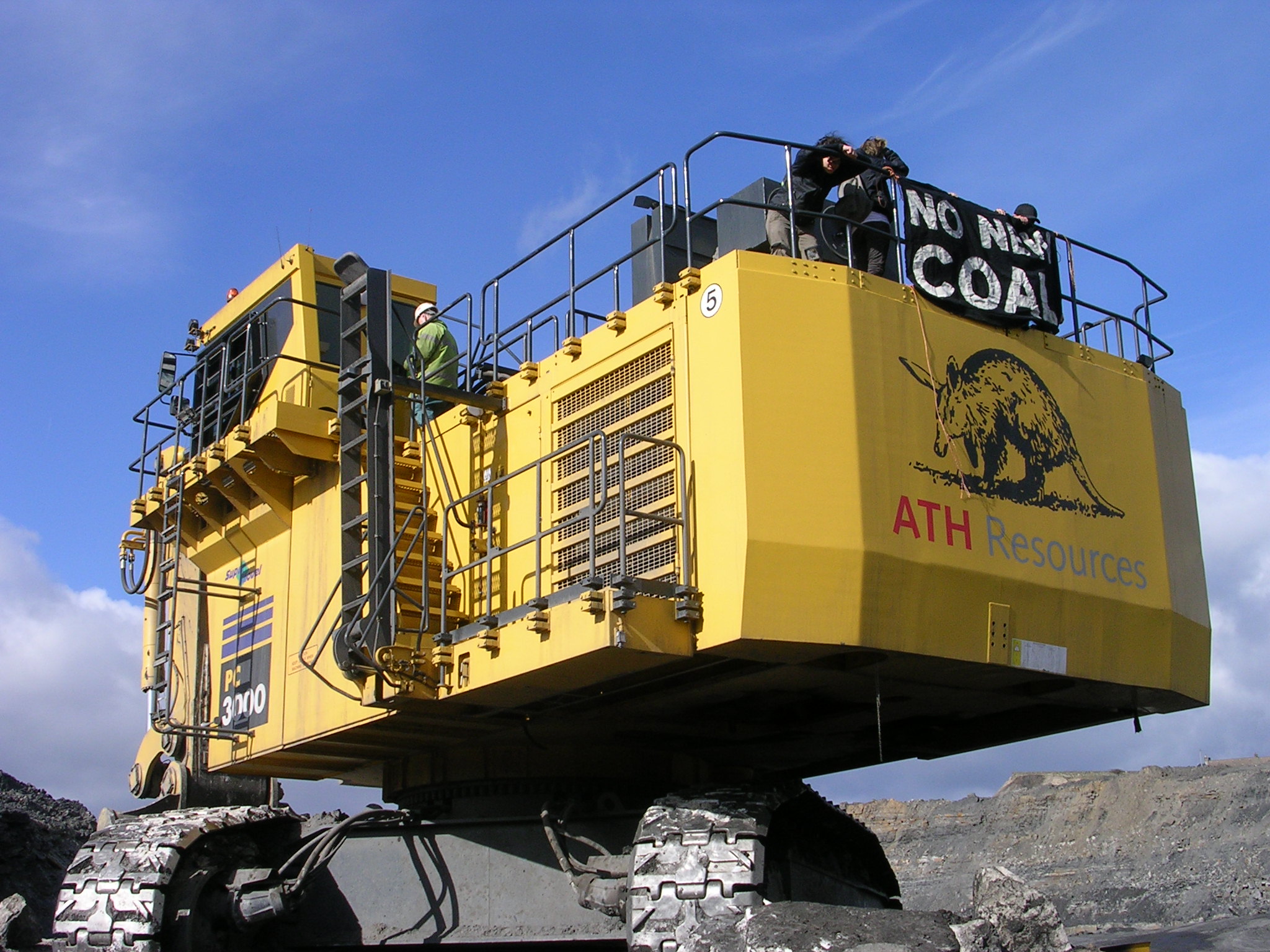
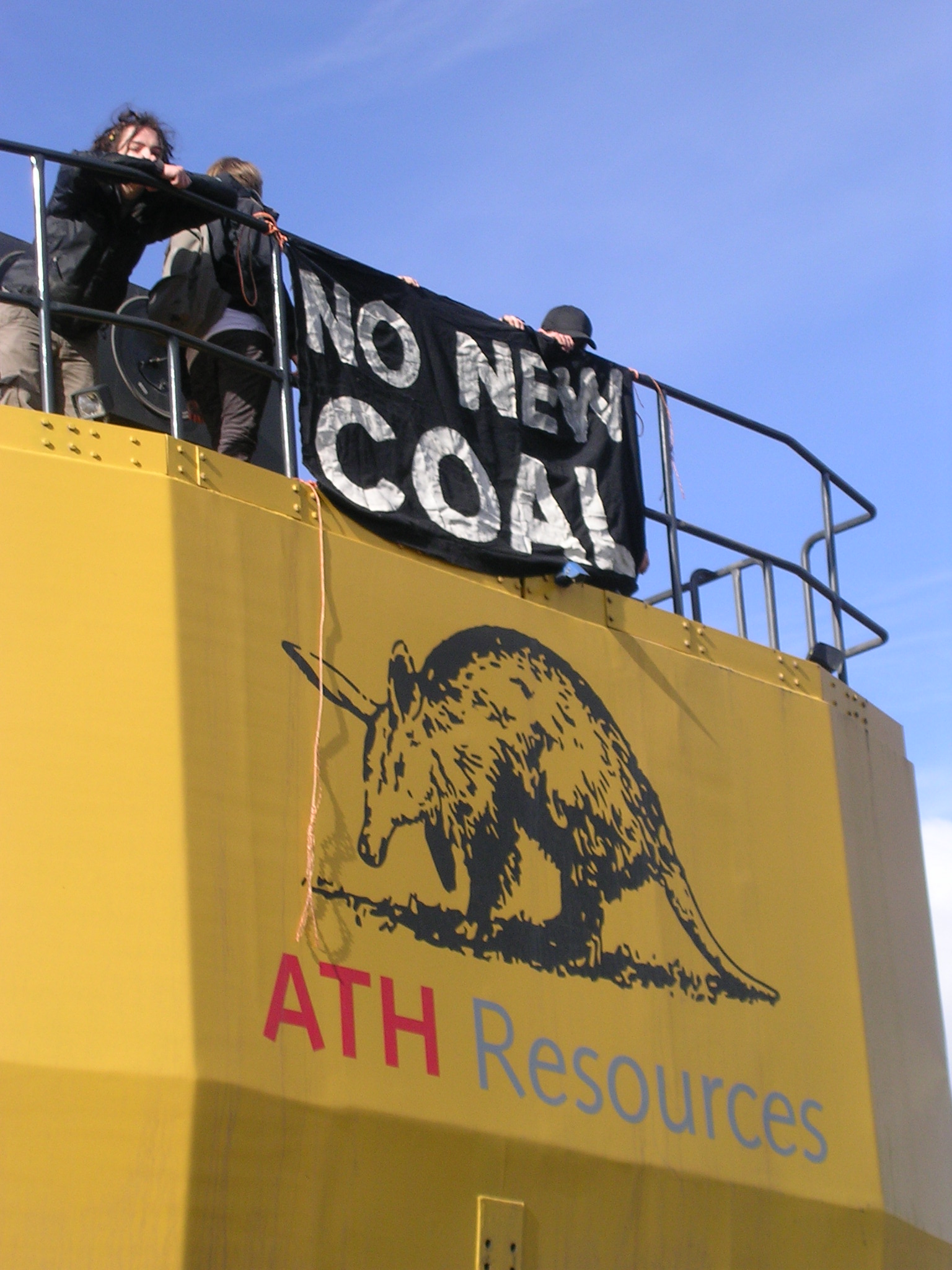
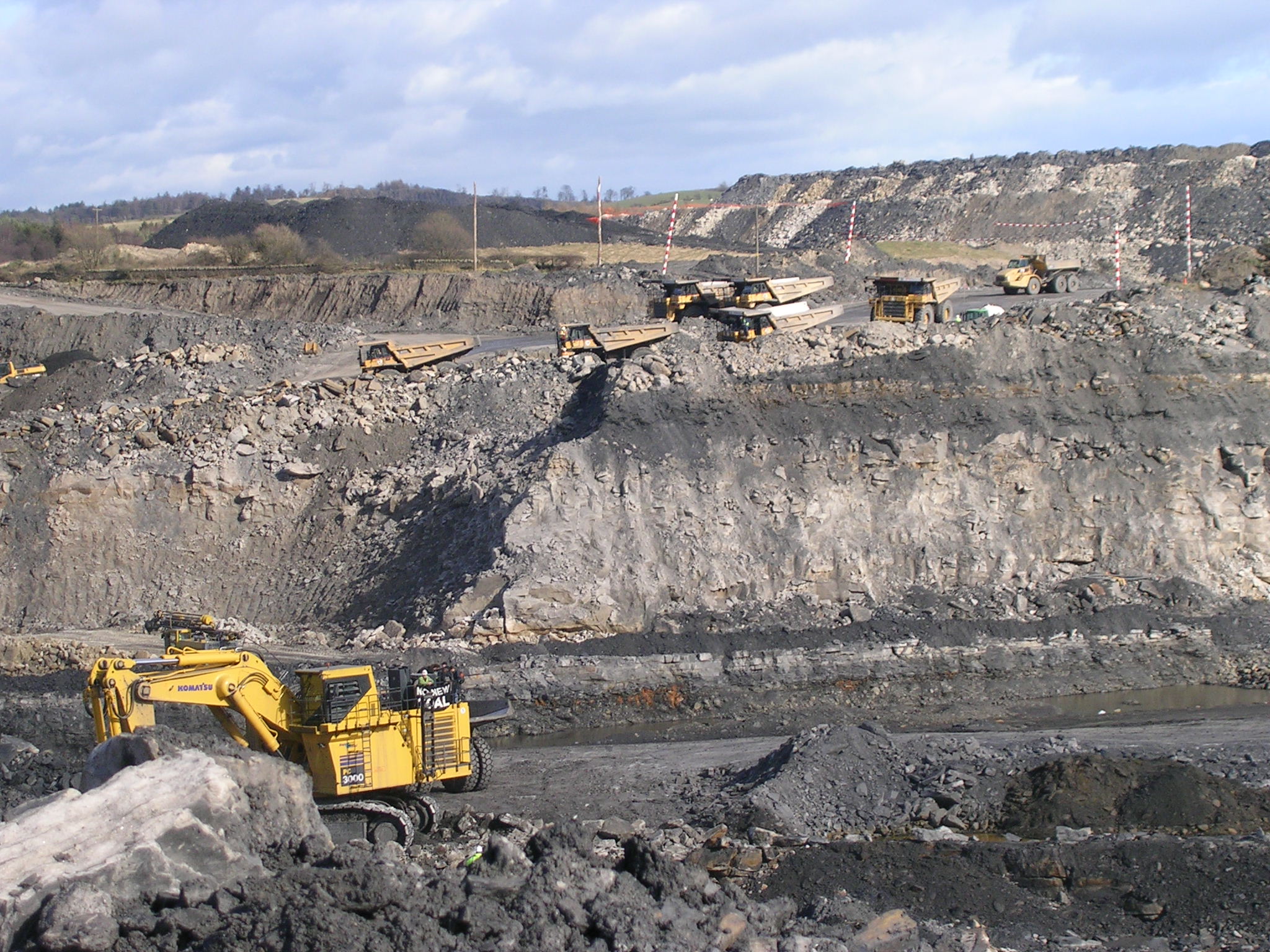
Yes­ter­day at 2pm five pro­test­ers stopped work at the Muir Dean open-cast coal mine near Cross­gates in Fife, oper­at­ed by ATH Resources. They climbed onto a huge exca­va­tor in the cen­tre of the pit, dis­play­ing a ban­ner demand­ing “No New Coal”.

No New Coal!No CoalNo Coal26. March 2009
Yes­ter­day at 2pm five pro­test­ers stopped work at the Muir Dean open-cast coal mine near Cross­gates in Fife, oper­at­ed by ATH Resources. They climbed onto a huge exca­va­tor in the cen­tre of the pit, dis­play­ing a ban­ner demand­ing “No New Coal”.

Unex­pect­ed­ly, Fife police arrest­ed all five pro­test­ers after detain­ing them ear­li­er, despite them agree­ing to come down off the exca­va­tor, and even though work­ers at the site were hap­py for them to just leave. They were held at Dun­fermline police sta­tion and have now been released on bail.

One activist said “We’re here to send a mes­sage to ATH Resources that min­ing the dirt­i­est fos­sil fuel and fuelling cli­mate change is not accept­able. As min­ing com­pa­nies such as ATH don’t appear to be lis­ten­ing, we’ve come to stop them min­ing, too.”

Con­tro­ver­sy sur­round­ed the Muir Dean site as the orig­i­nal plan­ning appli­ca­tion was refused by Fife coun­cil and unan­i­mous­ly vot­ed against by the coun­cil plan­ning com­mit­tee fol­low­ing hun­dreds of objec­tions from local res­i­dents [1]. The deci­sion by the local coun­cil to refuse the appli­ca­tion was over­turned by the Scot­tish Gov­ern­ment spark­ing anger in Cross­gates. Work at Muir Dean start­ed in April 2008, being one of the “new coal” sites open­ing across Scot­land and the UK.

The pro­test­ers are act­ing to oppose the thir­teen new open cast coal mines due to open in Scot­land as well as exist­ing mines that sig­nif­i­cant­ly impact upon the qual­i­ty of life of local com­mu­ni­ties. Scotland’s CO2 emis­sions are increas­ing sig­nif­i­cant­ly because of the burn­ing of coal, and with the cur­rent push for new coal it will be impos­si­ble for Scot­land to meet its 80% reduc­tion in CO2 emis­sions by 2050.

Anoth­er activist stat­ed “The time to take action to pre­vent run­away cli­mate change is now. Peo­ple need to take respon­si­bil­i­ty for their sur­round­ings as well as the wider world. The com­pa­nies caus­ing cli­mate destruc­tion must be stopped”.

The ATH Resources oper­at­ed site pro­duces around 450,000 tonnes of coal per year and will pro­duce 4 mil­lion tonnes in total – equiv­a­lent to around 7.32 mil­lion tonnes [2] of CO2 being released into the atmos­phere.

The pro­test­ers apol­o­gize to any work­ers affect­ed by today’s demon­stra­tion, but in rec­og­niz­ing the des­per­ate need to stop burn­ing coal see no oth­er choice but to tar­get the com­pa­nies respon­si­ble for min­ing it.

[1] http://www.theherald.co.uk/business/news/display.var.1813977.0.ath_given_permission_to_begin_muir_dean_operations.php

[2] http://en.wikipedia.org/wiki/Coal – Rel­a­tive car­bon cost: every kilo­gram of coal once trapped in CO2 weighs approx­i­mate­ly 1.83Kg.

—-

The 5 detained pro­test­ers were arrest­ed for a “Breach of the Peace” and held over-night.

All accused are out with tri­al dates in August.

Callout for organising! Scottish Camp for Climate Action

Build­ing a more sus­tain­able future in four easy steps:
1. Get out your diary and find a pen
2. Open it at the pages for the 4–16 June and 3–10 August
3. Write in very large, bold let­ter­ing: CLIMATE CAMP SCOTLAND across these dates

Camp for Climate Action Scotland bannerBuild­ing a more sus­tain­able future in four easy steps:
1. Get out your diary and find a pen
2. Open it at the pages for the 4–16 June and 3–10 August
3. Write in very large, bold let­ter­ing: CLIMATE CAMP SCOTLAND across these dates
4. Get involved in this excit­ing move­ment for social change and envi­ron­men­tal jus­tice!

What’s the Scot­tish Camp for Cli­mate Action?

Some time between 3–10 August, activists, cam­paign­ers and com­mu­ni­ties from all over Scot­land will set up camp! We will be liv­ing sus­tain­ably and equal­ly, and tak­ing awe-inspir­ing col­lec­tive direct action to hold greedy cli­mate crim­i­nals to account.

In a time of epoch-mak­ing eco­nom­ic and envi­ron­men­tal change, we’re going to be mak­ing direct changes for the bet­ter. We’ll be tak­ing con­trol of our lives, of our soci­ety, and stand­ing up for what we believe in. We’ll refuse to believe the greedy pol­luters and financiers, when they say it’s just not the right time to clean up their act. We’ll clean it up for them!

The Camp (whether urban or rur­al) will be a liv­ing exam­ple of col­lec­tive, imag­i­na­tive low-impact liv­ing, full of prac­ti­cal solu­tions. Its not just about plas­tic bags and light bulbs any more, these things iso­late us and dis­tract us from the real prob­lems. Instead, we will work togeth­er to build strong, sus­tain­able and pow­er­ful com­mu­ni­ties.

Whilst we haven’t decid­ed where the camp will be yet, there’s no short­age of options. Whole swathes of air­ports, coal pow­er sta­tions, open cast mines and agro­fu­el instal­la­tions and motor­ways are planned for Scot­land. We also have the lux­u­ry of host­ing the head­quar­ters of inter­na­tion­al banks like RBS and HBOS, whose greed got us into this eco­nom­ic and envi­ron­men­tal mess.

What’s hap­pen­ing in the run-up to the camp?

Some time between June 4–16 there will be a Cli­mate Camp Con­ver­gence, with infor­ma­tive and prac­ti­cal work­shops and dis­cus­sions, oppor­tu­ni­ties for build­ing links between cam­paigns, and the chance for us to col­lec­tive­ly plan the future of cli­mate activism across Scot­land. By the time the August Camp rolls around we’ll be a force to be reck­oned with.

How do I get involved now?

Mak­ing this hap­pen needs loads of ideas, ener­gy and input. In short, it needs you. And all your mates!

Come to an organ­is­ing meet­ing!

We organ­ise hor­i­zon­tal­ly, with­out lead­ers, and every­one has input into deci­sions. At the moment, most of the organ­is­ing is being done in Edin­burgh. We want this to change! We plan for local organ­is­ing meet­ings to feed into reg­u­lar Scot­land-wide Gath­er­ings.

Next meet­ing: Edin­burgh, Tues­day 24th March, 7pm
at the Autonomous Cen­tre of Edin­burgh (ACE) www.autonomous.org.uk

The fol­low­ing meet­ing will be on April 7th , 7pm, ACE in Edin­burgh.

On the agen­da, Tues­day 24th:

1.What focus each of the sum­mer con­ver­gences will have: direct action, edu­ca­tion, move­ment build­ing etc, And what some of the spe­cif­ic con­tent will be.
2. What the exact dates of each con­ver­gence will be.

Start organ­is­ing in your area!

- Get organ­is­ing with peo­ple in your area and see how much time, ener­gy and resources you can bring to a Cli­mate Camp in Scot­land. To be effec­tive, Cli­mate Camp Scot­land needs to have strong, decen­tralised groups doing the plan­ning and prepa­ra­tion.

- Please get in touch if you want to help organ­ise Cli­mate Camp Scot­land! so we can work togeth­er to find meet­ing times and loca­tions that as many peo­ple can get to from around the coun­try.

- Host the Cli­mate Camp Scot­land Info Tour in your area, to find out what’s hap­pen­ing this sum­mer, what has to be decid­ed and pre­pared, and how you can get involved.

- Email: climatecampscotland@riseup.net to request the Info Tour and with any ques­tions how­ev­er big or small!