New Teargas Crackdown on Anti-government Protesters in Turkey 31st May

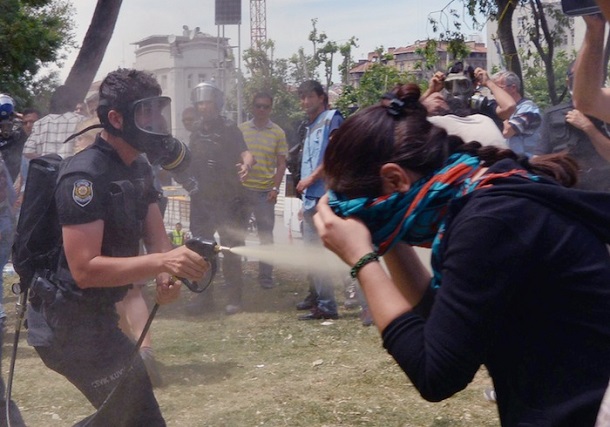
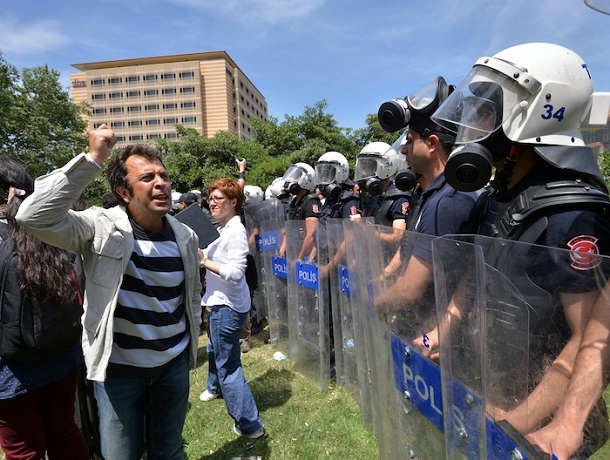
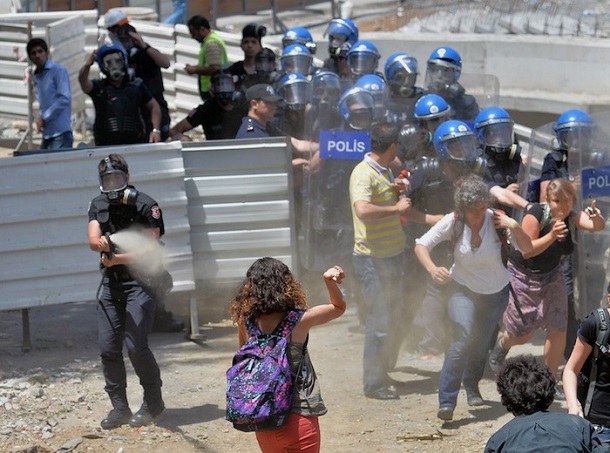
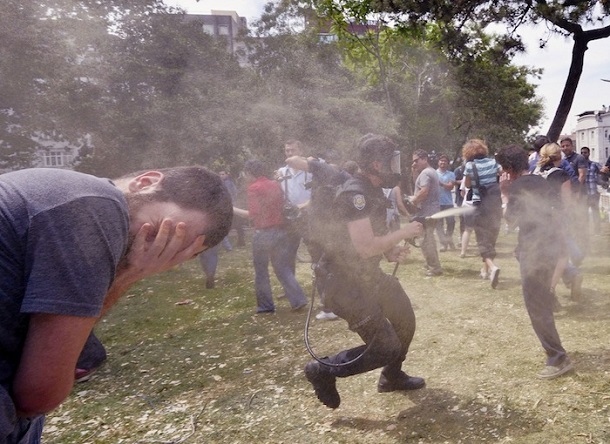
Turk­ish police fired tear gas and water can­non on Fri­day at pro­test­ers occu­py­ing a park in cen­tral Istan­bul, injur­ing scores in the lat­est vio­lent crack­down on anti-gov­ern­ment demon­stra­tions.

Turk­ish police fired tear gas and water can­non on Fri­day at pro­test­ers occu­py­ing a park in cen­tral Istan­bul, injur­ing scores in the lat­est vio­lent crack­down on anti-gov­ern­ment demon­stra­tions.

The protest at Gezi Park start­ed late on Mon­day after devel­op­ers tore up trees but has widened into a broad­er demon­stra­tion against Prime Min­is­ter Tayyip Erdogan’s Islamist-root­ed Jus­tice and Devel­op­ment Par­ty (AKP).

Riot police recent­ly clashed with tens of thou­sands of May Day pro­test­ers in Istan­bul. There have also been protests against the government’s stance on the con­flict in neigh­bor­ing Syr­ia, a recent tight­en­ing of restric­tions on alco­hol sales and warn­ings against pub­lic dis­plays of affec­tion.

Police staged a dawn raid on demon­stra­tors who had been camp­ing for days in Gezi Park in anger at plans to build a shop­ping mall, and clouds of tear gas rose around the area in Tak­sim Square that has long been a venue for polit­i­cal protest.

“We do not have a gov­ern­ment, we have Tayyip Erdogan…Even AK Par­ty sup­port­ers are say­ing they have lost their mind, they are not lis­ten­ing to us,” said Koray Caliskan, a polit­i­cal sci­en­tist at Bospho­rus Uni­ver­si­ty who attend­ed the protest. “This is the begin­ning of a sum­mer of dis­con­tent.”

The Istan­bul Med­ical Cham­ber, a doc­tors’ asso­ci­a­tion, said at least 100 peo­ple sus­tained minor injuries on Fri­day, some of them when a wall they were climb­ing col­lapsed as they tried to flee clouds of tear gas.

Amnesty Inter­na­tion­al said it was con­cerned by what it described as “the use of exces­sive force” by the police against what had start­ed out as a peace­ful protest.

Erdo­gan has over­seen a trans­for­ma­tion in Turkey dur­ing his decade in pow­er, turn­ing its econ­o­my from cri­sis-prone into Europe’s fastest-grow­ing. Per capi­ta income has tripled in nom­i­nal terms since his par­ty rose to pow­er.

He remains by far Turkey’s most pop­u­lar politi­cian, and is wide­ly viewed as its most pow­er­ful leader since Mustafa Kemal Ataturk found­ed the mod­ern sec­u­lar repub­lic on the ash­es of the Ottoman Empire 90 years ago.

The unrest has been far from the sort of mass demon­stra­tions seen in oth­er parts of the Mid­dle East or even parts of Europe in recent years, but it reflects grow­ing oppo­si­tion con­cern about Erdogan’s author­i­tar­i­an­ism.

DEFIANCE

Hun­dreds of mil­i­tary offi­cers have been jailed on charges of plot­ting a coup against Erdo­gan in recent years; oth­ers includ­ing aca­d­e­mics, jour­nal­ists and politi­cians face tri­al on sim­i­lar accu­sa­tions.

Erdo­gan has made no secret of his ambi­tion to run for the pres­i­den­cy in elec­tions next year when his term as prime min­is­ter ends, exac­er­bat­ing oppo­si­tion con­cerns.

“These peo­ple will not bow down to you” read one ban­ner at the Gezi Park protest, along­side a car­toon of Erdo­gan wear­ing an Ottoman emperor’s tur­ban.

Post­ings on social media includ­ing Twit­ter, where “Occu­py Gezi” – a ref­er­ence to protests in New York and Lon­don last year – was a top-trend­ing hash­tag, and Face­book said sim­i­lar demon­stra­tions were planned for the next few days in oth­er Turk­ish cities includ­ing Ankara, Izmir, Adana and Bur­sa.

“Kiss protests” – in which demon­stra­tors are urged to lock lips – had already been planned for Istan­bul and Ankara this week­end after sub­way offi­cials were report­ed to have admon­ished a cou­ple for kiss­ing in pub­lic a week ago.

Erdo­gan is push­ing ahead with a slew of mul­ti-bil­lion dol­lar projects which he sees as embody­ing Turkey’s emer­gence as a major pow­er. They include a ship­ping canal designed to rival Pana­ma or Suez, a giant mosque and a third Istan­bul air­port billed to be one of the world’s biggest.

Speak­ing just a few miles from Gezi Park at the launch on Wednes­day of con­struc­tion of a third bridge link­ing Istanbul’s Euro­pean and Asian shores, Erdo­gan vowed to pur­sue plans to rede­vel­op Tak­sim Square.

Archi­tects, left­ist polit­i­cal par­ties, aca­d­e­mics, city plan­ners and oth­ers have long opposed the plans, say­ing they lacked con­sul­ta­tion with civic groups and would remove one of cen­tral Istanbul’s few green spaces.

Icelanders Protest the New Government’s Environmental Policy 30th May

At least one thou­sand peo­ple gath­er out­side of the gov­ern­ment offices yes­ter­day to deliv­er a chal­lenge to the prime min­is­ter, Sig­mundur David Gunnlaugs­son. The gov­ern­ment is chal­lenged to with­draw state­ments regard­ing chang­ing the pow­er plant pro­gram, but the gov­ern­ment wants to change it so that more areas can be used for pow­er plants. 

The pro­test­ers want to spare the envi­ron­ment and not build too many pow­er plants. The chal­lenge comes with reviews regard­ing the pow­er plant pro­gram that the pub­lic, insti­tu­tions, munic­i­pal­i­ties, orga­ni­za­tions and com­pa­nies have sent to the par­lia­ment and to the min­istries.

The new cen­ter-right gov­ern­ment is said to focus too much on pow­er plants and alu­minum fac­to­ries. The gov­ern­ment has merged the min­istry of the envi­ron­ment togeth­er with the min­istry of agri­cul­ture and fish­eries. Crit­ics say that the gov­ern­ment has in effect abol­ished the min­istry of the envi­ron­ment, and will now focus on build­ing pow­er plants and fac­to­ries and seri­ous­ly dam­age the envi­ron­ment.

Sig­mundur David was busy when the protests were held because the pres­i­dent of Fin­land was vis­it­ing. But the prime minister´s assis­tant showed up on his behalf, and he was hand­ed the chal­lenge.

Turkish Activists Resist Destruction of Taksim Square Park 29th May

Turkey Protest

A sim­ple protest by Turk­ish cit­i­zens against the cut­ting dow

Turkey Protest

A sim­ple protest by Turk­ish cit­i­zens against the cut­ting down of trees in the cen­ter of Tak­sim Square in Istan­bul turned into a great oppor­tu­ni­ty for riot police to break out the pep­per spray.

Local demon­stra­tors and a num­ber of par­lia­men­tary deputies par­tial­ly blocked the demo­li­tion of the last green pub­lic space in the cen­ter of Istan­bul on May 28, despite police forces again resort­ing to tear gas to dis­perse the group. The strug­gle even­tu­al­ly trans­formed into a night-long sit-in protest by the demon­stra­tors.

Peace and Democ­ra­cy Par­ty (BDP) Istan­bul deputy Sır­rı Süreyya Önder helped halt an oper­a­tion to remove trees in Tak­sim Gezi Park when he obstruct­ed the path of a bull­doz­er, amid run­ning alter­ca­tions between demon­stra­tors on one side and police and com­pa­ny work­ers on the oth­er. Önder demand­ed the license for the demo­li­tion, which was not pro­vid­ed by munic­i­pal­i­ty work­ers.

Turkey Protest

Police pulled out of the area as dusk set, allow­ing around 1,000 pro­test­ers to stage a mini-fes­ti­val dur­ing which they vowed that the park would not be turned over to “land spec­u­la­tors.” A group of pro­test­ers said they planned to stand guard at the site all night long to pre­vent any night-time demo­li­tion.

Pro­test­ers first gath­ered late May 27 in response to social media mes­sages alert­ing activists to the arrival of work­ers tasked with cut­ting down trees on the site, on which the Topçu Kışlası (Artillery Bar­racks) are set to be rebuilt as part of the rul­ing Jus­tice and Devel­op­ment Party’s (AKP) con­tro­ver­sial plan to pedes­tri­an­ize Tak­sim Square.

Turkey Protest

“They are plan­ning to demol­ish at night; we will be here to stop them until this thing is can­celed,” Önder post­ed on his offi­cial Twit­ter account. Gülseren Onanç, a for­mer deputy of the main oppo­si­tion Repub­li­can People’s Par­ty (CHP), also joined the pro­test­ers, while CHP deputy Gürsel Tekin also came to Gezi Park to sup­port the protests.

APTOPIX Turkey Protest

The rebuild­ing of the bar­racks was approved by the High Coun­cil for Pro­tec­tion of Cul­tur­al and Nat­ur­al Assets on March 1.

40,000 form human chain around the ZAD

20.5.13

If any more proof is need­ed that direct action works, take a trip to Nantes in west­ern France.

20.5.13

If any more proof is need­ed that direct action works, take a trip to Nantes in west­ern France.

Fif­teen or so miles out­side the city, the region­al author­i­ty backed by the French nation­al gov­ern­ment, has been try­ing to build “Nantes Inter­na­tion­al” Air­port. It claims it is required to replace the sin­gle run­way air­port in the city in order to attract invest­ment into the area. The oppo­nents com­mis­sioned their own study which refut­ed those claims. They also point out that Nantes is just a lit­tle over two hours by fast train from Charles de Gaulle Air­port in Paris. The new air­port is dis­missed as lit­tle more than an ego project of the for­mer major of Nantes, Jean-Marc Ayrault, now the Prime Min­is­ter of France. It has been dubbed ‘Ayrauo­port’.

Last week­end (11th May) I was one of the 40,000 or so peo­ple who formed a 25 kilo­me­tre-long human chain around the site of the air­port. The huge num­bers have been inspired by the direct action of last win­ter. Dur­ing the win­ter months there were tear-gas bat­tles in the woods as police fought to remove hun­dreds of young pro­test­ers who had set up make-shift homes in sup­port of the local com­mu­ni­ty.  The courage of the pro­test­ers from the self-styled ZAD as they resist­ed the police in the bit­ter cold and dri­ving rain of last win­ter both cement­ed their sup­port in the local com­mu­ni­ty and inspired peo­ple from around France and beyond.

Now there are sup­port groups, called “com­mit­tees”, in 200 towns and cities.  Each group stages demon­stra­tions in their own towns and lob­bies politi­cians in their own areas in sup­port of the Nantes cam­paign­ers. Hard­ly a week goes by with­out one of the com­mit­tees cycling or walk­ing through France to the site of the pro­posed air­port. Last week­end on my way back from the protest I spied a bill­board in Le Mans– over 100 miles from Nantes– oppos­ing the air­port.

The ZAD resis­tance fol­lowed on from the 28 day hunger strike staged last year dur­ing the pres­i­den­tial elec­tion cam­paign by four peas­ant farm­ers against the plan to evict them from their prop­er­ties. 

The local com­mu­ni­ty has fought a great cam­paign over the years – and recent­ly won an impor­tant court case in the courts where the judge ruled that the airport’s pro­mot­ers had failed to car­ry out prop­er flood plain and envi­ron­men­tal assess­ments of the project, as required by the Euro­pean Union.  The cam­paign­ers believe that the rul­ing from the court may pro­vide a way for the Gov­ern­ment to drop the air­port and save face. But the rea­son the Gov­ern­ment is under so much pres­sure is because of the way that direct action – the hunger strikes and the resis­tance from ZAD – elec­tri­fied sup­port from across France. No won­der there was such a car­ni­val atmos­phere last Sat­ur­day. We were hold­ing hands around an air­port that will prob­a­bly now nev­er be built.

John Stew­art guest post’s blog

Resistance to the Nordic Mining Boom — Action Camp in Finnish North Karelia Starting 18 June 2013

Tal­vi­vaaras’ nick­el-ura­ni­um mine has caused the most seri­ous envi­ron­men­tal dam­ages in the finnish his­to­ry in decades. The mine has been con­tin­u­ous­ly pol­lut­ing the amaz­ing water­scapes of east­ern Fin­land.

Tal­vi­vaaras’ nick­el-ura­ni­um mine has caused the most seri­ous envi­ron­men­tal dam­ages in the finnish his­to­ry in decades. The mine has been con­tin­u­ous­ly pol­lut­ing the amaz­ing water­scapes of east­ern Fin­land. More and more peo­ple and orga­ni­za­tions are demand­ing clos­ing of the mine and the locals can’t use water from sev­er­al lakes any­more, but it does­n’t seem to have any impact in a coun­try where the finance elite knows that the gov­ern­ment is in their ser­vice.
The eco-dis­as­ter in the Tal­vi­vaara mine is not a rare excep­tion: rather, it is busi­ness as usu­al wher­ev­er large min­ing cor­po­ra­tions are oper­at­ing. For the sur­round­ing areas, pol­lut­ed ground­wa­ter has been the price to pay for every sin­gle ura­ni­um mine in the world so far. Despite this, a num­ber of  projects for open­ing huge mines are under­way in Fin­land and Swe­den.

Dis­re­gard­ing the cost to the ecosys­tem or the oppo­si­tion of locals, the inter­na­tion­al elite has decid­ed to sac­ri­fice the Nordic flo­ra, fau­na and waters to fuel the growth-com­pul­sive econ­o­my.

Deter­mined resis­tance is need­ed to keep the envi­ron­ment viable. Join us to share knowl­edge and skills, and to act!

The camp is locat­ed ca. 30 km from the Tal­vi­vaara mine. The first week of the camp, we will share info about the min­ing sit­u­a­tion in the north and explore tac­tics for open direct action. These skills will be put to use dur­ing the sec­ond week.

More info & updates com­ing at turvaverkosto.wordpress.com

Feel free to offer your own pro­gram! The camp will work in a self-orga­nized man­ner, so par­tic­i­pants are expect­ed to do their share of run­ning the camp. To cov­er costs we ask for a dona­tion of 5–10 € per day, tak­ing into account peo­ple’s per­son­al eco­nom­ic sit­u­a­tions. Rides from more acces­si­ble loca­tions will be arranged as often as pos­si­ble. When sign­ing up for the camp, please con­tact us if you would want a ride or have any oth­er spe­cial needs, aller­gies etc.

Let us know you’re com­ing by mail­ing turva@riseup.net before 10th of June, if pos­si­ble!

TURVA — Action net­work against ura­ni­um indus­try
turvaverkosto.wordpress.com

Hyökyaal­to net­work (Ris­ing Tide Fin­land)
hyokyaalto.org

Friends of the Land­less Fin­land
http://maattomienliike.wordpress.com/


The Fuel Nightmare Continues

It’s as if the uni­verse is try­ing to tell us some­thing, isn’t it?

It’s as if the uni­verse is try­ing to tell us some­thing, isn’t it?

First, a dis­as­trous month that saw at least 15 sep­a­rate oil spills world­wide, near­ly all of them in North Amer­i­ca. That month also saw an oil barge catch fire after a col­li­sion, and the pub­li­ca­tion of a study impli­cat­ing frack­ing as a cause of earth­quakes.

Now at least 600 gal­lons have spilled from an Enbridge oil pump­ing sta­tion near Viking, Minnesota.Two fuel barges car­ry­ing a nat­ur­al gas deriv­a­tive have explod­ed and are still burn­ing on the Alaba­ma Riv­er. And new reports strong­ly sug­gest that tar sands from Exxon’s Pega­sus Pipeline in Mayflower, Arkansas have seeped into Lake Con­way and are head­ing toward the Arkansas Riv­er.

Dis­as­ters like these bring the real costs of fos­sil fuels into sharp focus, because we can imag­ine our­selves affect­ed by them. But the truth is, dis­as­ters like these are part of every­day life for the peo­ple and oth­er beings liv­ing in areas where fos­sil fuels are extracted—or any oth­er indus­tri­al mate­ri­als, from cop­per for solar pan­els to coltan for cell phones.

If you wouldn’t want oil spilling into your back yard, if you wouldn’t want a strip mine rip­ping open a hole behind your house and poi­son­ing your water, then it’s time to admit that the eco­nom­ic sys­tem found­ed on con­sum­ing these mate­ri­als has got to go. We’ll nev­er have jus­tice or sus­tain­abil­i­ty if we base one group’s “high stan­dard of liv­ing” on the dis­lo­ca­tion and destruc­tion of oth­ers.


The Efficiency of Green Energy

cap_1

We ought not at least to delay dis­pers­ing a set of plau­si­ble fal­lac­i­es about the econ­o­my of fuel, and the dis­cov­ery of sub­sti­tutes [for coal], which at present obscure the cri

cap_1

We ought not at least to delay dis­pers­ing a set of plau­si­ble fal­lac­i­es about the econ­o­my of fuel, and the dis­cov­ery of sub­sti­tutes [for coal], which at present obscure the crit­i­cal nature of the ques­tion, and are eager­ly passed about among those who like to believe that we have an indef­i­nite peri­od of pros­per­i­ty before us. –William Stan­ley Jevons, The Coal Ques­tion (1865)

There are, at present, many myths about green ener­gy and its effi­cien­cy to address the demands and needs of our bur­geon­ing indus­tri­al soci­ety, the least of which is that a switch to “renew­able” ener­gy will sig­nif­i­cant­ly reduce our depen­den­cy on, and con­sump­tion of, fos­sil fuels.

The oppo­site is true. If we study the actu­al pro­duc­tive process­es required for cur­rent “renew­able” ener­gies (solar, wind, bio­fu­el, etc.) we see that fos­sil fuels and their infra­struc­ture are not only cru­cial but are also whol­ly fun­da­men­tal to their devel­op­ment. To con­tin­ue to use the words “renew­able” and “clean” to describe such ener­gy process­es does a great dis­ser­vice for gen­er­at­ing the type of informed and ratio­nal deci­sion-mak­ing required at our cur­rent junc­tion.

To take one exam­ple – the pro­duc­tion of tur­bines and the allo­ca­tion of land nec­es­sary for the devel­op­ment, pro­cess­ing, dis­tri­b­u­tion and stor­age of “renew­able” wind ener­gy. From the min­ing of rare met­als, to the pro­duc­tion of the tur­bines, to the trans­porta­tion of var­i­ous parts (weigh­ing thou­sands of tons) to a cen­tral loca­tion, all the way up to the con­tin­ued main­te­nance of the struc­ture after its com­ple­tion – wind ener­gy requires indus­tri­al infra­struc­ture (i.e. fos­sil fuels) in every step of the process.

If the con­cep­tion of wind ener­gy only involves the pris­tine image of wind tur­bines spin­ning, ever so won­der­ful­ly, along a beau­ti­ful coast or grass­land, it’s not too hard to under­stand why so many of us hold green ener­gy so high­ly as an alter­na­tive to fos­sil fuels. Notice­ably absent in this con­cep­tion, though, are the images of every­thing it took to get to that end­point (which aren’t beau­ti­ful images to see at all and is large­ly the rea­son why wind ener­gy isn’t mar­ket­ed that way).

Because of the rapid growth and expan­sion of indus­tri­ali­a­tion in the last two cen­turies, we are long past the days of easy acces­si­ble resources. If you take a look at the type of min­ing oper­a­tions and drilling oper­a­tions cur­rent­ly sus­tain­ing our way of life you will read­i­ly see degra­da­tion and dev­as­ta­tion on uncon­scionable scales. This is our real­i­ty and these process­es will not change no mat­ter what our ends are – these process­es are the degree with which “basic” extrac­tion of all of the fun­da­men­tal met­als, min­er­als, and resources we are famil­iar with cur­rent­ly take place.

In much the same way that the absur­di­ties of tar sands extrac­tion, moun­tain­top removal, and hydraulic frac­tur­ing are plain­ly obvi­ous, so too are the con­tin­ued min­ing oper­a­tions and refin­ing process­es of cop­per, sil­ver, alu­minum, zinc, etc. (all essen­tial to the devel­op­ment of solar pan­els and wind tur­bines).

It is not enough – giv­en our cur­rent sit­u­a­tion and its dire impli­ca­tions – to just look at the pret­ty pic­tures and ignore every­thing else. All this does, as won­der­ful­ly reaf­firm­ing and uplift­ing as it may be, is keep us bound in delu­sions and false hopes. As Jevons affirms, the ques­tions we have before us are of such over­whelm­ing impor­tance that it does no good to con­tin­ue to delay dis­pers­ing plau­si­ble fal­lac­i­es. If we wish to go any­where from here, we absolute­ly need uncom­pro­mis­ing (and often bru­tal) truth.

A com­mon argu­ment among pro­po­nents of sup­posed “green” ener­gy – often preva­lent among those who do under­stand the inher­ent destruc­tive process­es of fuels, min­ing and indus­try – is that by sim­ply putting an end to cap­i­tal­ism and its prof­it motive, we will have the capac­i­ty to plan for the effi­cient and prop­er man­age­ment of remain­ing fos­sil fuels.

How­ev­er, the effi­cient use of a resource does not actu­al­ly result in its decreased con­sump­tion, and we owe evi­dence of that to William Stan­ley Jevons’ work The Coal Ques­tion. Writ­ten in 1865 (dur­ing a time of such great progress that crit­i­cisms were unfath­omable to most), Jevons devot­ed his study to ques­tion­ing Britain’s heavy reliance on coal and how the impli­ca­tion of reach­ing its lim­its could threat­en the empire. Many cov­ered top­ics in this text have influ­enced the way in which many of us today dis­cuss the issues of peak oil and sus­tain­abil­i­ty – he wrote on the lim­its to growth, over­shoot, ener­gy return on ener­gy input, tax­a­tion of resources and resource alter­na­tives.

In the chap­ter, “Of the econ­o­my of fuel,” Jevons address­es the idea of effi­cien­cy direct­ly. Preva­lent at the time was the thought that the fail­ing sup­ply of coal would be met with new modes of using it, there­fore lead­ing to a sta­tion­ary or dimin­ished con­sump­tion. Mak­ing sure to dis­tin­guish between pri­vate con­sump­tion of coal (which account­ed for less than one-third of total coal con­sump­tion) and the econ­o­my of coal in man­u­fac­tures (the remain­ing two-thirds), he explained that we can see how new modes of econ­o­my lead to an increase of con­sump­tion accord­ing to par­al­lel instances. He writes:

The econ­o­my of labor effect­ed by the intro­duc­tion of new machin­ery throws labor­ers out of employ­ment for the moment. But such is the increased demand for the cheap­ened prod­ucts, that even­tu­al­ly the sphere of employ­ment is great­ly widened. Often the very labor­ers whose labor is saved find their more effi­cient labor more demand­ed than before.

The same prin­ci­ple applies to the use of coal (and in our case, the use of fos­sil fuels more gen­er­al­ly) – it is the very econ­o­my of their use that leads to their exten­sive con­sump­tion. This is known as the Jevons Para­dox, and as it can be applied to coal and fos­sil fuels, it so right­ful­ly can be (and should be) applied in our dis­cus­sions of “green” and “renew­able” ener­gies – not­ing again that fos­sil fuels are nev­er com­plete­ly absent in the pro­duc­tive process­es of these ener­gy sources.

We can try to assert, giv­en the gen­er­al care we all wish to take in mov­ing for­ward to avert cat­a­stroph­ic cli­mate change, that much dili­gence will be tak­en for the effi­cient use of remain­ing resources but with­out the direct ques­tion­ing of con­sump­tion our attempts are mean­ing­less. His­tor­i­cal­ly, in many vary­ing indus­tries and cir­cum­stances, effi­cien­cy does not solve the prob­lem of con­sump­tion – it exas­per­ates it. There is no guar­an­tee that “green” ener­gies will keep con­sump­tion lev­els sta­tion­ary let alone result in a reduc­tion of con­sump­tion (an obvi­ous neces­si­ty if we are plan­ning for a sus­tain­able future).

Jevons con­tin­ues, “Sup­pose our progress to be checked with­in half a cen­tu­ry, yet by that time our con­sump­tion will prob­a­bly be three or four times what it now is; there is noth­ing impos­si­ble or improb­a­ble in this; it is a mod­er­ate sup­po­si­tion, con­sid­er­ing that our con­sump­tion has increased eight-fold in the last six­ty years. But how short­ened and dark­ened will the prospects of the coun­try appear, with mines already deep, fuel dear, and yet a high rate of con­sump­tion to keep up if we are not to ret­ro­grade.”

Writ­ing in 1865, Jevons could not have fath­omed the lev­el of growth that we have attained today but that doesn’t mean his ear­ly warn­ings of Britain’s use of coal should be whol­ly dis­card­ed. If any­thing, the con­tin­ued rise and dom­i­nance of indus­tri­al­i­sa­tion over near­ly all of the earth’s land and peo­ple makes his argu­ments ever more per­ti­nent to our present sit­u­a­tion.

Based on cur­rent emis­sions of car­bon alone (not fac­tor­ing in the reach­ing of tip­ping points and var­i­ous feed­back loops) and the best sci­ence read­i­ly avail­able, our time frame for action to avert cat­a­stroph­ic cli­mate change is any­where between 15–28 years. How­ev­er, as has been true with every sci­en­tif­ic esti­mate up to this point, it is impos­si­ble to pre­dict that rate at which these var­i­ous process­es will occur and large­ly our esti­mates fall extreme­ly short. It is quite prob­a­ble that we are like­ly to reach the point of irre­versible run­away warm­ing soon­er rather than lat­er.

Sup­pose our progress and indus­tri­al cap­i­tal­ism could be checked with­in the next ten years, yet by that time our con­sump­tion could dou­ble and the state of the cli­mate could be expo­nen­tial­ly more unfa­vor­able than it is now – what would be the capac­i­ty for which we could mean­ing­ful­ly engage in any amount of indus­tri­al pro­duc­tion? Would it even be in the realm of pos­si­bil­i­ty to imple­ment large-scale over­hauls towards “green” ener­gy? With­out a mean­ing­ful and dras­tic decrease in con­sump­tion habits (remem­ber­ing most of this occurs in indus­try and not per­son­al lifestyles) and a sub­se­quent decrease in depen­den­cy on indus­tri­al infra­struc­ture, the prospects of our future are severe­ly short­ened and dark­ened.


ALF Releases 29 Rabbits from Barcelona Factory Farm 27th April

On the night of April 13, 2013, Ani­mal Lib­er­a­tion Front activists opened the cages of thir­ty rab­bits who were to be killed in a few days.
The ini­tial goal was to get many more out, but when we arrived we saw that because of their enor­mous size and weight it would be impos­si­ble to lib­er­ate the num­ber we had thought, so with great effort we car­ried away our back­packs full of our new and sur­prised friends.

If you’ve ever seen the ter­ri­fied eyes of an ani­mal in a cage and then felt their heart beat­ing next to yours at the time of their release, you know exact­ly the mean­ing of Ani­mal Lib­er­a­tion.
After see­ing them locked in small cages with­out soil, and then lat­er see them walk and feel the wild life, you know that while you have strength, you won’t stop fight­ing for Total Lib­er­a­tion.

We’re not going to ask for their cages to be larg­er or com­fort­able.
We’re not going to ask that the con­di­tions in which they are tor­tured in exper­i­ments are ‘improved’,
We’re not going to ask that when they are killed, that it be done ‘humane­ly’ …
None of this is ever going to be enough.

We have learned that we can’t wait for the social con­di­tions to work in our favor, we can not hope for any­thing from the exploiters.
They will not change, but nei­ther will we!
We will always be there and we will do what we can to make their lives mis­er­able.

The oth­er night 29 rab­bits learned for the first time what it is to feel fresh air and that made us feel free as well. But there are still mil­lions of ani­mals in cages and unfor­tu­nate­ly we can’t get all of them out.
Any­way … TRY IT!

As a group we also want to say a cou­ple of things. One is that we want total lib­er­a­tion. And the oth­er is that we will fight wher­ev­er we can to achieve it, but we will not mix with fas­cist bas­tards to do it, in any way! We want noth­ing to do with them. They can use what­ev­er name they want, we will always con­sid­er them our ene­mies. Appear­ing to us as part of the sys­tem­at­ic dom­i­na­tion that sick­ens this plan­et, we repeat, we will nev­er accept or allow our­selves to be con­fused with such garbage.

AGAINST ALL FORMS OF DOMINATION
FOR TOTAL LIBERATION

We want to send a greet­ing of free­dom to Noelia Cote­lo, who has suf­fered alarm­ing­ly in recent months the tor­ture and abuse of a sys­tem based on exploita­tion, decep­tion and mur­der …
‘Noelia, the night of April 13, you were in the minds and hearts of those of us who car­ried out that lib­er­a­tion. We do not care if you’re veg­an or not, if you approve of our actions or if to the con­trary they mean noth­ing to you. Nonethe­less, this night is for you.
STRENGTH!’

Ani­mal Lib­er­a­tion Front — Kodama Cell”

Animal Activists Destroy Years of Research in Italy

Activists occu­py and bar­ri­cade them­selves on the fourth floor of a Phar­ma­col­o­gy Dept of a vivi­sec­tion lab in Milano (Italy).

Activists occu­py and bar­ri­cade them­selves on the fourth floor of a Phar­ma­col­o­gy Dept of a vivi­sec­tion lab in Milano (Italy).

Over the week­end ani­mal rights activists entered a lab­o­ra­to­ry con­duct­ing ani­mal stud­ies, set loose some of the ani­mals and switched cages, ruin­ing years worth of research, accord­ing to lab offi­cials.

Nature report­ed that the unau­tho­rized enter­ing of the lab­o­ra­to­ry in the phar­ma­col­o­gy depart­ment at the Uni­ver­si­ty of Milan was part of a protest staged by peo­ple with the group Fer­mare Green Hill (or Stop Green Hill).

Phar­ma­col­o­gist Francesca Guidobono-Cav­al­chi­ni, who works in the build­ing, said, accord­ing to Nature, that they believe five activists obtained a key­card to enter the build­ing ille­gal­ly. Once inside, the activists set free some ani­mals and mixed up cages and labels. Two even put chains around their necks, attach­ing the oth­er end to the main dou­ble doors of the facil­i­ty, which could cause bod­i­ly harm if the opened by author­i­ties.

“These ani­mals did not choose to be there and have no chance to leave,” the activists stat­ed on their web­site (trans­lat­ed via Google Trans­late). “With this unprece­dent­ed action we want to doc­u­ment the con­di­tions in which ani­mals live and exper­i­ments that are con­duct­ed, show­ing them to the whole soci­ety with pho­tographs and films; give vis­i­bil­i­ty to the prob­lem of vivi­sec­tion and the places where it is prac­ticed, thus giv­ing a name also those who prac­tice it, to start a siege peace­ful inside and in front of the lab­o­ra­to­ry with the request that the ani­mals are released and that the Min­istry and the Palaces of an end to the false promis­es and real­ly start­ed to take steps towards the abo­li­tion of ani­mal test­ing.”

After 10 hours, activists from Con­tro Green Hill who had occu­pied the lab­o­ra­to­ry in the phar­ma­col­o­gy depart­ment of Milano, RESCUED HUNDREDS OF MICE AND ONE RABBIT. These ani­mals are now safe from the hands of vivi­sec­tors.

Nature report­ed Pao­la Viani, the deputy direc­tor with the phar­ma­col­o­gy depart­ment, say­ing he had to work with police to reach a com­pro­mise with the activists. They end­ed up tak­ing almost 100 ani­mals with them and were sup­pos­ed­ly told they could take more from the facil­i­ty lat­er.

“It will take three peo­ple at least a year to build up the colonies we had of mouse mod­els of dif­fer­ent psy­chi­atric dis­eases,” neu­ro­bi­ol­o­gist Michela Mat­te­oli said.

Guidobono-Cav­al­chi­ni told Nature the uni­ver­si­ty intends to press charges for the dam­age done.

On Sun­day, sci­en­tists issued a let­ter (trans­lat­ed by Google) stat­ing that the activists dam­age “goes far beyond the loss of ani­mals ille­gal­ly removed,” but extends to a loss of sci­en­tif­ic dis­cov­ery and hun­dreds of thou­sands of euros.

Acknowl­edg­ing that there is a con­tro­ver­sial com­po­nent to ani­mal research, the sci­en­tists con­tin­ue in the let­ter stat­ing that it can be of ser­vice to human­i­ty and thus ask that the activists be brought to jus­tice for “the agen­cies, indi­vid­u­als and fam­i­lies of patients who fund our research.”


Odd Alliance of Anarchists & Farmers Takes on French Gov’t in Airport Battle 16th April

They hurl sticks, stones and gaso­line bombs. They have spent bru­tal win­ter months for­ti­fy­ing mud­dy encamp­ments. And now they’re ready to ramp up their fight against the prime min­is­ter and his pet project — a mas­sive new air­port in west­ern France.

An unlike­ly alliance of anar­chists and beret-wear­ing farm­ers is cre­at­ing a headache for Pres­i­dent Fran­cois Hollande’s belea­guered gov­ern­ment by mount­ing an esca­lat­ing Occu­py Wall Street-style bat­tle that has delayed con­struc­tion on the ambi­tious air­port near the city of Nantes for months. The con­flict has flared anew at a par­tic­u­lar­ly tricky time for the Social­ist gov­ern­ment, amid a grow­ing scan­dal over tax-dodg­ing rev­e­la­tions that forced the bud­get min­is­ter to resign, and ever-wors­en­ing news about the French econ­o­my.

A protest held over the week­end is like­ly to trig­ger a new round of demon­stra­tions like those that drew thou­sands of pro­test­ers to the remote wood­lands of Brit­tany in the fall. In those ear­li­er protests, heav­i­ly armored riot police bat­tled young anar­chists and farm­ers, caus­ing injuries on both sides. On Mon­day, sim­i­lar clash­es erupt­ed, with three demon­stra­tors injured, accord­ing to the rad­i­cals’ web­site.

The fight has brought togeth­er odd bed­fel­lows: Local farm­ers who rep­re­sent tra­di­tion­al French con­ser­v­a­tive val­ues are col­lab­o­rat­ing with anar­chists, rad­i­cal eco-fem­i­nists and drifters from around Europe — who see the anti-air­port move­ment as a flash­point against glob­al­iza­tion and cap­i­tal­ism. Envi­ron­men­tal­ists and the far-left Green Par­ty also oppose the air­port, argu­ing that it will bring pol­lu­tion.

The clash has been par­tic­u­lar­ly dam­ag­ing for Prime Min­is­ter Jean-Marc Ayrault, Nantes’ long­time may­or and the airport’s high­est-pro­file cham­pi­on. He and the project’s sup­port­ers say the air­port will attract busi­ness at a time when France sore­ly needs an eco­nom­ic boost and job cre­ation. The Aero­port du Grand Ouest is intend­ed to replace the exist­ing Nantes Atlan­tique air­port, with run­ways able to han­dle larg­er air­craft such as the A380 super­jum­bo and room to expand from 4.5 mil­lion pas­sen­gers a year at the open to 9 mil­lion in the longer term.

With an approval rat­ing at his­toric lows, Ayrault’s lever­age to push through the project is shrink­ing. Mean­while the oppo­nents’ threat to remo­bi­lize is lead­ing to new fears of vio­lent clash­es.

Pro­test­ers have spent months ille­gal­ly occu­py­ing the site of the planned Notre-Dame-Des-Lan­des air­port, which is set to start oper­at­ing in 2017. In Novem­ber, more than 500 riot police tried to remove thou­sands of squat­ters in the wood­ed area near this vil­lage 15 miles (24 kilo­me­ters) north of Nantes. Pro­test­ers respond­ed by hurl­ing rocks and Molo­tov cock­tails. Police fired back with tear gas in clash­es that dom­i­nat­ed the nation­al news.

For the farm­ers, it’s all about pro­tect­ing the land.

“This will be a run­way,” says Syl­vain Fres­neau, ges­tur­ing toward the two-sto­ry house built by his grand­fa­ther and the dairy farm that has been in his fam­i­ly for five gen­er­a­tions.

Fres­neau and his cousin Dominique are among the local farm­ers who are hold­ing out, refus­ing to sell up and clear off the land where they have lived and worked their entire lives. Sylvain’s 88 cows pro­duce 550,000 liters (580,000 quarts) of milk a year. “Since Jan­u­ary,” Fres­neau says, “we are squat­ters and so are the cows.”

While some local farm­ers have accept­ed buy­outs from Vin­ci, the giant con­struc­tion firm that was select­ed to build and run the air­port, the Fres­neaus and many of their neigh­bors have fought the project for years.

“It’s not a ques­tion of mon­ey,” Syl­vain Fres­neau says. “You can’t put a price on five gen­er­a­tions of peas­ants. It’s my duty not to accept that mon­ey from any builder.”

He says his 80-year-old father was one of the first to resist the air­port project when the idea sur­faced 40 years ago. Long-moth­balled, the air­port plan gained fresh impe­tus when Ayrault’s Social­ist Par­ty came to pow­er nation­al­ly in the late 1990s. The plan then wound its way through a slow and tor­tur­ous­ly com­plex process of stud­ies, com­mis­sions and advi­so­ry com­mit­tees.

Although Syl­vain Fres­neau claims the farm­ers “could make one call and block Nantes with our trac­tors in half a day,” the real­i­ty is that the farm­ers alone could not have delayed the project as long as they have with­out help from a sur­pris­ing quar­ter: the main­ly 20-some­thing rad­i­cals who call them­selves “ZADists.”

Their name derives from the French acronym for “devel­op­ment zone,” the gener­ic name giv­en to the area where the air­port is to be built. The ZADists have delight­ed in appro­pri­at­ing the acronym for their own use, but with var­i­ous new takes: Zone To Defend, or Zone of Defin­i­tive Auton­o­my, among oth­ers.

Since 2009, the activists have been occu­py­ing the fields where the air­port is to be built. Some squat in aban­doned farm­hous­es or homes opened up to them by locals who refuse to sell. Oth­ers spent the win­ter in inge­nious­ly con­struct­ed cab­ins set up deep in the wood­ed and mud­dy scrub­land out­side the vil­lage.

“With­out the ZADists we wouldn’t have kept the land,” admits Syl­vain Fres­neau.

Up to sev­er­al hun­dred ZADists live on the site at any giv­en time. Police con­trol access to the zone with check­points at road cross­ings, but the ZADists avoid them by sim­ply cut­ting across fields to their camp­sites.

ZADists have also built their own for­ti­fi­ca­tions, ram­shackle assem­blages of wood, wire, mat­tress­es and hay bales. The entrance is con­trolled by ZADists who cov­er their faces with scarves and hoods, not only to ward off the cold but also to hide their iden­ti­ties from the police post­ed at the road cross­ing bare­ly 100 yards (meters) away.

Clash­es between the two sides are com­mon. On a recent vis­it, ZADists who all iden­ti­fied them­selves by the pseu­do­nym “Camille” described an expe­di­tion the night before in which they suc­ceed­ed in splash­ing some police with paint, traces of which were still vis­i­ble on the road.

For the farm­ers, the fight is most­ly a mat­ter of keep­ing their land. The ZADists, on the oth­er hand, say they have wider, lofti­er goals. “Against the Air­port … and its World” is one of the slo­gans spray-paint­ed on signs around the zone.

Some of the ZADists have tak­en part in anti-glob­al­iza­tion and Occu­py move­ments across Europe. They see the move­ment to sup­port the farm­ers of Notre-Dame-des-Lan­des as an exten­sion of their goal of “learn­ing to live togeth­er, cul­ti­vate the land, and increase our auton­o­my from the cap­i­tal­ist sys­tem,” as their web­site explains.

“It’s a bit utopi­an, but some­times you need some utopia,” said Dominique Fres­neau. The farm­ers’ appre­ci­a­tion for the ZADists’ ener­gy and the atten­tion they’ve brought to their fight against the air­port is mixed with bemuse­ment at some of their rad­i­cal posi­tions.

At meet­ings between the two groups of allies, Fres­neau admit­ted that “we clash” some­times. But more often they find ways to work togeth­er. Some farm­ers have used their trac­tors to set up a pro­tec­tive bar­ri­cade around one of the encamp­ments. A ZADist who was also a grad­u­ate stu­dent in agri­cul­tur­al stud­ies helped a farmer com­plete a geo­log­i­cal sur­vey of his land. Farm­ers bring in food and build­ing sup­plies for the ZADists.

In ear­ly April, a com­mis­sion set up by Ayrault to try to calm the debate over the air­port deliv­ered its report. It rec­om­mend­ed fur­ther eval­u­a­tion of the cost of expand­ing the Nantes Atlan­tique air­port instead of build­ing a new one at Notre-Dame-des-Lan­des, and sug­gest­ed that addi­tion­al noise, traf­fic and envi­ron­men­tal stud­ies be car­ried out.

The gov­ern­ment wel­comed the commission’s report, say­ing it under­scored the need for the new air­port. Oppo­nents, mean­while, said that on the con­trary it bol­stered their case that the new air­port should be scrapped. In any event, the activists said, all the new stud­ies will delay the start of work on the air­port, like­ly push­ing back its open­ing from the orig­i­nal­ly planned 2017 date.

Ecol­o­gists went as far as to cry vic­to­ry.

“As it stands, car­ry­ing out all the rec­om­men­da­tions called for in these reports amounts to a ‘mis­sion impos­si­ble’ and post­pone the project indef­i­nite­ly,” the Green Par­ty said in a state­ment.

Mean­while in the fields around Notre-Dame-des-Lan­des, farm­ers and activists are not going away.

Their next action is Sat­ur­day, when they plan a day of plant­i­ng, clear­ing and repair work at their camp across the site of the future air­port.