Community action in Mt. Roskill against the motorway in NZ

On Fri­day the 15th of May a dozen Mt.Albert/Roskill/Waterview com­mu­ni­ty mem­bers and a dozen local anar­chists crashed the offi­cial open­ing of the SH20 motor­way exten­sion through Roskill that will meet up with a new motor­way through Mt. Albert and Water­view to form the pro­posed West­ern Ring Route.

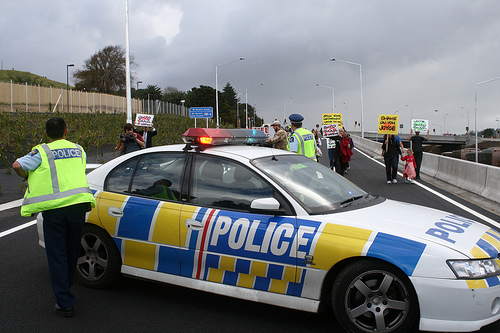
Cop car blocks road

On Fri­day the 15th of May a dozen Mt.Albert/Roskill/Waterview com­mu­ni­ty mem­bers and a dozen local anar­chists crashed the offi­cial open­ing of the SH20 motor­way exten­sion through Roskill that will meet up with a new motor­way through Mt. Albert and Water­view to form the pro­posed West­ern Ring Route.

Four of us anar­chists arrived at the motor­way over­bridge at around 1pm after bik­ing down Domin­ion Road. When we got to the Domin­ion Rd/SH20 over­bridge some com­mu­ni­ty mem­bers were hold­ing signs and chant­i­ng “Shame on Joyce”. The open­ing par­ty was being held in a mar­quee direct­ly below the over­bridge. We joined in the chant­i­ng, were giv­en signs but 10 min­utes into it one anar­chists sug­gest­ed a break away march down the motor­way onramp and then back down the motor­way towards the par­ty. Anoth­er anar­chist quick­ly piped up sure, but lets ask the locals first. They were only too keen and led by a Mt. Albert res­i­dent and her young daugh­ter and Paul Davie, from the local com­mu­ni­ty board we trot­ted off down the onramp chant­i­ng. “Hey, Hey. Ho, Ho. The Motor­way has got­ta go!”. A cop car with two cops raced in front of us and tried and failed to stop us march­ing down the onramp. Straight onto the motor­way prop­er and into a more deter­mined line of police the march went; backed up by anoth­er posse of anar­chists who had just arrived.

At that point a pad­dy­wag­on appeared and assumed a posi­tion direct­ly behind the line of pro­tes­tors, mak­ing this author scram­ble up the bank to the over­bridge, (a bit wor­ried at immi­nent arrest). How­ev­er although I heard that a Crown car drove into the pro­tes­tors down below, they stood and chant­ed for about half-an hour even while rain drove the crowd of jour­nal­ists under cov­er.

After that pro­tes­tors marched back up to the over bridge and con­tin­ued to yell and chant, dis­rupt­ing the cer­e­mo­ny going on below. Banksie’s apper­ance pro­mot­ed chants of “shame” and “scum”.

After that we left and head­ed home, con­tent in the knowl­edge that this motor­way will be stopped by deter­mined com­mu­ni­ty resis­tance that all auck­lan­ders should be part of.

Resis­tance Pho­tog­ra­phy: SH20 Protest

Some facts:
$2.8 bil­lion cost of build­ing a tun­nel and a $2.3 bil­lion cost of build­ing a motor­way.

400–500 homes will be destroyed in the build­ing of the motor­way.
[ Cost­ing the Water­view Option ]

In the year to June 2008 the Auck­land Region­al Trans­port Author­i­ty report­ed that fare­box rev­enue on rail ser­vices was just $17 mil­lion and on the North­ern Busway $3.42 mil­lion. So the cost of free pub­lic trans­port on the trains and the North­ern Busway is around $20 mil­lion. 1/100 of the cost of the Water­view motor­way. [ ARTA Annu­al Report ]

The right-wing dom­i­nat­ed Auck­land City Coun­cil last year cut more than $800 mil­lion from the city council’s bud­get. This is a third of the cost of the motor­way and shows how upside down local and cen­tral gov­ern­ment spend­ing is. It includ­ed:

The Tama­ki ward, the city’s poor­est ward took $450 mil­lion of cuts to upgrades on essen­tial com­mu­ni­ty ser­vices like pools, libraries and arts cen­tres made by a bunch of coun­cil­lors who live in Remuera and Par­nell. Mean­while $60 mil­lion that would have been spent on upgrad­ing Mt. Roskill and Otahuhu libraries, buy­ing new library books and build­ing new swim­ming pools in Avon­dale and Otahuhu was also cut.
[ Manukau Couri­er: “We can walk on bro­ken foot­paths but can’t swim in no pool.” ]

A $86 mil­lion cut in stormwa­ter repairs means that Auck­land beach­es will con­tin­ue to be washed in human waste dur­ing over­flows.

The coun­cil also cut footpath,cycleway and walk­way spend­ing by $66 mil­lion, pub­lic trans­port spend­ing by $20.8 mil­lion and new park-and-ride facil­i­ties by $5 mil­lion.

‘Mother Earth in climate crisis’ say indigenous people

12 May 2009
A state­ment by indige­nous rep­re­sen­ta­tives from around the world describes ‘Moth­er Earth (as) no longer in a peri­od of cli­mate change, but cli­mate cri­sis.’

12 May 2009
A state­ment by indige­nous rep­re­sen­ta­tives from around the world describes ‘Moth­er Earth (as) no longer in a peri­od of cli­mate change, but cli­mate cri­sis.’

The state­ment, known as the Anchor­age Dec­la­ra­tion, was released after indige­nous peo­ple from the Arc­tic, North Amer­i­ca, Asia, the Pacif­ic, Latin Amer­i­ca, Africa, the Caribbean and Rus­sia met in Anchor­age, Alas­ka for the ‘Indige­nous Peo­ples’ Glob­al Sum­mit on Cli­mate Change’.

‘We are deeply alarmed by the accel­er­at­ing cli­mate dev­as­ta­tion brought about by unsus­tain­able devel­op­ment,’ the Dec­la­ra­tion says. ‘We are expe­ri­enc­ing pro­found and dis­pro­por­tion­ate adverse impacts on our cul­tures, human and envi­ron­men­tal health, human rights, well-being, tra­di­tion­al liveli­hoods, food sys­tems and food sov­er­eign­ty, local infra­struc­ture, eco­nom­ic via­bil­i­ty, and our very sur­vival as Indige­nous Peo­ples.

‘Moth­er Earth is no longer in a peri­od of cli­mate change, but in cli­mate cri­sis. We there­fore insist on an imme­di­ate end to the destruc­tion and des­e­cra­tion of the ele­ments of life.’

The Dec­la­ra­tion lists four­teen spe­cif­ic calls for action. These include reduc­ing lev­els of glob­al car­bon emis­sions; indige­nous par­tic­i­pa­tion in cli­mate change debate; the recog­ni­tion of indige­nous peo­ples’ rights in schemes to ‘Reduce Emis­sions from Defor­esta­tion and Degra­da­tion’ (REDD); the aban­don­ment of ‘false solu­tions’ to cli­mate change such as nuclear ener­gy, ‘clean coal’ and agro­fu­els; the recog­ni­tion by gov­ern­ments of indige­nous peo­ples’ rights; and the return and restora­tion of ‘lands, ter­ri­to­ries, waters, forests, sea ice and sacred sites’ tak­en from indige­nous peo­ples by gov­ern­ments in the past.

The Dec­la­ra­tion ends with an offer to ‘share with human­i­ty our tra­di­tion­al knowl­edge… rel­e­vant to cli­mate change, pro­vid­ed our fun­da­men­tal rights… are ful­ly rec­og­nized and respect­ed. We reit­er­ate the urgent need for col­lec­tive action.’

Read the Anchor­age Dec­la­ra­tion

Wonthaggi Protest highlights Desalination Issue for Melbourne, Australia

One per­son was arrest­ed when pro­test­ers car­ry­ing two ban­ners walked onto the Desali­na­tion Plant pro­posed site near Won­thag­gi on May 9. The occa­sion was a ral­ly at the gates of the pro­posed site organ­ised by Water­shed Vic­to­ria and Mel­bourne sup­port­ers.

Wonthaggi protest

One per­son was arrest­ed when pro­test­ers car­ry­ing two ban­ners walked onto the Desali­na­tion Plant pro­posed site near Won­thag­gi on May 9. The occa­sion was a ral­ly at the gates of the pro­posed site organ­ised by Water­shed Vic­to­ria and Mel­bourne sup­port­ers.

Pho­tos on Flickr | Action: Get Real on Cli­mate Change | FoE

“Last chance to have your say – if you build it, we won’t pay”

For over two years, anti-desal cam­paign­ers have organ­ised ral­lies, meet­ings, film show­ings, debates and brief­in­gs, out­lin­ing the real costs of this project and putting for­ward the prac­ti­cal alter­na­tives to an ener­gy guz­zling desali­na­tion plant on the Bass Coast. Despite the spi­ralling costs of the pilot plant itself, the scarci­ty of data, crit­i­cism of the project from experts inside and out­side the gov­ern­ment, as well as doubts about financ­ing the project, the gov­ern­ment con­tin­ues to push ahead.

The Desali­na­tion Plant is beng designed to sup­ply 150 Gigal­itres per year for the Mel­bourne water sup­ply and will be man­aged and oper­at­ed through a pub­lic ‑pri­vate part­ner­ship (PPP) being extoled by the Brum­by Labor Gov­ern­ment. But many experts say deslaina­tion should be the solu­tion of last resort as it involves huge amount of (CO2 pol­lut­ng) pow­er, and gen­er­ates tonnes of sol­id waste and brine sludge which is pumped back out to sea where it can affect the coastal marine envi­ron­ment.

Alter­na­tive sources for water include recy­cled puri­fied water from treat­ment plants (110 GL/y), stormwa­ter cap­ture (50 GL/y), rain­wa­ter tanks (25 GL/y), Flood Diver­sion (20 GL/y), and instal­la­tion of dual flush cis­terns (15 GL/y) all of which could be done for a frac­tion of the cost of a desali­na­tion plant.

The pro­posed Desal plant at Won­thag­gi will cause 1.18 — 1.57 mil­lion tonnes of car­bon emis­sion equiv­a­lent to 365,000 extra cars on the road, dis­charge 8,800 litres of brine per sec­ond just 500 metres off the beau­ti­ful Bass coast, suck in and kill 380,000 small organ­isms per sec­ond into the plant. Oper­a­tion of the plant will be for prof­it by a multi­na­tion­al infra­struc­ture com­pa­ny, most like­ly Veo­lia who already run the Mel­bourne train sys­tem as Con­nex. The cost (and prof­its) of the plant will be passed on to con­sumers through increas­es in water rates. The peo­ple of Mel­bourne will pay!

In March Fed­er­al Evi­ron­ment min­is­ter Peter Gar­rett gave con­di­tion­al approval of the desali­na­tion plant in Vic­to­ria. Cam Walk­er from Fiends of the Earth crit­i­cised the min­is­te­r­i­al deci­sion say­ing “we believe that his assess­ment is flawed because it is based on infor­ma­tion pro­vid­ed by the pro­jec­t’s pro­po­nent rather than inde­pen­dent stud­ies,” he said. He also raised that the deci­sion does not relate to or con­sid­er the full impacts on species that are not fed­er­al­ly list­ed. “In par­tic­u­lar there are seri­ous con­cerns about the impacts on marine life posed by the plant, includ­ing to whale pop­u­la­tions, which are not addressed in the Minister’s deci­sion. Cam Walk­er said in a news release: Gar­rett fails Vic­to­ria on desali­na­tion plant approval.

The coastal zone and beach­es near­by are a pop­u­lar fish­ing spot that will be effectve­ly ruined. The efflu­ent pipe for the con­cen­trat­ed brine will only take the sludge 500 metres out to sea to destroy the ecol­o­gy of the rocky reef envi­ron­ment, when it should be extend­ed 2 to 3 kilo­me­tres out to sea where the brine can be ade­quate­ly dis­persed by the cur­rents in Bass Strait.

The Bunurong Land Coun­cil is con­cerned over the destrac­tion of abo­rig­i­nal cul­tur­al sites. Steve Comp­ton, Cul­tur­al Offi­cer with the Bunurong Land Coun­cil told the ral­ly “Some of those sites on the prop­er­ty are the largest sites in the Bass Coast region … So basi­cal­ly the Bunurong com­mu­ni­ty have asked me to say to you guys that they’re dead against the Desal. There is bet­ter options for get­ting water like putting rain­wa­ter tanks in Mel­bourne. Basi­cal­ly bug­ger off and leave the coast alone and stop try­ing to dish out big loads of mon­ey to for­eign multi­na­tion­als.” (Youtube Video Report: Bunurong peo­ple Oppose Desali­na­tion Plant)

Gareth Bar­low, a coun­cil­lor from Bass Coast Shire Coun­cil spoke about the coun­cil’s long stand­ing oppo­si­tion to the devel­op­ment. Bass Coast State MP for the Lib­er­al Par­ty spoke of his oppo­si­tion to the plant, while acknowl­edg­ing that the Lib­er­als had pro­posed a small­er State owned Desali­na­tion plant at the last elec­tion which he had sup­port­ed.

Anton from the Clean Ocean Foun­da­tion high­light­ed the amount of water wast­ed in Mel­bourne from the East­ern Treat­ment Plant and Gun­na­mat­ta out­fall and from stormwa­ter runoff. (Youtube Video Report: Desal plant for Mel­bourne what a Waste)

Cam Walk­er from Friends of the Earth came down from Mel­bourne and spoke about the grow­ing dis­qui­et in the Mel­bourne sub­urbs on the Desali­na­tion Plant being pushed by the Brum­by Labor Gov­ern­ment, and the need for more grass­roots activism on water issues in Mel­bourne.

There were also speak­ers who out­lined the rea­sons for oppo­si­tion to the Desali­na­tion Plant for Mel­bourne and its sit­ng near Won­thag­gi. (Youtube Video Report: Why you should oppose a Desali­na­tion plant for Mel­bourne)

A speak­er also cov­ered the prospects and back­ground of Infra­struc­ture com­pa­ny Veo­lia who looks like­ly to be the only pri­vate con­tender for man­ag­ing the plant under a pub­lic-pri­vate part­ner­ship. Veo­li­a’s record in water man­age­ment (they are also known as Viven­di) leaves much to be desired with com­mu­ni­ty protests and out­rage for their water man­age­ment and pric­ing prac­tices. (Youtube Video Report: Veo­lia set to run the Won­thag­gi Desali­na­tion Plant sup­ply­ing water to Mel­bourne)

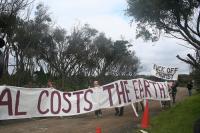
Just as the speak­ers were fin­ish­ing two groups of peo­ple entered the exclu­sion zone of the pilot plant near the dunes to dis­play ban­ners. (Youtube Video report — Pro­tes­tors enter Desal plant exclu­sion zone) One per­son was arrest­ed in the walkon, and was escort­ed back to the ral­ly where he was released after show­ing the police iden­ti­fi­ca­tion. The ban­ners said “Fuck off Brum­by” and “Desal Costs the Earth”.

Songs were sun to pop­u­lar tunes at the ral­ly Oppos­ing the Desali­na­tion plant near Won­thag­gi. (Youtube Video Report: Desal Song: We don’t want to swim in your chem­i­cals)

Lots of police were brought from around the region to “pro­tect” the pilot plant, as well as the pres­ence of pri­vate secu­ri­ty com­pa­ny employ­ees, but in con­trast to Mel­bourne protests the police were pret­ty friend­ly. I guess they are part of the local com­mu­ni­ty and prob­a­bly know many of the peo­ple opposed to the plant. Indeed, some of the police prob­a­bly also dis­agree with the plant being built.

Panama: Campesinos arrested over gold mine

June 5, 2009

Late last month, a group of demon­stra­tors were vio­lent­ly arrest­ed by police at a road­block in the north­ern Pana­man­ian province of Cocle.

June 5, 2009

Late last month, a group of demon­stra­tors were vio­lent­ly arrest­ed by police at a road­block in the north­ern Pana­man­ian province of Cocle.

The road­block was first set up on May 9, 2009 to resist the Petaquil­la Gold mine project, which is owned by the Pana­ma com­pa­ny Min­era Petaquil­la, and devel­oped by two oth­ers: the Van­cou­ver-based junior com­pa­ny, Petaquil­la Min­er­als and the Toron­to-based com­pa­ny, Inmet Min­ing.

As a many as 24 local com­mu­ni­ties are opposed to the project because of the “aber­rant pre­da­tion and destruc­tion of the Mesoamer­i­can Bio­log­i­cal Cor­ri­dor, where hun­dreds of hectares of vir­gin jun­gle and for­est have been cut down, and where the moun­tain pass­es and rivers that made the area one of the most impor­tant in the world due to its rich bio­di­ver­si­ty have been destroyed and pol­lut­ed,” notes a May 14 report by La Estrel­la.

The com­mu­ni­ties also say “they have nev­er been con­sult­ed, but rather deceived, and their lands have been tak­en from them unfair­ly in many ways, includ­ing the destruc­tion and burn­ing of ranch­es of indige­nous peo­ples, with­out even indem­ni­fy­ing the local res­i­dents and with­out any author­i­ty of the PRD gov­ern­ment ful­fill­ing its con­sti­tu­tion­al oblig­a­tion to defend the com­mu­ni­ties.”

Also report­ing on the arrests, La Estrel­la says 12 demon­stra­tors were arrest­ed in total (oth­er reports say it was 30 demon­stra­tors), “among them the Chiriqui envi­ron­men­tal­ist Car­menci­ta Ted­man. A peas­ant who did not want to be iden­ti­fied, said that he was real­ly afraid, because police­men were hit­ting the pro­tes­tors mer­ci­less­ly, even women and chil­dren. He added that when all this was hap­pen­ing Petaquil­la Gold heli­copters were sur­vey­ing the scene.”

The police used rods, and shot pel­lets and tear gas to sub­due the demon­stra­tors.

For back­ground on the Petaquil­la Gold mine and local efforts to stop it, vis­it miningwatch.ca

Perenco and armed forces break indigenous blockade (Peru)

6 May 2009
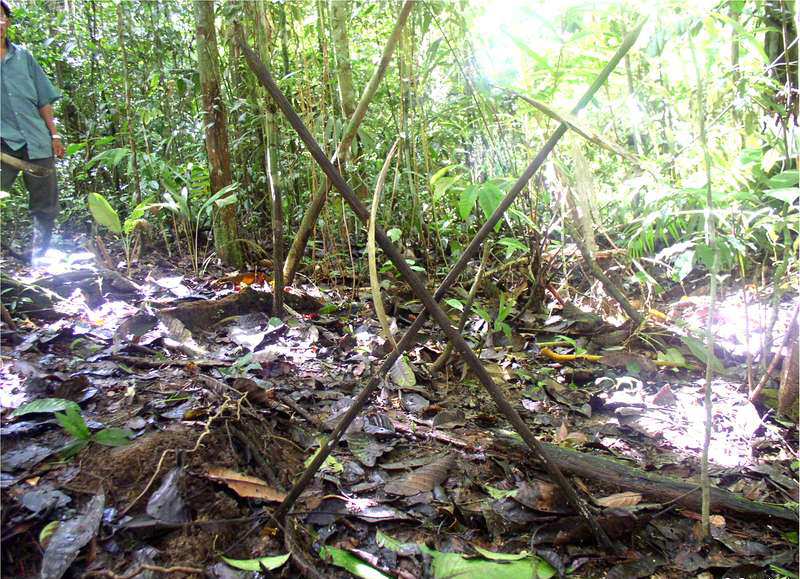
A gun­boat belong­ing to Peru’s armed forces has bro­ken through an Indi­an riv­er block­ade in the north­ern Peru­vian Ama­zon.

anti-Perenco crossed spears6 May 2009
A gun­boat belong­ing to Peru’s armed forces has bro­ken through an Indi­an riv­er block­ade in the north­ern Peru­vian Ama­zon.

The gun­boat, togeth­er with at least one boat belong­ing to Anglo-French oil com­pa­ny Peren­co, broke the block­ade at 5:15 am on 4 May. The block­ade, organ­ised by local indige­nous peo­ple, is on the Napo riv­er, one of the main trib­u­taries of the Ama­zon.

Peru’s indige­nous organ­i­sa­tion, AIDESEP, con­demned the use of a boat belong­ing to the armed forces, describ­ing it as a ‘use and abuse of their pow­er’. The block­ade forms part of Ama­zon-wide protests by Peru’s indige­nous peo­ple against gov­ern­ment poli­cies and the inva­sion of their ter­ri­to­ries by multi­na­tion­al com­pa­nies. The protests have been going on for almost a month.

Peren­co holds the licence to work in a remote part of Peru known as Lot 67, acces­si­ble via the Napo Riv­er. It is an area inhab­it­ed by at least two of the world’s last uncon­tact­ed tribes – the com­pa­ny is under increas­ing pres­sure to with­draw from the project.

Less than a fort­night ago Perenco’s chair­man, Fran­cois Per­ro­do, met Peru’s pres­i­dent, Alan Gar­cia, in the pres­i­den­tial palace in Lima, pledg­ing to invest US$2 bil­lion in Lot 67. Just days lat­er the gov­ern­ment passed a law declar­ing Perenco’s work a ‘nation­al neces­si­ty’.

Mexico: Telmex van torched by Luddites and the ALF

Dur­ing the ear­ly morn­ing hours of April 23, in a munic­i­pal­i­ty in the State of Mex­i­co, the Lud­dites Against the Domes­ti­ca­tion of Wild Nature and the Frente de Lib­eración Ani­mal joined togeth­er in an action, decid­ing to step up the fight against the bio­ci­dal com­pa­ny Telmex.

Dur­ing the ear­ly morn­ing hours of April 23, in a munic­i­pal­i­ty in the State of Mex­i­co, the Lud­dites Against the Domes­ti­ca­tion of Wild Nature and the Frente de Lib­eración Ani­mal joined togeth­er in an action, decid­ing to step up the fight against the bio­ci­dal com­pa­ny Telmex.

received anony­mous­ly by Bite Back Mag­a­zine (trans­la­tion):

“Dur­ing the ear­ly morn­ing hours of April 23, in a munic­i­pal­i­ty in the State of Mex­i­co, the Lud­dites Against the Domes­ti­ca­tion of Wild Nature and the Frente de Lib­eración Ani­mal joined togeth­er in an action, decid­ing that we should step up the fight against the bio­ci­dal com­pa­ny Telmex. This time we placed an incen­di­ary device at one of the front tires of a van which was respon­si­ble for main­tain­ing dif­fer­ent phone lines; this incen­di­ary device did the job for which it was made and left the truck owned by Telmex unus­able; when we returned to the area of action only the burnt remains could be seen.

The direct action is now claimed by the LCDNS and the FLA; we have joined our efforts and have hit hard, for the lib­er­a­tion of ani­mals and the earth, destruc­tive sab­o­tage.

We want to take the oppor­tu­ni­ty in this com­mu­nique to send a greet­ing to the cells of the ALF and the ELF in Guadala­jara, dif­fer­ent indi­vid­u­als have decid­ed on ille­gal action for the anti-speciesist offen­sive in Mex­i­co which is a huge step for the move­ment, con­tin­ue on!

‘And night by night when all is still / And the moon is hid behind the hill / We for­ward march to do our will / With hatch­et, pike and gun!’
— Lud­dite Anthem

Against all that wants to dom­i­nate us LCDNS FLA — Méx­i­co”

Orissa Tribes stage mass protest against British mining company Vedanta — 25 April 2009

Sev­er­al hun­dred tribes­peo­ple today staged a protest against FTSE-100 com­pa­ny Vedan­ta, as it bids mas­sive­ly to expand its con­tro­ver­sial alu­mini­um refin­ery in Lan­ji­garh, Oris­sa. The refin­ery occu­pies land belong­ing to the Majhi Kondh tribe, and lies at the foot of the Niyam­giri hills, home of the iso­lat­ed Don­gria Kondhs. Both tribes took part in the protests.

Sev­er­al hun­dred tribes­peo­ple today staged a protest against FTSE-100 com­pa­ny Vedan­ta, as it bids mas­sive­ly to expand its con­tro­ver­sial alu­mini­um refin­ery in Lan­ji­garh, Oris­sa. The refin­ery occu­pies land belong­ing to the Majhi Kondh tribe, and lies at the foot of the Niyam­giri hills, home of the iso­lat­ed Don­gria Kondhs. Both tribes took part in the protests.

Over a hun­dred fam­i­lies lost their homes to their refin­ery. Many more lost their farm land and with it their food-secu­ri­ty and self suf­fi­cien­cy.

Vedanta’s refin­ery expan­sion project is inte­gral­ly linked to its plan to mine the Don­gria Kondh’s moun­tain home. Vedanta’s mine is need­ed to pro­vide the refin­ery with a near­by, and cost effi­cient, source of baux­ite – the raw mate­r­i­al for alu­mini­um.

One Don­gria Kondh man said, ‘Min­ing only makes prof­it for the rich. We will become beg­gars if the com­pa­ny destroys our moun­tain and our for­est so that they can make mon­ey. We can­not give our moun­tain, it is our life. And oth­er tribes will also suf­fer, those who live on the rivers that come from our moun­tain.’

Today’s protest is just the lat­est in a string of demon­stra­tions against Vedanta’s activ­i­ties.

More info: www.survival-international.org/tribes/dongria

Happy Valley update, New Zealand

SE dis­man­tle Hap­py Camp — so we’re relo­cat­ing to SE front lawn
The Hap­py Val­ley Occu­pa­tion camp has been dis­man­tled by Sol­id Ener­gy and heli­coptered out of the Val­ley. So we’re re-locat­ing — to Sol­id Ener­gy’s Front lawn!

Media Advi­so­ry
Save Hap­py Val­ley Coali­tion
7.00am Fri­day 24 April

Pro­test­ers sleep on coal com­pa­ny lawn

SE dis­man­tle Hap­py Camp — so we’re relo­cat­ing to SE front lawn
The Hap­py Val­ley Occu­pa­tion camp has been dis­man­tled by Sol­id Ener­gy and heli­coptered out of the Val­ley. So we’re re-locat­ing — to Sol­id Ener­gy’s Front lawn!

Media Advi­so­ry
Save Hap­py Val­ley Coali­tion
7.00am Fri­day 24 April

Pro­test­ers sleep on coal com­pa­ny lawn

Five Save Hap­py Val­ley Coali­tion mem­bers camped on the front lawn of state-owned coal min­er Sol­id Ener­gy’s Christchurch head­quar­ters last night. Around 30 pro­test­ers helped set up a pup tent on the lawn at 2.00pm yes­ter­day, as a response to the removal of a long-term occu­pa­tion camp on the site of a pro­posed West Coast coal mine.

“It cer­tain­ly was­n’t as peace­ful as a night in Hap­py Val­ley,” says Front Lawn Pro­test­er Anna-Clair Hunter. “We heard cars and trucks instead of weka and kiwi.”

Media are invit­ed to a com­mu­ni­ty break­fast at the Front Lawn site from 7.30–8.30am on Fri­day morn­ing.

The group has spent the past five years protest­ing the plans of the state-owned com­pa­ny to destroy a pris­tine area north of West­port, home to 13 endan­gered species includ­ing /roroa/, great spot­ted kiwi.

ENDS

—-

7.5.09
Sol­i­dar­i­ty for Hap­py Val­ley in Tau­ran­ga
Ban­ner Hung to High­light Cli­mate Crimes

Sol­id Ener­gy and Gen­e­sis con­tin­ue to prof­it from coal min­ing in New Zealand despite their “mil­lion dol­lar” green­wash mar­ket­ing cam­paigns.

Hap­py Val­ley is a pris­tene native wet­land near West­port, on the west coast of the South Island. Sol­id Ener­gy plan to extend their already mas­sive open-cast coal mine at Stock­ton into Hap­py Val­ley.

Two years ago a group of peo­ple con­cerned about cli­mate change and the native ecosys­tems set up an occu­pa­tion camp to pro­tect Hap­py Val­ley. On the 21st April this year the camp was forcibly removed by Sol­id Ener­gy.

Tau­ran­ga port is a key loca­tion for the traf­fick­ing of coal in and out of New Zealand by Sol­id Ener­gy and Gen­e­sis. This ban­ner was hung on a mega bill­board (bear­ing a poignant mes­sage!) along a major road and rail­way used for trans­port­ing coal, in order to high­light the con­tin­ued cli­mate crimes com­mit­ted by Sol­id Ener­gy and Gen­e­sis in this time of glob­al and eco­log­i­cal emer­gency.

http://www.savehappyvalley.org.nz

Indians blockade main Amazon tributary — 24 April 2009

A large num­ber of Indi­ans have block­ad­ed one of the Amazon’s main trib­u­taries, the Napo Riv­er, in response to the vio­la­tion of their rights by oil com­pa­nies and Peru’s gov­ern­ment.

A large num­ber of Indi­ans have block­ad­ed one of the Amazon’s main trib­u­taries, the Napo Riv­er, in response to the vio­la­tion of their rights by oil com­pa­nies and Peru’s gov­ern­ment.

The pro­test­ers have block­ad­ed the Napo with canoes and a cable to stop oil com­pa­ny ves­sels get­ting upriv­er. Accord­ing to sources, two boats, includ­ing one from the Anglo-French com­pa­ny Peren­co, have man­aged to break through the block­ade. Three shots were alleged­ly fired at the Indi­ans who chased after them.

The block­ade of the Napo Riv­er is just one of many protests cur­rent­ly tak­ing place across the Peru­vian Ama­zon. Coor­di­nat­ed by Peru’s Ama­zon Indi­an organ­i­sa­tion, AIDESEP, the protests are in response to gov­ern­ment poli­cies seen by the Indi­ans as dis­crim­i­na­to­ry and threat­en­ing to their com­mu­nal lands. AIDESEP is lob­by­ing for the repeal of sev­er­al laws they claim vio­late their rights, and for the cre­ation of new reserves for uncon­tact­ed tribes.

The gov­ern­ment has respond­ed by send­ing police and sol­diers to areas where protests are tak­ing place. AIDESEP has crit­i­cised these mea­sures, call­ing them ‘intim­i­da­tion’ and say­ing that the protests are peace­ful.

Peren­co is work­ing in a part of the Ama­zon inhab­it­ed by two of the world’s last uncon­tact­ed tribes. The com­pa­ny does not acknowl­edge the tribes exist.

Survival’s direc­tor Stephen Cor­ry said today, ‘All over the world trib­al peo­ples are being forced to resort to block­ades to try and pro­tect their remain­ing land. We’re see­ing this in India and Malaysia as well as South Amer­i­ca.’

www.survival-international.org

Barrick and Argentine Officials Violently Assault Women at Roadblock

On April 14, a group of Argen­tine gov­ern­ment offi­cials and employ­ees of Bar­rick Gold Cor­po­ra­tion, car­ried out a vio­lent assault against Women at the Famati­na min­ing camp in the province of La Rio­ja, where a road block­ade has stood for the past two years.

Famatina roadblock

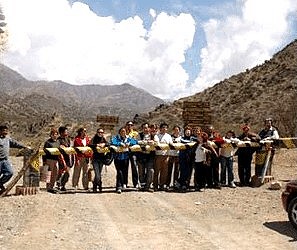
On April 14, a group of Argen­tine gov­ern­ment offi­cials and employ­ees of Bar­rick Gold Cor­po­ra­tion, car­ried out a vio­lent assault against Women at the Famati­na min­ing camp in the province of La Rio­ja, where a road block­ade has stood for the past two years.

When the offi­cials arrived, a group of Women from the “Self-Orga­nized (Auto­con­vo­ca­dos) Neigh­bors of Famati­na for Life,” gath­ered at site and low­ered a met­al bar they installed to deny the company’s pas­sage to the mine site.

The offi­cials and Bar­rick employ­ees then began to ram their trucks against the bar­ri­er, but “with­out any suc­cess,” explains an April 14 media alert.

The offi­cials then exit­ed their vehi­cles and car­ried out a vio­lent assault against a hand­ful of women, who had peace­ful­ly sat down in front the vehi­cles – first shov­ing them, and then kick­ing and strik­ing the women with their fists.

“When the women did not budge,” the Bar­rick and gov­ern­ment offi­cials decid­ed to leave the min­ing camp, and set out to the Famati­na police sta­tion mas­querad­ing as vic­tims with a plan to file charges against the Women.

How­ev­er, “upon enter­ing the police sta­tion, the aggres­sors encoun­tered Famati­na res­i­dents who had been alert­ed to what was tak­ing place,” the alert states. “The Bar­rick and gov­ern­ment offi­cials then con­tin­ued to ver­bal­ly assault the com­mu­ni­ty mem­bers in an arro­gant man­ner, self-assured of their impuni­ty.”

“This atti­tude did not fall well upon the com­mu­ni­ty: Prac­ti­cal­ly the entire pop­u­la­tion of Famati­na imme­di­ate­ly turned out in force, and has gath­ered to sur­round the police sta­tion. As of this moment, the Bar­rick and min­ing offi­cials are now ‘trapped’ inside, afraid to exit the police sta­tion.”

Police forces from the city of Chilecito have since been con­tact­ed to sup­port the Famati­na police and the agres­sors.

Fur­ther updates (in Span­ish) will be post­ed at http://www.noalamina.org/