Burma: Bomb Destroys Mining Company Truck

March 13th, 2015

March 13th, 2015

Min­ing Com­pa­ny Trucks Being Blocked by Vil­lagers in Namhkam Town­ship on 26 Feb­ru­ary

A bomb blew up a truck loaded with sil­i­con min­er­al stone in Aung Myit­tar Ward, Namhkam Town­ship, North­ern Shan State at 7.20pm on 10 March accord­ing to Sai Ye, a local res­i­dent.

He said: “When the bomb explod­ed under the engine at the front of the truck some parts of the engine were destroyed but no one was injured in the acci­dent. The truck dri­ver is Sai Pe from Aung Myit­tar Ward and the explo­sion hap­pened in front of his home. The explo­sion was very big, it caused the ground to shake. The whole town was silent after the explo­sion and there was almost no one on the street.”


The destroyed truck belongs to the Ngwe Kabar Kyaw min­ing com­pa­ny and is a Chi­nese made six-wheel truck accord­ing to Sai Ye.

On 26 Feb­ru­ary about 300 local res­i­dents blocked Ngwe Kabar Kyaw min­ing com­pa­ny trucks loaded with min­er­als in Namhkam Town­ship for one and a half hours. The res­i­dents stopped the trucks because they are angry that the min­ing com­pa­ny had nev­er dis­cussed with local res­i­dents about car­ry­ing out fur­ther exca­va­tions for min­er­als at Nam­seri Stream.

Pre­vi­ous­ly the com­pa­ny had been min­ing min­er­al stone from the Nam­seri Stream, but they stopped their activ­i­ties after com­plaints from the vil­lagers and promised to con­sult them before resum­ing exca­va­tions.

Recent­ly, the com­pa­ny angered the vil­lagers by resum­ing exca­va­tions with­out con­sult­ing them, which led to them blockad­ing the trucks.

The exca­va­tions already car­ried out at Nam­seri Stream by the com­pa­ny have caused the dete­ri­o­ra­tion of near­by farm­lands, which have not yet been addressed accord­ing to Sai Hseng Moon, a farmer leader.

He said: “The dete­ri­o­ra­tion of the farm­lands along the Nam­seri Stream due to the min­ing project, in Phan-Khar Vil­lage, have not been repaired yet [for a long time] and now they are going to exca­vate stone at Hway-Oh Vil­lage after get­ting per­mis­sion from the Naypyi­daw Gov­ern­ment, which they nev­er should have giv­en.”

The truck that was blown up was one of the trucks block­ad­ed by the vil­lagers on 26 Feb­ru­ary, but no one yet knows what group set off the bomb said a source close to the police.

The source said: “The bomb was made of min­ing explo­sives and was the same type of bomb that explod­ed in the house of U Aung Win last year in Namkhan Town­ship. U Aung Win is a town­ship sup­port­ing group mem­ber and exec­u­tive com­mit­tee mem­ber of the Shan Nation­al League for Democ­ra­cy (SNLD) par­ty of Namhkam Town.

Accord­ing to local peo­ple there have been sev­er­al bombs explod­ing in Namhkam Town, but no one has ever been arrest­ed over the explo­sions.

Trans­lat­ed by Aung Myat Soe Eng­lish ver­sion writ­ten by Mark Inkey for BNI Bur­ma News Inter­na­tion­al

Brazil’s Landless Movement Destroys GMO Eucaliptus Seedlings, Occupies GMO Meeting

16104292273_91103c33f8_b

March 5th, 2015

16104292273_91103c33f8_b

March 5th, 2015

This morn­ing about 300 peas­ants orga­nized by La Via Campesina occu­pied the meet­ing of the Brazil Nation­al Biosafe­ty Tech­ni­cal Com­mis­sion (CTNBio), which was con­ven­ing to dis­cuss the release of three new vari­eties of trans­genic plants in Brazil includ­ing genet­i­cal­ly engi­neered euca­lyp­tus trees. The meet­ing was inter­rupt­ed and deci­sions were post­poned. Ear­li­er in the morn­ing on Thurs­day, anoth­er 1,000 women of the Brazil Land­less Work­ers’ Move­ment (MST) from the states of São Paulo, Rio de Janeiro and Minas Gerais occu­pied the oper­a­tions of Futura­Gene Tech­nol­o­gy Brazil Ltda, a sub­sidiary of Suzano tim­ber cor­po­ra­tion, in the munic­i­pal­i­ty of Itape­tininga, in São Paulo.

16722801571_96f17a6a7c_bThe site occu­pied by women of the MST was in Itape­tininga, where trans­genic euca­lyp­tus, known as H421 is being devel­oped and test­ed. Dur­ing the protest, the MST destroyed the seedlings of trans­genic euca­lyp­tus trees there. The action denounced the evils that a pos­si­ble release of trans­genic euca­lyp­tus, which was to be vot­ed on CTNBio today, could cause to the envi­ron­ment. Accord­ing to Atil­iana Brunet­to, a mem­ber of the Nation­al MST, the his­toric deci­sion of the Com­mis­sion must respect the Brazil­ian leg­is­la­tion and the Bio­di­ver­si­ty Con­ven­tion to which Brazil is a sig­na­to­ry. Destroys Eucalip­tus Seedlings The vast major­i­ty of its mem­bers are placed in favor of busi­ness inter­ests of the large multi­na­tion­als at the expense of envi­ron­men­tal, social and pub­lic health con­se­quences,” he says. For Brunet­to all approved GMO means more pes­ti­cides in agri­cul­ture, since the pack­ets always approved for mar­ket­ing include a type of agri­cul­tur­al poi­son.

16104095753_c57c053ece_b

“Brazil is the largest con­sumer of world’s pes­ti­cides since 2009. A recent sur­vey by the Uni­ver­si­ty of Brasil­ia found that, in the most opti­mistic case, 30% of the food con­sumed by Brazil­ians are unsafe to eat only con­t­a­m­i­na­tion by pes­ti­cides account” said Brunet­to.

In the case of euca­lyp­tus, the appli­ca­tion of trans­genic release was made by pulp and paper com­pa­ny Suzano.

“If approved by the com­mit­tee these GE faster grow­ing euca­lyp­tus will mature in only 4 years, as opposed to 6–7 years present­ly in non-GMO euca­lyp­tus. The water con­sump­tion will increase 25 to 30 liters / day per euca­lyp­tus plant­ed that it cur­rent­ly uses. We are again call­ing atten­tion to the dan­ger of green deserts,” said Catiane Cinel­li, a mem­ber of the Rur­al Women’s Move­ment.

16516963687_0916bffcb1_b 16516785567_7d2848cd23_b

More at Stop GE Trees

Algeria Fights Back: 40 Police Injured in Anti-Fracking Protests

photo courtesy Imad Mesdoua / Twitter

photo courtesy Imad Mesdoua / Twitter

March 2nd, 2015

from Earth First! Newswire

New devel­op­ments in a sto­ry we’ve been fol­low­ing for some time now.

Tens of thou­sands of peo­ple in Alge­ria have joined a mass move­ment to halt frack­ing. These protests have involved peace­ful block­ades and march­es with broad swaths of soci­ety.

The mass move­ment has been met by state repres­sion, as we report­ed last week. But instead of deflat­ing the move­ment, state repres­sion inflamed the anger on the streets. On Sun­day, riots erupt­ed in the dis­trict of In-Salah in which 40 offi­cers were injured, and the police head­quar­ters, the chief’s house, some police bar­racks, and a police truck were all set ablaze.

Here’s AFP with more:

Forty police offi­cers were wound­ed Sun­day in clash­es with demon­stra­tors opposed to shale gas explo­ration in the Alger­ian Sahara, the Inte­ri­or Min­istry announced.

“The town of In-Salah saw inci­dents involv­ing pub­lic order, ini­ti­at­ed by a group of young peo­ple protest­ing against shale gas oper­a­tions in the region,” the min­istry said in a state­ment.

It said the clash­es “caused injuries to 40 police offi­cers, includ­ing two who were seri­ous­ly injured.”

Pro­test­ers set fire to the head­quar­ters of In-Salah dis­trict and the res­i­dence of the dis­trict chief, as well as part of a police dor­mi­to­ry and a police truck.

The secu­ri­ty forces man­aged to “take con­trol of the sit­u­a­tion and bring calm to the city,” the state­ment said.

Increased protests

Anti-shale gas demon­stra­tions have increased in the cities of the Alger­ian Sahara since late Decem­ber, when Alger­ian oil com­pa­ny Sonatra­ch announced it had suc­cess­ful­ly com­plet­ed its first pilot drilling in the In-Salah region.

Sonatra­ch announced in ear­ly Feb­ru­ary that its explorato­ry drilling for shale gas using hydraulic frac­tur­ing would con­tin­ue despite mount­ing hos­til­i­ty among peo­ple liv­ing near­by.

Con­tin­u­ous demon­stra­tions were held for two months at In-Salah, the town clos­est to the drilling sites.

Alge­ria has seen mas­sive invest­ment in shale gas to com­pen­sate for declin­ing oil rev­enues, but faces oppo­si­tion from peo­ple liv­ing near the fields, con­cerned about the con­se­quences on the envi­ron­ment.

Accord­ing to inter­na­tion­al stud­ies, Alge­ria has the fourth biggest recov­er­able reserves of shale gas glob­al­ly, after the Unit­ed States, Chi­na and Argenti­na.

Ten Arrested at Seneca Lake Fathers and Grandfathers Blockade

photo from popular resistance

Feb­ru­ary 7th, 2015

Nine men and one woman were arrest­ed Wednes­day morn­ing and charged with tres­pass, part of the ongo­ing protest at the Crest­wood Mid­stream facil­i­ty north of Watkins Glen.

Hous­ton-based Crest­wood wants to store up to 88 mil­lions gal­lons of liq­uid propane and butane in under­ground salt cav­erns near Seneca Lake. The com­pa­ny is await­ing state Depart­ment of Envi­ron­men­tal Con­ser­va­tion approval.

Pro­test­ers also have cit­ed the Fed­er­al Ener­gy Reg­u­la­to­ry Commission’s deci­sion to allow Crest­wood to expand nat­ur­al gas stor­age at its 576-acre prop­er­ty as a rea­son for pick­et­ing.

The group appre­hend­ed Wednes­day was par­tic­i­pat­ing in what they termed a “Fathers and Grand­fa­thers Block­ade” at the site.

About 200 peo­ple have been arrest­ed since protests began in Sep­tem­ber.

Two of those charged Wednes­day, John Den­nis ofLans­ing and Daryl Ander­son of Hec­tor, are teach­ers. Both said they were protest­ing in mem­o­ry of the deaths of their respec­tive sons two years ago.

Den­nis and Ander­son met in a local bereave­ment group and drove to the protest togeth­er.

Week of Action Against Spectra

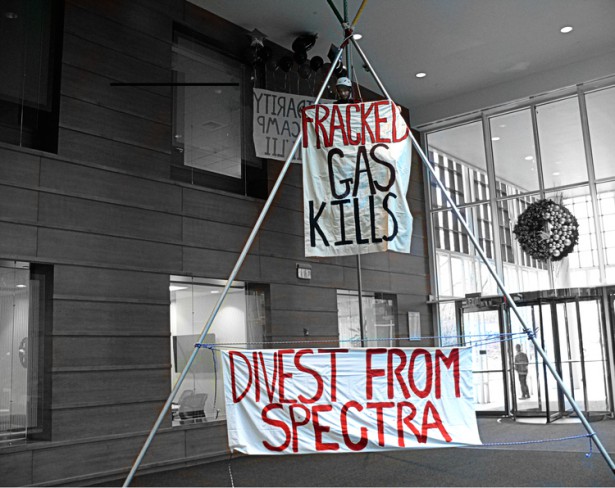
Activists shut down Spec­tra Energy’s Waltham office after deploy­ing

a 24-foot tall tri­pod.

Feb­ru­ary 4th, 2015

While a gag­gle of con­fused police tried to unseat Shane Capra from his perch atop a 24-foot tri­pod inside Spec­tra Energy’s Waltham, Mass., office on the morn­ing of Decem­ber 17, and oth­ers tried to snare a bal­loon ban­ner float­ing near the office ceil­ing — all while accom­pa­nied by a brass band pro­vid­ing the rous­ing sound­track — one Spec­tra employ­ee was over­heard mut­ter­ing to anoth­er, “This is extreme­ly dis­rup­tive.”

Of course, that was the point.

The action in Waltham was part of the Week of Respect and Resis­tance, a series of demon­stra­tions, sit-ins, and lock-downs aimed at Spec­tra Ener­gy, their investors, and the politi­cians who sup­port them in their plan to expand a fracked gas pipeline — the so-called Algo­nquin, a name which many activists describe as insult­ing to the indige­nous speak­ers of the Algo­nquian lan­guage — through New Eng­land. With FERC poised to present its final Envi­ron­men­tal Impact State­ment any day, and with New Eng­land politi­cians and Big Greens voic­ing their unwa­ver­ing sup­port for their favorite “bridge fuel,” cli­mate jus­tice orga­niz­ers and pipeline fight­ers in New York, Con­necti­cut, Mass­a­chu­setts, and Rhode Island knew they had to esca­late their already long-run­ning cam­paign against Spec­tra.

For Nick Katke­vitch of Fight­ing Against Nat­ur­al Gas, or FANG, this sense of urgency was fueled by a recent trip to Fer­gu­son, MO, where he saw first-hand the pow­er of the con­fronta­tion­al direct action tac­tics that had yet to be seen in the cam­paign against Spec­tra. “A lot of times in the cli­mate move­ment, espe­cial­ly in New Eng­land, there’s a ten­den­cy to fol­low the polit­i­cal process, to not dis­turb things too quick­ly, to take it slow,” Katke­vitch said. “When I went to Fer­gu­son, it was a total learn­ing expe­ri­ence. I learned to be tena­cious, to be fear­less, and to just say it like it is. I learned the true mean­ing of speak­ing truth to pow­er.”

Dur­ing the week of Decem­ber 13–19, activists brought that tena­cious­ness and fear­less­ness to a vari­ety tar­gets, from Dan­bury, Conn., where Spec­tra plans to expand the already-exist­ing gas pipeline to accom­mo­date the high­er vol­ume of gas flow­ing from the Mar­cel­lus Shale, to the gas com­pres­sor sta­tion in Cromwell, Conn., to the offices of some of the most pow­er­ful indi­vid­u­als and enti­ties involved in the so-called Algo­nquin Incre­men­tal Mar­ket project — includ­ing Spec­tra them­selves.

Sher­rie Andre of FANG, who gave the week of action its name, stress­es that while many of the actions car­ried out against Spec­tra and their finan­cial and polit­i­cal sup­port­ers involved acts of civ­il dis­obe­di­ence, “We need to respect those who have been orga­niz­ing before us and have their own way of doing things. We need to show that we know how to pay homage to dif­fer­ent types of non­vi­o­lent direct action.” She added, “I recent­ly bumped into a friend who’s become inter­est­ed in what we’re doing, but said, ‘I can’t climb a tri­pod.’ It’s real­ly dis­heart­en­ing if that’s all they’re see­ing because there are so many oth­er play­ers and parts involved that make that hap­pen.”

For Noga Hey­man of Flood Boston, the suc­cess of the cam­paign against Spec­tra — and the broad­er cli­mate jus­tice move­ment — hinges on mak­ing activism as acces­si­ble as pos­si­ble for a wide vari­ety of peo­ple. “Maybe lock-downs don’t always draw peo­ple in, but giv­ing some­one a zine to read, or get­ting a song stuck in their head, might engage them more.”

A bridge to nowhere

This empha­sis on engage­ment and cre­ativ­i­ty was cru­cial to one of the goals for the week: to not only dis­rupt busi­ness as usu­al at the loca­tions of the protests, but to dis­rupt the nar­ra­tive about fracked gas per­pet­u­at­ed by the ener­gy indus­try, fos­sil fuel-friend­ly politi­cians, and main­stream envi­ron­men­tal groups alike.

In addi­tion to block­ing the dri­ve­way to the Cromwell gas com­pres­sor sta­tion, Dan Fis­ch­er explained, he and fel­low Cap­i­tal­ism vs the Cli­mate mem­ber Vic Lan­cia “were also try­ing to block the for­ma­tion of mis­lead­ing assump­tions. Peo­ple dri­ve by the com­pres­sor sta­tion every day, and either don’t know about it or false­ly assume it’s part of the clean ener­gy process. So we felt it was impor­tant to take direct action at the point of assump­tion and say this is a dirty fuel, and there are plen­ty of clean, renew­able alter­na­tives that make frack­ing unnec­es­sary.” To help make this point, Fis­ch­er and Lan­cia locked them­selves to a mas­sive wood­en “bridge to nowhere” built in the days lead­ing up to the action.

Mem­bers of Flood Boston and oth­er groups fight­ing pipeline expan­sion in Mass­a­chu­setts echoed this sen­ti­ment at their action at the Boston office of the State Street Cor­po­ra­tion, one of Spectra’s biggest finan­cial back­ers, lat­er in the week. For Hey­man, the action was an oppor­tu­ni­ty to use art, the­ater and music to “dis­man­tle the myths sur­round­ing nat­ur­al gas” and advo­cate for com­mu­ni­ty-con­trolled renew­ables. To this end, activists con­struct­ed a giant pair of lips “spew­ing myths” about fracked gas which pro­test­ers chal­lenged with facts about the health and safe­ty impacts of the pipeline project.

“The peo­ple of West Rox­bury are trau­ma­tized,” said David Lud­low, a 72 year-old orga­niz­er in the Boston area, cit­ing the 2010 explo­sion of a gas pipeline in San Bruno, Calif., which killed eight peo­ple and which looms large in the minds of local res­i­dents brac­ing them­selves for the con­struc­tion of the West Rox­bury Lat­er­al pipeline and a new, high-pres­sure Meter­ing and Reg­u­lat­ing Sta­tion, both of which would be built dan­ger­ous­ly close to an active quar­ry and res­i­den­tial areas.

Activists and com­mu­ni­ty mem­bers expressed these con­cerns in songs, chants and can­tas­to­rias that rang out in State Street’s office and con­tin­ued to Boston’s South Sta­tion after pro­test­ers deliv­ered a let­ter urg­ing State Street to divest from Spec­tra Ener­gy and oth­er sim­i­lar­ly destruc­tive cor­po­ra­tions, includ­ing Kinder Mor­gan, whose gas pipeline projects also threat­en Mass­a­chu­setts com­mu­ni­ties and ecosys­tems.

In Rhode Island, activists drew atten­tion to the hypocrisy of the politi­cians and gov­ern­ment agen­cies sup­port­ing Spectra’s plan, with Bur­ril­lville Against Spec­tra Expan­sion hold­ing a protest at the Rhode Island Depart­ment of Envi­ron­men­tal Man­age­ment and FANG orga­niz­ing a sit-in at Sen. Shel­don Whitehouse’s office. Ten pro­test­ers joined Uni­ver­si­ty of Rhode Island physics pro­fes­sor Peter Nightin­gale, a mem­ber of Fos­sil Free Rhode Island, in the sit-in, and cheered for Nightin­gale as he was even­tu­al­ly arrest­ed for refus­ing to leave the office. White­house, who Nightin­gale calls a “wolf in sheep’s cloth­ing,” has long been a focal point in the Rhode Island fight against Spectra’s pipeline projects: in August, mem­bers of Bur­ril­lville Against Spec­tra Expan­sion held a sit-in at Whitehouse’s office which led to a meet­ing with the sen­a­tor.

Despite Bur­ril­lville res­i­dents express­ing their con­cerns about the health and safe­ty impacts of Spectra’s plans to expand the gas com­pres­sor sta­tion in their town, how­ev­er, Whitehouse’s sup­port for the pipeline expan­sion has not changed; in light of Whitehouse’s cli­mate-friend­ly rhetoric from the Sen­ate floor, Nightin­gale finds this inex­cus­able. “Com­pared to any of the oth­er cli­mate zom­bies, [White­house] may be a ‘cli­mate cham­pi­on,’” Nightin­gale explained. “But at the same time he sup­ports this plan out of Wash­ing­ton and Wall Street that wants to push nat­ur­al gas and gets in the way of devel­op­ing the green pow­er sec­tor.”

Blocka­dia and beyond

The actions dur­ing the Week of Respect and Resis­tance gar­nered sig­nif­i­cant local media atten­tion and, some spec­u­late, may have played a role in FERC delay­ing the release of their final Envi­ron­men­tal Impact State­ment on the AIM project — not to men­tion Spectra’s stock hit­ting a 52-week low. Still, orga­niz­ers know that the fight against Spec­tra — and the fight for cli­mate jus­tice — is far from over.

“Before this week, the fight against Spec­tra had been most­ly polite and play­ing by the rules,” Fis­ch­er said. “We’re still going to keep using the old tac­tics, but this was the week where peo­ple in four dif­fer­ent states said that they’ve had enough with Spectra’s mis­lead­ing claims and with the white­wash advanced by the gov­ern­ment and busi­ness-friend­ly envi­ron­men­tal groups. This is the week where we entered a more com­mit­ted resis­tance, and hope­ful­ly a more suc­cess­ful resis­tance.”

As many of those involved in this week of action think about what that resis­tance will look like, one word seems to be on many of their minds: “Blocka­dia,” a name giv­en to the grow­ing net­work of groups dis­rupt­ing the extrac­tion and trans­porta­tion of fos­sil fuels with elab­o­rate and long­stand­ing protest camps. “We see Blocka­dia as an impor­tant way of achiev­ing vic­to­ry against not only this project, but extreme ener­gy in gen­er­al,” Fis­ch­er explained. “Spec­tra Ener­gy can keep its eyes peeled for the con­struc­tion of Blocka­dia in more and more places.”

How­ev­er, even as the resis­tance to Spec­tra and the fos­sil fuel ener­gy indus­try mounts, many orga­niz­ers also rec­og­nize that there is still sig­nif­i­cant work that needs to be done with­in the envi­ron­men­tal move­ment itself, a fact that was high­light­ed by the Week of Respect and Resis­tance coin­cid­ing with an esca­la­tion of the Black Lives Mat­ter move­ment fol­low­ing the non-indict­ment of the police offi­cers respon­si­ble for the chok­ing death of Eric Gar­ner. Andre explained that as FANG shared Black Lives Mat­ter memes and arti­cles on their social media plat­forms, “there was a lot of back­lash from envi­ron­men­tal orga­niz­ers who fol­low the FANG page and who want­ed us just to focus on pipelines. But life is not just about pipelines. Our strug­gles are not siloed.” Indeed, FANG mem­bers under­scored this point by block­ing a com­muter train car­ry­ing pas­sen­gers to a New Eng­land Patri­ots game for four and half min­utes ear­li­er this month to sig­ni­fy the four and a half hours Mike Brown’s dead body remained in the streets of Fer­gu­son after he was shot by offi­cer Dar­ren Wil­son.

For Andre and many of the oth­er orga­niz­ers involved in the Week of Respect and Resis­tance, the fight against Spec­tra has to be seen as part of a larg­er fight for jus­tice that begins with rec­og­niz­ing that the land mem­bers of the pre­dom­i­nant­ly white envi­ron­men­tal move­ment live on and strug­gle to pro­tect “is not theirs. It was stolen. Envi­ron­men­tal­ists need to under­stand the his­to­ry of col­o­niza­tion and what it’s done to indige­nous peo­ple before they can even begin to talk about pipelines. Pipelines are just a new form of col­o­niza­tion. They’re a new trau­ma.”

Lud­low, who stress­es the impli­ca­tions of the cli­mate cri­sis for indige­nous com­mu­ni­ties in the Unit­ed States and around the world, also empha­sizes the need to rec­og­nize the con­nec­tions between the cli­mate jus­tice move­ment and move­ments fight­ing mil­i­tarism and eco­nom­ic injus­tice. “The U.S. makes more wars to pro­tect its resources and gob­ble up more of the world’s exist­ing resources. We’re not going to stop this by being nice. We’re not going to stop it by just talk­ing to our local areas about safe­ty. We need to make alliances to build a broad-based move­ment.”

For all the work that needs to be done to stop Spec­tra and com­bat the oppres­sive ten­den­cies with­in the envi­ron­men­tal move­ment, the activists involved in the Week of Respect and Resis­tance all agree that the week of action marked a turn­ing point in their cam­paign against Spec­tra. As Katke­vitch reflect­ed on the week’s impacts, his mind turns to one of the oth­er great pas­sions of his life besides orga­niz­ing: bas­ket­ball.

“When the team you’re play­ing is much bet­ter, they don’t respect you and they think it’s going to be an easy game,” he said. “But if you start play­ing aggres­sive­ly and assertive­ly and real­ly con­fi­dent­ly, at first they’ll think it’s kin­da fun­ny, like, ‘look at these kids try­ing so hard.’ But there’s a cer­tain moment in the game when all of a sud­den the ener­gy switch­es and the oppo­nent is actu­al­ly afraid, because they’re rec­og­niz­ing that your con­fi­dence and your aggres­sion is actu­al­ly com­ing from a real place — that you could actu­al­ly win. In Spectra’s office, it def­i­nite­ly felt like one of those moments of turn­ing the ener­gy. Now they have to respect us.”

Peru’s Indigenous People Blockade Oil Company on River Tigre

Hun­dreds of indige­nous peo­ple deep in the Peru­vian Ama­zon are block­ing a major Ama­zon trib­u­tary fol­low­ing what they say is the government’s fail­ure to address a social and envi­ron­men­tal cri­sis stem­ming from oil oper­a­tions.

Kich­wa men, women and chil­dren from numer­ous com­mu­ni­ties have been protest­ing along the Riv­er Tigre for almost a month, bar­ring the riv­er with cables and stop­ping oil com­pa­ny boats from pass­ing.

Oil com­pa­nies have oper­at­ed in the region for over 40 years, and have been linked by local peo­ple to pol­lu­tion that has led the gov­ern­ment to declare “envi­ron­men­tal emer­gen­cies” in the Tigre and oth­er riv­er basins.

“The Tigre is the most con­t­a­m­i­nat­ed, but the gov­ern­ment has done noth­ing seri­ous,” says Jose Fachin, a Kich­wa leader. “This is a protest by the whole Kich­wa peo­ple. They’re ready to die for it. The price of oil is low, but the pain caused is extreme­ly high.”

The oil con­ces­sion where the protest is tak­ing place, Lot 1‑AB, is Peru’s most pro­duc­tive, but the con­tract, held by Plus­petrol, expires in August. The gov­ern­ment has com­mit­ted to reli­cens­ing it and con­sult­ing the indige­nous com­mu­ni­ties involved, but lead­ers say the con­t­a­m­i­na­tion and oth­er issues must be addressed first.

“What we want is reme­di­a­tion, com­pen­sa­tion, and to be con­sult­ed, accord­ing to inter­na­tion­al norms, about the reli­cens­ing,” says Fachin. “We won’t per­mit anoth­er 30 years of work oth­er­wise.”

The Kich­was are protest­ing in a com­mu­ni­ty called Nue­vo Rema­nente. The community’s head, Ronal Chu­je San­di, told the Guardian two years of dia­logue with the gov­ern­ment “hasn’t achieved any­thing” and now they are demand­ing 100 mil­lion Peru­vian nue­vo soles, from Plus­petrol, for “com­pen­sa­tion after almost 45 years of con­t­a­m­i­na­tion.”

“The state declared an envi­ron­men­tal emer­gency, but hasn’t done any­thing,” says Guiller­mo San­di Tuituy, from indige­nous fed­er­a­tion Feconat. “It must find a solu­tion to this prob­lem if it wants to reli­cense the con­ces­sion.”

Hun­dreds of oth­er indige­nous peo­ple are also protest­ing in Lot 1‑AB along an adja­cent riv­er, the Cor­ri­entes. Accord­ing to Puina­mudt, a col­lec­tive of indige­nous fed­er­a­tions, 400 Achuar from a com­mu­ni­ty called Pam­pa Her­mosa have protest­ed for over a week, paralysing oper­a­tions at 19 wells and shut­ting down one field.

Achuar leader Car­los San­di, pres­i­dent of indige­nous fed­er­a­tion Fecona­co, says they will not allow Lot 1‑AB to be reli­censed if their demands are not met. Pluspetrol’s part­ner in Lot 1‑AB, which account­ed for almost 25% of Peru­vian oil pro­duc­tion in 2013, is the Chi­na Nation­al Petro­le­um Cor­po­ra­tion.

Raul Sosa Rodriguez, from Fecona­co, told the Guardian that Pam­pa Her­mosa is demand­ing com­pen­sa­tion for land use, ful­fil­ment of an agree­ment with Plus­petrol, and the oppor­tu­ni­ty to work for sub-con­trac­tors, in addi­tion to exist­ing demands such as clean-up.

“This is a lever to pro­pel the fight for all the indige­nous peo­ples in the region,” he says. “If these demands aren’t met, they’ll close the con­ces­sion.”

Anthro­pol­o­gist Alber­to Chirif says the gov­ern­ment is deter­mined to reli­cense Lot 1‑AB.

“What the indige­nous peo­ple are ask­ing for isn’t dif­fi­cult to sat­is­fy,” he says. “These are basic rights: ter­ri­to­ry, health, edu­ca­tion, the clean-up of impact­ed areas, and con­trol so there are no new envi­ron­men­tal dis­as­ters.”

Peru’s coun­cil of min­is­ters (PCM) issued a state­ment say­ing it has sent a com­mis­sion to the region and urg­ing the Kich­was and Achuars to sus­pend their protests.

Plus­petrol took over Lot 1‑AB from Occi­den­tal in 2000. It did not respond to requests for com­ment.


Activists Disrupt Hearing over Fast Track for Trans-Pacific Partnership

Froman

Jan­u­ary 27th, 2015

Froman

Jan­u­ary 27th, 2015

U.S. Trade Rep­re­sen­ta­tive Michael Fro­man was greet­ed with protest at Tuesday’s Sen­ate and House Hear­ings on Capi­tol Hill, as peo­ple raised con­cerns about the President’s trade agen­da and “Fast Track” Trade Pro­mo­tion Author­i­ty. Activists with signs and ban­ners chant­i­ng “No TPP!” and “No Fast Track!” were escort­ed from the Sen­ate Finance Com­mit­tee hear­ing room short­ly after the U.S. Trade Rep­re­sen­ta­tive took the micro­phone.

The leg­is­la­tion, which Oba­ma request­ed from both par­ties dur­ing last week’s State of the Union address, would lim­it con­gres­sion­al over­sight of the Administration’s free trade agree­ments and is wide­ly opposed by hun­dreds of envi­ron­men­tal, labor, pub­lic health, food safe­ty, and faith groups nation­wide.

Pro­test­ers wore shirts read­ing “No Fast Track” and held signs stat­ing “Fro­man lies,” a response to the Ambassador’s recent claims that Fast Track is the “best tool to ensure that Con­gress and the pub­lic have ample time to give our trade agree­ments the pub­lic scruti­ny and debate they deserve.” Past ver­sions of Fast Track leg­is­la­tion, includ­ing one intro­duced with lit­tle sup­port last Jan­u­ary, lim­its the amount of time Con­gress has to con­sid­er agree­ments and sus­pends their abil­i­ty to make amend­ments to the texts.

Fast-Track-disruption-300x229

Dr. Mar­garet Flow­ers, co-direc­tor of PopularResistance.org, held a sign that said “Trad­ing away our future” to high­light the dev­as­tat­ing impact that the Trans-Pacif­ic Part­ner­ship will have on many issues that peo­ple care about such as food safe­ty, the cost of med­i­cines, Inter­net free­dom, envi­ron­men­tal pro­tec­tion, finan­cial reg­u­la­tion and democ­ra­cy.

Richard Ochs, a retired steel­work­er from Bal­ti­more, and Kevin Zeese, Esq also from PopularResistance.org, held a ban­ner that read “TPP Fast Track: Job Killing Act,” which sought to draw atten­tion to the dev­as­tat­ing impact past free trade agree­ments have had on U.S. jobs. While Obama’s State of the Union claimed that the author­i­ty would “pro­tect Amer­i­can work­ers,” unions includ­ing the AFL-CIO, Team­sters, CWA, and more have instead spo­ken out against it.

In fact, there is broad oppo­si­tion to fast track­ing the TPP across the polit­i­cal spec­trum and across issues. “Fast Track is far from a ‘done deal’ in the Unit­ed States and for­eign nego­tia­tors ought to be cau­tious before accept­ing pro­vi­sions that will harm their pop­u­la­tion.” said Kevin Zeese.

from Pop­u­lar Resis­tance

Sapotaweyak Cree Nation Sets Up Blockades

sapotaweyak-cree-nation

Jan­u­ary 26th, 2015

sapotaweyak-cree-nation

Jan­u­ary 26th, 2015

Mem­bers of a west­ern Man­i­to­ba abo­rig­i­nal com­mu­ni­ty are peace­ful­ly protest­ing work on the Bipole III hydro­elec­tric line, a trans­mis­sion project that requires the con­struc­tion of a trans­mis­sion line, two new con­vert­er sta­tions and two ground elec­trodes for those sta­tions.

That con­struc­tion will involve clear-cut­ting trees near Sapotaweyak Cree Nation, locat­ed north of Swan Riv­er in cen­tral Man­i­to­ba.

On Sat­ur­day, mem­bers of the com­mu­ni­ty set up two block­ades along High­way 10 to pre­vent access for work­ers who are sched­uled to cut down trees, and they ignit­ed a sacred fire in the clear-cut­ting path.

A judge denied the First Nation’s request for an injunc­tion to stop con­struc­tion in an area known to the com­mu­ni­ty as N4, until the province prop­er­ly con­sult­ed with the com­mu­ni­ty in Jan­u­ary.

The area includes Sapotaweyak Cree Nation’s ances­tral lands and tra­di­tion­al ter­ri­to­ry, which includes bur­ial and spir­i­tu­al sites sacred to the com­mu­ni­ty.

Chief Nel­son Genaille says RCMP spoke briefly with him and allowed the peace­ful protest to con­tin­ue.

“Our peo­ple are now stand­ing up for their rights and inter­ests,” Genaille said.

“I have exhaust­ed the diplo­mat­ic and legal routes to voice our con­cerns against this project. And regret­tably, the respon­si­ble Man­i­to­ba min­is­ters and Man­i­to­ba Hydro big­wigs did not take our con­cerns seri­ous­ly.”

Noname

More news 28/1/15

Florida Earth First!ers Storm Developer’s Offices and Lock Down

inside-kolter-1-4

Jan­u­ary 26th, 2015

inside-kolter-1-4

Jan­u­ary 26th, 2015

Over 20 pro­tes­tors rushed the offices of Kolter Group’s “Kolter Urban” branch build­ing with signs, ban­ners, air-horns and oth­er noise­mak­ers, demand­ing that the per­mits for Kolter’s devel­op­ment of the Briger For­est be revoked. Amidst the chaos, two eco-war­riors entered the lob­by and locked down throat-to-throat, dis­rupt­ing busi­ness as usu­al for two and a half hours.

This action occurred because Kolter plans to build 360 hous­es and town­homes in the Briger For­est, a 681-acre tract of land in Palm Beach Gar­dens, Flori­da. They are work­ing off deeply flawed per­mits and have cleared a mas­sive access road which was nev­er approved by South Flori­da Water Man­age­ment Dis­trict. Anoth­er con­cern is the recent relo­ca­tion of the area’s gopher tor­tois­es and the destruc­tion of the tortoise’s bur­rows, which pro­vide habi­tat for sev­er­al oth­er species, includ­ing the endan­gered East­ern indi­go snake.

0

“There’s so lit­tle of the wild left in this area, it just doesn’t make sense for them to be cut­ting this,” said Juan Ché­vere, one of the two who locked down. “We don’t need more devel­op­ment, more urban sprawl. For what? So Kolter can make a buck and Scripps can build ani­mal test­ing labs? No thanks. The for­est is sur­round­ed by schools, it should be treat­ed as an edu­ca­tion­al resource.”

When the extrac­tion team arrived, it was request­ed that a medic be allowed to observe–this request was denied. It was then request­ed that the extrac­tion team wait until an EMT arrive–this too was denied.

Before the cut­ting began, the sup­port team was forced to leave. Short­ly there­after, one of the peo­ple locked down was tak­en to the hos­pi­tal for injuries to the knee report­ed­ly inflict­ed by a police offi­cer. (At the time of this writ­ing, no fur­ther details are known).

inside

Ever­glades Earth First! has been fight­ing the devel­op­ment of the Briger For­est since it was first pro­posed over ten years ago. In Novem­ber, two mem­bers of Ever­glades Earth First! locked them­selves to a dis­abled van to pre­vent entrance to the con­struc­tion site. In 2011, there was a six-week-long treesit inside the for­est.

http://player.vimeo.com/video/117317937

Kenya police fire tear gas on playground protest

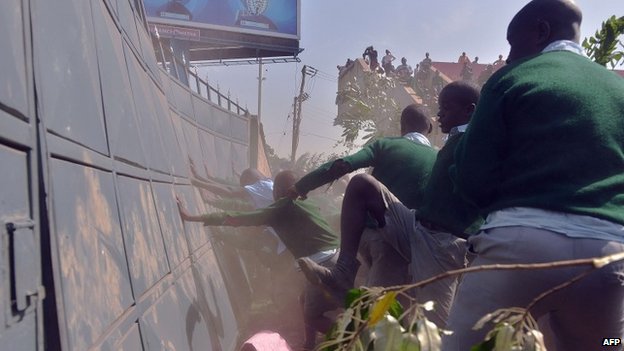
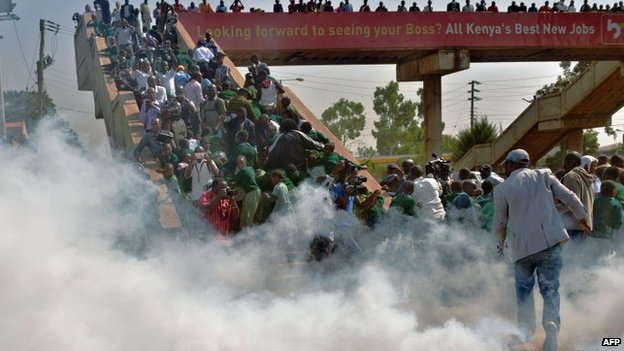
Kenyan police have fired tear gas at pupils of a big school in Nairo­bi who were protest­ing about the sale of their play­ground to a pri­vate devel­op­er.

The pupils had returned to the Lang’a­ta school after a two-week teach­ers strike to find the play area fenced off.

Kenyan police have fired tear gas at pupils of a big school in Nairo­bi who were protest­ing about the sale of their play­ground to a pri­vate devel­op­er.

The pupils had returned to the Lang’a­ta school after a two-week teach­ers strike to find the play area fenced off.

The school has about 1,000 chil­dren between the ages of three and 14 and is run by Nairo­bi city coun­cil.

Sev­er­al chil­dren were hurt in the police action to dis­perse the protest and have been tak­en to hos­pi­tal.

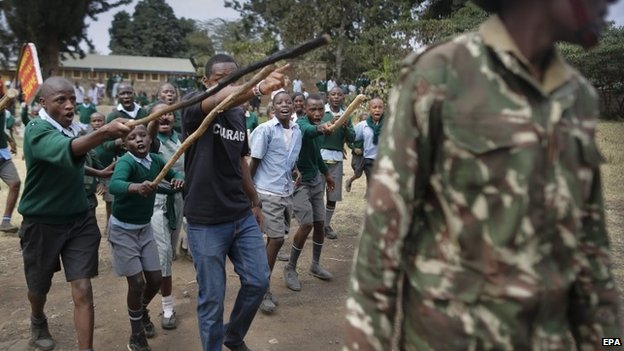
Some of them had con­front­ed riot police, wav­ing sticks at them.

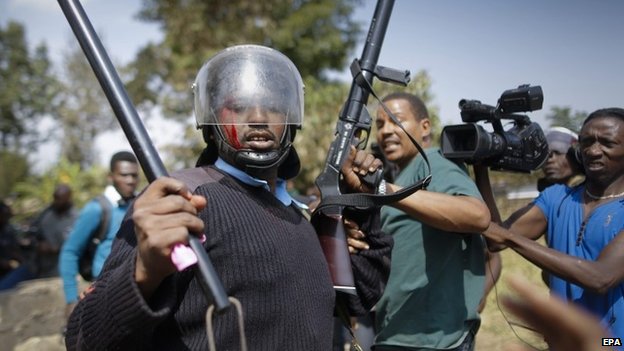
At least one police offi­cer was injured when he was struck by a stone thrown by a pro­test­er.

Protesting children Lang'ata school
The chil­dren had returned to school to find their play area blocked off

The demon­stra­tors also includ­ed teach­ers at the school and polit­i­cal activists.

It was not imme­di­ate­ly clear how the devel­op­er came to take pos­ses­sion of the land, which lies less than five kilo­me­tres west of the city cen­tre.

The city coun­cil has said the play­ground is pub­lic land. It has not com­ment­ed on the legal sta­tus of the appar­ent sale.

Crit­ics have alleged that cor­rupt ele­ments were behind a deal to turn the land over to the devel­op­er.

Pupils protesting at Lang'ata school The chil­dren banged on the bar­ri­er to try to knock it down
Pupils protesting at Lang'ata school Some of the pupils waved sticks at the riot police
Police officer at Lang'ata school One of the offi­cers was hurt when he was hit by a stone thrown by a pro­test­er
Tear gas at Lang'ata school Sev­er­al chil­dren were tak­en to hos­pi­tal after inhal­ing the tear gas