Primate Products Inc. Facility Closes Down after Smash HLS Campaign

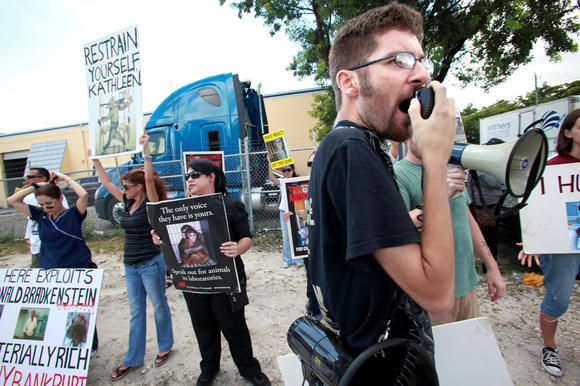
Gary Serig­nese, Exec­u­tive Direc­tor of South Flori­da Smash HLS, leads a demon­stra­tion out­side Pri­mate Prod­ucts, Inc

Gary Serig­nese, Exec­u­tive Direc­tor of South Flori­da Smash HLS, leads a demon­stra­tion out­side Pri­mate Prod­ucts, Inc. in Doral, near Mia­mi Inter­na­tion­al Air­port. (CRISTOBAL HERRERA / Sun Sen­tinel SoFlaShare / Sep­tem­ber 22, 2011)

A South Flori­da hold­ing cen­ter for import­ed research mon­keys [sic] that had been the tar­get of ani­mal rights protests has shut down, with the com­pa­ny mov­ing its oper­a­tions to a remote loca­tion north of the Ever­glades.

Pri­mate Prod­ucts Inc. has closed a fenced, cage-filled build­ing near Mia­mi Inter­na­tion­al Air­port that had been the focus of an ani­mal rights cam­paign involv­ing pick­et­ing, demon­stra­tions against par­tic­i­pat­ing air­lines and smug­gled pho­tos of bloody mon­keys. The com­pa­ny has laid off 10 employ­ees and moved its remain­ing oper­a­tions to a com­plex near the Col­lier Coun­ty town of Immokalee.


Dr. Thomas Row­ell, a vet­eri­nar­i­an who is the company’s pres­i­dent, said the clo­sure rep­re­sent­ed a long-planned con­sol­i­da­tion that had noth­ing to do with the demon­stra­tions. He said Pri­mate Prod­ucts had obtained fed­er­al per­mis­sion to quar­an­tine mon­keys at its oth­er facil­i­ty and planned to reduce its import and sales busi­ness in favor of ser­vice and sup­port.

Gary Serig­nese, of Boca Raton, exec­u­tive direc­tor of the ani­mal rights group South Flori­da Smash HLS, said he doubt­ed this expla­na­tion.

“We know that they would not have made this change with­out our aggres­sive protest cam­paign,” he said. “An import com­pa­ny would not aban­don a facil­i­ty close to the inter­na­tion­al air­port unless it felt it had no choice.”

Dur­ing the cam­paign, activists held demon­stra­tions at the Pem­broke Pines home of the company’s pre­vi­ous pres­i­dent. Using email, phone calls and pick­et­ing, they pres­sured local freight air­lines into refus­ing to car­ry pri­mates. They obtained pho­tos of injured mon­keys from inside the facil­i­ty and pro­vid­ed them to the news media.

In argu­ing for the com­pa­ny to close, they said the mon­keys were head­ed for lives of bore­dom, pain and fear, with dubi­ous ben­e­fit to human health. Pri­mate Prod­ucts has said its work pro­vides essen­tial research sub­jects to sci­en­tists, who are the best judges of their bio­med­ical val­ue.

“We are here to assure you and oth­ers that PPI is com­mit­ted to our mis­sion to serve the bio­med­ical research com­mu­ni­ty and to pro­vide prod­ucts and ser­vices specif­i­cal­ly designed to enhance the con­ser­va­tion, care, and use of non­hu­man pri­mates for advanc­ing pub­lic health,” Row­ell wrote in an email.

Elsipogtog Blockade Halts Seismic Testing

25 June 2013 Com­mu­ni­ty Mem­ber Hit by Car, Sov­er­eign­ty Sum­mer Cam­paign Call­ing for Nation­al Sol­i­dar­i­ty Actions

25 June 2013 Com­mu­ni­ty Mem­ber Hit by Car, Sov­er­eign­ty Sum­mer Cam­paign Call­ing for Nation­al Sol­i­dar­i­ty Actions

By Sun­day, June 23rd, SWN Resource Canada’s high­ly con­test­ed and protest­ed seis­mic test­ing along high­way 126, in Kent Coun­ty, New Brunswick, had almost wrapped up.

But the seis­mic test along the high­way is only one of sev­er­al planned test­ing lines, and the company’s attempts to begin anoth­er line of seis­mic test­ing – this time along the back roads of Kent Coun­ty – was yes­ter­day halt­ed in its tracks by com­mu­ni­ty mem­bers liv­ing in the vicin­i­ty of Browns Yard.

SWN’s seis­mic test­ing of the back roads areas of Kent Coun­ty – con­duct­ed with All-Ter­rain Vehi­cles known as ‘Bom­badiers’, and dyna­mite charges – is slat­ed to be exten­sive, with approx­i­mate­ly 150kms of test­ing expect­ed to take place.

Yesterday’s resis­tance, con­duct­ed first­ly by local fam­i­lies and the action group known as ‘Upriv­er Envi­ron­ment Watch’, sug­gest that SWN’s task in the woods of New Brunswick, where there is local knowl­edge, deep forests and intense oppo­si­tion to the test­ing, will be a tough slog indeed.

At about 2pm, an SWN-con­tract­ed truck with a trail­er parked itself along high­way 490. The truck was aban­doned by the SWN-con­tract­ed work­ers, but it was an announce­ment of their pres­ence to the vig­i­lant com­mu­ni­ty.

A small group of local famil­i­ties – about 15 peo­ple in all, includ­ing young chil­dren – then gath­ered. A Bom­badier, two geo­phones, a surveyor’s tri­pod and a SWN anten­na, were spot­ted. Who­ev­er had posi­tioned the equip­ment had done so on a pri­vate piece of land adja­cent to the dirt high­way.

The dri­ver of the Bom­badier approached the sur­vey­ing equip­ment, poten­tial­ly to recov­er it from the gath­er­ing crowd, only to be chased away from the equip­ment by the crowd. The dri­ver sped south along a dirt road and did not return to the scene.

An SWN-con­tract­ed secu­ri­ty truck appeared on the scene about ten min­utes lat­er. The dri­ver of the truck did not speak to the gath­ered crowd, but as he was dri­ving away he struck local res­i­dent Dave Morang hard enough with his driver’s side mir­ror to bend the mir­ror back­wards. The dri­ver did not stop.

Morang, injured, request­ed that an ambu­lance need­ed to be called. An Emer­gency Response team lat­er took Morang to hos­pi­tal on a spinal board and a stretch­er. His con­di­tion is cur­rent­ly unknown.

“I can’t believe they didn’t stop,” Morang told the Hal­i­fax Media Co-op before the ambu­lance arrived. “They hit me hard enough with his mir­ror that it bent it. He would have known that. How many laws can they break?”

About 20 min­utes lat­er, RCMP appeared in force, with 26 offi­cers and 14 cars and pad­dy wag­ons sta­tion­ing them­selves along the dirt road. The call through social media, how­ev­er, had beat­en them to the punch, and by the time they arrived the gath­ered crowd had swelled to about 100 non-Indige­nous and Indige­nous peo­ple.

RCMP con­sult­ed for about twen­ty more min­utes, before appar­ent­ly decid­ing that the best course of action would be to pick up SWN’s anten­na and geo­phones. Pho­tographs indi­cate that SWN’s equip­ment appears to have been some­how bent and oth­er­wise bro­ken.

With noth­ing left to do, and with a gath­ered crowd which now includ­ed Chief Aaren Sock of Elsi­pog­tog First Nation, the police packed up and retreat­ed down the dirt road from which they had appeared.

Chief Sock, whose band coun­cil late Sat­ur­day night issued a Band Coun­cil Res­o­lu­tion invit­ing Unit­ed Nations Observers to Elsi­pog­tog, was not impressed with SWN’s unwant­ed incur­sions into Kent Coun­ty, or the arrests of his peo­ple while in cer­e­mo­ny.

“Mes­sage for SWN: You’re not wel­come in my ter­ri­to­ry,” Sock told the Hal­i­fax Media Co-op. “Noth­ing per­son­al.”

After the RCMP depart­ed with SWN’s equip­ment, those gath­ered con­tin­ued to cheer and drum. They then began to slow­ly trick­le back to their respec­tive com­mu­ni­ties.

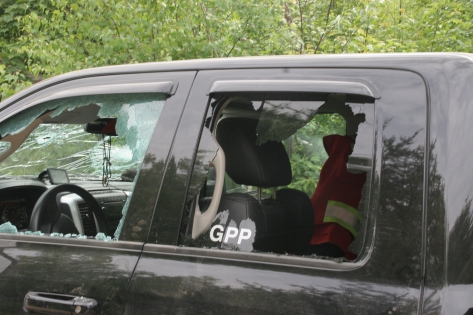
It was lat­er dis­cov­ered that SWN’s aban­doned truck – the orig­i­nal sign of their pres­ence – had had its win­dows smashed, doors dent­ed and bumpers knocked off. As of press time, it is not known how this dam­age might have hap­pened.

A packed com­mu­ni­ty hall meet­ing in Elsi­pog­tog, open to the gen­er­al pub­lic, took place lat­er in the evening. The top­ic of the meet­ing was not only how to stop SWN, but how to get shale gas out of New Brunswick, and all of the Mar­itimes. With UN observers now in place, rep­re­sen­ta­tives from var­i­ous War­rior soci­eties from across the Mar­itimes have been wel­comed to Elsi­pog­tog. They were greet­ed at the meet­ing with a stand­ing ova­tion.

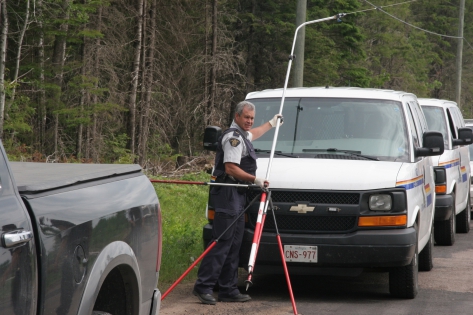
Local man Dave Morang was injured by an SWN-con­tract­ed secu­ri­ty truck, who failed to stop after hit­ting him. [Pho­to: Miles Howe]
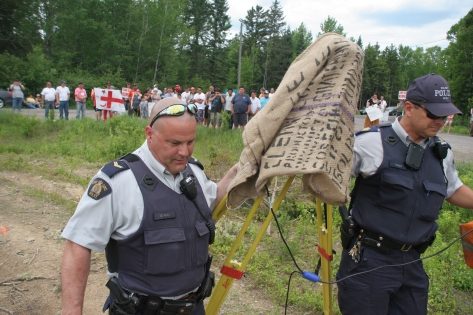
Police remov­ing SWN equip­ment, which seems to have been bent somehow.[Photo: Miles Howe]
RCMP mov­ing SWN equip­ment. [Pho­to: Miles Howe]
Not sure how this hap­pened. SWN-con­tract­ed truck gets trashed. Last seen being towed away.[Photo: Miles Howe]

——————————

Cross Post­ed from Idle No More

This is an offi­cial notice and “Call Out” to all Idle No More & Defend­ers of the Land – Sov­er­eign­ty Sum­mer – activists, allies and sup­port­ers, and part­ner­ship orga­ni­za­tions to act in aid and in the defence of grass­roots Elsi­pog­tog First Nation, fam­i­lies, com­mu­ni­ty mem­bers, and sup­port­ers near Monc­ton, New Brunswick.

In the last few weeks, Elsi­pog­tog First Nation com­mu­ni­ty mem­bers and allies have tak­en peace­ful action to pre­vent seis­mic test­ing vehi­cles and work­ers from test­ing for shale gas deposits for pur­pos­es of resource exploita­tion on Indige­nous ter­ri­to­ries.

The pro­tes­tors have remained strong and peace­ful for numer­ous days and the RCMP have become more aggres­sive and vio­lent; arrest­ing a man as he held a sacred pipe in his hand, as well as arrest­ing com­mu­ni­ty mem­bers at the site of the sacred fire. SWN con­trac­tors have also threat­ened to run over Mi’kmaq youth at the site.

In total, this past week­ends Abo­rig­i­nal Day’s 12 arrests brings the total num­ber of arrestees to 29 from both the Mi’kmaq and non-Indige­nous com­mu­ni­ties at the loca­tion of a sacred fire being kept (locat­ed at the junc­tion of high­ways 126 and 116 west) in Kent Coun­ty near Monc­ton. These arrests includ­ed the arrest of a eight and a half month preg­nant Mi’kmaq woman as well as local man, Dave Morang. Mr. Morang was injured by an SWN-con­tract­ed secu­ri­ty truck, who failed to stop after hit­ting him.This peace­ful resis­tance is on-going to pre­vent SWN Resources Cana­da from frack­ing in the imme­di­ate area.

INM orga­niz­ers have been in con­tact with Elsi­pog­tog First Nation com­mu­ni­ty mem­bers and have request­ed fur­ther sup­port.

Sov­er­eign­ty Sum­mer Cam­paign-Idle No More & Defend­ers of the Land

FBI Chases Anti-GMO Activists While Ignoring Monsanto’s Transgressions

25 June 2013  Some exper­i­men­tal GMO crops were torn out of a field in Ore­gon this month. That means it’s time for the fed­er­al gov­ern­ment to freak the fuck out and do its best to clamp down again on eco-activism.

25 June 2013  Some exper­i­men­tal GMO crops were torn out of a field in Ore­gon this month. That means it’s time for the fed­er­al gov­ern­ment to freak the fuck out and do its best to clamp down again on eco-activism.

The sug­ar beet plants, which were genet­i­cal­ly engi­neered by Syn­gen­ta to sur­vive appli­ca­tions of the her­bi­cide Roundup, were uproot­ed in the mid­dle of the night from a cou­ple of fields, pre­sum­ably by anti-GMO activists. The destruc­tion of the exper­i­men­tal crops occurred in the same state where a strain of Monsanto’s ille­gal her­bi­cide-resis­tant wheat recent­ly showed up in a farmer’s field, threat­en­ing America’s multi­bil­lion-dol­lar wheat export mar­ket.


Guess which crime the FBI is des­per­ate to crack?

That’s right: The sug­ar beet one. The agency announced that it “con­sid­ers this crime to be eco­nom­ic sab­o­tage and a vio­la­tion of fed­er­al law involv­ing dam­age to com­mer­cial agri­cul­tur­al enter­pris­es.” Accord­ing to the FBI, a $10,000 reward is being offered for clues by Ore­go­ni­ans for Food and Shel­ter, a cor­po­rate forestry and agri­cul­ture group that lob­bies for pro-GMO and pro-pes­ti­cide leg­is­la­tion.

The Ore­gon­ian reports that 1,000 genet­i­cal­ly engi­neered sug­ar beet plants were uproot­ed from land leased by Syn­gen­ta on June 8:

“Three nights lat­er, the destruc­tion con­tin­ued on anoth­er prop­er­ty, where anoth­er 5,500 plants were ruined.

“It doesn’t look like a vehi­cle was used. It looks like peo­ple entered the field and destroyed the plants by hand,” said Paul Mine­hart, head of cor­po­rate com­mu­ni­ca­tions in North Amer­i­ca for Syn­gen­ta, a glob­al agri­cul­ture cor­po­ra­tion based in Basel, Switzer­land.

Esti­mates for the dam­age were not spec­i­fied but the finan­cial loss­es are sig­nif­i­cant, accord­ing to FBI spokes­woman Beth Anne Steele.”

Mean­while, Mon­san­to is con­tin­u­ing to push its claim that its genet­i­cal­ly engi­neered wheat turned up on an Ore­gon farm because of an act of sab­o­tage. That claim is draw­ing skep­ti­cism from the expert whose tests first con­firmed that the rogue wheat was devel­oped by Mon­san­to. From a report in The Guardian:

“While Monsanto’s chief tech­nol­o­gy offi­cer sug­gest­ed eco-activists were to blame, [Ore­gon State Uni­ver­si­ty weed sci­ences pro­fes­sor Car­ol] Mal­lo­ry-Smith said delib­er­ate con­t­a­m­i­na­tion was the least like­ly sce­nario:

‘The sab­o­tage con­spir­a­cy the­o­ry is even hard­er for me to explain or think as log­i­cal because it would mean that some­one had that seed and was hold­ing that seed for 10 or 12 years and hap­pened to put it on the right field to have it found, and iden­ti­fied. I don’t think that makes a lot of sense.’”

We may learn more about the cause of the GMO wheat con­t­a­m­i­na­tion after the U.S. Depart­ment of Agri­cul­ture com­pletes an inves­ti­ga­tion.

But let’s get back to the sug­ar beets case. If you hap­pen to know who uproot­ed those plants, The Ore­gon­ian has a request for you:

“Ring the local offices of the FBI at (541) 773‑2942 dur­ing nor­mal busi­ness hours or call the FBI in Port­land any­time at (503) 224‑4181

Tips may also be emailed to portland@ic.fbi.gov.”

Yeah, right.

Charges Dropped Against Honduras Dam Opponent

Mem­bers of COPINH, an indige­nous campesino move­ment defend­ing lands and rivers in Hon­duras against dams and oth­er threats

Mem­bers of COPINH, an indige­nous campesino move­ment defend­ing lands and rivers in Hon­duras against dams and oth­er threats

June 25 2013

After an eight-hour hear­ing on June 13, a court in San­ta Bár­bara, the cap­i­tal of the west­ern Hon­duran depart­ment of the same name, sus­pend­ed a legal action against indige­nous leader Berta Isabel Cáceres Flo­res for the alleged ille­gal pos­ses­sion of a weapon. Accord­ing to Cáceres’ lawyer, Marceli­no Martínez, the court found that there was not enough evi­dence to pro­ceed with the case. Cáceres, who coor­di­nates the Civic Coun­cil of Grass­roots and Indige­nous Orga­ni­za­tions of Hon­duras (COPINH), is now free to trav­el out of the coun­try, although the case could still be reopened. Rep­re­sen­ta­tives from some 40 orga­ni­za­tions came to the city on June 13 in an expres­sion of sol­i­dar­i­ty with the activist.

Cáceres was arrest­ed along with COPINH radio com­mu­ni­ca­tor Tómas Gómez Mem­breño on May 24 when a group of about 20 sol­diers stopped their vehi­cle and claimed to find a pis­tol under a car seat [see Update #1178, where we gave the date incor­rect­ly as May 25]. Cáceres and Gómez Mem­breño had been vis­it­ing Lenca com­mu­ni­ties that were protest­ing the Agua Zarca hydro­elec­tric project. The leader of the mil­i­tary patrol, First Bat­tal­ion of Engi­neers com­man­der Col. Mil­ton Amaya, explic­it­ly linked the arrests to the activists’ polit­i­cal work: the Hon­duran online pub­li­ca­tion Pro­ce­so Dig­i­tal report­ed that Amaya “accused Cáceres of going around harangu­ing indige­nous res­i­dents of a bor­der region between San­ta Bár­bara and Intibucá known as Río Blan­co so that they would oppose the build­ing of the Agua Zarca hydro­elec­tric dam.”

Accord­ing to SOA Watch—a US-based group that mon­i­tors the West­ern Hemi­sphere Insti­tute for Secu­ri­ty Coop­er­a­tion (WHINSEC), for­mer­ly the US Army School of the Amer­i­c­as (SOA)—Amaya has stud­ied at the school on two occa­sions. (Pro­ce­so Dig­i­tal 5/26/13; Adi­tal (Brazil) 6/14/13; Kaos en la Red 6/14/13 from COPINH, Radio Mun­do Real, Hon­duras Libre, Dere­chos Humanos; SOA Watch 6/21/13)

Lockdown Starts Against Line 9

first25 June 2013, 4 peo­ple are locked down at the Enbridge Pump Sta­tion near Hamil­ton, Ontario.

first25 June 2013, 4 peo­ple are locked down at the Enbridge Pump Sta­tion near Hamil­ton, Ontario.

We are appalled that Enbridge is attempt­ing to resolve this sit­u­a­tion with an injunc­tion when we know that this con­flict is root­ed in their refusal to mean­ing­ful­ly con­sult and seek con­sent from impact­ed com­mu­ni­ties. First, Enbridge tried accom­plish­ing this rever­sal through stealth, then through trick­ery, and now, final­ly, they are try­ing to do it through force.

Trish Mills is one of the indi­vid­u­als cur­rent­ly con­tained with­in the struc­ture. She issued the fol­low­ing quote this morn­ing:

“This isn’t Enbridge’s land to order us off of. It’s stolen. Even if it wasn’t, this com­pa­ny and this indus­try exploit and destroy land. It is our respon­si­bil­i­ty to stop this exploita­tion. While a spill might not be on pur­pose, when it does hap­pen — 1 every 5 days — they look at it only as a mon­e­tary fig­ure; I look at it as the irre­versible mas­sacre of an ecosys­tem.”

Anoth­er indi­vid­ual named Sigrid, who is seat­ed on top of the bar­ri­cade, has issued the fol­low­ing state­ment:

“I’m doing this because I have to, for the future. Because some­one has to do some­thing now.”

Swamp Line 9 was start­ed by a group of 60 region­al activists con­cerned with the Line 9 pipeline expan­sion. Over the past 6 days it has caught the atten­tion of activists and tar sands resisters across Tur­tle Island and become part of some­thing much big­ger.

Since tak­ing this site last Thurs­day, we have seen Enbridge spill 750 bar­rels of oil into a fresh water stream in North­ern Alber­ta. To the East we have seen a bru­tal police crack­down on anti-frack­ing pro­tes­tors in New Brunswick. Our strug­gle here in West­over is part of a broad­er pic­ture. We stand in sol­i­dar­i­ty with all com­mu­ni­ties who are resist­ing against end­less resource extrac­tion and the destruc­tion that these com­pa­nies cause.

2 of 3 people locked inside the barricade

2 of 3 peo­ple locked inside the bar­ri­cade

Today’s coun­try-wide day of sol­i­dar­i­ty has been declared as the first offi­cial action of the Sov­er­eign­ty Sum­mer called for by Idle No More and Defend­ers of the Land; Enbridge’s West­over Ter­mi­nal is on the ter­ri­to­ry of the Hau­denosaunee Con­fed­er­a­cy and there have been indi­vid­u­als from 6 Nations on site all week. We demand that Enbridge acknowl­edge this land as Hau­denosaunee ter­ri­to­ry, and that no con­struc­tion can take place until they have received free, pri­or, and informed con­sent from the Con­fed­er­a­cy.

Michigan Activist Skateboards into Enbridge Tar Sands Pipeline

24 June 2013, Folks in Michi­gan took two actions today to help kick off the Fear­less Sum­mer week of action against ener­gy extrac­tion.

24 June 2013, Folks in Michi­gan took two actions today to help kick off the Fear­less Sum­mer week of action against ener­gy extrac­tion. From Fear­less Sum­mer: “The Detroit Coali­tion Against Tar Sands (DCATS) turned away trucks adding pet­coke (an extra-dirty coal-like waste prod­uct of tar sands refin­ing) to an already-mas­sive pile along­side the Detroit Riv­er. In Kala­ma­zoo, a mem­ber of Michi­gan Coali­tion Against Tar Sands (MI CATS) skate­board­ed deep into the same Enbridge pipeline which spilled a mil­lion gal­lons of tar sands into the Kala­ma­zoo riv­er three years ago.”

UPDATE: Chris has been arrest­ed and is in need of bail funds. Please donate to his bail fund here.

Ear­ly this morn­ing Chris “The Wham­mer” Wah­moff climbed inside a seg­ment of Enbridge’s Line 6B Pipe south of Mar­shall, Michi­gan, to halt recon­struc­tion of the line. Chris used a skate­board to slide-crawl his way deep into the pipe, where he has said he is pre­pared to stay until at least 5:00 PM tonight. Chris is part of the Michi­gan Coali­tion Against Tar Sands (MI-CATS), a grass­roots group that seeks to stop all trans­porta­tion and refin­ing of tar sands in Michi­gan, and advo­cates against tar sands pro­duc­tion and trans­porta­tion every­where.

Chris is posi­tioned less than half a mile from where the Enbridge Line 6B pipeline broke in 2010, spilling bitu­mi­nous sands oil into the Kala­ma­zoo Riv­er. The oil was being trans­port­ed through the pipeline from Cana­da to the Unit­ed States. Recent water sam­ples have shown that the riv­er is still con­t­a­m­i­nat­ed, some three years after the spill occurred, yet Enbridge is already at work recon­struct­ing this stretch of the line. Chris’s action is an attempt to halt con­struc­tion, and bring atten­tion to the fact that Enbridge is mov­ing on with this dan­ger­ous project with­out hav­ing cleaned up the spill from the pre­vi­ous line.

Police and fire­fight­ers are on the scene, but are report­ed­ly hav­ing a dif­fi­cult time fig­ur­ing out how to remove Chris from the pipe. Fire fight­ers have said they are wor­ried about Chris get­ting enough oxy­gen, and have a fan blow­ing into the pipe to give him fresh air.

Chris climbed into the pipe at the cross­roads of the Enbridge Line 6B and Inter­state 69, a loca­tion described as “poet­ic” by peo­ple on the ground.

MI-CATS has been able to stay in con­tact with Chris, who is doing fine and has plen­ty of food and water.

MI-CATS is hold­ing an action camp in South­west Michi­gan  from July 19 – 22 to gath­er sup­port and stop tar sands. Check out their face­book page here to get involved. You can also donate to their wepay here.

P.S. Today is also Chris’s 35th birth­day. Hap­py Birth­day, Chris!

Tasmania Defended: The World Celebrates the Success of Community Action to Protect Forests.

24th June, The deci­sion today by the World Her­itage Com­mit­tee to approve the exten­sion to the Tas­man­ian Wilder­ness World Her­itage Area is tes­ta­ment to the pow­er of the com­mu­ni­ty, after decades of action to defend these forests.

24th June, The deci­sion today by the World Her­itage Com­mit­tee to approve the exten­sion to the Tas­man­ian Wilder­ness World Her­itage Area is tes­ta­ment to the pow­er of the com­mu­ni­ty, after decades of action to defend these forests.

The Observ­er Tree and the for­est sur­round­ing it as well as the site of Camp Flo­ren­tine block­ade are now World Her­itage list­ed.

“On Decem­ber 14th 2011 I climbed to the top of a tree in a threat­ened for­est and said I would stay until the for­est was pro­tect­ed. That for­est is now World Her­itage. It is thanks to the sup­port from peo­ple right around the world that the for­est is still stand­ing and is now pro­tect­ed” said Miran­da Gib­son, spokesper­son for Still Wild Still Threat­ened.

“For 14 months I watched over the for­est every day with the hope that we, as a com­mu­ni­ty, could defend those trees for future gen­er­a­tions. Today, for that for­est, we have achieved that” said Ms Gib­son.

“Today I think of the wedge tailed eagle that I watched fly above my tree, whose habi­tat was once under threat and is now pro­tect­ed and of the Tas­man­ian dev­ils who lived in the for­est 60 meters below my plat­form who can now raise their young in peace” said Ms Gib­son.

“Today we cel­e­brate the pro­tec­tion of some of Tasmania’s most sig­nif­i­cant forests includ­ing the Tyen­na, Weld and Upper Flo­ren­tine. For six years the Upper Flo­ren­tine Val­ley has been defend­ed by Tasmania’s longest run­ning for­est block­ade. This for­est is still stand­ing because the com­mu­ni­ty took action and halt­ed log­ging to pro­tect the val­ues of this ecosys­tem, that are now offi­cial­ly World Her­itage. This Sun­day the com­mu­ni­ty will return to site of Camp Flo­ren­tine to cel­e­brate our suc­cess in ensur­ing these forests will be stand­ing for future gen­er­a­tions” said Ms Gib­son.

“Thou­sands of peo­ple across the globe have been part of this glob­al move­ment to pro­tect Tasmania’s ancient forests as World Her­itage. Right around the world peo­ple today are cel­e­brat­ing the pow­er of com­mu­ni­ty action and what we have achieved for Tasmania’s forests said Ms Gib­son.


Construction of KXL Pump Station Shut Down in Oklahoma

pumpstation2

24th June 2013, Pro­test­ers locked down

pumpstation2

24th June 2013, Pro­test­ers locked down to con­struc­tion equip­ment. Pho­tos from @iamed_nc

[UPDATE: Nine peo­ple have been arrest­ed. You can donate to their bail fund at http://gptarsandsresistance.org/donate/ and share this around. They man­aged to shut down the site until a vol­un­teer fire­fight­er report­ed­ly injured one of the lock­down­ers, who is in the ambu­lance cur­rent­ly and whose injuries are unknown to us. Folks soon­after unlocked out of con­cerns for their safe­ty.]

Semi­nole, OK - Ear­ly this morn­ing, eight indi­vid­u­als blocked con­struc­tion of a pump sta­tion for TransCanada’s con­tro­ver­sial Key­stone XL tar sands pipeline on Semi­nole land-by-treaty by lock­ing on to equip­ment in the largest action yet by the Great Plains Tar Sands Resis­tance. The group took action today, phys­i­cal­ly halt­ing the con­struc­tion process, as a part of an effort to pre­vent the Great Plains from being poi­soned by inher­ent­ly dan­ger­ous tar sands infra­struc­ture, as well as demon­strate the neces­si­ty for direct con­fronta­tion with indus­tries that prof­it off of con­tin­ued eco­log­i­cal dev­as­ta­tion and the poi­son­ing of count­less com­mu­ni­ties from “Alber­ta, CA” to the Gulf. This action comes dur­ing the first day of a nation­wide week of coor­di­nat­ed anti-extrac­tion action under the ban­ner of Fear­less Sum­mer.

“As a part of a direct action coali­tion work­ing and liv­ing in an area that has been his­tor­i­cal­ly sac­ri­ficed for the ben­e­fit of petro­le­um infra­struc­ture and indus­try, we believe that build­ing a move­ment that can resist all infra­struc­ture expan­sion at the point of con­struc­tion is a neces­si­ty. In this coun­try, over half of all pipeline spills hap­pen in Texas, Louisiana, and Okla­homa. Look­ing at the main­stream key­stone oppo­si­tion, this fact is invisible—just like the com­mu­ni­ties affect­ed by tox­ic refin­ing and tox­ic extrac­tion,” said Eric Whe­lan, spokesper­son for Great Plains Tar Sands Resis­tance. “We’re through with appeal­ing to a bro­ken polit­i­cal sys­tem that has con­sis­tent­ly sac­ri­ficed human and non­hu­man com­mu­ni­ties for the ben­e­fit of indus­try and cap­i­tal.”

“The pipelines that poi­soned the Kala­ma­zoo Riv­er and Mayflower, Arkansas, were not the Key­stone XL. Tar sands infra­struc­ture is tox­ic regard­less of the cor­po­ra­tion or pipeline. For that rea­son we are opposed not only to the Key­stone XL, but all tar sands infra­struc­ture that threat­ens the land and her prog­e­ny,” said Fitzger­ald Scott, who was arrest­ed in April for lock­ing his arm inside a con­crete-filled hole on the Key­stone XL ease­ment, and locked to an exca­va­tor today. “While KXL oppo­nents wait with bait­ed breath for Obama’s final deci­sion regard­ing this par­tic­u­lar pipeline, oth­er cor­po­ra­tions, includ­ing Enbridge, will be lay­ing sev­er­al tar sands pipelines across the con­ti­nent. The Enbridge pipelines will car­ry the same vol­umes of the same nox­ious sub­stance; there­fore, Enbridge should get ready for the same resis­tance.”

The Tar Sands megapro­ject is the largest indus­tri­al project in the his­to­ry of humankind, destroy­ing an area of pris­tine bore­al for­est which, if ful­ly real­ized, will leave behind a tox­ic waste­land the size of Flori­da. The Tar Sands megapro­ject con­tin­ues to endan­ger the health and way of life of the First Nations com­mu­ni­ties that live near­by by poi­son­ing the water­ways which life in the area depends on. This pipeline promis­es to deliv­er tox­ic dilut­ed bitu­men to the nox­ious Valero Refin­ery at the front door of the fence-line com­mu­ni­ty of Man­ches­ter in Hous­ton.

Blockaders locking down at pumping station.

Block­aders lock­ing down at pump­ing sta­tion.

Two protesters have locked themselves together on a conex container on site

Two pro­test­ers have locked them­selves togeth­er on a conex con­tain­er on site

There is staunch resis­tance to the expan­sion of Tar sands min­ing and infra­struc­ture grow­ing across the heart­land of “North Amer­i­ca,” in areas long con­sid­ered sac­ri­fice zones. Cur­rent­ly activists are occu­py­ing an Enbridge pump sta­tion in so-called “Ontario” to pre­vent the rever­sal of the Line9 pipeline. The rise of Idle No More in defense of indige­nous sov­er­eign­ty across Tur­tle Island is in large part to pro­tect lands and waters from tox­ic indus­tries, and peo­ples of the Great Sioux Nation and trib­al gov­ern­ments across “South Dako­ta” are avow­ing their oppo­si­tion to the north­ern seg­ment of the Key­stone XL tar sands pipeline.

Police Cut off Willits Protester from Food and Water

Crowd of supporters marches onto wetlands destruction site to resupply Red-Tailed Hawk, who has run out of food.

Crowd of supporters marches onto wetlands destruction site to resupply Red-Tailed Hawk, who has run out of food.

23rd June 2013, This inci­dent occurred on the third day that Red-Tailed Hawk has been perched on a stitch­er, block­ing Willits bypass con­struc­tion and pro­tect­ing crit­i­cal wet­lands.

Crowd of sup­port­ers march­es onto wet­lands destruc­tion site to resup­ply Red-Tailed Hawk, who has run out of food.

Sat­ur­day evening around 45 sup­port­ers of Red-Tailed Hawk’s occu­pa­tion of a wick drain “stitch­ing machine” con­verged on the site in what was pre­cious wet­lands in the path of Cal­Trans’ free­way project. Sup­port­ers walked onto the site unop­posed until they reached CHP squad cars, when two offi­cers emerged and tried to call a halt to the march. Sup­port­ers from Willits, Uki­ah and beyond pro­ceed­ed on the the stitch­er in which Red-Tailed Hawk is perched. When he low­ered a sup­ply rope, they tried to attach bun­dles of food and water. CHP offi­cers repelled the attempt three times, cut­ting the rope in the process.

With press on hand pro­tes­tors qui­et­ly sat and rea­soned with the offi­cers to allow resup­ply to Red-Tailed Hawk, who has no food and very lit­tle water left. The offi­cers refused and refused as well to reveal whether they were under orders to starve him until he descends.


Police prevented supplies from being sent up to Red-Tailed Hawk.

Police forcibly pre­vent­ed sup­port­ers from send­ing food and water up to Red-Tailed Hawk.

redtailhawk3

..and then cut his sup­ply line.

When CHP rein­force­ments arrived, Sgt A. Mesa ordered pro­test­ers to leave the site and imme­di­ate­ly grabbed Sara Grusky as she was com­ply­ing with the order. Her daugh­ter Thea Grusky-Foley and Nao­mi Wag­n­er allowed them­selves to be arrest­ed in sol­i­dar­i­ty. Matt Cald­well, who had attempt­ed to attach buck­ets to the line, was also arrest­ed.

redtailhawk4redtailhawk5

The evening end­ed at Willits Police Sta­tion, where Sara and Thea, who had walked away after being hand­cuffed, talked by phone to press and Sher­iff Tom All­man amidst a crowd of sup­port­ers. They sur­ren­dered to an angry Sgt. Mesa after call­ing in their where­abouts to the CHP.

All four arrestees are cur­rent­ly at Men­do­ci­no Coun­ty Jail, await­ing book­ing.  Red-Tailed Hawk is still with­out water and food and needs all the sup­port we can give him.

Update on Belo Monte Dam Struggle

In the late morn­ing of June 4th, two air force planes descend­ed upon the cap­i­tal city of Brasília, car­ry­ing aboard an unusu­al group of pas­sen­gers: over 140 indige­nous peo­ple, ma

In the late morn­ing of June 4th, two air force planes descend­ed upon the cap­i­tal city of Brasília, car­ry­ing aboard an unusu­al group of pas­sen­gers: over 140 indige­nous peo­ple, main­ly mem­bers of the Munduruku tribe from the Tapa­jós Riv­er – includ­ing lead­ers, war­riors, women and chil­dren – along with a small num­ber of rep­re­sen­ta­tives of Xin­gu tribes – Xikrin, Arara, Kayapó. For the indige­nous del­e­ga­tion, the pur­pose of the trip, nego­ti­at­ed dur­ing the lat­est occu­pa­tion of the Belo Monte Dam site, was to meet with Min­is­ter Gilber­to Car­val­ho, Gen­er­al Sec­re­tary of the President’s Office, to dis­cuss their demands for con­sul­ta­tions and con­sent regard­ing a series of mega-dams on the Tapa­jós, Teles Pires and Xin­gu rivers, planned and, in some cas­es, under (ille­gal) con­struc­tion.

Munduruku child
Munduruku child
By Jam­i­lye Salles

Dur­ing a four-hour meet­ing held the same day, the Munduruku voiced their con­cerns and out­rage over threats posed by the fed­er­al gov­ern­men­t’s ambi­tious dam-build­ing spree in the Xin­gu and Tapa­jós basins, autho­rized with­out any process of free, pri­or and informed con­sul­ta­tions and con­sent, as man­dat­ed by the Brazil­ian Con­sti­tu­tion and inter­na­tion­al agree­ments such as ILO Con­ven­tion 169. At the end of the meet­ing, the main pro­pos­al put for­ward by Min­is­ter Car­val­ho was to orga­nize anoth­er meet­ing in a Munduruku vil­lage after a peri­od of 30 days. As Car­val­ho left the meet­ing, he stat­ed unequiv­o­cal­ly to a group of reporters that while open to dia­logue with indige­nous peo­ples, the “gov­ern­ment is not going to give up on its projects.” Inter­est­ing­ly, the Min­is­ter was refer­ring to pro­posed mega-dams such as São Luiz do Tapa­jós whose envi­ron­men­tal impact and eco­nom­ic via­bil­i­ty stud­ies have yet to be final­ized and approved.

“What the gov­ern­ment wants, we do not want. They want to say that they will build dams on our land and then see what we want in return. And we do not want any­thing in return. We want our riv­er free and our nature pre­served” stat­ed indige­nous leader Valdenir Mundurukú.“The Min­is­ter says he wants to con­sult with indige­nous peo­ples, but that the gov­ern­men­t’s deci­sion to build the dams has already been made. What kind of con­sul­ta­tion is that?”

Minister of the General Secretariat of the Presidency of Brazil, Gilberto Carvalho, speaks to Munduruku Indians during a meeting at the Planalto Palace
Min­is­ter of the Gen­er­al Sec­re­tari­at of the Pres­i­den­cy of Brazil, Gilber­to Car­val­ho, speaks to Munduruku Indi­ans dur­ing a meet­ing at the Planal­to Palace
REUTERS/Ueslei Marceli­no

Car­val­ho’s advi­sors attempt­ed to con­vince the indige­nous del­e­ga­tion to return home to the state of Pará the fol­low­ing morn­ing, argu­ing that this was part of the agree­ment around their trip to Brasília and that planes were await­ing them at a near­by air force base. Munduruku and Xin­gu lead­ers respond­ed that there had been no such agree­ment, and they did not intend to return to their vil­lages with­out con­crete results from their time in Brasília.

The next morn­ing, the Munduruku and Xin­gu rep­re­sen­ta­tives assem­bled in the Praça dos Três Poderes, adja­cent to the Pres­i­den­tial Palace, Brazil­ian Con­gress and Supreme Court. There, they were greet­ed by lead­ers of the Ter­e­na peo­ple, who had trav­eled to Brasília to demand the demar­ca­tion of their lands and a full inves­ti­ga­tion into the killing of Osiel Gabriel, a Ter­e­na killed by the fed­er­al police in a land con­flict involv­ing ranch­ers in the state of Mato Grosso do Sul. As the Ter­e­na lead­ers depart­ed for a meet­ing with the Min­is­ter of Jus­tice, the Munduruku and Xin­gu rep­re­sen­ta­tives pro­ceed­ed in the direc­tion of the Pres­i­den­tial Palace with the goal of deliv­er­ing a let­ter to Pres­i­dent Dil­ma Rouss­eff that includ­ed a request for a meet­ing. How­ev­er, a large secu­ri­ty force assem­bled a bar­ri­cade, phys­i­cal­ly pre­vent­ing the indige­nous peo­ple from reach­ing the entrance to the palace. The let­ter to Dil­ma was nev­er deliv­ered. The del­e­ga­tion then walked to the main entrance of the Brazil­ian Con­gress where they per­son­al­ly deliv­ered a let­ter to Rep­re­sen­ta­tive Padre Ton, chair­man of a con­gres­sion­al cau­cus in sup­port of indige­nous peo­ples.

Munduruku child at demonstration in front of Presidential Palace
Munduruku child at demon­stra­tion in front of Pres­i­den­tial Palace
By Brent Mil­likan

Fol­low­ing the deci­sion to extend their stay in Brasília, the indige­nous del­e­ga­tion was informed by Min­is­ter Car­val­ho’s staff that his office would not pro­vide addi­tion­al lodg­ing, food or trans­porta­tion in Brasília. As a result, the del­e­ga­tion moved to a com­pound on the out­skirts of Brasília oper­at­ed by CIMI, one of the pro­gres­sive arms of the Catholic Church that sup­ports indige­nous peo­ples. After a few days, they need­ed to find anoth­er place to stay because the CIMI com­pound was already reserved for a large event. The new Pres­i­dent of FUNAI (the gov­ern­ment orga­ni­za­tion tasked with indige­nous affairs), Maria Augus­ta Assir­ati, told CIMI and the indige­nous del­e­ga­tion that her agency would resolve the prob­lem. When a solu­tion failed to mate­ri­al­ize, the Munduruku and Xin­gu rep­re­sen­ta­tives decid­ed to occu­py FUNAI head­quar­ters in the cen­ter of Brasília.

The Munduruku and their Xingu allies staged a protest outside the Ministry of Mines and Energy
Munduruku protest out­side the Min­istry of Mines and Ener­gy
By Brent Mil­likan

The Munduruku and their Xin­gu allies sub­se­quent­ly staged an impres­sive protest at the entrance of the Min­istry of Mines and Ener­gy – de-fac­to head­quar­ters of the Brazil­ian dam indus­try – that includ­ed singing and danc­ing. The del­e­ga­tion for­mal­ly request­ed meet­ings with Joaquim Bar­bosa and Felix Fis­ch­er, chief jus­tices of the Fed­er­al Supreme Court (STF) and Supe­ri­or Court of Jus­tice (STJ), respec­tive­ly, to dis­cuss out­stand­ing law­suits regard­ing lack of pri­or con­sul­ta­tions in the cas­es of Belo Monte and the Tapa­jos dams. Nei­ther request was grant­ed.

On June 12th, Brazil’s most well-known indige­nous leader,Chief Raoni, trav­eled to Brasília to show sol­i­dar­i­ty with the Mundurukú, one of the main out­comes of a meet­ing just orga­nized among the Kayapó of the Xin­gu Basin. In the past, the Kayapó and Mundurukú occa­sion­al­ly engaged in con­flicts, which made Chief Raoni’s pres­ence an even more his­toric event, unit­ing com­mu­nites with a com­mon goal of defend­ing their ter­ri­to­ries and rights against destruc­tive dam projects.

Munduruku warrior in front of Brazilian Congress
Munduruku war­rior in front of Brazil­ian Con­gress
By Brent Mil­likan

Through­out their stay in Brasil­ia, the Munduruku and Xin­gu rep­re­sen­ta­tives insist­ed that the gov­ern­ment hon­or the issue of con­sent: i.e. that the fed­er­al gov­ern­ment should lis­ten to indige­nous peo­ples and respect their deci­sion. This is pre­cise­ly what the admin­is­tra­tions of Lula and Dil­ma Rouss­eff have not done, bla­tant­ly flout­ing the Brazil­ian Con­sti­tu­tion and inter­na­tion­al agree­ments regard­ing indige­nous peo­ples’ rights while inter­ven­ing in fed­er­al courts to ensure the rule of law is not upheld.

Last Thurs­day, the Munduruku and rep­re­sen­ta­tives from the Xin­gu returned to the state of Pará after nine days in Brasil­ia, vow­ing to con­tin­ue the strug­gle. “Our fight has just begun. We’re return­ing to our com­mu­ni­ties where we will strength­en our­selves and cre­ate alliances with oth­er indige­nous peo­ples so that, togeth­er, we can fight this desre­spect of the fed­er­al gov­ern­ment for our cul­ture, our beliefs and our rights” stat­ed Valdenir Mundurukú, short­ly before the group embarked on air force planes for the long voy­age home.