Patagonia Dam CANCELED!

chao hidroaysen13th June After an eight-year strug­gle, Chile’s grass­roots and envi­ron­men­tal move­ments have suc­cess­ful­ly won the rejec­tion of five planned megadams on two Patag­on­ian rivers!

chao hidroaysen13th June After an eight-year strug­gle, Chile’s grass­roots and envi­ron­men­tal move­ments have suc­cess­ful­ly won the rejec­tion of five planned megadams on two Patag­on­ian rivers!

It’s not every day we cel­e­brate a vic­to­ry as sig­nif­i­cant and hard-won as today’s tri­umph in the eight-year cam­paign to pro­tect Chilean Patag­o­nia from the destruc­tive HidroAysén dam project!

This morn­ing, Chile’s high­est admin­is­tra­tive author­i­ty – the Com­mit­tee of Min­is­ters – made a unan­i­mous deci­sion to over­turn the envi­ron­men­tal per­mits for the con­tro­ver­sial five dam mega-project, which was planned on the Bak­er and Pas­cua rivers. This high­ly antic­i­pat­ed res­o­lu­tion effec­tive­ly can­cels the project, rul­ing that assess­ment of the project’s impacts was insuf­fi­cient to grant project approval back in 2011.

The Com­mit­tee, which con­sists of the Min­is­ter of Envi­ron­ment, Health, Econ­o­my, Ener­gy and Min­ing, Agri­cul­ture, and Tourism, eval­u­at­ed 35 appeals which were filed by the Patag­o­nia Defense Coun­cil and local cit­i­zens in response to the project’s Envi­ron­men­tal Impact Assess­ment after it was approved in May 2011. Though it has tak­en more than three years, with meet­ings and deci­sions being repeat­ed­ly delayed and even­tu­al­ly passed on to the new admin­is­tra­tion, today’s deci­sion is a recog­ni­tion of the tech­ni­cal and pro­ce­dur­al flaws sur­round­ing HidroAysén as well as the sig­nif­i­cant impacts the project would have had on one of Chile’s most icon­ic regions.

What began as a grass­roots effort to pro­tect the pris­tine Bak­er and Pas­cua rivers, and the com­mu­ni­ties and cul­ture of Patag­o­nia, has devel­oped into a ful­ly-fledged inter­na­tion­al cam­paign and gal­va­nized a nation­al envi­ron­men­tal move­ment. Over the past four years Chileans have tak­en to the streets to demand a halt to HidroAysén and around the world an inter­na­tion­al com­mu­ni­ty has ral­lied around this call. Today it is these voic­es that have won out, and togeth­er have set in motion a new path towards a bright future for Patag­o­nia and the hope of a tru­ly sus­tain­able ener­gy future for Chile.

Pascua River, Patagonia: Undammed!

Pas­cua Riv­er, Patag­o­nia: Undammed!

To bor­row some words from Patri­cio Rodri­go, Exec­u­tive Sec­re­tary of the Patag­o­nia Defense Coun­cil, “The government’s defin­i­tive rejec­tion of the HidroAysén project is not only the great­est tri­umph of the envi­ron­men­tal move­ment in Chile, but marks a turn­ing point, where an empow­ered pub­lic demands to be heard and to par­tic­i­pate in the deci­sions that affect their envi­ron­ment and lives.”

We are thrilled that the gov­ern­ment is sid­ing with the major­i­ty of Chileans and tens of thou­sands of peo­ple around the world to say no to HidroAysén! We com­mend Pres­i­dent Bachelet for remain­ing loy­al to her cam­paign promise that HidroAysén would not have her sup­port. And we are look­ing to the future, with the hope that mea­sures will be put in place to pro­tect this unique region from future threats. (In fact, Pres­i­dent Bachelet and the Min­is­ter of Envi­ron­ment recent­ly for­mal­ized a bill that would cre­ate the Depart­ment of Bio­di­ver­si­ty and Pro­tect­ed Areas (SBAP) with the aim to pre­serve crit­i­cal ecosys­tems through­out Chile.)

Announcing the Launch of “After Prison” Zine & Website Project

ResilienceDrawing11th June AfterPrisonZine.org “After Prison” is a zine and web­site project aimed at shar­ing the voic­es of for­mer earth and ani­mal

ResilienceDrawing11th June AfterPrisonZine.org “After Prison” is a zine and web­site project aimed at shar­ing the voic­es of for­mer earth and ani­mal defense pris­on­ers. This project hopes to help build an under­stand­ing of what life after prison can entail, so that indi­vid­u­als and com­mu­ni­ties can help cre­ate health­i­er envi­ron­ments for pris­on­ers to return home to. It also pro­vides an oppor­tu­ni­ty for for­mer and cur­rent pris­on­ers – whom often have restric­tions on who they can com­mu­ni­cate with – to con­nect with the expe­ri­ences of oth­ers.

“It’s been 20 years since I first entered a fed­er­al prison. For­tu­nate for me, only six of those years were lost to that trau­ma­tiz­ing expe­ri­ence, but the dam­age will last the rest of my life, and if I’m not care­ful, maybe the lives of my chil­dren too. When you’re in prison, it is dif­fi­cult to say the least, to stay con­nect­ed to your for­mer “out­side” world. How­ev­er strong your con­nec­tion might have been, those are not the type of peo­ple you are around now and it is not the world you are liv­ing in or that threat­ens your very own abil­i­ty to live. Just as soci­ety forces us to dis­con­nect from the vio­lence caused by our way of life, prison forced us to dis­con­nect from a lot of our deep­est sense of self and stay there for years.”
- Rod Coro­n­a­do, for­mer earth & ani­mal lib­er­a­tion pris­on­er, from his arti­cle, “What Your Heart Tells You Is Right.”


Many for­mer pris­on­ers face a raft of dif­fi­cul­ties upon com­ing out of prison, such as hous­ing & employ­ment dis­crim­i­na­tion, deal­ing with trau­ma, and the stig­ma of being a felon, to name just a few. It is cru­cial that our com­mu­ni­ties can sup­port our fel­low activists through these often chal­leng­ing times. But it is impor­tant to lis­ten to the voic­es of those who have had these expe­ri­ences, to learn what is appro­pri­ate sup­port, and sim­ply learn to lis­ten.

The zine, fea­tur­ing inter­views and writ­ings from for­mer earth & ani­mal defense pris­on­ers such as Rod Coro­n­a­do, Jor­dan Hal­l­i­day, Josh Harp­er & Jeff Luers, is being launched today on June 11, the Inter­na­tion­al Day of Sol­i­dar­i­ty with Marie Mason, Eric McDavid & all Eco-pris­on­ers. We hope that it con­tributes to fur­ther dis­cus­sion around sup­port­ing those cur­rent­ly in prison, as well as when they are released.

The zine can be read online, and down­loaded from the web­site: afterprisonzine.org.

All for­mer and cur­rent move­ment pris­on­ers can request a hard­copy of the zine for free. Please get in touch if you, or a pris­on­er you are sup­port­ing, would like a copy.

This is an ongo­ing project. In the long term, we are hop­ing that the web­site set up for this zine will become a place where oth­er for­mer pris­on­ers will be inter­est­ed in con­tribut­ing their sto­ries. As the web­site receives more con­tri­bu­tions, fur­ther updat­ed edi­tions of the zine will be pro­duced.

afterprisonzine@gmail.com

Caltrans Case Against Tree Sitter Dismissed

Falcon-300x274 10th June Long-stand­ing tres­pass charges against Mark Her­bert, aka “Fal­con,” who perched in an old oak tree in April, 2013, above the hill west of High­way 101 that Cal­trans is now

Falcon-300x274 10th June Long-stand­ing tres­pass charges against Mark Her­bert, aka “Fal­con,” who perched in an old oak tree in April, 2013, above the hill west of High­way 101 that Cal­trans is now exca­vat­ing for soil to con­struct the much-protest­ed Willits Bypass, where he observed and report­ed on devel­op­ments, were dis­missed entire­ly on May 29th by Judge Ann Moor­man in Uki­ah Supe­ri­or Court. Fal­con was charged with tres­pass 602K, “enter­ing any lands, whether unen­closed or enclosed by fence, 1) for the pur­pose of injur­ing any prop­er­ty or prop­er­ty rights or with the inten­tion of inter­fer­ing with a law­ful busi­ness…”

The Dis­trict Attor­ney told the court that no one had sub­poe­naed the CHP offi­cer from the Spe­cial Weapons and Tac­tics unit who super­vised the arrest of Her­bert, the wit­ness who was sup­posed to tes­ti­fy. Unlike oth­er tree sit­ters, includ­ing War­bler, the young woman whose orig­i­nal tree sit sparked the Bypass protests, Her­bert was not extract­ed by force, but agreed to come down when request­ed to do so.

Herbert’s attor­ney, Ed Den­son, said “Judge Moor­man indi­cat­ed the case was almost a year old and she dis­missed it. The CHP inves­ti­ga­tion was very per­func­to­ry and it should have been clear to the inves­ti­gat­ing offi­cer that Her­bert had com­mit­ted no crime. The evi­dence shows that no inten­tion on Herbert’s part to inter­fere with any law­ful busi­ness or occu­pa­tion. “

Den­son elab­o­rat­ed: “Herbert’s case dif­fered from that of all the oth­er tree sit­ters, but the CHP failed to note that. Their report said his tree was north of 101, but the videos clear­ly show it was on a hill well south of 101 out of the con­struc­tion area. No one from Cal­trans or the CHP had even come to his site to ask him to come down until the day he was arrest­ed by a team of 24 offi­cers. He then vol­un­tar­i­ly descend­ed from the tree. It was clear that his pur­pose in doing the tree sit was to be a wit­ness to the events occur­ring across the high­way dur­ing the CHP block­ade of the media pre­vent­ing report­ing on the extrac­tion of the sit­ters. Her­bert was a spokesper­son for the effort to save the val­ley while the oth­ers were pre­vent­ed from con­tact with the pub­lic. Had the CHP thought things through, the tax­pay­ers could have saved thou­sands of dol­lars.”

The D.A. had almost a year to pre­pare and still was not ready to pros­e­cute the case. A ral­ly to sup­port Her­bert and fel­low activist Will Par­rish was held on the cour­t­house steps at noon. Par­rish, who writes for the Ander­son Val­ley Adver­tis­er, stopped work on the Cal­trans Bypass for more than eleven days last June and July by occu­py­ing a wick drain tow­er on the north end of the project, lead­ing final­ly to his arrest and the arrests of sev­er­al oth­er activists try­ing to sup­ply him with food and water denied him by CHP offi­cers on site.

Parrish’s hear­ing on resti­tu­tion demand­ed by Cal­trans in the amount of $150,000 has been post­poned to July 17. Assis­tant Dis­trict Attor­ney Sequiera said the case has become con­fus­ing and he is insist­ing now that Cal­trans sup­ply their own lawyer to appear in court on the case, which will also be over a year old by the time of the hear­ing.

Santiago, Chile: Pack of Anarchic Nihilist Shock Strikes Again

transantiago 8th June On Tues­day, June 3rd, we orga­nized our­selves in com­plic­i­ty with the night to install 3 incen­di­ary devices in 3 dif­fer­ent bus­es of 3 dis­tinct routes of the Transan­ti­a­go cit­i­zen ser­vice; o

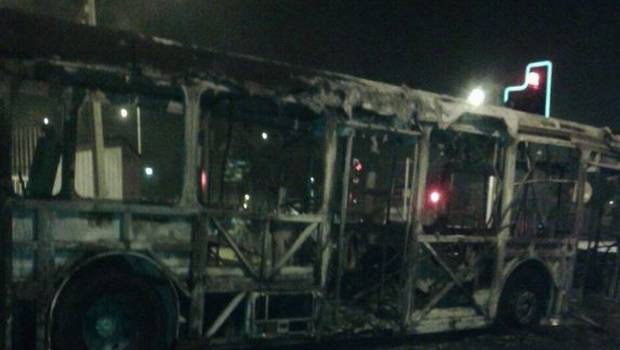
transantiago 8th June On Tues­day, June 3rd, we orga­nized our­selves in com­plic­i­ty with the night to install 3 incen­di­ary devices in 3 dif­fer­ent bus­es of 3 dis­tinct routes of the Transan­ti­a­go cit­i­zen ser­vice; our goal was to burn down these trans­port­ing machines of post­mod­ern slaves.

We vin­di­cate the action as pack so that the polit­i­cal and com­bat­ive sense which moti­vates us is not dis­tort­ed, thus avoid­ing the medi­at­ic spec­u­la­tions of Pow­er and vig­i­lant enti­ties; and with­out going into tedious jus­ti­fi­ca­tions, we make it clear that:

We are at war with civ­i­liza­tion, its soci­eties, its defend­ers and pseu­do-crit­ics, we are com­rades and defend­ers of nature, the earth and all ani­mals that suf­fer the sin­is­ter advance of the domes­ti­cat­ing cap­i­tal­ist glob­al­iza­tion.

Free­dom for Sol, Adri­ano, Gian­lu­ca, Alfre­do Cospi­to, Nico­la Gai, Hans Niemey­er, Her­mes González, Alfon­so Alvial, and all pris­on­ers at war around this rot­ten world; with Sebastián Over­sluij, Mauri­cio Morales, Alexan­dros Grig­oropou­los, and many more, in our mem­o­ry and heart…

For human/nonhuman ani­mal and earth lib­er­a­tion.

Pack of Anar­chic Nihilist Shock

Orig­i­nal text

A Bloody War for Water in Mexico

Screen Shot 2014-05-29 at 9.04.52 PM30th May Fill­ing a glass from his gar­den faucet, Juan Ramírez held the swirling water up to the intense Mex­i­can sun.

Screen Shot 2014-05-29 at 9.04.52 PM30th May Fill­ing a glass from his gar­den faucet, Juan Ramírez held the swirling water up to the intense Mex­i­can sun. Sat­is­fied with its puri­ty, he touched his glass gen­tly against my own. “Your health,” he toast­ed, before drink­ing it down in one gulp.

Mex­i­co City’s reser­voirs con­sis­tent­ly rank amongst the most con­t­a­m­i­nat­ed sup­plies to any world cap­i­tal. Drink­ing from the tap here is sim­ply not rec­om­mend­ed. Ramírez’s water, how­ev­er, comes direct­ly from a vol­canic spring in San Bar­to­lo Ameyal­co, an oth­er­wise impov­er­ished town on the hilly south­west­ern out­skirts of Mex­i­co City, in the bor­ough called Alvaro Obre­gon.

“My grand­fa­ther drank from our town’s spring, and his grand­fa­ther before him,” Ramírez told me when I vis­it­ed the town this week­end. “Now the gov­ern­ment wants to pipe our town’s water direct­ly into rich house­holds and leave us with its con­t­a­m­i­nat­ed filth. We are not going to let that hap­pen.”

Ramírez is leader of a group in San Bar­to­lo Ameyal­co intent on keep­ing their water sup­ply local. Last Wednes­day, Ramírez along with approx­i­mate­ly two thou­sand oth­er res­i­dents of Ameyal­co attacked a police force of fif­teen hun­dred riot offi­cers who were guard­ing the final con­struc­tion stage of a pipeline that will con­nect the town’s vol­canic spring to San­ta Fe, one of the most afflu­ent dis­tricts of the Mex­i­can cap­i­tal.

In videos post­ed online, San Bar­to­lo res­i­dents are seen vio­lent­ly pum­mel­ing an offi­cer in riot gear who had fall­en to the ground.

The res­i­dents beat back both police and pipeline engi­neers, leav­ing at least 100 police offi­cers injured, 20 seri­ous­ly. Res­i­dents said dozens were injured on their side, and author­i­ties arrest­ed five peo­ple. Mex­i­co City’s gov­ern­ment warned that more arrests would come.

While the bat­tle of the morn­ing of May 21 was won by the res­i­dents of San Bar­to­lo Ameyal­co, what the locals now pop­u­lar­ly call the ‘Water War’ is sure to be long and tense.

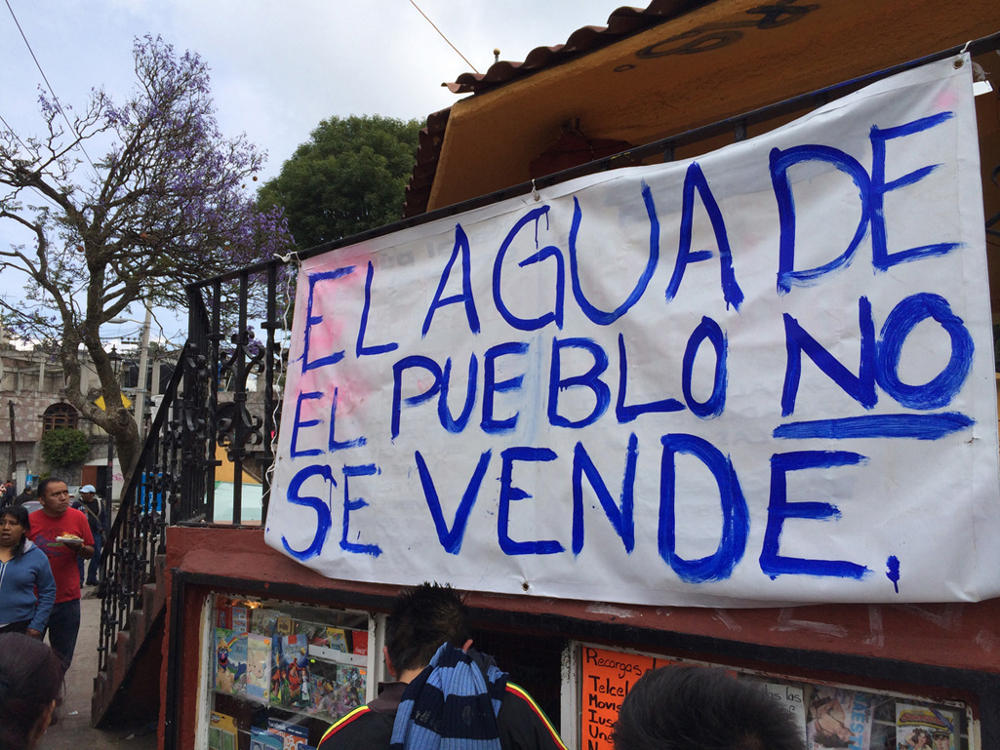
“The peo­ple are unit­ed,” said María Chávez, one of the lead­ers of the town’s resis­tance, which has based itself in the pub­lic library. The munic­i­pal build­ing is papered with mes­sages of sup­port from oth­er towns in the region. A ban­ner pro­claimed: “Our water is not for sale.”

rioting-for-water-rights-in-mexico-article-body-image-1401136919

“When the local government’s plans to extend our pipelines fur­ther afield were drawn up last year, the author­i­ties refused to nego­ti­ate with us. Leonel Luna [the bor­ough del­e­gate] told us the water would be going to help oth­er com­mu­ni­ties in the region. It’s only now that we have put up a fight that they want to talk things over.”

Mex­i­co City’s gov­ern­ment sees the inter­na­tion­al busi­ness-aimed satel­lite city of San­ta Fe, a high-end urban­iza­tion zone rapid­ly built upon a dump­ing ground with no pri­or water infra­struc­ture, as a pil­lar of the local and even nation­al econ­o­my. Although the details of the plan remain murky, San Bar­to­lo Ameyal­co res­i­dents are right­ly sus­pi­cious of any scheme to divert their pure water to the inter­na­tion­al cor­po­rate offices near­by.

Ameyal­co, mean­ing “place where the water spouts” in Nahu­atl, was engulfed by Mex­i­co City’s urban sprawl in the 1950s. Its spring pro­duces 60 liters of pure water every sec­ond, an amount which runs thin for the 35,000 peo­ple who depend on it.

The nar­row streets still chan­nel the smells of pine sap and cook­ing tor­tillas on the cold moun­tain air. Neigh­bors chat in the mar­ket­place about past vic­to­ries and future strate­gies and chil­dren kick soc­cer balls against the main square’s murals of the village’s prized spring.

“When I was a child the water was end­less,” said Ale­jan­dra Espinosa, anoth­er town res­i­dent. Espinosa has lived her entire 54 years in San Bar­to­lo. “Now, due to the larg­er pop­u­la­tion, parts of the town can go a week at a time with­out run­ning water.”

Mex­i­co City has seri­ous prob­lems with water short­ages. One in three homes has no access to run­ning water, forc­ing them to depend heav­i­ly upon water trucks called pipas, which refill homes’ water tanks at exor­bi­tant prices. Sev­en­ty-four per cent of the capital’s water is pumped from under­ground, caus­ing the city itself to sink.

Leonel Luna, del­e­gate of the Alvaro Obre­gon bor­ough, has stat­ed the spring is to be redi­rect­ed to serve oth­er towns in the area. Luna claims oppo­si­tion to the project has been fund­ed by the same busi­ness­men who sell water from pipas, and who don’t want to lose their cus­tomer base if more run­ning water is made avail­able to oth­er towns.

Since the government’s announce­ment in April 2013 that the spring would be con­nect­ed to a wider net­work cov­er­ing the bor­ough, res­i­dents of San Bar­to­lo set up camp beside their main sup­ply tank to defend their pre­cious resource. The project to tap the San Bar­to­lo spring for wider use has been in the works for almost two decades, though, author­i­ties note.

On May 21, the town’s church bells sound­ed out across the hill­side to announce the author­i­ties’ arrival. The res­i­dents respond­ed to the sig­nal by hurl­ing rocks in the nar­row streets, launch­ing fire­works at the police line from win­dows and destroy­ing plumb­ing equip­ment.

“This water belongs to us,” says Manuel Rue­da, anoth­er activist I met at the pub­lic library the move­ment is using as a base of oper­a­tions. “We can’t end up pay­ing for the city’s poor plan­ning.”

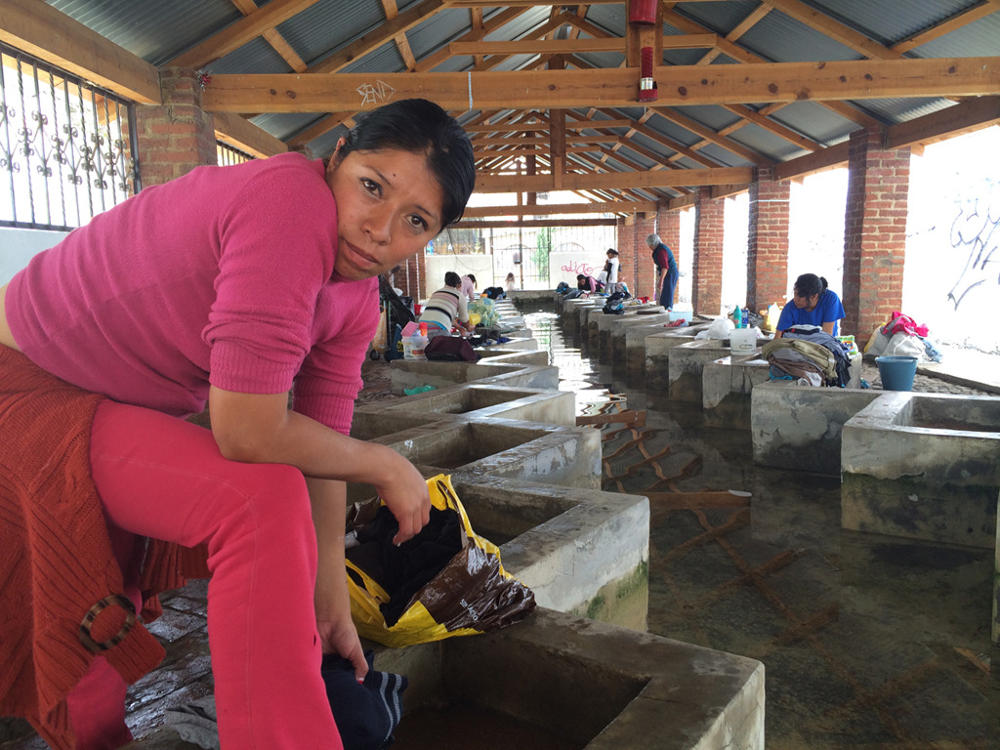
In the town’s last func­tion­ing pub­lic laun­dry, where a com­mu­nal pool is flanked by wash­basins, Lau­ra Hernán­dez wrung the last of the soap from her son’s soc­cer jer­sey. She had man­aged to wash her entire family’s clothes using the sin­gle buck­et of water she had rationed her­self.

“Only half of the hous­es on my street have run­ning water these days, and I live at the top of town,” she said. “Peo­ple at the bot­tom of the hill can go weeks with­out water. How can we sell our water else­where when we have so lit­tle?”

rioting-for-water-rights-in-mexico-article-body-image-1401136958

Oth­ers say San Bar­to­lo is being self­ish with its resource.

“These peo­ple don’t under­stand that oth­er peo­ple in the region need their help,” said Rodri­go Pérez Gar­cía, an event pho­tog­ra­ph­er and reg­u­lar vis­i­tor to the town. “They have a free source of water yet they refuse to share it.”

“It’s pure self­ish­ness,” Pérez con­tin­ued. “At the very least there’s an oppor­tu­ni­ty to sell it by under­cut­ting the water trucks.”

Lead­ers of the move­ment, how­ev­er, said they are not budg­ing. A series of march­es are planned for the com­ing weeks. In recent days, mem­bers of var­i­ous relat­ed or com­plete­ly unre­lat­ed social move­ments in the Mex­i­co City met­ro­pol­i­tan region have sent mes­sages of sup­port to San Bar­to­lo, sig­nal­ing a wider fight in the pub­lic polit­i­cal sphere in Mex­i­co relat­ed to the spring.

“We’re will­ing to nego­ti­ate,” said Juan Ramírez, the man who served me a glass of fresh spring water from his gar­den faucet. “We just don’t want to be treat­ed like brutes. We know our rights like every­body else.”

The Dark Side of Brazil: Police teargas Indians at anti-World Cup protest

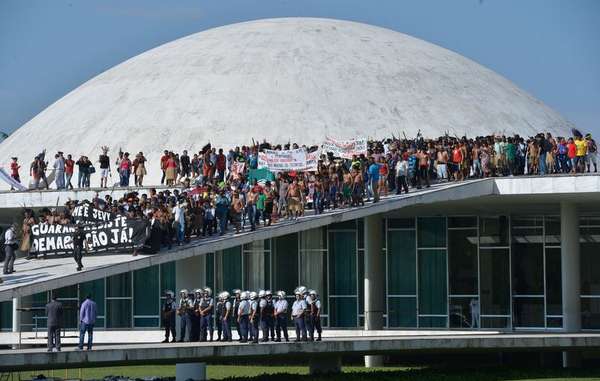
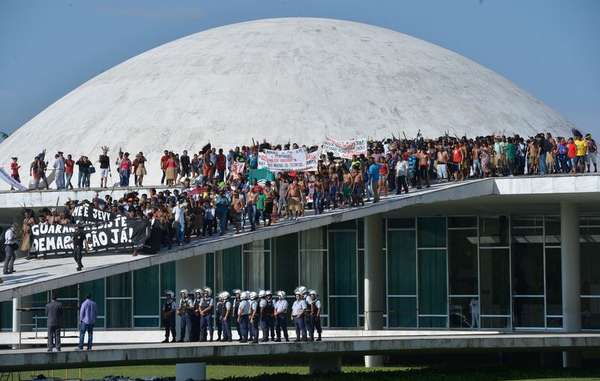
Hundreds of Brazilian Indians are protesting against the World Cup 30th May.

Hundreds of Brazilian Indians are protesting against the World Cup 30th May. Hun­dreds of Brazil­ian Indi­ans are protest­ing against the World Cup this week, march­ing in the streets of Brasília and around the capital’s Mané Gar­rin­cha foot­ball sta­di­um, call­ing for their lands and lives to be pro­tect­ed.

Yes­ter­day Indi­ans bran­dish­ing bows and arrows and car­ry­ing signs read­ing ‘FIFA NO. DEMARCATION YES!’ were tear­gassed by police. Watch a video clip here.

There is mount­ing anger at the government’s fail­ure to rec­og­nize and pro­tect their lands, vital for their sur­vival, while spend­ing mil­lions of dol­lars on host­ing the World Cup.

The pro­tes­tors who are from sev­er­al tribes have forced FIFA to close the sta­di­um, and to can­cel its tro­phy dis­play.

A del­e­ga­tion of 18 indige­nous pro­tes­tors met the Min­is­ter of Jus­tice yes­ter­day. Indige­nous leader Sonia Gua­ja­jara, nation­al coor­di­na­tor of the Asso­ci­a­tion of Indige­nous Peo­ples (APIB), said, ‘We are here to show that with­out our land, we are chained up. We are impris­oned. We are here to demand our rights.’

The Guarani tribe, Brazil’s largest, suf­fers extreme­ly high mal­nu­tri­tion and sui­cide rates as their land has been stolen to make way for vast sug­ar cane plan­ta­tions. Their lead­ers are fre­quent­ly tar­get­ed and killed by gun­men act­ing for the landown­ers.

They are call­ing for their land to be demar­cat­ed as a mat­ter of urgency before more lives are lost, and for the can­cel­la­tion of a series of draft bills which, if passed into law, would dras­ti­cal­ly weak­en their, and oth­er tribes’, con­trol over their lands. Those in the Ama­zon are call­ing for a halt to the many hydro-elec­tric dams being built on their land.

Ear­li­er this year, Nixi­wa­ka Yawanawá, an Ama­zon Indi­an from west­ern Brazil, greet­ed the World Cup tro­phy on its arrival in Lon­don with a T‑shirt read­ing ‘BRAZIL: STOP DESTROYING INDIANS’.

Brazil is home to more uncon­tact­ed tribes than any­where else in the world. They are the country’s most vul­ner­a­ble peo­ple and face extinc­tion if their lands are not pro­tect­ed. Sur­vival is call­ing on Brazil to pro­tect their land and remove all invaders, as has recent­ly been achieved with the Awá, Earth’s most threat­ened tribe.

In the run up to the FIFA World Cup, Sur­vival is high­light­ing ‘The dark side of Brazil’. Click here to find out more about the sit­u­a­tion of Brazil­ian Indi­ans and the government’s attacks on their rights to their land.

Enbridge Pipeline Road Blocked by Protesters in Burlington

index

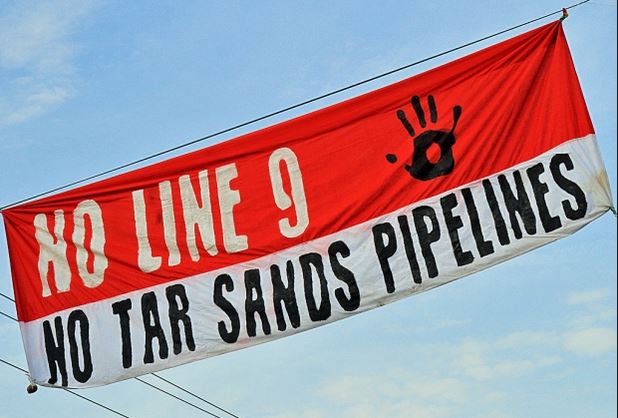
20th May 2014. A group of pro­test­ers has block­ad­ed the road to an exposed sec­tion of Enbridge’s Line 9 pipeline ear­ly this morn­ing in Burling­ton, Ont.

index

20th May 2014. A group of pro­test­ers has block­ad­ed the road to an exposed sec­tion of Enbridge’s Line 9 pipeline ear­ly this morn­ing in Burling­ton, Ont.

The pro­test­ers say they plan to con­tin­ue the block­ade for at least 12 hours.

A news release says the 12-hour stay rep­re­sents 12,000 “anom­alies Enbridge has report­ed to exist on the line.”


“Enbridge calls these devel­op­ments integri­ty digs,” said Danielle Boissineau, one of the pro­test­ers, “but to any­one watch­ing the Line 9 issue, it’s clear Enbridge has no integri­ty. This work on the line is just a Band-Aid, a flim­sy patch over the most out­ra­geous flaws in the Line 9 plan.

“Line 9 has a lot of sim­i­lar­i­ties to Line 6B that erupt­ed in the Kala­ma­zoo Riv­er. The risk is just not worth it,” she said.

From July to Decem­ber of last year, there were 308 main­te­nance digs along Line 9 — and the vast major­i­ty were for cracks in the line. In July alone, Enbridge filed 105 main­te­nance notices for digs on the line, accord­ing to doc­u­ments filed with the Nation­al Ener­gy Board.

The group says its mem­bers include res­i­dents of Burling­ton who don’t want the pipeline run­ning through their city.

“Line 9 has near­ly 13,000 struc­tur­al weak­ness­es along its length” said Bri­an Suther­land, a Burling­ton res­i­dent. “And yet Enbridge is only doing a few hun­dred integri­ty digs.”

There were about 20 pro­test­ers at the site ear­ly Tues­day. As of 8:15 a.m., no police had arrived.

Last June, a group of pro­test­ers shut down con­struc­tion at an Enbridge pump sta­tion in rur­al Hamil­ton.

About 80 peo­ple inter­rupt­ed con­struc­tion at the North West­over site.

In March, the NEB approved a request from Enbridge to reverse the flow and increase the capac­i­ty of the con­tro­ver­sial Line 9 pipeline that has been run­ning between south­ern Ontario and Mon­tre­al for years.

Line 9 orig­i­nal­ly shut­tled oil from Sar­nia, Ont., to Mon­tre­al, but was reversed in the late 1990s in response to mar­ket con­di­tions to pump import­ed crude west­ward. Enbridge now wants to flow oil back east­wards to ser­vice refiner­ies in Ontario and Que­bec.

It plans to move 300,000 bar­rels of crude oil per day through the line, a rise from the cur­rent 240,000 bar­rels, with no increase in pres­sure.

Oppo­nents argue the Line 9 plan puts com­mu­ni­ties at risk, threat­ens water sup­plies and could endan­ger vul­ner­a­ble species in eco­log­i­cal­ly sen­si­tive areas.

Breaking: Blockade Launched Against Enbridge Line 9 Pipeline

Photo: CBC20th May 2014. A group of area res­i­dents have block­ad­ed the access road to an exposed sec­tion of Enbridge’s Line 9 pipeline, begin­ning at 7am this morn­ing.

Photo: CBC20th May 2014. A group of area res­i­dents have block­ad­ed the access road to an exposed sec­tion of Enbridge’s Line 9 pipeline, begin­ning at 7am this morn­ing. They say they will stay for at least twelve hours, one hour for every thou­sand anom­alies Enbridge has report­ed to exist on the line. These com­mu­ni­ty mem­bers turned away Enbridge employ­ees who were sched­uled to do work on Line 9 in prepa­ra­tion for it to car­ry tox­ic dilut­ed bitu­men from the Alber­ta Tar Sands. This par­tic­u­lar work site is adja­cent to the Bronte creek, a major water­way flow­ing to Lake Ontario, the water source for more than ten mil­lion peo­ple.

“Enbridge calls these devel­op­ments integri­ty digs,” said Danielle Boissineau, one of the block­aders, “but to any­one watch­ing the Line 9 issue, it’s clear Enbridge has no integri­ty. This work on the line is just a band-aid, a flim­sy patch over the most out­ra­geous flaws in the Line 9 plan.” [Danielle notes that a record of just some of Enbridge’s false or mis­lead­ing state­ments is avail­able on the Enbridge Lies face­book page

“Line 9 has near­ly 13,000 struc­tur­al weak­ness­es along its length” said Bri­an Suther­land, a Burling­ton res­i­dent. “And yet Enbridge is only doing a few hun­dred integri­ty digs. Enbridge has been deny­ing the prob­lems with the pipe for years, and they still refuse to do the hydro­sta­t­ic test­ing request­ed by the province. Are we real­ly sup­posed to trust Enbridge when they tell us that this time they’ll do it right?”


Many of the block­aders point to the dis­as­trous spill from Enbridge’s line 6b into the Kala­ma­zoo Riv­er in Michi­gan in 2010, where mil­lions of litres of oil spilled and have so far proven impos­si­ble to clean up. But many of them empha­size that their oppo­si­tion to Line 9 goes beyond safe­ty con­cerns.

“This is not about pipelines ver­sus rail; it’s about the Tar Sands,” said Danielle Boissineau. “It’s the dirt­i­est oil in the world: it’s not worth the destruc­tion it takes to pro­duce, it’s not worth the risk to our water­sheds to trans­port, and we def­i­nite­ly can’t afford the car­bon in our atmos­phere when it’s burned. At every step of the process, the Tar Sands out­sources the risks onto our com­mu­ni­ties and poi­sons water­ways like the Athabas­ca Riv­er and the Bronte creek while com­pa­nies like Enbridge get rich.”

Call for Solidarity Actions Against Oil Trains

oil trains 19th May 2014. Maine Earth First!/350 Maine call for Sol­i­dar­i­ty Actions Sur­round­ing Supe­ri­or Court Hear­ing in Fracked Bakken Crude Oil Train Case
oil trains 19th May 2014. Maine Earth First!/350 Maine call for Sol­i­dar­i­ty Actions Sur­round­ing Supe­ri­or Court Hear­ing in Fracked Bakken Crude Oil Train Case

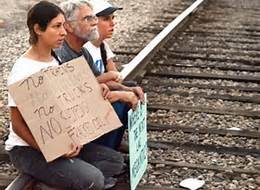
On May 22nd two of three peo­ple who block­ad­ed rail­road tracks in Auburn last August, Doug Bowen and Jessie Dowl­ing of Maine Earth First!, will have a hear­ing at the Androscog­gin Coun­ty Supe­ri­or Court.

Last August, mem­bers of 350Maine and Maine Earth First! con­duct­ed a sit-in on the Pan Am rail­road tracks in the cen­ter of Auburn to call atten­tion to the ongo­ing dan­gers posed by the trans­porta­tion of Bakken crude oil by rail.

This was 7 weeks after a train­load of the same oil explod­ed in Lac Megan­tic, killing 47. Doug Bowen and Jessie Dowl­ing will face charges for this direct action and will present evi­dence for a com­pet­ing harms defense – that com­mit­ting a small­er harm was meant to pre­vent a larg­er one.

There have been at least 6 oth­er major train derail­ments involv­ing Bakken crude oil since Lac-Megan­tic. This train block­ade was one of two block­ades Maine Earth First! And 350 Maine took part in last sum­mer.

Trains run­ning through Maine car­ry crude from the Bakken oil fields of North Dako­ta, where it is “fracked” or extract­ed by blast­ing a high pres­sure tox­ic cock­tail deep into the ground to release oil from shale rock, pol­lut­ing air and water in sur­round­ing com­mu­ni­ties.

With hydraulic frac­tur­ing or “frack­ing” tech­nol­o­gy, oil that has long been impos­si­ble to extract is now the source of an explo­sive oil boom in the Mid­west. With­out enough pipelines to trans­port the Mid­west crude to dis­tant refiner­ies, there has been a surge in the use of trains. Inspec­tions of tracks are infre­quent due to lack of resources to over­see them and a lack of con­cern for local com­mu­ni­ties by giant corporations/government.

Maine  EF!er being arrested after blockade

There have been many train derail­ments through-out the con­ti­nent over the last year and a half oth­er than Lac Megan­tic, includ­ing a 106-car-long oil train in Cas­sel­ton, North Dako­ta which caused sev­en oil cars to explode and also caused an evac­u­a­tion of 2,400 peo­ple, A CN freight train car­ry­ing crude oil in New Brunswick in Jan­u­ary,

A 120-car Nor­folk South­ern train car­ry­ing heavy Cana­di­an crude oil which derailed and spilled in west­ern Penn­syl­va­nia also in Jan­u­ary, and a CSX train that explod­ed in Lynch­burg, Vir­ginia car­ry­ing Bakken Crude Oil on May first, only to name a few.

In Jan­u­ary the U.S. Depart­ment of Transportation’s Pipeline and Haz­ardous Mate­ri­als Safe­ty Admin­is­tra­tion issued a Safe­ty Alert con­clud­ing Bakken crude is more flam­ma­ble than heav­ier oils. Hence the term “bomb trains.”

We are ask­ing indi­vid­u­als and groups to take part in a day of action to bring atten­tion to fracked oil, frack­ing in gen­er­al (if you can tie in into your cam­paigns), unsafe trains car­ry­ing fos­sil fuels (Bakken Crude or oth­er­wise), and/or any oth­er con­nec­tions you can make in your com­mu­ni­ty.

Pos­si­ble tar­gets: Irv­ing Oil, a cor­po­ra­tion that receives oil from the Bakken Crude fields, and the cor­po­ra­tion that was sup­posed to be the recip­i­ent of the oil that explod­ed in Lac Mac­gan­tic Cor­po­ra­tions involved in frack­ing in the North Dako­ta Bakken Shale: http://www.ugcenter.com/operators/Bakken/all Cen­tral Maine and Que­bec Rail­road if you are in Maine (or join us at the cour­t­house!) Places in your com­mu­ni­ty where trains are rolling through with crude oil or oth­er dan­ger­ous extreme ener­gy sub­stances.

Here is an exam­ple in Mon­tana: http://earthfirstjournal.org/newswire/2014/04/13/seven-arrests-in-montana-coal-train-protest/

Ports that are an end point of dan­ger­ous trains. Here is one exam­ple in Wash­ing­ton: http://earthfirstjournal.org/newswire/2014/02/15/crude-oil-terminal-planned-in-nw-portland/

Please keep us updat­ed on any sol­i­dar­i­ty actions you take!

For more infor­ma­tion, inter­views, or to tell us about your action con­tact Chris­tine: blackbean@riseup.net, or 207.505.5114

Paramilitaries Shoot at Tribe Over “Forest Reserves” in Philippines

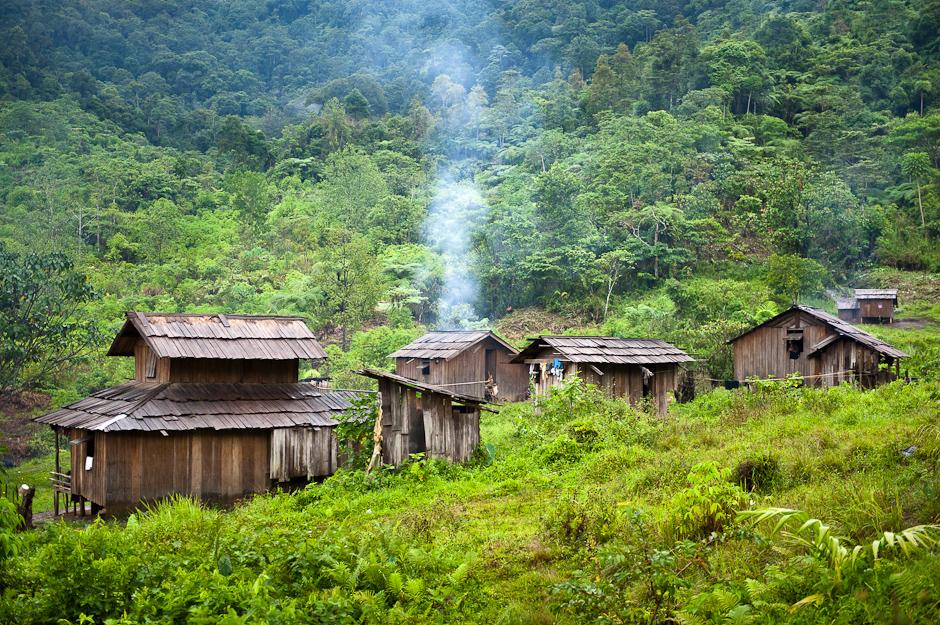
Tigwahanon Village in San Fernando, Bukidnon, Mindanao17th May 2014. The Asian Human Rights Com­mis­sion (AHRC) is deeply con­cerned, and demands an inves­ti­ga­tion into the actions of the secur

Tigwahanon Village in San Fernando, Bukidnon, Mindanao17th May 2014. The Asian Human Rights Com­mis­sion (AHRC) is deeply con­cerned, and demands an inves­ti­ga­tion into the actions of the secu­ri­ty guards and their employ­er land­lord for shoot­ing at, and hold­ing at gun­point, indige­nous peo­ple who were to occu­py their ances­tral land in Que­zon, Bukid­non.

In their mis­sion report, titled: “‘Pakighiusa’: Sol­i­dar­i­ty Mis­sion to Mem­bers of TINDOGA in Sup­port of Their Strug­gle for Land and Life,” pre­pared by Rur­al Mis­sion­ar­ies of the Philip­pines, North­ern Min­danao Sub-Region, it not­ed that the armed secu­ri­ty guards indis­crim­i­nate­ly shot at Manobo-Pulangi­hons tribes on April 23 pur­pose­ly to dri­ve them away from their land.

The indige­nous tribe, com­posed of 530 fam­i­lies are from four clans, are led by Datu San­tiano “Andong” Agda­han. They had already been rec­og­nized as the right­ful own­ers of the 623 hectares of land as part of their ances­tral domain. Datu Agda­han also heads the TINDOGA (Trib­al Indige­nous Oppressed Group Asso­ci­a­tion).

On April 23, in sup­port of their claim, the tribes were accom­pa­nied by offi­cials from the nation­al and local gov­ern­ment agen­cies, notably the Nation­al Com­mis­sion for the Indige­nous Peo­ple (NCIP), the munic­i­pal gov­ern­ment, and the police.

But at around 1pm, armed secu­ri­ty guards, report­ed­ly work­ing for Mr. Pablo “Pol­ing” Loren­zo III, who claims to be the own­er of Ran­cho Mon­tal­van, were deployed, and alleged­ly indis­crim­i­nate­ly shot at the group. They also held “12 indi­vid­u­als at gun point,” five of whom were women, and three were minors.

The armed men delib­er­ate­ly con­cealed their iden­ti­ties by not wear­ing their uni­forms. Most of them wore black long sleeves; their faces are either cov­ered with bal­a­clavas or shirts.

The AHRC is of the opin­ion that the use of force and intim­i­da­tion, by shoot­ing at the indige­nous peo­ple and hold­ing them at gun­point; was done pur­pose­ly to fright­en and intim­i­date this group of indige­nous peo­ple claim­ing their right to occu­py their ances­tral land.

It is report­ed that even though the NCIP has already declared the 623 hectares are the ances­tral domain of the Manobo-Pulangi­hons, “only 70 hectares were allot­ted for use of the claimants. The rest were clas­si­fied as for­est reserves. Inter­est­ing­ly, what is sup­posed to be for­est reserves are most­ly plant­ed with “sug­ar­cane and pineap­ple.”

The AHRC urges the gov­ern­ment to hold account­able Ma. Shir­lene D. Sario the provin­cial offi­cer of the NCIP, for alleged­ly fail­ing to ful­fil the oblig­a­tions required from her to ensure the indige­nous peo­ple are prop­er­ly install in their land.

The AHRC also express­es its dis­ap­point­ment at the lack of con­cern, notably by the local gov­ern­ment offi­cials in Que­zon, Bukid­non, to fail­ing to address the urgent needs of their own con­stituents.

The mis­sion report indi­cat­ed that “no gov­ern­ment offi­cial from Que­zon town to the Provin­cial gov­ern­ment even vis­it­ed the Manobo-Pulangi­hons.”