Milan (Italy): Incendiary Sabotage Against high-speed TAV trains

1-169-300x199

from cettesemaine.info /trans­lat­ed Act for free­dom now!

The night of May 25 to 26, the offices of Italferr(Italian nation­al rail­ways) locat­ed in Via Tor­cel­lo, close to the goods sta­tion of Gre­co Pirelli, were delib­er­ate­ly set on fire. This com­pa­ny is the engi­neer­ing branch that deals with research and devel­op­ment for the Ital­ian nation­al rail­way com­pa­ny, and is par­tic­u­lar­ly involved in stud­ies for the devel­op­ment of the high speed rail (TAV) between Turin and Pad­ua.

Accord­ing to recon­struc­tions of the cops, the fire was start­ed by pour­ing inflam­ma­ble liq­uid through a pre­vi­ous­ly bro­ken win­dow, then light­ing it with a smoke bomb. With­in min­utes, the fire had devoured the fur­ni­ture, com­put­ers and all the paper­work piled there by hard­work­ing engi­neers. Fire­fight­ers who inter­vened around 3:45 am took almost two hours to extin­guish the fire.

Germany: Giant Coal Excavator Occupied 145315

from Ham­bach For­est and here (Ger­man Lan­guage link)

June 6th, 2015
(The occu­pa­tion is ongo­ing)
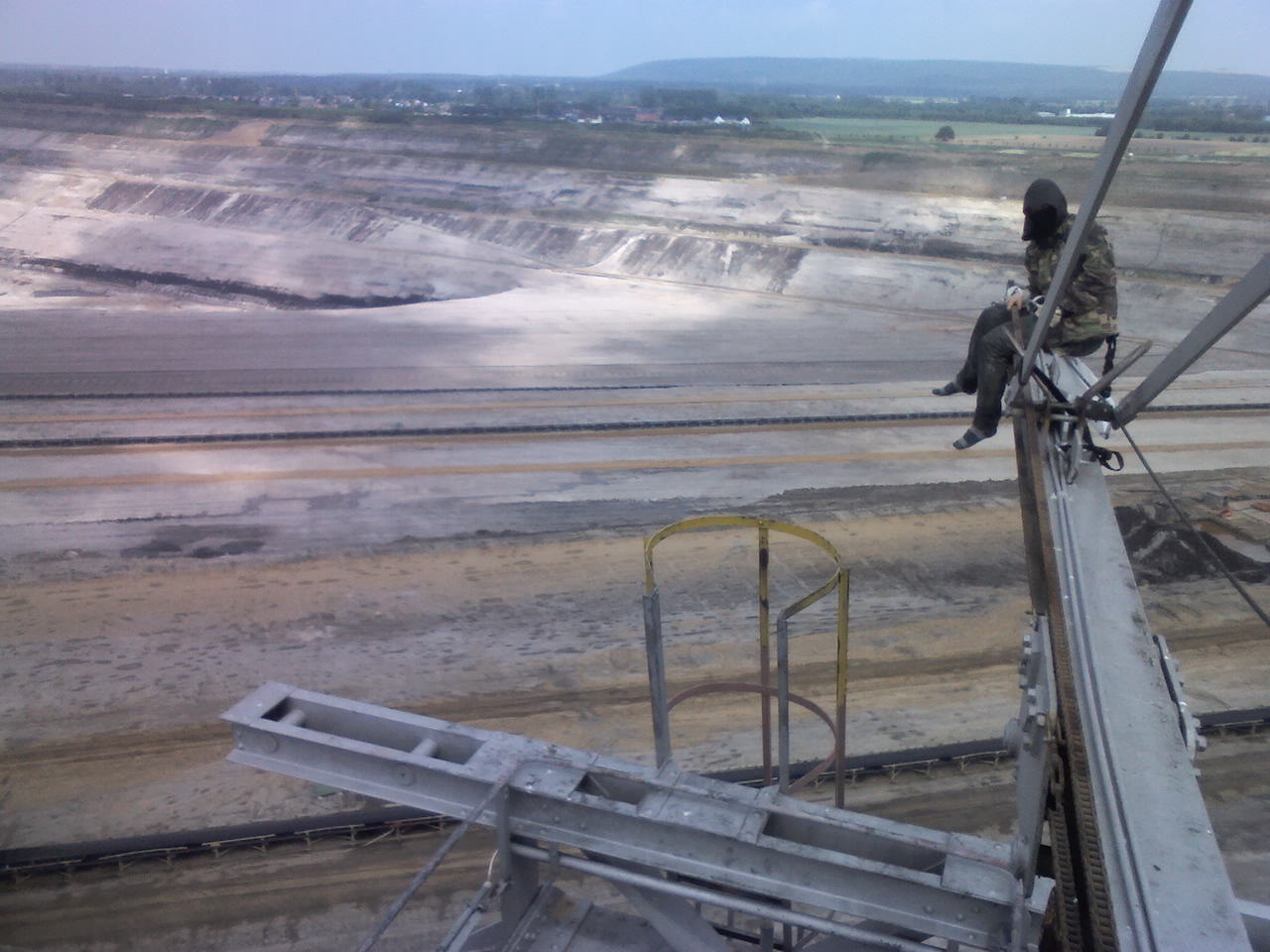
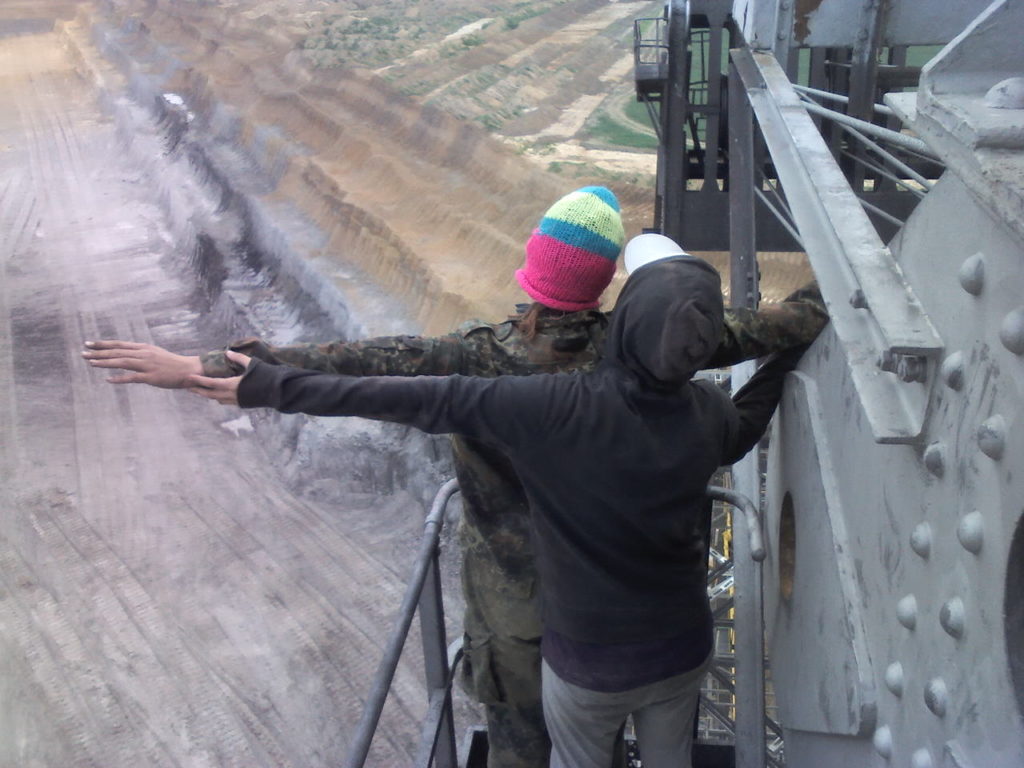
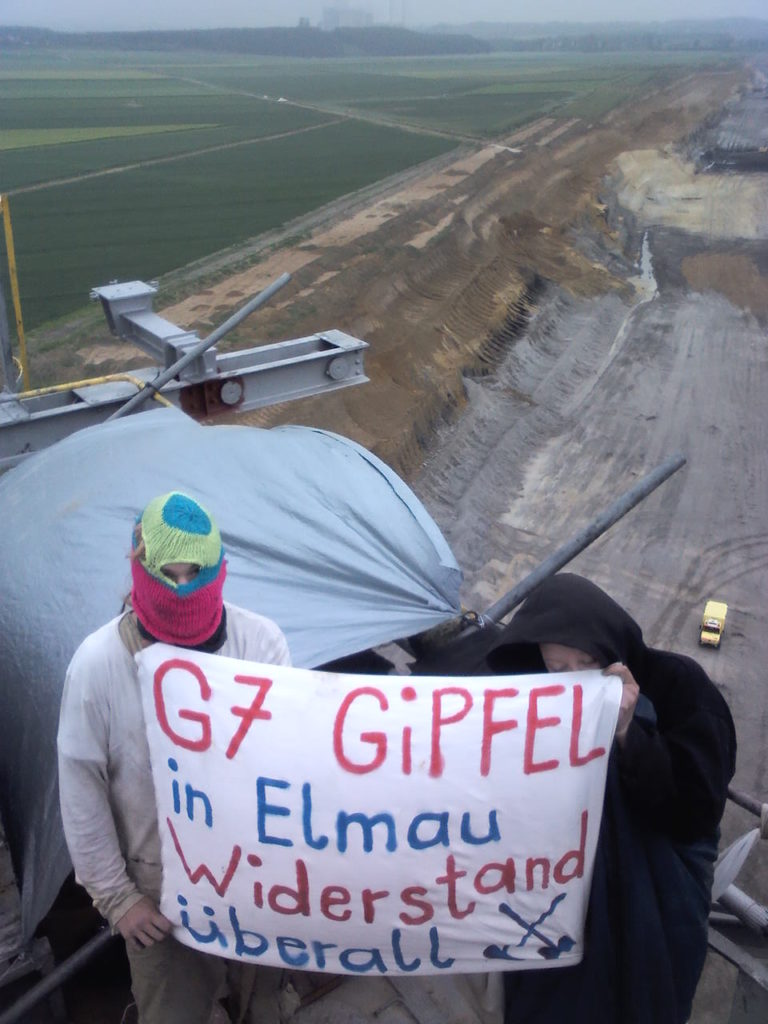
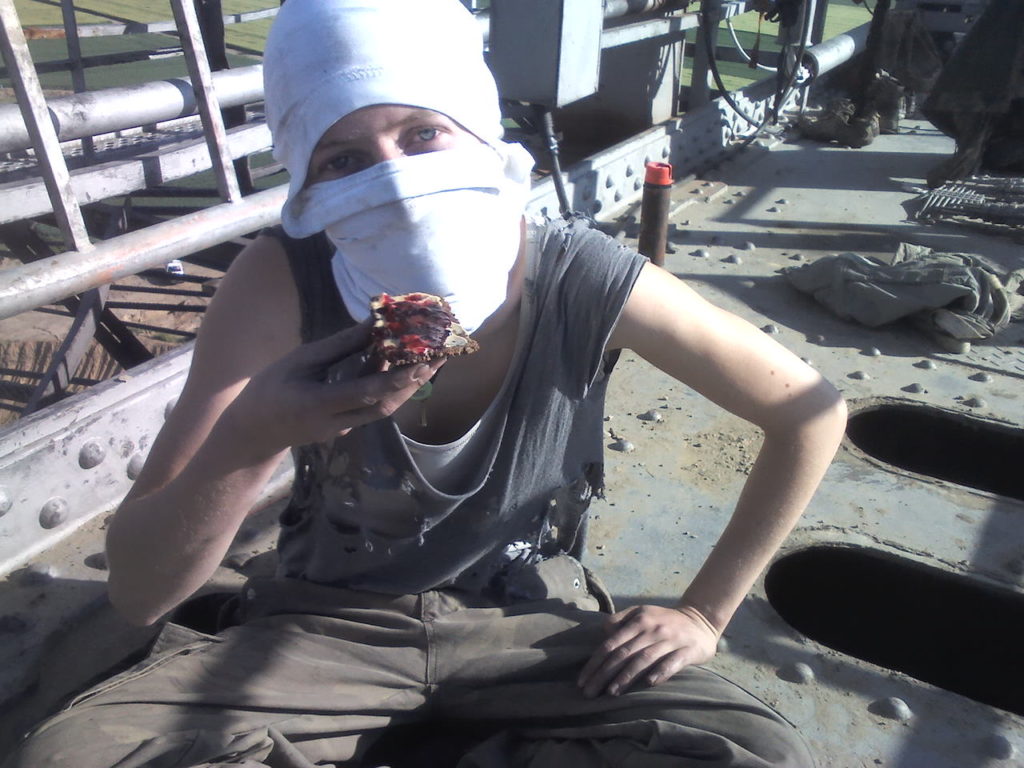
Last night at 1 am, four activists occu­pied a large buck­et wheel exca­va­tor in the Inden open­cast mine. They climbed to the top of the exca­va­tor about 70m high. The machine halt­ed is one of the largest machines in the world that nor­mal­ly destroys 24/7, lit­er­al­ly churn­ing the land­scape. In Inden lig­nite is pro­mot­ed for RhenAish min­ing area above ground, that is: Every­thing is about being in the way and will be destroyed; who lives about is expro­pri­at­ed and expelled.  Where vil­lages, fields, mead­ows and woods once stood incon­ceiv­ably huge holes appear in the land­scape, an indus­tri­al waste­land to the hori­zon. Of all of the ener­gy sources, lig­nite, is ridicu­lous­ly inef­fi­cient, releas­ing huge loads of CO2 and par­tic­u­late emis­sions, and the con­ver­sion of pow­er sup­ply to renew­ables sab­o­taged with inflex­i­ble “base­load plants”.
The event is also a sol­i­dar­i­ty greet­ing from the resis­tance against the Rhen­ish lig­nite min­ing area to the resis­tance against the meet­ing of the G7 in Elmau. There is a pre­sump­tion that this polit­i­cal elite of glob­alised cap­i­tal­ism wants to define the solu­tions to the prob­lems that they them­selves have cre­at­ed , The G7 did not even have the decen­cy to pre­tend to demo­c­ra­t­ic legit­i­ma­cy – they coor­di­nate as the oli­garchic gov­ern­ment of the world, sim­ply because they can. This meet­ing of glob­al pow­er elite has no oth­er aim than solid­i­fy­ing their dom­i­nance.
It remains in the sep­a­ra­tion between indus­tri­al­ized coun­tries and those that may be exploit­ed as sources of raw mate­ri­als and for­eign mar­kets. The G7 bear most of the respon­si­bil­i­ty for the glob­al cli­mate col­lapse, but the con­se­quences are so far main­ly to oth­er parts of the world, and the cli­mate refugees left behind – which unfor­tu­nate­ly is ter­ri­bly often fatal by the inhu­mane bor­der poli­cies of the indus­tri­alised coun­tries. This meet­ing is noth­ing more than the most pow­er­ful crim­i­nal car­tel of the world – so stop  the G7!
“If four peo­ple can par­a­lyze a giant exca­va­tor for sev­er­al hours in such a gen­tle way …”
“… What might hap­pen if only a small part of all the frus­trat­ed peo­ple of the soci­ety were pulled in the same direc­tion?” – From the Action State­ment
It was often said that it is when it comes to cli­mate pro­tec­tion, it is “11:55″, and that the world must act. But the world is not still, and some­one has to start some­where times. In the Rhen­ish lig­nite min­ing area was also often try­ing to stop through the legal and demo­c­ra­t­ic influ­ence on pol­i­tics, the dis­place­ment of peo­ple and the destruc­tion of the Ham­bach for­est. These expe­ri­ences have shown that the deci­sion-mak­ers from the social pow­er elites will always give pri­or­i­ty to prof­it inter­ests – as long as we give them the choice.
This block­ade is not a fur­ther appeal to the politi­cians, to final­ly use their pow­er for good, because we do not trust the pol­i­cy mak­ers any­way. The weapon­ry of the block­ade draws a clear bound­ary: thus far and no fur­ther – Respect exis­tence or expect resis­tance! This action is an appeal to all those who are ready to assume their respon­si­bil­i­ties: Desert­ing from this sys­tem of indus­tri­al destruc­tion, you defied him, the match­ing of forms of resis­tance against it – and then let it decompose.Together we will replace it with some­thing bet­ter! If four peo­ple in such a gen­tle way, can par­a­lyze a giant exca­va­tor for sev­er­al hours – what might hap­pen if only a small part of all the frus­trat­ed peo­ple of this soci­ety pulls togeth­er? If we want to bequeath a hab­it­able plan­et, there must be a thor­ough change from below. This occu­pa­tion can only be the start.
Even a small reminder: For the begin­ning of August, the Alliance mobi­lizes “end area” to a mass block­ade of an open pit in Rhineland. Here should be made pos­si­ble to low thresh­old lev­el a broad mass of peo­ple, access to civ­il dis­obe­di­ence and resis­tance. In addi­tion, each of the four for­est occu­pa­tions in Ham­bach for­est clear­ance is con­stant­ly under threat, and also on the cur­rent­ly rel­a­tive­ly safe occu­pa­tion mead­ow near the for­est there are many points of con­tact for moti­vat­ed peo­ple …
Togeth­er we can make the cap­i­tal­ist lig­nite mad­ness put an end!
The hab­it­abil­i­ty of the plan­et is at stake, pre­cise­ly now.
So Let’s do it!
PRESS RELEASE
Buck­et wheel exca­va­tor in the brown coal mine Inden occu­pied
Dis­trict of Düren. In the night from Fri­day to Sat­ur­day, a buck­et wheel exca­va­tor in the open-cast min­ing inden was occu­pied. Four peo­ple climbed at 1am to the top of the engine at an alti­tude of about 70m. One aim of the cam­paign is to bring the progress of the mine for a few hours to a halt. Sec­ond­ly, the occu­piers explain in their action state­ment sol­i­dar­i­ty with the protests in Elmau against the meet­ing of the G7.
“For the three lig­nite mines in the Rhineland are entire vil­lages and forests per­ma­nent­ly destroyed for­ev­er,” says one par­tic­i­pant action. “We have a respon­si­bil­i­ty for future gen­er­a­tions. Sim­ply ask to politi­cians, and then com­plain that there is no change, is not enough. “As ear­ly as on 15 March, there had been in a sim­i­lar Inden open­cast mine exca­va­tors occu­pa­tion by six peo­ple, inter­rupt­ed in the course of the oper­a­tion of the exca­va­tor for twelve hours.
Today’s block­ade will also release a sign of protest against the meet­ing of the lead­ers of the sev­en largest indus­tri­al nations in Elmau. “There is a pre­sump­tion that this polit­i­cal elite of glob­alised cap­i­tal­ism wants to define the solu­tions to the prob­lems that they them­selves have cre­at­ed,” it says in the action state­ment. “If we want to bequeath a hab­it­able plan­et, there must be a thor­ough change from below. This occu­pa­tion can this be just an impulse. ”
The action is still ongo­ing.
They can be reached under the num­ber 0157 32 48 23 40 and are O‑tones are avail­able. (In regard to the cell phone bat­tery but only to a lim­it­ed extent.) You can also reach activists, the direct con­tact with the exca­va­tors occu­pa­tion hold, on the mead­ow occu­pa­tion under 0157 541 36 100th
16:30 rest. Exca­va­tors eas­i­ly acces­si­ble.
Peo­ple from the area are wel­come to come to the open pit edge.
“It is pos­si­ble to get pret­ty close here.”, Said grade with an activist by tele­phone, who grew up in the vicin­i­ty of the open pit. “From the vil­lage Schophoven there are only a few dirt roads until man stands in front of our exca­va­tors.”
Exca­va­tor in 70m height
14:15 A fire truck arrived.
Some peo­ple climb fur­ther down the exca­va­tor around and to get an idea of ​​the sit­u­a­tion. The police can not see them.
Morn­ing
13:00 twelve hours are man­aged.
The machine stands still; “We are now the only ones here on the exca­va­tor!”
Morn­ing
12:00 loca­tion qui­et. Clothes dry again
Still no police. The clothes are now again most­ly dry. “We hav­ing quite cozy here. Ear­li­er a dog-walk­er wave­dat us. “
Morn­ing
7:00 No more police
The day dawns. Anoth­er pho­to in bright­ness reach us via MMS.
Still no police. Only an ambu­lance is around.
3:00 Police sniffs
Less than 10 Polizist_innen appear, climb up a piece and try to com­mu­ni­cate.
“We’re fine!”, The activists call back.
After some time, the police dis­ap­pear
If four peo­ple can par­a­lyze a giant exca­va­tor for sev­er­al hours in such a gen­tle way … … what might hap­pen if only a small part of pulling all the frus­trat­ed peo­ple of the soci­ety in the same direc­tion? – From the Action State­ment
Staffed 1:00 exca­va­tor
Peo­ple arrive at the open pit and climb the buck­et wheel.
Some were lying down in the ear­ly evening with blan­kets in the woods and a lit­tle pre-sleep.
Now they are drenched by thun­der­storms and full of oil from the exca­va­tors to 70m height and try to curl up under a tarp.

Anti-Mining Blockade Evicted in Guatemala

The eviction comes a day before a presidential meeting and a year after a violent eviction against La Puya’s peaceful resistance.

June 3rd, 2015

from Telesur
The com­mu­ni­ty of La Puya in cen­tral Guatemala, resist­ing the U.S.-owned El Tam­bor gold mine project for over three years, faced evic­tion Tues­day after at least 300 secu­ri­ty forces arrived in the ear­ly morn­ing forc­ing ille­gal dis­place­ment of the block­ade, Pren­sa Libre report­ed. Accord­ing to wit­ness­es, in the ear­ly hours of the morn­ing secu­ri­ty forces, includ­ing riot police, removed bar­ri­cades block­ing vehi­cle traf­fic to clear the entrance to the mine and also took down the community’s signs accom­pa­ny­ing the block­ade.

Com­mu­ni­ty rep­re­sen­ta­tives lat­er spoke with with the offi­cers, say­ing the evic­tion was ille­gal and that they await­ed a legal order for the community’s removal. The threat of evic­tion comes days after La Puya reac­ti­vat­ed its peace­ful block­ade and also coin­cides with the one year anniver­sary of vio­lent evic­tion against the com­mu­ni­ty last May.

Com­mu­ni­ty rep­re­sen­ta­tives have a meet­ing sched­uled Wednes­day with Pres­i­dent Perez Moli­na, whose res­ig­na­tion has been wide­ly called for in recent weeks by social move­ments, to reini­ti­ate a dia­logue on the community’s demands, Pren­sa Libre report­ed. Mem­bers of Guatemala’s Coun­cil for Human Rights also arrived on the scene to observe the increased police pres­ence as a pre­ven­ta­tive mea­sure for the com­mu­ni­ty as they faced the threat of a repres­sive crack­down.
Mem­bers of the resis­tance and orga­ni­za­tions in sol­i­dar­i­ty with La Puya held a demon­stra­tion in the cap­i­tal city Tues­day after­noon to denounce the repres­sion against the peace­ful resis­tance and demand “respect for live and sus­tain­able devel­op­ment.”
La Puya launched its resis­tance against the con­struc­tion of El Tam­bor gold mine in 2012. Women and indige­nous peo­ple are at the fore­front of the community’s non-vio­lent move­ment that has effec­tive­ly put a stop to the work of at least three transna­tion­al min­ing com­pa­nies.
Dur­ing the first of three years of resis­tance against the mine, La Puya caused $US3 mil­lion in loss­es for the com­pa­ny Exmin­gua, the Guatemalan sub­sidiary of Neva­da-based U.S. transna­tion­al extrac­tive cor­po­ra­tion Kappes Cas­si­day & Asso­ciates.

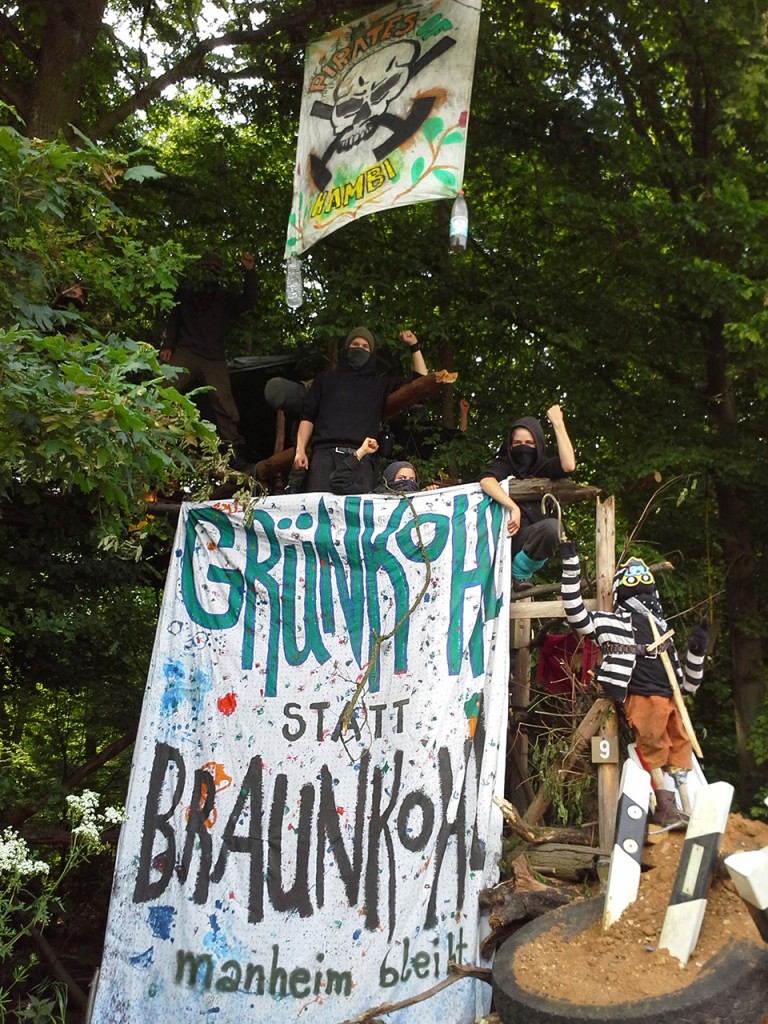
Germany: An Update from Hambach Forest Defenders

June 2nd, 2015

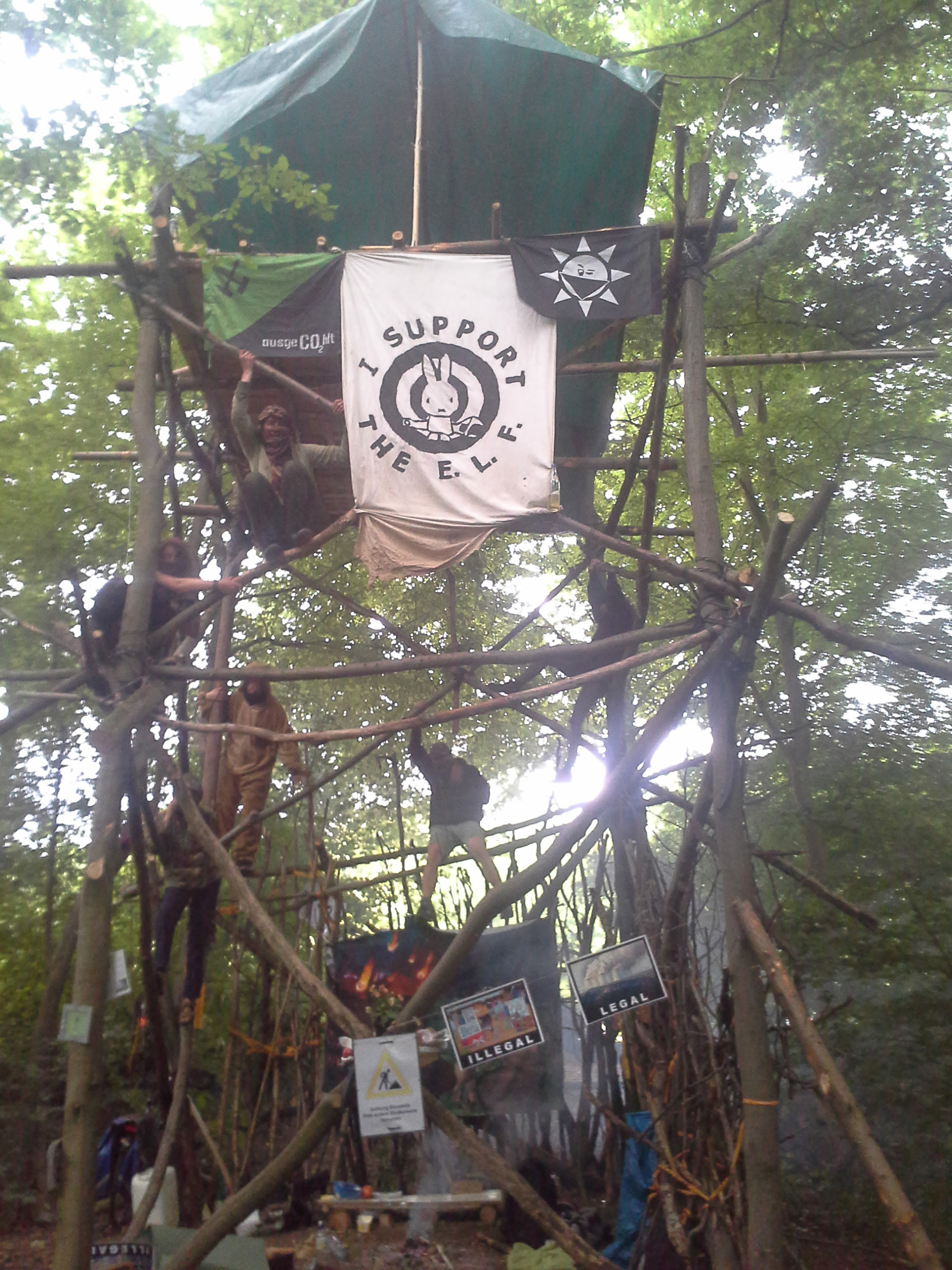
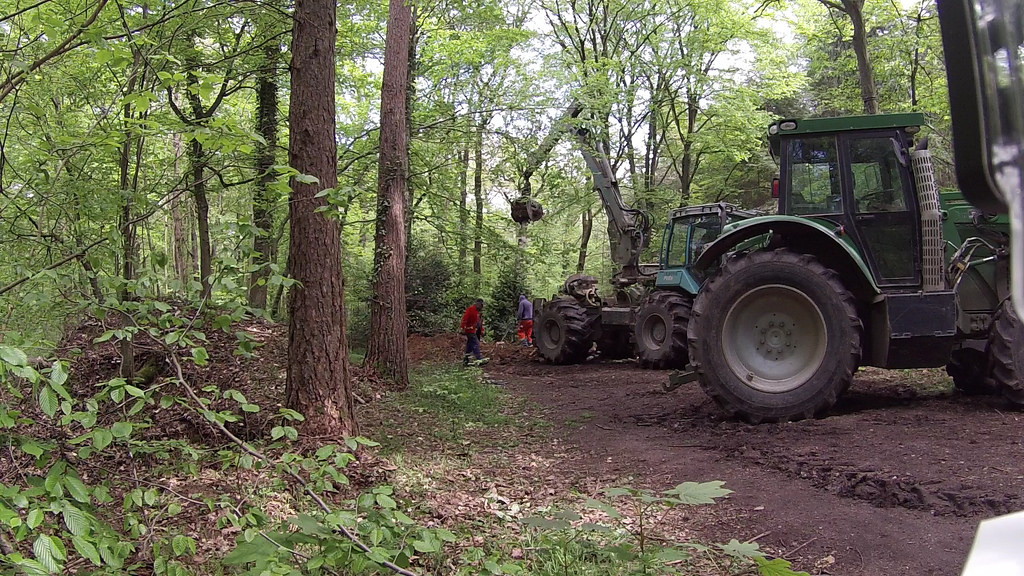
The defence of the the Mil­lenar­i­an Ham­bach­er For­est against the encroching RWE open cast lig­nite mine con­tin­ues with activist-build tow­ers and live-in bar­ri­cades.  The Ham­bach­er For­est is not only one of the last Mil­lenar­i­an Forests in Europe but also the largest on the edge of most­ly defor­est­ed area of Ruhr Val­ley and the Bel­gium, Nether­lands, Lux­em­burg region hence its impor­tance to bio­di­ver­si­ty and ani­mal migra­tion cor­ri­dors.

The lig­nite mine fought through direct action meth­ods by the activist liv­ing in the for­est for the last 3 years has been devour­ing towns, vil­lages, whole forests and drain­ing the watertable for up to 70 kilo­me­ters  and is also the largest in west­ern europe and Europe’s biggest net CO2 emmiter.

The scale of the mine itself being 12km across and near­ly half a kil­lome­ter deep con­jures analo­gies of Mor­dor or Sci­Fi Prison plan­et with the dig­gers  being the world’s largest machines feed­ing the con­vey­or belts deliv­er­ing the coal to rail links sup­ply­ing the pow­er plants on the edge of the mine itself and through­out this region .  This in turn pales in com­par­i­son to the glob­al and exter­nal­ized costs of lig­nite as a cli­mate chaos agent and a num­ber one source of mer­cury con­t­a­m­i­na­tion in worlds oceans.

The Ham­bach For­est Strug­gle con­tin­ues to expe­ri­ence peri­od­ic police intru­sions, arrests and desc­truc­tion of bar­ri­cades which are pro­tect­ing three for­est tree-sits: Oak­town, Beech­town, and Crusty­Town  which are spread through­out the for­est.  The arrest result in sol­i­dar­i­ty actions and demon­stra­tions and rel­a­tive­ly short releas­es.

This is not some­thing that can be said about the irre­versible habi­tat destruc­tion that con­tin­ues day and night and sad­ly after par­tial vic­to­ry of hav­ing the costs of evic­tions and police actions being deferred to the RWE con­cern  the Ger­man Forestry depart­ment start­ed fil­ing com­plains about the for­est being block­ad­ed against the machin­ery send to destroy it and the tax­pay­er and the Ger­man State resumed again pick­ing up the bill for the repres­sion of eco-activists and eco­log­i­cal destru­c­ion.

For that rea­son we urge all who choose to pur­sue the avenues of civic action to put grass­roots pres­sure on the appro­pri­ate­ly named Fed­er­al Min­istry of Food and Agri­cul­ture in Bonn (www.verbraucherlotse.de) Mon­day to Thurs­day from 9:00 bis 17:00 Tele­fon­num­mer 02 28 – 24 25 26 27, per E‑Mail  info@verbraucherlotse.de, 53168 Bonn und unter der Fax-Num­mer 02 28 – 68 45 72 20.


For those in the strug­gle to pro­tect the Earth through direct action we urge you to vis­it us and fol­low the strug­gle and become a part of glob­al com­mu­ni­ty of resis­tance.

Our present demand and wish list includes as always plan­e­tary eco-jus­tice fol­lowed by walkie talkies, 12v bat­ter­ies and solar pan­els.

In Sol­i­dar­i­ty,

Ham­bach For­est Defend­ers!

Canada: Two Arson Attacks on Logging Trucks in the Province of Arauco

Arson attacks

Two arson attacks were car­ried out ear­ly Thurs­day morn­ing at var­i­ous points in the Arau­ca­nia Region.

May 17th, 2015

The first took place in at the Mari­posas Estate, locat­ed on High­way CH181that con­nects the town­ships of Cura­cautín with Vic­to­ria, in the Province of Mal­le­co.

Accord­ing to police reports, the unknown sus­pects entered the area and lit fire to a shed that con­tained log­ging equip­ment.

Guards con­front­ed the sus­pects, which gave way to shots being fired, although police assert there were no injuries report­ed.

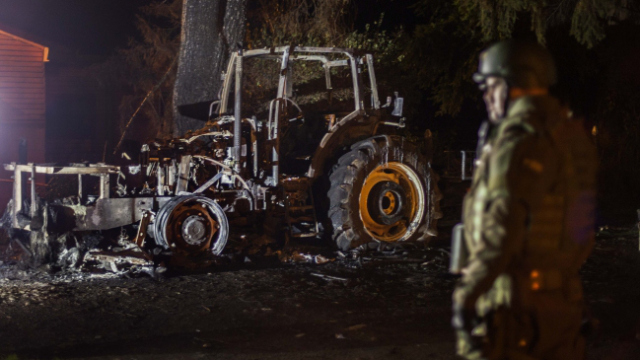
Due to the inci­dent a trac­tor, as well as an exca­va­tor, were com­plete­ly destroyed.

Log­ging trucks and Look-Out Posts Dam­aged in Min­in­co

Mean­while, the oth­er inci­dent took place in an area of Min­in­co, on High­way 5 South, at the north­ern exit of the Arau­ca­nia Region.

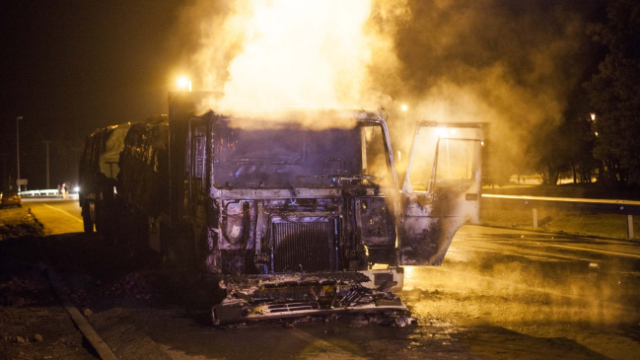
It was there that three log­ging trucks and a pedes­tri­an look­out post were burnt down, and police are inves­ti­gat­ing on the scene.

Close to 20 armed hood­ed sus­pects forced out the truck dri­vers to com­plete the attack, and the fire reached the near­by look-out post, accord­ing to wit­ness­es.

arson 2

Dur­ing the morn­ing hours, the Provin­cial Pros­e­cu­tor, Luis Espinoza, stat­ed that they would work with inves­ti­ga­tors and local police to search for clues in con­nec­tion to two oth­er sim­i­lar inci­dents in the town­ships of Cara­cautín and Vic­to­ria.

“The attacks were simul­ta­ne­ous, which pro­voked the arson of three trucks and a look-out pedes­tri­an post. It was a coor­di­nat­ed attack, divid­ing them­selves between the trucks, and intim­i­dat­ing the dri­vers with long and short firearms,” alleged the pros­e­cu­tor.

The local Gov­ern­ment rep­re­sen­ta­tive of the Arau­ca­nia Region, Mario Gon­za­lez, stat­ed that there would be charges against those respon­si­ble for the inci­dents.

“We are inves­ti­gat­ing the inci­dents with the arson of these trucks and the look-out posts to come up with pos­si­ble charges,” stat­ed the rep­re­sen­ta­tive.

“Every­one rejects these actions that do not favour the devel­op­ment of the region,” added Gon­za­lez.

In the area, pam­phlets relat­ed to the Mapuche land con­flict were found, stat­ing the free­dom of [Mapuche Polit­i­cal Pris­on­er] Patri­cio Queip­ul.

from Women’s Coor­di­nat­ing Com­mit­tee for a Free Wallma­pu

Source: Radio Coop­er­a­ti­va

Germany: Police and Security Clear Barricades in Hambach Forest

Police, RWE and secu­ri­ties appeared at the occu­pa­tions in the Ham­bach For­est.

28 April 2015: At around 11 o’clock, police, RWE and secu­ri­ties appeared at the occu­pa­tions in the Ham­bach For­est. They cut sev­er­al climb­ing ropes, imposed dis­missals and sur­round­ed the liv­ing bar­ri­cade.
This is not the first time climb­ing ropes where cut as a sab­o­tage. This is a life threat­en­ing and use­less action on behalf of the police and RWE.

This hap­pens after the ‚dia­log‘ in the state par­lia­ment in Düs­sel­dorf with the police, the min­istry of inter­nal affairs, the par­ties, RWE and the region­al ini­tia­tive on the 20th of April this year. After the annu­al gen­er­al assem­bly of RWE last week and the human chain in Garzweil­er last week­end.
This is sup­posed to be the ener­gy tran­si­tion and the dia­log that is held. The inter­est of econ­o­my and those who are payed by them are in the fore­ground. On the 21th of may, the admin­is­tra­tive court in Aachen will decide if the mead­ow occu­pa­tion could be imme­di­ate­ly evict­ed. This is a call­out to all peo­ple who want to resist against the destruc­tion of land­scape.
Pics of the action [here]

News

06:28 am
Night is pass­ing and a new day is ris­ing… at the moment one per­son is in front of the police sta­tion, with ban­ners and infor­ma­tion. The police told to reg­is­ter a pick­et(?). If not the ban­ners should be removed. the out­come remains open…

05:50 am
Dur­ing the night, the per­sons in front of the police sta­tion was switched. It remains calm with no rain. Come around and bring break­fast. Hof cof­fee and tee are wel­come.

02:37 am
A sign of life from the cel­lars of the courts of this city. The press and a per­son in front of the police sta­tion are deter­mined to stay until our friend is released. In front of the police sta­tion, a gui­tar is play­ing and from the cel­lars one can hear the Anti RWE song from Mona&Hummel. You can lis­ten to it here: http://monaundhummel.noblogs.org/musik/

01:28 am
Blan­kets, Matrass­es and rice to eat have been brought. Here you can find a film doc­u­ment­ing the assaults of the RWE secu­ri­ty against activists. They are appar­ent­ly talk­ing about the sup­posed dig­ger occu­pa­tion of 06.04.2015.

01:20 am
Greet­ings from the police sta­tion in Kalk, we are prepar­ing for a long night.

00:05 am
Sev­er­al peo­ple are at the police sta­tion in Cologne/Kalk, to show sol­i­dar­i­ty with our arrest­ed friend. She is hap­py about sup­port, as well as blan­kets, hot tee and cups. The hot choco­late is almost gone! Come around!

23:30 pm
We are online again and have installed a press loca­tion and an EA in Cologne. If you want to know more about the course of events around our arrest­ed frend. This num­ber is reach­able around the clock: 0049 15753511306

18:oo pm
We just received the sad mes­sage that a friend of ours, who has pre­vi­ous­ly been held cap­tured in Hürth, has now been trans­fered to the prison n Cologne/Kalk. A release is not in sight. As she has been locked on, they charge her pf ‚resis­tance against execu­to­ry officers‘We send you pow­er and strenght… . The police oper­a­tion was com­mis­sioned by the region­al for­est depart­ment Rhein Erft. One of the many insti­tu­tions which are close­ly relat­ed to RWE and who sup­port the deple­tion of the Ham­bach For­est, as has been shown in the last years dur­ing sim­i­lar oper­a­tions.

16:31 pm
The police retreat­ed from the for­est. Appar­ent­ly the oper­a­tion was enforced by the for­est depart­ment of NRW.

15:30 pm
Heavy machin­ery of RWE is still on it’s way through the for­est and on the for­mer high­way A4, clear­ing the bar­ri­cades. The first sup­port­ers are arriv­ing in front of the police sta­tion in Hürth.

14 pm
More police cars/trucks arrive and dri­ve towards the for­est occu­pa­tions.

13:50 pm
RWE evict­ed the Hedge­hog with the help of police, now they cut a swath of destruc­tion through the for­est.

13:30 pm
The police just announced that the per­son locked in the Hedge­hog has been brought tot he police sta­tion in Bergheim, accom­pa­nied by a medic.

12:50 pm
The per­son in the Hedge­hog is evict­ed. They will start with the destruc­tion of the habi­tat.

12:30 pm
The sit­u­a­tion around the Hedge­hog is tense. There, RWE secu­ri­ty and diverse police depart­ments have sur­round­ed the place and plan to destroy the bar­ri­cades in the for­est and evict and destroy the Hedge­hog (a big, liv­ing bar­ri­cade). On per­son locked them­selves in the Hedge­hog to stop fur­ther use­less destruc­tion of nature with their own body.
The Hedge­hog is locat­ed at the for­mer meet­ing point in the for­est, where some RWE secu­ri­ties stole a stat­ue of Christ a few months ago.
Apart from this, the helpers of nature destruc­tion have left the mead­ow, Oak­town and Beech­town for now. Arrest­ed peo­ple are set free, noth­ing else is known so far.

12 pm
Peo­ple are arrest­ed in the Ham­bach For­est

11:40 am
Activists are sur­round­ed and dis­missals are imposed


Also, support the Hambach Defenders on 16 May:

from Ham­bach For­est Occu­pa­tion
Sup­port the envi­ron­men­tal move­ment. Mead­ow under legal pres­sure

We at the Ham­bach­er For­est have been resist­ing envi­ron­men­tal destruc­tion by the largest coal mine in West­ern Europe for the last three years expe­ri­enc­ing 3 major evic­tions and numer­ous police and secu­ri­ty actions. Now we are fac­ing a new per­il. Our sup­port camp with its veg­an kitchen, the­ater, infos­hop and 2 libraries, numer­ous liv­ing and guest spaces is fac­ing legal pro­ceed­ings in Aachen on the 21st of May with a demon­stra­tion of sup­port on May 16th in Cologne.
The Mead­ow Sup­port Camp has become a can­vas for build­ing with straw­bail, green roofs, renew­able ener­gy and bio­dy­nam­ic farm­ing. It is also a home to many activists includ­ing two fam­i­lies with chil­dren. Sup­port­ing at the same time two for­est occu­pa­tions, direct action cam­paigs and pub­lic events.
We would like to call for inter­na­tion­al sol­i­dar­i­ty and sup­port in the form of legal assis­tance in Ger­many as well as inter­na­tion­al­ly. Please con­tact the court involved:

Demon­stra­tion on the 16th of May
Against coal min­ing in rheine area
Cologne / Ehren­feld 14 o‘clock

Prozess on the 21st of May
Achen Admin­is­tra­tive Court
Adal­bert­stein­weg 92
im Jus­tizzen­trum
52070 Aachen
fax 0241 9425 83204
tel 0241 9425 0

This is the court that will be attempt­ing to use build­ing code reg­u­la­tions to destroy struc­tures in the Mead­ow Sup­port Camp. It is the same reg­u­la­tions that are reg­u­lar­ly used against earth­ship, straw bail and oth­er infor­mal archi­tec­ture and spaces in favor of resource extrac­tion rich(wasteful and destruc­tive) habi­tats and inter­ests.

‘Civil war’ Brewing Over Disputed Greek Goldmine

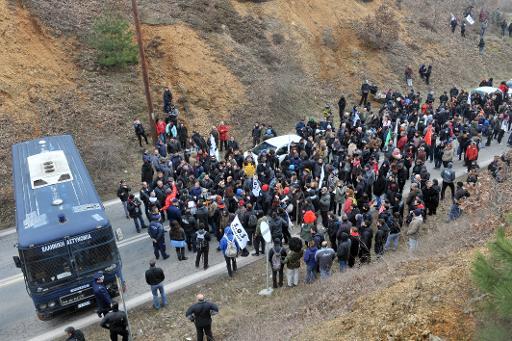
A police bus blocks a road as gold mine work­ers protest against the government’s plan to scrap a gold mine project in the Halkidi­ki penin­su­la, north­ern Greece, in Skouries on Feb­ru­ary 15, 2015

April 12th, 2015

Scrawled on the homes of the vil­lage of Mega­li Pana­gia in north­ern Greece are slo­gans emblem­at­ic of the deep rift caused in this soci­ety by a con­tro­ver­sial Cana­di­an gold min­ing project.

“Gold­mines are a curse for every nation,” reads one — oth­ers are more pro­fane.

For the past three years, the invest­ment of Hel­lenic Gold — a sub­sidiary of Cana­di­an firm Eldo­ra­do Gold — has deeply divid­ed the local com­mu­ni­ties of the Halkidi­ki penin­su­la, even set­ting fam­i­ly mem­bers at each oth­ers’ throats.

In Mega­li Pana­gia itself, tit-for-tat attacks on shops and cars belong­ing to rival fac­tions have been going on for years.

Until now, most of the demon­stra­tions were by res­i­dents fear­ing that the project will cause irre­versible harm to the forest­ed Halkidi­ki penin­su­la, one of Greece’s most pop­u­lar tourist areas.

But the arrival in Jan­u­ary of a new left­ist gov­ern­ment that oppos­es the invest­ment has sparked a mobil­i­sa­tion among Hel­lenic Gold employ­ees afraid of los­ing their jobs.

“A civ­il war is unfold­ing and the gov­ern­ment must clear this sit­u­a­tion up imme­di­ate­ly,” says Yior­gos Kyrit­sis, a legal rep­re­sen­ta­tive for the anti-min­ing fac­tion.

“I know of one pend­ing law­suit con­cern­ing a beat­ing between two broth­ers,” he told AFP.

Ear­li­er this month, riot police were sent in when the rival groups came close to clash­ing in an oak for­est between the vil­lages of Stra­toni, where Hel­lenic Gold has its base, and Ieris­sos, which oppos­es the project.

– ‘There will be blood’ –

Police min­is­ter Yian­nis Panousis lat­er said some of the pro­test­ers were fir­ing bolts from sling­shots.

Panousis warned “there will be casu­al­ties” unless the sit­u­a­tion is resolved.

The new left­ist gov­ern­ment has clear­ly declared its oppo­si­tion to the project, with Ener­gy and Envi­ron­ment Min­is­ter Pana­gi­o­tis Lafaza­nis recent­ly pledg­ing to “employ all pos­si­ble legal means” to halt it.

After the lat­est protest Lafaza­nis went fur­ther, accus­ing the com­pa­ny of act­ing “as a state with­in a state” and mobil­is­ing its staff to cause vio­lence.

“Nobody can black­mail the gov­ern­ment… Greece is not a banana repub­lic,” Lafaza­nis’ min­istry said in a state­ment.

In a sim­i­lar vein, the dai­ly news­pa­per of the rul­ing Syriza par­ty, Avgi, brand­ed the protest­ing min­ers “mer­ce­nar­ies”.

The mine employ­ees, who plan to protest in Athens on April 16, counter that it is they who have faced intim­i­da­tion and vio­lence from the so-called envi­ron­men­tal fac­tion since the project was first announced in 2011.

In the town of Ieris­sos, where most res­i­dents oppose the project, fam­i­lies of min­ers live in a “cli­mate of ter­ror”, says their union rep­re­sen­ta­tive Chris­tos Zafeiroudas.

“What is dan­ger­ous is that this hatred has even passed to the chil­dren in the local schools. The com­pa­ny may leave one day, but we still live here,” he told AFP.

In 2012, dozens of min­ers trashed an obser­va­tion post manned by anti-mine activists in the moun­tain of Skouries, near a planned expan­sion site of the mine project.

In turn, in a pre-dawn raid in 2013, hood­ed mil­i­tants threw Molo­tov cock­tails at the mine work­site, wound­ing a guard and dam­ag­ing equip­ment.

The police sta­tion of Ieris­sos was lat­er ran­sacked after two local men were arrest­ed on sus­pi­cion of par­tic­i­pat­ing in that attack.

The min­is­ter in charge at the time said the anti-mine pro­test­ers saw them­selves as real-life ver­sions of the feisty Gauls that take on the Roman Empire in the Aster­ix com­ic books.

“We are fac­ing oppo­si­tion from a sec­tion of the local com­mu­ni­ty that wants to impose its own law and oper­ate like a Gaul­ish vil­lage,” then pub­lic order min­is­ter Nikos Den­dias said.

Hel­lenic Gold says it plans to invest 1.3 bil­lion euros ($1.38 bil­lion) in the area over­all, and extract 9.6 mil­lion ounces of gold.

Its oper­a­tions, it says, have been repeat­ed­ly vet­ted and cleared by the author­i­ties.

Anti-mine pro­test­ers claim the project will cause irre­versible harm to the envi­ron­ment, drain­ing and con­t­a­m­i­nat­ing local water reserves and fill­ing the air with haz­ardous chem­i­cals includ­ing lead, cad­mi­um, arsenic and mer­cury.

It is like­ly to also affect the area’s agri­cul­tur­al and tourism econ­o­my, they say.

The pre­vi­ous con­ser­v­a­tive gov­ern­ment had sup­port­ed the invest­ment, argu­ing that it would cre­ate hun­dreds of jobs in the reces­sion-hit coun­try where the unem­ploy­ment rate now stands at over 25 per­cent.

Anoth­er Cana­di­an com­pa­ny, TVX, began an oper­a­tion in Halkidi­ki near­ly two decades ago before pulling out in 2003.

Denmark: protest camp against French Shale Gas Company

April 10th, 2015

[ from US EF! Newswire: Editor’s note:  The fol­low­ing piece has been com­posed from words sent our way as well as from var­i­ous arti­cles.  As the oppo­si­tion con­tin­ues, how­ev­er, there will be more updates and rebel­lious cries.  For hin­der­ing Total until its con­t­a­m­i­nat­ed shad­ow retreats from Den­mark and trips on its own grimy machin­ery! ]

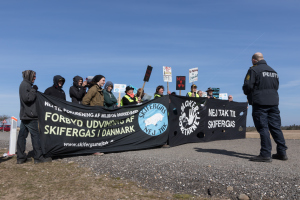
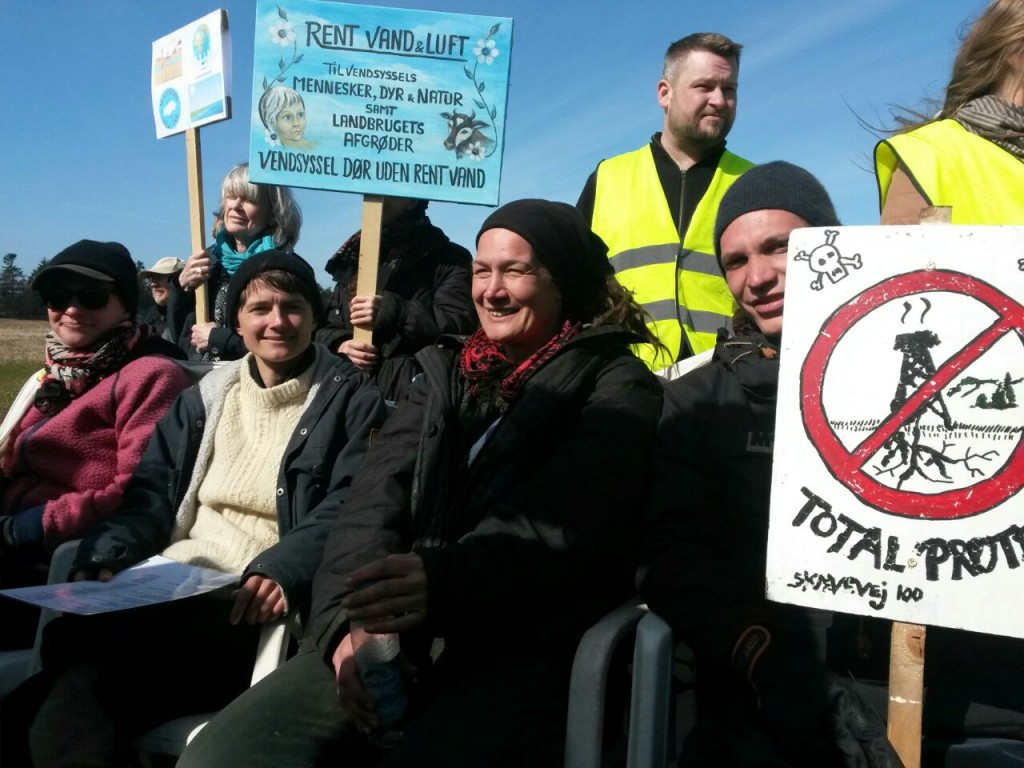
Denmark—On June 25 of last year, after many hours of debate and gath­er­ing votes amid the cries of anti-frack­ing pro­test­ers, Denmark’s first drilling license for shale gas was approved in Fred­erik­shavn, a munic­i­pal­i­ty locat­ed in north­ern Den­mark.  The warped deci­sion will enable Total—a French oil and gas com­pa­ny and fifth largest inter­na­tion­al ener­gy com­pa­ny— to begin its degrad­ing explo­ration and estab­lish a well in near­by Dyb­vad.

“We had a good and fac­tu­al debate,” Bir­git Sten­bak Hansen, Frederikshavn’s may­or, told Jyl­lands-Posten news­pa­per. “I am pleased that we can move on in this case after prepar­ing metic­u­lous­ly for the coun­cil.”
Although the Dan­ish Gov­ern­ment has expressed plans to divert from fos­sil fuels and has gained an inter­na­tion­al rep­u­ta­tion for “green ener­gy”, its sur­ren­der­ing to Total for the sake of sup­port­ing Denmark’s wel­fare state, as well as its empha­sis on rip­ping through the land in a “respon­si­ble man­ner”, speaks oth­er­wise.

In order for exter­nal indus­tries to oper­ate legal­ly with­in Denmark’s beau­ti­ful land­scape, they have to be approved by the the Dan­ish Sub­soil Act and the Envi­ron­men­tal Committee—the enti­ties in place to autho­rize which com­pa­nies can spit on them. Through such over­sight, Total and North Sea Fund (a state-owned oil and gas co.) were grant­ed two licens­es back in 2010, allow­ing for shale gas poten­tial to be inves­ti­gat­ed in two areas of Den­mark.

Just days ago, we received news that Total is prepar­ing its numb machin­ery to drill the first test well and locals are retal­i­at­ing. A protest camp has been estab­lished on-site and has been active since the per­mits began to be exer­cised.

The atmos­phere of the encamp­ment is quite live­ly with defi­ant song and the num­bers of war­riors becom­ing inte­grat­ed in the fight is grow­ing.

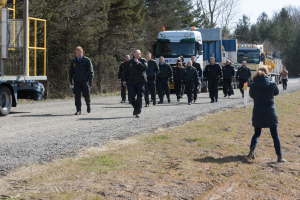
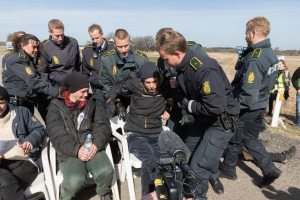
Through­out the last few days, road block­ades have been formed and sus­tained for 2–3 hours by locals and allies to hin­der Total’s truck con­voys from enter­ing the site. While the first bar­ri­cade was dis­persed after a brief debate with police, the most recent end­ed with folks being phys­i­cal­ly dragged from the scene by cops. As sol­i­dar­i­ty is fos­tered between locals and their allies, there will most like­ly be more block­ades and orga­nized revolts to come.

This is the first envi­ron­men­tal­ly-based direct action that is unrav­el­ing in Den­mark since COP15 , as well as the first against the shale gas indus­try. Region­al mobi­liza­tion is gain­ing momen­tum and voic­es of those open­ly oppos­ing Total’ʹs invest­ments are wide­ly cir­cu­lat­ing.  Orga­ni­za­tions includ­ing Green­peace and the Dan­ish Soci­ety of Nature Con­ser­va­tion (Dan­marks Naturfred­nings­foren­ing – DN), have also been broad­cast­ing state­ments of dis­ap­proval.


With Alum Shale’s recov­er­able nat­ur­al gas deposits being esti­mat­ed to con­tain over 6.9 tril­lion cubic feet, there is quite the bun­dle of incen­tive to invite more com­pa­nies like Total to strut through the land­scape. It becomes even more vital, there­fore, for orga­nized upris­ings, such as the cur­rent encamp­ment, to take place.

For Com­mu­ni­ty Auton­o­my and Earth Lib­er­a­tion!

Indigenous Colombians Clash with Police and Paramilitaries for “Liberation of Mother Earth”

April 2nd, 2015

[NOTE: All faces have been blurred and all names have been with­held for secu­ri­ty rea­sons.]

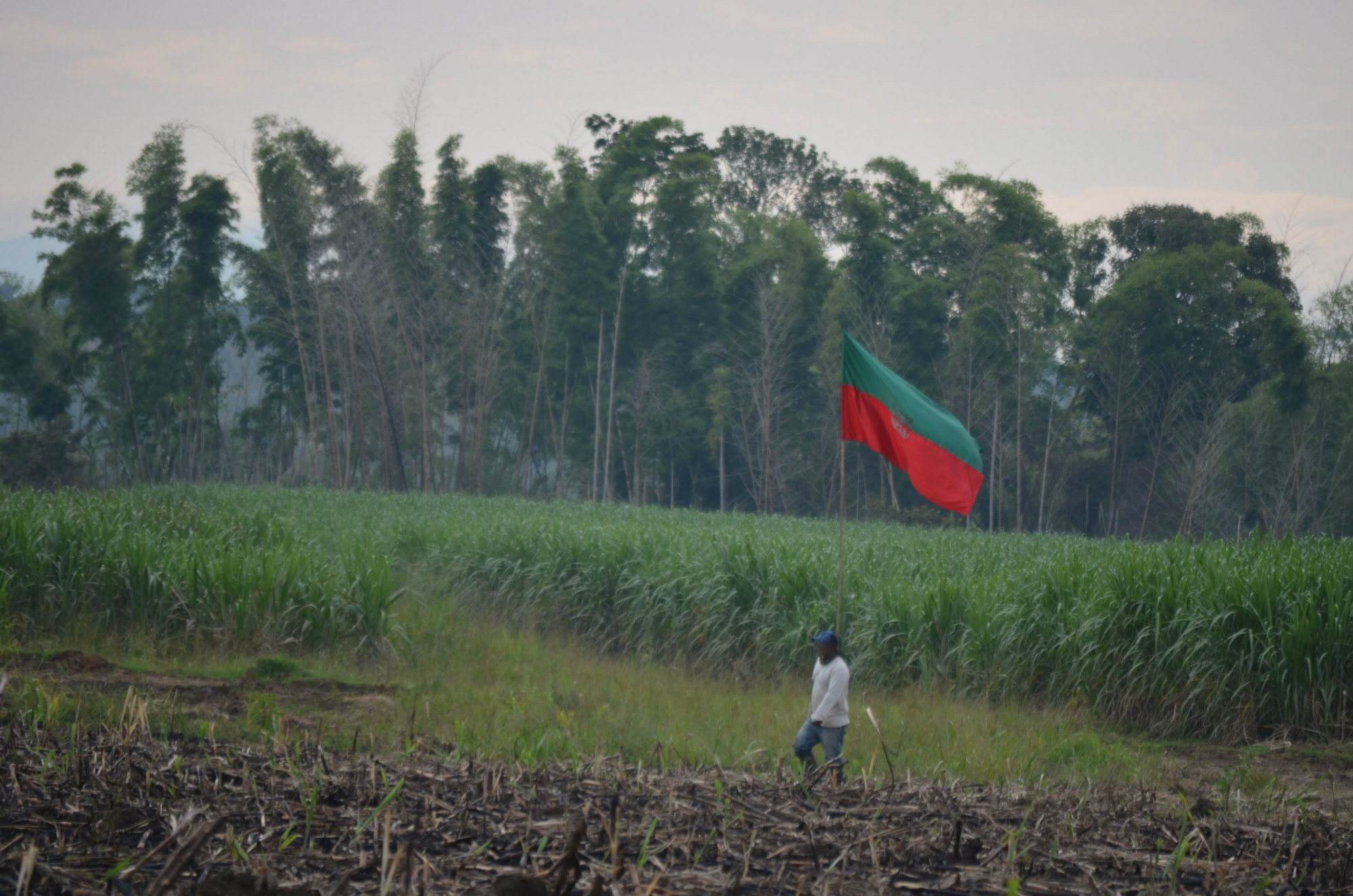
Clash­es have erupt­ed in Colombia’s west­ern depart­ment of Cau­ca as the Nasa Indige­nous Peo­ples press the gov­ern­ment to ful­fill its promise to return 15,600 hectares to their con­trol. A suc­ces­sion of occu­pa­tions of sug­ar plan­ta­tions has seen the gov­ern­ment deploy the army and riot police against them prompt­ing fierce bat­tles across the north of the region.

This is the lat­est stage in a decades-long strug­gle for the return of indige­nous ter­ri­to­ry lost to inten­sive agri­cul­ture, a strug­gle that received inter­na­tion­al atten­tion in past decades fol­low­ing a wave of mas­sacres. Pro­tect­ed by the Indige­nous Guards, the fields remain large­ly under Nasa con­trol, but an abrupt rise in threats from the “Black Eagles” para­mil­i­tary group and the issuance of new evic­tion orders by the gov­ern­ment raise fears that dead­ly vio­lence may return to the region.

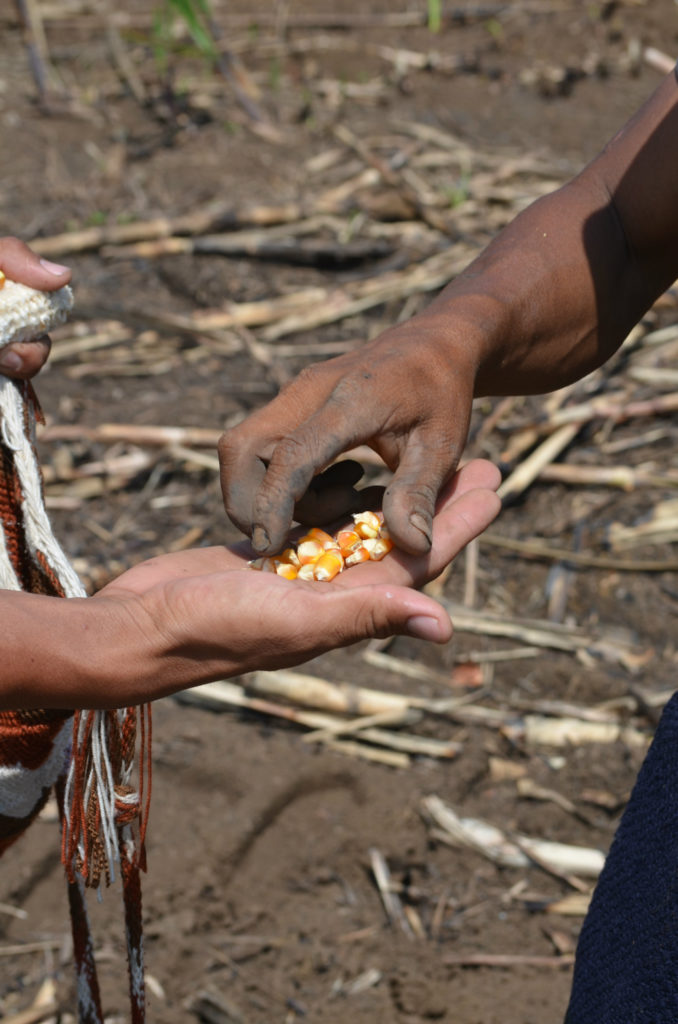
There was no shade to shel­ter the small par­ty as they crossed the expanse of earth last week, car­ry­ing a plan­tain sapling and a bag of maize. In the mid­dle of the field, its vast­ness already rip­pling in the morn­ing heat, they plant­ed the sapling and scat­tered the seeds of local indige­nous maize.

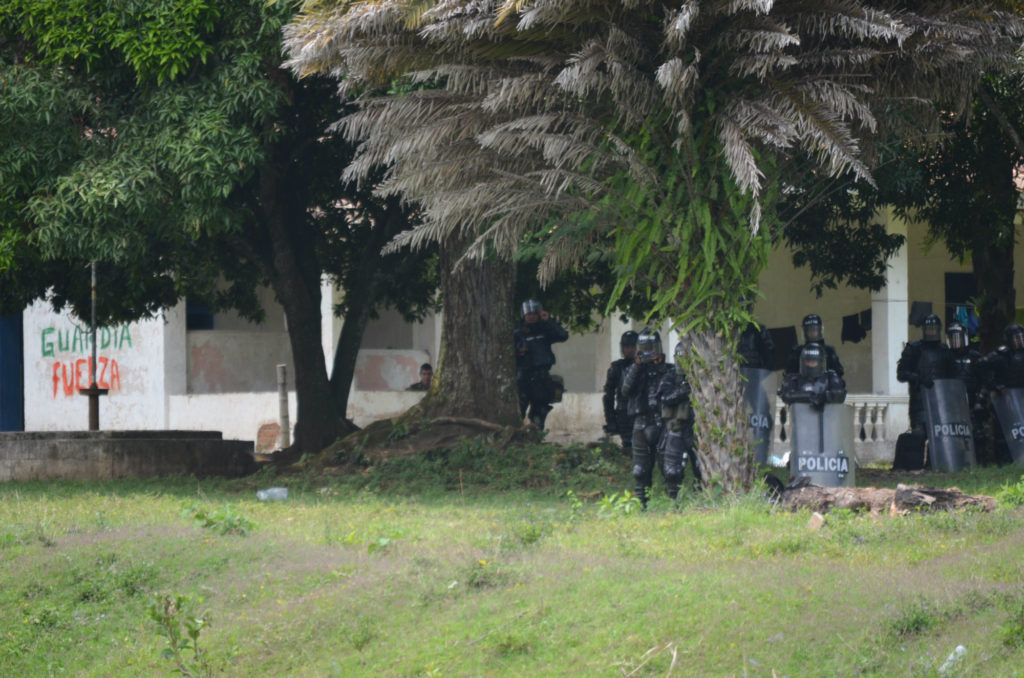
Keep­ing an eye on the ‘ESMAD’ riot police sta­tioned in the shade of the trees around the hacien­da was a local teacher.

“We are recu­per­at­ing the land” she told IC. “We are replac­ing the mono-cul­ti­va­tion of the multi­na­tion­als with the orig­i­nal veg­e­ta­tion. …One day trees will be grow­ing here again: what we are see­ing is the lib­er­a­tion of Moth­er Earth”.

The Indige­nous Nasa peo­ples have been seek­ing the ‘lib­er­a­tion’ of the ter­ri­to­ry of the hacien­da for years, reg­u­lar­ly occu­py­ing the fields and build­ings, and block­ing the road that runs between the prop­er­ty and the Nasa reser­va­tion of Huel­las.

Behind the line of riot police, sol­diers patrolled the build­ings of the ‘Hacien­da La Emper­a­triz’. Two weeks ago, on Mar. 17, they had opened fire on the Nasa, cit­ing a leaflet sup­pos­ed­ly deliv­ered by the FARC guer­ril­las claim­ing to have infil­trat­ed the indige­nous demon­stra­tors. Three Nasa were injured by gun­fire.

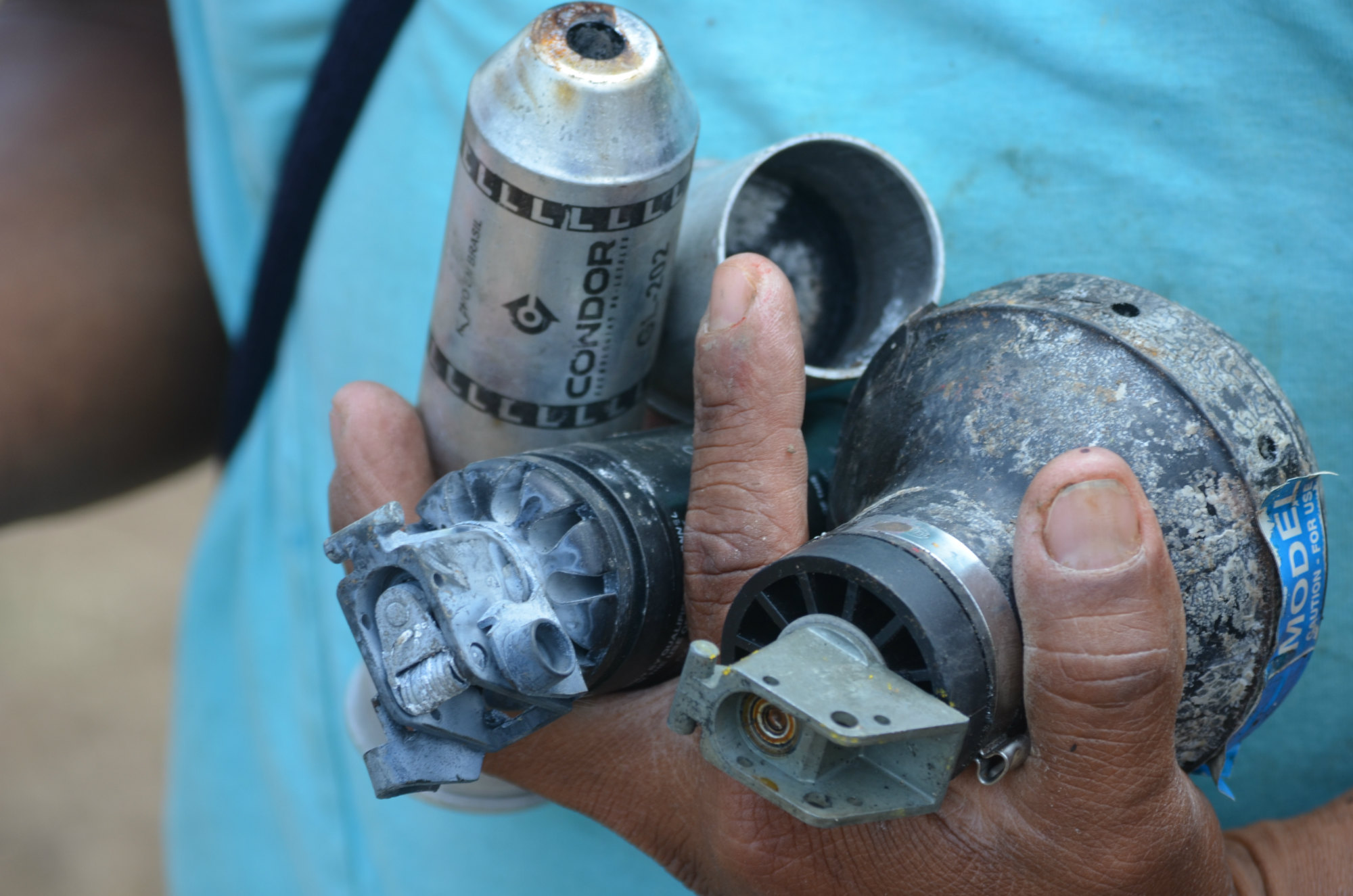
The planters con­tin­ued sow­ing the seeds in the grow­ing heat, small hand­fuls as a sym­bol­ic ges­ture amidst the stumps of sug­ar­cane and the cast tear gas grenades of ear­li­er con­fronta­tions. In the dis­tance oth­er groups worked with maize and plan­tains, often among patch­es of ground where the sweet fer­ment­ed smell of burned cane indi­cat­ed where the plan­ta­tions had burned dur­ing con­fronta­tions with the ESMAD.

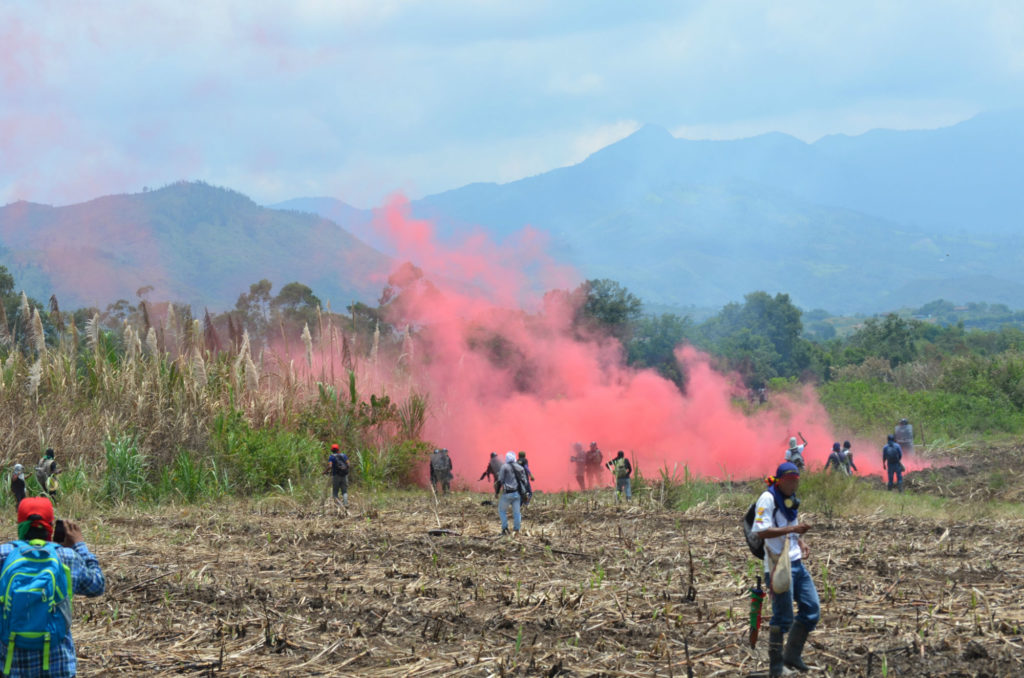
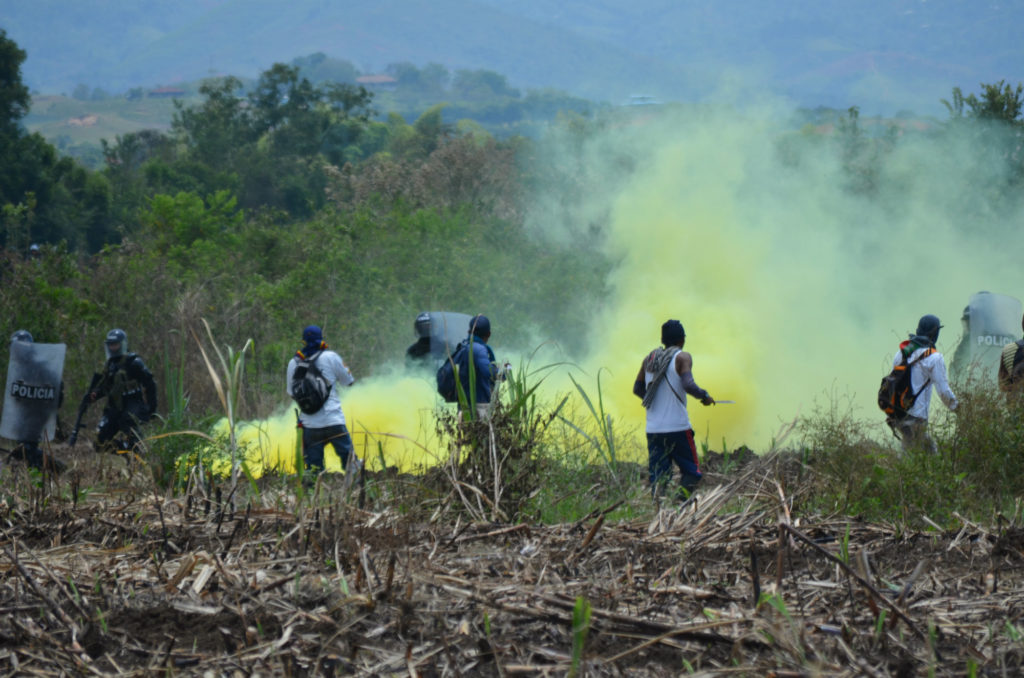
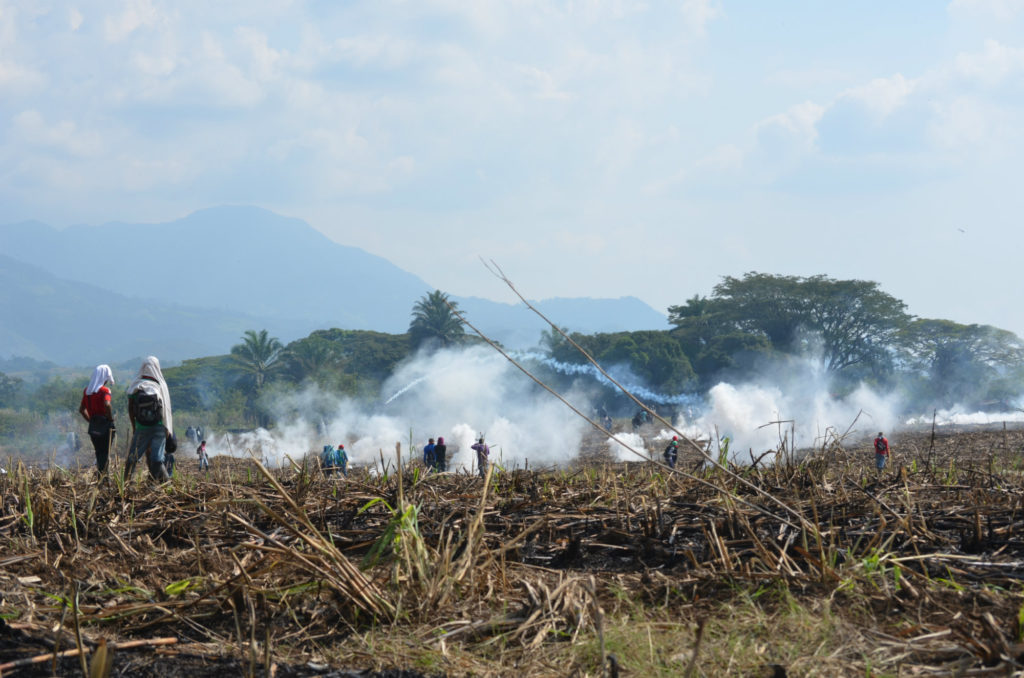
Final­ly the calm was bro­ken as the riot police drove an armoured vehi­cle down the road par­al­lel with the fields, a line of police advanc­ing across the cleared plan­ta­tions to keep pace with it and fir­ing gas and stun grenades at the Nasa.

The indige­nous respond­ed with cat­a­pults and sling­shots, and the police line was halt­ed halfway across the sug­ar fields from where they fired stun grenades and gas grenades coat­ed with mar­bles. These were lobbed high in the air; their explo­sion shoot­ing the mar­bles out like bul­lets.

Oth­er gas and stun grenades were reg­u­lar­ly fired par­al­lel with the ground, direct­ly at the bod­ies of the Indige­nous, caus­ing a steady stream of injuries to be treat­ed by the community’s med­ical teams.

Fierce bat­tles reg­u­lar­ly erupt­ed where a stream sur­round­ed with bam­boo offered cov­er for each side to attempt to out­flank the oth­er. The Nasa used a three-man cat­a­pult against the ESMAD, often forc­ing them back, while the riot police hid­den on the oth­er side of the stream respond­ed with mis­siles fired blind­ly at the three. A hos­tile stale­mate over the plan­ta­tion last­ed for the rest of the day, the gas clouds blown some­times one way, some­times the other.The plains of Colombia’s west­ern Valle del Cau­ca depart­ment are now an expanse of sug­ar; road trains of cou­pled trucks haul the cane from the plan­ta­tions to be refined or used in the cre­ation of ethanol. Across the plan­ta­tion of La Emper­a­triz lie proofs of hours worked and records of fumi­ga­tion tossed onto the ground in past months by con­trac­tors of InCau­ca, the agro-indus­tri­al multi­na­tion­al that runs the largest sug­ar refin­ery in Colom­bia and which dom­i­nates the region.

The same plains once sup­port­ed a land­scape of leafy savan­nah where com­mu­ni­ties pro­duced numer­ous crops. One can read of this world as recent­ly as the late nine­teenth cen­tu­ry in the work of local jour­nal­ist and chron­i­cler Luciano Rivera y Gar­ri­do, who described,

“Ripar­i­an forests, thick car­pets of dark green… vast plains cov­ered with forests, over there pas­tures, yon­der ham­lets… small val­leys sowed with seeds, clogged wood­lands… quaint huts of peas­ants… gold­en light… sap­phire sky.”

A mixed land­scape has been reborn in the land on the oth­er side of the road. A hacien­da sim­i­lar to La Emper­a­triz has been metic­u­lous­ly maintained–and now, paint­ed with Nasa sym­bols and iconog­ra­phy, serves as the com­mu­ni­ty health cen­tre and music schoo..

The sur­round­ing land is held in com­mon though dot­ted with parcels of land where indi­vid­ual fam­i­lies farm their own mixed crops, inter­spersed with for­est and pas­ture. The ter­ri­to­ry of the Huel­las reser­va­tion was a cat­tle ranch until the Nasa retook it; the road that forms the bound­ary between the reser­va­tion and La Emper­a­triz run­ning along the edge of the plain and below the gen­tle foothills of the Sier­ra Occi­den­tal.

“Before this we had no land”, said a for­mer gov­er­nor of Huel­las. He con­tin­ued,

“We came from high up and had to work for two days a week for noth­ing oth­er than the per­mis­sion to be here through the sys­tem of the ‘ter­a­je’. Then around 1971 we estab­lished the Asso­ci­a­tion of Indige­nous Coun­cils of North­ern Cau­ca (ACIN), and we refused to pay the ter­a­je. The local pow­ers respond­ed with threats and assas­si­na­tions, but we had found our voice. The elders teach us that we lived in the plains until 1915, when the police came from Cali trip to evict every­one who refused to leave for the moun­tains.”

ACIN became a dri­ving force in the indige­nous move­ment of Colom­bia, and as part of the Region­al Indige­nous Coun­cil of Cau­ca (CRIC) its suc­cess­es in over­com­ing state and para­mil­i­tary vio­lence to reclaim ances­tral land and oppose the export econ­o­my of inten­sive agri­cul­ture have gained it sup­port beyond indige­nous Colom­bia.

In 1985, the nation­al gov­ern­ment was pres­sured into pass­ing Decree 865, which led to the estab­lish­ment of the Com­mis­sion of Land for the Peo­ple of Cau­ca, but the gov­ern­ment machin­ery pro­ceed­ed at a snail’s pace in real­is­ing promis­es of land reform. In Octo­ber 1991, with threats and attacks ris­ing against Nasa occu­py­ing hacien­das, the CRIC and indige­nous coun­cils of north­ern Cau­ca asked that the Gov­ern­ment inter­vene to pre­vent a mas­sacre and pass 15,663 hectares to the indige­nous com­mu­ni­ty to set­tle claims. The gov­ern­ment did not respond.

On 16 Decem­ber 1991, 50 armed men in mil­i­tary style uni­forms shot 21 Nasa to death in the El Nilo hacien­da. An inves­ti­ga­tion point­ed to the involve­ment of Major Jorge Enrique Durán Argüelles, police com­man­der of the Sec­ond Dis­trict of San­tander de Quilichao, and Cap­tain Fabio Ale­jan­dro Cas­tañe­da Mateus, com­man­der of the anti-nar­cotics com­pa­ny of that unit, along with numer­ous police per­son­nel, but the charges were dropped.

The Inter-Amer­i­can Com­mis­sion on Human Rights inves­ti­gat­ed the El Nilo mas­sacre from 1993 to 1997, pub­lish­ing its rec­om­men­da­tions in 2001 urg­ing Colom­bia to inves­ti­gate and pros­e­cute those respon­si­ble for the mas­sacre, includ­ing police offi­cers; to make social and inte­gral repa­ra­tion to the Nasa peo­ple; and to guar­an­tee the non-repeti­ti­ton of sim­i­lar acts.

The gov­ern­ment had belat­ed­ly signed an accord in Bogotá on 23 Decem­ber 1991 that promised to return the request­ed land to the Nasa, but only a por­tion of this has been legal­ly trans­ferred. In 2001 fur­ther mas­sacres occurred at Gua­lan­day, San Pedro, and Maya. The gov­ern­ment has nev­er accept­ed respon­si­bil­i­ty for the mas­sacres, and the return of prop­er­ties has con­sis­tent­ly relied on pres­sure from the Nasa.

“We lost many peo­ple killed in order to reclaim this fin­ca” said the ex-gov­er­nor of Nasa.

“The nar­co-traf­fick­ers, the land-own­ers, and the police were all involved. Now they call them­selves the Black Eagles or the Ras­tro­jos, but they’re just the same peo­ple. When we pres­sure the gov­ern­ment to ful­fil its promis­es to return our land the intim­i­da­tion increas­es. Three months ago we had para­mil­i­taries pass­ing along the road in front of the reser­va­tion shout­ing threats against the cur­rent gov­er­nor. They said they were from the Ras­tro­jos but the name is not impor­tant.”

We had walked into the foothills to see the trans­for­ma­tion of Huel­las in the years since it had been passed to indige­nous con­trol. Between the land returned to wood­land, fields of mixed crops of beans, yuca, plan­tain, cof­fee and maize were inter­spersed with cit­rus groves and pas­ture.

The plain spread out beneath us, the end­less sug­ar sug­ar plan­ta­tions extend­ing to Cali and beyond; the explo­sions of gas grenades and white smoke ris­ing beyond the fur­thest trees of Huel­las showed where the dai­ly strug­gle to reclaim the plains con­tin­ued.

The cur­rent gov­er­nor empha­sized in assem­blies each morn­ing that the focus of the strug­gle was to recu­per­ate the land and to lib­er­ate Moth­er Earth. “We are Indige­nous, we know how to care for the land,” she told the com­mu­ni­ty, before its mem­bers pre­pared to return to the strug­gle at La Emper­a­triz. “Focus on your replant­i­ng of the land, don’t pro­voke the fight­ing.” The Nasa would then line up to have their heads bathed in a herbal mix­ture pre­pared by the spir­i­tu­al guide. Then, they would cross from Huel­las into La Emper­a­triz.

The strug­gle for con­trol of the fields is cur­rent­ly swing­ing in favour of the Nasa; the increased repres­sion serv­ing only to boost the num­bers of those com­ing to the prop­er­ty. The riot police are grow­ing reluc­tant to spend each day before the slings and cat­a­pults in the fields; but at the same time, as they begin to remain clos­er to the con­fines of the build­ings of the hacien­da the num­ber of threats has mul­ti­plied. By night the fields are desert­ed by the Nasa; “In the dark the police would shoot us dead” they say, “The ‘Black Eagles’ is just the name they use at night”.

A sim­i­lar pat­tern of dis­en­gage­ment fol­lowed by threats has occurred in the prop­er­ties between the sug­ar-pro­duc­ing town of Cor­in­to and neigh­bour­ing Nasa com­mu­ni­ties, where ESMAD police wield­ed machetes and fired live bul­lets injur­ing four Nasa who were con­test­ing the own­er­ship of the sug­ar plan­ta­tions of Que­bra­da Seca and Gar­cia. The esca­la­tion of vio­lence prompt­ed the UN to nego­ti­ate an agree­ment in which the police and army occu­pied the hacien­da build­ings of the con­test­ed hacien­das of Miraflo­res, Que­bra­da Seca, Granadil­lo, and Gar­cia, while the Nasa are left in pos­ses­sion of the fields. The first two prop­er­ties are owned out­right by InCau­ca, the sug­ar com­pa­ny that rents the oth­er two prop­er­ties as well as La Emper­a­triz. Nasa have also received firearms injuries from the pri­vate secu­ri­ty com­pa­ny of InCau­ca.

A leaflet from the Black Eagles cir­cu­lat­ed in Cor­in­to last week, promis­ing the “social cleans­ing” of the area and the erad­i­ca­tion of the “ban­dits” in the sug­ar­cane plan­ta­tions. The para­mil­i­taries ordered a region­al cur­few of 10pm. Threat­en­ing promi­nent Nasa, they signed off with: “Unit­ed for a north­ern Cau­ca with­out Indi­ans”.

This week, the Gov­ern­ment issued evic­tion orders for some of the set­tle­ments the Nasa have been estab­lish­ing in the con­test­ed fields around Cor­in­to. From the Mon­day until Wednes­day the same prop­er­ty also seen a Nasa Assem­bly devel­op a “plan of life” for the com­mu­nal ‘recu­per­a­tion’ of the land. Around the assem­bly the for­mer sug­ar-plan­ta­tion was already grow­ing with indige­nous maize, such as the planters had been sow­ing at La Emper­a­triz.

Dur­ing the strug­gle at La Emper­a­triz the plan­tain sapling they had plant­ed was lat­er uproot­ed when the ESMAD gained con­trol of that part of the field, but in the days that fol­lowed it was replant­ed and like­ly grows still. The teacher who had spo­ken of the lib­er­a­tion of Moth­er Earth as the planters walked through the heat had claimed that the envi­ron­men­tal and spir­i­tu­al dimen­sion of the strug­gle gave the com­mu­ni­ty a strength that vio­lence couldn’t break. “We will always be here, and we will always demand this land back, not just for our­selves to live as before but also for Moth­er Earth. We are not like the Gov­ern­ment which only knows how to sell things. That is why we will win, that is why we have the patience which will win here.”

Burma: Bomb Destroys Mining Company Truck

March 13th, 2015

March 13th, 2015

Min­ing Com­pa­ny Trucks Being Blocked by Vil­lagers in Namhkam Town­ship on 26 Feb­ru­ary

A bomb blew up a truck loaded with sil­i­con min­er­al stone in Aung Myit­tar Ward, Namhkam Town­ship, North­ern Shan State at 7.20pm on 10 March accord­ing to Sai Ye, a local res­i­dent.

He said: “When the bomb explod­ed under the engine at the front of the truck some parts of the engine were destroyed but no one was injured in the acci­dent. The truck dri­ver is Sai Pe from Aung Myit­tar Ward and the explo­sion hap­pened in front of his home. The explo­sion was very big, it caused the ground to shake. The whole town was silent after the explo­sion and there was almost no one on the street.”


The destroyed truck belongs to the Ngwe Kabar Kyaw min­ing com­pa­ny and is a Chi­nese made six-wheel truck accord­ing to Sai Ye.

On 26 Feb­ru­ary about 300 local res­i­dents blocked Ngwe Kabar Kyaw min­ing com­pa­ny trucks loaded with min­er­als in Namhkam Town­ship for one and a half hours. The res­i­dents stopped the trucks because they are angry that the min­ing com­pa­ny had nev­er dis­cussed with local res­i­dents about car­ry­ing out fur­ther exca­va­tions for min­er­als at Nam­seri Stream.

Pre­vi­ous­ly the com­pa­ny had been min­ing min­er­al stone from the Nam­seri Stream, but they stopped their activ­i­ties after com­plaints from the vil­lagers and promised to con­sult them before resum­ing exca­va­tions.

Recent­ly, the com­pa­ny angered the vil­lagers by resum­ing exca­va­tions with­out con­sult­ing them, which led to them blockad­ing the trucks.

The exca­va­tions already car­ried out at Nam­seri Stream by the com­pa­ny have caused the dete­ri­o­ra­tion of near­by farm­lands, which have not yet been addressed accord­ing to Sai Hseng Moon, a farmer leader.

He said: “The dete­ri­o­ra­tion of the farm­lands along the Nam­seri Stream due to the min­ing project, in Phan-Khar Vil­lage, have not been repaired yet [for a long time] and now they are going to exca­vate stone at Hway-Oh Vil­lage after get­ting per­mis­sion from the Naypyi­daw Gov­ern­ment, which they nev­er should have giv­en.”

The truck that was blown up was one of the trucks block­ad­ed by the vil­lagers on 26 Feb­ru­ary, but no one yet knows what group set off the bomb said a source close to the police.

The source said: “The bomb was made of min­ing explo­sives and was the same type of bomb that explod­ed in the house of U Aung Win last year in Namkhan Town­ship. U Aung Win is a town­ship sup­port­ing group mem­ber and exec­u­tive com­mit­tee mem­ber of the Shan Nation­al League for Democ­ra­cy (SNLD) par­ty of Namhkam Town.

Accord­ing to local peo­ple there have been sev­er­al bombs explod­ing in Namhkam Town, but no one has ever been arrest­ed over the explo­sions.

Trans­lat­ed by Aung Myat Soe Eng­lish ver­sion writ­ten by Mark Inkey for BNI Bur­ma News Inter­na­tion­al