
There is a lot of fear, there is a lot of anger, there is a lot of bloodshed.
But there is also a lot of beauty.


Istanbul Government Truck. Graffiti reads “You are not innocent anymore” pic.twitter.com/yFAKG78SYL
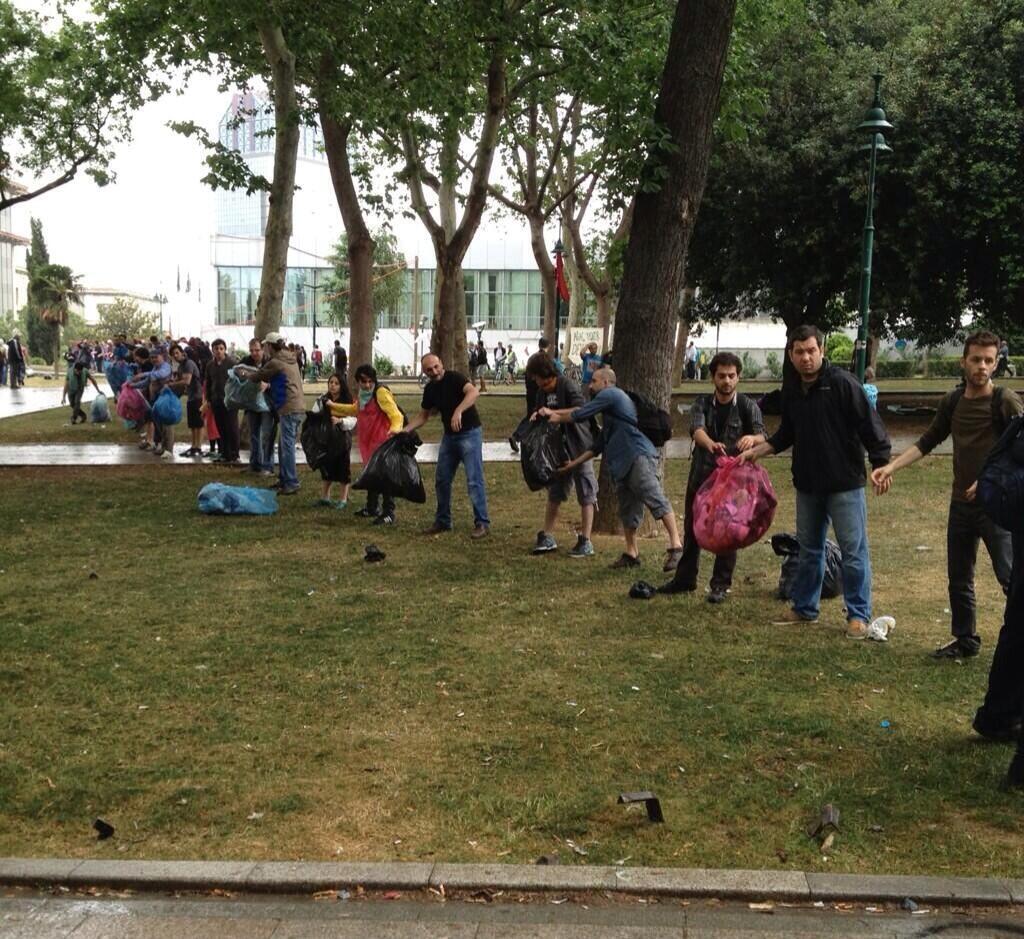
Clean up in Gezi Park


Istanbul Government Truck. Graffiti reads “You are not innocent anymore” pic.twitter.com/yFAKG78SYL
Clean up in Gezi Park
On June 1st, in solidarity with the massive resistance in Turkey which began six days ago, Liberate the Land activists in San Francisco marched to a park space known as “Hayes Valley Farm” and began an occupation.
On June 1st, in solidarity with the massive resistance in Turkey which began six days ago, Liberate the Land activists in San Francisco marched to a park space known as “Hayes Valley Farm” and began an occupation. The piece of land is scheduled to be turned into condominiums, a development project which the protestors plan to stop. Not only are they physically holding the space with their bodies and multiple treesits, the group is also planting a “Free Farm” for the community, sharing regular meals, and holding community-building and permaculture workshops.
Participants have renamed the space “Gezi Gardens” in solidarity with the current rebellion in Turkey, which began with the occupation of Gezi park in Istanbul. Protesters in Istanbul began occupying Gezi park when developers started ripping up the trees to make way for a shopping mall. The insane police response sparked an uprising that has swept the country. There have been other solidarity demonstrations all over the world, including the reoccupation of Zuccotti park in New York City, the original home of Occupy Wall Street.
Liberate the Land plans to occupy indefinitely, and has released a statement asking others to join them:
Liberate the Land invites everyone to join this network in the days following today’s liberation, to plant food, create and promote permaculture, host and attend workshops, teach and take classes, play and enjoy music, build, gather, experiment, play, learn, and be together. A vibrant community of plants and people are living on this land as of this first of June rather than the first layers of concrete foundation for condominiums. We invite our neighbors in Hayes Valley to join us in open dialogue to further decide what Gezi Gardens will become.
Liberate the Land is bringing into dialogue the concept of common space, a classification of space that goes outside of the dichotomy of private and public and instead places itself as the commons. The commons exist as the spaces owned and operated neither by governments and states, nor corporations and private individuals. Instead, the commons are owned, or stewarded, by all people, with an understanding that the gifts of the earth are for all to enjoy and that people need land bases for growing food, harvesting medicinal plans, maintaining healthy forests for building materials and firewood, wildcrafting plants for fabrics, and hosting wildlife habitat.
Read the rest of the statement here, and follow @LiberateLand on twitter for more updates on Gezi Gardens

The march against Monsanto,
The march against Monsanto, Germany. (Image from twitter user@@HarvestPM)
Monsanto plans to halt lobbying for its genetically modified plant varieties in Europe due to low demand from local farmers, a representative from the US agricultural giant told a German daily.
“We are no longer working on lobbying for more cultivation in Europe,” Brandon Mitchner a representative for Monsanto’s European branch, Tageszeitung, said in an interview set to be published on Saturday.
“Currently we do not plan to apply for the approval of new genetically modified crops. The reason is, among other things, low demand of the farmers,” he continued.
A spokeswoman for Monsanto Germany, Ursula Luttmer-Ouazane, admitted that Monsanto recognizes that GMO crops were currently not embraced on the European market.
“We’ve understood that such plants don’t have any broad acceptance in European societies,” Luttmer-Ouazane said. “It is counterproductive to fight against windmills,” she added.
A spokesperson for the German Ministry of Economy and Technologies described the move as an “entrepreneurial decision” which needed no further comment. The ministry added, however, it has long made its opposition to gene modification technologies known.
“The promises of the GM industry have not come true for European agriculture, nor have they for the agriculture in developing and emerging economies,” the ministry said in a statement.
Eight national governments in the European Union have already banned Monsanto’s MON810 maize and other forms of GMO cultivation in their countries under an environmental protection provision known as the ‘Safeguard Clause’.
Particularly fierce protests in Germany prompted the government to introduce the measures in 2009 due to concerns that such cultivation could lead to ecological degradation.
Monsanto’s rivals, such as Bayer CropScience, BASF and Syngenta, had by and large pulled out of the German market because of large-scale public opposition, the German daily reported.
Austria, Bulgaria, France, Greece, Hungary, Luxembourg and most recently Poland are among other EU member states enforcing the ban. In April, Italy joined the ranks of EU states looking to ban the cultivation of GM crops on its soil.
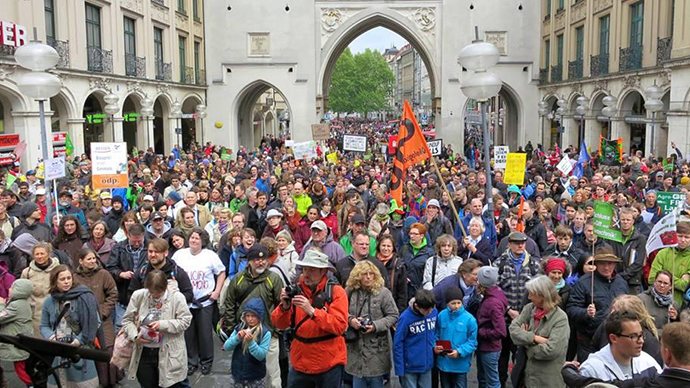
The march against Monsanto, Germany. (Image from twitter user@Julia_etc)
The announcement comes amidst a series of recent public relations battles that have brought the US firm considerable worldwide attention.
On Wednesday, the US Department of Agriculture (USDA) said it had conducted genetic tests on wheat from an 80-acre farm in Oregon this past April. The tests revealed the wheat was an experimental variety created by Monsanto that had never been approved for sale.
The discovery prompted Japanese authorities to cancel part of a tender offer to buy US western white wheat and have suspended imports of both that variety and feed wheat, while several other large importers of US-wheat throughout Asia said they were closely monitoring the situation.
The European Union for its part said it will test any incoming shipments, with plans to block those containing GMO wheat.
The USDA announcement followed a massive, global “March Against Monsanto” held on Saturday that saw demonstrations against the Missouri-based firm in 52 countries. Organizers for the global protest said around 2 million protesters showed up at rallies being held in 436 cities to protest against the seed giant and the genetically modified food.

The march against Monsanto, Munich. (Image from twitter user@nasimjo)
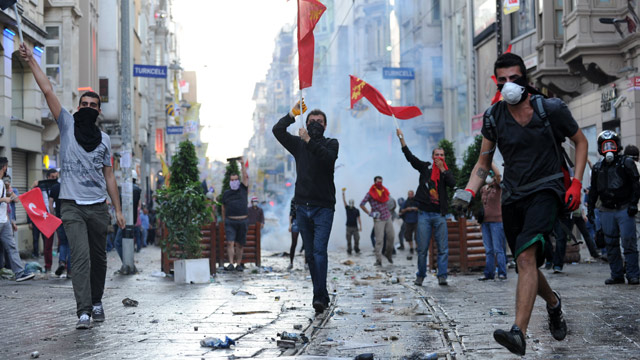
Turkey’s protests against the logging of trees in Gezi Park have grown into a nation-wide upheaval. The heavy-handed police response, using tear gas and pepper spray against bystanders and protestors, alike, has ignited a profound response against state repression in Turkey.
Environmentalism in Turkey as well as Eastern Europe/West Asia has been on the rise in the last 5-10 years, and this massive demonstration rising from anti-logging protests presents a landmark in the history of this region.
Thousands of protestors have swelled in the streets of every major city in Turkey. More solidarity demonstrations are planned from Germany to the US. From Athens to London, San Francisco to Boston, protests are already drawing thousands of people, and more are planned for the future.
Gezi Park is one of the smallest parks in Istanbul, but the symbolic value of replacing it with an Ottoman-style barracks aggravates the anti-imperial drive of the Turkish people. The police brutality is shocking even to veterans of pro-democracy struggles.
Here is an urgent message from an anonymous source in Turkey right now: “I am writing you all to ask that you please share any and all information you can about the current situation in Istanbul. There is desperate need of int`l support from what I witnessed last night and from the news coming via social networking, etc. They are getting no domestic media attention, and the Prime Minister has offered no explanations for the unprecedented police violence. Gov`t supporters also went completely unchecked by police last night, beating (and as i understand it) killing at least one protester on their walk home.”

Turkish police fired tear gas and water cannon on Friday at protesters occupying a park in central Istanbul, injuring scores in the latest violent crackdown on anti-government demonstrations.
Turkish police fired tear gas and water cannon on Friday at protesters occupying a park in central Istanbul, injuring scores in the latest violent crackdown on anti-government demonstrations.
The protest at Gezi Park started late on Monday after developers tore up trees but has widened into a broader demonstration against Prime Minister Tayyip Erdogan’s Islamist-rooted Justice and Development Party (AKP).
Riot police recently clashed with tens of thousands of May Day protesters in Istanbul. There have also been protests against the government’s stance on the conflict in neighboring Syria, a recent tightening of restrictions on alcohol sales and warnings against public displays of affection.
Police staged a dawn raid on demonstrators who had been camping for days in Gezi Park in anger at plans to build a shopping mall, and clouds of tear gas rose around the area in Taksim Square that has long been a venue for political protest.
“We do not have a government, we have Tayyip Erdogan…Even AK Party supporters are saying they have lost their mind, they are not listening to us,” said Koray Caliskan, a political scientist at Bosphorus University who attended the protest. “This is the beginning of a summer of discontent.”
The Istanbul Medical Chamber, a doctors’ association, said at least 100 people sustained minor injuries on Friday, some of them when a wall they were climbing collapsed as they tried to flee clouds of tear gas.
Amnesty International said it was concerned by what it described as “the use of excessive force” by the police against what had started out as a peaceful protest.
Erdogan has overseen a transformation in Turkey during his decade in power, turning its economy from crisis-prone into Europe’s fastest-growing. Per capita income has tripled in nominal terms since his party rose to power.
He remains by far Turkey’s most popular politician, and is widely viewed as its most powerful leader since Mustafa Kemal Ataturk founded the modern secular republic on the ashes of the Ottoman Empire 90 years ago.
The unrest has been far from the sort of mass demonstrations seen in other parts of the Middle East or even parts of Europe in recent years, but it reflects growing opposition concern about Erdogan’s authoritarianism.
DEFIANCE
Hundreds of military officers have been jailed on charges of plotting a coup against Erdogan in recent years; others including academics, journalists and politicians face trial on similar accusations.
Erdogan has made no secret of his ambition to run for the presidency in elections next year when his term as prime minister ends, exacerbating opposition concerns.
“These people will not bow down to you” read one banner at the Gezi Park protest, alongside a cartoon of Erdogan wearing an Ottoman emperor’s turban.
Postings on social media including Twitter, where “Occupy Gezi” – a reference to protests in New York and London last year – was a top-trending hashtag, and Facebook said similar demonstrations were planned for the next few days in other Turkish cities including Ankara, Izmir, Adana and Bursa.
“Kiss protests” – in which demonstrators are urged to lock lips – had already been planned for Istanbul and Ankara this weekend after subway officials were reported to have admonished a couple for kissing in public a week ago.
Erdogan is pushing ahead with a slew of multi-billion dollar projects which he sees as embodying Turkey’s emergence as a major power. They include a shipping canal designed to rival Panama or Suez, a giant mosque and a third Istanbul airport billed to be one of the world’s biggest.
Speaking just a few miles from Gezi Park at the launch on Wednesday of construction of a third bridge linking Istanbul’s European and Asian shores, Erdogan vowed to pursue plans to redevelop Taksim Square.
Architects, leftist political parties, academics, city planners and others have long opposed the plans, saying they lacked consultation with civic groups and would remove one of central Istanbul’s few green spaces.
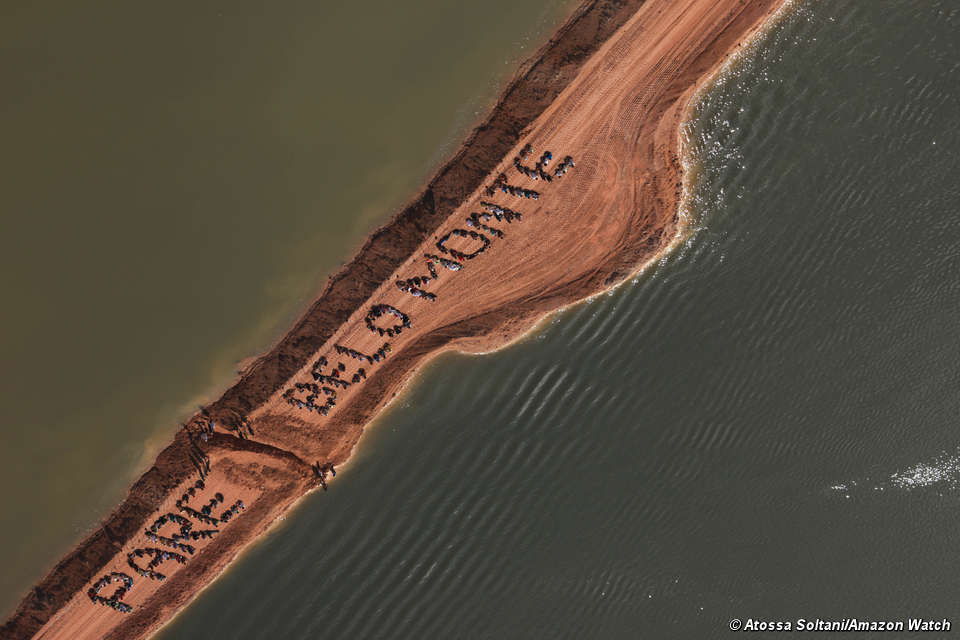
Police in southern Brazil yesterday killed a Terena Indian and wounded several others while violently evicting them from their land. Members of the tribe had returned to live on part of their ancestral territory currently occupied by a rancher who is also a local politician.
Elsewhere in Brazil, an eviction order was served on Kayapó, Arara, Munduruku, Xipaya and Juruna Indians occupying the controversial Belo Monte dam site. Armed police have surrounded the protesters and tensions are rising amid fears that there will be similar violence.
Munduruku Indians are also protesting construction of a dam on the Tapajós river. One Munduruku was shot dead when police invaded a community last November.
Paygomuyatpu Munduruku said, ‘The government is preparing a tragedy. We will not leave here. The government has ignored us, offended us, humiliated us and assassinated us… They are killing us because we are against the dams.’
The Brazilian constitution and international law enshrine the right of tribal peoples to be consulted about projects on their land. Yet a raft of bills and constitutional amendments proposed by a powerful agricultural and mining lobby threaten to undermine these land rights. Indians are angry that, despite being in office for two and half years, President Dilma Rousseff has yet to meet any Indians.
Survival International is calling on President Rousseff to halt the eviction of indigenous protesters, to consult with the Indians, and to recognize the territories of Terena tribespeople immediately.
Survival’s director Stephen Corry said, ‘History is repeating itself. The Figueiredo report, chronicling the genocidal atrocities of a past generation, has been unearthed at exactly the same time as new attacks on the Indians are unleashed. Killings of Indians should not be tolerated anywhere, let alone in a country planning to host world sporting events.’
Indigenous protesters are once again occupying the construction site of the Belo Monte Dam in the Brazilian Amazon to shed light on how hydroelectric mega-dams cause serious environmental and social impacts and destroy the way of life of the region’s peoples and traditional communities. For example, the construction of Belo Monte will cause 100 km (60 miles) of the Xingu to dry out on the river’s Big Bend if completed. In the case of the hydroelectric dams planned for the Tapajós River, the ancient riverside villages of the Mundurukú people would be completely flooded.
This is the second occupation of Belo Monte’s construction site in less than a month. On May 2nd the indigenous protestors occupied the same work camp and stayed there for eight days. They left the last occupation peacefully because the federal government ensured that there would be a negotiation, which did not happen. In this case the protestors guarantee that they will maintain their occupation until representatives of the federal government talk with them and meet their demands.
Indigenous people also criticize the presence of the military’s National Force in the region in order to ensure safety of teams carrying out environmental impact studies for dams on the Tapajós River.
In addition to the police officers who were already housed within the construction site to ensure the protection of Belo Monte, other contingents of police have been arriving at the occupation site.
See the latest letter from the occupation below:
Letter No. 7: Federal Government, we have returned
We are indigenous Munduruku, Xipaya, Kayapo, Arara and Tupinambá people. We live in the river and the forest and we are opposed to the destruction of both. You already know us, but now we are more.
You (the Government) said that if we left the construction sites of Belo Monte, we would be heard. We left peacefully – and prevented you from the shame of using force to take us out of here. However we were not heard. The government did not receive us. We called Minister Gilberto Carvalho and he did not come.
Waiting and calling did not work for us. So we again occupied your construction sites. We didn’t want to be back in your desert of holes and concrete. We have no pleasure in leaving our homes and our lands to hang our hammocks in your buildings. But how not to come when that could mean we losing our lands?
We want the suspension of studies and the construction of dams that flood our territories, cut the forest down the middle, kill the fish and scare the animals, and open the river and the land to the devouring miners. That will bring more companies, more loggers, more conflicts, more prostitution, more drugs, more diseases, more violence.
We require that you consult us about this construction before it begins, because it is our right guaranteed by the Brazilian Constitution and international treaties. This right was disrespected here in Belo Monte, on the Teles Pires River, and it’s not being complied with on the Tapajós River as well. It is not possible that all of you will continue repeating that indigenous people were consulted. Everyone knows that this is not true.
From now on, YOU (the Government) has to stop telling lies in press releases and interviews. You need to stop treating us like children: naive, irresponsible, and manipulative. We are indigenous people and you need to deal with it. You also need to stop lying to the press that we are fighting with the workers: they are sympathetic to our cause! We wrote a letter to them yesterday! Here at the construction sites we played soccer together every day during the last occupation. When we left, a worker to whom we gave many necklaces and bracelets told us: “I’ll miss you.”
We have the support of many relatives in this fight. We have the support of all the indigenous people from the Xingu. We have the support of the Kayapo. We have the support of the Tupinambá; the Guajajara; the Apinajé; Xerente; Krahô, Karaja; Xambioá-Tapuia; Krahô-Kanela; Avá-Canoero; javaé Kanela from Tocantins and Guarani. And the list is growing. We have the support of the national and international society even though that bothers you – you are alone with your campaign donors and companies interested in craters and money.
We occupied your construction sites again – and how many times will we need to do this until your own law is respected? How many restraining orders, fees, possesion orders will cost you until you hear us? How many rubber bullets, bombs and pepper sprays do you plan to spend until you admit that you are wrong? Or will you kill again? How many indigenous will you kill besides our relative Munduruku, from the Teles Pires, simply because we do not want dams?
And do not send the National Force to negotiate for you. Come yourselves. We want Dilma to come talk to us.
The Unist’ot’en People (a.k.a C’ilhts’ekhyu) of the Wet’suwet’en Nation maintain a “Soft Blockade” keeping pipeline workers and subcontractors out of their territories. The blockade is located 66km on the Morice West Forest Service Road south of the town of Houston BC.
Hundreds of supporters, volunteers, recreationalists, and mushroom pickers have been able to cross into the guarded territory by showing respect to the territory owners and answering some simple questions. The questions were as follows:
There were some people who have chosen not to answer any of the questions and were not permitted into the lands. Some of the people rejected were outright racist and belligerent; some people refused to recognize the authority of the territory owners; and some were simply unable to truthfully answer any of the questions until they could develop a relationship with the Unist’ot’en.
The decision to control territory traffic came when workers for the proposed Apache/Chevron Fracking Gas Pipelines were caught in the territory last November after being previously warned for trespassing. The Unist’ot’en have been leading a movement among the larger Wet’suwet’en population to stop ALL proposed Pipelines (including Fracking and Tar Sands) from crossing their territories.
In 2008, the Unist’ot’en alongside the other four Clans of the Wet’suwet’en walked away from the BC Treaty Commission negotiation process. They found that since the 1997 Supreme Court of Canada’s Delgamuukw v. Queeen Court decision, government and industry have only escalated their activities on their lands at an alarming rate without meaningful consultation.
Freda Huson, the Spokeswoman for the Unist’ot’en states, “The plaintiffs in the landmark Delgamuukw Supreme Court of Canada case are the Hereditary Chiefs and their members. Government and Industry are breaking their own laws when they choose to only consult with Indian Act band councils. The propaganda writers for the Pacific Trails Pipeline like to say that they have 15 First Nation People’s support, when in fact they have only been talking to Indian Act communities. That has to stop. This struggle to protect our lands is not about holding out for financial gain. It is about protecting our lands from destructive practices from industry. Our actions will not only benefit our future generations but everyone’s future generations.”
The logging road leading into the territory is managed by the CANFOR logging company and CANFOR is taking the lead to begin a meaningful process of consultation. The Unist’ot’en are welcoming this new relationship with CANFOR and are hopeful that other industry projects will choose to begin asking permission rather than implementing projects without meaningful consultation.
At least one thousand people gather outside of the government offices yesterday to deliver a challenge to the prime minister, Sigmundur David Gunnlaugsson. The government is challenged to withdraw statements regarding changing the power plant program, but the government wants to change it so that more areas can be used for power plants.
The protesters want to spare the environment and not build too many power plants. The challenge comes with reviews regarding the power plant program that the public, institutions, municipalities, organizations and companies have sent to the parliament and to the ministries.
The new center-right government is said to focus too much on power plants and aluminum factories. The government has merged the ministry of the environment together with the ministry of agriculture and fisheries. Critics say that the government has in effect abolished the ministry of the environment, and will now focus on building power plants and factories and seriously damage the environment.
Sigmundur David was busy when the protests were held because the president of Finland was visiting. But the prime minister´s assistant showed up on his behalf, and he was handed the challenge.
As many as 5,000 Tibetans have protested against Chinese mining
As many as 5,000 Tibetans have protested against Chinese mining
operations at a site considered sacred by local residents, drawing a large security force to the area and prompting fears of clashes, according to Tibetan sources this week.
The protest last Friday took place at Naglha Dzambha mountain in Tibet’s Driru (in Chinese, Biru) county, the scene of similar protests two years ago, sources said.
“On May 24, about 100 members a Chinese company arrived at Naglha Dzambha on the pretext of putting up cable towers and power lines and building hydroelectric projects for the benefit of the people,” a resident of the area told an RFA Tibetan Service call-in show on Saturday.
“Actually, they were there to mine minerals,” the source said, speaking on condition of anonymity.
About 5,000 local Tibetans then gathered in Driru to protest, he said, and of that number, 3,500 went to the pilgrimage site to demand an end to the project, saying “Please leave our resources where they are.”
Six men chosen to represent the people of Driru approached the Chinese company with a petition not to further harm the local environment, but authorities on Saturday deployed security forces in about 50 trucks to the protest site, RFA’s source said.
County authorities later “gave in to the popular outcry and made an announcement to that effect,” easing immediate fears of a crackdown, but Tibet’s India-based exile government in a separate report described the situation in Driru as “tense.”
Frequent standoffs
Mining operations in Tibetan regions have led to frequent standoffs with Tibetans who accuse Chinese firms of disrupting sites of spiritual significance and polluting the environment as they extract local wealth.
In March, operations at the Gyama mine in Tibet’s Maldro Gongkar county near Lhasa caused a catastrophic landslide that killed 83 miners.
And in January, Tibetan sources told RFA that Chinese-operated mines in Lhundrub county, also near Lhasa, have caused “severe” damage to local forests, grasslands, and drinking water.
Waste from the mines, in operation since 2005, “has been dumped in the local river, and mining activities have polluted the air,” one source said.