Colombian Military Massacres Peasants in Oil-and-Coal Related Protests

Police violently disperse unarmed peasant protesters in Catatumbo, Colombia, Jun 2013 (photo by Telesur)Police vio­lent­ly dis­perse unar
Police violently disperse unarmed peasant protesters in Catatumbo, Colombia, Jun 2013 (photo by Telesur)Police vio­lent­ly dis­perse unarmed peas­ant pro­test­ers in Cata­tum­bo, Colom­bia, Jun 2013 (pho­to by Telesur)

27 June The Colom­bian mil­i­tary has killed at least four peas­ant pro­test­ers in the region of Cata­tum­bo, wound­ed dozens more (includ­ing 21 gun­shot wounds) and arrest­ed hun­dreds.

From Alliance for Glob­al Jus­tice:

In Cata­tum­ba, peas­ants have been hold­ing protests, block­ing roads and occu­py­ing facil­i­ties to protest to the government’s chem­i­cal spray­ing of Monsanto’s RoundUp Ultra her­bi­cide as part of coca erad­i­ca­tion efforts; and the refusal of the gov­ern­ment to estab­lish a Peas­ant Reserve Zone, as autho­rized by leg­is­la­tion in 1994 and 1996. That leg­is­la­tion would pro­vide pro­tect­ed land for col­lec­tive farm­ing. Pro­test­ers say that they are being denied this in favor of con­ces­sions made to for­eign coal [and oil] com­pa­nies.

Learn more about the back­ground of the protests here, then send a let­ter to Colom­bian offi­cials demand­ing an end to the  vio­lence.


Fracking Equipment Set Ablaze in Elsipogtog!

img_821026 June 2013

img_821026 June 2013

Hal­i­fax Media Co-op reports that a piece of drilling equip­ment was set ablaze on the 24th, by per­son or per­sons unknown.  This comes amidst esca­lat­ing resis­tance to hydraulic frac­tur­ing by indige­nous peo­ples in Elsi­pog­tog, “New Brunswick”.

This comes after numer­ous direct actions, the mid­night seizure of drilling equip­ment, and a local man being struck by a contractor’s vehi­cle.


Farmers Unite With Hydro-Fracking Activists

By Adam McGib­bon, www.newint.org

By Adam McGib­bon, www.newint.org

As the G8 Sum­mit began in Fer­managh, North­ern Ire­land, a group of farm­ers drove 60 trac­tors in a ‘go-slow’, bring­ing a 24-kilo­me­tre stretch of road to a halt. The 16 June action opposed hydraulic frac­tur­ing – frack­ing – which could take place on both sides of the Irish bor­der. It was fol­lowed by state­ments against frack­ing from the major farm­ers’ unions in the Repub­lic of Ire­land and in North­ern Ire­land.

This is a sig­nif­i­cant devel­op­ment in the fight against frack­ing in Ire­land and North­ern Ire­land, where at least four ener­gy com­pa­nies are seek­ing to rend the land­scape apart drilling for gas in the very area that the G8 took place. Although there is a tem­po­rary freeze on drilling in the Repub­lic, Cana­di­an com­pa­ny Tamb­o­ran Resources already have a license to start explor­ing for shale gas in North­ern Ire­land due to com­mence this year.

For over two years, the bat­tle against frack­ing in Ire­land has most­ly been the pre­serve of the sea­soned activist. But impres­sive orga­niz­ing efforts in Fer­managh over the past few years have mobi­lized com­mu­ni­ties as cam­paign groups harangue elect­ed rep­re­sen­ta­tives.

Assem­bly mem­bers speak­ing against frack­ing are treat­ed like cranks by min­is­ters. Despite the sci­en­tif­i­cal­ly proven envi­ron­men­tal dev­as­ta­tion, the rub­bished claims of hun­dreds of ‘frack­ing jobs’, and the fact that frack­ing will make the cli­mate cri­sis worse, the slip­pery slope towards frack­ing in Ire­land has con­tin­ued.

But now, the endorse­ment of the offi­cial orga­ni­za­tions of the farm­ers lob­by could turn this oppo­si­tion into a mass move­ment. Giv­en their ambiva­lence on the issue not so long ago, this is refresh­ing news. After the ‘go-slow’ action, Pat Gilhoo­ley from the Irish Farm­ers Asso­ci­a­tion said frack­ing will be an elec­tion issue in the Republic’s local author­i­ty elec­tions in 2014. John Sheri­dan from the Ulster Farm­ers’ Union stat­ed that the risk to the farm­ing indus­try from frack­ing was too great. ‘We Deserve Bet­ter,’ runs the mon­ick­er of a new, cross-bor­der cam­paign, launched this month.

With the addi­tion of the farm­ing lob­by, it’s hard to imag­ine how the con­ser­v­a­tive Union­ist par­ties in the North­ern Ire­land Assem­bly, both heav­i­ly depen­dent on rur­al votes, can main­tain their sup­port or ambiva­lence for frack­ing for­ev­er. The North’s Min­is­ter for Enter­prise, Arlene Fos­ter, is aggres­sive­ly pro-frack­ing. Two years ago, alle­ga­tions of impro­pri­ety emerged when it turned out Foster’s hus­band owns 62 hectares of land with­in the gas explo­ration zone. With Fos­ter hold­ing a rur­al seat, the addi­tion of the orga­nized farm lob­by that could break the back of the cor­po­ra­tions and politi­cians that want frack­ing to take place in Ire­land.

There are def­i­nite­ly lessons to be learnt here for oth­er activists bat­tling frack­ing across the world. Frack­ing isn’t just an envi­ron­men­tal issue – it’s a live­stock issue. It’s a food issue. It’s a liveli­hood issue for those who toil to pro­vide us with food. The Left needs to make com­mon cause with rur­al com­mu­ni­ties on frack­ing; the myth that they are more con­ser­v­a­tive than urban areas needs to be shat­tered.

To win on frack­ing, links have to be made beyond the ‘usu­al sus­pects’ of activist groups. Inter­na­tion­al­ly, there are great exam­ples: In Aus­tralia, a group called Lock The Gate are suc­ceed­ing in unit­ing envi­ron­men­tal­ists, activists and farm­ers. In Ger­many, the unlike­ly allies have been found in the beer indus­try, which fears for the future of their prod­ucts. In France, where frack­ing is cur­rent­ly banned, farm­ers stand with activists gath­er­ing on their fields and hang protest ban­ners from hay bales to cam­paign to keep the ban in place.

Across the world, build­ing the broad­est coali­tion pos­si­ble to defeat frack­ing means get­ting out of the activist com­fort zone and work­ing with peo­ple we wouldn’t usu­al­ly work with – and peo­ple we might not agree with on many issues. Farm­ers, envi­ron­men­tal­ists, activists, con­ser­va­tion­ists must unite and fight.


Hamilton Police direct Mass Arrest at Enbridge Blockade

JUNE 26, 2013
 
BREAKING NEWS: 20 PROTESTERS ARRESTED AT TAR SANDS BLOCKADE, INCLUDING THOSE OUTSIDE INJUNCTION ZONE

JUNE 26, 2013
 
BREAKING NEWS: 20 PROTESTERS ARRESTED AT TAR SANDS BLOCKADE, INCLUDING THOSE OUTSIDE INJUNCTION ZONE

(Hamil­ton, ON) — Hamil­ton Police moved on to the #SwampLine9 protest action in Ontario this morn­ing mass arrest­ing almost every­one on site includ­ing activists fur­ther up the street and the police liai­son.

Activists have been occu­py­ing an Enbridge pump­ing sta­tion north of Hamil­ton, Ontario ear­ly Thurs­day morn­ing. This action, dubbed Swamp Line 9, aims to pre­vent con­struc­tion on Line 9 and block the trans­port of Tar Sands through Ontario and Que­bec. This action is also part of the Idle No More cam­paign Sov­er­eign­ty Sum­mer.

News is devel­op­ing. Much of the pho­to­graph­ic evi­dence was seized but some video footage will be com­ing soon.

QUOTES:

“This pipeline puts the health of drink­ing water of mil­lions of peo­ple at risk of an oil spill yet Enbridge used the courts and police to arrest 20 peo­ple who want­ed to pro­tect their lives and our future.

This was a polit­i­cal action. We demand the imme­di­ate release of those arrest­ed and insist that their charges be dropped.

The police went above and beyond the lim­its of the court order by arrest­ing peo­ple off the prop­er­ty — peo­ple who were on the side walk, and even the police liai­son who was on the street. This heavy-hand­ed tac­tic comes at the heels of Hamil­ton police receiv­ing over $44,000 from Enbridge recent­ly.

Destruc­tive Enbridge projects across Ontario, and Tar Sands projects across the coun­try will con­tin­ue to be resist­ed.”

BACKGROUND
Press State­ment on Injunc­tion, June 25: http://swampline9.tumblr.com/post/53851715699/swamp-line-9-press-conference-statement
Media Advi­so­ry on Injunc­tion: http://swampline9.tumblr.com/post/53838872671/swamp-line-9-locks-down-and-rallies-after-receiving
Sol­i­dar­i­ty Action in Sup­port of Line 9: https://www.facebook.com/notes/swamp-line‑9/update-swampline9-continues-support-actions-in-13-cities-sovsummer/191416174354528

 
UPDATES

Swamp Line 9 Update

26 June 2013 Twen­ty peo­ple were arrest­ed this morn­ing Hamil­ton cops tried to arrest every­one on the site except a few who were able to leave.

26 June 2013 Twen­ty peo­ple were arrest­ed this morn­ing Hamil­ton cops tried to arrest every­one on the site except a few who were able to leave.

SwampLine9 is still hold­ing strong. Four peo­ple are on lock down while most of the camp is still on site despite the injunc­tion dead­line expir­ing at 10am this morn­ing. Enbridge was unable to even get the address right of the rever­sal site on the injunc­tion and is now scram­bling to cor­rect its mis­take.

You can see more pho­tos of the action here: http://on.fb.me/17AZ4bQ

Sol­i­dar­i­ty actions took place across Cana­da includ­ing one of Toronto’s busiest streets shut down for near­ly an hour as over 50 SwampLine sup­port­ers orches­trat­ed a mock oil spill and fly­ered vehi­cles.

Pho­tos from Cross-Cana­da Day of Action: http://on.fb.me/121U7AT


Swamp Line 9 State­ment 25th June 3:30pm

7 Hours ago we were served an injunc­tion that gave us 2 hours to leave the prop­er­ty. We kept our shit togeth­er, and are work­ing togeth­er to keep this thing going. While some peo­ple packed up the camp and shut­tled stuff to the top of the dri­ve­way, oth­ers built an elab­o­rate bar­ri­cade at the back and put them­selves in an encase­ment. 3 peo­ple are inside of the encase­ment and are locked to the fence which leads into the con­struc­tion site. 1 oth­er per­son is sit­ting on top of the bar­ri­cade and hold­ing tight. About 20 of us are camped out in the mid­dle of the dri­ve­way where it meets Con­ces­sion 6, and are going to keep nego­ti­a­tions up to hold this space as best as we can. 

Despite ear­li­er reports, police are not block­ing access to this site. We are ask­ing for as many peo­ple as pos­si­ble to come and join our action as it con­tin­ues to shift and respond to this sit­u­a­tion. If a sit­u­a­tion arris­es where we can no longer safe­ly hold down this dri­ve­way, we will move our action to the oth­er side of the street and con­tin­ue to show sup­port with the peo­ple locked down. 

Our camp­ing days may be over, but for now this strug­gle lives on. Those 4 bad-ass­es at the back of the site have built an impres­sive and sol­id bar­ri­cade, and we don’t expect the police or Enbridge will be able to remove them from the site any­time soon. 

Now that things have set­tled down a lit­tle bit we will be post­ing reg­u­lar updates, so stay tuned to our tum­blr site and fol­low us on twit­ter @Swampline9. 

Swamp on, 

-SL9


Back­ground on Line 9

Line 9: The Tar Sands Come to Ontario from Rachel Deutsch on Vimeo.

Line 9 was built in 1975 to trans­port import­ed oil from Mon­tre­al to refiner­ies in Sar­nia. Enbridge has now applied to Canada’s Nation­al Ener­gy Board to reverse its direc­tion of flow so that it can trans­port oil from Sar­nia to Mon­tre­al.

Enbridge admits that among the pos­si­ble uses of Line 9 is trans­port­ing “heavy oil” a cat­e­go­ry that includes bitu­men, the haz­ardous raw mate­r­i­al extract­ed from tar sands.

The pipeline pass­es through cities, water­sheds, rivers, and farm­land. 9.1 mil­lion peo­ple live with­in 50 km of line 9, includ­ing 18 first nations com­mu­ni­ties and 115 com­mu­ni­ties in total. (Sar­nia, Hamil­ton, North York, Kingston, etc.)

Enbridge has a very poor record of envi­ron­men­tal impact. Between 1999 and 2008, Enbridge lists 610 spills that released approx­i­mate­ly 21 mil­lion litres of hydro­car­bons into the sur­round­ing area. But Enbridge is most well-known for their 3.8 mil­lion litre spill in Kala­ma­zoo Michi­gan in 2010, amount­ing to the largest inland oil spill in US his­to­ry. Because the spill involved the very hard to clean tar sands bitu­men rather than con­ven­tion­al crude oil, the clean-up is still on-going. Mean­while to this day, res­i­dents are still sick from the after­math of the spill, and trag­i­cal­ly many have died since. Most trou­bling for Ontario res­i­dents is that the pipeline that rup­tured in Kala­ma­zoo is almost iden­ti­cal to Line 9: it is part of the same pipeline net­work, uses the same inte­ri­or lin­ing, and is almost the same age.

With so much at risk, we need to work togeth­er to stop Enbridge Line 9. The big pic­ture is spills, con­t­a­m­i­na­tion, and expand­ing the tar sands. The even big­ger pic­ture is cli­mate change. If it is not halt­ed, cli­mate change will and is result­ing in increased fre­quen­cy and sever­i­ty of storms, floods, drought, and water short­age, as well as the spread of dis­ease, increased hunger, dis­place­ment and mass migra­tions of peo­ple and ensu­ing social con­flict and war.


8 years of intense struggle against Shell continues this week in Erris

25 June 2013 The first direct actions of the Erris strug­gle against Shell took place 8 years ago when 6 locals were injunct­ed and then 5 of them jailed for refus­ing to allow Shell onto their lands.  In the 8 years that have passed there have been count­less direct actions, dozens of arrests, about two dozen jail­ings and hun­dreds of peo­ple attacked by Gar­da or Shel­l’s secu­ri­ty com­pa­ny IR

25 June 2013 The first direct actions of the Erris strug­gle against Shell took place 8 years ago when 6 locals were injunct­ed and then 5 of them jailed for refus­ing to allow Shell onto their lands.  In the 8 years that have passed there have been count­less direct actions, dozens of arrests, about two dozen jail­ings and hun­dreds of peo­ple attacked by Gar­da or Shel­l’s secu­ri­ty com­pa­ny IRMS.  But as the first two days of the week of action demon­strat­ed that intense lev­el of repres­sion over so many years has yet to end effec­tive resis­tance.

The cost to the local com­mu­ni­ty has how­ev­er been enor­mous.  Some peo­ple who would oth­er­wise nev­er have had an encounter with the law have spent at least time in jail.  Oth­ers have been beat­en up by the Gar­da, some left with per­ma­nent injuries.  And every­one has to endure the con­stant sur­veil­lance of every­one who pass­es Shel­l’s com­pounds which are now scat­ted across the area.  At key moments they have also had to live in com­mu­ni­ties that were under occu­pa­tion as hun­dreds of Gar­da have been deployed along with the gun boats of the Irish navy.  Along­side this are the even dark­er expe­ri­ences of cam­paign­ers being attacked in the night, in one case hav­ing a fish­ing boat sunk under them and the all too com­mon sto­ries of peo­ple who realised their homes and fam­i­ly were being spied on by uniden­ti­fied men.

Despite this there were a con­stant stream of peo­ple from the local com­mu­ni­ty vis­it­ing the camp and the social activ­i­ties arranged over the week­end along with a few who, 8 years on, are still deter­mined to take part in and indeed lead direct actions against, around and with­in the com­pound.  At this stage in the long strug­gle its true that a much larg­er bur­den of organ­is­ing and risk­ing beat­ings and arrest in such actions has fall­en on the shoul­ders of those trav­el­ling to Erris to stand along­side the local com­mu­ni­ties.  Very few ordi­nary peo­ple could sus­tain the lev­el of resis­tance of 2005 — 2007 over the years that fol­lowed, indeed the Ross­port Sol­i­dar­i­ty Camp itself has seen a com­plete change in per­son­nel at least twice now.

These changes have meant that the focus and meth­ods of the cam­paign have shift­ed in empha­sis over time.  Ini­tial­ly the dan­gers of Shel­l’s plan to run an exper­i­men­tal high pres­sure gas pipeline through the gar­dens of peo­ples house, lit­er­al­ly under their dri­ve­ways, was the key focus for many with mas­sive mobil­i­sa­tions of vir­tu­al­ly the entire local com­mu­ni­ty.  As the media ran a high­ly suc­cess­ful smear cam­paign against the com­mu­ni­ty the issue of the huge give­away of Irish Oil and Gas became cen­tral.  A huge cam­paign to inform the pub­lic of the rob­bery that was going on under their noses was con­duct­ed, over 120,000 copies of a 4 page book­let on the give­away were dis­trib­uted and an intense media cam­paign con­duct­ed.  The led to many peo­ple across the island real­is­ing that the strug­gles of a small com­mu­ni­ty far away in Mayo was also their strug­gle because every cent of prof­it Shell would take would be a cent less fund­ing for edu­ca­tion and heath­care.

The cam­paign built links with sim­i­lar strug­gles else­where and this meant that over time peo­ple also start­ed to come to Erris from out­side Ire­land to stand in sol­i­dar­i­ty with the com­mu­ni­ty.  This pushed the glob­al ques­tion of fos­sil fuel usage with­in the cam­paign and led to quite a few dis­cus­sions as a bal­ance was sought between fight­ing for real tax­a­tion on what was extract­ed and say­ing that our use of fos­sil fuels was a col­lec­tive insan­i­ty that was lead­ing the plan­et to envi­ron­men­tal cat­a­stro­phe.  In terms of tac­tics we also saw a shift from the mass block­ades involv­ing hun­dreds of local peo­ple and their sup­port­ers to more spe­cialised small group actions around lock ins and using tripods allow­ing small groups of peo­ple block roads for a long peri­od of time.  That shift was in part deter­mined by the use of vio­lence by the Gar­da to clear roads under their ‘no arrest’ pol­i­cy, a vio­lence that was near­ly always report­ed by a com­pli­ant media as if it had orig­i­nat­ed with the cam­paign.  You can just about get away with this when video footage shows lines of Gar­da baton­ing peo­ple stand­ing on the road but it does­n’t real­ly look very con­vinc­ing when peo­ple are sit­ting on the road with their arms trapped in steel pipes or dan­gling in mid air high above the roads sur­face.

All these strate­gies have forced the Irish state to back down on sim­ply forc­ing Shel­l’s orig­i­nal pipeline plan through and instead insist on sig­nif­i­cant changes in the safe­ty of the project.  Between such changes and the huge delays caused by the count­less direct actions Shel­l’s costs have soared from the ini­tial esti­mate of 600 mil­lion to well over 3 bil­lion.  Top Shell per­son­nel in Ire­land have reg­u­lar­ly been replaced as each in turn has failed to push through the project on time, the cur­rent esti­mat­ed com­ple­tion date is about a decade after the one intend­ed.  The gov­ern­ment has been forced to intro­duce changes in the amount future ener­gy finds will be taxed. 

None of these changes fix the prob­lems with the project,

  • the exper­i­men­tal pipeline is still too close to peo­ple’s hous­es and run­ning through an area that suf­fers huge land­slides,
  • the tax take on the project is still low and because of the way Shell is allowed write off expense it is prob­a­ble that not a cent in tax will ever be col­lect­ed,
  • the loca­tion of the refin­ery threat­ens both the water sup­ply of the area and the pris­tine envi­ron­men­tal con­di­tions that make it attrac­tive to tourists and a sought after source for fish and shell fish,
  • the count­less abus­es of human rights that have forced the project this far will nev­er be erased from the lives and minds of those who were jailed, beat­en or spied upon. 

But none of this should stop us acknowl­edg­ing the huge defeats that resis­tance has inflict­ed on Shell and the sig­nif­i­cant if incom­plete gains that have been won.

This is the con­text of the cur­rent week of action which is hap­pen­ing in what Shell must hope is the final phase of their con­struc­tion project.  The refin­ery is com­plete and most of the pipeline laid.  They got the Tun­nel Bor­ing Machine into the com­pound and it’s now at work under the estu­ary. Although their are con­stant rumours of prob­lems being encoun­tered and the sud­den appear­ance of deep and life threat­en­ing sink­holes on the sur­face must indi­cate unin­tend­ed sub­si­dence into and around the tun­nel beneath.

Shell and the Irish state though their inten­sive repres­sion of the local com­mu­ni­ty over 8 years must have hoped that active resis­tance was almost over.  That the pro­longed peri­od of jail­ing and bru­tal­i­sa­tion they had sub­ject­ed peo­ple to had sapped their will to con­tin­ue to resist as they need­ed to get on with the nor­mal rou­tines of work­ing and bring­ing up fam­i­lies that peo­ple else­where in Ire­land can take for grant­ed. So the fury of the assaults on the com­pound over the last cou­ple of days must have been a major dis­ap­point­ment for them, the quan­ti­ty of dam­age the direct actions result­ed in is prob­a­bly com­pa­ra­ble to that inflict­ed at the height of any ear­li­er point in the cam­paign.  Not only was sev­er­al days work destroyed but many of the com­pounds spy cam­eras were wrecked and equip­ment essen­tial to doing that work again put out of action.  It must also have become clear that the for­ti­fi­ca­tions erect­ed for this stage of the project are inad­e­quate when faced with a few dozen deter­mined peo­ple and that they can­not that those num­bers can­not be mobilised.

In a bet­ter world this strug­gle would have been won in 2005 when the deter­mined mobil­i­sa­tions of the com­mu­ni­ty should have result­ed in the nation­al out­cry that would have dri­ven Shell to Sea (the off shore refin­ery option which now would have saved Shell both time and mon­ey).  Or it should have been won in 2007 when thou­sands of peo­ple from all over the coun­try mobilised to block the roads and face the baton charges of the Gar­da.  But, with no small thanks to a media that was in one part cow­ard­ly to two parts being in the pock­ets of ener­gy cor­po­ra­tions, that out­cry nev­er emerged.  The state risked and got away with bru­tal­is­ing pro­test­ers and engag­ing a long term strat­e­gy of try­ing to sow divi­sions in the com­mu­ni­ty on the one hand and intim­i­dat­ing, beat­ing and jail­ing those who con­tin­ued to resist on the oth­er.

What main­tained the strug­gle at an intense lev­el was sol­i­dar­i­ty.  The sol­i­dar­i­ty of those who trav­elled from all over Ire­land to stand with the com­mu­ni­ty.  And the sol­i­dar­i­ty of those who came from fur­ther afield, in par­tic­u­lar the UK.  This is not a triv­ial thing, peo­ple from far away have spent for­ma­tive years of their lives in this small cor­ner of north west Mayo fight­ing for peo­ple and a place with whom there only ini­tial con­nec­tion was a shared sense of resis­tance and a strug­gle for envi­ron­men­tal jus­tice.  There have been dif­fer­ent phas­es in the strug­gle, some of these phas­es have prob­a­bly end­ed but the strug­gle against Shell in Erris and what the ener­gy cor­po­ra­tions are doing to this plan­et goes on.

Ross­port has become a byword for deter­mined resis­tance across Europe and beyond.  Books have been writ­ten, films made, babies born and we have had the sad­ness of friends and com­rades in the strug­gle dying.  Thou­sands, per­haps tens of thou­sands have vis­it­ed the area and stood along­side the com­mu­ni­ty.  Many brought lessons from else­where to this resis­tance and many have returned with lessons from this resis­tance to oth­er strug­gles.  In that sense the strug­gle has become much more than the indi­vid­ual issues it is com­posed of, it has become a sig­nif­i­cant part of the new world the peo­ple across the globe are build­ing in their hearts. In that sense it is a strug­gle that will nev­er end but will be remem­bered and car­ried for­ward long after the refin­ery is dis­man­tled and the pipes have rust­ed in the ground.

Primate Products Inc. Facility Closes Down after Smash HLS Campaign

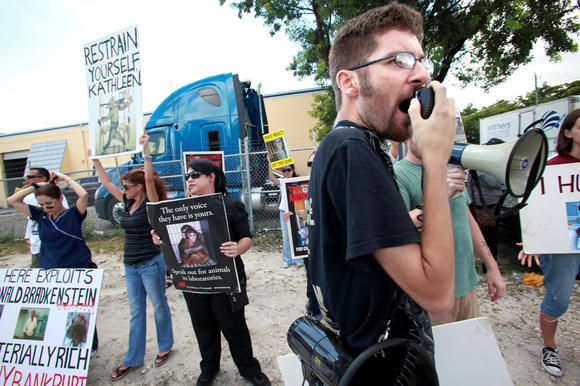
Gary Serig­nese, Exec­u­tive Direc­tor of South Flori­da Smash HLS, leads a demon­stra­tion out­side Pri­mate Prod­ucts, Inc

Gary Serig­nese, Exec­u­tive Direc­tor of South Flori­da Smash HLS, leads a demon­stra­tion out­side Pri­mate Prod­ucts, Inc. in Doral, near Mia­mi Inter­na­tion­al Air­port. (CRISTOBAL HERRERA / Sun Sen­tinel SoFlaShare / Sep­tem­ber 22, 2011)

A South Flori­da hold­ing cen­ter for import­ed research mon­keys [sic] that had been the tar­get of ani­mal rights protests has shut down, with the com­pa­ny mov­ing its oper­a­tions to a remote loca­tion north of the Ever­glades.

Pri­mate Prod­ucts Inc. has closed a fenced, cage-filled build­ing near Mia­mi Inter­na­tion­al Air­port that had been the focus of an ani­mal rights cam­paign involv­ing pick­et­ing, demon­stra­tions against par­tic­i­pat­ing air­lines and smug­gled pho­tos of bloody mon­keys. The com­pa­ny has laid off 10 employ­ees and moved its remain­ing oper­a­tions to a com­plex near the Col­lier Coun­ty town of Immokalee.


Dr. Thomas Row­ell, a vet­eri­nar­i­an who is the company’s pres­i­dent, said the clo­sure rep­re­sent­ed a long-planned con­sol­i­da­tion that had noth­ing to do with the demon­stra­tions. He said Pri­mate Prod­ucts had obtained fed­er­al per­mis­sion to quar­an­tine mon­keys at its oth­er facil­i­ty and planned to reduce its import and sales busi­ness in favor of ser­vice and sup­port.

Gary Serig­nese, of Boca Raton, exec­u­tive direc­tor of the ani­mal rights group South Flori­da Smash HLS, said he doubt­ed this expla­na­tion.

“We know that they would not have made this change with­out our aggres­sive protest cam­paign,” he said. “An import com­pa­ny would not aban­don a facil­i­ty close to the inter­na­tion­al air­port unless it felt it had no choice.”

Dur­ing the cam­paign, activists held demon­stra­tions at the Pem­broke Pines home of the company’s pre­vi­ous pres­i­dent. Using email, phone calls and pick­et­ing, they pres­sured local freight air­lines into refus­ing to car­ry pri­mates. They obtained pho­tos of injured mon­keys from inside the facil­i­ty and pro­vid­ed them to the news media.

In argu­ing for the com­pa­ny to close, they said the mon­keys were head­ed for lives of bore­dom, pain and fear, with dubi­ous ben­e­fit to human health. Pri­mate Prod­ucts has said its work pro­vides essen­tial research sub­jects to sci­en­tists, who are the best judges of their bio­med­ical val­ue.

“We are here to assure you and oth­ers that PPI is com­mit­ted to our mis­sion to serve the bio­med­ical research com­mu­ni­ty and to pro­vide prod­ucts and ser­vices specif­i­cal­ly designed to enhance the con­ser­va­tion, care, and use of non­hu­man pri­mates for advanc­ing pub­lic health,” Row­ell wrote in an email.

Elsipogtog Blockade Halts Seismic Testing

25 June 2013 Com­mu­ni­ty Mem­ber Hit by Car, Sov­er­eign­ty Sum­mer Cam­paign Call­ing for Nation­al Sol­i­dar­i­ty Actions

25 June 2013 Com­mu­ni­ty Mem­ber Hit by Car, Sov­er­eign­ty Sum­mer Cam­paign Call­ing for Nation­al Sol­i­dar­i­ty Actions

By Sun­day, June 23rd, SWN Resource Canada’s high­ly con­test­ed and protest­ed seis­mic test­ing along high­way 126, in Kent Coun­ty, New Brunswick, had almost wrapped up.

But the seis­mic test along the high­way is only one of sev­er­al planned test­ing lines, and the company’s attempts to begin anoth­er line of seis­mic test­ing – this time along the back roads of Kent Coun­ty – was yes­ter­day halt­ed in its tracks by com­mu­ni­ty mem­bers liv­ing in the vicin­i­ty of Browns Yard.

SWN’s seis­mic test­ing of the back roads areas of Kent Coun­ty – con­duct­ed with All-Ter­rain Vehi­cles known as ‘Bom­badiers’, and dyna­mite charges – is slat­ed to be exten­sive, with approx­i­mate­ly 150kms of test­ing expect­ed to take place.

Yesterday’s resis­tance, con­duct­ed first­ly by local fam­i­lies and the action group known as ‘Upriv­er Envi­ron­ment Watch’, sug­gest that SWN’s task in the woods of New Brunswick, where there is local knowl­edge, deep forests and intense oppo­si­tion to the test­ing, will be a tough slog indeed.

At about 2pm, an SWN-con­tract­ed truck with a trail­er parked itself along high­way 490. The truck was aban­doned by the SWN-con­tract­ed work­ers, but it was an announce­ment of their pres­ence to the vig­i­lant com­mu­ni­ty.

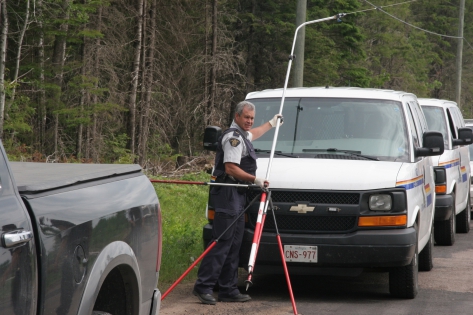
A small group of local famil­i­ties – about 15 peo­ple in all, includ­ing young chil­dren – then gath­ered. A Bom­badier, two geo­phones, a surveyor’s tri­pod and a SWN anten­na, were spot­ted. Who­ev­er had posi­tioned the equip­ment had done so on a pri­vate piece of land adja­cent to the dirt high­way.

The dri­ver of the Bom­badier approached the sur­vey­ing equip­ment, poten­tial­ly to recov­er it from the gath­er­ing crowd, only to be chased away from the equip­ment by the crowd. The dri­ver sped south along a dirt road and did not return to the scene.

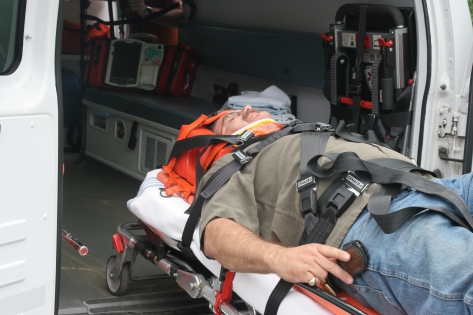
An SWN-con­tract­ed secu­ri­ty truck appeared on the scene about ten min­utes lat­er. The dri­ver of the truck did not speak to the gath­ered crowd, but as he was dri­ving away he struck local res­i­dent Dave Morang hard enough with his driver’s side mir­ror to bend the mir­ror back­wards. The dri­ver did not stop.

Morang, injured, request­ed that an ambu­lance need­ed to be called. An Emer­gency Response team lat­er took Morang to hos­pi­tal on a spinal board and a stretch­er. His con­di­tion is cur­rent­ly unknown.

“I can’t believe they didn’t stop,” Morang told the Hal­i­fax Media Co-op before the ambu­lance arrived. “They hit me hard enough with his mir­ror that it bent it. He would have known that. How many laws can they break?”

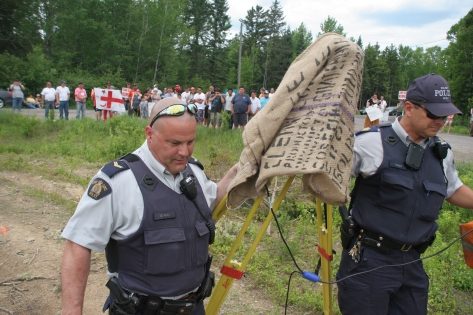
About 20 min­utes lat­er, RCMP appeared in force, with 26 offi­cers and 14 cars and pad­dy wag­ons sta­tion­ing them­selves along the dirt road. The call through social media, how­ev­er, had beat­en them to the punch, and by the time they arrived the gath­ered crowd had swelled to about 100 non-Indige­nous and Indige­nous peo­ple.

RCMP con­sult­ed for about twen­ty more min­utes, before appar­ent­ly decid­ing that the best course of action would be to pick up SWN’s anten­na and geo­phones. Pho­tographs indi­cate that SWN’s equip­ment appears to have been some­how bent and oth­er­wise bro­ken.

With noth­ing left to do, and with a gath­ered crowd which now includ­ed Chief Aaren Sock of Elsi­pog­tog First Nation, the police packed up and retreat­ed down the dirt road from which they had appeared.

Chief Sock, whose band coun­cil late Sat­ur­day night issued a Band Coun­cil Res­o­lu­tion invit­ing Unit­ed Nations Observers to Elsi­pog­tog, was not impressed with SWN’s unwant­ed incur­sions into Kent Coun­ty, or the arrests of his peo­ple while in cer­e­mo­ny.

“Mes­sage for SWN: You’re not wel­come in my ter­ri­to­ry,” Sock told the Hal­i­fax Media Co-op. “Noth­ing per­son­al.”

After the RCMP depart­ed with SWN’s equip­ment, those gath­ered con­tin­ued to cheer and drum. They then began to slow­ly trick­le back to their respec­tive com­mu­ni­ties.

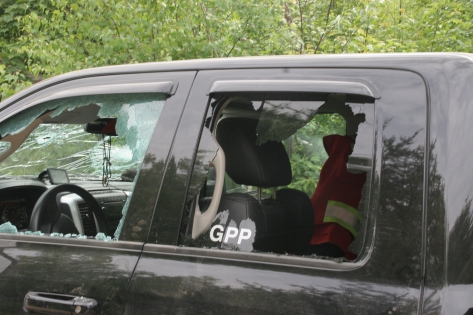
It was lat­er dis­cov­ered that SWN’s aban­doned truck – the orig­i­nal sign of their pres­ence – had had its win­dows smashed, doors dent­ed and bumpers knocked off. As of press time, it is not known how this dam­age might have hap­pened.

A packed com­mu­ni­ty hall meet­ing in Elsi­pog­tog, open to the gen­er­al pub­lic, took place lat­er in the evening. The top­ic of the meet­ing was not only how to stop SWN, but how to get shale gas out of New Brunswick, and all of the Mar­itimes. With UN observers now in place, rep­re­sen­ta­tives from var­i­ous War­rior soci­eties from across the Mar­itimes have been wel­comed to Elsi­pog­tog. They were greet­ed at the meet­ing with a stand­ing ova­tion.

Local man Dave Morang was injured by an SWN-con­tract­ed secu­ri­ty truck, who failed to stop after hit­ting him. [Pho­to: Miles Howe]
Police remov­ing SWN equip­ment, which seems to have been bent somehow.[Photo: Miles Howe]
RCMP mov­ing SWN equip­ment. [Pho­to: Miles Howe]
Not sure how this hap­pened. SWN-con­tract­ed truck gets trashed. Last seen being towed away.[Photo: Miles Howe]

——————————

Cross Post­ed from Idle No More

This is an offi­cial notice and “Call Out” to all Idle No More & Defend­ers of the Land – Sov­er­eign­ty Sum­mer – activists, allies and sup­port­ers, and part­ner­ship orga­ni­za­tions to act in aid and in the defence of grass­roots Elsi­pog­tog First Nation, fam­i­lies, com­mu­ni­ty mem­bers, and sup­port­ers near Monc­ton, New Brunswick.

In the last few weeks, Elsi­pog­tog First Nation com­mu­ni­ty mem­bers and allies have tak­en peace­ful action to pre­vent seis­mic test­ing vehi­cles and work­ers from test­ing for shale gas deposits for pur­pos­es of resource exploita­tion on Indige­nous ter­ri­to­ries.

The pro­tes­tors have remained strong and peace­ful for numer­ous days and the RCMP have become more aggres­sive and vio­lent; arrest­ing a man as he held a sacred pipe in his hand, as well as arrest­ing com­mu­ni­ty mem­bers at the site of the sacred fire. SWN con­trac­tors have also threat­ened to run over Mi’kmaq youth at the site.

In total, this past week­ends Abo­rig­i­nal Day’s 12 arrests brings the total num­ber of arrestees to 29 from both the Mi’kmaq and non-Indige­nous com­mu­ni­ties at the loca­tion of a sacred fire being kept (locat­ed at the junc­tion of high­ways 126 and 116 west) in Kent Coun­ty near Monc­ton. These arrests includ­ed the arrest of a eight and a half month preg­nant Mi’kmaq woman as well as local man, Dave Morang. Mr. Morang was injured by an SWN-con­tract­ed secu­ri­ty truck, who failed to stop after hit­ting him.This peace­ful resis­tance is on-going to pre­vent SWN Resources Cana­da from frack­ing in the imme­di­ate area.

INM orga­niz­ers have been in con­tact with Elsi­pog­tog First Nation com­mu­ni­ty mem­bers and have request­ed fur­ther sup­port.

Sov­er­eign­ty Sum­mer Cam­paign-Idle No More & Defend­ers of the Land

FBI Chases Anti-GMO Activists While Ignoring Monsanto’s Transgressions

25 June 2013  Some exper­i­men­tal GMO crops were torn out of a field in Ore­gon this month. That means it’s time for the fed­er­al gov­ern­ment to freak the fuck out and do its best to clamp down again on eco-activism.

25 June 2013  Some exper­i­men­tal GMO crops were torn out of a field in Ore­gon this month. That means it’s time for the fed­er­al gov­ern­ment to freak the fuck out and do its best to clamp down again on eco-activism.

The sug­ar beet plants, which were genet­i­cal­ly engi­neered by Syn­gen­ta to sur­vive appli­ca­tions of the her­bi­cide Roundup, were uproot­ed in the mid­dle of the night from a cou­ple of fields, pre­sum­ably by anti-GMO activists. The destruc­tion of the exper­i­men­tal crops occurred in the same state where a strain of Monsanto’s ille­gal her­bi­cide-resis­tant wheat recent­ly showed up in a farmer’s field, threat­en­ing America’s multi­bil­lion-dol­lar wheat export mar­ket.


Guess which crime the FBI is des­per­ate to crack?

That’s right: The sug­ar beet one. The agency announced that it “con­sid­ers this crime to be eco­nom­ic sab­o­tage and a vio­la­tion of fed­er­al law involv­ing dam­age to com­mer­cial agri­cul­tur­al enter­pris­es.” Accord­ing to the FBI, a $10,000 reward is being offered for clues by Ore­go­ni­ans for Food and Shel­ter, a cor­po­rate forestry and agri­cul­ture group that lob­bies for pro-GMO and pro-pes­ti­cide leg­is­la­tion.

The Ore­gon­ian reports that 1,000 genet­i­cal­ly engi­neered sug­ar beet plants were uproot­ed from land leased by Syn­gen­ta on June 8:

“Three nights lat­er, the destruc­tion con­tin­ued on anoth­er prop­er­ty, where anoth­er 5,500 plants were ruined.

“It doesn’t look like a vehi­cle was used. It looks like peo­ple entered the field and destroyed the plants by hand,” said Paul Mine­hart, head of cor­po­rate com­mu­ni­ca­tions in North Amer­i­ca for Syn­gen­ta, a glob­al agri­cul­ture cor­po­ra­tion based in Basel, Switzer­land.

Esti­mates for the dam­age were not spec­i­fied but the finan­cial loss­es are sig­nif­i­cant, accord­ing to FBI spokes­woman Beth Anne Steele.”

Mean­while, Mon­san­to is con­tin­u­ing to push its claim that its genet­i­cal­ly engi­neered wheat turned up on an Ore­gon farm because of an act of sab­o­tage. That claim is draw­ing skep­ti­cism from the expert whose tests first con­firmed that the rogue wheat was devel­oped by Mon­san­to. From a report in The Guardian:

“While Monsanto’s chief tech­nol­o­gy offi­cer sug­gest­ed eco-activists were to blame, [Ore­gon State Uni­ver­si­ty weed sci­ences pro­fes­sor Car­ol] Mal­lo­ry-Smith said delib­er­ate con­t­a­m­i­na­tion was the least like­ly sce­nario:

‘The sab­o­tage con­spir­a­cy the­o­ry is even hard­er for me to explain or think as log­i­cal because it would mean that some­one had that seed and was hold­ing that seed for 10 or 12 years and hap­pened to put it on the right field to have it found, and iden­ti­fied. I don’t think that makes a lot of sense.’”

We may learn more about the cause of the GMO wheat con­t­a­m­i­na­tion after the U.S. Depart­ment of Agri­cul­ture com­pletes an inves­ti­ga­tion.

But let’s get back to the sug­ar beets case. If you hap­pen to know who uproot­ed those plants, The Ore­gon­ian has a request for you:

“Ring the local offices of the FBI at (541) 773‑2942 dur­ing nor­mal busi­ness hours or call the FBI in Port­land any­time at (503) 224‑4181

Tips may also be emailed to portland@ic.fbi.gov.”

Yeah, right.

Charges Dropped Against Honduras Dam Opponent

Mem­bers of COPINH, an indige­nous campesino move­ment defend­ing lands and rivers in Hon­duras against dams and oth­er threats

Mem­bers of COPINH, an indige­nous campesino move­ment defend­ing lands and rivers in Hon­duras against dams and oth­er threats

June 25 2013

After an eight-hour hear­ing on June 13, a court in San­ta Bár­bara, the cap­i­tal of the west­ern Hon­duran depart­ment of the same name, sus­pend­ed a legal action against indige­nous leader Berta Isabel Cáceres Flo­res for the alleged ille­gal pos­ses­sion of a weapon. Accord­ing to Cáceres’ lawyer, Marceli­no Martínez, the court found that there was not enough evi­dence to pro­ceed with the case. Cáceres, who coor­di­nates the Civic Coun­cil of Grass­roots and Indige­nous Orga­ni­za­tions of Hon­duras (COPINH), is now free to trav­el out of the coun­try, although the case could still be reopened. Rep­re­sen­ta­tives from some 40 orga­ni­za­tions came to the city on June 13 in an expres­sion of sol­i­dar­i­ty with the activist.

Cáceres was arrest­ed along with COPINH radio com­mu­ni­ca­tor Tómas Gómez Mem­breño on May 24 when a group of about 20 sol­diers stopped their vehi­cle and claimed to find a pis­tol under a car seat [see Update #1178, where we gave the date incor­rect­ly as May 25]. Cáceres and Gómez Mem­breño had been vis­it­ing Lenca com­mu­ni­ties that were protest­ing the Agua Zarca hydro­elec­tric project. The leader of the mil­i­tary patrol, First Bat­tal­ion of Engi­neers com­man­der Col. Mil­ton Amaya, explic­it­ly linked the arrests to the activists’ polit­i­cal work: the Hon­duran online pub­li­ca­tion Pro­ce­so Dig­i­tal report­ed that Amaya “accused Cáceres of going around harangu­ing indige­nous res­i­dents of a bor­der region between San­ta Bár­bara and Intibucá known as Río Blan­co so that they would oppose the build­ing of the Agua Zarca hydro­elec­tric dam.”

Accord­ing to SOA Watch—a US-based group that mon­i­tors the West­ern Hemi­sphere Insti­tute for Secu­ri­ty Coop­er­a­tion (WHINSEC), for­mer­ly the US Army School of the Amer­i­c­as (SOA)—Amaya has stud­ied at the school on two occa­sions. (Pro­ce­so Dig­i­tal 5/26/13; Adi­tal (Brazil) 6/14/13; Kaos en la Red 6/14/13 from COPINH, Radio Mun­do Real, Hon­duras Libre, Dere­chos Humanos; SOA Watch 6/21/13)