
Campaign Against Manchester Airport 20th Anniversary Rally 20/5/17

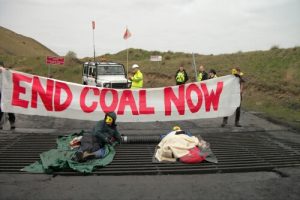
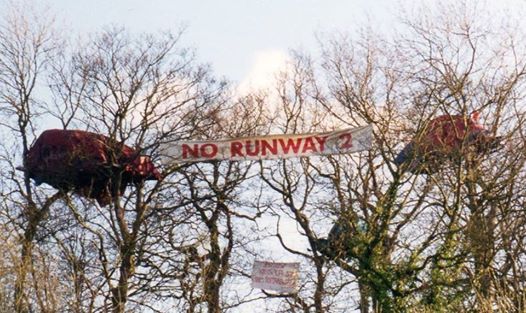
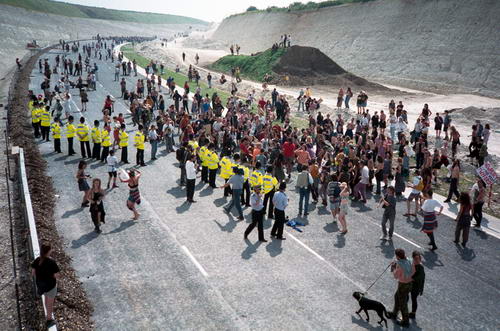
On 20th May 1997 police, bail­effs, and unknown men-in-black, start­ed remov­ing pro­test­ers from the site of what is now Man­ches­ter Air­port’s Run­way 2. It would take four weeks to remove every­one from the tun­nels and the trees, and twen­ty years lat­er they still haven’t built anoth­er run­way any­where in the UK.

On 20th May 1997 police, bail­effs, and unknown men-in-black, start­ed remov­ing pro­test­ers from the site of what is now Man­ches­ter Air­port’s Run­way 2. It would take four weeks to remove every­one from the tun­nels and the trees, and twen­ty years lat­er they still haven’t built anoth­er run­way any­where in the UK.

Twen­ty years lat­er we’re going back, to remem­ber old times, and to remind the world of the ter­ri­ble envi­ron­men­tal cost of air trav­el.

If you were there, if you want­ed to be there, if you saw us on TV, or if you just want to protest the cli­mate impact of avi­a­tion, please come along.

If you want to walk to the ral­ly, we will meet at 11:45AM at the free car park by North­cliffe Chapel, on Altring­ham Road, Styal (SK9 4JQ) for a 2 mile walk along the beau­ti­ful Bollin Val­ley. The path can be mud­dy in bad weath­er, and is unsuit­able for puchchairs or peo­ple with mobil­i­ty prob­lems.

The ral­ly will be held at 1PM by the round­about where the foot­path from Styal cross­es the A538, behind the Air­port Inn (for­mer­ly the Moat House), a place called Over­s­ley­ford Bridge. There is a lim­it­ed amount of unof­fi­cial free park­ing here. Please go round the cor­ner and don’t block the crash gates.

After a short ral­ly we will walk to the Bollin Tun­nel under the sec­ond run­way, which was the site of Wild Gar­lic and Riv­er Rats camps in 1997.

If you need a lift, or col­lect­ing from Styal or Man­ches­ter Air­port rail­way sta­tions please post below.

Please bring mem­o­ries, pho­tographs, sto­ries and music, and lets make this a great day. We were right twen­ty years ago, and we are still right.

https://www.facebook.com/events/1697344283897420/

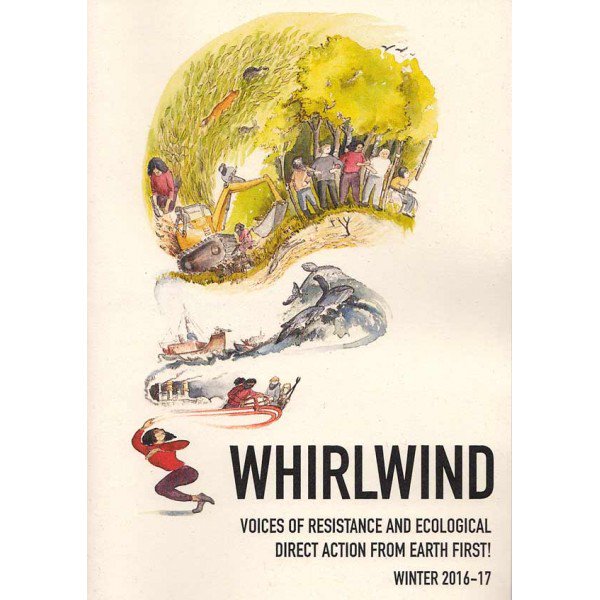
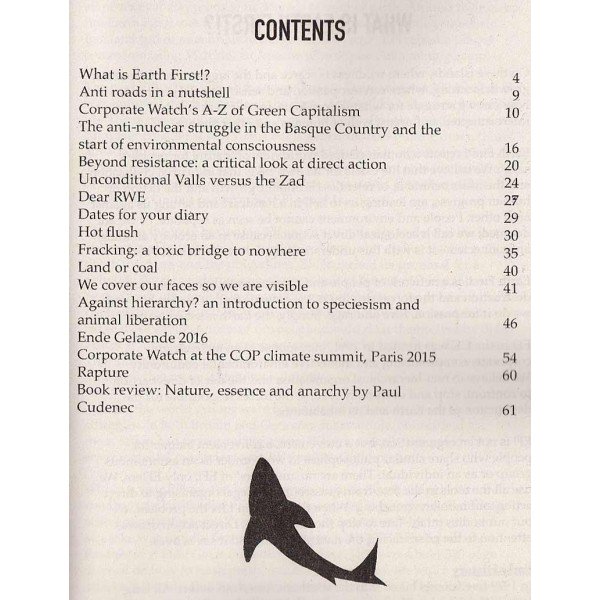
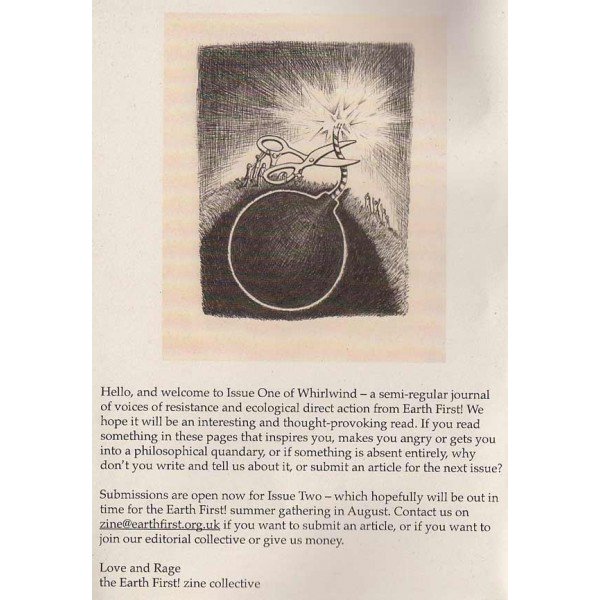
Whirlwind, new Earth First! zine

Whirl­wind, Voic­es of Resis­tance and Eco­log­i­cal Direct Action from Earth First! A5 zine. The first issue!

Whirl­wind, Voic­es of Resis­tance and Eco­log­i­cal Direct Action from Earth First! A5 zine. The first issue!
A new Earth First pub­li­ca­tion includes reports, analy­sis and reviews from the eco­log­i­cal strug­gle to save this doomed plan­et. With colour illus­tra­tions this is a rather nice­ly put togeth­er bit of pro­pa­gan­da!


Ava­ial­ble from your local rad­i­cal book­shop, eco­log­i­cal direct action group or http://www.activedistributionshop.org/shop/zines/4209-whirlwind-earth-first-zine-winter-201617.html

Snowy Beagles

In bliz­zard con­di­tions (well a lit­tle light snow any­way) we went to the Pevensey Marsh Bea­gles, who hunt hares, this week. It did­n’t take too long for them to realise they had no chance of hunt­ing with us around. They went back to the meet and hung around look­ing grumpy while we prac­ticed crack­ing whips and cracked open the brandy cof­fee.

In bliz­zard con­di­tions (well a lit­tle light snow any­way) we went to the Pevensey Marsh Bea­gles, who hunt hares, this week. It did­n’t take too long for them to realise they had no chance of hunt­ing with us around. They went back to the meet and hung around look­ing grumpy while we prac­ticed crack­ing whips and cracked open the brandy cof­fee.

On the way to the hunt we took a diver­sion to East Sus­sex WRAS with an injured pheas­ant we found.

Our friends at South Coast Hunt Sabs had their Lan­drover stolen this week, so if you can spare a few quid to help them get anoth­er, then head to the Go Fund Me page below. In the mean­time, they are still get­ting out — we even let some of them into our trea­sured Landy!

https://www.gofundme.com/new-sabbing-vehicle-for-scoast-sabs


Earth First! Winter Moot (Manchester): 24th-26th Feb 2017

Earth First! Win­ter Moot 24–26 Feb­ru­ary 2017, Man­ches­ter — plot and plan for eco­log­i­cal direct action.

Earth First! Win­ter Moot 24–26 Feb­ru­ary 2017, Man­ches­ter — plot and plan for eco­log­i­cal direct action.

A week­end of cam­paign updates, net­work­ing, plan­ning, sol­i­dar­i­ty and social­is­ing in the North West — the frack­ing front­line. Involved or want to get involved in eco­log­i­cal resis­tance in the Britain & Ire­land? Whether you are fight­ing frack­ing, open­cast coal, frack­ing, GM, nuclear pow­er, new road build­ing or quar­ries. The Win­ter Moot is for you.

Full details here

Drax power station demonstration and celebration, 22/10/16

Bio­fu­el­watch, Coal Action Net­work and oth­ers will be demon­strat­ing at Drax Pow­er Sta­tion, to cel­e­brate ten years of cli­mate action (since the first UK cli­mate camp at Drax) and call­ing for Drax to be shut down and replaced with gen­uine renew­ables.

Bio­fu­el­watch, Coal Action Net­work and oth­ers will be demon­strat­ing at Drax Pow­er Sta­tion, to cel­e­brate ten years of cli­mate action (since the first UK cli­mate camp at Drax) and call­ing for Drax to be shut down and replaced with gen­uine renew­ables.

web­page here

http://www.biofuelwatch.org.uk/2016/axedrax-october-22/

and fb event here

https://www.facebook.com/events/1667993586852396/

It will be a fine day out.

Earth First! zine — we want your writing

We want your writ­ing!

We want your writ­ing!
For a semi-reg­u­lar zine of activist reflec­tions and actions.
This is an invi­ta­tion for arti­cles offer­ing a crit­i­cal analy­sis and reflec­tions on Earth First! and relat­ed envi­ron­men­tal and social jus­tice direct action move­ments, how we organ­ise and the actions we take. Con­tri­bu­tions can be about actions in the UK or inter­na­tion­al. We also wel­come book reviews, activist resources, short rants, illus­tra­tions, car­toons, poems and pho­tographs. We sug­gest 500 – 2000 words for arti­cles, but con­tact us if you want to do some­thing longer.
We aim to have a zine in print and online by the Earth First! win­ter moot 2017. All arti­cles will be copy­left and you can choose whether to write anony­mous­ly. Dead­line Novem­ber 30 2016.
Also con­tact us if you want to join our edi­to­r­i­al col­lec­tive or offer us fund­ing.
zine@earthfirst.org.uk or con­tact us if you want to send an arti­cle by snail mail.

UK: 4 new releases from green anarchist zine Return Fire (PDFs)

Just now we’ve sent out the PDF ver­sions of our recent releas­es, for down­load­ing and print­ing (for past issues, see 325).

https://en-contrainfo.espiv.net/2016/06/05/uk-4-new-releases-from-green-anarchist-zine-return-fire-pdfs/ for links to the PDFs

Just now we’ve sent out the PDF ver­sions of our recent releas­es, for down­load­ing and print­ing (for past issues, see 325). To sum­marise, there’s the full length edi­tion of Return Fire vol.3 (Win­ter 2015–2016), full of news, the­o­ry, poet­ry and antag­o­nism (down­load in low-res here); a com­pan­ion piece con­sist­ing of our ‘glos­sary’ entry for the issue, on Coloni­sa­tion; an imposed and print-ready ver­sion of ‘Smarter Prison?’ as a sup­ple­ment to vol.3, which we received from ‘Rad­i­cal Inter­fer­ence’ and released for Decem­ber of 2015; and last­ly, we’ve uploaded one of the fea­ture texts from vol.3, ‘The Veil Drops’, to theanarchistlibrary.org as a sep­a­rate file for read­ing and repro­duc­tion. Also, there is both colour and black-and-white ver­sions of the cov­er includ­ed, in case some com­rades want to do their own print­ing.

Return Fire vol.3

A con­tin­u­a­tion of our project to bring inci­sive anar­chic con­tent from around to world to an anglo­phone read­er­ship. New edi­to­r­i­al con­tent, reprints of things we’ve found use­ful, art­work, action list­ings, for­ag­ing infor­ma­tion, the usu­al.

There’s a few pre­vi­ous­ly-untrans­lat­ed arti­cles in this issue. For exam­ple, one is an extract from the lat­est cov­er sto­ry of Italy’s eco-insur­rec­tionary peri­od­i­cal Ter­ra Sel­vaggia, on ‘The Advance of Urban­i­sa­tion’ and, simul­ta­ne­ous­ly, cracks open­ing in the con­crete which we could utilise… Annie Archet mean­while tells a life-sto­ry of evad­ing iden­ti­ty, in Por­trait of the Invis­i­ble Woman in Front of Her Mir­ror. To name some out of the texts we’ve assem­bled from selec­tions of pre-exist­ing ones, David King looks at the reduc­tion­ist and patri­ar­chal impli­ca­tions of mod­ern repro­duc­tive tech­nolo­gies in ‘Into Her Inner Cham­bers’, and Nico­la Gai speaks to act­ing with­in ‘The Max­i­mum That Our Abil­i­ties Allow’ (from his con­tri­bu­tion to the found­ing issue of the Croce Nera Anar­chi­ca).

The con­tent we have har­vest­ed whole includes The Inten­si­fi­ca­tion of Inde­pen­dence in Wallma­pu, John Severino’s poignant reflec­tions on a project with­in an indige­nous Mapuche com­mu­ni­ty; The ‘Wild’ as Will and Rep­re­sen­ta­tion, about com­mod­i­fied and alien­at­ed approach­es in the urgent need for land recon­nec­tion, sim­ply signed M.; and Sean Dunohoe’s har­row­ing (if lim­it­ed) polemic against the Close Super­vi­sion Cen­tres with­in the British prison sys­tem. (We note that this year the organ­is­ing col­lec­tive for the June 11 project of sol­i­dar­i­ty with long-term anar­chist pris­on­ers has called for a focus on such units wher­ev­er they are in the world; hence we’d like to ded­i­cate this ver­sion in that direc­tion.)

As for our usu­al columns… We take a ret­ro­spec­tive look at some Glob­al Flash-Points of insur­gent activ­i­ty in the months fol­low­ing our last vol­ume. Rebels Behinds Bars cov­ers the State’s aggres­sions against our com­rades, and the latter’s thoughts on top­ics from sur­viv­ing incar­cer­a­tion or repres­sion to (anti-)organisation for the attack on author­i­ty. ‘To Cre­ate & Main­tain Their Wealth’ and ‘Sen­su­al­i­ty, Mag­ic & Anar­chist Vio­lence’ address gen­dered and speciesist dom­i­na­tion through reviews of Sil­via Fed­eri­ci, Arthur Evans and Jason Hrib­al.

The Poems for Love, Loss & War are from Rydra Cos­mo, Hen­ry Zegar­run­do, Natasha Alvarez and oth­er appre­ci­a­tors of all things fer­al. For our Mem­o­ry as a Weapon seg­ment, we’ve used Unset­tling America’s spell­bind­ing telling of civilisation’s spread through Europe from the south and beyond, and sub­se­quent tra­jec­to­ry, in The Witch’s Child.

And of course, much more! (All pris­on­er address­es and also some court-case news is now up to date in the PDF ver­sion.)

Coloni­sa­tion

This time, we end­ed up print­ing the ‘glos­sary’ sep­a­rate­ly to the main body of the zine. This size­able essay could be a stand-alone on the sub­ject (one which we feel to be both key and mis­un­der­stood by anar­chists in much of the world) and dis­trib­uted as such, but is also rel­e­vant to sev­er­al items in con­tents of vol.3.

‘Smarter Prison?’

New­ly laid out in A5 imposed for­mat, this explo­ration of the ‘Inter­net of Things’ and the tech­no­log­i­cal ide­ol­o­gy which it advances was first sub­mit­ted to us dur­ing the Black Decem­ber mobil­i­sa­tion. (We’re hap­py that since then, Sil­via, Bil­ly and Cos­ta, who are ref­er­enced in ‘Smarter Prison?’, have been told they will not face tri­al again for their thwart­ed attack on the IBM facil­i­ty.) The strug­gle against the nano-world con­tin­ues…

‘The Veil Drops’

This is a read­er on counter-insur­gency through the lens of ‘cri­sis’, the social and de-civil­is­ing. It’s the longest edi­to­r­i­al piece from vol.3, and up on The Anar­chist Library for wider acces­si­bil­i­ty.

Until next time,
R.F.

Twyford Down ‘Operation Greenfly’ audacious direct action anniversary today

Today (22/5/16) is the 23rd anniver­sary of Oper­a­tion Green­fly at Twyford Down — one of the most excit­ing and auda­cious direct actions of the 1990s. Twen­ty-one years ago, the govt were try­ing to bull­doze a road through the most pro­tect­ed land­scape in Eng­land and a mas­sive direct action cam­paign erupt­ed to stop them, which kick­start­ed the 1990s roads protest move­ment.

Today (22/5/16) is the 23rd anniver­sary of Oper­a­tion Green­fly at Twyford Down — one of the most excit­ing and auda­cious direct actions of the 1990s. Twen­ty-one years ago, the govt were try­ing to bull­doze a road through the most pro­tect­ed land­scape in Eng­land and a mas­sive direct action cam­paign erupt­ed to stop them, which kick­start­ed the 1990s roads protest move­ment. We had an anony­mous tip off that the road builders would have to close the whole of the M3 motor­way over night to erect a ‘bai­ley bridge’ over it, to move the huge quan­ti­ties of ‘spoil’ (chalky guts of Twyford Down) and spread it all over the water mead­ows below. They called this huge­ly impor­tant and strate­gic manoeu­vre ‘Oper­a­tion Mar­ket Gar­den”. So we launched “Oper­a­tion Green­fly” to counter them.

They hired secu­ri­ty guards from all over south­ern Eng­land, sur­round­ed the site with razor wire, and had 100s of police pro­tect­ing the site. How­ev­er, as night fell and the motor­way was about to close, some 200 pro­test­ers elud­ed police, went cross coun­try and approached the site from an unpro­tect­ed angle, mirac­u­lous­ly tram­pling down the razor wire, and flood­ing onto the site, occu­py­ing the bridge!

For many peo­ple it was one of the most mirac­u­lous and empow­er­ing actions we’d ever pulled off. We occu­pied that bridge all night, drum­ming on the met­al struc­ture to keep our spir­its up and ward­ing off the “forces of dark­ness”, with the noise echo­ing across the water mead­ows and the silenced motor­way. Fire breathers added extra dra­ma. Huge­ly stir­ring and unfor­get­table. They had to draft in cops from all over south­ern Eng­land, and prise every­one off the bridge, cut­ting all the lock ons, tak­ing hours. Over 50 arrests result­ed with all of us being spread across police sta­tions in the south.

They man­aged to just about get the bridge across the motor­way before it reopened at 7am. How­ev­er, they could­n’t com­plete the job and had to re-close the motor­way 2 weeks lat­er, caus­ing major delays to their con­struc­tion pro­gramme.

Were you there? What are your mem­o­ries of that night?


Ditch Coal Speaking Tour. The realities of coal mining in Russia. 25th May to 10th June.

Min­ing is going on a hun­dred meters away. When they start­ed blast­ing, all the dust was brought to our veg­etable gar­dens. Veg­eta­bles got cov­ered with the coal dust which is impos­si­ble to wash out. Now I don‘t want to harm myself by eat­ing any­thing from this gar­den,” a res­i­dent of Kazas, Siberia, Rus­sia, describes the impact of coal min­ing.

Min­ing is going on a hun­dred meters away. When they start­ed blast­ing, all the dust was brought to our veg­etable gar­dens. Veg­eta­bles got cov­ered with the coal dust which is impos­si­ble to wash out. Now I don‘t want to harm myself by eat­ing any­thing from this gar­den,” a res­i­dent of Kazas, Siberia, Rus­sia, describes the impact of coal min­ing.

The Lon­don Min­ing Net­work and the Coal Action Net­work are head­ing off on tour with a Russ­ian envi­ron­men­tal activist who has wit­nessed first hand the impacts of the UK’s burn­ing of coal on indige­nous peo­ple.

The con­se­quences of coal min­ing in Rus­sia are ter­ri­ble. There are envi­ron­men­tal and eco­nom­ic dis­as­ters hap­pen­ing in min­ing regions, espe­cial­ly in Kuzbass where the most of coal reserves locat­ed. Pub­lic health is get­ting worse and worse, indige­nous peo­ple being forced out of their land, air and water poi­soned.” Vladimir Slivyak, Ecode­fense.

The UK imports two thirds of the coal it burns in the remain­ing nine coal fired pow­er sta­tions. In 2015, 24% of our elec­tric­i­ty came from burn­ing coal. Just under a third of this coal comes from Rus­sia.

Vladimir, a Russ­ian anti-coal activist is vis­it­ing the UK for a speak­ing tour start­ing on the 25th May in Brighton before tour­ing around the UK and fin­ish­ing on the 10th June in Lon­don. Full details of the tour can be found www.coalaction.org.uk/tour. He will dis­cuss the prob­lems caused by min­ing for the UK’s pow­er sta­tions in his home coun­try, while the Coal Action Net­work dis­cuss how we can act to end the destruc­tion.

The tour is part of the launch of Ditch Coal, a new report from the Coal Action Net­work released ear­li­er this year. It tells the human and local­ized envi­ron­men­tal sto­ry of the coal burnt in UK pow­er sta­tions. The cli­mate change impacts of burn­ing coal are well doc­u­ment­ed, but some­how hard to relate to in a con­crete man­ner. By con­trast the sto­ries of those liv­ing in the shad­ows of the mines are some­how more tan­gi­ble, being direct human expe­ri­ences being felt already.

The tour will be joined by local com­mu­ni­ty cam­paign­ers fight­ing open­cast coal oper­a­tions in Sheffield, New­cas­tle and Edin­burgh. Speak­ers from Colom­bia Sol­i­dar­i­ty Cam­paign will join at Brighton, New­cas­tle, Cam­bridge and Lon­don.

The prob­lem in Rus­sia
The Siber­ian vil­lage of Kazas was sur­round­ed by open­cast coal mines and had a pop­u­la­tion of pre­dom­i­nant­ly indige­nous Shor peo­ple. Kazas was entire­ly destroyed in 2014 to make way for the expan­sion of the mines although the vil­lagers did not all con­sent to leave. The prob­lems of this vil­lage are not unique. For each tonne of coal pro­duced six hectares of land is dis­turbed, land which was home and habi­tat to both peo­ple and wildlife before the min­ing com­pa­nies’ encroach­ment.

Pri­or to the destruc­tion of Kazas, pres­sure was applied to get fam­i­lies to move. Infra­struc­ture was no longer main­tained – roads were not cleared of snow in win­ter and clean drink­ing water was no longer pro­vid­ed. With only 6% of water from the mines being treat­ed, filthy water killed the fish and the wildlife dis­persed, pre­vent­ing the tra­di­tion­al eco­nom­ic activ­i­ties of the Shor peo­ple — hunt­ing and fish­ing.

Com­mu­ni­ties in the coal min­ing regions strug­gle to have their objec­tions heard as the sys­tem is stacked against them. Deci­sions about min­ing appli­ca­tions are heard away from the ances­tral lands which are threat­ened so those affect­ed can­not attend hear­ings.
The wors­en­ing sit­u­a­tion for the res­i­dents meant that many agreed to leave. For those who did­n’t the out­come was more sin­is­ter, their homes were destroyed by arson.

The vil­lage of Kazas now only exists in the mem­o­ries of the peo­ple who lived there. “Chu­vash­ka is the Shors’ only vil­lage in this area. In the 1990s, about 16,000 Shors were liv­ing here. Today, there are just between 4,500 and 5,000 peo­ple here” said a Shor woman in Ecode­fense’s film Con­demned. Eight oth­er vil­lages in the area have been destroyed.

The min­ing exploits in the Kemero­vo region have left many of the indige­nous Shor home­less, or dis­placed to oth­er areas, which sev­ers their spir­i­tu­al, cul­tur­al, and prac­ti­cal attach­ments to the land. No ade­quate sub­sti­tute land, nor com­pen­sa­tion has been offered to them. The Kemero­vo Oblast, where most of the Shors and Teleut live, pro­duces 60% of Rus­si­a’s coal for export.

The Russ­ian coal indus­try also has the most dan­ger­ous work­ing con­di­tions of any indus­try in terms of risk to life and wel­fare, with 40–50 fatal acci­dents each year, killing 180–280 peo­ple annu­al­ly, main­ly in the deep mines.

Why is the UK burn­ing Russ­ian coal?
In the year to August 2015, 31% of all ther­mal coal burnt in the UK came from Rus­sia. Since 2005, Rus­sia has sup­plied the UK with more coal than any oth­er coun­try — coal is cheap­er from Rus­sia than any­where else, which is why we burn so much of it. There is lit­tle trans­paren­cy in the coal sup­ply chain and large vol­umes.

Where else does coal come from?
32% of the coal used in the UK was extract­ed in Britain in the year to Sep­tem­ber 2015. Here open­cast min­ing oper­a­tions have con­tin­u­al­ly faced resis­tance from those liv­ing in the shad­ow of mines and pro­posed sites. At the end of March 2016 there were 21 open­cast mines work­ing, a num­ber which is decreas­ing. There are no longer any under­ground coal mines in this coun­try.

Colom­bia is known for its human rights abus­es, yet it sup­plies 23% of the coal import­ed to the UK. Over 90% of Colom­bian coal pro­duc­tion occurs in three large-scale open cast min­ing oper­a­tions in the north­ern depart­ments of La Gua­ji­ra and Cesar. Com­mu­ni­ties close to the mines suf­fer the same prob­lems in terms of forced relo­ca­tions as those neigh­bor­ing Russ­ian mines, addi­tion­al­ly there have been links made to assas­si­na­tion attempts on those who speak out against the mines, mass killings and vio­lence.

Most of the 14% of coal com­ing to the UK from the USA is from dam­ag­ing long­wall min­ing sys­tems — where the mate­r­i­al over the coal is inten­tion­al­ly col­lapsed as the mine pro­gress­es — or from open­cast or moun­tain­top removal mines. Both of these meth­ods destroy huge areas of land, dis­place peo­ple and dam­age the water table. Dur­ing moun­tain­top removal coal min­ing is destroy­ing entire moun­tain ranges in Appalachia.

The Coal Action Net­work is work­ing with grass roots groups on cam­paigns to close the UK’s remain­ing coal fired pow­er sta­tions. Come along to one of our tour dates to find out why we must close these pow­er sta­tions and to see how you can get involved.
Full tour details www.coalaction.org.uk/tour

Ende Gelände #breakfree2016 action round-up

Between 13–15 May 2016 more than 3,500 peo­ple took part in a huge series of Ende Gelände (lit­er­al­ly: ‘here & no fur­ther’) direct actions to shut down Europe’s biggest source of CO2 emis­sions, fol­low­ing a cli­mate camp.

Between 13–15 May 2016 more than 3,500 peo­ple took part in a huge series of Ende Gelände (lit­er­al­ly: ‘here & no fur­ther’) direct actions to shut down Europe’s biggest source of CO2 emis­sions, fol­low­ing a cli­mate camp.

The Wel­zow-Süd open­cast coal mine in the Lusa­tia coal fields in Ger­many was shut down and the pow­er plant Schwarze Pumpe – Europe’s 10th largest emit­ter of CO2 – was cut off from all coal sup­plies.

Ende Gelände: Day 1 - Climate activists shut down one of Europe's largest opencast lignite mines

Many entered the mine, oth­ers blocked coal trains and con­vey­or belts trans­port­ing coal to the pow­er plant. Swedish ener­gy com­pa­ny Vat­ten­fall reduced the pow­er plant’s capac­i­ty by 80 per cent. After more than 48 hours, the activists stopped the block­ade on Sun­day 15 May 2016.

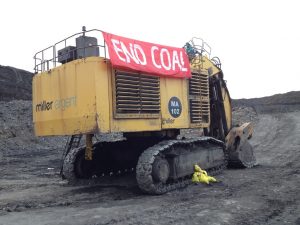
The mass action Ende Gelände (‘here and no fur­ther’) demands an end of coal now.

Pic­tures: 1 | 2 | 3

More info

Next Ger­man cli­mate camp in the Rhineland (note clash with EF! Sum­mer Gath­er­ing)