A Growing Movement Against Plantations in West Papua

We, the indige­nous peo­ple of Yowied Vil­lage reject cor­po­ra­tions com­ing on to our land in Tubang Dis­trict for the fol­low­ing rea­sons:

There is not so much land around Yowied Vil­lage.

We, the indige­nous peo­ple of Yowied Vil­lage reject cor­po­ra­tions com­ing on to our land in Tubang Dis­trict for the fol­low­ing rea­sons:

There is not so much land around Yowied Vil­lage.

Our lives are depen­dent on what our envi­ron­ment can pro­vide.

Where will the future gen­er­a­tions go?”

The sign is tied with coconut leaves, a sig­nal that it is a ‘sasih’ mark­er, a tra­di­tion­al means to for­bid pas­sage. Sim­i­lar signs can be seen in almost all vil­lages in the area. They are backed up by an agree­ment between all vil­lages in the area that no-one should give up their land, under pain of death. It’s a des­per­ate first act of defi­ance to a mod­ern world they know has no place for them. A plan­ta­tions mega-project has been imposed on Mer­auke, West Papua, and 2.5 mil­lion hectares of for­est, grass­land and swamps – the ances­tral lands of the Malind peo­ple – are being tar­get­ed for oil palm, indus­tri­al tim­ber and sug­ar cane.

For now, the nat­ur­al ecosys­tem in remote Tubang Dis­trict is still in good con­di­tion, and the Malind Woyu Mak­lew peo­ple who live in the area can eas­i­ly find all they need from the for­est by hunt­ing, gath­er­ing and fish­ing. The for­mer chief of Yowied vil­lage has claimed that he could eas­i­ly live on only $2 a month, which he would use to buy tobac­co and betel nut – every­thing else could be got from the for­est.

Through­out Mer­auke Regency in the south­ern part of West Papua, a land con­tro­ver­sial­ly annexed by Indone­sia 50 years ago, indige­nous com­mu­ni­ties are hav­ing to learn fast how to resist cor­po­rate manip­u­la­tions. In 2009 ambi­tious local politi­cians pro­posed Mer­auke as Indonesia’s new cen­tre for indus­tri­alised agri­cul­tur­al growth. This was in the after­math of the 2008 glob­al food cri­sis, when gov­ern­ments world­wide got pre­oc­cu­pied about nation­al food secu­ri­ty, prompt­ing a wave of land-grab­bing glob­al­ly. The Mer­auke Inte­grat­ed Food and Ener­gy Estate (MIFEE), as it became known, was offi­cial­ly launched three years ago in August 2010. Around 50 pro­vi­sion­al per­mits have been issued to around 20 cor­po­rate groups, most­ly from Indone­sia or South Korea.

Starvation and rebellion as the companies move in.

They claimed that MIFEE would ‘Feed Indone­sia, then feed the world’. But in the end, it brought hunger. In Zane­gi, one of the first vil­lages to be caught up in MIFEE-relat­ed devel­op­ment, five chil­dren have died in the first half of 2013 from mal­nu­tri­tion and pre­ventable dis­eases thought to be linked to pol­lu­tion. Med­co, the com­pa­ny involved, is not even pro­duc­ing food. Its indus­tri­al forestry plan­ta­tion is cur­rent­ly turn­ing the Zane­gi people’s ances­tral for­est into wood chips. These are then loaded onto ships and export­ed to Korea by Medco’s joint ven­ture part­ner LG Inter­na­tion­al, to be burnt in pow­er sta­tions or turned into fibre­board.

Zane­gi too has had to learn to resist. Vil­lagers were tricked out of their land by Med­co, who gave them a ‘Cer­tifi­cate of Appre­ci­a­tion’ and US$33,400. The peo­ple had no idea that they were sign­ing away their for­est, their means of sub­sis­tence, their iden­ti­ty. Then the com­pa­ny start­ed tak­ing away the tim­ber, giv­ing peo­ple a frac­tion of the price the logs were worth and break­ing their promise to leave intact for­est around sago groves and sacred sites. Even­tu­al­ly the peo­ple decid­ed to block the company’s access. If they heard chain­saws then they would come run­ning, and in this way they suc­cess­ful­ly man­aged to keep the com­pa­ny from oper­at­ing on their land for over a year.

Despite their resis­tance, Zane­gi has suf­fered. The for­est is gone and the vil­lage is emp­ty nowa­days as peo­ple reg­u­lar­ly aban­don the vil­lage, stay­ing in tem­po­rary camps to try to hunt the few remain­ing for­est ani­mals. Oth­ers work for the com­pa­ny, but their dai­ly pay is only enough to buy a day’s food for a fam­i­ly. Swamps are poi­soned with pes­ti­cide residues from the tree nurs­eries, fish swim errat­i­cal­ly as if drunk and then die. Peo­ple do not have enough to eat, espe­cial­ly the women who always feed their hus­bands and chil­dren before them­selves. Tra­di­tion­al beliefs in this area mean that deaths are thought to be linked to black mag­ic. This has led to a con­flict which has left sev­er­al com­mu­ni­ty lead­ers impris­oned, accused of killing some­one who was believed to be a sor­cer­er. Three of the men have died in prison in the last year, deaths which are also put down to black mag­ic.

The sto­ry of Zane­gi vil­lage has become well known around the Mer­auke area: it is a warn­ing of what hap­pens when vil­lagers sell their land, and that prompts peo­ple in oth­er vil­lages to hold out against the com­pa­nies. Anoth­er com­pa­ny, Rajawali, is try­ing to set up a sug­ar cane plan­ta­tion near the coast. The com­pa­ny suc­cess­ful­ly bought up land belong­ing to Domande vil­lage, but oth­er vil­lages, Ong­gari and Kaiburze, have been res­olute in their refusal to sell. This is despite intense pres­sure from the Rajawali cor­po­ra­tion, which has also been accused of ille­gal­ly felling trees on Ong­gari village’s ter­ri­to­ry.

In Domande Vil­lage, in June 2013, local peo­ple angry about unpaid tim­ber com­pen­sa­tion set up a block­ade, and some days lat­er ordered Rajawali’s log­gers to leave the area. As in Zane­gi, they had already been tricked out of their land, but were still fight­ing to get fair com­pen­sa­tion for the trees at least. Pre­vi­ous­ly the vil­lagers had tak­en action after Rajawali cleared a bur­ial ground. Liv­ing in the plan­ta­tion zone means you must be on con­stant alert to com­pa­nies over­step­ping the line.

Fear and con­flict is only ever one step behind the com­pa­ny. Back in Yowied, com­pa­ny guards work­ing for PT May­o­ra, the com­pa­ny which is try­ing to gain access to plant sug­ar-cane, accused peo­ple of being sep­a­ratist rebels, fight­ing for West Papuan inde­pen­dence. See­ing that vil­lagers were prepar­ing to run to the for­est in fear, some com­mu­ni­ty lead­ers felt forced to sign a doc­u­ment PT May­o­ra were pre­sent­ing them. In near­by Woboyu, vil­lagers were scared a dead­ly con­flict would break out after rumours spread that peo­ple from anoth­er vil­lage were col­lab­o­rat­ing with PT Astra to sur­vey cus­tom­ary land bound­aries. Both com­pa­nies are plan­ning sug­ar-cane plan­ta­tions.

Local com­mu­ni­ty activists involved in the SSUMAWOMA forum record­ed video inter­views in these two vil­lages which they then took to Mer­auke city. After dis­cussing the issue one Sun­day after­noon, about 100 peo­ple decid­ed to take action, and the next day occu­pied PT Mayora’s office in the city, demand­ing that if com­pa­nies want to pro­pose new plan­ta­tions, they approach peo­ple in a rea­son­able way, and not just show up caus­ing chaos, divi­sions, intim­i­da­tion and con­fu­sion. The local regency leader agreed to meet with rep­re­sen­ta­tives after the action and agreed to order PT May­o­ra to tem­porar­i­ly leave the land, but it is known that the com­pa­ny is still look­ing for a new strat­e­gy to con­vince vil­lagers.

The SSUMAWOMA Forum is a group that has emerged in recent months, made up most­ly of uni­ver­si­ty grad­u­ates who have roots in the west­ern part of Mer­auke Regency. With the back­ing of the com­mu­ni­ties, they are artic­u­lat­ing their oppo­si­tion to all plan­ta­tion plans, at least as long as the peo­ple lack the skills or expe­ri­ence to get mean­ing­ful employ­ment with com­pa­nies, mean­ing they end up mar­gin­alised on their own land. They bring the voice of the vil­lagers to the pub­lic and gov­ern­ment, show­ing how the peo­ple have noth­ing to gain from plan­ta­tions and, at the same time, have so much to lose: their for­est, their liveli­hood, their cul­ture and their iden­ti­ty.

The Malind peo­ple are not just depen­dent on the for­est for their dai­ly needs. The for­est defines every aspect of who they are. In Malind cos­mol­o­gy mor­tal humans are the third gen­er­a­tion; the first two gen­er­a­tions of their ances­tors remain immor­tal in the envi­ron­ment around them, and the Earth is seen as moth­er. Each clan is inti­mate­ly con­nect­ed to their dema or totem – a part of the ecosys­tem: Gebze with coconut, Mahuze with sago, Basik-Basik with wild pigs, Samkakai with tree kan­ga­roos. It is incom­pre­hen­si­ble for Malind peo­ple that the for­est might be gone, if it is their cul­ture becomes no more than a sad sym­bol, their sense of being torn apart.

“The Malind Anim cul­ture is not just a dance, a rit­u­al or a carv­ing. It is not a mere rep­re­sen­ta­tion of a cul­ture, dec­o­rat­ed in mud, leaves and vines” (SSUMAWOMA forum)

When Oil Palm wears a Uniform

In the east­ern part of Mer­auke is the bor­der with Papua New Guinea. The area is mil­i­tarised, under the pre­text of pro­tect­ing the bor­der zone. For decades local peo­ple have had to live with con­stant intim­i­da­tion from the troops at dozens of out­posts strung along the bor­der. Here tra­di­tion­al soci­ety has faced even more chal­lenges; many women have been raped, and sub­sis­tence becomes more dif­fi­cult when mil­i­tary per­son­nel have hunt­ed many of the for­est ani­mals.

The mil­i­tary is a source of ter­ror and trau­ma in West Papua, hav­ing waged a war on its peo­ple over the last 50 years, pro­tect­ing its own inter­ests and Indonesia’s eco­nom­ic agen­da. Shoot­ing inci­dents are com­mon, inde­pen­dence move­ments are bru­tal­ly crushed, tor­ture, impris­on­ment and ran­dom beat­ings are every­day haz­ards. Racist atti­tudes towards black-skinned Papuans pre­vail. The cli­mate of fear and resent­ment has long been estab­lished through­out Papua. Even though Mer­auke has not been a zone of intense pro-inde­pen­dence activ­i­ty recent­ly, this is why liv­ing along­side the mil­i­tary still means con­stant ten­sion.

All MIFEE com­pa­nies use the mil­i­tary (or police mobile brigade) as secu­ri­ty, adding to the pres­sure on peo­ple to hand over their land, but in this east­ern strip, near the bor­der, the mil­i­tary pres­ence is felt more strong­ly. This area has been allo­cat­ed for oil palm, with at least four cor­po­rate groups want­i­ng to devel­op big plan­ta­tions. Unsur­pris­ing­ly, the com­pa­nies have found it eas­i­er to gain access in this area, and sev­er­al are now clear­ing the for­est. Nev­er­the­less, a few clans are still resist­ing, refus­ing to sell their land, and there have been block­ades here too.

The going rate for com­pen­sat­ing indige­nous peo­ple for the anni­hi­la­tion of their world works out at about US$30 per hectare. This amount is piti­ful if it is seen as a replace­ment for the many life­times which a for­est could sus­tain, espe­cial­ly once that amount is shared out between dif­fer­ent fam­i­lies. But at the moment when the cash is hand­ed over for a few thou­sands of hectares, for the com­mu­ni­ties, as peo­ple who are des­per­ate­ly poor in terms of the mon­ey econ­o­my, it seems a huge amount In sev­er­al cas­es, this cash han­dover has been the cause of con­flict between vil­lages, clans or indi­vid­u­als, wrench­ing the com­mu­ni­ty apart.

Far away in Jakar­ta, Indonesia’s nation­al devel­op­ment mas­ter plan still tells the offi­cial sto­ry: MIFEE is a well-planned and struc­tured devel­op­ment which will pro­vide food crops such as rice, corn, soy­beans and beef for the nation. It total­ly ignores real­i­ty, which is that the land is being gob­bled up by the same oil palm, sug­ar and forestry multi­na­tion­als that have dev­as­tat­ed many of Indonesia’s oth­er islands. And as invest­ment fever spreads, oil palm com­pa­nies are also lin­ing up to estab­lish or expand their plan­ta­tions else­where in West Papua.

Indige­nous resis­tance some­times seems des­per­ate – what chance do for­est peo­ple stand against multi­na­tion­als and the mil­i­tary? But com­pa­nies remain cau­tious about enter­ing West Papua, fear­ing local anger, and many ambi­tious invest­ment plans have failed here. Stand­ing up to these com­pa­nies costs the Malind so much, but real­ly it is their only chance to sur­vive as a peo­ple, and pro­tect their land.

—-

This is the first of three essays writ­ten to give an overview of the MIFEE project, three years after it was offi­cial­ly launched on August 11 2010. The sec­ond arti­cle is a more in-depth analy­sis of how plan­ta­tion com­pa­nies have affect­ed indige­nous com­mu­ni­ties over the last three years.

The third arti­cle is a much longer analy­sis of the mis­match between the orig­i­nal plan of a food estate to “feed Indone­sia, then feed the world” and the real­i­ty: vast oil palm, sug­ar cane and indus­tri­al forestry plan­ta­tions. It also exam­ines how this food estate myth has persisted,providing legit­i­ma­cy to a nation­al devel­op­ment plan which ignores com­mu­ni­ties, and to a pol­i­cy for West Papua which is pro­mot­ing devel­op­ment while doing noth­ing to address the under­ly­ing caus­es of West Papua’s prob­lems.

List of key companies involved in MIFEE:

  • Med­co (Indone­sian oil and gas com­pa­ny)
  • LG Inter­na­tion­al (Kore­an TNC, best known for its elec­tron­ic prod­ucts)
  • Rajawali (Indone­sian busi­ness con­glom­er­ate)
  • Dae­woo Inter­na­tion­al (Part of South Kore­an Posco TNC)
  • Korindo (Kore­an busi­ness con­glom­er­ate with diverse busi­ness­es in Indone­sia)
  • Wilmar Inter­na­tion­al (Asian plan­ta­tion and grain trad­ing giant, and biodiesel pro­duc­er, also owns the com­pa­ny which mar­kets CSR Sug­ar in Aus­tralia)
  • AMS Plan­ta­tions (The plan­ta­tion com­pa­ny belong­ing to the younger broth­er of Wilmar’s co-founder)
  • Astra Agro Lestari (Indone­sian plan­ta­tions com­pa­ny, ulti­mate­ly owned by British-reg­is­tered cor­po­ra­tion Jar­dine Math­e­son)
  • May­o­ra (Indone­sian food com­pa­ny)
  • Chi­na Gate Agri­cul­ture Devel­op­ment (lit­tle known com­pa­ny, also South Kore­an)
  • Moorim Paper (Kore­an paper com­pa­ny)
  • Cen­tral Cip­ta Mur­daya (Indone­sian con­glom­er­ate – boss is in prison for pay­ing bribes for plan­ta­tion per­mits else­where but busi­ness goes on regard­less)
  • Tex­ma­co (Indone­sian con­glom­er­ate focus­ing on forestry)

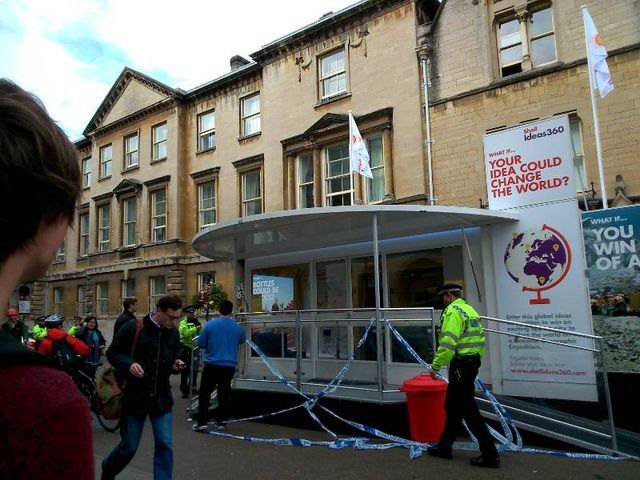
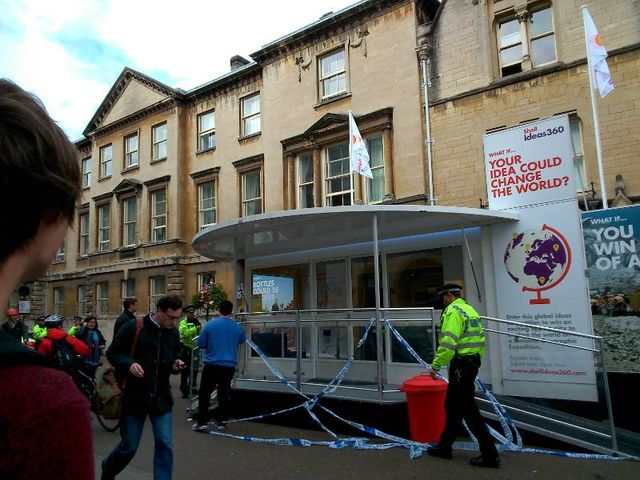
Shell PR event shut down in Oxford

the Shell booth


the Shell booth


23rd Octo­ber Shell set up a fair­ly large struc­ture in Broad St yes­ter­day, an plush enclosed unit with mez­za­nine floor and car­pet, to plug their lat­est PR/recruitment scheme. They were plan­ning to be there from 10am until 6pm, but things did­n’t go accord­ing to their plans.

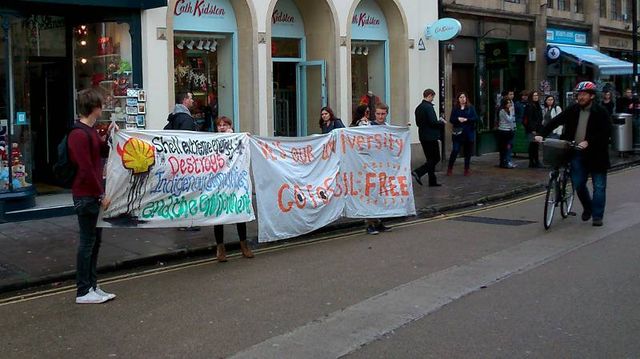
A protest had been called, and around lunchtime peo­ple start­ed arriv­ing and giv­ing out leaflets. Ear­li­er the Shell PR peo­ple had been roam­ing around the street chat­ting to peo­ple and giv­ing out glossy bull­shit, but once pro­test­ers arrived they seemed to with­draw a bit more into their self-built shell. One per­son heck­led them enthu­si­as­ti­cal­ly.

Then, about 12:45pm, anoth­er group arrived, went inside, grabbed hand­fuls of Shell pro­pa­gan­da, poured black oily stuff every­where, and wrote anti-Shell slo­gans on their white­board (in per­ma­nent mark­er, appar­ent­ly — it looked like they weren’t able to remove it!). I heard that the oily stuff even went all over their com­put­er giz­mos, pre­sum­ably caus­ing quite a bit of dam­age.

Unfor­tu­nate­ly as they were leav­ing they got chased and grabbed by secu­ri­ty, and despite a strug­gle were hand­ed over to the cops and arrest­ed. Mean­while Shell had appar­ent­ly had enough, as not long after­wards they packed up and went home.

The 3 arrest­ed peo­ple were released about 11 hours lat­er — all 3 had been giv­en cau­tions for crim­i­nal dam­age, and 2 also had fixed penal­ty notices (£90 each) for obstruc­tion. They all seemed fine with this out­come.

Here’s an arti­cle from some of the peo­ple that organ­ised the leaflet­ting ses­sion, explain­ing why they were there:
 http://tarfreetowns.org/news/oxford-is-saying-no-to-shells-whitewashing/
…it has some decent stuff in it but does­n’t men­tion the long­stand­ing strug­gle in Ross­port, Ire­land against Shel­l’s occu­pa­tion there, which for me per­son­al­ly was near the top of my mind when I went along to the protest:
http://shelltosea.com/

Shell have been tar­get­ed plen­ty of times before when try­ing to run grad­u­ate recruit­ment events in Oxford: http://oxford.indymedia.org.uk/2009/10/440301.html  http://oxford.indymedia.org.uk/2010/03/447286.html
(as have oth­er oil com­pa­nies), but this was the first time I know of that they’d had the gall to do an event on the street (usu­al­ly they are in some kind of plush hotel).

protesters with banners

Icelandic road protest — elves and lava fields, Gálgahraun

Lögreglumenn fjarlægja mótmælendur í Gálgahrauni
21.10.2013
 
A group of pro­test­ers, hop­ing to stop planned road con­struc­tion through a pro­tect­ed lava field, were arrest­ed by police today. A law pro­fes­sor believes that arrest was pre­ma­ture.

As report­ed last month, the con­tro­ver­sy sur­rounds the lava fields of Gál­gahraun, which is locat­ed on the Álf­tanes penin­su­la. Although the fields were offi­cial­ly pro­tect­ed in 2009, con­struc­tion of a new road — Álf­tanesve­g­ar — was green-lit ear­li­er this month, and will in part go through Gál­gahraun.

This has sparked protests that have tak­en the form of direct action, as pro­test­ers put them­selves between the lava fields and con­struc­tion equip­ment, stop­ping devel­op­ment before it could begin.

Today, Vísir reports, police offi­cers moved in on the pro­test­ers, arrest­ing them, car­ry­ing some of them phys­i­cal­ly away from the site of con­struc­tion.

Among those arrest­ed was not­ed jour­nal­ist and envi­ron­men­tal­ist Ómar Rag­nars­son, as can be seen in this video.

Law pro­fes­sor Sig­urður Lín­dal told Vísir that he believes no arrests should have hap­pened before a court of law has decid­ed whether or not build­ing a road through a pro­tect­ed lava field is even legal.

“It is com­plete­ly nat­ur­al that [author­i­ties] wait for a court deci­sion first,” dis­trict court lawyer Katrín Odd­s­dót­tir said. “I admire peo­ple who stand up for this. Peo­ple should be able to sub­mit such mat­ters before a court of law to have con­firmed whether oper­a­tions that threat­en nature are legal.”


200 Beagles Liberated! Historic Night in Brazil

beagles119th Octo­ber “An anti-vivi­sec­tion protest out­side the Roy­al Insti­tute in the city of São Roque began with a few dozen peo­ple on Thurs­day, Octo­ber 17 and dur­ing the night grew to at least 100 peo­ple.

beagles119th Octo­ber “An anti-vivi­sec­tion protest out­side the Roy­al Insti­tute in the city of São Roque began with a few dozen peo­ple on Thurs­day, Octo­ber 17 and dur­ing the night grew to at least 100 peo­ple. At 2:00 ear­ly Fri­day morn­ing, activists stormed the com­plex and went straight for the ken­nels. As many as 200 dogs were res­cued.”


beagles2

beagles3

beagles4

Solidarity Protests and Blockades Ignite Across Turtle Island in Solidarity with Mi’kmaq

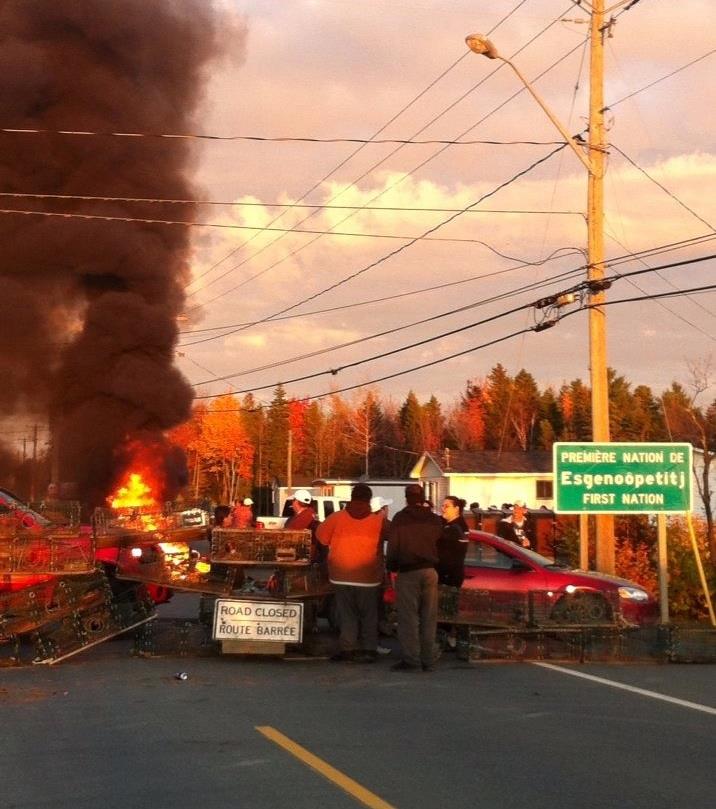
photo of yesterday's solidarity blockade at Esgenoopetitj18th Octo­ber

photo of yesterday's solidarity blockade at Esgenoopetitj18th Octo­ber

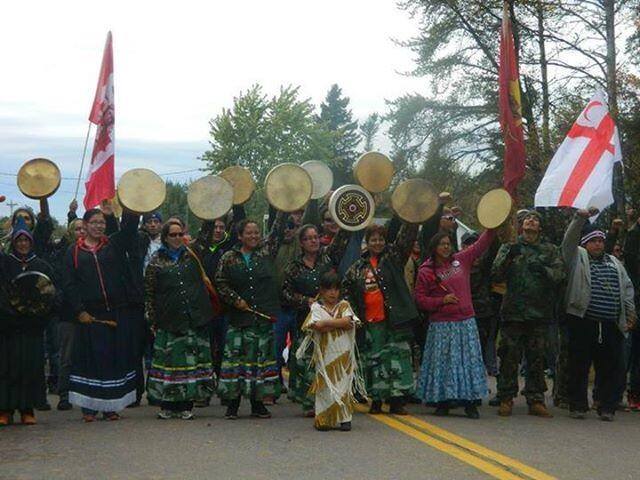
The RCMP retreat from the Mi’qmak block­ade has not stemmed the out­rage against the Cana­di­an government’s ruth­less attack yes­ter­day on the peace­ful Mi’qmak block­ade. As South­west­ern Ener­gy attempts to extend the injunc­tion against the Mi’qmak, sol­i­dar­i­ty protests are spread­ing through­out Tur­tle Island.

Numer­ous infra­struc­ture points through­out Cana­da were snarled by indige­nous block­ades in the imme­di­ate after­math of the state inva­sion of the Mi’qmak. At least 30 sol­i­dar­i­ty protests are also being under­tak­en accord­ing to Idle No More.

Accord­ing to San­ta Cruz Indige­nous Sol­i­dar­i­ty, by 3pm yes­ter­day six peace­ful high­way and bridge block­ades had been errect­ed at Roads in Burnt Church (NB), Tobique (NB), Esgenoopetitj (NB), Hamil­ton (ON) and Six Nations (ON).

The Lis­tuguj Mi’Gmaq built a tipi on the Van­Horne bridge, block­ing traf­fic on the Que­bec-New Brunswick bor­der.

In Win­nipeg, pro­tes­tors tied up traf­fic at the inter­sec­tion of Portage and Main, burn­ing a Cana­di­an flag to protest against the Crown’s his­toric betray­al of First Nations treaty rights. Police appeared to be clear­ing the way for the march, halt­ing traf­fic at numer­ous points.

In Mon­tre­al, mem­bers of the Mohawk nation gath­ered to show sol­i­dar­i­ty. Dur­ing the RCMP crack­down on the Mi’kmaq Block­ade, many observers com­pared the state’s repres­sive response to the 1990 Oka Cri­sis, which saw the Mohawk resist devel­op­ment on their lands for months.

New York, Wash­ing­ton, DC, and numer­ous oth­er cities across the US have also seen sol­i­dar­i­ty demon­stra­tions.

There is a call for sol­i­dar­i­ty for today and tomor­row, which hap­pens to be an inter­na­tion­al day of action against frack­ing (the #glob­al­frack­down http://www.globalfrackdown.org/). The day of sol­i­dar­i­ty will use the hash tag #INDIGENIZE, with orga­niz­ers send­ing report backs and media updates to Reclaim­TurtleIs­land [at] gmail [dot] com.

BWz8AoWCcAAJLA2.jpg-large


Mi’kmaq Blockade Update: RCMP Has Withdrawn, Resistance Continues

946395_10153342098695417_350941597_n18th Octo­ber by Trash­fire / Earth First! News

946395_10153342098695417_350941597_n18th Octo­ber by Trash­fire / Earth First! News

After a day of clash­es yes­ter­day, the police with­drew around 7pm to cheers from the crowd.

40 peo­ple are report­ed arrest­ed and 5 police vehi­cles were burned.

No One Is Ille­gal reports these lists of sol­i­dar­i­ty actions – Google Docs

Pow­er­shift Cana­da

Yes­ter­day saw many emer­gency sol­i­dar­i­ty actions includ­ing a major through­way being shut­down in Win­nipeg.

Today is a day of action called for by the Mi’kmaq ear­li­er this week.

Tomor­row is anoth­er day of action against frack­ing orga­nized under the ban­ner Glob­al Frack­down.


There has also been a request that sup­port­ers call the pre­mier of New Brunswick to express con­cerns over the RCMP’s actions against the Mi’kmaq – .New Brunswick Pre­mier – David Alward
Email: premier@gnb.ca
Phone: (506) 453‑2144
Fax : (506) 453‑7407

Charges for those arrest­ed includ­ed firearms offences, utter­ing threats, intim­i­da­tion, mis­chief and for refus­ing to abide by a court injunc­tion.

The pro­test­ers arrest­ed were tak­en to three dif­fer­ent com­mu­ni­ties where they are expect­ed in court Fri­day morn­ing around 9:30 to face charges. Police spread the arrest­ed pro­test­ers out in an effort to pre­vent the cour­t­hous­es being over­whelmed by protest sup­port­ers dur­ing the arraign­ments.GAMW1AP

Chief Aaron Sock was among those arrest­ed in the clash. He and a few of his band coun­cil mem­bers were released a few hours after their arrests.

Sock is the leader of the band that has been blockad­ing Route 134 near Rex­ton since Sept. 30.

On Oct. 1, Sock issued an evic­tion notice to SWN Resources of Cana­da. His band and his band coun­cil planned to pass a res­o­lu­tion pre­vent­ing the gov­ern­ment and shale gas com­pa­nies from con­tin­u­ing their work by reclaim­ing all unoc­cu­pied reserve land and giv­ing it back to First Nations.ZNAmSQ1

The road between Rex­ton and High­way 11 has been the scene of the protest, involv­ing a coali­tion of natives and non-natives opposed to shale gas explo­ration.

Pro­test­ers moved into the area on Sept. 30, ini­tial­ly estab­lish­ing a bar­ri­cade to the stag­ing area used by SWN Resources Cana­da to park its explo­ration vehi­cles and equip­ment.

The protest pro­gressed to the point where bar­ri­cades were also estab­lished on the road, pre­vent­ing traf­fic from going through.

SWN Resources went to the Court of Queen’s Bench and suc­cess­ful­ly sought an injunc­tion to end the protest.

Dur­ing a hear­ing, court was told SWN Resources is los­ing $60,000 every day its seis­mic explo­ration trucks remain block­ad­ed in the com­pound off Route 134.

Let's watch that shit again #elsipogtog #mikmaqblockade ... on Twitpic

Video by the Stim­u­la­tor (click for video) and @stimulator on for up to the minute updates


Romanian Villagers 3‑day Occupation Forces Chevron to Stop Fracking

pungesti_vaslui_2_5505350018th Octo­ber

pungesti_vaslui_2_5505350018th Octo­ber

US ener­gy giant Chevron said Thurs­day it has sus­pend­ed shale gas test drilling in north­east­ern Roma­nia after three days of protests by vil­lagers opposed to frack­ing.

“Chevron can today con­firm it has sus­pend­ed activ­i­ties in Silis­tea, Pungesti com­mune, Vaslui coun­ty,” a press release read.

The move comes a day after Roman­ian police clashed with vil­lagers who have occu­pied since Mon­day a field to pre­vent Chevron from drilling its first explo­ration well.

The pro­test­ers are afraid of the envi­ron­men­tal and health impact of the high­ly con­tro­ver­sial drilling method used to unlock shale gas, called hydraulic frac­tur­ing or ‘frack­ing’.

The tech­nique con­sists of pump­ing water and chem­i­cals at high pres­sure into deep rock for­ma­tions to free oil and gas, with envi­ron­men­tal­ists warn­ing the process may con­t­a­m­i­nate ground water and even cause small earth­quakes.

Chevron has per­mits to explore for shale gas in three vil­lages in this impov­er­ished part of north­east­ern Roma­nia as well as on Romania’s Black Sea coast.

“Our pri­or­i­ty is to con­duct … activ­i­ties in a safe and envi­ron­men­tal­ly respon­si­ble man­ner con­sis­tent with the per­mits under which we oper­ate,” the group said Wednes­day.

No Dash for Gas Protestors Have Sentences Quashed

Activists occupy 300ft chimneys at the West Burton power station - video

Activists occupy 300ft chimneys at the West Burton power station - video

18th Octo­ber from No Dash for Gas

Six activists out of 21 who shut down EDF’s West Bur­ton Gas pow­er sta­tion last year walked free from Not­ting­ham Crown Court today, tak­ing the total num­ber of those giv­en con­di­tion­al dis­charges to eleven. Lawrence Carter, Han­nah Dav­ey, Alis­tair Can­nell, Anea­ka Kel­lay, Ewa Jasiewicz, and David Shake­speare had their sen­tences for Aggra­vat­ed Tres­pass over­turned on appeal.

All six had been sen­tenced to 150 hours com­mu­ni­ty ser­vice. None had any pre­vi­ous con­vic­tions.

Five pro­test­ers received con­di­tion­al dis­charges in June when the 21 ini­tial­ly appeared at Not­ting­ham Mag­is­trates Court.

The con­vic­tions had been for tak­ing part in the UK’s longest ever pow­er sta­tion protest which last­ed eight days from Octo­ber 29th – Novem­ber 5th of last year.

The pro­test­ers, all from the group No Dash for Gas, had camped up two 80 meter Chim­ney flues for a week in protest at gov­ern­ment plans to build up to 40 new gas pow­er sta­tions and make the UK reliant on gas for the next 30 years.

The group argues that the ‘dash for gas’ which also includes drilling for shale gas will exac­er­bate cli­mate change, crash the UK’s legal oblig­a­tions to cut car­bon emis­sions and keep mil­lions stuck in crip­pling fuel pover­ty.

EDF sued the group for £5million dam­ages but were forced to drop their claim after wide­spread protest, loss of cus­tomers and a suc­cess­ful social media cam­paign which saw 64,000 peo­ple sign a peti­tion in sup­port of the group in less than four weeks.

The remain­ing ten pro­test­ers from the group chose not to pur­sue an appeal on legal advice.

Ewa Jasiewicz said ‘This is yet anoth­er vic­to­ry for civ­il dis­obe­di­ence in defence of our cli­mate and against fuel pover­ty. As ener­gy com­pa­nies ramp up their prices and mil­lions turn to food­banks and suf­fer cold homes and win­ter deaths, we believe anoth­er ener­gy sys­tem is pos­si­ble – one that val­ues peo­ple and plan­et over prof­it. One that is demo­c­ra­t­i­cal­ly con­trolled and based on sus­tain­able, clean ener­gy. Both are not just pos­si­ble, they are vital if we want to avoid cat­a­stroph­ic cli­mate change and ensure not just real ener­gy secu­ri­ty, but social and eco­nom­ic secu­ri­ty for all’.

David Shake­speare said ‘Direct action is a vital part of cre­at­ing social change – this is why, after peti­tions, let­ters and all oth­er means failed, we took a stand and shut down the first of up to 40 new gas pow­er sta­tions last year. Whether it’s pro­tect­ing the Arc­tic, camp­ing against Frack­ing or occu­py­ing pow­er sta­tions, all these acts of prin­ci­pled protest are part of a move­ment that is act­ing to safe­guard the future of gen­er­a­tions to come. We need to keep the pres­sure up until gov­ern­ments act in the pub­lic inter­est’.

Blockade Against Monsanto in Argentina Enters Second Month

1malvinas

1malvinas

18th Octo­ber from Rev­o­lu­tion News

Today is day 28th of the block­ade against Mon­san­to in Malv­inas, Argenti­na and around 50 pro­tes­tors camp­ing there have no inten­tions of going home any time soon. Cit­i­zens are mak­ing them­selves at home near the main entrance of the new Mon­san­to plant cur­rent­ly under con­struc­tion.

They are camp­ing out indef­i­nite­ly to protest the new GMO seed pro­cess­ing plant which is sched­uled to open for busi­ness in 2014. Rev­o­lu­tion News spoke with activist Celi­na Moli­na from Asam­blea Malv­inas Lucha por Vida who said sim­ply, “We do not want Mon­san­to to install the 2nd largest GMO seed pro­cess­ing plant of Latin Amer­i­ca in our city.”

528281_10151621643225728_52293209_n

The plans for Monsanto’s new plant show future con­struc­tion of 240 silos for stor­age of chem­i­cal­ly treat­ed GMO corn. The silos have fans that are required to ven­ti­late the shafts. GMO corn in an enclosed area tends to rub togeth­er and pro­duce chem­i­cal dust which explodes with­out prop­er ven­ti­la­tion. Peo­ple there fear that when Mon­san­to switch­es on the fans the local town of Malv­inas will be engulfed in a cloud of chem­i­cal dust.

Mon­san­to has already done enough health dam­age to cit­i­zens of Argenti­na. They have wit­nessed the long term effects of expo­sure to Roundup for the past decade. Epi­demi­o­log­i­cal sur­veys were con­duct­ed 2001–2002 in areas heav­i­ly fumi­gat­ed with Mon­san­to Roundup her­bi­cide. Results of the sur­veys showed alarm­ing­ly high rates of birth defects and mal­for­ma­tions in chil­dren, can­cer clus­ters and mis­car­riage rates 100 times high­er than the nation­al aver­age. The onset of sky­rock­et­ing health issues in Argenti­na coin­cides direct­ly with the rise of soya cul­ti­va­tion and spray­ing of her­bi­cides near pop­u­lat­ed areas. Pro­fes­sor Andres Car­ras­co, Direc­tor of Mol­e­c­u­lar Embry­ol­o­gy at the Uni­ver­si­ty of Buenos Aires con­duct­ed lab­o­ra­to­ry stud­ies link­ing local health issues to Glyphosate, the active ingre­di­ent in Monsanto’s her­bi­cide Roundup.

Mon­san­to has a ter­ri­ble track record in Argenti­na and the cit­i­zens of Malv­inas are not going to allow fur­ther expan­sion for the agro­chem­i­cal giant with­out a fight. Videos of police repres­sion of peace­ful pro­tes­tors on Sep­tem­ber 30, 2013 cir­cu­lat­ed online. Sofia Gat­i­ca, spokes­woman for Madres de Ituzain­go Anexo was injured dur­ing the clash­es with police. Videos of the repres­sion have since cir­cu­lat­ed online and more peo­ple are arriv­ing at the con­struc­tion site every­day to join the block­ade.

Birth defects found in child born in barrio Ituzaingo Anexo.

Birth defects found in child born in bar­rio Ituzain­go Anexo.

Mon­san­to – Argenti­na

Time­line

1996 – Soya crops first intro­duced to Argenti­na along with Mon­san­to Roundup her­bi­cides

2001 – Res­i­dents of Ituzain­go Anexo start­ed notic­ing health irreg­u­lar­i­ties in their neigh­bor­hoods and began their own epi­demi­o­log­i­cal sur­veys

2002 – Results of sur­veys were alarm­ing: can­cer clus­ters, high rate of mal­for­ma­tions and birth defects, mis­car­riages 100 times high­er than the nation­al aver­age. Pro­fes­sor Andres Car­ras­co (Direc­tor of Mol­e­c­u­lar Embry­ol­o­gy U. of Buenos Aires) per­forms lab stud­ies link­ing health prob­lems with expo­sure to Glyphosate (the active ingre­di­ent in Mon­san­to Roundup). Local moth­ers formed activist group “Madres de Ituzain­go” and protests began.

Also in 2002, Argenti­na default­ed on it’s for­eign debt, coun­try was in a state of eco­nom­ic upheaval & riots ensued

2004 – First for­mal crim­i­nal com­plaint against local farmer & aero­fu­mi­ga­tion pilot, Par­ra, was filed for ille­gal pol­lu­tion

2008 – Com­plaint filed against Pan­cel­lo (anoth­er local farmer & aero­fu­mi­ga­tion pilot) for ille­gal pol­lu­tion

2011 – Com­plaints from 2004 & 2008 are com­bined and a tri­al date is sched­uled.

June 11, 2012 – Crim­i­nal tri­al against Par­ra & Pan­cel­lo began

June 15, 2012 – Pres­i­dent Cristi­na Fer­nán­dez de Kirch­n­er announced arrival of a new Mon­san­to plant to be built in Malv­inas, Argenti­na. It will be the largest Mon­san­to plant in Latin Amer­i­ca

July 2012 – Activist group “Asam­blea Malv­inas Lucha por Vida is formed”. Protests against new Mon­san­to plant con­struc­tion began.

August 22, 2012 – Land­mark ver­dict in crim­i­nal case against Par­ra and Pan­cel­lo – both farm­ers are found guilty of ille­gal pol­lu­tion and giv­en 3 year sus­pend­ed sen­tences. Both are giv­en com­mu­ni­ty ser­vice and banned from work­ing with agro­chem­i­cals for 10 years but nei­ther will serve jail time.

2012 – 2013 – Cit­i­zens begin to take legal action against Mon­san­to thanks to Par­ra & Pan­cel­lo case. No com­pen­sa­tion is offered to fam­i­lies of vic­tims affect­ed by con­t­a­m­i­na­tion. Protests against Mon­san­to con­tin­ue.

Sep­tem­ber 18, 2013 – Block­ade in front of new Mon­san­to plant entrance in Malv­inas begins.

Sep­tem­ber 30, 2013 – Videos of police repres­sion at Malv­inas cir­cu­late online, local well-known activist, Sofia Gat­i­ca is injured on cam­era by police.

Cur­rent – Block­ade ongo­ing

1381875_10151621639465728_1376099712_n

UPDATE: Full Invasion Force Arrives at Mi’kmaq Blockade

Screen Shot 2013-10-17 at 12.44.31 PM17th Octo­ber  700 RCMP are cur­rent­ly report­ed at the scene of the Mi’kmaq block­ade with an armored pe

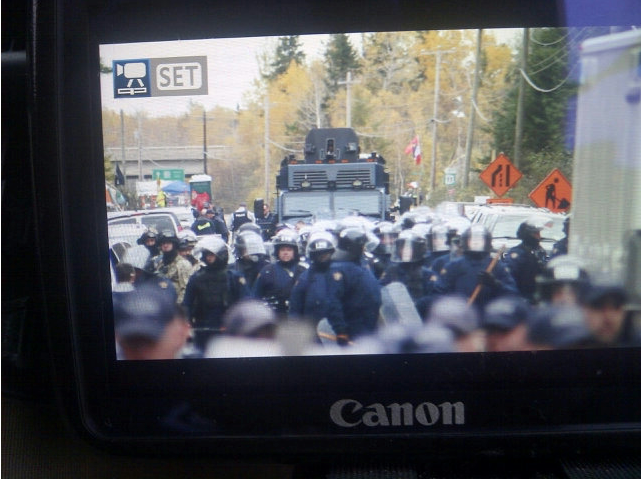
Screen Shot 2013-10-17 at 12.44.31 PM17th Octo­ber  700 RCMP are cur­rent­ly report­ed at the scene of the Mi’kmaq block­ade with an armored per­son­nel car­ri­er. Talks have failed. Snipers with the RCMP have been seen point­ing their scopes at groups of young sup­port­ers, draw­ing intense crit­i­cism from observers. In a state­ment, one RCMP offi­cer declared, “the Crown land belongs to the gov­ern­ment, not fuck­ing Natives,” reveal­ing the sys­temic con­tempt for treaty rights with First Nations and inter­na­tion­al agree­ments. RCMP are now lined up with riot shields, as the stand­off con­tin­ues to main­tain the block­ade that is cur­rent­ly keep­ing “thumper trucks” from destroy­ing the land in Mik’maq ter­ri­to­ry. Chief Aaron Sock of the Elsli­pog­tog has been released by the RCMP after being arrest­ed while blockad­ing the com­pound of Texas-based SWN Resources. How­ev­er, over 40 Mi’kmaq war­riors remain in cus­tody, as the RCMP con­tin­ue to use pep­per spray, tear gas, and rub­ber bul­lets in attempts to break up the block­ade. 1379310_242702739212593_1480884763_n Cana­da is clear­ly in vio­la­tion of inter­na­tion­al treaties with this war-like act against a peace­ful nation engaged in law­ful direct action against the theft and destruc­tion of their land by a multi­na­tion­al ener­gy com­pa­ny. Accord­ing to Sub­me­dia, “Dur­ing my short stay [at the two-week-strong block­ade] I’ve wit­nessed the co-oper­a­tion between natives and set­tlers, a part­ner­ship that has kept this block­ade ful­ly stocked and oper­a­tional. Food, wood, hot cof­fee, tents and oth­er sup­plies keep stream­ing all the while SWN berates the police in the media for not arrest­ing the pro­test­ers.” In retal­i­a­tion against the inva­sion, which comes one day before an inter­na­tion­al day of sol­i­dar­i­ty with the Mi’kmaq Block­ade and two days away from a meet­ing set to con­tin­ue peace talks, unknown per­sons have set six RCMP vehi­cles ablaze, hurled stones at the police line, and con­fis­cat­ed frack­ing equip­ment. In relat­ed news, SWN stock hit a sharp decline today on the New York Stock Exchange. As of this time, the RCMP is not let­ting media in. How­ev­er, rein­force­ments con­tin­ue to swell the num­bers of sup­port­ers at the block­ade. The Mi’kmaq have issued a call for con­tin­ued inter­na­tion­al sol­i­dar­i­ty, and for increased sup­port for the block­ade.