We Are the Tar Sands Industry’s “Worst Case Scenario”: Leaked Stratfor Report

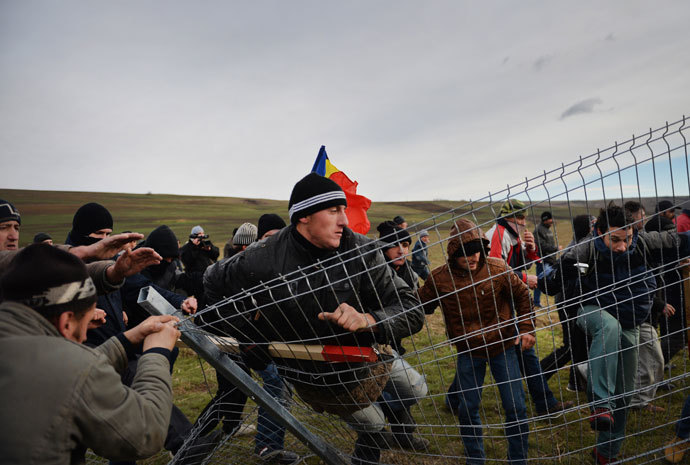
Anti-tar sands protest greets Canadian Prime Minister Stephen Harper's visit to London, Jun 13, 2013 6th Dec from

Anti-tar sands protest greets Canadian Prime Minister Stephen Harper's visit to London, Jun 13, 2013 6th Dec from Inside Climate News:

Worst-Case Scenario for Oil Sands Industry Has Come to Life, Leaked Document Shows

Industry consultants said anti-tar sands push could become ‘the most significant environmental campaign of the decade’ if activists were left unopposed.

by Katherine Bagley

As environmentalists began ratcheting up pressure against Canada’s tar sands three years ago, one of the world’s biggest strategic consulting firms was tapped to help the North American oil industry figure out how to handle the mounting activism. The resulting document, published online by WikiLeaks, offers another window into how oil and gas companies have been scrambling to deal with unrelenting opposition to their growth plans.

The document identifies nearly two-dozen environmental organizations leading the anti-oil sands movement and puts them into four categories: radicals, idealists, realists and opportunists—with how-to’s for managing each. It also reveals that the worst-case scenario presented to industry about the movement’s growing influence seems to have come to life.

The December 2010 presentation by Strategic Forecasting, or Stratfor, a global intelligence firm based in Texas, mostly advised oil sands companies to ignore or limit reaction to the then-burgeoning tar sands opposition movement because “activists lack influence in politics.” But there was a buried warning for industry under one scenario: Letting the movement grow unopposed may bring about “the most significant environmental campaign of the decade.”

“This worst-case scenario is exactly what has happened,” partly because opposition to tar sands development has expanded beyond nonprofit groups to include individual activists concerned about climate change, said Mark Floegel, a senior investigator for Greenpeace. “The more people in America see Superstorm Sandys or tornadoes in Chicago, the more they are waking up and joining the fight.”

[View the documents at Inside Climate News]

Since the presentation was prepared, civil disobedience and protests against the tar sands have sprung up from coast to coast. The movement has helped delay President Obama’s decision on the Keystone XL pipeline—designed to funnel Canada’s landlocked oil sands crude to refineries on the Gulf Coast—and has held up another contentious pipeline in Canada, the Northern Gateway to the Pacific Coast.

The Power Point document, titled “Oil Sands Market Campaigns,” was recently made public by WikiLeaks, part of a larger release of hacked files from Stratfor, whose clients include the Departments of Homeland Security and Defense, Lockheed Martin, Raytheon and the American Petroleum Institute, the oil industry lobby. It appears to have been created for Calgary-based petroleum giant Suncor Energy, Canada’s largest oil sands producer.


The company told InsideClimate News that it did not hire Stratfor and never saw such a presentation. Suncor is mentioned 11 times in the document’s 35 pages and all of Stratfor’s advice seems to be directed at the energy company. For example, one slide says, “Campaign ends quickly with a resolution along the lines Suncor had wanted.” In several emails released by WikiLeaks, Stratfor employees discuss a $14,890 payment Suncor owes the company for two completed projects, though no details were provided.

The presentation is the latest in a series of revelations that suggest energy companies—which for most of their history seemed unfazed by activists—have been looking for ways to dilute environmentalists’ growing influence.

Earlier this year, TransCanada, the Canadian energy company behind the Keystone XL, briefed Nebraska law enforcement authorities on how to prosecute demonstrators protesting the 1,200-mile project. In 2011, Range Resources, an oil and gas company, allegedly hired combat veterans with experience in psychological warfare to squash opposition of natural gas drilling.

“The Stratfor presentation isn’t a complete surprise,” said Scott Parkin, a senior campaigner for the Rainforest Action Network and volunteer organizer for Rising Tide North America, both grassroots environmental groups. “As opposition has grown, coal, oil and gas companies are all starting to put more money into responding—from surveillance to protection to public relations.”

Who Was Targeted?

For each of Stratfor’s categories of environmental activist—radicals, idealists, realists and opportunists—the presentation explains how their campaigns are structured and how the fossil fuel industry could deal with them.

Three grassroots organizations—Rising Tide North America, Oil Change International and the Indigenous Environmental Network—were labeled radicals. Greenpeace and the Rainforest Action Network were classified as a cross between radicals and idealists. Sierra Club, the nation’s largest environmental group, Amnesty International and Communities for a Better Environment, among others, were labeled idealists. Several mainstream environmental groups, including the National Wildlife Federation, World Wildlife Fund, Natural Resources Defense Council and Ceres, a nonprofit that organizes businesses, investors and public interest groups, were called realists.

It then lays out tactics the groups would use to push for change. They include holding demonstrations outside annual meetings and marketing events, generating fear of oil spills and other environmental disasters, targeting CEOs and their families, collaborating with other green groups, and splitting the fossil fuel industry on the issue by praising companies working with activists and publicly shaming those that aren’t.

The presentation says that while environmental groups are publicly fighting to stop the expansion of the oil sands, their “real demand” is for fossil fuel companies to adopt a “global code of conduct”—a set of best practices not required by law, but that take into consideration things like greenhouse gas reduction policies and human rights.

The Power Point also describes all the ways fossil fuel companies like Suncor could choose to react to green groups’ campaigns, such as limiting contact with the organizations, intentionally delaying negotiations, developing its own environmental initiatives to overshadow activists’ demands, or simply not responding. It provides the pros and cons of each public relations decision, as well as the best- and worst-case outcomes for each.

For example, Stratfor said that choosing not to respond could be useful because in 2010, “activists are not stopping oil sands’ growth and they have no power in Alberta or Ottawa. Chance of success with U.S. government is slim.” The best outcome from a no-response strategy, according to the presentation, is that green “groups move to fracturing [natural gas fracking] or some other venue to press for the first major code of conduct.”

Stratfor would not answer questions about the presentation because it has a policy not to comment on any of the WikiLeaks documents.

Several environmental groups named in the Stratfor presentation said they weren’t surprised by the consulting firm’s assessment of their work, but were disappointed, especially by its assumption that all they wanted was a code of conduct.

“The environmental community has been very united in saying that we need to stop tar sands expansion and clean up the mess already made there,” said Susan Casey-Lefkowitz, director of the Natural Resources Defense Council’s international program. “That’s the only real path forward if we’re going to protect not only the health of communities on the ground in the boreal forests near the tar sands region, but also around the world from the impacts of climate change. We’re not looking for a code of conduct.”

For many, the leaked presentation provided proof that their work was having an impact, boosting their confidence to keep protesting.

“Knowing that groups like Stratfor are targeting us, surveying us, and also analyzing us shows how powerful these movements have become,” said Parkin of the Rainforest Action Network and Rising Tide North America. “Obviously this wasn’t meant for public consumption, but this doesn’t intimidate us. If anything, it emboldens us. It encourages us to push harder.”

Mexican Guerillas Promise Armed La Parota Resistance

Members of the guerilla group FAR-LP, photographed at a hidden location in Guerrero, Mexico. 4th Dec

Members of the guerilla group FAR-LP, photographed at a hidden location in Guerrero, Mexico. 4th Dec

A new guerilla group in the Mexican state of Guerrero has promised armed support for social movements, including the struggle against La Parota Dam.

Two days after announcing its formation via online media, the Revolutionary Armed Forces-People’s Liberation (Fuerzas Armadas Revolucionarias-Liberación del Pueblo, FAR-LP) released a video of one of its leaders, “Comandante Camilo,” warning that the group will launch armed reprisals against the government if it continues repressing social movements.

“If the federal and state governments continue the repression of activists and NGOs, we will make them pay,” he says, reading from a communiqué.

“From these lands, forgotten by all those governments, we say to you, Mr. Governor and Mr. President Peña Nieto, that the harassment, the deaths, the threats against the people must end.

“From this moment, if there is another who dies or is imprisoned from our people, we will exact payment, not in the same place. If there has to be blood, we should spill more than they.”

The FAR-LP explicitly mentions its support for the Council of Ejidos and Communities in Opposition to La Parota Dam (CECOP), an unrelated non-guerilla group that has spearheaded opposition to the dam.

“They are not alone. They have an army at their disposition. You [the government] are the ones who decide what we will do,” the group states.

Barton Moss: anti-fracking protest camp, Salford

Latest updates, wish list and directions at http://northerngasgala.org.uk/

Latest updates, wish list and directions at http://northerngasgala.org.uk/

Day 5: Sun 1st December

Day 6 -  Huge banner

Day 5 of the Northern Gas Gala sees the Barton Moss Protection Camp continue to grow.  A call out has been made by trade unions and local residents for a protest next Sunday 8th December (facebook event here).

Barton Moss Protest Rally Sunday 8th December 2013. Assemble 12.30pm at Junction Barton Moss Road/Liverpool Road, Barton, Eccles M30 7RL

Support the Barton Moss Protection Camp!  Support the fight to stop fracking everywhere!

Bring your own placards and banners.

Day 4: Sat 30th November

Day 4 - Mad Hatters Tea Party

The community protection camp outside IGas’s fracking site at Barton Moss continues to establish itself with compost toilets being built. Their was also a Mad Frackers Tea Party and an impressive sunset. The local community is resisting the threat to their region with support from across the country.


Day 1: Wed 27th November

northern-gas-gala-day-1

The first day of the Northern Gas Gala has seen a large number of people answer the call out to protect Barton Moss (and the wider region) from the threat of posed by IGas’s plans. The brave Barton Moss protectors have been blocking lorries from entering the fracking site and four people (three of them Salford residents) have been arrested for protecting their community from fracking company IGas Energy. The police presence has been large and growing.

The Independent: Barton Moss: The latest front line in Britain’s unconventional energy revolution against fracking

ITV news footage here: http://vimeo.com/80480970

BBC News footage here:

A Victory for “People Power”

1st December from Stop the Cull

1st December from Stop the Cull

At lunchtime on the 29th of November a moment in history was created when the guardian released this story. Telling the world that finally the British government had been beaten into submission and called an early end to its wildlife massacre it called a “badger cull”.

The cull was always sold to the British public as a pilot to see if over a period of 6 weeks, badgers could be killed “effectively, safely & humanely”. Toward the end of those 6 weeks we the public were told that the original population studies had changed and the new population figures were actually much lower, they refused to credit us the sabs with destroying their Hair DNA population studies and instead decided to blame badgers for “moving the goalposts”. With massively reduced populations (strangely David Heath had been complaining along with many farmers of population “explosions”) the target to kill was made much easier for them to reach.

What they hadn’t planned on was the perseverance, tenacity, endurance & craftiness of those opposed to the cull. Many experienced hunt saboteurs walked the fields and woodlands of the cull zones night after night, as did many other people, these people just like sabs came from a wide variety of backgrounds, teachers, graphic designers, care workers, the very rich, the retired and yes even the unemployed and students. A dedicated number of  these people before the culls started, going as far back as June last year had been sett surveying the entire area, one of them “Jo Badger” recently passed away, her passing has been a great loss to many of us. Their work was the foundation for all the defence of the badgers during the cull & it is these people who know how active setts are in certain areas, finding the Hair DNA traps was an easy task for them.

With a total of over 500 sq Km’s surveyed, protecting the badgers from free shooters was a question of team work, whilst some people working tirelessly within the law traversed hundreds of miles of footpaths and reported in any sightings, Sab groups and people prepared to break minor trespass laws got closer to shooters and often moved them on with noise. Several weeks into the cull a small fortune was spent on night vision equipment and the amount of shooters being stopped increased rapidly. That equipment like the fuel in the tanks was generously donated by supporters from across the country, without their support the campaign would have struggled greatly and we would like to take this opportunity to thank everyone who helped with fundraising to get people to the zones.

When the 6 week culls ended and it was announced in Somerset that they hadn’t achieved their targets we sighed with relief & prepared to focus just on Gloucestershire for the final week, to our dismay they announced extensions, in Somerset with the drastically reduced populations they announced that they had to kill another 165 badgers over a three week period. Having managed to kill over 100 a week during the 6 week cull people on the ground knew they had a lot of work to do to stop them reaching their targets. With little or no holiday time left to claim many people took unpaid leave from work, relationships were strained and many people were suffering with extreme fatigue. Still they did not give up, with the weight of knowing that the culls would be rolled out if these succeeded, people buckled down to the work knowing that tens of thousands of badgers lives were in the balance. At the end of the 3 week extension 90 badgers had been killed, making the Somerset cull and extension a failure.

The shooters having failed at free shooting early on had gone over heavily to cage trapping as a tried and tested method of killing large numbers of badgers, when we knew this for sure, our efforts accordingly varied and we focussed as much resources as possible at finding cage traps and “neutralising” them. In Somerset we never found more than 3 cages on one sett. Meanwhile in Gloucestershire the figures on the total killed came out, it was shockingly low at only 30% of the revised pop. figure, Natural England issued an extension for 8 weeks with a target of just 58% to achieve “disease control” the NFU didn’t mess about and promptly put down hundreds of traps.

Protest culture has for some years attributed minor criminal damage done at night to “pixies”. Some people find this word annoying, just as other people don’t identify with the word “sab”. Semantics to one side, the cage traps were destroyed as fast as they went down, for the most part by very normal people doing extraordinary work, through the day traps were found then by night they were destroyed, each one costing approx £150. In just over 4 weeks nearly 400 of these traps had been made useless. With “free shooting” being proven to be a methodology that didn’t work, cage trapping was undertaken to kill as many badgers as possible. We the British public just weren’t having it.

Whilst we celebrate the failure of these badger culls and the part we played in their downfall, we mourn the loss of all the badgers that have been needlessly killed during this cull. We would ask anyone who thinks that killing badgers to stop the spread of bTB to spend a few minutes watching this video filmed just before the culls started

We will continue with our campaign, filming farm conditions, sabbing pheasant shoots, organising boycotts, all the time building our numbers and reach on social media. The culls may continue, but so will we.

As has been proven today, if you ignore the will of the people, the people will fight back, we are organised, we have built teams of people who rely on each other, our supporters know the methods we use and are comfortable knowing that we behave honourably, we know how to disrupt culls, we are strong and we are many, and we will never leave our badgers undefended to be attacked by brutes and thugs.

NEVER

Jeremy Hammond Sentenced to 10 Years in Prison

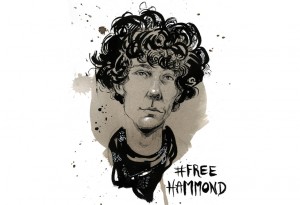
 Jeremy Hammond sketched by Molly Crabapple

Jeremy Hammond sketched by Molly Crabapple

 Jeremy Hammond sketched by Molly Crabapple

Jeremy Hammond sketched by Molly Crabapple

I’m finding this post hard to type; my fingers are trembling, my pulse is racing. I’m furious. Just minutes ago hacktivist Jeremy Hammond learned his fate in a Manhattan federal court. Ten years in prison, for taking part in a hack that revealed some of the shadiest aspects of the corporate intelligence industry.

The 28-year-old pleaded guilty earlier this year to participating in the Anonymous hack of the private intelligence firm Strategic Forecasting (Stratfor). Hammond, a longtime Chicago political activist, garnered no personal financial gain from the hack; he has consistently maintained that he acted in what he believed to be the public interest. The revelations of the Stratfor hack uphold his claim: It is indeed in the public interest to know that Dow Chemicals paid a private security firm to follow and low-level harass individuals fighting for recognition and restitution for the Bhopal disaster; it is of public interest too that the Coca Cola company employed Stratfor to spy on PETA activists, that the Department of Homeland Security used the firm to spy on Occupy activities. These details all came out of the Stratfor hack. Our context is such that the intelligence firm’s activity is supported and upheld by the law, Hammond’s work to reveal it is punished with a ten year sentence.


Hammond admitted guilt to a crime; he has already served 18 months in federal detention, much of the time in solitary confinement. But whether Hammond’s acts were legal or not should not be conflated with whether or not they are ethical. This country would be a darker place even than it is today were its history not peppered with people willing to act outside of what is legal in service of what is right. It’s worth stressing too that the law that Hammond is being punished for breaking falls under the outdated and dangerously sprawling Computer Fraud and Abuses Act (CFAA) — the same legislation, enacted in 1986, that threatened to put Aaron Swartz in prison for decades before the young technologist took his own life. At his sentencing Friday, Hammond read a statement (please read here in full), explaining why he chose to act outside legal confines in hacking Stratfor and other corporations:


Could I have achieved the same goals through legal means? I have tried everything from voting petitions to peaceful protest and have found that those in power do not want the truth to be exposed. When we speak truth to power we are ignored at best and brutally suppressed at worst. We are confronting a power structure that does not respect its own system of checks and balances, never mind the rights of it’s own citizens or the international community.

… While in prison I have seen for myself the ugly reality of how the criminal justice system destroys the lives of the millions of people held captive behind bars. The experience solidified my opposition to repressive forms of power and the importance of standing up for what you believe.

Hammond’s fight is part of a larger “epistemic war”, as philosopher Peter Ludlow has put it. There is an ideological battle underway between those who seek to control information — and therefore the very truths available to the public — and those who seek to share it and create and informed and empowered public. The stakes, as Chelsea Manning and now Hammond have learned, are high. ” I had to ask myself, if Chelsea Manning fell into the abysmal nightmare of prison fighting for the truth, could I in good conscience do any less, if I was able? I thought the best way to demonstrate solidarity was to continue the work of exposing and confronting corruption,” Hammond said today.

Yes, the hacktivist broke the law; he has admitted as much for some months from within a prison cell. But if there was some doubt as to the ideological valance to Hammond’s punishment, consider that hackers who pleaded guilty to involvement in the very same hack but were charged on British soil received sentences of no more than 30 months, most of which is to be served on probation. Hammond’s 120 month sentence is a chilling messages of the lengths the U.S. government will take to crush dissent and punish challenges to the corporatist surveillance state.

“I am aware that I could get as many as 10 years, but I hope that I do not, as I believe there is so much work to be done,” said Hammond — and ten years he has received. There is so much work to be done.


ELF Claim Responsibility for Colorado Mink Farm Raid

Mink_in_the_park_(2)

Mink_in_the_park_(2)

“On the night of November 14th, the Earth Liberation Front visited the previously unknown Colorado mink farm of Monte Ages, located at 622 Valley View Drive in Moffat County. This is one of the smallest mink farms in operation, so opening nearly every cage took very little time. The mink understood our mission and quite literally flew to the ground to make a dash for freedom. To cause the deranged Mr. Ages more financial trouble, breeding cards were removed and strewn about, and thrown in the piles of mink waste.

Michael Whelan will offer the same tired lies in response to this action. He advises farmers to ‘sympathize with the poor, lost animals.’ The lost wild animals who are now able to move freely, who will no longer be subject to Michael and his friends preferred methods of execution in the pelting season just two weeks away.


The truth is that mink are not domesticated. They are captive bred, and only for the quality of their pelts. Mink are aquatic animals who are solitary in the wild and travel several miles per day. The surrounding area of Moffat County is pristine wildlife habitat. The ones who escaped this wildlife prison will now live out their lives along the Little Snake and Yampa Rivers.

Mr. Ages has plans to move and expand his operation to 35591 North Hwy 13 in the town of Craig. This will not be tolerated. Your dreams of despoiling Northwest Colorado, contaminating our drinking water, and exploiting native american wildlife will turn into a nightmare. There will be consequences when darkness falls.

We send a salute to those courageous few who continue to fight alongside the earth and animals, even as your work is overshadowed by the bloggers, video editors, and all manner of self-aggrandizing activists.”

Victory for Elsipogtog on the Highway, While Battle Continues in Court

RCMP cars burn in retaliation for a violent raid on a First Nations blockade of pre-fracking testing equipment in Elsipogtog, New Brunswick, Oct 17, 2013November 15th, Mi’kmaq demonstrators declared “victory

RCMP cars burn in retaliation for a violent raid on a First Nations blockade of pre-fracking testing equipment in Elsipogtog, New Brunswick, Oct 17, 2013November 15th, Mi’kmaq demonstrators declared “victory” Thursday after stopping thumper trucks belonging to a Houston-based energy company from conducting shale gas exploration north of Elsipogtog First Nation.

While about 100 Mi’kmaq and supporters faced a line of RCMP officers as SWN Resources Canada’s thumper trucks idled in the background, the Elsipogtog band council was 200 kilometres away in a Fredericton courtroom seeking an ex parteinjunction to stop SWN from continuing the exploration work. A hearing on the injunction is set for Friday.

On Hwy 11 tensions ran high as Mi’kmaq demonstrators from Elsipogtog and other communities along with non-First Nations supporters tried to block SWN from operating their thumper trucks while the RCMP tried to intervene. SWN eventually decided to turn the trucks around with plans for another attempt expected Friday.

A well-known Elsipogtog fracking opponent Lorraine Clair was arrested during the protest for mischief, assault a police officer and resisting arrest, according to New Brunswick RCMP.


Still, spirits were high among people from Elsipogtog who watched SWN’s trucks roll away as dusk began to set.

“It is a small victory, but a victory nonetheless,” said Brennan Sock, from Elsipogtog. “We will take anything right now. We got the trucks to leave, we managed to slow them down as much as we can.”

T’uma Bernard, a Mi’kmaq Warrior from Prince Edward Island, said he saw renewed unity among the demonstrators.

“It was a great victory, it was a great day,” said Bernard.

RCMP spokesperson Const. Jullie Rogers-Marsh said there were acts of vandalism throughout the day that are under investigation.

“A truck belonging to a private company working in the area and several pieces of equipment were damaged,” said Rogers-Marsh.

She said the RCMP had video of “somebody wearing a mask” pulling up geophones along Hwy 11. Rogers-Marsh there “also threats of illegal acts.”

Rogers-Marsh said the police officers are there to maintain public safety.

“Being safe and peaceful and lawful is very important and we are in the area continuing to monitor the situation,” said Rogers-Marsh. “Our role is public safety and we are there to protect everyone.”

Thumper trucks interact with geophones, which are strung along the ground, to create imagery of shale gas deposits underground.

In Fredericton, the Elsipogtog band was seeking an injunction to stop SWN arguing “outside radical elements” were converging “in significant numbers” as a result of the company’s continuing shale gas exploration.

The band’s filing said military forces are at play on the police side of the operation and warned a repeat of the Oct. 17 raid in Rexton, NB., by RCMP tactical units is looming.

“The circumstances combine to create a very real danger that, as active seismic exploration is recommenced in the coming hours and days, outside radical elements, the respondent SWN and the RCMP, other police and even military forces, all interact so as to cause a repeat escalation of the unacceptable and dangerous events that took place in Rexton,” said the filing.

The filing also names provincial Energy Minister Craig Leonard and the Assembly of First Nations Chiefs in New Brunswick (AFNCNB).

The filing argues that the province failed in its duty to consult and that the AFNCNB, which Elsipogtog gave authority to consult on its behalf, failed in its responsibility by “inaction and inadequate engagement.”

AFNCNB’s lawyer Mike Scully has told APTN National News that the province set the terms of the consultation and the AFNCNB had to act within those limited parameters.

While the band leadership will continue its legal battle in the courtroom Friday, the grassroots are vowing to be back on the pavement with their bodies to stop the thumpers.

“Nobody is going nowhere, they can’t bully us and use force tactics against the people of the land,” said Bernard.

Sock said people would be out all night keeping a watchful eye.

“We have a lot of people who are dedicated and will be out there all night to make sure they don’t come back,” said Sock.

War Game Shows US & Canada Fear Eco-Attacks on Infrastructure

sabotagedpylonCyber-Eco-Terrorist Wargames Suggest New Level of Domestic Counterinsurgency

sabotagedpylonCyber-Eco-Terrorist Wargames Suggest New Level of Domestic Counterinsurgency

by Sasha / EF! Newswire

Last night [Nov. 13], the FBI and DHS linked up with 10,000 engineers and an intercontinental web of utility company executives in a cross-country war game. The target: ecoterrorists targeting critical electrical infrastructure points. Their tactics: computer viruses, bombs, and guerrilla warfare.

The coordinated attacks on the US power grid took place across hundreds of transmission lines and transformers throughout the US, throwing tens of millions of citizens into darkness. As police, firefighters, and utility workers rushed to repair the damaged or destroyed infrastructure, the enemy sprang their traps, killing seven and wounding 150.

While the simulation was almost entirely virtual, some companies actually sent trucks with linemen to practice investigating critical equipment isolated from the system by computer viruses.


In today’s New York Times, Matthew L. Wald reports, “Drill participants said they would not talk about the specific locations of the simulated attacks, for two reasons: The locations were chosen at points that the insiders knew were vulnerable, and the companies involved were promised that if they participated, their performance would not be held up to public criticism. The purpose, organizers said, was to pose problems that were hard to solve, to expose areas that needed improvement.” Those involved were monitored and recorded by attentive agents with Washington’s Department of Homeland Security National Cybersecurity and Communications Integration Center in order to assess how the “fog of war” scenario would play out.

The GridEx Wargame is the second in an established tradition of “Grid Exercises,” which test the reliability of electrical infrastructure response and cybersecurity. The first GridEx took place two years ago, and involved a much smaller group of people. According to the NYT, 210 utility companies played this year’s GridEx II, as well as Canada’s RCMP. Since the RCMP are involved, and they have spent a ton of money studying counterinsurgency against indigenous peoples, it would not be surprising if First Nations are also in the cross-hairs of GridEx.

The model attacks were modeled after infrastructural sabotage that has actually taken place across the world. For instance, one simulation regarding Southwestern Electric Power Company in Louisiana, Arkansas and eastern Texas, had attackers using guns and bombs against a power plant and a transformer, and 108,000 of the company’s 520,000 customers lost power. This drill was likely modeled after the destruction of a 100 foot electrical tower in August, wherein a saboteur used a moving train to catch a cable that was hooked up to the tower.

Judging by the huge difference between the violence of the drill and the crafty technique of the actual incident, it is apparent that state agencies are, as usual, squandering enormous budgets on child-like enactments of their closest fantasies.

The effects of the intense and high-pressure wargames are obvious on the employees who are meant to participate in them. According to one SEPC worker, “It was more severe than anything we’ve drilled. By the end of the exercise, 20,000 customers were still in the dark. The parent company got hit harder: Power was knocked out for an additional 162,000 customers, and one employee was killed.”

Nadya Bartol, the senior cybersecurity strategist at the Utilities Telecom Council, explained re-enforced the importance of the wargame, however, stating, “It’s a good idea, just like it’s a good idea for a student to take a training test for the SAT.” Apparently Bartol believes that training tests for the SAT involve “school shooter” drills.

The bizarrely asymmetrical nature of the drill to the actual threat of electrical sabotage is reminiscent of the notorious Lakeland counterinsurgency exercises. In Lakeland, troops were briefed that a separatist town had abandoned the US for the Sierra Club, and the ELF had ignited an eco-war amidst the anarchy.

Counterinsurgency is already deployed throughout the US by local police fighting gangs (read: terrorizing people of color), the Border Patrol terrifying migrants, and the DHS monitoring huge portions of the population in order to alienate anti-fracking activists. The goal of counterinsurgency is to ensure that basic infrastructure and governmental services are secured in order to win the “hearts and minds” of the population.

What we are witnessing is Counterinsurgency 2.0—an industrial security state that organizes itself under the cloak of wargames, which are kept secret from the public due to the high probability of popular outcry against paranoia and wastage of resources. According to counterinsurgency, hearts and minds are secured by an “operational environment” that ensures electrical power and infrastructural security, so the state must secure those things (even if the population does not like their methods) to retain popular approval.

Thus we see a vague mapping of where the State believes that the most sensitive positions lie. It is not the general method of state repression that counterinsurgency takes into consideration, but the simple, brute power of “security” for daily life.

Check out Sasha’s article on Counterinsurgency in the Marcellus Shale in Life During Wartime: Resisting Counterinsurgency (AK Press 2013)


Badger Honour

14th November  From schnews

Badger killings in detail

14th November  From schnews

Badger killings in detail

When the Badger Trust threatened Natural England with legal action for extending the badger cull, Natural England said the the claim was based on a fundamental confusion, but can you blame them, when those involved in the cull have been so, well, confusing. Between the secrecy, the lying, u-turns and even the blaming of the badgers for not co-operating with being shot. Schnews attempts to digest the badger farce a little…


TRIGGER WARNING

The theory is that killing badgers will reduce TB in cattle by 16%. Previous trials used traps to catch the animals before shooting them, but this was vetoed as too expensive and too vulnerable to disruption. This time, they've gone for the economy version where the badgers are shot while free running. Vaccinating badgers has been dismissed by government as too expensive though several independent groups are vaccinating. The whole policy ignores the real problems around bovine TB, which you can read about here (SchNEWS 836)

One of the important criteria of the cull is that at least 70% of the badgers in a given area must be killed, to minimise the number of disturbed survivors roaming about spreading the disease further afield – the so-called 'perturbation' effect.

The main problem with this was pretty clear from the beginning; nobody knows how many badgers there in the first place. Previous data showed more about the distribution of badger enthusiasts than badgers.

In 2012, Defra postponed the cull, using the excuse that the badger population was far higher than expected. when their population estimate shot up suddenly. This year, when half way through the process it was clear the cull was floundering, they revised the population estimate down – the famous 'pesky badgers moved my goalposts' moment. In a statistical manipulation worthy of anybody's Five Year Plan, Paterson's Politburo announced that 940 badgers amounted to 65% of the population (Unmolested populations of badgers have shown no sign of these wild oscillations in numbers)

Stalin Paterson has been caught out fibbing about more thasn the numbers though. On 10th October he stated in parliament that ‘…some of the animals we have shot have been desperately sick-in the final stages of disease…’ Mark Jones vet and executive director of Humane Society International said: “As a vet I find Mr Paterson’s claim that badgers shot in the pilot culls were ‘desperately sick’ highly suspicious. I know of no evidence to back this up, indeed all the available data suggests that even where bovine TB is rife among cattle, only a tiny proportion of badgers will be suffering any symptoms of the disease. The figure is perhaps as low as one in a hundred. As Mr Paterson has refused to have the badger carcases tested for TB, he cannot possibly have any scientifically credible data to support his assertion and nobody will be permitted to challenge his claim because DEFRA is having all the bodies incinerated”

In Somerset they have killed 940 badgers, which with the current population estimate of 1450 is 65%. But at one point they said the population was 4300, which meant they had to kill 3000 badgers. If we've got the maths right, 940 is only 22% of 4300. At the end of the original Gloucester period, only 30% had been killed.

The Somerset cull has now stopped but the Gloucester cull zone has been granted an eight week extension.


Action against the cull

The sustained level of resistance to the cull has been impressive, never leaving shooters to operate in peace. Hundreds of people have been spending their nights in the cull zones, often travelling long distances. A single badger killed is clearly one too many but the determined work of so many has helped make the cull a failure. Whatever the government spin says, shooters on the ground have been admitting there was 'no point even turning up most nights.'

SchNEWS spoke to a regular traveller to the cull zones “One of the best things about the cull is how it has brought together such a diversity of people together for the sake of the badgers. There has been good co-operation and acceptance of different tactics with those going on legal night patrols on footpaths working alongside those directly sabotaging the shooters with noise and torches. Meanwhile, the Badger Trust have been fighting the cull in court and the likes of Brian May have been doing the media bit. There have been lively pro badger marches in towns all round the country. Hunt saboteurs have reported an increase in support since sabotaging the cull.Those sorts of alliances and radicalising of the animal loving middle england could be a bit of an own goal for the shooting lobby.”


Info for Action

Policing tactics in the two cull zones have been very different but they haven't in either case suceeded in disrupting the sabotage. Gloucestershire policing has been a lot more pro-active, more arrests and harassment of activists, than in Somerset.

“In terms of tactics, the hardest part has generally been finding the shooters. Good sett surveying beforehand, recording and communicating sightings and sheer numbers of people out looking have all proved helpful. The groups walking footpaths with torches have made certain areas impossible to shoot in and noisy disruption of shoots have stopped them as well. When cage traps are used you can squash them or cut them open with bolt cutters. The cull is still going on in Gloucestershire so get on down there to practice your trap destruction skills.”


Next

The licences for these two cull zones last for four years, but other pilot culls may be started next year. Top of the list is Dorset. Culling has to stop over the winter but may start again in the spring.

An 'independent panel' is supposed to be evaluating the evidence to decide if the trials are successful. Indications suggest that Owen 'shoot the buzzards' Paterson will not accept any thing but approval of the cull.


ALF Returns to Royal Institute in Brazil: Liberates 300 Rats and Mice

rats114th November One week after announcing the closure of its laboratory in São Roque, the Instituto Royal was raided again.

rats114th November One week after announcing the closure of its laboratory in São Roque, the Instituto Royal was raided again. In the early hours of November 13, a group of masked activists stormed the complex, forced open doors and removed more than 300 rats and mice who still remained inside the lab. According to police, three security guards were tied up during the raid (one guard was tied up with laces from his boots).

Expensive microscopes, computers and other research equipment was destroyed. Three cars and a motorcycle parked on site were also vandalized. “We regret that activists have again resorted to riot,” the institute said in a statement.


rats2

rats3

rats4