Switzerland: Update From Anarchist Prisoner Marco Camenisch

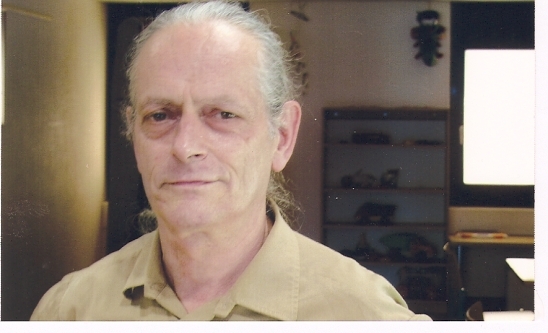
marco-camenisch-220th May 2014. Since the 15th or the 16th of May, Marco Camenisch has been held in solitar

marco-camenisch-220th May 2014. Since the 15th or the 16th of May, Marco Camenisch has been held in solitary confinement for five days in the prison of Lenzburg, Switzerland, because he refused to give a urine sample.

On the 23rd of May 2014 he will be transferred to the Bostadel penal institution. Whether his transfer was ordered because he once again refused to give a urine sample or it was planned beforehand, is (still) not clear to us.

Marco’s incarceration is expected to end on May 8th of the year 2018. His early release from prison (“conditional release”) has been rejected because of “chronic propensity towards violence” and “delinquency-promoting ideology”, among other things.

Marco Camenisch

Strafanstalt Bostadel
Postfach 38, CH-6313 Menzingen, Schweiz/Switzerland

Tel. +41 41 757 1919, Fax +41 41 757 1900

More info on Marco Mamenisch

Enbridge Pipeline Road Blocked by Protesters in Burlington

index

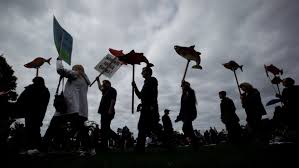
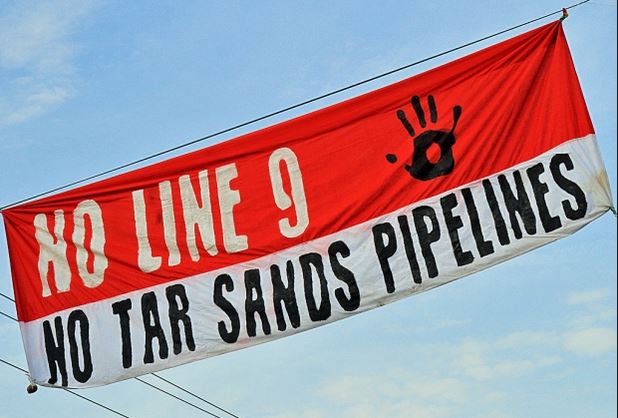
20th May 2014. A group of protesters has blockaded the road to an exposed section of Enbridge’s Line 9 pipeline early this morning in Burlington, Ont.

index

20th May 2014. A group of protesters has blockaded the road to an exposed section of Enbridge’s Line 9 pipeline early this morning in Burlington, Ont.

The protesters say they plan to continue the blockade for at least 12 hours.

A news release says the 12-hour stay represents 12,000 “anomalies Enbridge has reported to exist on the line.”


“Enbridge calls these developments integrity digs,” said Danielle Boissineau, one of the protesters, “but to anyone watching the Line 9 issue, it’s clear Enbridge has no integrity. This work on the line is just a Band-Aid, a flimsy patch over the most outrageous flaws in the Line 9 plan.

“Line 9 has a lot of similarities to Line 6B that erupted in the Kalamazoo River. The risk is just not worth it,” she said.

From July to December of last year, there were 308 maintenance digs along Line 9 — and the vast majority were for cracks in the line. In July alone, Enbridge filed 105 maintenance notices for digs on the line, according to documents filed with the National Energy Board.

The group says its members include residents of Burlington who don’t want the pipeline running through their city.

“Line 9 has nearly 13,000 structural weaknesses along its length” said Brian Sutherland, a Burlington resident. “And yet Enbridge is only doing a few hundred integrity digs.”

There were about 20 protesters at the site early Tuesday. As of 8:15 a.m., no police had arrived.

Last June, a group of protesters shut down construction at an Enbridge pump station in rural Hamilton.

About 80 people interrupted construction at the North Westover site.

In March, the NEB approved a request from Enbridge to reverse the flow and increase the capacity of the controversial Line 9 pipeline that has been running between southern Ontario and Montreal for years.

Line 9 originally shuttled oil from Sarnia, Ont., to Montreal, but was reversed in the late 1990s in response to market conditions to pump imported crude westward. Enbridge now wants to flow oil back eastwards to service refineries in Ontario and Quebec.

It plans to move 300,000 barrels of crude oil per day through the line, a rise from the current 240,000 barrels, with no increase in pressure.

Opponents argue the Line 9 plan puts communities at risk, threatens water supplies and could endanger vulnerable species in ecologically sensitive areas.

Breaking: Blockade Launched Against Enbridge Line 9 Pipeline

Photo: CBC20th May 2014. A group of area residents have blockaded the access road to an exposed section of Enbridge’s Line 9 pipeline, beginning at 7am this morning.

Photo: CBC20th May 2014. A group of area residents have blockaded the access road to an exposed section of Enbridge’s Line 9 pipeline, beginning at 7am this morning. They say they will stay for at least twelve hours, one hour for every thousand anomalies Enbridge has reported to exist on the line. These community members turned away Enbridge employees who were scheduled to do work on Line 9 in preparation for it to carry toxic diluted bitumen from the Alberta Tar Sands. This particular work site is adjacent to the Bronte creek, a major waterway flowing to Lake Ontario, the water source for more than ten million people.

“Enbridge calls these developments integrity digs,” said Danielle Boissineau, one of the blockaders, “but to anyone watching the Line 9 issue, it’s clear Enbridge has no integrity. This work on the line is just a band-aid, a flimsy patch over the most outrageous flaws in the Line 9 plan.” [Danielle notes that a record of just some of Enbridge’s false or misleading statements is available on the Enbridge Lies facebook page

“Line 9 has nearly 13,000 structural weaknesses along its length” said Brian Sutherland, a Burlington resident. “And yet Enbridge is only doing a few hundred integrity digs. Enbridge has been denying the problems with the pipe for years, and they still refuse to do the hydrostatic testing requested by the province. Are we really supposed to trust Enbridge when they tell us that this time they’ll do it right?”


Many of the blockaders point to the disastrous spill from Enbridge’s line 6b into the Kalamazoo River in Michigan in 2010, where millions of litres of oil spilled and have so far proven impossible to clean up. But many of them emphasize that their opposition to Line 9 goes beyond safety concerns.

“This is not about pipelines versus rail; it’s about the Tar Sands,” said Danielle Boissineau. “It’s the dirtiest oil in the world: it’s not worth the destruction it takes to produce, it’s not worth the risk to our watersheds to transport, and we definitely can’t afford the carbon in our atmosphere when it’s burned. At every step of the process, the Tar Sands outsources the risks onto our communities and poisons waterways like the Athabasca River and the Bronte creek while companies like Enbridge get rich.”

Call for Solidarity Actions Against Oil Trains

oil trains 19th May 2014. Maine Earth First!/350 Maine call for Solidarity Actions Surrounding Superior Court Hearing in Fracked Bakken Crude Oil Train Case

oil trains 19th May 2014. Maine Earth First!/350 Maine call for Solidarity Actions Surrounding Superior Court Hearing in Fracked Bakken Crude Oil Train Case

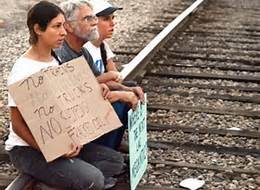
On May 22nd two of three people who blockaded railroad tracks in Auburn last August, Doug Bowen and Jessie Dowling of Maine Earth First!, will have a hearing at the Androscoggin County Superior Court.

Last August, members of 350Maine and Maine Earth First! conducted a sit-in on the Pan Am railroad tracks in the center of Auburn to call attention to the ongoing dangers posed by the transportation of Bakken crude oil by rail.

This was 7 weeks after a trainload of the same oil exploded in Lac Megantic, killing 47. Doug Bowen and Jessie Dowling will face charges for this direct action and will present evidence for a competing harms defense – that committing a smaller harm was meant to prevent a larger one.

There have been at least 6 other major train derailments involving Bakken crude oil since Lac-Megantic. This train blockade was one of two blockades Maine Earth First! And 350 Maine took part in last summer.

Trains running through Maine carry crude from the Bakken oil fields of North Dakota, where it is “fracked” or extracted by blasting a high pressure toxic cocktail deep into the ground to release oil from shale rock, polluting air and water in surrounding communities.

With hydraulic fracturing or “fracking” technology, oil that has long been impossible to extract is now the source of an explosive oil boom in the Midwest. Without enough pipelines to transport the Midwest crude to distant refineries, there has been a surge in the use of trains. Inspections of tracks are infrequent due to lack of resources to oversee them and a lack of concern for local communities by giant corporations/government.

Maine  EF!er being arrested after blockade

There have been many train derailments through-out the continent over the last year and a half other than Lac Megantic, including a 106-car-long oil train in Casselton, North Dakota which caused seven oil cars to explode and also caused an evacuation of 2,400 people, A CN freight train carrying crude oil in New Brunswick in January,

A 120-car Norfolk Southern train carrying heavy Canadian crude oil which derailed and spilled in western Pennsylvania also in January, and a CSX train that exploded in Lynchburg, Virginia carrying Bakken Crude Oil on May first, only to name a few.

In January the U.S. Department of Transportation’s Pipeline and Hazardous Materials Safety Administration issued a Safety Alert concluding Bakken crude is more flammable than heavier oils. Hence the term “bomb trains.”

We are asking individuals and groups to take part in a day of action to bring attention to fracked oil, fracking in general (if you can tie in into your campaigns), unsafe trains carrying fossil fuels (Bakken Crude or otherwise), and/or any other connections you can make in your community.

Possible targets: Irving Oil, a corporation that receives oil from the Bakken Crude fields, and the corporation that was supposed to be the recipient of the oil that exploded in Lac Macgantic Corporations involved in fracking in the North Dakota Bakken Shale: http://www.ugcenter.com/operators/Bakken/all Central Maine and Quebec Railroad if you are in Maine (or join us at the courthouse!) Places in your community where trains are rolling through with crude oil or other dangerous extreme energy substances.

Here is an example in Montana: http://earthfirstjournal.org/newswire/2014/04/13/seven-arrests-in-montana-coal-train-protest/

Ports that are an end point of dangerous trains. Here is one example in Washington: http://earthfirstjournal.org/newswire/2014/02/15/crude-oil-terminal-planned-in-nw-portland/

Please keep us updated on any solidarity actions you take!

For more information, interviews, or to tell us about your action contact Christine: blackbean@riseup.net, or 207.505.5114

Paramilitaries Shoot at Tribe Over “Forest Reserves” in Philippines

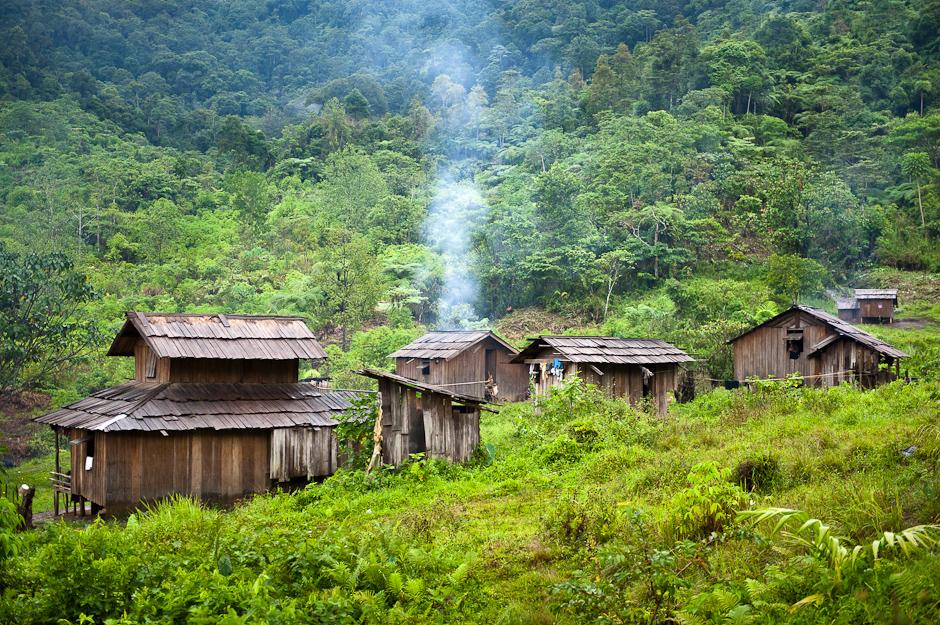
Tigwahanon Village in San Fernando, Bukidnon, Mindanao17th May 2014. The Asian Human Rights Commission (AHRC) is deeply concerned, and demands an investigation into the actions of the secur

Tigwahanon Village in San Fernando, Bukidnon, Mindanao17th May 2014. The Asian Human Rights Commission (AHRC) is deeply concerned, and demands an investigation into the actions of the security guards and their employer landlord for shooting at, and holding at gunpoint, indigenous people who were to occupy their ancestral land in Quezon, Bukidnon.

In their mission report, titled: “‘Pakighiusa’: Solidarity Mission to Members of TINDOGA in Support of Their Struggle for Land and Life,” prepared by Rural Missionaries of the Philippines, Northern Mindanao Sub-Region, it noted that the armed security guards indiscriminately shot at Manobo-Pulangihons tribes on April 23 purposely to drive them away from their land.

The indigenous tribe, composed of 530 families are from four clans, are led by Datu Santiano “Andong” Agdahan. They had already been recognized as the rightful owners of the 623 hectares of land as part of their ancestral domain. Datu Agdahan also heads the TINDOGA (Tribal Indigenous Oppressed Group Association).

On April 23, in support of their claim, the tribes were accompanied by officials from the national and local government agencies, notably the National Commission for the Indigenous People (NCIP), the municipal government, and the police.

But at around 1pm, armed security guards, reportedly working for Mr. Pablo “Poling” Lorenzo III, who claims to be the owner of Rancho Montalvan, were deployed, and allegedly indiscriminately shot at the group. They also held “12 individuals at gun point,” five of whom were women, and three were minors.

The armed men deliberately concealed their identities by not wearing their uniforms. Most of them wore black long sleeves; their faces are either covered with balaclavas or shirts.

The AHRC is of the opinion that the use of force and intimidation, by shooting at the indigenous people and holding them at gunpoint; was done purposely to frighten and intimidate this group of indigenous people claiming their right to occupy their ancestral land.

It is reported that even though the NCIP has already declared the 623 hectares are the ancestral domain of the Manobo-Pulangihons, “only 70 hectares were allotted for use of the claimants. The rest were classified as forest reserves. Interestingly, what is supposed to be forest reserves are mostly planted with “sugarcane and pineapple.”

The AHRC urges the government to hold accountable Ma. Shirlene D. Sario the provincial officer of the NCIP, for allegedly failing to fulfil the obligations required from her to ensure the indigenous people are properly install in their land.

The AHRC also expresses its disappointment at the lack of concern, notably by the local government officials in Quezon, Bukidnon, to failing to address the urgent needs of their own constituents.

The mission report indicated that “no government official from Quezon town to the Provincial government even visited the Manobo-Pulangihons.”

Construction Vehicles Targeted

one of the M6 link sites15

one of the M6 link sites15th May 2014. About a little over week ago we snuck into a condo development in Seattle and poured a gallon of bleach into the gas tank of an excavator. This was a small but easily reproducible attack against the expansion of gentrification in Seattle.

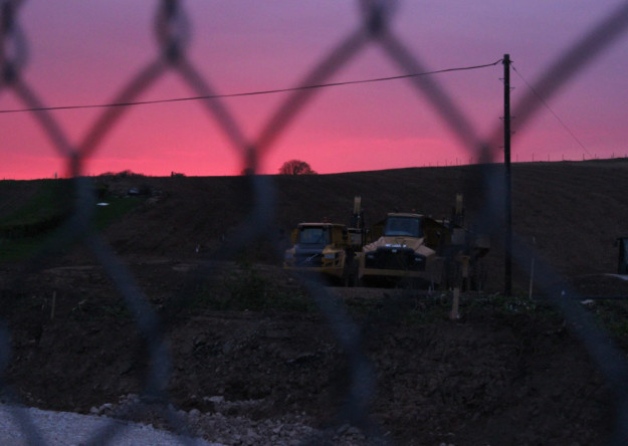
Construction vehicles are being targeted at M6 link road sites near Lancaster, England causing thousands of pounds of damage.

In what appears to be an orchestrated campaign, hydraulic hoses were cut on excavators and dumper trucks.

Other incidents include:

*Sand being put into tanks to contaminate the fuel

*Tyres being let down

*Damage to a temporary jetty in the River Lune

Thousands of pounds worth of damage was caused at a site at Crossgills Farm, Lancaster.

Police said: “Eight vehicles, including excavators and dumper trucks, were damaged to the tune of thousands of pounds at the weekend.

“Tyres have also been let down and sand put into fuel tanks.

“We are keeping an open mind as to who is responsible, however the vandals have made a concerted effort to cause criminal damage by using bolt croppers to cut the rubber hoses.”


Local Protesters Are Killing Big Oil and Mining Projects Worldwide

we wont stop14th May 2014.

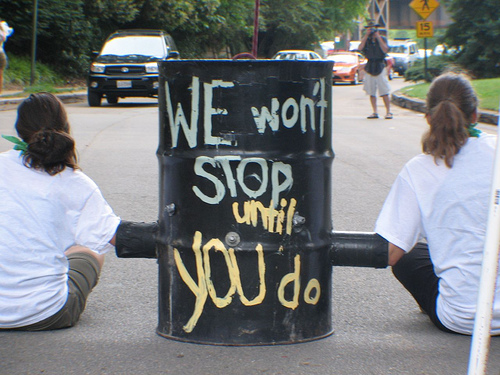
we wont stop14th May 2014. Multinational corporations are infamous for pushing native people off their land in order to open a new gold mine, extract oil, or otherwise extract local resources. For decades, backlash has been thought to be both limited and ineffectual, but new evidence suggests that protests from local people are effective, extremely costly for the companies, and often lead to substantive changes to or total abandonment of a project.

Researchers at the Centre for Social Responsibility in Mining interviewed employees at several dozen major international corporations who are involved with extractive activities, and found that companies are increasingly having to deal with the social and environmental impacts of their work, and that it’s hurting them where it hurts most: their bottom lines.

The researchers, led by Daniel Franks, took a look at 50 planned major extractive projects (oil drilling, new mine construction, that sort of thing) and found that in fully half of them, local people launched some sort of “project blockade.” In 40 percent of the projects, someone died as a result of a physical protest, and 15 of the projects were suspended or abandoned altogether, according to Franks’ study, published in Proceedings of the National Academy of Sciences.

“There is a popular misconception that local communities are powerless in the face of large corporations and governments,” Franks said in a statement. “Our findings show that community mobilization can be very effective at raising the costs to companies.”
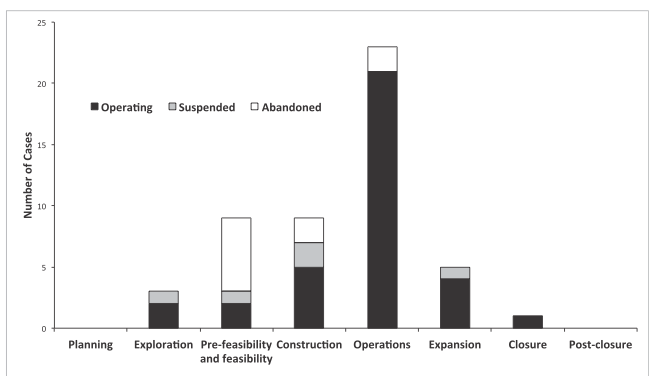
The number of projects in the study sample affected by local action. Image: PNAS

The number of projects in the study sample affected by local action. Image: PNAS

The reason these projects, such as the Minas Conga gold mine in northern Peruand Lanjigarh bauxite mining project in Orissa, India, were abandoned wasn’t borne out of some sense of social responsibility to not pollute the environment or to not push people off their land. It was because the protests and resulting government backlash was so great that it became financially unviable to move forward.

Delays, even early in a project, can be extremely costly—at a major mining project, $20 million per week in lost revenues and lost investment isn’t uncommon. According to the study’s respondents, a nine-month delay at a Latin American mine cost a company $750 million; protests that shut down power lines at another operation cost $750,000 a day. Even before drilling or extraction has started, lost wages and startup delays can cost $50,000 a day when programs are forced to a standstill after they’ve started.

Perhaps not surprisingly, protests were most successful when they took place early on, during feasibility and construction phases of a project.

This [is] in part because the project is smaller in scale and therefore easier to contest, but also because at later stages of the project cycle, capital has been sunk into an area, changes become costly to retrofit, revenues begin to be generated, and there are increased incentives for companies and governments to ‘defend’ their projects,” Franks wrote.

Social media and internet access are allowing indigenous and local groups to organize more quickly, to learn from others who have had successful protests, and to connect with nonprofits and humanitarian groups that can help push their stories out to the entire world.

“There’s been a big change in the mentality of indigenous people—things like Facebook are allowing them to not be as naive,” Kelly Swing, a Boston University researcher who works in an area of the Ecuadorian Amazon that is currently fighting back against proposed oil projects, told me. “They look at what has happened in, say, Peru, and see that their culture has gone to hell in a handbasket. All of a sudden, gifts the companies offer, like boats and education and modern medicine aren’t the panacea they used to seem.”

Companies, for their part, are learning how to anticipate these sorts of hangups, and some of those interviewed (all identities and specific responses were kept confidential) said that local backlash can be predicted and quantified before it happens.

“Several interviewees were strongly of the view that the triggers for and underlying causes of company-community conflict, and its costs, are predictable, and that approaches, procedures, and standards are available to companies to avoid conflict and develop constructive relationships with community actors,” Franks wrote.

At many companies, Franks wrote, the higher ups who approve major projects are completely oblivious that their work might have some sort of social or environmental impact. To combat this, companies hire “translators” who are able to identify potential social problems and put them in a language executives can understand: money.

“Translation requires individuals within organizations who can work across functional, organizational, and conceptual boundaries, and who can work in more than one ‘language’ and interpret how social and environmental risk is translating into costs for business. The need for internal ‘translators’ suggests that corporate decision-makers do not currently have the necessary models to internalize externalities and translate social risk inward,” Franks wrote.

Franks wrote that there’s some evidence that companies really do want to make sure local people are treated correctly—that, as he found, concerns such as drinking water contamination, environmental destruction, and public health risks, are not brushed aside. Then again, he noted that “some see stakeholder-related concerns as optional ‘add-ons’ to broader regulatory processes for operating projects.”

The challenge for those “stakeholders,” then, is making sure that, no matter what, they make a project so difficult to complete that those “add-ons” become so costly that the project dies. It seems like, in an increasing number of cases, that’s actually happening.

Brutal Crackdown on Hangzhou Waste Incinerator Protest Leaves 3 Dead, Sparks Riot

BnSLJE7CcAAZOqf 12th May 2014 At least three people are reported dead with dozens more injured, hospitalized and arrested after hundreds of police began a brutal repre
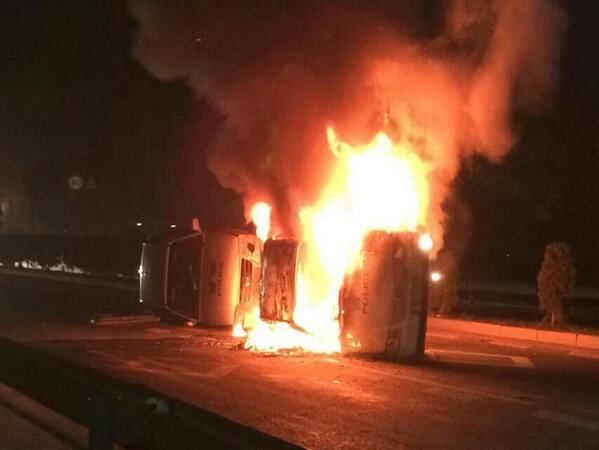
BnSLJE7CcAAZOqf 12th May 2014 At least three people are reported dead with dozens more injured, hospitalized and arrested after hundreds of police began a brutal repression with baton beatings, tasers and tear gas, in a move to clear out 1000′s of proposed waste incinerator plant protesters in Hangzhou.

Social media accounts are reporting that 2 men and a child were killed by police during the initial crackdown. People report that the incident began with the police attacking the elderly people who were sitting as a barrier to the overpass encampment that has been on site in past weeks.

The police violence sparked a violent response from the thousands that were gathered to protest. At least 15 police vehicles, including buses were overturned and some of them burned. The resistance to the police continued in waves into the night.

14153830024_5cbc45f013_o

Several people are reporting that cell and internet service have been cut off. Chinese state run media has yet to report on the incident.

Hundreds of police were sent out today to quell the protest.

Nembe Communities Occupy Shell Oil Facilities in Nigeria

Shell's environmental destruction of southern Nigeria is internationally condemned 12th May 2014

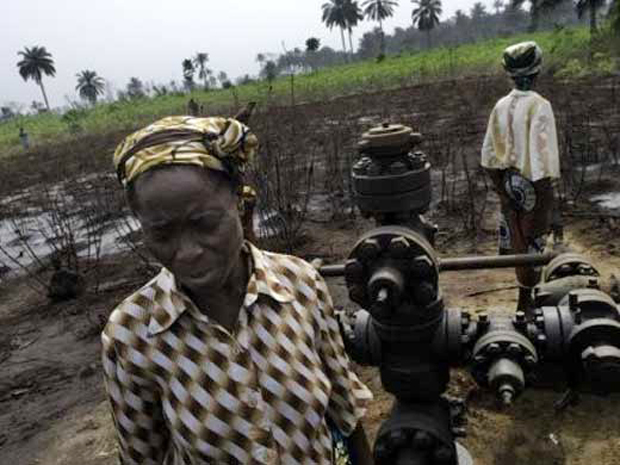
Shell's environmental destruction of southern Nigeria is internationally condemned 12th May 2014

Stakeholders and indigenes of Nembe-Bassambiri in Bayelsa State last weekend besieged oil facilities operated by the Shell Petroleum Development Company (SPDC) over it’s divestment plans and proposed sale of its Oil Mining Licenses (OMLs).

The host to some of the SPDC’s installations in Nembe Local Government Area of the state, were angry at the plan by Shell to sell OML 29 located in their domain without consulting them.

Shell has reportedly placed its 45 percent stake in four oil wells including OML 29 for sale as part of the company’s divestment.

OML 29 is believed to have increased to 62,000 bpd of oil and 40 million standard cubic feet of gas per day (mmscf/d). It also holds reserves of 2.2 billion barrels of oil equivalent (boe).

The aggrieved protesters who stormed the company’s facilities on Saturday with diffrent  placards asked Shell to stop production for three days to address their demands.

Numbering over 100, the demonstrators consisting of women, youths, chiefs, leaders and elders from the community came on 15 speedboats.

The protesters led by a member of the community’s Oil and Gas Committee, Chief Brigidi, took over the Nembe-Brass waterways, chanting solidarity songs as they sailed to SPDC’s major oil platforms in the area to register their grievances.

Some of the placards displayed by the protesters read: “the land is ours, the oil is ours, Shell cannot divest without us”;  “No, to Shell OML 29 sale”; “After polluting our land and water, Shell wants to sell our land”.

Others are “No to fraudulent sell of investment”. “No to Shell fraudulent divestment”;  “OML 29, OPU Nembe demand justice”; “Do not sell our oil wells to strangers” and “Include our companies in OML divestment plans”.

A member of the Nembe-Bassambiri Council of Chiefs, Chief Bukunor Alfred, said members of the community were angry at the plan of SPDC to sell oil blocks in the area without consulting them.

He said delegates sent by the council of chiefs to dialogue with SPDC on the development returned disappointed, saying, “Our placards have shown that we are not happy with Shell. We are by this protest giving Shell three days to shut down operation and dialogue with us or we will ensure that these facilities are permanently closed.”

He said though SPDC had contributed in the development of the community, the company was wrong to take a major decision of divesting without consulting its landlords.

“We are not against what they are doing. But we want to say that we are the landlords and we are supposed to be notified on what our tenants are doing,” he said.

Also, the Chairman of Opu-Nembe Improvement Union (ONIU), Mr. Ebinyo Robert, said the community would not let the company to leave unceremoniously after destroying its environment through pollution.

He insisted that the company must involve the community in all the processes involved in selling OML 29.

He warned that individuals and companies indicating interest to buy the oil wells should desist or have the community to contend with.

He said the communities have nominated three companies, Amot Oil E&P Limited, A-Abas Resources and Isea BMG, to participate in the bidding process.

He said: “The place has been polluted and our enviroment, our water our land, has been degraded for a long time. We have not been rehabilitated the way we really wanted it.

“By this demonstration, we are telling the parties to the sale including the bidders to desist from going ahead because if they do, of course, the land is ours, the water is ours and the oil is ours, they will have us to contend with and they may not like us in the manner in which they will meet us when they come to operate.

“So, we are asking the SPDC to stop the flow and all operations for now and ensure that the community is carried along because that is the only way we can have peace here.

“We are also saying that the community has nominated three companies, Amot Oil E&P Limited, A-Abas Resources and Isea BMG, to participate in the bidding process. So, SPDC should involve these companies in the process.”

But the Operations Team Lead Santa Barbara Flow Station, Mr. Akpe Emmanuel, welcomed the protesters on behalf of Shell.

He thanked them for the peaceful manner in which they conducted the demonstration and promised to pass their grievances across the SPDC.

He said: “Once again, you are welcome. I want to thank you for the manner in which you presented your case. I really appreciate it on behalf of Shell.

“Like the community has assigned you to represent them, I am also here on behalf of Shell. I have heard all you have said. It is my duty to pass this message to my principal.”

Mass Trial of Indigenous Leaders Set to Begin this Week in Peru

"Photos from Bagua" by Ben Powless 12th May 2014 A massive trial involving 53 Indigenous leaders and activists is set to begin this week, reviving the tragic events that took place four years ago in the Amazonas Region
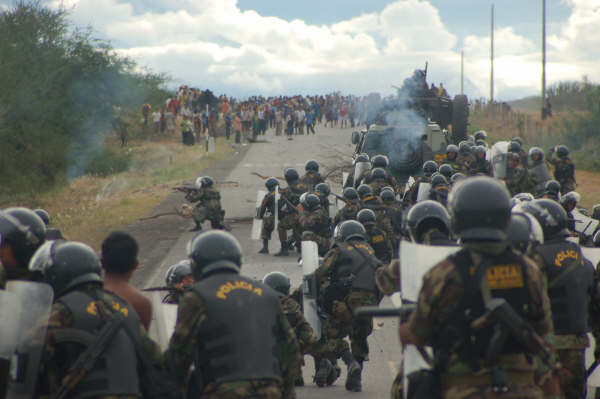
"Photos from Bagua" by Ben Powless 12th May 2014 A massive trial involving 53 Indigenous leaders and activists is set to begin this week, reviving the tragic events that took place four years ago in the Amazonas Region of Peru.

In April 2009, a national indigenous mobilization was organized to stop a plan by the Peruvian government to roll-back indigenous land rights and make it easier for industry to exploit the Amazon rainforest.

The first month of the mobilization, led by more than 1200 communities, was largely peaceful. However, that began to change on May 9, 2009, when the Peruvian government declared a state of emergency in the regions of Loreto, Amazonas, Cusco, and Ucayali–where thousands of Indigenous Peoples were concentrating their efforts.

Once the state of emergency was declared, the number of confrontations with police and military began to climb. Nevertheless, the mobilization pressed on, with Indigenous Peoples carrying out daily protest actions across the country.

With the Indigenous Peoples showing no signs of backing down, on May 20, Peru’s Congress took a positive step forward by repealing one of four laws that sparked the mobilization: Legislative Decree 1090, a new forestry law that removed the protected status of some 45 million hectares of rainforest. Six days later, a second legislative decree, aimed at promoting private investment in irrigation projects, was declared unconstitutional.


While there was enormous relief over the removal of the two decrees, two others remained:

  • Legislative Decree 1064 removed a requirement that obliged companies to come to an agreement with indigenous communities over land compensation and land use before entering their lands (effectively giving mining, oil & gas, logging, and hydro companies free access to enter any Indigenous territory).
  • Legislative Decree 1089, meanwhile, gave unrestricted powers for land titling to COFOPRI, the government body that specializes in granting individual land titles.

With both decrees posing a significant threat to the security of Indigenous land rights, in addition to the fact that the government failed to carry out a process of consulting or seeking the consent of effected Indigenous Peoples–in violation of ILO Convention 169 and the United Nations Declaration on the Rights of Indigenous Peoples–the mobilization pressed on.

After a few more weeks of protest, it looked as if a resolution was at hand. Several thousand Awajun and Wampis Peoples had set up a series of strategic blockades on Fernando Belaúnde Terry road in Bagua, Amazonas Region. Having so effectively seized the important road, the government sought to strike a deal with the Awajun and Wampis, ultimately convincing the Indigenous Peoples to begin taking down their blockades. Many of the Awajun and Wampis were long gone by the time June 5 rolled around.

In the early morning hours of June 5, the Peruvian military police made their move.

When the dust finally settled, 38 people were dead and more than 200 were injured.

Two weeks after the brutal confrontation, Peru’s Congress overwhelmingly voted to strike down both Legislative Decree 1064 and 1089.

Following Congress’ vote, Daysi Zapata, vice president of the Interethnic Association for Development of the Peruvian Jungle (AIDESEP), the organization that started the mobilization, officially called for an end to all protests, stating, “Today is an historic day, we are grateful that the will of indigenous peoples has been heard, and only hope that in future, governments meet and listen to the people, and not legislate the laws back in.”

Four years later, the decrees have remained off the books; the government taking judicial aim at many of the Indigenous Peoples who took part (or allegedly took part) in the mobilization. Since 2009, more 100 separate lawsuits have been filed involving at least 350 Indigenous men and women.

The upcoming lawsuit, known as the “Curva del Diablo”, will be the largest of them all. In fact, with 53 indigenous leaders facing anywhere between 35 years to life in prison, it is going to be the largest trial in Peru’s history.

AIDESEP President Alberto Pizango, who is among the 53 named defendants, recently commented in an internal AIDESEP interview:

There’s a “Before Bagua” and an “After Bagua”. A before in which the Peruvian State didn’t want to and didn’t know how to listen to the proposals of indigenous peoples. This exacerbated the situation until things came to what happened, which unfortunately took so many lives unnecessarily. I’d say an “After Bagua” because thanks to the Amazonian mobilizations I can say that today the indigenous agenda is not only inserted in the national level and within the State, but on the international level.

Pizango continues:

I’d just say to the indigenous peoples and my indigenous brothers who are being tried for these regrettable events that they should stay firm in continuing to lift up the voice of indigenous peoples. All we have done is comply with our role as being the official spokespeople and work to insert in the national public agenda the different claims as mandated to us by our peoples. I’d reiterate to my brothers that they should stay firm in the significance of indigenous peoples rights. We’re going to overcome these accusations, we should be conscious of the fact that we haven’t committed any crimes. Perhaps our only crime was to carry the voice of the people, which is what we’ll be judged for starting May 14th….