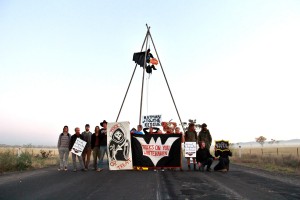
Australia : Mass Protest Against Whitehaven Coal

Front Line Action On Coal

Novem­ber 2nd, 2014

Front Line Action On Coal

Novem­ber 2nd, 2014

The bats have been released! Mass protests against White­haven Coal.

Maules Creek Mine Main access: A young woman has locked her­self to the inside of a car, block­ing the main access point for Maules creek mine.

UPDATE: Police res­cue have arrived on the scene

Maules Creek Mine, inside: The rail­way line being built inside the mine site has been blocked by a woman sus­pend­ed in a tree with the rope going across the con­struc­tion site.

UPDATE: Work­ers have been able to go under the ropes, trucks are still being held up.

Maules Creek Mine Hitachi Dig­ger: 1 woman has scaled the super dig­ger while anoth­er woman has locked her­self to the huge machine.


Leard For­est Alliance Spokesper­son

Mur­ray Drech­sler

0418754869


MAULES CREEK 3/11/2014
Over eighty peo­ple have set up sep­a­rate block­ades on and around the con­struc­tion site of the con­tro­ver­sial Maules Creek mine, near Narrabri, in a ramp up of peace­ful action to pre­vent the mine from depres­suris­ing the water table.

White­haven Coal’s Maules Creek mine has been seri­ous­ly delayed by a grow­ing move­ment of farm­ers, envi­ron­men­tal­ists and oth­er sup­port­ers con­cerned that farm bores will fail due to the 600 mega­l­itres of water the mine would use each year.

The Leard For­est Alliance is call­ing on NSW Plan­ning Min­is­ter Rob Stokes to stop con­struc­tion work on the mine while a par­lia­men­tary inquiry into plan­ning deci­sions is under­way.

Spokesper­son for the Leard For­est Alliance Mur­ray Drech­sler said “The amount of water White­haven plans to use over the life of the Maules Creek mine would fill a third of Lake Bur­ley Grif­fin and this is water that should be used for food pro­duc­tion.”

“The com­mu­ni­ty has the courage to stand up for water ahead of coal and we expect Plan­ning Min­is­ter Rob Stokes to do the same.” Con­tin­ued Mr. Drech­sler.

The mine’s state and fed­er­al approvals were grant­ed before White­haven had fin­ished their water man­age­ment plan and that fact was includ­ed in a sub­mis­sion to the par­lia­men­tary inquiry.

Twit­ter:

@FLACcoal #Leard­block­ade

MG_3888-300x200

Front Line Action On Coal

Front Line Action On Coal

Front Line Action On Coal


France Halts Dam Construction after Protester’s Death & solidarity protest news


2 Novem­ber 2014

French local author­i­ties have decid­ed to sus­pend work on a con­tro­ver­sial dam after the death last week of an activist protest­ing against the project.

The exec­u­tive coun­cil in charge of the project in the south-west­ern Tarn region decid­ed to freeze work on the dam but did not defin­i­tive­ly scrap it.

It was impos­si­ble in the light of the tragedy to con­tin­ue any work at the site of the Sivens dam project, said Thier­ry Carcenac, head of the region’s exec­u­tive coun­cil. “What hap­pened was ter­ri­ble and should nev­er hap­pen again,” he added.

Remi Fraisse, 21, died in the ear­ly hours of Sun­day dur­ing vio­lent clash­es between secu­ri­ty forces and pro­test­ers against the project. It was the first death dur­ing a protest in main­land France since 1986.

Ini­tial inves­ti­ga­tions showed traces of TNT on his clothes and skin, sug­gest­ing he may have been killed by a police stun grenade.

France’s inte­ri­or min­is­ter, Bernard Cazeneuve, who has come under fire over the inci­dent, has since banned the use of the grenades, which are designed to stun rather than kill.

The already unpop­u­lar gov­ern­ment of Pres­i­dent François Hol­lande has come under more pres­sure over a per­ceived slow response to the death, as well as alle­ga­tions that police mis­han­dled the riots.

The death has been fol­lowed by renewed clash­es. Overnight on Thurs­day, 200 pro­test­ers ram­paged through the west­ern city of Rennes, with some over­turn­ing cars and break­ing shop win­dows. Fur­ther protests are planned through­out the week­end and author­i­ties are brac­ing for fur­ther unrest.

Ecol­o­gy min­is­ter Ségolène Roy­al will next week gath­er togeth­er all war­ring par­ties to dis­cuss the future of the Sivens dam.

Those opposed to the project say the dam will destroy a reser­voir of bio­di­ver­si­ty and will only ben­e­fit a small num­ber of farm­ers. Those pro­mot­ing the project, mean­while, retort that the dam is in the pub­lic inter­est as it will ensure irri­ga­tion and the devel­op­ment of high-val­ue crops.

from The Guardian

Hard-left and anar­chist demon­stra­tors clashed with French riot police for a sec­ond day on Sun­day in protest at the death of a young green activist who was struck by a police stun grenade last week­end.

In run­ning bat­tles dur­ing an unau­tho­rised demon­stra­tion in east­ern Paris, 66 young pro­test­ers were arrest­ed for attack­ing police and pos­ses­sion of offen­sive weapons. In Nantes and Toulouse more than 30 activists were arrest­ed and six police­men injured on Sat­ur­day. Oth­er demon­stra­tions on Sun­day – includ­ing a sit-in beside the Eif­fel Tow­er and a silent march at the scene of last week’s death – passed off peace­ful­ly.

Rémi Fraisse, 21, a young botanist and paci­fist, was protest­ing against the build­ing of a dam in an unspoiled val­ley in south-west­ern France eight days ago when police stun grenade explod­ed behind his back. His death – the first in a polit­i­cal demon­stra­tion in France for many years – has caused wide­spread con­ster­na­tion and has become a cause célèbre for French hard-left and green activists.

Rad­i­cal pro­test­ers and some main­stream green politi­cians have blamed the young man’s death on the alleged­ly “author­i­tar­i­an” and right-lean­ing poli­cies of the reformist, Social­ist Prime Min­is­ter Manuel Valls. When pro­test­ers attacked build­ings and hurled molo­tov cock­tails and acid at riot police in Nantes on Sat­ur­day, Mr Valls attempt­ed to turn the tables. He accused the pro­test­ers of “dirty­ing”  the mem­o­ry of the young vic­tim who was not just a “mil­i­tant ecol­o­gist” but also a “con­vinced paci­fist”.

Work on the dam at Sivens in the Tarn departe­ment was sus­pend­ed last Tues­day, three days after the death of Mr Fraisse. The envi­ron­ment min­is­ter, Ségolène Roy­al, broke with gov­ern­ment pol­i­cy in an inter­view yes­ter­day by sug­gest­ing that the dam was too large and should nev­er have received plan­ning per­mis­sion.


from The Inde­pen­dent


Australia: Batman Blocks Coal Mine with Tripod

Trick-or-Treat-06-300x200

Octo­ber 30th, 2014

Trick-or-Treat-06-300x200

Octo­ber 30th, 2014

Kick­ing off a week­end of action against Whitehaven’s con­tro­ver­sial Maules Creek coal mine, a con­cerned cit­i­zen has scaled a tri­pod, block­ing access to Whitehaven’s Tar­ra­won­ga haul road, block­ing access for trucks try­ing to leave Tar­ra­won­ga coal mine. This comes as peo­ple from around the coun­try con­verge at the Leard Block­ade to defend water, cli­mate and our democ­ra­cy from White­haven coal.

Phil Evans, 33, a cli­mate cam­paign­er with 350.org has today put him­self on the line to draw atten­tion to White­haven dodgy deal­ings and destruc­tion of our water and cli­mate.

Leard For­est Alliance Spokesper­son, and tri­pod activist, Phil Evans says,” I’m here to call ‘trick or treat’ on White­haven coal. White­haven need to be held respon­si­ble for the destruc­tion of the com­mu­ni­ty, water and the cli­mate.”

Due to Whitehaven’s Maules Creek mine, the aquifers are pre­dict­ed to drop by up to 2m. Pre­vi­ous­ly dur­ing drought the agri­cul­tur­al com­mu­ni­ty has not had water for their live­stock and their farms. The Maules Creek mine, as the largest new coal mine under-con­struc­tion in Aus­tralia, will con­tribute sig­nif­i­cant­ly to cli­mate change caus­ing fur­ther droughts for the local com­mu­ni­ty and insta­bil­i­ty of glob­al pro­por­tions.

“We hope the NSW par­lia­men­tary inquiry into the plan­ning process will send the Maules Creek project back to square one, if any of the alleged­ly cor­rupt rela­tion­ships between Aston exec­u­tives and senior politi­cians from both sides have found to influ­ence the approvals process in any­way.” said Mr. Evans.

Whitehaven’s plan­ning, approval and con­struc­tion process­es have been plagued by ques­tion­able deal­ings and clouds of cor­rup­tion. The mul­ti­ple prob­lems of the plan­ning process have been brought to the atten­tion of the NSW par­lia­men­tary inquiry into plan­ning by com­mu­ni­ty groups.

“The state ICAC has raised very seri­ous con­cerns about the undue influ­ence of coal on our democ­ra­cy, but it has not gone far enough. The Leard For­est Alliance is call­ing for work to stop on the Maules Creek project, and an audit of the plan­ning and approval process that allows White­haven to con­tin­ue with this atroc­i­ty. We need a fed­er­al lev­el ICAC and we need to take our democ­ra­cy back.” said Mr. Drech­sler.

“The time of coal get­ting spe­cial treat­ment is over. The cor­rup­tion has got to end. It is up to all of us to reclaim our voice, and democ­ra­cy” said Mr. Evans.

There have been over 265 arrests this year as part of the ongo­ing com­mu­ni­ty lead cam­paign of peace­ful civ­il dis­obe­di­ence against White­haven Coal.

Trick-or-Treat-04-300x200

from Front Line Action on Coal

Two Blockades Evicted at Hambach Forest Occupation

Noname

Octo­ber 30th, 2014

Noname

Octo­ber 30th, 2014

RWE Wach­schutz injures activists. One per­son los­ing con­scious­ness due to beat­ing by the secu­ri­ty. Activists choked and arrest­ed with cable ties.

Today was anoth­er block­ade of cut­ting and log­ging in the Ham­bach­er For­est, with­in the cam­paign “No Tree is Falling”.
At this block­ade the RWE Secu­ri­ty attacked the activists with batons and pep­per spray. At this point some activists got injured.

In response a sec­ond block­ade hap­pened to make the secu­ri­ty and the log­gers aware that they injured activists. At this point secu­ri­ty attacked the activists harsh­ly with batons and pep­per spray. In addi­tion the log­ging machine was head­ing direct­ly towards the activists. Dur­ing this attack three activists were injured, one of them los­ing con­scious­ness for a moment. Also the RWE pri­vate secu­ri­ty arrest­ed three peo­ple, they choked them and bond them with cable tie. Activists defend­ed them­selves. After one hour police showed up and arrest­ed 3 more per­sons. The police came from Düren and also the Arrest­ed peo­ple will be brought there.
Come around and sup­port the Block­ades. Show Sol­i­dar­i­ty every­where, thats what the peo­ple need here.
Press Con­tact: 015754136100

The Ham­bach­er for­est is the site of an ongo­ing land defense cam­paign in Ger­many. The for­est sits at the edge of a lig­nite (brown coal) mine and is under immi­nent threat from mine expan­sion.

News Tick­er:

– sev­er­al ambu­lance cars dri­ving in the for­est.
– police is evict­ing the block­ades togeth­er with RWE Secu­ri­ty
– The „Pile“ (Fort on the way to the Squat­ted Trees) is sur­round and activists are on Tripods and Trees.

12:00: Police­news: Activists got arrest­ed because of break­ing Civ­il Laws. Prob­a­bly to MünchenGlad­bach, Bergheim, and Düren. (Not Con­firmed)
– around 100 Cops are in the For­est.
– Police and RWE Secu­ri­ty tried to evict the „Pile“ with heavy Machines, although activists where in the block­ade and there life was put at risk.
13:00 Work was stopped. Police said they want to fin­ish the evic­tion until 15:00. 4 Per­sons are in the „Pile“
13:05 Until Now 6 Per­sons got arrest­ed. But they‘re still in the For­est.
Black flag fly­ing Song
13:50 Police is dri­ving with heavy evic­tion machines in the For­est. Also more Cops are on the way in the for­est.
14:00 Log­ging Work is start­ed again. Trees on the way to Tree­block­ade are cut­ed to make way for the evic­tion.
14:10 Activists are trans­port­ed out of the For­est. Cher­ry Pick­ers are dri­ving in the For­est.
15:30 Sev­en more Police Cars drove to the for­est. Now there are 3 Riot Units in the For­est.
– In the „Pile“ Block­ade are actu­al­ly 4 activists. One in the Trees, One in the Tun­nel, Two on Tripods. The „Pile“ is com­plete­ly sur­round­ed by police
– At the Tree­block­ade until now there is no Secu­ri­ty and Police. Only the way for heavy machines is ready.
15:45 Evic­tion of the Pile start­ed. Cher­ryp­ick­er is build up.
16:07 Police in Plain Clothes is watch­ing the Mead­ow occu­pa­tion.
16:30 Activists locked them­selves to the bar­ri­cade (Pile)
16:50 One Per­son got evict­ed from Tri­pod at the „Pile“
– Anoth­er Unit of Riot Police drove to the For­est.
– Tree Block­ade „Gruben­blick“ is sur­round­ed.
– Cher­ry-Pick­er and Flood­light is at the Block­ade.
– One Per­son is in the Trees above the „Pile“
17:30 I seems like the Police is stop­ping the evic­tions.
– The „Pile“ is evict­ed. One Per­son is still in the Trees. 3 more Per­sons got arrest­ed.
18:00 The Bar­ri­cade is pushed togeth­er by the police with heavy machines. The police is touch­ing the tree on which the last per­son is sit­ting. Due to that the police risk the life of the activist. That has been point­ed out to the police sev­er­al time but the dont stop the work.
– Climb­ing Police arrived at the Tree Ocu­pa­tion „Gruben­blick“.
18:20 Nine Police­cars are on the way to the part of the for­est near the mead­ow.
20:30 The Search­ing on the Mead­ow by the Police is fin­ished. More Infor­ma­tion soon.
21:45 In the last 3 hours the fol­low­ing things hap­pened:
– The Treeocu­pa­tion „Gruben­blick“ is evict­ed. The activists got arrest­ed.
– The activist on the tree at the „pile“ block­ade is still up there. Climb­ing Police is on the spot. At the Moment the Cher­ry-Pick­er is raised up.
– The first Per­son got released at the police sta­tion in Düren.

mod­i­fied slight­ly from Ham­bach For­est Blog

USA: Burnaby Blockade, Encampment Stops Kinder Morgan Suveyors for a Second Day

Octo­ber 30th, 2014

Angry pro­test­ers stopped crews from con­duct­ing pipeline sur­vey work on Burn­a­by Moun­tain Wednes­day, forc­ing the com­pa­ny to reassess how it will fin­ish work need­ed for a Nation­al Ener­gy Board deci­sion.

Octo­ber 30th, 2014

Angry pro­test­ers stopped crews from con­duct­ing pipeline sur­vey work on Burn­a­by Moun­tain Wednes­day, forc­ing the com­pa­ny to reassess how it will fin­ish work need­ed for a Nation­al Ener­gy Board deci­sion.

RCMP offi­cers watched as some pro­test­ers con­front­ed a Trans Moun­tain sur­vey crew, yelling “go back to Texas,” while anoth­er pro­test­er crawled under a sur­vey crew’s SUV, wrapped him­self around the front tire and refused to leave.

Stephen Col­lis, a spokesman for the pro­test­ers who call them­selves the Care­tak­ers, said they plan to hun­ker down.

“We’re cur­rent­ly occu­py­ing the space that they have iden­ti­fied that they need to work in. Since we’re on pub­lic land, we have every right to be here,” he said. “They can’t real­ly work in a space that’s filled with dozens of peo­ple. That’s the inten­tion.”

The plan worked, at least for the day.

Work­ers left in anoth­er vehi­cle, and one man car­ried sev­er­al signs under his arm that read No Entry Until Fur­ther Notice and Field Test­ing Area Under Order of the Nation­al Ener­gy Board.

Greg Toth, senior direc­tor for Kinder Morgan’s Trans Moun­tain expan­sion project, said all sur­vey work on the moun­tain was stopped, although oth­er crews were still work­ing around Burn­a­by.

He wasn’t yet sure if the com­pa­ny would ask for an injunc­tion pre­vent­ing protests.

“We have to reassess, based on today’s activ­i­ties,” said Toth. “It’s quite a vocal protest. Our pri­or­i­ty is the safe­ty of our crews and the gen­er­al pub­lic. So we’ll retrench and look at what options are avail­able.”

The demon­stra­tion comes in the midst of a bit­ter bat­tle over the company’s plans to expand the pipeline through Burn­a­by.

The Nation­al Ener­gy Board grant­ed Trans Moun­tain access to the sites so it can com­plete work through Burn­a­by Moun­tain, it’s pre­ferred route for the pipeline. The NEB ruled the City of Burn­a­by can’t pre­vent the activ­i­ty because the work is need­ed for the board to make a deci­sion on the expan­sion appli­ca­tion.

The City of Burn­a­by announced it will appeal the NEB rul­ing.

May­or Derek Cor­ri­g­an said he didn’t believe the reg­u­la­tor has the author­i­ty to con­sid­er con­sti­tu­tion­al ques­tions con­cern­ing city bylaws.

Toth said the Nation­al Ener­gy Board and the Fed­er­al Court have giv­en the com­pa­ny every right to do work need­ed to sup­port the deci­sion-mak­ing process.

He said it’s iron­ic that crews haven’t been allowed on Burn­a­by Moun­tain, con­sid­er­ing the com­pa­ny and city res­i­dents have deter­mined the route is the least dis­rup­tive option.

“It’s real­ly in response to strong feed­back from the local res­i­dents and the gen­er­al pub­lic in the area for the alter­na­tive rout­ing, which would have been through the streets,” he said.

In July 2007, a geyser of oil cov­ered more 100 homes, after a crew acci­den­tal­ly pulled up the pipeline, spilling 250,000 litres.

The cleanup cost about $15 mil­lion.

The 5.4‑billion dol­lar expan­sion plan would come close to tripling the capac­i­ty of the exist­ing pipeline between Alber­ta and B.C. to about 900,000 bar­rels of crude a day.

Raging Grannies Blockading Entrances and Exits of WA Department of Ecology

Octo­ber 30th, 2014

UPDATE: Grannies Unlock After 6‑Hour Block­ade

Cur­rent­ly, sev­en mem­bers of the Seat­tle Rag­ing Grannies are block­ing the entrance to the Depart­ment of Ecol­o­gy head­quar­ters, stalling traf­fic and pre­vent­ing employ­ees from enter­ing work. The groups are sit­ting in rock­ing chairs chained togeth­er across the Department’s vehi­cle entrance.

They are telling work­ers that the Depart­ment is closed today for a “Work­shop on How to Say No to Big Oil.” Today’s action coin­cides with hear­ings on a con­tro­ver­sial study on the safe­ty of oil trains con­duct­ed by the Depart­ment of Ecol­o­gy. Hun­dreds are expect­ed in Olympia to express con­cern at the study’s nar­row scope and omis­sion of risks to the envi­ron­ment or treaty rights.

Police and FBI are on the scene try­ing to direct traf­fic, and ecol­o­gy man­age­ment is mak­ing sup­port­ive employ­ees move inside so they can’t talk to the media about their sup­port of the elders.

Dale R Jense, pro­gram man­ag­er for the department’s oil spills safe­ty pro­gram, is cur­rent­ly walk­ing the line and talk­ing to the grannies, who remain in high spir­its and are singing songs. There is a group of sup­port­ers mak­ing sure that the DoE knows that fos­sil fuel ship­ments are unpop­u­lar, dan­ger­ous, and bad for the plan­et.

“We’re here to help the Depart­ment of Ecol­o­gy learn how to say no to the oil indus­try,” said Beth DeRooy. “After grant­i­ng per­mits to four ille­gal oil train ter­mi­nals and let­ting for­mer BNSF exec­u­tives write their oil study, I was wor­ried the folks over at the Depart­ment nev­er learned how to say no and need­ed a lit­tle help from their grannies.”

Since 2012 the Depart­ment of Ecol­o­gy has grant­ed per­mits for oil-by-rail ter­mi­nals at four of Washington’s five refiner­ies. Ter­mi­nals in Taco­ma, Ana­cortes and at Cher­ry Point out­side of Belling­ham, have begun tak­ing trains while a fourth is under con­struc­tion at the Phillips 66 refin­ery in Fer­n­dale. Envi­ron­men­tal groups have argued that the these ter­mi­nals are ille­gal under the Mag­nu­son Act, which pro­hibits expan­sions at Wash­ing­ton refiner­ies that may increase the amount of oil they han­dle.

Per­mits for a fifth oil-by-rail ter­mi­nal at Shell’s Puget Sound refin­ery are cur­rent­ly under con­sid­er­a­tion. “Hot on the heels of record wild­fires, Gov­er­nor Inslee’s so-called Depart­ment of Ecol­o­gy is going to ignore the envi­ron­ment in this study? They’re act­ing more like the Depart­ment of Oil Trains,” stat­ed Cyn­thia Linet.

Last year Gov­er­nor Inslee direct­ed the Depart­ment of Ecol­o­gy to con­duct a safe­ty study on the extreme­ly con­tro­ver­sial ship­ment of oil by rail. The governor’s study has been crit­i­cized for ignor­ing impacts on the envi­ron­ment, treaty rights and glob­al warm­ing, as well as fail­ing to ques­tion whether they should build oil-train ter­mi­nals in the first place.

The Depart­ment of Ecol­o­gy has declared that impacts on the envi­ron­ment, trib­al treaty rights or local economies are “ancil­lary” and not being con­sid­ered. The Depart­ment has also come under fire after rev­e­la­tions that a num­ber of the study’s authors are for­mer BNSF exec­u­tives.

“You’d think bring­ing explod­ing trains to help oil com­pa­nies dev­as­tate Native Amer­i­can com­mu­ni­ties in North Dako­ta would be easy to say no to, but it looks like the Depart­ment of Ecol­o­gy needs a stern les­son from their grannies,” said Car­ol McRoberts.

Many of North Dakota’s oil wells are on trib­al lands of the Man­dan, Hidat­sa and Arikara nations. In addi­tion to spills and oth­er local pol­lu­tion, the oil boom has brought tremen­dous social costs to the com­mu­ni­ties. Deaths from auto acci­dents, drug abuse and vio­lent crime have explod­ed; hous­ing short­ages force many to live in sub­stan­dard con­di­tions; and sex­u­al vio­lence such as rape and sex traf­fick­ing have become preva­lent in a once small com­mu­ni­ty.

“My daugh­ter is 15 months old and my heart aches that I do not even want her to be at home for fear of what she’d be exposed to,” said Kan­di Mos­sett, a mem­ber of the Man­dan, Hidat­sa and Arikara nations who sub­mit­ted writ­ten tes­ti­mo­ny to today’s oil train hear­ings. “This oil boom using frack­ing has been dev­as­tat­ing for us and no amount of mon­ey can ever give us back what’s being lost.”

IMAG0692image4

Pro­tes­tors hand­ed out dough­nuts and cof­fee as they turned away employ­ees’ cars. They also hand­ed out a fli­er explain­ing “How to Say No To Fos­sil Fuels.” The fli­er calls on the Depart­ment of Ecol­o­gy to reject all new fos­sil fuel projects pro­posed for Wash­ing­ton and to explic­it­ly link their rejec­tion to con­cerns about glob­al warm­ing.

Cli­mate jus­tice activists point out that if all pro­posed fos­sil fuel ter­mi­nals are built, the North­west will be trans­port­ing five times more car­bon than the Key­stone XL Pipeline.

“It’s grandma’s com­mon sense – we need to keep car­bon in the ground to stop cat­a­stroph­ic glob­al warm­ing, and if they can’t ship it, they have to leave it in the ground,” said Rosy Betz-Zall. But while he has been wide­ly hailed as one of the green­est gov­er­nors in Amer­i­ca, Inslee has yet to out­right reject a major fos­sil fuel project, or even declare a mora­to­ri­um on projects that would increase dan­ger­ous ship­ments of explo­sive oil.

“Gov­er­nor Inslee talks about being a cli­mate cham­pi­on, but he keeps say­ing ‘maybe’ to new fos­sil fuel projects, when what we need is a sol­id ‘NO’,” said Dee­jah Sher­man-Peter­son.

“Take it from your granny: if you want to say yes to some­thing good – a just, clean ener­gy future – you have start by say­ing NO to some­thing bad – build­ing more fos­sil fuel infra­struc­ture.”

Today’s protest fol­lows an intense wave of oppo­si­tion to oil-by-rail across the North­west this sum­mer with pro­tes­tors lock­ing them­selves to bar­rels of con­crete and sit­ting atop tripods to block­ade rail­road tracks across Wash­ing­ton and Ore­gon.

80 Arrested At Spontaneous Protests Over #ZAD Remi Fraisse’s Assassination By French Police

B1JivzYCEAAtq87

Octo­ber 30th, 2014

B1JivzYCEAAtq87

Octo­ber 30th, 2014

80 peo­ple have been arrest­ed sim­ply for speak­ing up against state ter­ror and cap­i­tal­ism, by a total pan­icked riot police force in Paris des­per­ate to repress spon­ta­neous demon­stra­tions over the exe­cu­tion of 21 year old Remi Fraisse at Testet.

The streets of Paris, Lyon and oth­er cities have been cov­ered in anti-cap­i­tal­ist, anti-police and anti-state mes­sages; the signs of rage over the assas­si­na­tion by the police of a 21 year old paci­fist, and defend­er of the Testet for­est.

2

Cops encir­cled peo­ple, trapped them, cap­tured them and dragged them to police vans sim­ply for being on the streets and speak­ing up, such police bru­tal­i­ty and abus­es sim­ply remind of well known total­i­tar­i­an regimes, deplored by Europe all over the world, except in Europe.

Remi Fraisse died on the spot when he was hit by a tear gas grenade fired by riot police Sat­ur­day night dur­ing the repres­sion of a protest in the Testet for­est to stop a dam which will prof­it some indus­tri­al farm­ers at the cost of destroy­ing 40 ha of for­est.

3

Wit­ness­es’ tes­ti­monies forced cops to admit they killed Remi. A state offi­cial called him “stu­pid” for “dying for an idea”. While state offi­cials are try­ing to con­trol the pub­lic rage over the police killing by claim­ing that patience is need­ed for “prop­er inves­ti­ga­tion”, the boss of riot police said that Remi’s mur­der was a fatal­i­ty and that no cop will be sus­pend­ed. He hint­ed no cop will be held account­able either. Images filmed just pri­or to Remi’s assas­si­na­tion expose the bar­barism of the police and their bru­tal­i­ty in repress­ing the protests.

Images above have been aired by France 2 aired and they prove the bar­barism of the police repres­sion against ZAD. Cops fired with intent to kill, unlike what their boss says, they fired tear gas grenades at peo­ple who were sev­er­al meters from them.

4

Hun­dreds gath­ered in spon­ta­neous demon­stra­tions, called “ille­gal” by the French media, in Paris, trig­ger­ing a mas­sive deploy­ment of cops. 200 peo­ple were inter­ro­gat­ed by police for sim­ply being on the streets. Cops tried to stir vio­lence, they encir­cled over 100 pro­tes­tors around the town hall and tried to ket­tle them. Protests are announced in Italy tomor­row, too.The chief of riot police claims that cops have the right to kill because “they did not have the inten­tion” to mur­der Remi, he says it’s not “con­ceiv­able” to sus­pend cops over the assas­si­na­tion of Remi. This cop posi­tioned him­self above any state law, since pros­e­cu­tors claim that the “inves­ti­ga­tions” of Remi’s assas­si­na­tion con­tin­ue. Appar­ent­ly, anyone’s life is can­celled just at the sight of cops in Europe, since they are not respon­si­ble when they fire their lethal pro­jec­tiles. Remi’s death is also anoth­er proof that police riot weapon­ry cause death, but it seems that since they are called non-“lethal” by the apol­o­gists of state bar­barism, cops who use them are absolved of any respon­si­bil­i­ty. Death is what awaits any­one who stands in the way of prof­its which in Europe are placed above all, life, human needs and envi­ron­ment.

Footage from protest in the evening of Octo­ber 26th in the town of Gail­lac in the Tarn depart­ment:

http://youtu.be/jUQjY1tRVAw

http://youtu.be/rbeBMBHxixM

Argentina: Quechua Community Members Occupy Airport During Second Day of Protest Against Plupetrol

Octo­ber 29th, 2014

Inhab­i­tants inform the author­i­ties that, if their requests are not respect­ed, they will be tak­ing more direct mea­sures, such as man­u­al­ly clos­ing pipeline valves.  They ask that DINOES (Spe­cial Oper­a­tion Divi­sion) does not inter­vene. 

Octo­ber 29th, 2014

Inhab­i­tants inform the author­i­ties that, if their requests are not respect­ed, they will be tak­ing more direct mea­sures, such as man­u­al­ly clos­ing pipeline valves.  They ask that DINOES (Spe­cial Oper­a­tion Divi­sion) does not inter­vene. 

On the sec­ond day of protest­ing against the neg­li­gent deci­sions of Plus­petrol, a dom­i­nat­ing E&P pri­vate com­pa­ny orig­i­nat­ing from Argenti­na, Quechua inhab­i­tants took their retal­i­a­tion to the air­port.

Dur­ing a press con­fer­ence, Aure­lio Chi­no Dahua, pres­i­dent of Fediquep (Indige­nous Quechua Fed­er­a­tion of the Pas­taza), explained that the peo­ple feel deceived by both the cor­po­ra­tion and the state.  He relates such uneasi­ness to the the state’s dis­en­gage­ment from alle­vi­at­ing Pluspetrol’s social-envi­ron­men­tal impacts on the com­mu­ni­ty, even in the face of raw evi­dence.

The indige­nous leader also projects his indig­na­tion towards the government’s lack of com­mit­ment, stat­ing that, although the Quechua peo­ple have fos­tered active dia­logue with the author­i­ties since 2011, not one pro­gram has been imple­ment­ed with the sole pur­pose of meet­ing their demands.

Dahua reit­er­at­ed that, dur­ing the last months, Plus­petrol Norte has been erod­ing and divid­ing the com­mu­ni­ties, and that Fediquep has been bla­tant­ly ignor­ing the inhab­i­tants’ rights.  For such rea­sons, he pro­pos­es that the com­pa­ny retreats from the area and, if they wish to resume the oper­a­tion, heeds to the community’s direct par­tic­i­pa­tion.  It is also being demand­ed that fam­i­lies are con­nect­ed to the elec­tric­i­ty that is pro­vid­ed by Lore­to Region­al Gov­ern­ment and Plust­petrol.

Mean­while in Nue­vo Andeos, the peo­ple hold their grounds in hopes that atten­tion will final­ly be brought to their demands.

Not too long ego, it was them who request­ed a reme­di­a­tion process of Shan­shococha Lagoon, as well as ade­quate com­pen­sa­tion for Pluspetrol’s exper­i­men­ta­tion through­out the past 15 years.

As the con­ver­sta­tion moves, it is evi­dent that yesterday’s demon­stra­tion in Nue­vo Andoas is being vig­or­ous­ly sup­port­ed by sur­round­ing areas with­in the Pas­taza and that will sure­ly res­onate beyond.

[EF!  Newswire Note:  The fol­low­ing post is a loose trans­la­tion of an arti­cle first pub­lished by Servin­di.]

21 Year Old ZAD Activist Killed in Clashes with Police at Testet Dam Resistance

testet5

Octo­ber 26th, 2014

testet5

Octo­ber 26th, 2014

17 hours after police attacked again the ZAD resis­tance in Testet, south of France, a 21 year old ZADist was found dead. Dur­ing the clash­es, wit­ness­es say they saw a man col­lapse and noticed the police tak­ing him away.

On Sat­ur­day, Octo­ber 25th, thou­sands of peo­ple from all over France gath­ered at Testet in oppo­si­tion to the dam project and the vio­lent repres­sion of the ZAD resis­tance, which is ongo­ing for years, and has increased in the past months.

Police attacked the pro­tes­tors to remove them, and some mil­i­tants bat­tled the cops until late in the night. Police fired rub­ber bul­lets, tear gas grenades; sev­er­al pro­tes­tors were bad­ly injured.

Lat­er in the night, fire­fight­ers and police claimed they have found the body of a man in the woods, while eye wit­ness­es who were there say the body was found at police road­blocks.

“A wit­ness said he saw some­one col­lapse in clash­es and being removed by the police , says Ben has Lefetey, spokesman for the Col­lec­tive for safe­guard­ing wet­land Testet, dur­ing a press con­fer­ence Sun­day morn­ing.

testet4

Police blame the clashed on the resis­tance, to jus­ti­fy the bru­tal repres­sion they enforced on the pro­tes­tors. The com­man­der of the gen­darmerie Tarn, quot­ed by the AFP, claimed that “100–150 anar­chists masked and dressed in black threw incen­di­ary devices” and oth­er pro­jec­tiles at police sur­round­ing a mobi­liza­tion “2000″ oppo­nents.

In a state­ment, the asso­ci­a­tion Action for the Envi­ron­ment says: “Act­ing for the Envi­ron­ment can see that after sev­er­al weeks of police vio­lence indis­crim­i­nate­ly and some­times out­side any legal frame­work (iden­ti­ty papers and per­son­al effects burned, dis­re­spect pri­vate areas …), the police have once again made ​​use of rub­ber bul­lets, stun grenades and tear gas and even though the event took place in a good atmos­phere [sic] -child. The pres­ence of the police at the end of the day will appear again for what it is: a provo­ca­tion lead­ing to a tragedy.”

“Accord­ing to pre­lim­i­nary infor­ma­tion we have col­lect­ed, the death took place in the con­text of clash­es with the police at 2:00 am. We are not say­ing that the secu­ri­ty forces have killed an oppo­nent, but a wit­ness we said the deaths hap­pened dur­ing clash­es, “he told AFP by phone Ben Lefetey, spokesper­son of the group Save the wet­land Testet, which includes most of the oppo­nents of the dam project . “We do not know more about the cause of death.”

Con­tact­ed, the pre­fec­ture did not want to com­ment. The pros­e­cu­tor in Albi, Claude Derens, refused to make any com­ment “before the results of the autop­sy will take place tomor­row (Mon­day) in the after­noon.” Accord­ing to a source close to the inves­ti­ga­tion, the young man who died was 21 years old and “was among those who were in the midst of clash­es last night” (Sat­ur­day).


“The pro­posed reser­voir dam 1.5 mil­lion m3 of water stored is grow­ing fig­ure “Notre-Dame-des-Lan­des South­west”, in ref­er­ence to this com­mon Loire-Atlan­tique, where sig­nif­i­cant mobi­liza­tion caused the freeze in 2012 the cre­ation of a new air­port. Since the begin­ning of clear­ing Sep­tem­ber 1, skir­mish­es and ral­lies have mul­ti­plied around the site. The pro­posed water reten­tion is sup­port­ed by the Gen­er­al Coun­cil of the Tarn. Oppo­nents denounce an expen­sive project for, accord­ing to them, only a small num­ber of farm­ers prac­tic­ing inten­sive agri­cul­ture.”

“Mem­ber of the Paris col­lec­tive sup­port Notre-Dame-des-Lan­des and sym­pa­thiz­ers es-es of the oppo­nent Testet. Accord­ing to the infor­ma­tion avail­able, one of us died that night dur­ing clash­es with riot police in the ZAD Testet. Nei­ther obliv­ion or par­don.”

Mas­sive protests are announced lat­er on Sun­day.

testet7

testet2

Pacific Island Warriors Blockade World’s Largest Coal Port

Octo­ber 25th, 2014

Cli­mate Change War­riors from 12 Pacif­ic Island nations pad­dled canoes into the world’s largest coal port in New­cas­tle, Aus­tralia, Fri­day (Octo­ber 17th) to bring atten­tion to their grave fears about the con­se­quences of cli­mate change on their home coun­tries.

The 30 war­riors joined a flotil­la of hun­dreds of Aus­tralians in kayaks and on surf­boards to delay eight of the 12 ships sched­uled to pass through the port dur­ing the nine-hour block­ade, which was organ­ised with sup­port from the U.S.-based envi­ron­men­tal group 350.org.

The war­riors came from 12 Pacif­ic Island coun­tries, includ­ing Fiji, Tuvalu, Toke­lau, Microne­sia, Van­u­atu, The Solomon Islands, Ton­ga, Samoa, Papua New Guinea and Niue.

Mikaele Maia­va spoke with IPS about why he and his fel­low cli­mate change war­riors had trav­elled to Aus­tralia: “We want Aus­tralia to remem­ber that they are a part of the Pacif­ic. And as a part of the Pacif­ic, we are a fam­i­ly, and hav­ing this fam­i­ly means we stay togeth­er. We can­not afford, one of the biggest sis­ters, real­ly destroy­ing every­thing for the fam­i­ly.

“So, we want the Aus­tralian com­mu­ni­ty, espe­cial­ly the Aus­tralian lead­ers, to think about more than their pock­ets, to real­ly think about human­i­ty not just for the Aus­tralian peo­ple, but for every­one,” Mikaele said.

REUTERS / David Gray

Speak­ing at the open­ing of a new coal mine on Oct. 13, Aus­tralian Prime Min­is­ter Tony Abbott said that “coal is good for human­i­ty.”

Mikaele ques­tioned Abbott’s posi­tion, ask­ing, “If you are talk­ing about human­i­ty: Is human­i­ty real­ly for peo­ple to lose land? Is human­i­ty real­ly for peo­ple to lose their cul­ture and iden­ti­ty? Is human­i­ty to live in fear for our future gen­er­a­tions to live in a beau­ti­ful island and have homes to go to? Is that real­ly human­i­ty? Is that real­ly the answer for us to live in peace and har­mo­ny? Is that real­ly the answer for the future?”

Mikaele said that he and his fel­low cli­mate war­riors were aware that their fight was not just for the Pacif­ic, and that oth­er devel­op­ing coun­tries were affect­ed by cli­mate change too.

“We’re aware that this fight is not just for the Pacif­ic. We are very well aware that the whole world is stand­ing up in sol­i­dar­i­ty for this. The mes­sage that we want to give, espe­cial­ly to the lead­ers, is that we are humans, this fight is not just about our land, this fight is for sur­vival.”


Mikaele described how his home of Toke­lau was already see­ing the effects of cli­mate change,

“We see these changes of weath­er pat­terns and we also see that our food secu­ri­ty is threat­ened. It’s hard for us to build a sus­tain­able future if your soil is not that fer­tile and it does not grow your crops because of salt intru­sion.”

Tokelau’s coast­line is also begin­ning to erode. “We see our coastal lines chang­ing. Fif­teen years ago when I was going to school, you could walk in a straight line. Now you have to walk in a crooked line because the beach has erod­ed away.”

Mikaele said that he and his fel­low cli­mate change war­riors would not be con­tent unless they stood up for future gen­er­a­tions, and did every­thing pos­si­ble to change world lead­ers’ men­tal­i­ty about cli­mate change.

“We are edu­cat­ed peo­ple, we are smart peo­ple, we know what’s going on, the days of the indige­nous peo­ple and local peo­ple not hav­ing the infor­ma­tion and the knowl­edge about what’s going on is over,” he said.

“We are the gen­er­a­tion of today, the lead­ers of tomor­row and we are not blind­ed by the prob­lem. We can see it with our own eyes, we feel it in our own hearts, and we want the Aus­tralian gov­ern­ment to realise that. We are not blind­ed by mon­ey we just want to live as peace­ful­ly and fight for what mat­ters the most, which is our homes.”

Toke­lau became the first coun­try in the world to use 100 per­cent renew­able ener­gy when they switched to solar ener­gy in 2012.

Speak­ing about the canoes that he and his fel­low cli­mate war­riors had carved in their home coun­tries and bought to Aus­tralia for the protest, he talked about how his fam­i­ly had used canoes for gen­er­a­tions,

“Each extend­ed fam­i­ly would have a canoe, and this canoe is the main tool that we used to be able to live, to go fish­ing, to get coconuts, to take fam­i­ly to the oth­er islands.”

Anoth­er cli­mate war­rior, Kathy Jet­nil-Kijin­er, from the Mar­shall Islands, brought mem­bers of the Unit­ed Nations Gen­er­al Assem­bly to tears last month with her impas­sioned poem writ­ten to her baby daugh­ter Matafele Peinam,

“No one’s mov­ing, no one’s los­ing their home­land, no one’s gonna become a cli­mate change refugee. Or should I say, no one else. To the Carteret islanders of Papua New Guinea and to the Taro islanders of Fiji, I take this moment to apol­o­gise to you,” she said.

The Pacif­ic Islands Forum describes cli­mate change as the “sin­gle great­est threat to the liveli­hoods, secu­ri­ty and well-being of the peo­ples of the Pacif­ic.”

“Cli­mate change is an imme­di­ate and seri­ous threat to sus­tain­able devel­op­ment and pover­ty erad­i­ca­tion in many Pacif­ic Island Coun­tries, and for some their very sur­vival. Yet these coun­tries are amongst the least able to adapt and to respond; and the con­se­quences they face, and already now bear, are sig­nif­i­cant­ly dis­pro­por­tion­ate to their col­lec­tive minis­cule con­tri­bu­tions to glob­al emis­sions,” it says.

Pacif­ic Island lead­ers have recent­ly stepped up their lan­guage, chal­leng­ing the Aus­tralian gov­ern­ment to stop delay­ing action on cli­mate change.

Oxfam Australia’s cli­mate change advo­ca­cy coor­di­na­tor, Dr Simon Brad­shaw, told IPS, “Aus­tralia is a Pacif­ic coun­try. In opt­ing to dis­man­tle its cli­mate poli­cies, dis­en­gage from inter­na­tion­al nego­ti­a­tions and forge ahead with the expan­sion of its fos­sil fuel indus­try, it is utter­ly at odds with the rest of the region.”

Dr. Brad­shaw added, “Australia’s clos­est neigh­bours have con­sis­tent­ly iden­ti­fied cli­mate change as their great­est chal­lenge and top pri­or­i­ty. So it is inevitable that Australia’s recent actions will impact on its rela­tion­ship with Pacif­ic Islands.

“A recent poll com­mis­sioned by Oxfam showed that 60 per­cent of Aus­tralians thought cli­mate change was hav­ing a neg­a­tive impact on the abil­i­ty of peo­ple in poor­er coun­tries to grow and access food, ris­ing to 68 per­cent among 18 to 34-year-olds,” he said.

Vis­it IPS news for fresh per­spec­tives on devel­op­ment and glob­al­iza­tion