A personal account from our very own British-activist-oil-monkey:
Southern Ocean, February 2010
While an albatross swoops close over me and I make my way up the stairs to the bridge deck, I can see Fremantle appear on the horizon. It is a nice warm compared to the cold Antarctica we have just returned from. After having been at sea for over a month we need to return to port to restock on food, refuel the ship and do some essential repairs on our helicopter. The turnover will be a quick one, 48 hours and we’re out of here. Some of the crew leave, new ones await us on the dock. As the ship pulls into the harbour I can see a large group of supporters eagerly awaiting our arrival. The long lonely hours at sea can make you forget our work is made possible by the generous work of thousands of supporters onshore. The couple of days in port fly by and before Iknow it I’m back in the noisy engine room.
It is day 6 back at sea and we get word that our second vessel, the Bob Barker, has located the whaling fleet and is closing in. One of the three harpoon ships, the Yushin Maru 2 tries to stop the Bob Barker from positioning itself behind the factory ship Nisshin Maru, better known as the ‘floating abattoir’. Once stuck behind this monstrous ship, the whaling operation will be stopped as no whales can be transferred from the harpoon ships across the slipway onto the flensing deck for
‘processing’. Or should I say ‘research’? The Yushin Maru 2 collided with the Bob Barker, causing damage to the Bob’s hull. The harpoon ship then backed off.
Meanwhile, on our ship the Steve Irwin, everyone is excited to hear the news and preparations are being made for possible action to take place within days. Having worked on the ship for months to get it ready for sea and then to try and find the whalers, this is the one bit of news everybody is waiting to hear. In this enormous ocean we have located the whaling fleet. Our other ship is already blocking the slipway of the processing ship and we will be joining in soon. In 2002 when Sea Shepherd set out for Antarctica for the first time to oppose Japanese whaling operations, no whaling ship was ever seen. In the Southern Ocean, which is the largest bit of unbroken ocean in the world, trying to find a few ships is literally like looking for needles in a haystack. Sure, we have a better idea of where they operate than 8 years ago and we sometimes get information from other vessels if they see them, but this is a huge achievement.
The next day the fleet changes course and starts moving directly towards us. At this rate we might meet them early in the morning. I keep saying to myself I should better get some sleep as we could be looking at a very long day of action. Nevertheless I can’t sleep. Everyone, myself
included is excited about finally being with the fleet and the prospect of actions. Our captain, Paul Watson, always says that 90% of success is showing up and the only way to stop whaling in Antarctica is by being here where it happens. And so far, Sea Shepherd’s story in Antarctica is one of success. This is Paul’s 6th Antarctic campaign and year after year the effects of the actions of him and his crew are getting more and more profound. If you want to shut down whalers you have to speak their language, in this case one of profit and loss. As long as we can ensure
that their profits are down and losses up, one day it will not be worth their while to come down. In the last two years Sea Shepherd has halved the whaling quota’s by disrupting the hunt and they are feeling the financial pressure back in Tokyo. A public spending review committee appointed by the Japanese government recently proposed to slash funding to the ICR, which runs the whaling programme and more Japanese public figures have spoken out against whaling then ever before.
Once you start feeling a slight shudder through the ship you know what lies outside: ice. The ship is not ice-strengthened so we have to continue with the utmost caution. Outside on the deck I’m looking at ice on the starboard side, port side, forward of us and everywhere else where there used to be open ocean. ‘Look, right there!’ Three weddell seals relax on the ice. Their bold bodies lie on the ice sheets in stark contrast with the rest of the white landscape. ‘Oh aren’t they cute!’
Cute indeed though not impressed with our presence. One seal growls angrily at us. Especially working in the engine room, which tends to be a pretty uninspiring place, moments like these give new energy to keep going and remind us all what we are here to protect.
Next morning I get woken up by people rushing through the companionways. I stumble out of bed, open the porthole and I look straight at the huge factory ship, which is right next to us. This huge ship, with water cannons blasting from all sides, this is the one. This is the mean killing machine, the largest whale abattoir in the world, which we are looking to sabotage. It is a beautiful sight to see our two black ships in formation behind the Nisshin Maru. We’ve got both sides of the slipway covered. Try coming in with a harpoon ship now!
We approach the 60 degree latitude boundary as we move in along the Nisshin Maru’s port side. Announcements blast from our powerful PA system: ‘This is a whale sanctuary, your operations here are illegal. We order you to leave the area immediately’. We repeat the message in Japanese. Our water cannon gives their bridge windows a clean and we escort them out of the Antarctic Treaty Zone and more importantly, out the Southern Ocean Whale Sanctuary. Two days later the Nisshin Maru changes course again, turns around and heads straight back for the sanctuary.
The factory ship continues to be followed by both our ships and three harpoon ships are behind us. Later that afternoon I make my way outside when we are nearing the sanctuary boundary. We move alongside the factory ship again and warn them to stay out. While I stand on the aft deck, the Nisshin Maru comes closer. Water cannons are blasting from both ships and the sky fills with a mist of water spray. All I can see of the other ship is a dark mist and before I realise it, the Nisshin Maru is about one meter from our deck railings. ‘They are going to ram us! Get over here!’ I quickly turn around as a giant swell of water throws itself over the deck where we are standing. I’m holding onto a railing and a fellow crew member as we both get soaking wet. I turn to look and see the ships slowly pulling apart. Giant letters spelling RESEARCH are moving in front of us, each one about the size of a small house.
The harpoon ships aren’t sitting by quietly and start to move. The Bob Barker moves in between us to protect our helicopter from their water cannons. We deploy the small boats too. Shortly after a huge cat and mouse game erupts between whaling ships, the Bob Barker, us and our small boats buzzing all over the place. The helicopter keeps a close eye on it all from the air. From all sides you can see ships making tight and abrupt manoeuvres. There are some near collisions. Everyone is on the lookout in case we are to defend our helicopter while landing or if we are to retrieve the small boat. A long thick rope is towed from our stern which will keep the harpoon ships at bay as there is a good chance of it getting entangled in their propellers. The entire confrontation lasts for nearly 7 hours. Back in the engine room during the night watch we reflect on a long and eventful day.
During the next few days we continue to escort the factory ship and stand watch at its slipway. Under our supervision no whale will make it up there. In an press interview our captain makes it clear that if they are to start whaling again and attempt to transfer a whale, collisions will be inevitable. No whaling has taken place for well over a week.
After the night watches in the engine room I tend to go straight to bed and get as much sleep as possible before the next watch starts 8 hours later. However, this morning is different. After the Ady Gil, our high-tech trimaran, was rammed and sunk by a harpoon ship a month earlier, its captain Pete Bethune has moved in with us. It seems that diplomacy on its own is going to do little to get him and his crew the justice they deserve. The deliberate collision caused by the Japanese ship endangered the life of his crew as well as causing the loss of the 3 million dollar vessel. Pete was a man with a plan and tonight he would set out for mission impossible: go out into the freezing waters of the Southern Ocean on a small jet ski, board a ship moving at speed and make a citizens arrest on its captain. The Shonan Maru 2 which had sunken the Ady Gil was still following us. Only a few miles behind us, Pete was determined to get his justice and put diplomatic pressure on the Japanese and New Zealand goverments to finally act against the illegal and dangerous actions of the whaling fleet.
Everyone fills the crew mess to say their goodbyes to Pete and wish him all the best for the mission. ‘Your courage and determination is admirable’ I say. ‘Without you topping up the oil everyday we wouldn’t be here’ he smiles. Since Pete joined the ship I’ve gotten to know him as a jolly and ambitious character. If there is anyone cut out for this job, it is him. Some of the crew had their doubts on whether the risky plan would work, but this morning Pete is so self-assured of success that he eliminates any doubt any of us had. After the jet ski is lowered in the water, we eagerly await any news. It all goes remarkably smooth.
He falls during the first boarding attempt but was back on the jet ski again in minutes. In the second attempt he cuts through the security netting with a knife and climbs onboard. He then proceeds to walk up to the very top deck where he waits (without being noticed) for the remainder of night. At the break of daylight we launch the helicopter. With the cameras rolling Pete makes his way to the bridge to make contact with the Shonan Maru crew. He knocks on the bridge door and waits. Someone opens the door looking amazingly bewildered. Checking over the side; no boat to be seen. How did this man get here? Pete continues to hand over a letter ordering the arrest of the captain for sinking his vessel and for payment of $3 million in damages. The Japanese crew member tries to shoo Pete away and then goes back inside, leaving Pete to make his own in. This is the last we see of him. The media has since reported that Pete will be taken back to Japan for questioning and possible prosecution for ‘acts of piracy’.
We are stuck in ice again, lots of ice. This time it is not just us but the Nisshin Maru too. It takes hours of slow manoeuvring and avoiding the larger of the ice chunks, before we are in open water again. During the day I work outside, pumping lubrication oil into a tank from our spare barrels. An albatross lands on deck and walks towards me. It walks over my feet as if I’m not there and settles for a nice spot in between my legs by cuddling up against one of my boots. I stand there frozen, not sure what to do. Whenever I move, it moves with me. This beautiful bird, which travels thousands of miles along its migration routes has possibly never seen a human being before. It struck me that although we as humans push numerous species of animals and plants to extinction in our ever greater need to develop, grow and keep the profits up, it is me that is the alien species here, invading this bird’s habitat.
That evening, running low on fuel, we are forced to head back to land. With whaling stopped for over 3 weeks, this is the longest and most successful anti-whaling campaign in the Southern Ocean to date. For the last few weeks we were right where we wanted to be most. The one place
where we can be sure that all illegal whaling operations in the Southern Ocean have stopped. It is here, right behind the Nisshin Maru that our months of preparation and hard work pay off. One by one the whaling ships that surrounded us before have dropped off our radar screen. Three harpoon ships sailed off over the horizon not be seen again and after Pete Bethune boarded the Shonan Maru, this one too is out of action. I stood outside on deck last night and looked at the factory ship in front of us for one last time before we turned and headed back to port. I felt a great sense of pride, to know that in the 21st century it is still a committed, dedicated and hard working group of ordinary people that can bring about the change needed to keep this planet healthy and sane. In fact, it is the only thing that ever has.
——
Southern Ocean, 2nd February 2010
It has been an eventful couple of months at sea and most of us are eager to get back to the whaling grounds as soon as possible. Two days ago we departed from Fremantle, Western Australia, for the third voyage down to the Antarctic waters, where the whalers continue their whaling season under the guise of ‘scientific research’. We have been at sea for well over 2 months now and returned to port twice for refuelling. When we initially left for the campaign in early December, we were tailed by the Shonan Maru II, a Japanese harpoon ship turned spy vessel, as soon as we left Australian waters. The ship stayed with us wherever we went. We tried to loose it by heading into ice or heavy weather, but could not shake them.
I step outside on the aft deck to see the spy ship, Shonan Maru II, bearing down upon us fast. Our helicopter had been launched earlier to verify what ship it actually is, as we hadn’t come within clear visual range before. Upon arrival, the helicopter had a Long Range Acoustic Device (LRAD) pointed at it. This is a device that sends out a highly directional noise, aimed at disorientating or even incapacitating a person. Using it on our helicopter while it is mid-air is, to say the least, totally irresponsible. With the helicopter now safely back on the Steve Irwin, it seems that the Japanese ship is coming in for the attack. With its water cannons blasting at full power, it is trying to come alongside us, presumably to give the helicopter a wash down, in an effort to damage it. As it chases us, loudspeakers blast: “This is the Shonan Maru captain! You are too close to me! You are too close to me!” Meanwhile we have a prop-fouler ready, which is a long rope we trail from the end of our ship to keep them at bay. If they were to come too close and run over the line, it could get entangled in their propeller and cause serious damage. They know this and are unable to come as close as they’d like. They keep trying but by now we are entering an ice field full of mid-size growlers and after a few sharp manoeuvres the Japanese ship backs off. They fall back but stay behind us within radar range.
A couple of days later we are anchored up in Commonwealth Bay, overlooking the Antarctic continent on one side and the open sea on the other. Our spy ship can still be seen lurking about on the horizon. We haven’t been able to get rid of her, so we take shelter in these waters, which are French territory. Perhaps the French can help.
We switch off the engines and while one of the officers gets in the helicopter to visit the French base Dumont D’urville, some of the crew strip down for the traditional dive in the freezing Antarctic waters. As negotiations with the French continue into the afternoon, some of us head out in the small boat towards Cape Denison, home to a colony of 30.000 Adelie penguins and the spot where the Australian scientist Mawson landed in 1911. I step foot on land and realise how few people must have been fortunate enough to see this place. Snow covers the land as far as the eye can see and the smell of the fresh and sharp air takes some getting used to. Looking out at sea, the coastline is covered with rocks and home to thousands of Adelie penguins.
Following a bunch of penguins walking towards a huge icy ridge, it strikes me that this is probably one of the very few places of true wilderness left. Untouched by human hands, growth, development, exploitation. So far Antarctica has enjoyed fairly good protection. The Antarctic Treaty prohibits commercial and/or military activity on and around the continent and states that the number of cruise ships is to be kept to a minimum. However, there are vast resources, such as oil and there are theories that when the treaty is re-negotiated in a few years, some countries including Japan will try to loosen these conditions in order to gain access. Some people argue that the only reason Japan continues its whaling operations in the Southern Ocean is so that it will have some ‘historical claim’ over the resources in the area, if it would ever be opened up for exploitation. Whatever the reasons, right now the Japanese fleet operates illegally in the area, threatening this habitat and the creatures that depend on its protection for their survival, which is all that matters to us.
Seeing our ship in the far distance, anchored up in the bay, makes me feel proud to know that we are here for these animals and to protect this unique and untouched wilderness from the destructive hands of corporate power. I head back down towards the water, in the small boat and back to the ship. The commander of the French base has written a letter of support, but without some kind of navy presence in the area, they are unable to do much more than that. We pull up anchor and head back out into what now has become quite a rough sea. Not getting much sleep as we are thrown about by the 15 foot swells.
Sea Shepherd has always enjoyed support from the ranks of Hollywood with, among many, Martin Sheen, Pierce Brosnan and Darryl Hannah donating their time and resources for the cause. The latest to join the list is Ady Gil, a businessman from Los Angeles, who has donated a large sum of money to help us purchase a second vessel. The ship, previously known as Earthrace, is a super fast trimaran powerboat which broke the world circumnavigation record in 2008, is bio-diesel powered and looks like something to have sailed straight out of the latest batman movie. Its skipper and creator Pete Bethune is eager to join the Sea Shepherd campaign and with the financial backing, the ship is refitted and renamed Ady Gil. We are on our way to meet up with the Ady Gil, which left Hobart two weeks earlier, to transfer food and other supplies. As we steam north, our spy ship keeps a steady two nautical miles behind us.
We are getting closer to the Ady Gil and I go up to the bridge to see what is going on. Nothing shows on the radar. The boat is so small that it can go about its business virtually undetected. In addition, we take advantage of the short bit of darkness to covertly meet up. I step out on deck. ‘Over there, can you see?’ I can just about make out a tiny black spot in the vast darkness. We launch a small boat and pick up two of the crew. After a short meeting they head off into the darkness again. We set course for Hobart and the Ady Gil heads towards the spy ship in an attempt to take it out of action. Prop-foulers come out, stink bombs are thrown onto the deck and a laser gun aimed at distracting those on the bridge is put to use. It is all part of our essential arsenal of non-violent tactics to shut down the whalers. In 30 years of operations Sea Shepherd has never caused a single injury as a result of any of its actions. We are non-violent yet honest about the fact that we take aggressive action. Exactly the type of action that is necessary to stop these criminal whale poachers. A few hours later we notice that the spy ship has caught up with us again. As we sail into Australian waters the Japanese ship stays put at the Economic Exclusion Zone (EEZ) boundary, unwilling to escalate the ongoing international stand-off over whaling.
New years eve. After the refuel and resupply we are back at sea, enjoying cake, drinks and a super vegan buffet. The sea is rough and outside it is pitch black. As we clear the EEZ boundary the spy ship is nowhere to be seen. Last we heard it was waiting for us just south of Hobart. Our plan of sneaking out under the cover of darkness and in bad weather seems to work. When we left in December the whalers had hired surveillance planes under false pretences so they could track our movements. This worked for a while, until the hire company found out what the real deal was. Even if they were able to find someone to hire them a plane, the weather might be too bad for them to come out. A group calling themselves ‘Taz Patrol’ later announced on Twitter that the spy ship was still waiting for us at the EEZ boundary when we had already sneaked out and were way out of their reach. Hurray!
We sail straight south towards the Commonwealth Bay area, where we were not more than a fortnight ago and where we now know the whaling fleet is. An Antarctic cruise ship spotted them and some of the passengers informed us. Word has it that the passengers voted with an overwhelming majority to stay with the whaling fleet until we managed to catch up, but a few unhappy voters made them move on. The Ady Gil is roughly in the same area as the whalers. Low on fresh water and fuel they are waiting on us to be resupplied. As we are heading down, another vessel is coming in from the west. Kept secret until now, this is our third vessel, the ice-classed Bob Barker, named after the American TV presenter and animal rights campaigner who purchased it for us. The ship was bought in West Africa a few months ago and refitted in Mauritius. It has been at sea for over a month now, trying to reach the whaling grounds to join in on the action. With the Ady Gil south east of the fleet, the Bob Barker coming in from the west and us bearing down on them from the north, there is literally nowhere for them to run.
We have quite a way to go yet, about two and a half days sailing. We start up our second engine to increase speed and the Ady Gil sets course for a rendezvous point further north, so it is now only about 24 hours away. While on its way, the Ady Gil runs into the whaling fleet’s re-supply vessel, previously known as the Oriental Bluebird but recently re-flagged and re-named. It leaves this monstrous bunker ship be and presses ahead. Meanwhile, the Bob Barker is closing in too and briefly meets with the Ady Gil. This is when things get ugly.
The Bob Barker has located the whaling fleet and sets course for the factory ship Nisshin Maru. This ship, where the whales are hauled onto and processed once they have been caught, is at the hearth of the whaling fleet. You shut it down and the rest of the ships are unable to operate. The Nissin Maru starts running at full speed. Meanwhile, the other whaling ships scatter in different directions. It seems the chase is on.
We are on watch in the engine room. The phone rings, it is the bridge. ‘Hey guys, have you heard the news?’ I listen intently as the story unfolds. The Ady Gil is drifting close by the Bob Barker, waiving and cheering before leaving to meet up with us. The vessel is dead in the water and the some of the crew sit on the aft deck. In the distance the spy ship Shonan Maru No2 is approaching at full speed. It is getting closer and closer and at a distance of about a hundred meters it starts to turn sharply towards the Ady Gil. When the crew realise what is going on, they fire up the engines and start to pull back, hoping to avoid a collision, but to no avail. The more than 800 tonnes heavy harpoon ship throws itself into the much smaller trimaran. It crashes into the vessel, tearing open its hull and cutting off 4 metres of the bow.
The Ady Gil starts sinking. A MAYDAY distress signal is sent out and the Bob Barker changes course and rushes to its aid. It gets there just in time to rescue the 6 crew members from the vessel. The Japanese whaling fleet ignores the emergency distress signals and steams away, hoping to loose us and continue their illegal whaling operation elsewhere. The Shonun Maru No2 ignores the distress signal at first but later agrees to stay nearby after the Bob Barker makes numerous radio calls to them, relaying the urgency of the situation. The rest of the whaling fleet runs far west.
The next day, everyone on the ship is catching up with the impact that the ramming and sinking of the Ady Gill is having. On the international stage, media wise and in turn how it effects people all over the world who hear about what is going on and are starting to ask questions. From the emails we are receiving and the reports we are reading, it seems that the world media is all over this. It has definitely put whaling back on the map, though I doubt that governments will finally live up to their obligation to uphold the laws they undersigned to protect these whales. In a sense it feels like governments aren’t even part of this whole situation anymore. It is down to us, the only force in the Southern Ocean to protect these gentle giants of the sea from the deadly harpoons that are after them. Looking to shoot, pull, haul up and process, what in business terms will be another few boxes of whale meat on the inventory. Another product in the freezer storage ready to be distributed once the fleet arrives back in Japan. Another statistic on the books for the whaling company. That is what it is for the whalers, for those with no regard for the sacredness of life, with no understanding of the importance that a healthy ocean and therefore healthy planet has to all of us.
After the sinking of the Ady Gil we turn west at full speed in pursuit of the whaling fleet. After 10 days they are still running from us. When they are nearing the boundary of the area they have allocated themselves to conduct their ‘research’ in, an announcement is made that the area is to suddenly be expanded by another 1000 nautical miles west. Very convenient. We are forced to change course to meet the Bob Barker as they are running low on supplies.
‘Attention all crew, whales breaching off the bow, whales breaching off the bow’. The announcement makes everyone jump into action straight away. ‘Whales! Quick quick!’ We all rush up the stairs and onto the deck. There, about 50 meters from the ship, two humpback whales jump out of the water, throwing their huge bodies up in the air, and crashing back down, causing huge eruptions on the surface. We all stand there in awe. So far, we hadn’t seen many whales at all. Quite a discouraging observation when you consider a vast industrial whaling fleet is looming about. But they’re definitely here and happy to show off their tricks. Under the sound of cheering and clapping from the ever growing spectator crowd on deck, they continue to breach, flip and dive back down. When you see these animals in the free, open ocean, their wilderness, their world, it gives you strength to carry on. Inspiration to pursue our goals in shutting down these pirate whalers.
——
Southern Ocean, 4th January 2010
ON THE LOOSE
As soon as we headed down South a month ago and exited the Australian Economic Exclusion Zone (EEZ) we were trailed by a Japanese harpoon ship. The ship would stick around 8 miles behind us, just within radar range, with the intention of keeping a close eye on us at all times. With such a ship on our back that can relay our location to the whaling fleet at all times, we are at a huge disadvantage. Also, this ship is much faster than ours, has a more capable radar and is able to hold much more fuel. The odds are stacked up against us.
On few occasions, the spy ship gets close. We keep it at safe distance by towing a prop fouler behind us, in a bid for them to back off or choose to have their propeller damaged. We run through dense ice fields, maneuvering through the maze of incredibly dangerous growlers, which could easily puncture our thin non-ice class hull and send us all diving. We move into French Territorial waters and even though the French offer us their official support, not much they can do unless a navy fregate or destroyer is ready to chase out the harpoon ship.
Just before christmas we anchor at Commonwealth Bay for 2 days, right at the Antarctic continent. Some of us dive into the freezing Antarctic waters to swim with penguins one morning and by mid afternoon I step onto the continent at Cape Denison, where the Australian scientist and explorer Mawson first set foot in 1911. The hut is still there and the bay is home to a 30.000 strong colony of Adelie Penguins. We hang out with the penguins for over 5 hours and visit a team of scientists who work on the preservation of Mawson’s hut for about 6 weeks every year (when it’s is not too cold). The landscape is breathtaking, with ice and snow covering the rocky landscape for as long as the eye can see. Penguins huddle together, walk around and sledge down the steep slopes on the western side of the bay. Seals lie around aimlessly, enjoying the sunshine which occasionally pierces through the grey clouds above. I wonder if I have ever experienced such true wilderness.
After a brief 3 weeks at sea and with the spy ship still hanging on behind us, we decide to head back to port to refuel the ship. When we leave again, the spy ship is still waiting for us, just outside the Australian EEZ. Although they are eagerly awaiting our arrival at the EEZ boundary to intercept and escort us again, we have managed to get out unnoticed. We slipped through the net and disappeared into the vast ocean. Right now we are loose, somewhere and ready to strike at a moment of our choosing. The whaling fleet is out there, the whales are out there and so are we. The crew is in good spirits. We are all looking forward to a good few weeks. Everyone wants to make this work, everyone wants this madness to end.
PHOTOS
Friend and ship’s photographer Michael Williams normally seeks out wildlife to shoot. His work focuses on capturing Australian’s diverse wildlife: birds, frogs, reptiles, mammals and in particular documenting endangered species in a bid to further their chance of survival. Besides his amazing work, he has also published some pictures from the first part of our campaign on his website:
http://www.itsawildlife.com.au
(click on ‘Special Collections’ and then ‘Sea Shepherd Operation Waltzing Matilda’)
CREW BLOG
The blog features posts from various crew members and is updated throughout the campaign. Check it out: http://www.seashepherd.org/matilda/crew-blog/
For all other news: http://www.seashepherd.org

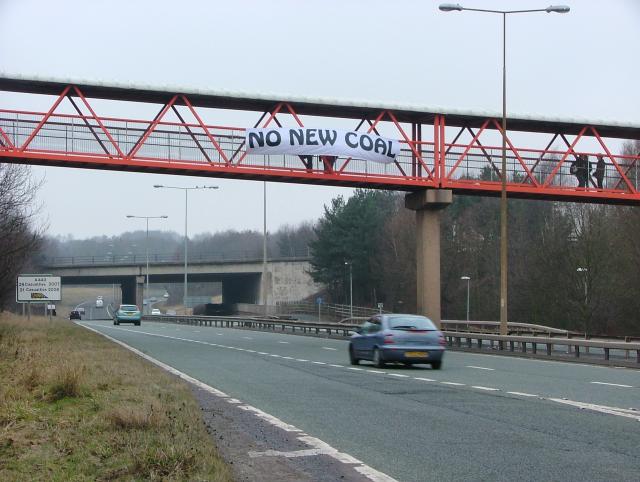
 The BP Fortnight of Shame is a call to action from the UK Tar Sands Network, Rising Tide and the Camp for Climate Action to force BP to reverse their crazy plans to move into Canada’s tar sands. It runs between the annual
  6.03.2010
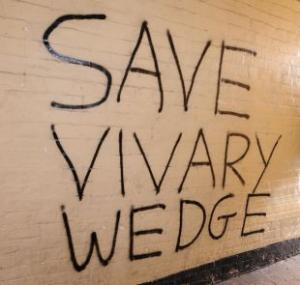 THE fight against hundreds of new homes on a green swathe in Taunton has turned nasty.
 5th March –