London: Siege of Aylesbury estate security thugs against St James Square ANAL squat

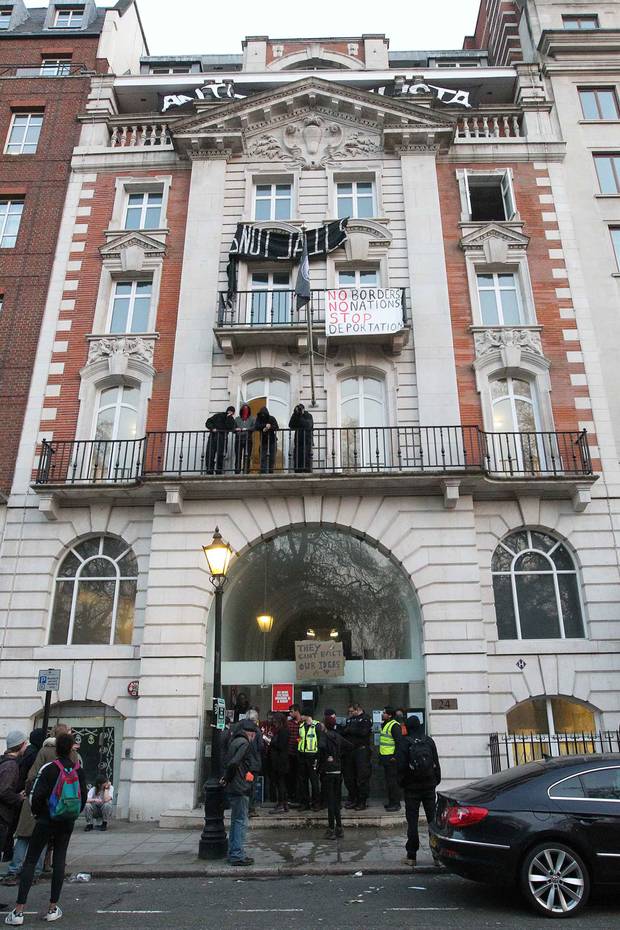
The squat­ter crew Autonomous Nation of Anar­chist Lib­er­tar­i­ans (A.N.A.L.) have occu­pied a num­ber of high pro­file build­ings in cen­tral Lon­don in recent weeks. These have includ­ed the for­mer Insti­tute of Direc­tors (cor­po­rate fat­cat club) HQ, Admi­ral­ty Arch (state pow­er icon due to be turned into hotel), and now 24 St James’ Square, a flash office build­ing on one of London’s most expen­sive squares, emp­ty for ten years. They have been get­ting big pic­ture splash­es in cor­po­rate media rags like the Evening Stan­dard and Dai­ly Mail.

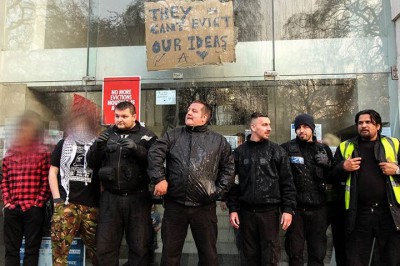
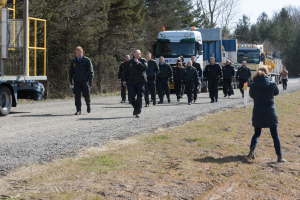
On Fri­day evening (10 April) the St James’ Sq squat came under siege by a mini-army of secu­ri­ty guards. The heav­ies used sim­i­lar tac­tics to those seen recent­ly on the Ayles­bury Estate and oth­er squat clash­es recent­ly: unable to retake the build­ing, they forcibly block entrances and exits to lock down the occu­pa­tion, keep­ing out sup­port­ers and sup­plies.

This tac­tic is not usu­al­ly suc­cess­ful, as many times our side can mobilise big­ger num­bers to come down and break the siege. Sev­er­al dozen peo­ple respond­ed to a call for back-up from ANAL on Fri­day evening, and the secu­ri­ty thugs were forced to back down, after a few scuf­fles.

Police also came along, and in this case didn’t give the secu­ri­ty any sup­port, but instead warned them for not dis­play­ing their SIA (Secu­ri­ty Indus­try Author­i­ty) reg­is­tra­tion badges, as her majesty’s law demands.

A num­ber of the secu­ri­ty guards present on Fri­day are reg­u­lars from South­wark Council’s secu­ri­ty oper­a­tion at the Ayles­bury Estate. As a mat­ter of course they do not wear any com­pa­ny insignia or reg­is­tra­tion num­bers. They have been repeat­ed­ly vio­lent and offen­sive to occu­piers, estate res­i­dents and passers by.

We post below some pho­tos from Fri­day. If you have any fur­ther infor­ma­tion on these char­ac­ters and their employ­ers, please share it. Email to rabble(at)autistici.org, and/or to the Ayles­bury Estate occu­piers at aylesbury(at)riseup.net. Or you can con­tact ANAL via their face­book page, where there are also some more pho­tos.

via Rab­ble Ldn

ANAL squat at form Insti­tute of Direc­tors build­ing

‘Civil war’ Brewing Over Disputed Greek Goldmine

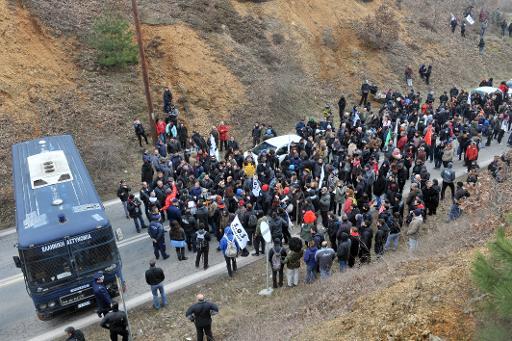
A police bus blocks a road as gold mine work­ers protest against the government’s plan to scrap a gold mine project in the Halkidi­ki penin­su­la, north­ern Greece, in Skouries on Feb­ru­ary 15, 2015

April 12th, 2015

Scrawled on the homes of the vil­lage of Mega­li Pana­gia in north­ern Greece are slo­gans emblem­at­ic of the deep rift caused in this soci­ety by a con­tro­ver­sial Cana­di­an gold min­ing project.

“Gold­mines are a curse for every nation,” reads one — oth­ers are more pro­fane.

For the past three years, the invest­ment of Hel­lenic Gold — a sub­sidiary of Cana­di­an firm Eldo­ra­do Gold — has deeply divid­ed the local com­mu­ni­ties of the Halkidi­ki penin­su­la, even set­ting fam­i­ly mem­bers at each oth­ers’ throats.

In Mega­li Pana­gia itself, tit-for-tat attacks on shops and cars belong­ing to rival fac­tions have been going on for years.

Until now, most of the demon­stra­tions were by res­i­dents fear­ing that the project will cause irre­versible harm to the forest­ed Halkidi­ki penin­su­la, one of Greece’s most pop­u­lar tourist areas.

But the arrival in Jan­u­ary of a new left­ist gov­ern­ment that oppos­es the invest­ment has sparked a mobil­i­sa­tion among Hel­lenic Gold employ­ees afraid of los­ing their jobs.

“A civ­il war is unfold­ing and the gov­ern­ment must clear this sit­u­a­tion up imme­di­ate­ly,” says Yior­gos Kyrit­sis, a legal rep­re­sen­ta­tive for the anti-min­ing fac­tion.

“I know of one pend­ing law­suit con­cern­ing a beat­ing between two broth­ers,” he told AFP.

Ear­li­er this month, riot police were sent in when the rival groups came close to clash­ing in an oak for­est between the vil­lages of Stra­toni, where Hel­lenic Gold has its base, and Ieris­sos, which oppos­es the project.

– ‘There will be blood’ –

Police min­is­ter Yian­nis Panousis lat­er said some of the pro­test­ers were fir­ing bolts from sling­shots.

Panousis warned “there will be casu­al­ties” unless the sit­u­a­tion is resolved.

The new left­ist gov­ern­ment has clear­ly declared its oppo­si­tion to the project, with Ener­gy and Envi­ron­ment Min­is­ter Pana­gi­o­tis Lafaza­nis recent­ly pledg­ing to “employ all pos­si­ble legal means” to halt it.

After the lat­est protest Lafaza­nis went fur­ther, accus­ing the com­pa­ny of act­ing “as a state with­in a state” and mobil­is­ing its staff to cause vio­lence.

“Nobody can black­mail the gov­ern­ment… Greece is not a banana repub­lic,” Lafaza­nis’ min­istry said in a state­ment.

In a sim­i­lar vein, the dai­ly news­pa­per of the rul­ing Syriza par­ty, Avgi, brand­ed the protest­ing min­ers “mer­ce­nar­ies”.

The mine employ­ees, who plan to protest in Athens on April 16, counter that it is they who have faced intim­i­da­tion and vio­lence from the so-called envi­ron­men­tal fac­tion since the project was first announced in 2011.

In the town of Ieris­sos, where most res­i­dents oppose the project, fam­i­lies of min­ers live in a “cli­mate of ter­ror”, says their union rep­re­sen­ta­tive Chris­tos Zafeiroudas.

“What is dan­ger­ous is that this hatred has even passed to the chil­dren in the local schools. The com­pa­ny may leave one day, but we still live here,” he told AFP.

In 2012, dozens of min­ers trashed an obser­va­tion post manned by anti-mine activists in the moun­tain of Skouries, near a planned expan­sion site of the mine project.

In turn, in a pre-dawn raid in 2013, hood­ed mil­i­tants threw Molo­tov cock­tails at the mine work­site, wound­ing a guard and dam­ag­ing equip­ment.

The police sta­tion of Ieris­sos was lat­er ran­sacked after two local men were arrest­ed on sus­pi­cion of par­tic­i­pat­ing in that attack.

The min­is­ter in charge at the time said the anti-mine pro­test­ers saw them­selves as real-life ver­sions of the feisty Gauls that take on the Roman Empire in the Aster­ix com­ic books.

“We are fac­ing oppo­si­tion from a sec­tion of the local com­mu­ni­ty that wants to impose its own law and oper­ate like a Gaul­ish vil­lage,” then pub­lic order min­is­ter Nikos Den­dias said.

Hel­lenic Gold says it plans to invest 1.3 bil­lion euros ($1.38 bil­lion) in the area over­all, and extract 9.6 mil­lion ounces of gold.

Its oper­a­tions, it says, have been repeat­ed­ly vet­ted and cleared by the author­i­ties.

Anti-mine pro­test­ers claim the project will cause irre­versible harm to the envi­ron­ment, drain­ing and con­t­a­m­i­nat­ing local water reserves and fill­ing the air with haz­ardous chem­i­cals includ­ing lead, cad­mi­um, arsenic and mer­cury.

It is like­ly to also affect the area’s agri­cul­tur­al and tourism econ­o­my, they say.

The pre­vi­ous con­ser­v­a­tive gov­ern­ment had sup­port­ed the invest­ment, argu­ing that it would cre­ate hun­dreds of jobs in the reces­sion-hit coun­try where the unem­ploy­ment rate now stands at over 25 per­cent.

Anoth­er Cana­di­an com­pa­ny, TVX, began an oper­a­tion in Halkidi­ki near­ly two decades ago before pulling out in 2003.

Upton anti-fracking camp 1st birthday, Cheshire

10th April 2015

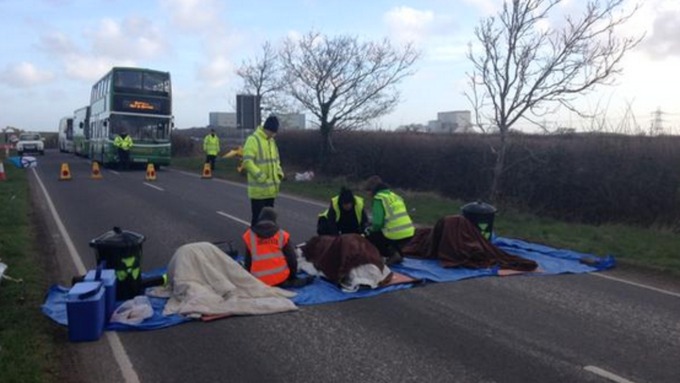
Anti-frack­ing activists are cel­e­brat­ing the Upton Pro­tec­tion Camp’s first birth­day with a par­ty open to the com­mu­ni­ty.

The camp was set up last April off Dut­tons Lane, Upton, to pre­vent an ener­gy firm drilling an explorato­ry bore­hole in the mid­dle of a field.

IGas is scour­ing the coun­try look­ing for methane in the under­ground lay­ers of coal and shale but one poten­tial extrac­tion method, known as frack­ing, is par­tic­u­lar­ly con­tro­ver­sial.

Cam­paign­ers fear air and water pol­lu­tion as well as earth­quakes. They also wor­ry it will delay the switch to renew­ables, like solar pow­er, giv­en cli­mate change.


The party

This Sat­ur­day (April 11), start­ing from 2pm, there will be a fam­i­ly pic­nic and trea­sure hunt at the site. Then around 3pm there will be a pre-elec­tion aware­ness update with a progress report on how the anti-frack­ing cam­paign is going in Upton and West Cheshire.

At 5pm is a bar­be­cue with burg­ers and sausages avail­able. How­ev­er, guests are asked to bring their own food and drink or food and drink to share. Home baked cakes or bis­cuits are ‘very wel­come’ as are camp­ing chairs.

From 7pm onwards there will be music and a sing-along. Par­ty-goers are request­ed to bring acoustic instru­ments, warm clothes and lanterns or torch­es.

Anti-frack­ers feel the camp has been a suc­cess in pre­vent­ing IGas drilling on the field, rais­ing aware­ness in the com­mu­ni­ty and help­ing to per­suade local politi­cians to side with them pub­licly.

Arti­cle con­tin­ued plus pho­tos

Guardian arti­cle


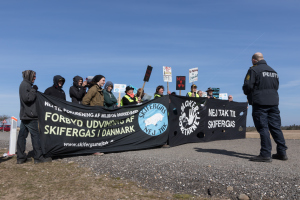
Denmark: protest camp against French Shale Gas Company

April 10th, 2015

[ from US EF! Newswire: Editor’s note:  The fol­low­ing piece has been com­posed from words sent our way as well as from var­i­ous arti­cles.  As the oppo­si­tion con­tin­ues, how­ev­er, there will be more updates and rebel­lious cries.  For hin­der­ing Total until its con­t­a­m­i­nat­ed shad­ow retreats from Den­mark and trips on its own grimy machin­ery! ]

Denmark—On June 25 of last year, after many hours of debate and gath­er­ing votes amid the cries of anti-frack­ing pro­test­ers, Denmark’s first drilling license for shale gas was approved in Fred­erik­shavn, a munic­i­pal­i­ty locat­ed in north­ern Den­mark.  The warped deci­sion will enable Total—a French oil and gas com­pa­ny and fifth largest inter­na­tion­al ener­gy com­pa­ny— to begin its degrad­ing explo­ration and estab­lish a well in near­by Dyb­vad.

“We had a good and fac­tu­al debate,” Bir­git Sten­bak Hansen, Frederikshavn’s may­or, told Jyl­lands-Posten news­pa­per. “I am pleased that we can move on in this case after prepar­ing metic­u­lous­ly for the coun­cil.”
Although the Dan­ish Gov­ern­ment has expressed plans to divert from fos­sil fuels and has gained an inter­na­tion­al rep­u­ta­tion for “green ener­gy”, its sur­ren­der­ing to Total for the sake of sup­port­ing Denmark’s wel­fare state, as well as its empha­sis on rip­ping through the land in a “respon­si­ble man­ner”, speaks oth­er­wise.

In order for exter­nal indus­tries to oper­ate legal­ly with­in Denmark’s beau­ti­ful land­scape, they have to be approved by the the Dan­ish Sub­soil Act and the Envi­ron­men­tal Committee—the enti­ties in place to autho­rize which com­pa­nies can spit on them. Through such over­sight, Total and North Sea Fund (a state-owned oil and gas co.) were grant­ed two licens­es back in 2010, allow­ing for shale gas poten­tial to be inves­ti­gat­ed in two areas of Den­mark.

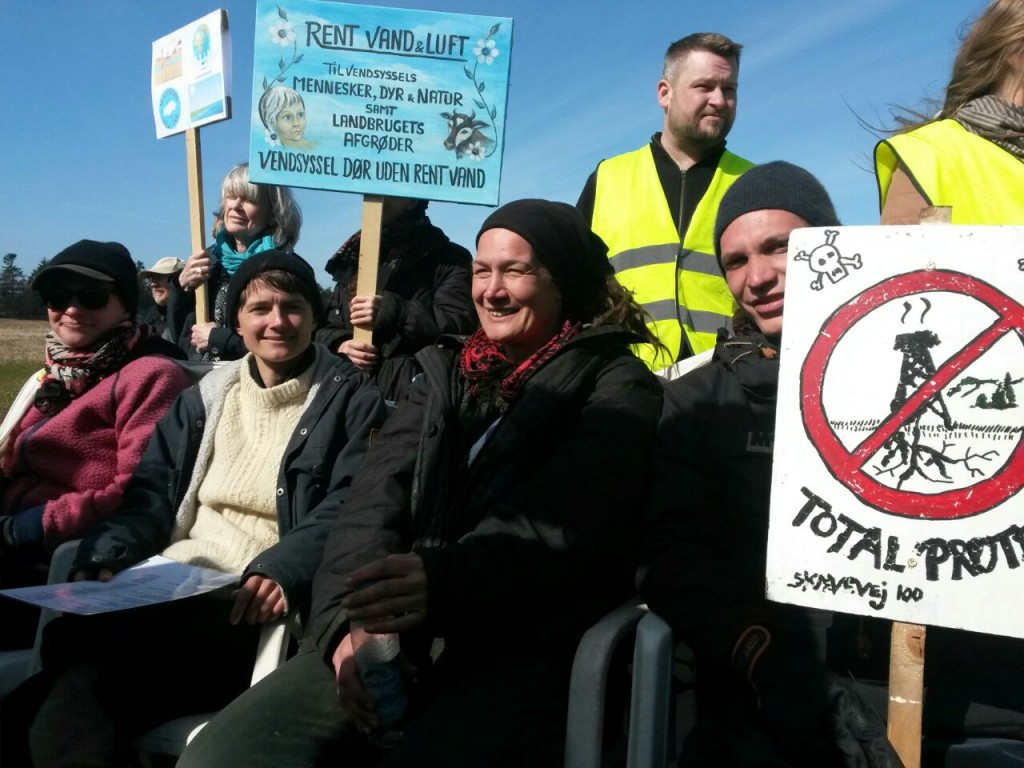
Just days ago, we received news that Total is prepar­ing its numb machin­ery to drill the first test well and locals are retal­i­at­ing. A protest camp has been estab­lished on-site and has been active since the per­mits began to be exer­cised.

The atmos­phere of the encamp­ment is quite live­ly with defi­ant song and the num­bers of war­riors becom­ing inte­grat­ed in the fight is grow­ing.

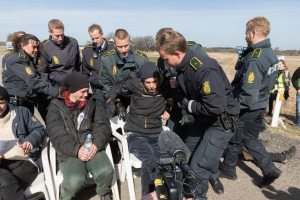
Through­out the last few days, road block­ades have been formed and sus­tained for 2–3 hours by locals and allies to hin­der Total’s truck con­voys from enter­ing the site. While the first bar­ri­cade was dis­persed after a brief debate with police, the most recent end­ed with folks being phys­i­cal­ly dragged from the scene by cops. As sol­i­dar­i­ty is fos­tered between locals and their allies, there will most like­ly be more block­ades and orga­nized revolts to come.

This is the first envi­ron­men­tal­ly-based direct action that is unrav­el­ing in Den­mark since COP15 , as well as the first against the shale gas indus­try. Region­al mobi­liza­tion is gain­ing momen­tum and voic­es of those open­ly oppos­ing Total’ʹs invest­ments are wide­ly cir­cu­lat­ing.  Orga­ni­za­tions includ­ing Green­peace and the Dan­ish Soci­ety of Nature Con­ser­va­tion (Dan­marks Naturfred­nings­foren­ing – DN), have also been broad­cast­ing state­ments of dis­ap­proval.


With Alum Shale’s recov­er­able nat­ur­al gas deposits being esti­mat­ed to con­tain over 6.9 tril­lion cubic feet, there is quite the bun­dle of incen­tive to invite more com­pa­nies like Total to strut through the land­scape. It becomes even more vital, there­fore, for orga­nized upris­ings, such as the cur­rent encamp­ment, to take place.

For Com­mu­ni­ty Auton­o­my and Earth Lib­er­a­tion!

China: Violent Protest Halts Waste Incinerator Project

8.4.2015

A west­ern Guang­dong city has can­celled a plan to build an incin­er­a­tor that prompt­ed two days of protests that esca­lat­ed up to around 10,000 peo­ple, dur­ing which sev­er­al police cars were either smashed or flipped and a Police office destroyed. Luod­ing city gov­ern­ment post­ed two let­ters on its web­site on Wednes­day announc­ing the deci­sion. One informed the Lang­tang town­ship gov­ern­ment that it had decid­ed to can­cel the project, which Lang­tang had bro­kered with Chi­na Resources Cement Hold­ings. The sec­ond urged res­i­dents to stop block­ing roads, van­dal­is­ing prop­er­ty or dis­turb­ing pub­lic order.

“Peo­ple are angry with the site selec­tion of the incin­er­a­tor as it is with­in a 1km radius of people’s homes,” said one young res­i­dent. “The cement fac­to­ry is pro­duc­ing enough pol­lu­tion, we don’t need anoth­er pol­luter.”

Res­i­dents of Long Town in Luod­ing City, held a sit-in protest com­bined with local schools on full strike and a march on Mon­day April 6th in protest against the local gov­ern­ment and Chi­na Resources Cement’s pri­vate con­struc­tion of a  waste incin­er­a­tion plant.

Res­i­dents com­plain that the ground water and air are already heav­i­ly pol­lut­ed, they fear for the health of their fam­i­lies con­sid­er­ing the new waste incin­er­a­tor would bring 100’s of ton’s of garbage dai­ly from neigh­bour­ing cities to be burned. Res­i­dents said about 1,000 locals turned up to Monday’s sit-in, which took place out­side a cement fac­to­ry owned by Chi­na Resources. Dozens were beat­en by around 100 a mix of police­men and secu­ri­ty guards dressed in black and armed with batons, hel­mets and shields. At least 20 peo­ple were arrest­ed.

“My nephew is only 14 and is suf­fer­ing from con­cus­sion after he was beat­en by the men with batons,” said one res­i­dent.

“It was very bru­tal and total­ly unnec­es­sary to use such force against unarmed civil­ians dur­ing a peace­ful and ratio­nal demon­stra­tion, espe­cial­ly as they attacked chil­dren too.”

A rough trans­la­tion of a state­ment post­ed on line con­veys the con­cerns of the Long Town res­i­dents.

Dear May­or, we are Long Town vil­lagers. April 6 we are lov­ing home, love the moth­er­land enthu­si­as­tic vil­lagers. We have always love the Long Pond, because here is our roots. Our gen­er­a­tions grow here, we love the moun­tains, green water, air. No mat­ter where we are will­ing to give up our home …… Long Pond! But the qui­et beau­ti­ful day in the pres­ence of Chi­na Resources Cement moment com­plete­ly changed that way …… Chi­na Resources Cement just came in so we did not real­ize the seri­ous pol­lu­tion dam­age, this year we have had enough of mouthful’s of dust. All the pol­lu­tion prob­lems have yet to be resolved, and now you do not lis­ten to pub­lic opin­ion on Gaoge incin­er­a­tion plant, waste incin­er­a­tion gas pro­duced even a child knows that the gas pro­duced will affect a ten-mile radius, the air peo­ple breathe every day will be con­t­a­m­i­nat­ed. Long Tong town will become tox­ic, can­cer vil­lage. We will nev­er allow Long Tong to be destroyed by the hands of our gen­er­a­tion. If you insist, we do not mind to do the same as the peo­ple in Hong Kong who occu­pied the gov­ern­ment. Count­ing resources and the destruc­tion vehi­cles every day, Mr. may­or, I believe you will not call hun­dreds of armed police to accom­pa­ny work every day, we are not afraid to make big things. We are not mil­i­tants, we only pur­sue the fun­da­men­tal rights of human exis­tence.

The bru­tal police repres­sion at Monday’s sit-in protest trig­gered the larg­er vio­lent resis­tance that last­ed into Tues­day, which res­i­dents say involved about 10,000 locals.

More on Incin­er­a­tor – pol­lu­tion protests in Chi­na

Guang­dong in Sep­tem­ber 2014 – 20,000 Protest Waste Incin­er­a­tor Project in Chi­na

Hangzhou in May 2014: Bru­tal Crack­down on Hangzhou Waste Incin­er­a­tor Protest Leaves 3 Dead, Sparks Riot

Maom­ing in March 2014:

Chi­na: Dozens Beat­en Bloody, up to Ten Pos­si­ble Deaths at Maom­ing Anti-PX Protests

Maom­ing Chi­na Day 3 of Anti-PX Protests Esca­late After Deaths and Vio­lence
 

blockade (AKA aloha safety check) against Hawaiian telescope development

A small group of activists start­ed a block­ade against con­struc­tion of the Thir­ty Meter Tele­scope atop Mau­na Kea.

April 5th, 2015

A Day After Arrests, Mauna Kea Telescope Protest Grows

A small group of activists start­ed a block­ade against con­struc­tion of the Thir­ty Meter Tele­scope atop Mau­na Kea ten days ago. Now, its a grow­ing encamp­ment.

Orga­niz­ers esti­mate as many as 300 peo­ple lined the sum­mit access road Fri­day, show­ing their oppo­si­tion to the con­tro­ver­sial $1.4 bil­lion tele­scope.

“To see just so many peo­ple gath­ered, it was so uplift­ing,” said orga­niz­er Lanaki­la Man­gauil. “It looked like there was a whole Mau­na Kea fes­ti­val going on.”

There was also added star pow­er, as Hawaii native and Hol­ly­wood actor Jason Momoa flew in and met with pro­test­ers, and also made his way up to the sum­mit to learn more about the sit­u­a­tion.

The protest is now attract­ing Native Hawai­ian lead­ers from all over the state.

“The move­ment of our broth­ers and sis­ters here on Hawaii island had put the call out to all of our islands, and so I came from Oahu to sup­port this,” said cul­tur­al prac­ti­tion­er Hinaleimoana Wong-Kalu.

“That’s due to this, it’s due to the peo­ple,” said pro­test­er Kahookahi Kanuha. “This is not only a Mau­na Kea thing any­more, this is not only a Hawaii island thing any more. In fact, this is not even a Ko Hawai‘i Pae ‘Aina thing. It’s not an all Hawai­ian islands issue, this is a world­wide issue.”

Kanuha was one of the 31 peo­ple arrest­ed Thurs­day for block­ing con­struc­tion crews head­ing to the sum­mit, dis­obey­ing police orders, or tres­pass­ing at the work site.

“The arrests that are being made is real­ly, in my judg­ment, a kind of an ‘in your face’ provo­ca­tion to Native Hawai­ians, that a con­struc­tion sched­ule is more impor­tant than peo­ple,” said Office of Hawai­ian Affairs Trustee Peter Apo.

Apo is call­ing for con­struc­tion on the tele­scope to be halt­ed for 30 days. If con­struc­tion con­tin­ues, protest orga­niz­ers pre­dict even more peo­ple will join the ral­ly next week, when Hilo fills up with Native Hawai­ians for the Mer­rie Monarch Fes­ti­val.

“You have a whole bunch of natives and peo­ple ral­ly­ing against your con­struc­tion,” said Man­gauil. “It would be sil­ly to do it when you have a gath­er­ing that mass­es the natives. You know, like Mer­rie Monarch.”

Thirty Meter Telescope Crews Blocked by Hawaiian Protestors

31.3.15

Con­struc­tion of the Thir­ty Meter Tele­scope ground to a halt Mon­day as more than 50 pro­test­ers formed a road­block out­side the Mau­na Kea vis­i­tor cen­ter.

Call­ing the $1.4 bil­lion project a des­e­cra­tion of the moun­tain, the activists marched back and forth across the Mau­na Kea Access Road, mak­ing sure to stay with­in the cross­walk.

About 15 vehi­cles trans­port­ing work­ers up the moun­tain were blocked as a result, though the pro­test­ers allowed vis­i­tors and oth­er tele­scope oper­a­tors through.

The mood at the protest was upbeat, with con­tem­po­rary and tra­di­tion­al Hawai­ian songs fill­ing the moun­tain air. More than a dozen police offi­cers looked on but took no action against the demon­stra­tion.

Pro­test­ers, who were most­ly Native Hawai­ian, said their mes­sage was about alo­ha and not anger toward the work­ers.

“Our stance is not against the sci­ence,” said Lanaki­la Man­gauil, 27, of Hon­okaa. “It’s not against the sci­ence. It’s not against the TMT itself. It’s against their choice of place.”

The TMT, sched­uled to achieve first light in 2024, will be the 13th obser­va­to­ry on the moun­tain and one of three next-gen­er­a­tion tele­scopes under devel­op­ment. Two oth­ers will be built in Chile.

Astronomers say the tele­scope will allow them to peer clos­er to the start of the uni­verse and answer more of its great mys­ter­ies.

TMT is expect­ed to cre­ate 300 full-time con­struc­tion jobs and 120 to 140 per­ma­nent jobs, but pro­test­ers said there already has been too much devel­op­ment on Mau­na Kea.

Ruth Aloua, 26, of Kailua-Kona, said they were stand­ing up for their ances­tors and the mountain’s sacred sta­tus.

“We have an ances­tral, a genealog­i­cal rela­tion­ship to this place,” she said. “And that is what we are pro­tect­ing. We are pro­tect­ing our kupuna through alo­ha aina.”

TMT Project Man­ag­er Gary Sanders said work­ers wait­ed for more than eight hours at the road­block before head­ing back down the moun­tain.

“TMT, its con­trac­tors and their union employ­ees have been denied access to our project site by a block­ad­ed road,” he said in a state­ment. “Our access via a pub­lic road has been blocked by pro­test­ers, and we have patient­ly wait­ed for law enforce­ment to allow our work­ers the access to which they are enti­tled.”

He said state offi­cials approved the project after a “lengthy sev­en-year pub­lic process.”

The pro­test­ers said some of them have kept a near­ly 24-hour pres­ence out­side the vis­i­tor cen­ter, locat­ed at about 9,200 feet, since Wednes­day fol­low­ing the arrival of con­struc­tion equip­ment the day before.

Wal­lace Ishibashi, the project’s con­struc­tion mon­i­tor, esti­mat­ed about two days worth of work occurred last week at the site locat­ed at the 13,150-foot ele­va­tion. That work is cur­rent­ly focused on site clear­ing and prepar­ing the loca­tion for the obser­va­to­ry.

Pro­test­ers also dis­rupt­ed a ground­break­ing cer­e­mo­ny at that site last Octo­ber.

Ishibashi, who also sits on the Hawai­ian Home Lands Com­mis­sion, not­ed the project has all of the per­mits and approvals it needs from the state. He said he didn’t see spir­i­tu­al­i­ty and sci­ence as being in con­flict on the moun­tain.

“I love the sci­ence,” he said. “It’s the sacred sci­ence of astron­o­my here on the moun­tain. … We aren’t human beings hav­ing a spir­i­tu­al expe­ri­ence; we’re spir­i­tu­al beings hav­ing a human expe­ri­ence. So this is just part of our jour­ney of return­ing back home to Akua.”

TMT won a legal chal­lenge of its con­ser­va­tion dis­trict use per­mit, ini­tial­ly grant­ed after a con­test­ed case hear­ing, last year. Appeals of that deci­sion and the grant­i­ng of a sub­lease remain pend­ing, accord­ing to the plain­tiffs.

A con­struc­tion work­er, who declined to give his name, said they were about four weeks away from mov­ing earth at the site. He esti­mat­ed it would take anoth­er year to begin to build the large struc­ture.

Build­ing per­mits for the obser­va­to­ry are expect­ed to be filed this sum­mer, said Neil Erick­son, Hawaii Coun­ty build­ing divi­sion plans exam­in­ing man­ag­er. He also didn’t expect to see any major con­struc­tion begin until next year.

Since the state Depart­ment of Land and Nat­ur­al Resources approved a sub­lease for the project last June, the TMT Inter­na­tion­al Obser­va­to­ry has made $300,000 in lease pay­ments, said Dan Meisen­zahl, a Uni­ver­si­ty of Hawaii spokesman. UH oper­ates the Mau­na Kea Sci­ence Reserve.

Eighty per­cent of those funds goes to the Office of Mau­na Kea Management’s land man­age­ment spe­cial fund, he said. The oth­er 20 per­cent goes to the Office of Hawai­ian Affairs.

The lease pay­ments will increase grad­u­al­ly until they reach $1.08 mil­lion after 11 years.

TMT also is donat­ing $1 mil­lion a year to ben­e­fit sci­ence, math and tech­nol­o­gy edu­ca­tion on Hawaii Island.

Pro­test­ers said the jobs and fund­ing don’t jus­ti­fy the project.

“It’s not about the instant pay­check,” said Man­gauil. “We are look­ing fur­ther; we are look­ing far­ther than that. We need to get our­selves out of those shack­les in which we are forced to do what we know in our heart is not pono and what is not good for our envi­ron­ment.”

Pro­test­ers said part of their mis­sion was to edu­cate vis­i­tors, who most­ly looked on with curios­i­ty, about the mountain’s sacred­ness and cul­tur­al impor­tance.

“I’m just enjoy­ing their singing,” said Johanne Brideau of Swe­den. “They sing very upbeat.”

A mix­ture of state con­ser­va­tion offi­cers and Hawaii Coun­ty police watched the pro­test­ers.

Capt. Richard Sher­lock, with the Hawaii Police Depart­ment, said its focus was on mak­ing sure peo­ple stayed safe.

Asked if a res­o­lu­tion can be found, he said, “I don’t know. We’ll see. It’s a day-to-day basis. We’re try­ing to make sure things don’t get out of hand and nobody gets hurt.”

Man­gauil said pro­test­ers will try to main­tain the road­block, referred to as an “alo­ha safe­ty check,” as long as they can.

“That is real­ly going to be up to the peo­ple, to all peo­ple,” he said. “If they love this moun­tain, they will come.”

Anti-nuclear protest at Hinkley Point

1 April 2015

Cam­paign­ers from South-west Against Nuclear, Nuclear Free Bris­tol & Bris­tol CND have today shut­down the EDF shut­down at Hink­ley Point B in Som­er­set “We have come here today to car­ry out a citizen’s shut­down. It is incon­ceiv­able that Anglo-French gov­ern­ments think they can get away with extend­ing the life of reac­tors well past their designed life-time, we have cho­sen April fools day for our shut­down to high­light the fact that this is no jok­ing mat­ter”

At this moment Hinkley’s reac­tor 4 is closed for work to extend it’s life­time – thou­sands of work­ers have been brought in at a cost of £40 mil­lion to elec­tric­i­ty con­sumers. Green Par­ty M.E.P Mol­ly Scott Cato says “The esti­mat­ed costs for pro­long­ing the life of age­ing nuclear pow­er sta­tions are almost cer­tain­ly under esti­mates and will esca­late, par­tic­u­lar­ly against a back­drop of falling renew­able ener­gy costs. We need to ramp up renew­able ener­gy capac­i­ty as quick­ly as pos­si­ble, not throw more mon­ey at keep­ing these age­ing dinosaurs going. To do so will leave an even big­ger lega­cy prob­lem with mount­ing nuclear waste dis­pos­al costs well beyond the next 35 years. In real­i­ty we should actu­al­ly extend the waste dis­pos­al costs for the next 1,000+ years to account for the true life costs!”[1]

Said Nuclear Free Bris­tol cam­paign­er Jane Bak­er “This is throw­ing good mon­ey after bad on a worn out and dan­ger­ous reac­tor well past its retire­ment date. Plant Life­time Exten­sions are a fool’s game. We say the safest thing is to shut it down.” All UK reac­tors are age­ing and engi­neers know that machines have the high­est risk of fail­ure at the begin­ning and end of their life­time [2]

Last year EDF who oper­ate the gas cooled nuclear reac­tors in the UK moved the safe­ty lim­its for loss of graphite in the core.” Dori­an Lucas, a nuclear spe­cial­ist at ener­gy con­sul­tan­cy, Inen­co, said “Britain has no choice but to gam­ble with extend­ing the safe­ty lim­its of the country’s age­ing fleet of nuclear pow­er plants to avoid the loom­ing spec­tre of 1970s-style black­outs” [3] This is despite hav­ing been warned back in 2006 by inde­pen­dent Expert John Large of John Large & Assoicates that extend­ing the life of Hink­ley B would be “Gam­bling with Pub­lic safe­ty” [4] Pro­fes­sor Steve Thomas of Green­wich Uni­ver­si­ty qes­tioned the Office for Nuclear Regulation’s mov­ing of the safe­ty goal-posts [5]

Con­cerned cit­i­zen Pan­do­ra Swan of South­west Against Nuclear asked “Since when is an unin­ter­rupt­ed elec­tric­i­ty sup­ply become more impor­tant than pub­lic safe­ty? Besides Hink­ley B is shut­down now & the lights are still on, a quick tran­si­tion to ener­gy effi­cien­cy and 100% renew­ables are what is need­ed for a sup­ply of elec­tric­i­ty that doesn’t com­pro­mise on pub­lic safe­ty”

On Feb­ru­ary 13th 2015, in Bel­gium the Nuclear Indus­try reg­u­la­tors found thou­sands of cracks in crit­i­cal com­po­nents at two of their reac­tors. Two lead­ing mate­r­i­al sci­en­tists said that the per­va­sive and unex­pect­ed crack­ing could be relat­ed to cor­ro­sion from nor­mal oper­a­tion, with poten­tial impli­ca­tions for reac­tors world­wide. [6]

Just in case you think we’re over­stat­ing the case – nuclear work­ers at plants across Swe­den Bel­gium & France have raised con­cerns about pri­vati­sa­tion of the indus­try & an appar­ent shift from zero-risk to cal­cu­lat­ed risks which they feel are unac­cept­able in the nuclear indus­try. [7] Many doing dan­ger­ous work in the indus­try are sub-con­trac­tors and so have no path of recourse when their health & safe­ty is com­pro­mised by EDF.[8] Work­ers at EDF’s Chi­non plant in France were pres­sured by man­age­ment not to report defects when inspect­ing reac­tors on their outages.[9] These con­cerns ulti­mate­ly result­ed in EDF work­ers going on hunger-strike on the ninth day the local com­mu­ni­ty joined them & block­ad­ed the plant for three days. This was claimed to be a con­se­quence of the pri­vati­sa­tion of the indus­try in France. With Are­va going bust & EDFs finances look­ing very shaky, what pres­sure are EDF putting on their work­ers at Hink­ley dur­ing this out­age?

Says Row­land Dye of Bris­tol CND “In the U.S util­i­ties are shut­ting down plants despite them hav­ing received per­mis­sion to extend their lives”[10] Nuclear acci­dents are irre­versible and unin­sur­able, caus­ing dev­as­ta­tion for gen­er­a­tions and, to land air and sea. On aver­age there is a major nuclear acci­dent every 10 or 20 years, Not the rare event the indus­try likes to claim but that’s ok because the indus­try are hard at work try­ing to per­suade us that Nuclear acci­dents such as Cher­nobyl & Fukushi­ma have no last­ing con­se­quences.”

The risks of nuclear pow­er are not nec­es­sary when we can pro­duce elec­tric­i­ty sus­tain­ably. Nuclear pow­er pro­vides less than 15% of the UK’s elec­tric­i­ty, and is eas­i­ly replace­able by renew­ables.

https://southwestagainstnuclear.wordpress.com

***********************************ENDS****************************************
For Live Inter­views Row­land Dye 07711214168
Notes to Edi­tors
[1] – con­tact Mol­ly Scott Cato’s media office at media@mollymep.org.uk
[2] – Web­site ded­i­cat­ed to reli­ab­bil­i­ty engi­neer­ing http://www.weibull.com/hotwire/issue21/hottopics21.htm
[3] – Util­i­ty Week 28th May 2014 http://www.utilityweek.co.uk/news/eti-seeks-small-scale-nuclear-reactor-proposals/1013232
[4] – John Large quot­ed in the Nu-clear News http://www.no2nuclearpower.org.uk/nuclearnews/NuClearNewsNo63.pdf
[5] – Pro­fes­sor Steve Thomas quot­ed in the Guardian http://www.theguardian.com/environment/2014/jun/04/uk-may-need-to-gamble-with-nuclear-safety-to-avoid-blackouts
[6] – Green­peace Inter­na­tion­al http://www.greenpeace.org/international/en/news/Blogs/nuclear-reaction/cracks-in-belgian-nuclear-reactors/blog/52139/
[7] – Noth­ing to Report A Doc­u­men­tary made in France but with Eng­lish voice over & sub­ti­tles pt2 https://www.youtube.com/watch?v=Qh7kmfi-l7s
[8] – Noth­ing to Report A Doc­u­men­tary made in France but with Eng­lish voice over & sub­ti­tles pt3 http://youtu.be/Kxx5HceTXBE
[9] – Noth­ing to Report A Doc­u­men­tary made in France but with Eng­lish voice over & sub­ti­tles pt4 http://youtu.be/SmZQd0HTMOc
[10] – Noth­ing to Report A Doc­u­men­tary made in France but with Eng­lish voice over & sub­ti­tles pt6 https://www.youtube.com/watch?v=L3PGv5QTO‑k
[11] – NWISE Nuclear Mon­i­tor http://www.wiseinternational.org/node/4050

Indigenous Colombians Clash with Police and Paramilitaries for “Liberation of Mother Earth”

April 2nd, 2015

[NOTE: All faces have been blurred and all names have been with­held for secu­ri­ty rea­sons.]

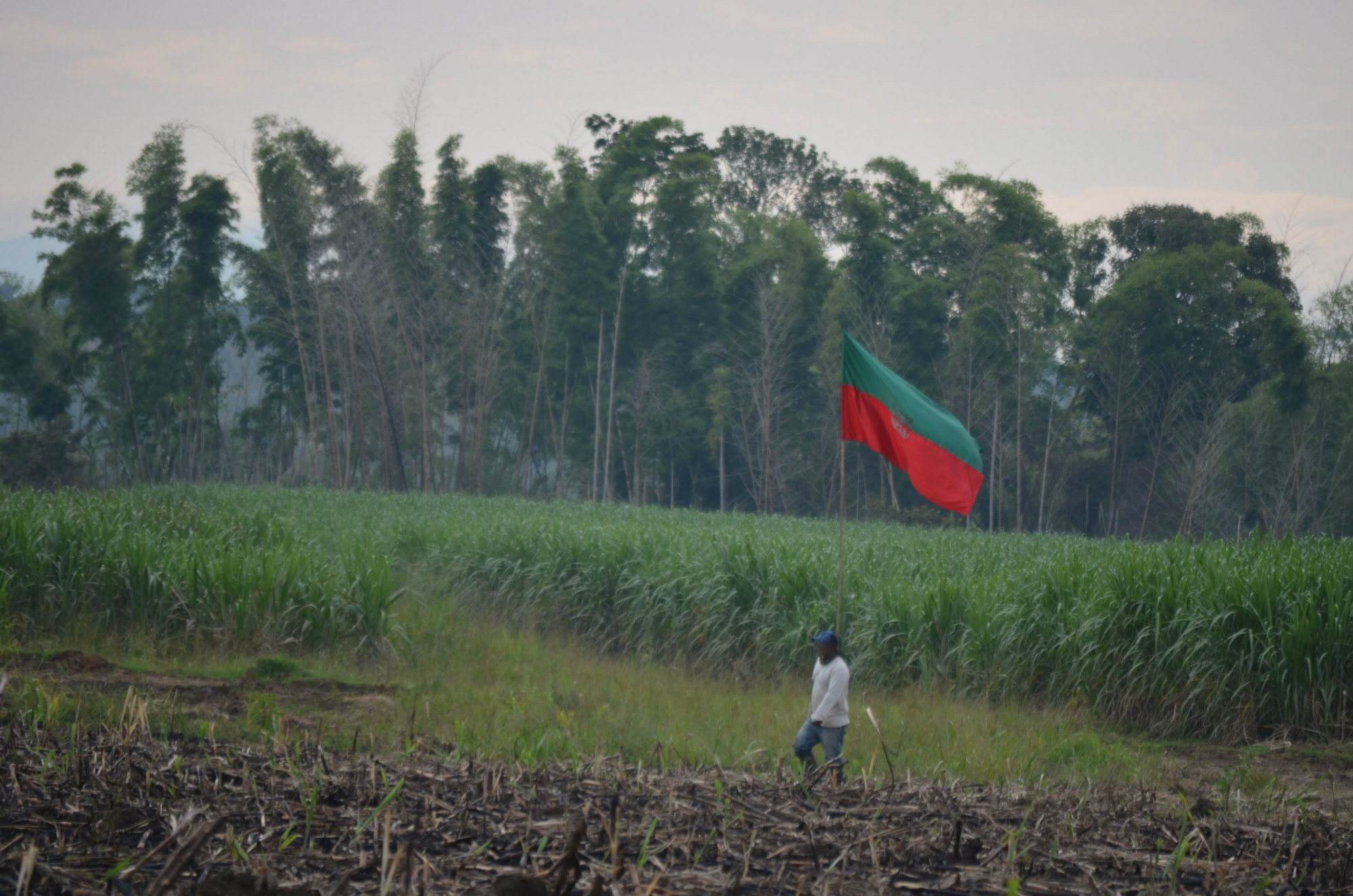
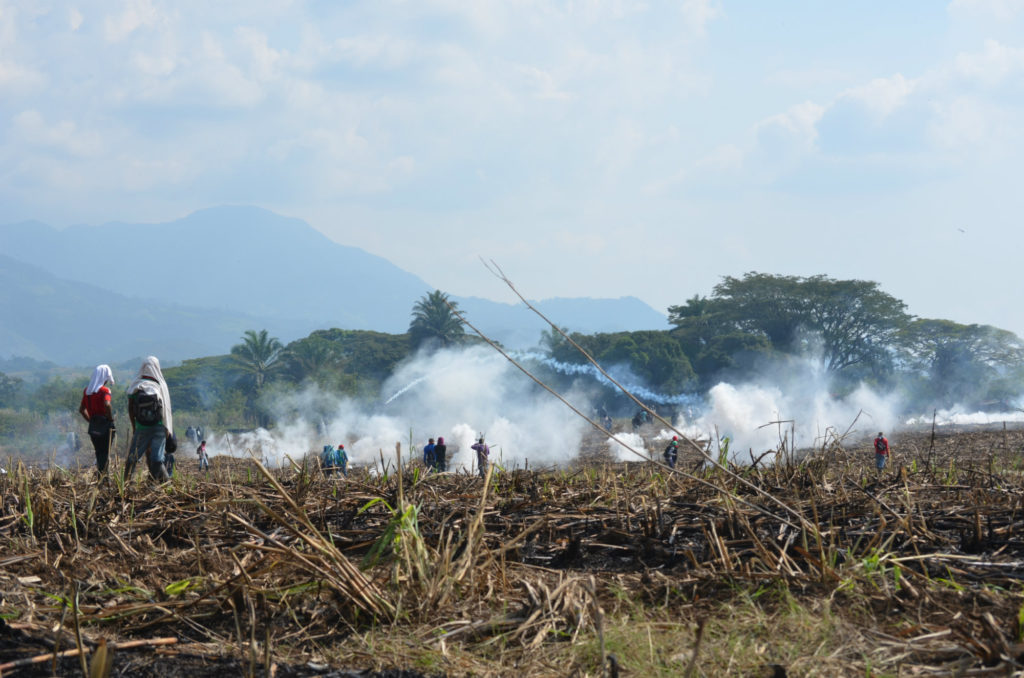
Clash­es have erupt­ed in Colombia’s west­ern depart­ment of Cau­ca as the Nasa Indige­nous Peo­ples press the gov­ern­ment to ful­fill its promise to return 15,600 hectares to their con­trol. A suc­ces­sion of occu­pa­tions of sug­ar plan­ta­tions has seen the gov­ern­ment deploy the army and riot police against them prompt­ing fierce bat­tles across the north of the region.

This is the lat­est stage in a decades-long strug­gle for the return of indige­nous ter­ri­to­ry lost to inten­sive agri­cul­ture, a strug­gle that received inter­na­tion­al atten­tion in past decades fol­low­ing a wave of mas­sacres. Pro­tect­ed by the Indige­nous Guards, the fields remain large­ly under Nasa con­trol, but an abrupt rise in threats from the “Black Eagles” para­mil­i­tary group and the issuance of new evic­tion orders by the gov­ern­ment raise fears that dead­ly vio­lence may return to the region.

There was no shade to shel­ter the small par­ty as they crossed the expanse of earth last week, car­ry­ing a plan­tain sapling and a bag of maize. In the mid­dle of the field, its vast­ness already rip­pling in the morn­ing heat, they plant­ed the sapling and scat­tered the seeds of local indige­nous maize.

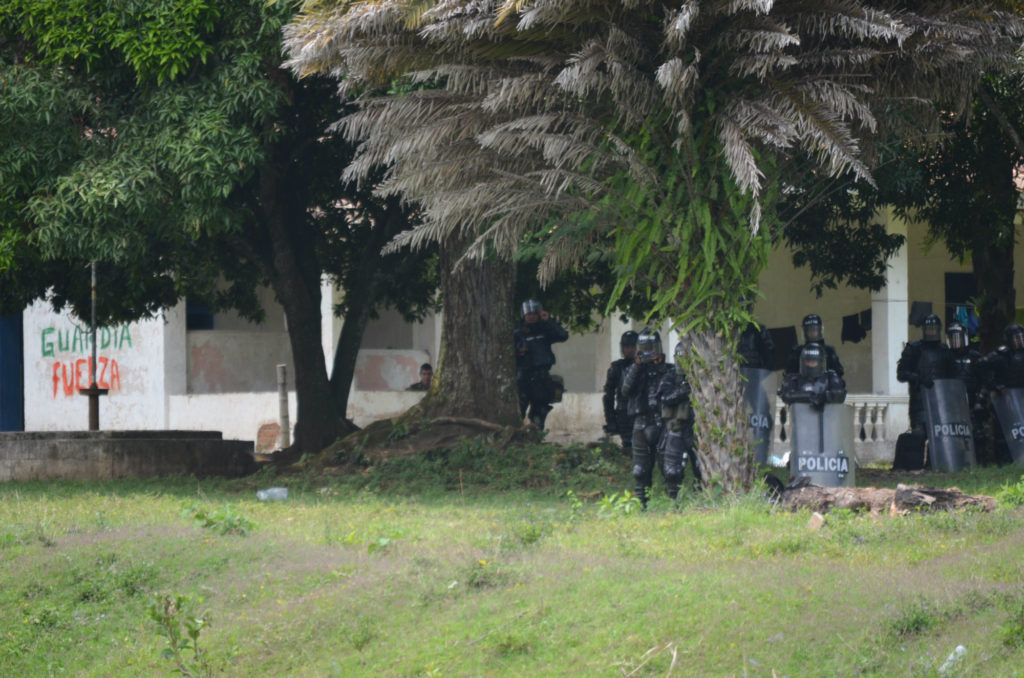
Keep­ing an eye on the ‘ESMAD’ riot police sta­tioned in the shade of the trees around the hacien­da was a local teacher.

“We are recu­per­at­ing the land” she told IC. “We are replac­ing the mono-cul­ti­va­tion of the multi­na­tion­als with the orig­i­nal veg­e­ta­tion. …One day trees will be grow­ing here again: what we are see­ing is the lib­er­a­tion of Moth­er Earth”.

The Indige­nous Nasa peo­ples have been seek­ing the ‘lib­er­a­tion’ of the ter­ri­to­ry of the hacien­da for years, reg­u­lar­ly occu­py­ing the fields and build­ings, and block­ing the road that runs between the prop­er­ty and the Nasa reser­va­tion of Huel­las.

Behind the line of riot police, sol­diers patrolled the build­ings of the ‘Hacien­da La Emper­a­triz’. Two weeks ago, on Mar. 17, they had opened fire on the Nasa, cit­ing a leaflet sup­pos­ed­ly deliv­ered by the FARC guer­ril­las claim­ing to have infil­trat­ed the indige­nous demon­stra­tors. Three Nasa were injured by gun­fire.

The planters con­tin­ued sow­ing the seeds in the grow­ing heat, small hand­fuls as a sym­bol­ic ges­ture amidst the stumps of sug­ar­cane and the cast tear gas grenades of ear­li­er con­fronta­tions. In the dis­tance oth­er groups worked with maize and plan­tains, often among patch­es of ground where the sweet fer­ment­ed smell of burned cane indi­cat­ed where the plan­ta­tions had burned dur­ing con­fronta­tions with the ESMAD.

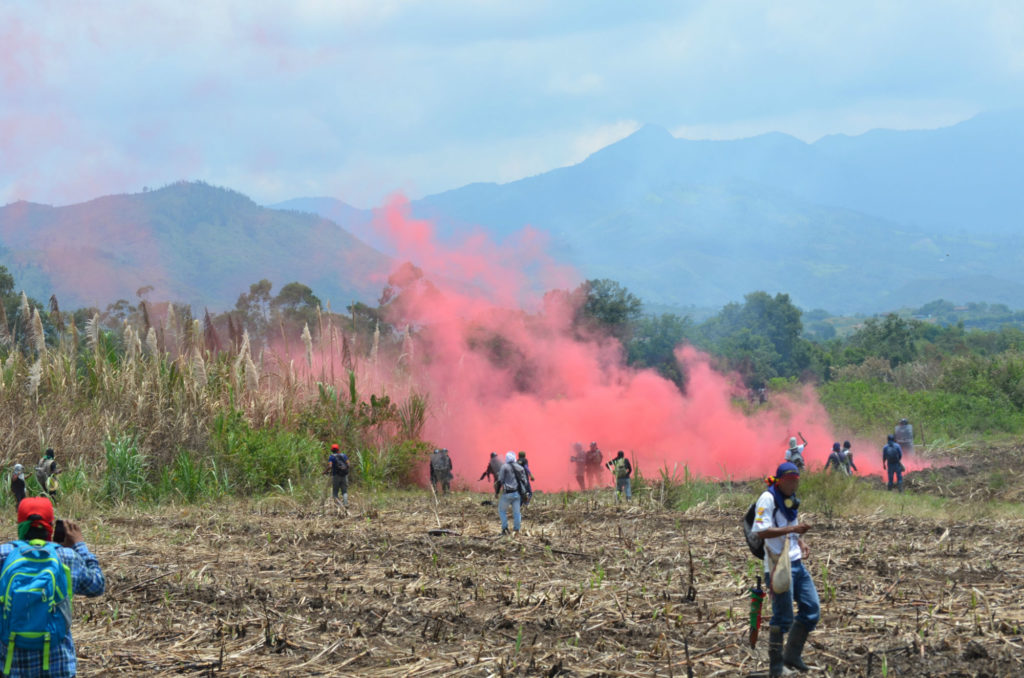
Final­ly the calm was bro­ken as the riot police drove an armoured vehi­cle down the road par­al­lel with the fields, a line of police advanc­ing across the cleared plan­ta­tions to keep pace with it and fir­ing gas and stun grenades at the Nasa.

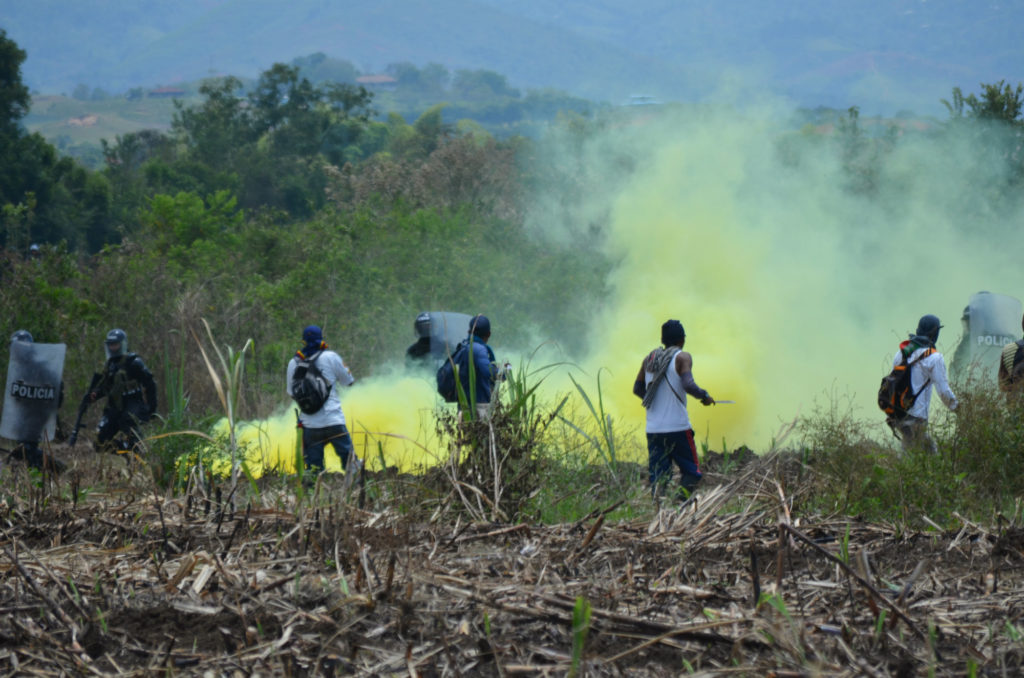
The indige­nous respond­ed with cat­a­pults and sling­shots, and the police line was halt­ed halfway across the sug­ar fields from where they fired stun grenades and gas grenades coat­ed with mar­bles. These were lobbed high in the air; their explo­sion shoot­ing the mar­bles out like bul­lets.

Oth­er gas and stun grenades were reg­u­lar­ly fired par­al­lel with the ground, direct­ly at the bod­ies of the Indige­nous, caus­ing a steady stream of injuries to be treat­ed by the community’s med­ical teams.

Fierce bat­tles reg­u­lar­ly erupt­ed where a stream sur­round­ed with bam­boo offered cov­er for each side to attempt to out­flank the oth­er. The Nasa used a three-man cat­a­pult against the ESMAD, often forc­ing them back, while the riot police hid­den on the oth­er side of the stream respond­ed with mis­siles fired blind­ly at the three. A hos­tile stale­mate over the plan­ta­tion last­ed for the rest of the day, the gas clouds blown some­times one way, some­times the other.The plains of Colombia’s west­ern Valle del Cau­ca depart­ment are now an expanse of sug­ar; road trains of cou­pled trucks haul the cane from the plan­ta­tions to be refined or used in the cre­ation of ethanol. Across the plan­ta­tion of La Emper­a­triz lie proofs of hours worked and records of fumi­ga­tion tossed onto the ground in past months by con­trac­tors of InCau­ca, the agro-indus­tri­al multi­na­tion­al that runs the largest sug­ar refin­ery in Colom­bia and which dom­i­nates the region.

The same plains once sup­port­ed a land­scape of leafy savan­nah where com­mu­ni­ties pro­duced numer­ous crops. One can read of this world as recent­ly as the late nine­teenth cen­tu­ry in the work of local jour­nal­ist and chron­i­cler Luciano Rivera y Gar­ri­do, who described,

“Ripar­i­an forests, thick car­pets of dark green… vast plains cov­ered with forests, over there pas­tures, yon­der ham­lets… small val­leys sowed with seeds, clogged wood­lands… quaint huts of peas­ants… gold­en light… sap­phire sky.”

A mixed land­scape has been reborn in the land on the oth­er side of the road. A hacien­da sim­i­lar to La Emper­a­triz has been metic­u­lous­ly maintained–and now, paint­ed with Nasa sym­bols and iconog­ra­phy, serves as the com­mu­ni­ty health cen­tre and music schoo..

The sur­round­ing land is held in com­mon though dot­ted with parcels of land where indi­vid­ual fam­i­lies farm their own mixed crops, inter­spersed with for­est and pas­ture. The ter­ri­to­ry of the Huel­las reser­va­tion was a cat­tle ranch until the Nasa retook it; the road that forms the bound­ary between the reser­va­tion and La Emper­a­triz run­ning along the edge of the plain and below the gen­tle foothills of the Sier­ra Occi­den­tal.

“Before this we had no land”, said a for­mer gov­er­nor of Huel­las. He con­tin­ued,

“We came from high up and had to work for two days a week for noth­ing oth­er than the per­mis­sion to be here through the sys­tem of the ‘ter­a­je’. Then around 1971 we estab­lished the Asso­ci­a­tion of Indige­nous Coun­cils of North­ern Cau­ca (ACIN), and we refused to pay the ter­a­je. The local pow­ers respond­ed with threats and assas­si­na­tions, but we had found our voice. The elders teach us that we lived in the plains until 1915, when the police came from Cali trip to evict every­one who refused to leave for the moun­tains.”

ACIN became a dri­ving force in the indige­nous move­ment of Colom­bia, and as part of the Region­al Indige­nous Coun­cil of Cau­ca (CRIC) its suc­cess­es in over­com­ing state and para­mil­i­tary vio­lence to reclaim ances­tral land and oppose the export econ­o­my of inten­sive agri­cul­ture have gained it sup­port beyond indige­nous Colom­bia.

In 1985, the nation­al gov­ern­ment was pres­sured into pass­ing Decree 865, which led to the estab­lish­ment of the Com­mis­sion of Land for the Peo­ple of Cau­ca, but the gov­ern­ment machin­ery pro­ceed­ed at a snail’s pace in real­is­ing promis­es of land reform. In Octo­ber 1991, with threats and attacks ris­ing against Nasa occu­py­ing hacien­das, the CRIC and indige­nous coun­cils of north­ern Cau­ca asked that the Gov­ern­ment inter­vene to pre­vent a mas­sacre and pass 15,663 hectares to the indige­nous com­mu­ni­ty to set­tle claims. The gov­ern­ment did not respond.

On 16 Decem­ber 1991, 50 armed men in mil­i­tary style uni­forms shot 21 Nasa to death in the El Nilo hacien­da. An inves­ti­ga­tion point­ed to the involve­ment of Major Jorge Enrique Durán Argüelles, police com­man­der of the Sec­ond Dis­trict of San­tander de Quilichao, and Cap­tain Fabio Ale­jan­dro Cas­tañe­da Mateus, com­man­der of the anti-nar­cotics com­pa­ny of that unit, along with numer­ous police per­son­nel, but the charges were dropped.

The Inter-Amer­i­can Com­mis­sion on Human Rights inves­ti­gat­ed the El Nilo mas­sacre from 1993 to 1997, pub­lish­ing its rec­om­men­da­tions in 2001 urg­ing Colom­bia to inves­ti­gate and pros­e­cute those respon­si­ble for the mas­sacre, includ­ing police offi­cers; to make social and inte­gral repa­ra­tion to the Nasa peo­ple; and to guar­an­tee the non-repeti­ti­ton of sim­i­lar acts.

The gov­ern­ment had belat­ed­ly signed an accord in Bogotá on 23 Decem­ber 1991 that promised to return the request­ed land to the Nasa, but only a por­tion of this has been legal­ly trans­ferred. In 2001 fur­ther mas­sacres occurred at Gua­lan­day, San Pedro, and Maya. The gov­ern­ment has nev­er accept­ed respon­si­bil­i­ty for the mas­sacres, and the return of prop­er­ties has con­sis­tent­ly relied on pres­sure from the Nasa.

“We lost many peo­ple killed in order to reclaim this fin­ca” said the ex-gov­er­nor of Nasa.

“The nar­co-traf­fick­ers, the land-own­ers, and the police were all involved. Now they call them­selves the Black Eagles or the Ras­tro­jos, but they’re just the same peo­ple. When we pres­sure the gov­ern­ment to ful­fil its promis­es to return our land the intim­i­da­tion increas­es. Three months ago we had para­mil­i­taries pass­ing along the road in front of the reser­va­tion shout­ing threats against the cur­rent gov­er­nor. They said they were from the Ras­tro­jos but the name is not impor­tant.”

We had walked into the foothills to see the trans­for­ma­tion of Huel­las in the years since it had been passed to indige­nous con­trol. Between the land returned to wood­land, fields of mixed crops of beans, yuca, plan­tain, cof­fee and maize were inter­spersed with cit­rus groves and pas­ture.

The plain spread out beneath us, the end­less sug­ar sug­ar plan­ta­tions extend­ing to Cali and beyond; the explo­sions of gas grenades and white smoke ris­ing beyond the fur­thest trees of Huel­las showed where the dai­ly strug­gle to reclaim the plains con­tin­ued.

The cur­rent gov­er­nor empha­sized in assem­blies each morn­ing that the focus of the strug­gle was to recu­per­ate the land and to lib­er­ate Moth­er Earth. “We are Indige­nous, we know how to care for the land,” she told the com­mu­ni­ty, before its mem­bers pre­pared to return to the strug­gle at La Emper­a­triz. “Focus on your replant­i­ng of the land, don’t pro­voke the fight­ing.” The Nasa would then line up to have their heads bathed in a herbal mix­ture pre­pared by the spir­i­tu­al guide. Then, they would cross from Huel­las into La Emper­a­triz.

The strug­gle for con­trol of the fields is cur­rent­ly swing­ing in favour of the Nasa; the increased repres­sion serv­ing only to boost the num­bers of those com­ing to the prop­er­ty. The riot police are grow­ing reluc­tant to spend each day before the slings and cat­a­pults in the fields; but at the same time, as they begin to remain clos­er to the con­fines of the build­ings of the hacien­da the num­ber of threats has mul­ti­plied. By night the fields are desert­ed by the Nasa; “In the dark the police would shoot us dead” they say, “The ‘Black Eagles’ is just the name they use at night”.

A sim­i­lar pat­tern of dis­en­gage­ment fol­lowed by threats has occurred in the prop­er­ties between the sug­ar-pro­duc­ing town of Cor­in­to and neigh­bour­ing Nasa com­mu­ni­ties, where ESMAD police wield­ed machetes and fired live bul­lets injur­ing four Nasa who were con­test­ing the own­er­ship of the sug­ar plan­ta­tions of Que­bra­da Seca and Gar­cia. The esca­la­tion of vio­lence prompt­ed the UN to nego­ti­ate an agree­ment in which the police and army occu­pied the hacien­da build­ings of the con­test­ed hacien­das of Miraflo­res, Que­bra­da Seca, Granadil­lo, and Gar­cia, while the Nasa are left in pos­ses­sion of the fields. The first two prop­er­ties are owned out­right by InCau­ca, the sug­ar com­pa­ny that rents the oth­er two prop­er­ties as well as La Emper­a­triz. Nasa have also received firearms injuries from the pri­vate secu­ri­ty com­pa­ny of InCau­ca.

A leaflet from the Black Eagles cir­cu­lat­ed in Cor­in­to last week, promis­ing the “social cleans­ing” of the area and the erad­i­ca­tion of the “ban­dits” in the sug­ar­cane plan­ta­tions. The para­mil­i­taries ordered a region­al cur­few of 10pm. Threat­en­ing promi­nent Nasa, they signed off with: “Unit­ed for a north­ern Cau­ca with­out Indi­ans”.

This week, the Gov­ern­ment issued evic­tion orders for some of the set­tle­ments the Nasa have been estab­lish­ing in the con­test­ed fields around Cor­in­to. From the Mon­day until Wednes­day the same prop­er­ty also seen a Nasa Assem­bly devel­op a “plan of life” for the com­mu­nal ‘recu­per­a­tion’ of the land. Around the assem­bly the for­mer sug­ar-plan­ta­tion was already grow­ing with indige­nous maize, such as the planters had been sow­ing at La Emper­a­triz.

Dur­ing the strug­gle at La Emper­a­triz the plan­tain sapling they had plant­ed was lat­er uproot­ed when the ESMAD gained con­trol of that part of the field, but in the days that fol­lowed it was replant­ed and like­ly grows still. The teacher who had spo­ken of the lib­er­a­tion of Moth­er Earth as the planters walked through the heat had claimed that the envi­ron­men­tal and spir­i­tu­al dimen­sion of the strug­gle gave the com­mu­ni­ty a strength that vio­lence couldn’t break. “We will always be here, and we will always demand this land back, not just for our­selves to live as before but also for Moth­er Earth. We are not like the Gov­ern­ment which only knows how to sell things. That is why we will win, that is why we have the patience which will win here.”

Giant Coal Excavator Occupied, Hambacher Forest, Germany

World’s-Biggest-Excavator

The world’s largest exca­va­tor, also owned by RWE. Not nec­es­sar­i­ly the one occu­pied.

The Ham­bach For­est, in South­west Ger­many, is the site of an ongo­ing for­est and mead­ow occu­pa­tion against the expan­sion of the adja­cent lig­nite (brown coal) mine.

March 15th, 2015

In the night from Sat­ur­day to Sun­day at about 00:30 am, activists of the anti-coal-move­ment have occu­pied an exca­va­tor inside the open­cast-mine Inden. One per­son is locked on, three oth­ers have climbed the dig­ger with har­ness­es. A ban­ner read­ing “Lig­nite kills. Every­where.” was dropped.

“The dead­lock of the exca­va­tor, which is one of the cen­tre­pieces of RWE, means a mas­sive inter­ven­tion in the smooth run­ning of the cor­po­ra­tion. There­by we delib­er­ate­ly dis­turb the con­tin­ued exploita­tion of a source of ener­gy which entire ecosys­tems fall vic­tim to”, says Kon­ny L. (name changed). “Due to the expan­sion of the pit peo­ple are dis­placed and dis­pos­sessed. At the Ham­bach mine, an old for­est is being cut down, which was since the begin­ning of the Mid­dle Ages in cit­i­zens‘ hands – if a for­est can ever belong to some­one – and was ever since man­aged rel­a­tive­ly sus­tain­able. Now RWE has bought it, with the sole pur­pose of utter­ly destroy­ing it for the prof­its from coal min­ing.”

from <a href=https://www.flickr.com/photos/hambacherforst/” class=“wp-image-41791” height=“201” src=”/wp-content/uploads/2015/03/69JXeQG.png” width=“357” />

from https://www.flickr.com/photos/hambacherforst/

How­ev­er, it is not only the region­al con­se­quences that prompt the activist into action. Kon­ny L. illus­trates: “The glob­al warm­ing caused by lig­nite com­bus­tion leads to droughts, floods, epi­demics, etc. These cost hun­dreds of thou­sands of lives and force count­less peo­ple to flee. “
From the activists‘ per­spec­tive, active resis­tance against a prof­it-ori­ent­ed busi­ness mod­el is the only way to effec­tive­ly coun­ter­act these prob­lems in order to “end this cat­a­stro­phe that will soon­er or lat­er be felt fierce­ly world­wide. Those who only think of their own inter­ests or believe in gov­ern­ments and busi­ness to do the job, will in the long run destroy their own and future gen­er­a­tions‘ liveli­hoods.”

The occu­pants have announced to block the work of the exca­va­tor for as long as the evic­tion by the police will take. The occu­pa­tion is still ongo­ing.

The dig­ger is locked dead – caused by not even by 10 deter­mined peo­ple!
A sys­tem is not unstop­pable, if the will is there and if peo­ple start using their own the heads for deci­sions, instead of just rumi­nat­ing giv­en rules and opin­ions. Then anoth­er way of life becomes pos­si­ble, with no one starv­ing and no one afraid of their own species. A way of life, where peo­ple treat each oth­er respect­ful­ly and with­out oppres­sion.
The action is in sol­i­dar­i­ty with the peo­ple in and around Fukushi­ma, who, like so many peo­ple world­wide, have become vic­tims to the greed of few. The resis­tance move­ments against coal and nuclear ener­gy are going hand in hand, because both sources of ener­gy do (soon­er as well as lat­er) cause large-scale envi­ron­men­tal destruc­tion and thou­sands of casu­al­ties. We will not be intim­i­dat­ed by repres­sion and threats. Unless all liv­ing beings get the pos­si­bil­i­ty to live and grow with­out human oppres­sion, some­thing is going hor­ri­bly wrong.

Let’s fix it! Come to Block­upy Action Day in Frank­furt (18.3.), the evic­tion of the occu­pied-by-refugees Ger­hart-Haupt­mann-Schule in Berlin (19.3.), the protests against the G7 sum­mit in Elmau, Bavaria (2.–8.6.).
Let’s live resis­tance and start rebel­lion togeth­er!

Dig­ger Occu­pa­tion – News Tick­er

The bot­tom is being cleared – the top is still untouched
07:50

The evic­tion of the par­tial occu­pa­tion by three per­sons in the low­er / mid range of the exca­va­tor is has pro­ceed­ed quite far. One per­son is already in cus­tody. The V‑shaped steel tube, in which anoth­er person’s both hands are chained to each oth­er, has already been cut open, pre­sum­ably by grind­ing. Thus, it is antic­i­pat­ed that the two oth­er per­sons won‘t remain on the exca­va­tor very much longer.
The three oth­er per­sons, who occu­pied the tip of the exca­va­tor at 70 meters height with climb­ing equip­ment, after all didn‘t have any police con­tact.
One embed­ded press per­son is also, after all, in place.
.

Climb­ing Cops arrived
about 06:30

The climb­ing unit of the police is on site and will prob­a­bly soon­er or lat­er start prepar­ing evic­tion.
.

Trick­le is redi­rect­ed
05:37

A small dig­ger has shown up (or rather a reg­u­lar-sized one, which is of course tiny in rela­tion to the giant exca­va­tor). Using this, the trick­le, which (as we all know) threat­ened to tilt the giant dig­ger and kill the climbers, has been begun to divert. So just in case any autonomous sports groups are around in the mine, please do not under any cir­cum­stances sab­o­tage the activ­i­ties of this dig­ger – it guards the lives of our com­rades! (… and along the way, the cap­i­tal of RWE …)
.

Heli­copter doesn‘t do any­thing
04:05

As men­tioned. It came, it saw, and it didn‘t do any­thing.
.

Police sub­mit a request to God to tilt the exca­va­tor
03:39

Some of the uni­form wear­ers were, in com­pa­ny of RWE employ­ees, on the exca­va­tor in order to speak to a part of the occu­pants. Accord­ing to them, the exca­va­tor at it‘s cur­rent posi­tion is being under­mined by a trick­le and there­fore threat­ens to tip over. Of course RWE hap­pen to have noticed just right now that they have parked their giant dig­ger in quick­sand. Now isn‘t that delight­ful for the activists, to final­ly have a mean­ing­ful and so very fun­ny rea­son for not leav­ing a per­ilous place?
.

Police arrived
02:07

About 15 policeofficinated‘s have arrived under the dig­ger and made con­tact with the RWE employ­ees.
By the way, the exca­va­tor has not moved despite the threats.
.

RWE work­force once again life threat­en­ing
01:08

Staff of RWE pro­nounced to piv­ot the occu­pied exca­va­tor after the activists were already on top of it. This indeed could be life-threat­en­ing for the climbers, some of whom are locat­ed on the tow­er of the dig­ger and some in mov­ing parts. After this fact had already been clear­ly point­ed out to the empoly­ees, they explic­it­ly threat­ened to acti­vate the machines if the peo­ple would not with­in five min­utes be down. And an end to the open death threats is not in sight.