
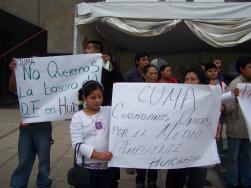
CEMEX opponents from Hidalgo
CEMEX opponents from Hidalgo
CEMEX cannot burn more waste in the state of Hidalgo
In a statement released yesterday by GAIA, the Huichapan community, in the central México’s state of Hidalgo, has achieved a historic victory, after 6 months of protests and legal actions that drove to the closure of the plant of Proambiente company, a subsidiary of Cementos Mexicanos, CEMEX, by the Secretary of Environment and Natural Resources.
This plant was responsible for receiving and processing a large part of the 12,000 tons of solid waste generated daily in Mexico City, to be burned as an alternative fuel in the kilns of CEMEX plant in Huichapan.
Shipping to cement kilns was a major “solution” driven by the Mexico City government (GDF), through an agreement with CEMEX, for the treatment of Mexican capital’s waste, after the closure of Bordo Poniente landfill (the largest in Latin America), in December 2011, and has been strongly criticized for its negative impacts on human health and the environment derived from its potential emissions of heavy metals, dioxins and furans, and other contaminants.
The inhabitants of the town of Huichapan, mainly in the communities of Maney, Dongoteay and Zothe, located around the CEMEX plant, started to feel the negative effects on health and ecosystems when it began to receive and indiscriminately burn waste from DF and organized theirself in the Citizens United for the Environment (CUMA) movement, to resist this false solution to a problem generated elsewhere in the country and raise their own alternatives for waste management.
The local community has been constantly supported by biologist Jorge Tadeo Vargas, from the Global Alliance for Incinerator Alternatives (GAIA), and State Rep. Sandra Ordaz Oliver, President of the Health Commission of the State Congress, who are committed to enforce statewide in Hidalgo the ban of combustion of municipal solid waste and hazardous waste, and promote a Zero Waste law for the state and its municipalities, including more sustainable options such as waste reduction and separation at source, reuse, recycling and composting.
(USA) People Lock Themselves to Keystone XL Machinery to Defend Tree Village

Defending the blockades from “the machine”
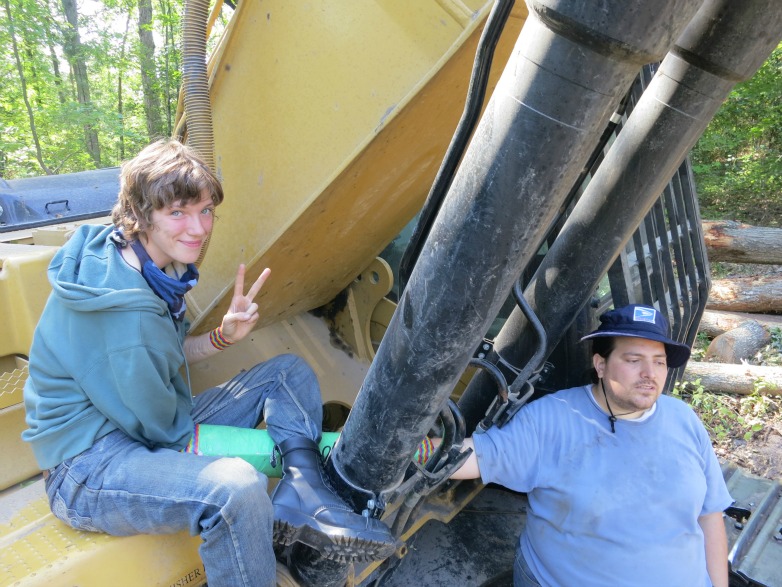
Defending the blockades from “the machine”
DATELINE WINNSBORO, TX — This morning two Texas-born Tar Sands Blockaders have locked themselves to a critical piece of equipment for TransCanada’s Keystone XL construction in order to protect a massive tree village in the direct path of the toxic tar sands pipeline.
The village, where eight tree sitters remain in vigil, is on property that TransCanada now claims ownership of through court action. Keystone XL construction crews have advanced just over 300 yards away from the northern boundary of Tar Sands Blockade’s tree vigil.
Stay updated at the Tar Sands Blockade website
OVER 50 PARTRIDGES FREED
"Over 50 partridges were boxed up from a breeding facility and taken to a public wildlife reserve where shooting is banned. Their release was quick and they all flew off into the night.
Until all are free! – Animal-Liberation-Front"
"Over 50 partridges were boxed up from a breeding facility and taken to a public wildlife reserve where shooting is banned. Their release was quick and they all flew off into the night.
Until all are free! – Animal-Liberation-Front"
Local residents camp & rally against Bexhill-Hastings link road
Local residents have released further details of the two-day programme of events- including a camp and rally – in Combe Haven Valley this weekend, 29/30 September, to protest against controversial plans to build a £100m link road between Hastings and Bexhill. The group Combe Haven Defenders have gathered experts and entertainers from across Sussex and beyond to join their 'Stop the Road' event.
Following a lunch and rally around 1pm, renowned transport campaigner John Stewart will lead a workshop on 'How to stop a road', drawing lessons from the successful '90s anti-roads movement [1]. Local people will also be able to attend an'Introduction to Direct Action with national group Seeds for Change, as they plan the next steps of the campaign.
Families will also be catered for with a workshop and play from environmental youth group The Otesha Project UK, shadow puppetry and story-telling. Local botany expert Judy Clark will be on hand and in the evening participants will be able to stargaze with a professional astronomer.
Local musicians have also rallied to support the campaign, with evening performances promised from Tim Hoyte, Eleanor Lynn, Anita Jardine, Las Pasionaras, Will Davis and Krysia Mansfield. The group have stated that there will be no amplified music and the event will be alcohol-free.
Guided walks to the Camp site will depart on Saturday 29 September from Bexhill Station and Bulverhythe (Sheep Wash bridge) at 11am, and from Crowhurst Station at 12 noon. Details of the Camp's location will also be available on the Combe Haven Defenders' web-site on Saturday morning: www.combehavendefenders.org.uk.
Spokesperson Abby Nicol said: 'We urge people to join us this weekend to see the amazing area that will be destroyed unless we take action to stop it, and to learn about practical ways in which we can all peacefully and effectively resist the construction of this road. The appalling traffic problems along the Bexhill Road need to be alleviated, but the building of a new road – which according to the County Council’s own figures will increase overall traffic by 14 per cent – is not a sustainable or financially viable solution. We have to look to more creative and sustainable solutions to traffic problems: the link road is not the answer. '
NOTES
[1] John Stewart was named "Britain’s most effective radical green activist" in the first comprehensive list of the country’s most effective greens, compiled by The Independent on Sunday – in part for his role in "co-ordinat[ing] protests that brought Tory plans for ‘the greatest road-building programme since the Romans’ to a screeching halt in the 1990s." For more info see www.airportwatch.org.uk/?p=2244 Combe Haven Defenders
(USA) Sunrise Intervention at Gas Industry Convention
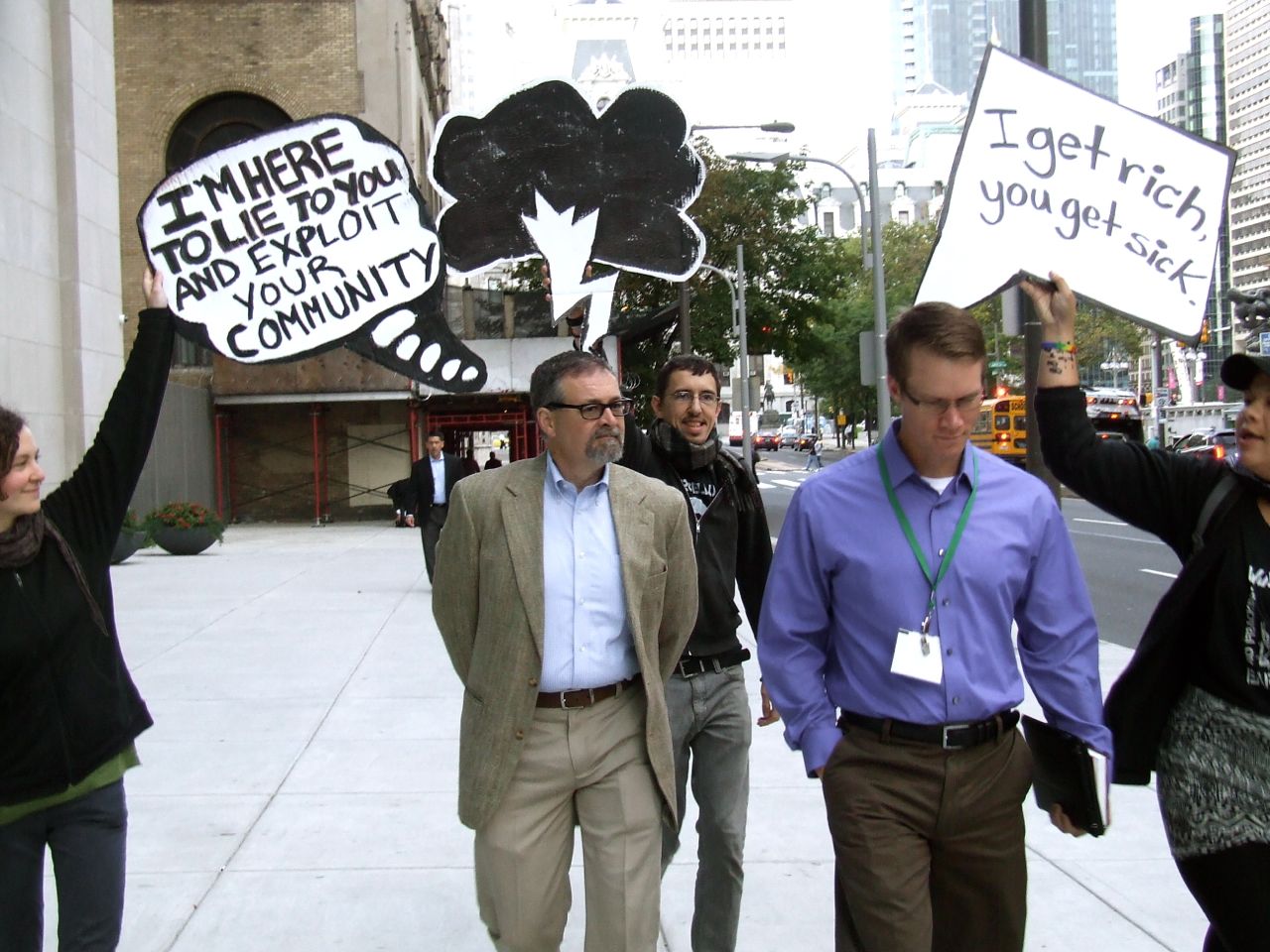
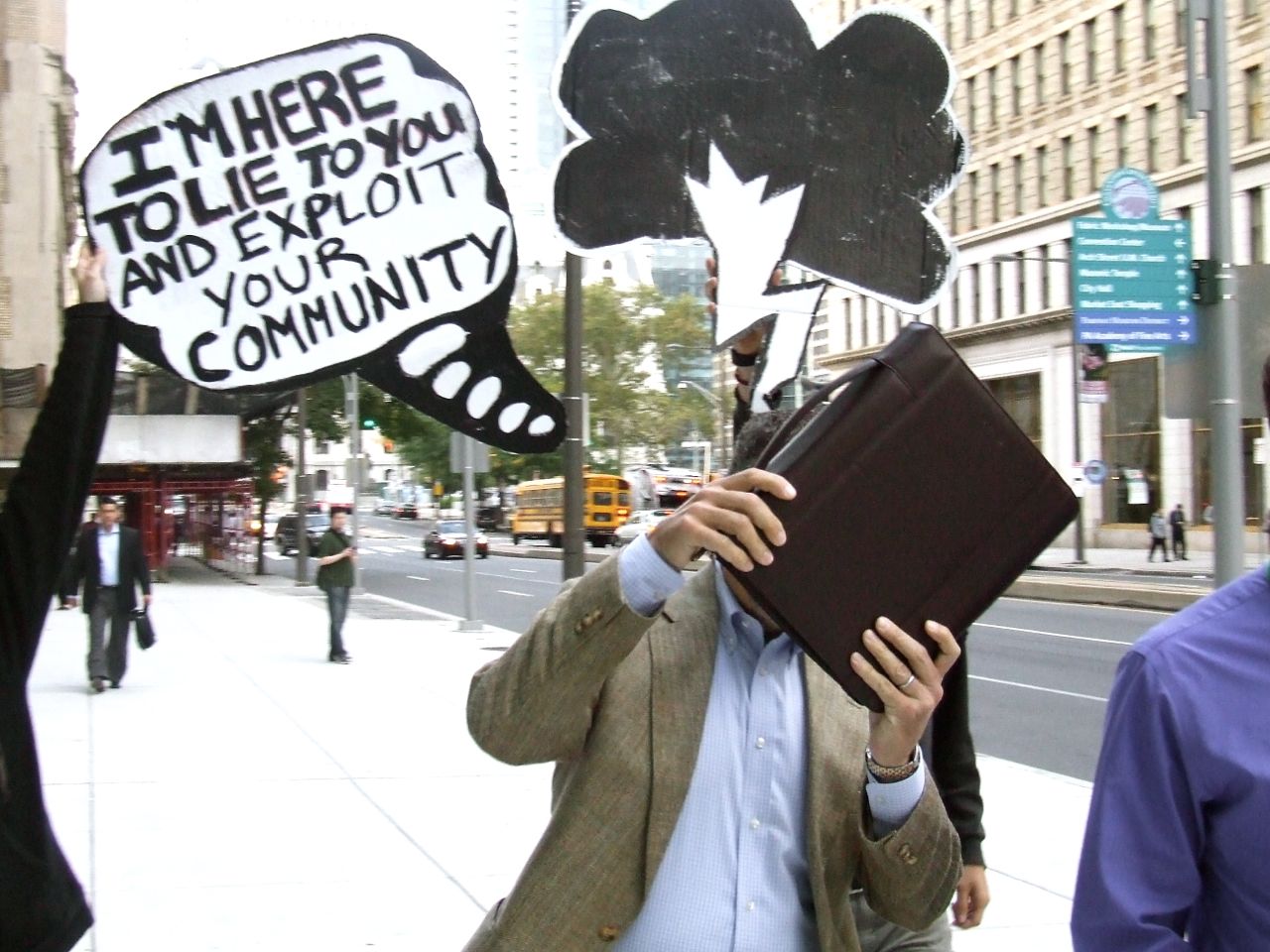
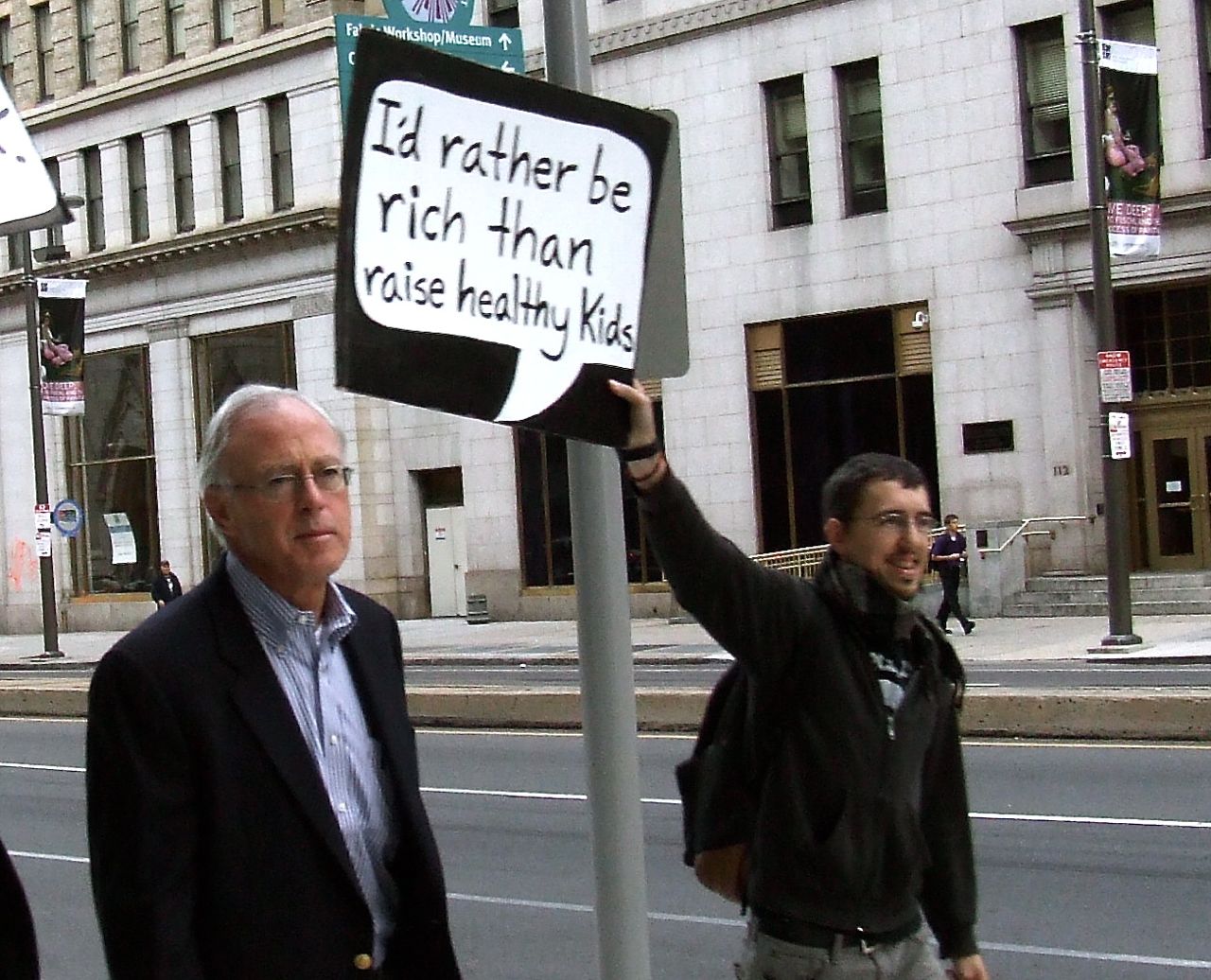
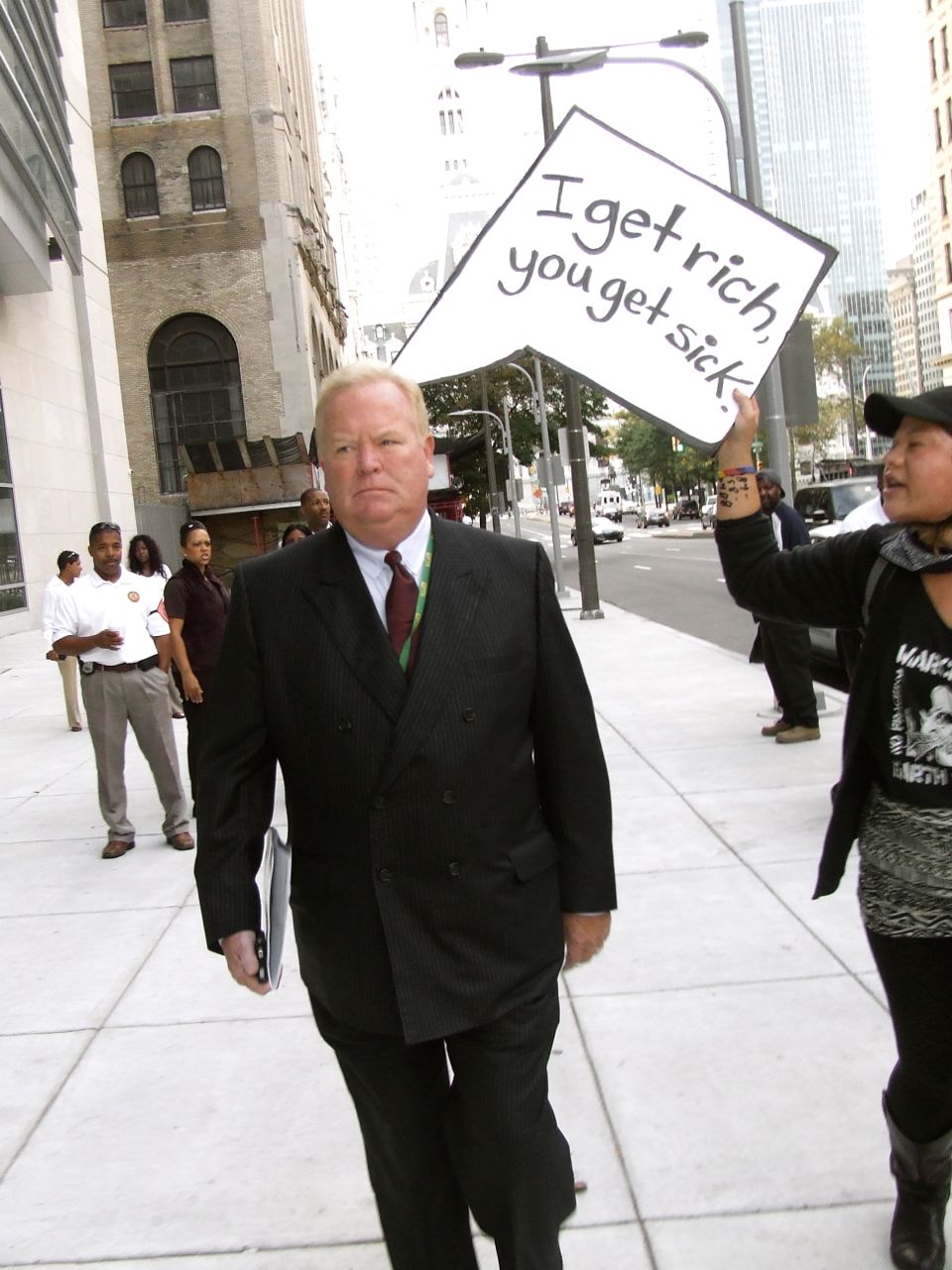
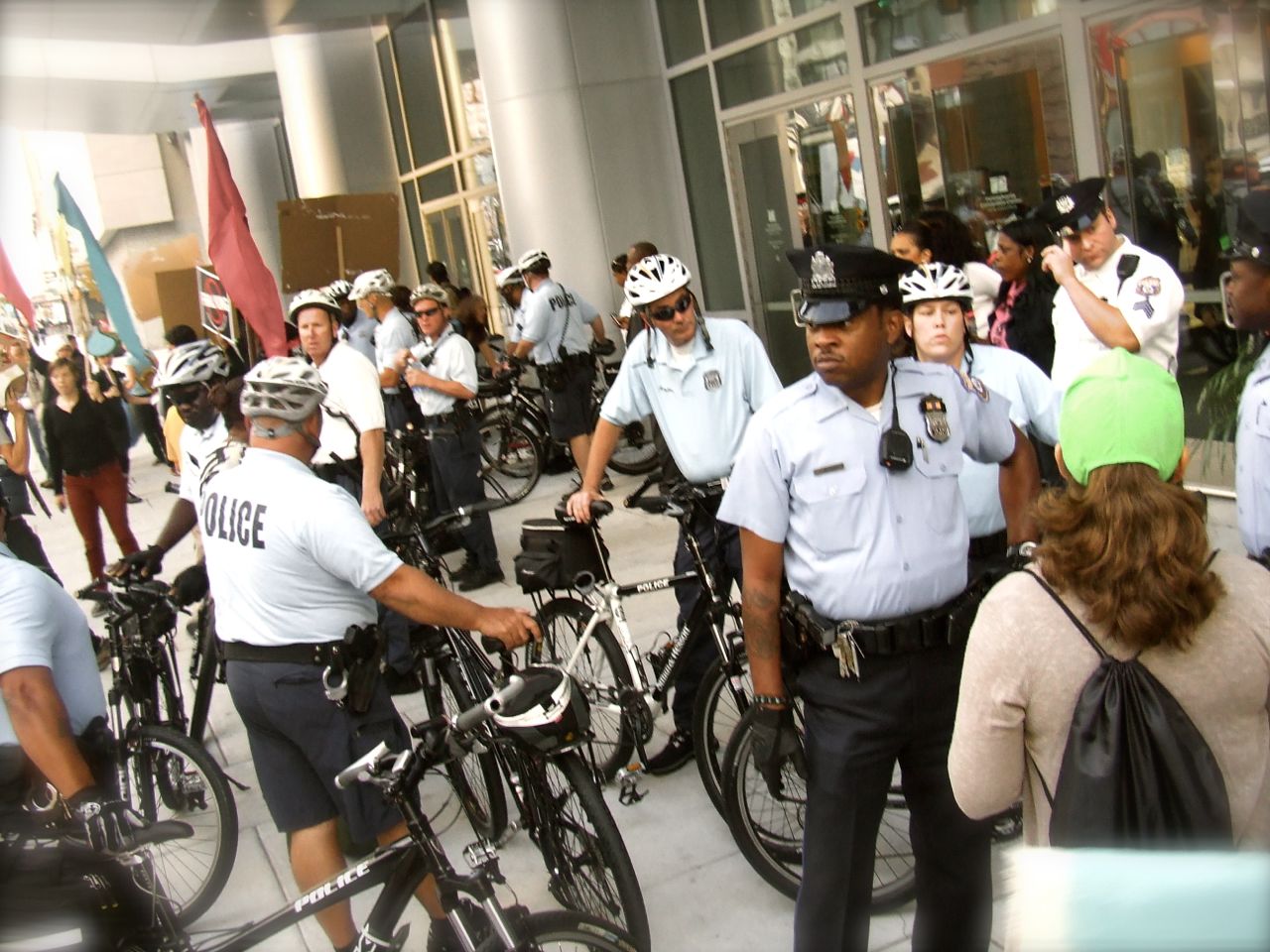
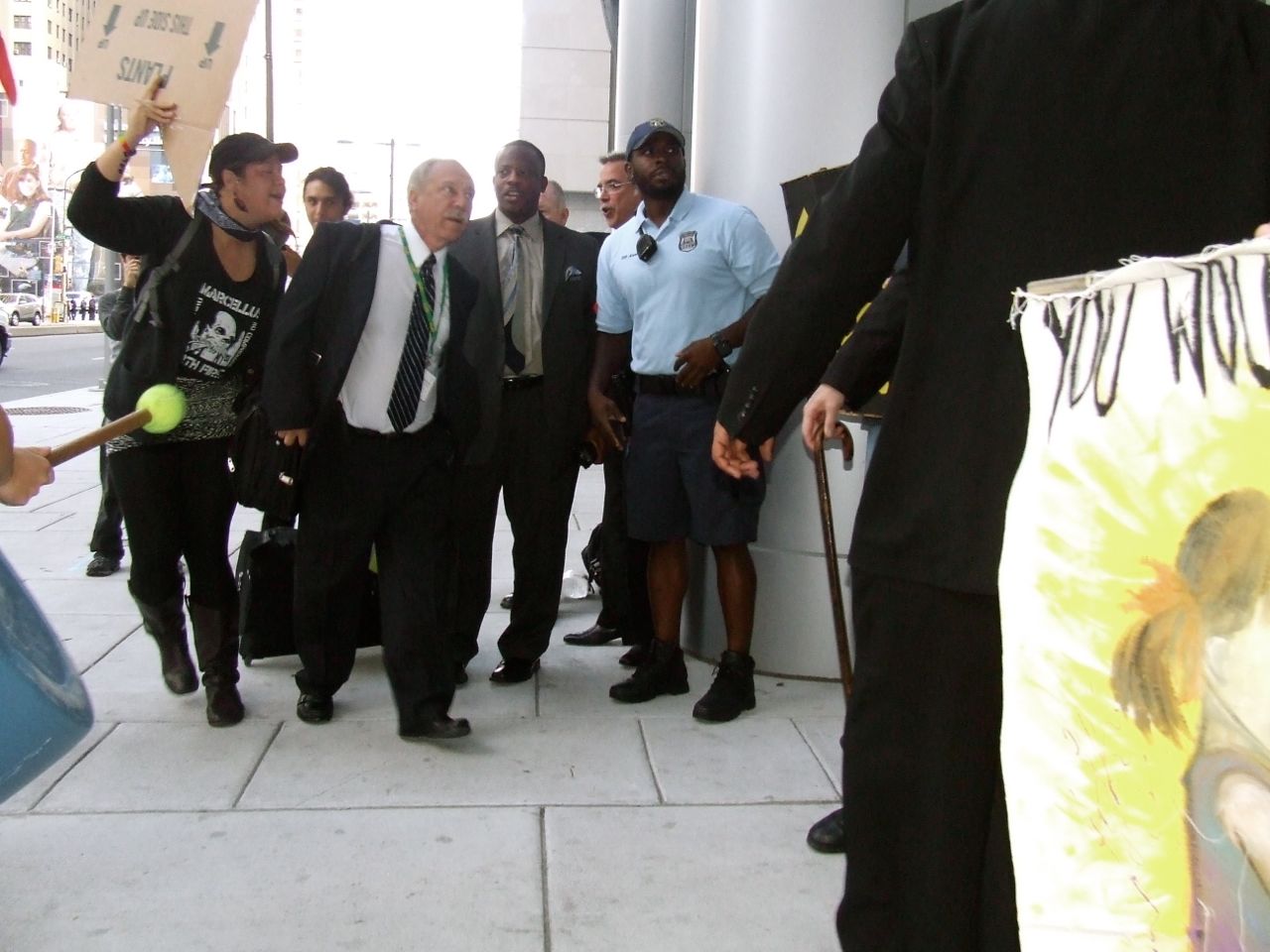
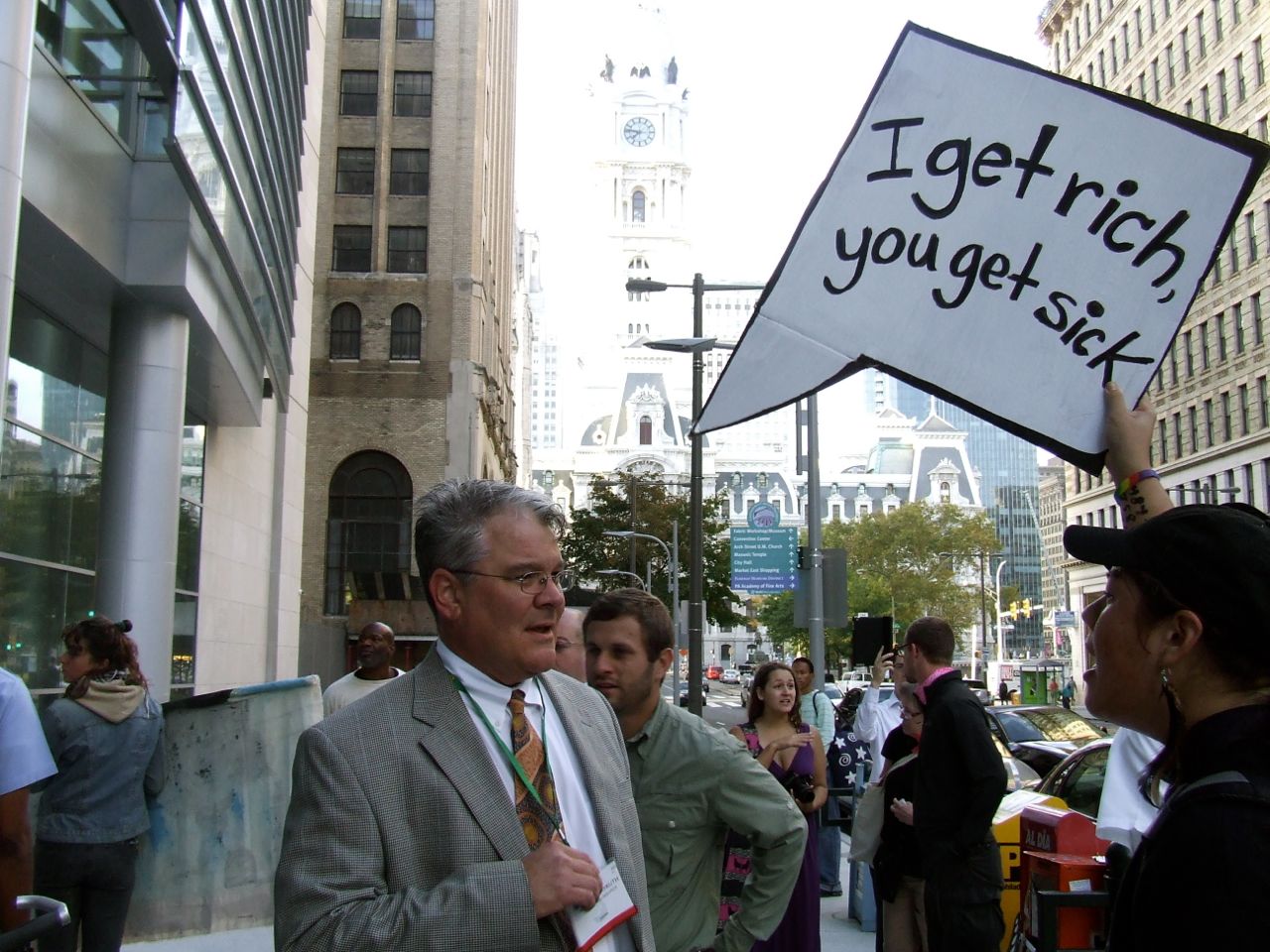
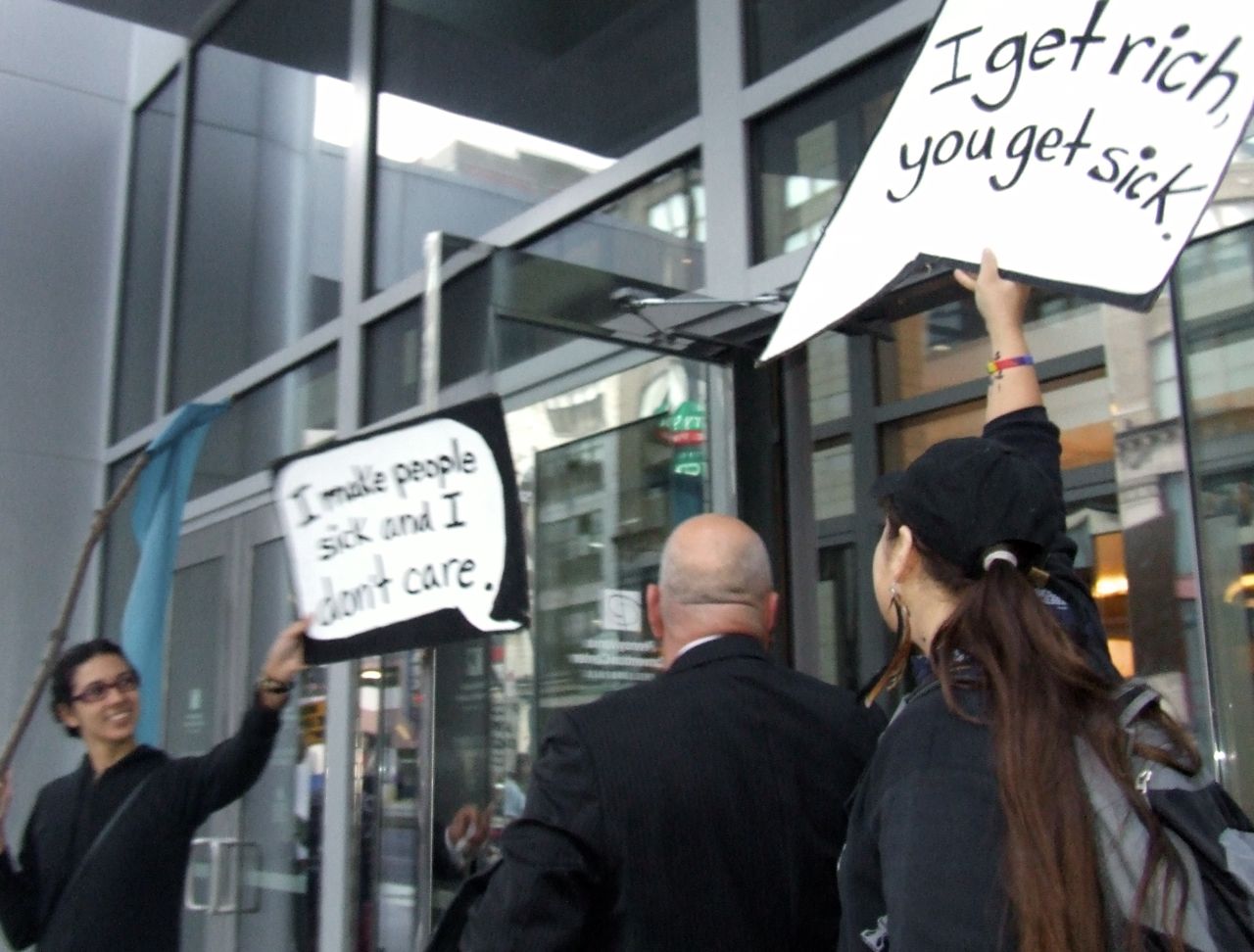
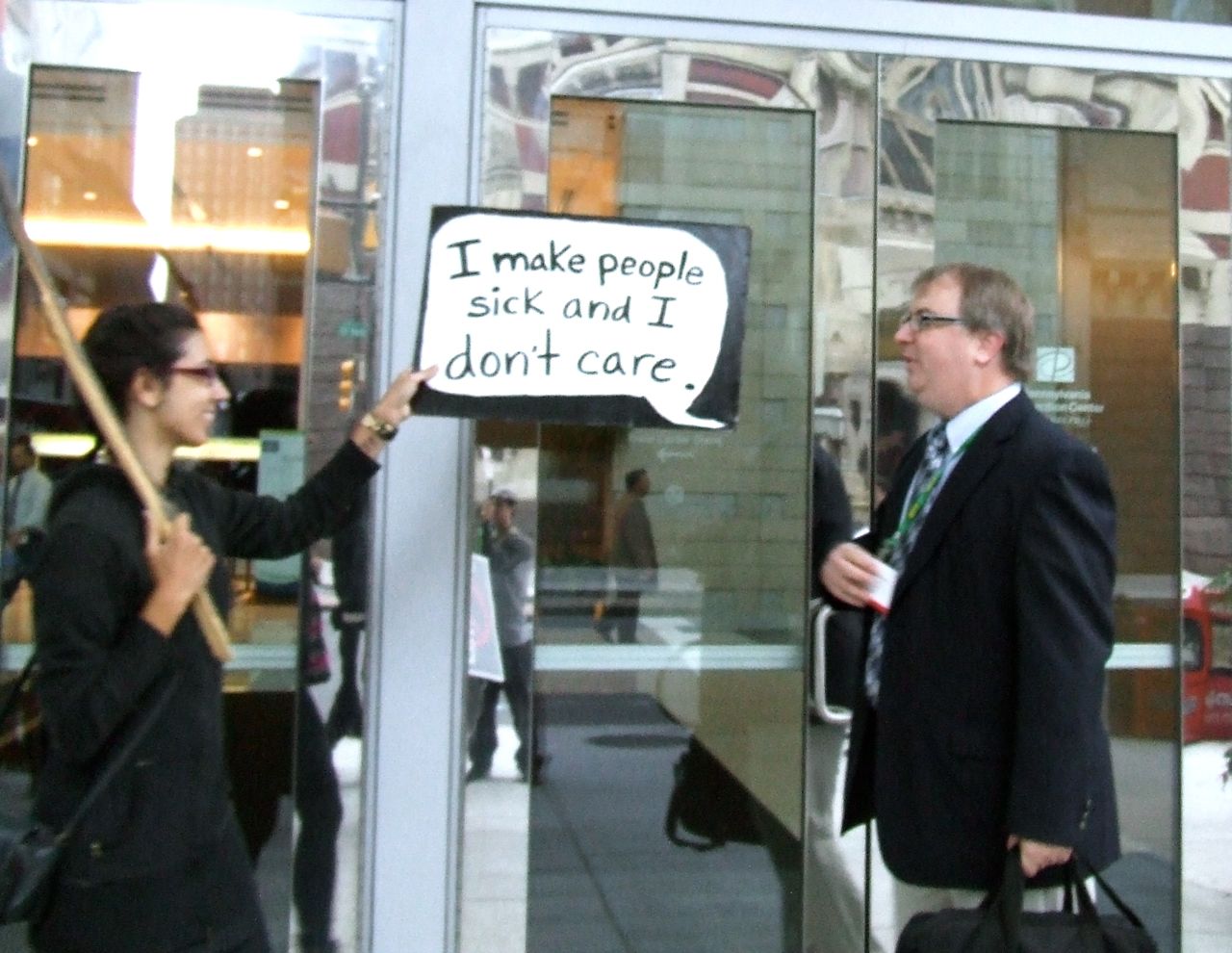
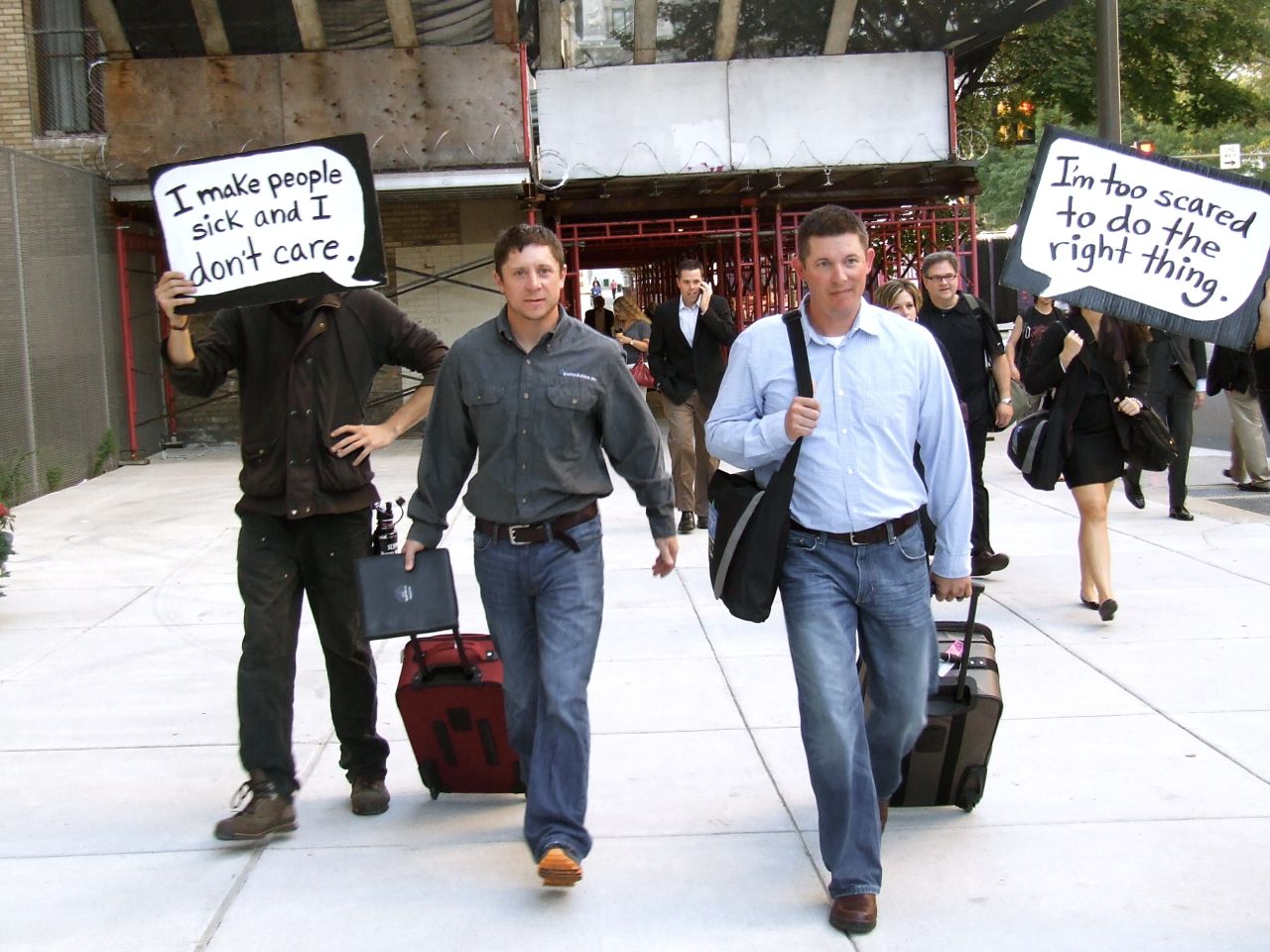
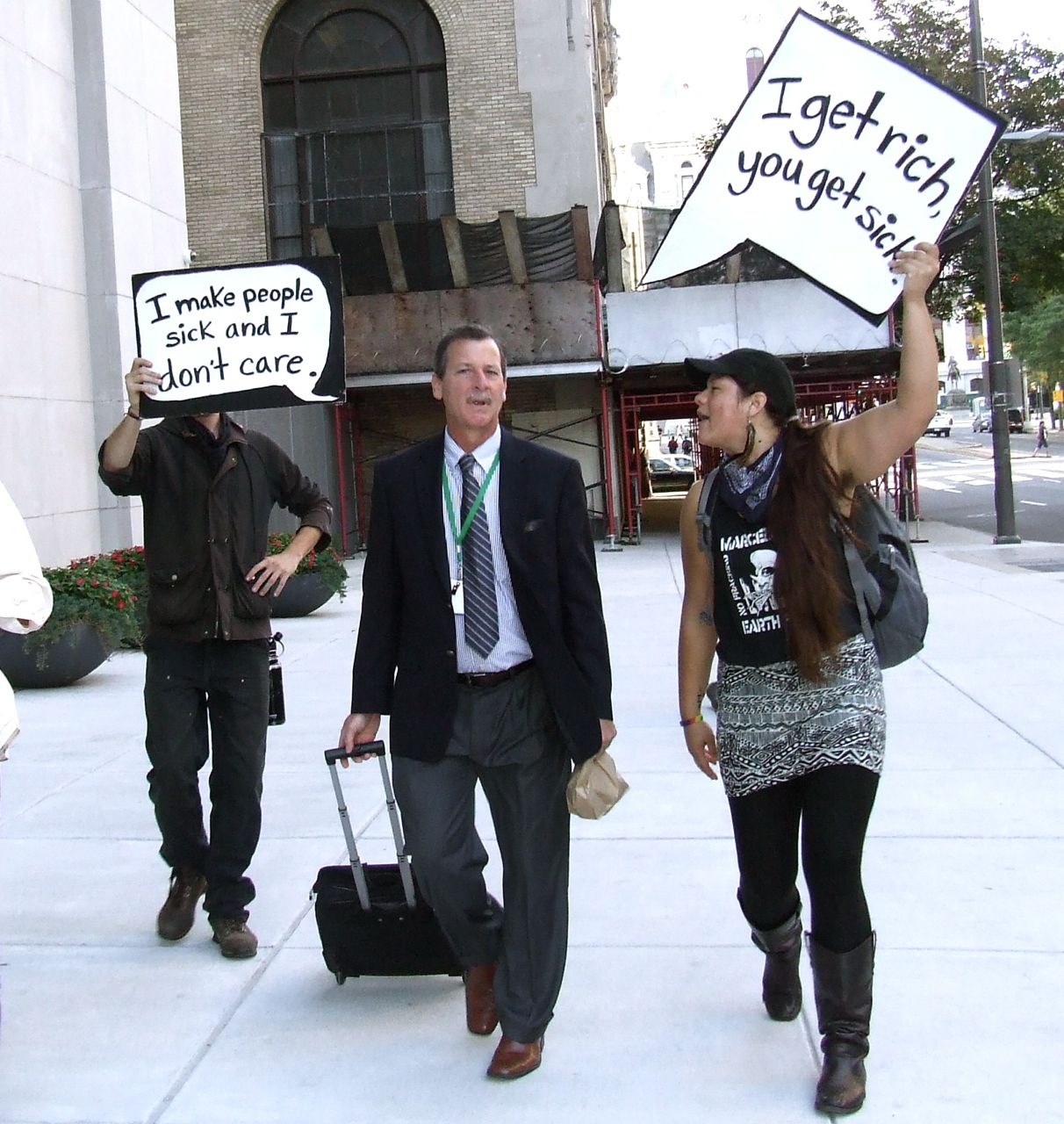
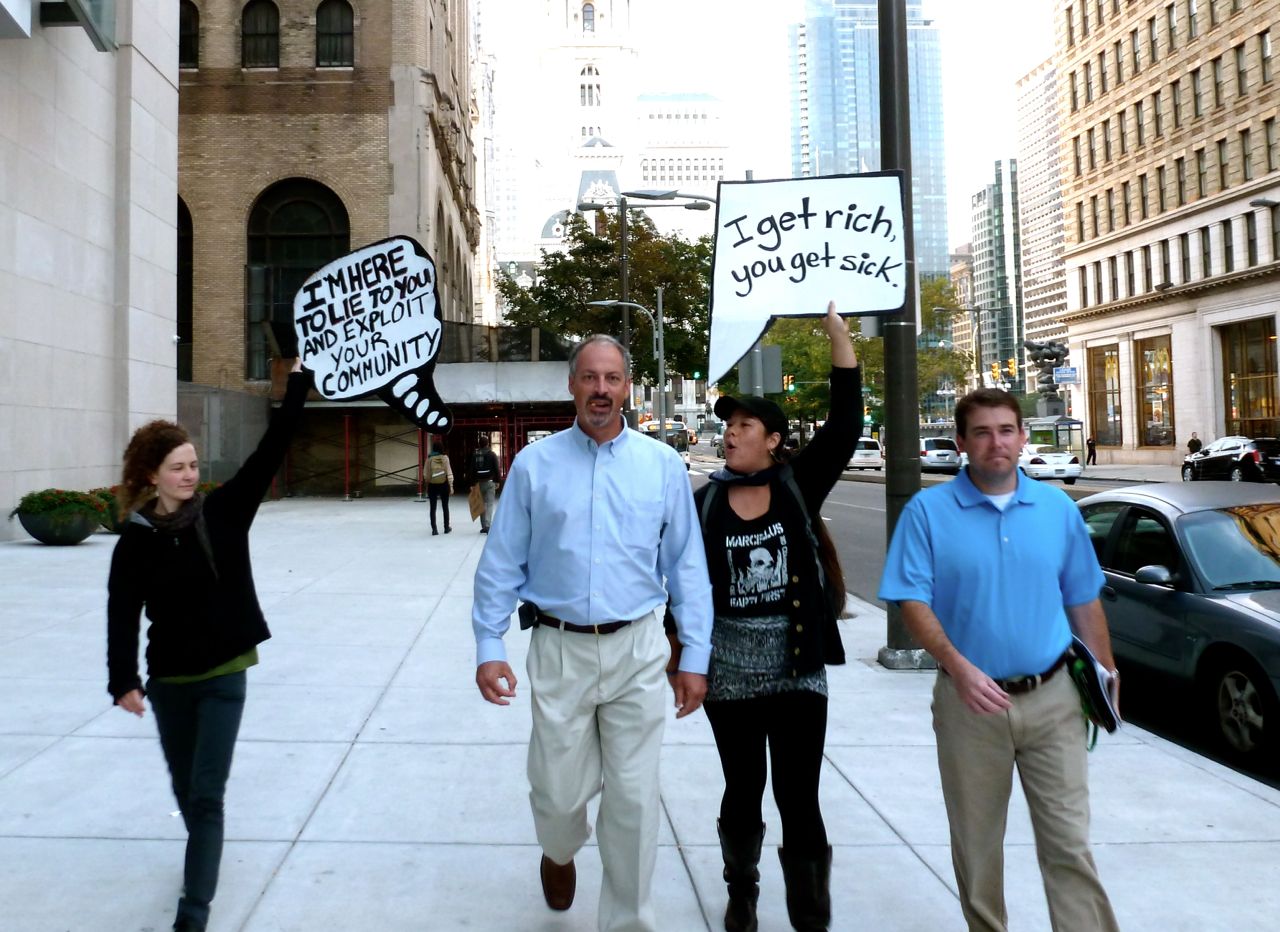
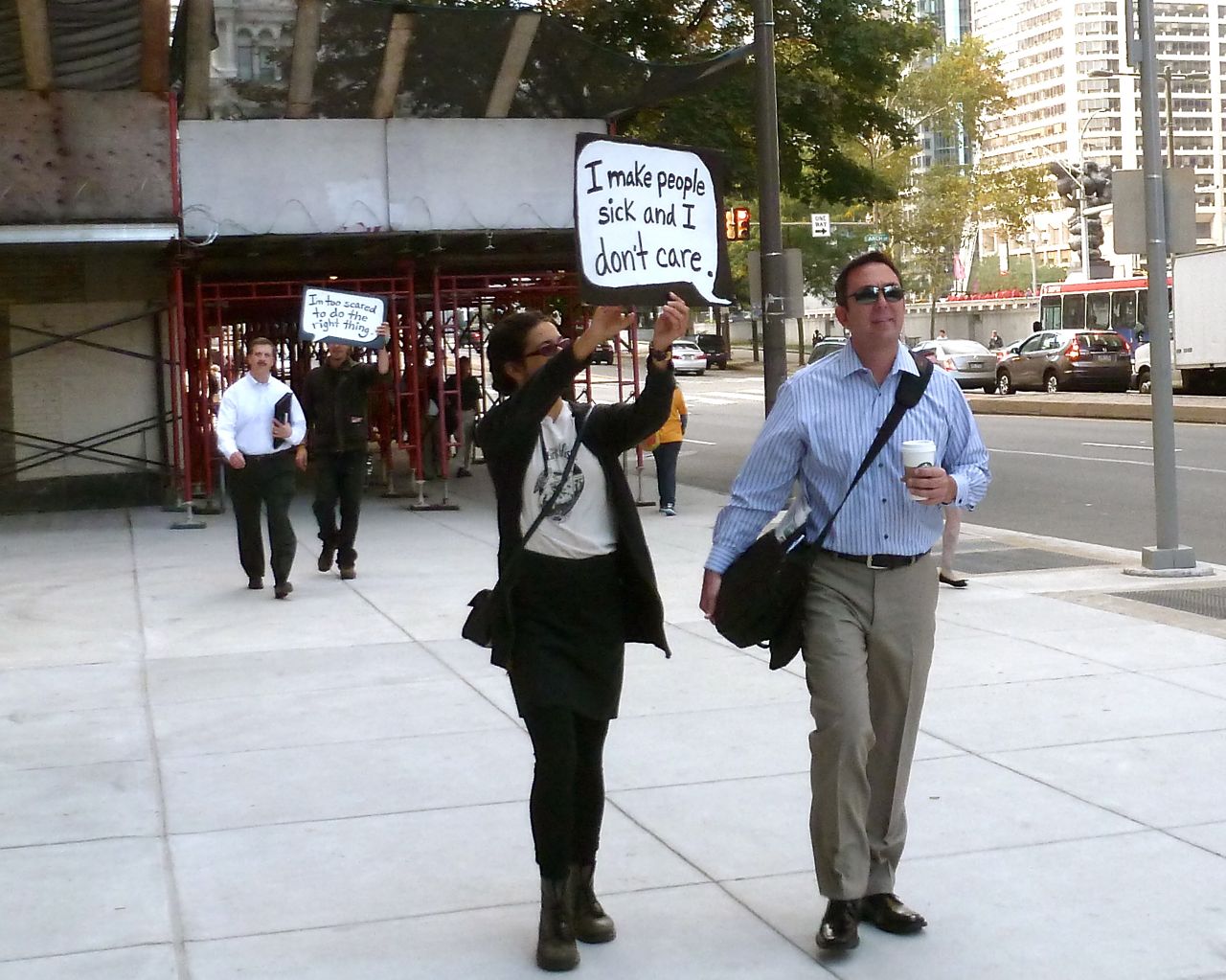
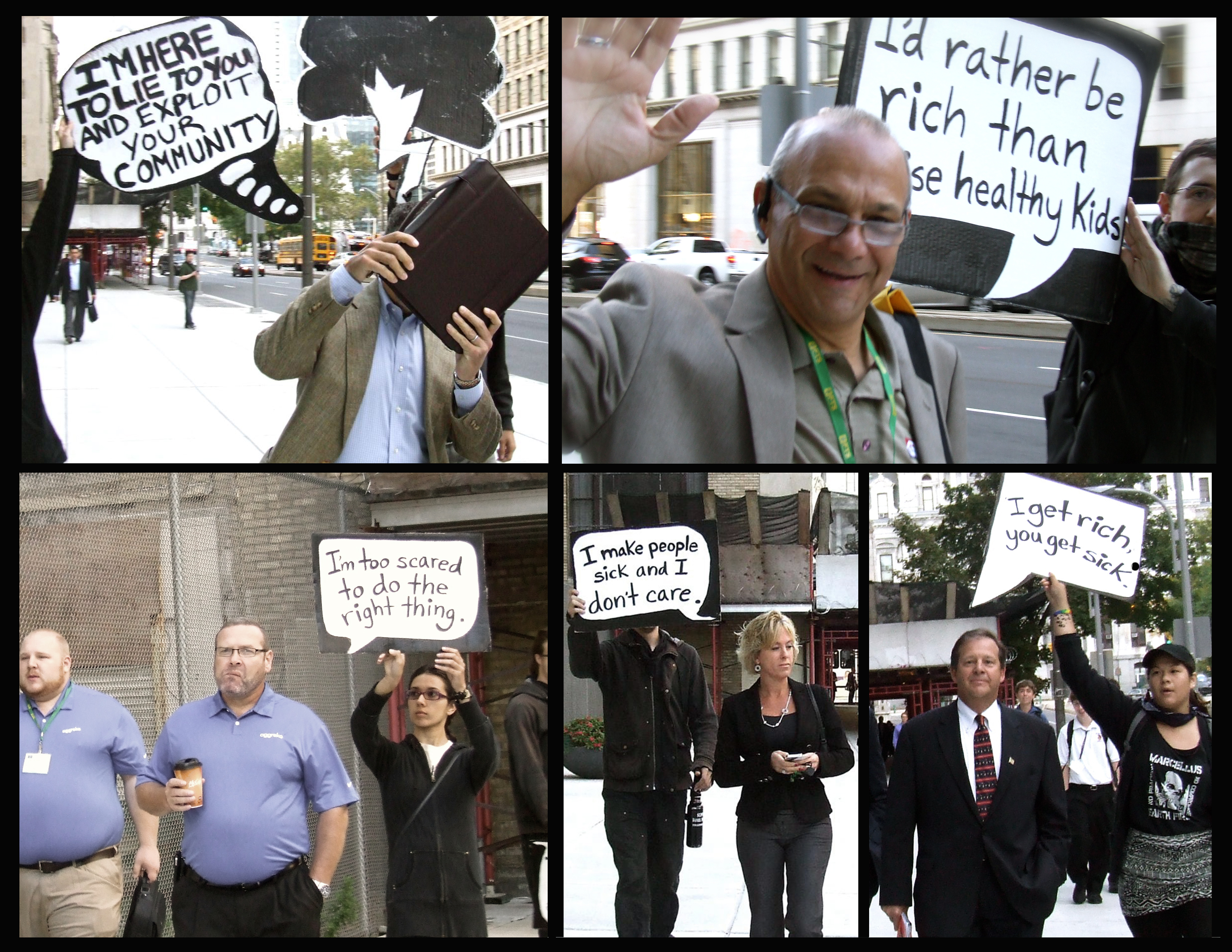
It was 7:00 am, the last day of the Marcellus Shale Coalition’s annual convention in Philadelphia, when a group of 40 or so people gathered to meet the gas industry face to face. “We just wanted to see what they had to say for themselves” said one of the protesters.
It was 7:00 am, the last day of the Marcellus Shale Coalition’s annual convention in Philadelphia, when a group of 40 or so people gathered to meet the gas industry face to face. “We just wanted to see what they had to say for themselves” said one of the protesters. It turned out the industry delegates weren’t so shy for talking after-all.
(scroll down for full gallery)
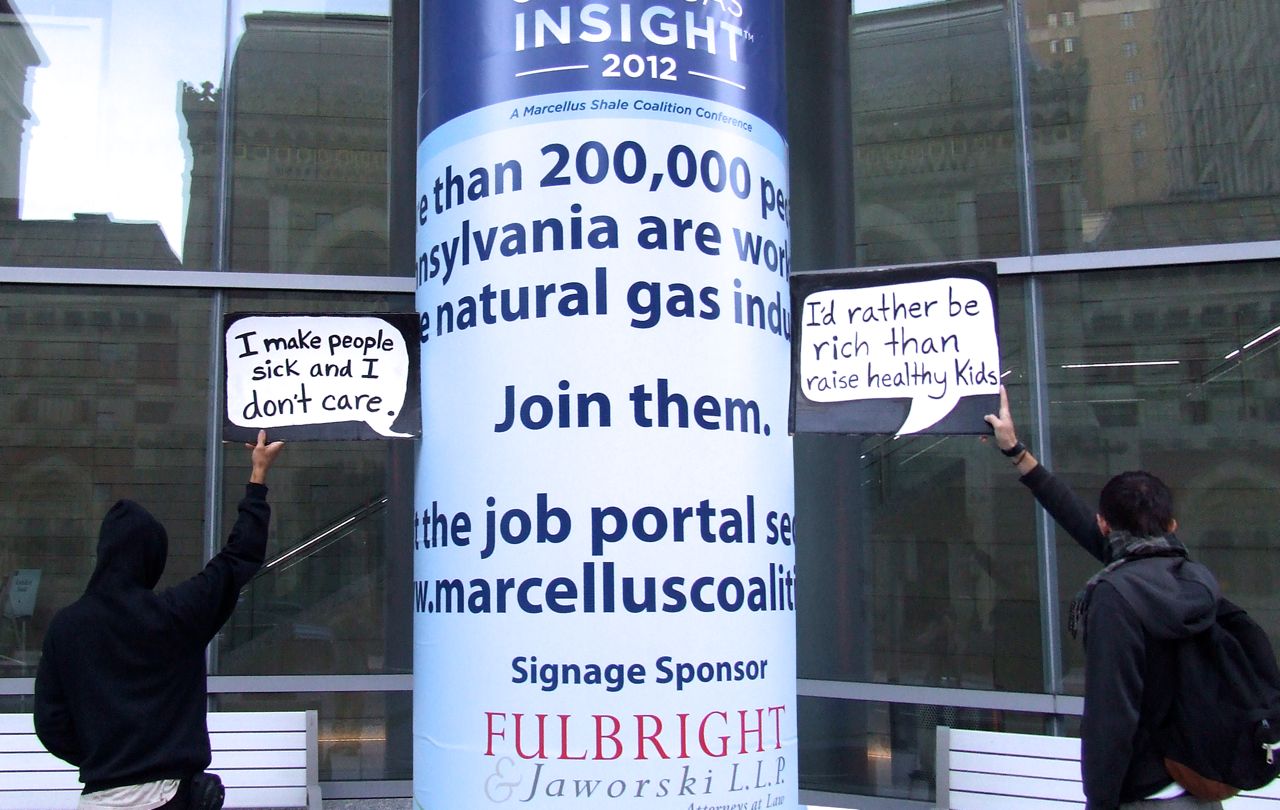
The convention was called “Shale Gas Insight” and took place in the fortified Philadelphia Convention Center in downtown Philly. The convention hosted hundreds of vendors and representatives from just about every company involved in hydraulic fracturing, or “Fracking” as some call it.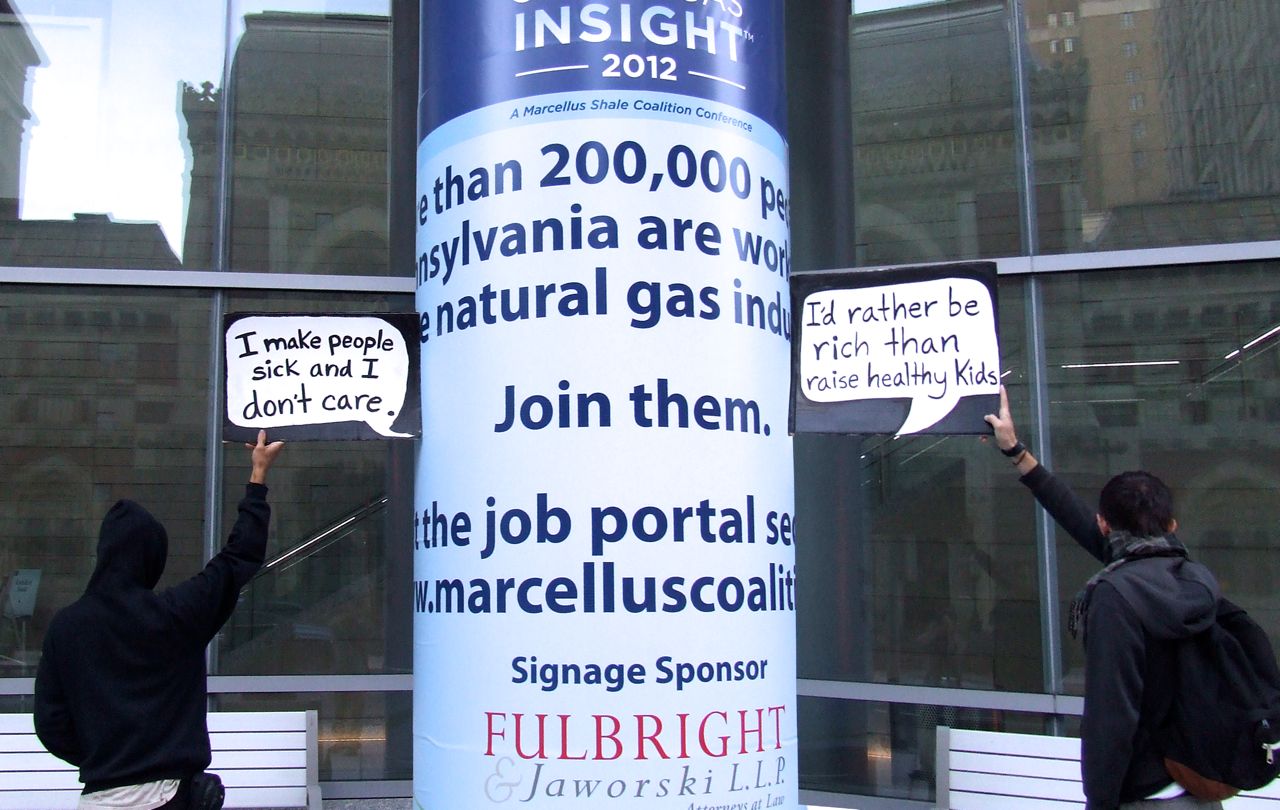 You can read about the workshop titles here; http://shalegasinsight.com/conference-schedule/
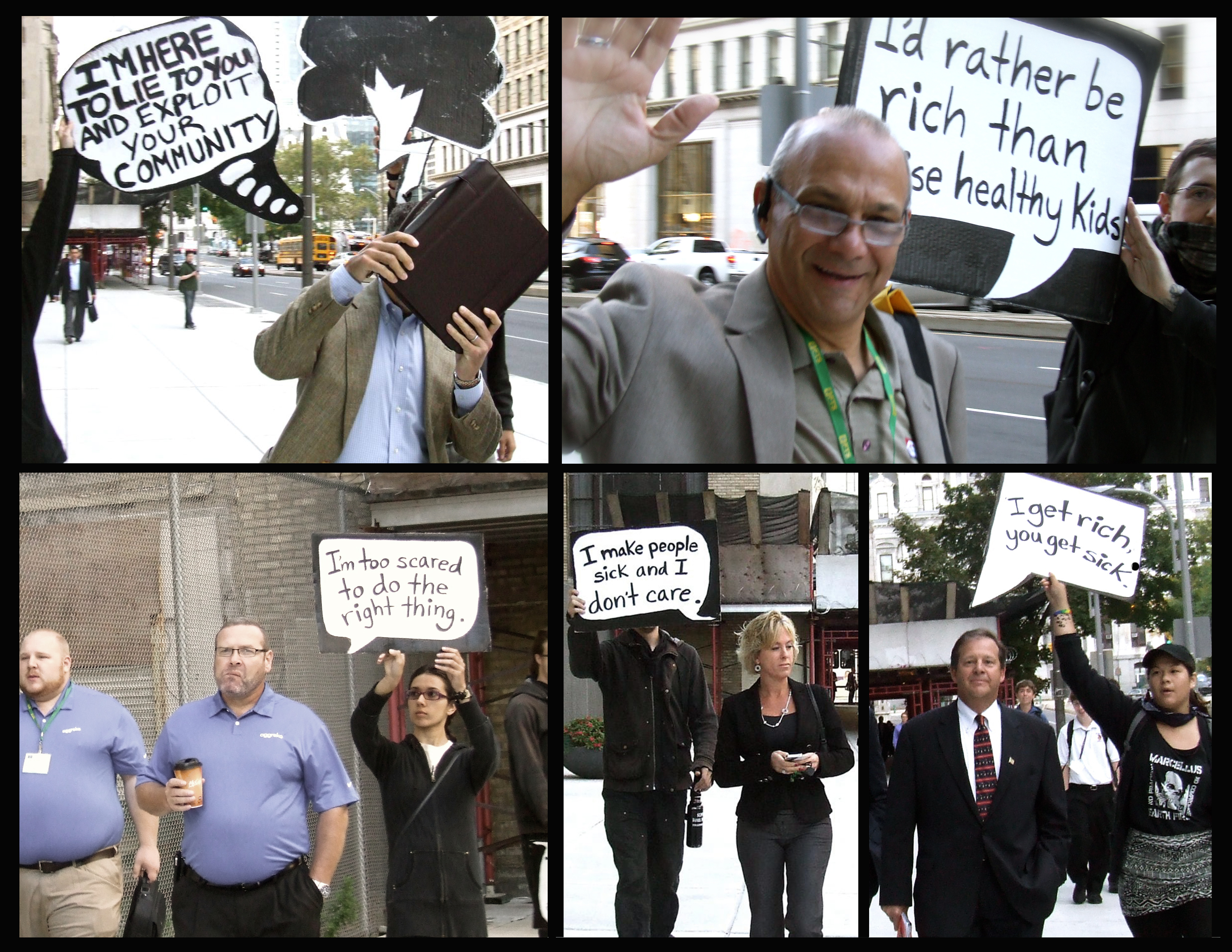
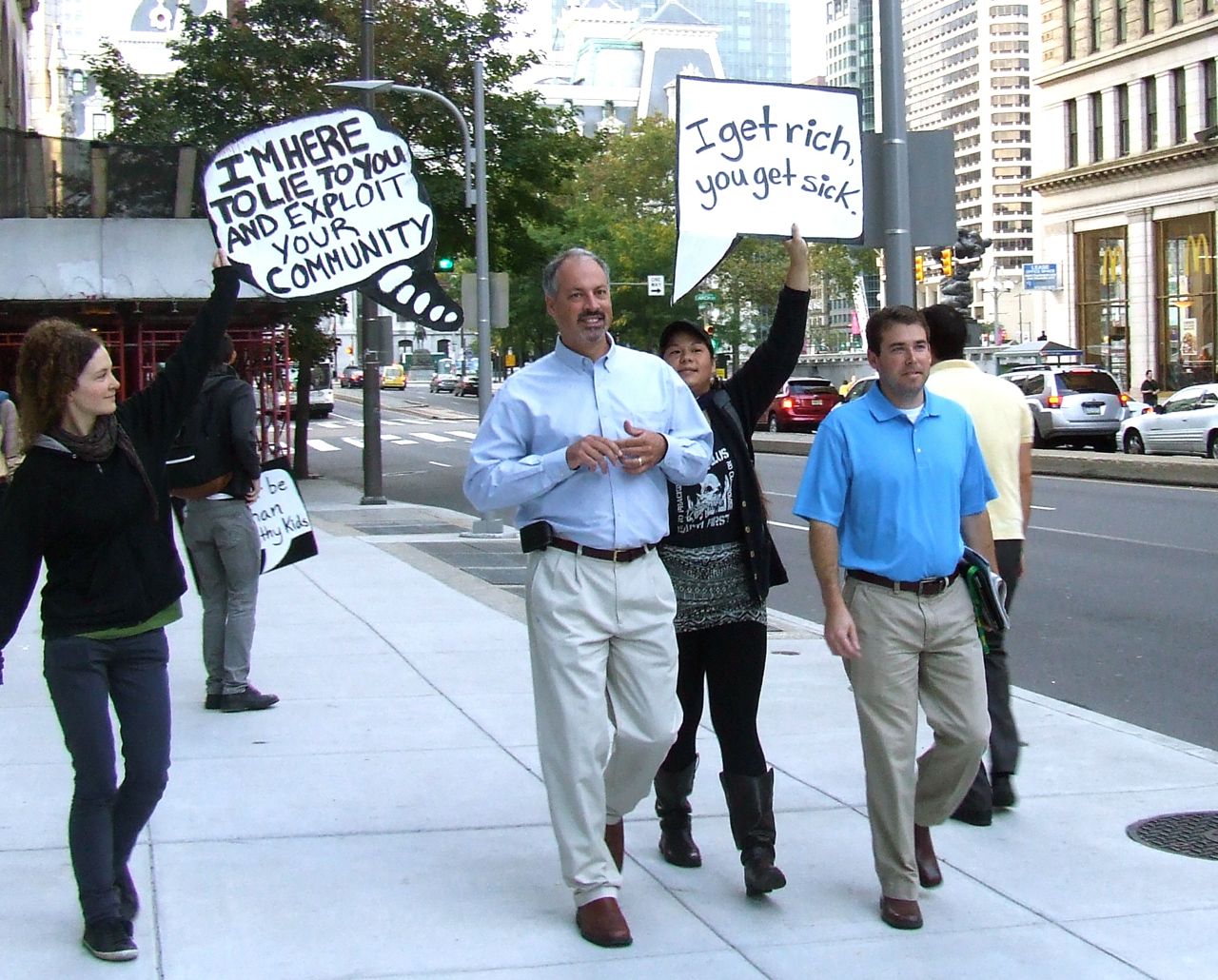
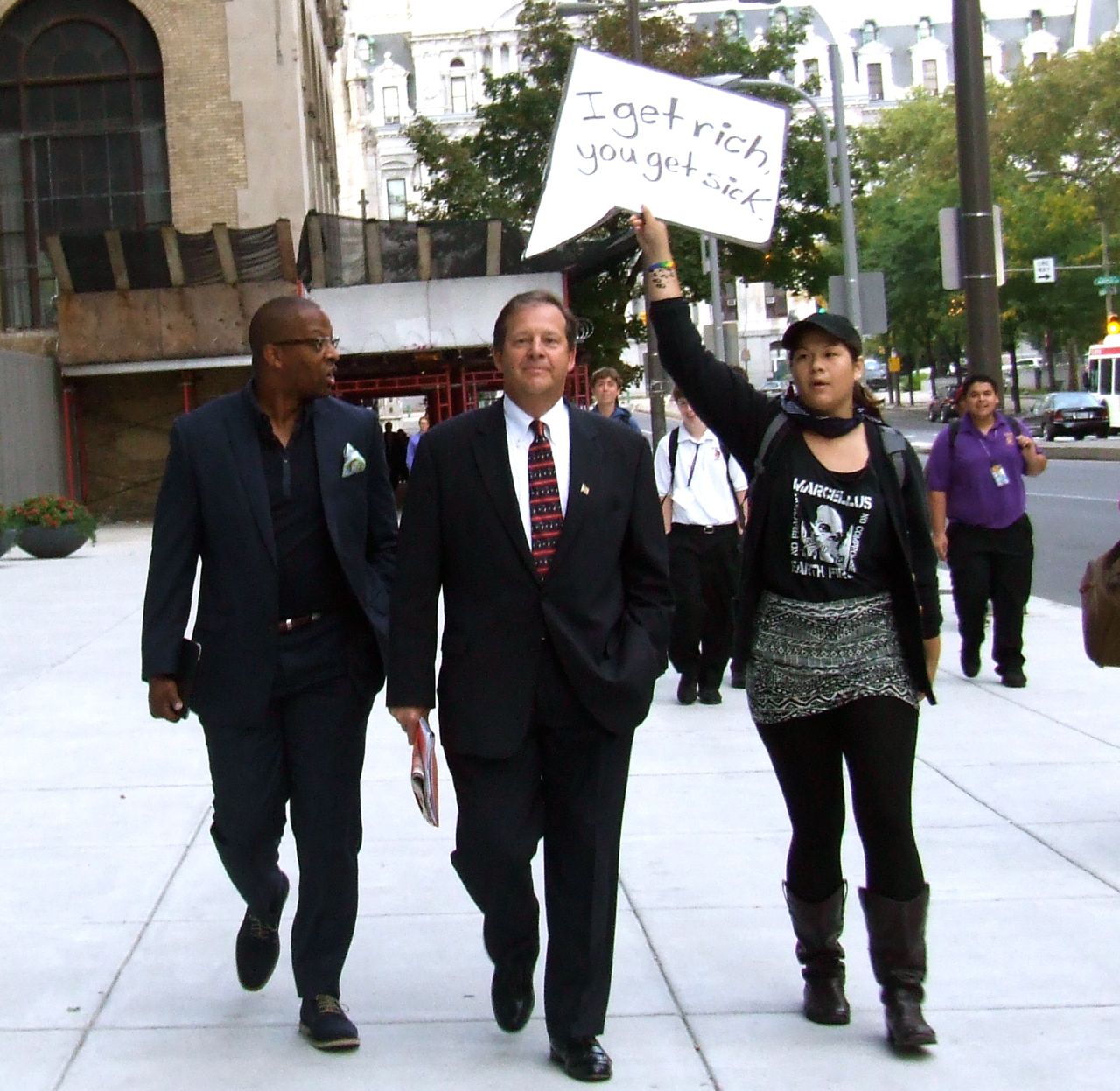
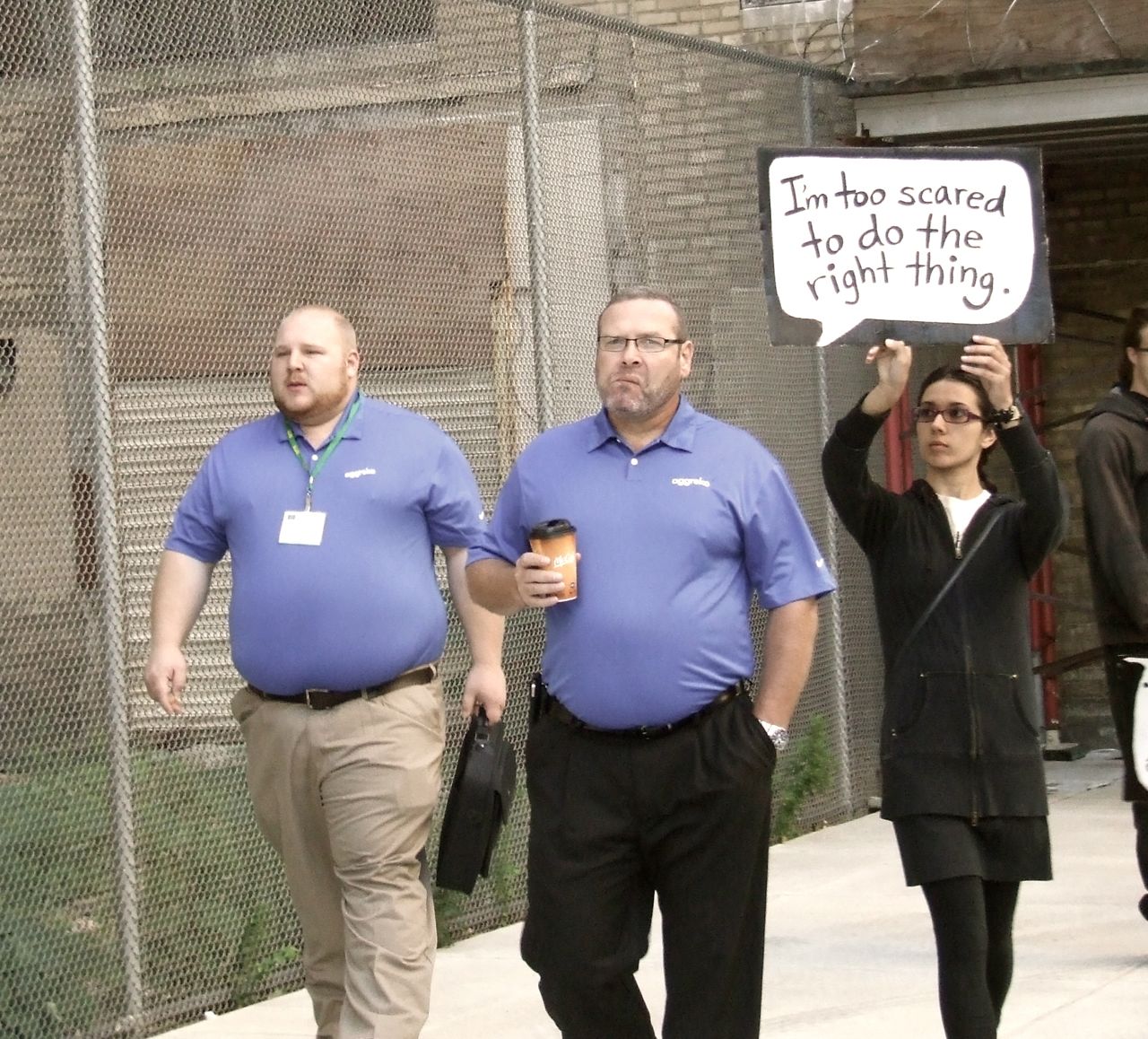
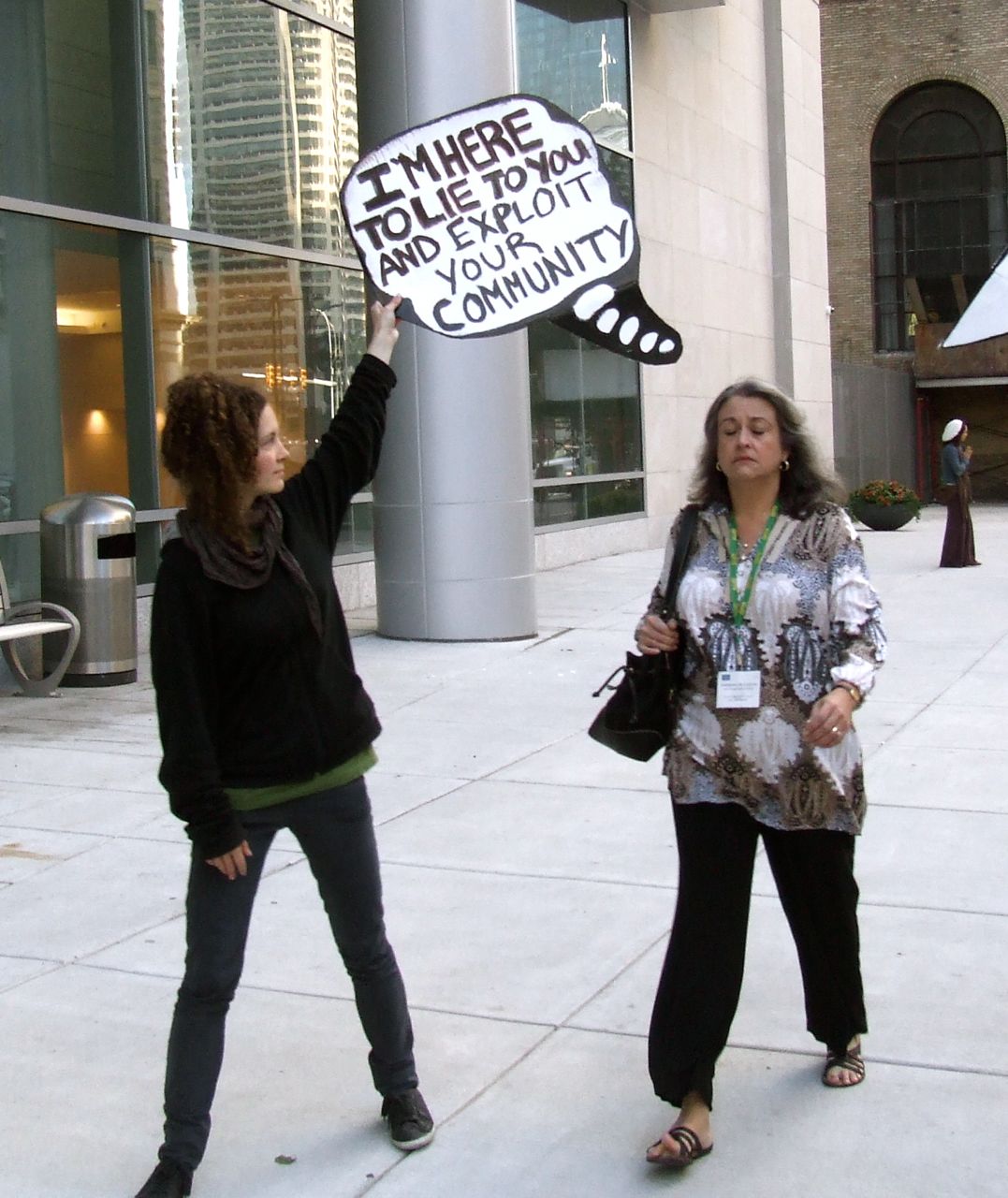
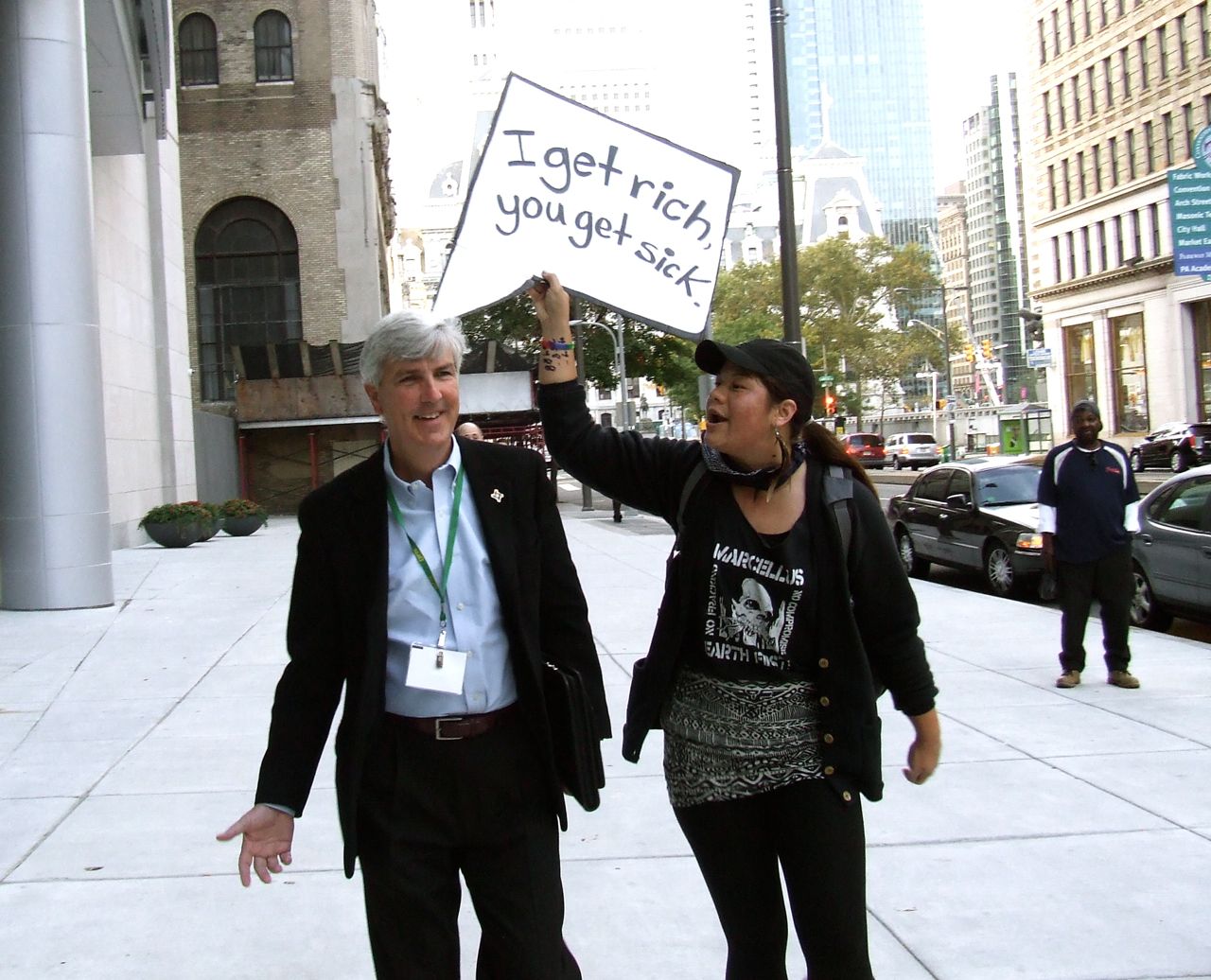
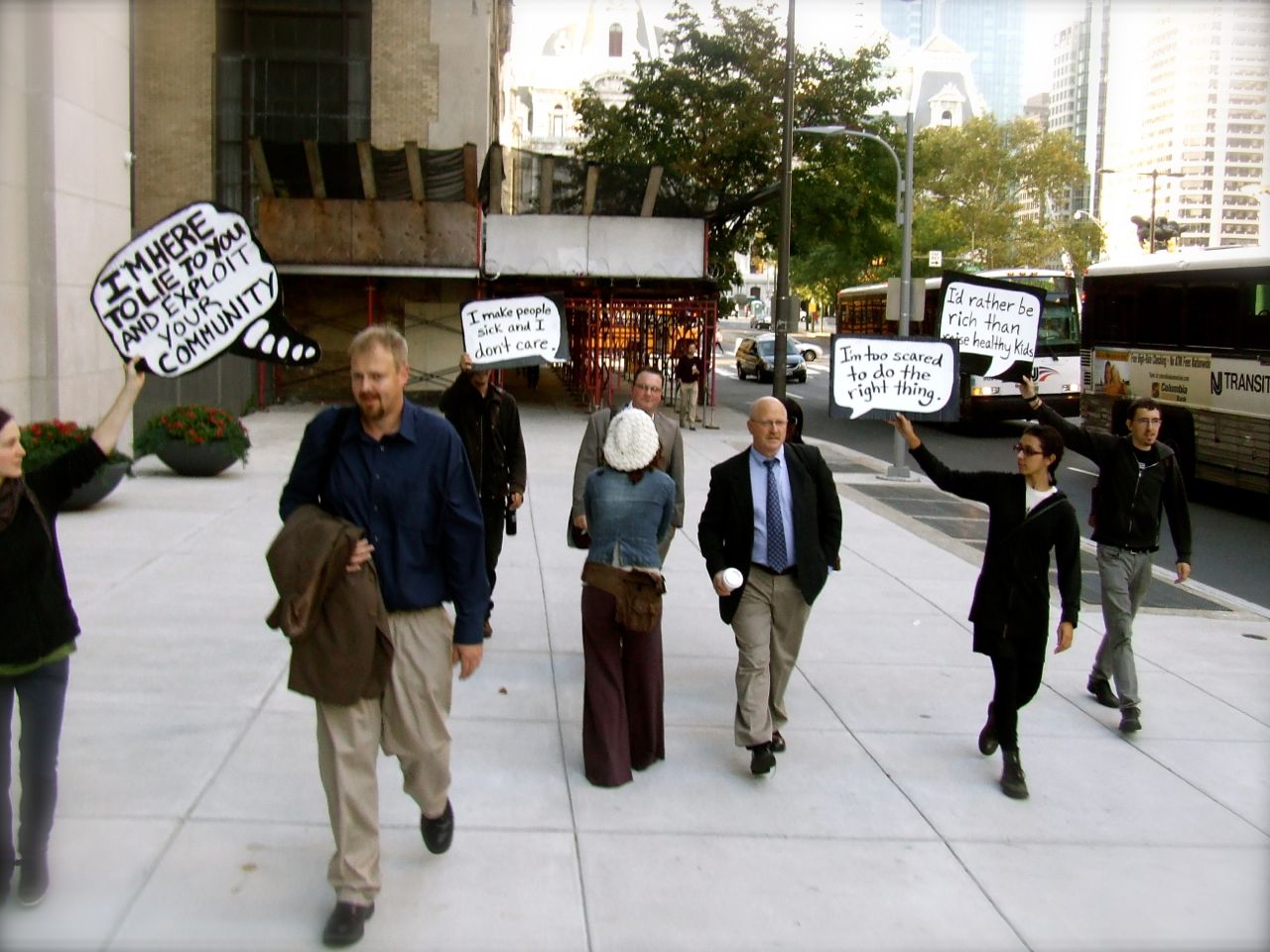
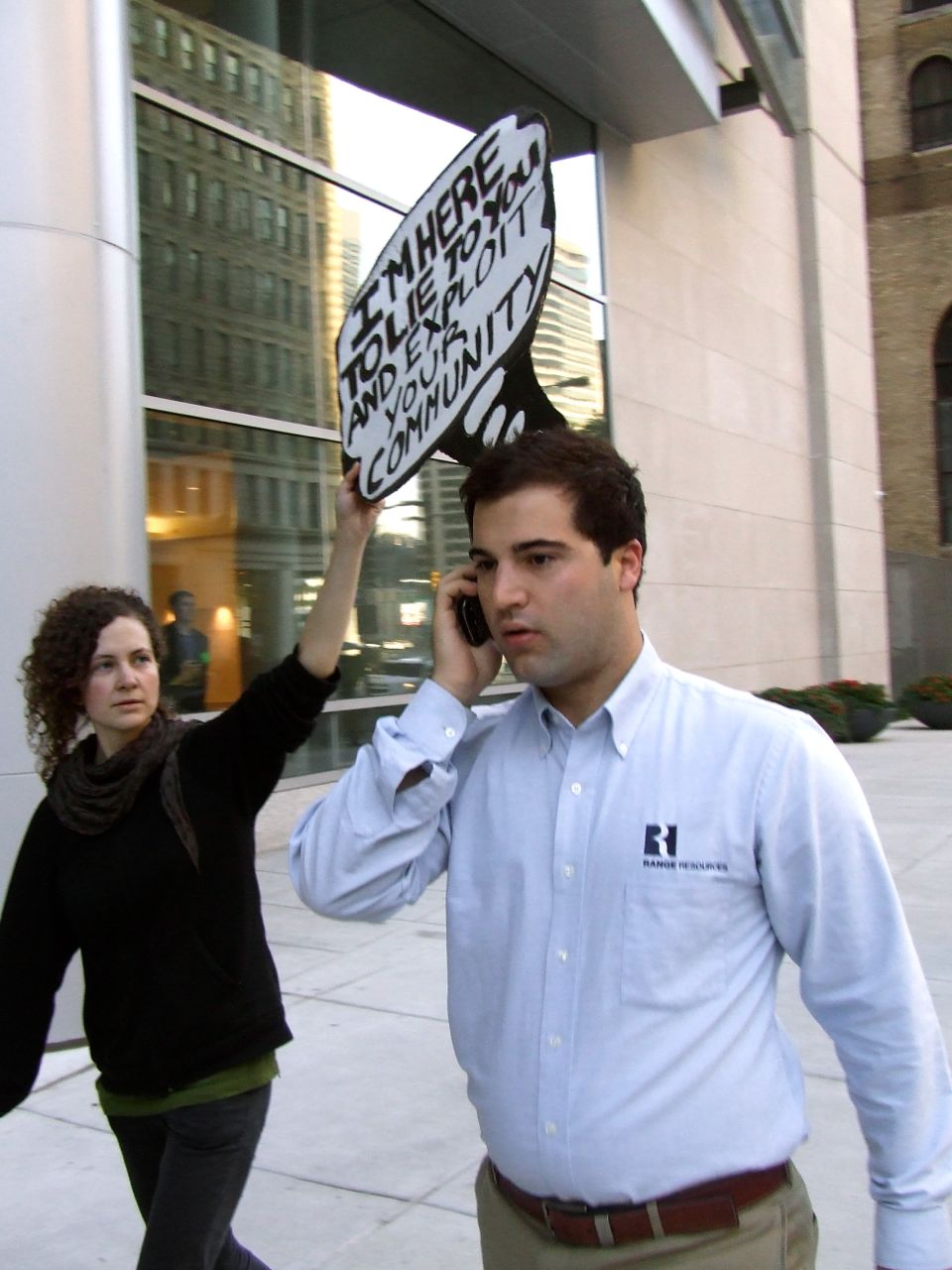
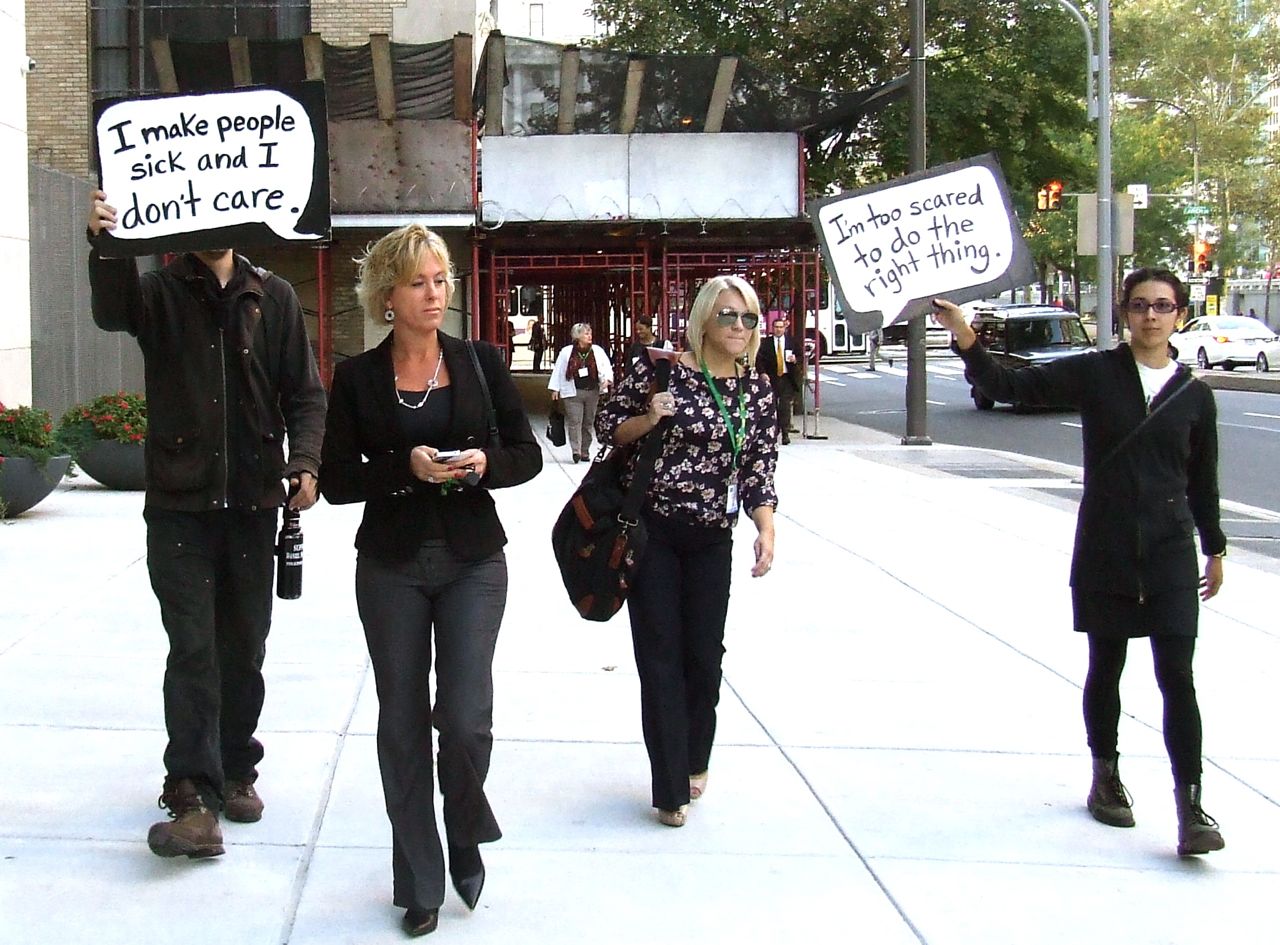
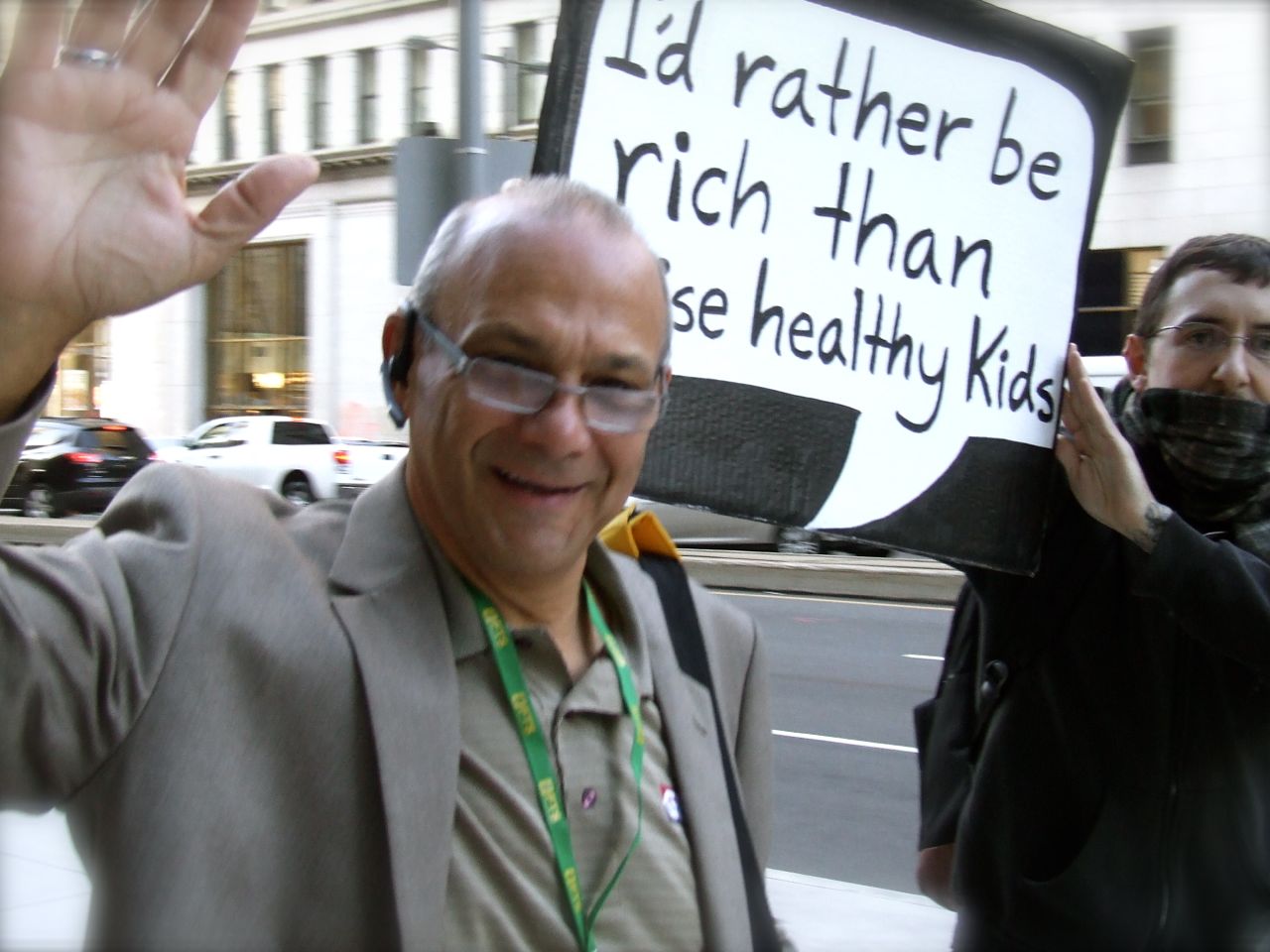
The action, called “Sunrise Intervention” by local organizers, succeeded in bringing people together to face the industry on their own terms. For hours, industry representatives were forced to pass through an aggressive picket at the front entrance with banners, flags, drums, and chants. This was preceded by a “walk of shame” in which the delegates were verbally confronted for an entire city block in public view. As they approached the convention center, people physically blocked them from entering. To say the least, it became a venue for interesting conversation.
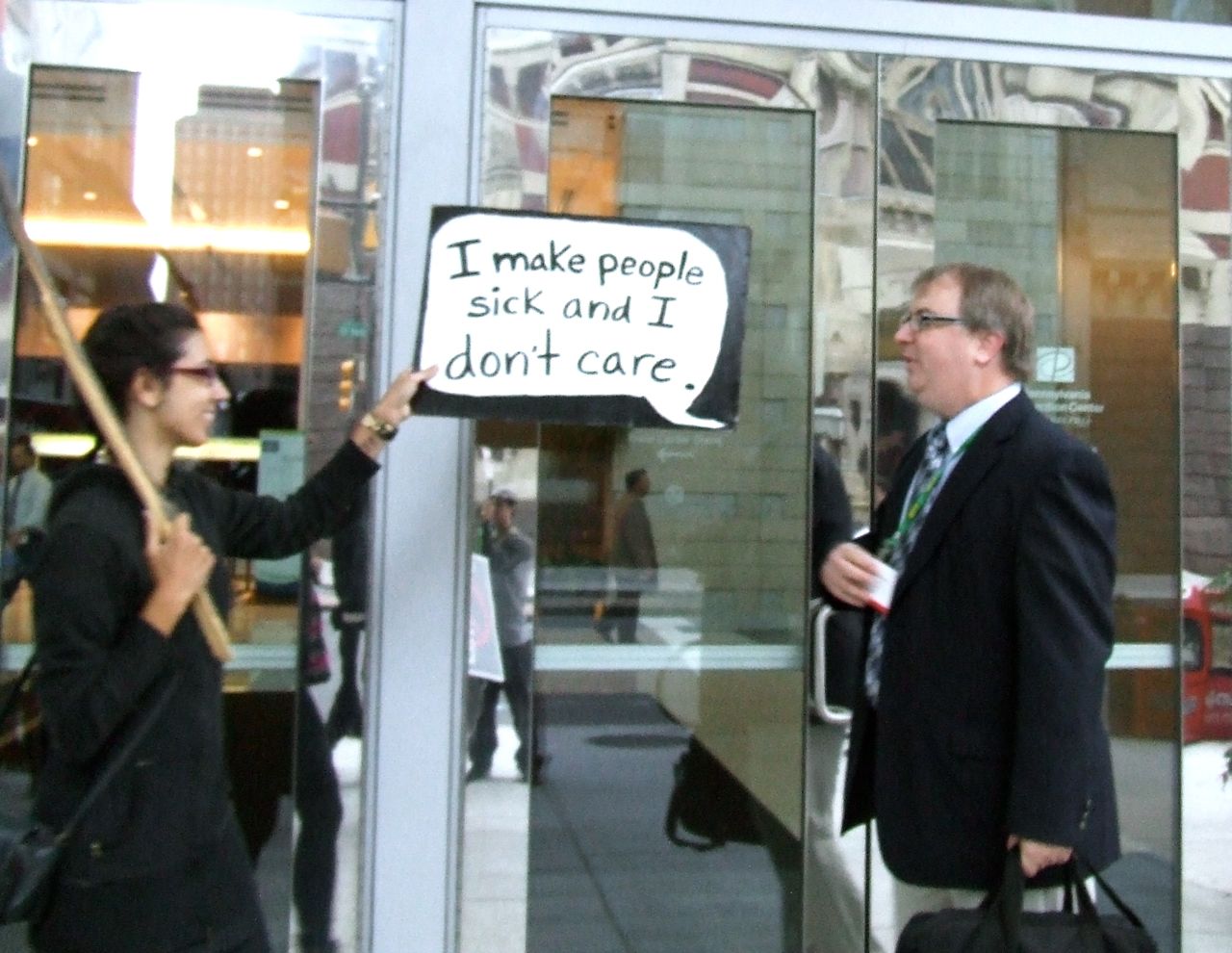
“I really valued the honesty on behalf of the delegates” said a bystander. At one point a group of uniformed charter school kids joined in the fun, taking pictures–laughing and pointing.
“We were hoping the delegates would get arrested for collaborating in environmental crimes” said one of the picketers when the police arrived. But they didn’t.
 “I’m too scared to do the right thing” whispered an officer from his car. The police then separating the picket onto either side of the main entrance, ushering delegates off the sidewalk into the road.
Although the police established a ritualistic presence, they didn’t do much to protect the delegates from the angry crowd. Perhaps they weren’t too impressed with the gas industry’s policy on public health.
The protest lasted a couple more hours, police & all, making it difficult for delegates to reach the door. Once most of the delegates were inside, the protest ended in an un-permitted march through downtown Philadelphia to meet up with an ACT UP rally and street theater performance.



(USA) Tar Sands Blockade Launces 8-Person Treesit

Gandalf hates tar sands.
The ongoing Tar Sands Blockade campaign has launched an 8-person treesit in the planned path of the under-construction Keystone XL tar sands pipeline. “Construction cannot proceed until tree-sitters descend and TransCanada clear-cuts through hundreds of trees to make way for the toxic tar sands pipeline,” Tar Sands Blockade announced.
The treesitters have announced their intention to remain in the trees until the Keystone XL pipeline is stopped for good.
Tar Sands Blockade is an ongoing campaign to stop the construction of TransCanada’s Keystone pipeline through Texas and Oklahoma. The pipeline is meant to carry oil from Alberta’s tar sands to the US.
There are still plenty of ways to get involved in this campaign. Follow news of the treesit here. For some ways to get involved, read this call to action or visit Tar Sands Blockade.
(Brazil) Fishermen Paralyze Construction of the Belo Monte Dam

Fishermen form a line to block
Fishermen form a line to block access to the construction site of a coffer dam on the Xingu River, Sep. 2012
From International Rivers:
On Wednesday [Sep. 19], a group of about 50 fishermen prevented a ferry from transporting machines and workers to a coffer dam being built for the Belo Monte Dam Complex, setting up a protest camp on one of the main islands of the Xingu River near the construction site.
After assembling, the protesters decided to remain indefinitely in place, and called on Norte Energia and IBAMA to immediately negotiate compensation for the loss of ecologically sensitive fish species that the fishermen have suffered as a result of the coffer dam’s construction.
"The fishermen have seen a 50% reduction in fisheries production. The river is drying up. Several species failed to spawn over the last year due to Norte Energia's intervention in the river. A lot of fish are dying, and in some locations the company wants to impede the fishermen from accessing the river," explained Ana Barbosa Laide of the Movimento Xingu Vivo, who has accompanied the mobilization.
On Wednesday night, a group of fishermen who depend on ornamental fish from the river joined the group, demanding that environmental agency IBAMA guarantee the survival of species that are endemic to the area where the dam is being built, saying that otherwise, the species will go extinct. "They argue that if these species die off, IBAMA should release its population of collected ornamental fish in order to save the economic livelihoods of the fishermen," explained Laide.
According to the movement leaders, the occupation protests the decision of IBAMA to allow Norte Energia to permanently close the river. During this process, the fishermen were not consulted nor informed about how they could continue their economic activities, or how they could continue to transport their boats on the river past the dam. "The river is ours and we came to fish. You can't just prohibit fishing, we have to work, "says Lucio Vale, President of the Fishermen's Colony of Altamira.
On the evening of the 19th, civil police officers, accompanied by members of Norte Energia, were at the demonstration site. According to agents, they were assured that the protest was non-violent.
(Peru) Despite Promised Reforms, Another Mine Resister Killed in Peru

Peruvian pol
Peruvian police are becoming notorious for using lethal force against protesters. In this picture, police respond with force to protests which rocked the Amazon region in 2009.
Despite government promises of reforms in the way natural resource concessions are handled, another anti-mines protester has been killed in Peru. This marks the 19th person killed in a natural resource-related conflict since President Ollanta Humala took office in July 2011.
Clashes between police and protesters broke out in the Ancash region on Wednesday Sep. 19, when police tried to break up a blockade of a road leading to Barrick Gold’s Pierna mine. Locals blame the mine for contaminating their drinking water and using up their water supply.
The company temporarily shut down the mine following the killing.
The violence came even as Peru’s Congress debates reforms to the way mining concessions are handled, including the creation of a new oversight body to evaluate mining concessions, separate from the agency responsible for promoting them.
The government has also been touting its new policy of consulting with affected communities regarding oil and gas concessions in the Amazon, but communities in resistance to such projects have expressed skepticism about what such consultation will actually mean.
“Which communities will be consulted? What are the terms and conditions? Indigenous peoples need answers to these questions, because there is a great deal of mistrust,” said congressmember Verónika Mendoz.
“We think it is good that they will hold a consultation. But how can they remedy all of the damage they have done to us in the last 40 years in just a short time? They need to explain that to us first,” said Achuar indigenous leader Andrés Santi, president of the Federation of Native Communities of Corrientes.
Mining Company and Government Thugs Attack Guatemalan Mine Resisters
Following the attack, military helicopters began flying over the resisting communities, “like in the old days of the armed conflict.” 
 On September 17 and 18, community members from Mataquescuintla, Jalapa and San Rafael Las Flores, Santa Rosa, Guatemala protested against the ongoing development of a mining project in their communities. In response to the first of these protests, provocateurs attacked both police and community members with stones. In response to a peaceful blockade outside the mining site, protesters were “attacked without warning by members of the mine’s private security agency, the National Civil Police and the army, using tear gas cannons, firearms and rubber bullet guns. Security agents attacked from inside the mine, with trained attack dogs. The Police cornered the unarmed protestors, and the army surrounded them, crouched and at the ready. The display of repressive force had all the characteristics of military counter-insurgency tactics that we had thought belonged to the past, including the bad intentions, brutality and cowardice that so characterize the tactics of the National Army.”
Energy Industry Crackdown, Global Protest Frackdown

Yesterday, while Shell announced suing Greenpeace International in an attempt to have the organization banned from protest within 500 meters of any Shell property in the Netherlands, New York activist Susan Walker was sentenced to 15 days in jail after she refused to pay a fine for blocking the entrance to Inergy gas facility in New York earlier this month.
But judges and jails aren’t enough to stop a world-wide movement against the energy empire, and today marks the “Global Frackdown” with more than 100 protests against gas fracking scheduled to take place around the world. So get out there in the streets and raise some hell…
Shell sues Greenpeace to block environmental protests in the Arctic
The suit against Greenpeace Int’l argued at Amsterdam’s District Court Friday showed Shell aggressively taking the offensive to protect its $4.5 billion investment in drilling for oil in the icy Arctic waters off the coast of Alaska. A verdict is not expected for two weeks.
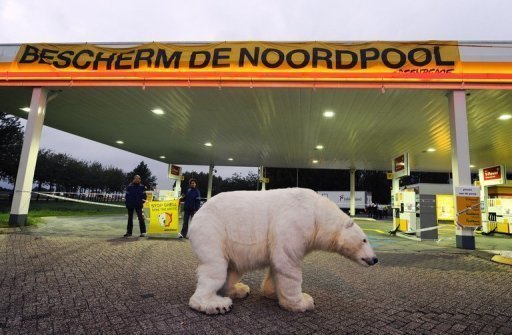
A protest at a Shell gas station in the Netherlands — with stuffed polar bear. (AFP/ANP, Marcel Antonisse)
Greenpeace has protested Arctic drilling with other stunts around the world, but the trigger for Friday’s lawsuit was a Dutch demonstration on Sept. 14, in which Greenpeace protesters blocked more than 70 Shell gas stations in the Netherlands for several hours, draping banners and clamping gas pump handles together with bike locks.
Fifteen people were arrested. Shell has not put forward any estimate of how much damage it suffered.
“Because Greenpeace International doesn’t operate alone, but is the spider in the web of national and local organizations, our request includes that Greenpeace inform its satellite organizations that it no longer supports protests that are solely directed at causing Shell economic damage or that bring human lives and the environment in danger,” Shell’s complaint said.
Protest backs jailed environmental activist in Inergy Blockade
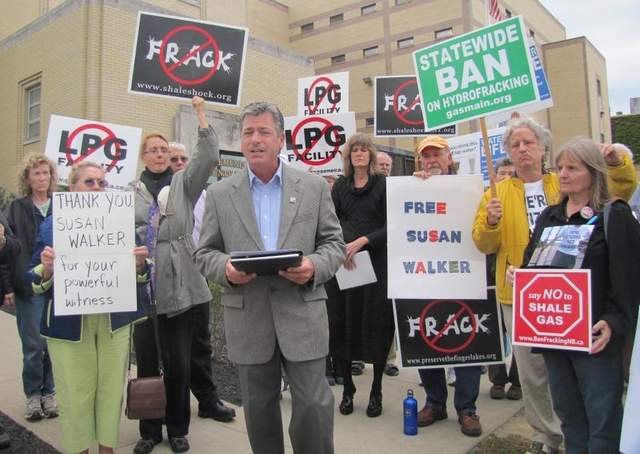
Joseph Campbell, president of Gas Free Seneca, speaks Friday outside the Chemung County Jail. He said local residents turned to civil disobedience because their petitions, letters and attending hearings failed to get their voices heard on Inergy Midstream’s proposed storage facility.
Nearly 30 people slammed the energy industry outside the Chemung County Jail on Friday but praised the Dundee woman held inside for refusing to pay a fine for trespassing at a proposed gas storage facility.
They demonstrated in support of Susan Walker, 53, who pleaded guilty to trespassing Wednesday night before Reading Town Justice Raymond H. Berry and got 15 days in jail after she refused to pay the $275 fine.
“We’re in agreement with Susan’s words when she spoke in the courthouse, ‘If I were a corporation, I would not be going to jail,’” said one of four speakers, Sandra Steingraber, an Ithaca College scholar in residence who co-founded the coalition New Yorkers Against Fracking.
Fracking Protests Planned Around The World By GlobalFrackdown Campaign
More than 100 protests against the natural gas drilling process known as fracking are scheduled to take place around the world on Saturday, building on public concerns but also using an overly simplified message to spur outrage.
The GlobalFrackdown website and campaign was developed by Food & Water Watch, a Washington, D.C. nonprofit that was once part of Ralph Nader’s Public Citizen group. The campaign claims that fracking “has already damaged communities and ruined lives. It pollutes water and makes people sick.”