Leeds Monthly Critical Mass Celebrations

Its the last fri­day of the month again: get your chains oiled, your tyres pumped, and adore your bike with horns and bells… its time for a lit­tle reclaim­ing of the streets.

Critical Mass Ride Daily Celebrate MonthlyIts the last fri­day of the month again: get your chains oiled, your tyres pumped, and adore your bike with horns and bells… its time for a lit­tle reclaim­ing of the streets.

The month­ly impromp­tu meet­ing of leeds cyclist will once again hit the city cen­tre on fri­day evening to parade around the city and cel­e­brate the joys of using the lo-tech car­bon free trans­port of the past, present and future. Although, by the very nature of crit­i­cal mass noth­ing has been offi­cial­ly planned its high­ly like­ly that an acci­den­tal meet­ing of cyclists will take place at 5.30pm in Mil­le­ni­um Square.

Fol­low­ing the ride, there are strong rumours that a game of bicy­cle polo will also take place on a open pub­lic space some­where in the city.

There can sure­ly be no bet­ter event to attend on the eve of the Wakey Wakey Spring Tour that comes to town this week­end. (See http://www.fraw.org.uk/tour/leeds.shtml for fur­ther info.)

…And remem­ber to spare a small thought for those still liv­ing in he 20th cen­tu­ry with inter­nal com­bus­tion engines fueled by crude oil deriv­a­tives that idle in their vehi­cles as they crawl throught the fri­day evening rush hour. Bless them and their anti­quat­ed ways.

Anti Gold Mining Conflicts Spreading — 2 May global day of action

Once iso­lat­ed com­mu­ni­ties around the world are sud­den­ly unit­ing and strength­en­ing in their actions to halt transna­tion­al Big Min­ing projects. On May 2, 2007 com­mu­ni­ty and envi­ron­men­tal groups around the world will unite is strug­gle on the Glob­al Day Of Action Against Bar­rick Gold Cor­po­ra­tion.

Once iso­lat­ed com­mu­ni­ties around the world are sud­den­ly unit­ing and strength­en­ing in their actions to halt transna­tion­al Big Min­ing projects. On May 2, 2007 com­mu­ni­ty and envi­ron­men­tal groups around the world will unite is strug­gle on the Glob­al Day Of Action Against Bar­rick Gold Cor­po­ra­tion.

Anti-Gold Min­ing Con­flicts Spread­ing Through­out the Amer­i­c­as

Glob­al Day of Action Against Bar­rick Gold, May 2, 2007

Big Min­ing Investors Fear Big Loss­es

In almost every Latin Amer­i­can coun­try, transna­tion­al met­als min­ing firms are explor­ing, build­ing and oper­at­ing huge, open-pit gold mines which extract and con­t­a­m­i­nate using tremen­dous amounts of water. These new “mod­ern min­ing” projects leave thou­sand-year lega­cies of acid mine drainage, destruc­tion of ecosys­tems, dis­ease, and region­al cli­mate change. Rich­es in the form of gold, sil­ver and cop­per are export­ed to first world share­hold­ers, leav­ing behind pover­ty, depen­den­cy and pol­lu­tion.

How­ev­er, once-iso­lat­ed com­mu­ni­ties are sud­den­ly unit­ing and strength­en­ing in their actions to halt Big Min­ing projects.

Today there are more than a hun­dred min­ing-relat­ed local con­flicts, in every Latin Amer­i­can coun­try (www.minesandcommunities.org) Campesinos, indige­nous and com­mu­ni­ty groups in vil­lages and cities are fight­ing Big Min­ing inser­tion. In coun­tries such as Peru, Ecuador and Colom­bia, multi­na­tion­al min­ing firms are respond­ing by arm­ing para­mil­i­tary groups to meet com­mu­ni­ty resis­tance with mur­der, threats and vio­lence. In every instance, min­ing firms attempt to “pur­chase” social license with bribes, hand­outs, media cam­paigns and cor­rupt local politi­cians, to sell “sus­tain­able gold min­ing.”

The tremen­dous over con­sump­tion of water resources is the key issue in mod­ern met­als min­ing projects. Big mines change region­al cli­mate pat­terns, dry up ecosys­tems, cause the deser­ti­fi­ca­tion of agri­cul­tur­al lands, com­mu­ni­ties are dried out. Big min­ing projects are being locat­ed pri­mar­i­ly in sen­si­tive riv­er head­wa­ters of vul­ner­a­ble arid regions upon which mil­lions of human and eco­log­i­cal com­mu­ni­ties depend. Big min­ing, through its inten­sive use of ener­gy and destruc­tion of habi­tat, glac­i­ers, aquifers, cli­mate pat­terns and water resources, is a huge fac­tor in glob­al cli­mate change. Appro­pri­ate inter­na­tion­al and nation­al reg­u­la­tion of Big Min­ing projects is almost non-exis­tent.

On May 2, 2007, com­mu­ni­ties around the world affect­ed by Big Min­ing projects are going to car­ry out simul­ta­ne­ous demon­stra­tions against the Bar­rick Gold Cor­po­ra­tion. Simul­ta­ne­ous actions will be held in Chile, Argenti­na, Peru, Aus­tralia, Cana­da, the Philip­pines, Tan­za­nia, and Europe.

Bar­rick Gold Cor­po­ra­tion, the world’s largest gold min­ing firm, is spear­head­ing the transna­tion­al met­als min­ing firms inva­sion of Latin Amer­i­ca. In the past few years, com­mu­ni­ty groups strug­gling against projects of Bar­rick Gold Cor­po­ra­tion on five con­ti­nents began com­mu­ni­cat­ing togeth­er, and this year they have joined togeth­er for the first time to call for this Glob­al Day of Action Against Bar­rick Gold Cor­po­ra­tion.

• In Argenti­na, com­mu­ni­ty activists forced Bar­rick Gold to sus­pend oper­a­tions in the province of La Rio­ja, the gov­er­nor oust­ed due to his cor­rupt rela­tions with the min­ing firm, and a state ref­er­en­dum to pro­hib­it open-pit min­ing is to be vot­ed by the pop­u­la­tion.

• Chilean and Argen­tine com­mu­ni­ties are fight­ing tooth and nail against the con­struc­tion of one of the world’s largest gold mines in the heart of a UNESCO World Her­itage Wilder­ness Area, in the del­i­cate glac­i­er peaks of the Andes along the Chile-Argenti­na Bor­der. This is Barrick’s infa­mous Pas­cua-Lama/Ve­ladero project. http://projectcensored.org/censored_2007/index.htm#21

• In Ancash, Peru, fierce com­mu­ni­ty resis­tance has been answered with the mur­ders of pro­tes­tors by para­mil­i­tary and state forces work­ing for the Bar­rick Gold Cor­po­ra­tion.

• In Aus­tralia, a series of pow­er­ful direct actions car­ried out by local Abo­rig­i­nal lead­ers, indige­nous and com­mu­ni­ty activists has tied up and cast grave doubts on Bar­rick Gold’s huge Lake Cow­al project.

On May 2, A Glob­al Day of Action Against Bar­rick Gold will be car­ried out. We invite all neigh­bors, activists and ecol­o­gists to join or form the many local-scale actions to be car­ried out simul­ta­ne­ous­ly and autonomous­ly through­out the world, on the five con­ti­nents in which Bar­rick Gold oper­ates.

We hope that through vis­i­ble and spir­it­ed actions, we can join togeth­er to draw atten­tion to the grave threat brought upon our world by these transna­tion­al large-scale open-pit met­als min­ing projects using cyanide. Our world does not need more gold and sil­ver! We must fight to pre­serve this world for our chil­dren and their chil­dren.

We hope to send a mes­sage to Bar­rick Share­hold­ers that their invest­ments are high­ly risky: Through­out the world, com­mu­ni­ties are reject­ing and shall put an end to these shame­ful met­als min­ing oper­a­tions.

For More Infor­ma­tion:

Mines and Com­mu­ni­ties www.minesandcommunities.org
Cor­p­Watch www.corpwatch.org
Latin Amer­i­can Obser­va­to­ry of Min­ing Con­flicts www.conflictosmineros.net
www.noalamina.org (Argenti­na)
www.noalapascualama.org (chile)

removing a lock-on (at Faslane)

Inter­est­ing pho­tos for all you bud­ding arm-tube con­struc­tion artists. Look how tricky it is to remove a mul­ti- and dif­fer­ent-lay­ered one, even when you’ve got all the best kit:

Inter­est­ing pho­tos for all you bud­ding arm-tube con­struc­tion artists. Look how tricky it is to remove a mul­ti- and dif­fer­ent-lay­ered one, even when you’ve got all the best kit:
Removing arm-tube 1Removing arm-tube 2Removing arm-tube 3Removing arm-tube 4

Reclaim Power — 15min film version online

In the sum­mer of 2006, 600 peo­ple set up a Camp for Cli­mate Action in the shad­ow of one of the biggest C02 emit­ters in Europe: Drax coal-fired pow­er sta­tion in York­shire / UK. With over one hun­dred work­shops on a wide range of top­ics, the 10 day camp was a space of col­lec­tive learn­ing, sus­tain­able liv­ing and tak­ing direct action on the root caus­es of cli­mate change. The gath­er­ing that showed prac­ti­cal low ener­gy solu­tions in action, cul­mi­nat­ed in a day of protest and mass direct action in an attempt to shut down Drax.

In the sum­mer of 2006, 600 peo­ple set up a Camp for Cli­mate Action in the shad­ow of one of the biggest C02 emit­ters in Europe: Drax coal-fired pow­er sta­tion in York­shire / UK. With over one hun­dred work­shops on a wide range of top­ics, the 10 day camp was a space of col­lec­tive learn­ing, sus­tain­able liv­ing and tak­ing direct action on the root caus­es of cli­mate change. The gath­er­ing that showed prac­ti­cal low ener­gy solu­tions in action, cul­mi­nat­ed in a day of protest and mass direct action in an attempt to shut down Drax.

You can down­load this 15 min ver­sion of the film ‘Reclaim Pow­er — voic­es from the camp for cli­mate action’ here:

http://video.indymedia.org/en/2007/04/821.shtml

order the mul­ti­lin­gual DVD 62 min + sev­er­al extras — or this 15 min ver­sion in DVD qual­i­ty here: orders@cinerebelde.org or networking@climatecamp.org.uk

More infor­ma­tion about the camp 2007: http://climatecamp.org.uk

You are wel­come to post or link up this 15 min clip on your web­sites. Please include a link to cine rebelde: http://www.cinerebelde.org/site.php3?id_rubrique=166〈=en

Bath Party against Petrol report

Sat­ur­day 21st April. The Par­ty Against Petrol crowd gath­ered in Bath Abbey at mid­day to begin what would have been a colour­ful and noisy protest against car cul­ture and fos­sil fuels, intend­ing to occu­py Low­er Bris­tol Road and the Esso sta­tion fore­court there. Around 25–30 activists turned up, and the police, them­selves num­ber­ing 30 or more, with mount­ed police again, imposed con­di­tions on the pro­ces­sion: march round the Abbey for 30 mins, then dis­perse.

Sat­ur­day 21st April. The Par­ty Against Petrol crowd gath­ered in Bath Abbey at mid­day to begin what would have been a colour­ful and noisy protest against car cul­ture and fos­sil fuels, intend­ing to occu­py Low­er Bris­tol Road and the Esso sta­tion fore­court there. Around 25–30 activists turned up, and the police, them­selves num­ber­ing 30 or more, with mount­ed police again, imposed con­di­tions on the pro­ces­sion: march round the Abbey for 30 mins, then dis­perse.

Well, we did as were told, marched round the Abbey, drum­ming and danc­ing and play­ing foot­ball, returned and dis­persed… only to form up again and con­tin­ue the parade, flow­ing through the police lines eas­i­ly. Hand­ed out leaflets, spoke to passers­by, mean­while, the high­ly trained police were over­heard argu­ing with each oth­er, throw­ing out blame for their lack of con­trol, right in front of the shop­pers and tourists. The street par­ty parade came to a close at Vic­to­ria Park, amidst pic­nic and sun­bathing, under the police’s watch­ful eye.

This unsea­son­ably hot April, whilst good for sun­bathers, is prob­a­bly noth­ing to do with cli­mate change.

Despite the heavy hand­ed police har­rass­ment and intim­i­da­tion we’ve had so far, with var­i­ous peo­ple being repeat­ed­ly stopped and ques­tioned through­out the city, with A4 check­points and trains sta­tion search­es on the Thurs­day, tomor­row should see a free kitchen, freeshop stall, work­shop on recy­cling junk into use­ful stuff, and lit­ter­pick, meet­ing in Bath at mid­day. To find us, ring 07800 583011.

Aldermaston blockade in progress

23.04.2007 A group of activists from Scot­land have shut 3 gates at Alder­mas­ton this morn­ing since 6.05am. At Home Office gate two peo­ple have been arrest­ed for obstruc­tion of the high­way, with one per­son sit­ting on top of the gate keep­ing it shut. At Tadley gate six peo­ple have been arrest­ed and are locked-on in the road­way pre­vent­ing vehi­cles from leav­ing or arriv­ing. A third (Con­struc­tion) gate was also locked shut with a D‑lock.

Aldermaston April blockade 1
Aldermaston April blockade 223.04.2007 A group of activists from Scot­land have shut 3 gates at Alder­mas­ton this morn­ing since 6.05am. At Home Office gate two peo­ple have been arrest­ed for obstruc­tion of the high­way, with one per­son sit­ting on top of the gate keep­ing it shut. At Tadley gate six peo­ple have been arrest­ed and are locked-on in the road­way pre­vent­ing vehi­cles from leav­ing or arriv­ing. A third (Con­struc­tion) gate was also locked shut with a D‑lock.

The group were act­ing peace­ful­ly to dis­rupt the mul­ti­mil­lion pound devel­op­ment of a replace­ment for Britain’s Tri­dent Nuclear Weapons.

“With the Scot­tish elec­tions loom­ing and the real pos­si­bil­i­ty of a Nuclear-Weapons Free Scot­land, we felt we had to come and make the strength of feel­ing up here clear to AWE”, Dave, one of the activists
from South Lanark­shire, said. “It is clear from the devel­op­ments at the site that the deci­sion to renew Britain’s nuclear weapons long pre-dates the par­lia­men­tary vote last month.”

The Atom­ic Weapons Estab­lish­ment, Alder­mas­ton, is cur­rent­ly under­go­ing mas­sive new devel­op­ments sim­i­lar in scale to the Heathrow Ter­mi­nal 5 project. The devel­op­ments include new com­put­ing and laser facil­i­ties
which will enable sci­en­tists to sim­u­late nuclear explo­sions to improve the design of nuclear war­heads with­out actu­al­ly explod­ing a weapon which would be banned under the Com­pre­hen­sive Test Ban Treaty. The site was giv­en a £5 bil­lion refit after the renew­al of the Mutu­al Defence Agree­ment with the USA in 2005 which allows the shar­ing of nuclear infor­ma­tion between the USA and Britain.

One of the group, Danya from Argyll and Bute, Scot­land, said “The devel­op­ment of yet more Weapons of Mass Destruc­tion at this site is in total breach of the nuclear Non Pro­lif­er­a­tion Treaty. The vote last
month to com­mit the UK to keep­ing nuclear weapons until 2050 was a fore­gone con­clu­sion and does noth­ing to tack­le the real enor­mous issues that the UK and the world faces, such as cli­mate change and nuclear
pro­lif­er­a­tion.”

“Instead, the par­lia­men­tary deci­sion and devel­op­ments at this site will height­en glob­al insta­bil­i­ty, con­flict and nuclear pro­lif­er­a­tion.” The group which includ­ed activists from Faslane Peace Camp, a protest site oppo­site HMNB Clyde where the UK’s Tri­dent sub­marines are based, say they were act­ing in sol­i­dar­i­ty with “Block the Builders”, a cam­paign tak­ing peace­ful actions against the new devel­op­ments at the site. http://www.blockthebuilders.org.uk/

/////////////////////////////////
Update on action as off 10.45am

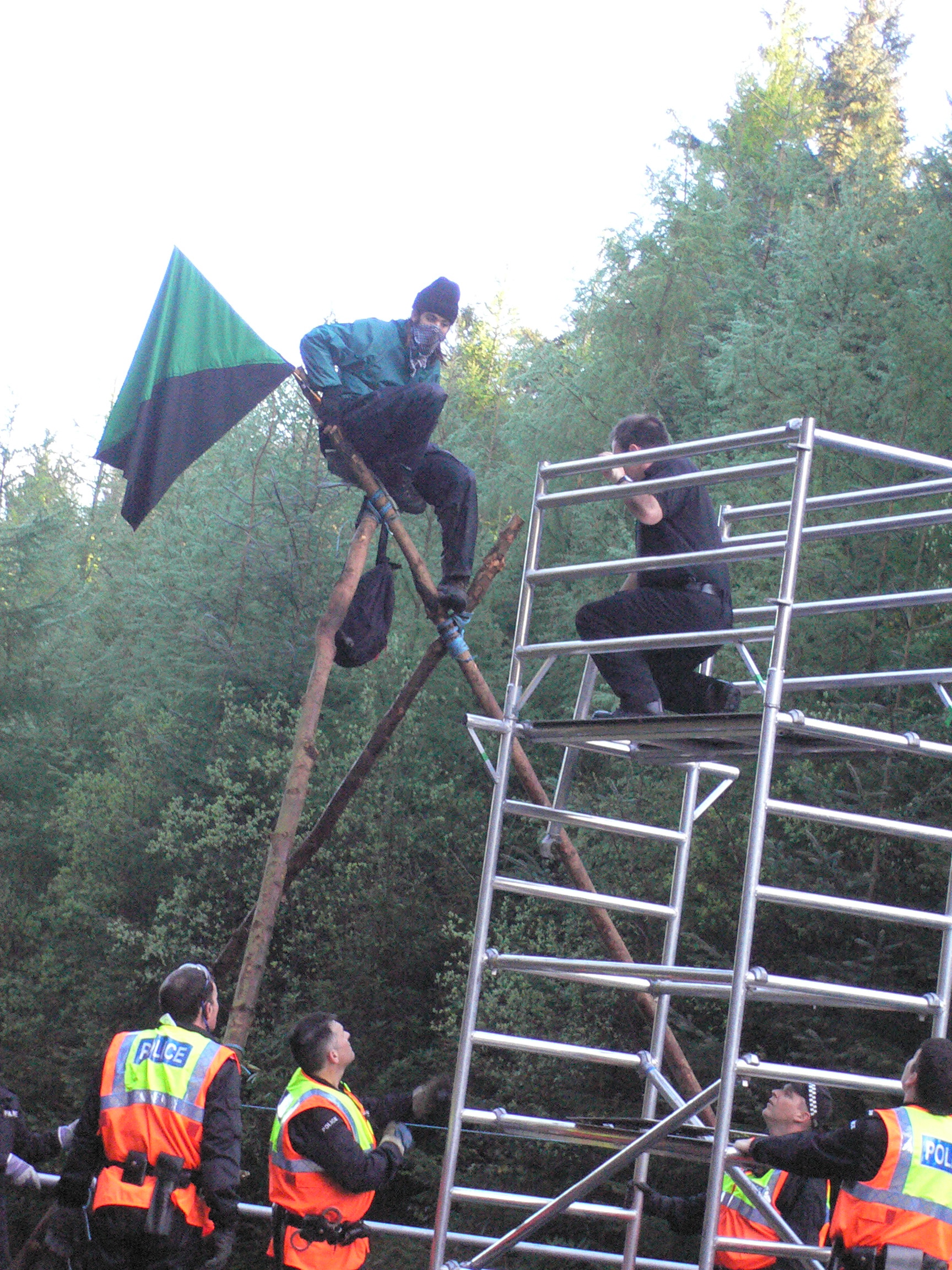
At 10.30 the police removed the pro­tes­tor from the top of the gate using a scaf­fold­ing tow­er, he has been arrest­ed.

Ear­ly at the oth­er gate one per­son was arrest­ed and removed from a lock but some­one else took their place.
The police cut­ting team got there at about ten and are cut­ting through two of the lock­ons. The gate is still blocked.
One of the peo­ple arrest­ed ear­ly has now been released after being giv­en bailed.

GM Protesters plant a good idea — updated (& campaign statement & extra photos)

21.04.2007 — GM Pro­tes­tors have plant­ed non-GM organ­ic pota­toes on a site that it is believed the Gov­ern­ment will autho­rise for the test­ing of a BASF genet­i­cal­ly mod­ifed pota­to.

About 250 peo­ple attend­ed the protest in Hull to lis­ten to speech­es and enjoy a GM free pota­to pic­nic — some food pro­vid­ed by Veg­gies of Not­ting­ham and music. Pro­test­ers then spread across the large (sev­er­al acre) field, with a few police, some on hors­es, oth­ers on trail bikes, some even had learned to walk. Some film­ing. Some impo­tent­ly ask­ing peo­ple to leave the field. Then we did because we’d run out of pota­toes.

Mutatoes action (Hull) 2Mutatoes action (Hull) 121.04.2007 — GM Pro­tes­tors have plant­ed non-GM organ­ic pota­toes on a site that it is believed the Gov­ern­ment will autho­rise for the test­ing of a BASF genet­i­cal­ly mod­ifed pota­to.

About 250 peo­ple attend­ed the protest in Hull to lis­ten to speech­es and enjoy a GM free pota­to pic­nic — some food pro­vid­ed by Veg­gies of Not­ting­ham and music. Pro­test­ers then spread across the large (sev­er­al acre) field, with a few police, some on hors­es, oth­ers on trail bikes, some even had learned to walk. Some film­ing. Some impo­tent­ly ask­ing peo­ple to leave the field. Then we did because we’d run out of pota­toes.

The tri­al site for Cam­bridge has already been approved. After hav­ing to move the pro­posed north­ern site as a pre­vi­ous farmer backed out the clos­ing date for sub­mis­sions about the new site near Hull was yes­ter­day. Local farm­ers have already tried to get the tri­al stopped.

Many local farm­ers are reliant on bees keep­ers com­ing to the area to pol­lenate their crops, this won’t be able to hap­pen with the tri­al of the genet­i­cal­ly mod­ifed crop close by. The muta­toes cre­at­ed by Chem­i­cal Multi­na­tion­al BASF has pre­vi­ous­ly been reject­ed by the Nether­lands because the lack of tri­als in a con­trolled (greenhouse/lab) envi­ron­ment. BASF also pulled out of Ire­land because unlike the UK Gov­erne­ment they placed restric­tions thay the Ger­man based cor­po­ra­tion found to harsh for them.

http://www.mutatoes.org/
http://www.hedonagainstgm.org.uk/
http://www.cambridgeaction.net/gmconcern
http://www.myspace.com/gmfreepotatoes

*********************Press release***********************************

Pro­tes­tors plant GM tri­al site with organ­ic pota­toes. (press release)

Peo­ple from all over the coun­try are cur­rent­ly plant­i­ng organ­ic pota­toes in the field pro­posed as a GM pota­to tri­al site out­side Hull. It is hoped that the dona­tion of safe spuds will pre­vent the plant­i­ng of the con­tro­ver­sial crop, which threat­ens the liveli­hoods of local bor­age grow­ers and organ­ic farm­ers.

Anna Lock explained;
“If you want to eat good safe pota­toes, you have to plant good safe pota­toes. By plant­i­ng organ­ic pota­toes in this field today, the field will be ren­dered unsuit­able for the GM tri­al. Sci­en­tif­ic exper­i­ments need con­trol­lable vari­ables, tiny organ­ic seed pota­toes hid­den deep in the ground are a vari­able con­trolled only by nature. These seed pota­toes will grow and BASF’s exper­i­ment will no longer be pos­si­ble on this site.”

The ral­ly start­ed as a GM-free pota­to pic­nic accom­pa­nied by live music with around 300 pro­tes­tors, includ­ing kids and cyclists and many dressed as Mr Pota­to Head. A large num­ber then set out across the field to plant organ­ic pota­toes. The ral­ly marks the end of the gov­ern­ments con­sul­ta­tion process on the exper­i­ment. The crop is the first to be pro­posed after pub­lic pres­sure bought an end to the tri­al­ing of GM in the UK near­ly 3 years ago.

Yolande Black trav­elled all the way from Bris­tol to attend today’s protest,
” I think the gov­ern­ment is test­ing the water with these pota­to tri­als, and it is vital­ly impor­tant that we show them that resis­tance is still alive and kick­ing and that we will con­tin­ue fight­ing them every step of the way. GM is not a solu­tion. 20% of con­ven­tion­al pota­to vari­eties are already resis­tant to blight and BASF have admit­ted that there is no mar­ket for GM food in the UK.

80 acres of bor­age have recent­ly been sown near the tri­al site, and the crop will fail if bee­keep­ers keep to the British Bee­keep­ers Asso­ci­a­tions guide­lines of keep­ing hives at least 6km dis­tant from GM crops. The GM farmer has announced that he will not pro­ceed if the issue is not resolved for his neigh­bours.

Note to edi­tors:

1. Con­tact details: Carl McCoy on 07858 177 178 or vis­it the web­site at Our web­sites are www.mutatoes.org
2. The site is one of two due to be plant­ed this year, the sec­ond pro­posed tri­al site at the Nation­al Insti­tute of Agri­cul­ture and Botany (NIAB) in Cam­bridgeshire last week­end. The Hull tri­al site is to replace the one in Der­byshire after the farmer who pulled out. BASF intends to con­tin­ue the tri­als for the next five years
3. Bor­age is a lucra­tive crop grown as a source of Starflower Oil and used as a health­food sup­ple­ment and in skin­care creams and cos­met­ics. BASF failed to con­tact the local bor­age farm­ers in advance of the tri­al. The farm­ers stand to lose up to £80,000.
4. On 5th April a pub­lic meet­ing and debate about the plant­i­ng of the GM pota­toes was held in Hedon. Dr Arpad Pusz­tai was one of the speak­ers attend­ing. His exper­i­ments into feed­ing GM pota­toes to rats appeared to demon­strate the GM pota­toes cause dam­age to the rodents immune sys­tems and growth rates. The work raised mas­sive pub­lic con­cern and aware­ness of GM, but the exper­i­ments were nev­er repeat­ed. His evi­dence, and those of BAS­F’s PR rep­re­sen­ta­tive, caused the local coun­cil to renew their 2003 stance against GM. Oppo­si­tion from local peo­ple attend­ing was also strong, and a peti­tion is due to be hand­ed over to DEFRA and the farmer con­cerned before the ral­ly.
5. In North Amer­i­ca where GM crops are now wide­spread, cross-pol­li­na­tion reg­u­lar­ly con­t­a­m­i­nates sur­round­ing crops, even jump­ing species. Ear­li­er in 2007 it was found that the exper­i­men­tal rice line LL601 had con­t­a­m­i­nat­ed world­wide rice sup­plies, caus­ing mas­sive loss of mar­kets, despite assur­ances that it was in a low risk cross pol­li­na­tion cat­e­go­ry.
6. BASF is a multi­na­tion­al com­pa­ny based in Ger­many. They were part of the noto­ri­ous AG Far­ben which man­u­fac­tured poi­son gas for the con­cen­tra­tion camps, used slave labour and was con­vict­ed of war crimes at the end of WW2. It claims to be the largest chem­i­cal com­pa­ny in the world, and in 2005 it was the 3rd biggest glob­al sell­er of pes­ti­cides.
7. Both Ire­land and the Nether­lands were due to run BAS­F’s GM pota­to tri­als, but these were aban­doned after con­cerns were raised about the envi­ron­men­tal threats they posed.
8. Pro­tes­tors are plant­i­ng around 3000 organ­ic seed pota­toes of sev­er­al dif­fer­ent vari­eties.

*************************************************************************

Wrong field, right result

Giv­en a 4‑figure map ref­er­ence which only has one clear unplant­ed field, it’s an under­stand­able mis­take.

Even if it’s the wrong field, it does­n’t make much dif­fer­ence. The pea crop is most­ly still under­ground, only a few shoots have bro­ken through the soil. This means the peo­ple walk­ing around the field did no appre­cia­ble dam­age to the crop.

The real test is not pota­toes for blight resis­tance; it’s about test­ing the UK pub­lic for GM resis­tance. By hav­ing over 100 peo­ple tak­ing direct action on the site in broad day­light in front of the cops has giv­en a clear result to the test.

The pea farmer isn’t going to be out of pock­et, and the prospec­tive GM farmer and the BASF direc­tors are going to have the clear mes­sage that wher­ev­er they plant it, it will be ripped up.

Well done to every­one involved.

*************************************************************************
Mutatoes action (Hull) 3
Mutatoes action (Hull) 4
Mutatoes action (Hull) 5
25.04.2007: State­ment from Mutatoes.org and cam­paign­ers against Hull’s GM pota­to tri­als

On Sat­ur­day, over 250 peo­ple from around the coun­try attend­ed a ral­ly in Hull in a pow­er­ful and vibrant dis­play of resis­tance to the rein­tro­duc­tion of GM crops to the UK.

In a bid to inval­i­date the tri­al, thou­sands of organ­ic pota­toes were plant­ed across a two hectare field. It was felt nec­es­sary to take action before plant­i­ng because it is vir­tu­al­ly impos­si­ble to decon­t­a­m­i­nate a root crop after it is in the ground. Unfor­tu­nate­ly, we dis­cov­ered today that the field plant­ed on Sat­ur­day was not the pro­posed tri­al site and was instead owned by farmer David Buck­ton. We apol­o­gise to David Buck­ton.

With the infor­ma­tion that we had and the short time scale avail­able to us (between the late announce­ment of the tri­al site and the first pos­si­ble oppor­tu­ni­ty to plant the GM pota­toes) we sin­cere­ly believed this to be the cor­rect field.

There were sev­er­al rea­sons for the error made:
• The pub­lic were not giv­en suf­fi­cient infor­ma­tion by the gov­ern­ment who sup­plied only a 4‑figure grid ref­er­ence for the loca­tion of the tri­al (an area of 1 square km).
• In a pub­lic meet­ing on April 5, a local farmer sug­gest­ed that the pro­posed site was cur­rent­ly plant­ed with oil-seed rape. This was flat­ly denied by the BASF rep­re­sen­ta­tive who implied that the field was clear and ready for the tri­al.
• The only field in the area bor­dered by Marfleet, Hedon and Pre­ston where ground had been pre­pared but which had not yet been plant­ed with a crop was the one just East of Marfleet. There were no unplant­ed fields in the area
cov­ered by the four fig­ure grid ref­er­ence giv­en by DEFRA. Con­se­quent­ly, because these grid ref­er­ences are noto­ri­ous­ly unre­li­able we inves­ti­gat­ed all fields with­in sev­er­al hun­dred metres of this ref­er­ence, the only one pre­pared for plant­i­ng, but not yet sown, was the one in ques­tion.
• The Government’s con­sul­ta­tion peri­od end­ed on 20th April, with the 21st being the first date that the GM pota­toes could be plant­ed; hence why the Ral­ly was called for last Sat­ur­day.

The deci­sion was made under pres­sure, by a cam­paign only three weeks old; a cam­paign which pulled off an auda­cious action nonethe­less. It is our posi­tion that we made the best judg­ment that we could as to which was the pro­posed tri­al site. While it is regret­table that the wrong site and farmer were tar­get­ed, we would also like to make it clear to the gov­ern­ment and to indus­try that peo­ple will con­tin­ue to dis­rupt the plant­i­ng of GM crops despite the dif­fi­cul­ties faced by this lack of full dis­clo­sure.

Mutatoes.org has only been in exis­tence for three weeks now, and work­ing to a tight sched­ule, with very few peo­ple. In that time we gath­ered loads of up-for-it peo­ple will­ing to go into a field in broad day­light and take direct action for the plan­et. It was a suc­cess­ful action in all oth­er aspects: the pota­toes were plant­ed, we did it under the noses of the police and there were no arrests. The mes­sage sent out is clear — attempt to grow GM crops in this coun­try and we will take action. Of that we remain proud, and thank every­one who came along and took part, in what ever role.

Despite a mis­take being made we believe it was far bet­ter that we went ahead and chal­lenged the GM tri­als than stood by doing noth­ing. We clear­ly demon­strat­ed the British pub­lic are will­ing to take on the multi­na­tion­als / gov­ern­ment on this issue. Though it was, and remains, our avowed inten­tion to pre­vent the tri­als from going ahead, we are ful­ly aware that these tri­als are as much a test of pub­lic opin­ion as a gen­uine sci­en­tif­ic exper­i­ment. Con­se­quent­ly, although the wrong field was tar­get­ted we still achieved one of our pri­ma­ry objec­tives of demon­strat­ing that the British pubic are res­olute­ly opposed to GM crops and will take action to resist their rein­tro­duc­tion into the UK.

The multi­na­tion­als behind GM crops have bid­ed their time since Bay­er pulled out from the last tri­als three years ago. But they have been press­ing ahead in the rest of the world. It is vital that we, as a move­ment, rise to the occa­sion, and demon­strate that resis­tance is as vigourous as ever. We are unapolo­getic for what we have attempt­ed to do and we will not cease our efforts to keep the UK GM free.

And as use­ful byprod­uct – we now know where the actu­al field is, thanks to the police…

rally@mutatoes.org
http://www.mutatoes.org

Report from Land and Marine demo and demo announcement

Despite mas­sive over-polic­ing and the evic­tion of Bath Cli­mate Camp, actions are con­tin­u­ing as sched­uled, so if you were think­ing of com­ing down for sat­ur­days demo, start­ing at 12 at Bath Abbey, please do so to show that their repres­sion will not make us go away! — here is a report of the Land and Marine demo -

Despite mas­sive over-polic­ing and the evic­tion of Bath Cli­mate Camp, actions are con­tin­u­ing as sched­uled, so if you were think­ing of com­ing down for sat­ur­days demo, start­ing at 12 at Bath Abbey, please do so to show that their repres­sion will not make us go away! — here is a report of the Land and Marine demo -

Fri­day 20th April, at 8 am, a group of 7 pro­test­ers approached the Land and Marine office, to leaflet and ban­ner drop, as part of the adver­tised block­ade, and were faced by a huge police pres­ence. The cops demand­ed that the pro­tes­tors move about 30 meters away from L&M, mak­ing the protest invis­i­ble. The group refused, and after nego­ti­a­tions and a cou­ple of tense moments, were able to stay in front of the offices, although the cops put a restric­tion on the num­ber of pro­test­ers to 6 (they count­ing skills should be called into ques­tions, as by this point, there were 8 pro­tes­tors!), for­bid­ding any addi­tion­al pro­test­ers from join­ing the demo and also imposed a time lim­it, restrict­ing the demo to two hours. Twice the time lim­it was pass­es, and twice re-nego­ti­at­ed until pro­test­er vol­un­tar­i­ly left at 12.30. The office was shut all day and no work­ers entered the premis­es. Also, L&M shelled out on a dou­ble row of fenc­ing around their prop­er­ty and a large num­ber of secu­ri­ty guards who have been there in var­i­ous num­bers for a cou­ple of weeks… Result! Our con­grat­u­la­tions to Inspec­tor Adam Jen­ners.

Also, the activists were all searched under a pro­posed mod­i­fi­ca­tion to Sec­tion 1 of the PACE 1984 Act, for items to be used in con­nec­tion with crim­i­nal dam­age. It may well be that this pro­posed mod­i­fi­ca­tion to the law has­n’t yet came in to pow­er by the time they tried to use it, so there may well be a law­suit in the works…

Police also con­firmed their use of phone tap­ping to one activist: “Acord­ing to your phone calls, you only expect­ed 10 peo­ple at your meet­ing, but when we there you had 100.” It seems that the police had con­fused our camp with that of the com­ing nation­al Cli­mate Camp, this sum­mer — and wast­ed 100,000s of pounds in the process. The head of this over-zeal­ous polic­ing oper­a­tion is prob­a­bly sweat­ing round about now.

Overkill police tac­tics failed to intim­i­date us and hope­ful­ly the day long clo­sure of L&M will be anoth­er set­back in the con­struc­tion of the pipeline.

To find out the facts, and get involved in the anti-pipeline cam­paign, check out www.risingtide.org.uk/bristol/pipeline

Intim­i­da­tion and repres­sion will not beat us or make us go away!

Bath Climate Camp evicted — BUT THE DEMOS ARE STILL HAPPENING!

19.04.2007
Bath Cli­mate Camp was today evict­ed by a stu­pid­ly large num­ber of cops, part of a stu­pid­ly large police oper­a­tion involv­ing ran­dom stop and search­es at the train sta­tion and on the streets — The rea­son for the evic­tion? Sec­tion 63 of the CJB — we were appar­ent­ly using the demo as a pre­text for a free par­ty!

19.04.2007
Bath Cli­mate Camp was today evict­ed by a stu­pid­ly large num­ber of cops, part of a stu­pid­ly large police oper­a­tion involv­ing ran­dom stop and search­es at the train sta­tion and on the streets — The rea­son for the evic­tion? Sec­tion 63 of the CJB — we were appar­ent­ly using the demo as a pre­text for a free par­ty!

But the demos will go on as planned, and crash space is avail­able -
*Fri­day — office hours — Demo at Land and Marine HQ near the A4 on Low­er Bris­tol Rd
*sat­ur­day, par­ty against petrol — meet 12 noon at Bath Abbey

If you were think­ing of com­ing along, please still do, to show the cops that their bul­ly­ing tac­tics won’t stop our resis­tance!

(less) Hap­py Camper x

bathclimatecamp@yahoo.co.uk

On how to block just about everything

The upcom­ing actions against the G8 sum­mit in Heili­gen­damm will present con­sid­er­able chal­lenges for the cre­ativ­i­ty and sta­mi­na of activists. After all, the idea is to effec­tive­ly block all the entry points. The prob­lem is that an enor­mous army of secu­ri­ty and pub­lic order forces will be present and try to pre­vent the same. But his­to­ry has shown that every­thing can be blocked. Below you will find some use­ful sto­ries about the prac­tice of block­ades. This text will be updat­ed as new ideas pour in.

The upcom­ing actions against the G8 sum­mit in Heili­gen­damm will present con­sid­er­able chal­lenges for the cre­ativ­i­ty and sta­mi­na of activists. After all, the idea is to effec­tive­ly block all the entry points. The prob­lem is that an enor­mous army of secu­ri­ty and pub­lic order forces will be present and try to pre­vent the same. But his­to­ry has shown that every­thing can be blocked. Below you will find some use­ful sto­ries about the prac­tice of block­ades. This text will be updat­ed as new ideas pour in.

Orig­i­nal ver­sion of the arti­cle, with many illus­tra­tions, can be found here: http://www.globalinfo.nl/content/view/1200/30/

Also writ­ten by the affin­i­ty group Wil­nis: 8 good rea­sons to block the G8 sum­mit ( http://www.globalinfo.nl/content/view/1209/30/)

——————————-

The roads to Heili­gen­damm come in all shapes and sizes. Except to the air­port, there are no big motor­ways, which require their own expert approach to block­ing. Most of the roads that will be used to trans­port peo­ple and goods to the G8 sum­mit are dual car­riage­ways, some­times with a crash bar­ri­er inbe­tween the lanes, often with crash bar­ri­ers (and cycle paths) along the sides of the road.

To begin an effec­tive block­ade is not that dif­fi­cult, but the skill lies in keep­ing it going. Good prepa­ra­tion is half the work. You can start with prepar­ing a few days before in the action camps, but it will be even eas­i­er if you have made plans before and have organ­ised your­selves in a so-called affin­i­ty group. Then you can think before­hand about how you want to do actions, what you need for it, you can also prac­tice already before­hand, etc. Dur­ing the prepa­ra­tions, you can ask oth­ers for advice, learn cer­tain tech­niques, etc. It is impor­tant to form a group of peo­ple who more or less agree on the man­ner in which they want to do actions, so that not too much time goes into dis­cus­sions or dis­agree­ments. If you have not organ­ised your­self in a group yet, or if you have ques­tions, you can always try and find con­tact through activist meet­ings. Con­ver­gence cen­tres, for exam­ple, are going to be set up in Berlin, Ham­burg and Ros­tock, amongst oth­ers for this pur­pose. In the Nether­lands, you can find fel­low activists at the dis­sent meet­ings.

More­over, dur­ing the prepa­ra­tions as well as the imple­men­ta­tion of the actions you should expect that the block­ade is going to be suc­cess­ful and that it will last long. The G8 sum­mit goes on for 3 days, and the block­ades will be imple­ment­ed for that peri­od of time. Make sure, there­fore, that at least for the first hours you have enough to eat and drink and some form of enter­tain­ment. Bore­dom is often one of the biggest prob­lems with suc­cess­ful block­ades and occu­pa­tions.

Inbe­tween block­ades, you can hold sports com­pe­ti­tions, lec­tures, teach-ins, etc. Or you can think about which new func­tion Hotel Kempin­s­ki will have after­wards… Also, make sure (espe­cial­ly if you’re in a big group) that you are accom­pa­nied by activist first aid and legal observers, activist media, etc. Make sure you have com­mu­ni­ca­tion chan­nels with oth­er block­ades and action camps so that you know what’s going on. If the block­ade per­se­veres, bet­ter com­mu­ni­ca­tion and sup­ply struc­tures can be start­ed lat­er and you can com­mu­ni­cate to oth­ers that the block­ade has start­ed and that oth­er peo­ple can help to secure it.

It can be use­ful to have (in a side street near­by?) one or more cars so that peo­ple can get mate­ri­als there and back.

Make sure you have nice dec­o­ra­tions for the block­ade, ban­ners, flags and, for exam­ple, these things (link to demo units: http://www.demotech.org/d‑design/d‑construct.php?p=69), so that it is clear to the view­er what it’s all about.

The most sim­ple way to block­ade is to just sit on the street with a few peo­ple. This is already enough to stop car traf­fic and if there’s a lot of it, the result­ing traf­fic jam will cre­ate even more prob­lems for mobil­i­ty in the sur­round­ings. The more peo­ple take part in the block­ade, the more dif­fi­cult it will be to break it. How­ev­er, past expe­ri­ences have shown that if the police real­ly want to, they can chase away the block­ade fair­ly eas­i­ly. There are meth­ods to make the block­ade some­what stronger. For exam­ple, by link­ing arms or by prac­tic­ing resis­tance meth­ods against being dragged away. This will delay the evic­tion. But keep in mind that the police can apply force­ful mea­sures: water can­nons, tear gas, hors­es and even dogs. More­over, it often uses vio­lence when drag­ging peo­ple away (twist­ing of arms, fin­gers in the nose, bat­ter­ing with the stick, etc.) Make sure cam­eras are direct­ed towards the police, that might restrain them in their vio­lence.

On a (hope­ful­ly unnec­es­sary) side note: before you sit on the street, the traf­fic has to have stopped. You also have to make sure that new­ly arriv­ing cars can­not dri­ve into the block­ade. There are many ways to stop traf­fic, you can also decide to choose a spot near traf­fic lights. Make sure you have a group of peo­ple warn­ing the traf­fic some hun­dred metres before the block­ade that they have to stop. If blockad­ing roads at night, make sure there is suf­fi­cient light­ing. Nev­er block a road with traf­fic on it or if you are not sure that the traf­fic has been stopped, and nev­er block a road just after a curve. Also, do not just throw things on the road and walk away, this can cause acci­dents. Once the road is out of use, by police or activist inter­ven­tion, then throw­ing things on the roads is, of course, pos­si­ble. In prac­tice, how­ev­er, a block­ade that is defend­ed by peo­ple is much more effec­tive than just some objects left behind.

Using lock-ons is anoth­er way to make your block­ade stronger. You can get them in all shapes and sizes. (link: http://www.eco-action.org/rr/ch12.html) Most often they are met­al pipes in which you can stick your arm in one side and anoth­er per­son in the oth­er, this way you can make human chains. You can, for exam­ple, make a cir­cle of peo­ple and link this to anoth­er cir­cle, etc. By mak­ing bar­rels with con­crete short­ly before blockad­ing you can link the lock-ons to heavy objects. Remem­ber though that the police does not shy away from being heavy-hand­ed against you in this sit­u­a­tion either. Make sure that you can always free your­self and that there are oth­er ‘unlocked’ peo­ple around you (who can also bring food, scratch your back, etc.)

The more mate­r­i­al you have, the more sta­ble the block­ade. You can use mate­ri­als you find in the area around you (wood, stones, con­tain­ers, etc.) or by plan­ning the block­ade in areas where you have a lot of mate­r­i­al at your dis­pos­al. You can also bring your own.

A famous exam­ple is the tri­pod. (pic­ture)

The high­er it is the more dif­fi­cult it is for police to break it down. You can make it from tree trunks, met­al pipes, etc. But tripods can cause acci­dents; you have to know what you’re doing, first prac­tice and ask advice from peo­ple who have used them before. Also keep in mind that some­times the police is will­ing to let peo­ple fall, as was the case dur­ing the G8 sum­mit protests in Lau­sanne.

It is eas­i­er to strength­en the block­ade with dif­fer­ent kinds of mate­r­i­al. First make sure the block­ade is erect­ed, then you can make it stronger. Speed is essen­tial, if the block­ade has been secured well before the police arrives, it will be more dif­fi­cult to push it to the side. Organ­ise groups of peo­ple to get mate­ri­als and make sure there are always enough peo­ple left over to form the block­ade. Some­times it is use­ful to have thought in advance about what you need to get the mate­ri­als there: ropes, if objects have to be towed, or saws if you want to cut bits of woods loose. Depend­ing on the sit­u­a­tion, you can also fix cables inbe­tween the crash bar­ri­ers or trees. Make sure, how­ev­er, that you make them clear­ly vis­i­ble with flags and keep in mind they can be a hin­drance for you, too, if you need to get away.

Always try and stay friends with peo­ple liv­ing in the neigh­bour­hood. Do not use their front gar­den fence for you bar­ri­cade and explain to peo­ple what the block­ade is about. Invite them to have a look at the action camps. Be pre­pared that not all of them will be friend­ly. The same applies to car dri­vers. It can be use­ful to decide before­hand who will act as a spokesper­son (cer­tain­ly for the media). It can also be use­ful to have one or more person(s) act­ing as a con­tact per­son to the police.

The response of the police will depend on the cir­cum­stances and the time they have at their dis­pos­al. If there are block­ades every­where, they will not able to tack­le them all at the same time. In any case though, you have to expect an attack by the police at some point in time.

They can arrive with vehi­cles to push aside the block­ades (armoured cars, pic­ture), with water can­nons to attack groups of peo­ple or with groups of police offi­cers wear­ing pro­tec­tive gear to attack peo­ple with batons, etc.

It is impor­tant to have dis­cussed in advanced about how you want to defend the block­ade. In Seat­tle, it appeared that a big group of deter­mined peo­ple can be much more effec­tive than strong mate­ri­als. Make sure the atmos­phere on the block­ade is good. Pre­vent peo­ple being sur­prised by fel­low activists using meth­ods that not every­one sup­ports. But also pre­vent peo­ple from being intim­i­dat­ed and leave the block­ade soon­er than nec­es­sary. It often takes hours before police takes heavy hand­ed action and most of the time you can pre­dict their actions by watch­ing their moves close­ly. For exam­ple, you only have to start wor­ry­ing about tear gas when they put on their gas masks. Keep in mind that the police that is keep­ing you busy can­not be deployed else­where.

Anoth­er strat­e­gy to delay the break­ing of a block­ade is to sit down and link arms. But be pre­pared for police being heavy hand­ed in haul­ing you away. The fact that you do not use vio­lence is not a guar­an­tee that they will not use it either (in fact, often the oppo­site seems to be the case). There are, of course, oth­er and more mil­i­tant ways to keep the police at bay. A sud­den attack by clowns can also con­sid­er­ably dis­turb the plans of the pub­lic order troops. There is lit­tle you can do against armoured police vehi­cles (unless the bar­ri­cade is very sta­ble indeed) but they do, for exam­ple, hate paint on the wind­screen. In fact this applies to all police vehi­cles. And it has been proven that even armoured cars and water can­nons can get stuck in a ditch.

Set­ting a bar­ri­cade on fire helps also dur­ing a ‘man­u­al’ evic­tion by the police, that is with­out vehi­cles. Do con­sid­er that after a while the bar­ri­cade will be gone. Also make sure the fire can­not spread to near­by objects or areas such as a for­est. This would be the last effect you would want your ‘protest’ to have. If locat­ed near build­ings, make sure they are not endan­gered. Do not leave bot­tles with inflam­ma­ble flu­ids lying around, they can cause nasty acci­dents.

There are ways of mak­ing a road unus­able for longer term, but that often takes a lot of time and/or spe­cif­ic hard­ware. Dur­ing the anti-nuclear protests in Gor­leben, for exam­ple, local inhab­i­tants and activist dug tun­nels under­neath the roads so that trucks could no longer pass. If you want to stop reg­u­lar cars, you will have to take off the top lay­er of asphalt or con­crete as well, for which you need a jack-ham­mer, pick­axe and shov­els. Nat­u­ral­ly, if the road is not asphalt­ed you can dig holes in it. Non-asphalt­ed roads some­times lead to big­ger roads that you might want to block and they are often used by police as access road to the block­ade. If you dig a hole, pile up the sand on ‘your’ side, if it lies on the side of the police they sim­ply shov­el it back in. Dur­ing evic­tions in Ams­ter­dam some peo­ple even man­aged to get a dragline exca­va­tion machine going which was parked in the neigh­bour­hood…

Until now, we dis­cussed the tra­di­tion­al road block/blockade. There are many more ways to inter­vene in road traf­fic. Keep in mind that the police also knows them and under­goes train­ing pro­grammes to deal with them, so be cre­ative and invent new meth­ods! Sit in a tree next to the road, that’s dif­fi­cult for police to evict and often they do not dare to con­tin­ue let traf­fic go through, at least not their high­er vehi­cles. Even bet­ter: choose two trees stand­ing across the road from each oth­er, tie a rope between them high above the street and hang in them, that’s a so-called walk­way. The idea is that police and oth­er road users will not risk dri­ving under­neath the rope as they fear the peo­ple hang­ing in it will drop some­thing or jump down onto the street. This meth­ods requires a lot of expe­ri­ence. Make sure you have a good accom­pa­ny­ing group with you and stop the traf­fic dur­ing the set­ting up. Do not start hang­ing in the ropes before the traf­fic has been stopped!

You can also park one or sev­er­al cars on a cross­ing and lock your­self to them (pic­ture Gle­nea­gles). Again, take all the above-named pre­cau­tion­ary meth­ods. You can also secure the bar­ri­cades with turned over cars (for exam­ple old cars you took with you).

Most action meth­ods are crim­i­nalised and made ille­gal in order to make it dif­fi­cult for activists and be able to dish out pun­ish­ments after­wards. But it is, of course, not explic­it­ly ille­gal to dri­ve real­ly slow­ly with your car. Or to have a break-down in the mid­dle of the road some­where…

The expe­ri­ence from Gle­nea­gles has shown that a block­ades that uses dif­fer­ent meth­ods in one is the most dif­fi­cult to break. One road, 3 km from the sum­mit, was cho­sen because it passed a small bridge. On both sides of the bridge peo­ple built bar­ri­cades from mate­ri­als they found in the for­est (tree trunks, car tires, etc.). Inbe­tween, two groups used lock-ons and just after the bridge peo­ple had start­ed tree-sit­ting. When the police rushed to the scene, five min­utes after the start of the block­ade at 6 am in the morn­ing, we heard them dis­cuss the sit­u­a­tion and they esti­mat­ed they need­ed “at least 80 men and a crane” to get rid off the block­ade, which they sim­ply did not have at their dis­pos­al. The road block last­ed the whole day and peo­ple even left to secure anoth­er block­ade a few streets fur­ther which had been bro­ken off and was tak­en up again.(pictures here: http://www.indymedia.nl/nl/2005/07/29208.shtml)

If the block­ade is bro­ken up by police, those that have not been arrest­ed should swarm out (link: http://en.wikipedia.org/wiki/Swarm_Intelligence) (look out for each oth­er, try not to pan­ic, try and make sure each group that swarms out has peo­ple who know the way or have a map, accom­pa­ni­ment by mem­bers of first aid and legal teams, etc…). You can swarm out to new places to con­tin­ue block­ing. Small groups of peo­ple can also be dis­rup­tive. It also helps to ran­dom­ly block police cars, even if they use roads not used for the sum­mit. You there­by stop them from break­ing up block­ades else­where or trans­port­ing arrestees.

——————

There are, of course, oth­er means of trans­port that will be used for the sum­mit. These are main­ly heli­copters and ships. They are more dif­fi­cult to block, but also for the author­i­ties more dif­fi­cult to use. Only a small num­ber of peo­ple can be trans­port­ed by heli­copter. Heli­copters can also be blocked; espe­cial­ly take-off and land­ing spots, but also in mid-air: in Gor­leben, for exam­ple, peo­ple used sky rock­ets and some peo­ple flew around with hang glid­ers which forced heli­copters to leave. You can also think about tak­ing with you heli­um bal­loons on very long ropes so that heli­copters do not dare come clos­er. The sea can also be blocked, even though you need boats, which are expen­sive when they get dam­aged or con­fis­cat­ed. But you can always block the entrances to the har­bour, so that peo­ple can­not be trans­port­ed to the ships to leave.

In short: we will win this bat­tle, if every­one joins in!

(Affin­i­ty Group Wil­nis, Dutch Pold­er)

Web­sites with more infor­ma­tion on meth­ods and tech­niques:

ENGLISH:
http://www.uhc-collective.org.uk/webpages/toolbox/index.htm
Delia Smiths basic blockad­ing guide (pdf): http://www.sprayism.com/dawiki/lib/exe/fetch.php?id=guides&cache=cache&media=guides:basic_blockading.pdf
Every­thing about doing direct action: http://www.sprayism.com/dawiki/doku.php?id=guides

On Affin­i­ty Groups: http://www.rantcollective.net/article.php?id=30
(Noam Chom­sky: “If you assume cor­rect­ly that what­ev­er group you are in is being pen­e­trat­ed by the FBI, when some­thing seri­ous is hap­pen­ing, you don’t do it in a meet­ing. You do it with some peo­ple you know and trust, an affin­i­ty group and then it does­n’t get pen­e­trat­ed. That’s one of the rea­sons why the FBI has nev­er been able to fig­ure out what’s going on in any of the pop­u­lar move­ments.”)

DUTCH
dissent.nl and dissent.be
http://www.directe-actie.nl
Arti­cle on the his­to­ry of direct action: http://www.globalinfo.nl/content/view/1068/41/