
While anyone who is aware of the destructive nature of some of the worlds largest mines may think that mining is pretty extreme already, it seems that as with many other components of industrial civilisation, the only way is down. Fracking and other unconventional energy extraction methods are being driven by a process, extreme energy, which is far from unique. Industrial civilisation has preferentially targeted the easiest to extract energy resources first, but as those have been successively exhausted the system has blindly moved on to target increasingly more difficult to extract resources. A similar process has been playing out within the mining sector more generally where the continuous depletion of various metal ores and minerals is pushing the industry towards more extreme extraction.
Small Deposit Mining
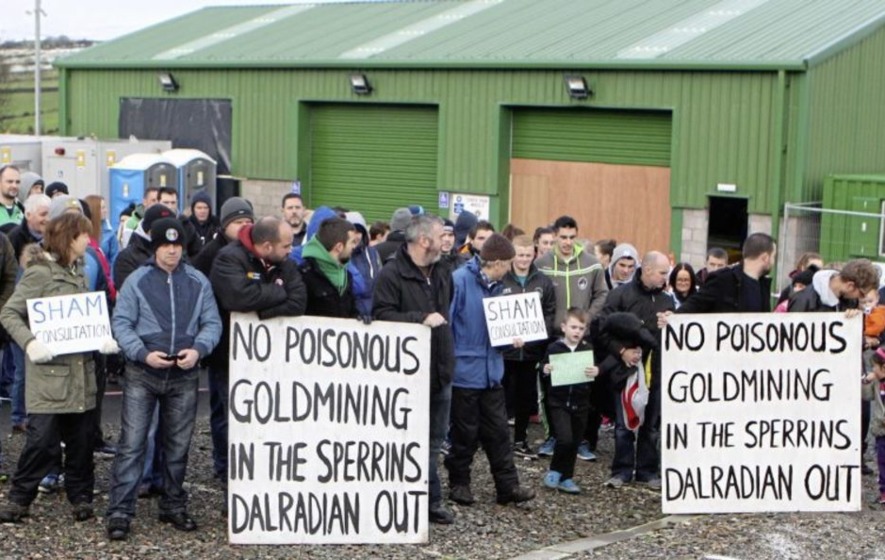
Community Demonstration Against Plans For Gold Mine And Cyanide Processing Plant In Sperrin Mountains, County Tyrone (Click To Enlarge)
At present in the Britain and Ireland the new mining threat which is emerging does not have the obvious threat of these vast open cast mines in other parts of the world. But it is being driven by the same underlying processes and heading in the same general direction. As prices have risen and larger deposits depleted, the industry is turning eyes to much smaller ones, or even looking to re-exploit old mines for their remaining deposits. This is so called “Small Deposit” mining, targeting numerous small, low quality mineral deposits in an attempt to replace more convention production from larger mines. In some ways this has many parallels with fracking where one individual oil or gas well has a limited impact, but the cumulative impact of the hundreds or thousands of wells required for fracking is another matter. Even more so that fracking, small deposit mining has the potential to sneak in under the radar, one mine at a time.
In 2015 Wolf Minerals opened the first new metals mine in the UK for nearly half a century, after a wave of closures up and down the country in recent decades. Drakelands in Devon is one of the world’s top five producers of tungsten. But this is just part of a much wider trend. Sirius Minerals has recently begun construction of a polyhalite mine on the North York moors. the deepest mine in the UK (and the second deepest in Europe). The Woodsmith Mine will target largest and highest grade deposit of polyhalite in the world. Meanwhile the Cononish gold mine in Scotland has been reopened by Australian firm ScotGold in the last year.
These projects are just the tip of a looming iceberg, with a whole raft of mining plans at various stages of development. Canadian company, Strongbow Exploration, has announced plans to acquire 26 old tins mines in Cornwall and has plans to reopen the South Crofty tin mine in the near Redruth in the future. Meanwhile Strategic Minerals and New Age Exploration have begun test drilling in preparation for mining tin and tungsten in Redmoor near Bodmin in Cornwall.
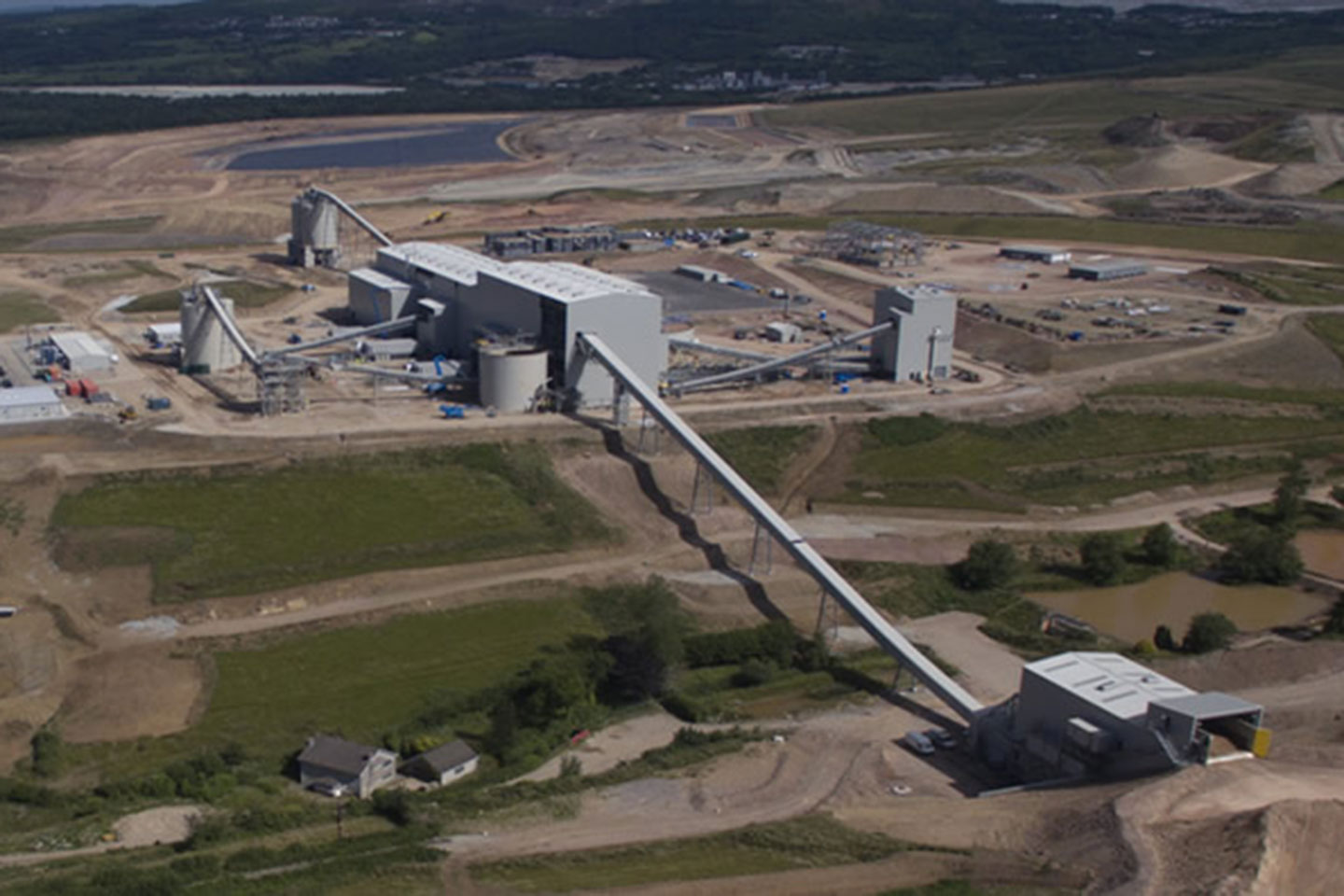
Wolf Minerals Drakelands Tungsten Mine In Devon, The First New Metals Mine In The UK In Half A Century (Click To Enlarge)
While a poliferation of new, more extreme, tin and tungsten mining is one threat to Cornwall, a potentially even larger one is posed by mining for lithium. Extraction operations would be more akin to fracking than mining; wells would tap hot brine from a depth of between 400m and 800m, before being sent to a processing plant to extract the lithium. Extraction usually involves evaporation in very large ponds, thousands of acres in size, which can have significant impact on water resources and ecology. A joint venture between Cornish Lithium and Strongbow Exploration is the main player at present, with it being touted as Europe’s largest source of lithium.
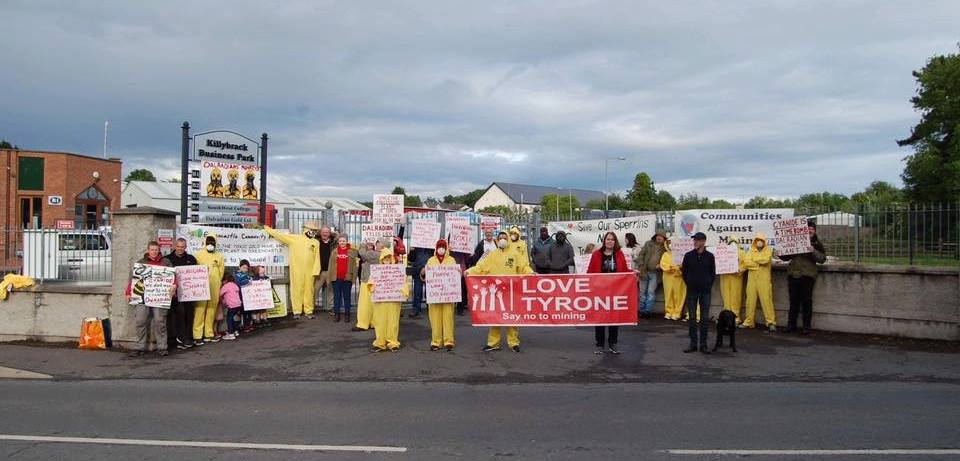
Gold mining, the ultimate is wasteful excess, also has massive expansion plans with Ireland and Scotland in the firing line. Northern Ireland is claimed to have the seventh richest undeveloped seam of gold in the world. At present there is only active gold mine in the whole of Ireland, run by Galantas Gold in Omagh, but it has permission to expand and many other plans are on the table. For instance rural communities in the Greencastle area of Co Tyrone are currently fighting plans by a Canadian company, Dalradian Gold Ltd, for a gold mine and cyanide processing plant to separate the gold from ore. Meanwhile south of the border Irish gold mining firm Conroy Gold and Natural Resources is targeting four new gold zones in County Monaghan.
Other threats include zinc-copper-lead mining at Parys Mountain in Anglesey, zinc mining near Tara in County Meath, Ireland and mining for coking coal (distinct from thermal coal which is in a price slump at present) near Whitehaven in Cumbria, as well as on the Scottish border around Gretna and Canonbie. These are not isolated, one off, projects, but just the most attractive of large numbers of small/low quality deposits which the mining industry will be looking to exploit as larger/higher quality deposits around the world are depleted. While industrial civilisation continues on its destructive path, the pressure for more extreme mining is only going to grow.
Seabed Mining
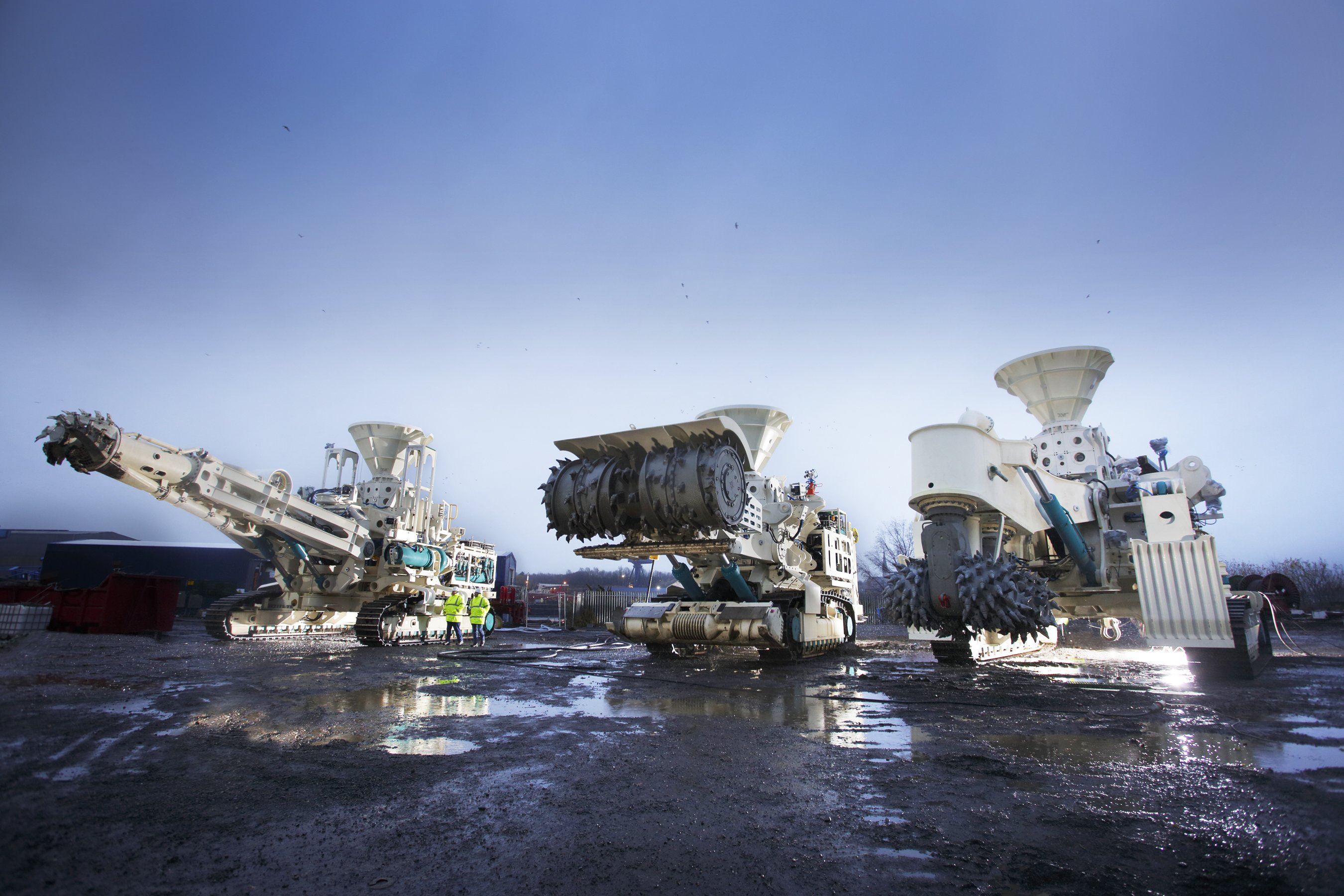
Mining machines built at Soil Machine Dynamic’s facility in Newcastle Upon Tyne for the first attempt a deep seabed mining by Canadian company in the Bismarck Sea near Papua New Guinea (Click To Enlarge)
Energy resource extraction (i.e. oil drilling) started on land but has move off shore, and is now moving into deeper and deeper water. For similar reasons, until now mining has been mostly confined to the land. Exceptions have included tunnel mining for coal which began straying out under the sea from the 18th century and dredging for sand/gravel in shallow water, which relatively easy to target and extract. With prices rising and better option depleting fast, the mining industry is turning its attention to mineral deposits on the ocean floor.
Some seabed mining is already underway in shallow water, for instance De Beers is souring the seabed for diamonds at depths of around 150 meters in a 2,300 square mile licence area off the Namibian coast. The first serious deep sea mining effort is expected to begin in 2019, in the Bismarck Sea near Papua New Guinea. Canadian firm Nautilus Minerals plans to use three giant robots crawling machines (each the size of a house) to grind up rocks rich in copper, zinc and gold at a depth of 1,600 metres and pump the slurry up to a custom-built surface ship at a rate of over 3,000 tonnes a day.
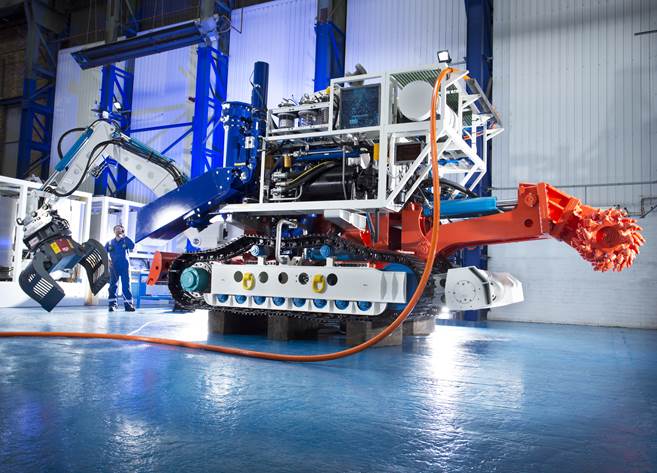
Viable Alternative Mine Operating System (VAMOS) seabed crawlers which Marine Minerals plans to use to mine tin off the northern coast of Cornwall (Click To Enlarge)
Seabed mining would certainly kill off most organisms living on seabed that would be excavated, but will create sediment plumes disrupting the natural movement of ocean water, and potentially smother entire ecological communities on the seabed, introducing nutrient-rich deep water into surface waters causing algae blooms and dead zones and releasing heavy metals once out of reach to shallow-water organisms, which can accumulate up the food chain – potentially harming the health of humans consuming fish as well.
The UK is heavily involved in the seabed mining push. UK Seabed Resources Ltd, a subsidiary of US defence contractor Lockheed Martin, is one of the main companies exploring for polymedtallic nodules in the central Pacific Clarion-Clipperton Fracture Zone. Meanwhile the mining machines for the first attempt a deep seabed mining by Canadian company in the Bismarck Sea near Papua New Guinea, have been built a Soil Machine Dynamic’s facility in Newcastle Upon Tyne. Closer to home Marine Minerals is even considering seabed mining for tin off St Ives, Perranporth, Portreath and St Agnes, while Treliver Minerals is planning to mine St Austell Bay for tin.
See Extreme Mining: Small Deposit And Seabed Mining Threats Growing for all the details including map of growing threats across country.