Squatted Community Garden Opening Day — Sat 19th May — Reading!

“COMMON GROUND”
(Read­ing Squat­ted Com­mu­ni­ty Gar­den)
** OPENING DAY! **

SATURDAY MAY 19TH,
1pm till Late!
** BBQ, live acoustic music and dance exhi­bi­tion by local kids from 6pm! **

“COMMON GROUND”
(Read­ing Squat­ted Com­mu­ni­ty Gar­den)
** OPENING DAY! **

SATURDAY MAY 19TH,
1pm till Late!
** BBQ, live acoustic music and dance exhi­bi­tion by local kids from 6pm! **

A group of anti-cap­i­tal­ists in Read­ing have cre­at­ed a beau­ti­ful gar­den from a squat­ted piece of derelict land for our com­mu­ni­ty to use and enjoy. On Sat­ur­day 19th May we will be open­ing to the pub­lic for the first time, hope to see you there!

Lim­it­ed acco­mo­da­tion is avail­able, 1st come 1st serve — please let us know asap, thanx!

The entrance is through the alley­way, next to the Wom­ens Infor­ma­tion Cen­tre, Sil­ver Street, Cen­tral Read­ing, UK. We are 10mins walk from train sta­tion.

“Any­thing is pos­si­ble when we take the ini­tia­tive”

For fur­ther infor­ma­tion please email rgacollective(AT)hotmail.co.uk

G8 Bike Caravan Action Nijmegen

7.05.2007 — Today a bicy­cle demo against the G8 was held in Nijmegen, Hol­land..

Today the bicy­cle demo against the G8 was a suc­cess. Despite the pour­ing rain and the absence of the major­i­ty of the inter­na­tion­al bicy­cle car­a­van, there were still 30 cyclists ready for action. Sev­er­al loca­tions that had some con­nec­tion with the G8 pol­i­tics were vis­it­ed by bike for some good-spir­it­ed demon­strat­ing . Unlike in Utrecht the police was wise enough not to show up. Tonight the rest of the car­a­van will arrive in Nijmegen, where the cyclists will stop for the night. Tomor­row the car­a­van will con­tin­ue towards Ger­many, where the G8 sum­mit will take place from 6th to 8th of june, in Heili­gen­damm.

7.05.2007 — Today a bicy­cle demo against the G8 was held in Nijmegen, Hol­land..

Today the bicy­cle demo against the G8 was a suc­cess. Despite the pour­ing rain and the absence of the major­i­ty of the inter­na­tion­al bicy­cle car­a­van, there were still 30 cyclists ready for action. Sev­er­al loca­tions that had some con­nec­tion with the G8 pol­i­tics were vis­it­ed by bike for some good-spir­it­ed demon­strat­ing . Unlike in Utrecht the police was wise enough not to show up. Tonight the rest of the car­a­van will arrive in Nijmegen, where the cyclists will stop for the night. Tomor­row the car­a­van will con­tin­ue towards Ger­many, where the G8 sum­mit will take place from 6th to 8th of june, in Heili­gen­damm.

The first stop was made at the local Mcdon­alds. This was sur­round­ed by the cyclists and the entrance road to the mcdrive was blocked with fences.This fast food chain is a sym­bol of exploita­tion of work­ers and envi­ron­ment in third world coun­tries by the rich west­ern soci­ety.

Of course Beren­don­ck was also vis­it­ed. Here, envi­ron­men­tal groups and local nature enjoy­ers are resist­ing the expan­sion of the golf ter­rain, into a valu­able for­est and lake area. The activsts reclaimed the pub­lic space by plac­ing signs pro­claim­ing “This is not a Golf State / Free access recre­ation­al area”. Trees were plant­ed in the holes, and there was a game of foot­ball. Like Beren­don­ck is wast­ed for a small group of rich peo­ple, the same goes for the G8 — on a world wide scale.

The last action was at the local head­quar­ters of the marechaussee (immi­gra­tion police). The gates to the build­ing were locked from the out­side by thick chains. Ban­ners were hung on the fences, on which was writ­ten “no human being is ille­gal” and “break the pow­er of the G8” By this way the activists protest­ed against the Fortress of Europe. The marechaussee plays an impor­tant role in the inhu­mane immi­gra­tion pol­i­tics. Migra­tion is one of the main themes of the protests against the G8.

Pho­tos: http://www.indymedia.nl/nl/2007/05/44322.shtml

Video : http://www.youtube.com/watch?v=n5LnmkG2zOQ

Gloucester pipeline action group

May 6, 2007
There has been an action group formed in Glouces­ter to raise aware­ness about the pipeline and to protest against the pipeline. We meet up around once month and also stage direct actions, put on ben­e­fit gigs and have info stalls in Glouces­ter and at local events. Please send an email to fightthepipe@hotmail.co.uk for more infor­ma­tion or con­tact us through our myspace http://www.myspace.com/fightingthepipe

May 6, 2007
There has been an action group formed in Glouces­ter to raise aware­ness about the pipeline and to protest against the pipeline. We meet up around once month and also stage direct actions, put on ben­e­fit gigs and have info stalls in Glouces­ter and at local events. Please send an email to fightthepipe@hotmail.co.uk for more infor­ma­tion or con­tact us through our myspace http://www.myspace.com/fightingthepipe

We would love to hear from any­one whether you just want email updates on what we are doing, put up a few posters and give leaflets to friends or get involved with direct actions.

Togeth­er we can make a dif­fer­ence!

SHAC TAKES THE FLAK: FLIMSY PRETEXT FOR COUNTRY-WIDE ARRESTS OF ANIMAL RIGHTS ACTIVISTS

4.5.07
In yet anoth­er ham­merblow aimed at the ani­mal rights move­ment, police made 32 arrests across the UK in the ear­ly hours of Tues­day morn­ing in ‘Oper­a­tion Achilles’. Assis­tant Chief Con­sta­ble Adri­an Lep­pard of Kent Police says the arrests are “one of the largest, if not the largest, police oper­a­tion that has tar­get­ed ani­mal extrem­ism in the UK.” Three prop­er­ties were also searched in Bel­gium and the Nether­lands.

4.5.07
In yet anoth­er ham­merblow aimed at the ani­mal rights move­ment, police made 32 arrests across the UK in the ear­ly hours of Tues­day morn­ing in ‘Oper­a­tion Achilles’. Assis­tant Chief Con­sta­ble Adri­an Lep­pard of Kent Police says the arrests are “one of the largest, if not the largest, police oper­a­tion that has tar­get­ed ani­mal extrem­ism in the UK.” Three prop­er­ties were also searched in Bel­gium and the Nether­lands.

700 police were involved as homes and ani­mal sanc­tu­ar­ies were raid­ed, with police seiz­ing com­put­ers, mobile phones and cash. The whole oper­a­tion was designed with max­i­mum pub­lic­i­ty in mind — the press were tipped off in advance and duti­ful­ly report­ed on the lat­est crack­down on ani­mal rights ‘extrem­ism’. Almost all those arrest­ed had some con­nec­tion with the SHAC cam­paign

Of course what did­n’t hit the head­lines was the num­ber of prop­er­ties raid­ed with­out arrests being made and the fact that 24 hours lat­er only nine of those arrest­ed had been charged — two with black­mail and the oth­er sev­en with ‘con­spir­a­cy to black­mail’. Twen­ty were released on bail and one with­out charge. Two of those nicked, main organ­is­ers in the SHAC cam­paign, have been held for fur­ther ques­tion­ing.

Cru­cial­ly, the police inves­ti­ga­tion — in a nod to cor­po­rate mar­tial law — used intel­li­gence and foren­sic sup­port from the pri­vate sec­tor. The phar­ma­ceu­ti­cal and biotech­nol­o­gy indus­try greet­ed news of the raids with glee: “News of today’s oper­a­tion will act as a great fil­lip to the med­ical research com­mu­ni­ty across Europe,” said a state­ment issued by Ais­ling Bur­nand, chief exec­u­tive of Britain’s BioIn­dus­try Asso­ci­a­tion.

One source close to SHAC told SchNEWS, “This has all the hall­marks of a fish­ing expe­di­tion, designed to cause mas­sive dis­rup­tion to ani­mal rights cam­paigns and show Big Phar­ma here and abroad that the police are mak­ing strides against the ani­mal rights move­ment.”

NETCU CLOSES IN

As details emerged of the botched raid on Fresh­fields Ani­mal Sanc­tu­ary in Liv­er­pool, sanc­tu­ary head Dave Cal­len­dar told SchNEWS, “At 5.30 they kicked in the door and seized three staff mem­bers. At 6.20 they seized two oth­ers as they turned up for work. There were about six­ty cop­pers — they set up a cor­don and refused access to any­one. Those seized were held in vans but not arrest­ed. My farm man­ag­er had his col­lar­bone bro­ken after he was grabbed by three police when he climbed the back wall to check on our pigs. He was held in a van for three hours and refused access to med­ical atten­tion. Although the police brought an RSPCA inspec­tor with them it was clear that when we regained access to the site that noth­ing had been done for the ani­mals. Also they allowed ani­mals to escape, which we’re still look­ing for. They took every sin­gle piece of hard­ware, mobile phones, pho­to­copiers, you name it — but they did­n’t take a sin­gle piece of paper­work. It’s dif­fi­cult to see it as any­thing oth­er then delib­er­ate intim­i­da­tion and dis­rup­tion — nobody here is involved with the Hunt­ing­don cam­paign. We’re a pro-active com­mu­ni­ty organ­i­sa­tion and we’re not going to let them walk all over us.”

The raids come against a back­drop of a decline in crim­i­nal inci­dents relat­ed to ani­mal rights and demon­strate that the Nation­al Extrem­ism Tac­ti­cal Co-ordi­nat­ing Unit’s (see www.netcu.org.uk) efforts are now aimed firm­ly at the ‘legit­i­mate’ above ground ani­mal rights move­ment. With SHAC once again able to con­duct demos out­side HLS (see SchNEWS 581) and activism spread­ing across Europe, Britain’s polit­i­cal police seem intent on decap­i­tat­ing the A.R. move­ment, by any means nec­es­sary.

* See www.shac.net for more
* Fresh­fields Ani­mal Sanc­tu­ary see www.freshfieldsrescue.org.uk

Call for Submissions: Zine on Property Destruction

Enter­ing the rad­i­cal com­mu­ni­ty, many quick­ly find them­selves con­stant­ly hear­ing about debate over prop­er­ty destruc­tion. Is it vio­lence? Does it mat­ter if it’s vio­lence? Is it effec­tive? Is it alien­at­ing? And on and on. I’ve been hear­ing this argu­ment pret­ty much since I reg­u­lar­ly start­ed attend­ing protests. At this point, I almost don’t want to deal with the sub­ject. Nat­u­ral­ly, you’re ask­ing, “Then why the hell do you want to make a zine about it?”

Enter­ing the rad­i­cal com­mu­ni­ty, many quick­ly find them­selves con­stant­ly hear­ing about debate over prop­er­ty destruc­tion. Is it vio­lence? Does it mat­ter if it’s vio­lence? Is it effec­tive? Is it alien­at­ing? And on and on. I’ve been hear­ing this argu­ment pret­ty much since I reg­u­lar­ly start­ed attend­ing protests. At this point, I almost don’t want to deal with the sub­ject. Nat­u­ral­ly, you’re ask­ing, “Then why the hell do you want to make a zine about it?”

The answer is sim­ple: I may be sick of the debate, but that’s just me. As the war in Iraq drags on (drag­ging blood­ied Iraqi corpse upon blood­ied Iraqi corpse with it) and dis­con­tent and dis­il­lu­sion­ment with this whole socio-polit­i­cal-eco­nom­ic sys­tem increas­es, more peo­ple are get­ting involved in the fight against cap­i­tal­ism and its machines of war (both the armies abroad and the police at home). For many, when they start going to protests and demon­stra­tions, they have at best mixed feel­ings about things like prop­er­ty destruc­tion, vio­lent­ly resist­ing the police, or even just march­ing in the street with­out a per­mit. And some appre­hen­sion about these tac­tics is com­plete­ly under­stand­able. After all, every­thing in this sys­tem is designed to teach us that prop­er­ty (or per­haps more accu­rate­ly, cor­po­rate prop­er­ty) is sacred, that police should always be obeyed (or else) and that break­ing the law, even small laws, is moral­ly and eth­i­cal­ly wrong and can nev­er be jus­ti­fi­able.

And so, this is a call for arti­cles, sto­ries, art, or any­thing else about the tac­tic of prop­er­ty destruc­tion and its mer­its for a zine that seeks to give those on the fence about this issue a gen­tle nudge (and maybe con­vince them to rip down the fence!). Since this is meant to be a zine for peo­ple new to social move­ments, I respect­ful­ly ask that the tone of the arti­cles keep that in mind when choos­ing their words. To put it plain­ly, please no anti-lib­er­al rants–they piss me off too, but this is sup­posed to be the case for prop­er­ty destruc­tion, not the case against lib­er­als (maybe next time!).

When I say arti­cles, I mean pre­vi­ous­ly pub­lished or unpub­lished arti­cles argu­ing for the valid­i­ty or effec­tive­ness of prop­er­ty destruc­tion. It does­n’t even have to be some­thing you wrote. If there’s an arti­cle that you think is real­ly great and think that it should be includ­ed, tell me about it (things like, where I can find it, who wrote it, and how I can get ahold of them). There’s two kinds of sto­ries that would be real­ly great to have for this zine: per­son­al accounts and “his­tor­i­cal” accounts. Per­son­al accounts would be some­thing talk­ing about wit­ness­ing or even com­mit­ting an act of prop­er­ty destruc­tion, how it made you feel, what impact it had, etc. Obvi­ous­ly this is very sen­si­tive, so try­ing to be rel­a­tive­ly vague is best (and also see the next para­graph for the best way to sub­mit things like that). A “his­tor­i­cal” account would be more of a gen­er­al sto­ry (prefer­ably con­tem­po­rary) of how prop­er­ty destruc­tion put pres­sure on an insti­tu­tion to win a con­crete goal. Art would be any­thing that would be an image. A car­toon, a cool draw­ing, what­ev­er.

If you have any­thing to con­tribute, please send an email to tacticaldiversity@gmail.com. I may want to edit some of your sub­mis­sion for var­i­ous rea­sons (most like­ly space). Any edits or cuts will be run by you first. If for some rea­son you can’t or don’t want to sub­mit some­thing online, send an email and we can dis­cuss oth­er meth­ods of sub­mis­sion. As was said above, send­ing per­son­al accounts about prop­er­ty destruc­tion over email is not nec­es­sar­i­ly a good idea. In fact, for both our sakes, it’s a bad idea. Any per­son­al accounts should be sub­mit­ted will an anony­mous email ser­vice like www.willselfdestruct.com (be sure to make it at least 1 view). If you want me to respond some­how, you can leave an email address in the will­selfde­struct mes­sage and I can respond in kind. If you don’t leave a way to respond to you, I may make edits with­out run­ning them by you first. Also, a major goal is to make sure that every piece pub­lished is pub­lished with the cre­ator’s per­mis­sion. This zine isn’t going to be sold any­where and will be dis­trib­uted for free, but I still don’t want to use oth­er peo­ple’s stuff in this zine with­out their express per­mis­sion. So yeah, don’t sub­mit oth­er peo­ple’s work act­ing like it’s your’s and get peo­ple pissed at me. If you run an infos­hop or any oth­er rad­i­cal space that could dis­trib­ute this zine upon com­ple­tion and are inter­est­ed in receiv­ing copies, drop a line and you’ll be kept in the loop when it comes time to pub­lish.

In love and rage,
Casey Ford

New Titnore Woods Phone

The phone num­ber to con­tact the Tit­nore Woods protest camp has changed. The new num­ber for the camp is 07913 534083. The old one no longer works. Please pass the new num­ber around.

We are camped in Tit­nore Woods near Wor­thing to resist a large Tesco and hous­ing devel­op­ment project. It would destroy some of the last remain­ing ancient wood­land in Sus­sex, if it goes ahead. Vis­i­tors and dona­tions are wel­come.

The phone num­ber to con­tact the Tit­nore Woods protest camp has changed. The new num­ber for the camp is 07913 534083. The old one no longer works. Please pass the new num­ber around.

We are camped in Tit­nore Woods near Wor­thing to resist a large Tesco and hous­ing devel­op­ment project. It would destroy some of the last remain­ing ancient wood­land in Sus­sex, if it goes ahead. Vis­i­tors and dona­tions are wel­come.

Anti Gold Mining Conflicts Spreading — 2 May global day of action

Once iso­lat­ed com­mu­ni­ties around the world are sud­den­ly unit­ing and strength­en­ing in their actions to halt transna­tion­al Big Min­ing projects. On May 2, 2007 com­mu­ni­ty and envi­ron­men­tal groups around the world will unite is strug­gle on the Glob­al Day Of Action Against Bar­rick Gold Cor­po­ra­tion.

Once iso­lat­ed com­mu­ni­ties around the world are sud­den­ly unit­ing and strength­en­ing in their actions to halt transna­tion­al Big Min­ing projects. On May 2, 2007 com­mu­ni­ty and envi­ron­men­tal groups around the world will unite is strug­gle on the Glob­al Day Of Action Against Bar­rick Gold Cor­po­ra­tion.

Anti-Gold Min­ing Con­flicts Spread­ing Through­out the Amer­i­c­as

Glob­al Day of Action Against Bar­rick Gold, May 2, 2007

Big Min­ing Investors Fear Big Loss­es

In almost every Latin Amer­i­can coun­try, transna­tion­al met­als min­ing firms are explor­ing, build­ing and oper­at­ing huge, open-pit gold mines which extract and con­t­a­m­i­nate using tremen­dous amounts of water. These new “mod­ern min­ing” projects leave thou­sand-year lega­cies of acid mine drainage, destruc­tion of ecosys­tems, dis­ease, and region­al cli­mate change. Rich­es in the form of gold, sil­ver and cop­per are export­ed to first world share­hold­ers, leav­ing behind pover­ty, depen­den­cy and pol­lu­tion.

How­ev­er, once-iso­lat­ed com­mu­ni­ties are sud­den­ly unit­ing and strength­en­ing in their actions to halt Big Min­ing projects.

Today there are more than a hun­dred min­ing-relat­ed local con­flicts, in every Latin Amer­i­can coun­try (www.minesandcommunities.org) Campesinos, indige­nous and com­mu­ni­ty groups in vil­lages and cities are fight­ing Big Min­ing inser­tion. In coun­tries such as Peru, Ecuador and Colom­bia, multi­na­tion­al min­ing firms are respond­ing by arm­ing para­mil­i­tary groups to meet com­mu­ni­ty resis­tance with mur­der, threats and vio­lence. In every instance, min­ing firms attempt to “pur­chase” social license with bribes, hand­outs, media cam­paigns and cor­rupt local politi­cians, to sell “sus­tain­able gold min­ing.”

The tremen­dous over con­sump­tion of water resources is the key issue in mod­ern met­als min­ing projects. Big mines change region­al cli­mate pat­terns, dry up ecosys­tems, cause the deser­ti­fi­ca­tion of agri­cul­tur­al lands, com­mu­ni­ties are dried out. Big min­ing projects are being locat­ed pri­mar­i­ly in sen­si­tive riv­er head­wa­ters of vul­ner­a­ble arid regions upon which mil­lions of human and eco­log­i­cal com­mu­ni­ties depend. Big min­ing, through its inten­sive use of ener­gy and destruc­tion of habi­tat, glac­i­ers, aquifers, cli­mate pat­terns and water resources, is a huge fac­tor in glob­al cli­mate change. Appro­pri­ate inter­na­tion­al and nation­al reg­u­la­tion of Big Min­ing projects is almost non-exis­tent.

On May 2, 2007, com­mu­ni­ties around the world affect­ed by Big Min­ing projects are going to car­ry out simul­ta­ne­ous demon­stra­tions against the Bar­rick Gold Cor­po­ra­tion. Simul­ta­ne­ous actions will be held in Chile, Argenti­na, Peru, Aus­tralia, Cana­da, the Philip­pines, Tan­za­nia, and Europe.

Bar­rick Gold Cor­po­ra­tion, the world’s largest gold min­ing firm, is spear­head­ing the transna­tion­al met­als min­ing firms inva­sion of Latin Amer­i­ca. In the past few years, com­mu­ni­ty groups strug­gling against projects of Bar­rick Gold Cor­po­ra­tion on five con­ti­nents began com­mu­ni­cat­ing togeth­er, and this year they have joined togeth­er for the first time to call for this Glob­al Day of Action Against Bar­rick Gold Cor­po­ra­tion.

• In Argenti­na, com­mu­ni­ty activists forced Bar­rick Gold to sus­pend oper­a­tions in the province of La Rio­ja, the gov­er­nor oust­ed due to his cor­rupt rela­tions with the min­ing firm, and a state ref­er­en­dum to pro­hib­it open-pit min­ing is to be vot­ed by the pop­u­la­tion.

• Chilean and Argen­tine com­mu­ni­ties are fight­ing tooth and nail against the con­struc­tion of one of the world’s largest gold mines in the heart of a UNESCO World Her­itage Wilder­ness Area, in the del­i­cate glac­i­er peaks of the Andes along the Chile-Argenti­na Bor­der. This is Barrick’s infa­mous Pas­cua-Lama/Ve­ladero project. http://projectcensored.org/censored_2007/index.htm#21

• In Ancash, Peru, fierce com­mu­ni­ty resis­tance has been answered with the mur­ders of pro­tes­tors by para­mil­i­tary and state forces work­ing for the Bar­rick Gold Cor­po­ra­tion.

• In Aus­tralia, a series of pow­er­ful direct actions car­ried out by local Abo­rig­i­nal lead­ers, indige­nous and com­mu­ni­ty activists has tied up and cast grave doubts on Bar­rick Gold’s huge Lake Cow­al project.

On May 2, A Glob­al Day of Action Against Bar­rick Gold will be car­ried out. We invite all neigh­bors, activists and ecol­o­gists to join or form the many local-scale actions to be car­ried out simul­ta­ne­ous­ly and autonomous­ly through­out the world, on the five con­ti­nents in which Bar­rick Gold oper­ates.

We hope that through vis­i­ble and spir­it­ed actions, we can join togeth­er to draw atten­tion to the grave threat brought upon our world by these transna­tion­al large-scale open-pit met­als min­ing projects using cyanide. Our world does not need more gold and sil­ver! We must fight to pre­serve this world for our chil­dren and their chil­dren.

We hope to send a mes­sage to Bar­rick Share­hold­ers that their invest­ments are high­ly risky: Through­out the world, com­mu­ni­ties are reject­ing and shall put an end to these shame­ful met­als min­ing oper­a­tions.

For More Infor­ma­tion:

Mines and Com­mu­ni­ties www.minesandcommunities.org
Cor­p­Watch www.corpwatch.org
Latin Amer­i­can Obser­va­to­ry of Min­ing Con­flicts www.conflictosmineros.net
www.noalamina.org (Argenti­na)
www.noalapascualama.org (chile)

removing a lock-on (at Faslane)

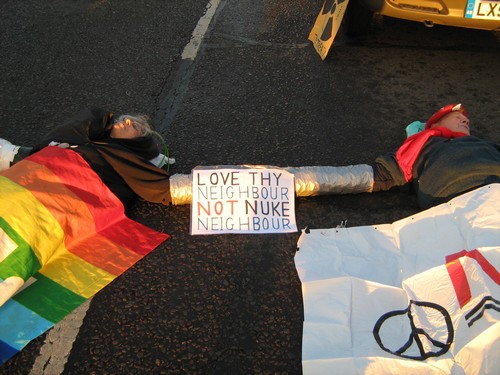
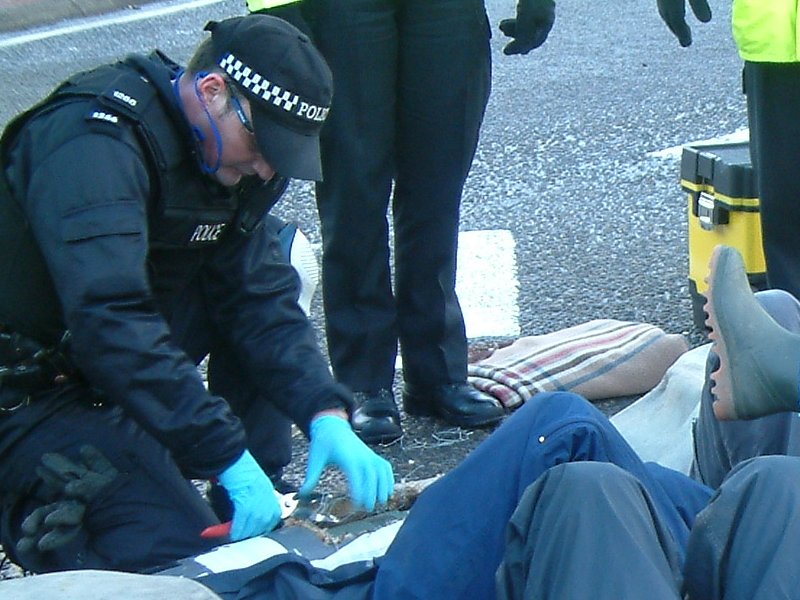
Inter­est­ing pho­tos for all you bud­ding arm-tube con­struc­tion artists. Look how tricky it is to remove a mul­ti- and dif­fer­ent-lay­ered one, even when you’ve got all the best kit:

Inter­est­ing pho­tos for all you bud­ding arm-tube con­struc­tion artists. Look how tricky it is to remove a mul­ti- and dif­fer­ent-lay­ered one, even when you’ve got all the best kit:
Removing arm-tube 1Removing arm-tube 2Removing arm-tube 3Removing arm-tube 4

On how to block just about everything

The upcom­ing actions against the G8 sum­mit in Heili­gen­damm will present con­sid­er­able chal­lenges for the cre­ativ­i­ty and sta­mi­na of activists. After all, the idea is to effec­tive­ly block all the entry points. The prob­lem is that an enor­mous army of secu­ri­ty and pub­lic order forces will be present and try to pre­vent the same. But his­to­ry has shown that every­thing can be blocked. Below you will find some use­ful sto­ries about the prac­tice of block­ades. This text will be updat­ed as new ideas pour in.

The upcom­ing actions against the G8 sum­mit in Heili­gen­damm will present con­sid­er­able chal­lenges for the cre­ativ­i­ty and sta­mi­na of activists. After all, the idea is to effec­tive­ly block all the entry points. The prob­lem is that an enor­mous army of secu­ri­ty and pub­lic order forces will be present and try to pre­vent the same. But his­to­ry has shown that every­thing can be blocked. Below you will find some use­ful sto­ries about the prac­tice of block­ades. This text will be updat­ed as new ideas pour in.

Orig­i­nal ver­sion of the arti­cle, with many illus­tra­tions, can be found here: http://www.globalinfo.nl/content/view/1200/30/

Also writ­ten by the affin­i­ty group Wil­nis: 8 good rea­sons to block the G8 sum­mit ( http://www.globalinfo.nl/content/view/1209/30/)

——————————-

The roads to Heili­gen­damm come in all shapes and sizes. Except to the air­port, there are no big motor­ways, which require their own expert approach to block­ing. Most of the roads that will be used to trans­port peo­ple and goods to the G8 sum­mit are dual car­riage­ways, some­times with a crash bar­ri­er inbe­tween the lanes, often with crash bar­ri­ers (and cycle paths) along the sides of the road.

To begin an effec­tive block­ade is not that dif­fi­cult, but the skill lies in keep­ing it going. Good prepa­ra­tion is half the work. You can start with prepar­ing a few days before in the action camps, but it will be even eas­i­er if you have made plans before and have organ­ised your­selves in a so-called affin­i­ty group. Then you can think before­hand about how you want to do actions, what you need for it, you can also prac­tice already before­hand, etc. Dur­ing the prepa­ra­tions, you can ask oth­ers for advice, learn cer­tain tech­niques, etc. It is impor­tant to form a group of peo­ple who more or less agree on the man­ner in which they want to do actions, so that not too much time goes into dis­cus­sions or dis­agree­ments. If you have not organ­ised your­self in a group yet, or if you have ques­tions, you can always try and find con­tact through activist meet­ings. Con­ver­gence cen­tres, for exam­ple, are going to be set up in Berlin, Ham­burg and Ros­tock, amongst oth­ers for this pur­pose. In the Nether­lands, you can find fel­low activists at the dis­sent meet­ings.

More­over, dur­ing the prepa­ra­tions as well as the imple­men­ta­tion of the actions you should expect that the block­ade is going to be suc­cess­ful and that it will last long. The G8 sum­mit goes on for 3 days, and the block­ades will be imple­ment­ed for that peri­od of time. Make sure, there­fore, that at least for the first hours you have enough to eat and drink and some form of enter­tain­ment. Bore­dom is often one of the biggest prob­lems with suc­cess­ful block­ades and occu­pa­tions.

Inbe­tween block­ades, you can hold sports com­pe­ti­tions, lec­tures, teach-ins, etc. Or you can think about which new func­tion Hotel Kempin­s­ki will have after­wards… Also, make sure (espe­cial­ly if you’re in a big group) that you are accom­pa­nied by activist first aid and legal observers, activist media, etc. Make sure you have com­mu­ni­ca­tion chan­nels with oth­er block­ades and action camps so that you know what’s going on. If the block­ade per­se­veres, bet­ter com­mu­ni­ca­tion and sup­ply struc­tures can be start­ed lat­er and you can com­mu­ni­cate to oth­ers that the block­ade has start­ed and that oth­er peo­ple can help to secure it.

It can be use­ful to have (in a side street near­by?) one or more cars so that peo­ple can get mate­ri­als there and back.

Make sure you have nice dec­o­ra­tions for the block­ade, ban­ners, flags and, for exam­ple, these things (link to demo units: http://www.demotech.org/d‑design/d‑construct.php?p=69), so that it is clear to the view­er what it’s all about.

The most sim­ple way to block­ade is to just sit on the street with a few peo­ple. This is already enough to stop car traf­fic and if there’s a lot of it, the result­ing traf­fic jam will cre­ate even more prob­lems for mobil­i­ty in the sur­round­ings. The more peo­ple take part in the block­ade, the more dif­fi­cult it will be to break it. How­ev­er, past expe­ri­ences have shown that if the police real­ly want to, they can chase away the block­ade fair­ly eas­i­ly. There are meth­ods to make the block­ade some­what stronger. For exam­ple, by link­ing arms or by prac­tic­ing resis­tance meth­ods against being dragged away. This will delay the evic­tion. But keep in mind that the police can apply force­ful mea­sures: water can­nons, tear gas, hors­es and even dogs. More­over, it often uses vio­lence when drag­ging peo­ple away (twist­ing of arms, fin­gers in the nose, bat­ter­ing with the stick, etc.) Make sure cam­eras are direct­ed towards the police, that might restrain them in their vio­lence.

On a (hope­ful­ly unnec­es­sary) side note: before you sit on the street, the traf­fic has to have stopped. You also have to make sure that new­ly arriv­ing cars can­not dri­ve into the block­ade. There are many ways to stop traf­fic, you can also decide to choose a spot near traf­fic lights. Make sure you have a group of peo­ple warn­ing the traf­fic some hun­dred metres before the block­ade that they have to stop. If blockad­ing roads at night, make sure there is suf­fi­cient light­ing. Nev­er block a road with traf­fic on it or if you are not sure that the traf­fic has been stopped, and nev­er block a road just after a curve. Also, do not just throw things on the road and walk away, this can cause acci­dents. Once the road is out of use, by police or activist inter­ven­tion, then throw­ing things on the roads is, of course, pos­si­ble. In prac­tice, how­ev­er, a block­ade that is defend­ed by peo­ple is much more effec­tive than just some objects left behind.

Using lock-ons is anoth­er way to make your block­ade stronger. You can get them in all shapes and sizes. (link: http://www.eco-action.org/rr/ch12.html) Most often they are met­al pipes in which you can stick your arm in one side and anoth­er per­son in the oth­er, this way you can make human chains. You can, for exam­ple, make a cir­cle of peo­ple and link this to anoth­er cir­cle, etc. By mak­ing bar­rels with con­crete short­ly before blockad­ing you can link the lock-ons to heavy objects. Remem­ber though that the police does not shy away from being heavy-hand­ed against you in this sit­u­a­tion either. Make sure that you can always free your­self and that there are oth­er ‘unlocked’ peo­ple around you (who can also bring food, scratch your back, etc.)

The more mate­r­i­al you have, the more sta­ble the block­ade. You can use mate­ri­als you find in the area around you (wood, stones, con­tain­ers, etc.) or by plan­ning the block­ade in areas where you have a lot of mate­r­i­al at your dis­pos­al. You can also bring your own.

A famous exam­ple is the tri­pod. (pic­ture)

The high­er it is the more dif­fi­cult it is for police to break it down. You can make it from tree trunks, met­al pipes, etc. But tripods can cause acci­dents; you have to know what you’re doing, first prac­tice and ask advice from peo­ple who have used them before. Also keep in mind that some­times the police is will­ing to let peo­ple fall, as was the case dur­ing the G8 sum­mit protests in Lau­sanne.

It is eas­i­er to strength­en the block­ade with dif­fer­ent kinds of mate­r­i­al. First make sure the block­ade is erect­ed, then you can make it stronger. Speed is essen­tial, if the block­ade has been secured well before the police arrives, it will be more dif­fi­cult to push it to the side. Organ­ise groups of peo­ple to get mate­ri­als and make sure there are always enough peo­ple left over to form the block­ade. Some­times it is use­ful to have thought in advance about what you need to get the mate­ri­als there: ropes, if objects have to be towed, or saws if you want to cut bits of woods loose. Depend­ing on the sit­u­a­tion, you can also fix cables inbe­tween the crash bar­ri­ers or trees. Make sure, how­ev­er, that you make them clear­ly vis­i­ble with flags and keep in mind they can be a hin­drance for you, too, if you need to get away.

Always try and stay friends with peo­ple liv­ing in the neigh­bour­hood. Do not use their front gar­den fence for you bar­ri­cade and explain to peo­ple what the block­ade is about. Invite them to have a look at the action camps. Be pre­pared that not all of them will be friend­ly. The same applies to car dri­vers. It can be use­ful to decide before­hand who will act as a spokesper­son (cer­tain­ly for the media). It can also be use­ful to have one or more person(s) act­ing as a con­tact per­son to the police.

The response of the police will depend on the cir­cum­stances and the time they have at their dis­pos­al. If there are block­ades every­where, they will not able to tack­le them all at the same time. In any case though, you have to expect an attack by the police at some point in time.

They can arrive with vehi­cles to push aside the block­ades (armoured cars, pic­ture), with water can­nons to attack groups of peo­ple or with groups of police offi­cers wear­ing pro­tec­tive gear to attack peo­ple with batons, etc.

It is impor­tant to have dis­cussed in advanced about how you want to defend the block­ade. In Seat­tle, it appeared that a big group of deter­mined peo­ple can be much more effec­tive than strong mate­ri­als. Make sure the atmos­phere on the block­ade is good. Pre­vent peo­ple being sur­prised by fel­low activists using meth­ods that not every­one sup­ports. But also pre­vent peo­ple from being intim­i­dat­ed and leave the block­ade soon­er than nec­es­sary. It often takes hours before police takes heavy hand­ed action and most of the time you can pre­dict their actions by watch­ing their moves close­ly. For exam­ple, you only have to start wor­ry­ing about tear gas when they put on their gas masks. Keep in mind that the police that is keep­ing you busy can­not be deployed else­where.

Anoth­er strat­e­gy to delay the break­ing of a block­ade is to sit down and link arms. But be pre­pared for police being heavy hand­ed in haul­ing you away. The fact that you do not use vio­lence is not a guar­an­tee that they will not use it either (in fact, often the oppo­site seems to be the case). There are, of course, oth­er and more mil­i­tant ways to keep the police at bay. A sud­den attack by clowns can also con­sid­er­ably dis­turb the plans of the pub­lic order troops. There is lit­tle you can do against armoured police vehi­cles (unless the bar­ri­cade is very sta­ble indeed) but they do, for exam­ple, hate paint on the wind­screen. In fact this applies to all police vehi­cles. And it has been proven that even armoured cars and water can­nons can get stuck in a ditch.

Set­ting a bar­ri­cade on fire helps also dur­ing a ‘man­u­al’ evic­tion by the police, that is with­out vehi­cles. Do con­sid­er that after a while the bar­ri­cade will be gone. Also make sure the fire can­not spread to near­by objects or areas such as a for­est. This would be the last effect you would want your ‘protest’ to have. If locat­ed near build­ings, make sure they are not endan­gered. Do not leave bot­tles with inflam­ma­ble flu­ids lying around, they can cause nasty acci­dents.

There are ways of mak­ing a road unus­able for longer term, but that often takes a lot of time and/or spe­cif­ic hard­ware. Dur­ing the anti-nuclear protests in Gor­leben, for exam­ple, local inhab­i­tants and activist dug tun­nels under­neath the roads so that trucks could no longer pass. If you want to stop reg­u­lar cars, you will have to take off the top lay­er of asphalt or con­crete as well, for which you need a jack-ham­mer, pick­axe and shov­els. Nat­u­ral­ly, if the road is not asphalt­ed you can dig holes in it. Non-asphalt­ed roads some­times lead to big­ger roads that you might want to block and they are often used by police as access road to the block­ade. If you dig a hole, pile up the sand on ‘your’ side, if it lies on the side of the police they sim­ply shov­el it back in. Dur­ing evic­tions in Ams­ter­dam some peo­ple even man­aged to get a dragline exca­va­tion machine going which was parked in the neigh­bour­hood…

Until now, we dis­cussed the tra­di­tion­al road block/blockade. There are many more ways to inter­vene in road traf­fic. Keep in mind that the police also knows them and under­goes train­ing pro­grammes to deal with them, so be cre­ative and invent new meth­ods! Sit in a tree next to the road, that’s dif­fi­cult for police to evict and often they do not dare to con­tin­ue let traf­fic go through, at least not their high­er vehi­cles. Even bet­ter: choose two trees stand­ing across the road from each oth­er, tie a rope between them high above the street and hang in them, that’s a so-called walk­way. The idea is that police and oth­er road users will not risk dri­ving under­neath the rope as they fear the peo­ple hang­ing in it will drop some­thing or jump down onto the street. This meth­ods requires a lot of expe­ri­ence. Make sure you have a good accom­pa­ny­ing group with you and stop the traf­fic dur­ing the set­ting up. Do not start hang­ing in the ropes before the traf­fic has been stopped!

You can also park one or sev­er­al cars on a cross­ing and lock your­self to them (pic­ture Gle­nea­gles). Again, take all the above-named pre­cau­tion­ary meth­ods. You can also secure the bar­ri­cades with turned over cars (for exam­ple old cars you took with you).

Most action meth­ods are crim­i­nalised and made ille­gal in order to make it dif­fi­cult for activists and be able to dish out pun­ish­ments after­wards. But it is, of course, not explic­it­ly ille­gal to dri­ve real­ly slow­ly with your car. Or to have a break-down in the mid­dle of the road some­where…

The expe­ri­ence from Gle­nea­gles has shown that a block­ades that uses dif­fer­ent meth­ods in one is the most dif­fi­cult to break. One road, 3 km from the sum­mit, was cho­sen because it passed a small bridge. On both sides of the bridge peo­ple built bar­ri­cades from mate­ri­als they found in the for­est (tree trunks, car tires, etc.). Inbe­tween, two groups used lock-ons and just after the bridge peo­ple had start­ed tree-sit­ting. When the police rushed to the scene, five min­utes after the start of the block­ade at 6 am in the morn­ing, we heard them dis­cuss the sit­u­a­tion and they esti­mat­ed they need­ed “at least 80 men and a crane” to get rid off the block­ade, which they sim­ply did not have at their dis­pos­al. The road block last­ed the whole day and peo­ple even left to secure anoth­er block­ade a few streets fur­ther which had been bro­ken off and was tak­en up again.(pictures here: http://www.indymedia.nl/nl/2005/07/29208.shtml)

If the block­ade is bro­ken up by police, those that have not been arrest­ed should swarm out (link: http://en.wikipedia.org/wiki/Swarm_Intelligence) (look out for each oth­er, try not to pan­ic, try and make sure each group that swarms out has peo­ple who know the way or have a map, accom­pa­ni­ment by mem­bers of first aid and legal teams, etc…). You can swarm out to new places to con­tin­ue block­ing. Small groups of peo­ple can also be dis­rup­tive. It also helps to ran­dom­ly block police cars, even if they use roads not used for the sum­mit. You there­by stop them from break­ing up block­ades else­where or trans­port­ing arrestees.

——————

There are, of course, oth­er means of trans­port that will be used for the sum­mit. These are main­ly heli­copters and ships. They are more dif­fi­cult to block, but also for the author­i­ties more dif­fi­cult to use. Only a small num­ber of peo­ple can be trans­port­ed by heli­copter. Heli­copters can also be blocked; espe­cial­ly take-off and land­ing spots, but also in mid-air: in Gor­leben, for exam­ple, peo­ple used sky rock­ets and some peo­ple flew around with hang glid­ers which forced heli­copters to leave. You can also think about tak­ing with you heli­um bal­loons on very long ropes so that heli­copters do not dare come clos­er. The sea can also be blocked, even though you need boats, which are expen­sive when they get dam­aged or con­fis­cat­ed. But you can always block the entrances to the har­bour, so that peo­ple can­not be trans­port­ed to the ships to leave.

In short: we will win this bat­tle, if every­one joins in!

(Affin­i­ty Group Wil­nis, Dutch Pold­er)

Web­sites with more infor­ma­tion on meth­ods and tech­niques:

ENGLISH:
http://www.uhc-collective.org.uk/webpages/toolbox/index.htm
Delia Smiths basic blockad­ing guide (pdf): http://www.sprayism.com/dawiki/lib/exe/fetch.php?id=guides&cache=cache&media=guides:basic_blockading.pdf
Every­thing about doing direct action: http://www.sprayism.com/dawiki/doku.php?id=guides

On Affin­i­ty Groups: http://www.rantcollective.net/article.php?id=30
(Noam Chom­sky: “If you assume cor­rect­ly that what­ev­er group you are in is being pen­e­trat­ed by the FBI, when some­thing seri­ous is hap­pen­ing, you don’t do it in a meet­ing. You do it with some peo­ple you know and trust, an affin­i­ty group and then it does­n’t get pen­e­trat­ed. That’s one of the rea­sons why the FBI has nev­er been able to fig­ure out what’s going on in any of the pop­u­lar move­ments.”)

DUTCH
dissent.nl and dissent.be
http://www.directe-actie.nl
Arti­cle on the his­to­ry of direct action: http://www.globalinfo.nl/content/view/1068/41/

Party Against Petrol! — Saturday 21st April

As Part of Bath Cli­mate Camp, there will be a par­ty against petrol — a chance to protest against car cul­ture and fos­sil fuels. Meet at 12 at Bath Abbey or 11 at Bath Cli­mate Camp

The protest is going to be a colour­ful car­ni­val, so bring props, ban­ners and noise mak­ers. There will be free cake, kids bloc, music, a ‘balls to cli­mate change’ reclaim the streets footie game and more!

As Part of Bath Cli­mate Camp, there will be a par­ty against petrol — a chance to protest against car cul­ture and fos­sil fuels. Meet at 12 at Bath Abbey or 11 at Bath Cli­mate Camp

The protest is going to be a colour­ful car­ni­val, so bring props, ban­ners and noise mak­ers. There will be free cake, kids bloc, music, a ‘balls to cli­mate change’ reclaim the streets footie game and more!
The day will be a chance to take back the streets from cars and pol­lu­tion and use them for fun and friv­o­li­ty!

For more info, email bathclimatecamp@yahoo.co.uk

Bath Cli­mate Camp will be set up from Thurs­day the 19th April through to Sun­day 22nd, and will both serve as a demon­stra­tion of eco-liv­ing and ideals, and also serve as an edu­ca­tion anf focus point for eco-action. Set­ting up from mid after­noon on Thurs­day, there will be onsite eth­i­cal veg­an kitchen pro­vid­ing break­fast and din­ner, music/entertainment in the evenings, talks, per­ma­nent freeshop, and a kids‘ zone, attend­ed by pro­fes­sion­al car­ers. The camp can be locat­ed near where the Low­er Bris­tol Road meets the A4 out to Bris­tol. The camp num­ber is 07800 583011.

*Fri­day 20th April — All day — Shut down Land And Marine! — Land and Marine are the main con­struc­tion com­pa­ny respon­si­ble for the gas pipeline smash­ing through the Welsh coun­try­side, includ­ing the Bre­con Bea­cons. We have the com­pa­ny’s offices in Bath, and resis­tance to the pipe has been strong in Wales, it’s time to take the fight to their doorstep! We are ask­ing peo­ple to block­ade, make music, wave ban­ners, leaflet or what­ev­er else springs to mind! For more info on the pipeline, vis­it www.risingtide.org.uk/bristol/pipeline

*Sat­ur­day 21st April — 11 @ Bath Cli­mate Camp or 12 @ Bath Abbey — PARTY AGAINST PETROL! — Colour­ful car­ni­val against car cul­ture and fos­sil fuels! Bring noise mak­ers, props, bright things and ban­ners. The demo will have a kids’ bloc.

*Sun­day 22nd April (though there will be work­shops on the oth­er days as well!) — All day — Work­shops

There will be work­shops on direct action against the pipeline in Wales, Poi mak­ing and danc­ing ses­sions, solu­tions to cli­mate change, set­ting up inde­pen­dent media, diet and the envi­ron­ment, ‘we wont buy your crap, but we will use your scrap’ DIY ses­sion, mak­ing hand­i­crafts from ‘junk’ and loads more.

bathclimatecamp@yahoo.co.uk
http://www.myspace.com/bathclimatecamp