Victories in Virginia, US of A

In the past sev­er­al months, three efforts that Earth First! (EF!) has con­tributed action and ener­gy to in Vir­ginia have gained sig­nif­i­cant vic­to­ries. In each of these cas­es, our involve­ment has been rel­a­tive­ly small com­pared to the efforts of oth­er groups, and all cred­it is due to them for doing the un-sexy, demand­ing work of drag­ging these indus­tries through the courts and reg­u­la­to­ry process­es where these vic­to­ries were ulti­mate­ly won. While we envi­sion and work to cre­ate a world where destruc­tive projects are stopped by sheer force of grass­roots direct action, we do indeed believe in using every tool in the tool­box.

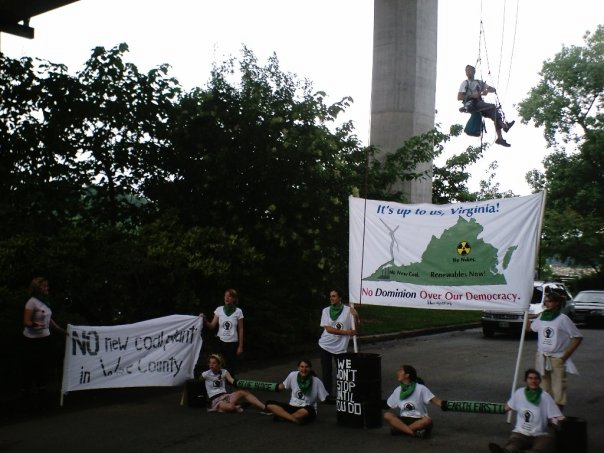
Dominion BlockadeIn the past sev­er­al months, three efforts that Earth First! (EF!) has con­tributed action and ener­gy to in Vir­ginia have gained sig­nif­i­cant vic­to­ries. In each of these cas­es, our involve­ment has been rel­a­tive­ly small com­pared to the efforts of oth­er groups, and all cred­it is due to them for doing the un-sexy, demand­ing work of drag­ging these indus­tries through the courts and reg­u­la­to­ry process­es where these vic­to­ries were ulti­mate­ly won. While we envi­sion and work to cre­ate a world where destruc­tive projects are stopped by sheer force of grass­roots direct action, we do indeed believe in using every tool in the tool­box.

Here’s a brief syn­op­sis of some of those tools being put to work over the past two years:

The first action tak­en by the cur­rent incar­na­tion of Blue Ridge Earth First! (BREF!) was a demon­stra­tion at the home of a devel­op­er dri­ving efforts to build a Wal-Mart in Blacks­burg, Vir­ginia. There was nev­er a long-term direct action strat­e­gy hashed out to defeat this project. While an emerg­ing com­mu­ni­ty group devel­oped sup­port and momen­tum towards leg­is­lat­ing and lat­er lit­i­gat­ing their oppo­si­tion into law, our action served chiefly as a reminder that civ­il dis­course with those who would des­e­crate our com­mu­ni­ties for a buck is no virtue. The demon­stra­tion was also the com­ing-out par­ty for a new EF! chap­ter ready to give some teeth to the envi­ron­men­tal move­ment in the hills of Vir­ginia.

As BREF! shift­ed our focus to oth­er projects, efforts to stop the Wal-Mart through any well-man­nered, gov­ern­ment-sanc­tioned and tru­ly bor­ing means nec­es­sary, per­sist­ed and ulti­mate­ly reigned tri­umphant by way of appeal­ing a local zon­ing ordi­nance all the way to the Supreme Court of Vir­ginia. While the parade of Earth First!ers mak­ing mer­ry in devel­op­er Jean­nie Stosser’s front yard played a small part in the whole turn of events, it is nonethe­less a grat­i­fy­ing vic­to­ry for our more well-behaved allies and a pleas­ant reminder that, when pres­sure builds, it even­tu­al­ly breaks.
On the moun­tain­top removal (MTR) front, a bit­ter­sweet vic­to­ry was won on May 7, when the Army Corps of Engi­neers, respond­ing to a prompt by the Envi­ron­men­tal Pro­tec­tion Agency (EPA), rescind­ed a per­mit for A&G coal’s Ison Rock mine. Over the past sev­er­al years, the South­ern Appalachi­an Moun­tain Stew­ards, a local com­mu­ni­ty group has clogged reg­u­la­to­ry process­es and spo­ken out loud­ly against this mine. In 2004, A&G’s fail­ure to con­form to the laws for exact­ly how a moun­tain is sup­posed to be destroyed result­ed in a boul­der rolling off of a MTR mine and killing a three-year old boy asleep in his bed, prompt­ing Kat­u­ah Earth First! to chain, lock and glue the gates to that mine closed. In 2007, this same cor­po­ra­tion was the tar­get of sab­o­tage at one of it’s Wise Coun­ty moun­tain-top removal sites by a group call­ing itself the “Com­mit­tee to Defend the Land and Peo­ple.”

The Ison Rock mine would have totaled 1,300 acres in scope and would have buried three miles of streams. This is the first time that a MTR per­mit has ever been rescind­ed due to inter­ven­tion by a fed­er­al reg­u­la­to­ry body—evidence that the mount­ing and increas­ing­ly mil­i­tant oppo­si­tion to MTR of the past sev­er­al years is hav­ing an effect on pol­i­cy deci­sions. The EPA and Army Corps rea­soned that the sprawl­ing mine would vio­late the Clean Water Act if it dumped min­ing waste into streams, a prac­tice that always accom­pa­nies MTR oper­a­tions known as “val­ley fills.” The bit­ter­ness of this win comes with the fact that, short­ly after Obama’s EPA rescind­ed this and five oth­er per­mits, the coal indus­try applied pres­sure for the admin­is­tra­tion to give word on 42 oth­er pend­ing MTR per­mits, which result­ed in the EPA declar­ing that they’re all fine to pro­ceed. Why are six MTR/valley fill mines in vio­la­tion of the clean water act and 42 aren’t? Pol­i­tics. They’re throw­ing us a bone here. We’ll take that bone, and then we’ll beat them sense­less with it. All MTR buries streams! Until all MTR per­mits are revoked, we won’t stop!

In anoth­er case of the Clean Water Act final­ly being enforced, Domin­ion Power’s plans to add a third reac­tor to its Lake Anna nuclear plant were thwart­ed by a law­suit brought forth by the Blue Ridge Envi­ron­men­tal Defense League (BREDL) in Feb­ru­ary. Lawyers for BREDL, an orga­ni­za­tion sup­port­ing envi­ron­men­tal jus­tice strug­gles through­out the south­east, proved in court that oper­a­tions at the plant are rais­ing tem­per­a­tures in Lake Anna to over 100 degrees in the sum­mer­time. This is the same pow­er plant where EF!, Ris­ing Tide and oth­ers staged a sit-in dur­ing last summer’s South­east Con­ver­gence for Cli­mate Action.

In the near­ly two years that our small EF! col­lec­tive has exist­ed, we’ve made a delib­er­ate effort to exe­cute direct actions with a tim­ing and sen­si­bil­i­ty that work con­cur­rent­ly with the cam­paigns of our friends, neigh­bors and allies who have the stom­ach to tan­gle up the state with­in the para­me­ters of its own pro­ce­dures. We do not have the time, taste, exper­tise or resources to spear­head these efforts our­selves but we see how they can be uti­lized effec­tive­ly. The prob­lem with any vic­to­ry won by virtue of state approval is that the state retains the pow­er to reverse that judg­ment. By bypass­ing the “des­ig­nat­ed chan­nels” to express our dis­sent and employ­ing actions that direct­ly dis­rupt the oper­a­tions we oppose, we demon­strate a readi­ness among the gen­er­al pub­lic to reject the rules of our oppres­sors and defend our­selves as is our nat­ur­al right. This pres­ence rein­forces the truth that favor­able gov­ern­ment actions are forced by the will of the peo­ple rather than being hand­ed down by the benev­o­lence of the rul­ing class. If we treat these wins as the end of a sto­ry and allow the hard-earned and slow­ly-built grass­roots pow­er that pro­duced these vic­to­ries to whith­er, then this is as close to jus­tice as we will ever get. If, instead, we under­stand them as mark­ers in the move­ment towards achiev­ing all pow­er to all peo­ple, then onward. It is the prop­a­ga­tion of this sen­ti­ment as well as the spe­cif­ic points of impact result­ing from our actions that we con­tribute to the envi­ron­men­tal move­ment in the moun­tains of Appalachia.

Victory Over Mexico’s La Parota Dam

Inter­view: June 30, 2009
From June 2009 World Rivers Review

Inter­view: June 30, 2009
From June 2009 World Rivers Review

Since 2004, thou­sands of Mex­i­can farm­ers have been fight­ing the con­struc­tion of La Paro­ta Dam in the state of Guer­rero. They have staged block­ades, protests and legal actions and have faced vio­lent police repres­sion in return. In May, the Mex­i­can press report­ed that the gov­ern­ment would post­pone La Paro­ta Dam until after 2018. World Rivers Review inter­viewed Rodol­fo Chavez Galin­do, a leader of the vibrant move­ment to stop the dams, about the bat­tle over La Paro­ta.

WRR: How is the local move­ment orga­nized?
RCG: The Coun­cil of Com­mu­nal Lands and Com­mu­ni­ties Opposed to La Paro­ta Dam (CECOP) was cre­at­ed by farm­ers and indige­nous peo­ples to defend their lives, land, water and nat­ur­al resources. It is com­posed of more than 5,000 men and women from 39 vil­lages. Its prin­ci­pal strength is that deci­sions are made in a com­mu­nal way, in assem­blies that have been held every Sun­day with­out fail dur­ing the six years we have been fight­ing the project.

The move­ment began on July 28, 2003, when the peas­ants of three vil­lages blocked engi­neers with the Fed­er­al Elec­tric­i­ty Com­mis­sion (CFE) from enter­ing com­mu­ni­ty lands. The CFE had ille­gal­ly entered the com­mu­ni­ty’s land with­out peo­ple’s per­mis­sion. The land com­pen­sa­tion process had not start­ed, nor the envi­ron­men­tal licens­ing process. The CFE cleared thou­sands of trees — which is a fed­er­al crime — opened roads, and brought in heavy machin­ery to begin con­struc­tion. Peo­ple got angry when they cut trees, fences and crops.

WRR: What was the reac­tion of the gov­ern­ment?
RCG: The CFE removed the machin­ery from the peas­ants’ lands. The com­mu­ni­ty set up guard posts to ensure the CFE would not return. The CFE has not been able to re-enter these lands since 2003. The resis­tance was strength­ened by law­suits, which have sus­pend­ed the project until now.

The CFE tried oth­er tac­tics, pay­ing off gov­ern­ment offi­cials to try and expro­pri­ate the land. They con­vened fraud­u­lent assem­blies. When the farm­ers who were the own­ers of the lands tried to enter these assem­blies, the CFE imped­ed their entry with 1,500 police that repelled the farm­ers with tear gas. Instead, the CFE filled the meet­ings with peo­ple they brought from the cities who were not farm­ers, a move that was total­ly ille­gal.

WRR: Besides road blocks, what oth­er tac­tics have you used to fight the project?
RCG: Faced with these seri­ous vio­la­tions, the move­ment turned to the law. They asked the courts to nul­li­fy the assem­blies and after three years won a court order. In 2008, the CFE admit­ted that it could not begin work on the dam because it had not obtained the required per­mis­sions, and it had been defeat­ed in the courts.

Law­suits were also brought on envi­ron­men­tal grounds based upon CFE’s ille­gal defor­esta­tion and on crim­i­nal grounds based upon forged sig­na­tures used by CFE to legit­imize the fraud­u­lent assem­blies. Using the law has been one of the move­men­t’s strongest weapons, but the most impor­tant has been the strength and deter­mi­na­tion of the move­ment itself.

WRR: Has CECOP pre­sent­ed its case at an inter­na­tion­al lev­el?
RCG: We pre­sent­ed the case of La Paro­ta to the Unit­ed Nations Depart­ment of Eco­nom­ic and Social Affairs (DESA) through a peti­tion signed by 102 Mex­i­can orga­ni­za­tions. The DESA Com­mit­tee issued a rec­om­men­da­tion that the Mex­i­can gov­ern­ment respect the deci­sions won by the farm­ers in the courts, that they respect their legit­i­mate prop­er­ty rights and that any deci­sion be based on a process of free, pri­or and informed con­sent by the farm­ers.

Oth­er UN offi­cials vis­it­ed the area and rec­og­nized the farm­ers’ rights to defend their land. They also con­firmed vio­la­tions of the rights of indige­nous peo­ples and the right to infor­ma­tion and con­sul­ta­tion.

WRR: How did farm­ers react when the Mex­i­can press report­ed that the gov­ern­ment is post­pon­ing La Paro­ta until 2018? Is this true?
RCG: We have received no offi­cial infor­ma­tion about this from the CFE. And, our demand is that the project be can­celled once and for all, not post­poned!

After deliv­er­ing a peti­tion to Pres­i­dent Calderón demand­ing a meet­ing with the CFE, we met with them on May 21, 2009. Our posi­tion is that La Paro­ta Dam in Guer­rero state, the Paso de la Rey­na Dam in Oax­a­ca, and the Arce­di­ano and El Zapotil­lo dams in Jalis­co must be can­celled, and that those dis­placed by El Cajón Dam in Nayarit must receive just com­pen­sa­tion.

To win, we will need uni­ty among diverse move­ments, begin­ning with dam-affect­ed com­mu­ni­ties. We must inte­grate our strug­gle with oth­ers suf­fer­ing from envi­ron­men­tal degra­da­tion in Mex­i­co and in oth­er coun­tries. And, we must strength­en the strug­gle for an alter­na­tive ener­gy pol­i­cy.

More infor­ma­tion:

Inter­na­tion­al Rivers’ La Paro­ta Cam­paign

Solidarity for Happy Valley in Tauranga

7 May 2009
Ban­ner Hung to High­light Cli­mate Crimes

Sol­id Ener­gy and Gen­e­sis con­tin­ue to prof­it from coal min­ing in New Zealand despite their “mil­lion dol­lar” green­wash mar­ket­ing cam­paigns.

Hap­py Val­ley is a pris­tene native wet­land near West­port, on the west coast of the South Island. Sol­id Ener­gy plan to extend their already mas­sive open-cast coal mine at Stock­ton into Hap­py Val­ley.

7 May 2009
Ban­ner Hung to High­light Cli­mate Crimes

Sol­id Ener­gy and Gen­e­sis con­tin­ue to prof­it from coal min­ing in New Zealand despite their “mil­lion dol­lar” green­wash mar­ket­ing cam­paigns.

Hap­py Val­ley is a pris­tene native wet­land near West­port, on the west coast of the South Island. Sol­id Ener­gy plan to extend their already mas­sive open-cast coal mine at Stock­ton into Hap­py Val­ley.

Two years ago a group of peo­ple con­cerned about cli­mate change and the native ecosys­tems set up an occu­pa­tion camp to pro­tect Hap­py Val­ley. On the 21st April this year the camp was forcibly removed by Sol­id Ener­gy.

Tau­ran­ga port is a key loca­tion for the traf­fick­ing of coal in and out of New Zealand by Sol­id Ener­gy and Gen­e­sis. This ban­ner was hung on a mega bill­board (bear­ing a poignant mes­sage!) along a major road and rail­way used for trans­port­ing coal, in order to high­light the con­tin­ued cli­mate crimes com­mit­ted by Sol­id Ener­gy and Gen­e­sis in this time of glob­al and eco­log­i­cal emer­gency.

http://www.savehappyvalley.org.nz/

Palo Gordo does not want trash from San Marcos, Guatemala

Neigh­bours of Pajopom Vil­lage from Esquip­u­las Palo Gor­do don´t want trash from San Mar­cos any­more. From June 15th 2009 they have pre­vent the dis­charge of garbage in an ille­gal garbage dump in their com­mu­ni­ty by hav­ing a pacif­ic protest in front of the com­mu­ni­ty saloon. Adults, young peo­ple and even chil­dren had been rotat­ing since ear­ly in the morn­ing until the sun­set, in order to fight for their lives and a safe envi­ron­ment.

illegal dumpNeigh­bours of Pajopom Vil­lage from Esquip­u­las Palo Gor­do don´t want trash from San Mar­cos any­more. From June 15th 2009 they have pre­vent the dis­charge of garbage in an ille­gal garbage dump in their com­mu­ni­ty by hav­ing a pacif­ic protest in front of the com­mu­ni­ty saloon. Adults, young peo­ple and even chil­dren had been rotat­ing since ear­ly in the morn­ing until the sun­set, in order to fight for their lives and a safe envi­ron­ment.

In the after­noon on Fri­day, June 5, a group of neigh­bours rep­re­sent­ing Pojopom Vil­lage from Esquip­u­las Palo Gor­do filed a com­plaint against the munic­i­pal gov­ern­ments of San Mar­cos and Esquip­u­las Palo Gor­do, because of the ille­gal dump in their com­mu­ni­ty, in the assis­tance office of the Pub­lic Min­istry in the munic­i­pal head, San Mar­cos.
The neigh­bours decid­ed to use said means alter hav­ing exhaust­ed three years of dia­logu­ing with the may­or of San Mar­cos, Mr. Car­los Enrique Bar­rios Sach­er and the may­or of Esquip­u­las Palo Gor­do, Mr. Fran­cis­co Roge­lio San­doval. The talks, since Decem­ber 2008, were medi­at­ed by the San Mar­cos’ Human Rights Ombuds­man office. Thanks to the medi­a­tion process an agree­ment had been reached, but which was not act­ed upon by the may­ors, even though they were giv­en an exten­sion.

The com­mu­ni­ty spokesman declared, “We are not in agree­ment that the trash of anoth­er munic­i­pal­i­ty con­tin­ues con­t­a­m­i­nat­ing our land. We will defend the earth that belongs to every­one. We do not want to be accom­plices in the irre­spon­si­bil­i­ty of our igno­rant, lying and neg­li­gent offi­cials, who are paid with our tax mon­ey.”
Gra­cias al pron­to actu­ar de los fun­cionar­ios del Min­is­te­rio Pub­li­co se ele­vo la denun­cia a la Fis­calía de Deli­tos con­tra el Ambi­ente en la ciu­dad de Guatemala.

The offi­cials of the Pub­lic Min­istry brought the com­plaint to the Dis­trict Attor­ney of Crimes against the Envi­ron­ment in Guatemala City. An ocu­lar inspec­tion was request­ed to the Min­istry of Envi­ron­ment and Nat­ur­al resources, on Mon­day June 15th.
On Tues­day June 23 mem­bers of the Nation­al Civ­il Police, specif­i­cal­ly the Divi­sion for Envi­ron­ment Pro­tec­tion got to the place to inves­ti­gate about dam­aged hous­es, con­t­a­m­i­nat­ed rivers and bad odours in the place, caused by the ille­gal dump.

Mean­while, the neigh­bors from Palo Gor­do had been pre­vent­ing more trash dis­charges in the men­tioned area.

Maya Villagers Burn Mine Equipment

A group of Mayan Mam vil­lagers torched the equip­ment of a com­pa­ny attempt­ing to set up a mine on their land with­out per­mis­sion on June 12.

A group of Mayan Mam vil­lagers torched the equip­ment of a com­pa­ny attempt­ing to set up a mine on their land with­out per­mis­sion on June 12. Explo­rado­ra de Guatemala, a sub­sidiary of the Cana­di­an com­pa­ny Gold­corp, had been pres­sur­ing 20 fam­i­lies in the San Miguel Ixz­tahua­can munic­i­pal­i­ty to sell their land, but the vil­lagers had con­sis­tent­ly refused. When the com­pa­ny began mov­ing min­ing equip­ment onto their land any­way, the vil­lagers demand­ed its removal.

The com­pa­ny promised to remove all equip­ment by June 10, then failed to do so. It promised again to remove the equip­ment by June 12, even as it request­ed police and army assis­tance — receiv­ing 8 police units (2 of them anti-riot) and 4 vehi­cles full of sol­diers.

On June 12, see­ing that the com­pa­ny was not going to remove the equip­ment, vil­lagers set fire to an explo­ration drill rig and pick­up truck, while police and sol­diers stood by and watched.

Unfor­tu­nate­ly, due to com­pa­ny pres­sure, the police filed charges against 7 vil­lagers for the action on June 19.

14 Arrests Initiate Week of Action Against Mountaintop Removal

Four­teen peo­ple were arrest­ed on June 18 in a protest meant to launch a week of action against moun­tain­top removal coal min­ing in West Vir­ginia.

Four­teen peo­ple were arrest­ed on June 18 in a protest meant to launch a week of action against moun­tain­top removal coal min­ing in West Vir­ginia. Four peo­ple climbed a 150-foot dragline at a mine site near Twi­light, WV, and unfurled a ban­ner read­ing, “Stop Moun­tain­top Removal Min­ing”. Anoth­er 9 entered the mine site to unfurl anoth­er ban­ner. Climbers remained atop the dragline for more than three hours before being arrest­ed.

This action is the first time ever that a dragline, one of the largest machines on earth, has ever been shut down in a protest, and is an impor­tant esca­la­tion in the fight against moun­tain­top removal.

The week of action will cul­mi­nate with a civ­il dis­obe­di­ence action fea­tur­ing lead­ing cli­mate sci­en­tist Dr. James Hansen, actress Daryl Han­nah, Rain­for­est Action Net­work Exec­u­tive Direc­tion Michael Brune and for­mer Rep­re­sen­ta­tive Ken Hech­ler.

The week of action was ini­ti­at­ed only days after Pres­i­dent Oba­ma announced his plans to reform, rather than abol­ish, moun­tain­top removal coal min­ing. The Oba­ma admin­is­tra­tion approved envi­ron­men­tal per­mits for 42 of the 48 pro­posed new moun­tain­top removal mines it has con­sid­ered so far.

For more infor­ma­tion, to get involved or to make dona­tions for bail, vis­it www.mountainaction.org.

Peru Mine Blockade Enters 10th Day

Attract­ing less atten­tion in light of the full-fledged upris­ing that has con­sumed Peru’s Ama­zon region for 70 days, a mine block­ade is ongo­ing in the country’s high­lands.

Attract­ing less atten­tion in light of the full-fledged upris­ing that has con­sumed Peru’s Ama­zon region for 70 days, a mine block­ade is ongo­ing in the country’s high­lands. On June 10th, min­ers launched road­blocks at the Bue­naven­tu­ra min­ing company’s Orco­pam­pa gold mine in Peru, in protest of poor labor con­di­tions and the mine’s impact on local com­mu­ni­ties. The block­ades are still halt­ing work at the mine, and the work­ers have ten­ta­tive­ly called for a strike for June 24th.

Climate activists blockade Peruvian Embassy & companies list

19 June 2009
Cli­mate change activists have blocked the entrance to the Peru­vian Embassy today in protest the country’s killing of indige­nous peo­ple in the Ama­zon rain­for­est.

Peruvian Embassy protest19 June 2009
Cli­mate change activists have blocked the entrance to the Peru­vian Embassy today in protest the country’s killing of indige­nous peo­ple in the Ama­zon rain­for­est.

Up to 100 peo­ple have been killed in recent clash­es over attempts to extract oil, gas, min­er­als and tim­ber from the for­est where indige­nous peo­ple have lived for cen­turies. On June 5, the gov­ern­men­t’s secu­ri­ty forces attacked a peace­ful block­ade, lead­ing to blood­shed on both sides with 30–100 esti­mat­ed deaths, over 100 injuries and numer­ous dis­ap­pear­ances.

Since the clash­es, the Peru­vian gov­ern­ment has sus­pend­ed some exploita­tion in the area, but it is unclear whether some com­pa­nies will be allowed to con­tin­ue.

Pro­test­ers from Lon­don Camp for Cli­mate Action are demand­ing to deliv­er a let­ter of protest to Peru­vian Ambas­sador Ricar­do Luna. The calls for oil and gas com­pa­nies in the Ama­zon to sus­pend their oper­a­tions until the gov­ern­ment agrees to peace­ful nego­ti­a­tions with local rep­re­sen­ta­tives; for an inde­pen­dent and impar­tial inquiry into the vio­lence; and for the lift­ing of all charges against Alber­to Pizan­go (the Pres­i­dent of Peru’s Ama­zon Indi­an organ­i­sa­tion, AIDESEP)

Pro­test­er Sam Gar­den­er said: “This protest is to show sol­i­dar­i­ty with the thou­sands of indige­nous peo­ple that are risk­ing, and some­times los­ing, their lives to pro­tect their homes in the Ama­zon.

“By destroy­ing the Ama­zon rain­for­est to extract fos­sil fuels, we are accel­er­at­ing cat­a­stroph­ic cli­mate change. The Ama­zon removes vast amounts of car­bon diox­ide from the atmos­phere. By cut­ting it down to remove yet more fos­sil fuels we are speed­ing towards a world­wide cat­a­stro­phe.”

15.6.09: Live­ly and well attend­ed demo at the Embassy by Colec­ti­vo Peru­ano, togeth­er with the Coor­di­nado­ra Lati­noamer­i­cana, and was sup­port­ed by Latin Amer­i­can Youth Against Vio­lence

Some of the com­pa­nies with new con­tracts in the Ama­zon and else­where in Peru (signed April 2009, some indi­vid­u­al­ly and some as part of a con­sor­tium with Peru­petro) that I can find (but unable to secure direct links/locations in the UK) are:

Plus­petrol — http://www.pluspetrol.net/
Reliance — http://www.reliancepetroleum.com/
CNPC — http://www.cnpc.com.cn/eng/
Petrope­ru — http://www.cnpc.com.cn/eng/
Faulkn­er Suits Explo­ration (US)
Olympic (US or Cana­di­an)
Petro­lif­era — http://www.petrolifera.ca/
Pan Andean Resources (Dublin based) — http://www.panandeanresources.com/contact/
Kei (Aus­tralia)
Petro­Viet­nam (Viet­nam)
Gold­en Oil — http://www.goldenoilcorp.com/new/english/company/company01_4.php

How­ev­er, some of these com­pa­nies DO have UK based offices and trad­ing:

EMERALD ENERGY PLC
http://www.emeraldenergy.com/contact.htm
With a reg­is­tered office in Lon­don.

CONOCO PHILLIPS
http://www.conocophillips.co.uk/ContactUs/index.htm
An Amer­i­can com­pa­ny that is report­ed to have a new “mega con­ces­sion” of 10.5 mil­lion hectares in the Ama­zon for oil explo­ration.
Offices and activ­i­ties in Lon­don, Aberdeen, Teesside, Hum­ber, Thed­dlethor­pe, War­wick

There’s a report on their activ­i­ties in Peru here: http://www.amazonwatch.org/conoco2009.pdf

The sit­u­a­tion in Peru cur­rent­ly is dire.… the indige­nous com­mu­ni­ties have been mobi­liz­ing and resist­ing since April and at this time when their lead­ers are threat­ened with arrest and there are wide­spread mur­ders and dis­ap­pear­ances occur­ring it is key that those of us ben­e­fit­ting from these explo­rations (in the Glob­al North) do what we can to show sol­i­dar­i­ty and to put the pres­sure direct­ly on the com­pa­nies that are treat­ing Peru as a smor­gas­board of ways out of the cur­rent eco­nom­ic cri­sis…

Peru indigenous blockades win repeal of land laws

18th June 2009: Peru­vian Con­gress Votes 82 – 12 to Repeal Two Con­tro­ver­sial Laws

Gov­ern­ment Urged to Drop Crim­i­nal Charges Against Indige­nous Lead­ers and Allow Inde­pen­dent Inves­ti­ga­tion into Vio­lent Inci­dents in Bagua

18th June 2009: Peru­vian Con­gress Votes 82 – 12 to Repeal Two Con­tro­ver­sial Laws

Gov­ern­ment Urged to Drop Crim­i­nal Charges Against Indige­nous Lead­ers and Allow Inde­pen­dent Inves­ti­ga­tion into Vio­lent Inci­dents in Bagua

Lima, Peru – The Peru­vian Con­gress vot­ed today 82 – 12 to repeal two of nine con­test­ed laws in an attempt to end wide­spread indige­nous protests that have been par­a­lyz­ing trans­porta­tion and com­merce in the Peru­vian Ama­zon for 70 days. In a com­plete shift of dis­course, Pres­i­dent Gar­cia admit­ted that “there were a series errors and exag­ger­a­tions” in the gov­ern­men­t’s han­dling of this con­flict and asked Con­gress to repeal decrees 1090 and 1064, which were passed in 2008 as part of a pack­age of new laws to facil­i­tate the imple­men­ta­tion of the Free Trade Agree­ment with the Unit­ed States.

Hav­ing wit­nessed the vote in the Peru­vian Con­gress, Daysi Zap­a­ta, act­ing Pres­i­dent of AIDESEP, Peru’s nation­al Ama­zon­ian indige­nous orga­ni­za­tion wel­comed the Pres­i­den­t’s com­ments and declared: “Today is a his­toric day. We are grate­ful that the will of the indige­nous peo­ples has been heard and we only hope that in the future gov­ern­ments lis­ten and attend to indige­nous peo­ples, and not leg­is­late behind their backs.”

Zap­a­ta said that AIDESEP it is call­ing on our base orga­ni­za­tions and com­mu­ni­ties to end their block­ades and protests while also call­ing on the gov­ern­ment to enter into a good faith and trans­par­ent dia­logue.

Primer Min­is­ter Simon, who has been a lead nego­tia­tor to the indige­nous com­mu­ni­ties, said Tues­day that he would resign after bring­ing the cur­rent con­flict clos­er to res­o­lu­tion. The Peru­vian Gov­ern­ment has been heav­i­ly crit­i­cized for the June 5 attack to quell non­vi­o­lent protests by Ama­zon­ian indige­nous com­mu­ni­ties, which result­ed in dozens of deaths of both pro­test­ers and police and left 150 of indige­nous demon­stra­tors injured.

In addi­tion to decrees 1090 and 1064, AIDESEP points to at least sev­en oth­er laws that con­tin­ue to pose a threat to their con­sti­tu­tion­al­ly guar­an­teed rights. In addi­tion to the repeal of all these con­tro­ver­sial laws, indige­nous peo­ple are demand­ing that the Peru­vian Gov­ern­ment lift the State of Emer­gency, in effect since May 9 in sev­er­al regions through­out the Ama­zon. AIDESEP is also call­ing for the Gov­ern­ment to drop crim­i­nal charges against Alber­to Pizan­go and five oth­er indige­nous lead­ers. Pizan­go was giv­en safe pas­sage to leave the coun­try and is now exiled in Nicaragua.

In the Unit­ed States, fif­teen human rights and envi­ron­men­tal orga­ni­za­tions recent­ly sent a let­ter to Sec­re­tary of State Hillary Clin­ton and oth­er top Admin­is­tra­tion offi­cials urg­ing the Unit­ed States to take imme­di­ate steps towards address­ing the polit­i­cal cri­sis in Peru. Rep­re­sen­ta­tives from this coali­tion met with the U.S. Trade Rep­re­sen­ta­tive’s office on Wednes­day to again urge the U.S. Gov­ern­ment to pub­licly clar­i­fy if Peru would be penal­ized for revok­ing the pack­age of “free trade laws.”

The dra­mat­ic shift in the Gar­cia Admin­is­tra­tion’s dis­course is like­ly due to the unprece­dent­ed inter­na­tion­al and domes­tic con­dem­na­tion of the attacks on peace­ful demon­stra­tions on June 5 in Bagua. Tens of thou­sands protest­ed in cities through­out Peru on June 11 in sup­port of Peru’s indige­nous peo­ples. Peru­vian con­sulates and embassies world­wide have been the site of repeat­ed vig­ils and protests. Tens of thou­sands have sent let­ters to Peru­vian and US gov­ern­ment offi­cials. Celebri­ties includ­ing Q’o­ri­an­ka Kilch­er and Ben­jamin Bratt, both part Peru­vian as well as Nobel Prize Lau­re­ate Rigob­er­ta Menchu, have pub­licly con­demned the vio­lence in Peru while call­ing for a peace­ful solu­tion.

Lead­ing inter­na­tion­al human rights bod­ies includ­ing the Inter-Amer­i­can Com­mis­sion on Human Rights, the Unit­ed Nations Per­ma­nent Forum on Indige­nous Issues, and the Inter­na­tion­al Labor Orga­ni­za­tion have pressed the Gar­cia Admin­is­tra­tion to end repres­sion and uphold the rights of indige­nous peo­ples. Yes­ter­day, James Anaya, the UN Spe­cial Rap­por­teur of Human Rights and Fun­da­men­tal Free­doms of Indige­nous Peo­ple arrived in Peru for a 3‑day vis­it to gath­er infor­ma­tion about the vio­lent inci­dent in Bagua.

Ama­zon Watch’s Exec­u­tive Direc­tor, Atossa Soltani, react­ed to the news with the fol­low­ing state­ment: “The Peru­vian Con­gress’s repeal of the two decrees is a wel­come first step in bring­ing indige­nous rights in Peru back to where they were before the decrees were pro­mul­gat­ed in 2008. The con­flict has become a water­shed moment for Peru’s poli­cies in the Ama­zon and has invig­o­rat­ed nation­al debate about deep-root­ed vio­la­tions of indige­nous peo­ples rights. Today’s good news notwith­stand­ing, indige­nous peo­ples are like­ly to con­tin­ue to be at risk by Gar­ci­a’s poli­cies to open up the Ama­zon to extrac­tive indus­tries.”

Since 2006, the gov­ern­ment has autho­rized oil and gas con­ces­sions cov­er­ing over 70 per­cent of the Peru­vian Ama­zon, much of it on indige­nous lands (see Peru­petro map at http://mirror.perupetro.com.pe/exploracion01‑e.asp).
For more infor­ma­tion, see http://www.amazonwatch.org/peru-protests.php

Ear­li­er arti­cle on block­ade crush­ing & mas­sacre here

ELF sabotage digger & arson solidarity with Peru

ELF SABOTAGE DIGGER (Italy)

anony­mous report:

“ROME ITALY We cut wires and the oil tube of a dig­ger used to defor­est. unfor­tu­nate­ly there were men at work so we could not destroy the cab Earth lib­er­a­tion front”

»

ARSON ATTACK AGAINST POLICE VEHICLE IN SOLIDARITY WITH INDIGENOUS RESISTANCE IN PERU (Mex­i­co)

anony­mous com­mu­nique (trans­la­tion):

ELF SABOTAGE DIGGER (Italy)

anony­mous report:

“ROME ITALY We cut wires and the oil tube of a dig­ger used to defor­est. unfor­tu­nate­ly there were men at work so we could not destroy the cab Earth lib­er­a­tion front”

»

ARSON ATTACK AGAINST POLICE VEHICLE IN SOLIDARITY WITH INDIGENOUS RESISTANCE IN PERU (Mex­i­co)

anony­mous com­mu­nique (trans­la­tion):

“On the night of June 8, we, the Frente de Lib­eración de la Tier­ra, along with some anar­cho-Insur­rec­tion­al indi­vid­u­als who are com­mit­ted to con­stant con­flict with the state and its insti­tu­tions, decid­ed to car­ry out an action togeth­er in the city of Ecate­pec in Mex­i­co State. This time our main objec­tive was the machines that belong to author­i­ties in that city that are used to rip up trees from their roots and to cov­er the earth with con­crete; the machines were hid­den under the bridge over Aveni­da More­los and López Por­tillo.

When we arrived there we real­ized that the earth-destroy­ing own­ers’ slaves were inside the machines, and that they sure­ly would­n’t be leav­ing until the fol­low­ing day, to work and to be exploit­ed to earn a few coins for their sub­sis­tence. Why is it that peo­ple are watch­ing the machines? Is it that the own­ers fear leav­ing them alone and the next morn­ing find­ing them unus­able, that their urban­ist project be delayed and thou­sands of pesos lost in dam­ages, like they have seen hap­pen in oth­er munic­i­pal­i­ties in Mex­i­co State?

This objec­tive was aban­doned and we decid­ed to car­ry out anoth­er; in front of the exca­va­tors, bull­doz­ers and oth­er machines was a large com­mand head­quar­ters of state police tor­tur­ers, the ASE (Agency of State Secu­ri­ty), vio­la­tors of the pris­on­ers in Aten­co, accom­plices in the killing of ani­mals in Jal­tenco, pro­tec­tors of the inter­ests of the multi­na­tion­als, killers of the earth, liv­ing with the impuni­ty that Mex­i­can jus­tice gives them, laugh­ing with their machine guns on their backs and con­fi­dant that they can destroy any protest with their repres­sion. They were there; maybe they did­n’t know that all vio­lence cre­ates counter vio­lence and for all who are struck down, soon­er or lat­er there will be a response.

Ded­i­cat­ed like wild wolves who have left their dens under the full moon, we placed an incen­di­ary device in one of the trucks, a small flame ignit­ed the engine and burnt the truck.

Our sab­o­tage was fast and effec­tive, the destruc­tion of social peace was immi­nent. What police would be expect­ing an arson attack in front of their very noses? How do those com­man­ders feel who boast of the fast effec­tive­ness of their sub­or­di­nates now that a group of eco-anar­chists have attacked their facil­i­ties? Do they feel hor­ri­ble because the raid they car­ried out after the fire was use­less; they could not catch those respon­si­ble who now write these lines of revenge against the anthro­pocen­tric state and its insti­tu­tions?

The war against this sys­tem is dead­ly seri­ous, if they order their police to sup­press, incen­di­ary self-defense will rise up.

We ded­i­cate this action to the fierce defense that is car­ried out in the Ama­zon in Peru; the peas­ants killed by the anthro­pocen­trist state have been avenged by their nat­ur­al instinct to defend the wilder­ness, killing, kid­nap­ping and also injur­ing the police.

Let’s defend the plan­et where we live!

Show your teeth!

Now no more pas­siv­i­ty!

ELF/FLT”