Peru Indigenous In Standoff With Government

May 22nd 2009
For more than a month, indige­nous groups in the Peru­vian Ama­zon have been main­tain­ing block­ades of roads, rivers, air­ports and oil and gas pipelines to protest a series of new laws that would lead to increased indus­tri­al exploita­tion of their ter­ri­to­ries. The decrees were passed in accor­dance with the US-Peru Free Trade Agree­ment.

May 22nd 2009
For more than a month, indige­nous groups in the Peru­vian Ama­zon have been main­tain­ing block­ades of roads, rivers, air­ports and oil and gas pipelines to protest a series of new laws that would lead to increased indus­tri­al exploita­tion of their ter­ri­to­ries. The decrees were passed in accor­dance with the US-Peru Free Trade Agree­ment.

An esti­mat­ed 13,000 peo­ple from 65 tribes and 1200 com­mu­ni­ties are tak­ing part in the protests.

In response, Pres­i­dent Alan Gar­cia declared a state of emer­gency, sus­pend­ed civ­il lib­er­ties and dis­patched the army to the affect­ed regions. The Peru­vian and Argen­tin­ian nation­al oil com­pa­nies have both been forced to cease oper­a­tions in the region.

The police, mil­i­tary and extrac­tion com­pa­nies have used vio­lence to attempt to break the block­ades, result­ing in injuries and dis­ap­pear­ances — but the indige­nous groups are refus­ing to back down. Despite Garcia’s insis­tence that none of the laws will be revis­it­ed, the Peru­vian leg­is­la­ture has repealed one of the 10 laws and opened nego­ti­a­tions about the oth­er nine.

The Peru­vian government’s response to the cri­sis has sparked out­rage among indige­nous peo­ple and their allies world­wide, and the Peru­vian mis­sion to the Unit­ed Nations was recent­ly met with protests in New York.

For links to more news sto­ries, vis­it Inter­con­ti­nen­tal Cry.

For more infor­ma­tion, updates and photos/video of police bru­tal­i­ty at the protests, vis­it Ama­zon Watch.

See also:

Peren­co to Drill for Oil in Ter­ri­to­ry of Uncon­tact­ed Indige­nous (Jan­u­ary 7, 2009)

Peru Indige­nous Issue Oil Ulti­ma­tum (Octo­ber 22, 2008)

Indige­nous Vic­to­ry in Peru! (August 24, 2008)

‘Mother Earth in climate crisis’ say indigenous people

12 May 2009
A state­ment by indige­nous rep­re­sen­ta­tives from around the world describes ‘Moth­er Earth (as) no longer in a peri­od of cli­mate change, but cli­mate cri­sis.’

12 May 2009
A state­ment by indige­nous rep­re­sen­ta­tives from around the world describes ‘Moth­er Earth (as) no longer in a peri­od of cli­mate change, but cli­mate cri­sis.’

The state­ment, known as the Anchor­age Dec­la­ra­tion, was released after indige­nous peo­ple from the Arc­tic, North Amer­i­ca, Asia, the Pacif­ic, Latin Amer­i­ca, Africa, the Caribbean and Rus­sia met in Anchor­age, Alas­ka for the ‘Indige­nous Peo­ples’ Glob­al Sum­mit on Cli­mate Change’.

‘We are deeply alarmed by the accel­er­at­ing cli­mate dev­as­ta­tion brought about by unsus­tain­able devel­op­ment,’ the Dec­la­ra­tion says. ‘We are expe­ri­enc­ing pro­found and dis­pro­por­tion­ate adverse impacts on our cul­tures, human and envi­ron­men­tal health, human rights, well-being, tra­di­tion­al liveli­hoods, food sys­tems and food sov­er­eign­ty, local infra­struc­ture, eco­nom­ic via­bil­i­ty, and our very sur­vival as Indige­nous Peo­ples.

‘Moth­er Earth is no longer in a peri­od of cli­mate change, but in cli­mate cri­sis. We there­fore insist on an imme­di­ate end to the destruc­tion and des­e­cra­tion of the ele­ments of life.’

The Dec­la­ra­tion lists four­teen spe­cif­ic calls for action. These include reduc­ing lev­els of glob­al car­bon emis­sions; indige­nous par­tic­i­pa­tion in cli­mate change debate; the recog­ni­tion of indige­nous peo­ples’ rights in schemes to ‘Reduce Emis­sions from Defor­esta­tion and Degra­da­tion’ (REDD); the aban­don­ment of ‘false solu­tions’ to cli­mate change such as nuclear ener­gy, ‘clean coal’ and agro­fu­els; the recog­ni­tion by gov­ern­ments of indige­nous peo­ples’ rights; and the return and restora­tion of ‘lands, ter­ri­to­ries, waters, forests, sea ice and sacred sites’ tak­en from indige­nous peo­ples by gov­ern­ments in the past.

The Dec­la­ra­tion ends with an offer to ‘share with human­i­ty our tra­di­tion­al knowl­edge… rel­e­vant to cli­mate change, pro­vid­ed our fun­da­men­tal rights… are ful­ly rec­og­nized and respect­ed. We reit­er­ate the urgent need for col­lec­tive action.’

Read the Anchor­age Dec­la­ra­tion

Panama: Campesinos arrested over gold mine

June 5, 2009

Late last month, a group of demon­stra­tors were vio­lent­ly arrest­ed by police at a road­block in the north­ern Pana­man­ian province of Cocle.

June 5, 2009

Late last month, a group of demon­stra­tors were vio­lent­ly arrest­ed by police at a road­block in the north­ern Pana­man­ian province of Cocle.

The road­block was first set up on May 9, 2009 to resist the Petaquil­la Gold mine project, which is owned by the Pana­ma com­pa­ny Min­era Petaquil­la, and devel­oped by two oth­ers: the Van­cou­ver-based junior com­pa­ny, Petaquil­la Min­er­als and the Toron­to-based com­pa­ny, Inmet Min­ing.

As a many as 24 local com­mu­ni­ties are opposed to the project because of the “aber­rant pre­da­tion and destruc­tion of the Mesoamer­i­can Bio­log­i­cal Cor­ri­dor, where hun­dreds of hectares of vir­gin jun­gle and for­est have been cut down, and where the moun­tain pass­es and rivers that made the area one of the most impor­tant in the world due to its rich bio­di­ver­si­ty have been destroyed and pol­lut­ed,” notes a May 14 report by La Estrel­la.

The com­mu­ni­ties also say “they have nev­er been con­sult­ed, but rather deceived, and their lands have been tak­en from them unfair­ly in many ways, includ­ing the destruc­tion and burn­ing of ranch­es of indige­nous peo­ples, with­out even indem­ni­fy­ing the local res­i­dents and with­out any author­i­ty of the PRD gov­ern­ment ful­fill­ing its con­sti­tu­tion­al oblig­a­tion to defend the com­mu­ni­ties.”

Also report­ing on the arrests, La Estrel­la says 12 demon­stra­tors were arrest­ed in total (oth­er reports say it was 30 demon­stra­tors), “among them the Chiriqui envi­ron­men­tal­ist Car­menci­ta Ted­man. A peas­ant who did not want to be iden­ti­fied, said that he was real­ly afraid, because police­men were hit­ting the pro­tes­tors mer­ci­less­ly, even women and chil­dren. He added that when all this was hap­pen­ing Petaquil­la Gold heli­copters were sur­vey­ing the scene.”

The police used rods, and shot pel­lets and tear gas to sub­due the demon­stra­tors.

For back­ground on the Petaquil­la Gold mine and local efforts to stop it, vis­it miningwatch.ca

Perenco and armed forces break indigenous blockade (Peru)

6 May 2009
A gun­boat belong­ing to Peru’s armed forces has bro­ken through an Indi­an riv­er block­ade in the north­ern Peru­vian Ama­zon.

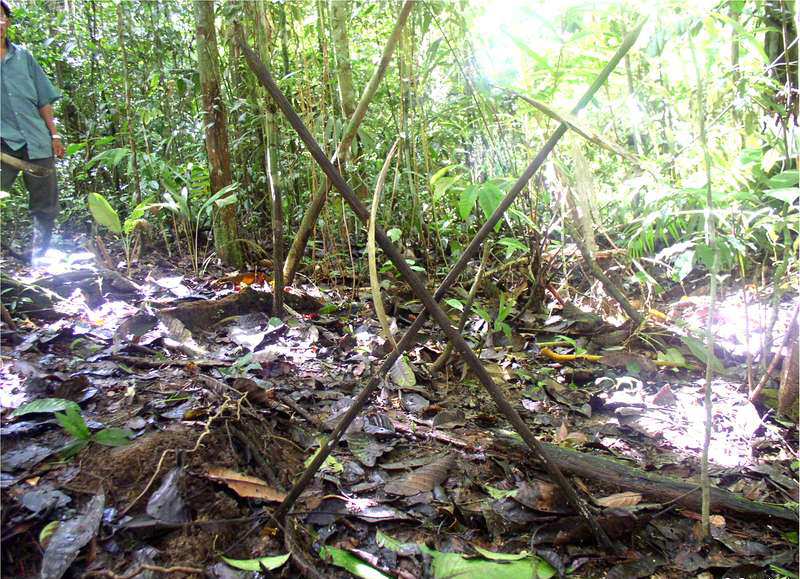
anti-Perenco crossed spears6 May 2009
A gun­boat belong­ing to Peru’s armed forces has bro­ken through an Indi­an riv­er block­ade in the north­ern Peru­vian Ama­zon.

The gun­boat, togeth­er with at least one boat belong­ing to Anglo-French oil com­pa­ny Peren­co, broke the block­ade at 5:15 am on 4 May. The block­ade, organ­ised by local indige­nous peo­ple, is on the Napo riv­er, one of the main trib­u­taries of the Ama­zon.

Peru’s indige­nous organ­i­sa­tion, AIDESEP, con­demned the use of a boat belong­ing to the armed forces, describ­ing it as a ‘use and abuse of their pow­er’. The block­ade forms part of Ama­zon-wide protests by Peru’s indige­nous peo­ple against gov­ern­ment poli­cies and the inva­sion of their ter­ri­to­ries by multi­na­tion­al com­pa­nies. The protests have been going on for almost a month.

Peren­co holds the licence to work in a remote part of Peru known as Lot 67, acces­si­ble via the Napo Riv­er. It is an area inhab­it­ed by at least two of the world’s last uncon­tact­ed tribes – the com­pa­ny is under increas­ing pres­sure to with­draw from the project.

Less than a fort­night ago Perenco’s chair­man, Fran­cois Per­ro­do, met Peru’s pres­i­dent, Alan Gar­cia, in the pres­i­den­tial palace in Lima, pledg­ing to invest US$2 bil­lion in Lot 67. Just days lat­er the gov­ern­ment passed a law declar­ing Perenco’s work a ‘nation­al neces­si­ty’.

Orissa Tribes stage mass protest against British mining company Vedanta — 25 April 2009

Sev­er­al hun­dred tribes­peo­ple today staged a protest against FTSE-100 com­pa­ny Vedan­ta, as it bids mas­sive­ly to expand its con­tro­ver­sial alu­mini­um refin­ery in Lan­ji­garh, Oris­sa. The refin­ery occu­pies land belong­ing to the Majhi Kondh tribe, and lies at the foot of the Niyam­giri hills, home of the iso­lat­ed Don­gria Kondhs. Both tribes took part in the protests.

Sev­er­al hun­dred tribes­peo­ple today staged a protest against FTSE-100 com­pa­ny Vedan­ta, as it bids mas­sive­ly to expand its con­tro­ver­sial alu­mini­um refin­ery in Lan­ji­garh, Oris­sa. The refin­ery occu­pies land belong­ing to the Majhi Kondh tribe, and lies at the foot of the Niyam­giri hills, home of the iso­lat­ed Don­gria Kondhs. Both tribes took part in the protests.

Over a hun­dred fam­i­lies lost their homes to their refin­ery. Many more lost their farm land and with it their food-secu­ri­ty and self suf­fi­cien­cy.

Vedanta’s refin­ery expan­sion project is inte­gral­ly linked to its plan to mine the Don­gria Kondh’s moun­tain home. Vedanta’s mine is need­ed to pro­vide the refin­ery with a near­by, and cost effi­cient, source of baux­ite – the raw mate­r­i­al for alu­mini­um.

One Don­gria Kondh man said, ‘Min­ing only makes prof­it for the rich. We will become beg­gars if the com­pa­ny destroys our moun­tain and our for­est so that they can make mon­ey. We can­not give our moun­tain, it is our life. And oth­er tribes will also suf­fer, those who live on the rivers that come from our moun­tain.’

Today’s protest is just the lat­est in a string of demon­stra­tions against Vedanta’s activ­i­ties.

More info: www.survival-international.org/tribes/dongria

Indians blockade main Amazon tributary — 24 April 2009

A large num­ber of Indi­ans have block­ad­ed one of the Amazon’s main trib­u­taries, the Napo Riv­er, in response to the vio­la­tion of their rights by oil com­pa­nies and Peru’s gov­ern­ment.

A large num­ber of Indi­ans have block­ad­ed one of the Amazon’s main trib­u­taries, the Napo Riv­er, in response to the vio­la­tion of their rights by oil com­pa­nies and Peru’s gov­ern­ment.

The pro­test­ers have block­ad­ed the Napo with canoes and a cable to stop oil com­pa­ny ves­sels get­ting upriv­er. Accord­ing to sources, two boats, includ­ing one from the Anglo-French com­pa­ny Peren­co, have man­aged to break through the block­ade. Three shots were alleged­ly fired at the Indi­ans who chased after them.

The block­ade of the Napo Riv­er is just one of many protests cur­rent­ly tak­ing place across the Peru­vian Ama­zon. Coor­di­nat­ed by Peru’s Ama­zon Indi­an organ­i­sa­tion, AIDESEP, the protests are in response to gov­ern­ment poli­cies seen by the Indi­ans as dis­crim­i­na­to­ry and threat­en­ing to their com­mu­nal lands. AIDESEP is lob­by­ing for the repeal of sev­er­al laws they claim vio­late their rights, and for the cre­ation of new reserves for uncon­tact­ed tribes.

The gov­ern­ment has respond­ed by send­ing police and sol­diers to areas where protests are tak­ing place. AIDESEP has crit­i­cised these mea­sures, call­ing them ‘intim­i­da­tion’ and say­ing that the protests are peace­ful.

Peren­co is work­ing in a part of the Ama­zon inhab­it­ed by two of the world’s last uncon­tact­ed tribes. The com­pa­ny does not acknowl­edge the tribes exist.

Survival’s direc­tor Stephen Cor­ry said today, ‘All over the world trib­al peo­ples are being forced to resort to block­ades to try and pro­tect their remain­ing land. We’re see­ing this in India and Malaysia as well as South Amer­i­ca.’

www.survival-international.org

CALL OUT: Resist the bailiffs at Justice Not Crisis Birmingham squat

At 0900 hours on Tues­day 21st April 2009 bailiffs will attempt to evict mem­bers of Jus­tice Not Cri­sis from 310, 312, 314 and 318 Per­shore Road, fol­lowed imme­di­ate­ly after at 11AM, an attempt­ed evic­tion at the Beech­wood Hotel, Bris­tol Road.

At 0900 hours on Tues­day 21st April 2009 bailiffs will attempt to evict mem­bers of Jus­tice Not Cri­sis from 310, 312, 314 and 318 Per­shore Road, fol­lowed imme­di­ate­ly after at 11AM, an attempt­ed evic­tion at the Beech­wood Hotel, Bris­tol Road.

We intend to resist evic­tions at all five prop­er­ties and will stage a roof-top demon­stra­tion at the Beech­wood Hotel. We require as much sup­port and assis­tance as pos­si­ble, and a brief­ing will take place at the Beech­wood Hotel at 0800 hours on Tues­day 21st April. Press and media have already indi­cat­ed they will be attend­ing the Beech­wood to cov­er our resis­tance of the bailiffs’ evic­tion.

Any­one wish­ing to join us this evening/night for our bar­be­cue and drink is wel­come. Rooms will be avail­able for any­body wish­ing to stay. Fur­ther infor­ma­tion can be obtained on 07874180014

Updates to the days events will appear on our web­site through­out the day Tues­day 21st April.

Demonstrators target Graff Diamonds in Solidarity with Kahlahari Bushmen (11.2.09)

Survival’s cam­paign tar­get­ing Graff Dia­monds over its involve­ment in a dia­mond mine planned on the land of Kala­hari Bush­men in Botswana has stepped up a gear.

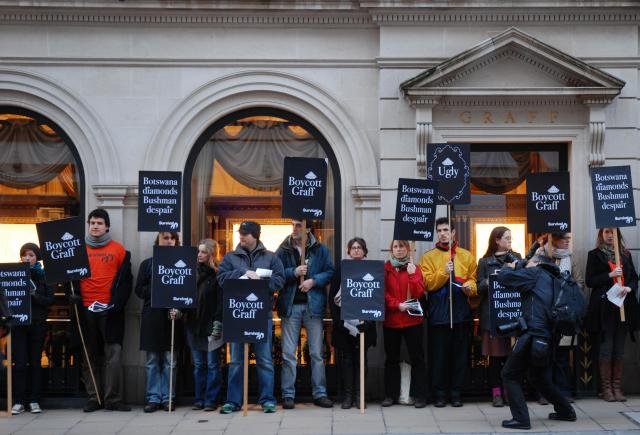
Bushmen Demo- London 11.2.09Survival’s cam­paign tar­get­ing Graff Dia­monds over its involve­ment in a dia­mond mine planned on the land of Kala­hari Bush­men in Botswana has stepped up a gear. Thir­ty pro­test­ers gath­ered on the 11.2.09 out­side Graff’s flag­ship Lon­don store hold­ing plac­ards say­ing ‘Boy­cott Graff’ and ‘Botswana dia­monds: Bush­men despair’.

The store is based in the fash­ion epi­cen­tre of Lon­don sur­round­ed by shops from Yves San Lau­ren, Chanel etc. The dia­mond indus­tries main prod­uct is high image and thus has shown itself to be some­times more sus­cep­ti­ble to pres­sure than oth­er resource sec­tors such as min­ing and oil. Pre­vi­ous pick­ets by Sur­vival Inter­na­tion­al and pub­lic sham­ing of fash­ion hous­es and top mod­els result­ed in De Beers pulling out of the planned dia­mond min­ing in the Kala­hari.

There are 100,000 Bush­men in Botswana, Namib­ia, South Africa and Ango­la. They are the indige­nous peo­ple of south­ern Africa, and have lived there for tens of thou­sands of years.

In the mid­dle of Botswana lies the Cen­tral Kala­hari Game Reserve, a reserve cre­at­ed both to pro­tect the tra­di­tion­al ter­ri­to­ry of the 5,000 Gana, Gwi and Tsi­la Bush­men (and their neigh­bours the Bak­gala­ga­di), and the wildlife and ecosys­tem of which are a part.

In the ear­ly 1980s, dia­monds were dis­cov­ered in the reserve. Soon after, gov­ern­ment min­is­ters went into the reserve to tell the Bush­men liv­ing there that they would have to leave because of the dia­mond finds.

In three big clear­ances, in 1997, 2002 and 2005, vir­tu­al­ly all the Bush­men were forced out. Their homes were dis­man­tled, their school and health post were closed, their water sup­ply was destroyed and the peo­ple were threat­ened and trucked away.

They now live in reset­tle­ment camps out­side the reserve. Rarely able to hunt, and arrest­ed and beat­en when they do, they are depen­dent on gov­ern­ment hand­outs. They are now gripped by alco­holism, bore­dom, depres­sion, and ill­ness­es such as TB and HIV/AIDS.

Unless they can return to their ances­tral lands, their unique soci­eties and way of life will be destroyed, and many of them will die.

Although the Bush­men won the right in court to go back to their lands in 2006, the gov­ern­ment has done every­thing it can to make their return impos­si­ble. It has:

Banned them from using their water bore­hole,
Refused to issue a sin­gle per­mit to hunt on their land (despite Botswana’s High Court rul­ing in Decem­ber that its refusal to issue per­mits was unlaw­ful),
Arrest­ed more than 50 Bush­men for hunt­ing to feed their fam­i­lies,
Banned them from tak­ing their small herds of goats back to the reserve.

Its pol­i­cy is clear­ly to intim­i­date and fright­en the Bush­men into stay­ing in the reset­tle­ment camps, and mak­ing the lives of those who have gone back to their ances­tral land impos­si­ble.

More infor­ma­tion on the Kala­hari Bush­men can be found on their own web­site : www.iwant2gohome.org or the web­site of Sur­vival Inter­na­tion­al (which is updat­ed more often): www.survival-international.org/tribes/bushmen

Philippines: with 5 Members Missing, the Mamanwa Hold Strong

Feb­ru­ary 12, 2009
At least 400 mem­bers of the Maman­wa tribe in Suri­gao del Sur, north­west­ern Min­danao, are in their sec­ond week of a block­ade against four min­ing com­pa­nies: Tagan­i­to Min­ing Cor­po­ra­tion (TMC), Ori­en­tal Syn­er­gy Min­ing Cor­po­ra­tion (OSMC), Case Min­ing Com­pa­ny (CMC) and Plat­inum Group Min­ing Com­pa­ny (PGMC).

Feb­ru­ary 12, 2009
At least 400 mem­bers of the Maman­wa tribe in Suri­gao del Sur, north­west­ern Min­danao, are in their sec­ond week of a block­ade against four min­ing com­pa­nies: Tagan­i­to Min­ing Cor­po­ra­tion (TMC), Ori­en­tal Syn­er­gy Min­ing Cor­po­ra­tion (OSMC), Case Min­ing Com­pa­ny (CMC) and Plat­inum Group Min­ing Com­pa­ny (PGMC).

The Maman­wa pre­vi­ous­ly sent notices of ter­mi­na­tion to the com­pa­nies, inform­ing them that they will longer be per­mit­ted to mine their ances­tral ter­ri­to­ries because the com­pa­nies have nev­er paid them any roy­al­ty fees.

Under the Indige­nous Peo­ples Rights Act (IPRA), Indige­nous Peo­ple in the Philip­pines are enti­tled to “a roy­al­ty pay­ment… which shall not be less than 1% of the Gross Out­put of the min­ing oper­a­tions in the area.”

Only recent­ly has the Maman­wa learned of this.

In a state­ment dat­ed Feb­ru­ary 4, day sev­en of the bar­ri­cade, Datu Joel Buk­las from the Tagan­i­to Maman­wa Asso­ci­a­tion, notes that TMC has been oper­at­ing in the region since the 1960s, and recent­ly “got a new con­tract to oper­ate for anoth­er 25 years in the red moun­tain of Suri­gao del Sur.”

“The mov­ing truck loads of nick­el ore is a reg­u­lar scene for motorist pass­ing along the Claver high­way.”

“Lit­er­al­ly, the red moun­tain of Claver is mov­ing inch by inch every day. Sum­it­o­mo Met­al Min­ing Com­pa­ny togeth­er with TMC planned to start this year the con­struc­tion of a 30,000 ton-a-year smelt­ing plant which would start its oper­a­tion by 2012.” Mean­while, Sum­it­o­mo is “deter­mined to start the con­struc­tion this year of the one-bil­lion dol­lar project.”

“This is our land even before these min­ing com­pa­nies came, we were already here, we were forcibly oust­ed from these lands against our will and we hope con­cerned gov­ern­ment agen­cies whom we have been ask­ing for years will wake up.”

“Today, 4 Feb­ru­ary 2009, is our sev­enth day of human bar­ri­cade along the high­way of Tagan­i­to, Claver, Suri­gao del Norte to demand before the Nation­al Com­mis­sion on Indige­nous Peo­ples (NCIP) on our share agreed for allow­ing the min­ing com­pa­nies to ruin our lives and our ances­tral domain.”
SURFACE THE MAMANWA FIVE

With the block­ade still stand­ing, the Maman­wa report that five of their car­pen­ters, who helped put the block­ade togeth­er, have been miss­ing since they left the site to har­vest food for the pro­test­ers on Jan­u­ary 29.

Nobody knows what hap­pened to them, how­ev­er the Maman­wa point out that in Decem­ber they informed the Philip­pine Nation­al Police, the local gov­ern­ment and the NCIP that a block­ade was in the works – “after repeat­ed attempts of send­ing out notices of ter­mi­na­tion of min­ing oper­a­tions as well as demands for just com­pen­sa­tion proved futile,” says a Feb­ru­ary 12 state­ment from the Legal Rights and Nat­ur­al Resources Cen­ter – Kasama sa Kalikasan/­FOE- Philip­pines (LRC-KsK).

The LRC-KsK is call­ing upon the Arroyo gov­ern­ment “to exert all its efforts in locat­ing the five IP pro­test­ers and put to jus­tice who­ev­er caused their dis­ap­pear­ance,” and that “the Arroyo gov­ern­ment do away with its obses­sion for min­ing gen­er­at­ed rev­enues in the face of over­whelm­ing rejec­tion of IP com­mu­ni­ties who have long borne the brunt of the destruc­tion, dis­place­ment, dis­crim­i­na­tion and dis­em­pow­er­ment that min­ing oper­a­tions bring with it.”

They also request that peo­ple take a moment to Call on the gov­ern­ment:

* To sur­face the five miss­ing Maman­was;
* To respect and pro­tect the bar­ri­cade of the Mamanwt;
* To scrap the Philip­pine Min­ing Act of 1995; and
* To make sure that min­ing com­pa­nies in Maman­wa ances­tral domain respect indige­nous peo­ples rights, give just com­pen­sa­tion to the Maman­wa com­mu­ni­ty and stop all min­ing oper­a­tion.

You can send your appeals to:

The Chief of Police
Chief Direc­tor Gen­er­al Jesus Ver­zosa
Philip­pine Nation­al Police
Email: pio@pnp.gov

The Chief of Staff (Armed Forces)
Gen. Alexan­der B. Yano
Chief of Staff, Armed Forces of the Philip­pines
Email: via web­site: http://www.afp.mil.ph/ghq/csafp/index.htm (fol­low link on left-hand side to guest­book)

The Sec­re­tary of the Depart­ment of Envi­ron­ment and Nat­ur­al Resources
Jose “Lito” L. Atien­za, Jr
Email: web@denr.gov
Email add: osec@denr.gov

The Mines and Gosciences Bureau Region­al Direc­tor – Region 13
ALILO C. ENSOMO, JR.
e‑mail: mgbrxiii@philcom. ph

With copies to:

The Chair­per­son of the Philip­pines Com­mis­sion on Human Rights
Email: drpvq@chr.gov, atty_delima@yahoo.com

The Chair­per­son of the Nation­al Com­mis­sion on Indige­nous Peo­ples
Atty. Euge­nio A. Insigne
Email: resource@ncip. gov.ph

Ten Thousand People Encircle the Niyamgriji Mountains in Orissa, India

Jan­u­ary 30 2009

Jan­u­ary 30 2009
Three days ago, 10 thou­sand peo­ple, a major­i­ty of them trib­al, formed a 17 km long human chain around the Niyam­grii moun­tains in Oris­sa, India. The peo­ple were protest­ing the plans of Vedan­ta, a British min­ing com­pa­ny, to start baux­ite min­ing the moun­tains. Baux­ite is the most impor­tant raw mate­r­i­al for alu­minum pro­duc­tion and last year the Supreme Court said two of the planned min­ing projects could go ahead.

The protest was the sec­ond large-scale demon­stra­tion in ten days: on 17 Jan­u­ary up to 7,000 pro­test­ers marched to the gates of Vedanta’s alu­mini­um refin­ery in the near­by town of Lan­ji­garh.

“The rul­ing meant that an arm of the British-list­ed min­ing giant Vedan­ta could use baux­ite from a moun­tain in Oris­sa which local hill tribes view as sacred,” says on BBC News and con­tin­ues:

In a sep­a­rate rul­ing last year, South Kore­an steel firm Posco was also giv­en the go-ahead by the court for a $12bn plant in the same state. Envi­ron­men­tal and trib­al cam­paign­ers have called on India’s prime min­is­ter to halt the Vedan­ta project. They argue that India’s rush to devel­op­ment should not come at the expense of tra­di­tion­al and sus­tain­able ways of life of trib­al and mar­gin­alised peo­ple.

Many who took part in Tuesday’s protest bran­dished tra­di­tion­al weapons, such as bows and arrows. They car­ried plac­ards with slo­gans includ­ing “Vedan­ta, Go Back” and “Stop min­ing in Niyam­giri”. Their demon­stra­tion was fol­lowed by a pub­lic meet­ing in which speak­ers railed against the Lon­don-based com­pa­ny, which is cur­rent­ly set­ting up a large alu­mi­na refin­ery in the area.

Don­gia Khond­Speak­ers said they would oppose min­ing in the hills until their “last breath”. They demand­ed the imme­di­ate can­cel­la­tion of the min­ing lease to Vedan­ta. “The Niyam­giri hill is the life­line of the trib­als and there is no way we can allow baux­ite min­ing here,” Lin­garaj Azad, a leader who spoke at the meet­ing, told the BBC.

The Don­gria Kondh tribe, who live in the Niyam­giri hills, con­sid­er the hill sacred. They have been oppos­ing the min­ing lease giv­en to Vedan­ta for years, say­ing it would destroy their lives, liveli­hood, reli­gion and cul­ture. Envi­ron­men­tal­ists have also opposed plans to start baux­ite min­ing, because they say that the area is eco­log­i­cal­ly sen­si­tive. They say that if min­ing goes ahead it would lead to the destruc­tion of for­est, large scale dis­place­ment and would dry up or pol­lute dozens of rivers and streams.

Vedan­ta claims that “no-one is going to be dis­placed…” and that the com­pa­ny is “com­mit­ted to sus­tain­able devel­op­ment of the area.”

Protest­ing in front of Vedan­ta’s meet­ingsSamaren­dra Das, an Indi­an author, film mak­er and activist, who has been fight­ing the case of the Don­gria Kondh tribe, says that the baux­ite min­ing will lead to cul­tur­al geno­cide. The tribes will be forced to leave their lands and adapt to a lifestyle they do not want to. Samaren­dra and Felix Padel have writ­ten sev­er­al arti­cles about the con­se­quenses of the baux­ite min­ing and some of the have been puplished here on Sav­ing Iceland’s web­site: Agya, What Do You Mean by Devel­op­ment? and Dou­bleDeath: Aluminium’s Links With Geno­cide.

Sur­vival International’s direc­tor Stephen Cor­ry said yes­ter­day: “By these protests the Don­gria Kondh are show­ing just how far the author­i­ties have failed them. The fact that the machines are run by a major British com­pa­ny should be a cause for shame in the City of Lon­don. This is a scan­dal which won’t go away until Vedan­ta leaves the tribe in peace.”